You can spend a lifetime cooking Chinese food at home and still not run out of dumplings. The category is enormous: boiled, pan-fried, steamed, soup-filled, starch-skinned, wheat-skinned, folded into a hundred shapes. And yet most home cooks learn maybe two of them and quietly assume the rest are restaurant projects. That assumption is the problem, not the technique.
This guide does two things. First, it gives you the handful of principles that make every Chinese dumpling work, so you stop needing a separate tutorial for each one. Second, it walks you through the major families, boiled northern jiaozi to Cantonese dim sum, with the calls I'd make in my own kitchen. If you fold your first ugly batch and the filling still tastes right, you've already won the hardest part.
What counts as a dumpling here
In English, "dumpling" is a grab-bag word. For this guide I mean a savory filling wrapped in a dough or starch skin, then cooked by water, steam, oil, or some combination. That keeps in the obvious items (jiaozi, potstickers, wontons, xiao long bao) and the less obvious ones like chive pockets and even cabbage roll "dumplings" that skip the wrapper entirely. It also covers the two starch-skin dim sum classics, har gow and siu mai, which behave nothing like wheat-flour dumplings and need their own rules.
What I leave out: pillowy leavened buns like bao and char siu bao, and the festive zongzi wrapped in leaves. Those share DNA with dumplings but the dough and shaping put them in a different conversation.
At a glance: Roughly 80 percent of dumpling failures come down to two things, a wrapper that's the wrong hydration and a filling that throws water. Get the dough to about 45 percent water by flour weight (180 ml water per 400 g flour for boiled jiaozi), rest it 30 minutes so the gluten relaxes, and salt and drain wet vegetables before they meet the meat. Do that and you've fixed most of the recipe before you fold anything.
The four families, and why the wrapper decides everything
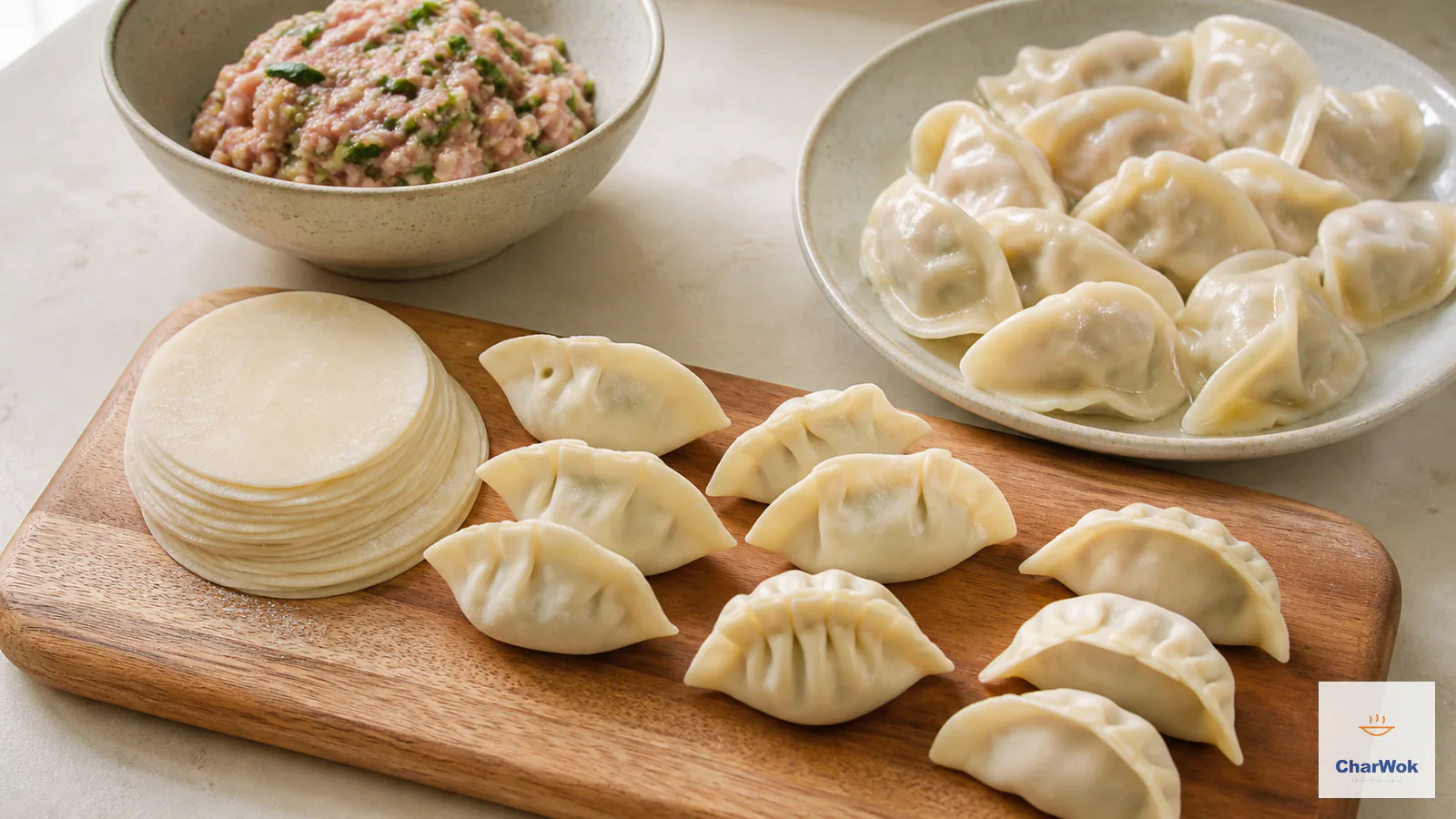
A forgiving starter dough and pork-shrimp-napa filling for about 40 dumplings
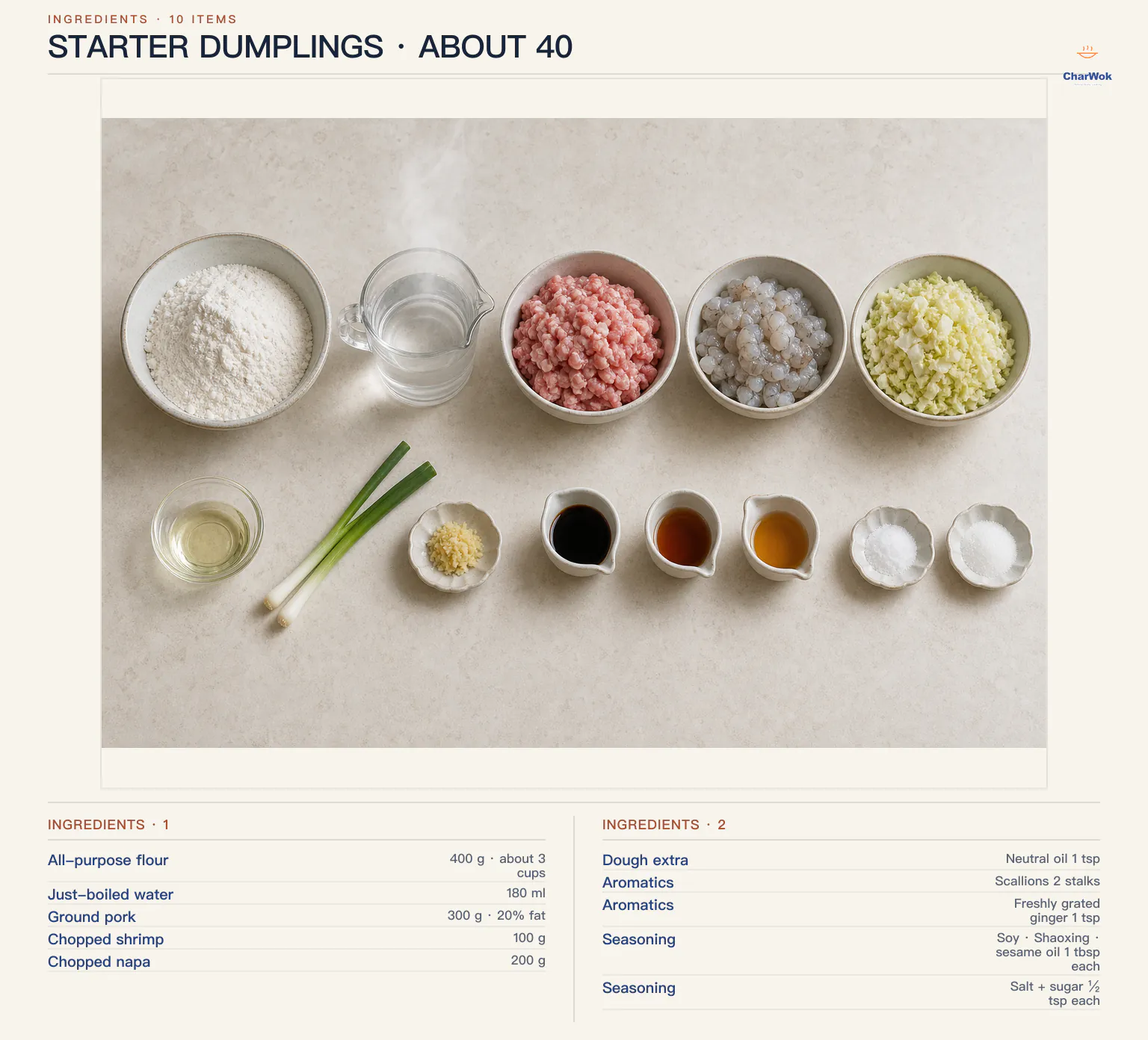
People sort dumplings by what's inside. I sort them by the wrapper, because the wrapper dictates the cooking method, the fold, and the texture. Once you know which family you're in, the filling is almost an afterthought.
- Hot-water wheat dough (north China). Used for boiled jiaozi and most potstickers. Boiling water partially cooks the starch, so the dough is soft, pliable, and strong enough to survive a rolling boil. This is the workhorse. See the full jiaozi guide for the deep version.
- Cold-water wheat dough (pan-fried and steamed buns). Gives a chewier, snappier bite and a crisper crust in the pan. Some cooks prefer it for potstickers; I prefer hot water for beginners because it forgives more.
- Egg-and-water wheat dough (wontons). A thin square skin, usually bought, that gets boiled or fried. Wonton dough has egg for tenderness and is rolled far thinner than jiaozi.
- Starch skins (dim sum). Tapioca and potato starch plus boiling water make the translucent, glassy wrapper of har gow and the bright yellow, alkaline-tinted skin of siu mai. No gluten, no resting in the wheat sense. These are a different skill and I'll be honest: they're the one family where store-bought is a defensible choice.
A starter dough and filling that works across the north Chinese family
Below is a single, forgiving ratio for hot-water dough and a pork-and-shrimp filling you can steer a dozen directions. It makes about 40 dumplings, which is one folding session and two meals. Scale the filling down if you only want one batch.
Ingredient table
| Ingredient | Amount | Notes / substitute |
|---|---|---|
| All-purpose flour (unbleached) | 400 g (about 3 cups) | Bread flour works for a chewier bite; avoid cake flour, too weak |
| Just-boiled water | 180 ml | Start with 170 ml in dry weather; add the rest if the dough feels dry |
| Neutral oil | 1 tsp | Makes the dough smoother; optional but I always add it |
| Ground pork, 20% fat | 300 g | Ask the butcher for shoulder; lean pork makes dry dumplings |
| Raw shrimp, chopped | 100 g | Leave out and add 50 g more pork for an all-pork version |
| Napa cabbage, finely chopped | 200 g | Regular green cabbage works; squeeze it first |
| Scallions, finely chopped | 2 stalks | Chinese chives are the classic swap, use 80 g |
| Ginger, grated | 1 tsp | Fresh only; powder reads as dull here |
| Light soy sauce | 1 tbsp | Use a Chinese (not Japanese) soy for the right salt curve |
| Shaoxing wine | 1 tbsp | Dry sherry is the closest Western substitute |
| Sesame oil, toasted | 1 tbsp | Untoasted sesame oil has no flavor, don't swap |
| Salt | ½ tsp | Taste the raw filling by cooking a tiny patty in the microwave |
| Sugar | ½ tsp | Roundness, not sweetness |
Method, with the why at every step
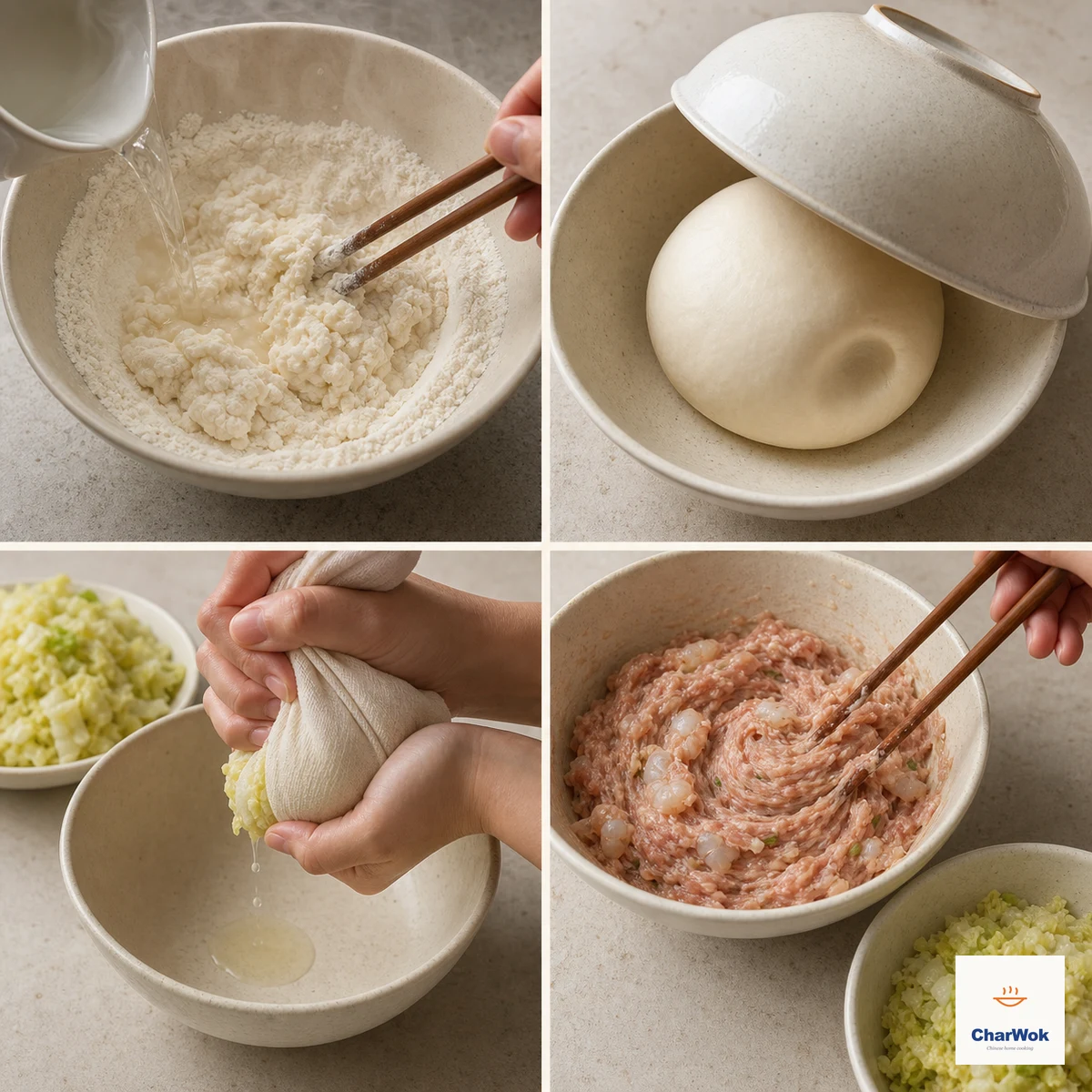
Scald and briefly knead the dough, rest it covered for 30 minutes, squeeze the salted napa dry, then beat the pork-shrimp filling in one direction until tacky before folding the vegetables in.
- Make the dough with boiling water, then knead briefly. Pour the just-boiled water onto the flour while stirring with chopsticks. The heat gelatinizes some of the surface starch, which is what makes the finished wrapper tender instead of tough. Once it's cool enough to touch, knead for about 5 minutes until smooth. It won't look perfect yet; that's fine.
- Rest the dough, covered, 30 minutes at room temperature. This is the step people skip and it's the reason their wrappers shrink back when they roll. Resting lets the gluten strands relax and the flour hydrate evenly. A dough that fights you has not rested long enough.
- While it rests, salt the cabbage and squeeze it. Toss the chopped napa with ½ tsp salt and let it sit 10 minutes, then wring it out in your fist. Wet filling is the single most common cause of dumplings that leak in the pot. Salt draws the water out; squeezing removes it.
- Beat the pork filling in one direction until sticky. Combine pork, shrimp, aromatics, soy, wine, sesame oil, salt, and sugar, then stir vigorously in one direction for 2 to 3 minutes. The meat should look lighter and slightly tacky. This develops the myosin protein network that traps fat and water, which is why a well-beaten filling stays juicy in a way a lazy one never does.
- Fold in the vegetables last. Add the squeezed cabbage and scallions just before you start filling. If they sit in the meat too long they re-weep water and undo your work.
- Roll thin at the edges, slightly thicker in the center. Cut the dough into 40 pieces, keep them covered, and roll each into a circle roughly 8 cm (3 inches) across. A thin rim and a thicker belly means the pleats seal cleanly and the base holds the filling.
- Fill, fold, and pinch with dry fingers. A tablespoon of filling, then pleat one side over the other and press. Wet dough won't seal; if the edge is damp, dab it. You don't need a fancy fold. A simple half-moon pressed shut cooks and eats exactly the same as a 12-pleat version.
- Cook by your chosen method, and don't crowd the pan. Boil, steam, or pan-fry, the method below for each family.
The major varieties, and how to choose
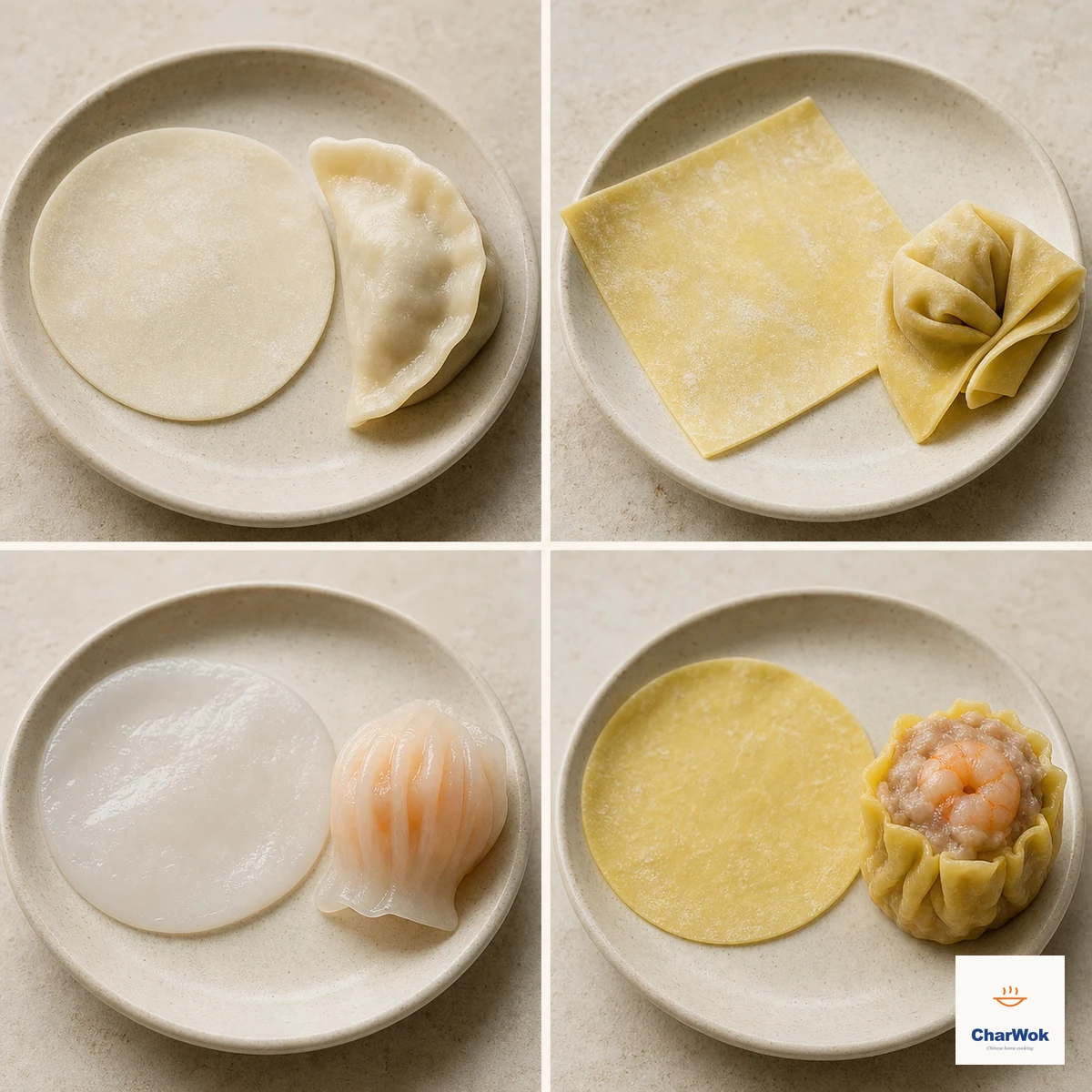
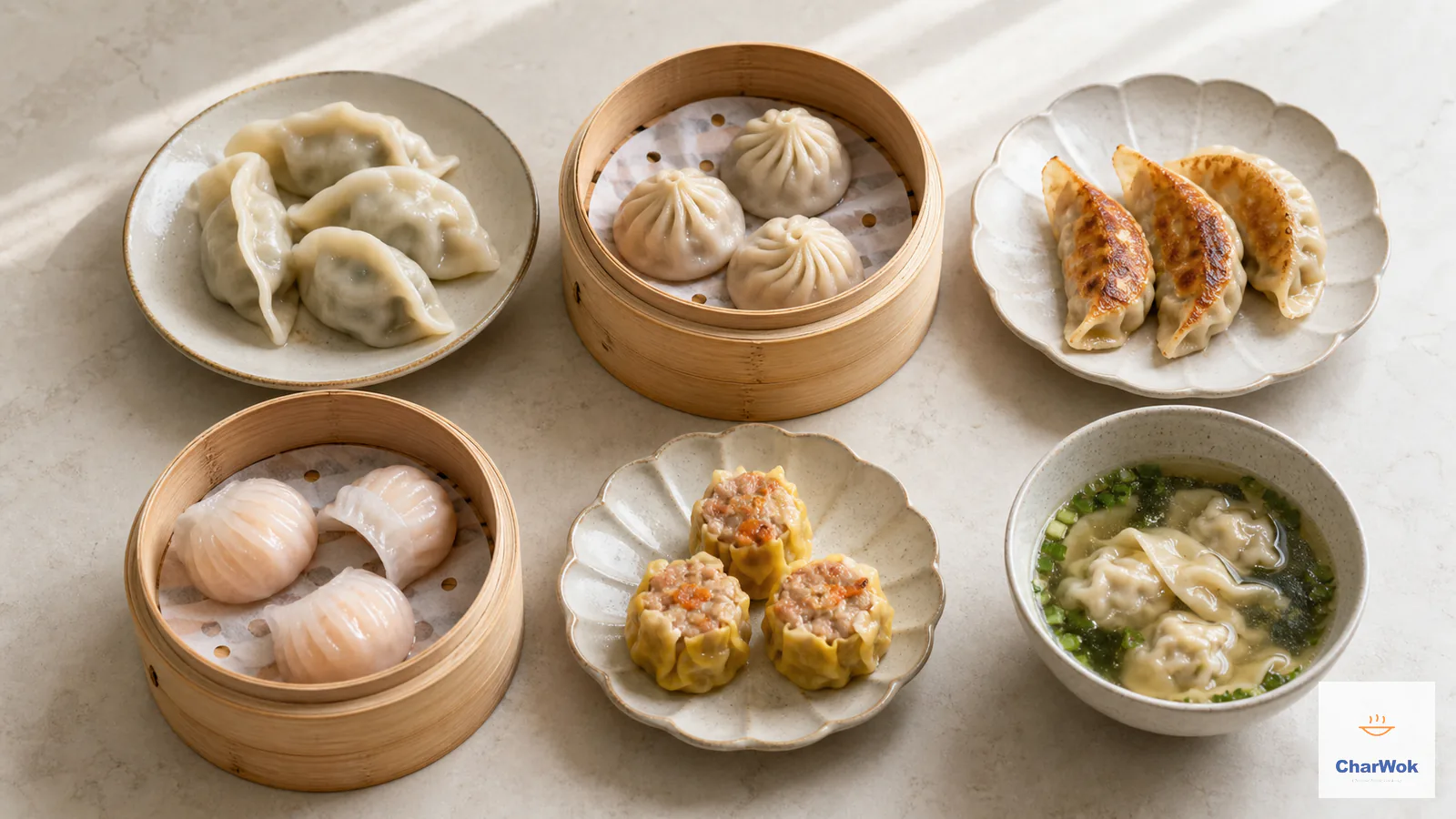
Wrapper structure sets the rules: wheat jiaozi skins, thin egg wonton skins, translucent starch skins, and open siu mai wrappers require different folds and cooking methods.
Here is the tour. I've grouped them by family so you can see the underlying logic instead of memorizing 16 unrelated recipes.
Boiled and pan-fried wheat dumplings (jiaozi)
The northern home cook's daily bread. A hot-water wrapper, a pork-and-cabbage or pork-and-chive filling, boiled until they float. The pork and napa cabbage boiled dumpling is the canonical version and the one I'd make first. The pork and chive pan-fried version uses the same dough and filling logic but finishes in a skillet with a crackly crust.
If you've never folded before, start with chicken potstickers. The pleat is forgiving, and the crispy starch "skirt" you pour in at the end hides a multitude of sins. Once potstickers click for you, the leap to steamed dumplings is small.
Wontons
Thinner skin, smaller fold, usually served in or with liquid. The filling is lighter than jiaozi, often pure pork with a little shrimp. Wonton soup is the gentle entry point; Sichuan chili oil wontons (hong you chao shou) are the loud, addictive counterpoint, the same dumplings drowned in a fragrant chili-oil sauce. For the fold itself, six wonton folds covers the shapes you'll actually use.
Shanghai soup dumplings
Xiao long bao are the project piece of the dumpling world. The "soup" is an aspic of pork skin and stock that's solid when cold and melts into broth as the dumpling steams. They're fussy, the wrapper has to be thin enough to see the filling through but strong enough to hold hot liquid. I won't pretend they're a weeknight dish. Make them once on a slow Sunday so you understand the trick, then order them out without mystery.
Cantonese dim sum dumplings
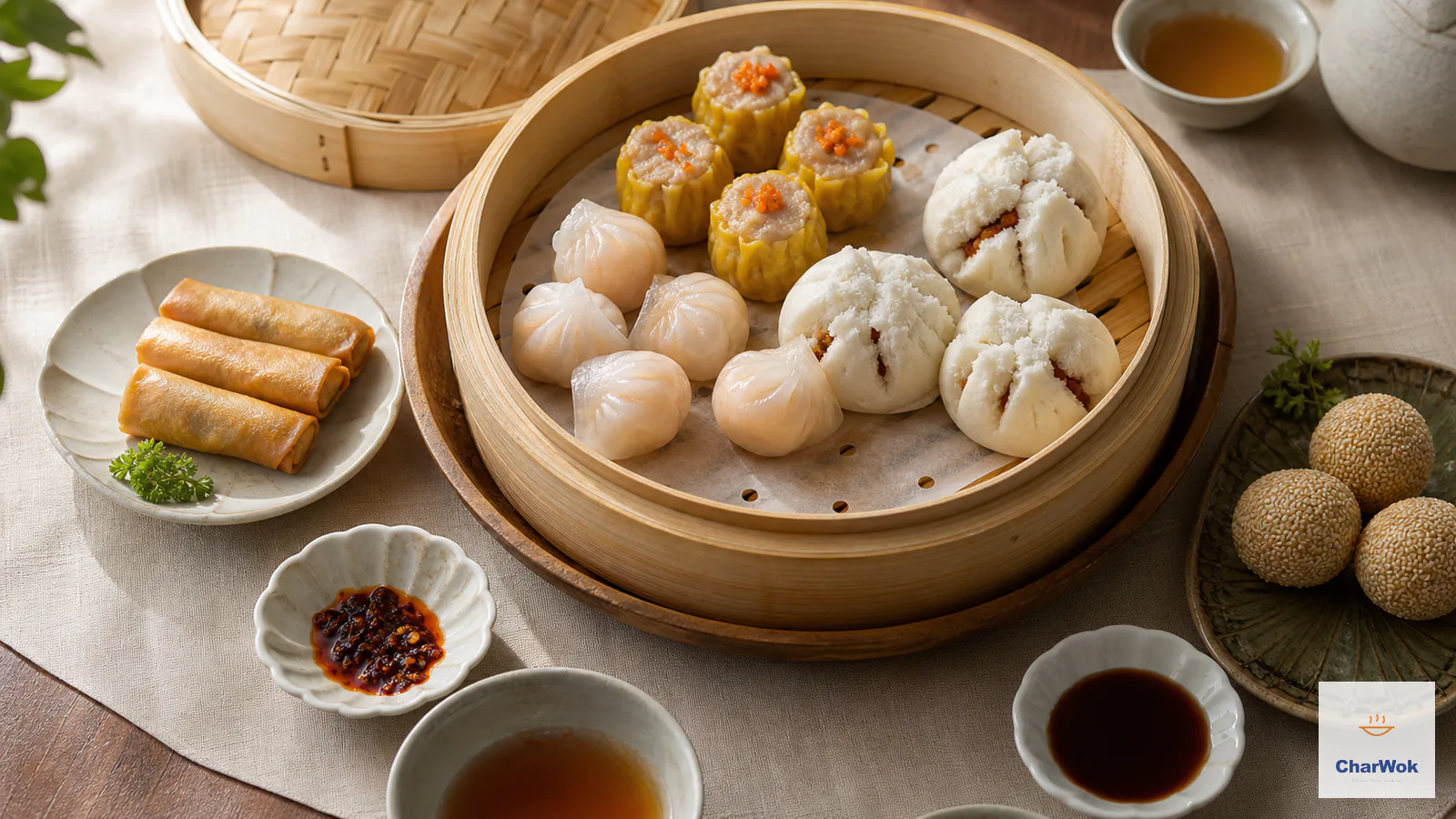
Two starch-skin classics define this family. Har gow, the translucent shrimp dumpling, gets its glassy look from tapioca starch scalded with boiling water; the dough tears if you look at it wrong and there is no second chance. Siu mai are easier, an open-topped pork-and-shrimp dumpling that's usually made with bought yellow wrappers. For siu mai, bought wrappers are a smart call. For har gow, you owe it to yourself to try the wrapper once, then decide.
Sichuan specialties
Sichuan's two famous dumplings are really about the sauce. Zhong dumplings are small boiled pork dumplings drowned in a sweet-soy-chili-oil-garlic sauce; the dumpling is almost an excuse. Pair that sensibility with the chili oil itself and you understand the region. A good chili oil is the single condiment that upgrades the most things in your kitchen, dumplings included.
Plant-based and unconventional
Vegetable dumplings get a bad rap because people treat the vegetables as an afterthought. Don't. Pan-fried vegetarian dumplings and vegan dumplings with tofu and chives work because the filling is built with intention: tofu for body, mushrooms or soy for umami, chives for the allium punch pork usually provides. Kimchi dumplings lean on well-fermented kimchi for the same reason. And if you want dumplings without any flour at all, steamed cabbage rolls wrap the filling in a blanched cabbage leaf, low-carb and surprisingly satisfying.
For a festive table, naturally colored dumplings use vegetable juices to dye the dough. They taste the same; they photograph beautifully, which is the whole point for a holiday.
Three cooking methods, and when each one matters
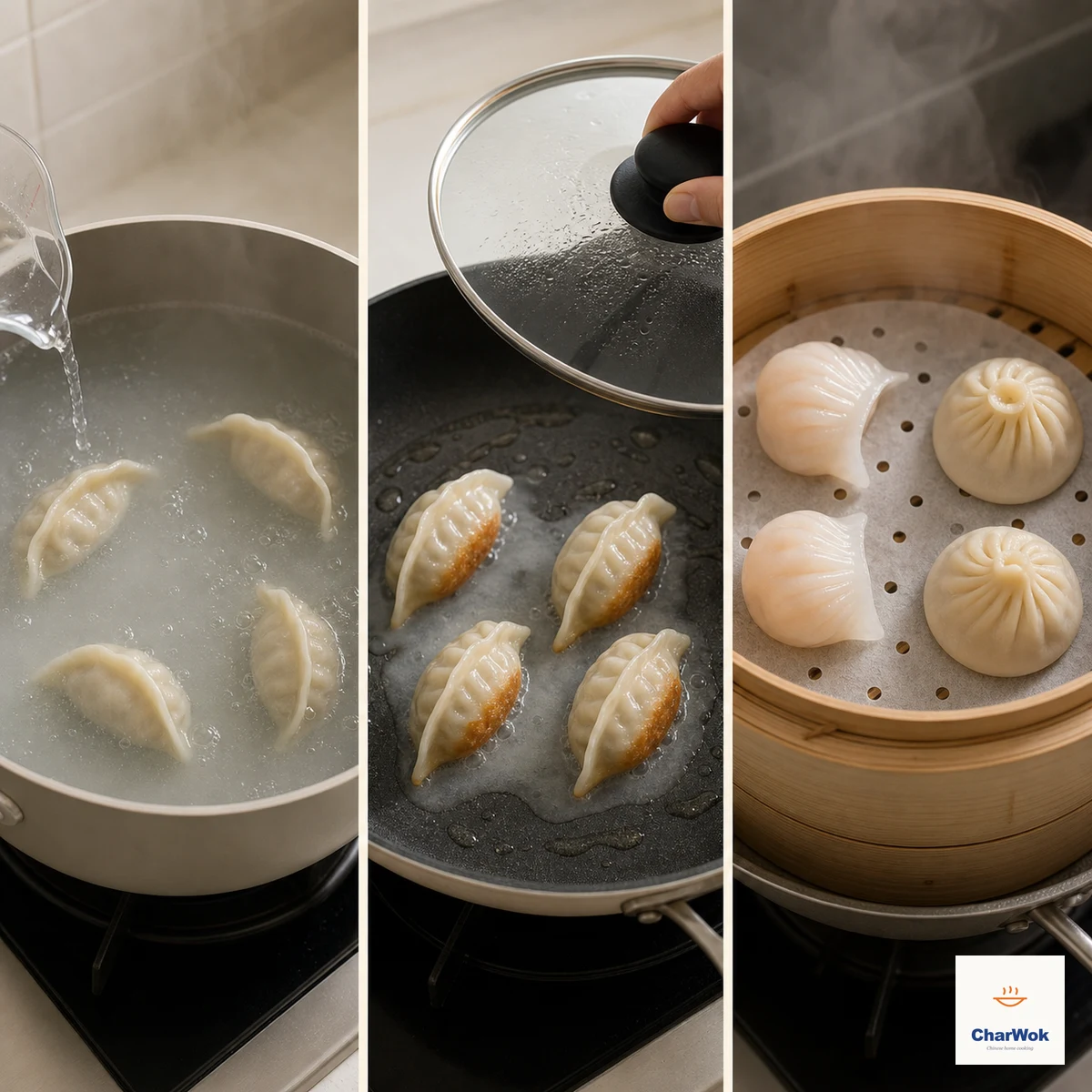
Boil in plenty of gently moving water and cool the surface with a little cold water; pan-fry, add measured water, cover, then re-crisp; or steam delicate skins over a full steam without crowding.
The three-way cooking guide goes deep, but the short version:
- Boiling (shui jiao). Best for tender, juicy wrappers. Use a large pot, plenty of water, and add cold water twice during cooking (the "dotting water" trick). This drops the surface temperature, keeps the boil gentle, and stops the wrapper from rupturing while the filling cooks through. Skim the foam or it sticks to the dumplings and clouds them.
- Pan-frying (jian jiao / potstickers). Crisp bottom, tender top. Cold dumplings into a cold oiled pan, medium heat to set the base, then a splash of water and a tight lid to steam them through, then uncovered to re-crisp. The classic failure is a burned bottom from too-high heat while the filling is still raw inside.
- Steaming (zheng jiao). Gentlest method, best for delicate skins like har gow and xiao long bao. Oil the steamer or line it with cabbage leaves so the dumplings don't stick. A rolling boil under the steamer, not a simmer.
When things go wrong
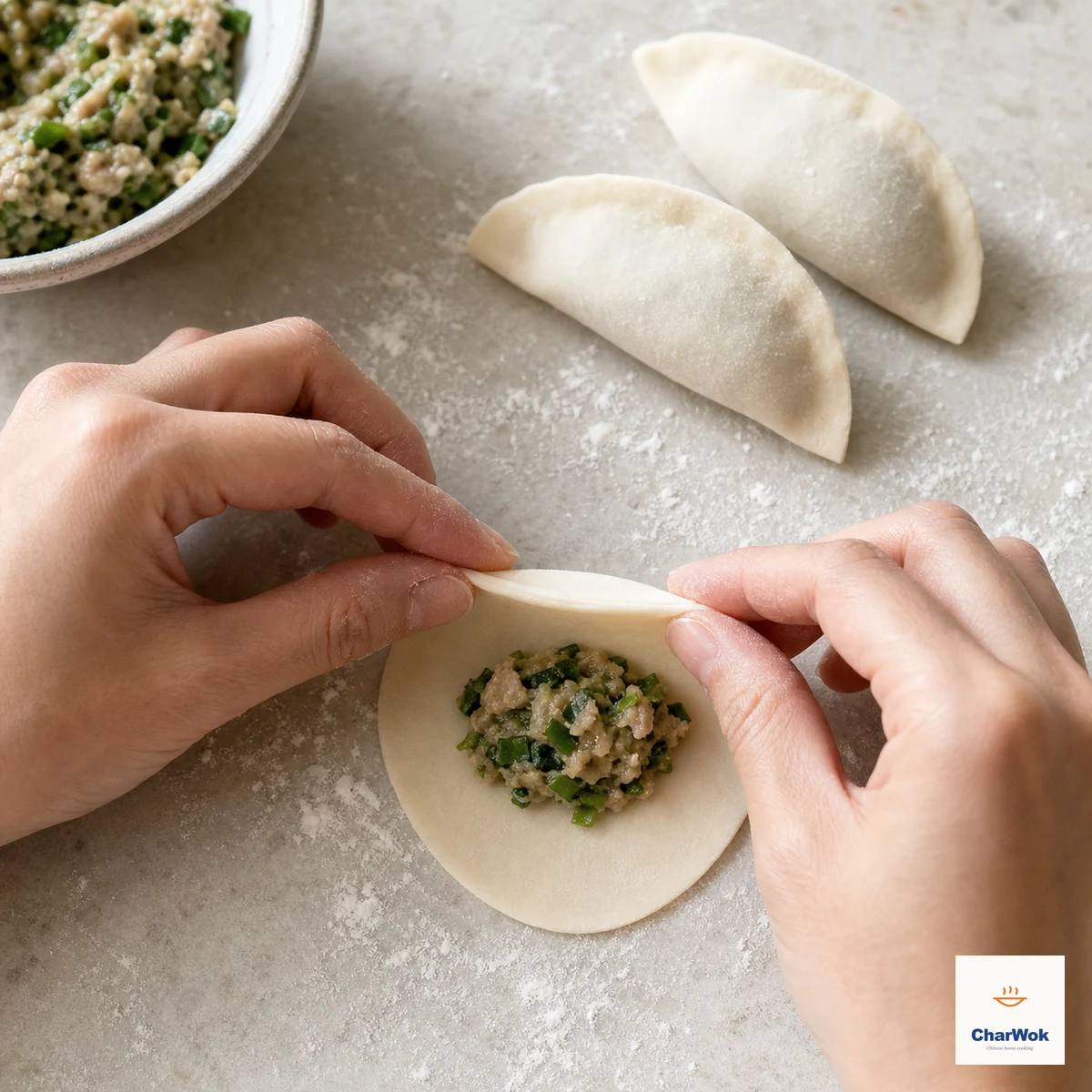
Keep oil and filling off the wrapper edge, use less filling than feels generous, and press the seam flat from end to end before the dumpling reaches the pot.
Most dumpling disasters are the same five problems. Here's what causes each and how I fix it.
- The dough won't come together or cracks when you roll. Too dry or not rested. Knead in water a teaspoon at a time, then rest another 20 minutes covered. Cracking is almost always under-resting, not under-hydration.
- The wrapper tears as you fold. Rolled too thin, or the edge got wet. Roll the rim thinner than the belly but not translucent, and keep your filling finger dry. A tear during folding can be patched with a small dough band-aid; don't throw it out.
- Dumplings burst open in the pot. Three usual suspects: overfilled, under-sealed, or the boil was too violent. Fill less generously than you think, press the seam flat, and lower the heat when the dumplings go in, then bring it back to a gentle boil.
- The filling is dense and dry, not juicy. The meat wasn't beaten long enough, or it was too lean. Beat until sticky, and don't go below 20 percent fat on the pork. Some cooks add a tablespoon of water or stock during beating; I do, in winter when the pork is leaner.
- The bottom burns before the top is cooked (potstickers). Heat too high. Start medium-low to set the crust, then add the water and cover. If it's already burning, lift the dumplings out, deglaze, and finish them under cover.
- Wonton wrapper corners dry out and crack. Keep the stack under a damp towel the entire time you work. Bought wrappers are bone-dry by design and will betray you the second you look away.
Sauces and what to serve alongside
A dumpling with no sauce is half a dumpling. The bare-bones version is black Chinkiang vinegar with a little grated ginger and a few drops of chili oil, and it beats almost anything in a bottle. For a fuller spread, work through six dumpling sauces; the sweet soy-garlic for Sichuan dumplings and the sesame-soy for boiled ones are the two I make most.
As a meal, dumplings pair well with a clean, slightly acidic vegetable to cut the richness. A quick cucumber salad, blanched greens with oyster sauce, or a bowl of egg drop soup all do the job. If you want something heartier alongside, a plate of scallion pancakes turns a dumpling dinner into a proper northern-style spread without much extra work.
Make-ahead, freezing, and reheating
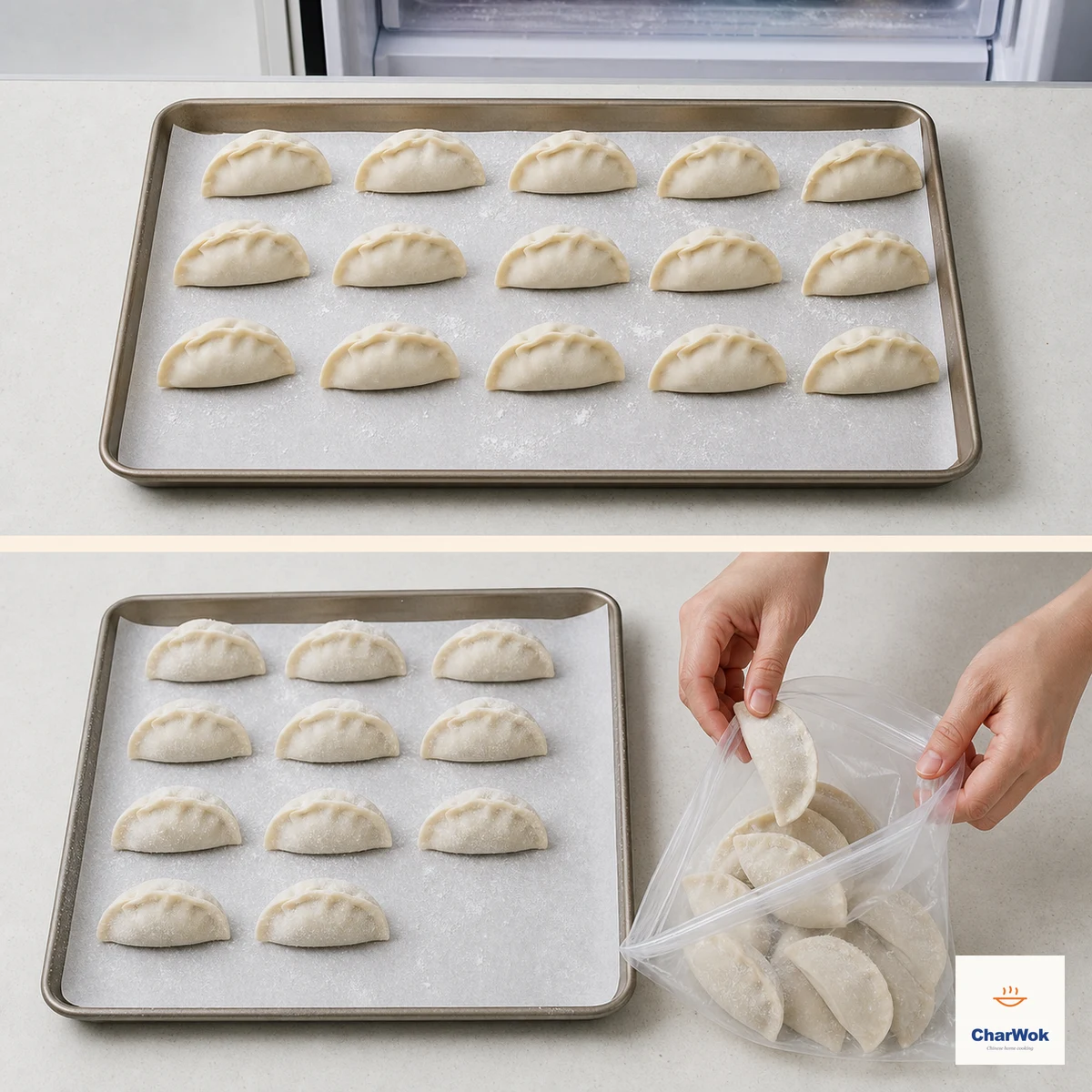
Freeze raw dumplings uncovered in one non-touching layer until solid, bag them only after they harden, and cook directly from frozen rather than thawing the seal wet.
Dumplings are one of the few things that freeze better than they refrigerate. Assembled raw, they go on a floured tray in a single layer until solid, then into a bag. Cooked from frozen, boiled or pan-fried, with one extra minute. Do not thaw them first; thawing wets the wrapper and wrecks the seal.
Cooked leftovers reheat best by pan-frying with a little water and a lid, which re-steams the inside while recrisping the bottom. The microwave works in a rush but toughens the wrapper, and I avoid it. The filling also keeps on its own for a day in the fridge, so you can fold fresh the next night with almost no prep.
Where I'd start if I were you
If this is your first time, make the boiled pork and cabbage dumplings, pan-fry half of them as potstickers, and call it a meal. Once that ratio is in your hands, the rest of the dumpling world opens up on the same foundation. The fancy folds and the dim sum skins are a later project, not a prerequisite. Honestly, my ugliest batch was also one of the best-tasting, because the dough and filling were right and nothing else matters as much as that.
Related recipes & further reading
Once the basic dough and filling click, the dumpling family branches fast. These are the recipes and guides I'd send a friend to next, from the supporting tutorials behind this hub to the dim sum and soup dishes that round out a dumpling-centric meal.
- The two companion tutorials behind this guide: making dumpling wrappers from scratch and building a great dumpling filling.
- If wontons are where you're headed, learn how to cut your own wonton wrappers, then turn them into crisp fried wontons or a bowl of wonton noodle soup.
- For a richer filling, beef dumpling soup in a tangy broth swaps pork for beef and serves them in soup instead of on the side.
- The Sichuan member of the family, leaf-wrapped sticky rice cakes (ye'er ba), is a wrapped, steamed specialty worth meeting once.
- If the dim sum side calls to you, the full dim sum recipe collection and lo mai gai (sticky rice in lotus leaf) are the natural next steps.
- A close cousin that shares the dough logic: sheng jian bao, pan-fried pork buns, which finish in a skillet the way potstickers do.
- For a wider starting point, the must-try Chinese recipes and core cooking skills guide both fold dumplings into a bigger home-cooking picture.
Frequently asked questions
Q: Do I have to use boiling water for dumpling dough? For boiled jiaozi and most potstickers, yes. Boiling water gelatinizes surface starch, which gives a tender, easy-to-roll wrapper that holds up in a rolling boil. Cold-water dough works for some pan-fried styles but shrinks back more when rolled and is less forgiving for beginners.
Q: Can I use store-bought dumpling wrappers instead of making dough? Yes, and for siu mai and wontons they're a smart shortcut. For boiled jiaozi, homemade hot-water dough has a softer, chewier bite that bought square wrappers can't match, so it's worth the 15 minutes of active work if you have the time.
Q: Why do my dumplings break open while boiling? Usually overfilling, a weak seal, or too violent a boil. Use less filling than feels right, press the seam flat, and lower the heat when the dumplings go in before bringing it back to a gentle boil. Adding cold water twice during cooking also keeps the surface calm.
Q: How do I freeze dumplings so they don't stick together? Freeze them raw in a single layer on a floured or parchment-lined tray until solid, then transfer to a bag. Cook them straight from frozen, adding one extra minute, and never thaw them first; thawing wets the wrapper and breaks the seal.
Q: What's the difference between a dumpling, a wonton, and a potsticker? A potsticker (jian jiao) is a wheat-dough dumpling pan-fried with a crisp bottom. A wonton is a smaller dumpling with a thin, usually egg-based square skin, served in soup or sauce. Jiaozi is the broader northern term for filled wheat-dumplings, which can be boiled, steamed, or pan-fried.