A wonton wrapper has one job that sounds simple and is not: be thin enough to disappear around the filling, strong enough to survive a rolling boil. The store-bought squares you get in a vacuum pack lean gummy. The ones from a decent Cantonese noodle shop are better, but they sit in the case for days and develop a stale, chalky edge. The moment you roll your own, you understand the gap. A fresh wrapper stretches a little when you fold it, seals with a breath of water, and cooks up with that faint translucent shimmer that tells you the dough was alive an hour ago.
This is a dough I fought for a long time. My early batches tore in the machine, or came out so brittle the wontons split open in the pot and leaked their filling into the broth. The fix was not a secret ingredient. It was two things I had been getting wrong: I was not resting the dough long enough, and I was dusting with flour instead of cornstarch. Get those two right and the rest follows.
At a glance: Use roughly twice as much flour by weight as egg whites (about 128 g flour to 64 g egg whites from 2 large eggs), add ½ tsp lye water and ¼ tsp salt, rest the dough 30 minutes, then roll it through a pasta machine to about 0.8 mm. Rest the dough and dust with cornstarch, not flour. These two habits are the whole game.
What a wonton wrapper actually is
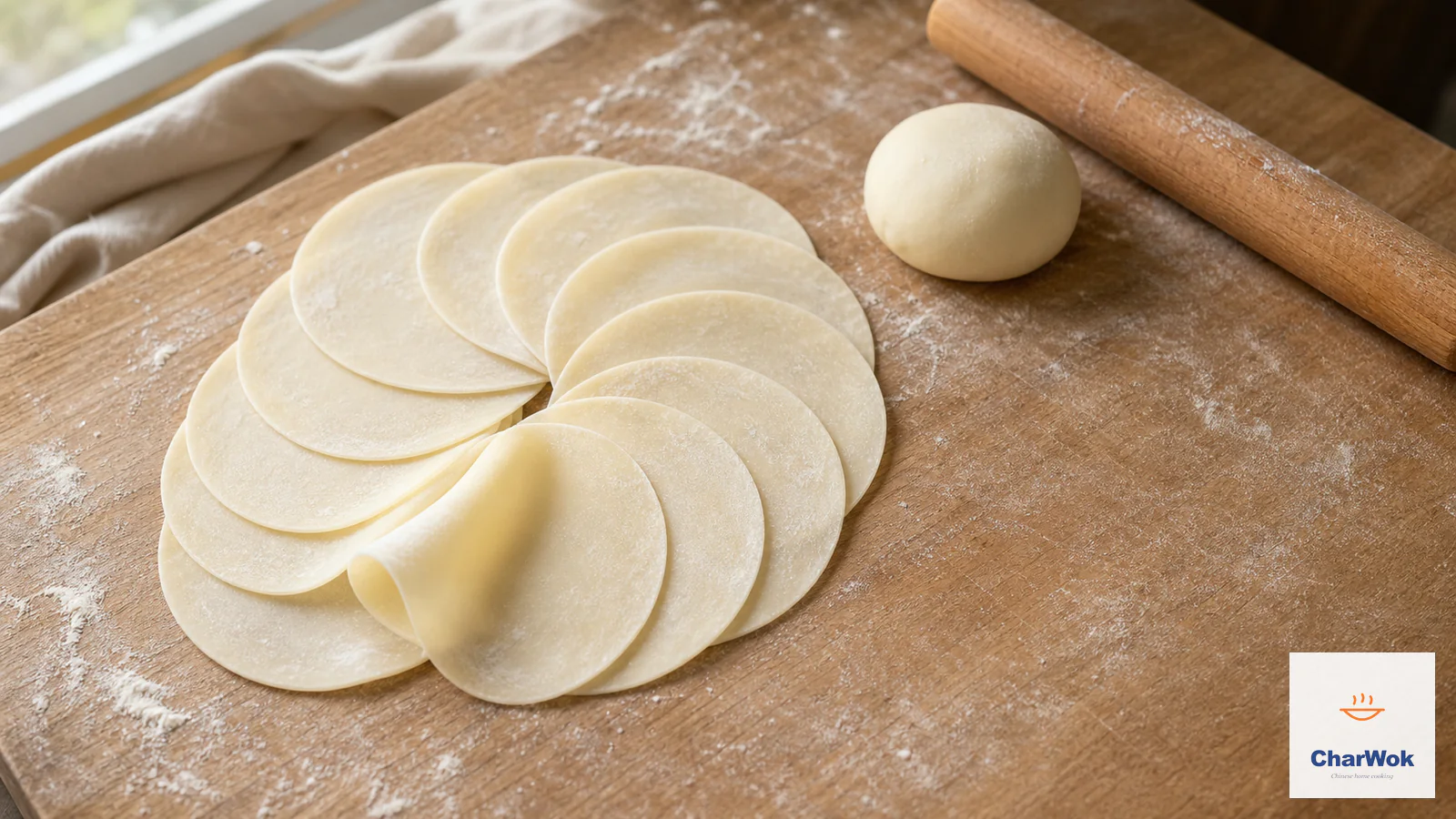
Wontons belong to a broad northern-and-southern Chinese family of filled dumplings, and the wrapper is where a wonton diverges from a jiaozi. A dumpling wrapper like the ones in the homemade dumpling wrappers method is rolled thicker and round, built to hold a generous meatball of filling and stand up to pan-frying. A wonton wrapper is square, rolled thin enough to read newsprint through, and meant to cook in seconds in hot broth or oil.
The egg white in the dough is not there for richness. Egg white is almost pure protein, and that extra protein builds a stronger gluten network than water alone. Strong gluten is what lets you roll a sheet to under a millimeter without it shredding. The salt tightens the gluten further and seasons the dough faintly. And the lye water, a weak alkaline solution, is the ingredient most home cooks skip and most noodle shops would never omit. Alkalinity changes the way the starches gelatinize and the gluten behaves, giving the cooked wrapper that slightly springy, almost translucent quality you associate with alkaline noodles. If you have never bought a bottle, the lye water guide covers what it is and how to substitute it in a pinch.
Ingredients
Ingredients at a glance
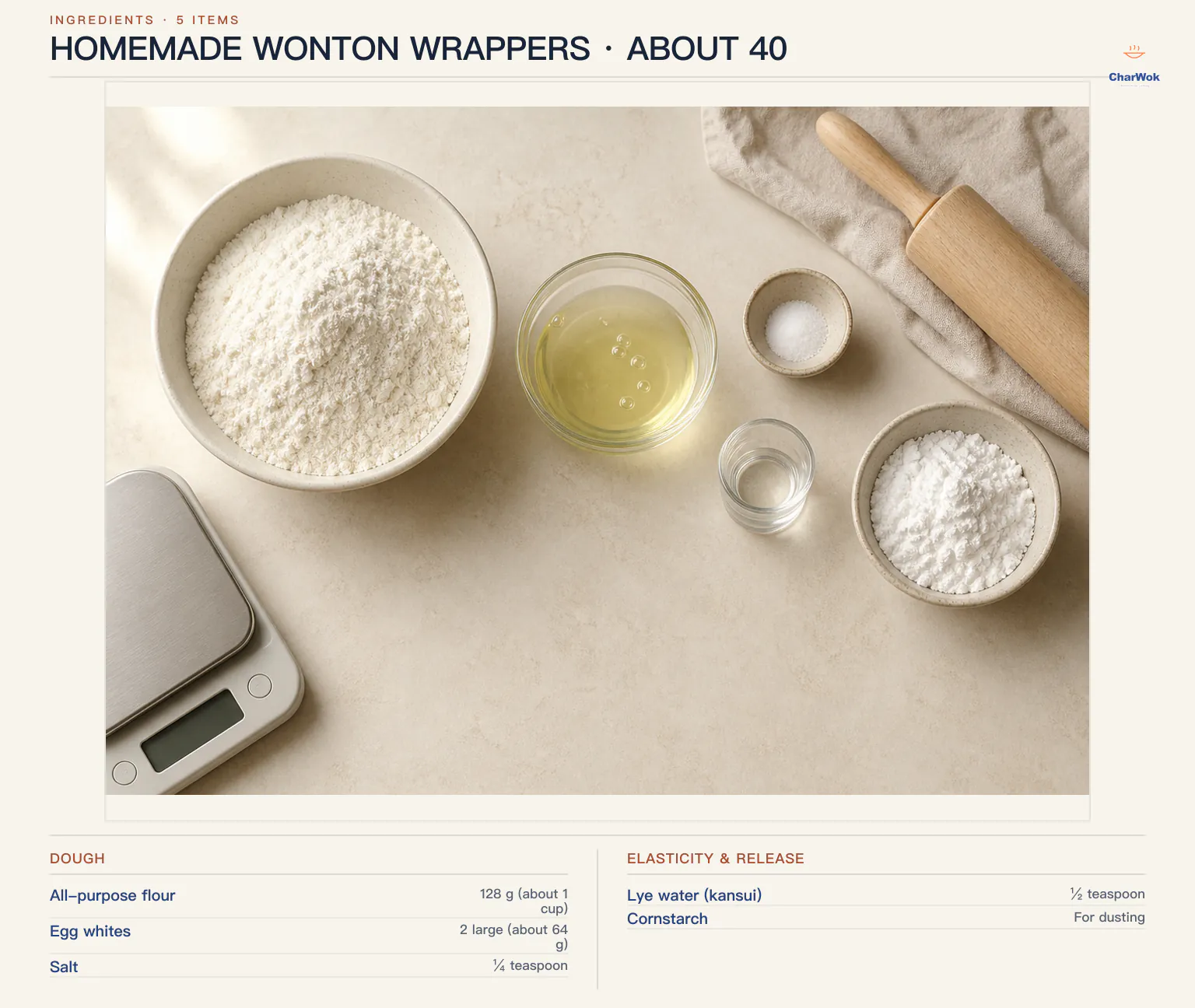
| Ingredient | Amount | Notes / substitute |
|---|---|---|
| All-purpose flour | 128 g (about 1 cup) | Use double the weight of your egg whites. US all-purpose (11-12% protein) is ideal; a 00 pasta flour also works. Avoid bread flour, which gets too tough at this thinness. |
| Egg whites | 2 large (about 64 g) | Save the yolks for a custard bun or fried rice. Weigh the whites and double that number for the flour. |
| Salt | ¼ teaspoon | Fine sea salt or table salt dissolves evenly. Kosher is fine but dissolve it in the egg white first. |
| Lye water (kansui) | ½ teaspoon | Gives the springy, translucent bite. If you cannot find it, substitute ½ tsp baked baking soda (bake plain baking soda at 120°C/250°F for 1 hour). The result is close, not identical. |
| Cornstarch | For dusting | Do not substitute flour. Flour rehydrates into the dough and makes the sheets stick to each other. Cornstarch stays inert and acts as a true release agent. Potato starch works too. |
Equipment you will actually use
A pasta machine is the one tool that makes this recipe reasonable. You can roll wonton dough by hand with a long pin, and I have done it, but reaching 0.8 mm of even thickness across a full sheet by hand is a long, sweaty fight. A cheap clamp-on Marcato-style machine is plenty. Beyond that you want a bench scraper, a clean kitchen towel to keep the dough covered, and a ruler if you want tidy squares. A round biscuit cutter works if you prefer round wrappers, though square is traditional and faster to cut from a long sheet.
The method, step by step
- Weigh the egg whites first, then double the weight for the flour. Two large whites usually land around 64 g, so you reach for about 128 g of flour. Weighing rather than measuring by cup is what makes this recipe repeatable. Crack the eggs, separate the whites, and set the yolks aside.
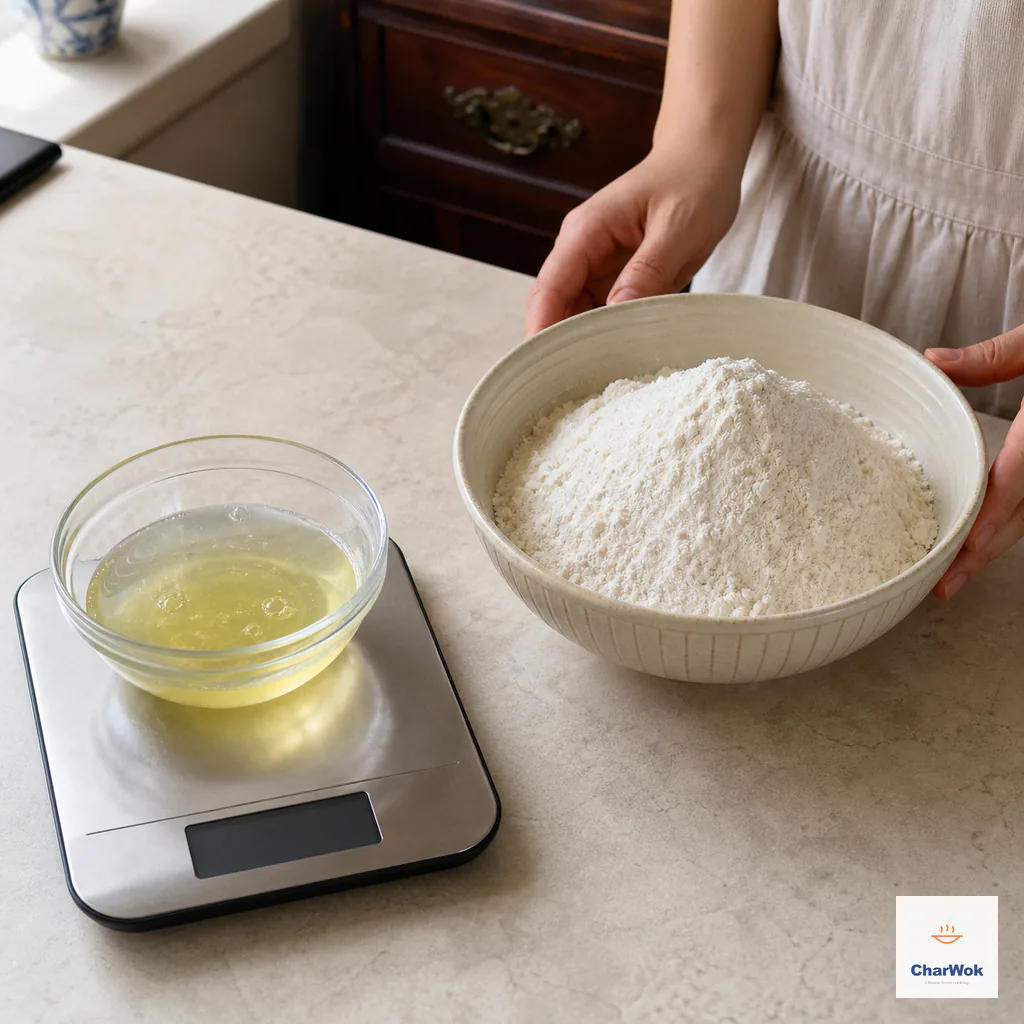
Weigh the egg whites first, then use twice that weight in flour; two large whites are usually about 64 grams, so the flour is about 128 grams.
- Combine flour and salt in a wide bowl. Whisk them together so the salt is evenly distributed. Make a well in the center.
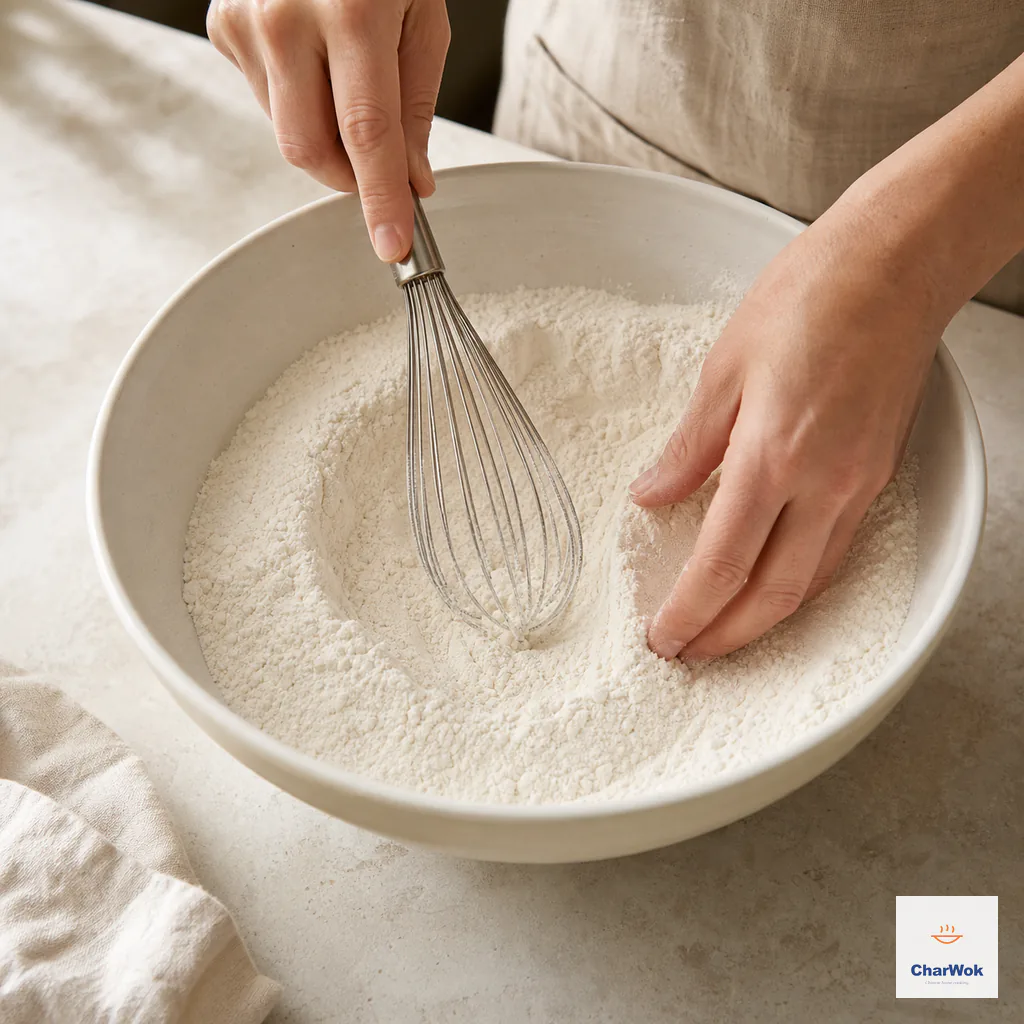
Whisk the flour and salt evenly, then make a well for the egg whites and lye water.
- Add the egg whites and lye water. Stir with chopsticks or a fork in small circles, pulling flour in from the edges, until no loose liquid remains and you have a shaggy, uneven mass. It will look ugly and unpromising. That is correct.
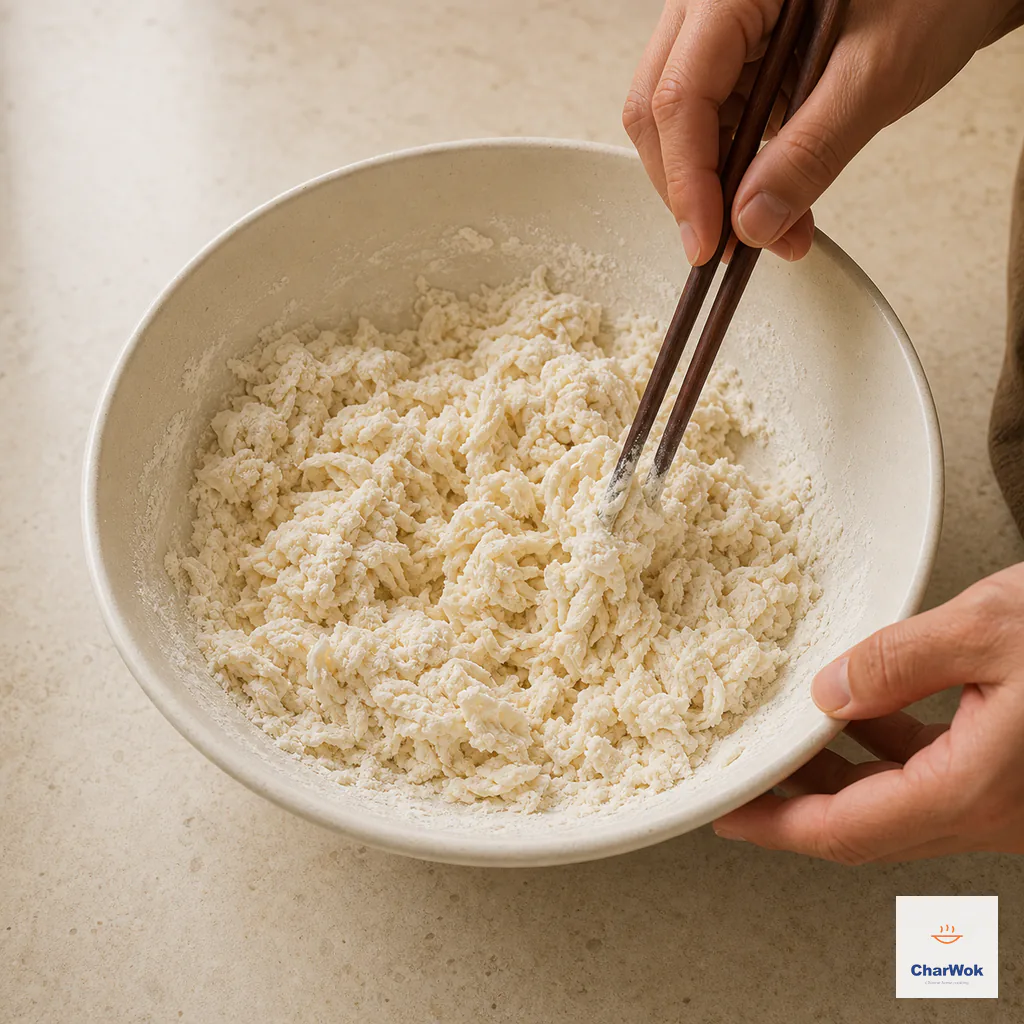
Stir the egg whites and lye water into the flour until no loose liquid remains and the mixture looks shaggy.
- Press it into a single dough, then stop touching it. Knead briefly in the bowl just until it holds together as one rough ball. It will not be smooth, and it should not be. Wrap it tightly in plastic or cover it with a damp towel, and rest it for 30 minutes at room temperature. This rest is the step people skip and the step that ruins the rest of the recipe. The flour needs time to fully hydrate, and the gluten you just agitated needs time to relax. Skip the rest and the dough will fight the rollers and tear.
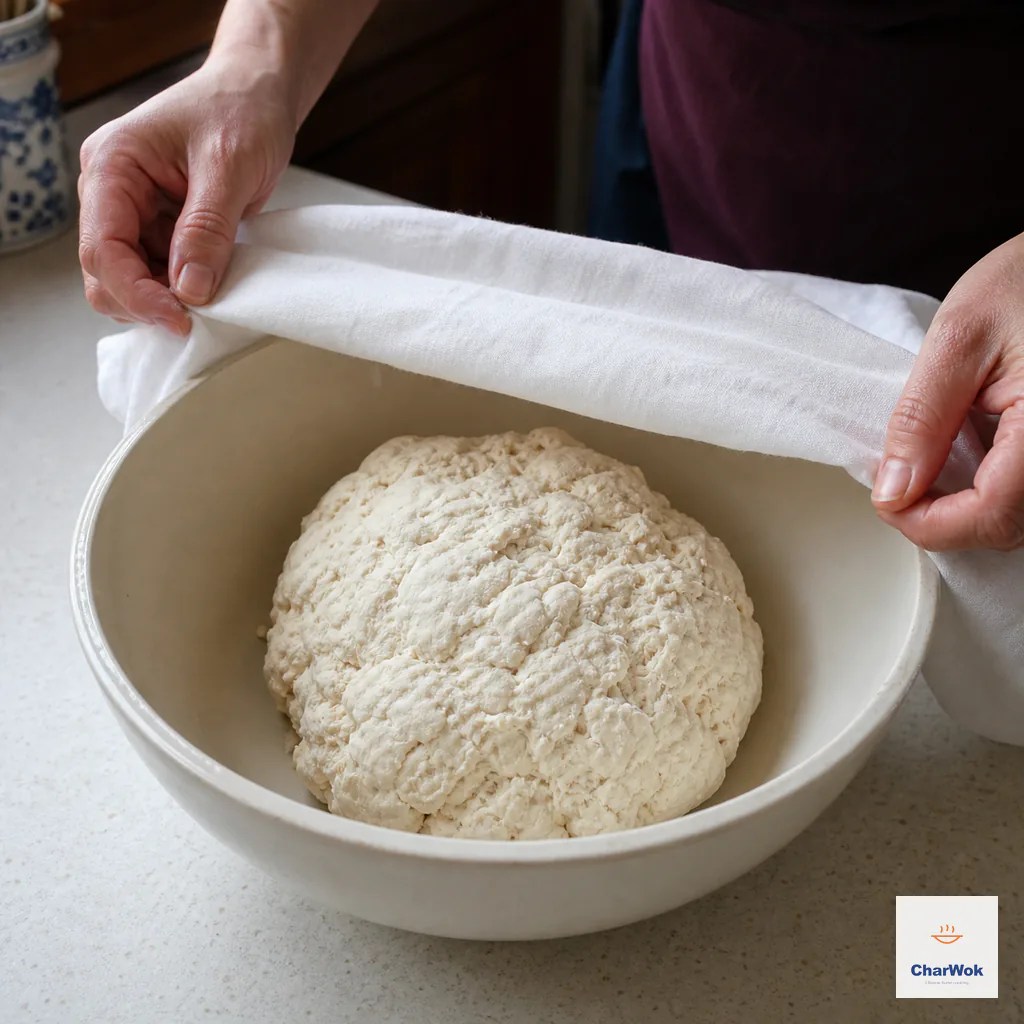
Press the flakes into a rough cohesive ball, cover tightly and rest for about 30 minutes before kneading.
- Knead again, briefly. After the rest, the dough transforms. Knead it on an unfloured surface for a minute or two until it is smooth and only slightly tacky. Divide it into two equal pieces. Keep the piece you are not working with wrapped so it does not dry out.
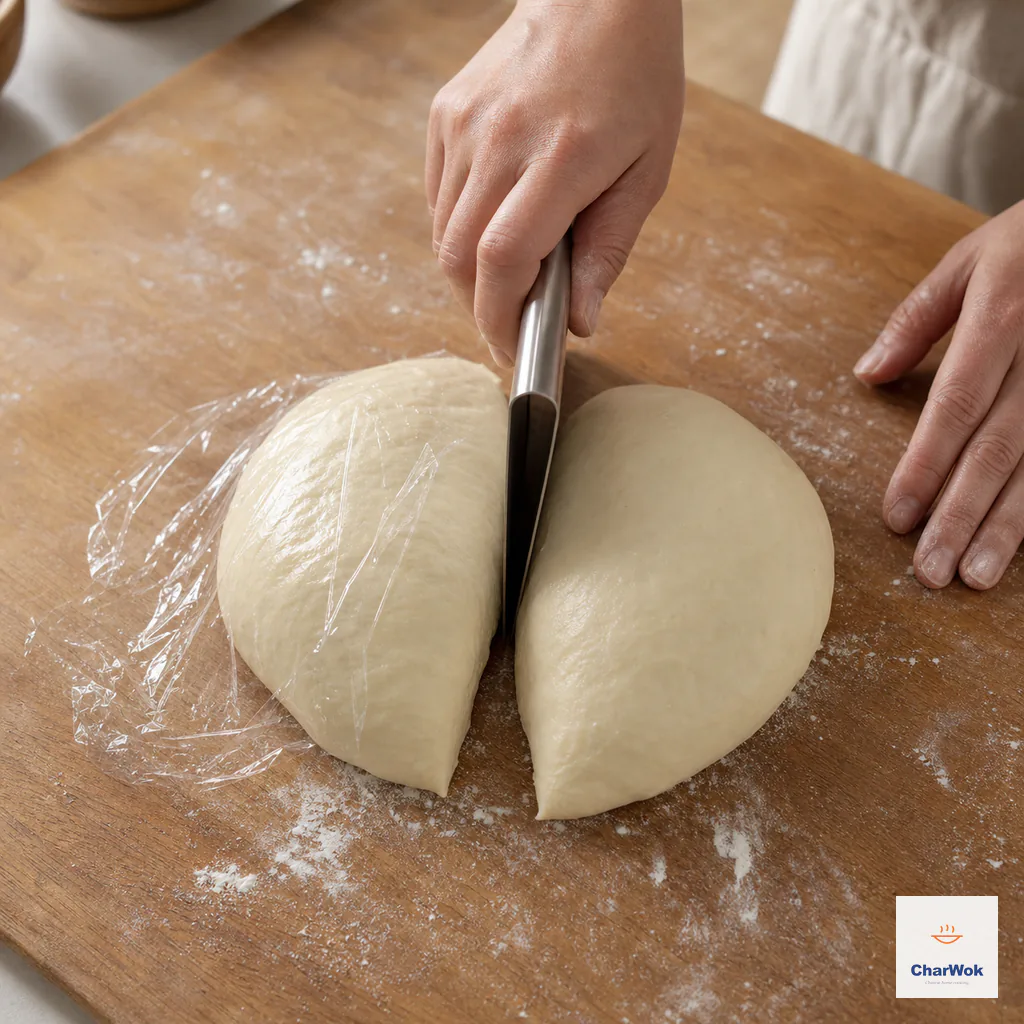
Knead briefly until smooth, divide into two equal halves and keep the waiting half covered so it cannot dry.
- Flatten one piece into a squarish disc thin enough to feed into the pasta machine on its widest setting. Roll it a few times with a pin if needed.
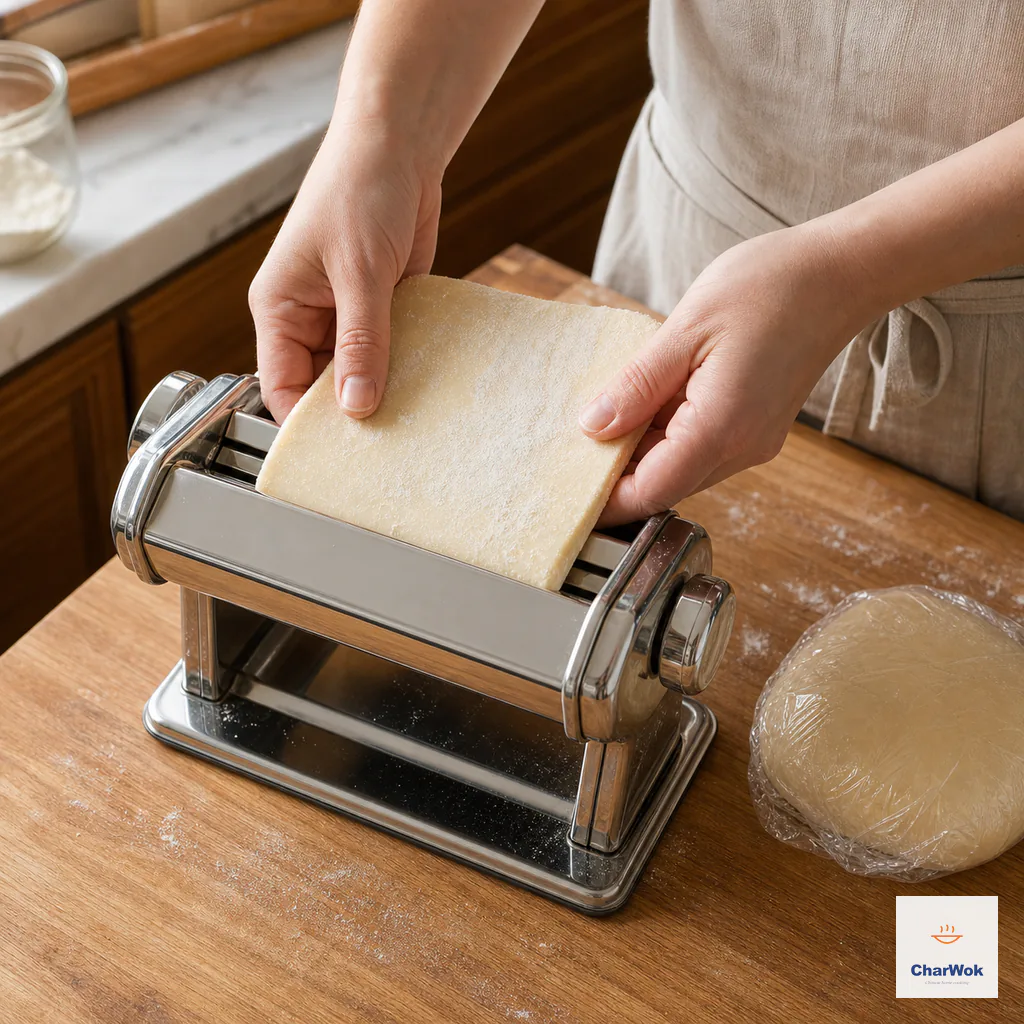
Flatten one half into a squarish slab, dust it lightly with cornstarch and feed it through the widest setting.
- Roll, fold, roll. Pass the dough through the widest setting. Fold it in thirds like a letter, turn it 90 degrees, and pass it through again. Repeat this fold-and-roll two or three times. The folding layers the dough and forces the sheet to the full width of the rollers, which gives you clean edges instead of ragged ones. Begin dusting with cornstarch now, lightly, whenever the sheet looks even slightly sticky.
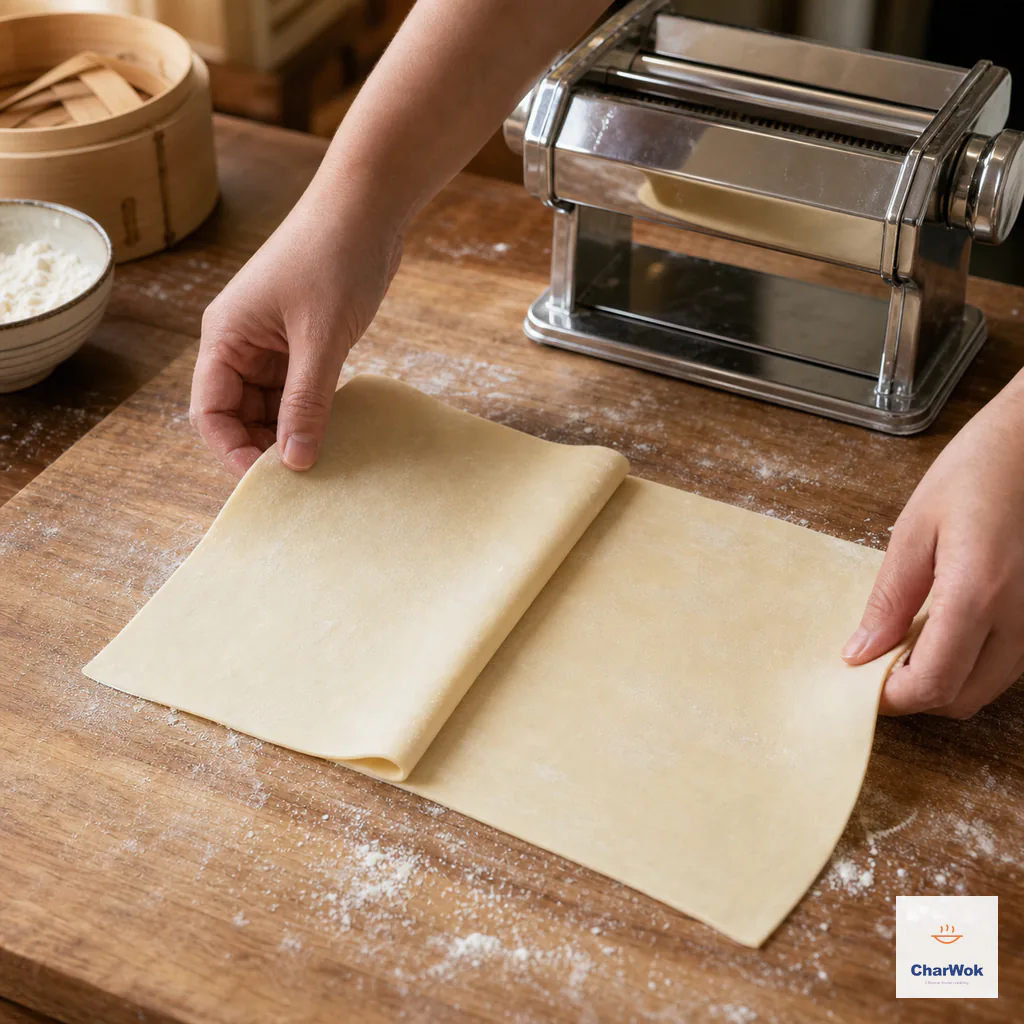
Fold the wide sheet in thirds, turn it 90 degrees and roll again; repeat two or three times to strengthen the dough.
- Thin the sheet one setting at a time. Move the dial one notch thinner and roll the sheet through twice at each new setting. No more folding from here on. Go gently. If the sheet tears, the dough is either too dry (mist the surface with a damp hand) or too sticky (dust with cornstarch). On a 0-to-9 machine I stop at setting 7, which lands around 0.8 mm. You want to see your hand shadow through the sheet. Thinner than that tears when folded; thicker and your wontons feel doughy.
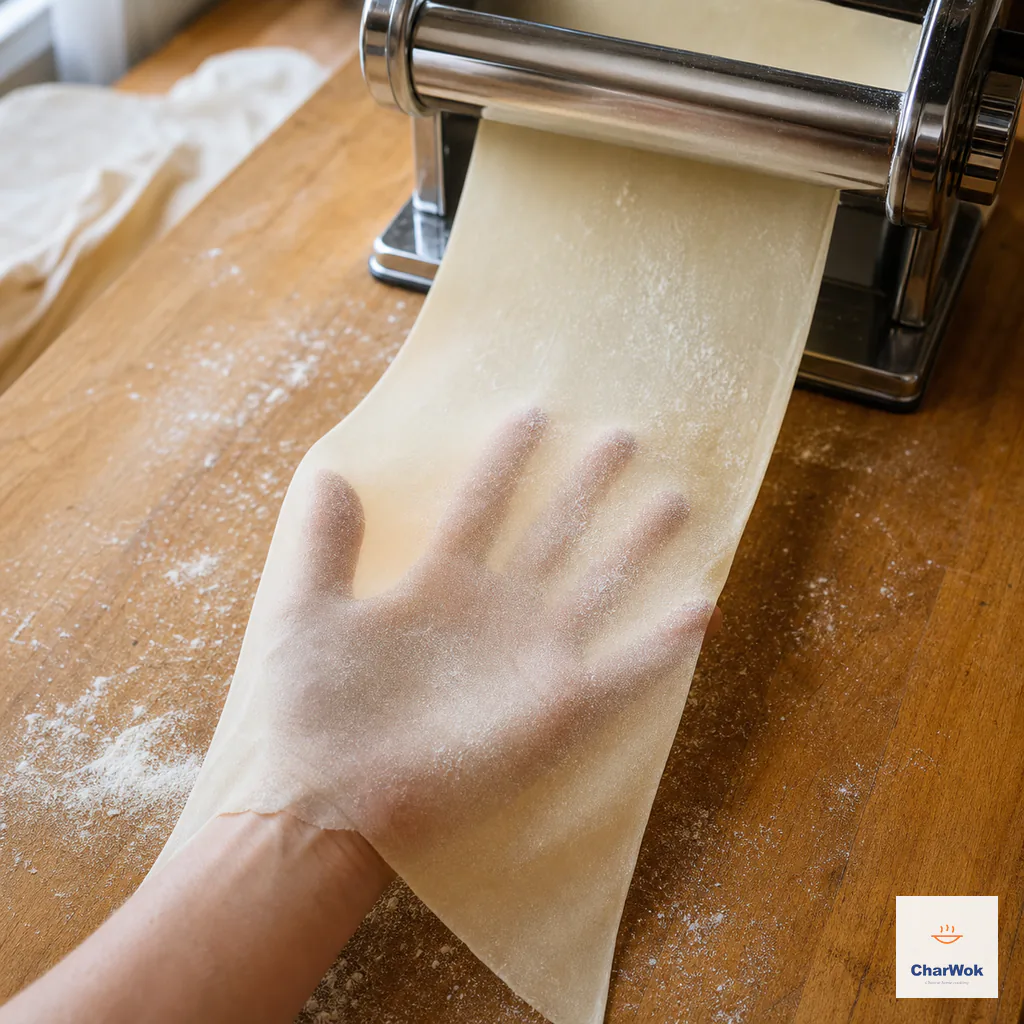
Thin one setting at a time, twice per setting, until the sheet is about 0.8 millimetres and a hand shadow shows through.
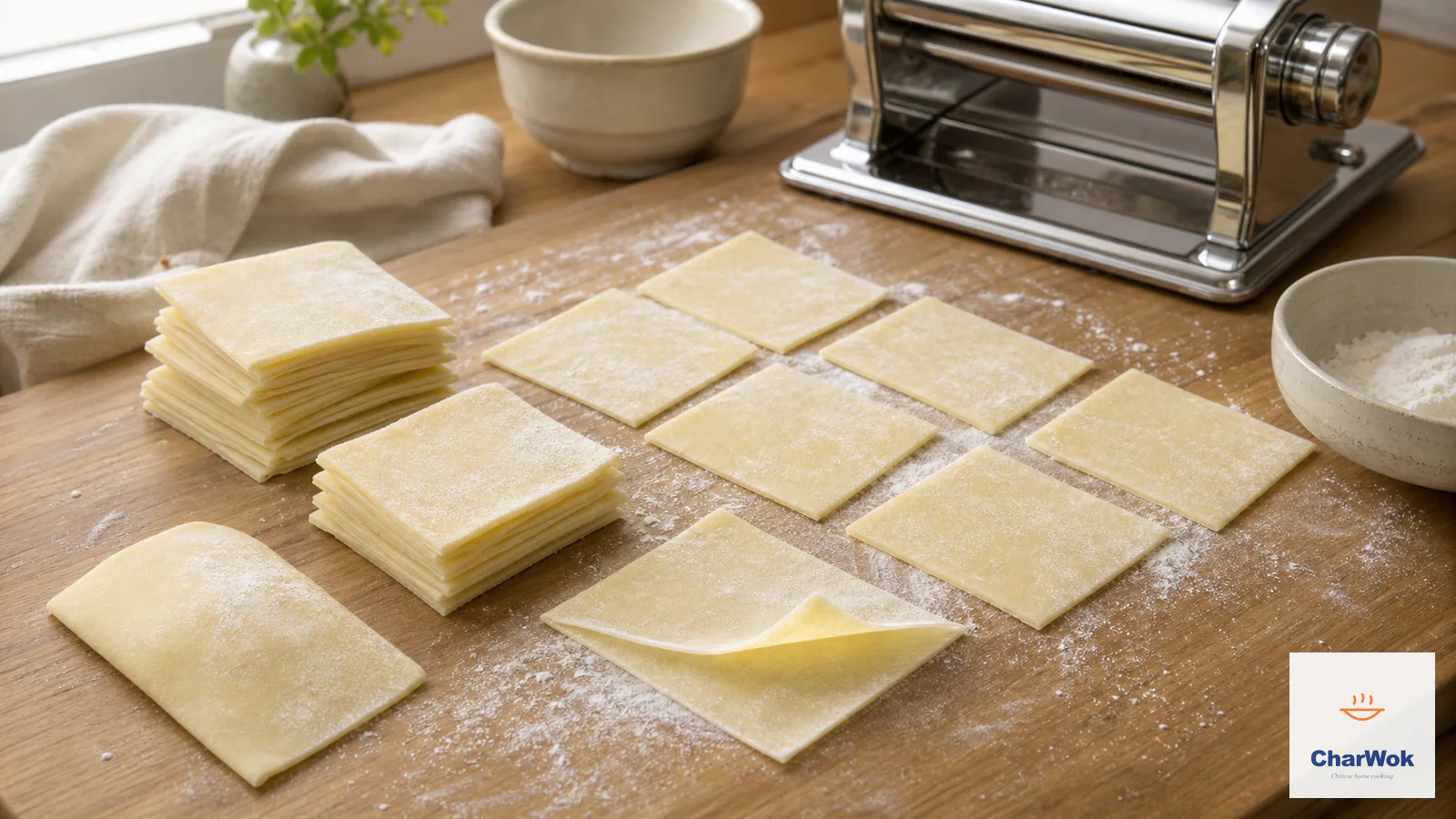
- Cut into squares. Lay the finished sheet on the counter, dust it evenly with cornstarch, and accordion-fold it into a stack. Cut down the middle to make two long strips, then cut across at 8 cm (3 in) intervals to make squares. Trim the ragged edges if you like, or leave them rustic.
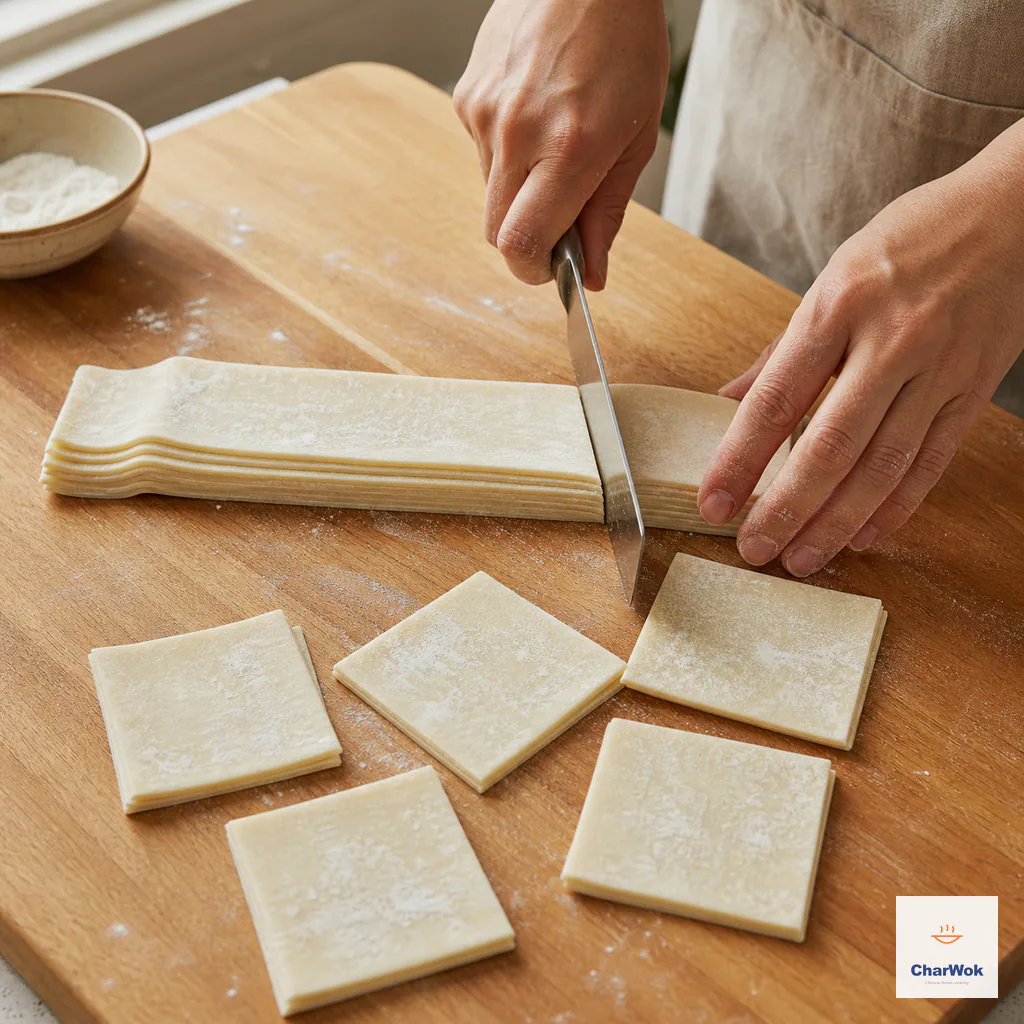
Dust the sheet, fold it into an accordion, divide it into strips and cut across to make roughly 8-centimetre squares.
- Use now, or freeze them. Stack the squares with a thin film of cornstarch between each and either fill and fold them immediately or pack them away.
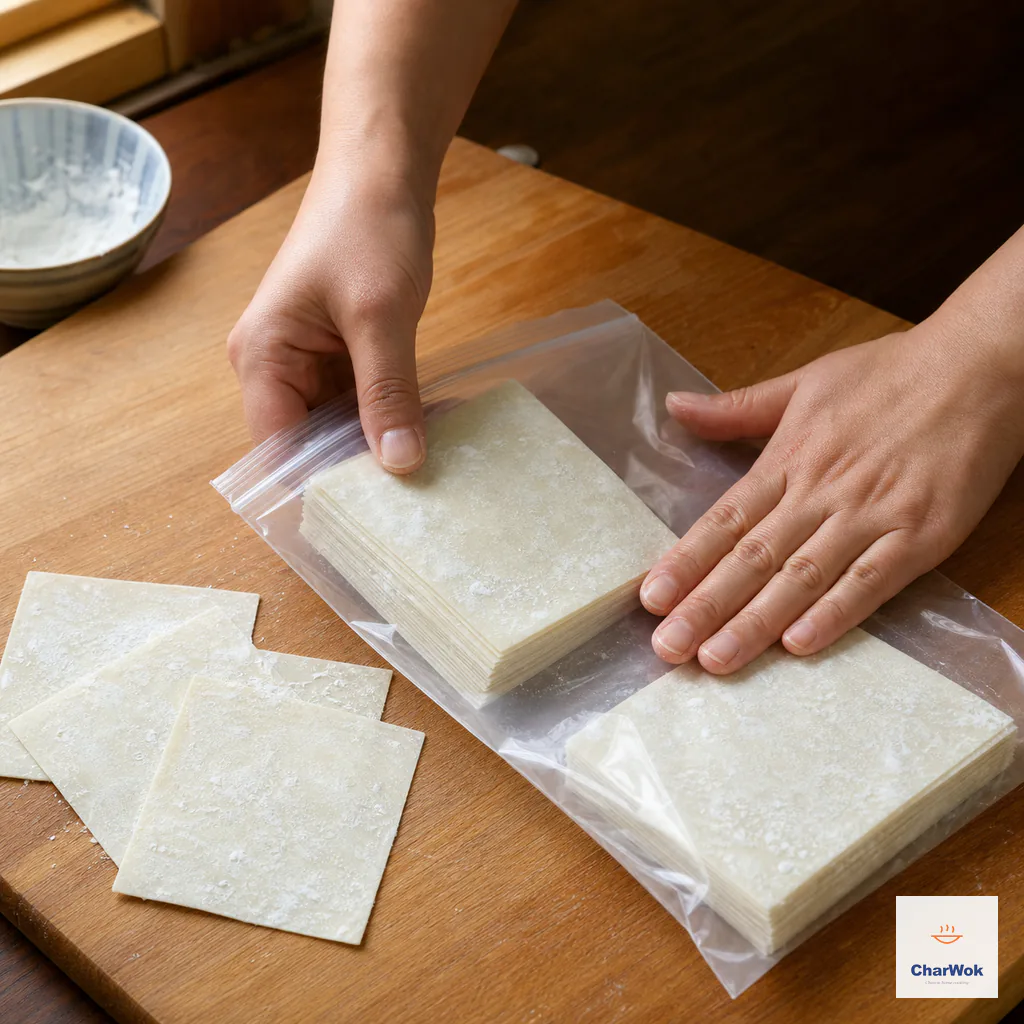
Use the wrappers now, or dust every layer lightly, seal the stack airtight and refrigerate or freeze it.
When the dough misbehaves
Most wonton-wrapper failures fall into three buckets, and each one has a single clear cause.
The dough tears as it goes through the rollers. This is almost always a hydration problem. If the dough looks dry and cracked at the edges, wet your hand under the tap, knead the moisture in, and rest it ten more minutes. If it tears in long straight lines down the middle, you jumped too many settings at once. Go back one notch and take it slower.
The sheets stick together into one sad block. You dusted with flour instead of cornstarch, or you did not dust at all. Flour hydrates from the moisture in the dough and turns into glue. Once a stack has fused, there is no rescue. Start over and use cornstarch, generously, between every layer. This is the single mistake I made most often before it finally stuck.
The wontons split open in the boiling broth. Usually the sheet was too thick at the seam where you sealed it, or you trapped an air pocket inside. Press the filling flat, ease the air out as you close the wrapper, and seal with a thin film of water on the edge. A wrapper that is too dry along the seam also fails to bond. A quick dab of water fixes it.
The cooked wrapper is tough, almost rubbery. Either you overworked the dough before the first rest, or you used a high-protein bread flour. All-purpose is the right call here. Bread flour gives a noodle-chew that overpowers the filling.
Folding, cooking, and what to put inside
A wrapper is only as good as the fold that closes it, and wontons have more fold options than most people realize. The six folding styles range from the quick triangle-and-bunch that suits a weeknight soup to neater pleated shapes meant for presentation. For a beginner, the simple triangle is forgiving and seals reliably.
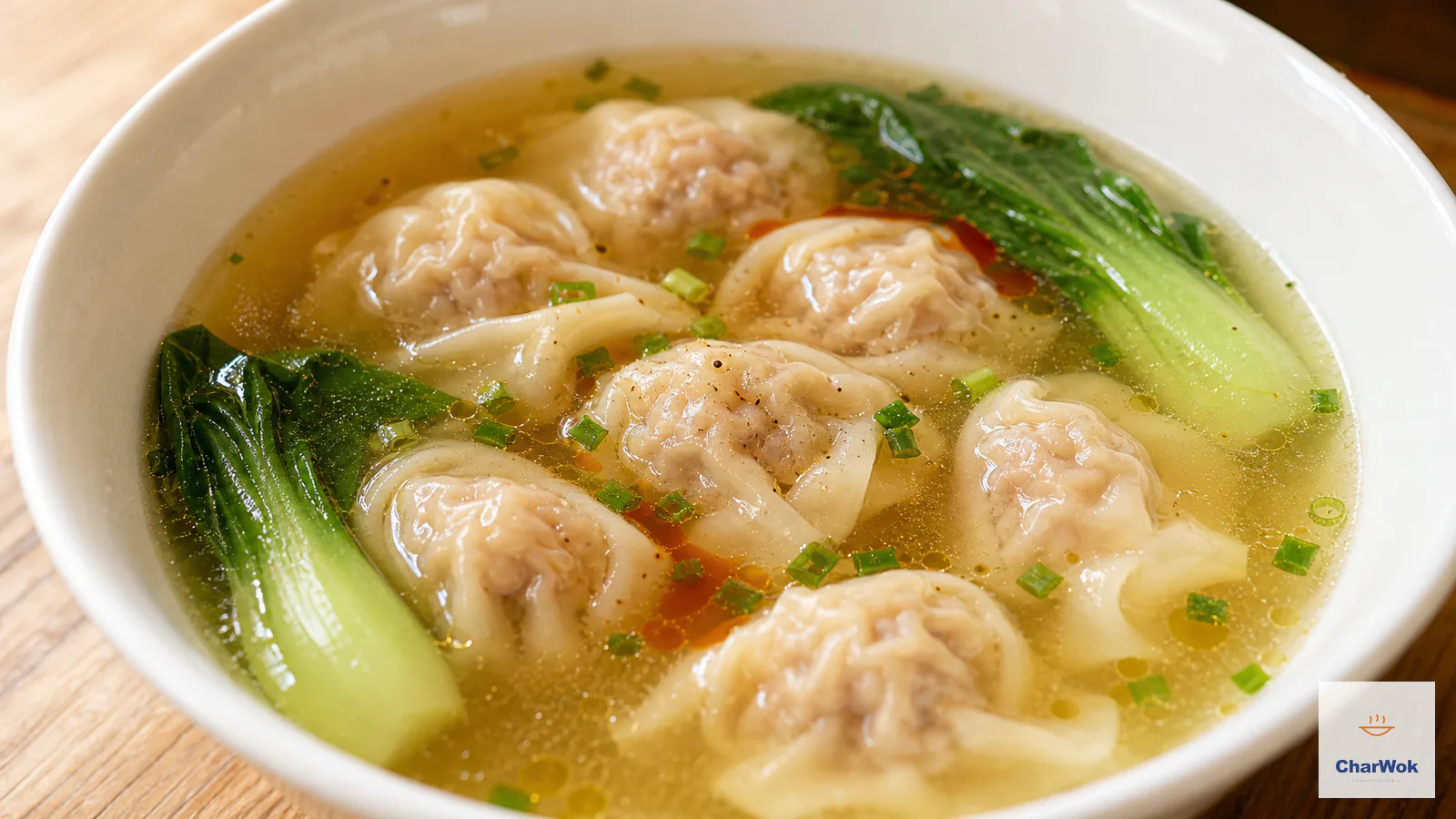
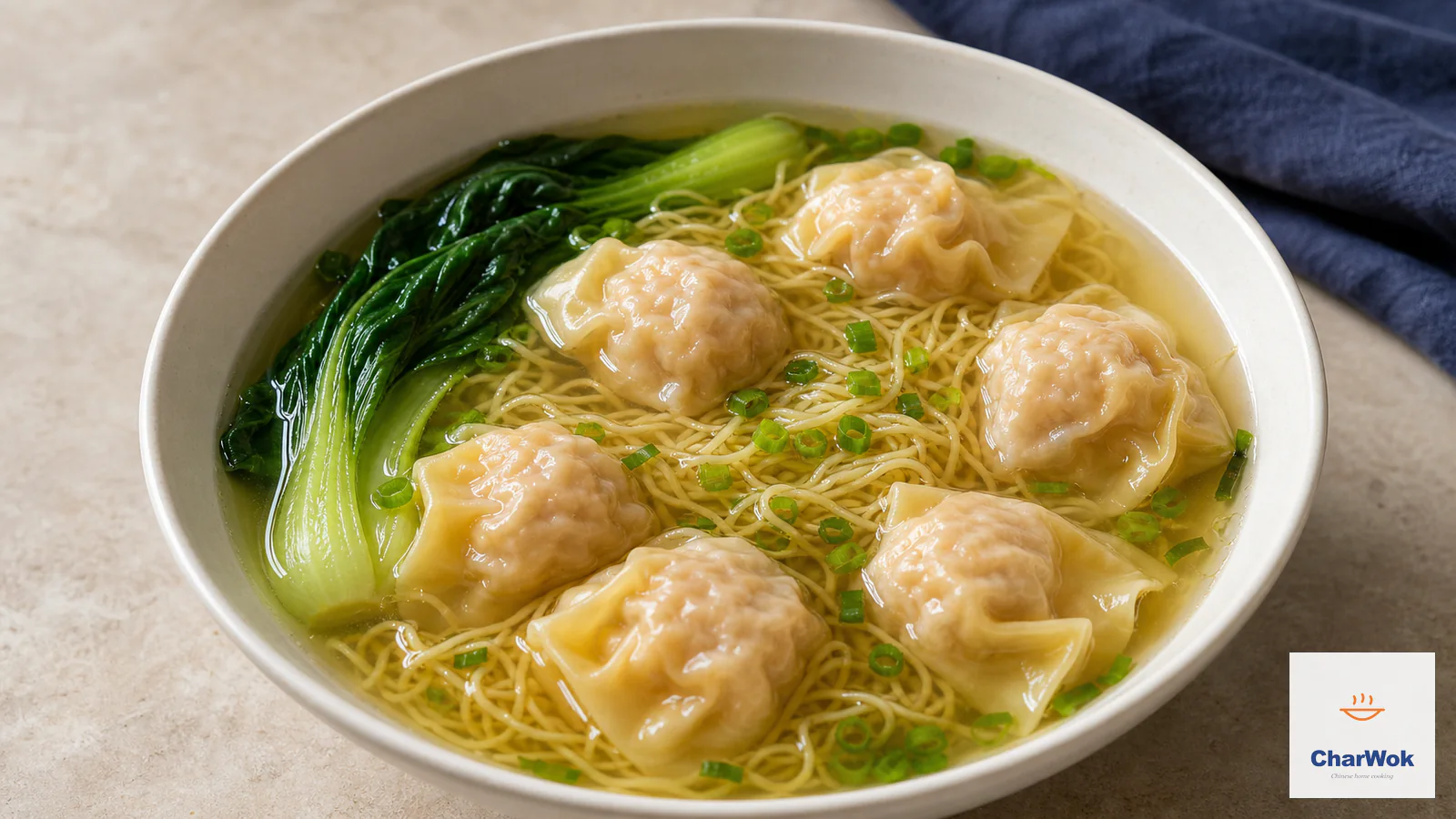
For filling, a classic pork-and-shrimp mixture is the default for a reason. Pair these wrappers with a wonton soup and you have the canonical bowl, the kind built on a clear stock with a few leaves of bok choy. Drop the same folded wontons into a noodle bowl and you have wonton noodle soup, the Cantonese diner staple. Fry them instead of boiling and you get the crackling, golden fried wontons that disappear at any party. For something with more attitude, dress boiled wontons in a glossy chili-oil sauce for Sichuan spicy wontons in chili oil, one of the great cheap thrills of Sichuan cooking.
These wrappers also step in where you might not expect. They work well as the skin for open-topped shrimp and pork shumai, and they are the right starting point if you want to understand the broader family covered in the complete dumpling guide. The world of filled dough is large, and wontons are a friendly doorway into it.
Sauces and what to serve alongside
Boiled wontons want a dipping sauce, and there is no reason to wing it. The six classic dipping sauces give you a black vinegar-and-ginger sauce for delicate pork wontons and a punchier soy-chili-oil mix for fried ones. A simple bowl of wontons in broth is improved immeasurably by a side of something crunchy and acidic. Pickled cucumber or a quick smashed-cucumber salad cuts the richness of a pork filling cleanly.
If you are cooking for a crowd, wontons pair naturally with a broader spread. Set them next to a tray of pan-fried and steamed dumplings and you have the kind of multi-dough spread that turns a casual dinner into an occasion.
Storage and reheating
Filled or unfilled, the rules are the same. Stack the wrappers or folded wontons with cornstarch between each layer, seal them in an airtight bag with the air pressed out, and refrigerate for up to two days or freeze for up to two months. Refrigerated raw dough darkens and toughens after a couple of days, so freeze anything you will not cook in that window. Cook frozen wontons straight from frozen. Do not thaw them first; thawing makes the wrappers weep and stick together. Drop them into a steady boil, stir gently so they do not settle, and pull them out when they float and the filling reads 74°C (165°F) inside. Reheating already-cooked wontons is best done by bringing the broth back to a simmer and warming them through gently, not a hard boil that re-toughens the wrapper.
Questions I get asked
Can I make these without a pasta machine? Yes, but expect to work. Roll the rested dough as thin as you possibly can with a long pin on a cornstarch-dusted surface, rotating it a quarter turn between passes. Aim for the same see-through thinness. It will take longer and the sheets will be less even, which only matters if you want perfectly uniform squares.
Is the lye water necessary? Strictly, no. The wrappers hold together and cook fine without it. But lye water is what gives the distinctive springy, slightly translucent bite that separates a fresh wrapper from a plain egg-and-flour pasta dough. Baked baking soda is a close substitute. Plain water-only dough is the farthest from the real thing.
Why cornstarch and not flour for dusting? Cornstarch does not form gluten, so it sits on the surface and keeps the sheets from bonding into a single mass. Flour mixes back into the damp dough and turns into paste between layers. This is the single most common reason homemade wrapper stacks turn into an unusable block.
How thin should I roll them? About 0.8 mm, or thin enough that you can see the shadow of your hand through the sheet. Go thinner and the wrappers tear at the fold. Go thicker and the cooked wonton tastes doughy and heavy.
Can I freeze the dough instead of the cut wrappers? You can, wrapped airtight, for about a month. Thaw it overnight in the fridge, then let it sit at room temperature for twenty minutes before rolling so it is pliable. Cut wrappers freeze better than the dough ball does.