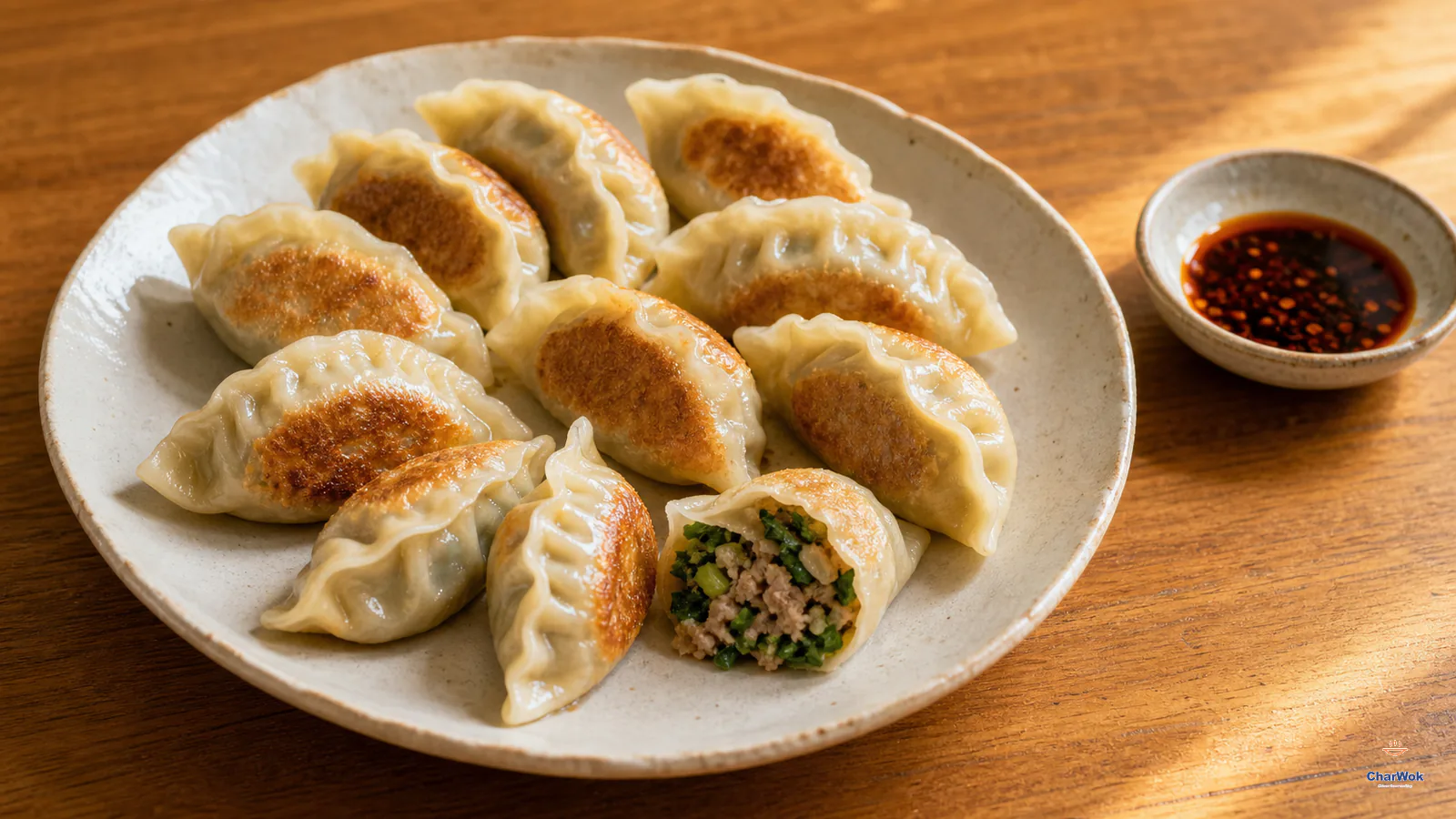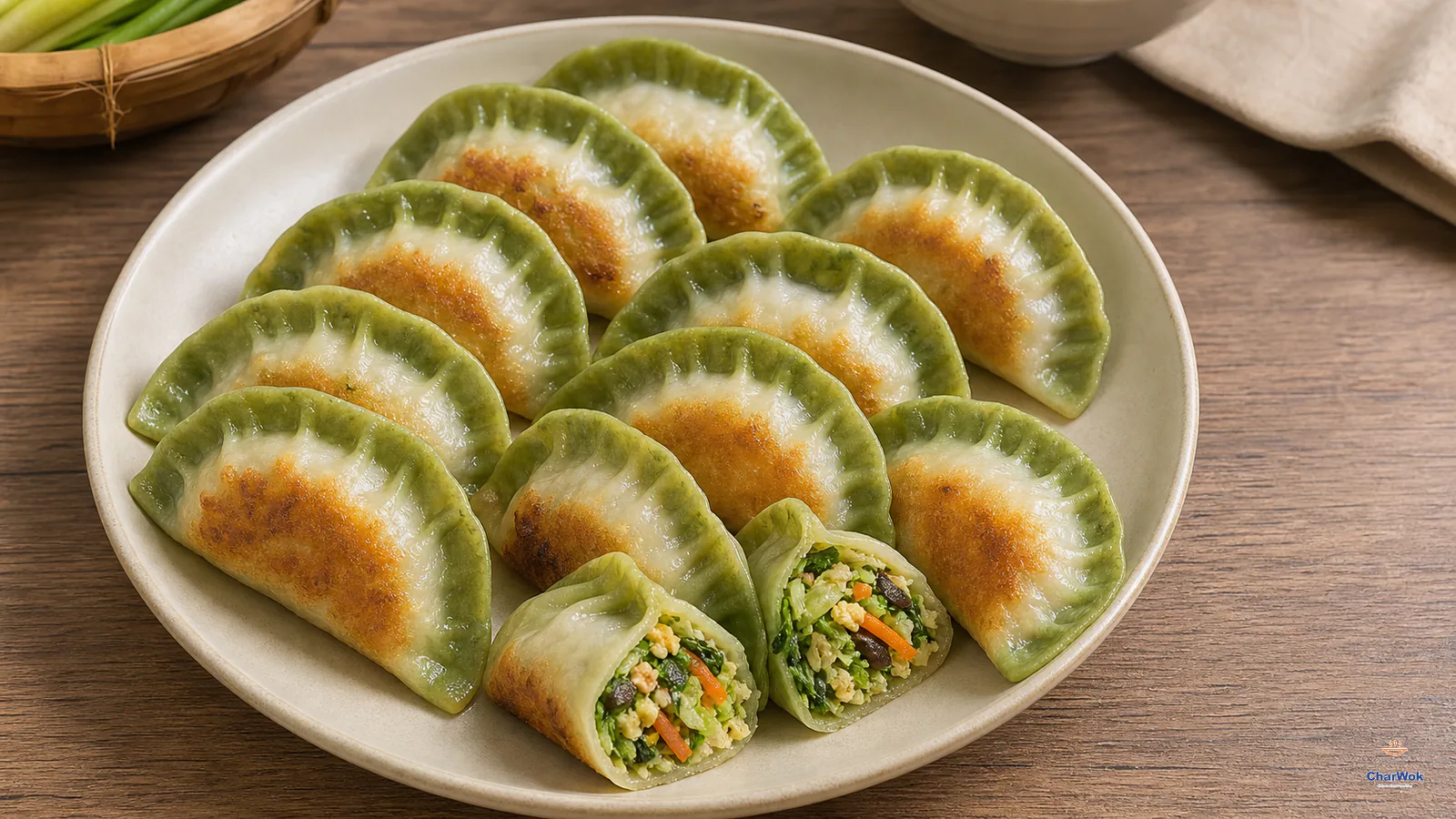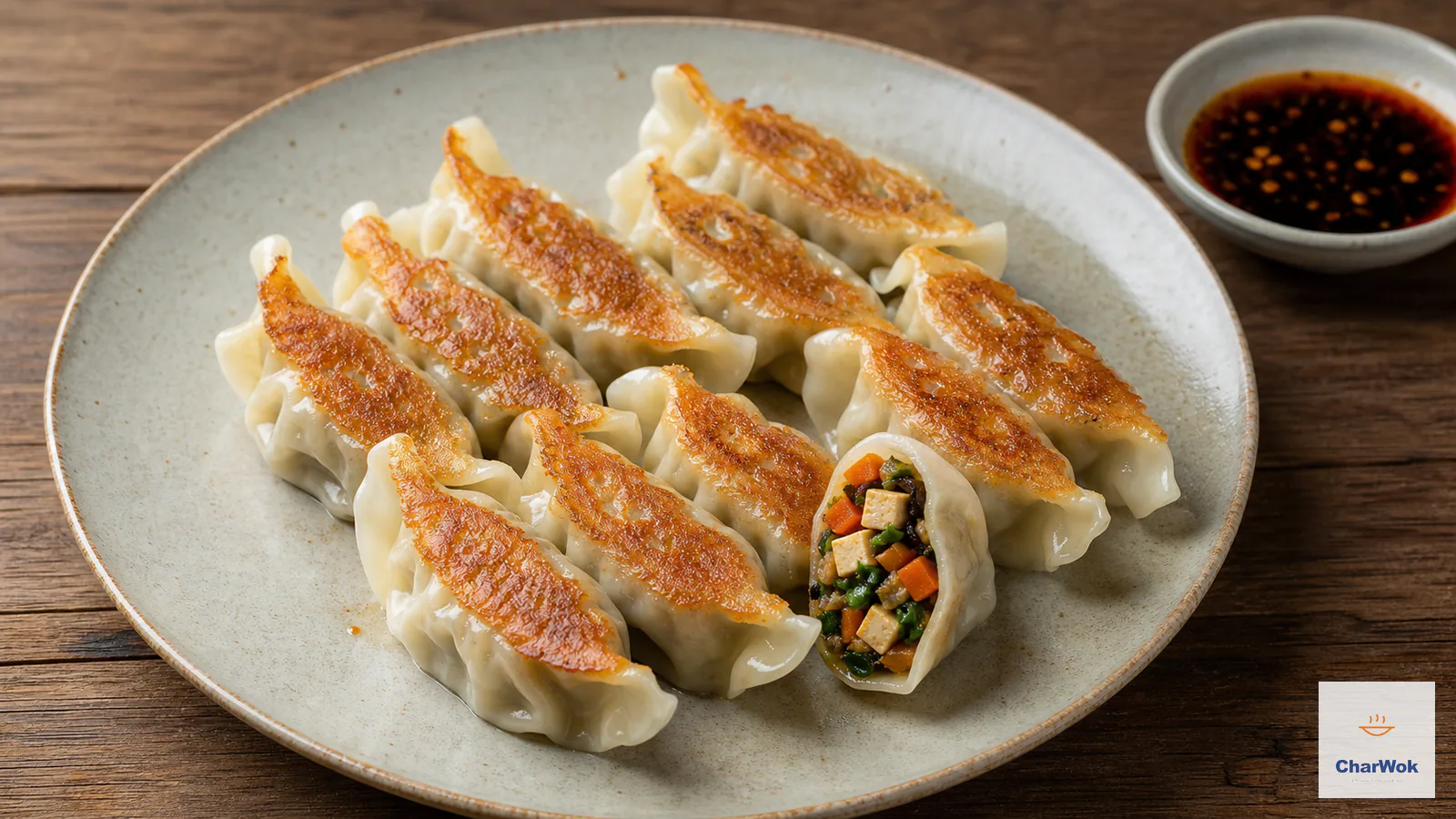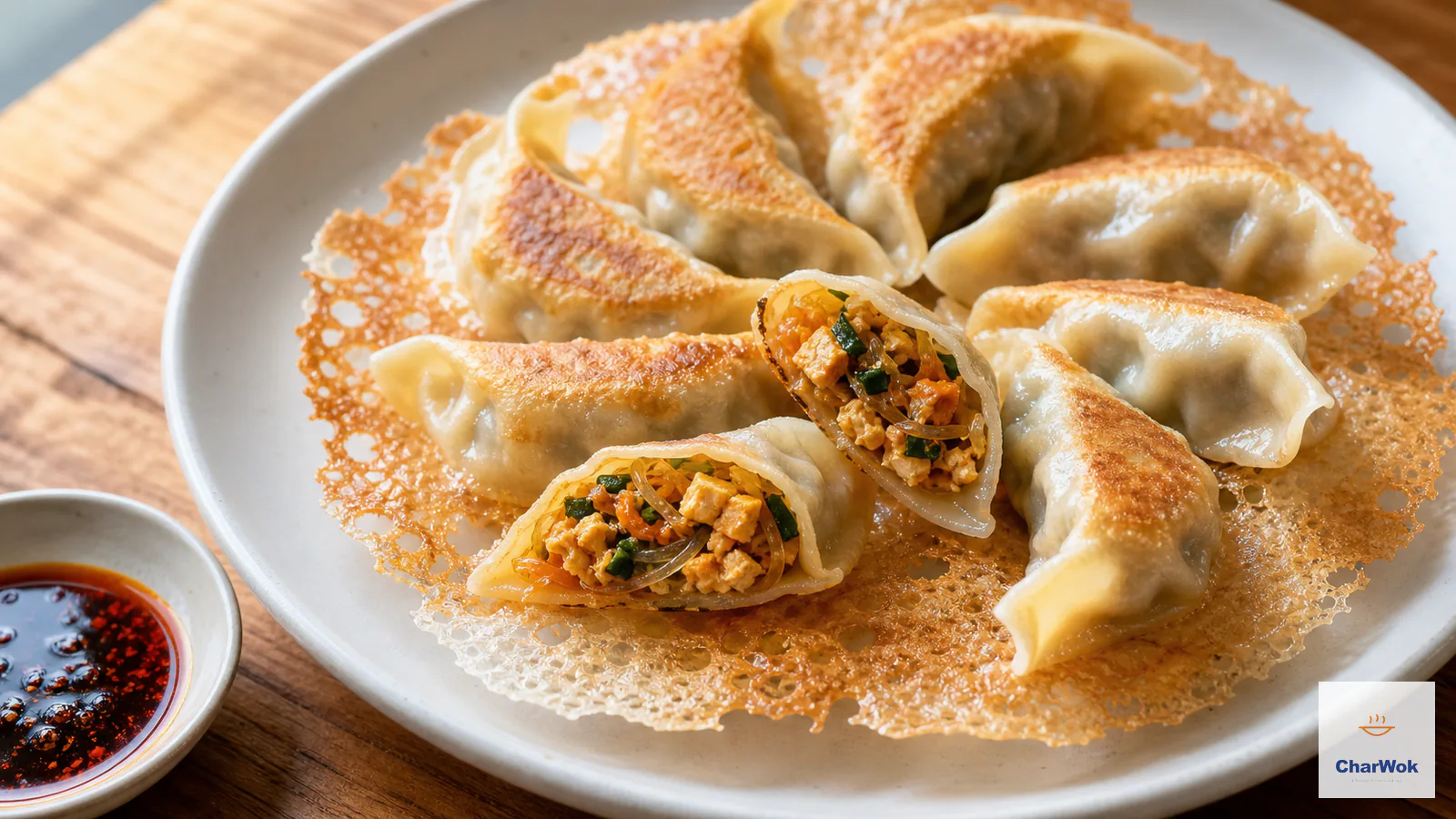
The first time I pan-fried kimchi dumplings at home, I served them still hot and watched my partner bite into one, close her eyes, and say nothing for a few seconds. That silence is the whole point of this filling. Fermented kimchi brings acid, funk, and heat that ordinary pork-and-cabbage fillings can only hint at. The trick is keeping all of that intensity inside a wrapper that crisps instead of sogs out.
What I want to give you here is not just another vegetarian dumpling. It is a blueprint for a filling that refuses to weep water into the pan, a wrapper choice with a clear recommendation, and a pan-fry method that produces a lacquered, crackly bottom every single time. The most common failure with kimchi dumplings is a wet, blown-out filling that turns the wrapper gummy. I have made that dumpling. I will show you the two moves that prevent it.
At a glance: Pan-fried kimchi dumplings with tofu, glass noodles, and chives. The make-or-break is moisture control: press the tofu, drain the kimchi, and never salt the filling until you have tasted it, because aged kimchi is already seasoned. Plan on roughly 40 minutes of active prep for 30 dumplings, plus an 80-minute head start if you roll your own wrappers. A 7-to-3 ratio of kimchi to chives keeps the funk in check.
What kind of dumpling is this, really?
Kimchi dumplings, called kimchi mandu in Korea, sit at a crossroads. The folding technique and the pleated half-moon shape are borrowed straight from northern Chinese jiaozi tradition, which is why they cook so well using the same pan-fry-and-steam method you would use for pork and chive potstickers or a tray of vegetarian pan-fried dumplings. What changes everything is the filling.
Ripe kimchi is alive with lactic acid from fermentation. That acid does two things in a dumpling. It brightens the whole filling the way vinegar would, and it interacts with the proteins in tofu so the mixture tastes richer than its parts suggest. The trade-off is water. Fermentation softens the cabbage cell walls, and the moment you chop it, liquid floods out. If you treat kimchi like a fresh vegetable here, you will end up with a filling that leaks through the wrapper seam and poaches the dumpling from the inside. So this recipe is, in large part, a drainage exercise.
The ingredients, and the ones I will not bend on
Ingredients at a glance
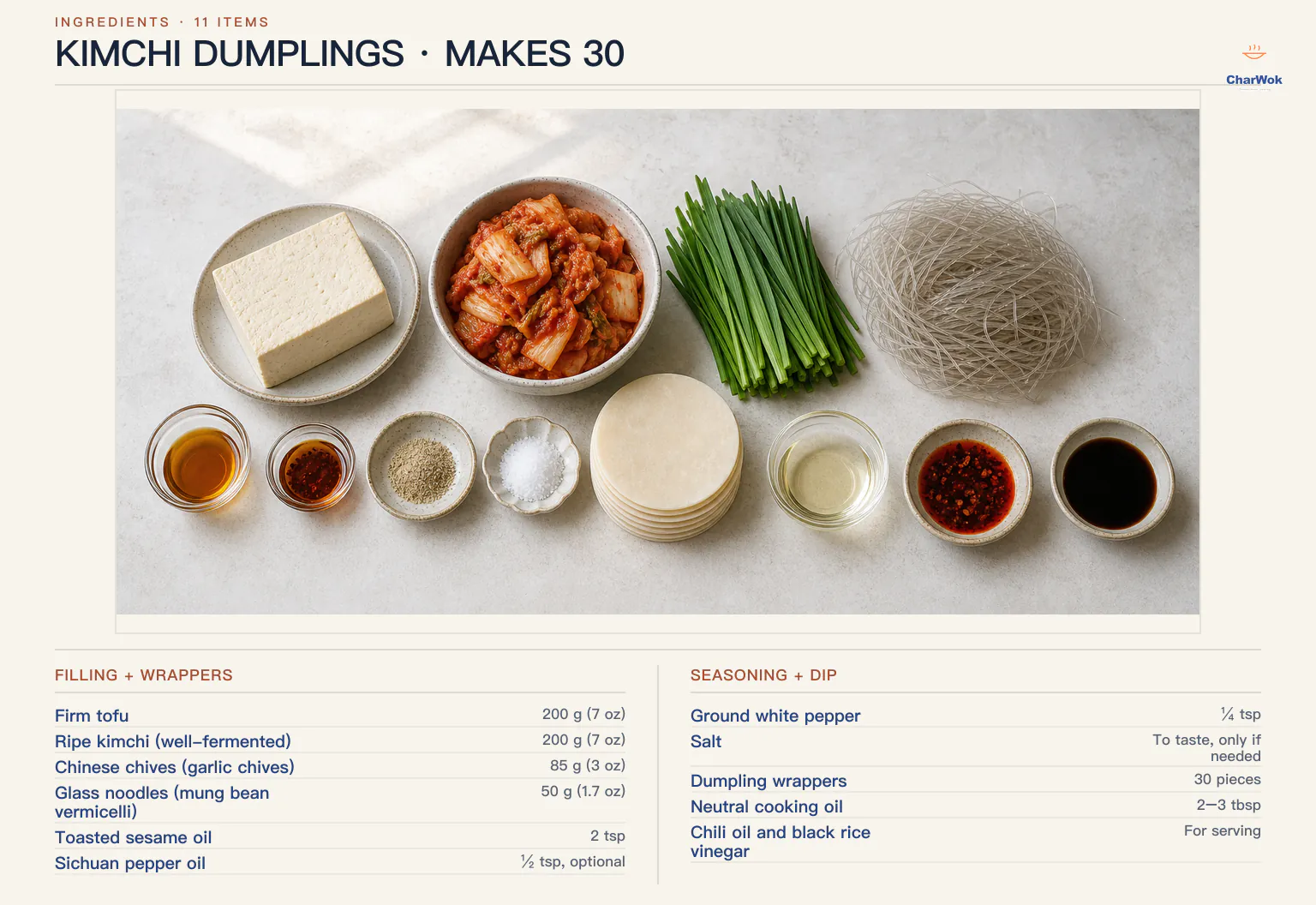
| Ingredient | Amount | Notes / substitute |
|---|---|---|
| Firm tofu | 200 g (7 oz) | Not silken. Pressed firm or extra-firm only. Press it harder than you think. |
| Ripe kimchi (well-fermented) | 200 g (7 oz) | Use kimchi that has been in the fridge at least 2 weeks. Fresh, crunchy kimchi lacks the depth you want here. |
| Chinese chives (garlic chives) | 85 g (3 oz) | Sub scallion greens if you cannot find chives. Avoid Western chives, which are too mild. |
| Glass noodles (mung bean vermicelli) | 50 g (1.7 oz) | Sweet potato starch noodles also work. Their job is to absorb moisture, so do not skip them. |
| Toasted sesame oil | 2 tsp | Flavor and a moisture barrier for the tofu. Use toasted, not untoasted. |
| Sichuan pepper oil | ½ tsp, optional | Adds a low hum of numbness. Omit for a cleaner, more purely Korean profile. |
| Ground white pepper | ¼ tsp | White, not black. Black pepper reads coarse against the kimchi acid. |
| Salt | To taste, only if needed | Taste the mixed filling before adding any. Aged kimchi often needs none. |
| Dumpling wrappers | 30 pieces | Shop-bought round wrappers, defrosted, or homemade wrappers. |
| Neutral cooking oil | 2–3 tbsp | Grapeseed, canola, or avocado oil for pan-frying. |
| Chili oil and black rice vinegar | For serving | The classic dip. See the pairings section for more. |
On the wrappers, my recommendation is firm: roll your own if you have the time, buy them if you do not. Both produce a good dumpling, but homemade dough, rested properly, stretches around the filling without tearing and crisps more evenly because it is thinner and less starchy than the commercial kind. If you go store-bought, defrost them overnight in the fridge and leave the pack sealed until the moment you fold, because the edges dry out and refuse to seal once exposed to air.
Method, with the why built into each step
- Press the tofu for at least 15 minutes. Slice the block into slabs, lay them on a plate, and weigh them down with a heavy skillet or a couple of cans. The goal is to remove enough water that the tofu crumbles into distinct curds instead of mushing into paste. Drier tofu also drinks up the sesame oil in the next step instead of repelling it. This is the single biggest lever for a non-soggy filling.
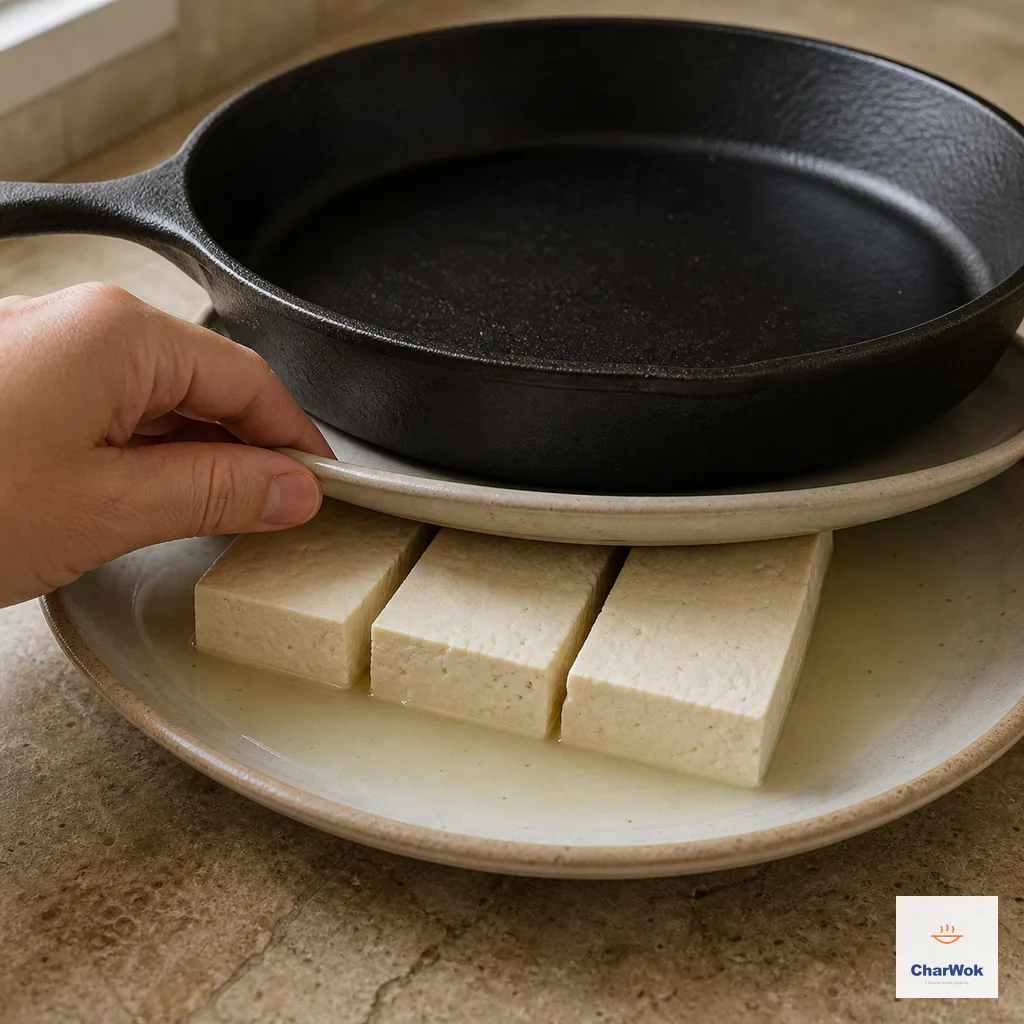
Press the firm tofu under a heavy skillet for at least 15 minutes so it crumbles into dry distinct curds instead of paste.
- Soak the glass noodles in warm water until pliable, about 8 minutes, then chop fine. Do not boil them. Boiled vermicelli turns gummy and clumps. Warm-soaked noodles stay springy and, more importantly, act as a sponge in the filling, soaking up any kimchi juice that escapes. Cut them short, around 5 mm pieces, so they mix in rather than tangling into knots.
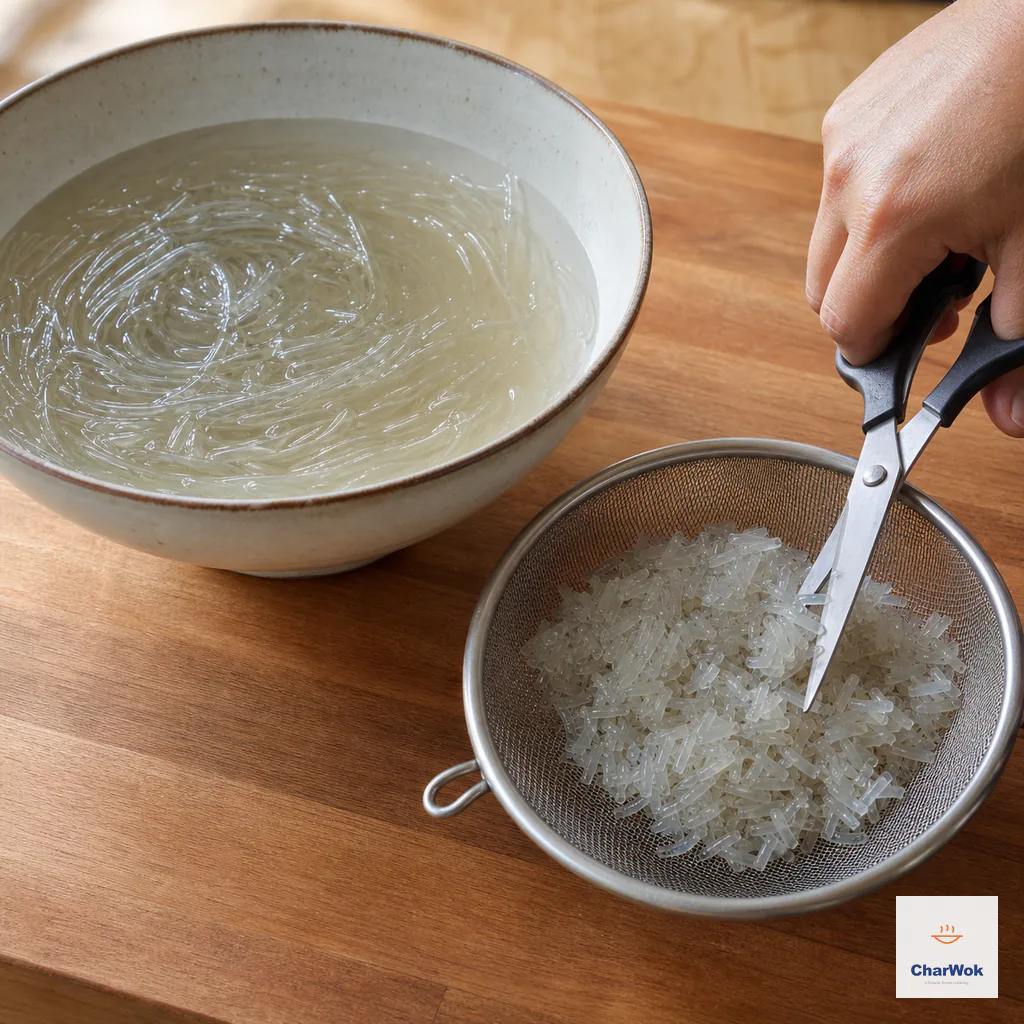
Soak rather than boil the noodles, then cut them short so they absorb loose kimchi juice without tangling.
- Drain and squeeze the kimchi, then chop it finely. Lift the kimchi out of its liquid with a fork (save the juice for fried rice or a soup base) and press it gently in a sieve. You do not want it bone-dry, just drained. Chop it small. Large kimchi chunks burst inside the dumpling and leak. Fine chopping spreads the flavor evenly and, again, reduces the volume of free liquid per dumpling.
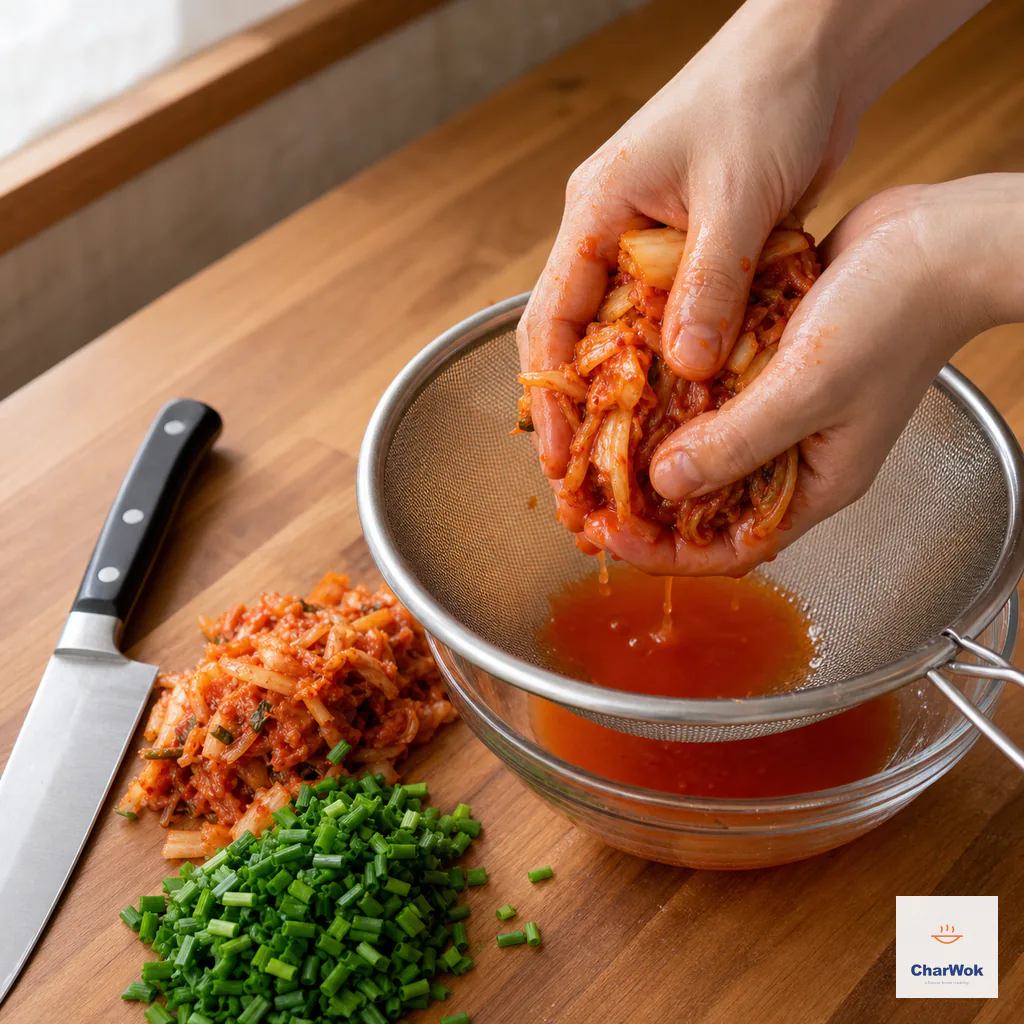
Drain the kimchi without making it bone-dry, then chop it finely so large wet pieces cannot split the wrappers.
- Crumble the pressed tofu into the bowl, add the chopped noodles and kimchi, the chopped chives, sesame oil, white pepper, and Sichuan pepper oil if using. The sesame oil goes in before any salt because fat coats the tofu and chive cells and slows the osmosis that would otherwise pull water out of the vegetables. Mix gently. Mashing hard defeats the crumbly texture you just worked for.
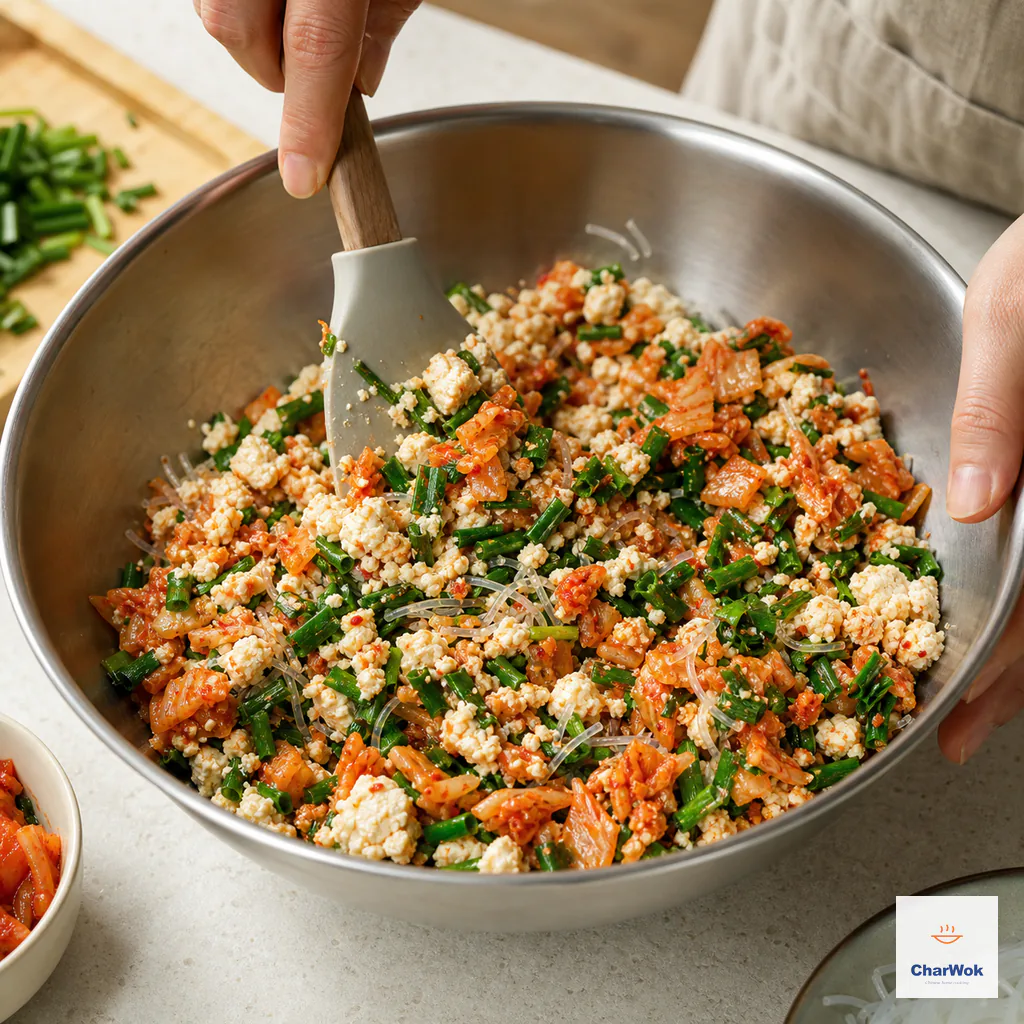
Fold gently with sesame oil and seasonings; keep the filling loose and visibly crumbly rather than mashing it into paste.
- Taste a pinch of the filling before adding salt. Ripe kimchi is salty and sour, and that saltiness varies wildly between batches. Season to taste and stop. Over-salting is the second most common failure here, after wet filling.
- Fold the dumplings. Hold a wrapper in your palm, put a rounded teaspoon of filling in the center, and pleat the far edge toward you, pressing it against the near edge to seal. If you are using store-bought wrappers, swipe a damp finger around the rim first. Homemade dough seals on its own. The shape does not have to be pretty, but the seal has to be complete, because any gap becomes a chimney for steam and filling during the pan-fry. For a clean run-through of the core pleats and their variations, use the dumpling folding guide. Place finished dumplings on a flour-dusted tray.
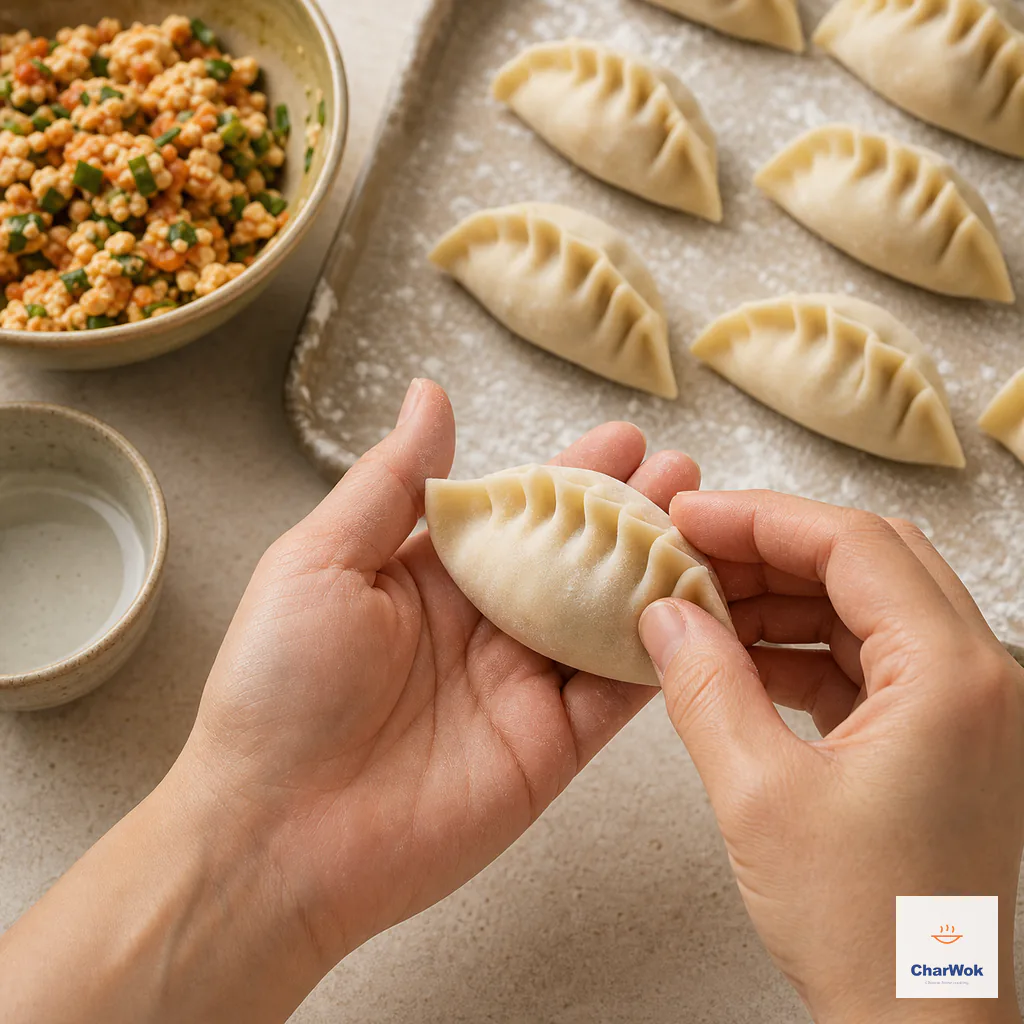
Use a modest spoonful of filling, moisten a shop-bought wrapper and close every gap along the pleated seam.
- Sear the bottoms over high heat before adding water. Heat 2 to 3 tablespoons of oil in a nonstick or well-seasoned skillet over high heat until it shimmers. Stand the dumplings in the pan, ideally touching, and let them fry undisturbed until the bottoms are deep gold, about 90 seconds. Lift one to check. This initial sear sets the crust that will become the signature crackly skirt.
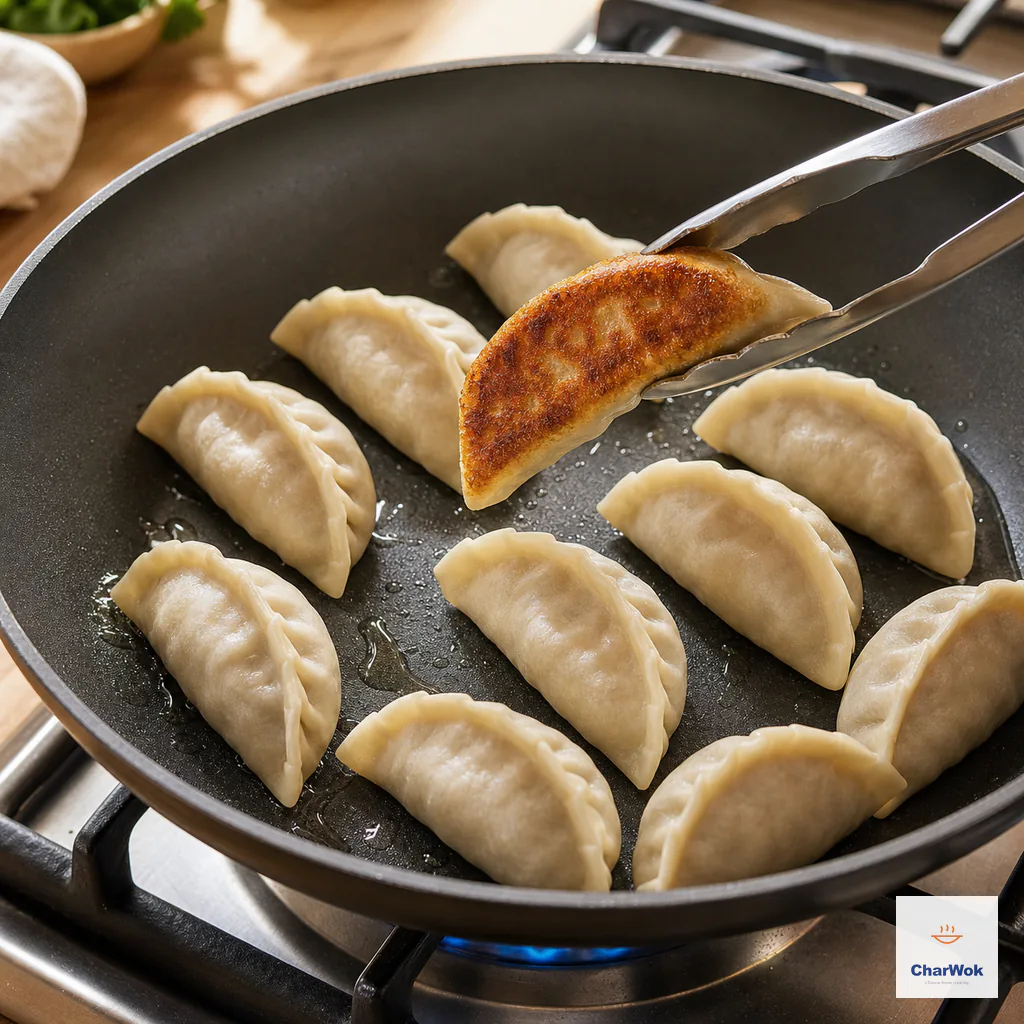
Sear the dumplings in a thin film of hot oil until one lifted base shows a uniform deep-golden crust.
- Add water to one-third the dumplings' height and cover immediately. Use about 100 ml of water for a 28 cm skillet, and pour it down the side of the pan, not directly over the dumplings, so you do not splash the hot oil. Clap the lid on. The water boils instantly, and the trapped steam cooks the wrapper and filling through while the bottom keeps browning under the liquid line.
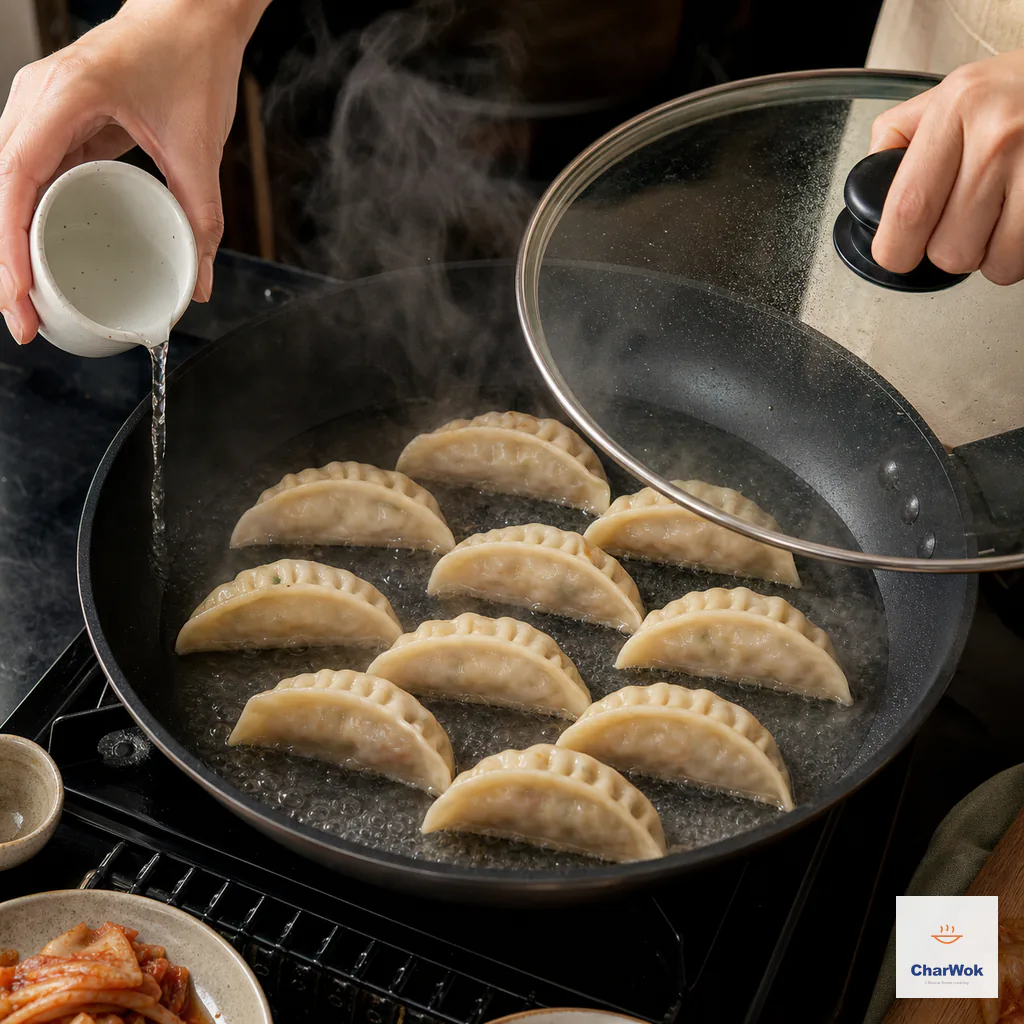
Pour cold water down the side to one-third of the dumplings’ height and cover immediately to trap the steam.
- Steam until the water is gone, then crisp the skirt. Leave the lid on over high heat until you hear the sizzle change from wet to dry, roughly 4 to 5 minutes. Take the lid off and let the dumplings fry another 20 to 30 seconds so the bottoms go from golden to genuinely crisp. A teaspoon of slurry (cornstarch and water) swirled in at the very end produces a lacy, frilly skirt if you want the full potsticker effect.
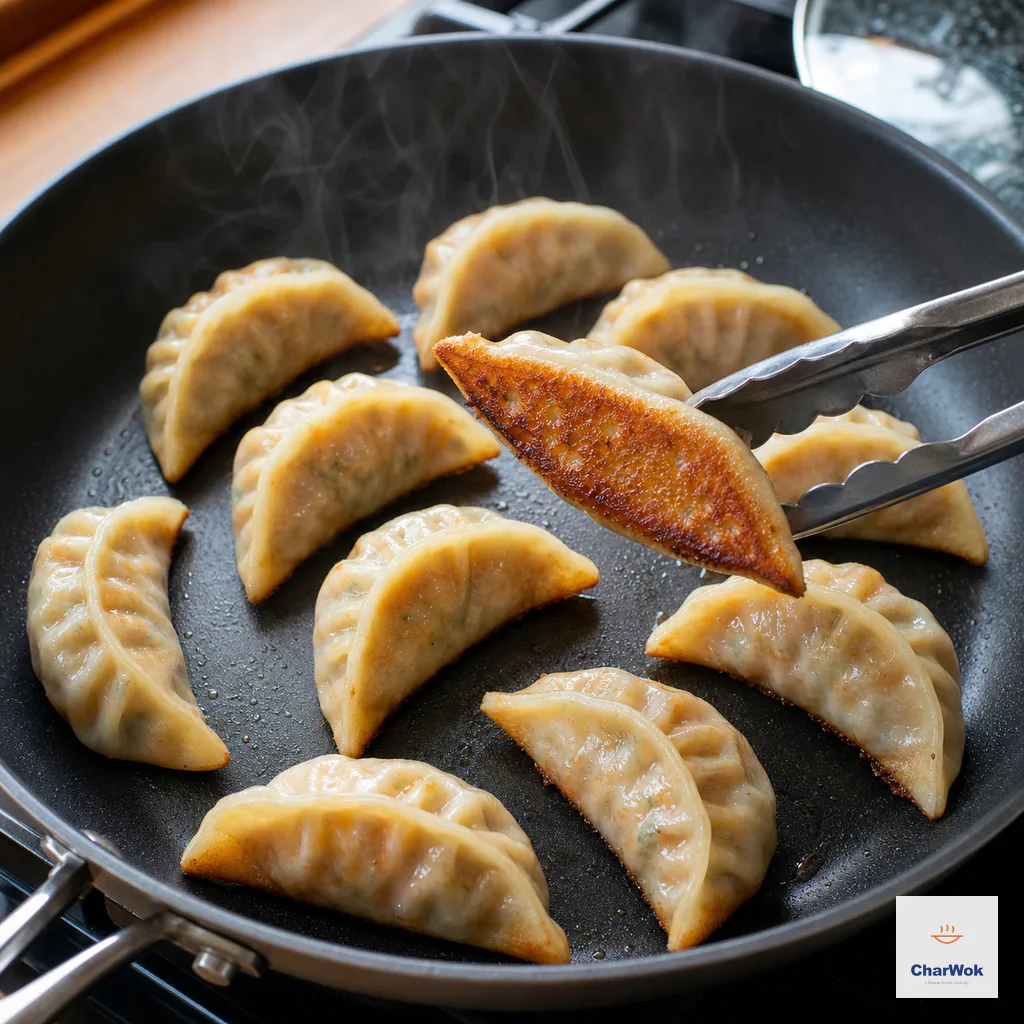
When the sizzle changes from wet to dry, uncover and fry briefly until the pan is dry and the bottoms are genuinely crisp.
- Serve at once. Kimchi dumplings are at their best in the first three minutes out of the pan, while the bottom is still audible when you bite it.
When things go wrong
I have wrecked this dish in most of the ways it can be wrecked. Here is the troubleshooting map.
- Filling leaks out during cooking. The cause is almost always water, not a bad fold. Next time, press the tofu longer, drain the kimchi harder, and do not skip the glass noodles. As a quick fix mid-batch, dust the assembled dumplings with a little cornstarch before they go in the pan, which helps the wrapper hold a wet filling.
- Wrapper is gummy and pale on top, crisp only on the bottom. The steam step was too short, or the lid leaked. The top of a properly cooked dumpling should look translucent and slightly tacky, never raw-white and doughy. Add a splash more water and steam another minute.
- Dumplings stick to the pan and tear when you lift them. Two causes: the oil was not hot enough when the dumplings went in, or you tried to move them before the crust formed. Wait the full 90 seconds of searing before you nudge one. A nonstick or well-seasoned carbon steel pan is non-negotiable here; stainless will grab the wrapper and rip it.
- Filling tastes one-note, just kimchi. You likely used kimchi that was too fresh. Two-week-old kimchi has the lactic depth that carries the dumpling. If your kimchi is young, let a sliver of it sit at room temperature for a day to accelerate fermentation, or spike the filling with a teaspoon of the kimchi juice you saved.
- The tofu disappears into mush. You used silken or soft tofu, or you over-mixed. Use firm or extra-firm, press it well, and fold the filling with a spatula rather than squeezing it with your hands.
- Salt level is off. Always taste before salting. I once dumped in a full teaspoon of salt without tasting and produced dumplings that were nearly inedible; aged kimchi from a good jar often needs zero added salt.
Variations and what to serve alongside
The filling is a platform. A few directions worth trying:
- Add ground pork or chicken. Swap out half the tofu for 100 g of finely ground pork and the dumplings become richer and more traditional. If you go this route, brown the meat in a dry pan first to drive off its moisture, cool it, then fold it in. The same logic that protects the vegetarian version applies: a wet meat filling will blow out the wrapper. The principles in my dumpling fillings guide cover this in more depth.
- Use the filling in other wrappers. It works in a chive pocket, in vegan boiled dumplings, or even spooned into a fried wonton. The flavor profile is robust enough to survive boiling, which the kimchi actually softens beautifully.
- Try a chicken potsticker version. Ground chicken, kimchi, and a little grated ginger make an excellent cousin to chicken potstickers, with the kimchi doing the work scallion usually does.
For the dip, the classic is half chili oil and half black rice vinegar, stirred together. I prefer a slightly more aggressive version: a tablespoon of black vinegar, a teaspoon of chili oil, a few drops of toasted sesame oil, and a thin slice of fresh ginger. If you want a broader repertoire, the six dumpling sauces I keep on rotation give you options for every filling.
On the plate, kimchi dumplings want something plain and crunchy to balance their intensity. A bowl of napa cabbage salad or a plate of glass noodles with napa cabbage does the job without competing. If you want heat on heat, a side of mapo tofu turns the meal into a full Sichuan-Korean dialogue, but I would save that for a night when you really want to lean in.
Storage and reheating
Assembled, uncooked dumplings freeze beautifully. Arrange them in a single layer on a parchment-lined tray, freeze solid, then transfer to an airtight bag for up to 3 months. The make-or-break here is freezing them open, separately, before bagging, because if you bag them while they are even slightly soft they fuse into a lump you can never pry apart cleanly.
Cook them straight from frozen, no defrosting. Add an extra minute or so of steam and a touch more water. Defrosting first is actually worse, because the thawed wrappers weep moisture and stick to the pan. Leftover cooked dumplings reheat best in a dry skillet over medium heat to re-crisp the bottom, or in an air fryer at 180°C (350°F) for about 5 minutes. The microwave turns the crust to leather and I do not recommend it. The same pan-fry method works for the broader family of three ways to cook dumplings if you want to branch out into boiling or steaming.
A note on dough, if you roll your own
If you commit to rolling your own wrappers, the payoff is real but so is the time. The dough needs a 30-minute rest after kneading so the gluten relaxes, and another brief rest after you cut it into pieces, or it will spring back as you roll and fight you into thick centers. Use plain all-purpose flour and water just off the boil for hot-water dough, which yields a softer, more tender wrapper than cold-water dough. The full breakdown of folding patterns is in my dumpling guide if you want to go deep.
Frequently asked questions
Do I need to drain the kimchi?
Yes. Lift it out of the liquid and press it in a sieve. Skipping this is the main reason fillings turn wet and wrappers split open in the pan.
Can I use soft or silken tofu?
No. Use firm or extra-firm, pressed well. Soft tofu has too much water and collapses into paste, which ruins the texture and floods the filling.
Can I boil or steam these instead of pan-frying?
Both work. Boiling gives a tender, chewy wrapper and lets the kimchi flavor mellow; steaming is the lightest option and best if you want to highlight the chive. The pan-fry is my default because the crisp bottom is the contrast the filling was designed for.
How do I know the kimchi is ripe enough?
Look for kimchi that has been fermenting at least two weeks, with a sour smell and translucent, softened cabbage rather than crunchy, fresh-looking pieces. The longer it has aged, the deeper the dumpling will taste.
Can I make these vegan?
They already are, as written. Just confirm your wrappers are made without egg, which most commercial round dumpling wrappers are. Check the label to be sure.
The short version: treat the kimchi like a wet ingredient, press the tofu like you mean it, and trust the sear-before-steam sequence. Get those three right and the dumplings more or less make themselves.