The secret to a dumpling filling you actually remember is not the recipe. It is one physical change in the meat: you beat liquid and salt into it until the proteins unwind and grab hold of the water, turning a loose pile of ground pork into a sticky, springy paste that will be juicy and bouncy once cooked. Get that step right and almost any combination of meat and vegetable will taste like it came from a good shop. Skip it and even the most carefully sourced pork turns dense and dry inside the wrapper.
I ruined plenty of dumplings before I understood this. My early fillings were seasoned ground meat folded around wet cabbage, and they cooked up into grey, weepy little parcels. The breakthrough was learning the technique northern cooks call daxian (打馅), literally "beating the filling." It changes everything about texture and moisture, and once you feel it under your hand once, you own it forever. This guide breaks down the science, the seasoning logic, how to keep vegetables from drowning the filling, and four reliable fillings: pork with celery, chicken with shiitake and water chestnut, egg and chive, and a vegan tofu version. Pair it with a batch of from-scratch wrappers and you have a complete meal.
At a glance: Beat roughly 6 tablespoons (90 ml) of liquid into every 250 g (9 oz) of ground meat, always stirring in one direction, until the mass turns sticky and no water pools. That single step is the difference between a dense, dry dumpling and one that bursts with juice. Use meat that is at least 20 percent fat, and never add salted, water-heavy vegetables until the moment you fold.
Why beaten filling is juicy filling
Ground meat looks uniform, but its muscle fibers are still bundled. Salt and steady stirring do two things at once. Salt dissolves some of the protein filaments off the surface of the fibers, and the mechanical work of stirring — always in the same direction — spreads those dissolved proteins through the added water, forming a network that traps liquid the way a sponge does. This is the same thing that happens when you make sausage, and it is why overworked breakfast sausage has that bouncy snap.
Stirring in one direction matters because the protein strands align and link up into long chains. Reverse direction and you tear those chains apart. You do not need to be religious about it; a couple of stray strokes will not ruin anything, but commit to the habit and the texture will reward you. The endpoint is easy to read: tilt the bowl, and no liquid should run. Press the mass and it should feel tacky and slightly stretchy under the spatula. If it still looks wet, keep beating.
The four rules that decide texture
Before any recipe, fix these in your head. Most filling disasters trace back to breaking one of them.
- Start with fat. Lean meat makes lean dumplings, full stop. Use ground pork that is around 30 percent fat for the classic texture. If yours looks very lean, ask the butcher for a fatty trim or grind a fatty piece of shoulder or belly yourself. For chicken, chicken thigh with skin on is the only sensible choice; breast will be chalky.
- Beat in liquid before anything else. Salt and liquid go into the meat first, alone. Only when the meat has absorbed everything and turned sticky do you fold in the aromatics and vegetables. Add scallion or ginger too early and you interrupt the protein network.
- Wilt and squeeze the vegetables. Salting chopped vegetables for ten minutes draws out water through osmosis. Squeeze them firmly in your fist or a cloth before they meet the meat. Skip this and your filling floods the wrapper overnight.
- Combine meat and vegetable at the last minute. Salt and raw meat will keep pulling water out of the vegetables for hours. Mix the two only when you are ready to fold, then cook or freeze the dumplings right away.
What goes into a filling
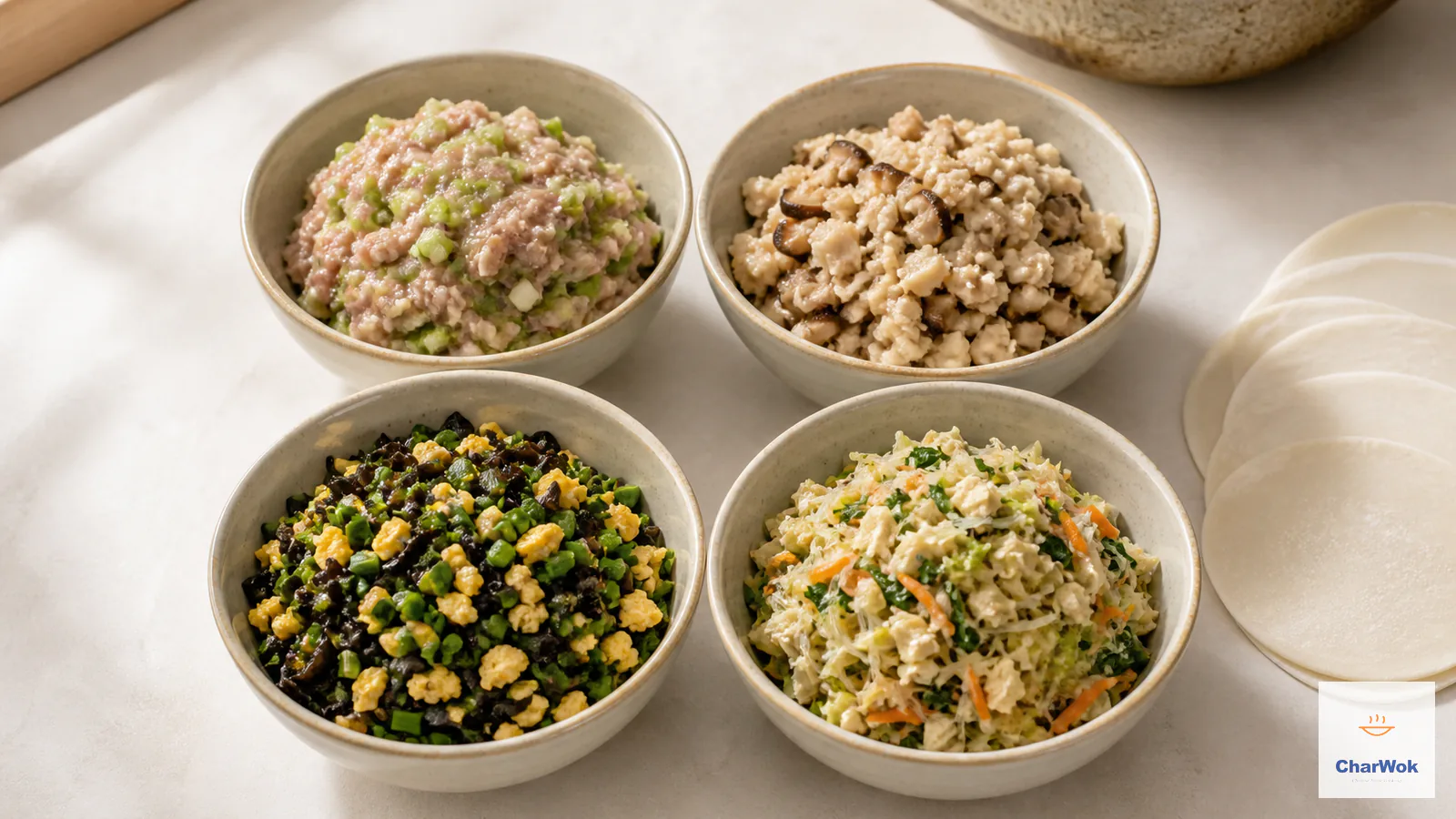
The combinations are nearly endless, which is part of the fun. At a high level you are balancing three things: a protein for body and richness, a vegetable for freshness and bulk, and aromatics plus seasoning for character. Pork and napa cabbage is the most common pairing across northern China, but pork also takes kindly to Chinese chive, celery, fennel, zucchini, and carrot. Chicken loves mushroom and water chestnut. Lamb, popular in the Muslim north, is almost always cut with carrot or daikon to soften its intensity.
For plant-based fillings, the protein usually comes from scrambled egg or tofu. Egg fillings are quick: cook the eggs hot and fast so they stay tender, then chop. Tofu needs more care: press out the water, and if you are using soft tofu, blanch it for a couple of minutes first so it holds its shape instead of collapsing into paste. A well-built vegan filling can be as satisfying as a meat one.
A handful of pantry workhorses will lift almost any filling. Rehydrated dried shiitake brings deep umami; save the soaking liquid to beat into the meat. Wood ear mushroom contributes almost no flavor but a pleasant, snappy bite. Water chestnut adds sweetness and crunch. A small amount of dried shrimp adds a briny note that rescues a bland mixture. For a really soupy, restaurant-style dumpling, the trick is minced meat aspic folded in just before wrapping. That is exactly what makes xiaolongbao spill its broth when you bite.
Seasoning without overthinking it
The backbone is salt, light soy sauce, and a whisper of aromatic spice. Ground Sichuan pepper or five-spice powder at a quarter teaspoon per 250 g of meat gives that faint, warm background you can never quite identify when you eat a good dumpling. That is the spice doing its job. A teaspoon of oyster sauce rounds out the salt with savory depth. Finish with a few drops of toasted sesame oil; use a light hand, because too much will hijack the whole filling.
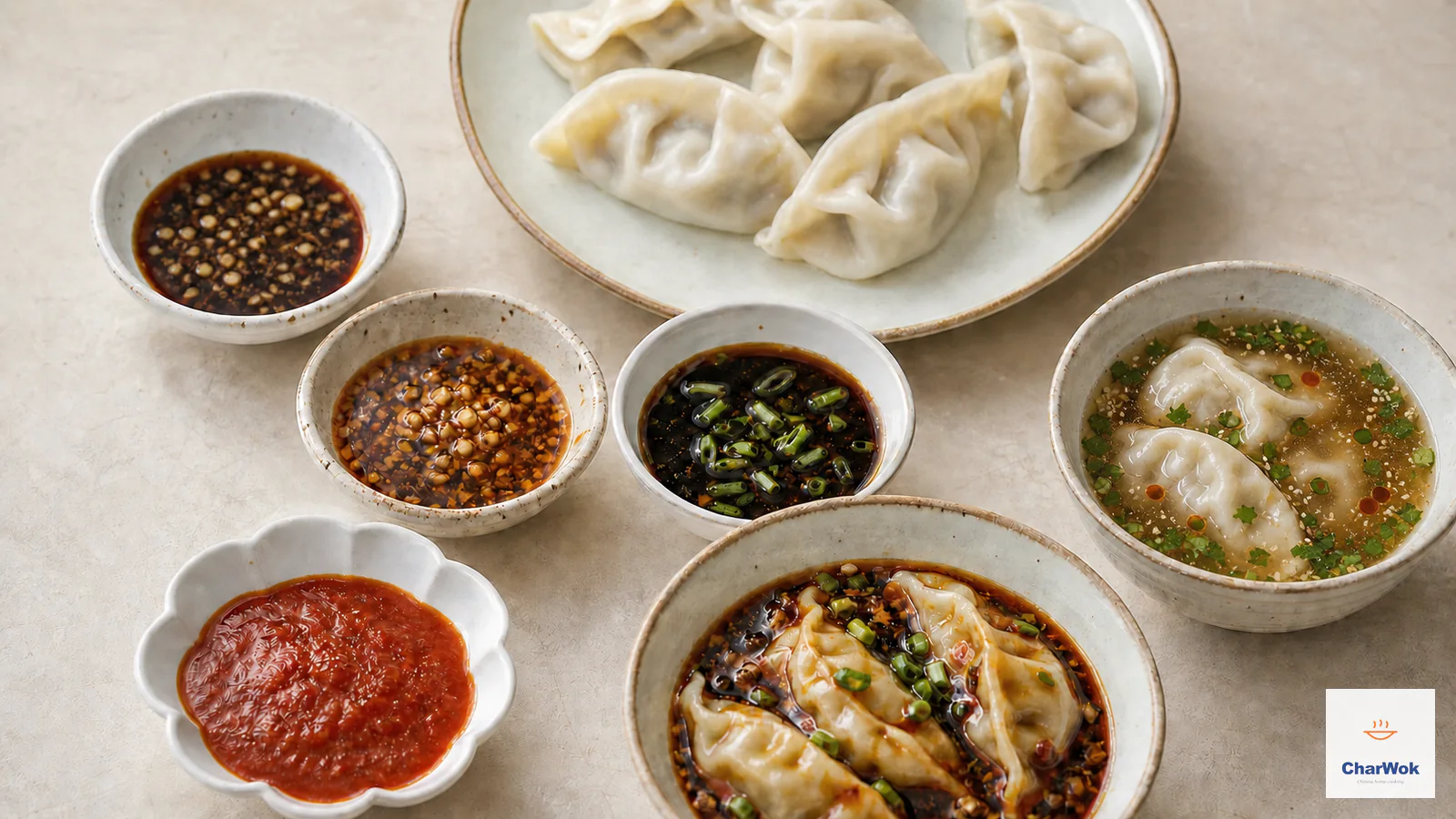
Scallion and ginger are the classic aromatics for meat fillings, and a common move is to sizzle them in hot oil before folding them in, which tames their raw bite and releases their fragrance. Adjust salt down if you plan to dunk the finished dumplings in a soy-and-vinegar dipping sauce; the dip will carry the rest.
Four fillings to start with
Ingredients at a glance
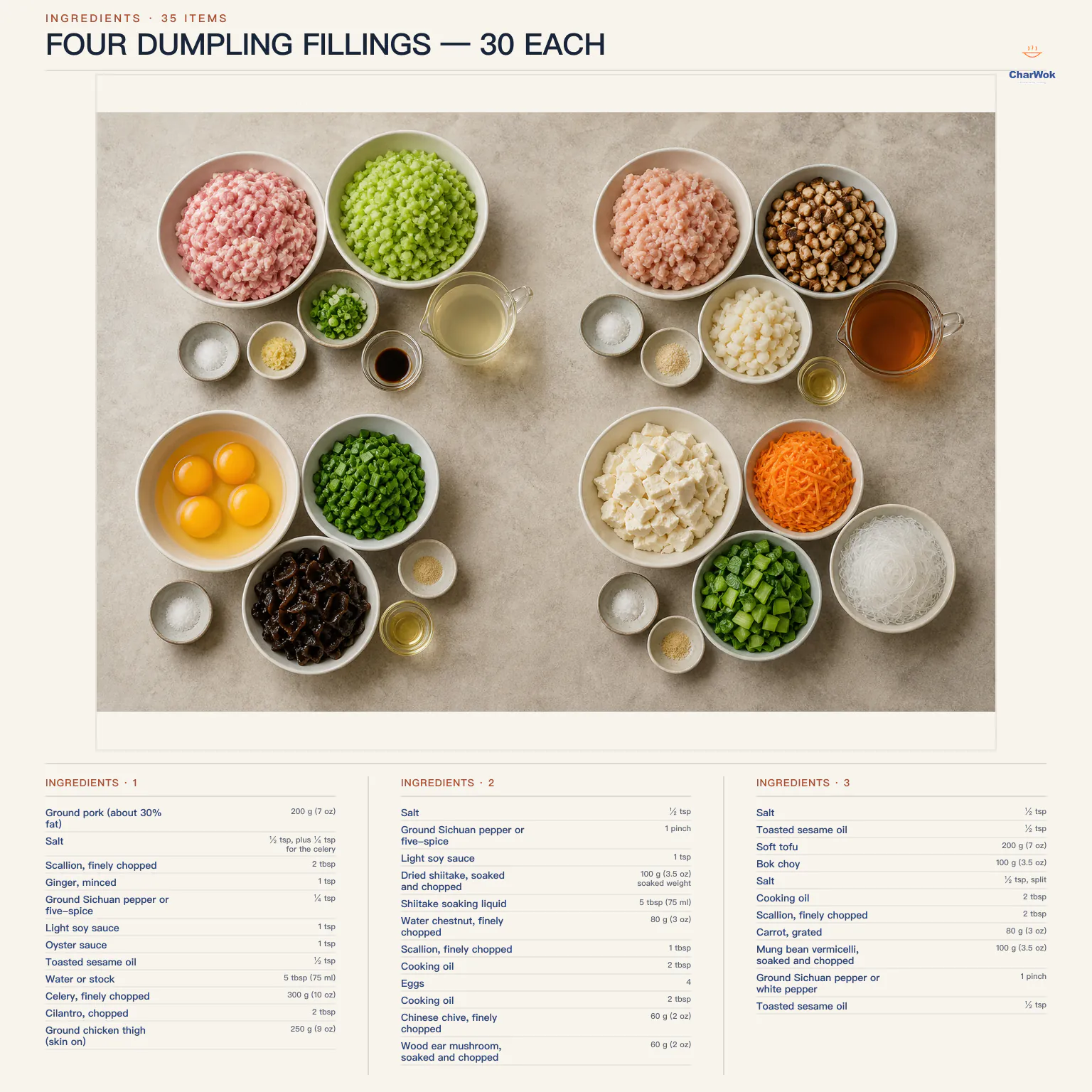
Each of the recipes below makes enough for about 30 dumplings, depending on how generously you fill. The quantities are written so you can scale up in proportion.
Pork and celery
| Ingredient | Amount | Notes / substitute |
|---|---|---|
| Ground pork (about 30% fat) | 200 g (7 oz) | Grind fatty shoulder yourself for best texture |
| Salt | ½ tsp, plus ¼ tsp for the celery | Reduce if serving with a salty dip |
| Scallion, finely chopped | 2 tbsp | Leek works in a pinch |
| Ginger, minced | 1 tsp | Fresh, not dried |
| Ground Sichuan pepper or five-spice | ¼ tsp | White pepper if you prefer neutral |
| Light soy sauce | 1 tsp | None |
| Oyster sauce | 1 tsp | Mushroom stir-fry sauce for vegan |
| Toasted sesame oil | ½ tsp | None |
| Water or stock | 5 tbsp (75 ml) | Cold shiitake soaking liquid is best |
| Celery, finely chopped | 300 g (10 oz) | Napa cabbage or zucchini work similarly |
| Cilantro, chopped | 2 tbsp | Optional; skip if you dislike it |
- Put the pork in a wide bowl with the scallion, ginger, ¼ tsp salt, the Sichuan pepper, soy sauce, oyster sauce, and sesame oil. The point of adding the seasonings up front is that the salt begins dissolving the muscle proteins immediately, which is exactly what you want to feed the water into next.
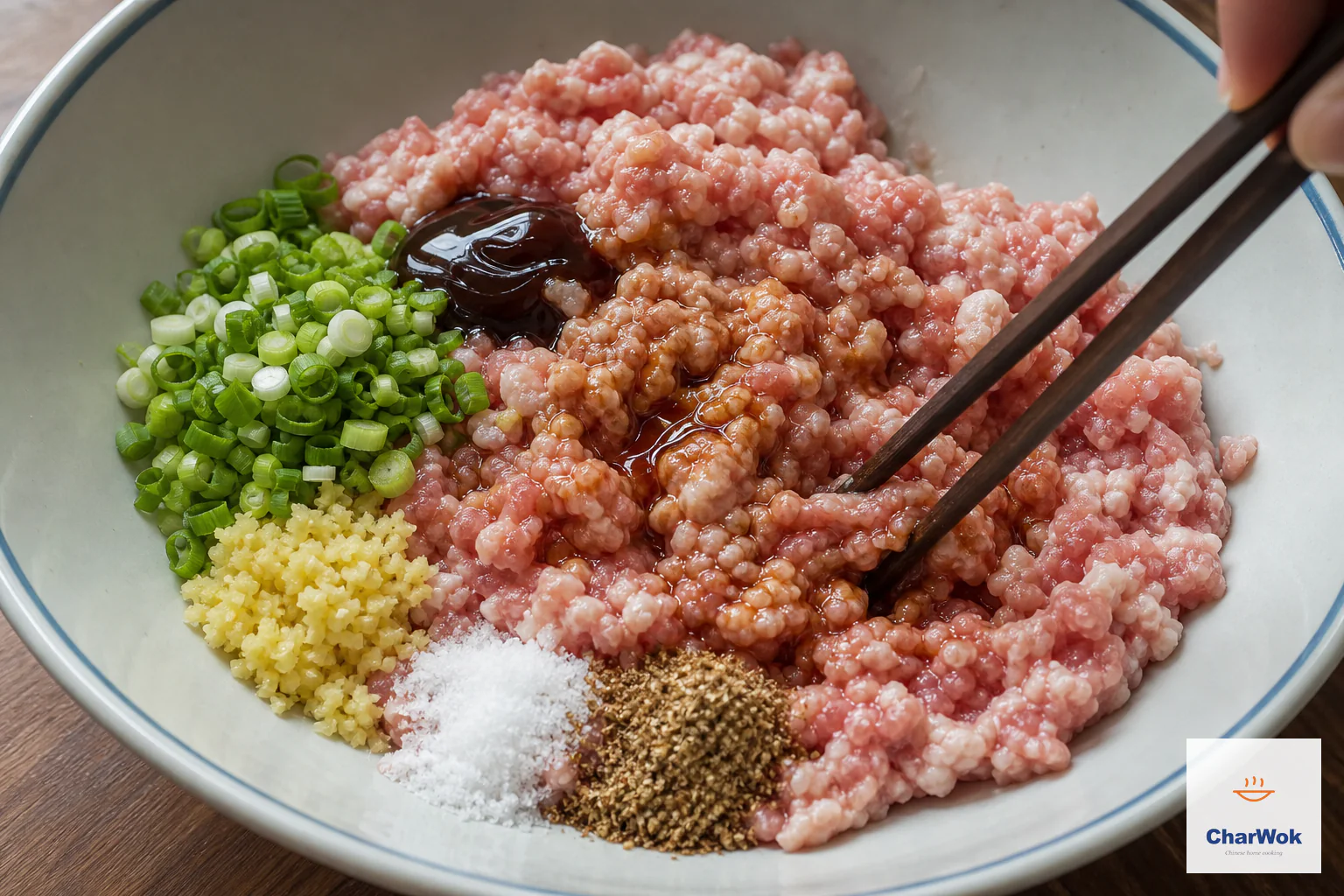
Mix the dry seasonings, aromatics and sauces into the pork first so the salt can begin tightening the meat.
- Add the water a tablespoon at a time, stirring firmly and always in the same direction. Wait until each addition disappears before adding the next. Stop when the meat is sticky, glossy, and no liquid pools when you tilt the bowl. This usually takes two or three minutes of real work; under-beating is the most common mistake.
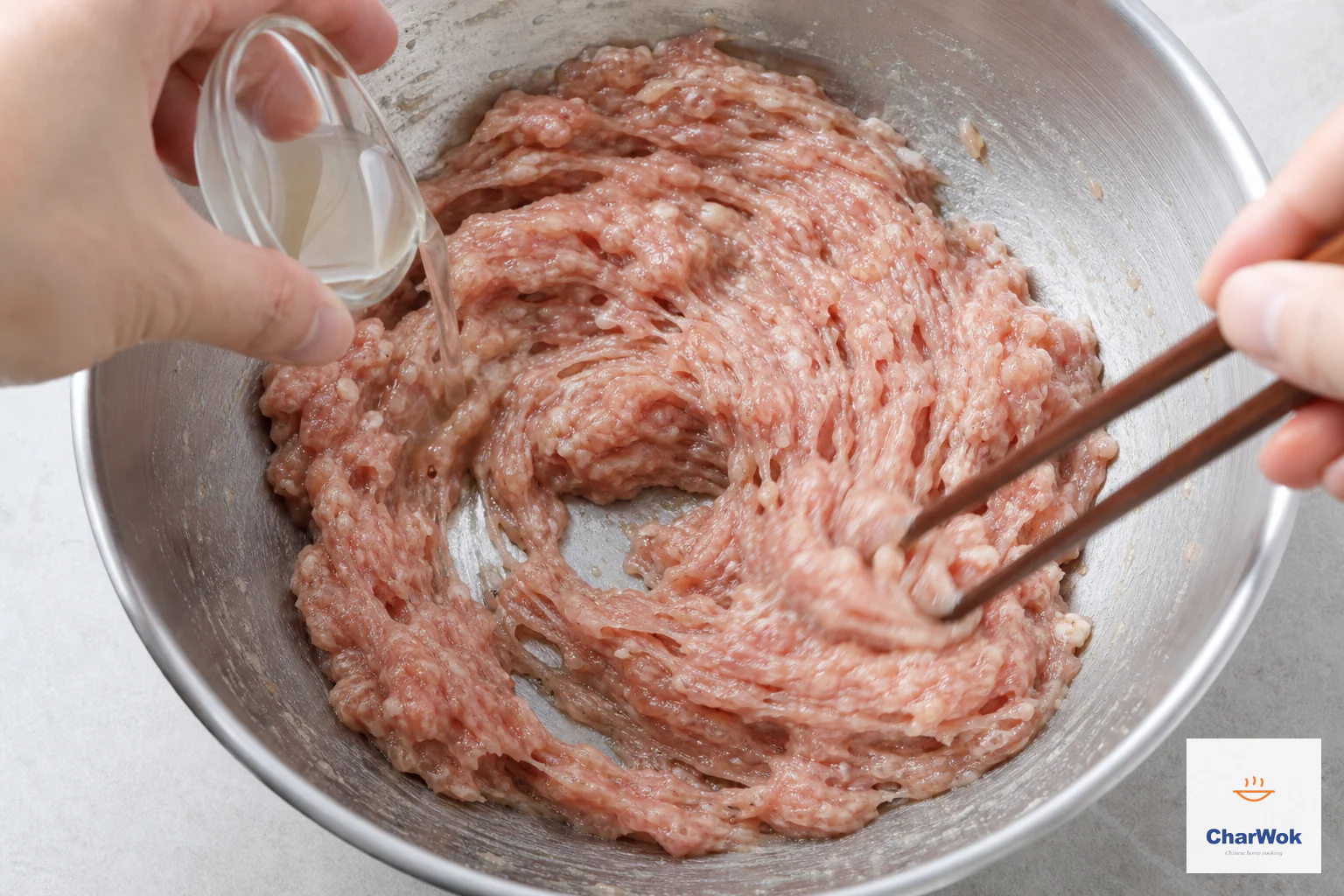
Add the 5 tablespoons of water or stock in several additions, stirring each one in completely before the next.
- Toss the chopped celery with the remaining ¼ tsp salt and let it sit for ten minutes. The salt pulls water out of the cells through osmosis, so the celery shrinks and concentrates instead of weeping into your dumplings later. Squeeze it hard in handfuls, then fold it into the meat with the cilantro right before you start folding wrappers.
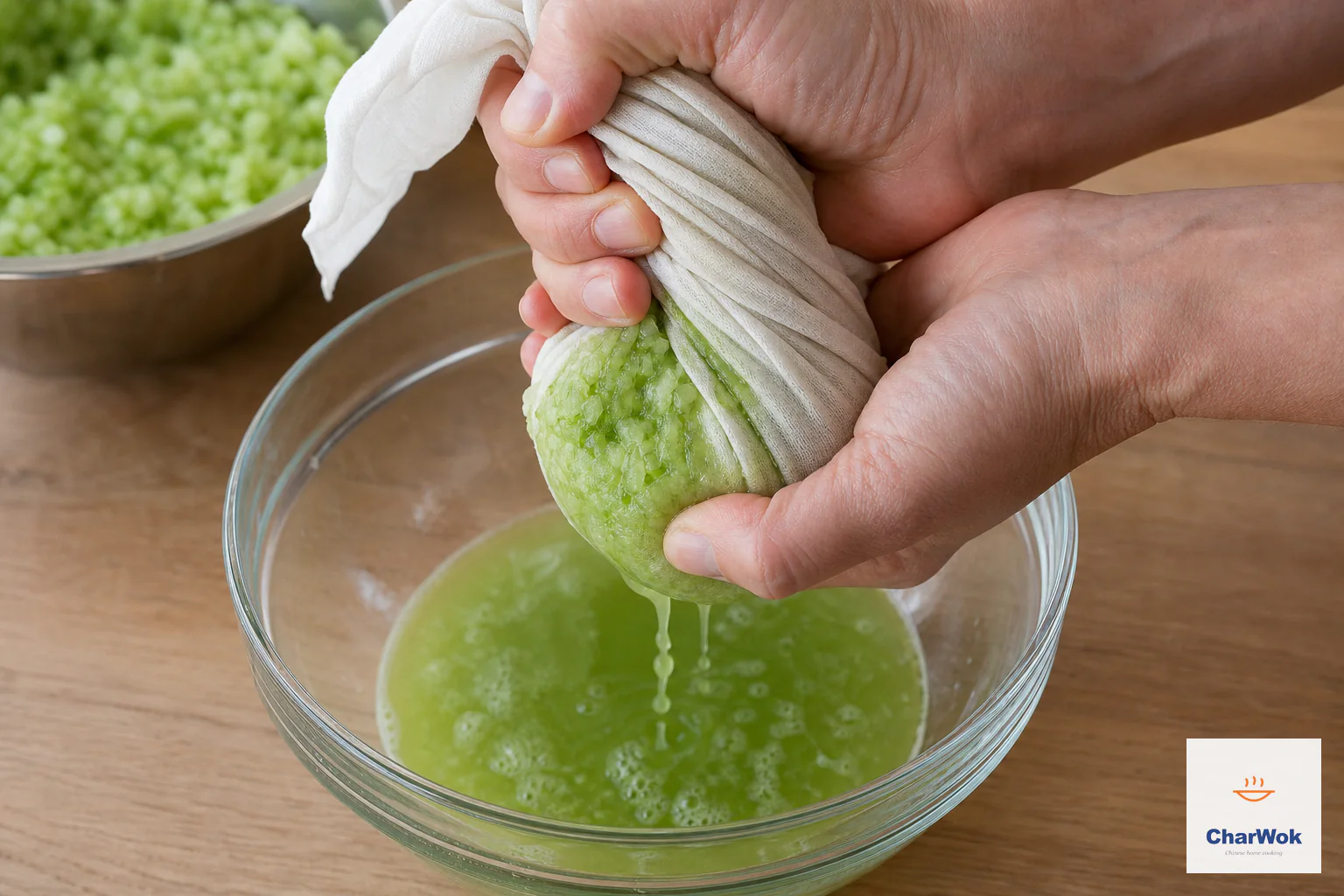
Salt the celery for 10 minutes, squeeze it very dry, then fold it and the cilantro into the pork only when ready to wrap.
Chicken with shiitake and water chestnut
| Ingredient | Amount | Notes / substitute |
|---|---|---|
| Ground chicken thigh (skin on) | 250 g (9 oz) | Do not use breast; it will be dry |
| Salt | ½ tsp | None |
| Ground Sichuan pepper or five-spice | 1 pinch | None |
| Light soy sauce | 1 tsp | None |
| Dried shiitake, soaked and chopped | 100 g (3.5 oz) soaked weight | Soak overnight if you can; discard stems |
| Shiitake soaking liquid | 5 tbsp (75 ml) | The backbone of the flavor here |
| Water chestnut, finely chopped | 80 g (3 oz) | Jicama is a reasonable substitute |
| Scallion, finely chopped | 1 tbsp | None |
| Cooking oil | 2 tbsp | Peanut or neutral oil |
- Soak the dried shiitake in warm water, ideally overnight. An overnight soak in cool water extracts more flavor and a clearer soaking liquid than a quick hot soak. Remove and discard the stems, which are tough, and chop the caps small.
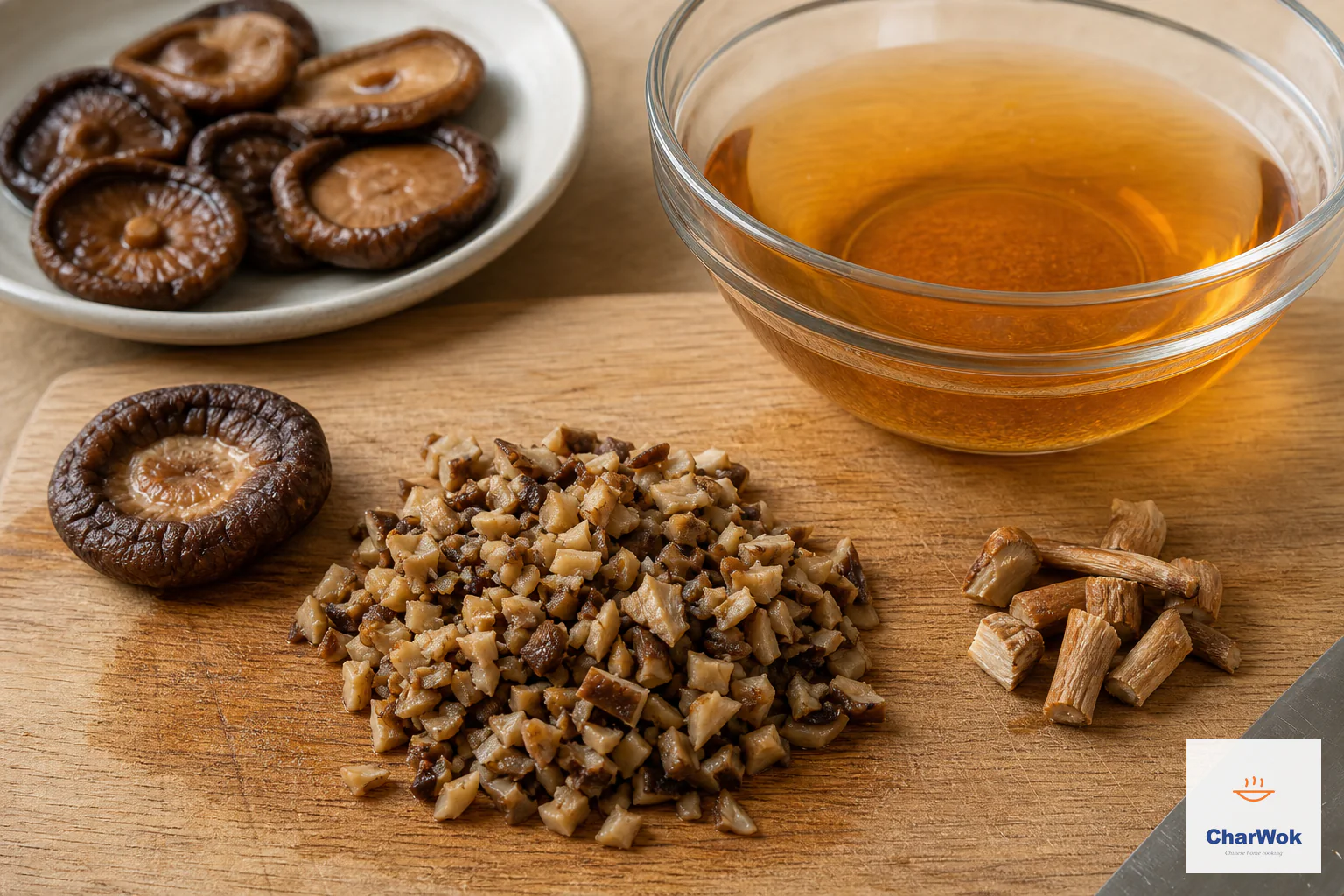
Soak the dried shiitake, discard the stems, chop the caps and reserve the clear upper soaking liquid.
- Combine the chicken, salt, spice, and soy sauce. Chicken is leaner than pork, so beating in liquid matters even more here; without it the filling will be tight and cottony.
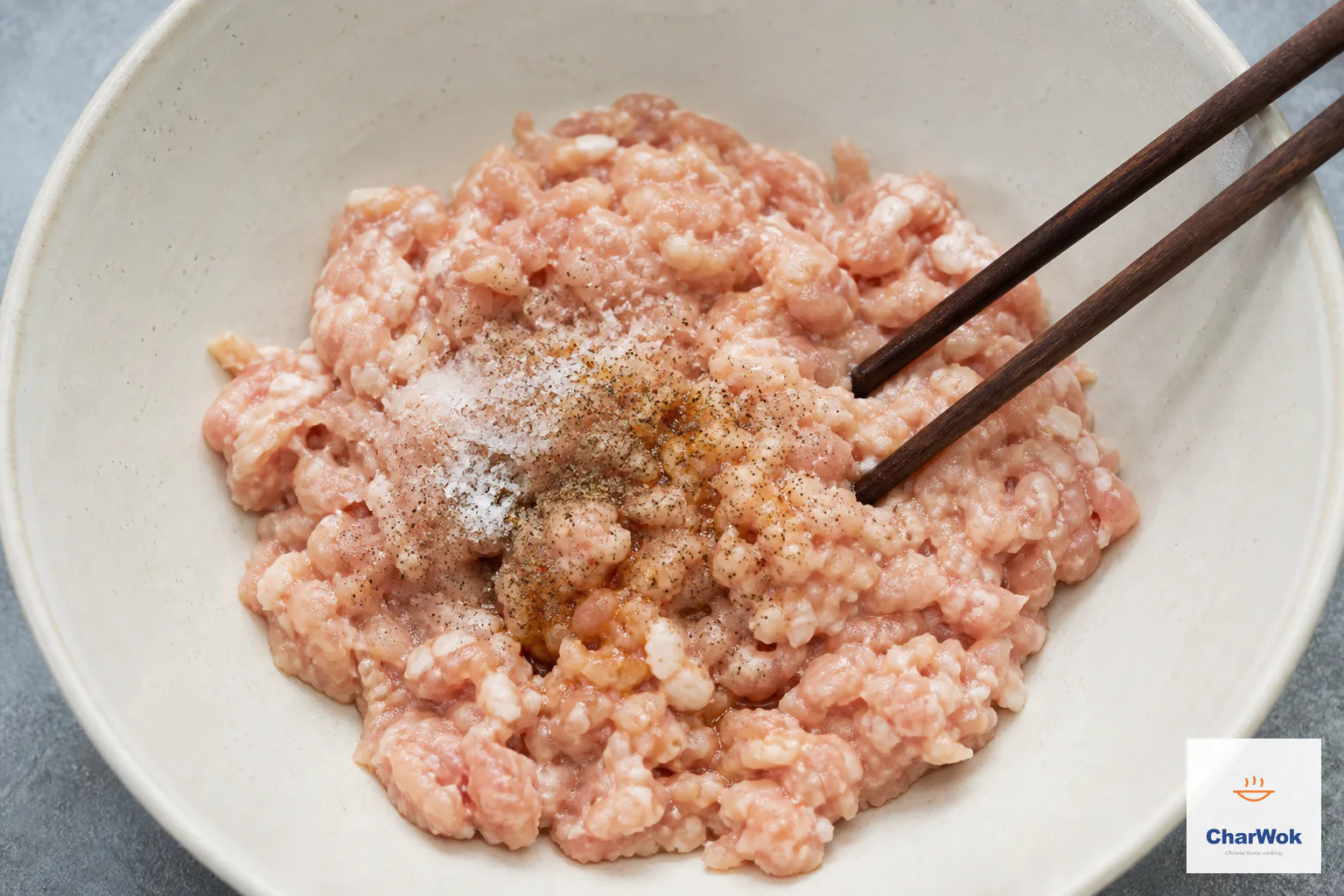
Season the ground chicken thigh before adding the mushroom liquid so it can bind rather than turn watery.
- Beat in the strained soaking liquid a tablespoon at a time, stirring one direction, until the chicken turns sticky and loose. You are looking for the same glossy, no-pooling endpoint as with pork.
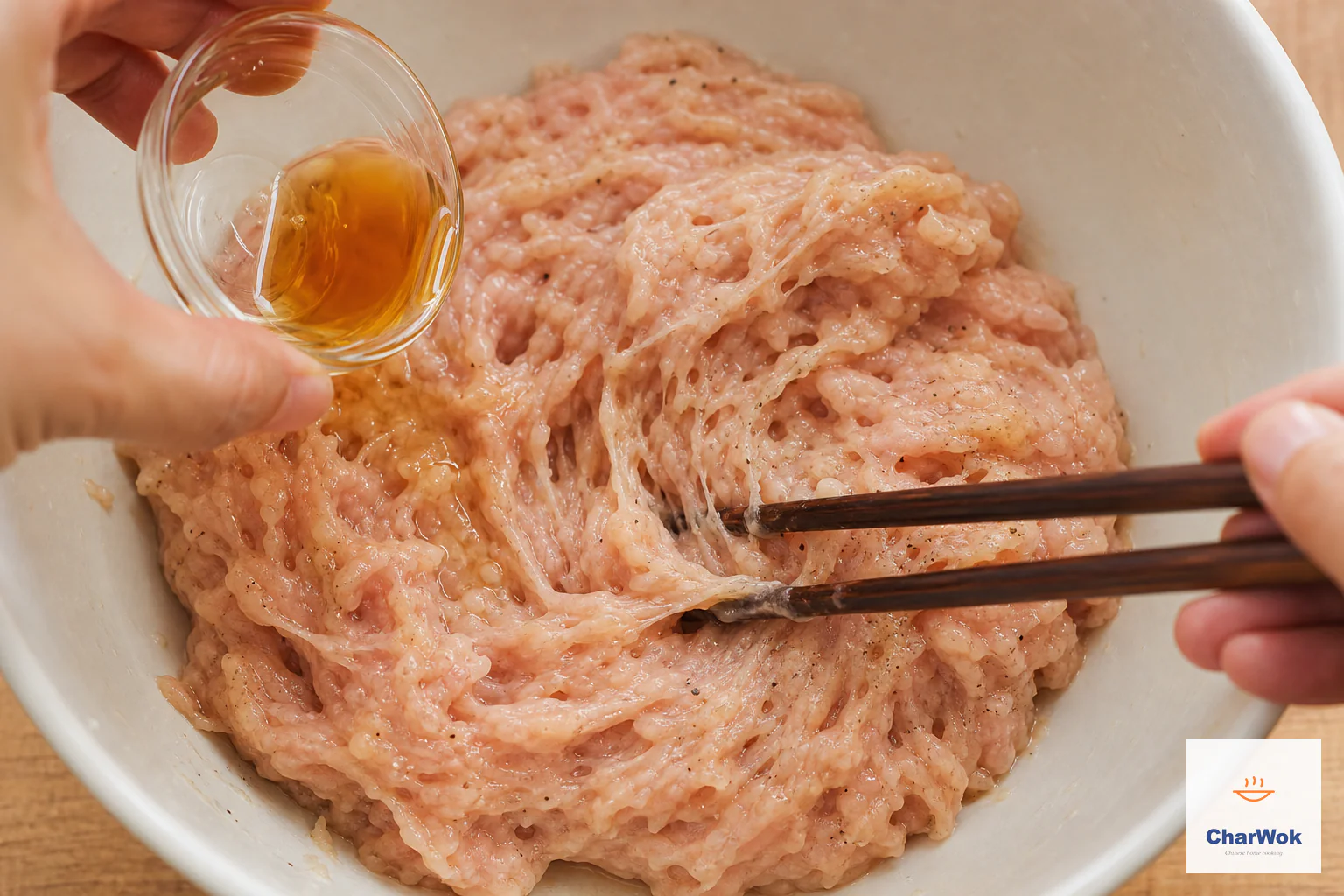
Beat the 5 tablespoons of shiitake liquid into the chicken gradually until the meat is glossy and cohesive.
- Fold in the chopped mushroom and water chestnut. Pile the scallion on top, heat the oil until it shimmers, and pour it over the scallion to bloom its aroma. Stir everything together. The hot-oil step tames the raw onioniness that would otherwise fight the delicate chicken.
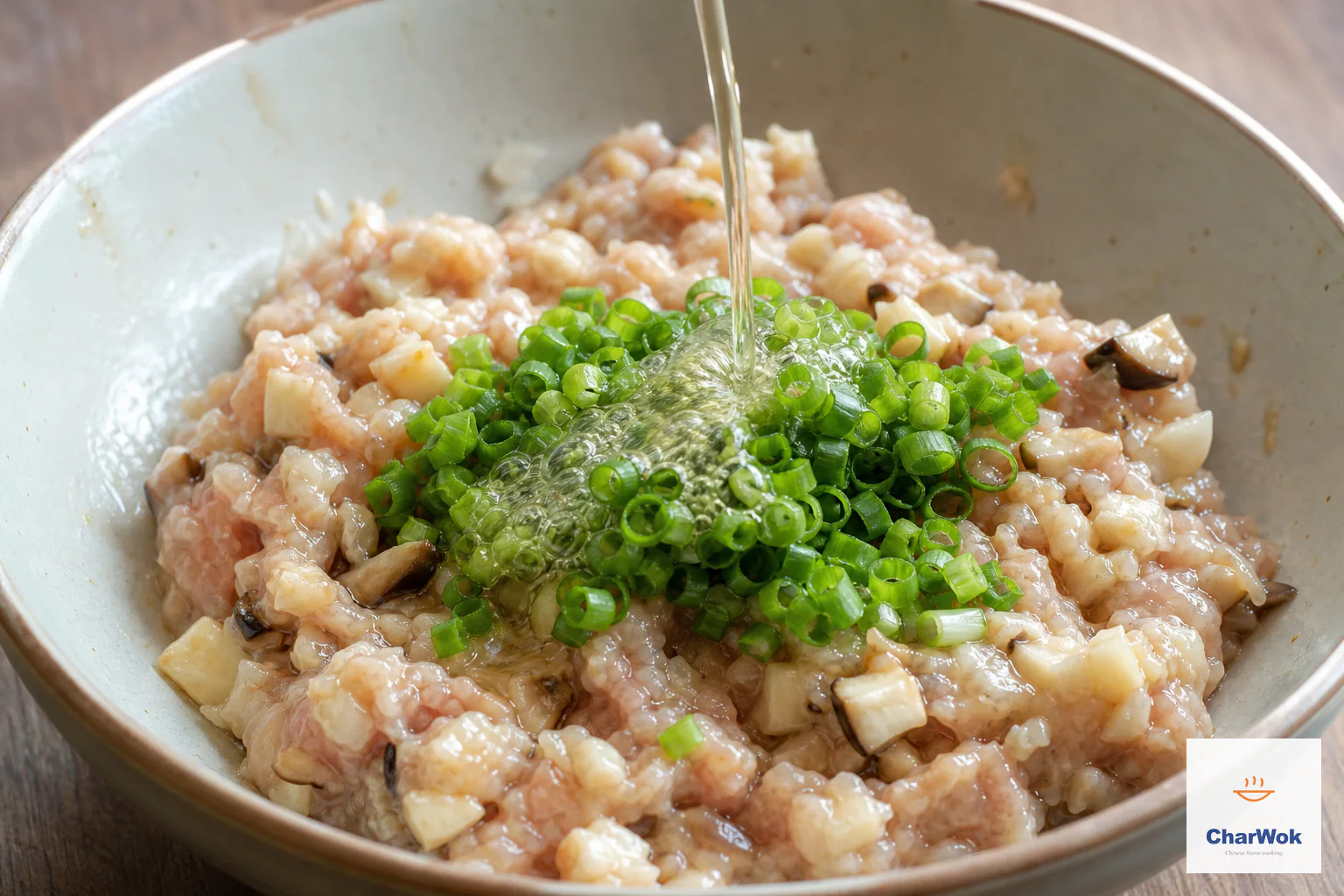
Fold in the chopped shiitake and water chestnut, mound scallion on top, then bloom it with 2 tablespoons of hot oil.
Egg and Chinese chive (vegetarian)
| Ingredient | Amount | Notes / substitute |
|---|---|---|
| Eggs | 4 | None |
| Cooking oil | 2 tbsp | For scrambling the eggs |
| Chinese chive, finely chopped | 60 g (2 oz) | Garlic chives; scallion is a milder sub |
| Wood ear mushroom, soaked and chopped | 60 g (2 oz) | For texture; rehydrate in warm water first |
| Salt | ½ tsp | None |
| Toasted sesame oil | ½ tsp | None |
- Heat the oil in a wok or wide pan over medium-high until fluid and shimmering, about 180°C / 355°F, but do not let it smoke. If smoke appears, turn off the burner and let the oil cool. Pour in the beaten eggs, take them out the instant no liquid egg remains and before they brown, then cool and chop coarsely.
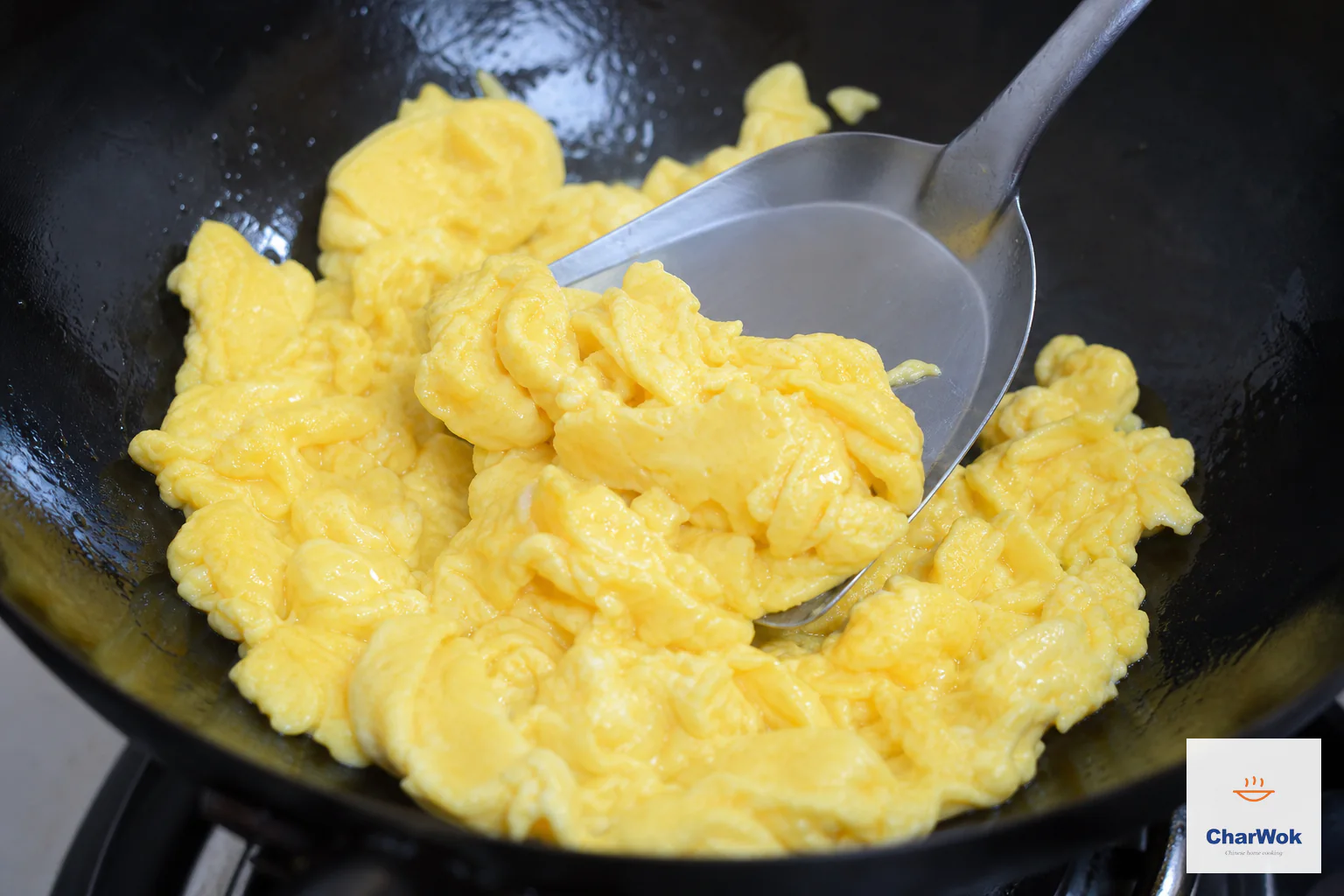
Heat the oil until shimmering, about 180°C / 355°F but not smoking; scramble quickly, remove the eggs while tender, cool, then chop coarsely.
- Fold in the chive, wood ear, salt, and sesame oil. Chive is assertive, so it needs little seasoning; the salt and a few drops of sesame oil are enough. Assemble these dumplings soon, because the salt will start pulling water from the chive.
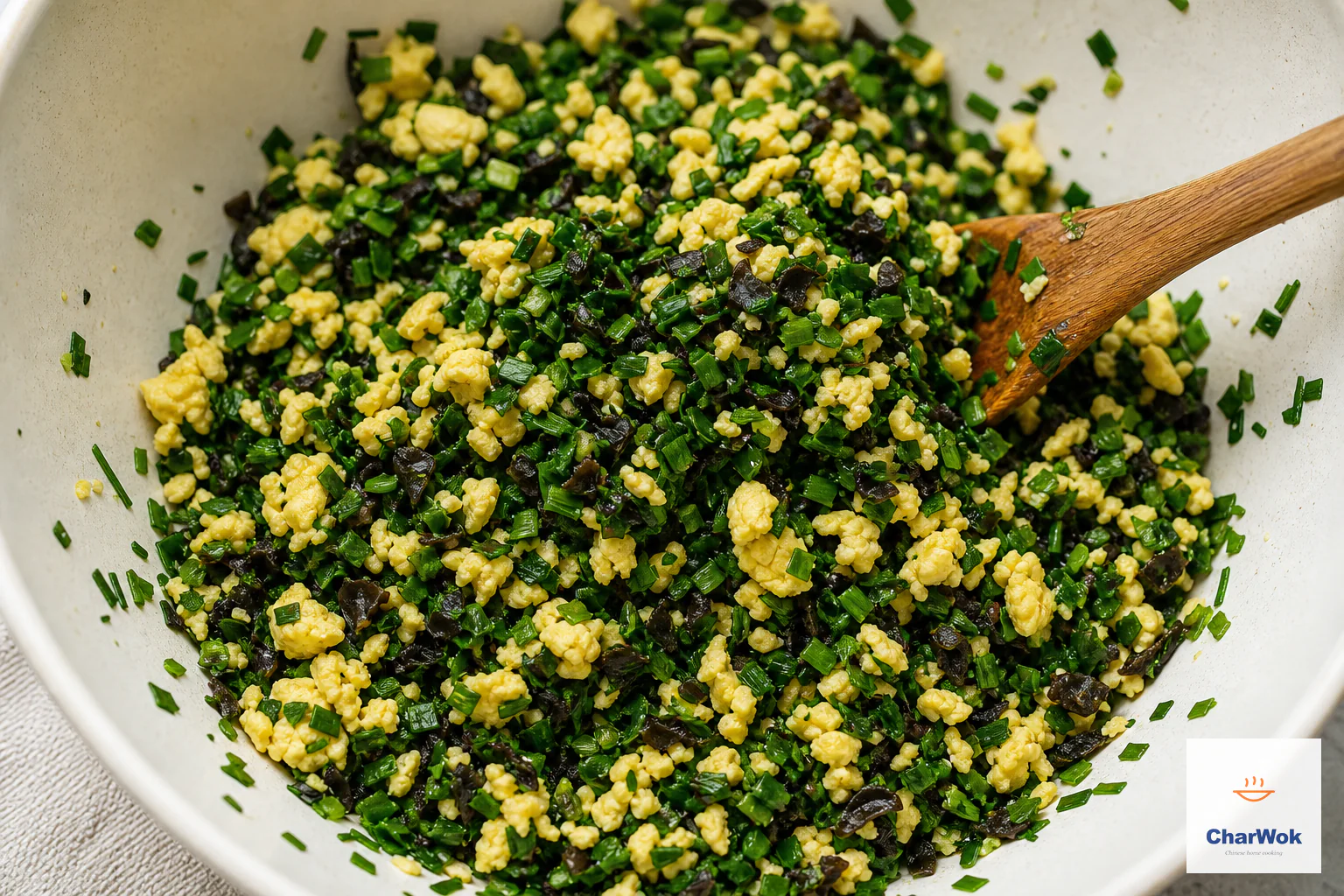
Fold the cooled egg with Chinese chive, wood ear, salt and sesame oil without crushing the curds.
Tofu, bok choy, and carrot (vegan)
| Ingredient | Amount | Notes / substitute |
|---|---|---|
| Soft tofu | 200 g (7 oz) | Firm tofu also works; press it well |
| Bok choy | 100 g (3.5 oz) | Napa cabbage or spinach work too |
| Salt | ½ tsp, split | ¼ tsp for the greens, ¼ tsp for the carrots |
| Cooking oil | 2 tbsp | None |
| Scallion, finely chopped | 2 tbsp | None |
| Carrot, grated | 80 g (3 oz) | None |
| Mung bean vermicelli, soaked and chopped | 100 g (3.5 oz) | Soaks up stray moisture |
| Ground Sichuan pepper or white pepper | 1 pinch | None |
| Toasted sesame oil | ½ tsp | None |
- Blanch the tofu in boiling water for two minutes, then drain and chop. Blanching firms the surface so the cubes keep their shape in the filling rather than crumbling to mush. This step sounds fussy but it is the difference between a tidy dumpling and a soggy one.
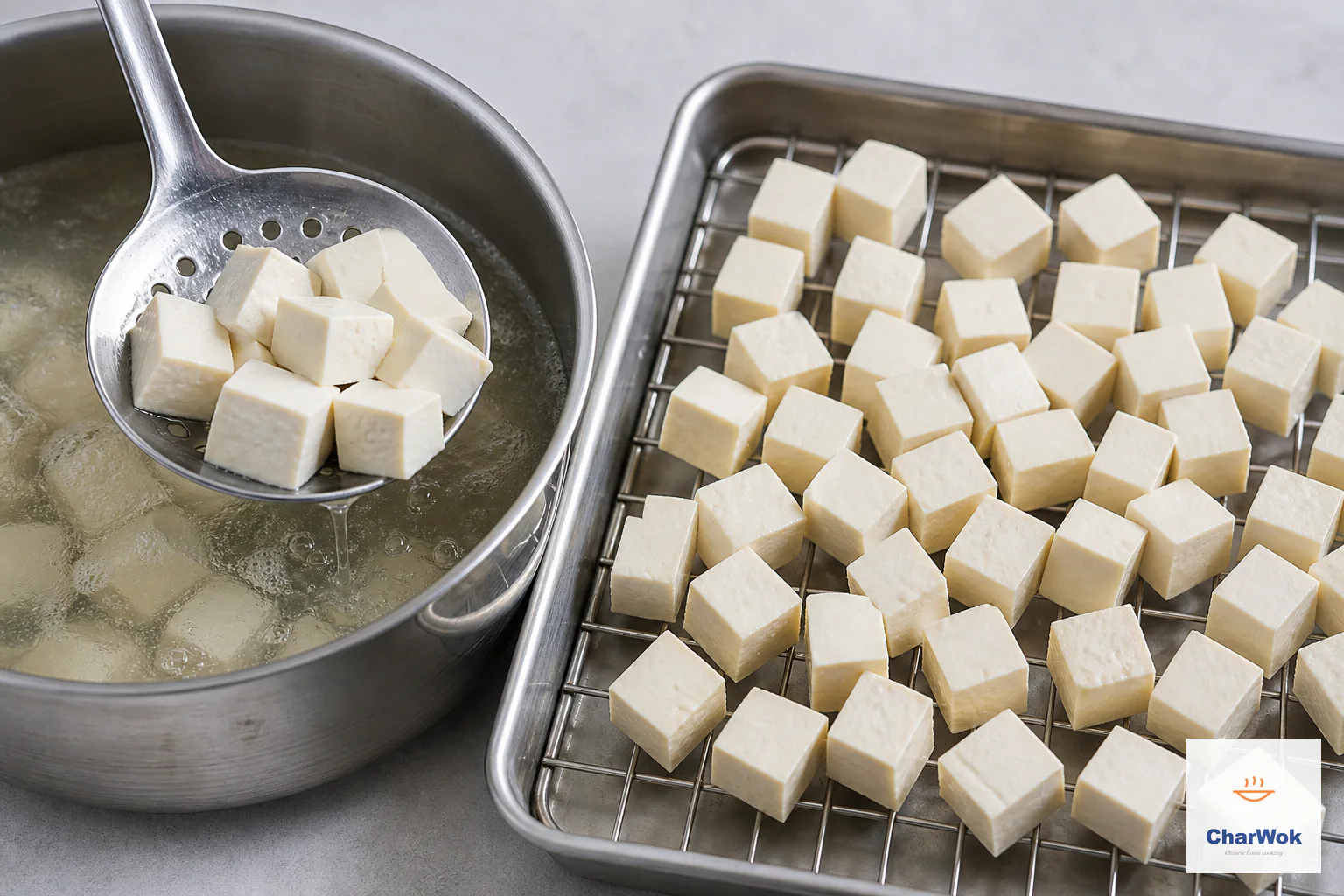
Blanch the tofu for 2 minutes, drain thoroughly and cut it into neat small pieces.
- Blanch the bok choy briefly, shock it in cold water, chop it fine, then toss with ¼ tsp salt and let it rest ten minutes before squeezing it dry. The salt-and-squeeze step does the same moisture control job it does in the meat fillings.
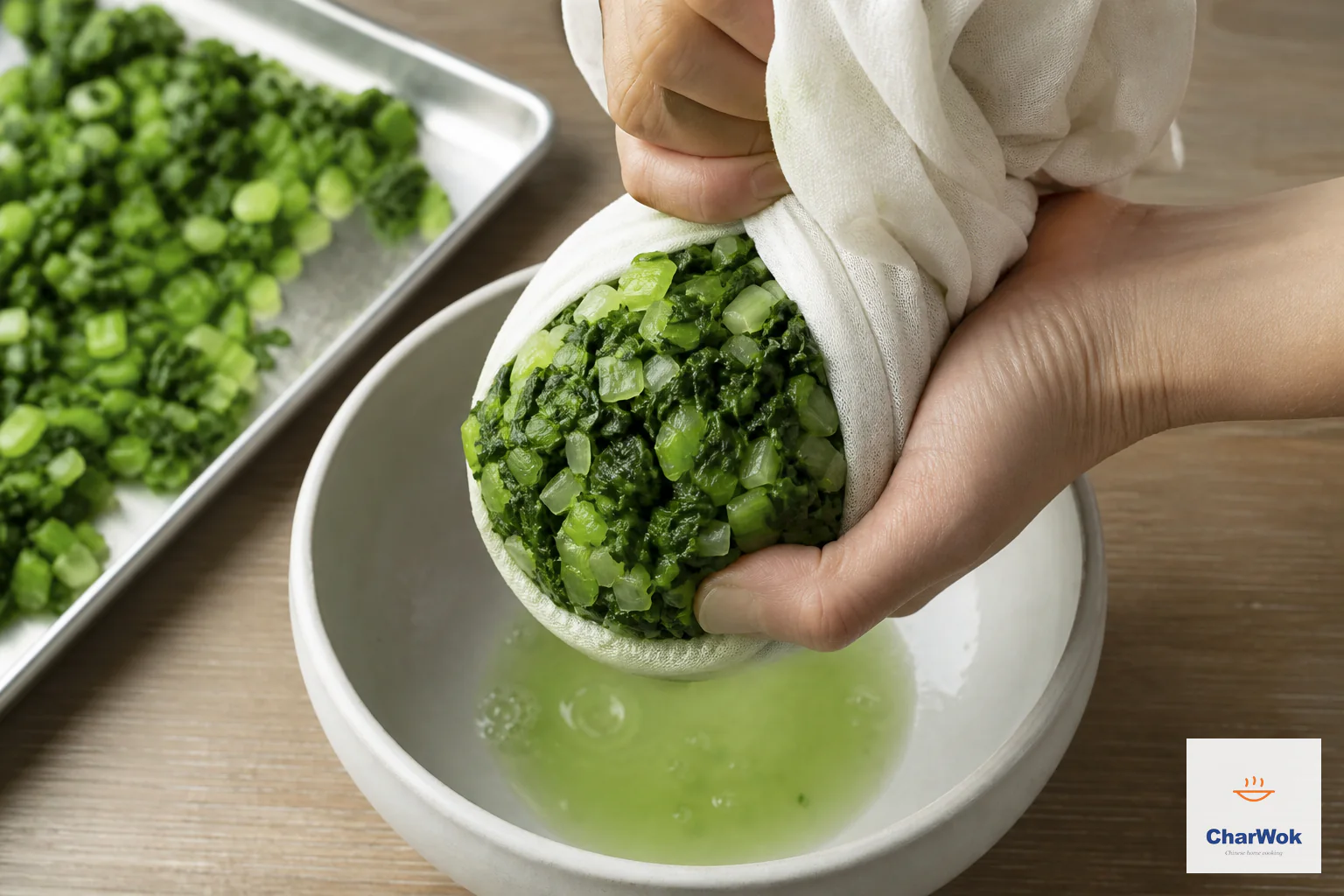
Blanch and chop the bok choy, salt it for 10 minutes, then squeeze out as much moisture as possible.
- Heat the oil in a wok and stir-fry the scallion, carrot, and remaining ¼ tsp salt until the carrot softens. Cooking the carrot breaks down its cell walls and brings out its sweetness, which raw grated carrot never quite delivers.
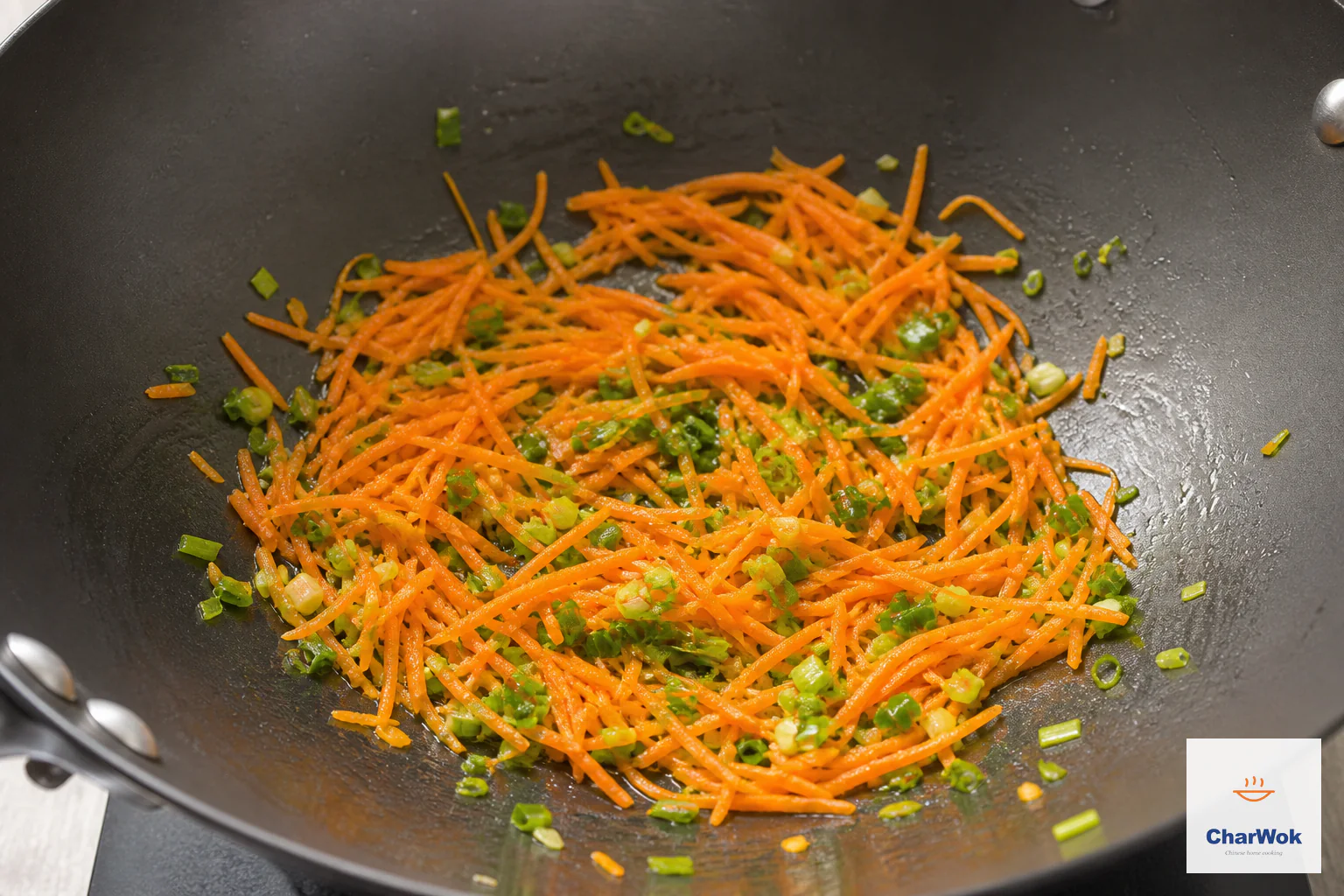
Stir-fry the scallion and grated carrot with the remaining salt until soft but still bright.
- Combine everything in a bowl, including the chopped vermicelli, and season with the pepper and sesame oil. The vermicelli is your insurance policy: it quietly drinks up any last bit of water the vegetables release.
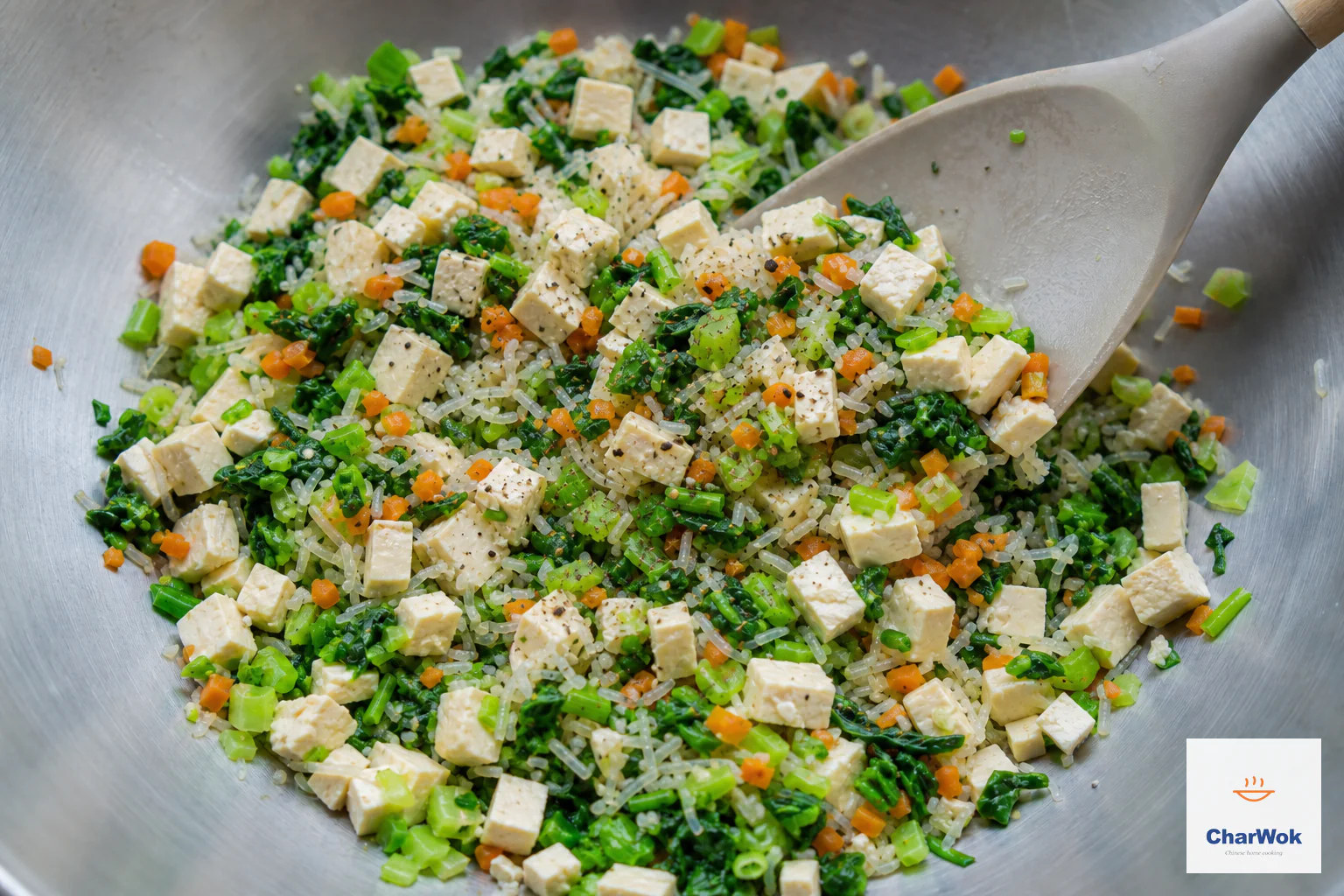
Gently combine every vegan filling component with pepper and sesame oil, keeping the tofu distinct and the mixture dry.
When the filling goes wrong
This is where most guides wave vaguely and move on. Here are the failures I see again and again, and exactly how to rescue them.
- The meat is dense and dry. You under-beat the liquid, or you started with lean meat. Next time beat longer and use fattier pork. For the batch in front of you, fold in a teaspoon of warm water or stock and a few drops of oil, then stir aggressively one direction to wake it back up.
- The filling is a wet puddle. The vegetables were not squeezed, or you mixed meat and vegetable too early. Tilt the bowl so the liquid pools in one corner, then scoop the filling and press it against the bowl wall with the back of a spoon as you load each wrapper. Fold a handful of chopped, soaked vermicelli or extra scrambled egg into the remainder to bind it.
- The filling tastes bland. Usually it is short on umami, not short on salt. Add a tablespoon of finely chopped soaked shiitake, half a teaspoon of oyster sauce, or a pinch of dried shrimp. Beat a tablespoon of shiitake soaking liquid in rather than plain water.
- The wrappers tear as you fold. Two causes: the filling is too wet (see above), or you overfilled. Use a rounded teaspoon per wrapper and leave a clean half-inch border so the seam can actually close.
- The dumplings leak during cooking. Either the seam was not sealed tight, or assembled dumplings sat around so long the wrapper absorbed moisture and weakened. Fold tight, press the seam twice, and move finished dumplings straight to a floured tray, then to the pot or the freezer.
- The filling tastes raw and oniony. Raw scallion and ginger can be aggressive. Try the hot-oil bloom from the chicken recipe on any meat filling: pile the aromatics on top and pour shimmering oil over them before stirring.
Variations and pairings
Once the technique is in your hands, the recipes become starting points. Lamb and carrot is a northern classic worth learning; season it generously with cumin and a little freshly ground Sichuan pepper. Pork and Chinese chive needs almost nothing besides salt and sesame oil, because the chive does the heavy lifting, and these are the dumplings you will find in a good pan-fried version. For a soupier, more indulgent filling, fold in minced pork rind aspic; the aspic melts to broth during cooking, the same mechanism behind soup dumplings.
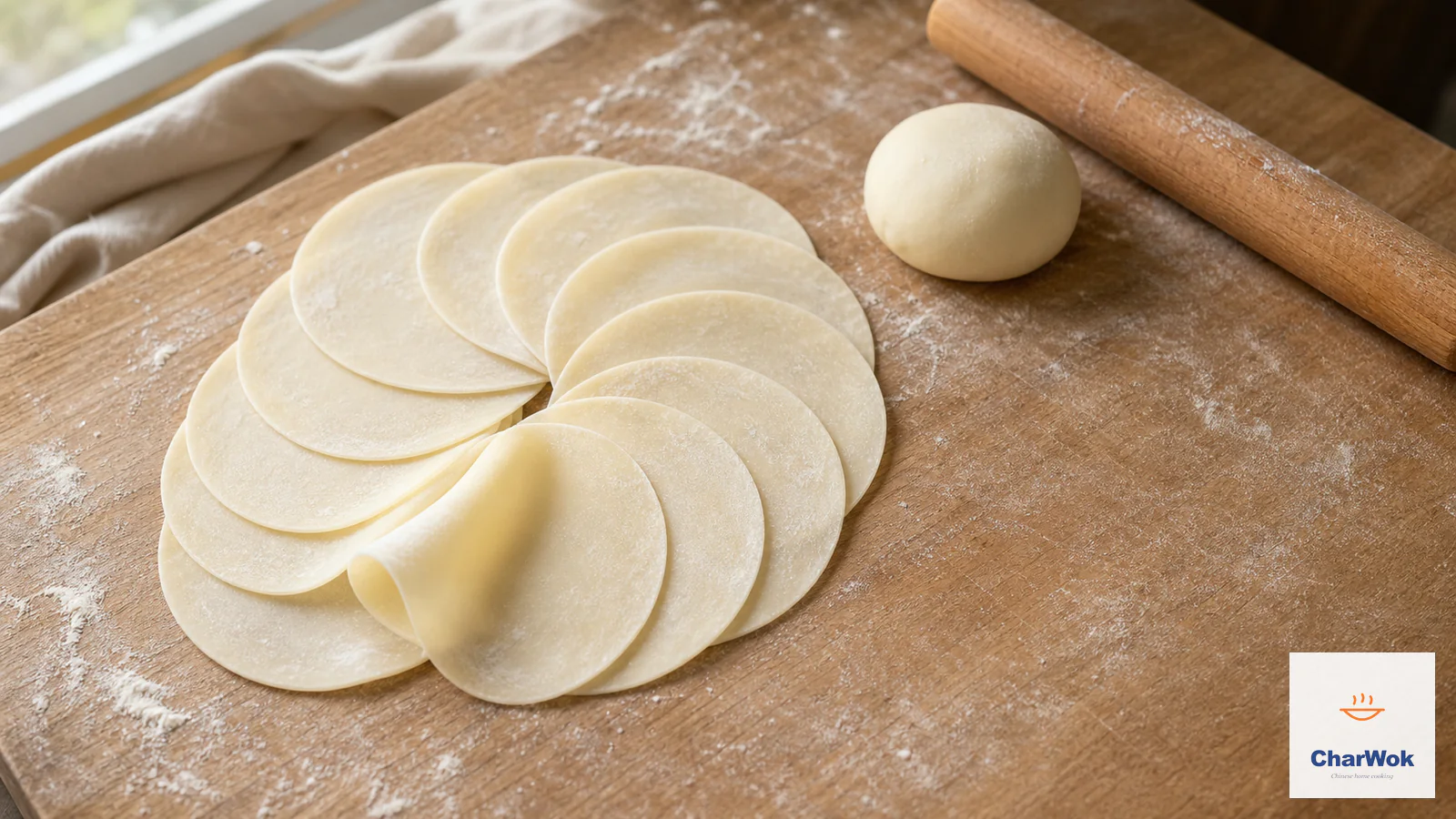
Color is a nice touch for a gathering. Spinach juice in the wrapper dough gives a soft green, and carrot or beet juice gives orange and pink, and the fillings here all work inside naturally colored wrappers. If you want a completely different shape, these fillings also do well folded into flat chive pockets or wontons floating in soup.
How to fold, cook, and store
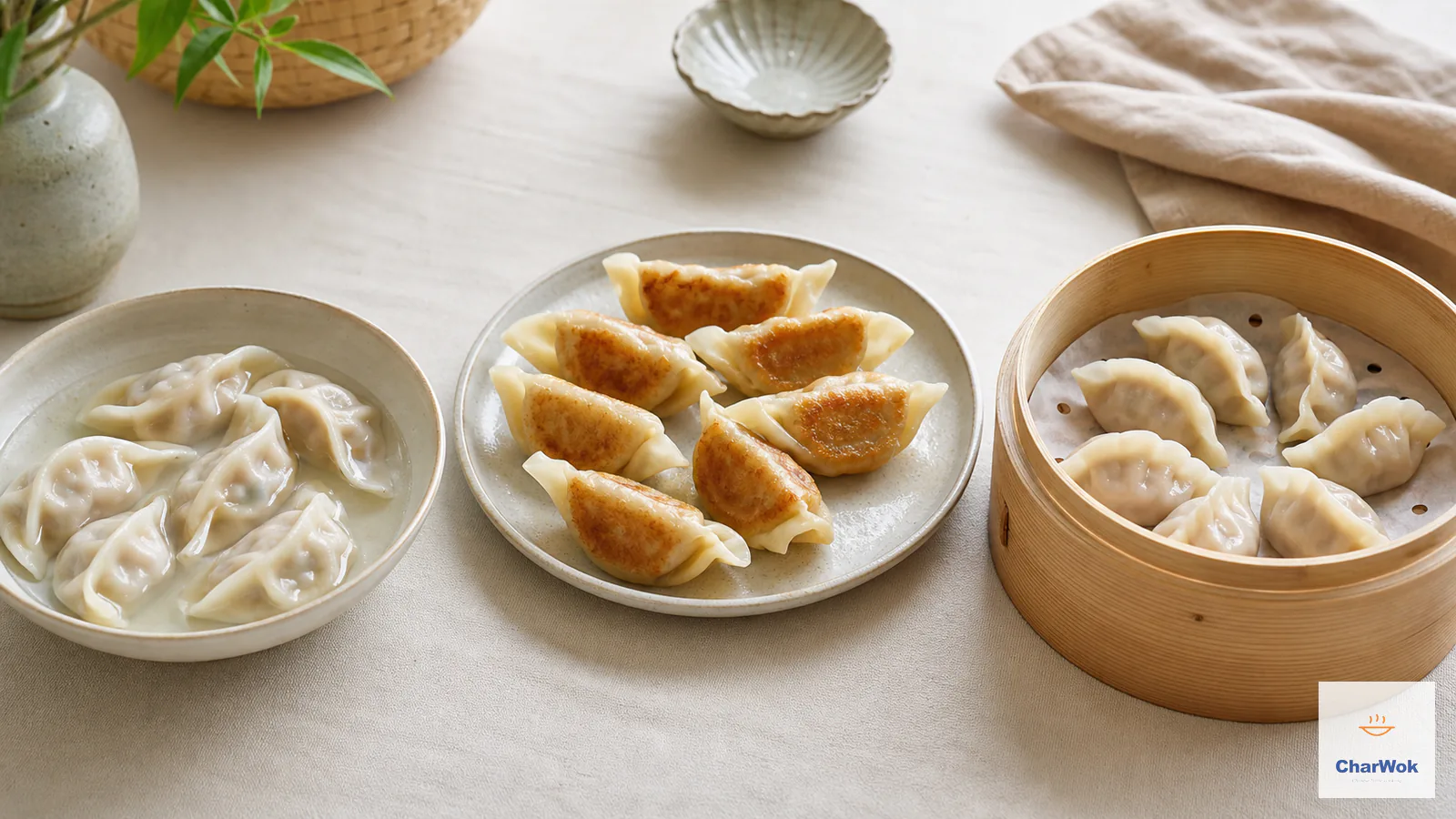
A great filling still needs a decent fold and a careful cook. For the half-moon and pleated shapes most home cooks use, work through a few folding techniques and pick the one your hands find natural; the pleated crescent is the most forgiving for beginners. Then choose your method: boil for tender, clean dumplings, pan-fry for a crisp bottom and chewy top, or steam for the softest skin. The cooking method changes the experience more than the filling does, so it is worth understanding all three.
For storage, keep raw filling at 4°C / 40°F or below and use it within one day. Freeze assembled dumplings in a single layer instead of refrigerating them overnight, then transfer the solid dumplings to a sealed bag. Cook from frozen without relying only on extra minutes or wrapper appearance: check the center with a food thermometer. Pork filling must reach 71°C / 160°F and chicken filling 74°C / 165°F. Refrigerate cooked leftovers promptly and use within three to four days. These temperatures and times follow FoodSafety.gov's safe minimum temperature chart and cold storage chart.
For the egg filling, heat oil only until shimmering, not smoking. The U.S. Fire Administration advises staying beside the pan and turning off the burner if oil smokes.
Questions I get asked often
A last word
If you remember nothing else, remember the beating. It is the one step that separates a homemade dumpling from a great one, and the only way to truly understand it is to feel the meat change under your spoon. Start with the pork and celery, get the texture right once, and the other three fillings, and every filling you invent after that, will fall into place. For a wider tour of what dumplings can be, browse the full dumpling guide for a wider tour of what dumplings can be.