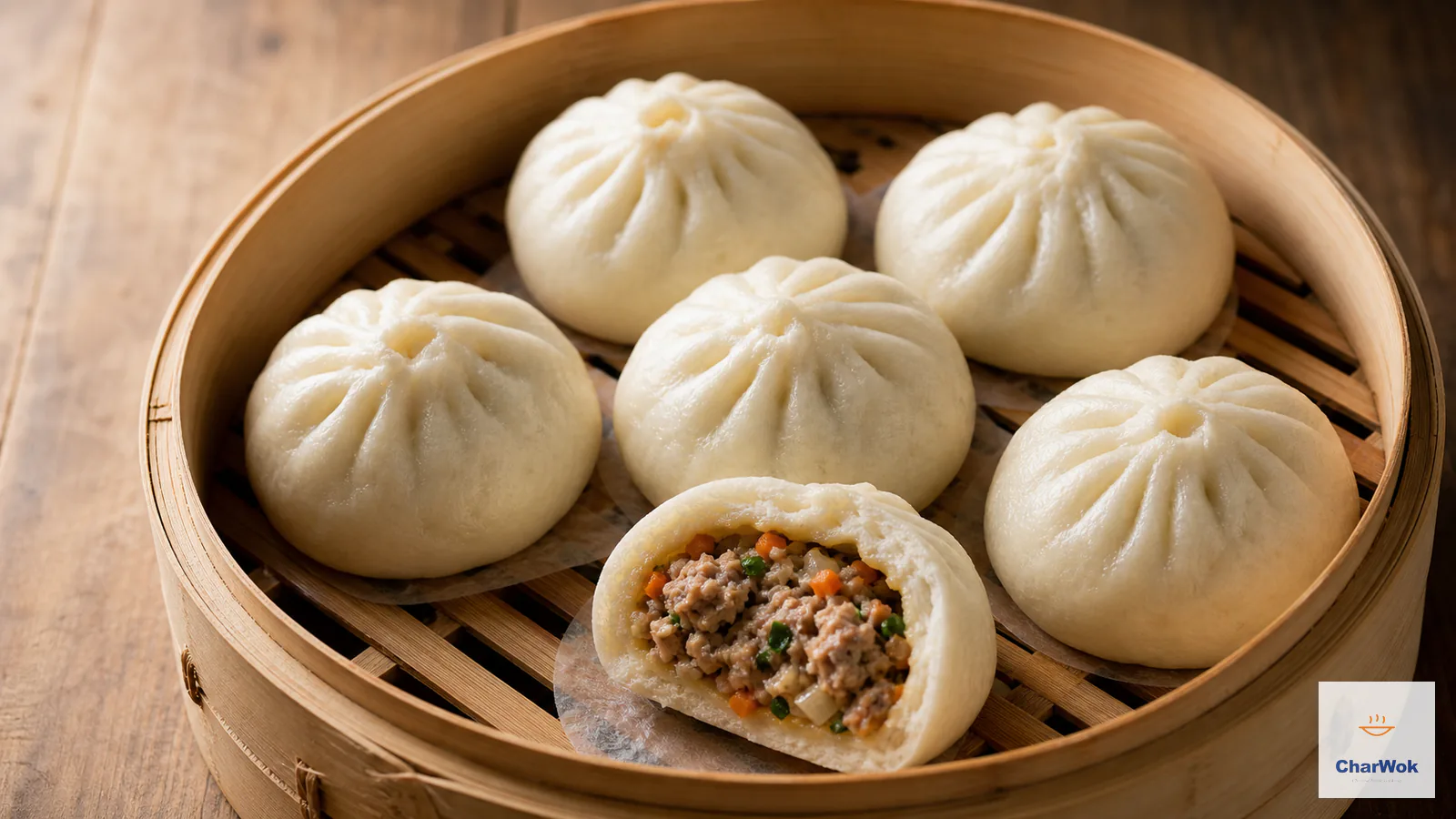
A folded steamed bao bun is, at heart, one of the kindest things you can make in a home kitchen: a soft, mildly sweet pocket of dough that waits patiently for whatever filling you put in it. The hard part is not the recipe. It is the texture. Most first-timers open their steamer to find pale, dense, slightly wrinkled shells that look right but chew like wet clay. I did this for years before I understood why.
The good news is that the folded bao (the kind you fold over a chop or two of slow-braised pork belly) is the most forgiving member of the steamed-bun family. There is no seal to leak, no filling to make the dough soggy, no precise pleating. You roll, brush, fold, steam. Once you can do this, the same dough logic carries you into filled baozi, char siu bao, and the sweet red bean buns you see in dim sum carts.
At a glance
One dough, one short proof, one steam. The ratio that matters is 300 g flour to 165 g liquid, with 1¼ tsp instant yeast and 1 tsp each of baking powder and sugar. Steam only 10 minutes over medium-low, then rest 2 minutes before you lift the lid. A single proof, not two, is what keeps the texture light instead of bread-like.
What these buns are (and why the folded version is a smart place to start)
Gua bao, the folded bun most people meet first through Taiwanese street food, is a descendant of Fujianese steamed bread traditions that traveled along the South China coast. The dough itself is a mild, yeasted white bun dough, leavened with yeast and lifted a touch further with baking powder, which keeps the crumb fine and soft rather than chewy. Northern Chinese steamed bread leans toward plain mantou, which is denser and meant to be torn into a stew. Folded buns are the southern, softer branch: less chew, more pillow.
What makes the folded shape beginner-friendly is structural honesty. A filled bun (a baozi, or a fragile soup dumpling) has to hold a seal against steam pressure and a wet filling. Get the dough hydration or the pleat wrong and it splits open in the basket. A folded bao has no seal at all. The fold is held only by a film of oil. So the worst that happens is the bun sticks to itself a little, and even that fixes itself on the next batch.
The science you actually need
Three things decide whether your bun is soft or leaden, and none of them is the brand of flour.
1. Hydration. Bao dough is a fairly wet dough by steamed-bun standards, around 55% (165 g liquid to 300 g flour). That extra water turns to steam inside the dough during cooking and keeps the crumb tender. Drop the liquid too far and you get a dry, tight bun; go too high and the dough slumps and sticks to everything. The given ratio is the sweet spot for all-purpose flour.
2. A short, single proof. Unlike Western bread, bao is not about building big bubbles through a long ferment. It is about many tiny, even bubbles that survive steaming. A single 30-minute proof after shaping is enough. I have tried the two-proof method (one bulk rise, then a shaped rise) and the texture comes out breadier, almost like a leavened scallion flatbread. For a tender folded bao, skip the bulk rise. Mix, rest briefly to relax the gluten, shape, then proof once.
3. Gentle steam, then a 2-minute rest under the lid. The most common collapse I see is people yanking the lid off the moment the timer goes. Steam is 100°C water vapor surrounding a dough that is basically a wet sponge full of gas bubbles. A sudden drop in surrounding pressure and temperature shocks those bubbles and the structure caves. Turn off the heat, leave the lid cracked for a count of ten, then lift. This single habit will save more buns than any flour upgrade.
Ingredients
Ingredients at a glance
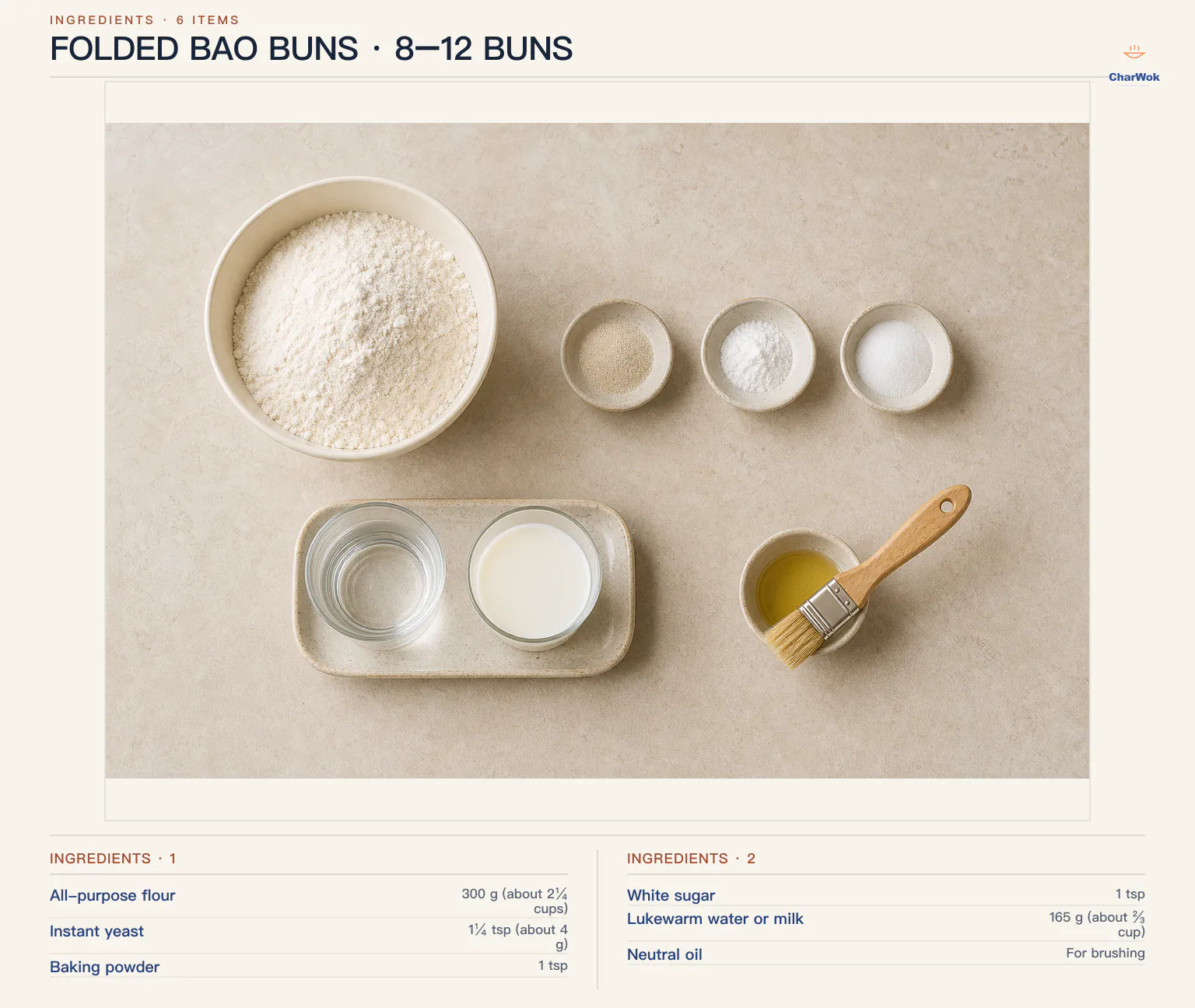
This makes 8 to 12 buns depending on how large you cut them. I cut 8 for generously sized gua bao, 12 if I am serving them as part of a larger spread.
| Ingredient | Amount | Notes / substitute |
|---|---|---|
| All-purpose flour | 300 g (about 2¼ cups) | US all-purpose (10-11.5% protein) is ideal. Do not use bread flour (too chewy). Chinese bao flour or dumpling flour works if you have an Asian grocery nearby. |
| Instant yeast | 1¼ tsp (about 4 g) | Active dry: use the same amount, dissolve in the lukewarm liquid first. Fresh yeast: about 6 g, crumbled into the liquid. |
| Baking powder | 1 tsp | Aluminum-free. This lifts the crumb; do not omit. Use a fresh box, not the one from 2019. |
| White sugar | 1 tsp | Feeds the yeast and softens the crumb a touch. Do not increase or the buns brown oddly in steam. |
| Lukewarm water or milk | 165 g (about ⅔ cup) | Milk gives a softer, slightly richer bun; water gives a cleaner, brighter one. Aim for body temperature, around 35°C / 95°F. Hot liquid kills the yeast. |
| Neutral oil | For brushing | Any flavorless oil. This is the fold release agent; do not substitute with water. |
Equipment note
You need a steamer. A stack of bamboo baskets over a wok is the classic and the best, because bamboo absorbs excess moisture and keeps condensation from dripping back onto the buns. If you want the full reasoning on sizing, lining, and care, the bamboo steamer guide covers it. A metal steamer insert or an electric steamer works too, but expect more water spotting on the buns, and tilt the lid occasionally or wrap it in a cloth to catch drips.
Making the dough
- Combine the dry. In a wide bowl, whisk the flour, instant yeast, baking powder, and sugar together. Whisking matters here because baking powder added in a clump will leave a bitter spot in the finished bun. Distribute it now and you never think about it again.
- Add the liquid in a stream. Pour in the lukewarm water or milk while stirring with chopsticks or a fork. You want a shaggy, uneven dough, not a smooth one yet. If you are using a stand mixer, put everything in the bowl and knead with the dough hook on low for 8 to 10 minutes, skipping ahead to step 4.
- Bring it together, then rest 10 minutes. Press the shaggy mass into a single rough ball. It will look unimpressive. Cover it and walk away for 10 minutes. This is the autolyse, disguised: the flour hydrates fully and the gluten relaxes, so the next knead takes a fraction of the effort.
- Knead to smooth. Knead by hand for 2 to 3 minutes. You are done when the surface is smooth and springs back slowly when you press it, like a relaxed earlobe. Over-kneading makes the buns tough; under-kneading leaves them lumpy. Smooth and slightly tacky is the target, not dry.
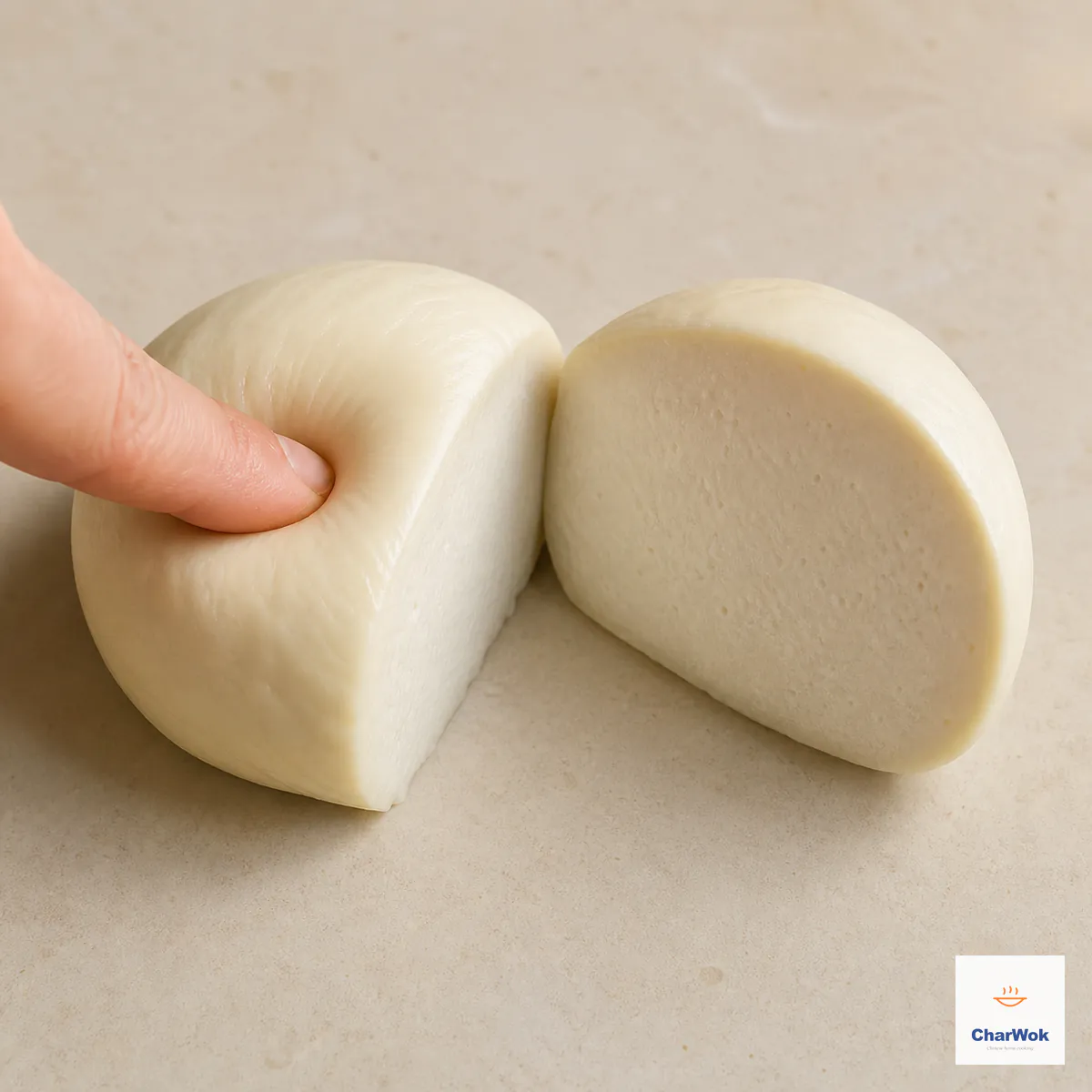
Knead until the dough is very smooth; the cut face should show a fine, even crumb without large air tunnels.
Shaping the folded buns
- Divide evenly. Roll the dough into a log and cut it into 8 or 12 equal pieces. Equal is not aesthetic fussiness; uneven pieces finish at different times in the steamer. Weigh them if you can (about 38 g each for 12, or 58 g for 8).
- Shape into rounds, then rest 5 minutes. Cup each piece under your palm and roll into a ball. Let them sit, covered, for a few minutes so the gluten relaxes again. Skip this and the dough will fight you when you roll it out, snapping back into a thick disc.
- Roll into ovals. On a lightly floured surface, roll each ball into an oval about ⅕ inch (½ cm) thick. Roll from the center outward and give the dough a quarter turn between passes so it stays even. Dust with flour only as needed; too much flour dries the surface and leaves white streaks on the finished bun.
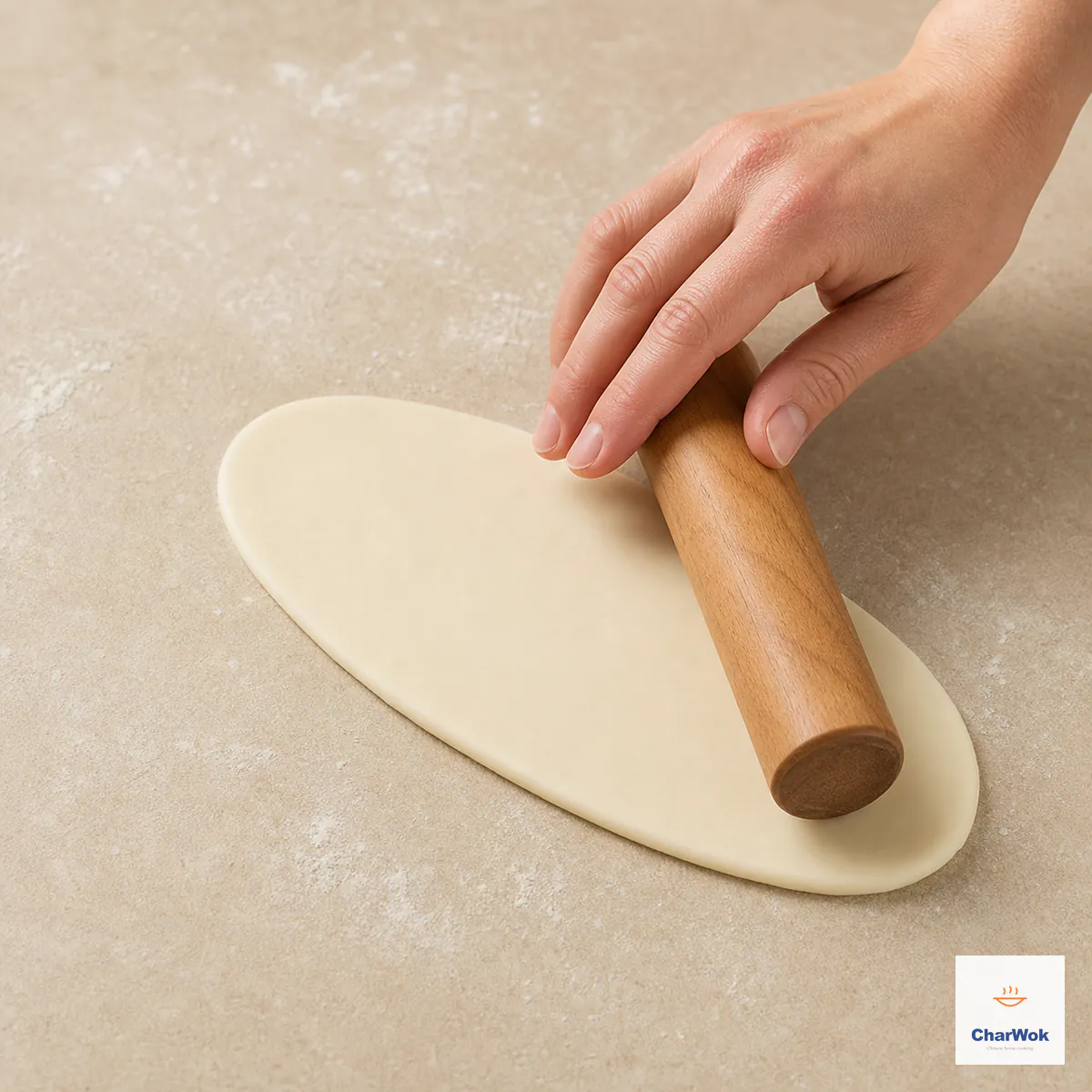
Roll each portion into an even oval about 0.5 centimetre thick, keeping the centre subtly fuller than the ends.
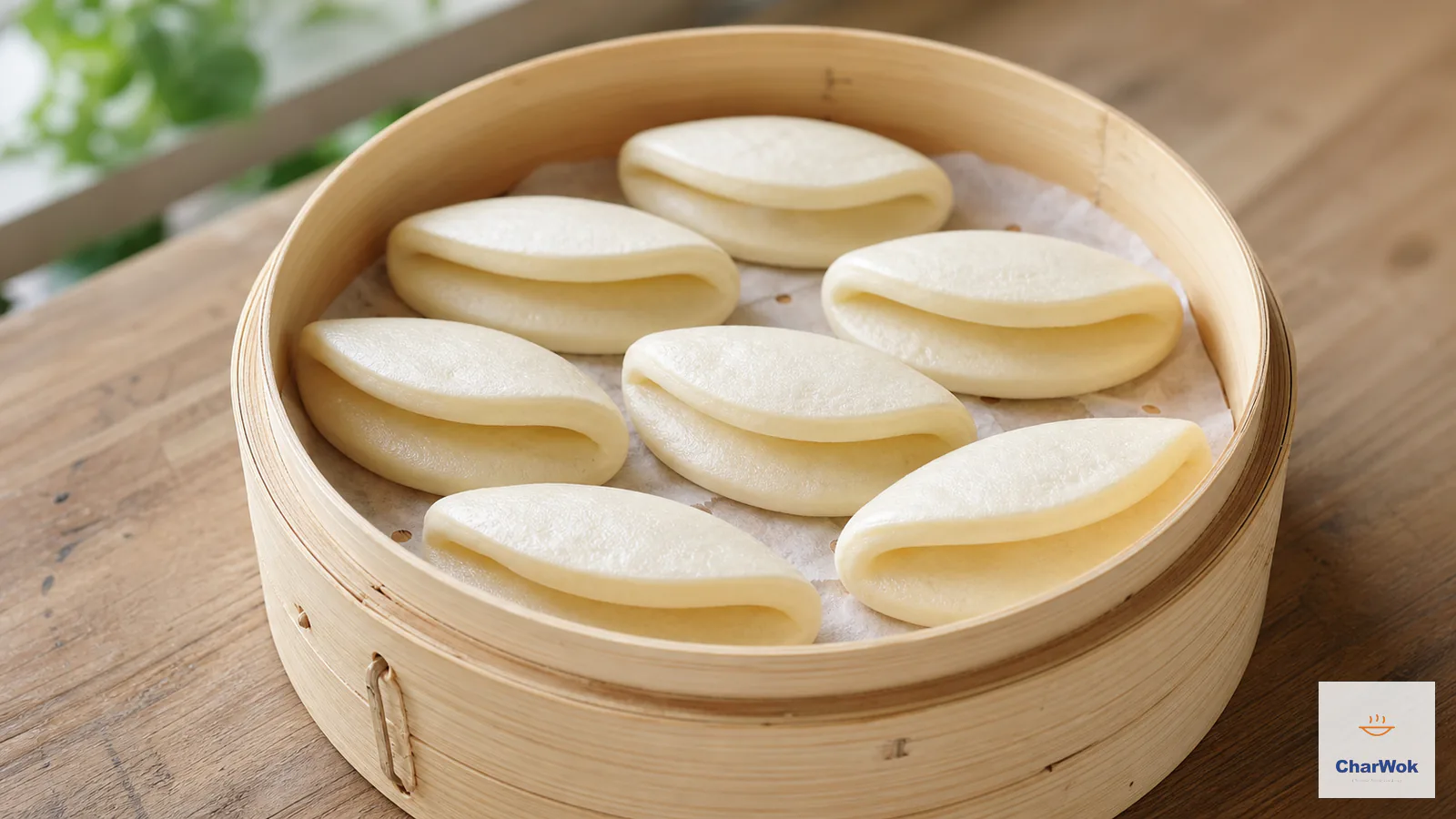
- Brush oil on half, then fold. Brush a thin, even film of neutral oil over one half of the oval, then fold the dry half over the oiled half. Press very lightly along the curved edge so it holds its shape, but do not seal it. The oil is what keeps the two layers from fusing during steaming, which is what creates the pocket.
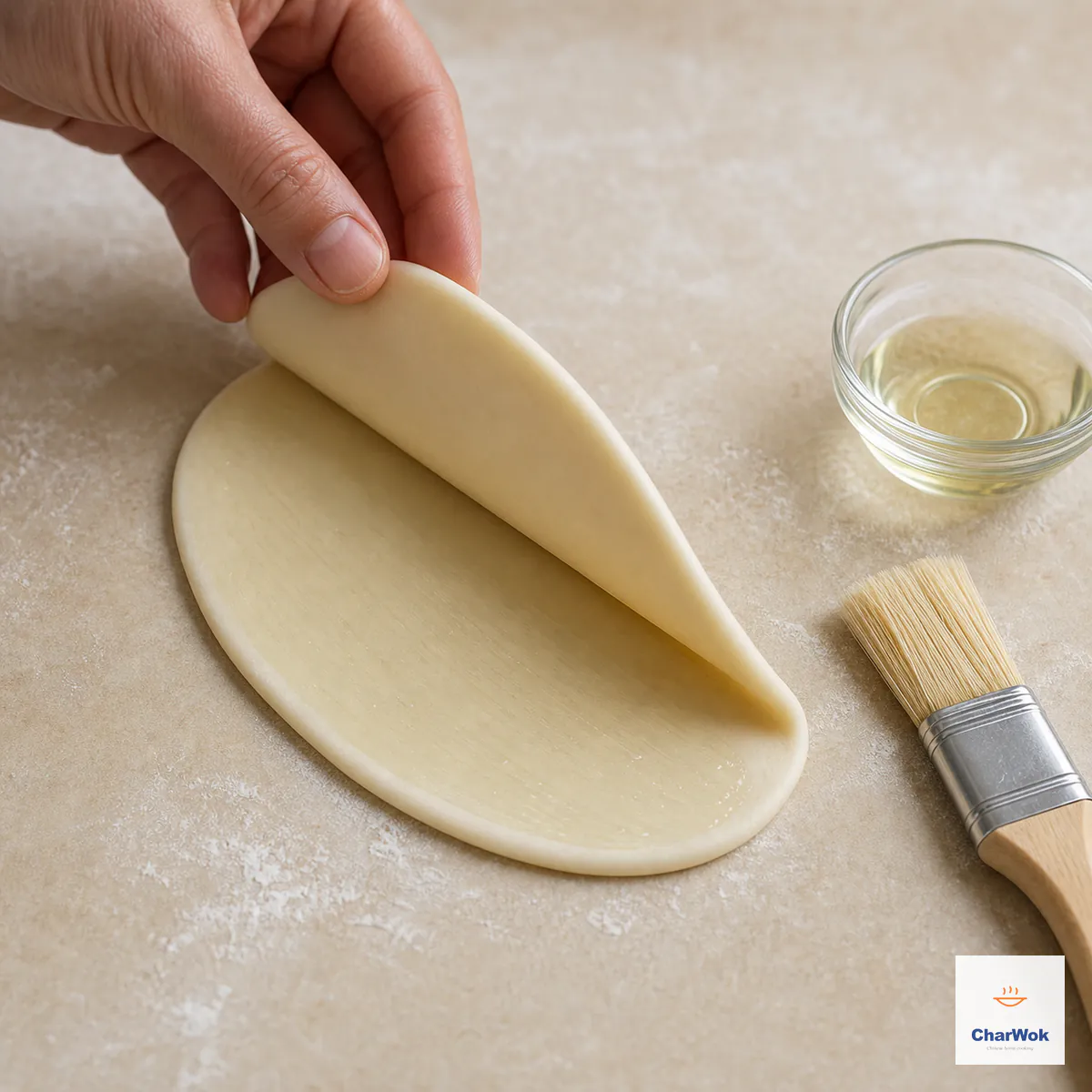
Brush only a thin, even film of oil over half the oval, then fold without sealing so the steamed pocket opens cleanly.
There is a second shaping method if you prefer uniform shapes: roll the whole dough out to a ½ cm sheet and cut circles with a large biscuit cutter, then roll each circle into an oval. Gather the scraps, rest them 5 minutes, and re-roll. I find the hand-cut oval method faster and the slight irregularity is part of the home-made look.
Proofing
- Line the baskets. Use perforated parchment or a silicone liner. If your steamer is metal or plastic, oil the surface lightly instead. Unlined, the buns will weld themselves to the basket and tear when you lift them.
- Space them out. Place the folded buns in the baskets with at least an inch of room around each one. They will roughly double in width during proofing and steaming combined, and they will grow into each other if crowded. Stagger them between tiers so steam can rise.
- Proof about 30 minutes. Leave the baskets, uncovered or loosely covered, at room temperature until the buns look visibly plumper and feel lighter when you lift one. Press one gently with a fingertip; it should spring back slowly and leave a faint impression. In a warm kitchen this takes 25 minutes; in a cool one, 40. Do not over-proof, or the structure weakens and they collapse in the steamer.
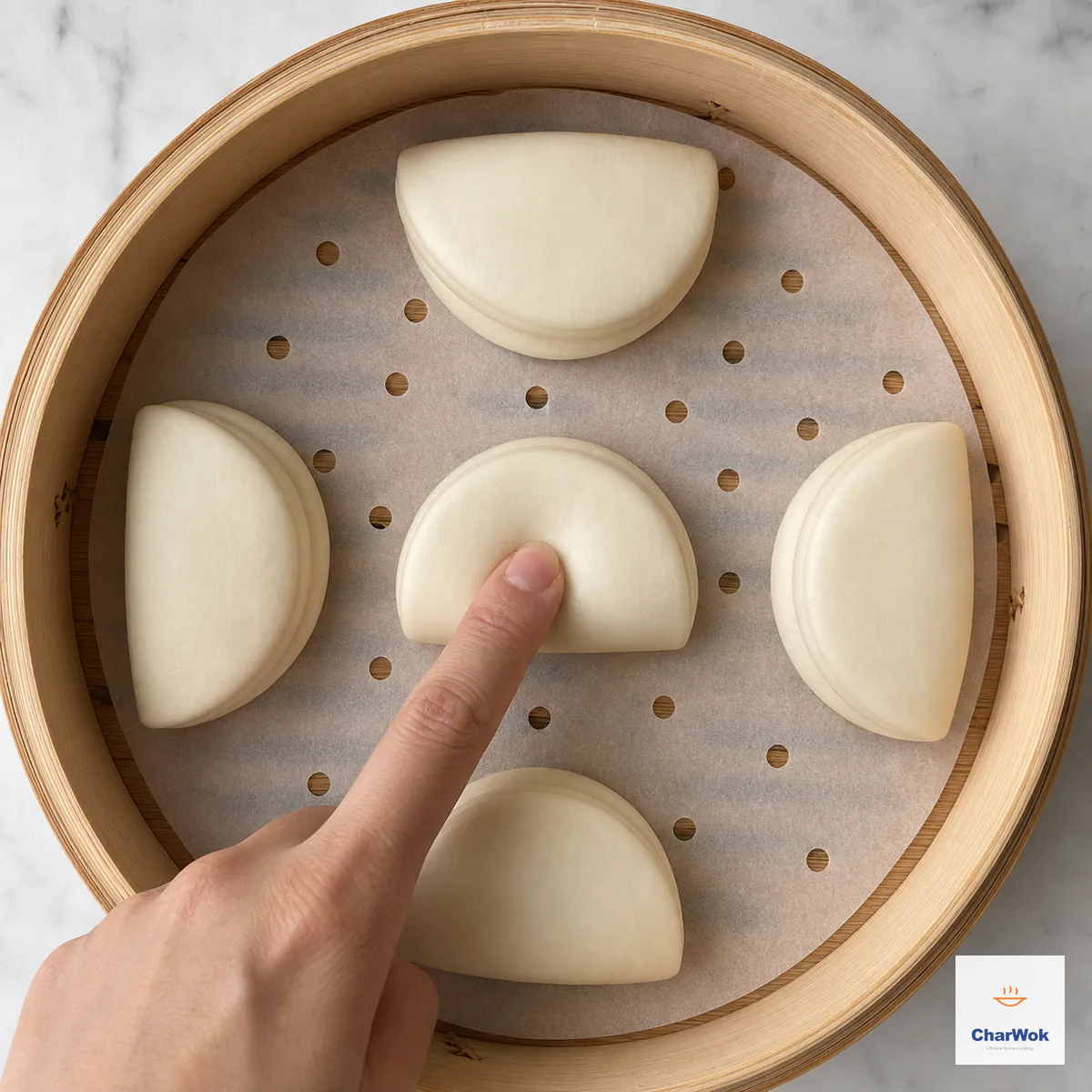
Proof until visibly plump; a light fingertip press should rise back slowly rather than springing immediately or staying deeply dented.
Steaming
- Set up the water. Pour about 2 cups (500 ml) of water into the wok or pot. You want enough to last the cook without boiling dry, but not so much that it touches the bottom basket. Cold or hot water both work; cold gives the buns a gentler ramp up.
- High heat to a boil, then drop it. Put the baskets on, cover, and heat on high until you see steam escaping from the gaps between lid and basket. The moment you see steady steam, drop to medium-low. Boiling hard the whole time makes the buns dome, weep water, and cook unevenly.
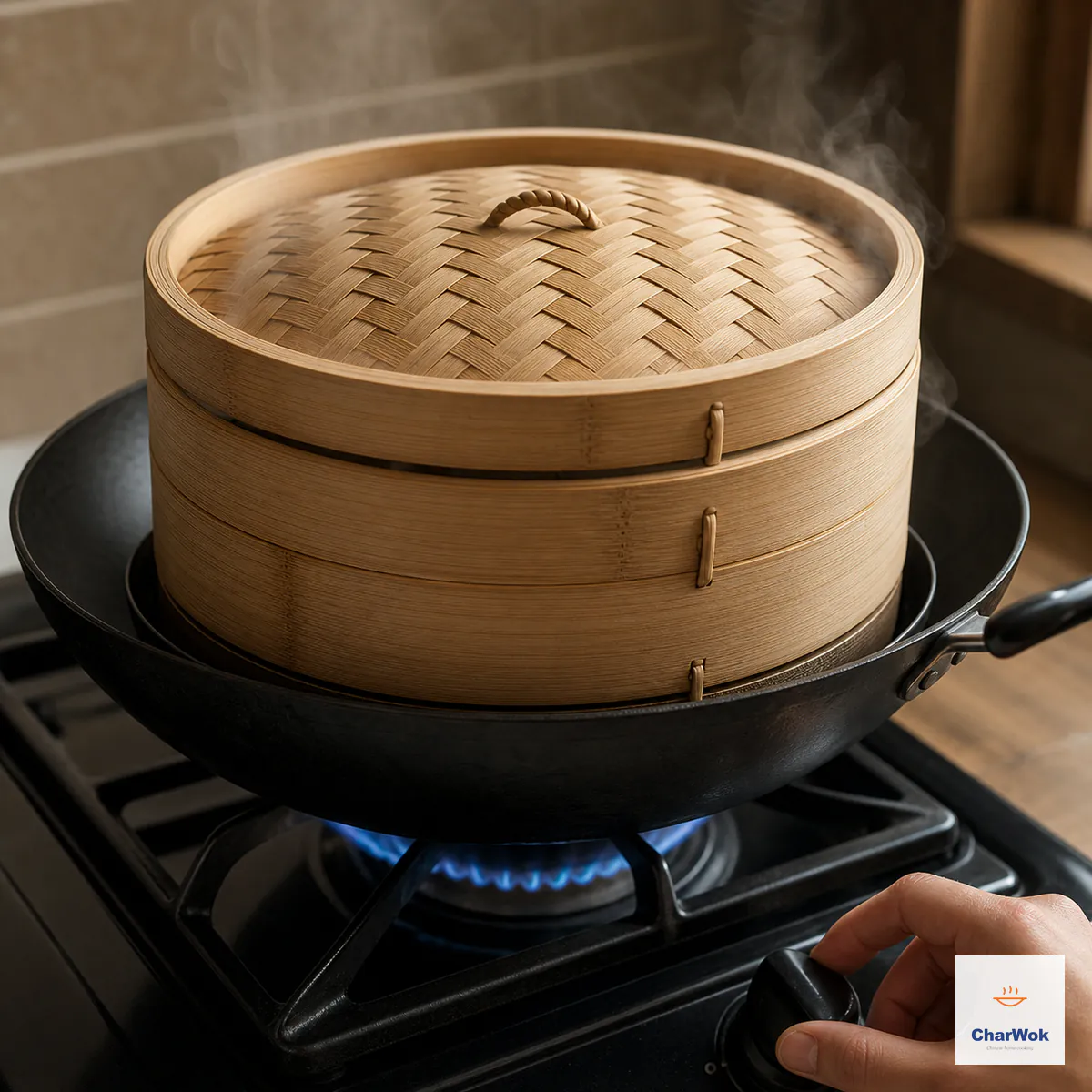
Once strong steam forms, reduce to medium-low and keep the steam steady instead of violently boiling the wok dry.
- Steam 10 minutes. From the moment you turn the heat down, set a 10-minute timer. Resist peeking. Every lift of the lid drops the temperature and you will get a dense spot.
- Rest, then uncover. Turn off the heat. Leave the lid on for 2 minutes. Then lift the lid away from you (so the condensation does not drip on the buns) and tilt it to shed water. The buns should be puffed, glossy, and soft to the touch.
When something goes wrong
This is the section I wish someone had handed me the first ten times I made bao. Almost every failure has one root cause.
- Dense, heavy buns. The dough did not develop enough gas, or it collapsed. Two usual suspects: your yeast was dead (test it in a little warm sugared water; it should foam in 5 minutes), or you skipped the 2-minute lid rest and the bubbles caved from the temperature shock.
- Wrinkled, collapsed skin. You opened the lid too fast, or the buns over-proofed. Either way the gas expanded then escaped before the starch set. Next time, proof a little less and rest the buns under the closed lid before opening.
- The two layers fused together, no pocket. Not enough oil on the inside, or you pressed the fold shut. Use a real film of oil, not a token dab, and press only enough to hold the shape.
- Yellow spots, bitter taste. Baking powder was not dispersed. Whisk the dry ingredients longer. Cheap baking powder can also leave a metallic note; switch to an aluminum-free brand.
- Sticky, wet surface. Condensation dripped back from the lid. Wrap the lid in a cloth, or tilt it to shed water, and do not stack tiers so close that steam cannot circulate.
- Buns stuck to the liner. You skipped the parchment, or used non-perforated paper that pooled water. Use perforated liners or oil the surface.
- Tough, chewy texture. You kneaded too long, used bread flour, or over-proofed. Smooth dough is the goal, not worked-to-death dough.
My own recurring failure was the dense-bun problem, and it took me an embarrassing number of batches to realize I was killing the yeast with water straight from the kettle. Lukewarm means body temperature. If you cannot comfortably hold your finger in it for ten seconds, it is too hot.
Fillings and pairings
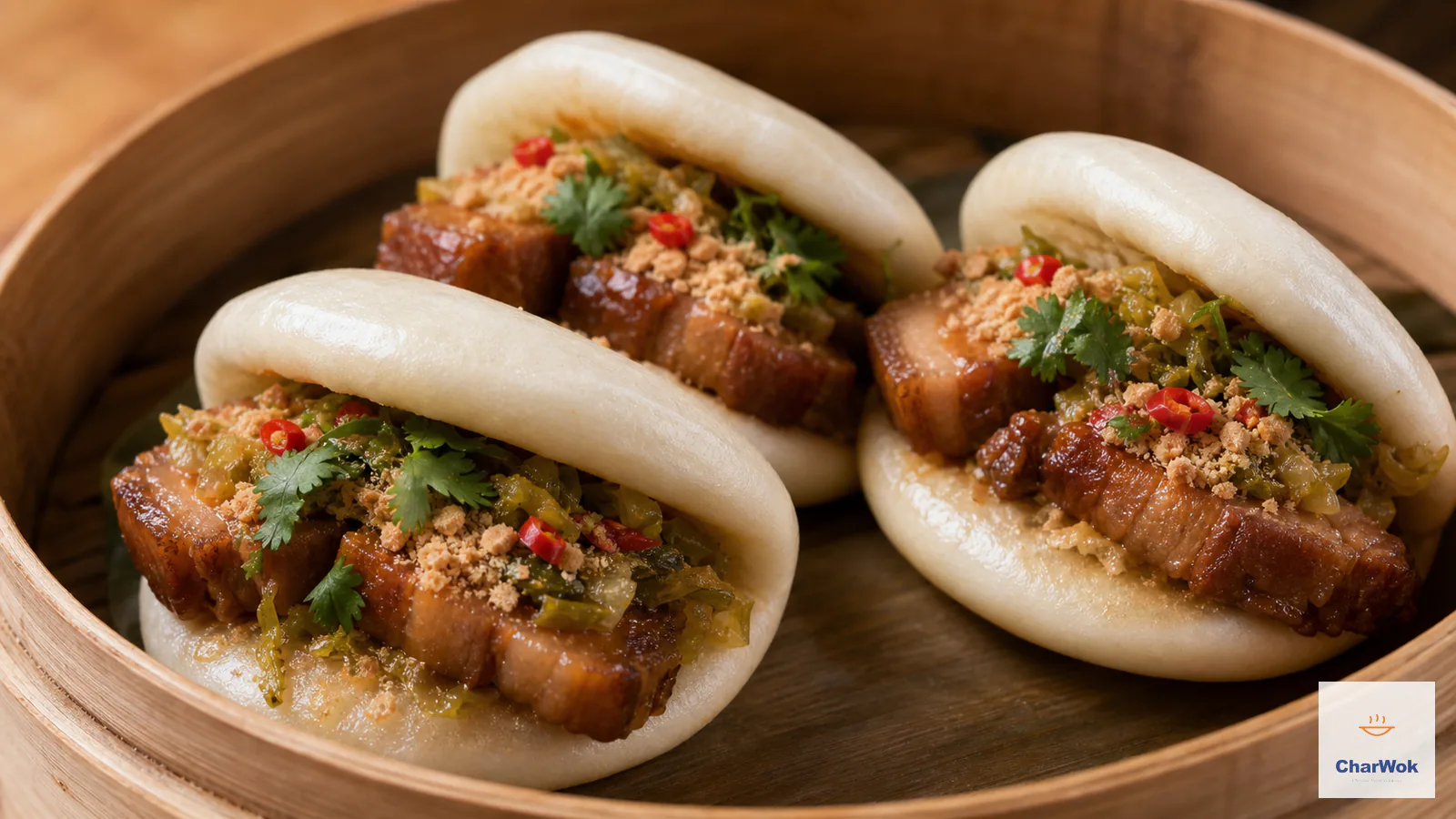
The folded bao is a delivery vehicle, so fill it with something strong. The classic is gua bao with red-braised pork belly, with a smear of sweet-and-savory sauce, crushed peanuts, pickled mustard greens, and cilantro. If you want a shortcut to that pork, a pot of red-cooked pork belly gets you most of the way there and reheats beautifully for a second night of buns.
Other fillings I rotate through: shredded char siu with a spoonful of the roasting juices; crispy fried chicken with pickled cucumber; braised shiitake mushrooms and bok choy for a vegetarian version; a fried egg with a mix of light and dark soy sauce and scallion oil for breakfast. The fold is forgiving. Anything that is not too wet will work.
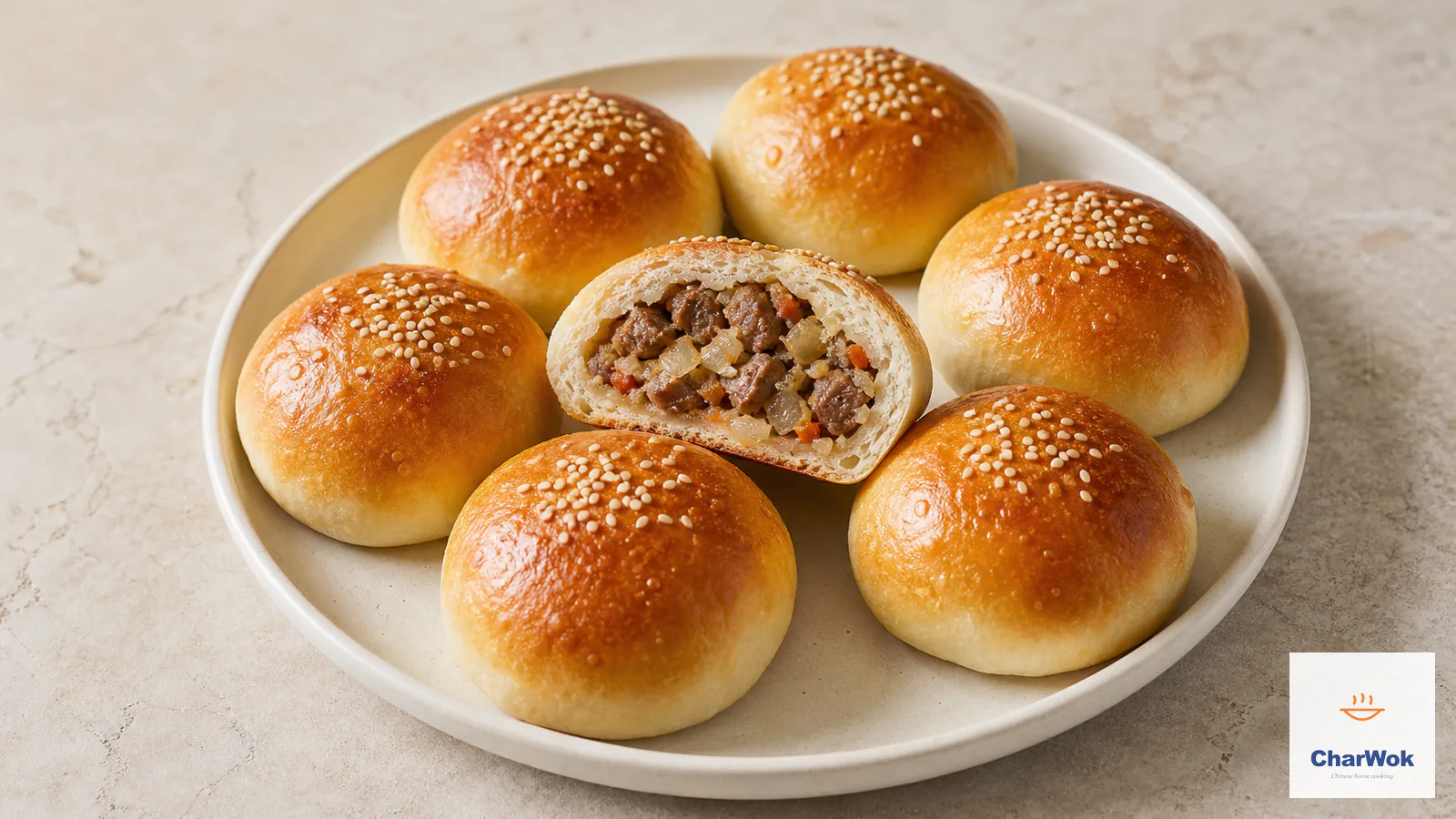
If you fall for the dough and want to keep going, the same lean bun dough becomes the base for filled baozi, sweet custard buns, savory scallion flower rolls, and the crisp-bottomed sheng jiang bao. None of them are harder than what you just made; they are just shaped differently. There is a whole family of steamed and pan-fried doughs, from these buns to youtiao, that all start from the same handful of pantry ingredients.
Storage and reheating
Let the buns cool fully on a rack before storing, or condensation inside the bag turns them soggy. Once cool, they keep in the fridge for up to 4 days or the freezer for 2 months. Freeze them in a single layer first, then transfer to a bag so they do not stick together.
Reheat from chilled by steaming for 5 minutes. From frozen, steam for 7 minutes straight from the freezer, or thaw overnight in the fridge and steam for 5. The microwave works in a pinch with a damp paper towel over the bun, but it toughens the texture and I do not recommend it for guests. Freezing the buns raw is not worth it; yeast dough does not bounce back from a freeze and the rise comes out flat.
FAQ
Can I make the dough the night before?
Yes. Mix and knead the dough, then refrigerate it in a covered bowl overnight. The cold slows the ferment, which actually deepens the flavor. Bring it back to room temperature the next day before shaping, then proof and steam as written.
Why are my buns dense even though the dough rose?
Rising is not the same as good rise. If the dough puffed but the buns are heavy, you likely killed some of the yeast with too-hot liquid, skipped the 2-minute lid rest, or over-proofed so the bubbles collapsed. Check your liquid temperature first; it is the most common culprit.
Do I really need the baking powder if I am using yeast?
Yes. Yeast gives the bulk of the lift, but baking powder refines the crumb and keeps it tender rather than bread-like. Leave it out and the buns taste closer to plain mantou, which is fine but not what a soft folded bao should be.
Can I use whole wheat flour?
You can swap up to about a quarter of the flour for whole wheat without wrecking the texture. Beyond that, the bran cuts the gluten and the buns turn dense and slightly gritty. If you want a heartier bun, lean toward denser steamed-bread territory instead.
Why do the buns sometimes have water spots?
That is condensation dripping from the lid. Bamboo baskets absorb it; metal and electric steamers do not. Tilt the lid to shed water, drape a cloth under it, or move to bamboo if you make buns often.