A good dumpling sauce is not an afterthought. It is half the dish. The filling can be flawless and the wrapper perfectly chewy, but plain soy sauce often makes the whole bite taste flat. A balanced dip should support pork and napa cabbage dumplings, not bury their filling under salt.
The fix is not a secret ingredient. It is understanding that dumpling sauces fall into three families with different jobs: raw-cut dips, oil-bloomed aromatics, and broth-based bowls. This guide maps all three to the boiling, pan-frying, and steaming methods in the complete dumpling guide.
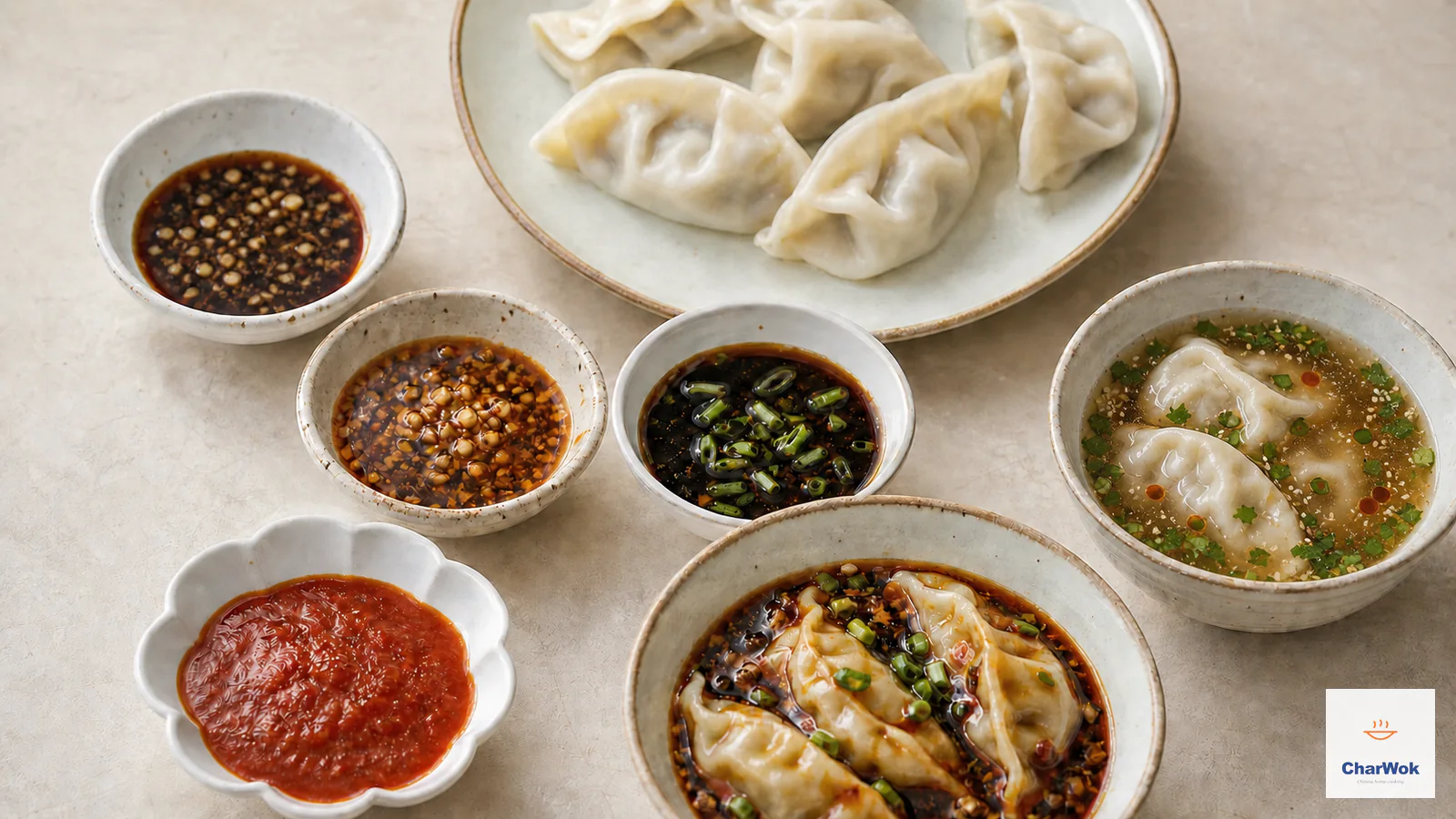
Dumpling sauces sort into three camps: raw-cut vinegars you stir together in a minute, oil-bloomed aromatics where heat does the work, and broth-based bowls that turn dumplings into soup. For the oil-bloomed versions, pour hot, shimmering oil over the alliums and ground spices, then add the liquids. If the oil begins to smoke, turn off the burner.
What a dumpling sauce is actually doing
A boiled dumpling is mild by design. The filling is seasoned softly so the meat stays tender and the wrapper carries the flavor of wheat, not salt. The sauce is where you add the punch the dumpling itself refuses to carry: acid to cut the richness of pork fat, salt to wake up the palate, heat and fragrance to give each bite a second dimension. Different fillings want different corrections. A delicate shrimp dumpling drowns in garlic; a heavy pork-and-chive dumpling begs for vinegar.
Region matters too. Northern China leans on black rice vinegar and raw garlic, sharp and direct. Sichuan adds sweetness, sesame, and the numbing buzz of ground Sichuan peppercorn. Cantonese kitchens keep it gentle, often a simple soy-and-oil drizzle. There is no single correct sauce. There is the sauce that fits the dumpling in front of you.
The pantry that makes this easy
Six dumpling sauces at a glance
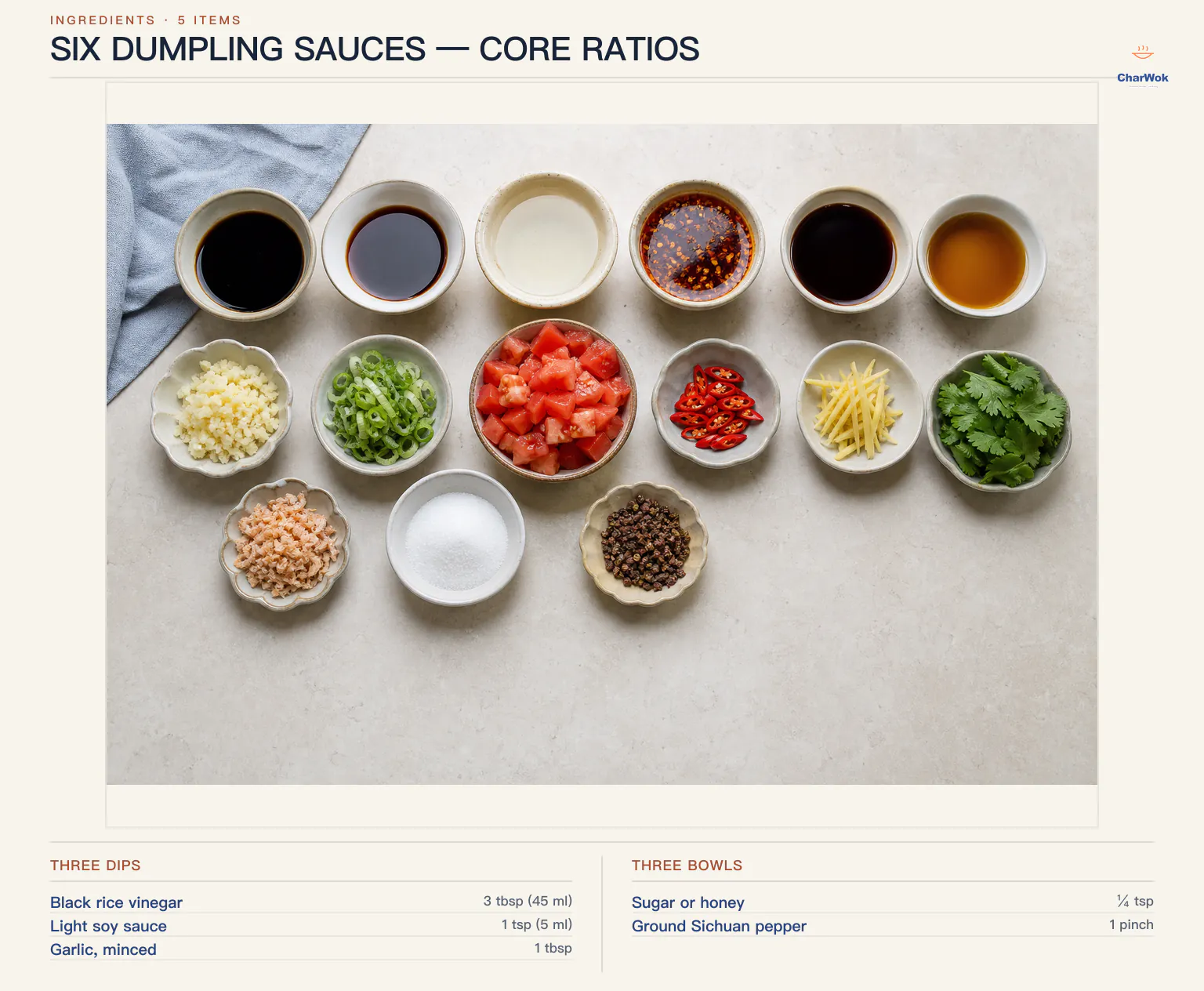
Before the recipes, the building blocks. Keep these on the shelf and you can assemble a sauce in the time it takes the dumplings to float:
- Light soy sauce. The daily salt. Use light for seasoning raw mixes; dark soy is for color and depth and will muddy a clean dip. If you have never sorted the two, the light versus dark soy breakdown is worth a minute.
- Black rice vinegar (Chinkiang). The smoky, malty acid of northern China, and not interchangeable with white vinegar. This is the soul of the garlic-vinegar dip.
- A neutral cooking oil. Peanut or canola works for blooming aromatics. Heat it gradually and stay beside the pan; if it smokes, turn off the burner. Save toasted sesame oil for finishing because its flavor is easily damaged by high heat.
- Chili oil with sediment. Homemade is vastly better than store-bought, and the crispy solids are half the point. The chili oil guide walks through it.
- Sichuan peppercorn, ground fresh. Pre-ground loses its buzz in weeks, so grind your own. The technique matters more than you would guess.
- Raw alliums. Garlic, ginger, scallion, kept on hand and minced to order.
Sauce one: the northern garlic-and-vinegar dip
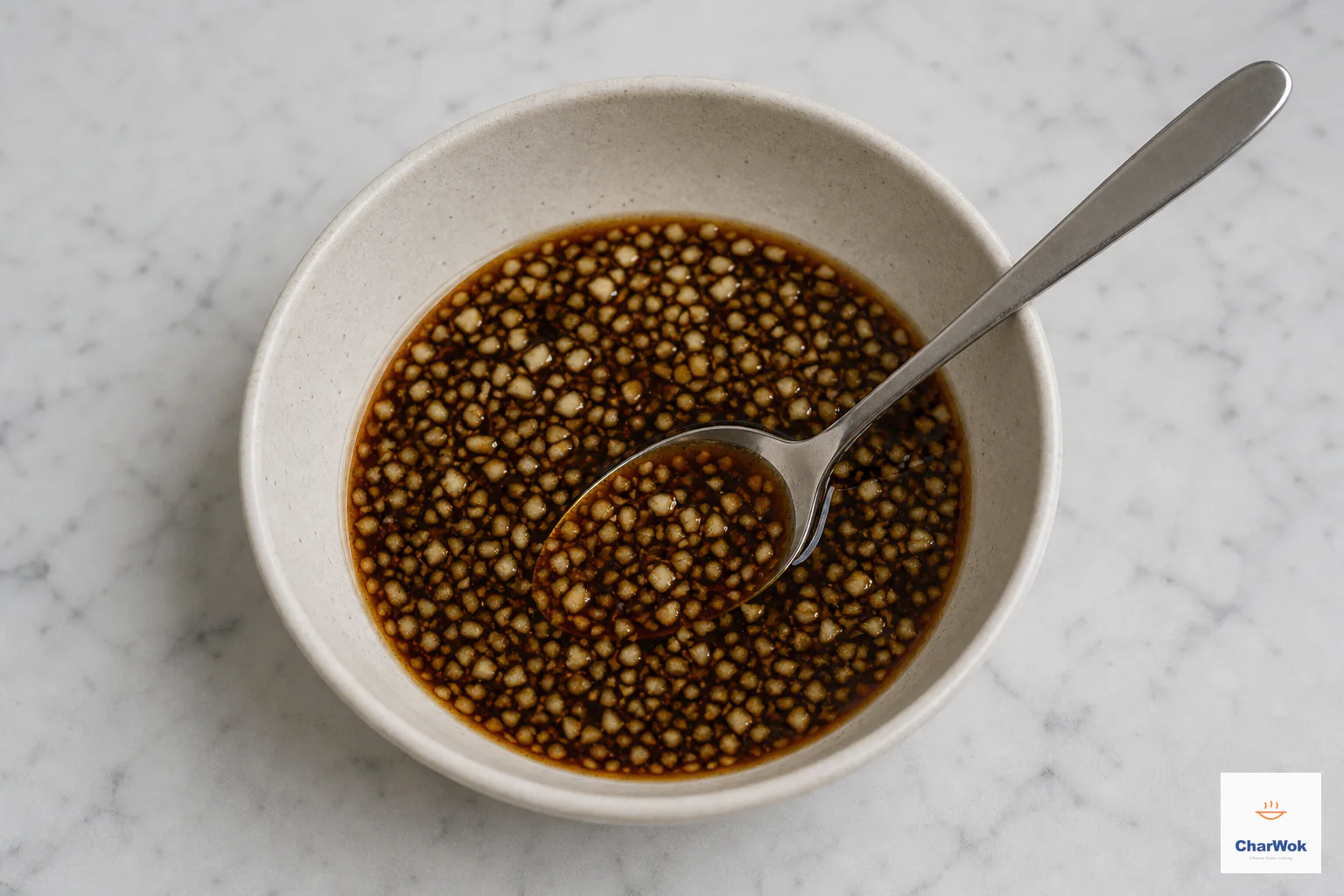
Let the raw garlic sit in the vinegar, soy, and sugar for 5 to 10 minutes so it mellows before serving.
This is the one most boiled dumplings are born for. Three ingredients, no heat, ready in the time the dumplings take to cook. The trick is the ratio and the rest.
| Ingredient | Amount | Notes / substitute |
|---|---|---|
| Black rice vinegar | 3 tbsp (45 ml) | Chinkiang style; white vinegar is too thin here |
| Light soy sauce | 1 tsp (5 ml) | Just enough to anchor the vinegar |
| Garlic, minced | 1 tbsp | Finer than a press; crush to a paste for more bite |
| Sugar or honey | ¼ tsp | Optional; rounds the acid without sweetening |
| Ground Sichuan pepper | 1 pinch | Optional; adds a faint tingle |
- Combine the vinegar, soy, garlic, and sugar in a small bowl. Do not skip the rest.
- Let it sit for at least five minutes before serving. The garlic mellows and its sulfur compounds disperse into the vinegar, which is when the dip stops tasting like separate ingredients and starts tasting like a sauce. Ten minutes is better.
Use this for any boiled pork dumpling, especially pork and napa cabbage jiaozi. It is wasted on delicately seasoned seafood fillings.
Sauce two: oil-bloomed garlic with a Sichuan hum
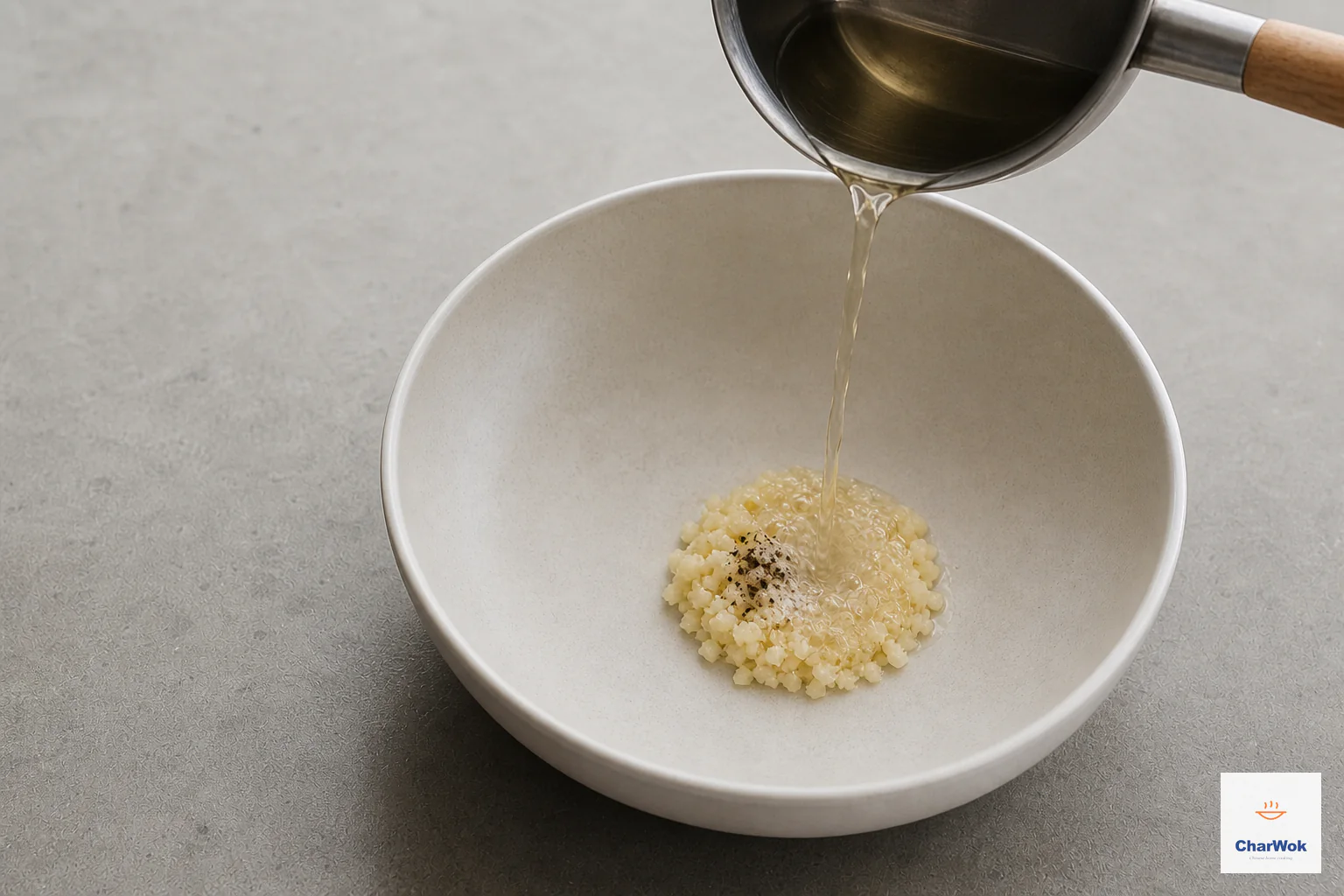
Heat one tablespoon oil gradually to about 180°C, shimmering but not smoking, then pour it over the garlic, Sichuan pepper, and salt; if it smokes, turn off the burner and let it cool.
Now the heat does the work. Pouring hot, shimmering oil over raw garlic and ground pepper softens the alliums and releases the spice aroma. The oil should be hot enough to sizzle on contact, but it should not be smoking.
| Ingredient | Amount | Notes / substitute |
|---|---|---|
| Garlic, minced | 1 tbsp | Flatten with the knife for maximum juice |
| Ground Sichuan pepper | 1 pinch | Grind whole; see how to grind it |
| Salt | 1 pinch | |
| Neutral oil, hot and shimmering | 1 tbsp (15 ml) | Peanut or canola; not sesame |
| Black rice vinegar | 2 tbsp | Add after the oil |
| Light soy sauce | ½ tsp |
- Pile the garlic, ground pepper, and salt in the bottom of a heatproof serving bowl. Make a little well so the oil concentrates.
- Heat the oil gradually in a small pan until it shimmers, about 180°C / 350°F. Stay beside the pan. Pour it directly over the aromatics; it should sizzle sharply. If the oil smokes, turn off the burner and let it cool briefly before pouring.
- Add the vinegar and soy while the bowl is still warm. Stir. The warmth pulls the flavors together; serve right away.
Hot-oil and storage safety: Stay beside the pan and use a dry, stable, heatproof bowl. The U.S. Fire Administration advises turning off the burner if cooking oil starts to smoke. The CDC advises refrigerating homemade garlic oils and discarding unused portions after 4 days; this garlic dip tastes best made and eaten the same day.
Sauce three: scallion oil, the gentle all-purpose
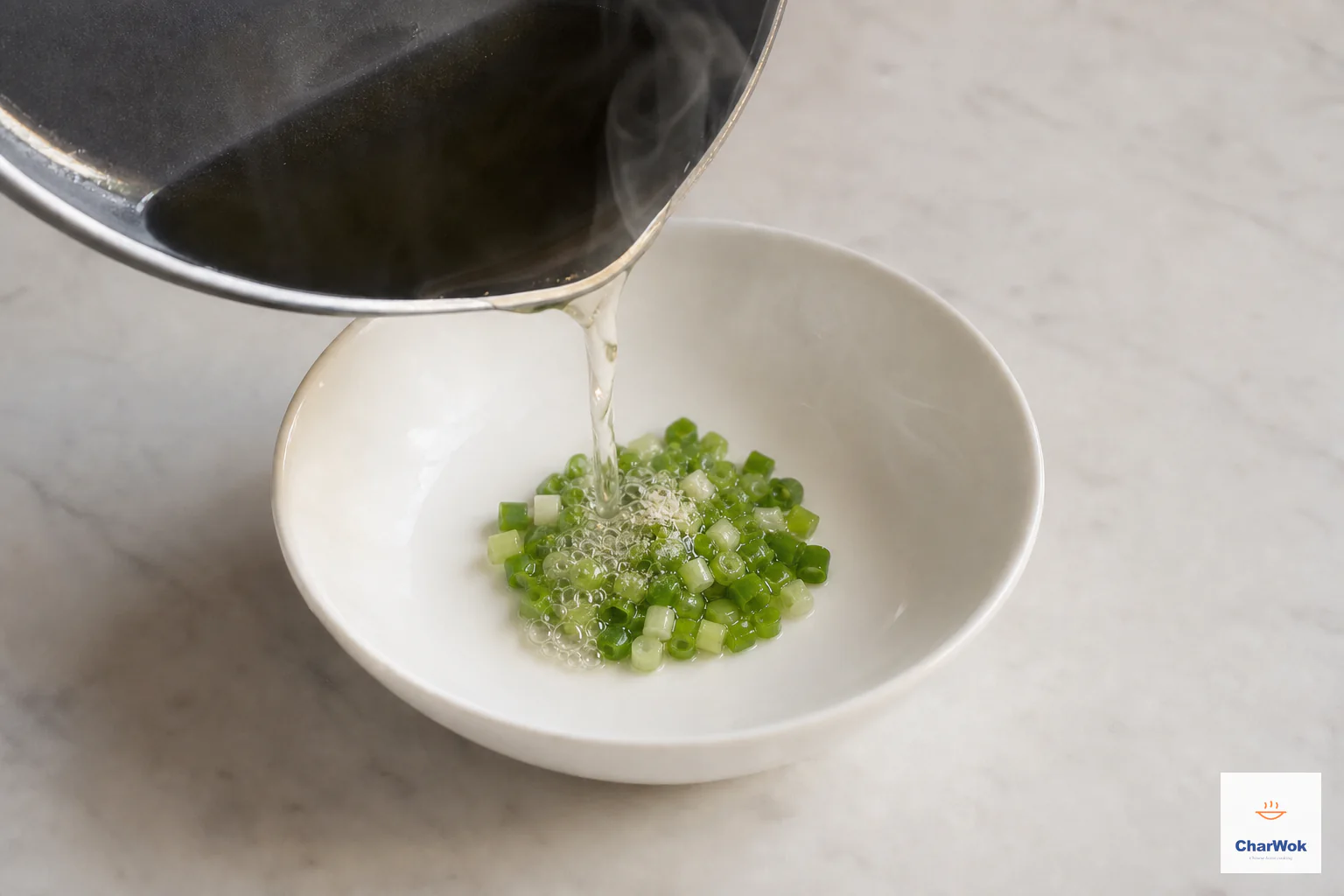
Heat one and a half tablespoons oil gradually to about 180°C, shimmering but not smoking, then bloom the scallion and sugar without browning.
When the filling is delicate or you are feeding people who flinch at raw garlic, this is the move. Scallion oil is sweet and savory at once, and a small jar of it in the fridge is one of the most useful things you can make. If you want to keep a batch on hand, the scallion oil method is worth bookmarking.
| Ingredient | Amount | Notes / substitute |
|---|---|---|
| Scallion, finely chopped | 1 tbsp | Green and white parts |
| Sugar | 1 pinch | Balances the soy |
| Neutral oil, hot and shimmering | 1½ tbsp | |
| Light soy sauce | 2 tbsp | |
| Black rice vinegar | ½ tsp | Just a whisper |
- Pile the scallion and sugar in a heatproof bowl.
- Pour the hot, shimmering oil over. The scallion should sizzle and soften while staying vivid rather than browning.
- Stir in the soy and vinegar. Taste. It should read savory-sweet first, with the vinegar only as background.
This is the most forgiving of the three. It suits steamed dumplings, vegetarian fillings, and timid palates alike.
When the dumpling wants to swim: broth bowls
Sometimes the sauce is not a dip but a bowl. Build a flavored base in the bottom of a serving bowl, then ladle in the just-boiled dumplings with some of their cooking water. The starch in that water thickens the broth slightly and binds everything. The two versions below cover sweet-and-numbing and hot-and-sour profiles.
The sweet-and-numbing Sichuan bowl
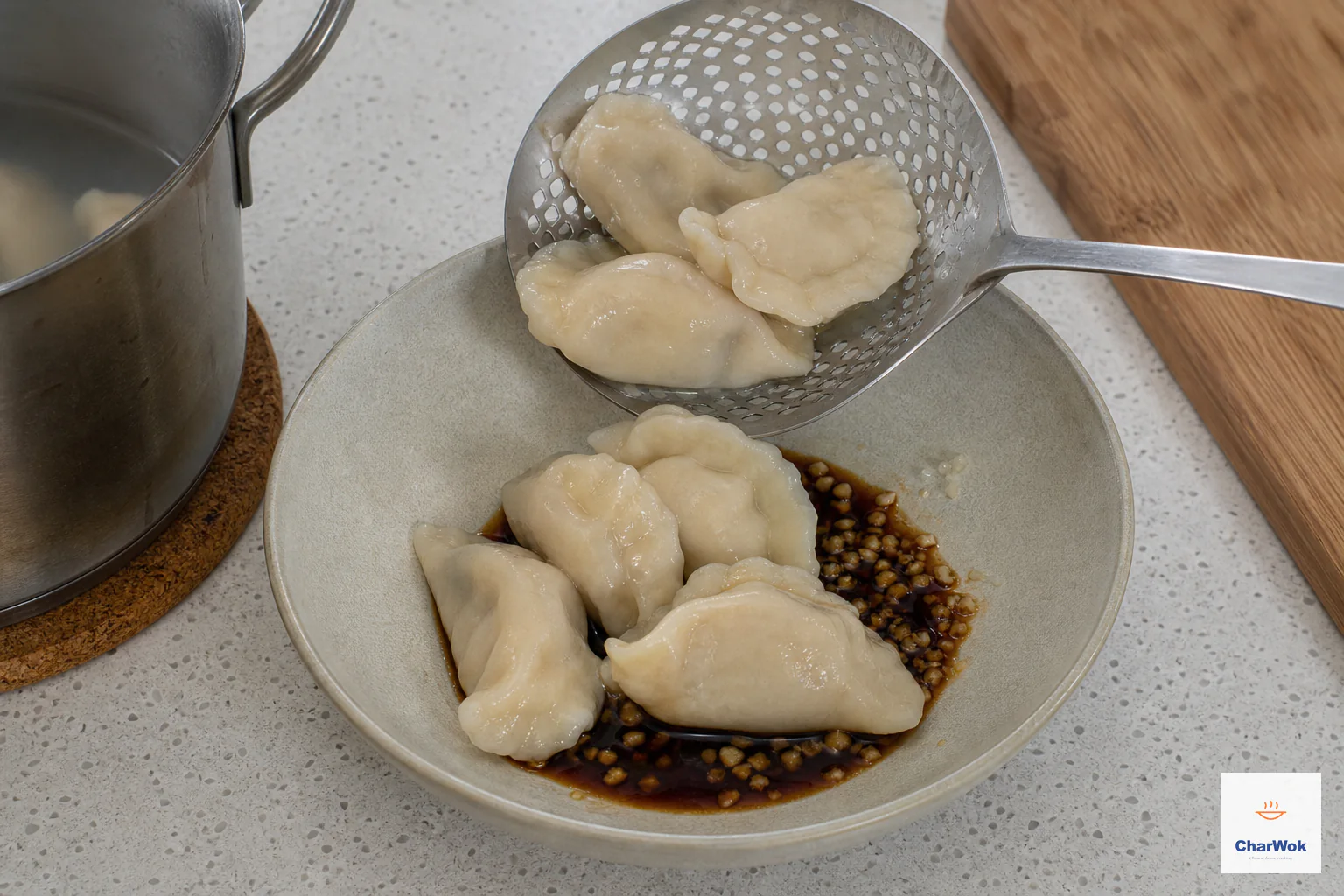
Move the drained dumplings into the sweet soy and garlic while they are still hot, then add chili oil and scallion.
This is the dressing for Zhong dumplings and their cousins: sweet soy, raw garlic, and a heavy hand of chili oil. The dumplings arrive glossy and slick, more coating than dipping.
| Ingredient | Amount | Notes / substitute |
|---|---|---|
| Sweet soy (or light soy + ½ tsp sugar) | 1 tbsp | Sichuan-style spiced sweet soy is ideal |
| Garlic, minced | 1 tsp | |
| Chili oil with sediment | 1 tbsp, or to taste | Homemade preferred |
| Scallion, finely chopped | to garnish |
- Put the sweet soy and garlic in the serving bowl. Do not add the chili oil yet.
- Transfer the hot dumplings straight from the pot into the bowl. A little cooking water tagging along is fine.
- Spoon the chili oil over the top and stir. Garnish with scallion. The heat of the dumplings cooks the raw garlic just enough to soften its edge.
The hot-and-sour soup bowl
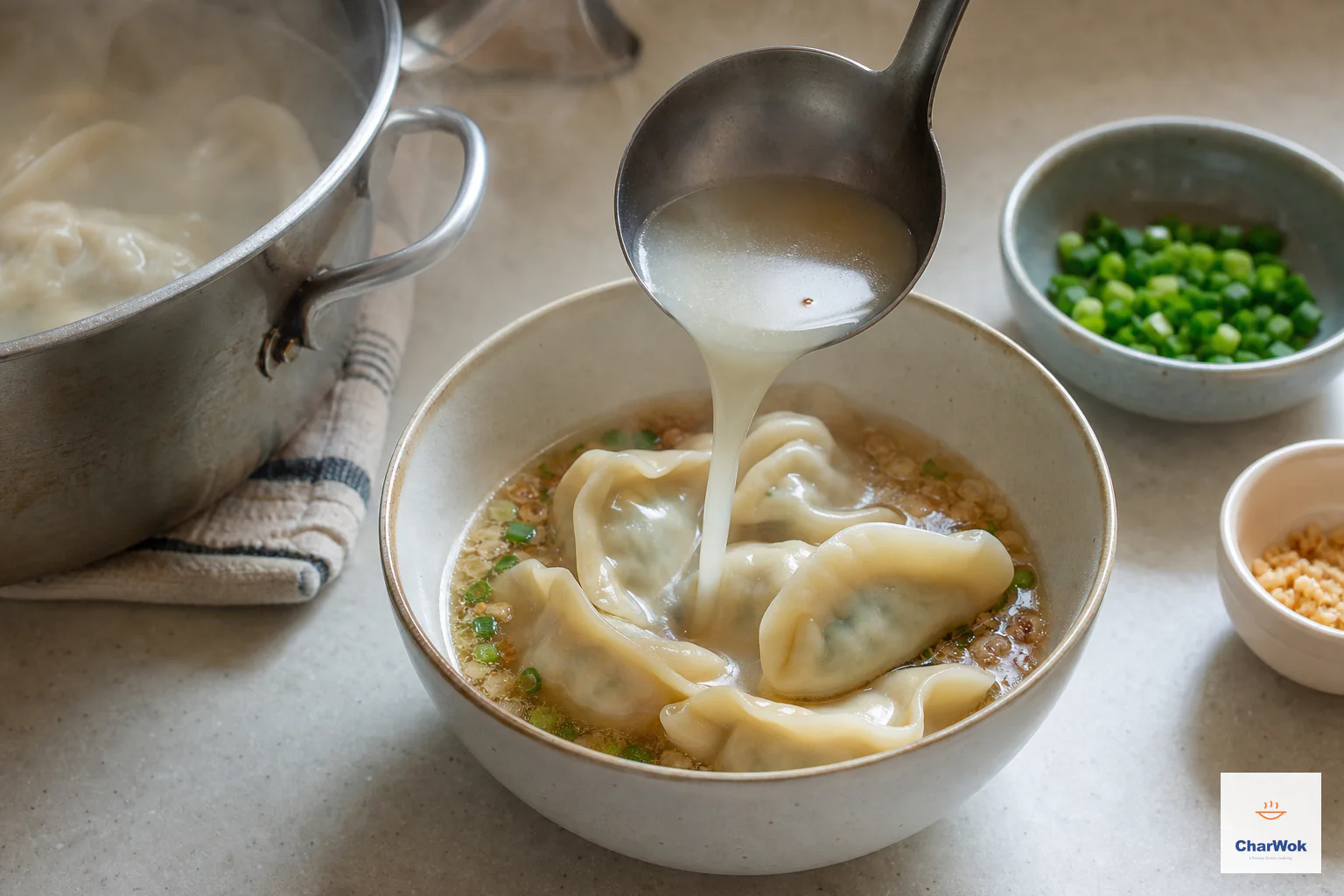
Add dumplings and enough starchy cooking water to make a lightly cloudy broth that reaches about halfway up the dumplings.
This turns boiled dumplings into a quick one-bowl meal, in the spirit of sour beef dumpling soup.
| Ingredient | Amount | Notes / substitute |
|---|---|---|
| Light soy sauce | 1 tsp | |
| Black rice vinegar | 2 tbsp | Or spiced vinegar for extra warmth |
| Scallion, chopped | 1 tbsp | |
| Dried shrimp, finely minced (optional) | 1 tsp | Adds umami; omit for vegetarian |
| Toasted sesame oil | ½ tsp | For finishing only |
| Salt | 1 pinch | |
| Toasted sesame seeds, cilantro, chili oil | to finish |
- Build the base: soy, vinegar, scallion, dried shrimp, sesame oil, and salt go into the serving bowl.
- Spoon the dumplings in with a generous slosh of their cooking water. The amount controls how soupy the bowl is; halfway up the dumplings makes a light broth without washing out the seasoning.
- Finish with sesame seeds, cilantro, and a spoon of chili oil. Eat immediately, while the broth is sharp and the dumplings are still firm.
This base works just as well over wontons when you want a change from clear broth.
A fourth direction: the raw blended dip
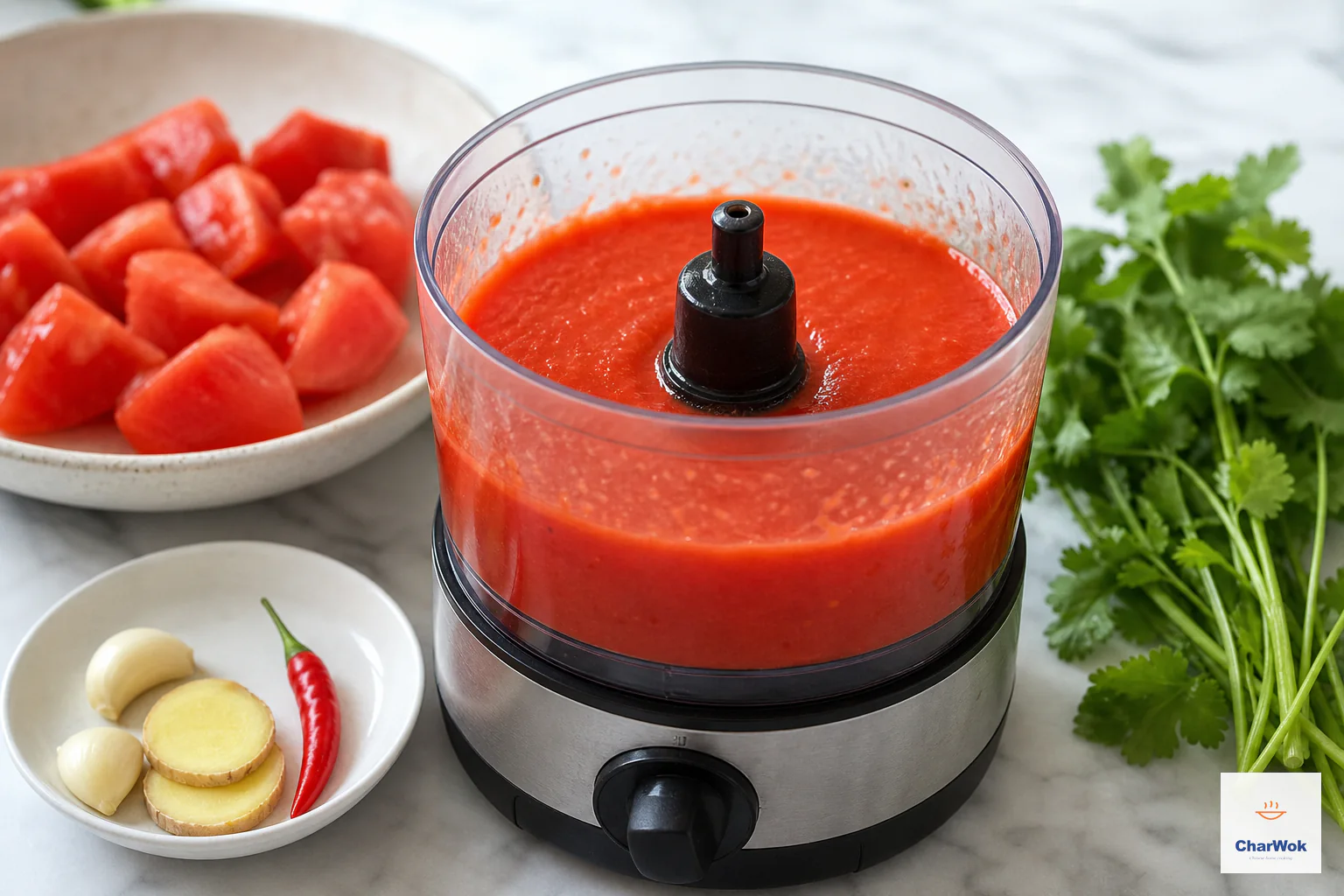
Blend the peeled, seeded tomato with garlic, ginger, chile, and cilantro until smooth, then season the raw dip.
For something completely different, a no-cook blended sauce of ripe tomato, garlic, ginger, chile, and cilantro whizzed smooth and seasoned with salt, sugar, and a touch of soy. It is bright and almost salsa-like, and it surprises people who think they know what a dumpling sauce should be. Blend 250 g peeled, seeded ripe tomato with 2 garlic cloves, 2 slices ginger, 1 fresh chile, and a few cilantro stems until smooth; season with ¼ tsp salt, a pinch of sugar, and ½ tsp light soy. It wants a softer dumpling, ideally one with a mild filling that won't fight it.
What goes wrong, and the fix
These are the most common failure modes, and most have a one-line cure.
- The oil bloom produced no sizzle. The oil was not hot enough. Reheat gradually until it shimmers, then pour while staying beside the pan. If smoke appears, turn off the burner and let the oil cool briefly.
- The garlic turned bitter and acrid after blooming. You poured the oil, then kept the bowl on the stove and it kept cooking. Bloom, then move the bowl off the heat within seconds.
- The dip tastes thin and one-note. You skipped the rest. Raw garlic-vinegar needs five to ten minutes for the flavors to marry; mixed and served instantly it reads as sour water with garlic bits.
- The sauce is too salty. You used dark soy by mistake, or measured light soy like it was water. Dilute with a splash of hot water or more vinegar rather than oil; fat will mask the salt without fixing it.
- Your chili oil sinks and the dumplings slide off. Stir the chili oil before spooning; the sediment is where the flavor lives and it settles fast. Spoon from the bottom of the jar.
- The broth bowl is cloudy and bland. You used too little cooking water or skipped the dried shrimp and sesame oil, which are carrying the umami. Add them; they are optional in name only.
- The Sichuan pepper tastes dusty, not tingly. It was pre-ground or stale. Buy whole and grind fresh. Old pepper is the number one reason Sichuan recipes disappoint at home.
Pairing the sauce to the dumpling
A rough map, because matching wrong wastes good cooking:
- Boiled pork or lamb dumplings → garlic-and-vinegar, or the oil-bloomed garlic with Sichuan pepper. The fat wants acid and bite.
- Pan-fried potstickers → scallion oil or the Sichuan sweet-soy bowl. The crisp bottom is already rich; lean savory-sweet.
- Steamed or delicate shrimp dumplings → scallion oil, light, never garlic. For something with more backbone, a spoon of pickled chili garlic sauce adds funk without overwhelming.
- Vegetable or vegan fillings → the blended tomato dip or the hot-and-sour broth bowl. Vegetables want brightness and a little broth to compensate for less fat.
And whatever you choose, do not forget the cooking. Even the best sauce cannot rescue a dumpling boiled to mush.
Storage and make-ahead
The raw-cut dips keep poorly. Mix the garlic-and-vinegar and the oil-bloomed garlic the day you serve them; after a few hours the garlic turns harsh and the vinegar flattens. Refrigerate any unused garlic-in-oil mixture immediately and discard it after 4 days. You can mince the alliums a day ahead and keep them covered in the fridge, then assemble at the last minute.
The broth-bowl bases keep fine. Mix the dry and liquid seasonings (minus the cilantro and chili-oil finish) in a jar up to three days ahead; the dried shrimp actually improves with the soak. The blended tomato dip will hold a day in the fridge and tastes better for it.
Frequently asked questions
Short answers to the questions that matter most when choosing, heating, and making these sauces ahead.
Can I use white vinegar instead of black rice vinegar? You can, but it will be a different dip. White vinegar is sharper and thinner; the smoky, almost malty depth of Chinkiang black rice vinegar is what makes the garlic dip taste like northern China. Use white only in a pinch, and add a drop of soy to round it.
How hot should the oil be for blooming? Heat it gradually until it shimmers, around 180°C / 350°F, and stay beside the pan. It should sizzle when it hits the aromatics. If you see smoke, turn off the burner and let the oil cool briefly.
Is there a vegetarian version of the hot-and-sour broth? Yes. Omit the dried shrimp and add a half-teaspoon of mushroom seasoning or a little extra soy and toasted sesame oil to replace the umami. Vegetable cooking water from the dumpling pot works in place of any meat broth.
Why does my sauce taste great on its own but disappear on the dumpling? Usually because the dumpling surface was wet. A dumpling dripping with cooking water dilutes the dip on contact. Shake off the excess water before dipping, or serve the sauce poured over rather than on the side.
Can I make these ahead for a dumpling party? The broth bases and the blended tomato dip can be prepared ahead as described above. Make the two raw-garlic dips on the day of serving. For a crowd, set out the dry alliums and spices in small bowls and keep the oils and liquids separate until mixing time.
At the end, a dumpling sauce is a small thing done deliberately. Pick the family that fits the filling, bloom the aromatics in real heat, give the raw ones a few minutes to settle. The dumplings you worked on for an hour deserve the ten extra seconds.