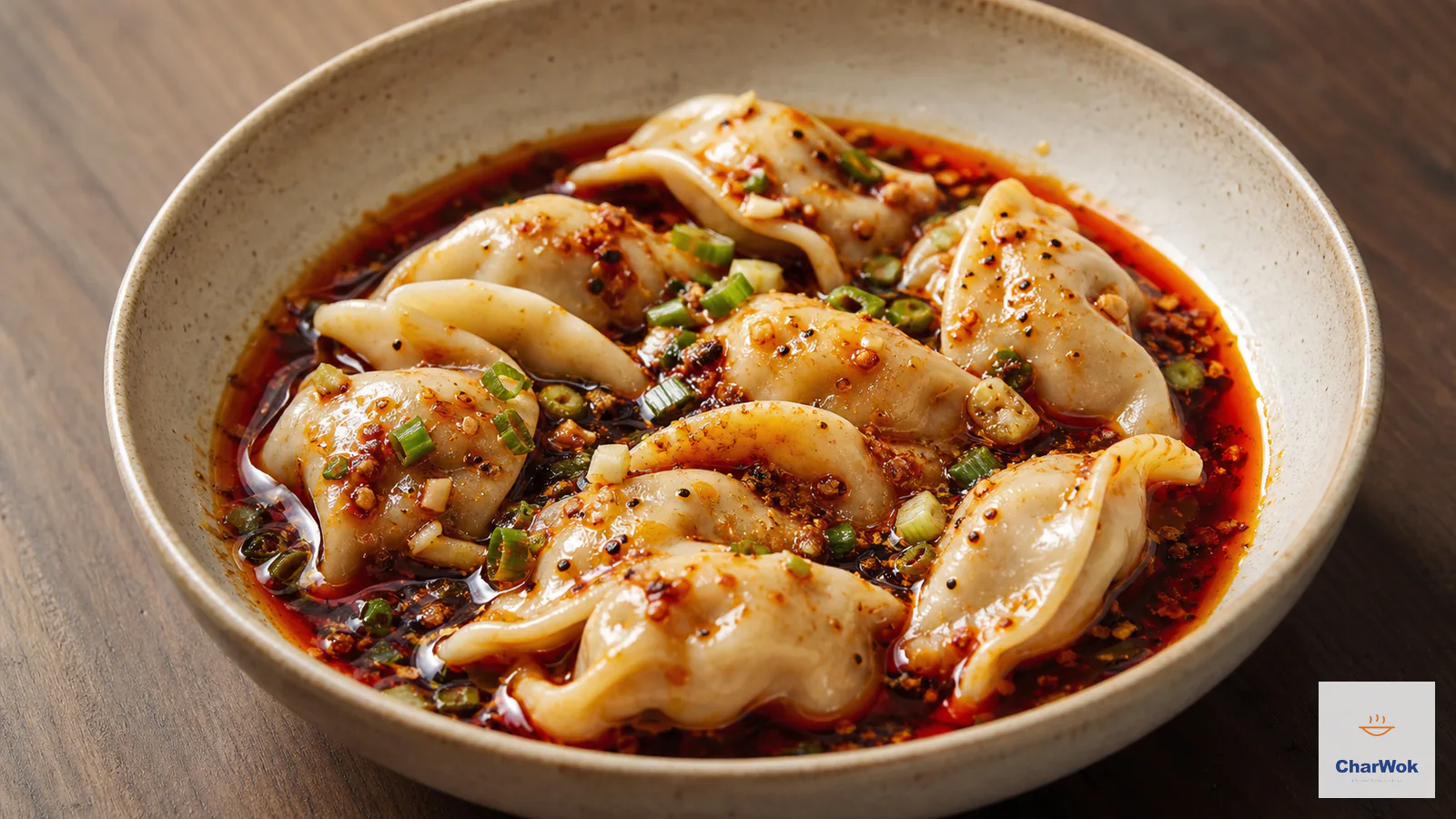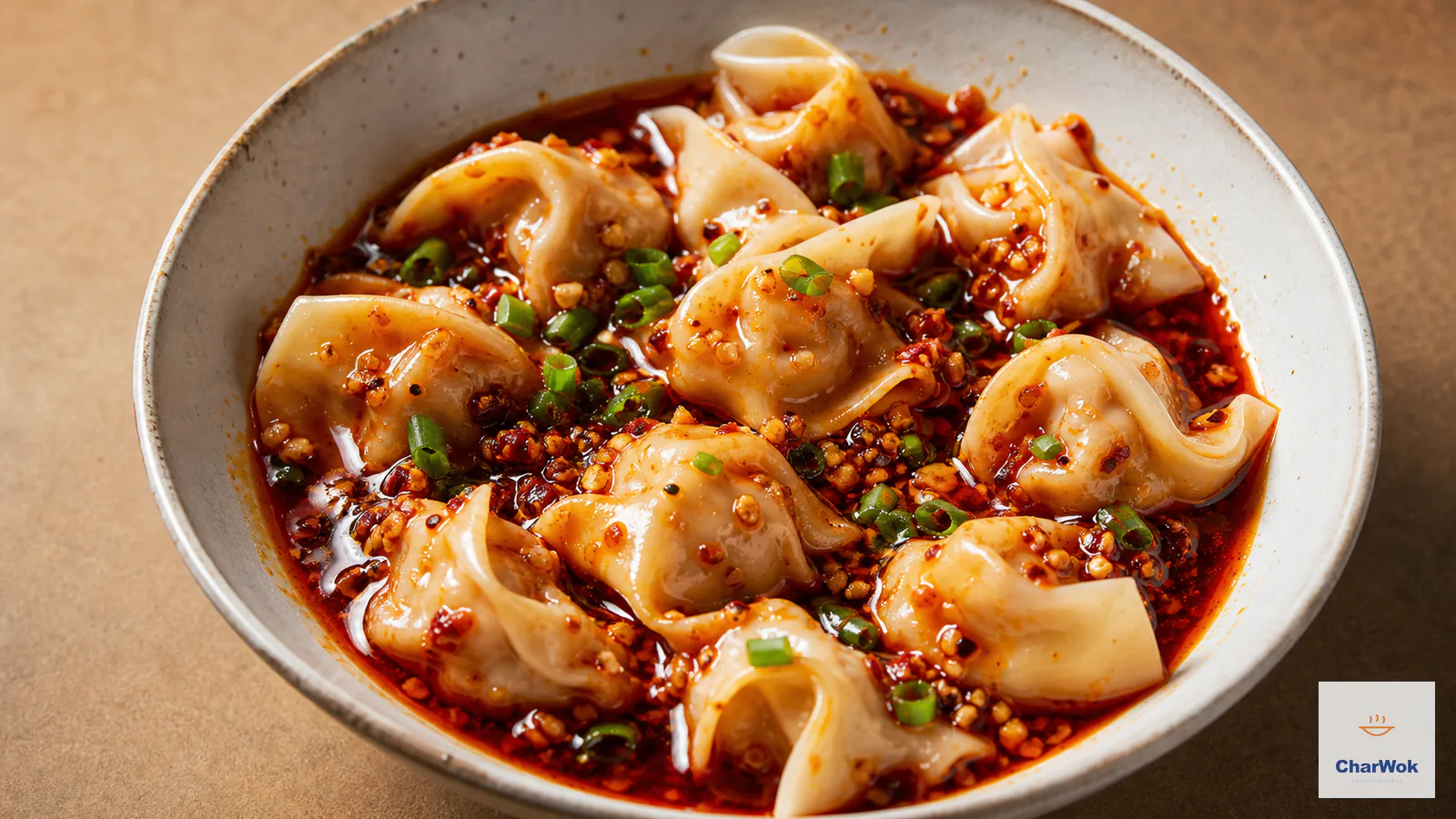
Hong You Chao Shou, Sichuan wontons in chili oil, balance a mildly seasoned pork filling with a bold sauce of chili oil, soy, black vinegar, garlic, sugar, and Sichuan pepper. Keeping the filling restrained lets the sauce stay clear and layered instead of muddy.
At a glance: beat 200 g pork with 80 ml scallion-ginger water, fold into about 40 thin wrappers, and dress with soy, black vinegar, Sichuan pepper, sugar, and chili oil. Floating is only the cue to check; sample 2–3 large wontons from different pot positions and require every pork centre to reach 160°F / 71°C.
What chaoshou are, and why the wrapper matters more than you think
Across China the same humble parcel goes by different names. Northerners call it huntun, Cantonese speakers say yuntun, and in Sichuan it is chaoshou, literally "folded hands," after the way the two corners of the wrapper cross over your fingers like folded arms. The Sichuan version is famous for landing in a bowl slicked with red oil rather than a clear broth, which puts it in the same numbing-spicy family as Dan Dan Noodles and Zhong dumplings.
What separates a wonton from a thicker-skinned jiaozi is the wrapper itself: a square sheet, cut thin enough that it turns translucent and slithery the moment it hits water. You can fold these into the simple triangle I use below, or explore the other wonton folding styles once you have the feel for the dough. Store-bought sheets are perfectly good here; if you want to go the extra mile, rolling your own wrappers gives you a softer, more tender bite.
One shopping note worth your attention. In the freezer case of an Asian market you will usually find two kinds of wonton skins: a pale off-white one and a yellower one. The yellow version contains a trace of alkaline, the same trick used in alkaline noodles, which gives the cooked wrapper a faintly bouncy, springy chew. For traditional chaoshou you want the plain off-white, non-alkaline skin, because here you are after silkiness, not bounce. Either will work in a pinch; the off-white is the more authentic choice.
The filling: why we beat water into the meat
This is the part most home cooks get backwards. Instead of dumping minced scallion and ginger straight into the pork, you steep them in warm water for five minutes, fish the solids out, and beat that flavored water into the meat. The result is a filling with no fibrous bits of scallion poking through the thin wrapper, and a texture closer to a tender meatball than a dense pork puck.
Salt and mixing help extract meat proteins that bind the added water. Add the aromatic water gradually and keep mixing until the filling is glossy, cohesive, and leaves no free liquid in the bowl. That is a mixing endpoint only; it does not mean the raw filling is safe to eat.
Ingredients
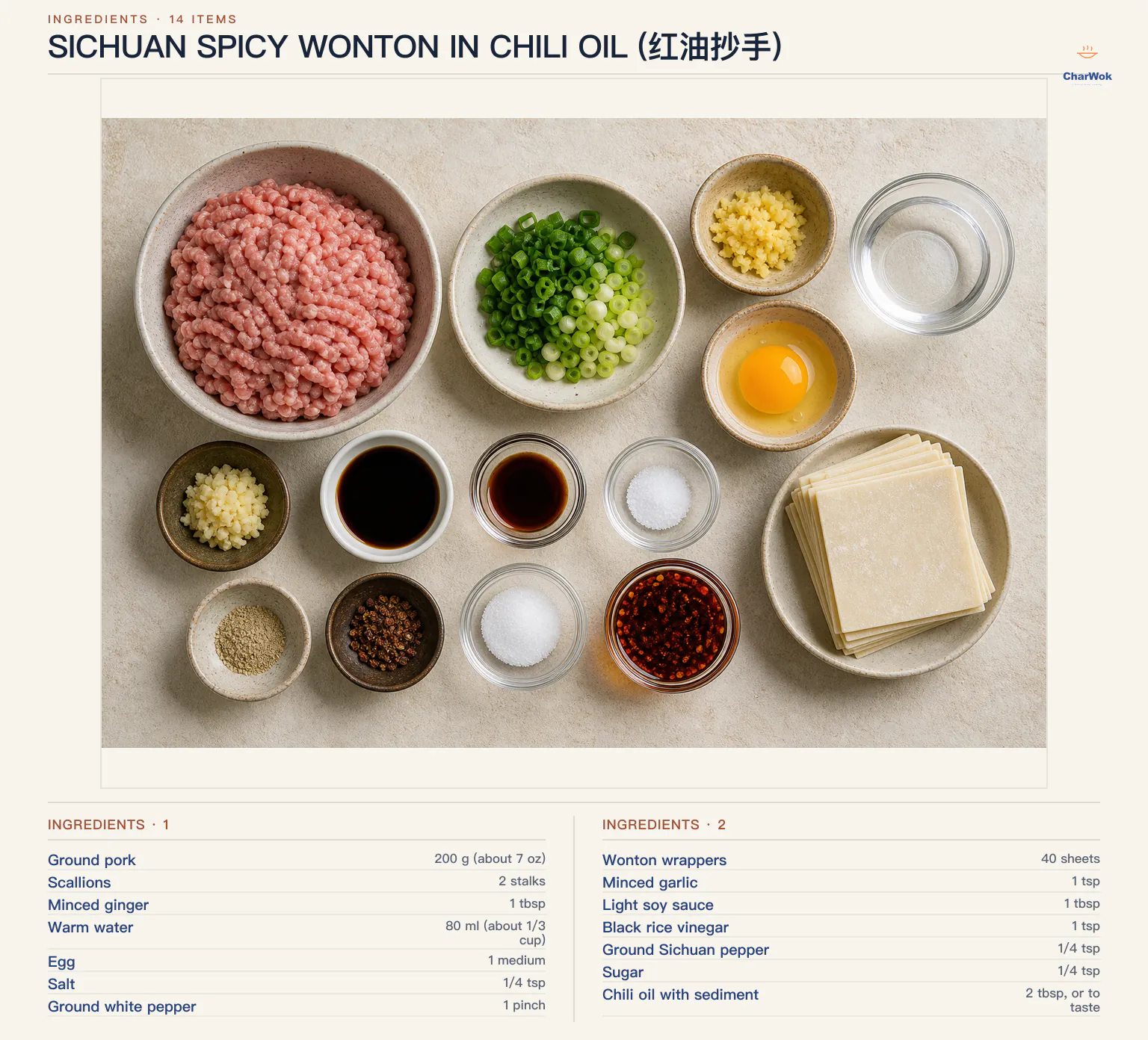
Ingredients at a glance
| Ingredient | Amount | Notes / substitute |
|---|---|---|
| Ground pork | 200 g (about 7 oz) | Use 70 to 80 percent lean. Chicken thigh or turkey works; add 1 tsp Shaoxing wine if using beef. |
| Scallions | 2 stalks | Split: white parts for the water, green parts for garnish. |
| Minced ginger | 1 tbsp | For infusing the water only; not added directly to the meat. |
| Warm water | 80 ml (about 1/3 cup) | Body temperature; too hot and it cooks the egg. |
| Egg | 1 medium | Binds and tenderizes; the yolk adds richness the sauce will lean on. |
| Salt | 1/4 tsp | Deliberately low; the sauce carries seasoning. |
| Ground white pepper | 1 pinch | White, not black, to keep the filling clean-tasting. |
| Wonton wrappers | 40 sheets | Off-white, non-alkaline preferred; thaw overnight in the fridge, unopened. |
Sauce per bowl
| Ingredient | Amount (per serving) | Notes / substitute |
|---|---|---|
| Minced garlic | 1 tsp | Fresh, mashed to a paste with a pinch of salt. |
| Light soy sauce | 1 tbsp | Use light or regular soy; dark soy is too heavy and sweet here. |
| Black rice vinegar | 1 tsp | Chinkiang-style black vinegar; balsamic thinned with water is a workable stand-in. |
| Ground Sichuan pepper | 1/4 tsp | Freshly ground from whole peppercorns; see the Sichuan pepper guide for sourcing. |
| Sugar | 1/4 tsp | Rounds the acid and heat; do not omit. |
| Chili oil with sediment | 2 tbsp, or to taste | Stir the jar first; you want the red oil and the chili sediment at the bottom. |
How to make it
- Steep the aromatic water. Finely chop the scallion whites and combine them in a small bowl with the minced ginger and the 80 ml warm water. Let it sit five minutes so the water picks up their scent. Reserve the green tops for finishing.
- Start the meat mixture. In a separate bowl, combine the ground pork, egg, salt, and white pepper. Stir just to break the egg up.
- Beat in the water, in three pours. Strain out the solids and add the water a third at a time, mixing until each addition disappears. Stop when the filling is glossy, cohesive, and leaves no free liquid.
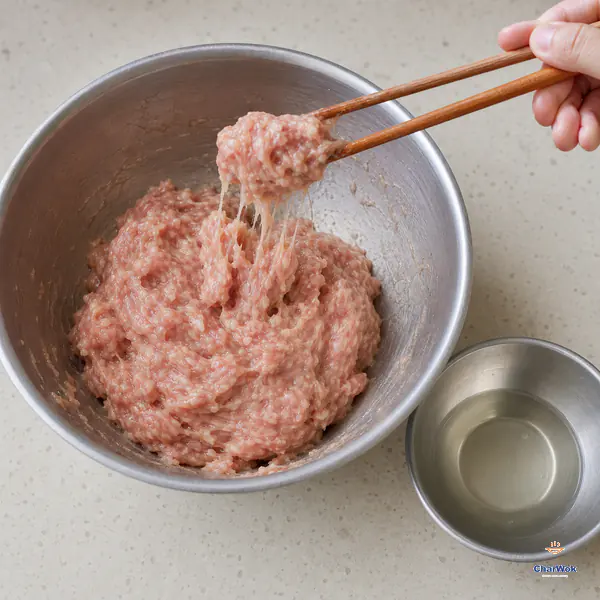
Beat in the strained scallion-ginger water a third at a time and always in one direction, waiting for each addition to disappear; stop when the filling is glossy, cohesive and tacky.
- Fold the wontons. Put a level teaspoon of filling in each wrapper, press out air, seal the edges, and set the wontons apart on a dusted tray.
- Build the sauce bowls while the water heats. Divide the garlic, soy sauce, vinegar, Sichuan pepper, and sugar among the bowls; add chili oil to taste.
- Boil and measure. Boil without crowding and nudge the wontons off the bottom. Floating tells you to start checking, not that the pork is safe. Take 2–3 of the largest wontons from different pot positions and insert a clean thin-tip thermometer through the side; every centre must reach 160°F / 71°C. If one is lower, boil another minute and recheck with a cleaned probe. This follows the USDA safe-temperature chart.
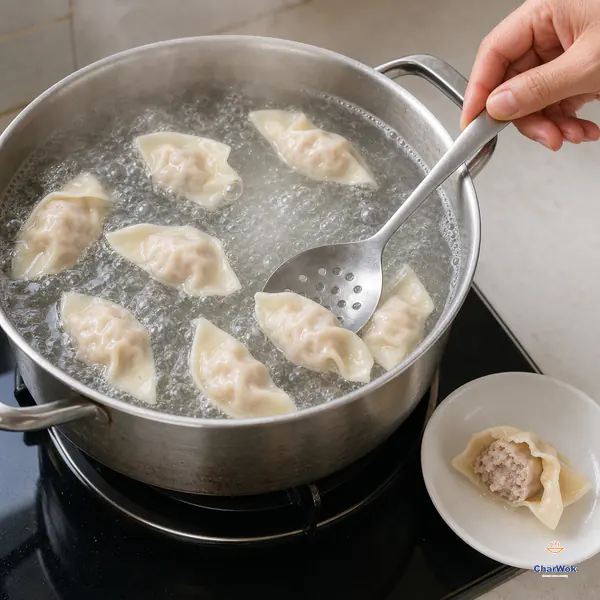
Floating is the cue to check, not the safe endpoint: sample 2–3 large wontons from different pot positions and require every pork centre to reach 160°F / 71°C.
- Dress and serve immediately. Lift the wontons into the sauce bowls, add chili oil, mix, and finish with scallion greens.
Keep the pork-and-egg filling at 40°F / 4°C or below and use or freeze it within one day. Wash hands, board, bowl, utensils, and thermometer probe after raw-filling contact; never return cooked wontons to the raw tray.
When things go wrong (and they will)
The filling is wet and will not firm up. You added the water too fast. Keep stirring in one direction for another minute or two; the proteins need time to trap the liquid. If it is still loose after real effort, refrigerate the bowl for ten minutes. Cold meat holds its shape better when you fold.
Wontons pop open in the pot. Either you overfilled them or did not seal the corners fully. Use a level teaspoon, not a heaping one, and press out the air before sealing. An air pocket expands in boiling water and splits the seam.
The wrappers tear while folding. Your sheets are too dry or too cold. Frozen wrappers need a full night in the fridge, still sealed, then 20 minutes on the counter. A dry edge will not stick; a barely damp finger fixes it. If a sheet cracks, throw it out rather than fight it.
The finished bowl tastes flat. Nine times in ten the chili oil was not stirred before scooping. The red oil floats and the actual chili sediment sinks, so an unstirred spoonful gives you color but no flavor. Stir the jar, scoop deep, and taste. If it is still tame, add more sediment, not more oil.
The sauce tastes harsh and one-note. You skipped the sugar or used too much vinegar. The quarter teaspoon of sugar is not dessert sweetness; it is the bridge between the acid of the vinegar and the heat of the oil. Leave it out and the bowl turns sharp and thin.
Variations and pairings
For a richer, nuttier bowl, stir a teaspoon of Chinese sesame paste into the sauce before the wontons go in, or top with a tablespoon of crushed toasted peanuts. A spoonful of Chiu Chow chili oil, with its garlic and dried shrimp, swaps the clean Sichuan heat for something louder and more savory.
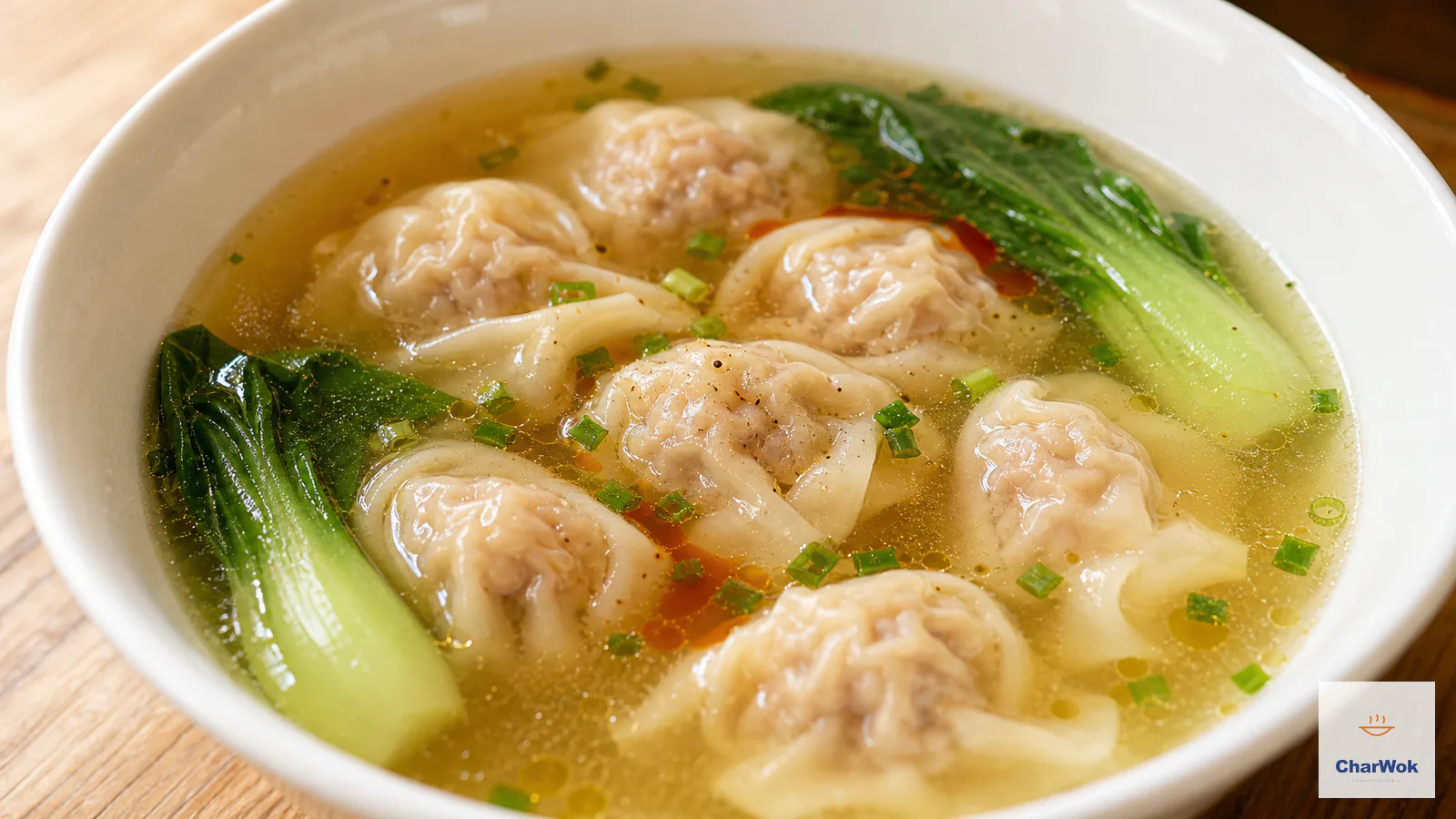
If you want to stretch the meal, blanch some greens such as bok choy in the wonton pot for the last 20 seconds and lift them out with the parcels. The smashed cucumber salad is the classic cooling counterpoint on a Sichuan table, and a small bowl of clear wonton soup alongside gives anyone who finds the red oil too fierce a gentler option.
Storing and reheating
Freeze uncooked wontons in a single layer, then bag and date them once solid. Boil from frozen without thawing; floating is still only the first-check cue, and 2–3 large samples must all reach 160°F / 71°C. Refrigerate cooked wontons and sauce separately in shallow containers within 2 hours—or 1 hour above 90°F / 32°C—use within 3–4 days, and reheat wonton centres to 165°F / 74°C before dressing. See the USDA leftovers guidance.
Common questions
Can I use store-bought chili oil instead of homemade? Yes. A good jarred oil like Lao Gan Ma works fine; just stir it first and add the sediment. Homemade gives a cleaner, fruitier heat, but it is not mandatory.
Why is the filling seasoned so lightly? The whole dish is built on contrast. A boldly seasoned filling fights with the spicy sauce and you taste neither clearly. Keep the meat mild and let the sauce be the voice of the bowl.
Do I really have to stir in one direction? It is not superstition. One-direction stirring aligns the myosin protein strands so they trap water; reversing tears that structure and the filling goes loose. Pick a direction and commit.
How do I know the wontons are done? Floating only signals when to start checking. Measure 2–3 large wontons from different pot positions; every pork centre must reach 160°F / 71°C. If one is lower, boil another minute and recheck with a cleaned probe.
Can I freeze uncooked Sichuan wontons? Yes. Freeze them in a single layer until solid, then bag and date them. Boil straight from frozen without thawing; floating is only the first-check cue, and 2–3 large samples must all reach 160°F / 71°C.
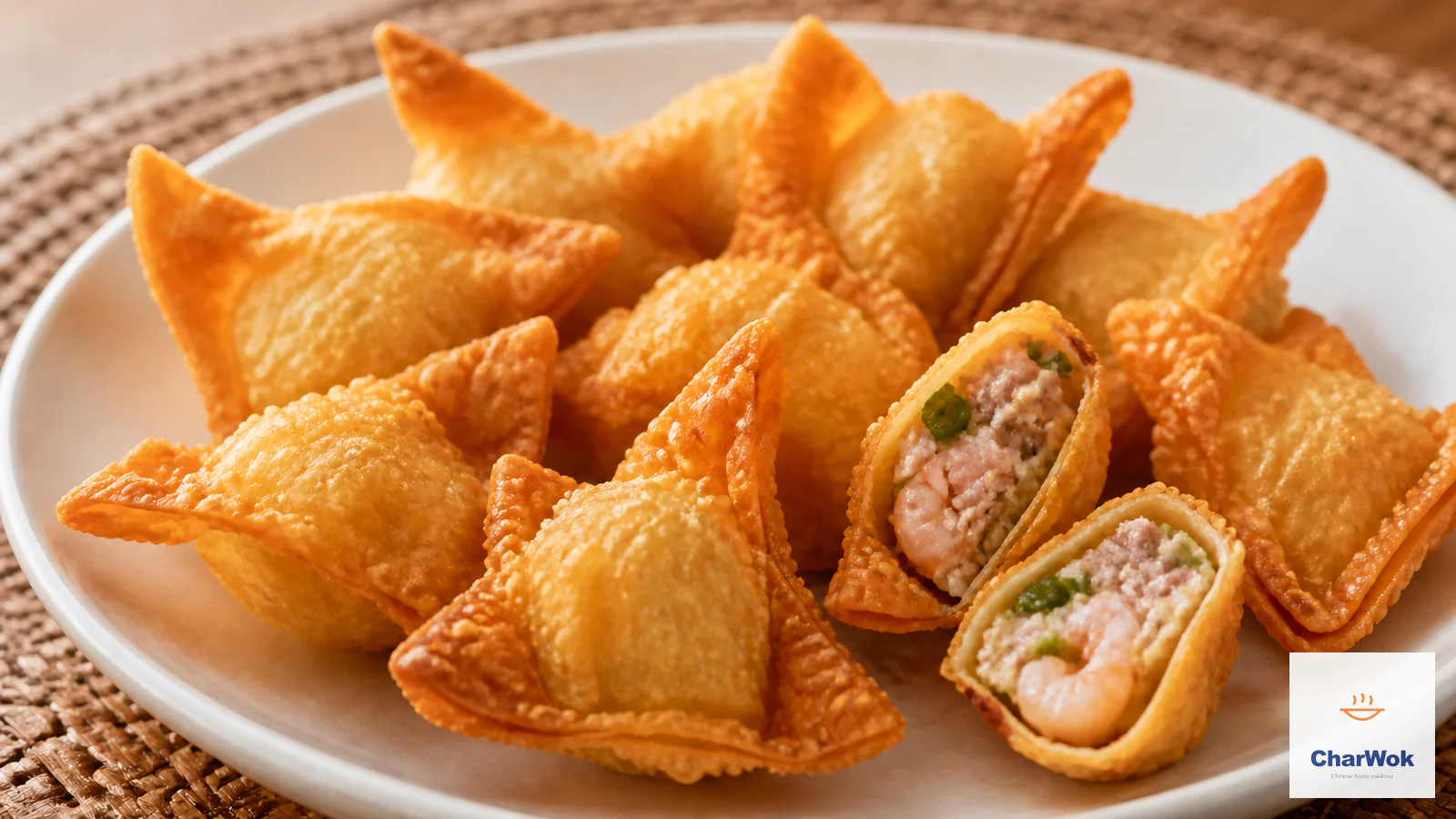
Once you have this filling and sauce in your rotation, the same components branch out in useful directions. Drop the wontons into a clear broth for a tamer night, or crisp them in a pan the way you would fried wontons and serve with the same sauce as a dip. The chili-oil dressing itself is worth keeping in the fridge for cold noodles, boiled eggs, or anything that needs a hit of red, numbing warmth.