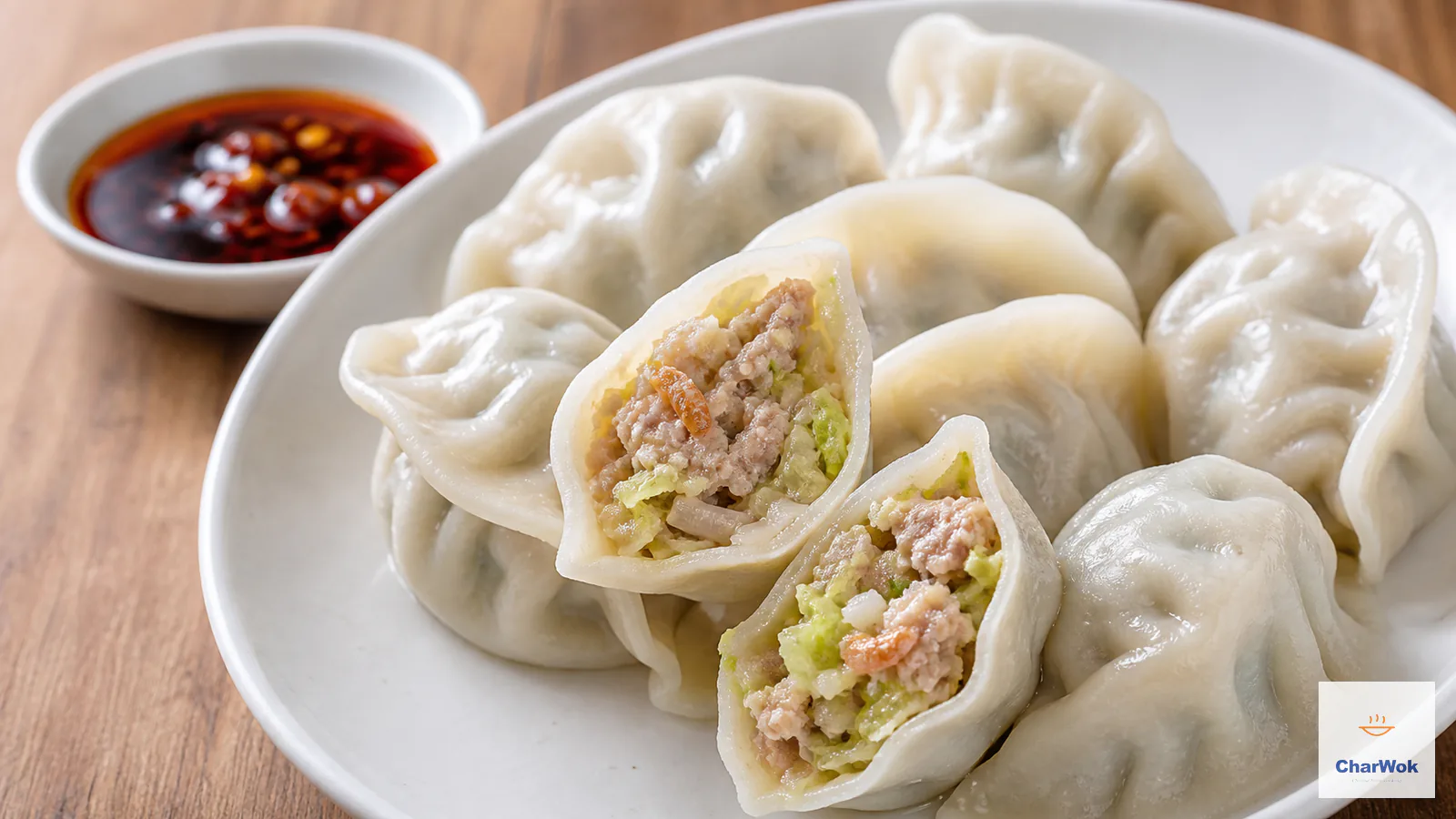
Homemade pork and napa cabbage dumplings usually fail in two places: wet cabbage makes the filling loose and can split the wrappers, while under-rested dough rolls thick and springs back. Control that water and give the dough time, and the rest becomes repeatable.
Pork and napa cabbage boiled dumplings (shui jiao) are a northern Chinese staple. The wrapper should be tender with a little chew, the filling juicy but cohesive, and the seam firmly sealed. Get the dough and the cabbage right and the rest is repetition.
Make about 30 dumplings from 250 g flour and 250 g pork. Rest the dough at least 30 minutes, salt and squeeze the cabbage, then use three cold-water additions to protect the wrappers. Floating is the cue to check; the pork filling is ready only when 2–3 large dumplings reach 71°C / 160°F at the centre.
What this dumpling is, and why the bother
This is the boiled jiaozi of northern China's wheat-growing regions, part of the same family of handmade Chinese dumplings. Napa cabbage and pork is a common pairing: squeezed cabbage keeps a soft texture and mild sweetness, while a controlled amount of liquid is bound into the pork for juiciness. Homemade dough also lets you keep the centre sturdy and the rim thin enough to seal.
The technique matters more than the recipe. A well-made dumpling filling depends on binding water into the meat, while a wrapper that holds has to be rolled from rested dough. The method below covers both before moving to the boil.
The ingredients and what each does
Complete ingredients for about 30 pork and Napa cabbage dumplings
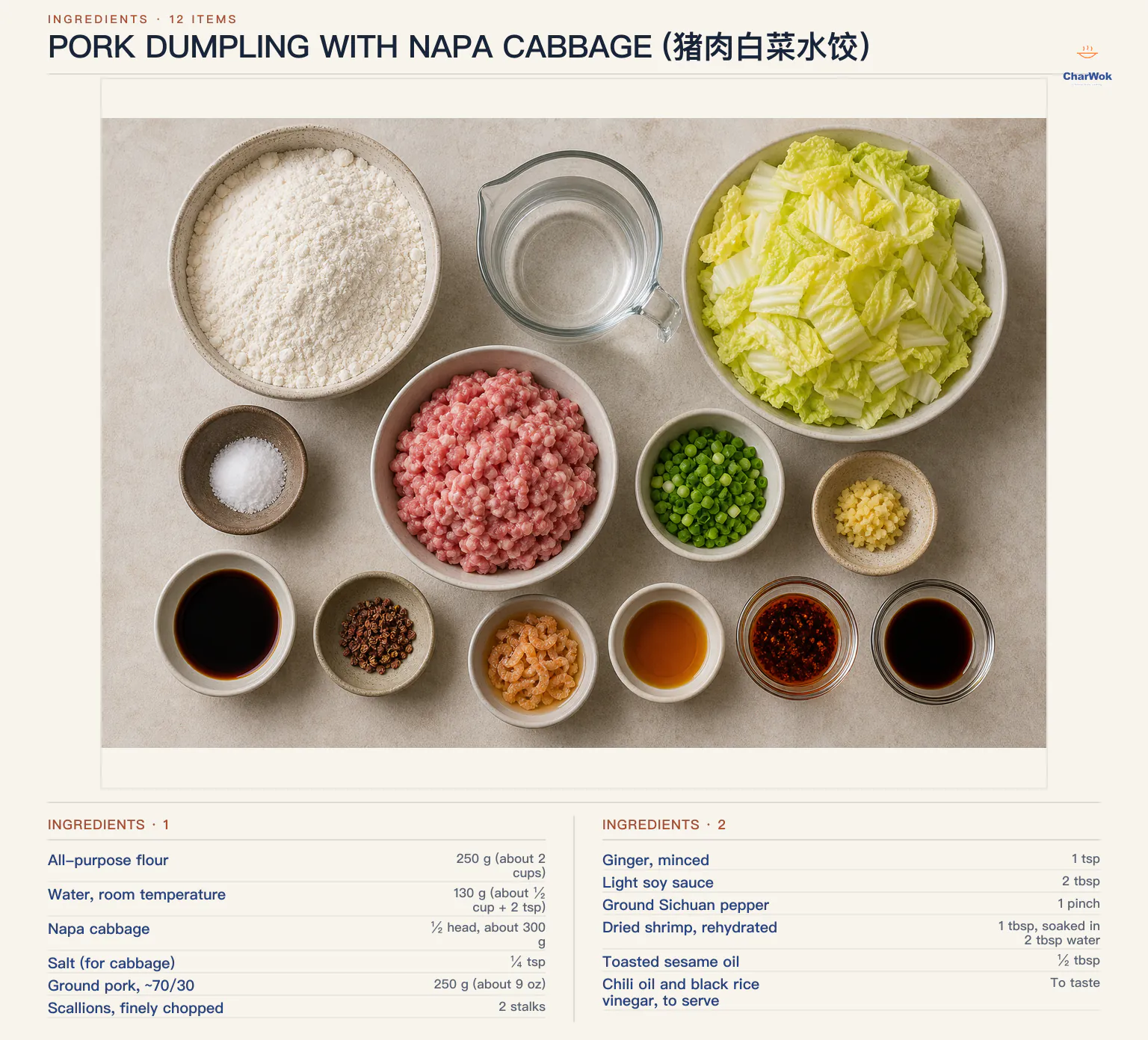
This 52% hydration dough uses 130 g water to 250 g flour, making a soft dough that rolls thin after resting. For the filling, ground pork with at least 20% fat stays juicier than a very lean grind. Dried shrimp is optional; it adds savoury depth without changing the basic pork-and-cabbage structure.
| Ingredient | Amount | Notes / substitute |
|---|---|---|
| All-purpose flour | 250 g (about 2 cups) | Standard AP flour, not bread flour. Bread flour develops too much gluten and fights you when rolling. |
| Water, room temperature | 130 g (about ½ cup + 2 tsp) | Cold or warm both work; room temp is forgiving for hand kneading. |
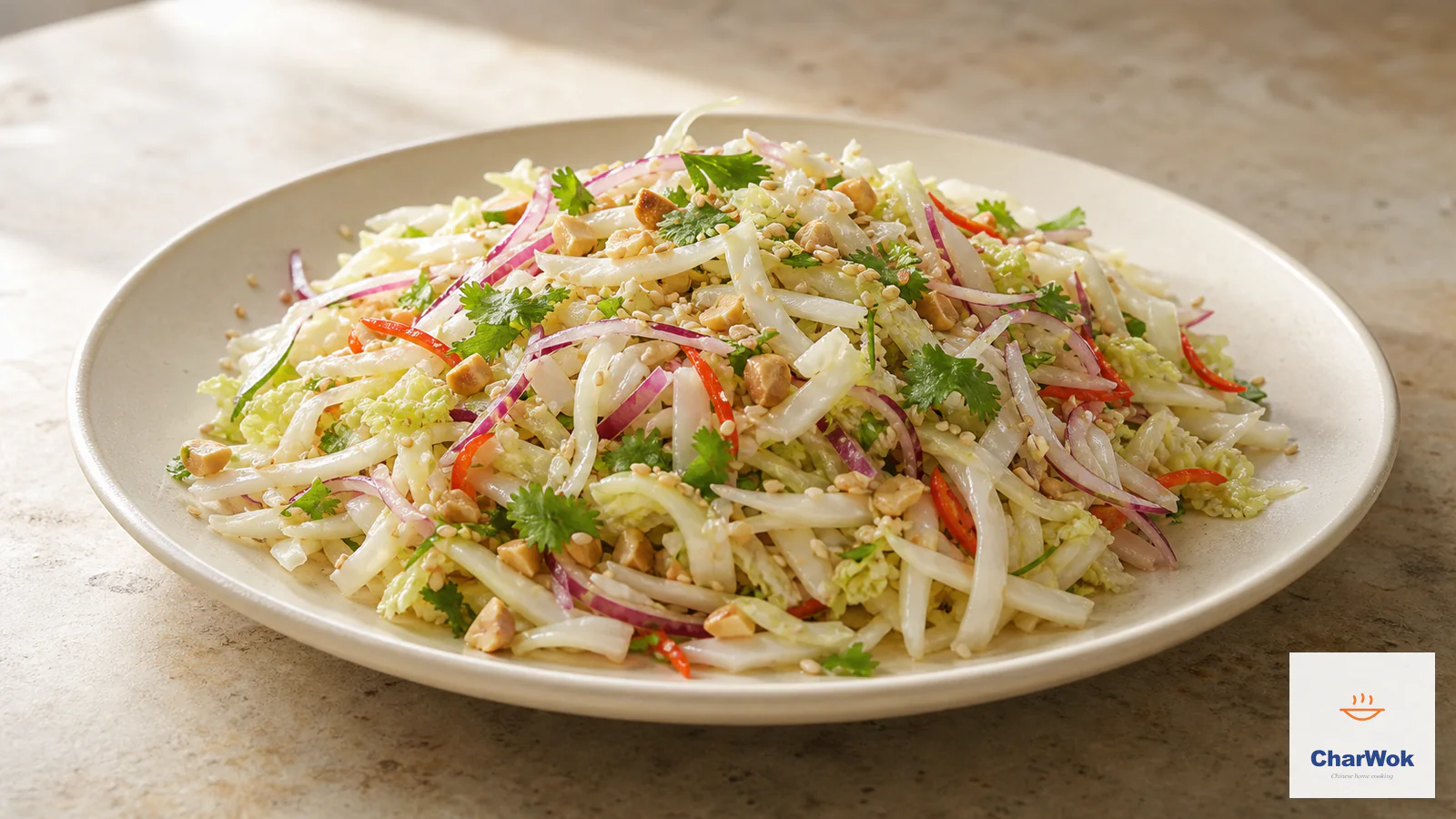
| Napa cabbage | ½ head, about 300 g | The white stems are the watery part. Save the leafy green tips for a quick napa cabbage salad. |
| Salt (for cabbage) | ¼ tsp | Only for drawing water out of the cabbage. Do not skip. |
| Ground pork, ~70/30 | 250 g (about 9 oz) | Ask the butcher for fatty grind, or grind pork shoulder yourself. Dumpling fillings need fat to stay juicy. |
| Scallions, finely chopped | 2 stalks | Green and white parts together. |
| Ginger, minced | 1 tsp | Fresh. Ginger powder is the wrong flavor here. |
| Light soy sauce | 2 tbsp | If you want the longer story, light vs dark soy sauce explains why light is the right call. |
| Ground Sichuan pepper | 1 pinch | Or a pinch of five-spice. The Sichuan pepper guide covers grinding it fresh so it is fragrant, not dusty. |
| Dried shrimp, rehydrated | 1 tbsp, soaked in 2 tbsp water | Optional but recommended. The dried shrimp guide walks through soaking. Add the soaking water to the meat too. |
| Toasted sesame oil | ½ tbsp | Added last, to coat the cabbage and slow further weeping. |
| Chili oil and black rice vinegar, to serve | To taste | Homemade chili oil and black rice vinegar are the classic dip. |
The dough: why rest is non-negotiable
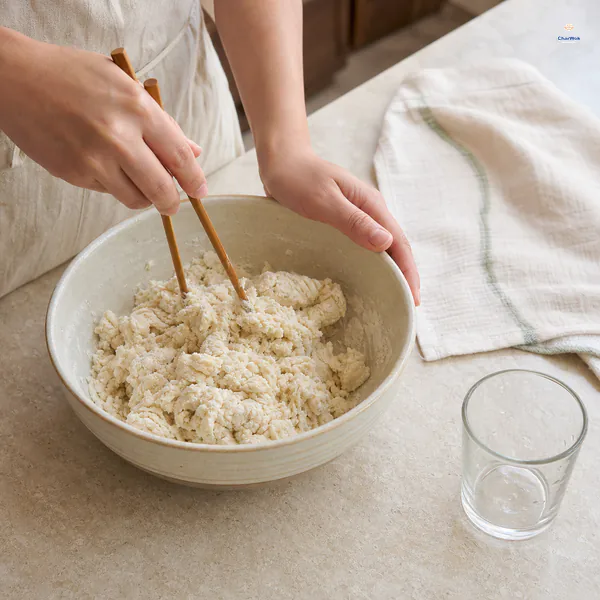
Add the water gradually and stir only until every patch of dry flour has joined the rough, shaggy dough.
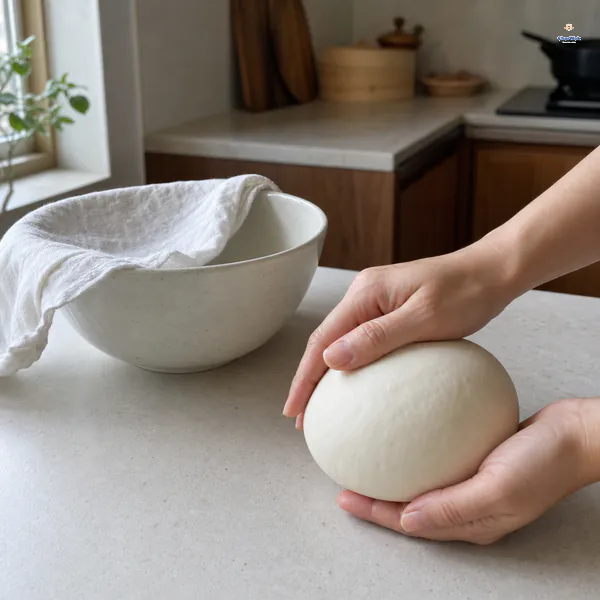
Cover the rough dough for 10 minutes, then knead again; the short hydration rest makes a smooth surface much easier to achieve.
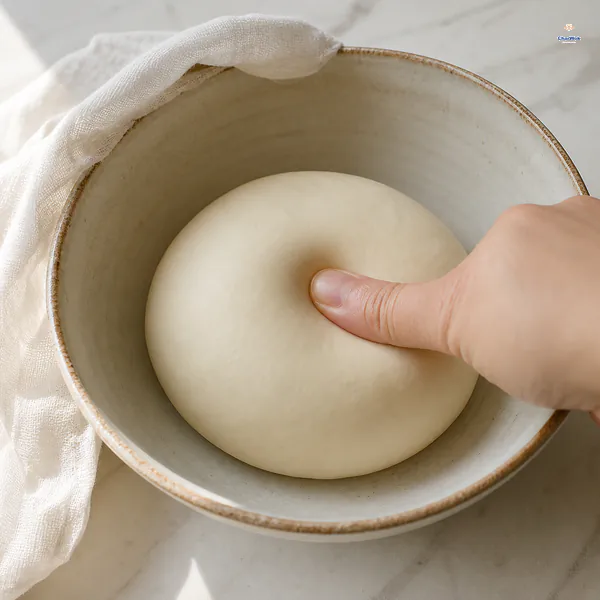
Rest the smooth dough, covered, for 30 to 60 minutes until it feels as soft as an earlobe and yields without snapping back.
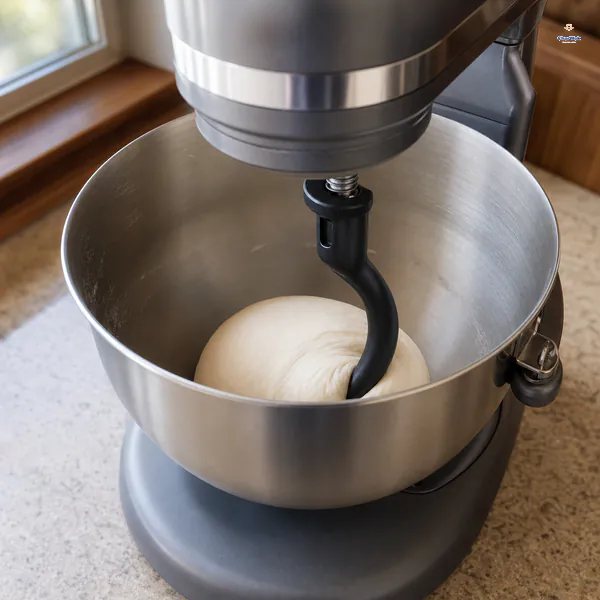
For the machine option, knead flour and water on low speed until smooth, then give the dough the same covered 30-to-60-minute rest.
When flour meets water, two proteins start linking into gluten. Kneading aligns those links into an elastic network, which is good for structure but bad if you want to roll a disc three inches wide and paper-thin. Freshly kneaded dough snaps back at you like a rubber band. Resting lets the gluten strands relax and the flour fully hydrate, so the same dough that fought you becomes soft and willing. This is the single biggest reason home dough feels thick and bouncy: people roll it before it has rested.
Mix the flour and water with chopsticks until no dry flour remains, then gather it into a rough ball. Cover for 10 minutes before kneading again; that first hydration rest makes a smooth dough easier to achieve. Cover and rest a second time for 30 to 60 minutes, until the dough feels as soft as an earlobe and no longer snaps back quickly when pressed.
The filling: control the water, build the bind
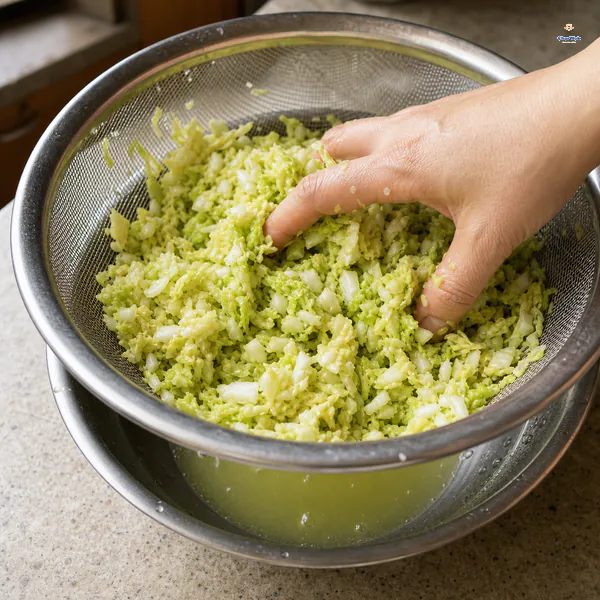
Hand-chop the Napa cabbage, toss it with the measured salt and leave it in a colander for about 10 minutes to release water.
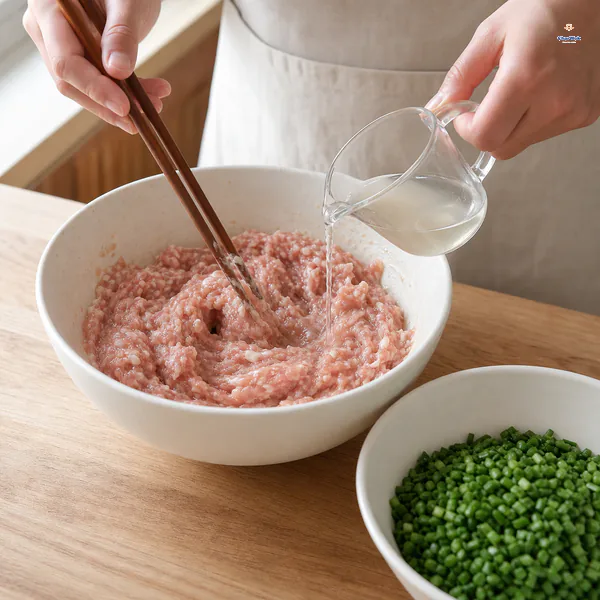
Add the minced soaked shrimp and its liquid to the seasoned pork, stirring in one direction until the meat absorbs every visible drop.
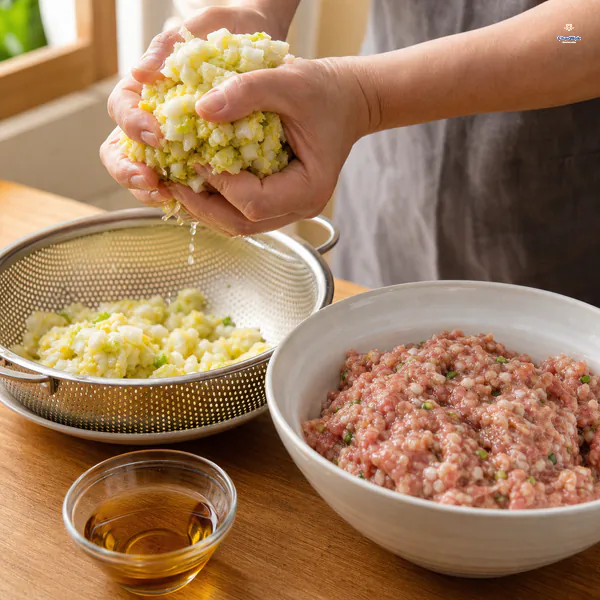
Squeeze the cabbage very dry, fold it into the sticky pork and add the sesame oil last so the filling stays cohesive instead of watery.
Here is where most home recipes quietly fail. Napa cabbage is mostly water, and if you fold raw wet cabbage straight into pork, the filling weeps during cooking, the dumplings burst, and the meat steams instead of braising in its own seasoned juices. The fix is to draw the water out of the cabbage first, then bind a different liquid back into the pork.
Finely chop the cabbage and toss it with the salt in a colander set over a bowl or the sink. Wait about 10 minutes. The salt pulls water out by osmosis, and you will be surprised how much pools underneath. Squeeze the cabbage in handfuls to push out the rest. It should feel soft and look slightly wilted, not raw and crunchy. Reserve it.
In a separate bowl, combine the pork, scallions, ginger, soy sauce and Sichuan pepper. Mince the rehydrated dried shrimp and add it with its soaking water. Stir in one direction until no liquid remains visible and the meat is sticky; this develops the proteins that hold water in the filling. Fold in the squeezed cabbage, drizzle in the sesame oil last and mix gently. The filling should mound on a spoon rather than slump.
Keep the raw filling at or below 4°C / 40°F and use or freeze it within one day. Wash hands, board, knife, bowl and utensils after they touch raw pork, and use a clean plate and utensils for cooked dumplings. If preparing ahead, refrigerate the seasoned pork and squeezed cabbage in separate covered containers and combine them only before folding.
Rolling and folding
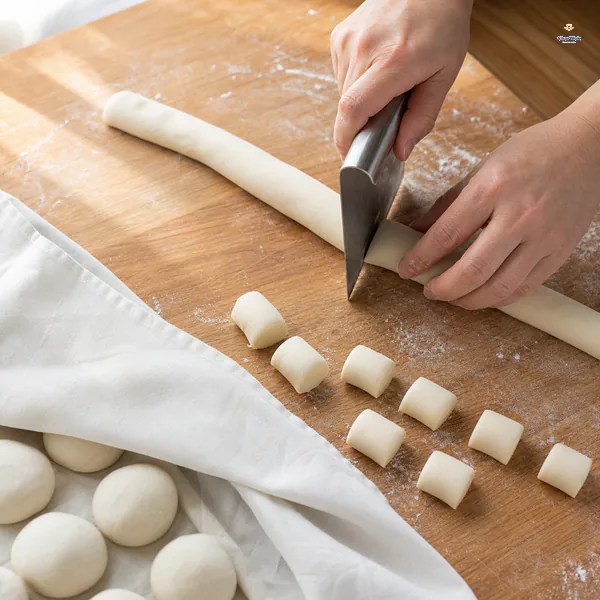
Work with one third of the dough at a time, roll it into a rope and cut 10 equal pieces while the rest remains covered.
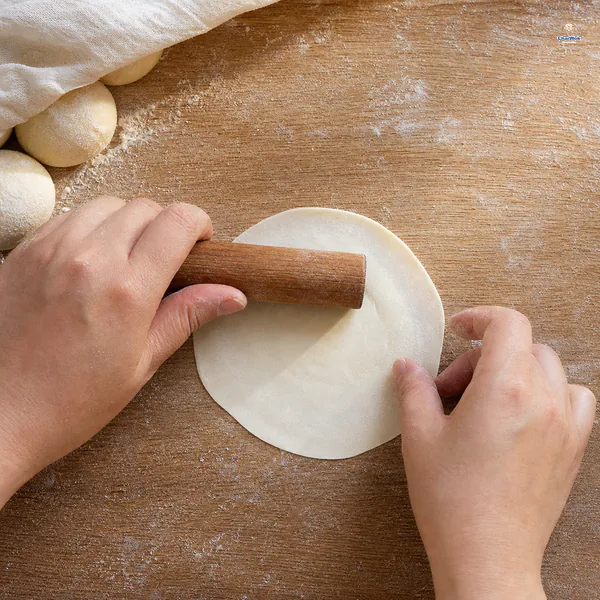
Press each piece flat and roll a round wrapper with a slightly thicker centre and a thin, sealable edge, dusting only as needed.
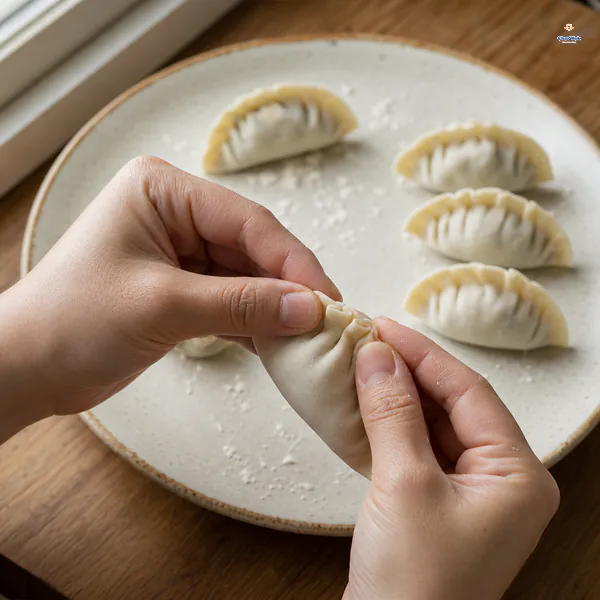
Use a modest spoonful of filling, expel trapped air and press the entire seam firmly closed before setting the dumpling on a dusted tray.
Divide the dough into three pieces and work one piece at a time, keeping the others covered so they do not dry out. Roll each piece into a rope and cut it into 10 equal sections. Press a section flat with your palm, then roll it out with a small rolling pin. The goal is a round about 8 cm (3 inches) across, thinner at the edges than the center, so the seam where you pleat does not turn into a thick doughy lump. If you have never done this, the dedicated homemade dumpling wrappers walkthrough breaks down the one-hand rolling technique that keeps the disc turning under the pin.
Spoon about a tablespoon of filling into the centre, then pleat and pinch the wrapper closed. A sealed half-moon is better than a decorative fold with an open seam. The dumpling folding guide shows the pleated crescent and standing fold side by side. Press firmly along the seam and set each dumpling on a tray dusted with flour or lined with parchment. Keep the finished ones covered so the skins do not crack.
The boil, and why three splashes of cold water
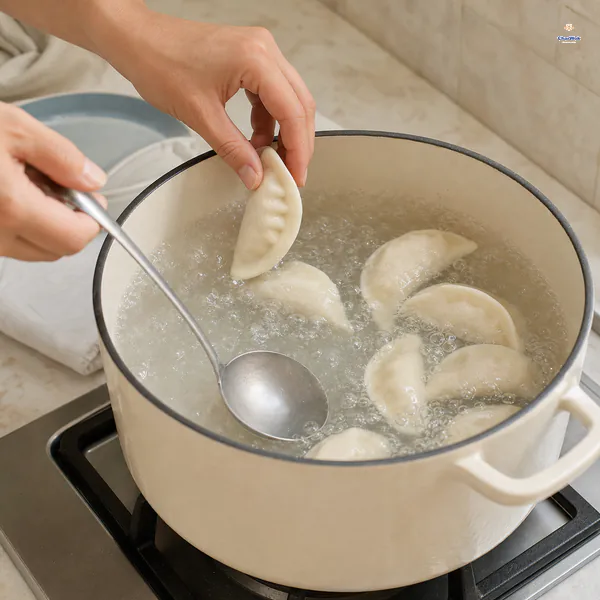
Add the dumplings to a large full boil, cook in batches when needed and immediately nudge the pot bottom before covering.
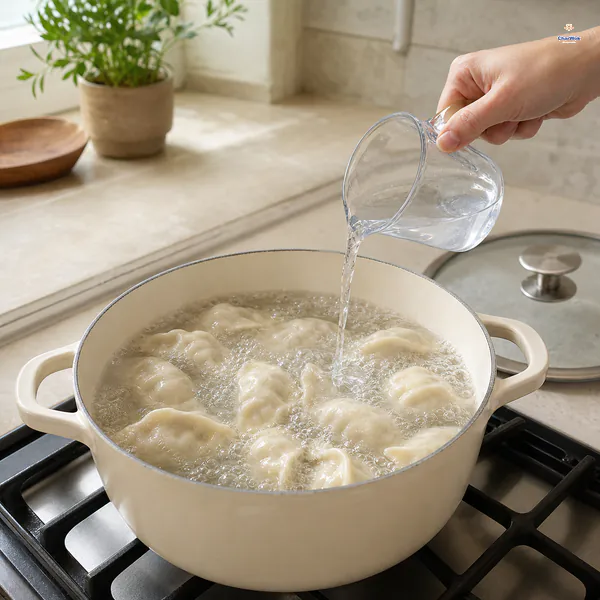
When the pot returns to a full boil, pour in about 120 ml of cold water and cover again to calm the wrapper-damaging agitation.
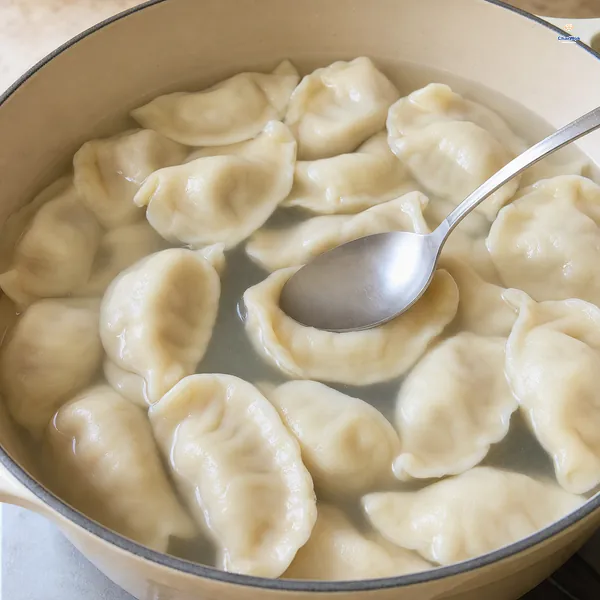
After three cycles, floating and plump wrappers mean it is time to check. Test 2–3 large dumplings from different pot areas; every pork centre must reach 71°C / 160°F.
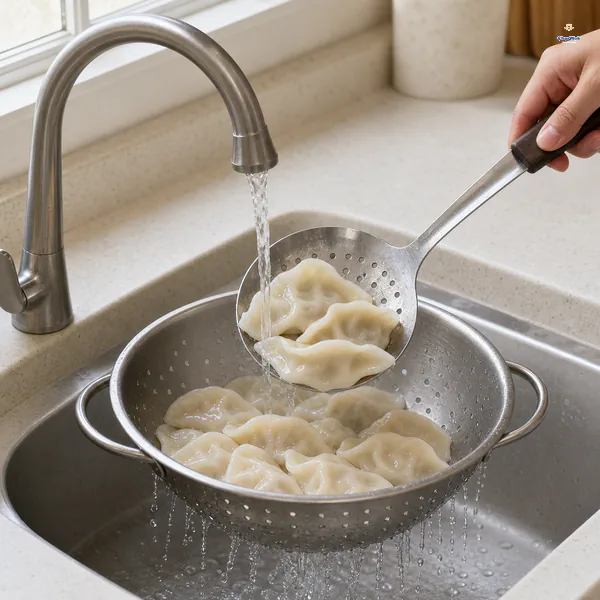
Transfer the cooked dumplings to a colander, rinse briefly with drinkable cool water to remove surface starch, then drain well.
Bring a large, wide pot of water to a full, rolling boil. The pot matters: a crowded pot drops below a boil when you add the dumplings, and a slow boil is what causes sticking and splitting. Slide the dumplings in and immediately nudge them with the back of a spoon to keep them off the bottom. Put the lid on.
When the water returns to a full boil, tilt the lid away from you and slowly pour about 120 ml (½ cup) cold water down the inside wall, then cover again. Repeat twice more, for three additions in total. This dian shui rhythm calms the agitation that can batter tender wrappers. After the third return to a boil, floating, plump dumplings with slightly translucent seams are ready to check, not automatically safe. Test 2–3 of the largest dumplings from different parts of the pot with a clean thin-tip thermometer inserted through the side into the centre of the pork filling. All must reach 71°C / 160°F; if one is lower, simmer another minute and recheck with a cleaned probe. Then drain and, if desired, rinse briefly with drinkable cool water to remove surface starch. This endpoint follows the USDA safe-temperature chart.
This is the same logic behind every way to cook dumplings, whether boiled, steamed, or pan-fried: manage the heat so the wrapper and the filling finish at the same moment. For a fuller picture of where boiled jiaozi sit in the family, the round-up of best Chinese dumpling recipes places them next to their pan-fried and steamed cousins.
When things go wrong
The dough snaps back when you roll it. It has not rested long enough. Cover it and wait another 20 minutes. You cannot over-rest this dough within an hour; you can very easily under-rest it.
Wrappers tear while folding. Either the dough is too dry, the edge was rolled too thin, or you overfilled. Aim for a rounded tablespoon of filling and a center that is slightly thicker than the rim. If the dough cracks at the seam, wet your finger and pinch again; a little water welds raw flour paste instantly.
Dumplings split open in the pot. Two usual causes. First, trapped air expanded and blew out the seam, which means you left a bubble when pleating, press the seam flat to push air out before the final pinch. Second, the filling was too wet, which means the cabbage was not salted or squeezed enough, or you skipped the sesame-oil coat.
The filling is dense and dry. You used lean pork, or you did not stir in the soaking water until the meat absorbed it. Switch to a fattier grind and stir longer next time. A teaspoon of water or stock worked in during the one-direction stir also helps.
The skins stick together after cooking. They were not rinsed. Surface starch turns to glue as they cool. A brief cool-water rinse fixes it; if they are already stuck, do not pry them apart dry, drop them back into hot water for a few seconds to release the starch bond.
Variations and pairings
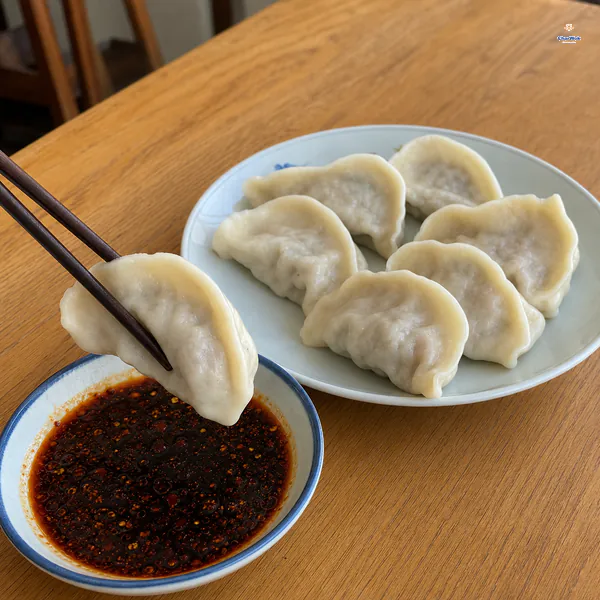
Serve the drained dumplings warm with black rice vinegar and homemade chili oil mixed to taste.
Swap the napa for Chinese chives and you have the other northern classic, closer in spirit to the pan-fried pork and chive dumplings family. Shiitake mushrooms, soaked and minced, add an earthy note and some of the same umami as the dried shrimp; the shiitake guide covers rehydrating them. For a seafood lean, a spoonful of chopped shrimp folded in at the end echoes the style of shrimp and pork shumai.
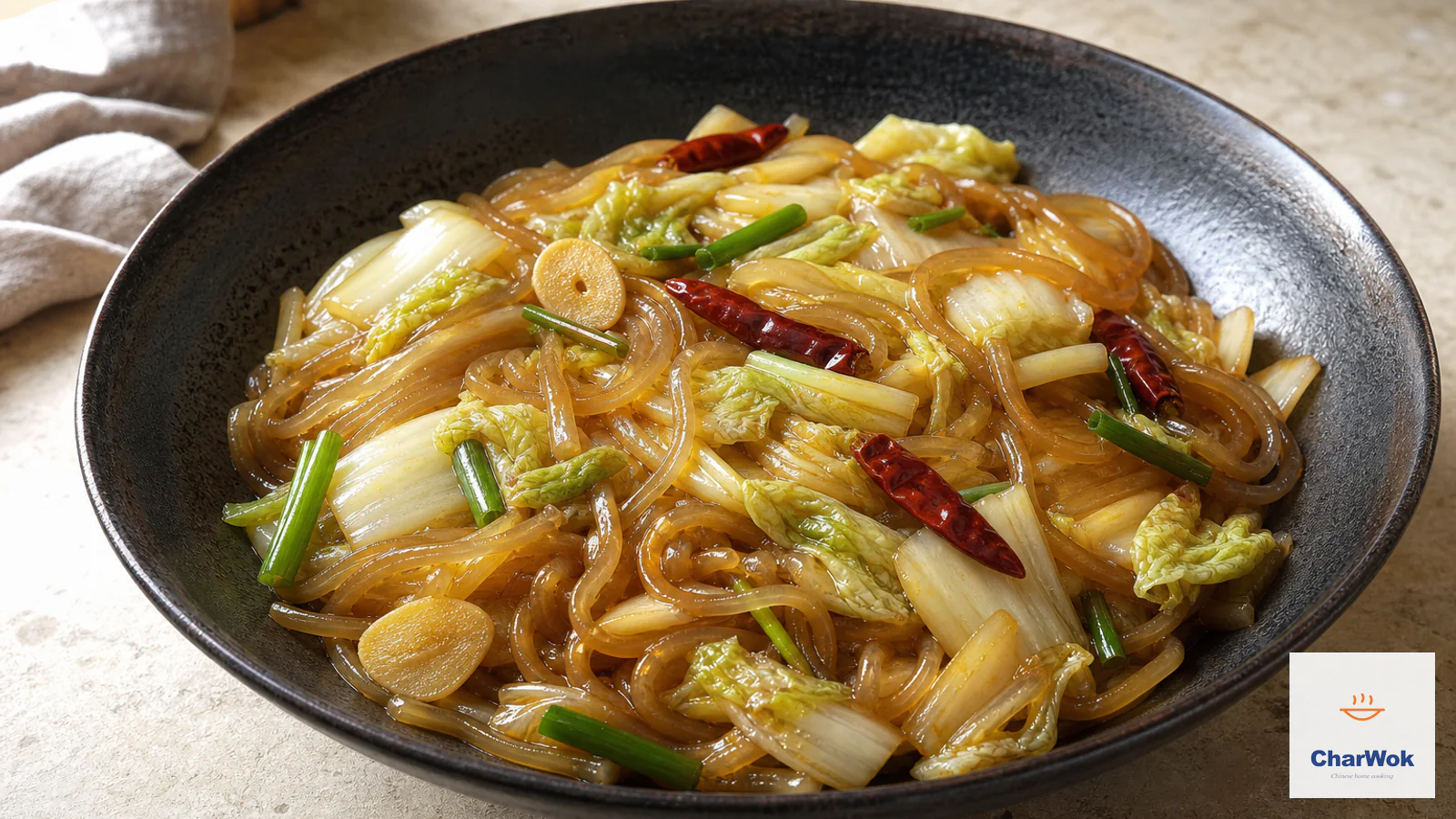
If you want the dumpling itself to carry more flavor, serve them in the Sichuan sweet-and-spicy sauce used for Zhong dumplings, or go the soup route and drop them into the hot-and-sour broth of beef dumpling soup. For a plain boiled dumpling, the simplest dip is still the best: black rice vinegar and chili oil, with a few drops of soy sauce. The six dumpling sauces page has the ratios if you want to branch out. A bowl of glass noodles with napa cabbage on the side turns a plate of dumplings into a full meal.
Freezing and reheating
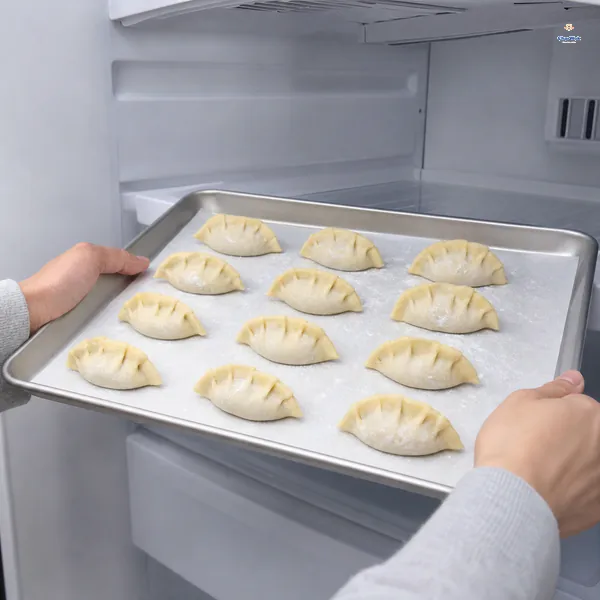
Freeze the assembled raw dumplings in one separated layer on a lined or lightly floured tray until completely solid.
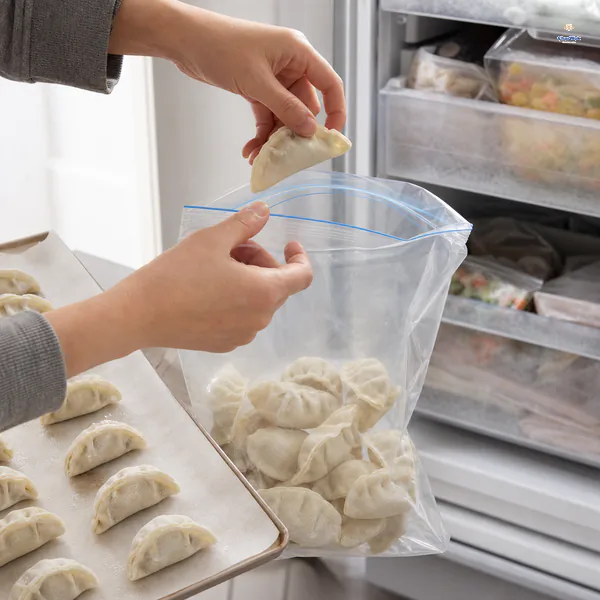
Once every dumpling is hard, transfer them loose into an airtight bag or container and use them within three months.
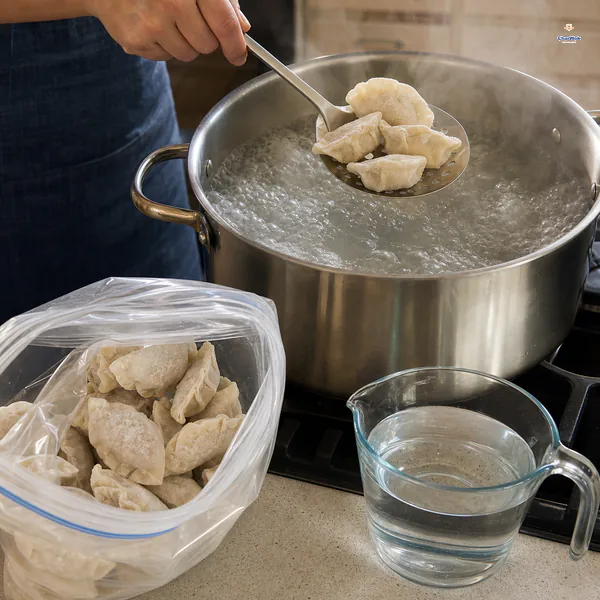
Cook straight from frozen without thawing and keep the pot uncrowded. Use an extra cold-water cycle only as the first-check estimate, then verify 71°C / 160°F in 2–3 large dumplings.
For make-ahead batches, arrange the assembled raw dumplings in one layer on a parchment-lined or lightly floured tray and freeze until solid, then transfer them to an airtight freezer bag. Use within about three months for best quality.
Cook the homemade dumplings straight from frozen without thawing. An extra cold-water cycle is a useful first-check estimate, but frozen centres vary: test 2–3 large dumplings and keep simmering until every checked pork filling reaches 71°C / 160°F. Do not crowd the pot, and keep the frozen raw dumplings and their utensils away from the serving plate.
Refrigerate cooked leftovers in shallow containers within 2 hours, or within 1 hour above 32°C / 90°F. Eat within 3–4 days and reheat the centre to 74°C / 165°F; a lightly oiled covered pan with a splash of water restores the wrapper before a final uncovered crisp. See the USDA leftovers guidance for the storage limits.
A note on the chive pocket cousin
If folding dumplings feels like too much for a weeknight, the same dough logic, rest it, roll it thin, seal it well, carries over to pan-fried chive pockets, which use a larger, flatter wrapper and a faster pan cook. Once you can make one, the other comes easily. The dough is the lesson; the shape is just preference.
Frequently asked questions
Can I use store-bought wrappers?
Yes, though they are thicker and drier than homemade. Wet the edges with water to seal, since they are cut from a dough that does not self-stick the way fresh dough does. The trade is convenience for texture.
Why salt the cabbage separately?
Salt pulls water out by osmosis so the cabbage does not flood the filling during cooking. You then bind a controlled amount of liquid, the shrimp soaking water, back into the pork for juiciness on your terms.
Do I really need to add cold water three times?
It calms a hard boil so the wrapper can set without being battered. Three cycles are a useful starting rhythm, not a doneness test; after the wrapper turns plump, check 2–3 large dumplings and continue until every pork centre reaches 71°C / 160°F.
Can I pan-fry these instead of boiling?
Yes. Use a little oil, add water carefully and cover to steam. Before the final uncovered crisp, check 2–3 large dumplings and make sure every pork centre reaches 71°C / 160°F. The three-method dumpling guide gives the full pan-fry sequence.
How do I know they are done?
Floating, plump wrappers and translucent seams tell you when to start checking, not whether pork is safe. Measure 2–3 of the largest dumplings from different parts of the pot; every centre must reach 71°C / 160°F. If one is lower, simmer another minute and recheck with a cleaned probe.