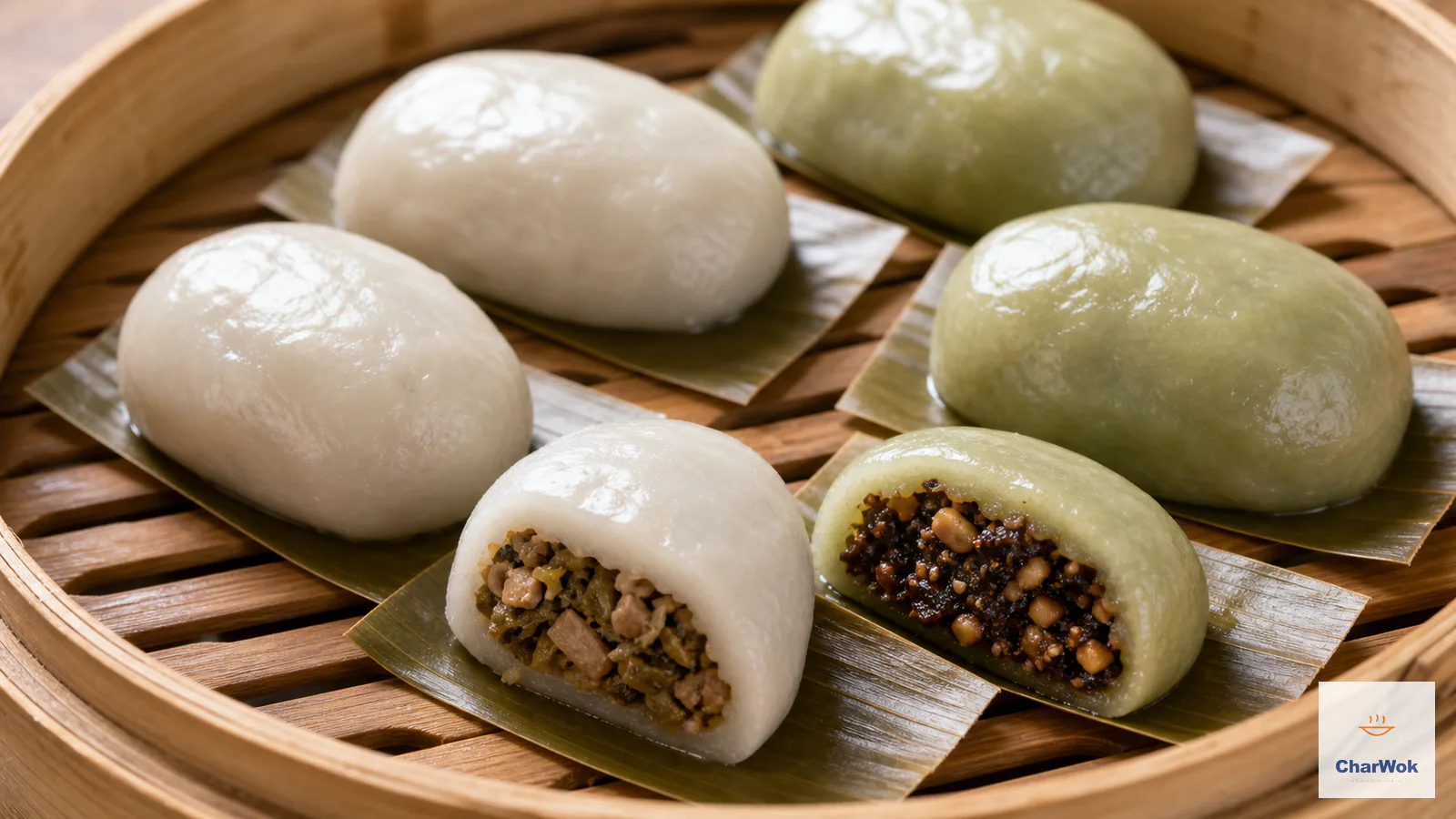
Ye'er Ba (叶儿粑) is a steamed parcel of glutinous rice dough cradling a savory or sweet center, each one swaddled in a leaf so it never sticks to the steamer and quietly picks up a green, herbal perfume as it cooks. The failure most home cooks run into is not the filling. It is the dough. Get the ratio wrong and you end up with something that welds itself to your teeth and collapses the moment steam hits it. Get it right and the locals have a phrase for the texture: San Bu Zhan, "doesn't stick to the plate, the chopsticks, or your teeth." This recipe is built around that single judgment.
I came to these cakes the hard way. My first batch was a gluey puddle because I used glutinous rice flour alone and drowned it in water. The lesson, which took a few more tries to really sink in, is that a small amount of plain rice flour is what gives the wrapper enough backbone to hold a filling without slumping. Once I locked in the 4-to-1 ratio below, the whole project stopped being temperamental. You will be making two fillings here, pork with preserved mustard greens and a walnut-sesame sweet one, because the contrast of a green savory cake and a white sweet one on the same plate is half the fun.
Make the fillings first, mix a 4:1 glutinous-to-rice-flour dough with about 210 ml water per 250 g flour, assemble and steam 8 minutes. The wrapper is the whole game, and the leaf is a non-stick liner, not a garnish. Do not rest the dough, and keep it covered while you work.
Where these cakes come from
Ye'er Ba is country food from Sichuan, the kind of thing you find at morning markets and temple fairs rather than banquet halls. "Ye" means leaf and "er ba" is the local diminutive for a cake or pastry, so the name really just says what the dish is: a little leaf-wrapped cake. In Sichuan the traditional wrapper is a fresh tangerine leaf, which is why an older generation will tell you the cake should smell faintly of citrus groves. Tangerine leaves are nearly impossible to find outside the region, so most of us substitute bamboo leaves, banana leaves, or corn husks and lose very little.
The dish sits in the same glutinous-rice family as chewy rice balls for the Lantern Festival, leaf-wrapped sticky rice dumplings, and the fried sesame balls you find at dim sum. What sets Ye'er Ba apart is the wrapper-to-filling ratio and the fact that the savory filling is stir-fried before it goes inside. Raw fillings, the kind used for most boiled or pan-fried jiaozi, would leak water and turn the dough to paste in the short steam these cakes get.
The two fillings
Both fillings need to be cool or cold before you stuff the dough. A warm filling softens the wrapper at the seam and the cake will open during steaming. I make both the night before and chill them.
Savory: pork with Ya Cai
The backbone of the savory filling is Ya Cai (芽菜), finely chopped preserved mustard greens from Sichuan, usually sold in small plastic pouches labeled Sui Mi Ya Cai (碎米芽菜). It is salty, dark, slightly sweet, and mineral. If you cannot find it, chopped Zha Cai (preserved mustard stem) or even well-drained kimchi will give you a credible stand-in. The dish stops being strictly authentic the moment you swap, but it will still taste good.
Use fatty minced pork. Lean pork makes a dry, crumbly filling that turns chalky after steaming. I grind my own at roughly four parts lean to one part fat; a store-bought 70/30 grind works. Freshly toasted and ground Sichuan pepper matters more than you might think, since pre-ground loses its citrusy buzz fast. The section on grinding Sichuan peppercorn correctly is worth reading before you start, and the broader Sichuan pepper guide explains why the numbing quality is the point rather than a flaw.
Sweet: walnuts, sesame, and brown sugar
This is a rustic filling, not a smooth paste. You crush toasted walnuts and sesame seeds, then bind them with dark brown sugar and a little softened butter or lard. Dark brown sugar has more molasses than light, and that molasses is what carries the caramel note that makes the nuts taste richer than they are. If you want a smoother, more classical sweet filling, homemade red bean paste or black sesame paste drop in with no other changes. Chill the mixture so it firms up and is easy to portion.
Ingredients
Ingredients at a glance
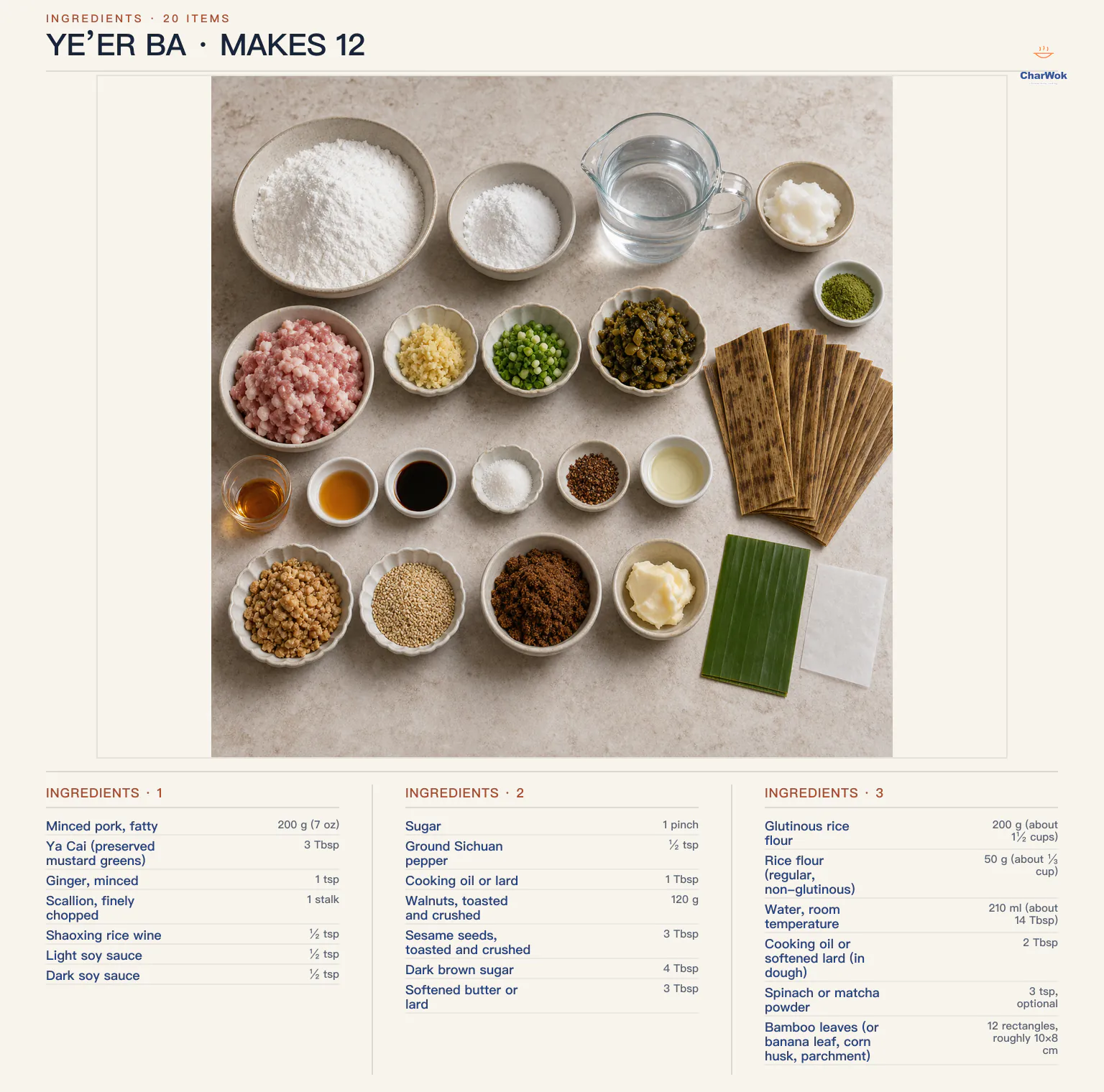
| Ingredient | Amount | Notes / substitute |
|---|---|---|
| Minced pork, fatty | 200 g (7 oz) | 70/30 grind, or grind your own 4:1 lean to fat |
| Ya Cai (preserved mustard greens) | 3 Tbsp | Sui Mi Ya Cai pouches; swap Zha Cai or kimchi |
| Ginger, minced | 1 tsp | |
| Scallion, finely chopped | 1 stalk | Stir in off the heat |
| Shaoxing rice wine | ½ tsp | Cooking sherry in a pinch |
| Light soy sauce | ½ tsp | See light vs. dark soy |
| Dark soy sauce | ½ tsp | For color |
| Sugar | 1 pinch | Balances the salt |
| Ground Sichuan pepper | ½ tsp | Toast and grind fresh |
| Cooking oil or lard | 1 Tbsp | For frying the filling |
| Walnuts, toasted and crushed | 120 g | Peanuts work too |
| Sesame seeds, toasted and crushed | 3 Tbsp | |
| Dark brown sugar | 4 Tbsp | To taste |
| Softened butter or lard | 3 Tbsp | Binds the sweet filling |
| Glutinous rice flour | 200 g (about 1½ cups) | The chew comes from here |
| Rice flour (regular, non-glutinous) | 50 g (about ⅓ cup) | Gives the wrapper structure |
| Water, room temperature | 210 ml (about 14 Tbsp) | Add 2 tsp more if using green powder |
| Cooking oil or softened lard (in dough) | 2 Tbsp | Reduces stickiness, adds shine |
| Spinach or matcha powder | 3 tsp, optional | For the green dough only |
| Bamboo leaves (or banana leaf, corn husk, parchment) | 12 rectangles, roughly 10×8 cm | Soak dried leaves overnight |
Method
- Cook the savory filling first. Heat a wok hot enough that a flick of water dances, add the oil, then the pork and ginger. Break the pork up and fry until it has lost all pink. Add the Ya Cai, wine, both soy sauces, sugar, and Sichuan pepper and cook about a minute, just long enough for the wine to evaporate and the Ya Cai to scent the oil. Kill the heat, stir in the scallion, and spread the mixture on a plate to cool. The filling must be at room temperature or colder before stuffing, otherwise it melts the dough at the seam.
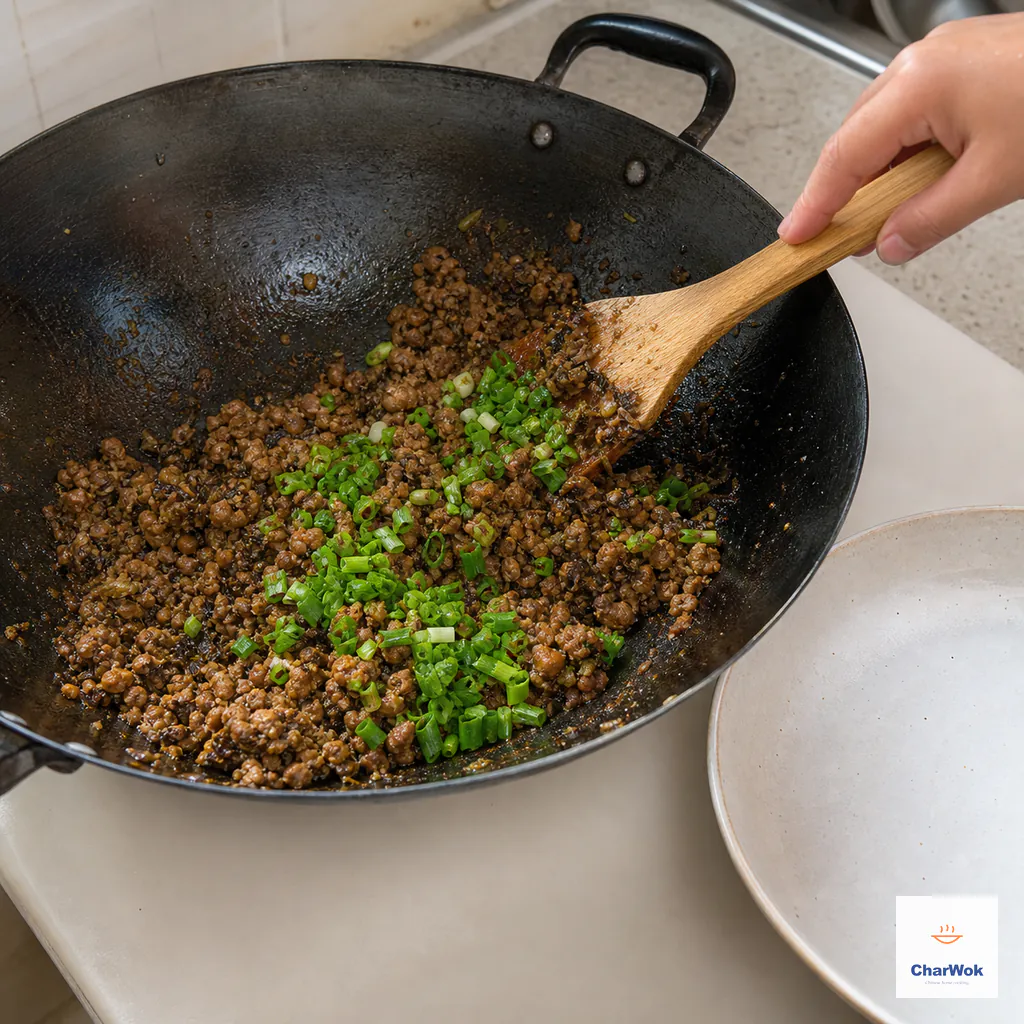
Cook away the wine, turn off the heat, fold in the scallion, then spread the savoury filling out to cool completely before stuffing.
- Build the sweet filling. Toast the walnuts in a dry pan over low heat until the surface oils bloom and the kitchen smells nutty, then tip them onto a plate to cool. Repeat with the sesame seeds until they start to pop. Crush both in a sealed bag with a rolling pin, leaving some texture. Mix with the brown sugar and softened butter, then chill until firm enough to scoop.
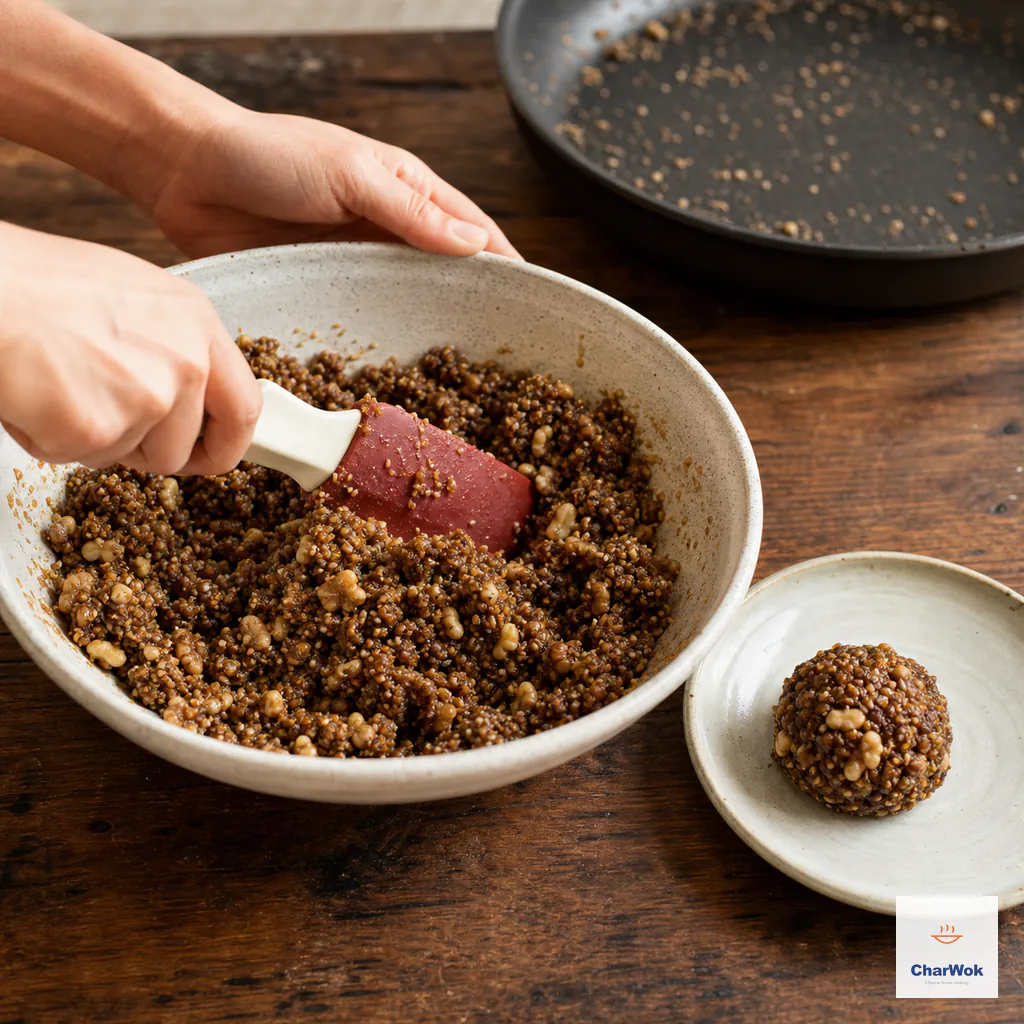
Keep some nut texture, mix until cohesive, then chill the sweet filling until a rounded spoonful can hold together.
- Mix the dough. Whisk the glutinous rice flour and rice flour together so the two are evenly blended, then add the water and the 2 Tbsp of oil. Stir with chopsticks or a spatula until no dry flour remains, then knead briefly by hand. This is not wheat dough: there is no gluten to develop, so you are only aiming for a smooth, soft ball, which takes a minute or two, not ten. If you are coloring half the dough green, split it now and knead in the spinach or matcha powder with an extra 2 tsp of water.
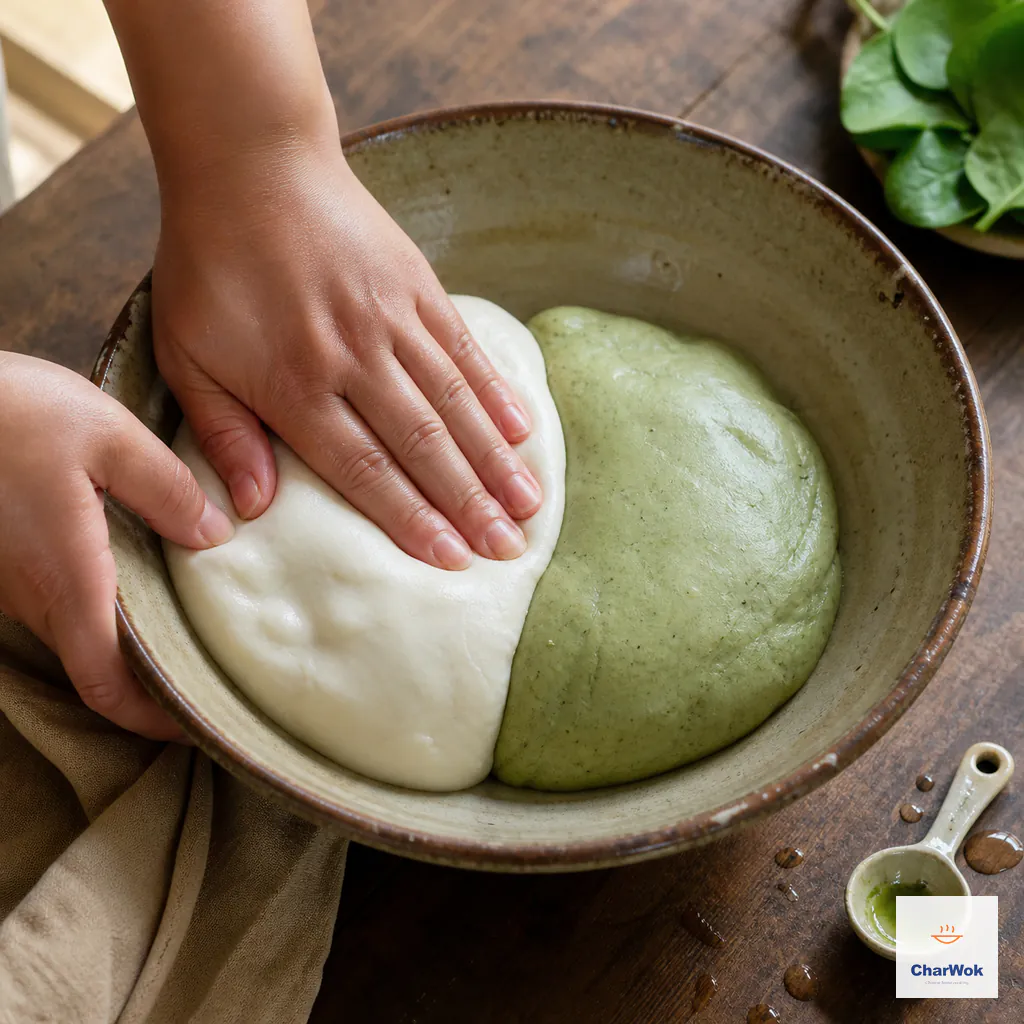
Mix only until smooth and soft; for the green half, knead in spinach or matcha powder with the small extra measure of water.
- Adjust the hydration by feel. The single most useful skill here is reading the dough. Press a thumb into it; the dent should spring back slowly and the surface should not stick to your thumb. Too dry and the wrapper will crack at the seam, too wet and the cake will slump in the steamer. Add water a few drops at a time or glutinous rice flour a pinch at a time until it feels like soft clay. This is the same dough logic behind the snow-skin mooncake and Chinese New Year rice cake, and it is worth getting comfortable with because glutinous-rice doughs do not forgive guesswork.
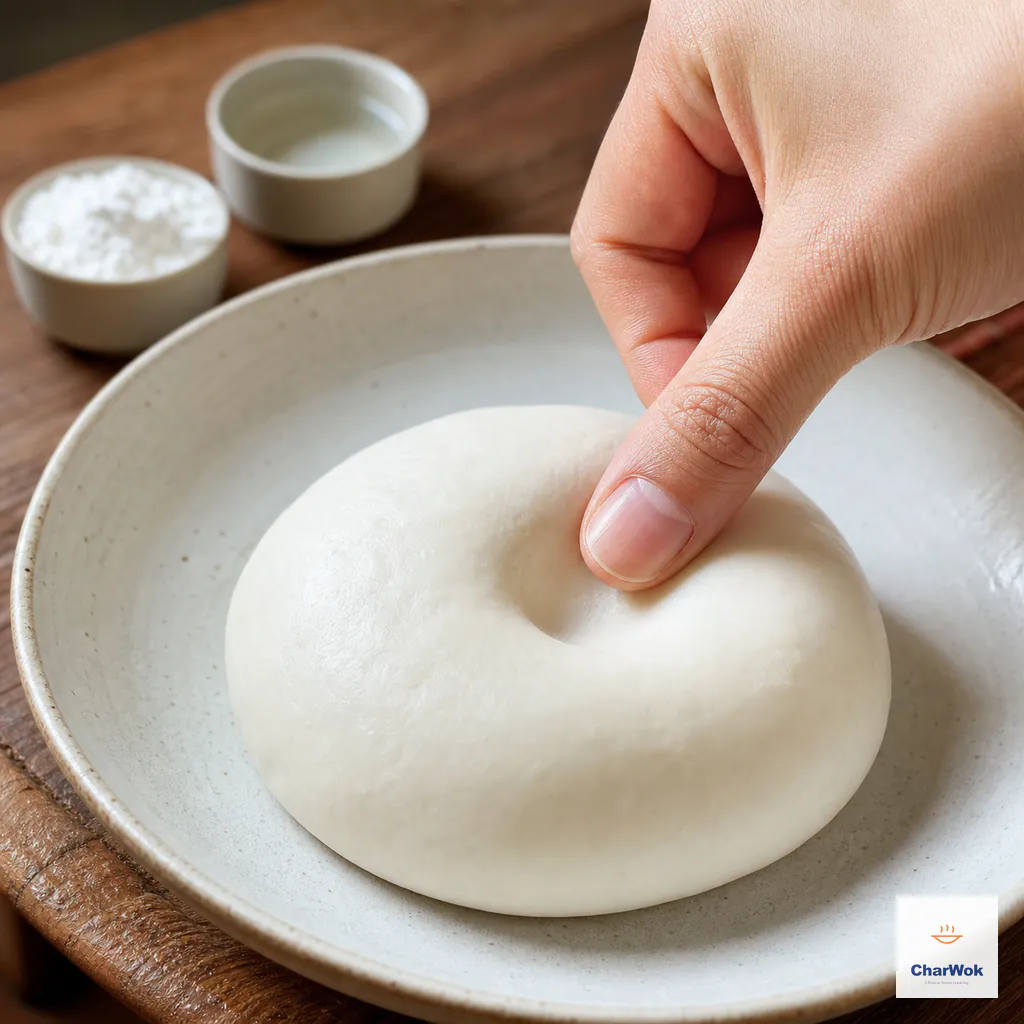
Correct dough feels like soft clay: the thumb dent returns slowly and the surface leaves the thumb clean.
- Portion and shape. Divide the dough into 12 pieces and keep the unused ones under a damp cloth, because this dough dries out and cracks within minutes. Flatten one piece into a round, then use your thumbs to thin the center into a shallow bowl shape with a thicker rim. Put about a tablespoon of filling in the middle, pinch the rim shut, and roll gently into a short cylinder. A reliable seal is more important than a neat shape; press the seam flat and double-check there are no gaps.
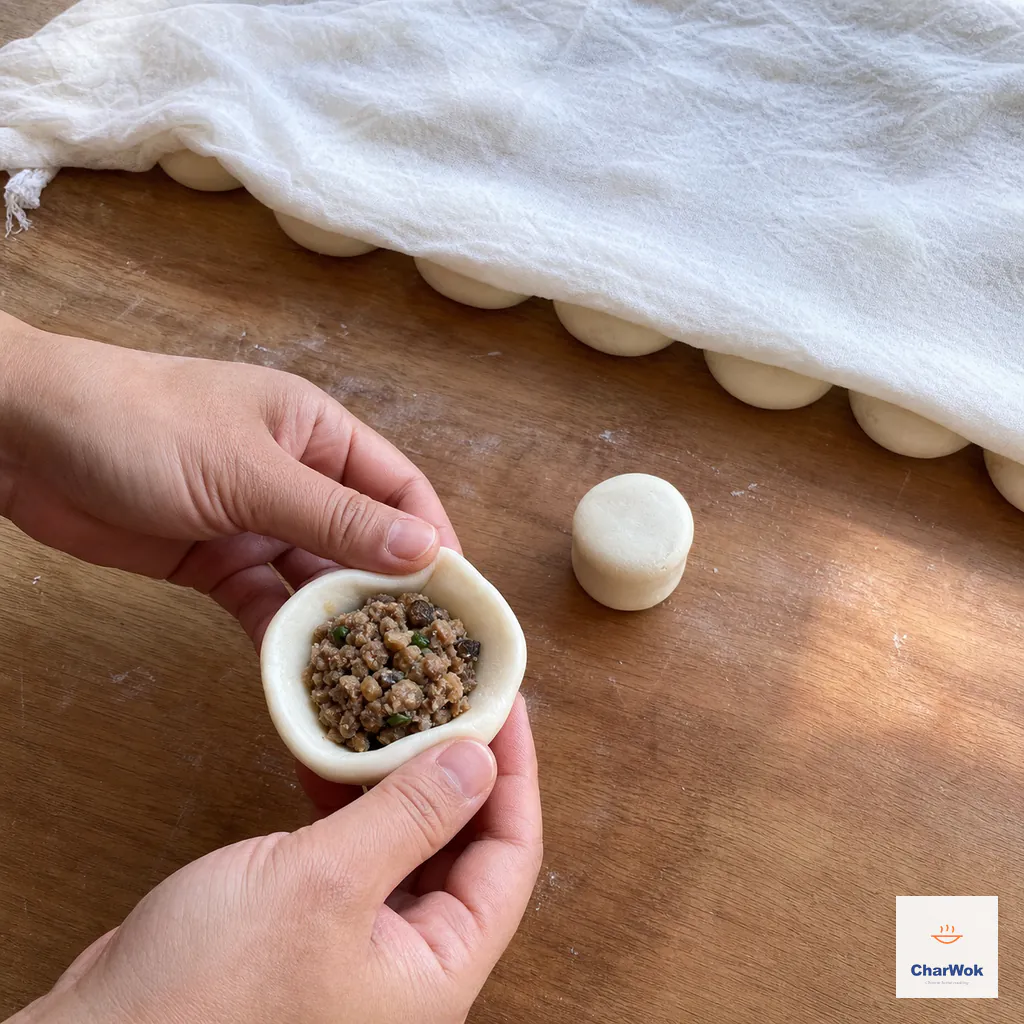
Keep every unused portion covered, fill the shallow cup, pinch the rim completely shut and smooth the seam before rolling a short cylinder.
- Wrap in leaves. Lay each cake on the shiny side of a bamboo leaf rectangle and fold the leaf loosely around it, leaving room for the dough to expand. The leaf is doing two jobs: stopping the cake from sticking to the basket, and lending a faint herbal aroma. If you have no leaves at all, a square of oiled parchment works and the texture is unaffected.
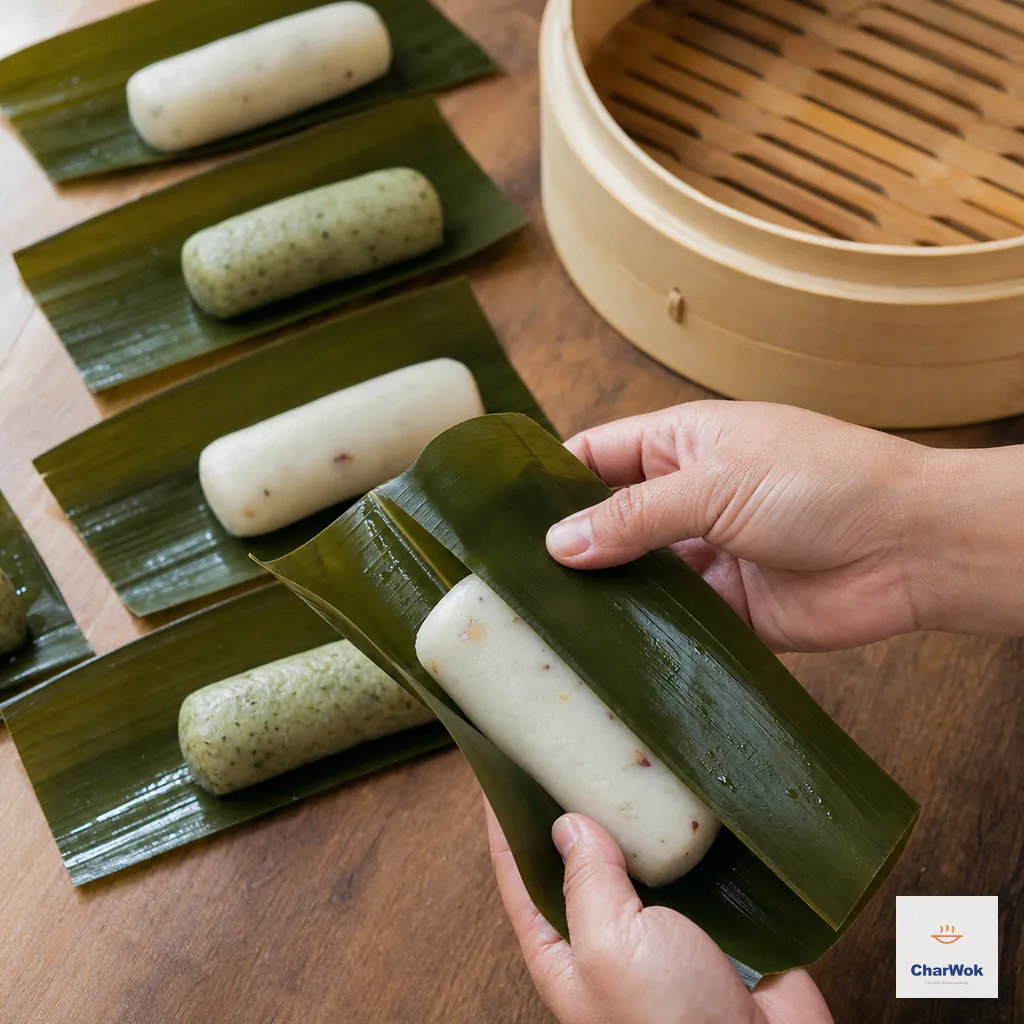
Set the cake on the glossy leaf side and fold loosely enough to prevent sticking while leaving the dough room to expand.
- Steam. Get the water to a full rolling boil before the basket goes on, then steam over medium heat for 8 minutes. Use a proper setup with room around the cakes, the bamboo steamer guide covers spacing and water levels if you are new to steaming. Eight minutes is enough to fully gelatinize the starches; longer does not make them chewier, it makes them gummy.
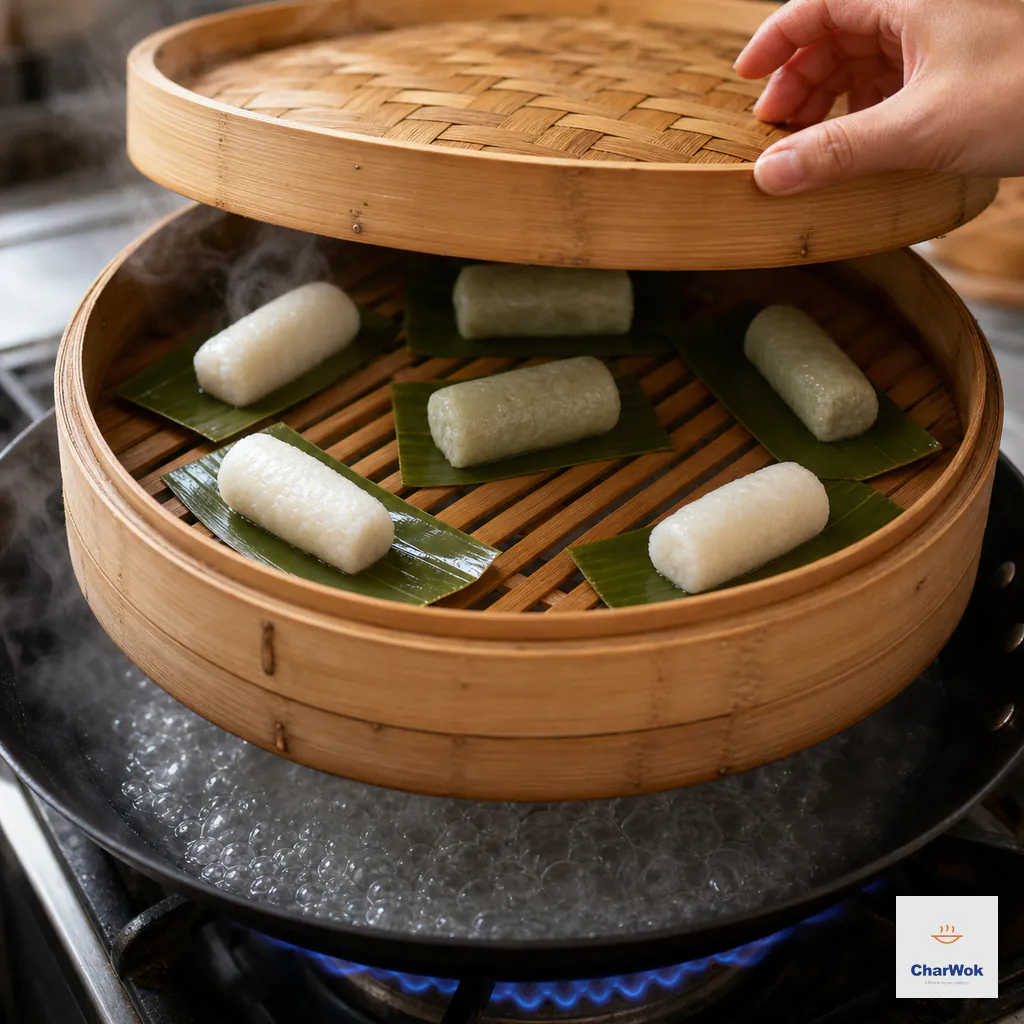
Bring the water to a full boil first, leave room around every cake, cover and steam over medium heat for eight minutes.
- Rest one minute, then eat warm. The trapped air and filling are genuinely scalding straight out of the steamer. Poke a small hole to vent, then bite in. These are at their best within the first 20 minutes.
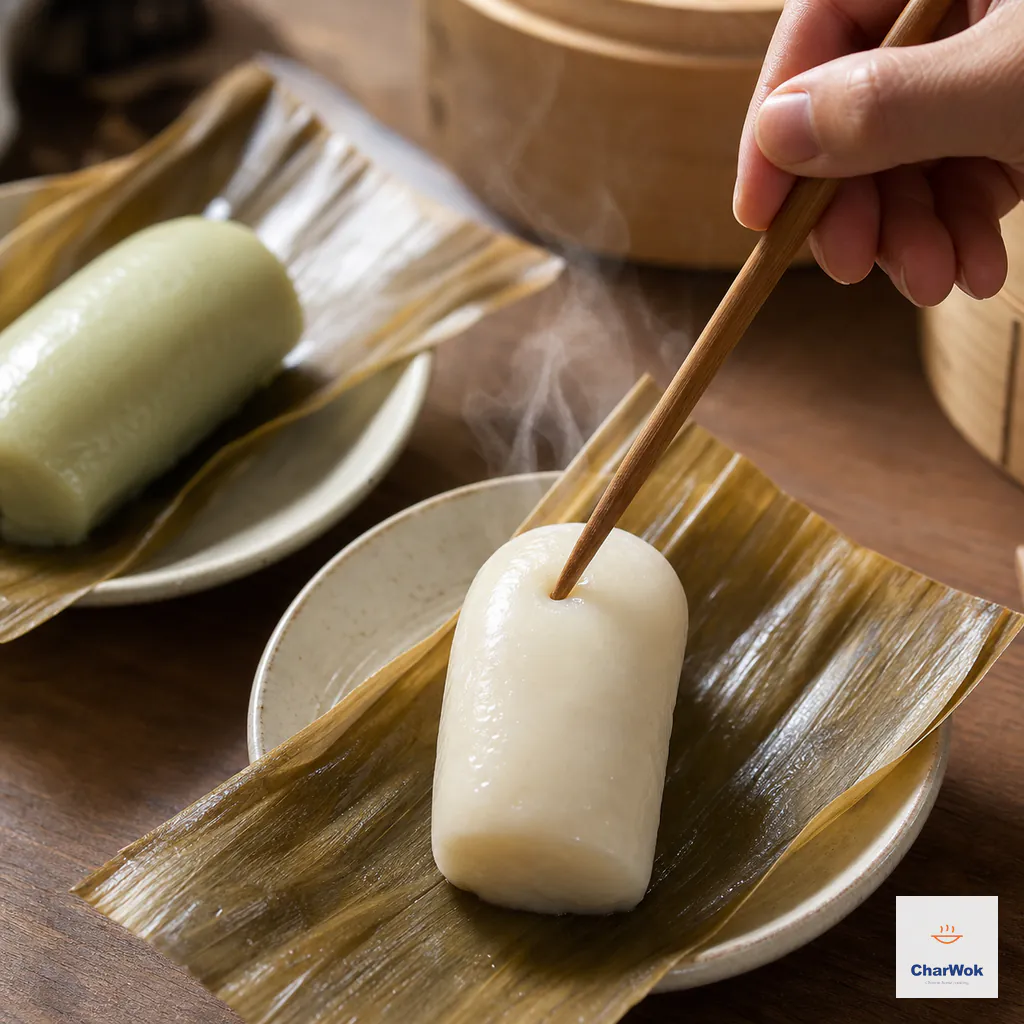
Rest for one minute and vent before biting; the wrapper may look calm while the trapped steam and filling remain scalding hot.
When the dough fights back: troubleshooting
This is the section I wish I had read before my first attempt, so here are the failures you are most likely to hit and how to read them.
The wrapper sticks to your teeth. You left out the rice flour or used too little water-for-flour ratio. The 4:1 glutinous-to-rice ratio is not a suggestion. Rice flour interrupts the amylopectin that makes pure glutinous dough into cement. Next time weigh the two flours.
The cakes collapse or slump in the steamer. The dough was too wet, or you overfilled. Wet dough cannot support the filling once the starch gelatinizes. Knead in more flour, a teaspoon at a time, until the dough holds a thumbprint. And keep filling to a single tablespoon; greedy cakes always open at the seam.
The seam splits open during steaming. Either the filling was still warm when you wrapped it, or you did not press the seal fully shut. Re-pinch any doubtful seam before steaming. A split cake is still edible, it just leaks, so serve those first.
The wrapper is dry and cracked at the edges. The dough dried out while you worked. Cover everything you are not actively shaping, and if a piece skins over, knead in a few drops of water to bring it back. This dough does not rest and it does not wait.
The cakes are pale and gray. Your Sichuan pepper or Ya Cai may be old. Both go flat with age. Fresh Ya Cai is dark and glossy; fresh-ground pepper is fragrant within hours of toasting. Refresh the pantry and the color and flavor come back.
Variations and pairings
Once the dough is reliable, the filling is wide open. A mushroom and bok choy filling works for a vegetarian version, and a spoon of Chiu Chow chili oil on the side gives the savory cakes a clean, garlicky heat that does not fight the Ya Cai. For a sweeter spread, the cakes sit happily next to lotus root stuffed with sticky rice on a holiday table, and the whole project fits naturally into a Chinese New Year lineup because glutinous-rice foods are symbolic of togetherness.
If you fall for the Sichuan angle, these are a gentle entry point before the louder dishes in a collection of Sichuan classics, and the same toasted-pepper and preserved-vegetable flavors show up in countless stir-fries once you have them on hand.
Storage and reheating
Freeze the cakes uncooked, right after assembly, on a parchment-lined tray in a single layer. Once solid, bag them airtight and they keep for a couple of months. Cook from frozen, still wrapped in a leaf, for 12 minutes over steam. Do not thaw first, the thawing wetts the dough and the surface goes sticky. Cooked leftovers reheat tolerably in a covered steamer for 4 to 5 minutes, but the texture is never quite as good as fresh, so I prefer to freeze raw and steam on demand. A splash of Shaoxing rice wine in the reheating water adds a little perfume to the bamboo.
Frequently asked questions
Can I skip the rice flour and use only glutinous rice flour?
No. Pure glutinous flour gives a dough that is too soft to hold a filling and turns pasty on the teeth. The 50 g of plain rice flour is what firms the wrapper up.
What if I cannot find bamboo or tangerine leaves?
Banana leaves and corn husks both work after a soak. In a real pinch, oiled parchment paper is fine, you lose the herbal aroma but the texture is identical.
Why is my dough cracking while I shape it?
It has dried out. This dough does not rest and skins over fast, so keep unused pieces under a damp cloth and work quickly. A few drops of water kneaded in will rescue a dried piece.
Can I pan-fry or boil these instead of steaming?
Steaming is the traditional and best method. Pan-frying tends to toughen the surface and split the seams; boiling dissolves the wrapper. Stick with steam.
The whole dish comes down to one decision: respect the 4-to-1 flour ratio and read the dough by feel. Get that right and the leaf, the filling, and the steaming time all fall into line behind it. My early gluey attempts were entirely my own fault, and once I stopped fighting the flour, Ye'er Ba became one of the most forgiving snacks in my rotation.