There is a small, quiet miracle inside a soup dumpling: a sip of hot, savory broth that you never poured in. The first time I made Xiao Long Bao at home I broke every one of them. Wrappers tore, broth leaked into the steamer, and I ended up eating what was, essentially, pork porridge in a bamboo basket. Most home cooks give up after that first attempt, and I understand why. The dish punishes shortcuts. But once you understand the two ideas holding the whole thing together, an edible gelatin hidden in the filling and a wrapper thin enough to read through, the rest is patience. This is how I make them now, after a lot of broken dumplings taught me what actually matters.
At a glance
The make-or-break detail is the aspic. You need roughly 250 g of a firm, gelatinized chicken stock folded cold into the pork, then the filled dumplings steamed at a gentle 8 minutes so the gelatin melts into soup without blowing out the wrapper. Use an all-purpose flour around 10% protein, a hot-water dough, and a wrapper thinned to about 12 cm. Restaurant folds are pretty; a sealed dumpling is what feeds you.
What Xiao Long Bao actually is
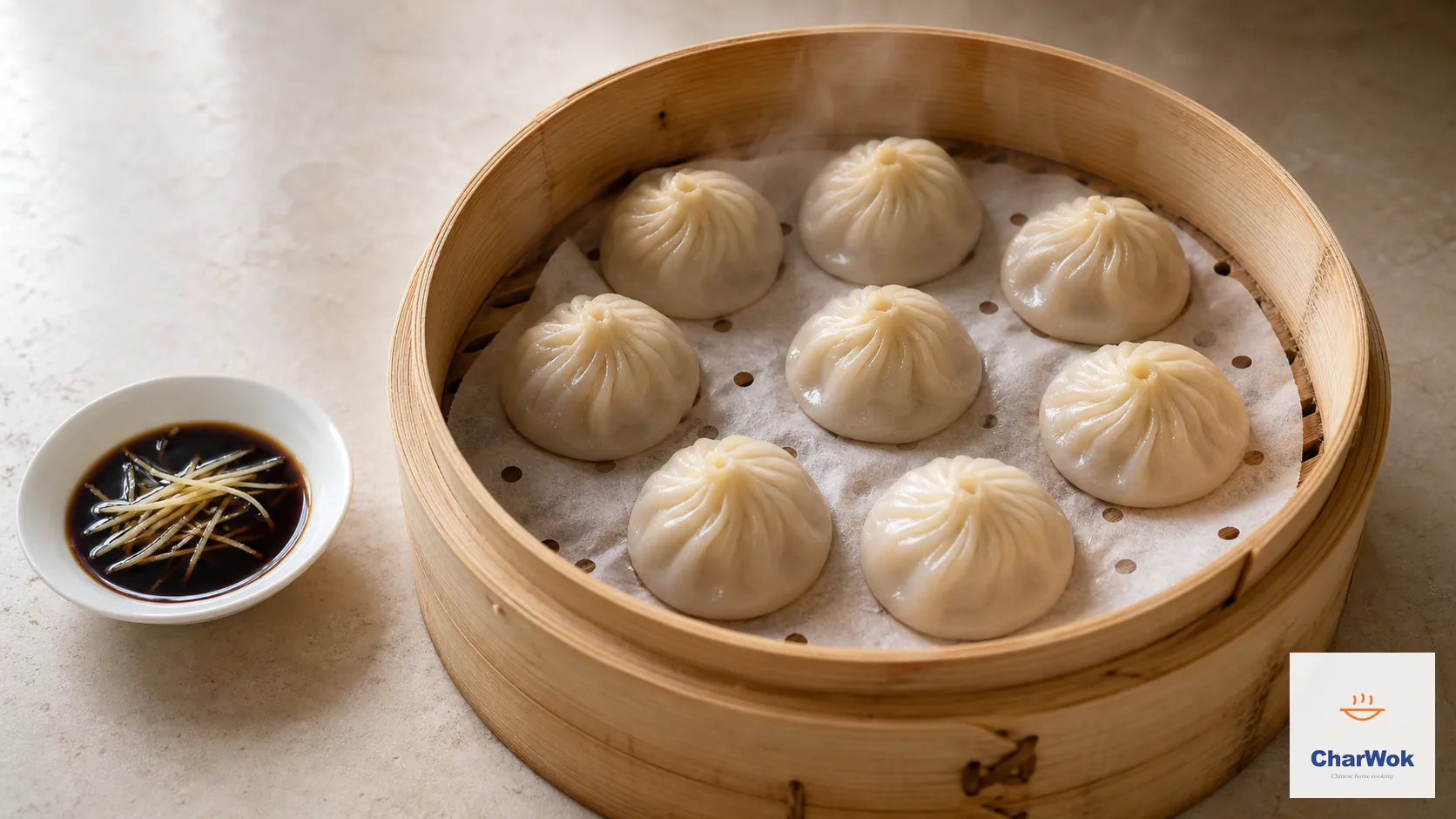
The characters in the name describe how they reach you: small parcels cooked and served in the bamboo basket they steamed in. The dish comes from Jiangnan, the lower Yangtze region around Shanghai and Nanjing, and the plump, broth-filled style most Western diners recognize is the Shanghai descendant of an older Nanjing original. In the family tree of Chinese dough foods they sit in an unusual spot: a filled parcel with the round, gathered silhouette of a steamed bun, yet made from a lean, unleavened dough akin to a boiled dumpling's skin rather than a yeasted one. The pleats close at the top into a small button, and sealed inside is the entire point of the dish.
Two things separate them from every other steamed dumpling. The wrapper is delicate enough to be nearly translucent, and the filling releases a measured pour of broth when you bite in. The broth is not added as liquid. That is the whole trick of the dish, and it is worth understanding before you touch any flour.
Where the broth actually comes from
You cannot wrap a liquid in a wheat wrapper and expect it to survive pleating. So you don't. You make a concentrated, gelatin-rich stock, chill it until it sets firm like pork rind jelly, chop it into small pieces, and fold it into the cold pork filling. The filling stays solid and workable while you pleat. The moment the dumpling hits steam, the gelatin melts back into liquid and you have your soup.
Food science, briefly: the collagen in skin, feet, and bone converts to gelatin during long, gentle cooking, and that gelatin forms a network that traps water. Cool it and the network goes rigid; warm it again and the network loosens, melting back into the water it held as broth. This is the same principle behind a rich Lion's Head meatball or a good chicken stock that sets in the fridge. For Xiao Long Bao you want that set strong enough to chop, not wobbly.
How I make the aspic (and why not the shortcut)
The classic method simmers pork skin or chicken feet for hours. Both work, but pork skin is a specialty purchase and chicken feet put a lot of people off. I roast a whole chicken in a sealed pot instead. As the bird cooks in its own steam with no added water, it releases a pool of concentrated juice, and because the connective tissue breaks down during that hour, the liquid gels firmly once chilled. You get about 250 g of set jelly from a single bird, which is exactly what this recipe needs.
You can shortcut it with powdered gelatin and boxed stock, and I have done it when I was short on time. It works structurally. The flavor is thinner, the body more jiggly than meaty, and the finished soup tastes like bouillon rather than chicken. For a dumpling whose entire point is that broth, I think the roast method is worth the hour. Use the roasted bird for a second dinner; I shred it for other dishes or fold it into fried rice the next day.
Ingredients
The recipe makes about 20 dumplings. Read the Notes column before you shop, because the flour and the aspic are the two places people go wrong.
For the aspic
Ingredients at a glance
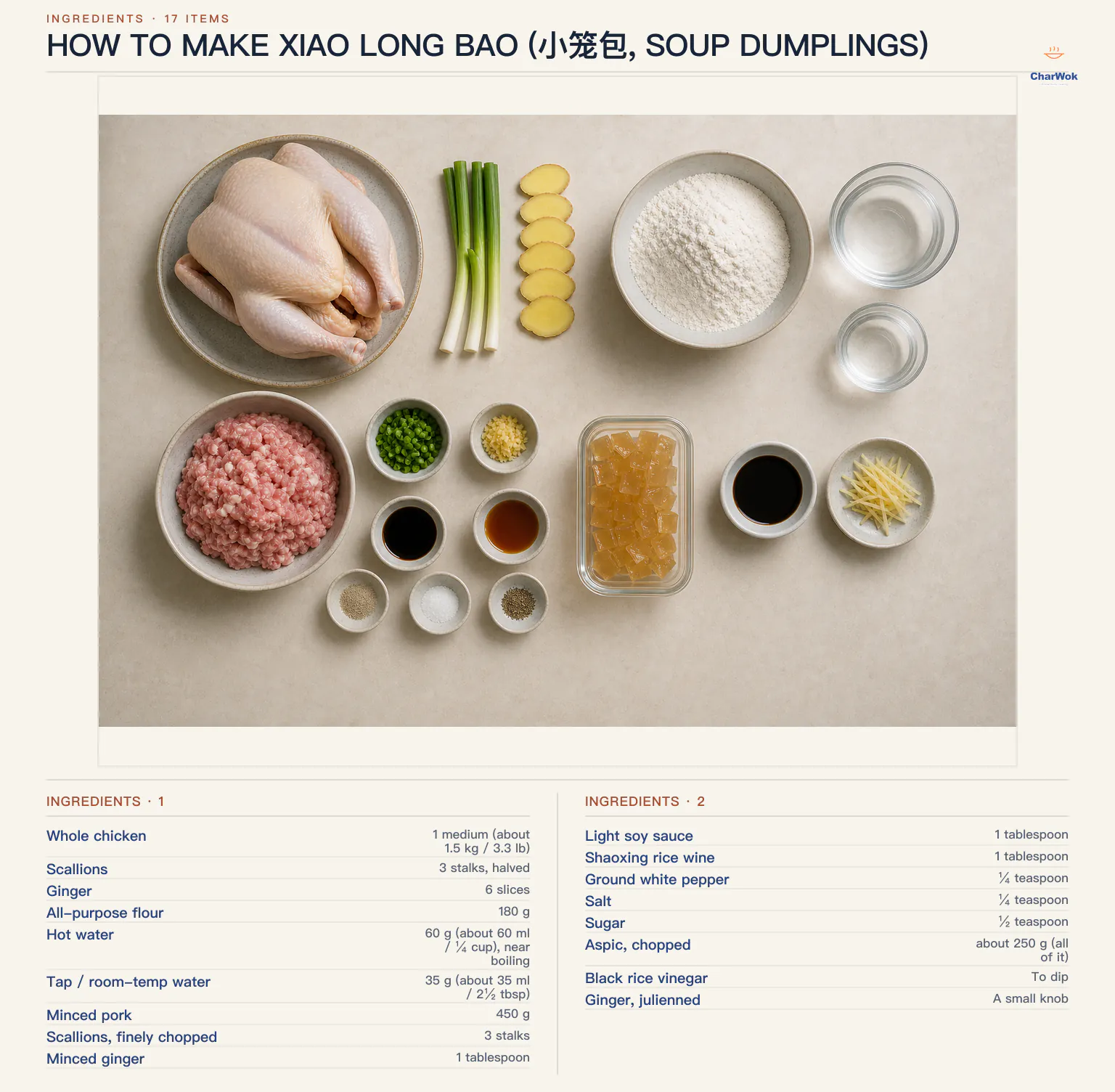
| Ingredient | Amount | Notes / substitute |
|---|---|---|
| Whole chicken | 1 medium (about 1.5 kg / 3.3 lb) | A pasture-raised bird yields a clearer, more gelatinous stock. The bird is reusable for another meal. |
| Scallions | 3 stalks, halved | Tuck inside the cavity for aroma. |
| Ginger | 6 slices | Also inside the cavity. |
For the dough
| Ingredient | Amount | Notes / substitute |
|---|---|---|
| All-purpose flour | 180 g | Aim for around 10% protein. Cake flour is too weak (wrappers tear); bread flour is too tough and chewy. Chinese dumpling flour or Italian 00 flour give the smoothest, most restaurant-like skin. |
| Hot water | 60 g (about 60 ml / ¼ cup), near boiling | Partially cooks the starch so the dough is soft and pliable, not bouncy. |
| Tap / room-temp water | 35 g (about 35 ml / 2½ tbsp) | Added after the hot water brings the gluten together. |
For the pork filling
| Ingredient | Amount | Notes / substitute |
|---|---|---|
| Minced pork | 450 g | At least 20% fat. Hand-chopped tastes better than the pre-ground tube; ask the butcher or pulse cold lean and fat together. |
| Scallions, finely chopped | 3 stalks | Classic aromatics for meat dumpling fillings, as in a good pork and napa filling. |
| Minced ginger | 1 tablespoon | Fine, almost pasty. |
| Light soy sauce | 1 tablespoon | Salt and umami. See light vs. dark soy sauce. |
| Shaoxing rice wine | 1 tablespoon | Mutes the pork's gaminess. Dry sherry is the usual substitute. |
| Ground white pepper | ¼ teaspoon | Chinese five-spice or ground Sichuan pepper work in a pinch. |
| Salt | ¼ teaspoon | The soy sauce already carries salt; taste the raw mix by cooking a tiny pinch in the microwave before adjusting. |
| Sugar | ½ teaspoon | Jiangnan balancing trick: rounds off the salt and lifts umami. Adjust to taste. |
| Aspic, chopped | about 250 g (all of it) | Cold and firm, broken into small pieces with a fork. |
To serve
| Ingredient | Amount | Notes / substitute |
|---|---|---|
| Black rice vinegar | To dip | Also called Chinkiang vinegar. Rice vinegar is too mild; balsamic is too sweet. Aged black vinegar is correct. |
| Ginger, julienned | A small knob | Stirred into the vinegar. |
Method
1. Make the aspic
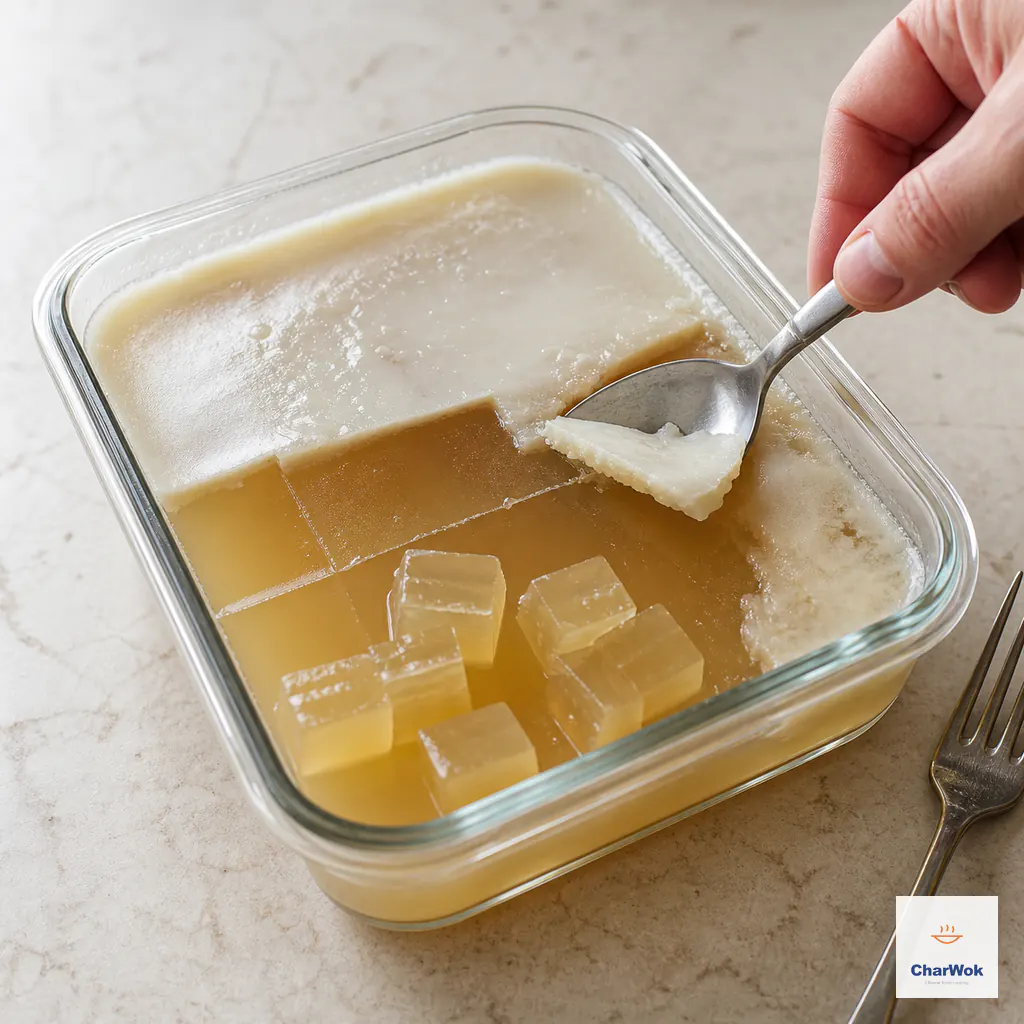
Chill until the aspic holds a clean cut, then remove the solid fat cap
- Heat the oven to 200°C (390°F), or 180°C (360°F) on fan. A sealed, moist environment is what you want, so a heavy lidded casserole dish works best. A roasting tray sealed with two layers of foil works too.
- Stuff the scallions and ginger inside the chicken and set it in the pot. Cover with the tight lid or seal the tray with foil. Tightness matters: any steam that escapes is soup you lose.
- Roast for 1 hour, then leave the pot covered and let it cool. As the bird rests it keeps giving up juice.
- Lift the chicken out for another use. Pour the pooled liquid through a fine sieve into a container and refrigerate at least 4 hours, ideally overnight, until it sets firm enough to hold a knife mark. You should have about 250 g. A thin white cap of chicken fat will form on top; spoon it off.
2. Make the dough
- Pour the hot water over the flour and stir with chopsticks or a spatula. You are not kneading yet; you are letting the heat gel the starch so the final dough stays soft instead of springy.
- Add the cool water and bring it together into a shaggy dough, then knead briefly. Cover and rest 10 minutes. This short rest lets the gluten relax so the next knead is easy rather than a fight.
- Knead again until the dough is smooth and springs back slowly when pressed. Cover and rest 30 to 60 minutes. Under-rested dough will shrink back and fight you at the rolling pin; over-rested dough goes slack and tears. The sweet spot is a dough that feels like a soft earlobe.
3. Mix the filling
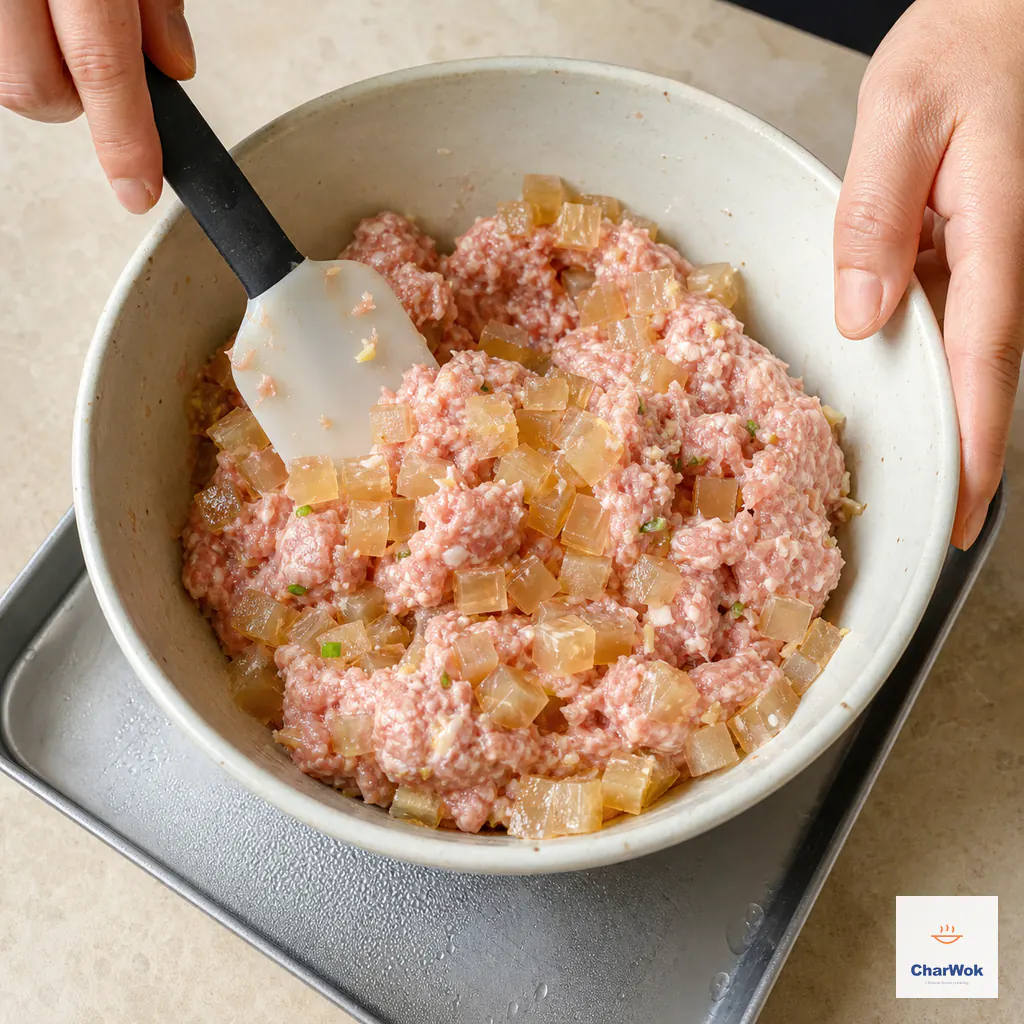
Fold firm aspic through sticky pork and keep the filling cold
- Stir the pork, scallions, ginger, soy sauce, wine, white pepper, salt, and sugar together in one direction until the mix is sticky and slightly lighter in color. Stirring one way draws the salt-soluble proteins out of the meat into a sticky, water-holding paste, so the filling traps the broth in a tender mass rather than crumbling.
- With a fork, mash the cold aspic into small bits and fold it through the pork until evenly distributed. Keep everything cold.
- Refrigerate the filling at least 30 minutes before assembling. Cold aspic chops and folds cleanly; warm aspic turns to soup mid-pleat, which is exactly how my first batch ended in the steamer water.
4. Roll the wrappers
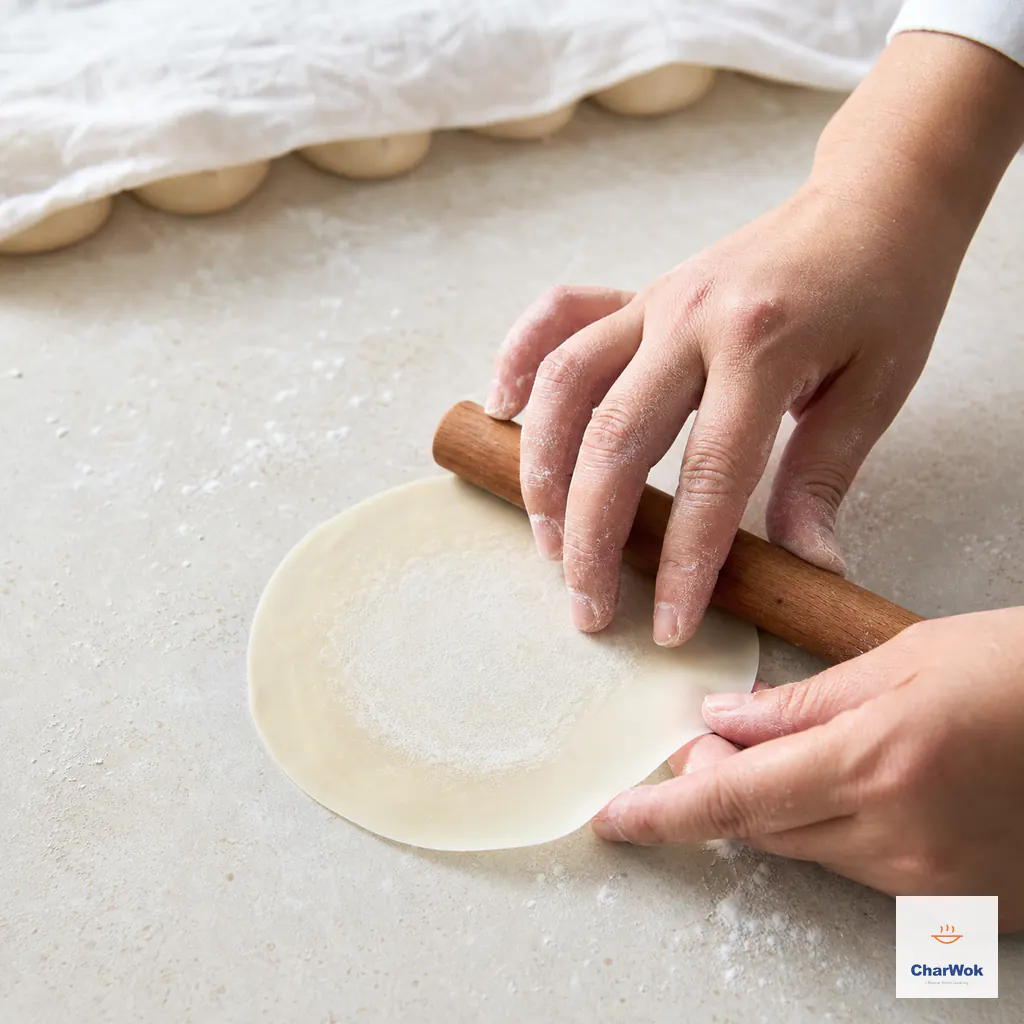
Roll and turn from the rim inward, leaving the edge thin and the center slightly thicker
- Roll the dough into an even rope and cut it into 20 pieces. Flatten each into a disc with your palm. Keep the discs and the rope under a damp cloth or an overturned bowl the entire time, because a wrapper this thin dries out and cracks within minutes.
- Take a small rolling pin and work each disc in a turn-as-you-go rhythm: a stroke in toward the middle, a quarter twist of the dough, another stroke, and so on. What you are after is a round roughly 12 cm across (just under five inches), noticeably thinner around the rim while the center stays slightly thicker. The thin rim is pleating material; the slightly thicker middle supports the filling and broth without tearing. Use flour only if the dough starts to grab.
- Roll one wrapper, fill it, pleat it, then roll the next. Do not stack rolled wrappers ahead of time. This is the single most common reason home cooks get torn skins.
5. Pleat and fill
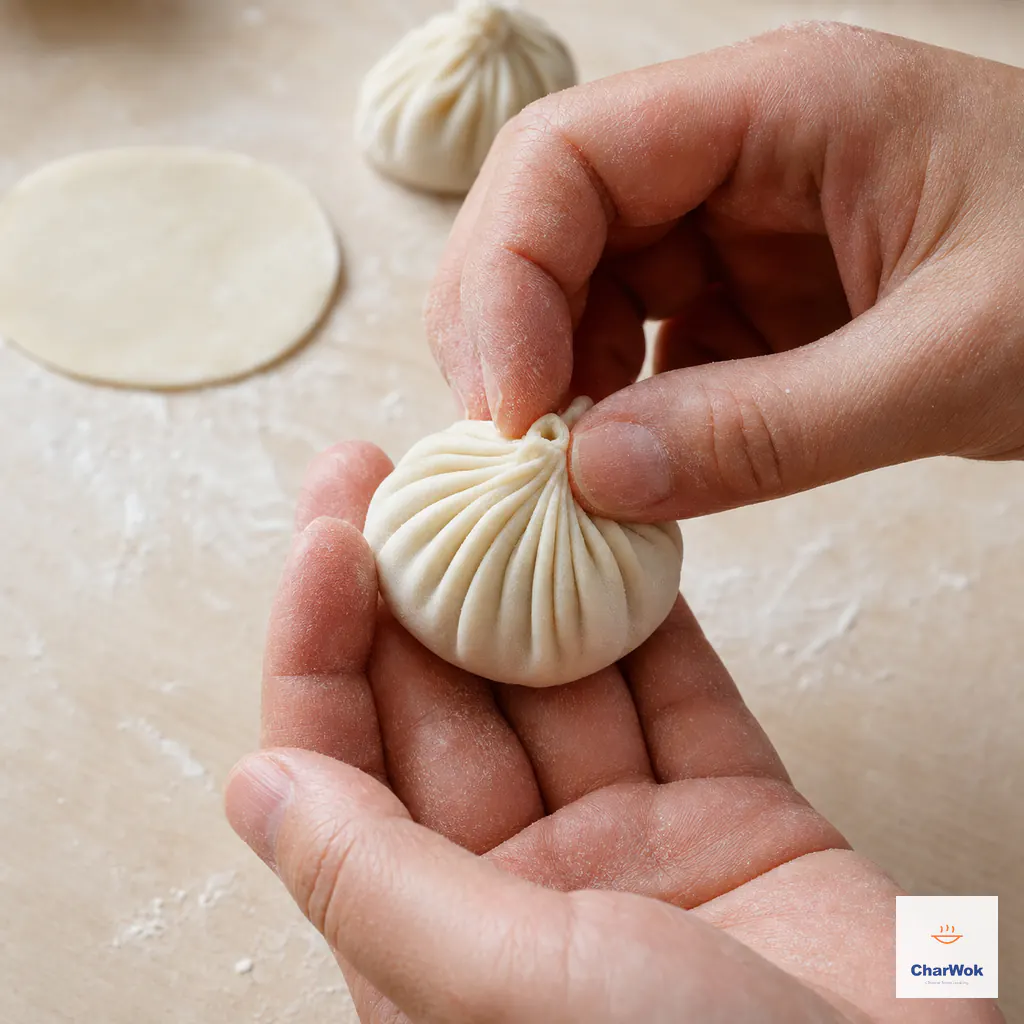
Gather 15 to 20 fine pleats and pinch the final seal closed with no gaps
- Put about 35 g of filling in the center of a wrapper. Rest it on the dough, not floating, so the pleats close around meat, not air.
- Standing the wrapper on the fingertips of one hand, use the other hand to fold the rim into pleats, pressing each fold against the last, gathering the dough toward a top button. Aiming for 15 to 20 folds looks professional, but the only thing that actually matters is a tight seal with no gaps where broth can escape. The same logic behind folding jiaozi or folding wontons applies: close it, don't decorate it.
- You can pinch the top fully shut or leave a tiny open hole. An open top looks traditional but lets steam in; a sealed top is safer for beginners and holds every drop of soup.
6. Steam
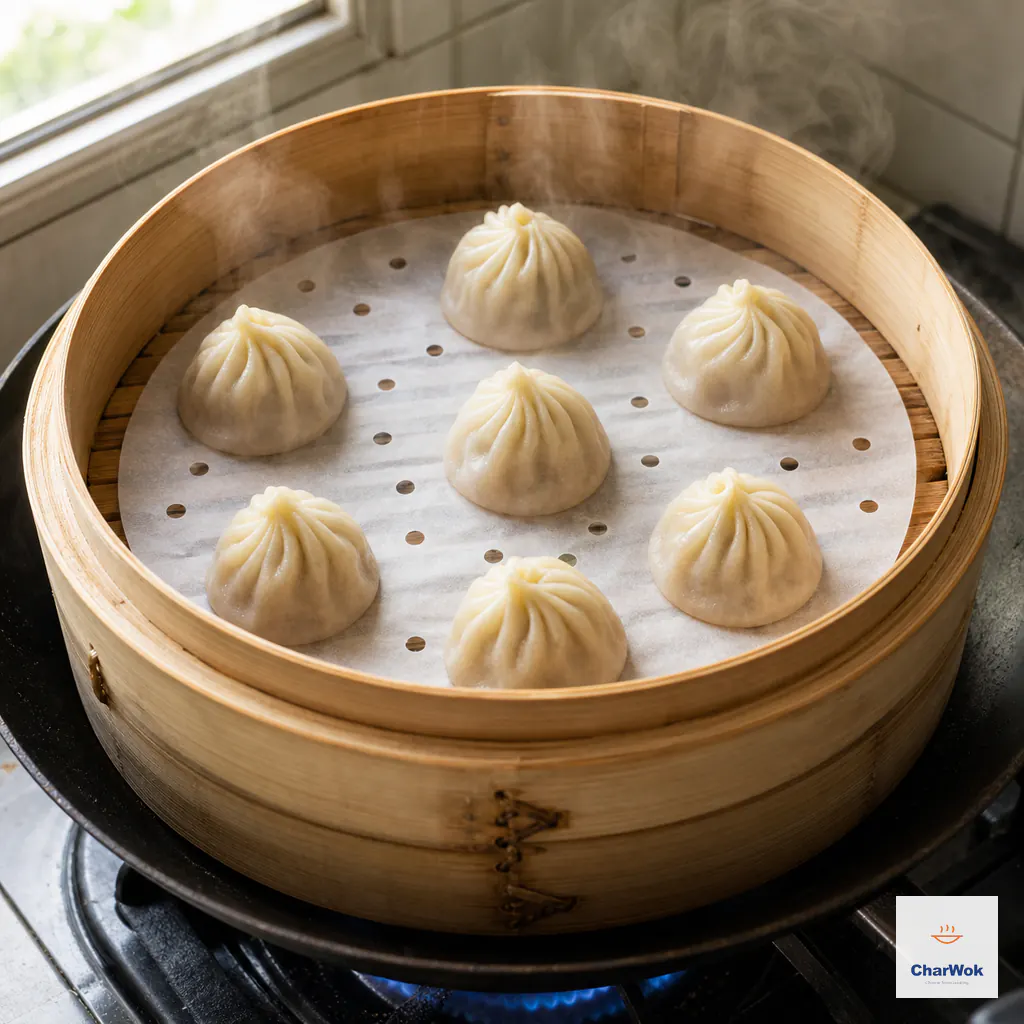
Leave clear gaps, line the basket, and steam over a steady medium-low heat
- Line a bamboo steamer with parchment or perforated steamer paper. If your bamboo setup needs explaining, our bamboo steamer guide covers it. A metal steamer will drip condensation and pool water on the dumplings; if that's all you have, wrap the lid in a cloth to catch drips.
- Bring water to a full boil in a wok or wide pot, then set the steamer on top and drop the heat to medium-low. Boiling-hard steam is too violent for these skins; a steady gentle flow cooks them evenly.
- Steam 8 minutes for one layer, or 10 minutes if you are cooking more than ten at once. Pull the basket straight to the table.
How to eat one without burning your tongue
The broth inside runs hotter than the wrapper around it, which is why there is a small etiquette to eating them. Rather than biting in blind, most people settle a dumpling onto a spoon, crack its skin so the steam vents and the soup pools out, drink that broth, then take the emptied dumpling through a quick dip in black vinegar with ginger. Charge in without that pause and the trapped soup will scald the roof of your mouth. It is a lesson most of us learn exactly once.
When things go wrong
This is the section I wish someone had handed me the first time. The same five failures account for almost every broken batch.
| Problem | Why it happens | The fix |
|---|---|---|
| The dumplings leak broth into the steamer | The aspic warmed up while you pleated, or the seal has a gap. | Keep the filling in the fridge and take out only a small scoop at a time. Pinch each pleat shut and check the base for holes before it goes in the basket. |
| Wrappers tear while rolling | Dough too dry, rested too long in the open air, or flour too weak. | Rest the dough covered, roll one wrapper at a time, and use a 10% protein all-purpose flour. A drop more water in the dough is better than a torn skin. |
| Wrappers are thick and doughy | Too much flour dusting, or you rolled from the center outward instead of from the edge in. | Brush off extra flour before pleating. Practice the turn-as-you-go rolling so the center stays thin while the rim stays workable. |
| The aspic did not set | Not enough collagen, or the stock was diluted. | Use a whole bird with skin and joints, not a boneless breast. If it still won't set, you can rescue it with a small amount of powdered gelatin, but the flavor will be lighter. |
| The dumplings stick to the paper | No liner, or the wrong paper. | Always use perforated parchment or oiled cabbage leaves. A bare bamboo slat will hold onto the thin base and tear it when you lift. |
| The wrapper splits during steaming | Steam too violent, or dumplings touching. | Leave 3 cm (1 inch) between them so they don't weld together, and keep the steam at a steady medium-low, not a rolling boil. |
Variations and what to serve alongside
The classic filling is pork, but the technique travels. A crab-roe version, popular in Shanghai, folds a spoonful of crab fat and roe into the pork for a richer, briny broth. A prawn variation swaps some of the pork for chopped shrimp, closer in spirit to shumai or har gow. For a strictly vegetable dumpling that still steams cleanly, see the approach in our steamed dumpling methods, though soup is harder to achieve without the aspic.
As a meal, soup dumplings sit happily in a dim sum spread. They pair well with a clean vegetable like steamed cabbage rolls or a vinegar-forward cold dish to cut the richness, and one of the dipping sauces if you want more than vinegar and ginger. For drinks, jasmine tea is the traditional refresher; the tannin balances the fat better than any cold soda.
Storing and reheating
These are at their best the day they are made. Cooked ones will keep another day or two in the fridge and reheat with a brief return to the steamer, though don't expect the same flood of broth: the skin draws in moisture as it sits, leaving the filling a little drier. Freezing is not kind to them: the delicate skin fissures in the cold and the gelatin weeps on thaw, so I don't make them ahead as finished dumplings. If you want to get ahead, freeze the set aspic and the filling on their own and build the dumplings when you need them.
This is a project for an afternoon when you are in no hurry, ideally with a second pair of hands for pleating. The first time you lift a flawless dumpling out of the basket and the broth runs into the spoon, you will understand why people bother. It is the same family of dumpling recipes that fills a Chinese kitchen with steam, but it is the one that feels the most like a small conjuring trick.
FAQ
Common questions
Why do my soup dumplings have no soup inside? The filling warmed up before steaming and the aspic melted out through a gap, or the aspic never set firmly to begin with. Keep the filling chilled, pleat a tight seal, and refrigerate the finished dumplings briefly before they go into the steamer.
Can I freeze Xiao Long Bao? Not really. The thin wrapper cracks when frozen, and the gelatin separates on thaw. Make the aspic and filling ahead and freeze those, then assemble and steam from fresh.
What flour gives the best wrapper? All-purpose flour around 10% protein is the safe home choice. Chinese dumpling flour or Italian 00 flour, milled finer, produce the smoothest, most translucent skin. Avoid cake flour (too weak) and bread flour (too chewy).
Do I really need a whole chicken for the aspic? No, but it is the most accessible path to a firm, full-flavored stock. Pork skin or chicken feet are more traditional and equally effective. Powdered gelatin plus stock works structurally but tastes thinner.
How many folds does a proper dumpling need? Restaurant kitchens put in many, sometimes dozens. For home cooking, 15 is plenty, and fewer is fine if every pleat is sealed. A watertight seal matters far more than a count.