A Chinese breakfast is not a bowl of cereal with milk. It is hot, salty, starch-forward, and built for speed at six in the morning, which is exactly why most people in China buy it from a stall rather than cook it. The pain point for those of us cooking at home is obvious: half the good stuff involves dough that has to rest overnight, a wok that smokes up the kitchen, or a deep-fryer you do not want to heat before coffee. This guide is built around that problem. Instead of listing dishes you will never make on a Tuesday, I will group Chinese breakfast by how a home cook can actually get it on the table, and I will tell you which one or two details decide whether each dish lands.
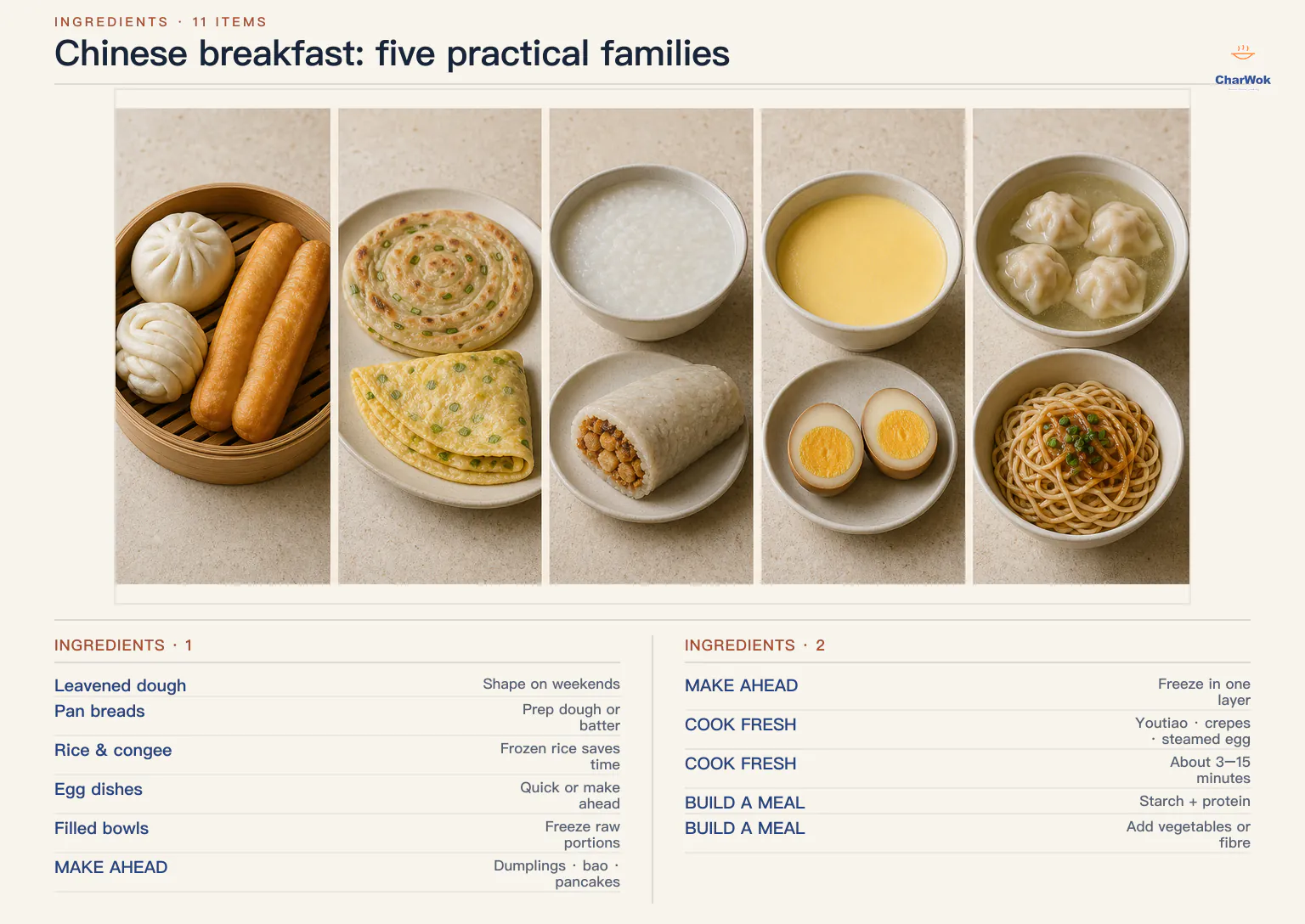
Chinese breakfast divides into five cooking strategies: steamed buns and rolls, pan-fried breads and crepes, deep-fried dough, rice porridge and rolls, and noodle or dumpling bowls. Pick two — one make-ahead starch and one protein or soup — and breakfast becomes a 15-minute assembly, not a project. The single most useful habit: keep a bag of frozen raw dumplings, buns, or crepe batter in the freezer at all times.
What breakfast looks like across China
Five Chinese breakfast families and what to prepare ahead
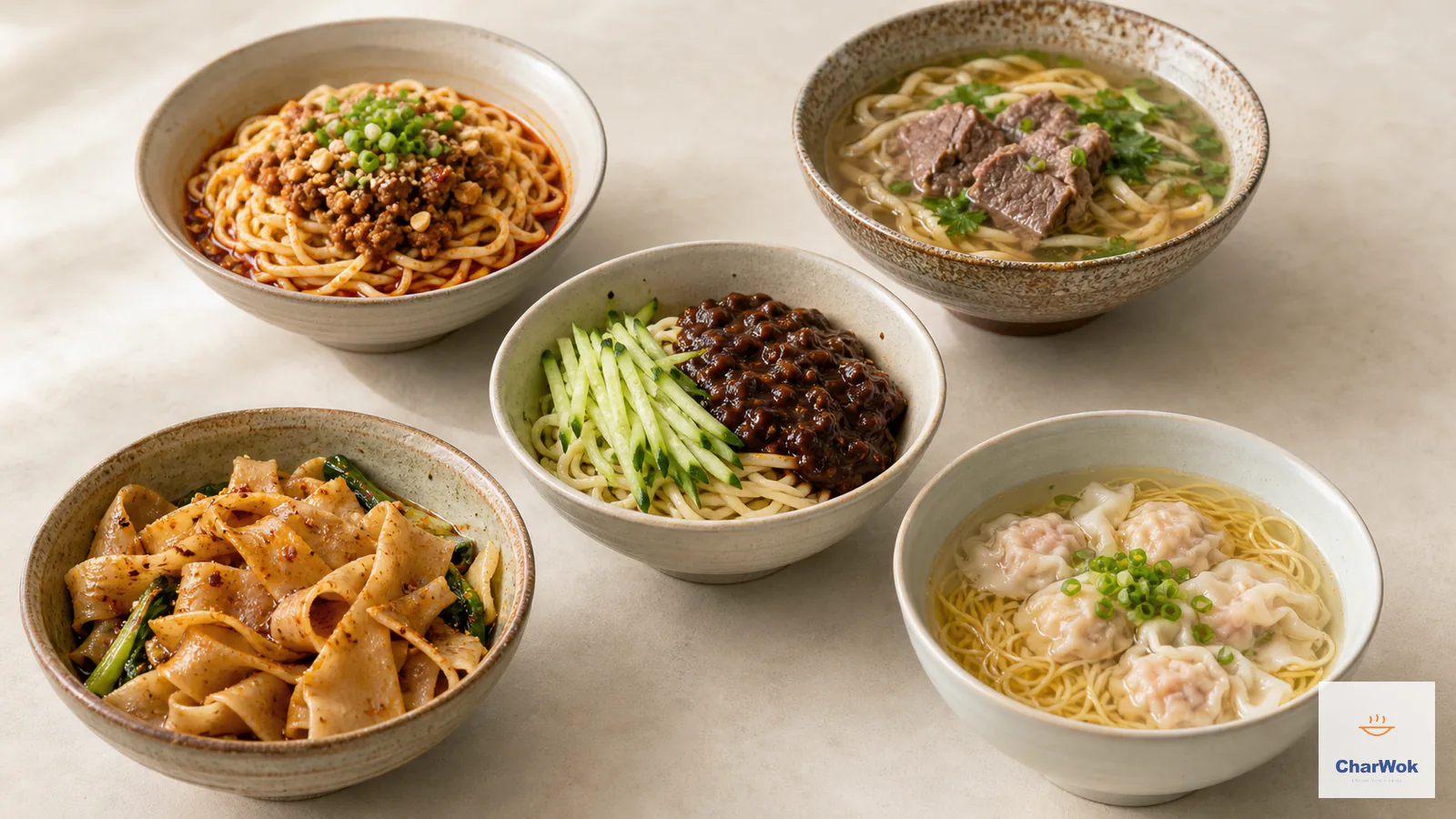
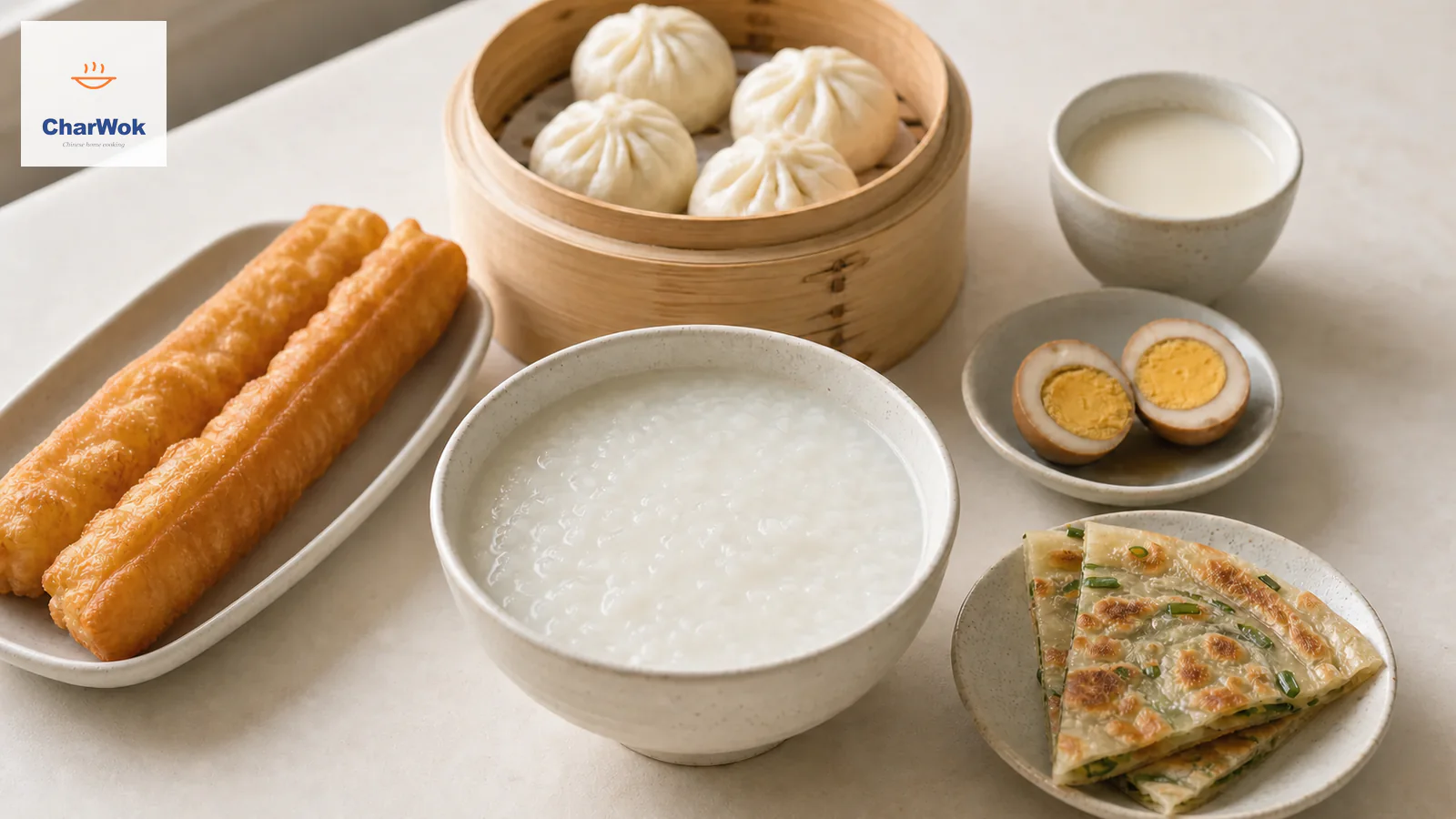
There is no single "Chinese breakfast." The north runs on wheat: steamed buns, scallion pancakes, tea eggs, and a bowl of soy milk beside a hot youtiao doughnut stick. The south leans to rice: congee with salted duck egg and pickled mustard greens, or a stuffed sticky rice roll grabbed from a Shanghai cart. Sichuan wakes up to the chili-oil bite of Chongqing noodles, and a Cantonese morning means a bamboo steamer of dim sum and a pot of tea before anything else.
What ties it together is the discipline. Breakfast is savory, hot, and fast. Sugar shows up, but usually as a supporting note: a drizzle on congee, a sweet red bean bun, never the whole meal. Meat is rarely the centerpiece; it hides inside a filling or tops a noodle bowl. And almost everything is designed to be made in bulk, frozen, and reheated, because the original eaters were street vendors feeding a rush of commuters.
Five strategies, ranked by morning difficulty
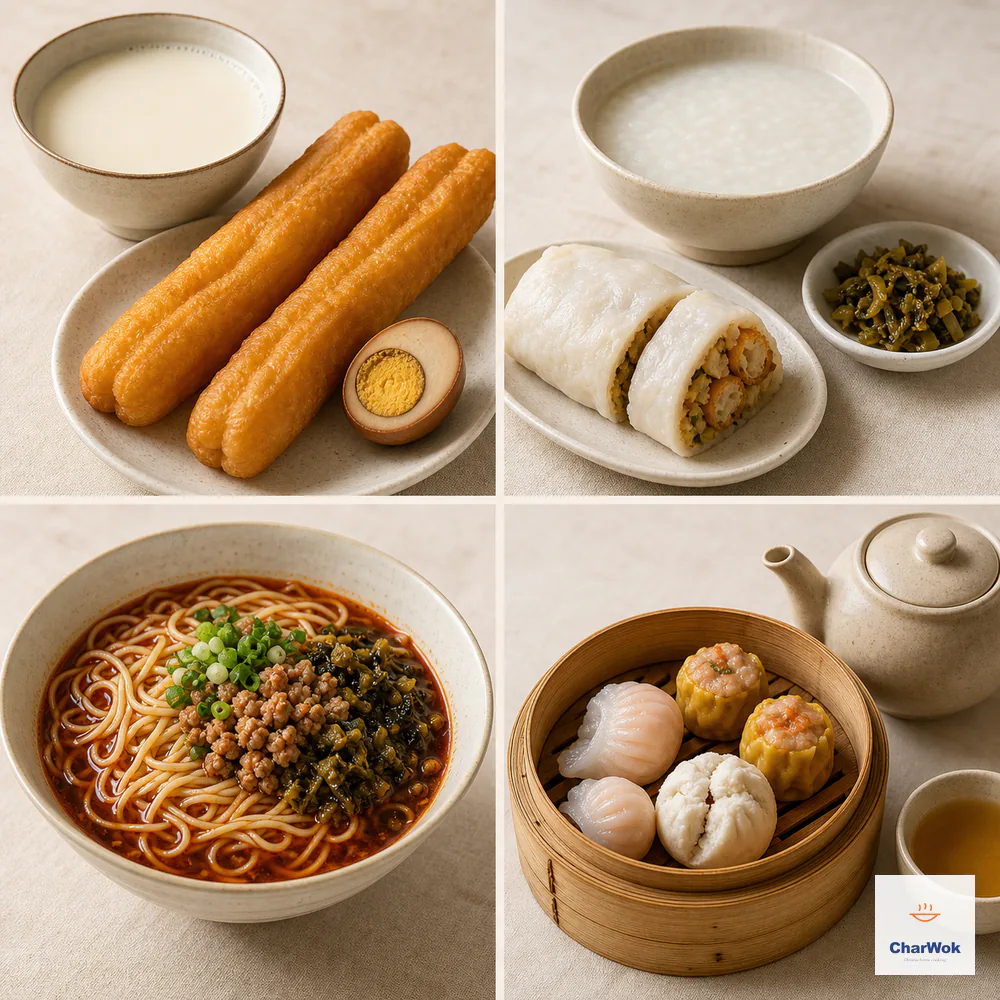
Chinese breakfast changes by region: northern wheat and soy milk, Jiangnan rice and congee, Sichuan chili-oil noodles, and Cantonese dim sum all share a hot, savoury, practical morning rhythm.
I cook these on weekends and reheat on weekdays. Here is how I rank them by how much grief they cause before 7 a.m., hardest first.
- Deep-fried dough (youtiao, crispy flatbread). Worth it, but a weekend-only dish. The oil needs 190°C (375°F), the dough needs a long cold rest, and your kitchen smells like a fryer for hours. Make a big batch, freeze cooked sticks, and re-crisp in the oven or air fryer later.
- Steamed bao buns and flower rolls. Moderate effort, high reward, freezes beautifully. You are managing yeast and a long proof, so this is a Sunday project. The payoff is a week of buns you steam straight from frozen in 12 minutes. I lean on a complete bao bun method and layer on scallion flower rolls for variety.
- Pan-fried breads and crepes (scallion pancakes, jian bing, egg-scallion crepe). The sweet spot for weeknights. The dough or batter holds in the fridge overnight, and cooking is five minutes in one pan. Egg-scallion crepe is the one I make most. It is essentially a 15-minute project with five ingredients.
- Rice porridge and rolls (congee, fan tuan). Lowest active effort, longest passive time. Congee wants 45 to 90 minutes of simmering, but almost unattended; the frozen-rice trick collapses that to 15 minutes by shattering the grain so the starch releases fast.
- Noodle and dumpling bowls. The fastest of all, if you have a stocked freezer and broth. Boil wontons or dumplings from frozen, drop them in hot stock, and breakfast is one pot. This is my default on a cold morning.
A starter pantry for make-ahead breakfast
If you keep these in the freezer and fridge, a hot breakfast stops being a special occasion. Treat the quantities as a starting stock, not a recipe.
| Item | Keep on hand | Notes / why it matters |
|---|---|---|
| All-purpose or bread flour | 2 kg (about 4.4 lb) | Medium-protein (around 11% protein) handles buns, pancakes, and hand-cut noodles without buying two bags. |
| Frozen raw dumplings or wontons | 2 bags, 40–50 each | Homemade if you have time; store-bought if you do not. Cook from frozen, no thaw. |
| White rice (and a frozen bag of cooked rice) | 1 kg (2.2 lb) | The frozen-cooked-rice bag is the shortcut behind 15-minute congee. |
| Jasmine rice, short-grain, and glutinous rice | 500 g each | Glutinous rice is for fan tuan rolls; do not substitute regular rice. |
| Chicken stock or broth | 1 L carton, frozen in 250 ml portions | The base for wonton soup and quick congee. Frozen cubes go straight into the pot. |
| Scallions, ginger, eggs | Always | The aromatic and protein backbone of half these dishes. Scallions in a jar of water stay crisp a week. |
| Soy sauce, sesame oil, Shaoxing wine | 1 bottle each | For dipping sauces, congee seasoning, and noodle scallion oil. |
| Dried shrimp and shiitake | 100 g each | Rehydrate overnight for congee toppings and savory fillings. |
The make-ahead method that actually saves your mornings
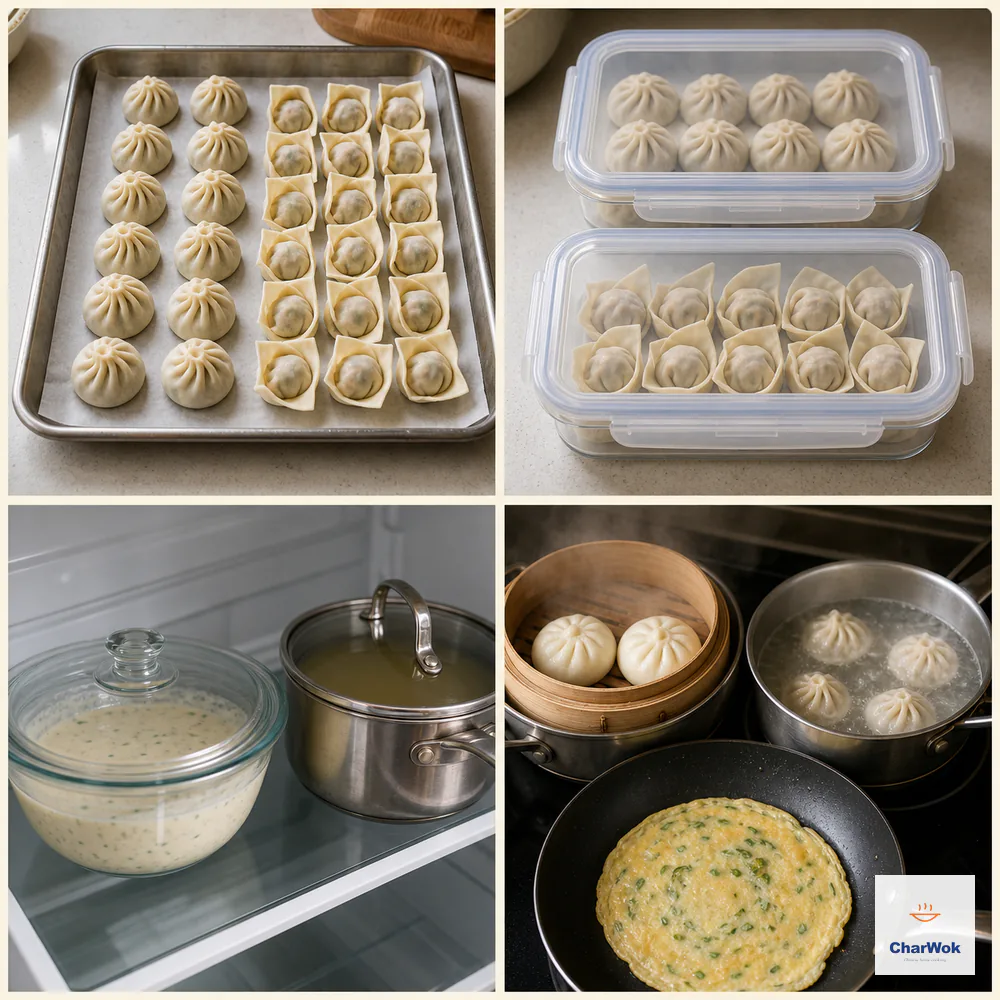
Freeze shaped pieces in one layer before sealing them, cover batter and broth the night before, then steam, boil, or pan-cook only what the morning needs.
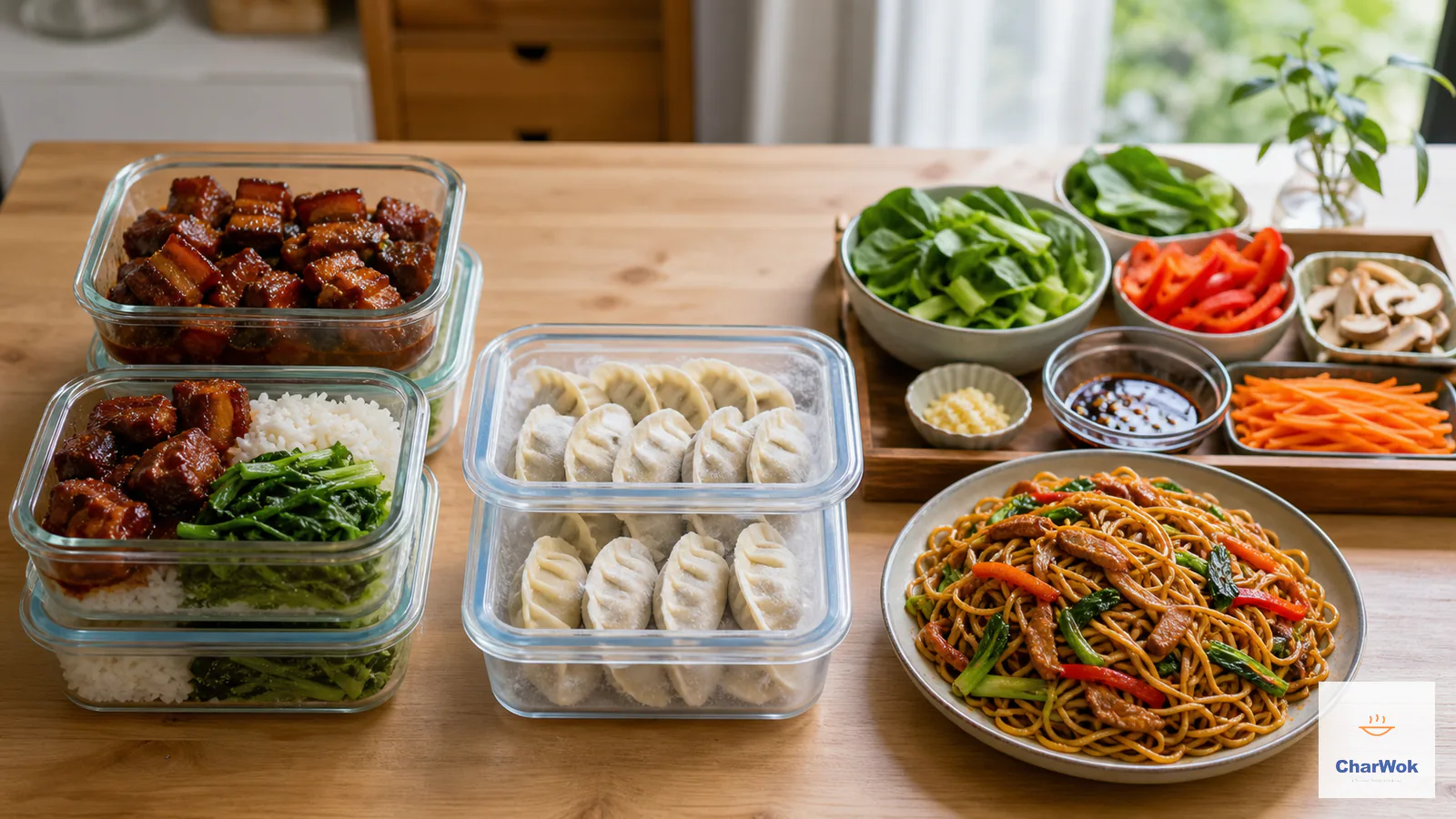
The mistake I made for years was treating breakfast as something to cook. It is not. It is something to assemble from things you cooked on Sunday. The method below is what I now run every weekend; it puts a hot breakfast within reach for the whole week.
- Make one dough-based thing in bulk. On Sunday, mix a double batch of bao dough or scallion-pancake dough. Shape it, then freeze the extras raw on a tray before bagging. Raw freezes far better than cooked because the gluten has not yet set and gone stale. This is the one decision that buys you five weekday mornings.
- Cook the protein that reheats well. Braised char siu pork, seasoned ground meat for noodle topping, or a batch of tea eggs all hold four to five days in the fridge and taste better on day two. Tea eggs specifically are a set-and-forget item: simmer, crack the shells, steep overnight, eat for days.
- Portion and freeze flat. Freeze dumplings, wontons, and buns in a single layer on a tray first, then transfer to a bag. Skipping this fuses them into a brick you will have to hack apart. Labeled and dated. I learned this the hard way after pulling a mystery bag out six months later.
- Prep the broth or batter the night before. Mix jian bing batter and leave it in the fridge; it actually improves as the flour hydrates. Pour stock into the pot and set a lid on it. Mise en place before sleep is the difference between a calm morning and a chaotic one.
- Reheat by the method that suits the texture. Steam buns and dumplings to keep them soft. Pan-fry scallion pancakes and youtiao to bring back the crisp. Simmer congee gently with a splash of water; never microwave it dry, or you will scorch the bottom and ruin the pot.
When things go wrong
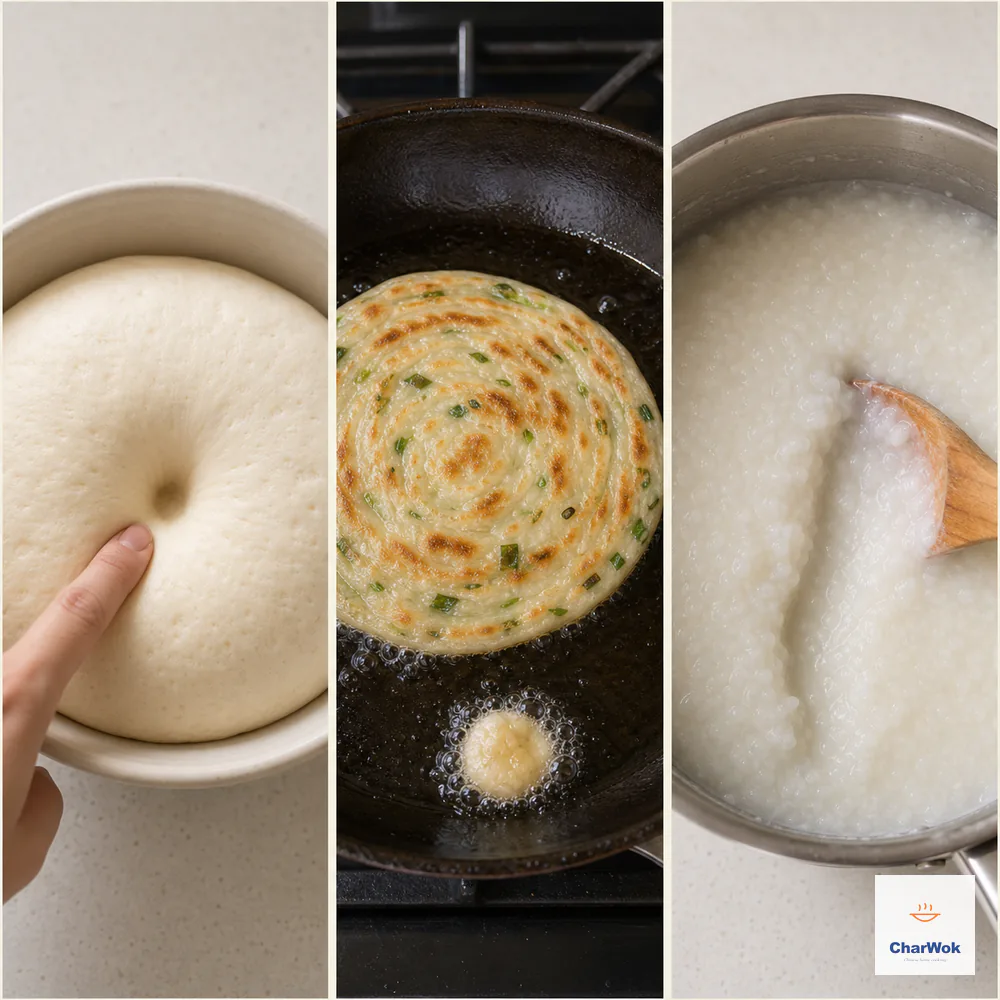
Read the food instead of the clock: proofed dough holds a gentle dent, ready oil bubbles without scorching the test scrap, and properly cooked congee releases enough starch to close a spoon trail slowly.
Here is where I have wasted the most mornings, and what fixed each failure.
- Dough that springs back and will not roll flat. The gluten is too tight. Cover it and rest 15 more minutes; warmth relaxes the strands. Forcing it produces a thick, gummy bread.
- Bao buns that come out dense and flat. The proof was too cold or too short. Yeast wants around 30°C (85°F) and a damp environment. If your kitchen is cool, proof inside the oven with the light on and a bowl of hot water.
- Scallion pancakes that are tough, not flaky. Two causes: too little oil between layers, or dough that was overworked. The layers need fat to separate them; brush generously, and do not knead beyond a smooth ball.
- Congee that stays thin after an hour. The rice was whole and the heat too low. Either stir harder to break the grains, or start over with the frozen-rice method: freezing ruptures the starch cells so the porridge thickens fast.
- Youtiao or pancakes that brown before they cook through. Oil too hot. Drop a scrap of dough in first; it should sizzle and rise in 3 to 4 seconds, not instantly blacken. Aim for 180–190°C (350–375°F).
- Steamed eggs that look like a cratered moonscape. Two fixes: strain the egg through a fine sieve, and steam over low heat with the lid cracked so trapped steam does not pock the surface.
- Dumplings that burst in the pot. They were crowded, or the water was not at a true rolling boil before they went in. Boil in batches, and add a splash of cold water the moment it returns to a hard boil to drop the temperature and let the filling catch up.
Pairings and variations
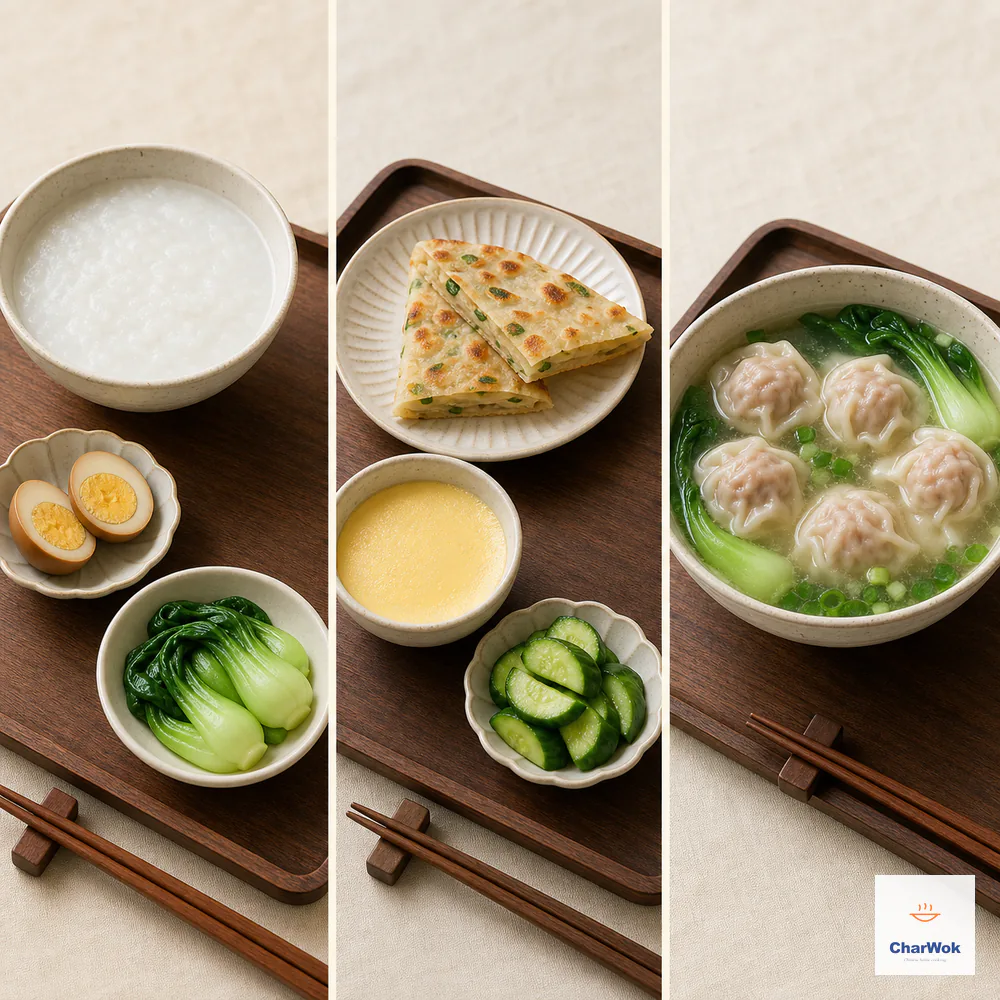
Build a breakfast from starch, protein, and vegetables or fibre: congee needs sides, pancakes pair well with egg and greens, while filled wonton soup can carry all three in one bowl.
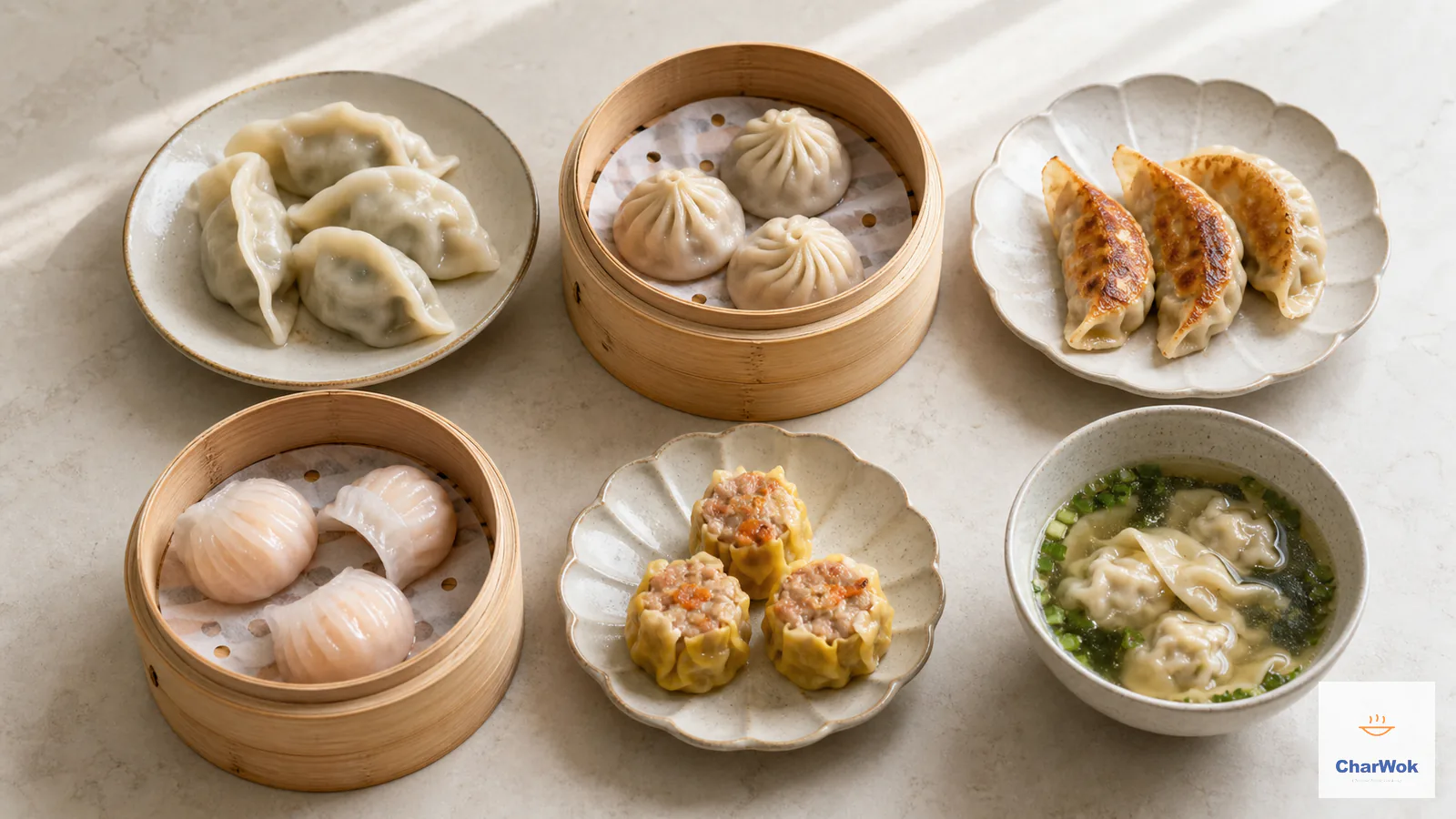
The classic northern pairing is unbeatable: a hot bowl of unsweetened soy milk with a crisp youtiao torn into it, the dough softening just enough in the warm milk. On a cold morning, push toward a bowl of Chongqing noodles or a clean tomato-egg noodle soup; both wake you up faster than coffee. If you want the full Cantonese morning at home, build a tray of soup dumplings and har gow, and serve them with a pot of tea and a side of chili oil.
For a lighter table, lean on eggs and tofu. Silky steamed eggs take five minutes of active work; a tea egg split over plain congee turns a bland bowl into a meal. When you are short on time, the fastest plate I know is an egg-scallion crepe folded over whatever leftover vegetables are in the fridge, such as grated zucchini, a handful of chopped scallion, or a spoon of pickled chili.
Storage and reheating, quickly
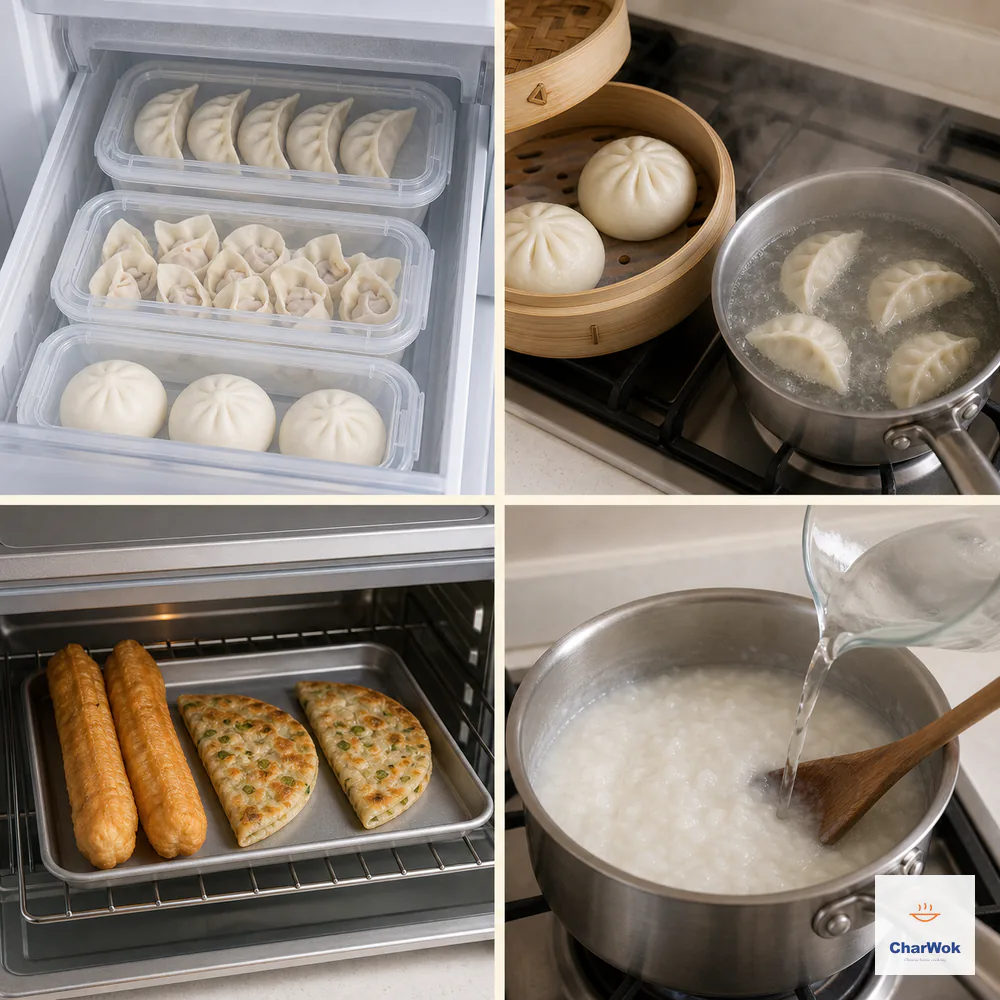
Cook raw frozen pieces without thawing, use dry oven heat to restore crisp foods, and loosen chilled congee with water or stock over low heat so it turns creamy again.
- Frozen raw dumplings, wontons, bao, pancakes: 2 to 3 months in a sealed bag. Cook straight from frozen; never thaw, or they stick and weep.
- Cooked youtiao and flatbreads: 1 month frozen. Re-crisp in a 180°C (350°F) oven or air fryer for 4 to 6 minutes. Microwaving makes them leathery.
- Congee: 3 days in the fridge, 1 month frozen. Reheat with extra water or stock over low heat, stirring often; the starch thickens as it sits, so loosen it.
- Tea eggs: 4 to 5 days in their steeping liquid in the fridge. Eat cold or warm gently.
- Jian bing and crepe batter: 2 days in the fridge. Stir before each use; it separates as it sits.
A reasonable plan for the week
If I had to hand one schedule to a friend, it would look like this. Sunday afternoon: mix and freeze a double batch of bao or dumplings, simmer a pot of tea eggs, and cook a small pot of congee for Monday. Weekdays rotate through the freezer: steamed buns Monday, pan-fried pork buns Tuesday, wonton soup Wednesday, an egg-scallion crepe Thursday, and congee with tea egg on Friday. That is a hot, savory Chinese breakfast every morning with no more than 15 minutes of active cooking per day. The work all happens on the weekend, which is the only way this scales.
Frequently asked questions
Is Chinese breakfast always savory? Mostly, yes. Soy milk, congee, noodles, and buns lean salty or plain; the sweet items (red bean buns, sweet zucchini pancakes) are sides, not the whole plate.
Can I cook frozen dumplings or buns without thawing? Yes, and you should. Thawing makes the wrappers soggy and the fillings weep. Boil, steam, or pan-fry them straight from frozen, adding a minute or two to the time.
What is the fastest Chinese breakfast for a weekday? An egg-scallion crepe: five ingredients, about fifteen minutes, one pan. Keep flour, eggs, and scallions on hand and it is always available.
Is soy milk at breakfast sweet or savory? Both exist. Northern style is unsweetened and slightly beany, often drunk plain with youtiao; southern and Taiwanese versions are sweetened, sometimes with sugar or ginger.
Why is the dough for youtiao and bao so much stretchier than bread dough? Both use a long, slow rest (and youtiao often an alkaline treatment) that relaxes and conditions the gluten so it can stretch into thin layers or puff in hot oil without tearing.