I once watched a friend who grew up eating Cantonese banquet food look at a plate of steamed cabbage rolls and say, with total seriousness, that they were the dish she missed most after giving up gluten. That sounds dramatic for what is, on paper, pork wrapped in a leaf. But she had a point. When the cabbage is blanched to the second where it bends without snapping, and the filling is loose enough to be juicy but tight enough to slice, a cabbage roll does something a flour dumpling cannot: it lets you taste the filling, and only the filling. The wrapper disappears into the braise of its own steam.
The catch is that "easy" recipes like this punish the small mistakes. Blanch the leaves a beat too long and they disintegrate when you tie them. Under-mix the filling and it stays dense. Steam too long and the cabbage goes gray and wet, leaking liquid that dilutes the glaze. I have made every one of those mistakes. What follows is the version I cook when I want the rolls to look the way they taste.
Blanch savoy leaves 15 to 20 seconds, never more. Roll the filling in loosely so steam can reach the center. Ten minutes over rolling steam is enough for a 200 g portion of ground meat. The dish lives or dies on the cabbage staying bright green and the filling staying loose enough to drink its own juices.
What these rolls are, and where the idea comes from
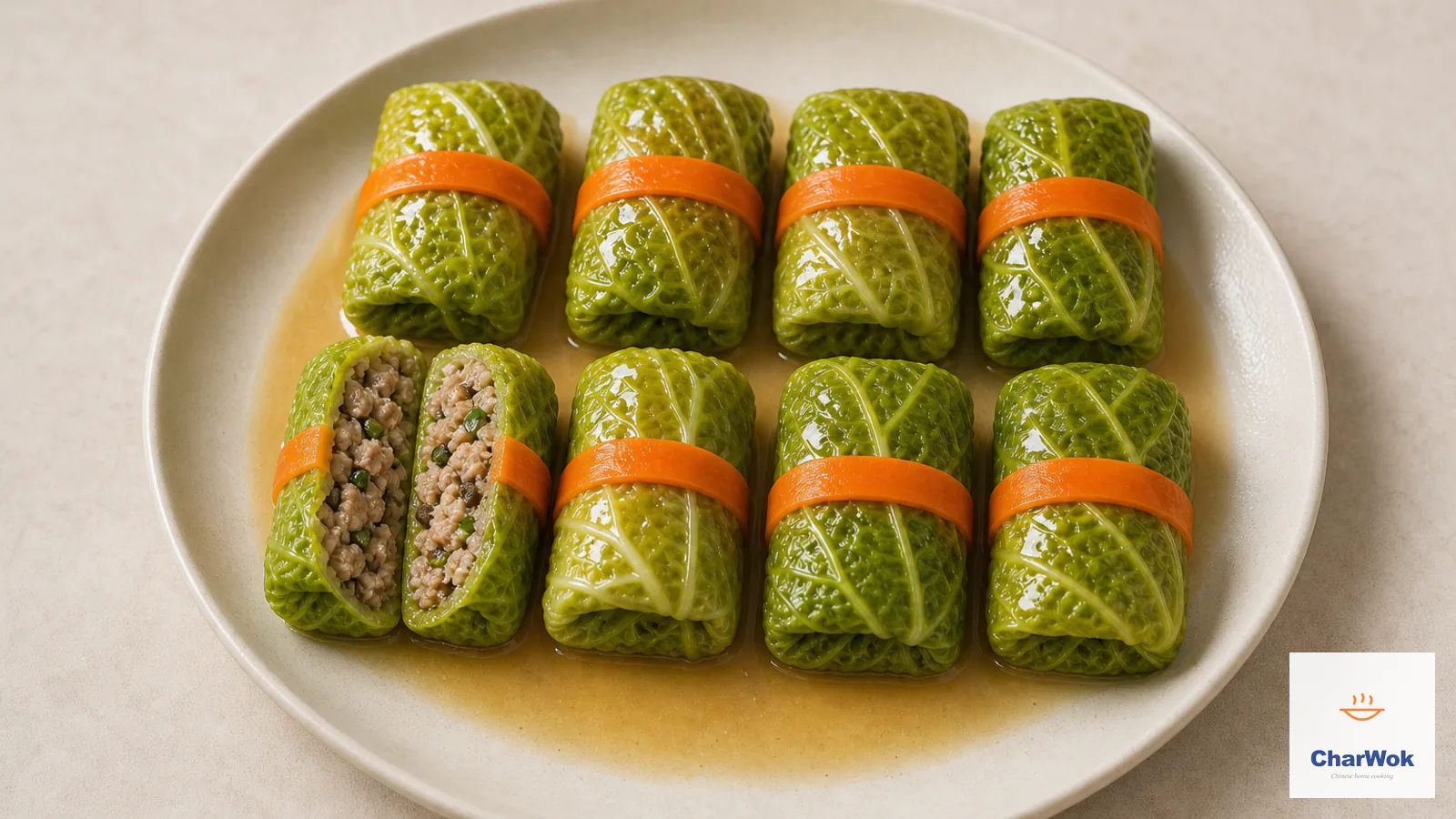
The Chinese name, Fei Cui Bao Rou, translates as "jade wrapped meat," which tells you the look you are chasing: a translucent green leaf hugging pale filling, glossy with a thin glaze. Stuffed-vegetable dishes run across the whole country, from Hakka-style stuffed tofu in the south to the lion's head meatballs of the Yangtze delta, which sometimes nestle their pork among napa cabbage leaves. What makes the steamed cabbage roll its own thing is that the leaf is the wrapper, not a bed. It is the closest a gluten-free cook gets to the dumpling experience without making a starch casing, and it sits comfortably in the dumpling family the way a low-key cousin sits at the family table.
The wrapper matters more than the filling
A great filling still fails inside a bad wrapper. The leaf has to do three jobs at once: be large enough to enclose the portion, be flexible enough to fold without tearing, and be sturdy enough to hold a knot. Pick the wrong cabbage and you are fighting the ingredients before you start.
Use savoy cabbage. Its crinkled, loosely packed layers peel off whole, and the blistered texture reads beautifully on the plate. The leafy outer portion of napa cabbage works as a substitute, sweeter and softer, though it tears more easily. Do not reach for the tight green or red round cabbages. Their leaves are dense and waxy, and they need minutes of boiling to bend, by which point the color is gone and the structure is pulp. If you want to lean into the napa side of the family for other meals, the same head is brilliant in glass noodles with napa cabbage or a quick hot-and-sour napa stir-fry.
For the carrot ribbon that ties each roll, pick the longest, thickest carrot you can find and run a vegetable peeler down its length to shave long, flexible bands. Raw carrot snaps, so blanch the strips for a few seconds until they droop over your finger. The ribbon is decorative, yes, but it also stops the roll from uncurling in the steamer, so I would not skip it on the first try.
Ingredients
Ingredients at a glance
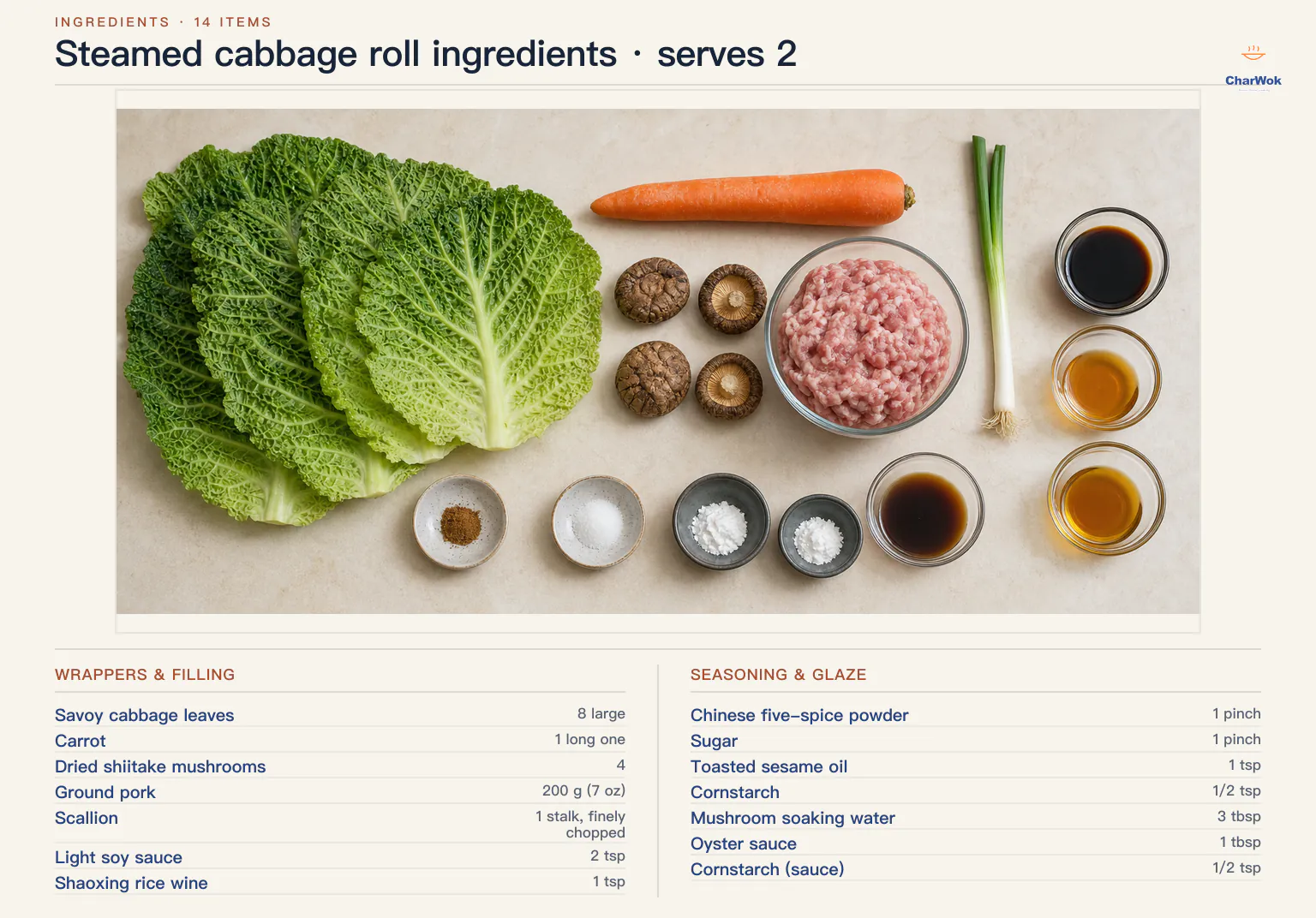
This makes eight rolls, which I count as two generous servings. Scale the meat up to 250 g and you get a real main course for three.
| Ingredient | Amount | Notes / substitute |
|---|---|---|
| Savoy cabbage leaves | 8 large | Outer leaves of napa cabbage work; avoid tight green/red cabbage |
| Carrot | 1 long one | Optional, for tying ribbons; choose the longest you can find |
| Dried shiitake mushrooms | 4 | Rehydrated; keep the soaking liquid for the sauce. See the shiitake guide |
| Ground pork | 200 g (7 oz) | Pork preferred for fat and flavor; chicken or turkey leaner but drier |
| Scallion | 1 stalk, finely chopped | Green and white parts |
| Light soy sauce | 2 tsp | Use tamari for gluten-free. See light vs dark soy |
| Shaoxing rice wine | 1 tsp | Optional; rounds off the pork. Omit or use dry sherry |
| Chinese five-spice powder | 1 pinch | Make your own with the five-spice recipe |
| Sugar | 1 pinch | Balances the soy; do not omit |
| Toasted sesame oil | 1 tsp | Aromatics and sheen; toasted, not plain |
| Cornstarch | 1/2 tsp | In the filling, to bind the juices |
| Mushroom soaking water | 3 tbsp | For the sauce; chicken stock if you skipped mushrooms |
| Oyster sauce | 1 tbsp | The glaze base; vegetarian mushroom oyster sauce works |
| Cornstarch (sauce) | 1/2 tsp | Thickens the glaze to a cling |
The method, with the reasoning
- Soak the mushrooms first, the night before if you can. Cover four dried shiitake in cold water for at least eight hours, or in warm water for an hour if you forgot. Cold and slow draws out flavor gently and keeps the caps firm. Squeeze them out, but pour the soaking liquid through a fine mesh to catch grit and save it; that dark water is the base of the glaze.
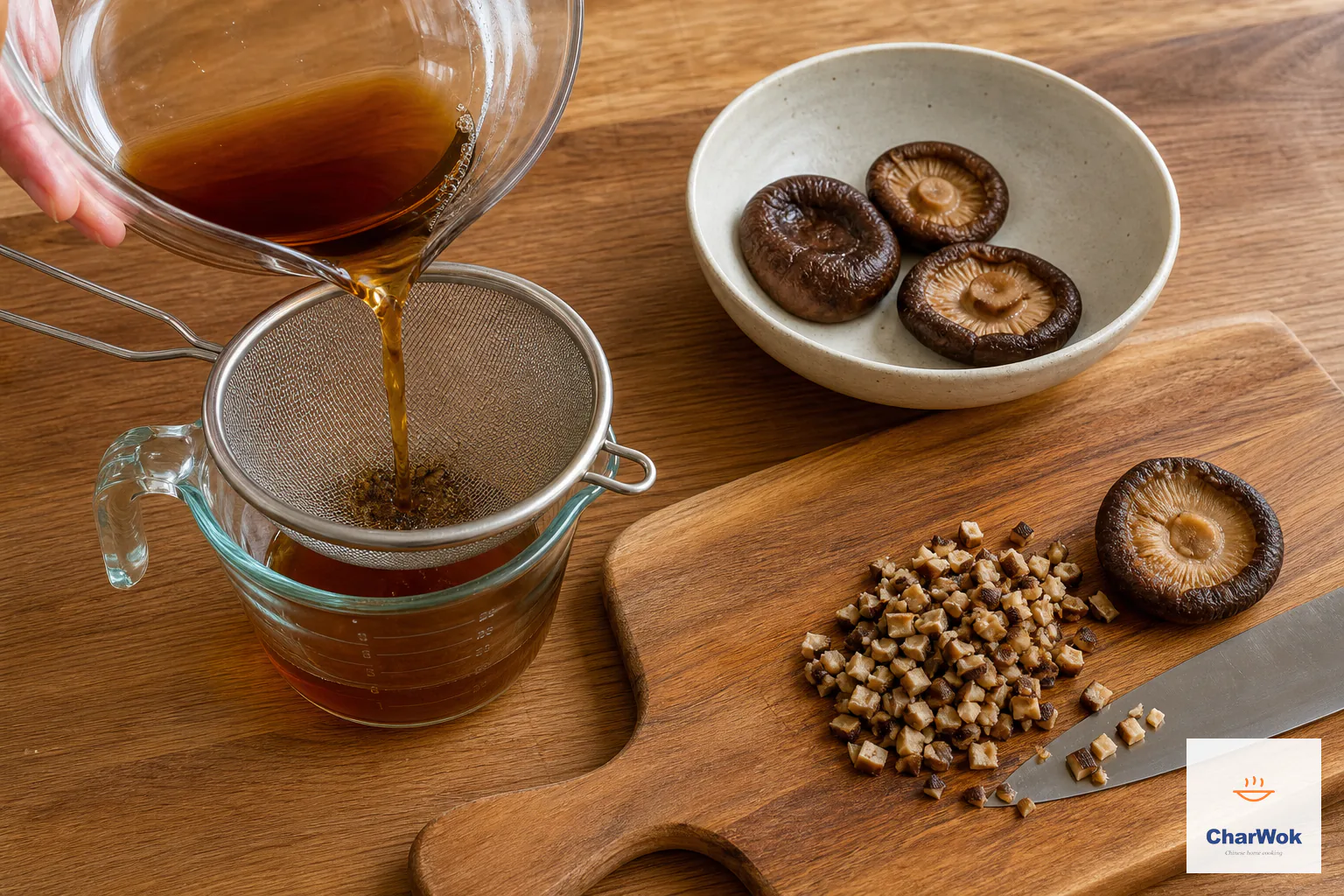
Soak four shiitake until fully soft, squeeze and chop them, then strain and save the dark soaking liquid for the glaze.
- Blanch the savoy leaves for 15 to 20 seconds, no longer. Have a bowl of ice water ready. Drop the leaves into a full rolling boil and watch the color sharpen to vivid green. The instant the thick rib at the base starts to fold instead of resisting, lift them out and shock them in the cold water. This stops the residual heat, which would otherwise keep cooking the leaf to mush while you assemble. Blanch the carrot strips for just a few seconds, until they bend.
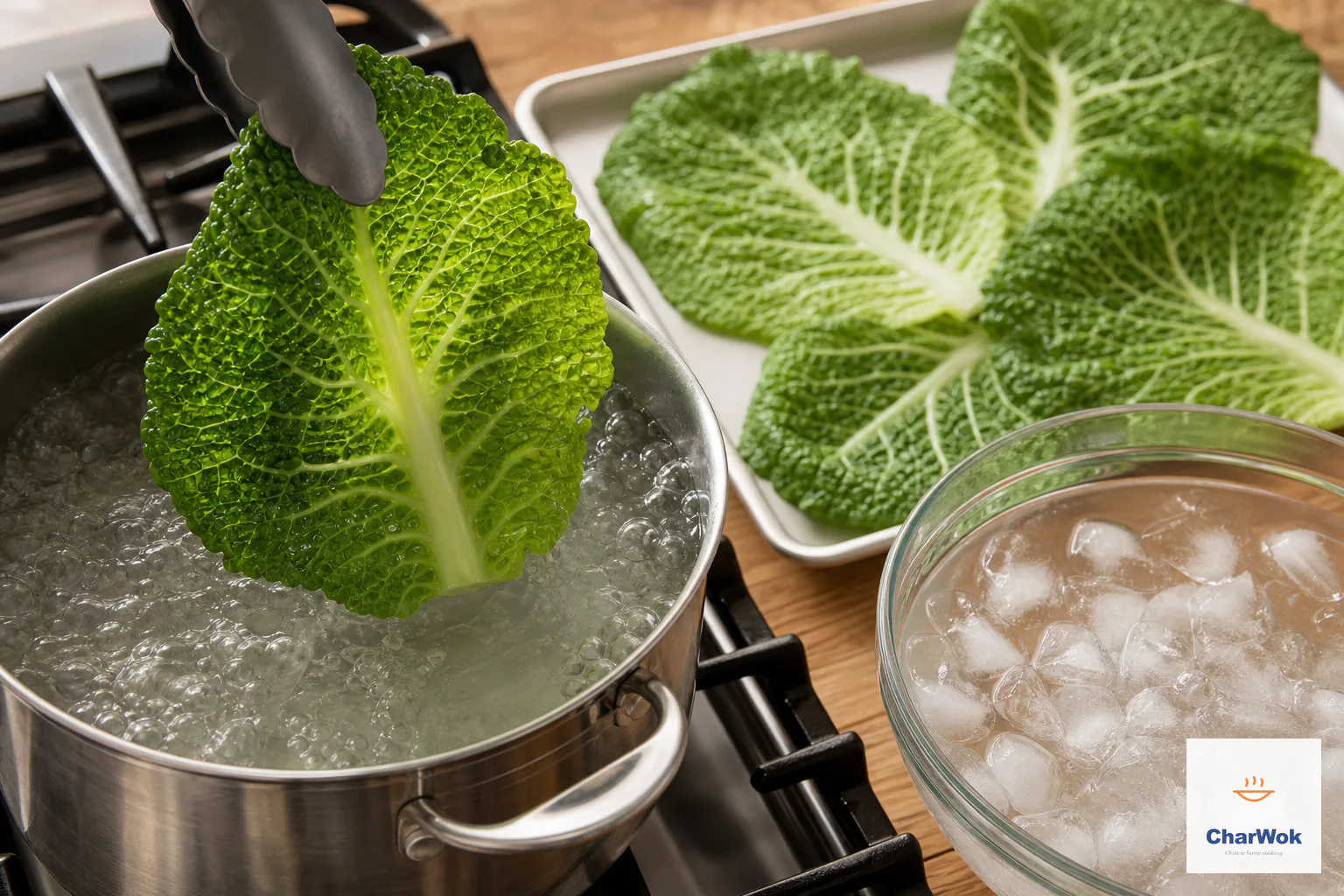
Blanch each Savoy leaf for only 15–20 seconds, shock it in ice water, and briefly blanch the carrot ribbons until they bend.
- Trim the tough central rib flat. Take each cooled leaf and shave the thick vein down so the leaf lies flat and rolls evenly. Do not cut it off entirely or the leaf will split into two pieces you cannot wrap with. This step is the one most recipes skip, and it is the difference between a roll that sits flat and one that springs open.
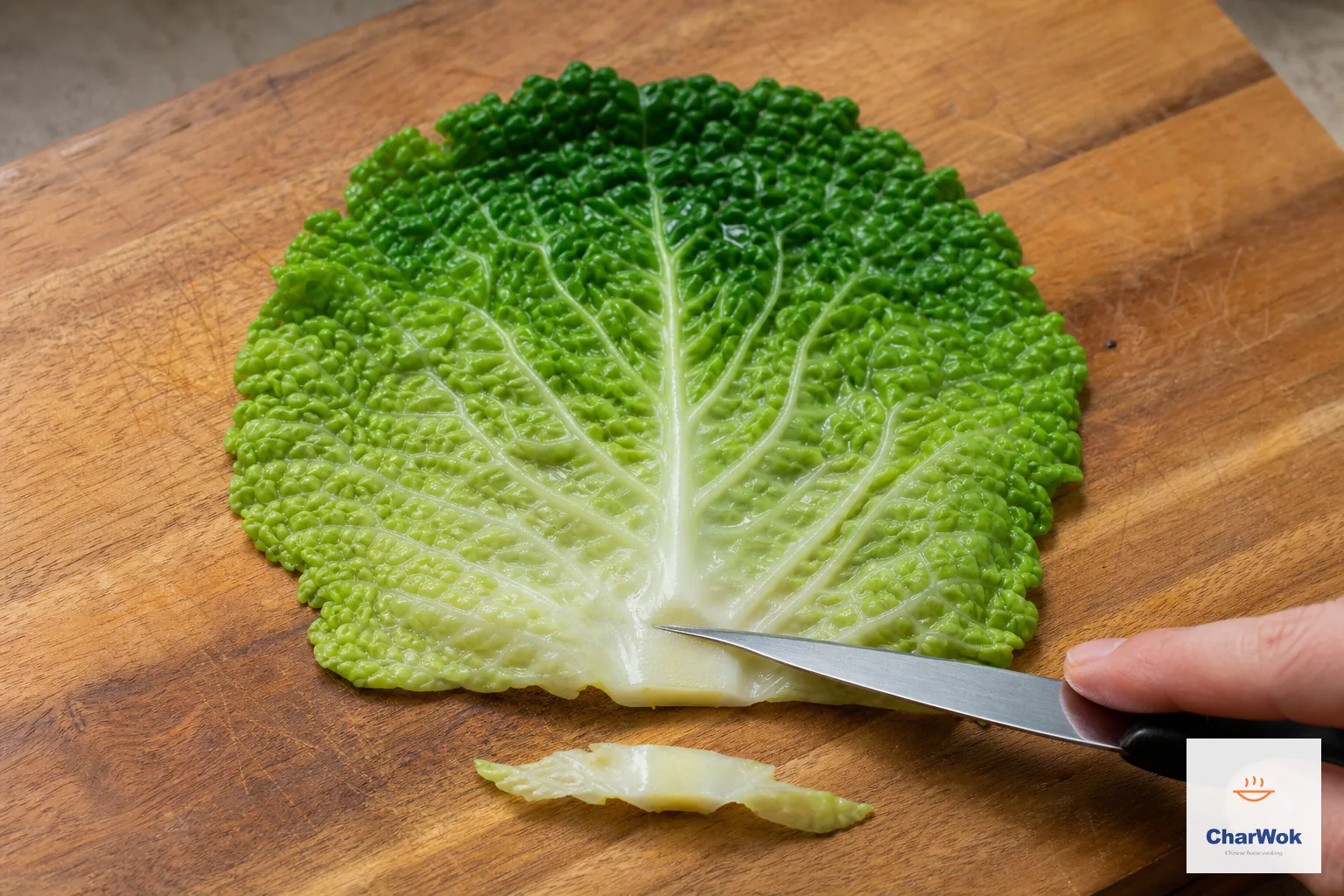
Shave the thick central rib level with the cooled leaf without removing it, so the wrapper lies flat and does not split.
- Build a filling that stays loose. Finely chop the rehydrated mushrooms and combine with the pork, scallion, soy, wine, five-spice, sugar, sesame oil, and the half-teaspoon of cornstarch. Stir in one direction for a good minute, until the mix is sticky and slightly lighter in color. Unlike dumpling fillings, where I add water or stock for juiciness, here you hold back: the cabbage will leak its own moisture into the filling during steaming, and a wet filling will pool and split the leaf. The cornstarch is your insurance against that pool becoming soup.
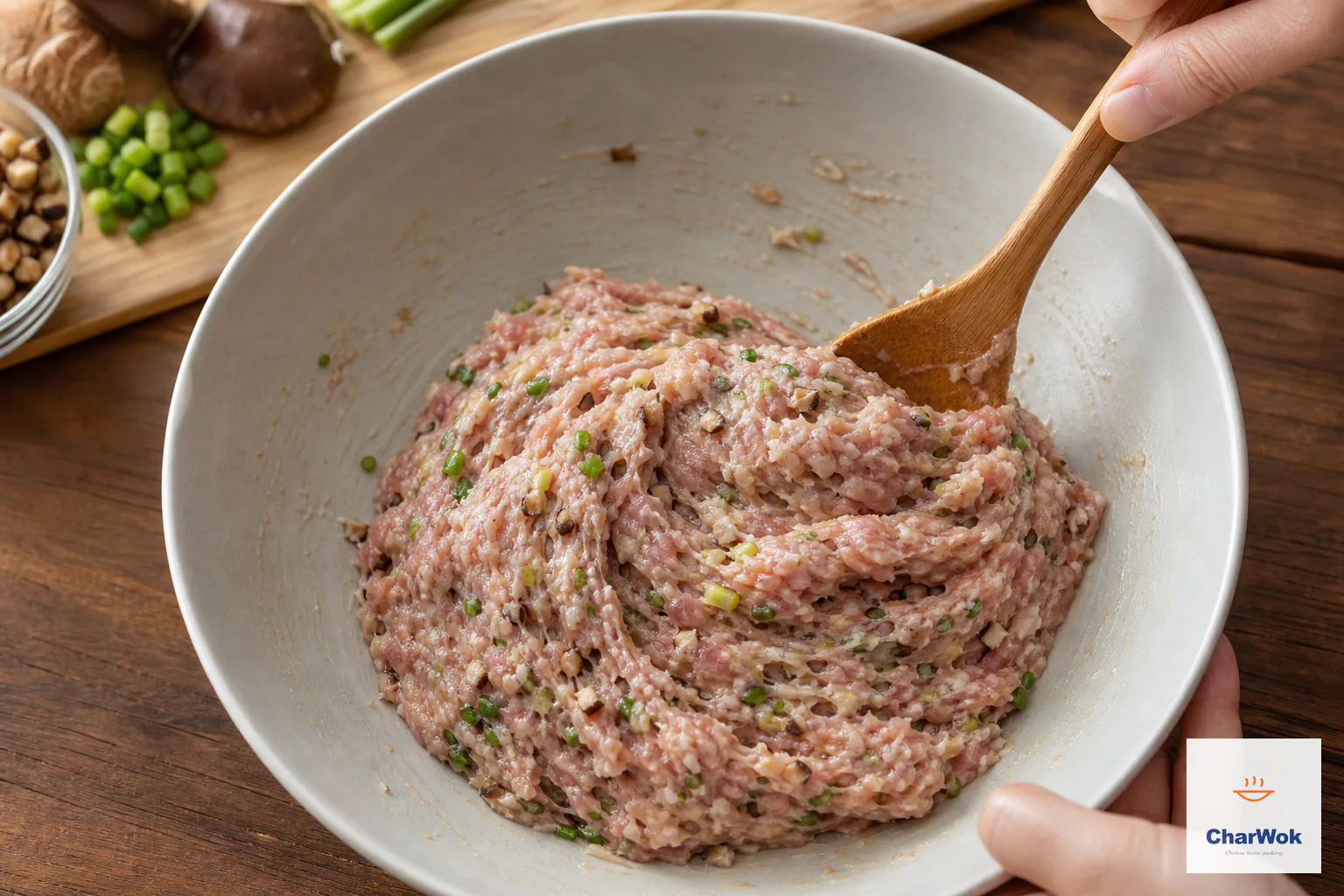
Mix the pork, chopped shiitake, scallion and seasonings in one direction for about a minute until sticky; do not add water.
- Roll loosely, tie gently. Lay a leaf veined-side up. Put one-eighth of the filling as a short log across the lower third, fold the sides in, and roll it up like a burrito, not tight enough to squeeze the meat. Tie once around the middle with a carrot strip. A loose roll lets steam circulate to the center; a tight roll steams from the outside only and the middle stays dense.
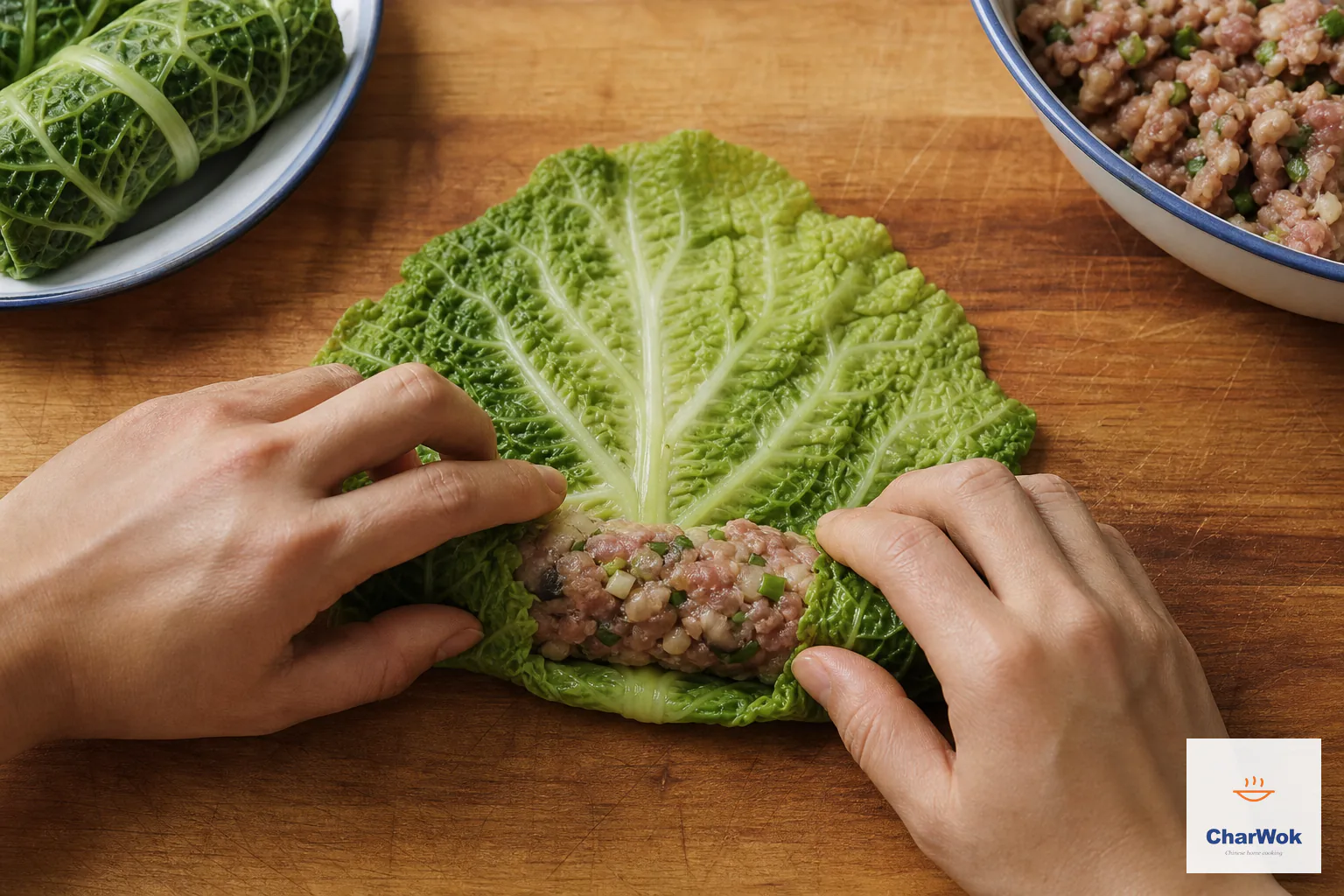
Place one-eighth of the filling across the lower third, fold in the near edge and sides, roll without squeezing, then tie gently with a carrot ribbon.
- Steam for ten minutes over high heat. Use a plate that fits inside your steamer, ideally with a slight rim to hold the glaze later. Bring the water to a full boil before the rolls go in, then keep the heat high so steam hits every surface. The classic tool is a bamboo steamer; the bamboo steamer guide covers sizing and care. No steamer? Set a small heatproof bowl upside down in a wide pot, add water to just below the rim of the bowl, and balance your serving plate on top. Cover and steam. This improvised rig works for steamed fish and steamed chicken too.
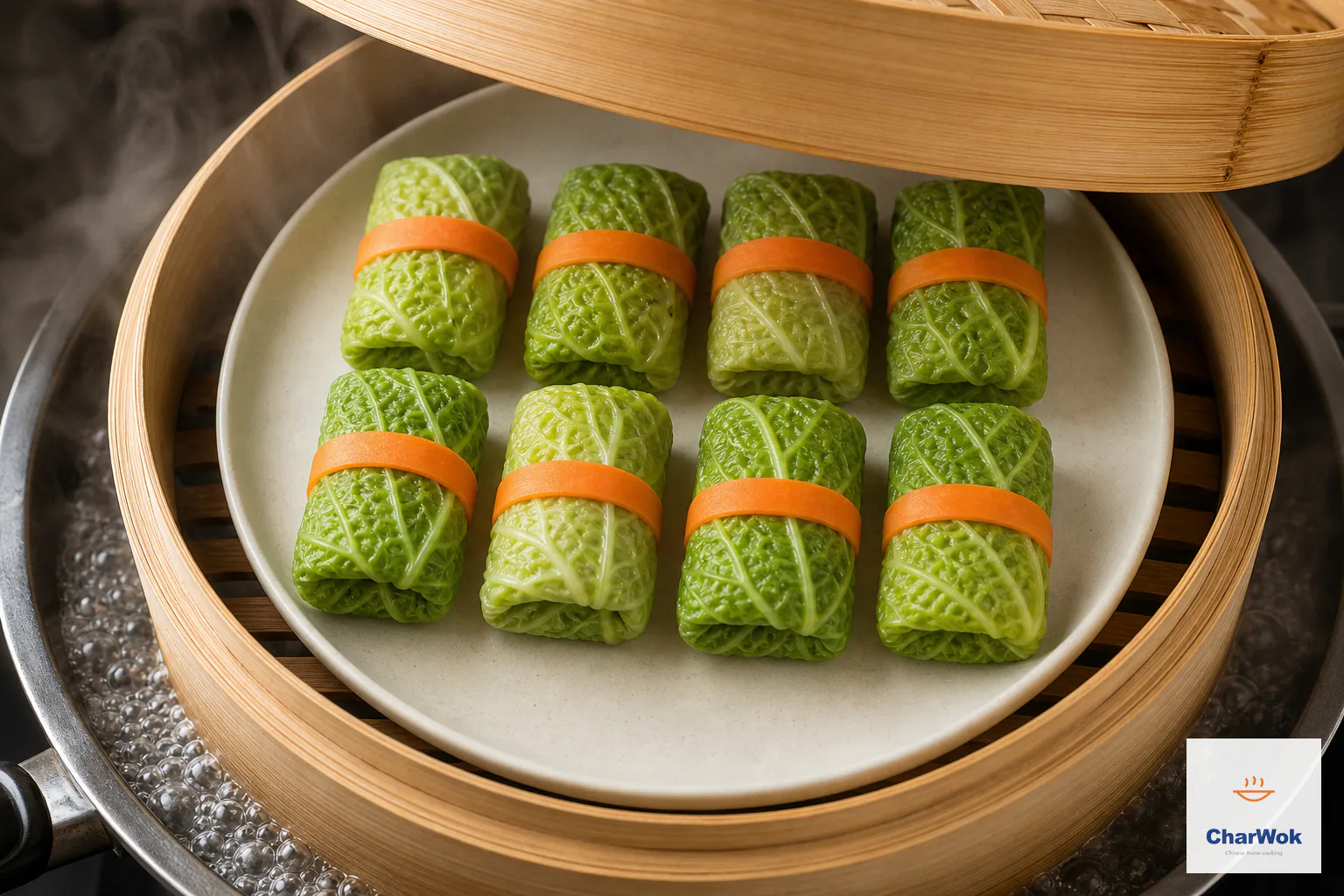
Bring the steamer water to a full boil first, then steam the eight spaced rolls over high heat for 10 minutes.
- Glaze while the rolls rest. In a small saucepan, whisk the saved mushroom water, oyster sauce, and half-teaspoon of cornstarch. Bring it to a bare bubble over medium-high and pull it off the heat the moment it turns glossy and clings to a spoon. If it goes too thick, stir in a teaspoon of water. Spoon it over the rolls at the table so the glaze runs into the plate and pools for dipping.
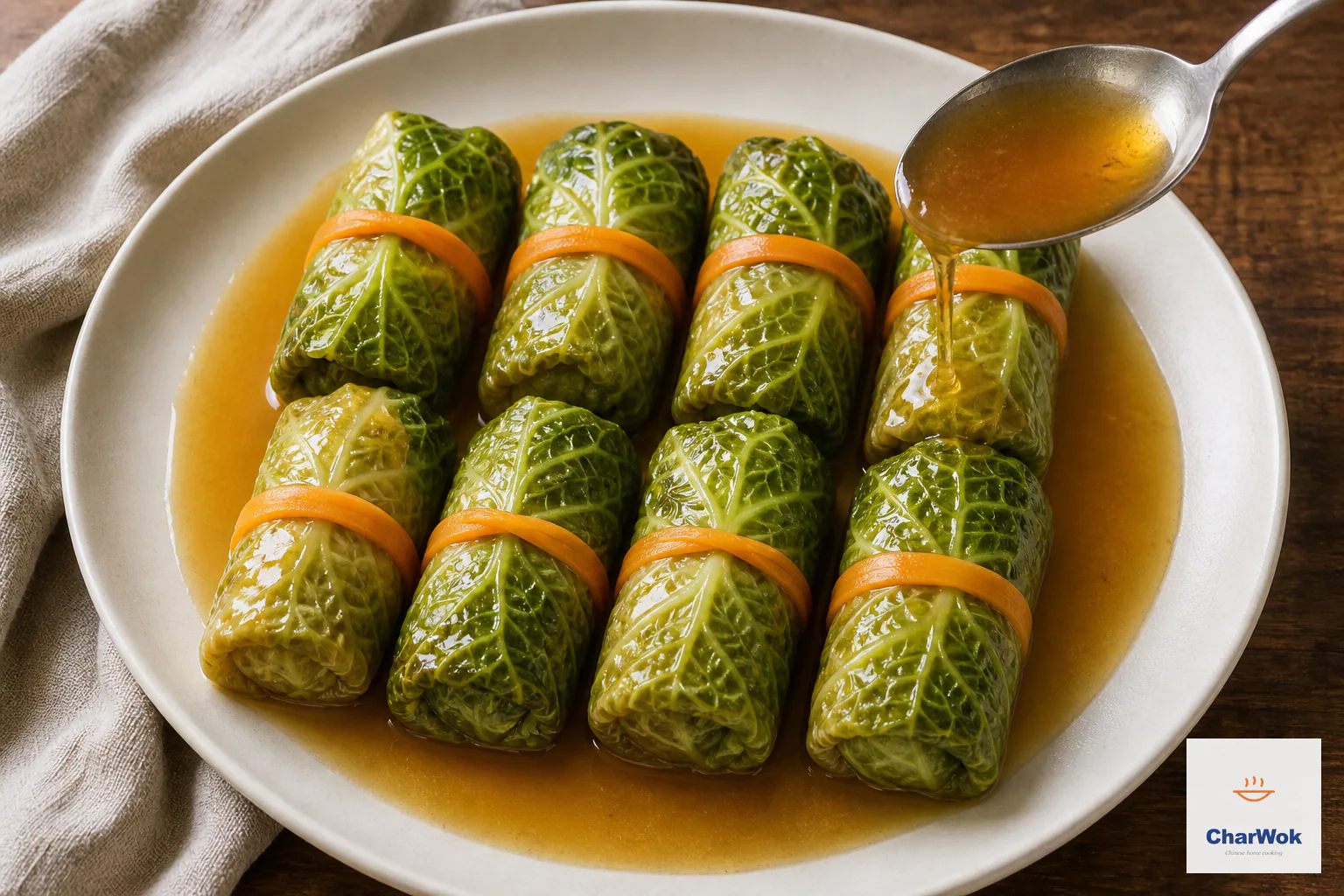
Heat the mushroom-water, oyster-sauce and cornstarch mixture only until glossy and spoon-coating, then pour it over the rolls and serve warm.
When the rolls go wrong
This is the section I wish I had read the first time I made these, when I served a plate of gray, leaking bundles and pretended they were fine.
- Leaves tear when you roll them. Either the cabbage was the dense round kind, or the blanch was too short and the rib is still rigid. Trim the rib flatter and blanch a few seconds longer next time. A small tear is not fatal; roll so the tear faces inward and tie over it.
- Filling comes out dense and bouncy. You overworked the meat or packed the rolls too tight. Mix just until sticky, roll loose, and do not compress the ends. A 200 g portion with a pinch of cornstarch needs barely a minute of stirring.
- Plate floods with watery liquid. The cabbage was over-blanched, or the filling was already wet, or you steamed past ten minutes. Pull the rolls at ten minutes and, if the glaze is thin, reduce it harder before pouring. Shocking the leaves in ice water also keeps them from weeping.
- Cabbage is dull, gray-green. The water was not at a full boil when the leaves went in, or you skipped the ice bath. Boiling water sets the green fast; cold water stops it fast. Both matter.
- Carrot ribbons snap when tied. They were too cold or too thick. Re-blanch for a couple of seconds in the still-hot water and tie while warm and limp.
- Middle of the roll is still pink. The rolls went in cold from the fridge, or the heat was low. Add two minutes for fridge-cold rolls, and keep the steamer at a full, rolling boil the whole time.
Variations worth making
The basic formula is a stage. Once it works, the cast changes easily.
- Shrimp and pork. Swap a third of the meat for finely chopped raw shrimp. It sets tender and sweet, closer to the filling in siu mai than a plain pork roll.
- Chicken and water chestnut. Ground chicken is lean and needs the crunch. Finely dice two water chestnuts and a knob of ginger into the mix; the rolls will read cleaner and lighter than pork.
- Mushroom-forward, nearly vegetarian. Replace half the pork with more chopped shiitake and a handful of rehydrated wood ear for snap. Go fully vegetarian with crumbled firm tofu, well pressed, and lean on the soy and sesame. The vegetarian dumpling filling is a good template.
- Spicy glaze. Stir a teaspoon of chili oil or a dab of doubanjiang into the glaze at the end. The rolls take heat well because the cabbage cools the palate.
What to serve alongside
Eight rolls are a light main. Round out the table with something that contrasts in texture and weight. A bowl of wonton soup or a clean egg drop soup opens the meal; a plate of lettuce with oyster sauce or a glossy braised mushroom with bok choy sits next to the rolls without competing. Steamed rice is enough carbohydrate; if you want a starch that absorbs the glaze, a small bowl of plain congee does it better than bread ever could.
Storing and reheating
Assemble the rolls up to 24 hours ahead and keep them covered in the fridge, unsteamed. Add two minutes to the steaming time if they go in cold. I have also frozen them raw on a tray, then transferred to a bag, and they steamed up fine after an overnight thaw in the fridge. Cooked leftovers keep two days; reheat gently with a splash of water in a covered pan over low heat, or back in the steamer for four minutes. The microwave toughens the cabbage and is not your friend here.
Common questions
A few things readers ask over and over, answered short.
The whole dish turns on two judgements: how long the leaf spends in the boiling water, and how loose the roll sits in the steamer. Get those two right and the rest of the recipe forgives a lot. Make it once for the technique, then a second time with whichever filling you actually want to eat, and the rolls become the kind of thing you cook without checking the recipe.