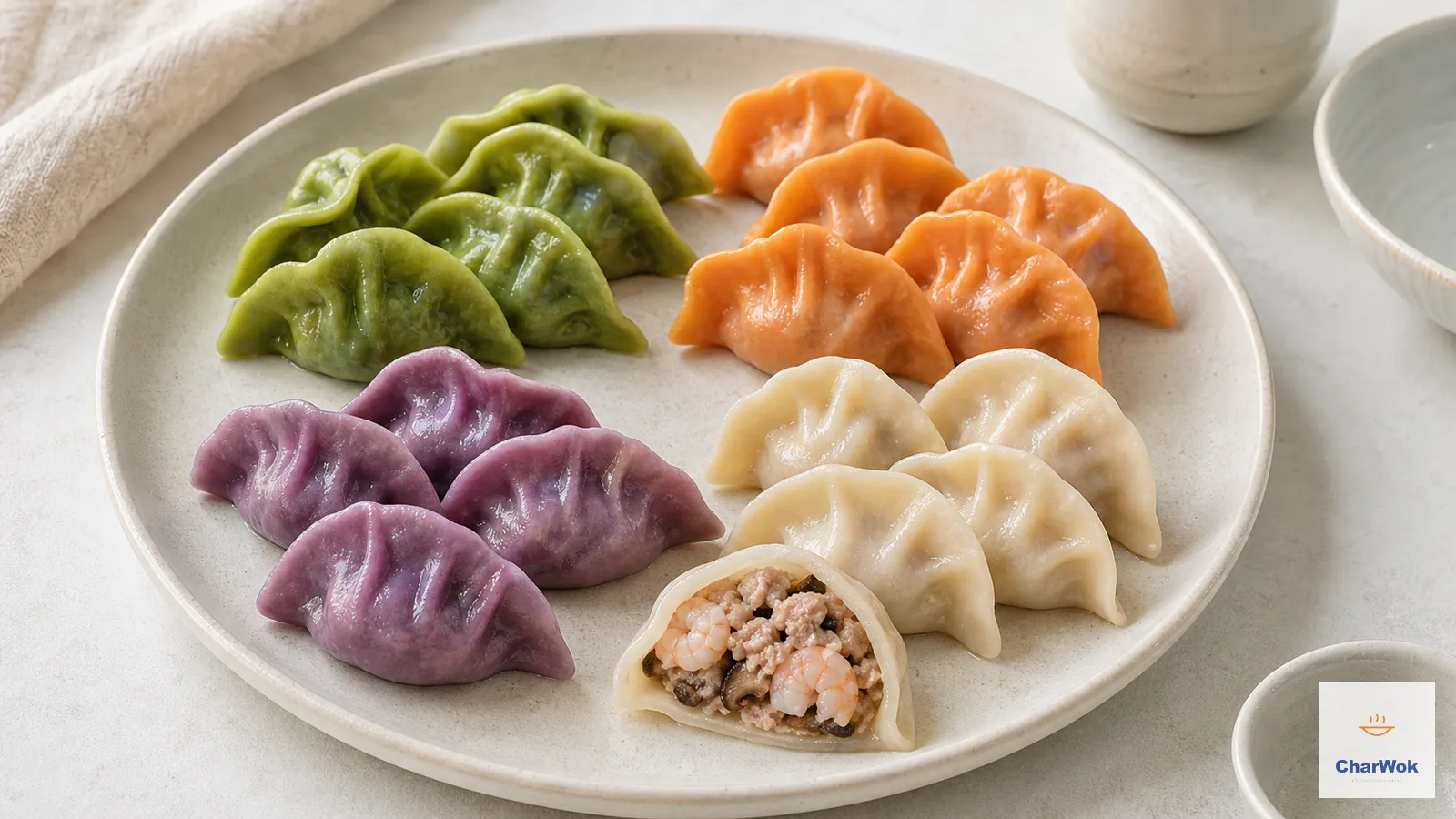
The first time I set out to dye dumpling wrappers with vegetables, my green dough came out a murky olive, my "purple" went gray inside an hour, and the orange barely read as orange at all. I nearly reached for the bottle of gel food coloring. I'm glad I didn't. Naturally colored dumplings are the dish that taught me more about dough and about pH than any single recipe I cook, because every shortcut punishes you and the fix is always the same: respect the chemistry and respect the rest.
What you're really making here is four small batches of jiaozi dough tinted with plain boiling water, spinach, carrot, and red cabbage, then folded around one shared pork-and-shrimp filling. It's a showpiece for a Chinese New Year table, but I make a stripped-down version with just two colors on an ordinary weekend. This guide assumes you already know the basics of mixing and folding; if you don't, pair it with a deep read on making wrappers from scratch and the core techniques in the dumpling folding guide before you commit to four colors at once.
At a glance
Two ingredients per wrapper dough: 150 g flour plus about 75 ml of liquid. Rest the dough a full hour, not the 40 minutes you can get away with for plain dumplings, because vegetable water brings starches and acids that fight gluten development. Plan on a two-and-a-half-hour project for 80 dumplings. Boil for the brightest color, pan-fry for the crispest contrast, never steam the cabbage one.
Why bother with vegetable dye at all
In northern China, dumplings are the food of reunion, not decoration. The color is the modern, kitchen-table add-on, the kind of flourish that started showing up in home cooking blogs and Lunar New Year photo spreads over the last decade and then hardened into tradition. The point of a multicolor platter isn't subtlety. It's abundance, the visual argument that the year ahead will be generous. If you want a broader look at where jiaozi sit in the calendar, the full New Year recipe roster lays out the surrounding dishes.
Food coloring would be faster and more reliable. I don't use it, and not for purity reasons. The vegetable dyes actually flavor the wrapper, faintly, and the act of making them forces you to blanch, puree, and strain on a schedule that improves every other dough you'll make afterward. The spinach you cook for green dough is the same spinach you'd blanch correctly for a filling. The carrot puree you push through a sieve is the same technique you'd use to fold into a filling, which is exactly what we do with the leftovers here.
Ingredients
Ingredients at a glance
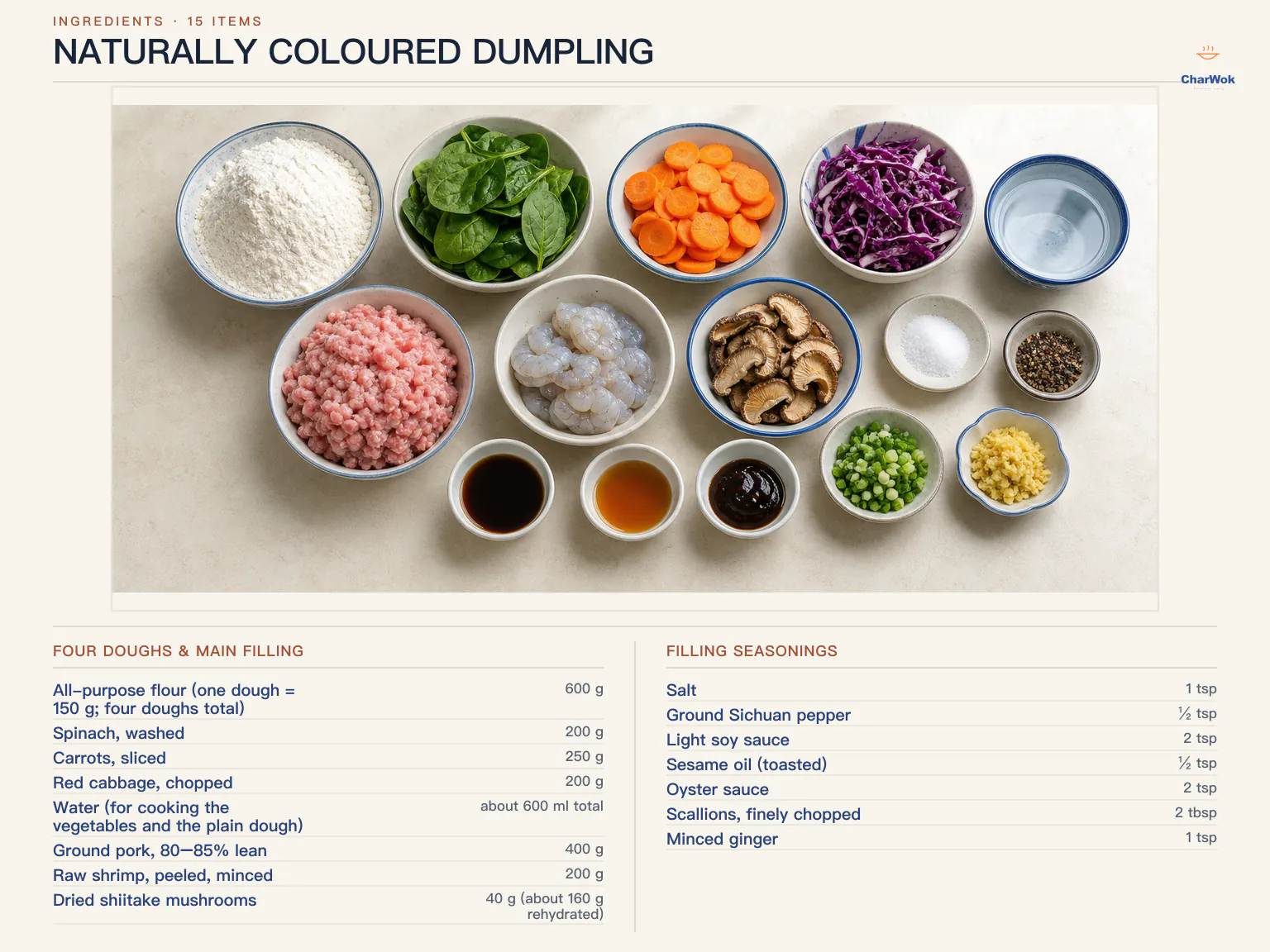
Four doughs, one filling. Each dough uses 150 g all-purpose flour. If you have only one dough's worth of patience, halve everything and make a single color.
| Ingredient | Amount | Notes / substitute |
|---|---|---|
| All-purpose flour (one dough = 150 g; four doughs total) | 600 g | US all-purpose, 10–11% protein. Bread flour is too strong; cake flour too weak. |
| Spinach, washed | 200 g | Kale works but reads duller. Avoid baby spinach, too much water weight for too little pigment. |
| Carrots, sliced | 250 g | Sweet potato gives a deeper orange but makes the dough slack; cut liquid by 10 ml. |
| Red cabbage, chopped | 200 g | Purple cabbage is the same thing. The dye is pH-sensitive; see troubleshooting. |
| Water (for cooking the vegetables and the plain dough) | about 600 ml total | Use the mushroom soaking liquid for the filling instead. |
| Ground pork, 80–85% lean | 400 g | Too lean and the filling is dry; too fatty and it weeps oil as it cooks. |
| Raw shrimp, peeled, minced | 200 g | Chop, don't machine-pulse, or you get a gummy paste. |
| Dried shiitake mushrooms | 40 g (about 160 g rehydrated) | See the shiitake guide for rehydrating; save the soaking water. |
| Salt | 1 tsp | Kosher is fine. |
| Ground Sichuan pepper | ½ tsp | Freshly ground; how to grind it correctly matters more than the brand. |
| Light soy sauce | 2 tsp | Light, not dark. Dark will muddy the pale doughs. |
| Sesame oil (toasted) | ½ tsp | More is fine if you love it; keep it under 1 tsp so it doesn't drown the shrimp. |
| Oyster sauce | 2 tsp | Vegetarian mushroom oyster sauce works and keeps the dish lighter. |
| Scallions, finely chopped | 2 tbsp | Green and white parts. Add last, just before folding. |
| Minced ginger | 1 tsp | Microplane-fine; chunks bite through a thin wrapper. |
Making the four dyes
This is the step the source recipes hand-wave. Each vegetable behaves differently, and the reason is starch content and pH. Spinach is mostly water with chlorophyll that dulls on long heat, so you blanch fast and puree raw-ish. Carrot is dense with starch and beta-carotene, which is fat-soluble and stubborn, so you cook it soft and use the pulp, not just the liquid. Red cabbage is full of anthocyanins that flip color with acidity, so you barely cook it and you control the final hue with a trace of acid or alkali.
- Green (spinach juice). Boil 200 ml water. Drop in 200 g spinach for 15 seconds, no more. The flash-blanch sets the green and washes off the oxalate scum that turns dough brown-gray. Drain, plunge in cold water, squeeze hard, then puree in a blender with a splash of the cooking water. Press through a fine sieve and measure 75 ml of that deep green liquid. Save the leftover pulp for the filling.
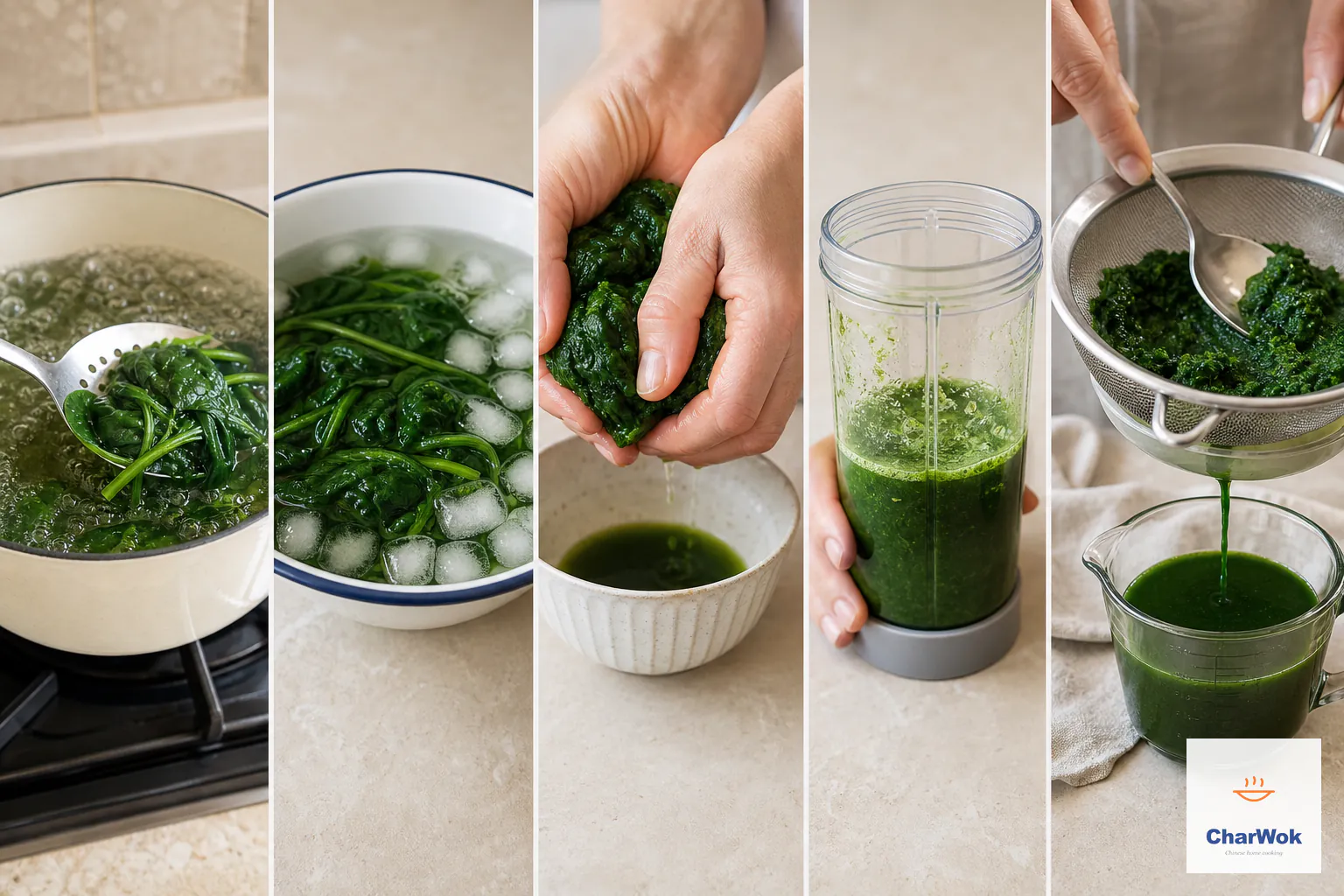
Flash-blanch the spinach for 15 seconds, shock and squeeze it, then puree and press out 75 ml deep green liquid; keep the pulp for the filling.
- Orange (carrot puree). Simmer 250 g sliced carrot in 150 ml water for 5 minutes until a knife slides through. Tip carrot and all its cooking water into the blender and run it until absolutely smooth, longer than feels necessary. Sieve out the fibers and weigh out 90 g of the semi-liquid puree. This is the one dye where pulp does the work; clear carrot water barely tints dough.
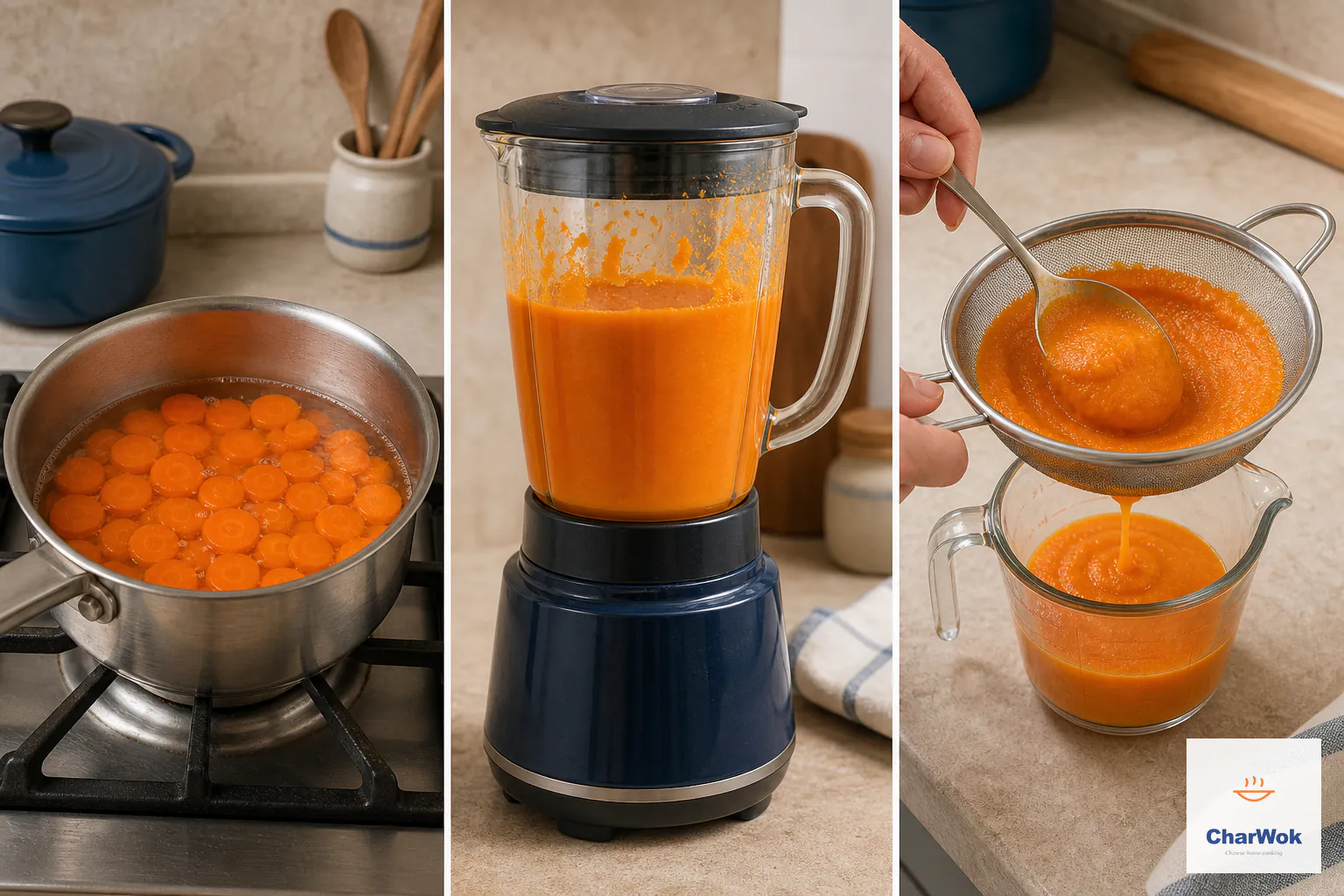
Simmer the carrot slices for 5 minutes, blend them with all their cooking water and sieve a smooth semi-liquid puree; the pigment stays in the pulp, not clear broth.
- Purple (cabbage water). Chop 200 g red cabbage, simmer in 150 ml water for 5 minutes, then strain. You want 75 ml of intense purple liquid. Here's the part most guides leave out: the moment this liquid hits anything, the color shifts. Drop a fingertip of baking soda in and it goes blue-green; add a few drops of lemon or vinegar and it goes magenta. Pick a hue, set it on purpose, and don't be surprised.
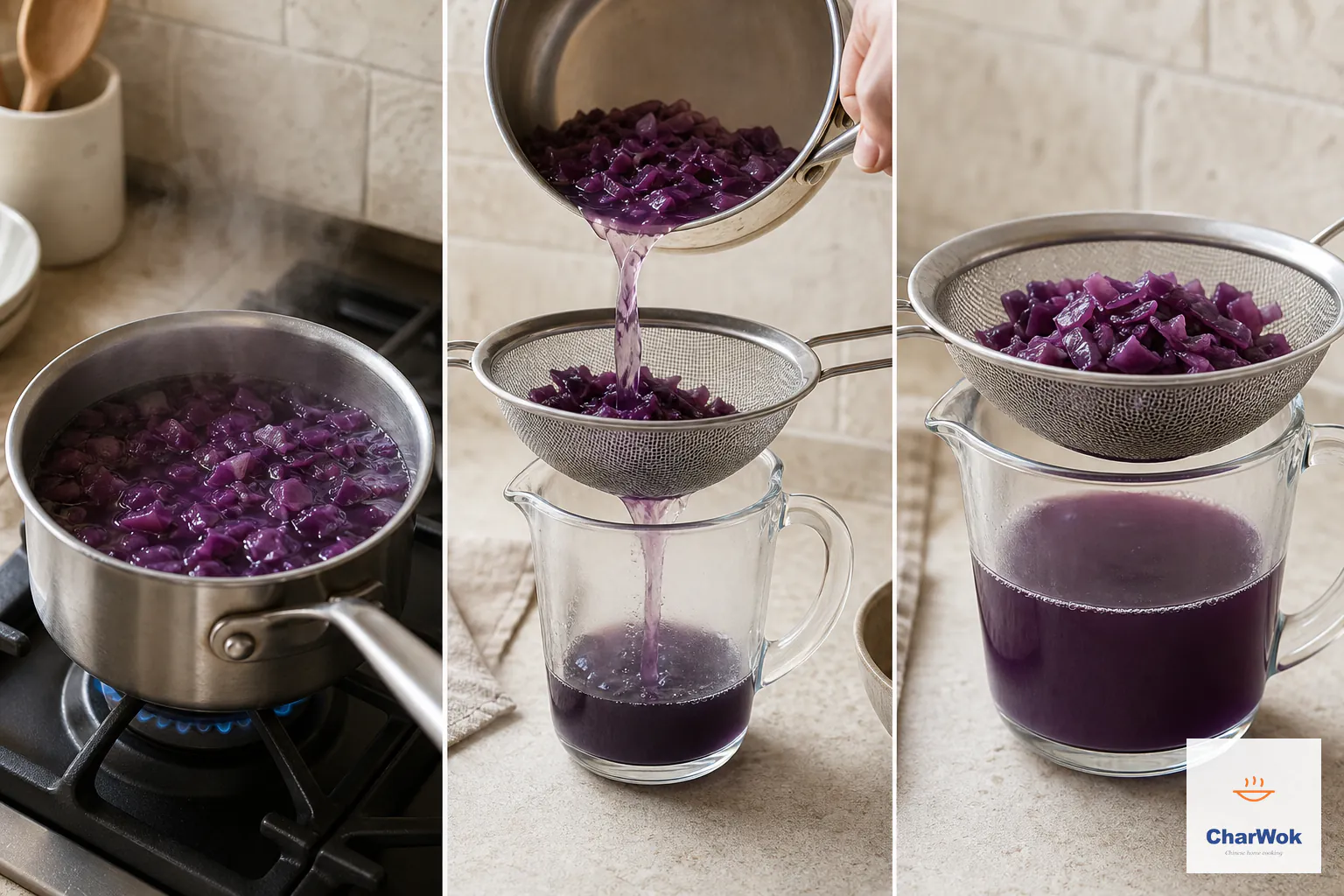
Simmer the chopped red cabbage in 150 ml water for 5 minutes, then strain 75 ml purple liquid without blending the cabbage solids.
- White (plain). 75 ml tap water. The "white" wrappers will actually be ivory once cooked. That's fine, that's the contrast.
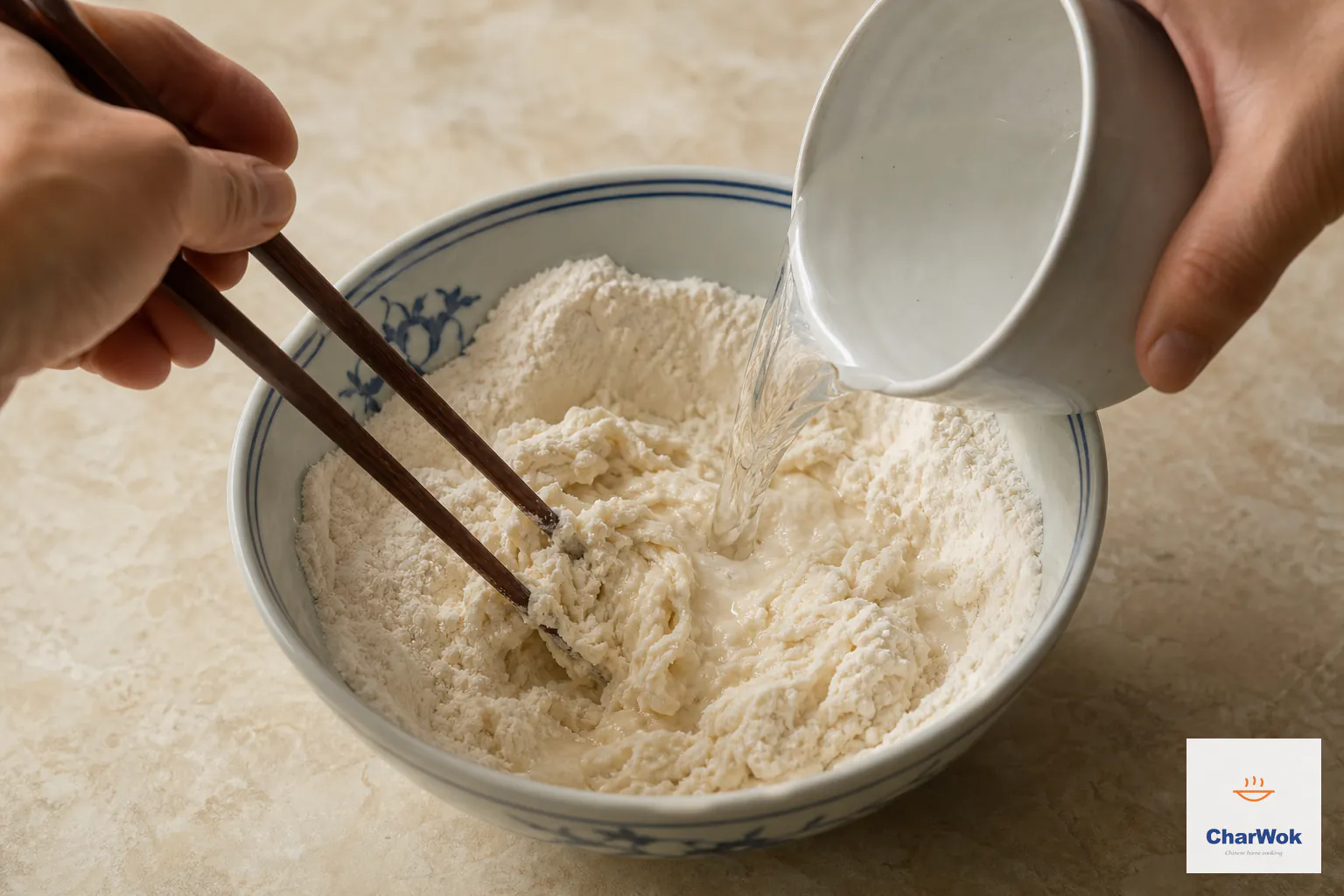
The fourth colour needs no vegetable: add 75 ml clear tap water to 150 g flour and stir until the plain ivory dough becomes shaggy.
Mixing and resting the dough
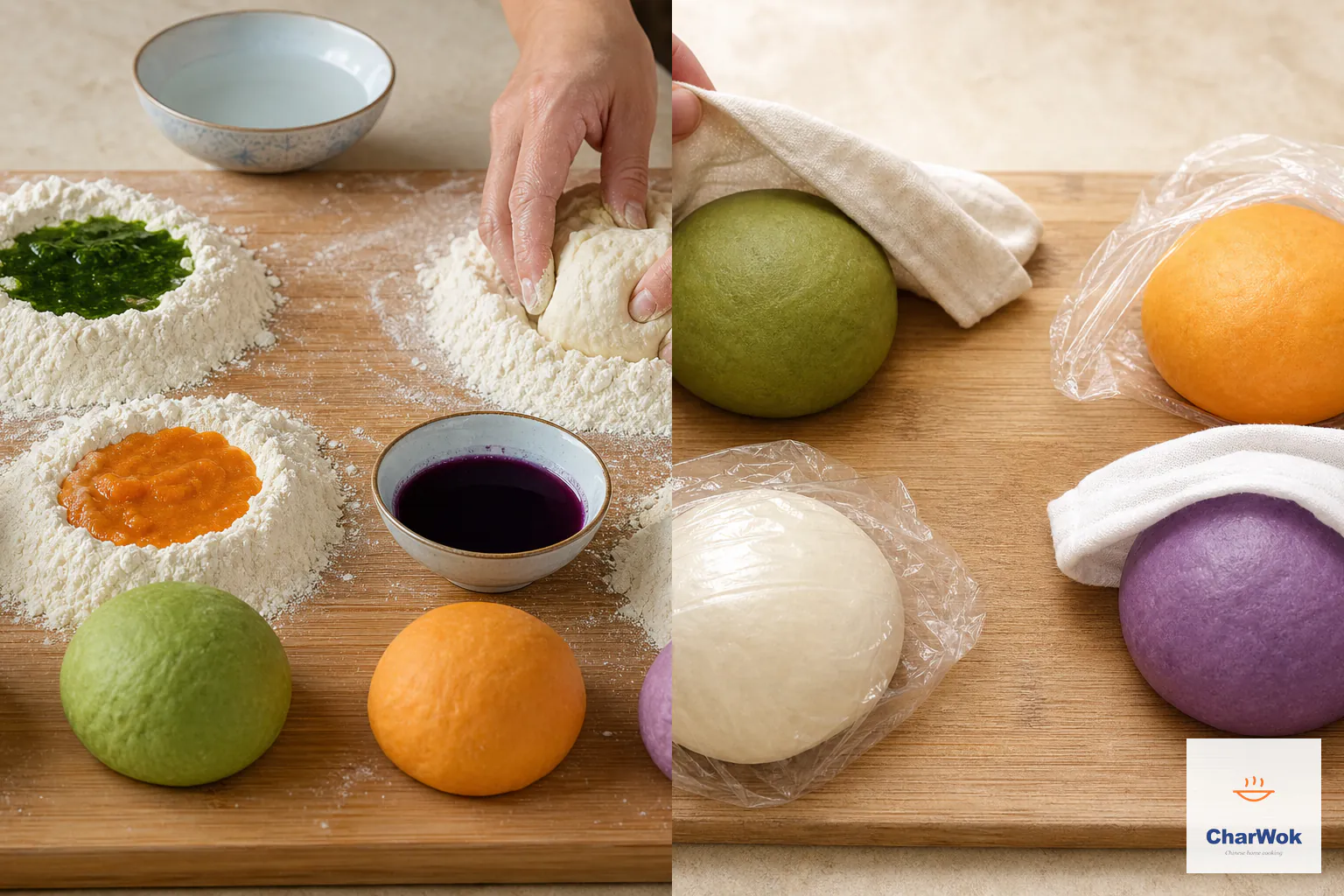
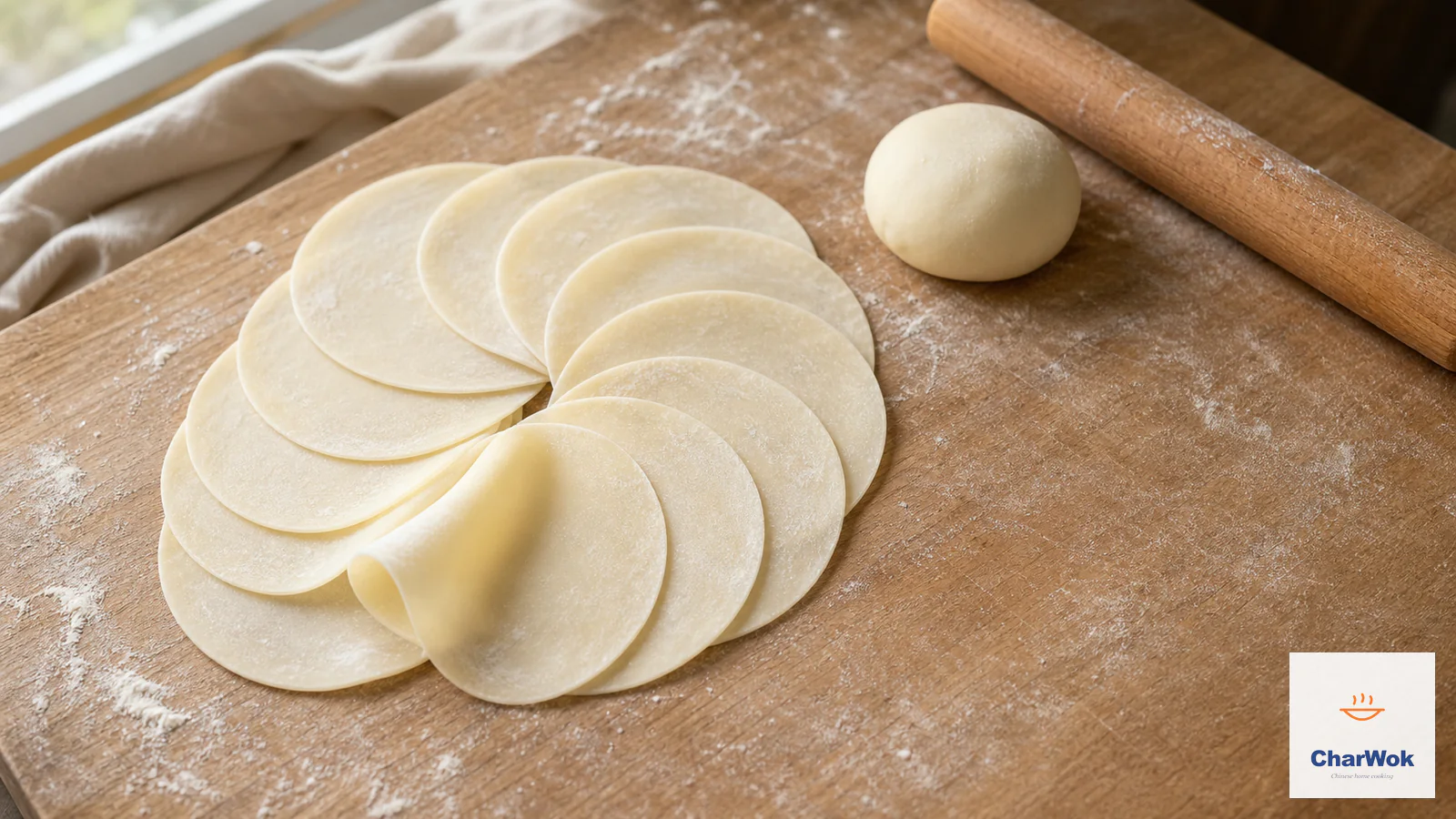
Knead each measured liquid into its own 150 g flour portion until smooth, then keep all four doughs covered for the full rest so the wrappers roll without tearing.
For each color, pour the measured liquid into 150 g flour and stir with chopsticks until shaggy. Then knead. The vegetable doughs will feel wetter than plain dough at first because plant water carries residual starch and sugar. Resist the urge to add flour. Knead for a full five minutes per dough, cover with a damp cloth, and walk away.
Here's the single most common mistake: people rest these doughs for 20 minutes the way they would for plain dumplings, and then wonder why the wrappers tear when rolled thin. Vegetable water weakens the gluten network while it hydrates, and the network needs longer to reorganize. Give every dough a full 60 minutes. If you can plan ahead, 90 minutes in the fridge, then 20 minutes at room temperature before rolling, gives you the most elastic, forgiving wrappers you'll ever handle. The plain wrapper technique is the same; only the hydration and rest time change.
The filling: one bowl, one direction
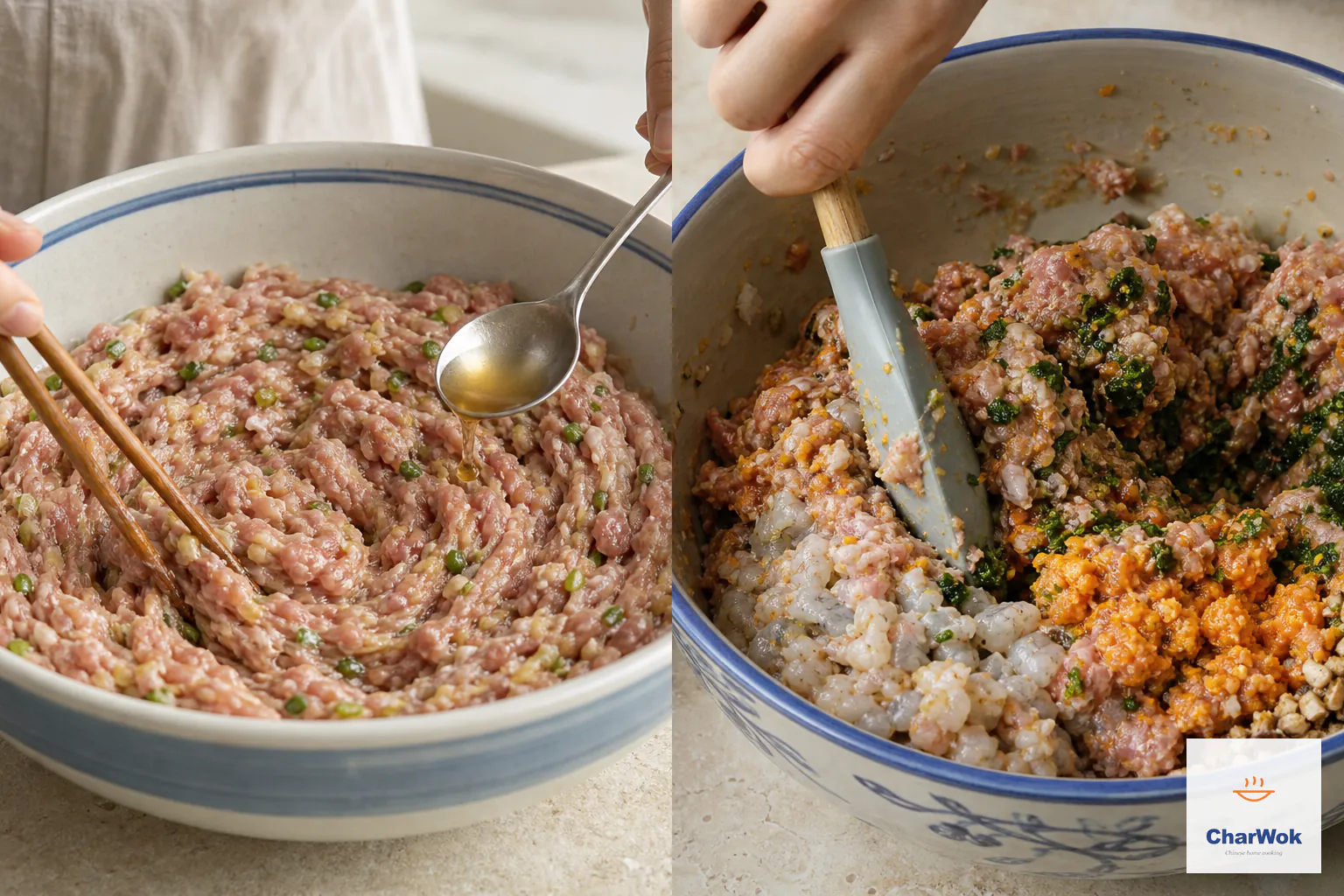
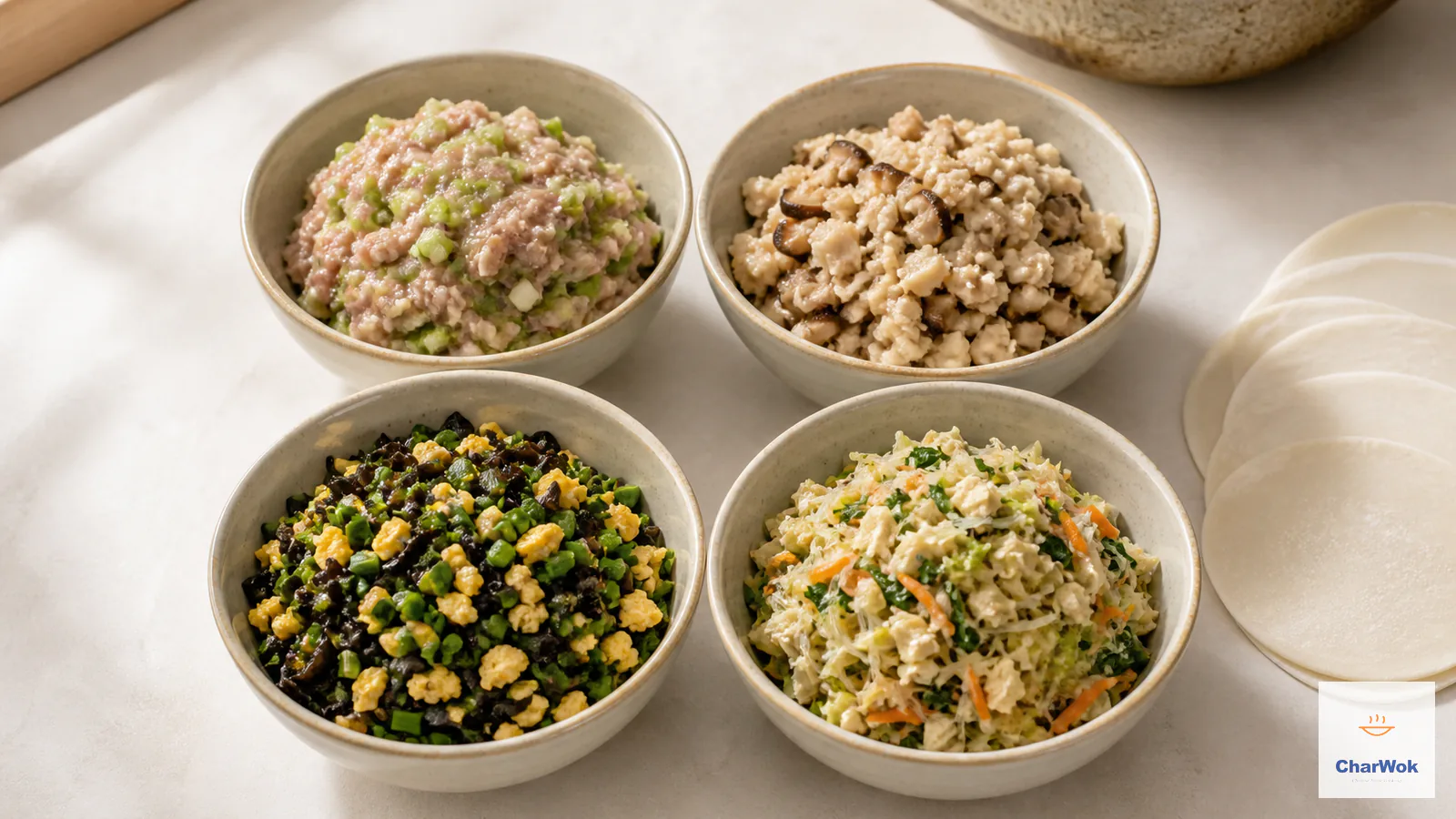
Beat mushroom water into the seasoned pork in one direction until sticky, then gently fold in the coarse shrimp, squeezed shiitake and both reserved vegetable purees.
Pork-shrimp filling is a bind-and-aerate exercise. Put the 400 g pork in a wide bowl with the salt, Sichuan pepper, soy sauce, sesame oil, oyster sauce, and ginger. Now add liquid and stir in one direction only, about five tablespoons of the mushroom soaking water, a spoon at a time, until each addition disappears. The one-direction stir is not superstition. It aligns the myosin protein strands so they trap the water you're beating in, the same principle that makes a good sausage juicy. Reverse direction and you cut those strands and the filling goes loose.
When the meat looks sticky and slightly lighter in color, fold in the minced shrimp, the rehydrated and finely chopped shiitakes, the leftover spinach pulp, and about 200 g of the leftover carrot puree. The vegetables here do double duty: flavor, and the same pigments that dyed your wrappers now fleck the filling so a bitten dumpling is colorful inside too. Fold in the scallions last so they stay bright. If you want a fuller walk through ratios and substitutions, the filling guide goes deeper than I can here.
Rolling, filling, folding
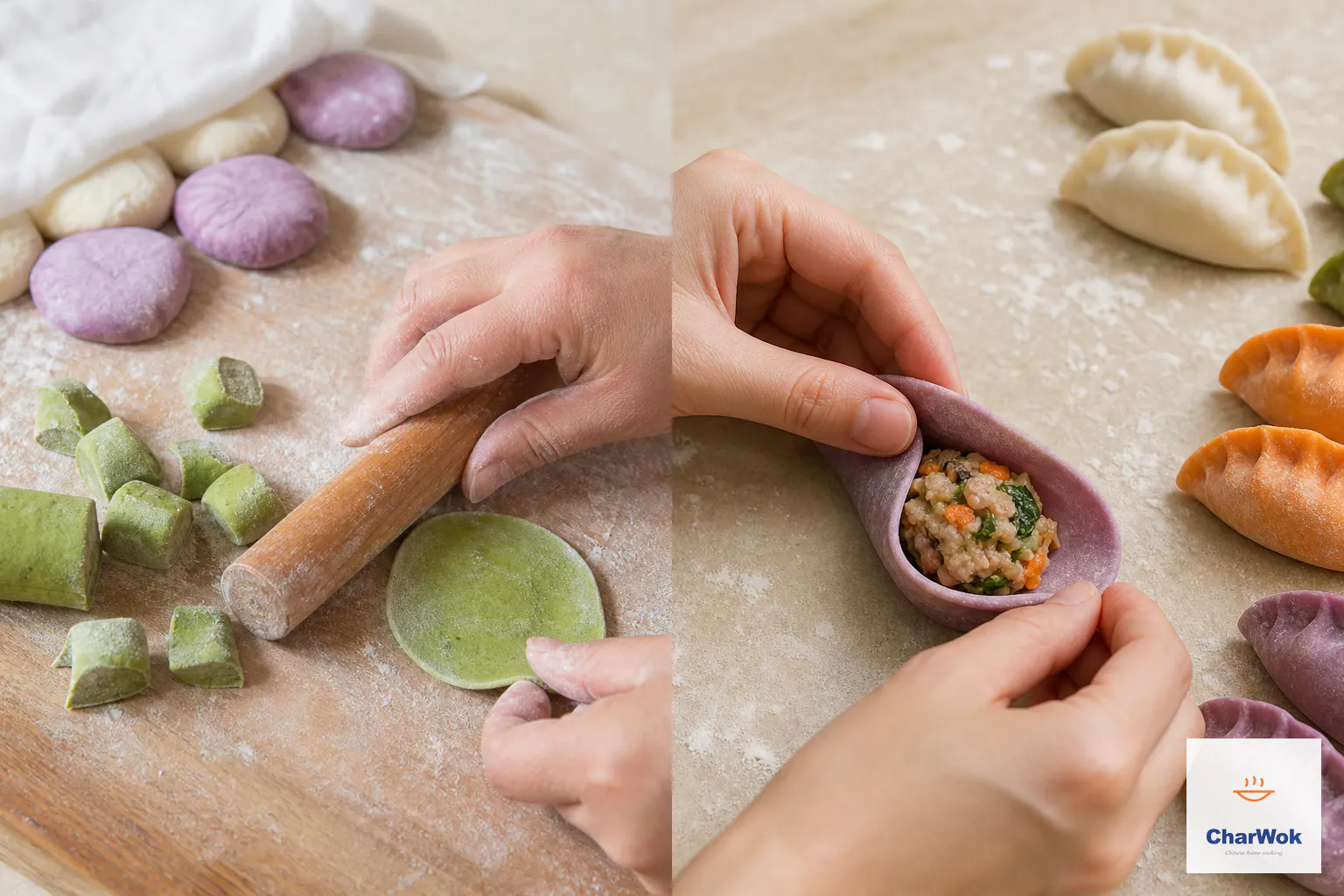
Cut one covered dough at a time into small pieces, roll a thin edge around a thicker centre, add one rounded teaspoon filling and pinch a clean airtight seam.
Work one dough at a time and keep the others wrapped. Roll a dough into a rope about 2 cm thick, cut it into 20 pieces, and keep the cut pieces under the damp cloth. Flatten a piece with your palm, then roll it out, turning a quarter turn between each pass of the pin, so the wrapper stays round and thin at the edge and slightly thicker in the center. That thicker belly is what stops the dumpling from blowing out at the seam when it cooks.
Spoon a rounded teaspoon of filling into the middle. The exact fold is up to you and is the one place I'll admit that simpler is better when you're juggling four colors. A plain half-moon pleat shows off the color best. An ingot pleat looks the part for a New Year platter. Pick two or three shapes you can do confidently rather than four you can't; uneven folds read as messy faster than uniform simple ones do. If you've never folded before, the photo walkthrough in the dumpling folding guide is the right place to start.
Three ways to cook them, and which color likes which
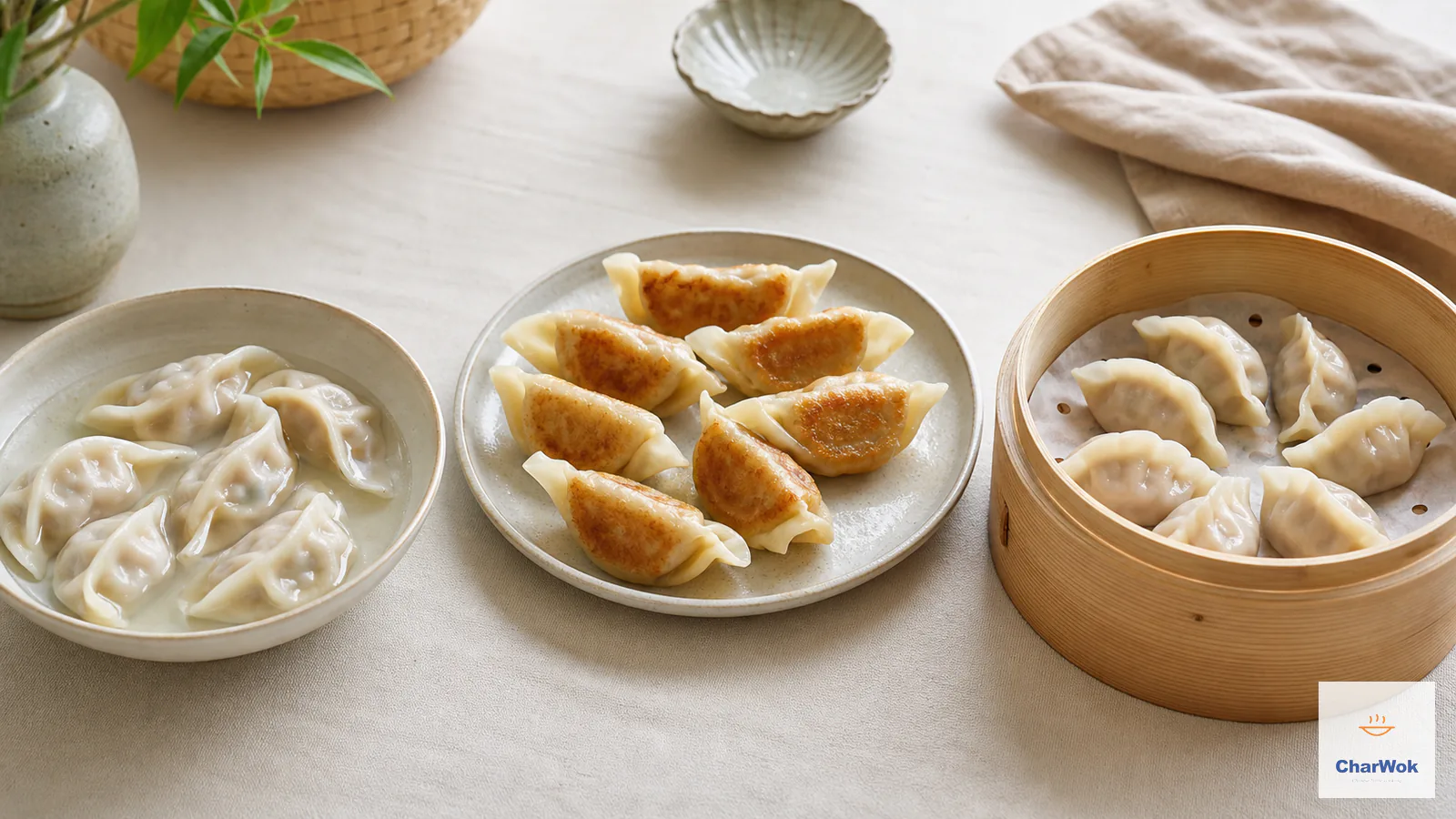
- Boiling, the default. Use the biggest pot you own and a real rolling boil. Slide the dumplings in, nudge them with the back of a spoon so they don't weld to the base, and when the water returns to a boil, pour in 120 ml cold water to knock it back. Cover. Repeat that cold-water addition twice more, three times total. The cold-water dance keeps the wrapper starch from over-gelatinizing and bursting while the pork cooks through to safe temperature. Done dumplings float and look plump. This method preserves color the best.
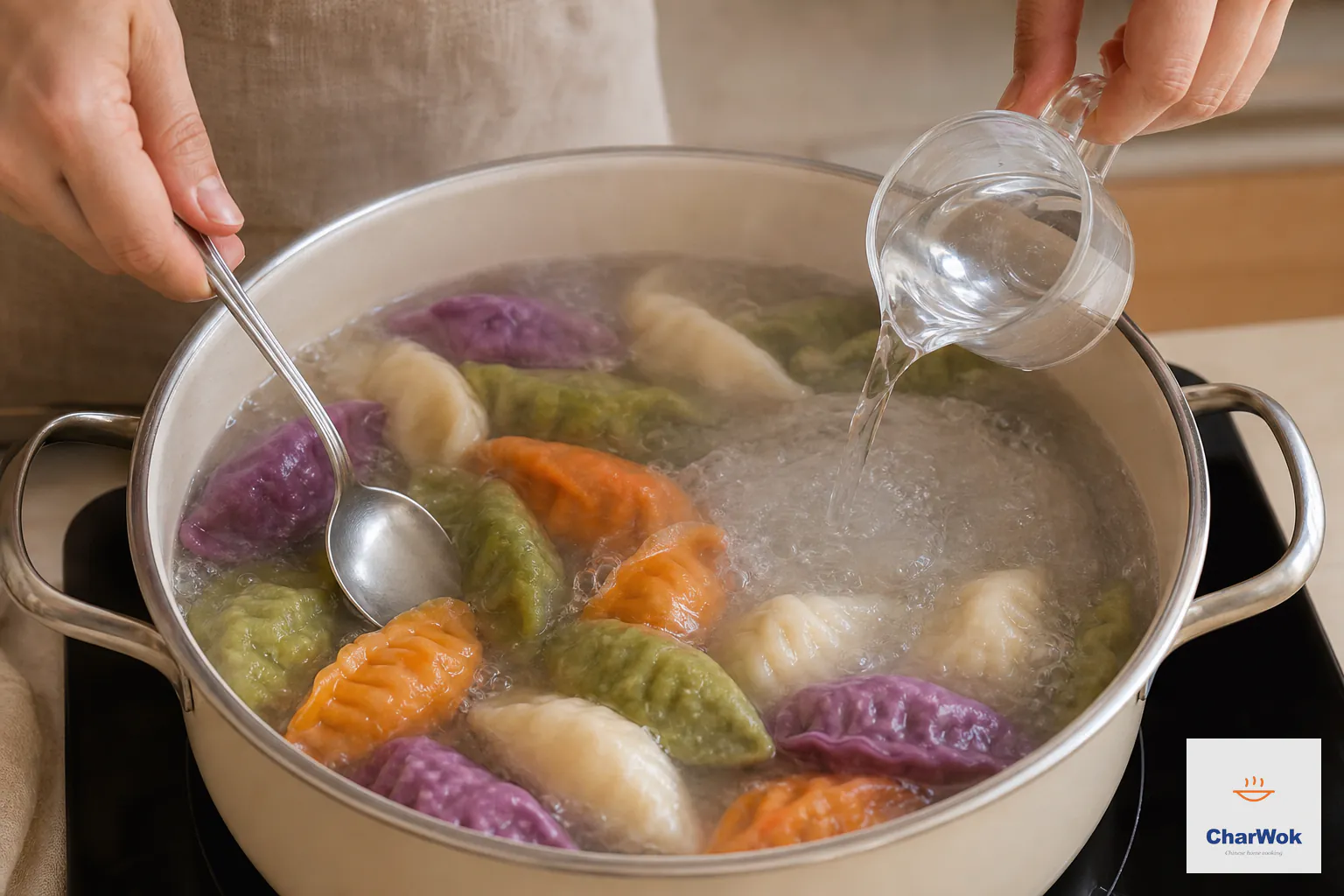
Start at a full boil, nudge the dumplings free, then add 120 ml cold water every time the boil returns; repeat three times until they float plump and intact.
- Pan-frying, for texture. Film a heavy pan with oil over high heat, stand the dumplings up, and fry until the bases are deep gold. Pour in water to come a third of the way up, clap on the lid, and let it hiss until the water is gone, then another 30 seconds uncovered to crisp. The golden base is Maillard browning on the wrapper starch; the lid-steam finishes the pork. This is the same method behind good pan-fried pork and chive dumplings, and it gives you the prettiest cross-section.
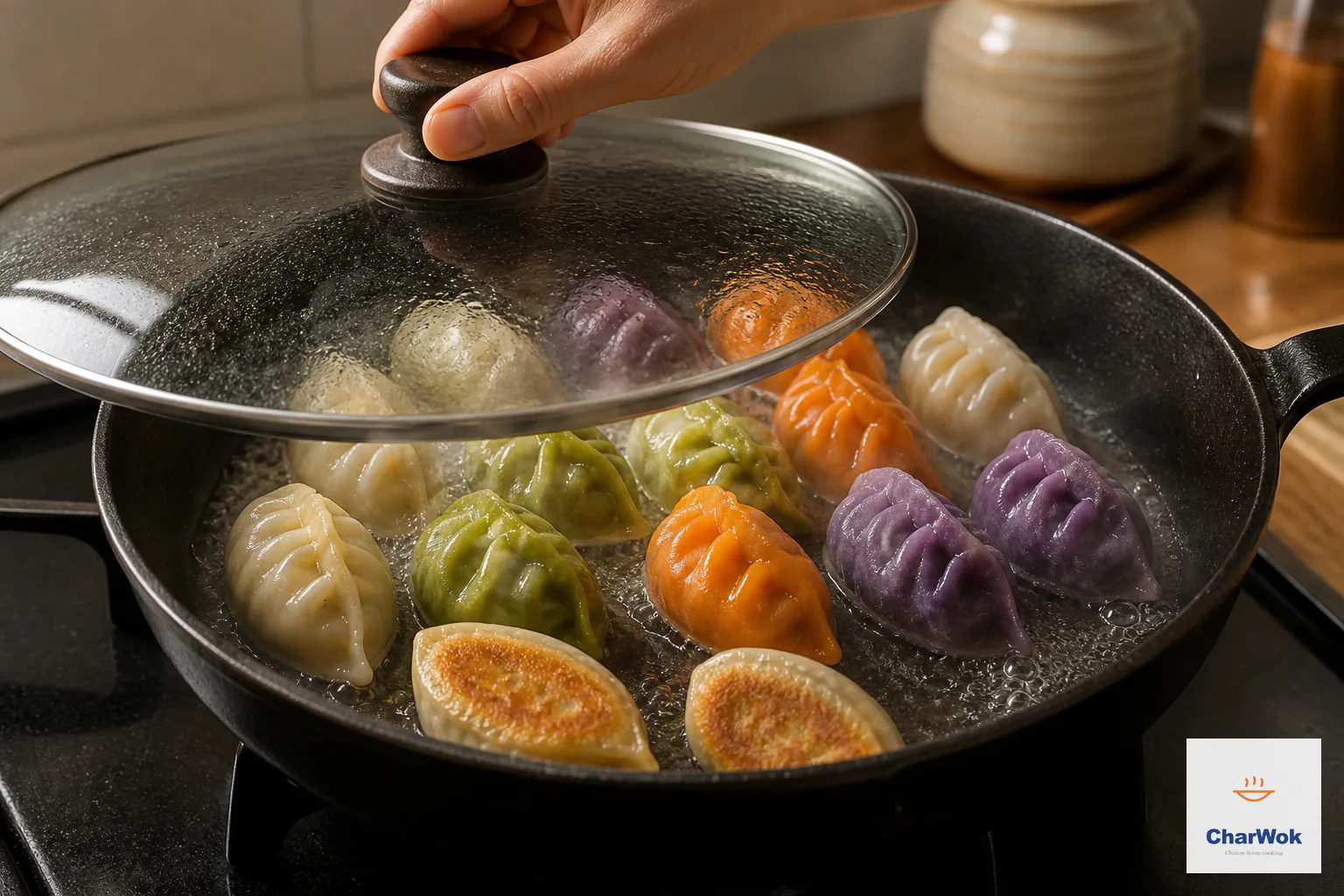
Brown the bases first, add water to one-third of the dumpling height and cover; when dry, uncover for 30 seconds to restore the crisp golden bottoms.
- Steaming, the risky one. Ten minutes in a bamboo steamer over medium heat. Line the basket with parchment or carrot slices, or oil it, or the wrappers will stick and tear. Honest warning: the purple cabbage dough sometimes turns a bruised teal in the steam because steam is slightly acidic and the anthocyanins react. Boil the purple ones, steam the others, if you care about the color.
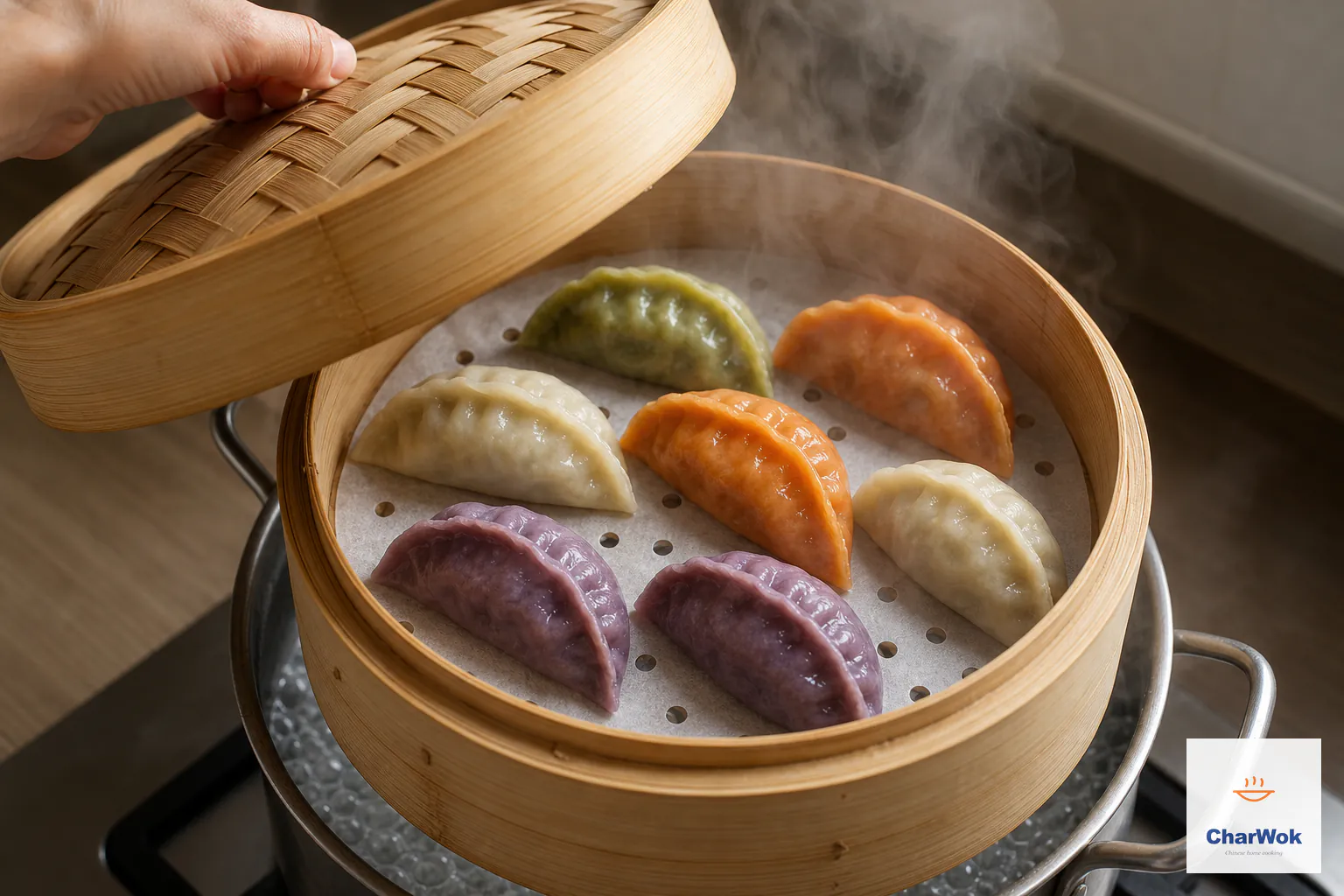
Keep the crescent dumplings apart on an oiled or lined basket, wait for a full boil, then steam over medium heat for about 10 minutes.
For the full method breakdown across all three, with timing for frozen dumplings too, the three-ways cooking guide has you covered. Whichever method you choose, serve with one of the six classic dumpling sauces; a simple black vinegar and chili oil dip is what I reach for first.
What goes wrong, and the fix
I have personally made every one of these mistakes.
- Dough tears when you roll it. It hasn't rested long enough, or it dried out. Wrap it again and give it another 30 minutes. Rest is not optional with vegetable doughs.
- Green dough looks brown or khaki. You over-blanched the spinach, or you didn't shock it in cold water, and the chlorophyll degraded. Fifteen seconds in the boiling water, straight into ice water. That's the whole rule.
- Purple dough turns blue or gray. Anthocyanins reacting to alkali, often your tap water if it's hard, or to baking soda in the kitchen air. A few drops of vinegar or lemon in the dye water pushes it back toward magenta and locks it there.
- Orange dough barely shows. You used the cooking water and threw away the pulp. The beta-carotene lives in the fiber. You need the puree, not the broth.
- Dumplings split open in the pot. Either the wrappers were rolled too thin at the center, the pot wasn't at a full boil when they went in, or you crowded the pot and the temperature crashed. Cook in batches of 15 to 20, and keep that water raging.
- Filling is dense and dry. You didn't beat in enough liquid, or you stirred in both directions and broke the protein network. Next time, more mushroom water, one direction, patient.
- Filling weeps oily liquid after cooking. The pork was too fatty, or you overcooked. 80 to 85% lean pork is the sweet spot.
- Color fades overnight in the fridge. It will, especially the green. These are same-day dumplings. Freeze what you won't eat.
Variations and what to serve alongside
Once the dye method clicks, the palette is wide. Beet juice gives a true red that holds up to boiling better than cabbage does. Turmeric in the hot water makes a sunny yellow dough, but use only ¼ tsp per 150 g flour or the dough gets gritty and tastes of curry. Squid ink gives a dramatic black, but pair it with a lighter filling or the whole dumpling reads heavy. If you want a single showstopper without four doughs, the shrimp-and-pork siu mai uses the same filling logic with an open top that shows off the colors of the ingredients themselves.
For a New Year table I'd round the platter out with something cold, something braised, and something sweet. A plate of smashed cucumber or a bright Sichuan-style cold dish cuts the richness of the pork. A braise like red-cooked pork belly or three-cup chicken gives the table weight. And because the dumplings are the savory centerpiece, finish with tang yuan, the sweet glutinous rice balls that round out the symbolism of roundness and reunion. You can find more ideas in the round-up of the best Chinese dumpling recipes if you want to build a whole dumpling-centric meal.
Storage and reheating
Freeze them. Lay freshly folded dumplings on a parchment-lined tray not touching, freeze until solid, then transfer to a bag. They keep two months and cook from frozen with no thawing; just add one extra cold-water splash to the boiling pot, or two extra minutes under the steamer lid. The fridge is the enemy of color and of raw dough; don't store assembled raw dumplings there for more than a few hours, the wrappers weep and stick. Cooked leftovers reheat best in a dry pan with a lid and a tablespoon of water, or in the steamer. Microwaving ruins the wrapper texture.
Frequently asked questions
Can I make the doughs the day before? Yes, and I often do. Wrap each tightly and refrigerate. Let them sit at room temperature for 20 to 30 minutes before rolling so the gluten relaxes.
Why did my purple dumplings turn blue? Red cabbage pigment reacts to pH. Hard tap water or any alkali pushes it blue-green; a few drops of vinegar in the dye water hold it purple.
Do I have to use all four colors? No. Pick one or two. Spinach green and plain white together still look like a celebration and halve the work.
Is there a gluten-free version? A wheat-starch wrapper with hot water works for some gluten sensitivities but is not safe for celiac disease. A rice-flour dough is too brittle to fold thin. I'd point gluten-free cooks toward a steamed cabbage roll instead of a folded dumpling.
Can I hide a coin for luck? Boil a clean whole nut, never a coin. A coin can chip a tooth and isn't food-safe at boiling temperature.