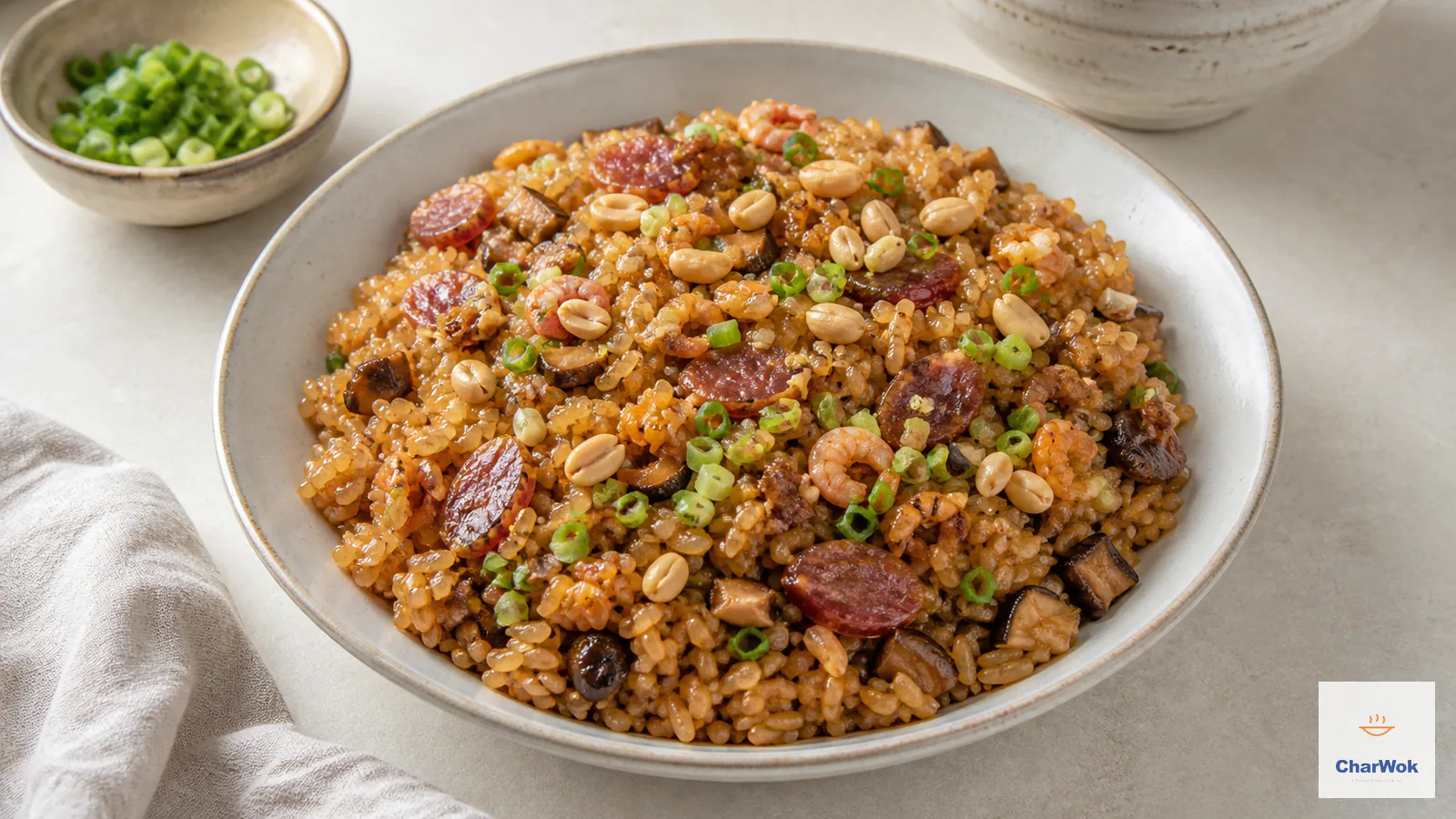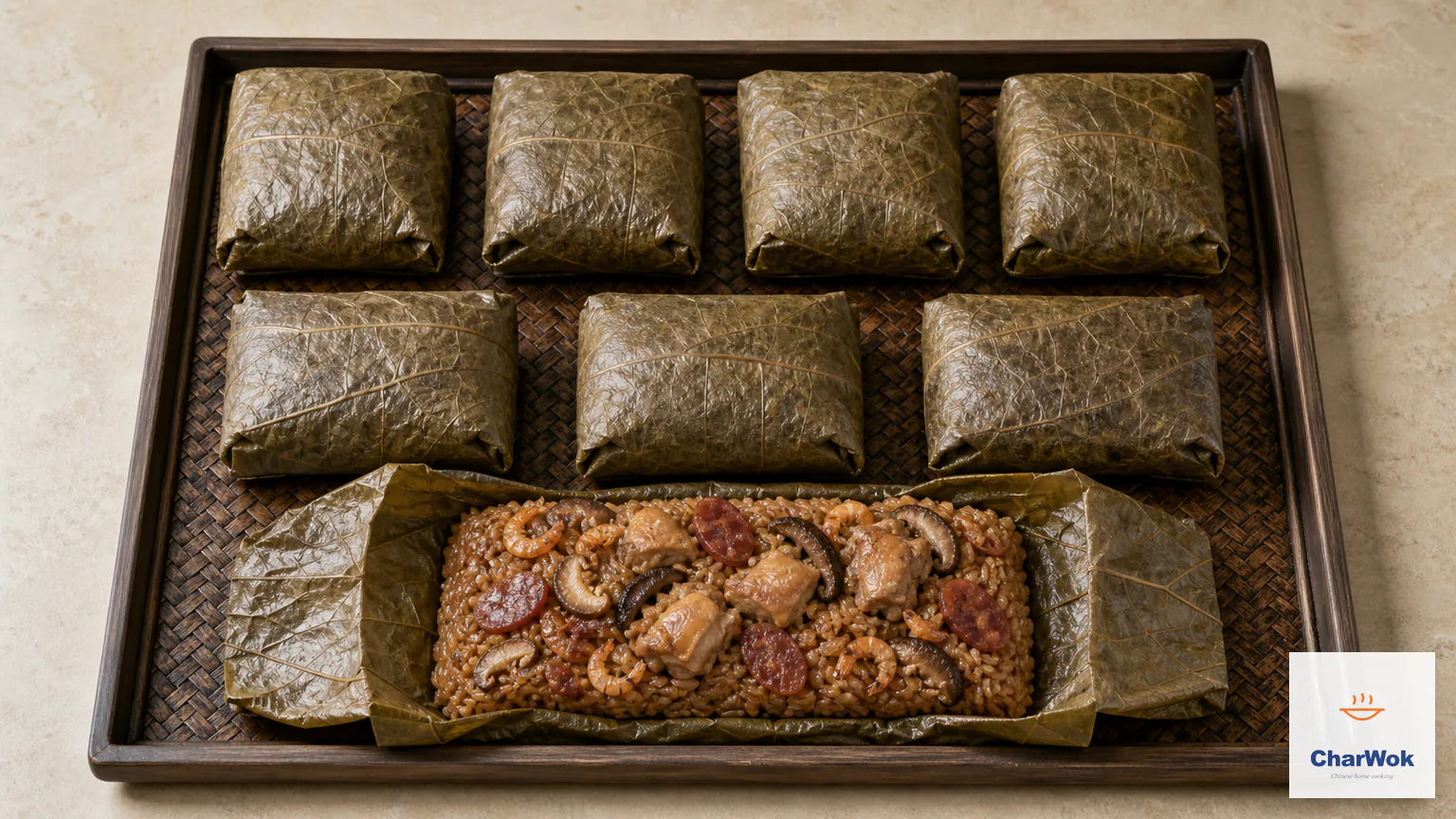
The first time I unwrapped a proper lo mai gai at home, I understood why dim sum carts treat this parcel as a quiet luxury. It looks plain from the outside, a folded lotus leaf the color of old kraft paper. Open it and you get glossy sticky rice glued together with dark soy, nuggets of thigh meat that have gone slack in their own seasoned juices, sweet lap cheong sausage, and rehydrated mushrooms carrying the broth they were soaked in. One bite and the rice tastes like it has been cooking in chicken stock for hours, even though it hasn't.
Most home recipes for lo mai gai fail in two predictable ways. Either the rice stays chalky in the center because it was under-soaked, or the parcel steams into a pale, under-seasoned lump because the cook skipped the stir-fry step and just dumped raw rice into the leaf. The version I make fixes both. You soak the glutinous rice properly, you par-cook it in a seasoned wok so every grain is lacquered before it ever sees steam, and you wrap it in lotus leaves that perfume the rice as the moisture works its way through. This is the same logic behind a great bowl-style lo mai fan, but pushed toward the dim sum original.
At a glance: 450 g glutinous rice (2 cups) soaked at least 6 hours, stir-fried into a seasoned chicken-and-mushroom mix, then wrapped in lotus leaves and steamed for 1 hour 15 minutes. The single decision that makes or breaks the dish is pre-frying the rice in the sauce before steaming. Skip that and you get bland, uneven grains every time.
What lo mai gai actually is
Lo mai gai (糯米鸡, "glutinous rice with chicken") is a Cantonese dim sum staple that came out of the night markets and tea houses of Guangzhou in the early twentieth century. The older, grander versions were wrapped in a whole lotus leaf and could feed two people; the modern dim sum cart parcel is a smaller, single-serve fold. It belongs to the same family of leaf-wrapped rice dishes as zongzi, the bamboo-leaf sticky rice dumplings eaten at the Dragon Boat Festival, and the Sichuan ye'er ba rice cakes. What sets lo mai gai apart is the savory filling, the lotus leaf, and the fact that the rice is flavored twice, once in the wok and once again in the steam.
The lotus leaf is not decoration. As the parcel steams, the leaf's own mild green, earthy aroma migrates into the rice, the same way banana leaf perfumes Southeast Asian dishes. Parchment or foil will cook the rice, but they will never give you the smell that tells you the dish is done. If you cannot find lotus leaves, you can still make the recipe in a heatproof bowl (see the variations below), but try the leaves at least once.
Ingredients
Ingredients at a glance
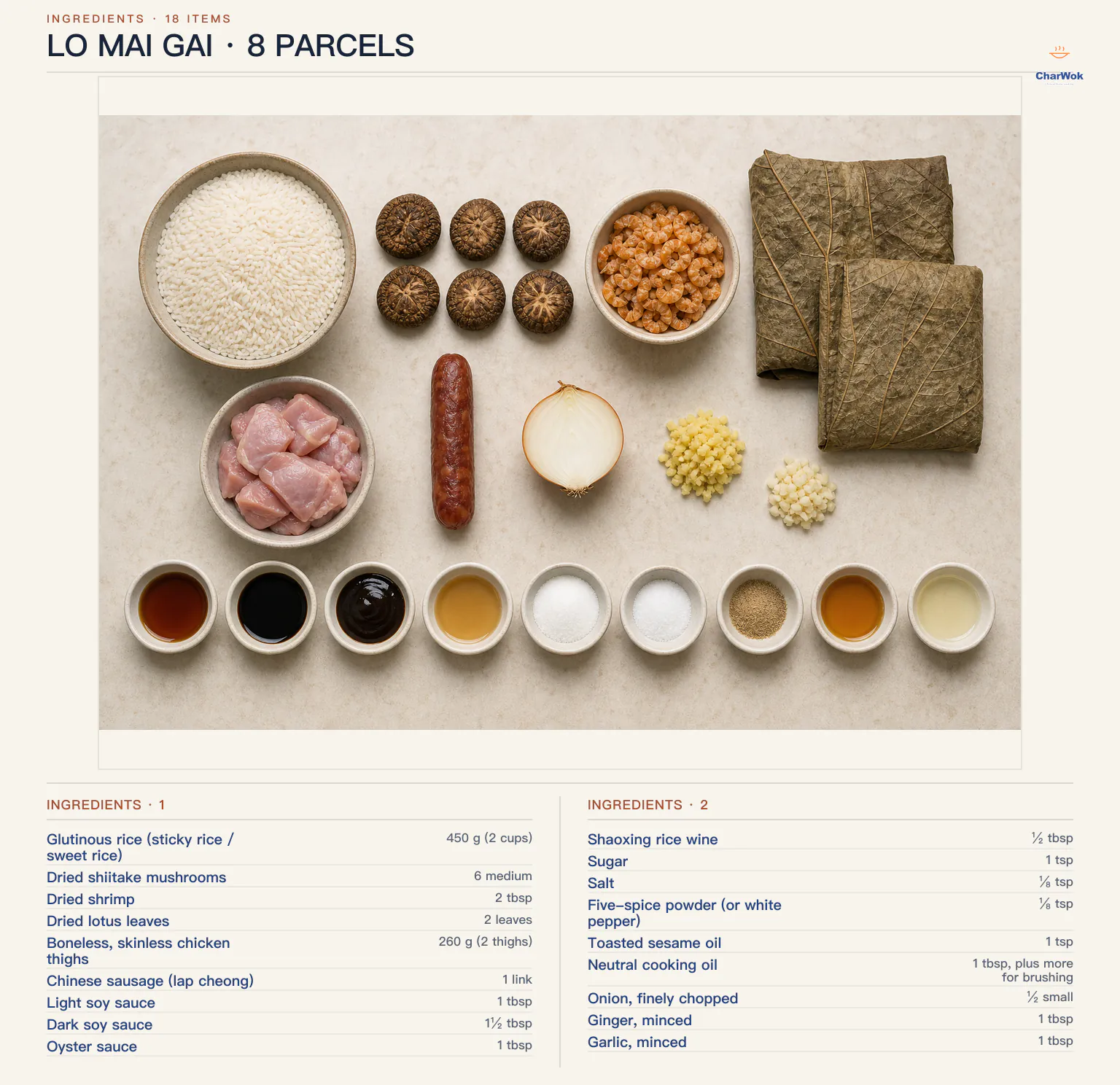
| Ingredient | Amount | Notes / substitute |
|---|---|---|
| Glutinous rice (sticky rice / sweet rice) | 450 g (2 cups) | Long-grain Thai sweet rice, not the round "mochi" type. Don't substitute jasmine; it won't stick. |
| Dried shiitake mushrooms | 6 medium | Save the soaking liquid; it is half the flavor of the sauce. See the dried shiitake guide. |
| Dried shrimp | 2 tbsp | Optional but highly recommended. Dried scallops, soaked and shredded, are a luxury swap. Details in the dried shrimp guide. |
| Dried lotus leaves | 2 leaves | Cut into 4 pieces each for 8 parcels. Found frozen or dried in Chinese grocers. |
| Boneless, skinless chicken thighs | 260 g (2 thighs) | Thighs, not breast. Breast dries out during the long steam. |
| Chinese sausage (lap cheong) | 1 link | If unavailable, use a little chopped cured bacon or omit and add extra dried shrimp. |
| Light soy sauce | 1 tbsp | For salt and a clean savory note. Light vs. dark soy matter here. |
| Dark soy sauce | 1½ tbsp | For the deep reddish-brown color. No substitute. |
| Oyster sauce | 1 tbsp | Body and a touch of sweetness. |
| Shaoxing rice wine | ½ tbsp | Removes the raw smell from the chicken. Shaoxing wine is the right one. |
| Sugar | 1 tsp | Balances the dark soy. Don't skip. |
| Salt | ⅛ tsp | The sauces are salty; taste before adding more. |
| Five-spice powder (or white pepper) | ⅛ tsp | Five-spice reads as more "dim sum." Use homemade five-spice if you have it. |
| Toasted sesame oil | 1 tsp | Stirred in at the end for aroma. See the sesame oil guide. |
| Neutral cooking oil | 1 tbsp, plus more for brushing | Grapeseed, canola, or peanut. |
| Onion, finely chopped | ½ small | Sweet yellow or white onion. |
| Ginger, minced | 1 tbsp | |
| Garlic, minced | 1 tbsp |
Equipment you will want
A well-seasoned wok makes the stir-fry step easier, but a large nonstick skillet works. For steaming you need a setup that fits eight parcels, which means a wide pot and a bamboo steamer or a plate-on-a-rack arrangement. If you have never used one, the bamboo steamer guide covers the lid, water level, and how to keep condensation off the food. Wet heat is the whole point of this dish, so do not try to bake or pan-fry your way around it.
Method, with the why at every step
- Soak the rice overnight, not for an hour. Rinse 450 g glutinous rice until the water runs clear, then cover it by at least 5 cm (2 in) of water and leave it 6 hours or overnight. Glutinous rice needs time to fully hydrate; the starch granules have to absorb water all the way to the core or the center stays hard no matter how long you steam. A short soak leaves you with grains that are soft outside and gritty inside.
- Rehydrate the mushrooms and shrimp in separate bowls, and keep both soaking liquids. Cover 6 dried shiitakes with water for at least 6 hours (or hot water for 30 minutes in a pinch). Pour 2 tbsp hot water over the dried shrimp and let it sit 10 minutes. Strain both liquids through a fine mesh to catch grit. This liquid is free umami and becomes the base of your sauce. Drain the mushrooms, squeeze them, trim the tough stems, and slice. Chop the shrimp finely.
- Soften the lotus leaves under water for an hour. Spread the leaves in a wide tray, drown them in water, and set a plate on top to keep every corner under. Left for an hour they turn from crackling dry to soft and leathery enough to fold around the rice. Cut off the hard stem nub and split each leaf into 4 equal pieces. You want 8 pieces for 8 parcels.
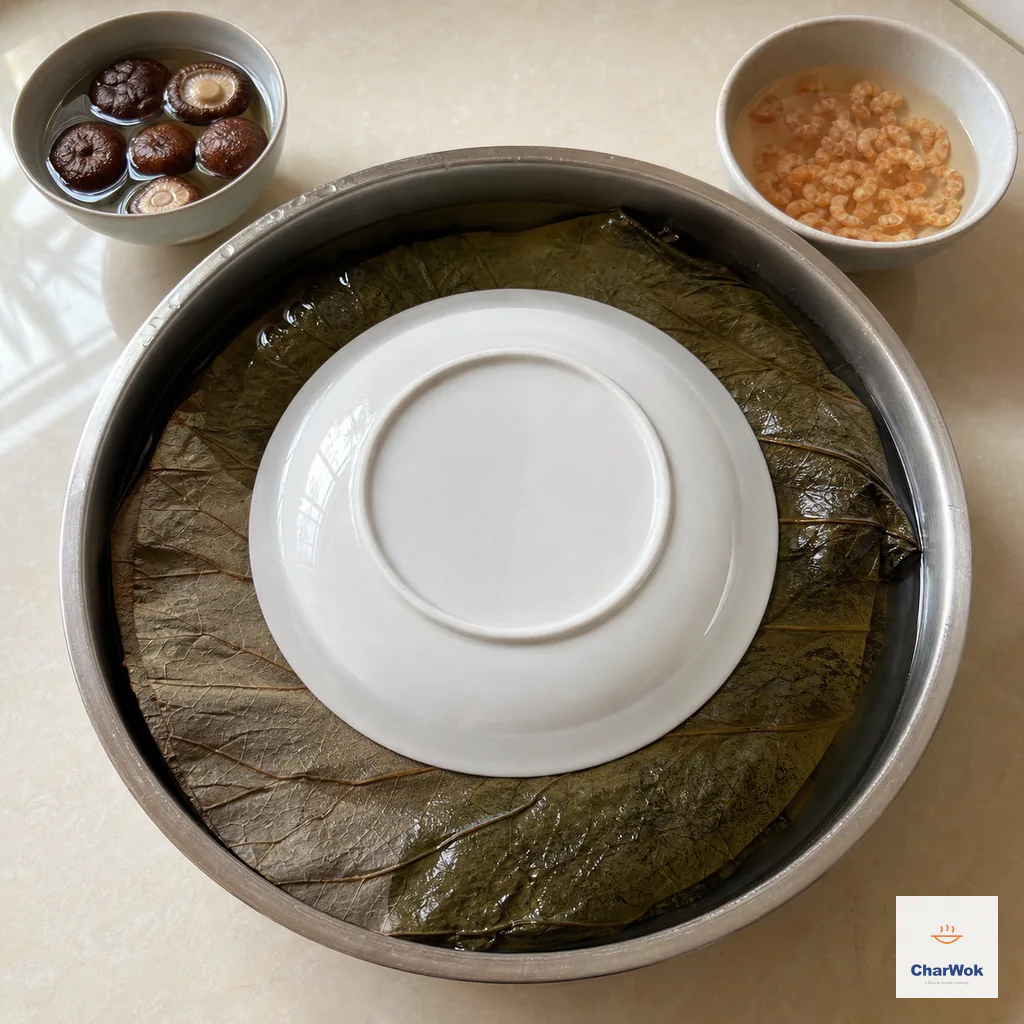
Keep both lotus leaves completely underwater beneath a plate for one hour, then remove the hard stems and cut the softened leaves into eight equal pieces
- Cut the meat. Slice the chicken thighs into bite-sized pieces roughly 2 cm (¾ in). Cut the lap cheong on a slight diagonal into thin coins. Diagonal slices look better and expose more surface to render the sausage fat into the rice.
- Mix the sauce and stretch it with the soaking liquids. In a bowl, combine the light soy, dark soy, oyster sauce, Shaoxing wine, sugar, salt, five-spice, and sesame oil. Stir in the shrimp soaking water and about 80 ml (⅓ cup) of the mushroom soaking water. Set aside. You are building a thin braising liquid, not a thick sauce; the rice will drink most of it.
- Bloom the aromatics. Heat 1 tbsp oil in the wok over medium-high. Add the onion, ginger, and garlic and fry until fragrant but not browned, about 30 seconds. You are extracting fat-soluble flavor compounds here, so do not rush; raw garlic in the final rice is unpleasant.
- Render the sausage and shrimp first, mushrooms last. Add the dried shrimp and lap cheong and let them go until the white fat ring on the sausage has melted clear and the air turns sweet and cured, roughly a minute. Then slide the mushrooms in and give them a quick half-minute toss before scooping everything out onto a plate. Cooking the mushrooms last and briefly keeps them from turning rubbery.
- Sear the chicken only until the pink is mostly gone. In the same wok, lay the chicken in a single layer and let it sear undisturbed for 30 seconds before stirring. Pull it off the heat while the outsides are just sealed and no longer raw-looking, even though the middle is still rosy. The chicken will finish cooking inside the parcel during the steam; if you cook it fully now it will be dry later.
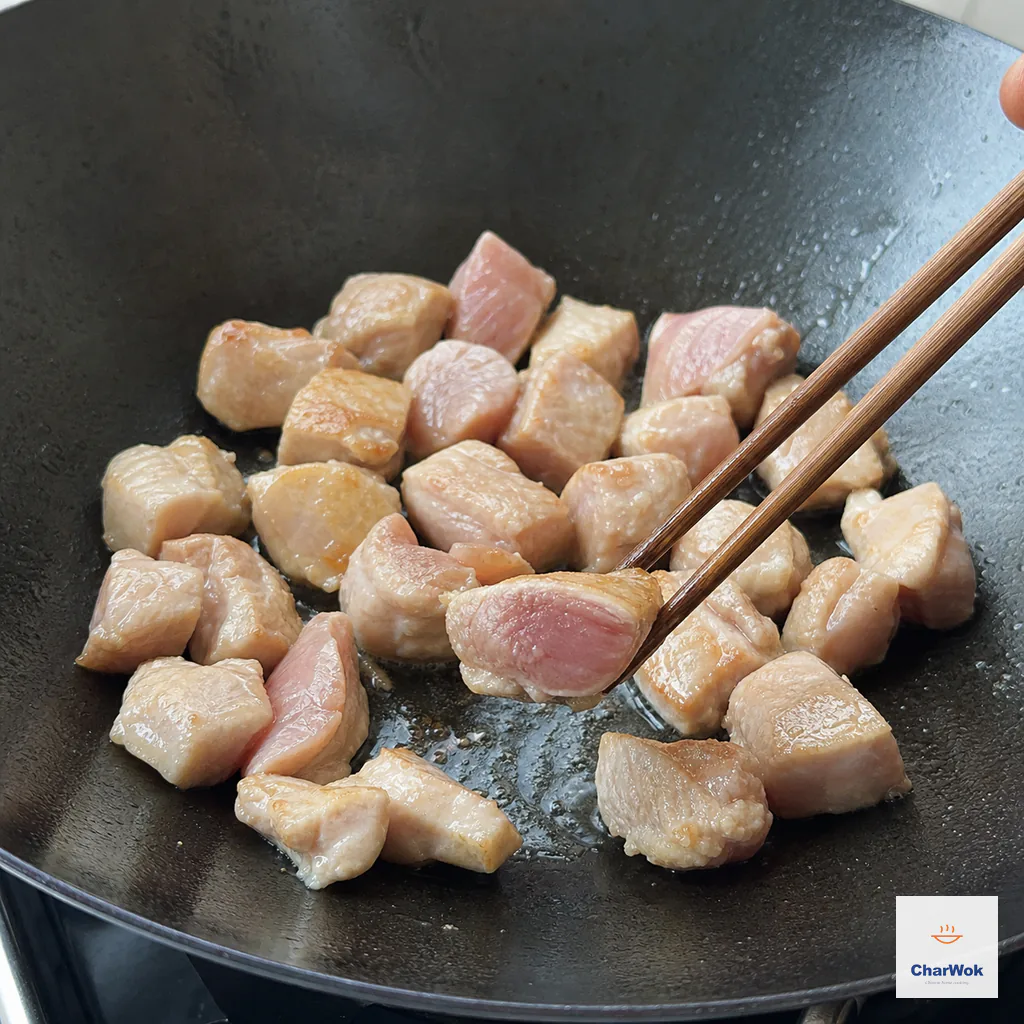
Sear the chicken only until the outside is sealed and no longer raw-looking; leave the center rosy so the long steam does not dry it out
- Add the rice and the sauce, and stir-fry until the grains turn glassy. Pour in the drained glutinous rice and the sauce mixture. Toss constantly over medium-high heat for about 3 minutes, until every grain is coated and the rice looks translucent and slightly sticky at the edges. This is the step that separates good lo mai gai from the pale, bland kind. You are pre-gelatinizing the surface starch so the rice absorbs the sauce before the steam ever touches it.
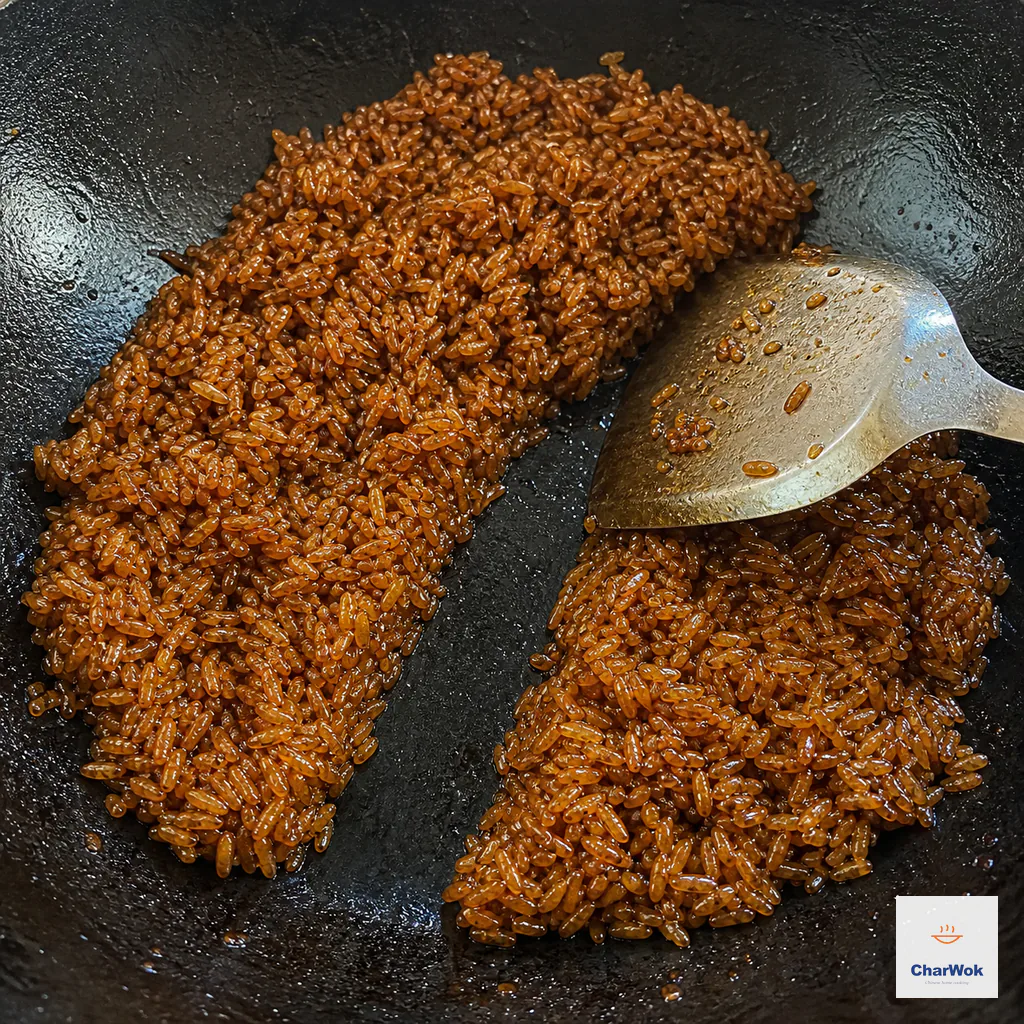
Stir-fry the drained rice with the sauce for about three minutes, until every grain looks glassy and sticky and a spatula trail stays free of flowing liquid
- Fold in the reserved sausage, mushrooms, and aromatics. Return everything to the wok, toss to combine, and take it off the heat. Let the mix cool until you can handle it. Hot filling wilts and tears the lotus leaves.
- Wrap the parcels. Lay a leaf piece smooth-side up. Swipe a little oil across the patch of leaf the rice will touch, so the cooked parcel peels open instead of tearing the leaf away with it. Spoon one-eighth of the mixture (about 100 g) just below center. Fold the sides in, then fold the bottom up over the filling and roll it into a neat parcel. Tie with kitchen twine if your leaves are reluctant to stay closed; it is optional but reassuring.
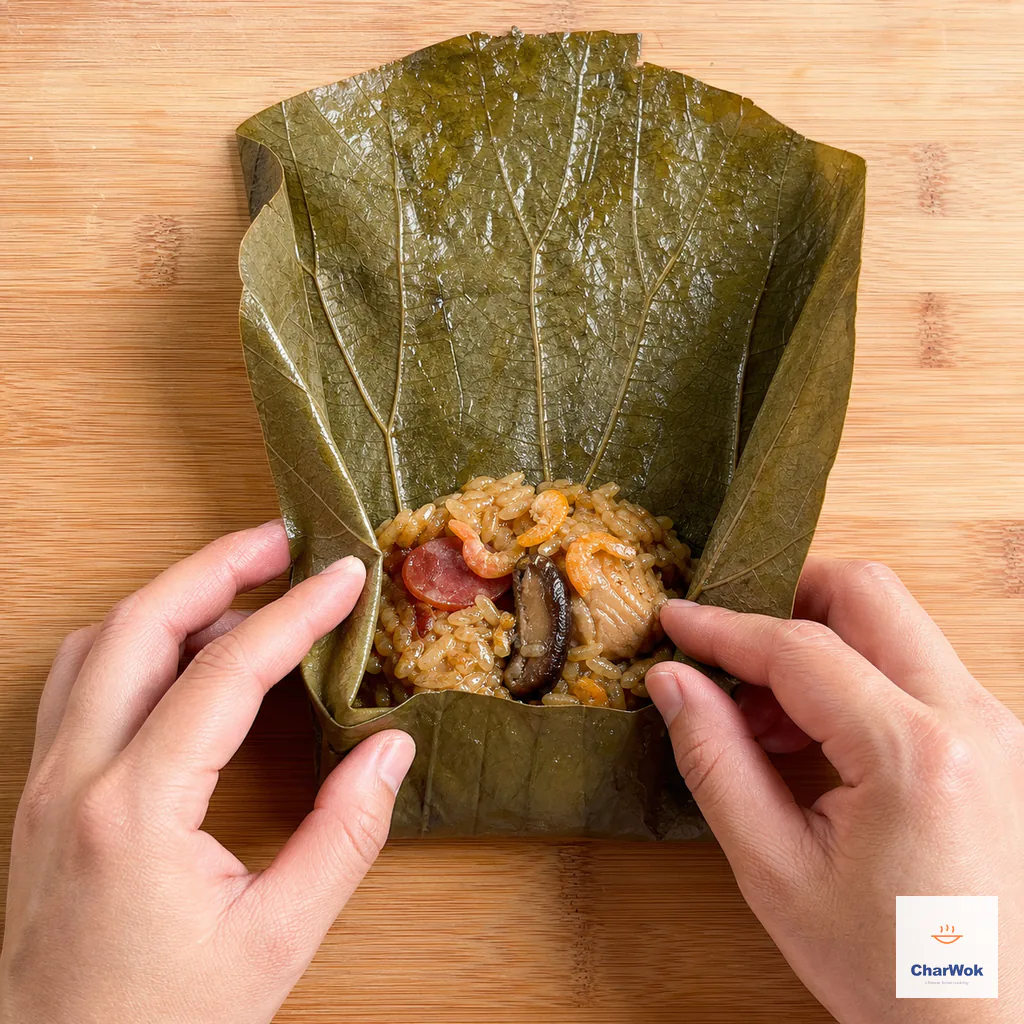
Place about 100 g, or one eighth of the filling, just below center on the lightly oiled smooth side; fold in both sides, fold up the bottom, and roll into a neat parcel
- Steam for 1 hour 15 minutes. Arrange the parcels seam-side down in the steamer, leaving space between them for steam to circulate. Bring the water to a full boil, then drop to a steady medium-low and steam for 1 hour 15 minutes. The long, gentle steam does two things: it finishes hydrating and softening the rice all the way through, and it lets the lotus leaf's aroma migrate into the grains. Check the water level once or twice and top up with boiling water if needed so the pot doesn't run dry.
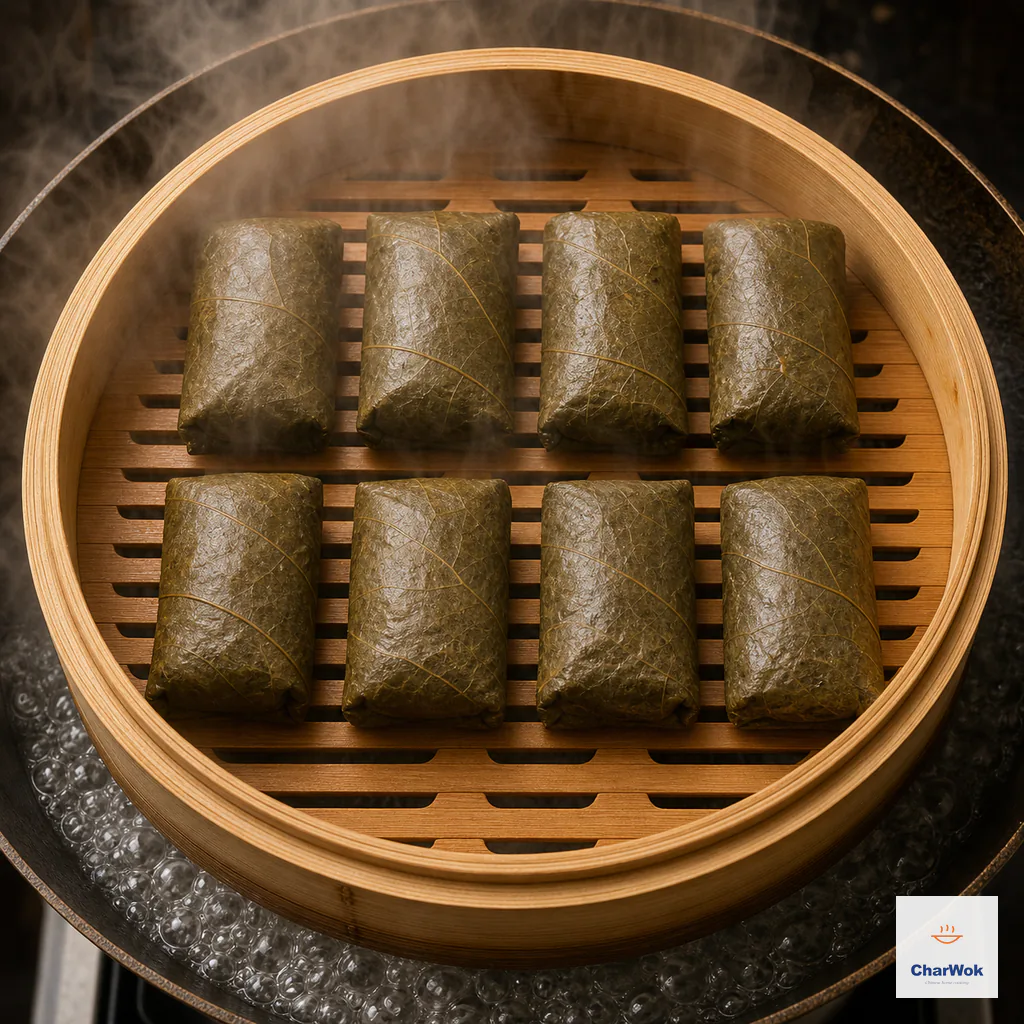
Arrange all eight parcels seam-side down with gaps for circulation, bring the water to a full boil, then steam over medium-low heat for 1 hour 15 minutes
- Rest 2 minutes before opening. Let the parcels sit off the heat for a couple of minutes. This lets the steam settle and the rice firm up just enough to hold together when you unwrap.
When it goes wrong, and how to fix it
I have made every mistake below at least once. The good news is most are recoverable.
- Chalky center in the rice. The soak was too short, or the parcels were packed too tight for steam to reach the middle. Fix: open the parcel, return the rice to a bowl with a splash of water or stock, cover, and steam another 15 minutes. Next time, soak the full 6 hours minimum and don't overfill the parcels.
- Pale, bland rice. You skipped the stir-fry step or under-seasoned the sauce. The color and salt have to go in during the wok stage; steaming will not add flavor on its own. Fix at the table with a drizzle of light soy mixed with a few drops of sesame oil. Next time, taste the sauce before adding the rice; it should be slightly too salty, because the rice will dilute it.
- Rice too wet and stodgy. Either the rice wasn't drained well after soaking, or you used too much soaking liquid in the sauce. The parcels should be glossy, not soupy. Fix: open the parcel and finish uncovered in the steamer for 5 minutes to evaporate the excess.
- Chicken dry and stringy. You cooked the chicken all the way through in the wok. It only needs to lose its raw color; the steam finishes it. Use thighs, never breast.
- Lotus leaf splits while folding. The leaf wasn't soaked long enough, or you folded cold straight from the fridge. Re-soak torn leaves in warm water for 10 minutes and they will become flexible again. Patch small tears with an extra strip of leaf.
- Parcels stick to the steamer. You skipped the oil brushing or placed them seam-side up. Always oil the leaf where the rice sits and steam seam-side down.
Variations and what to serve with it
Lo mai gai is flexible in a way that surprises people who have only ordered it from a cart. Once you have the base technique, the filling is up for negotiation. Here are directions I keep coming back to.
- Upgrade the protein. Replace the chicken with diced char siu, or add a few chopped dried scallops for a richer, banquet-style parcel. Pearl meatballs, the sticky-rice-coated pork meatballs, use the same rice logic and pair beautifully on a dim sum spread.
- Make it a vegetarian parcel. Skip the meat and sausage, double the mushrooms, and add diced carrot, water chestnut, and a spoon of toasted sesame paste for body. Use mushroom soaking liquid as the only braising liquid.
- No lotus leaves? Use a bowl. Press the seasoned rice mixture into a heatproof bowl, cover with foil, and steam 40 minutes. Invert onto a plate. You lose the leaf aroma but none of the flavor, and it is the easiest path for a weeknight.
- Lean into the "sausage rice" angle. If you like the lap cheong note, the same ingredient shines in simple clay-pot sausage rice and in classic clay pot rice, both of which share this dish's love of cured pork and sticky grains.
Because lo mai gai is rich and dense, it sits well alongside lighter dim sum. I usually round out a meal with a delicate rice noodle roll (cheung fun), some smacked cucumber to cut the heft, and a bowl of plain congee if anyone wants something soothing. For a full dim sum lineup, the dim sum recipe collection is where I start.
Storage and reheating
Lo mai gai is one of the best make-ahead dishes in the Chinese repertoire. Cooled parcels keep in the fridge for up to 3 days, and they freeze beautifully for up to 3 months in airtight bags. To reheat from the fridge, steam for 15 minutes, or microwave covered with a damp paper towel for 2 minutes. From frozen, steam straight from the freezer for 30 minutes; do not thaw first, or the rice gets gummy. The texture after reheating is, frankly, almost as good as fresh, which is why this dish shows up on New Year menus and in make-ahead breakfast rotations.
A few honest limits
This is not a weeknight recipe, and I won't pretend it is. Between the overnight soak and the 1 hour 15 minute steam, you need to plan a day ahead. I have tried the "quick soak in hot water for an hour" shortcut, and the rice often comes out slightly inferior, with a faintly chalky bite. Use it if you must, but know the trade-off. The other limit is the lotus leaf itself: even good leaves occasionally arrive torn or dusty, so buy a couple extra and rinse them well. A torn leaf is not a disaster, just an annoyance.
If you want the flavor of lo mai gai without the wrapping ceremony, cook the exact same rice mixture loose in a bowl and skip the leaves entirely. It becomes a cousin of fan tuan, the stuffed sticky rice roll, or of eight treasure rice turned savory. The technique is what matters; the parcel is just the prettiest way to deliver it.
Frequently asked questions
Can I use regular jasmine rice instead of glutinous rice? No. The sticky, slightly chewy texture comes from the high amylopectin content of glutinous rice. Jasmine will give you loose, dry grains and the dish loses its point.
Do I really need lotus leaves? They add a distinct grassy aroma and make wrapping easy. Without them, cook the rice mixture in a heatproof bowl covered with foil. It tastes nearly the same, just less perfumed.
Why is my rice hard in the middle after steaming? The soak was too short, or the parcels were packed tight. Steam needs space to circulate. Soak the rice at least 6 hours and leave gaps between parcels.
Can I freeze lo mai gai? Yes. Cool the parcels fully, then freeze for up to 3 months. Reheat from frozen in a steamer for about 30 minutes.
Is there a gluten-free version? Use tamari instead of both soy sauces and a gluten-free oyster sauce. The rice, mushrooms, shrimp, and chicken are naturally gluten-free.