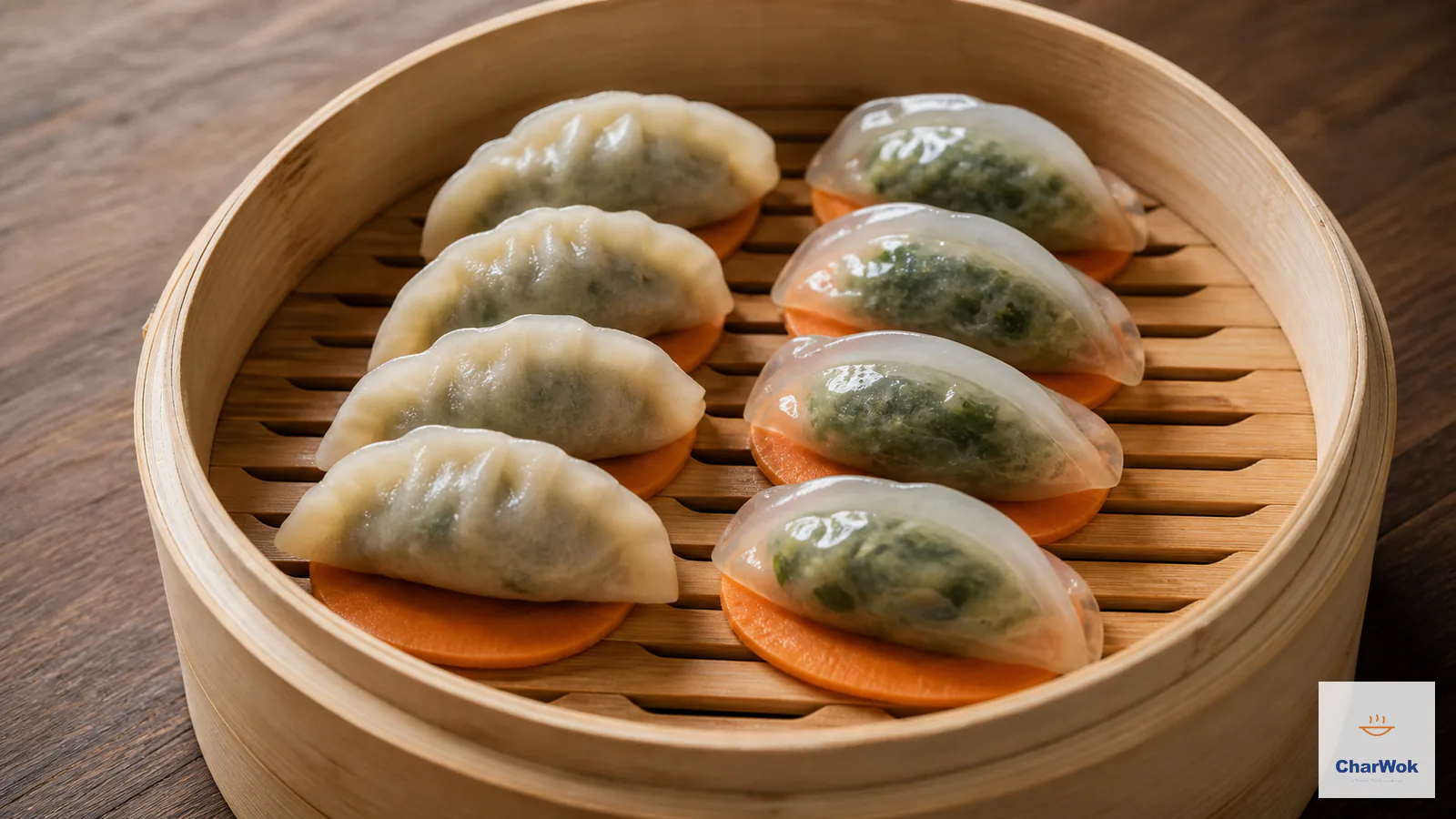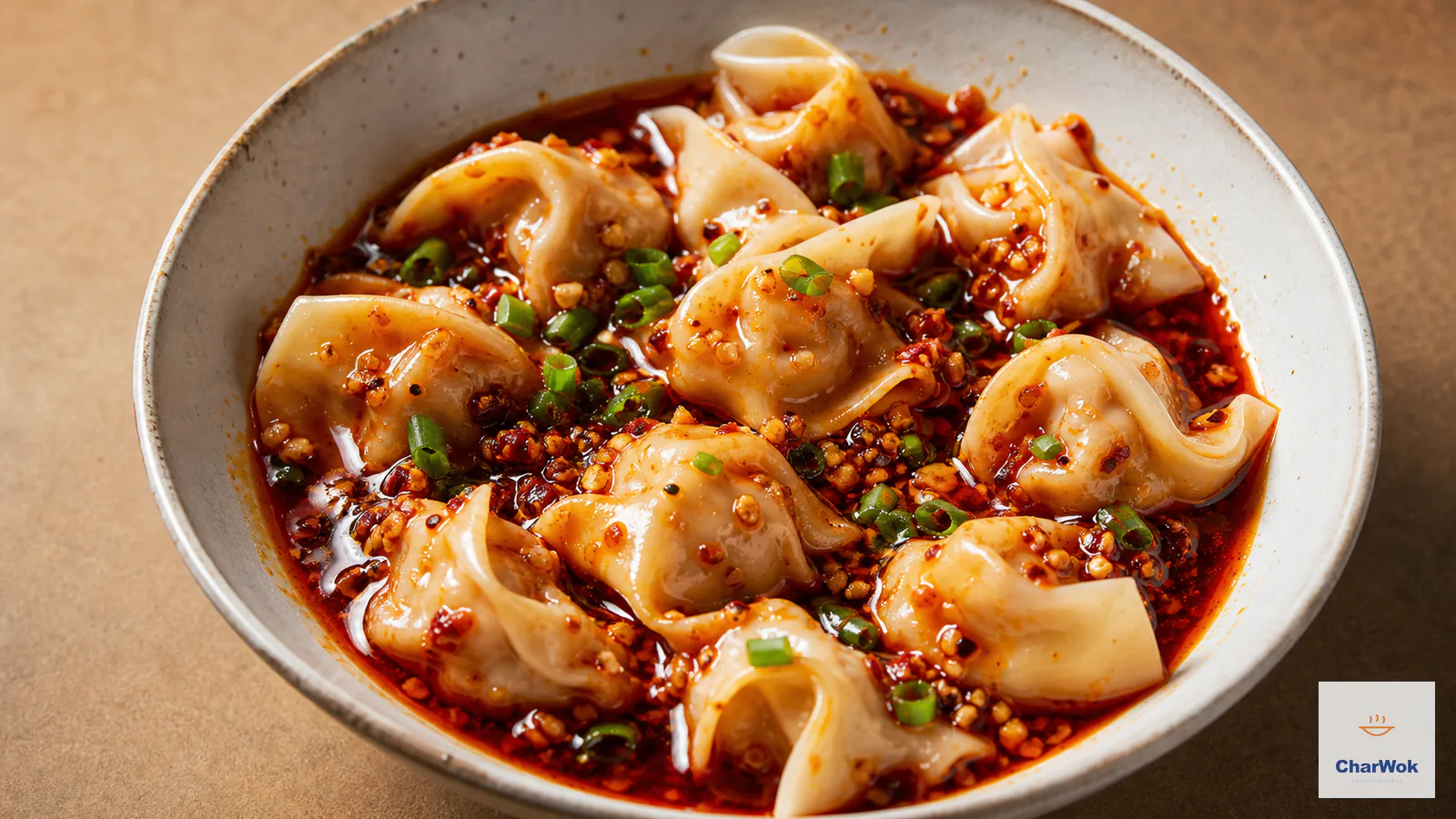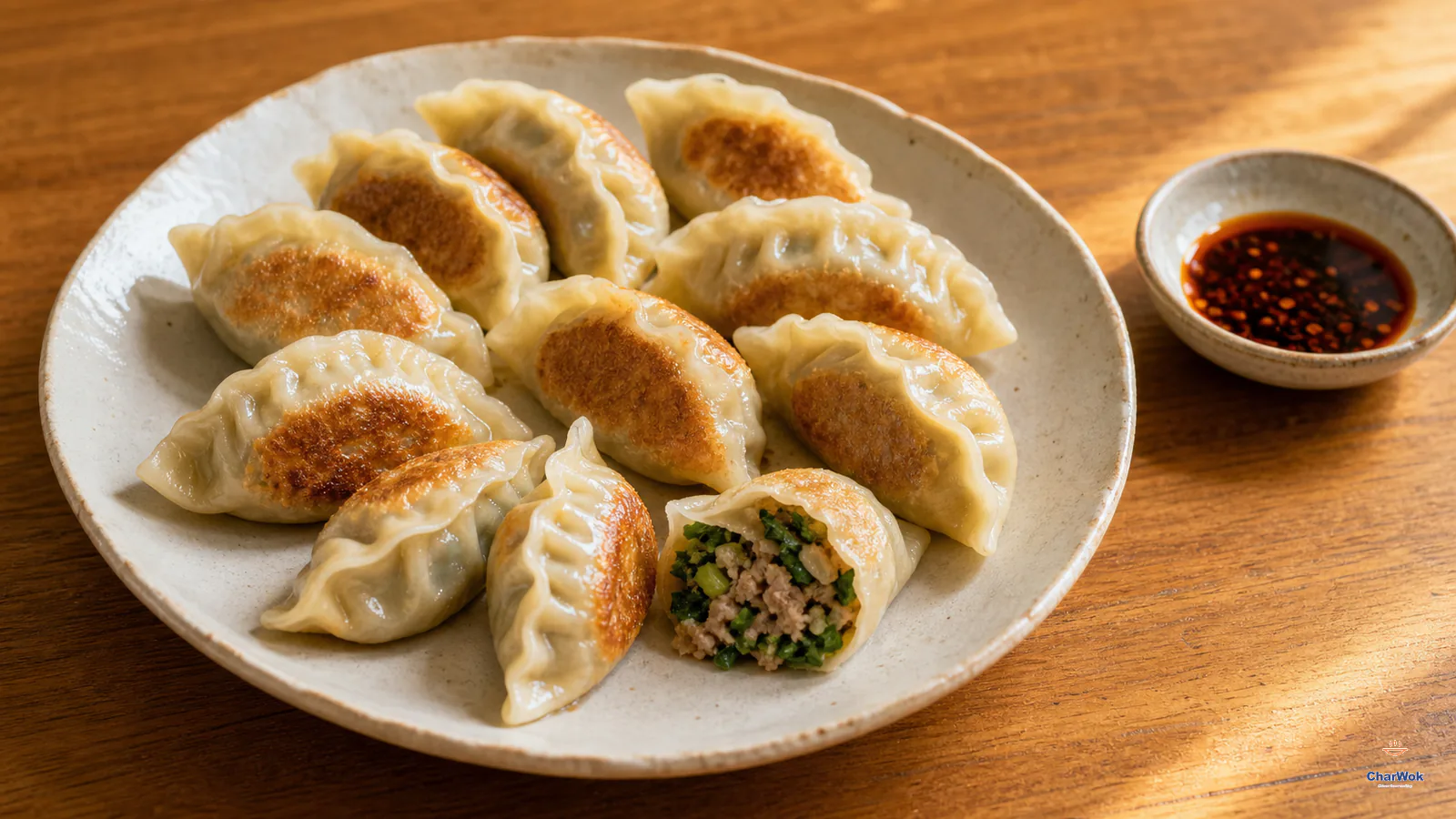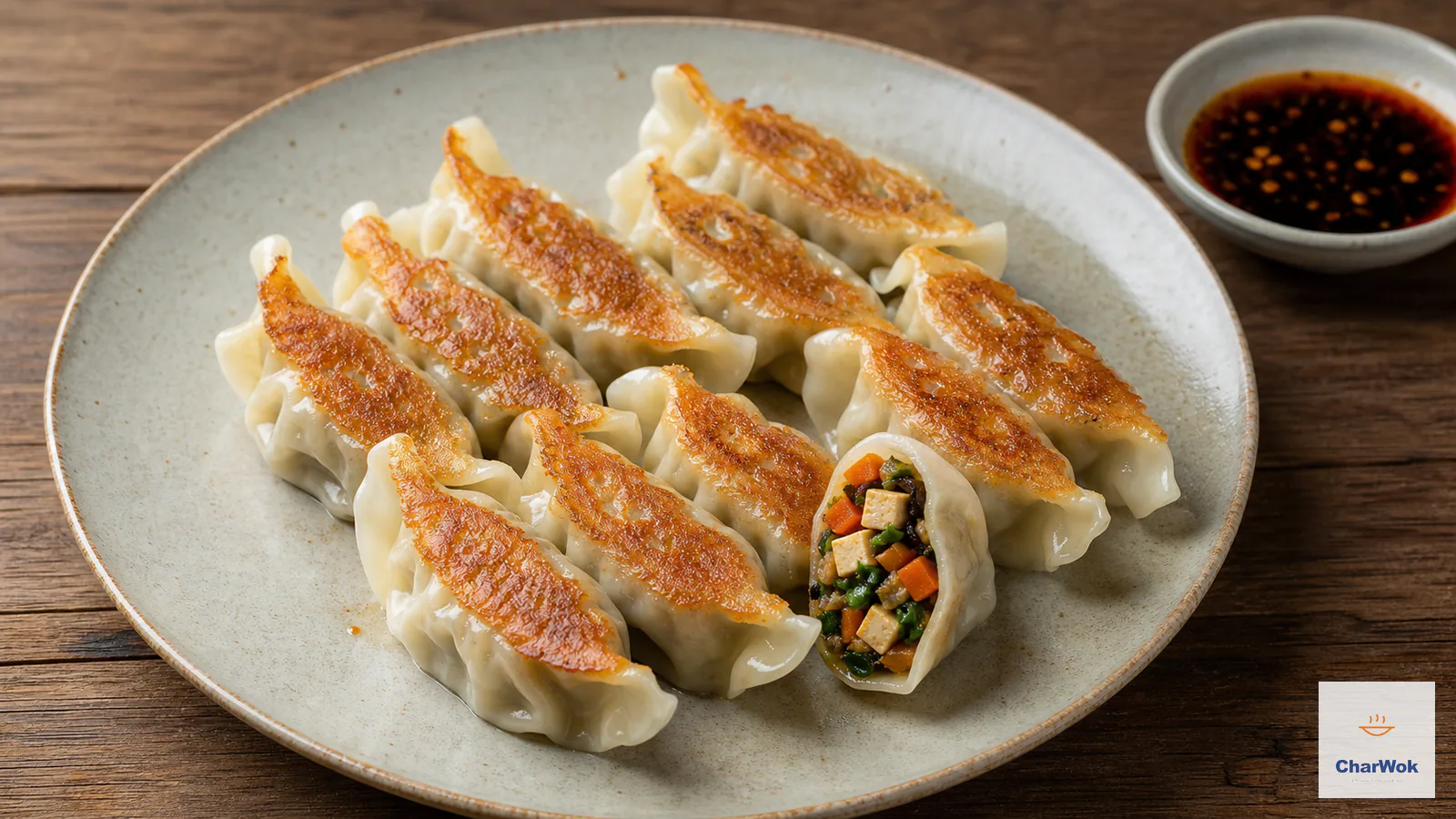
A good vegan dumpling is not a meat dumpling with the meat missing. It is its own thing: a thin wrapper stretched over a filling that has to supply its own body, its own savor, and its own juice, because there is no fat and no collagen to do the work for you. Most home versions fail at exactly this point. The filling turns to pebbles in the pan, or weeps water and soaks through the dough, or simply tastes like seasoned vegetables wrapped in paste.
The version below solves that. Five-spice tofu gives the filling density and a built-in seasoning backbone. Dried shiitake mushrooms contribute glutamate, the same compound that makes a long-cooked stock taste rich. Chinese chives carry a sulfurous green punch that survives the pan. A spoon of hot, shimmering oil poured over the aromatics releases their fragrance without scorching them. And the wrappers are made from scratch, because the ones sold in supermarkets are cut too thick and dusted with too much cornstarch to ever crisp properly.
At a glance: 250 g flour to 130 ml water is a 52% hydration hot-ish-water dough that rests twice; the filling leans on five-spice tofu plus rehydrated dried shiitake for umami; hot, shimmering oil blooms the scallion, ginger, and ground Sichuan pepper; pan-fry, steam-braise, and re-crisp in one pan. The whole job is about 95 minutes, and 60 of those are the dough resting while you do something else.
What these dumplings are, and where they come from
In northern China, dumplings are everyday food, but they are also festival food. Families in Beijing and Shandong eat them at the winter solstice, the lunar new year, and any occasion that calls for a long table and a folding party. A household will often make two fillings at once: a pork-and-cabbage one for the carnivores and a vegetable-and-tofu one for everyone else, Buddhist relatives included. I grew up at the vegetable end of that table, and I never felt I was missing anything. The pairing that follows is a classic of that tradition.
If you want the wider context of how jiaozi fit into the dumpling family, or you are building toward a bigger spread, the collection of the best Chinese dumpling recipes is the place to browse. Southern households mark the same festivals with tang yuan instead, so do not be surprised if a friend from Shanghai tells you dumplings are a northern habit.
The filling philosophy
A meat filling binds itself: fat coats the strands, protein sets during cooking, and a little gelatin or stock adds the juice. A vegan filling has none of that safety net, so the design has to be deliberate. You want four things in the bowl at once.
- A dense protein that holds its shape. Five-spice tofu, sold vacuum-packed in most Chinese groceries, is pressed firm and cooked with five-spice powder, so it brings both texture and seasoning. Smoked tofu is the obvious substitute and arguably better if you like a deeper, campfire edge.
- A green with backbone. Chinese chives (jiu cai) are sharper and more oniony than Western chives. Napa cabbage works too, but it needs salting and squeezing first, which is a step the chives let you skip.
- A umami booster. Dried shiitake mushrooms, soaked and minced, contribute more glutamate than any other ingredient in the bowl. Fresh shiitakes are acceptable in a pinch but noticeably thinner in flavor.
- Color and a little sweetness. Grated carrot does this cheaply and well.
The seasoning step is the part most cooks get wrong. Instead of stir-frying the scallion, ginger, and ground Sichuan pepper, heap them on top of the raw filling and pour hot, shimmering oil straight over them. Around 180°C / 350°F is enough to make the aromatics sizzle and release their fragrance without taking the oil to smoke. This is the same trick that makes a good ground Sichuan pepper bloom instead of tasting medicinal. Then the light soy sauce and sesame oil go in cold, and you adjust salt by tasting, because every brand of five-spice tofu is salted differently.
Ingredients
Ingredients at a glance
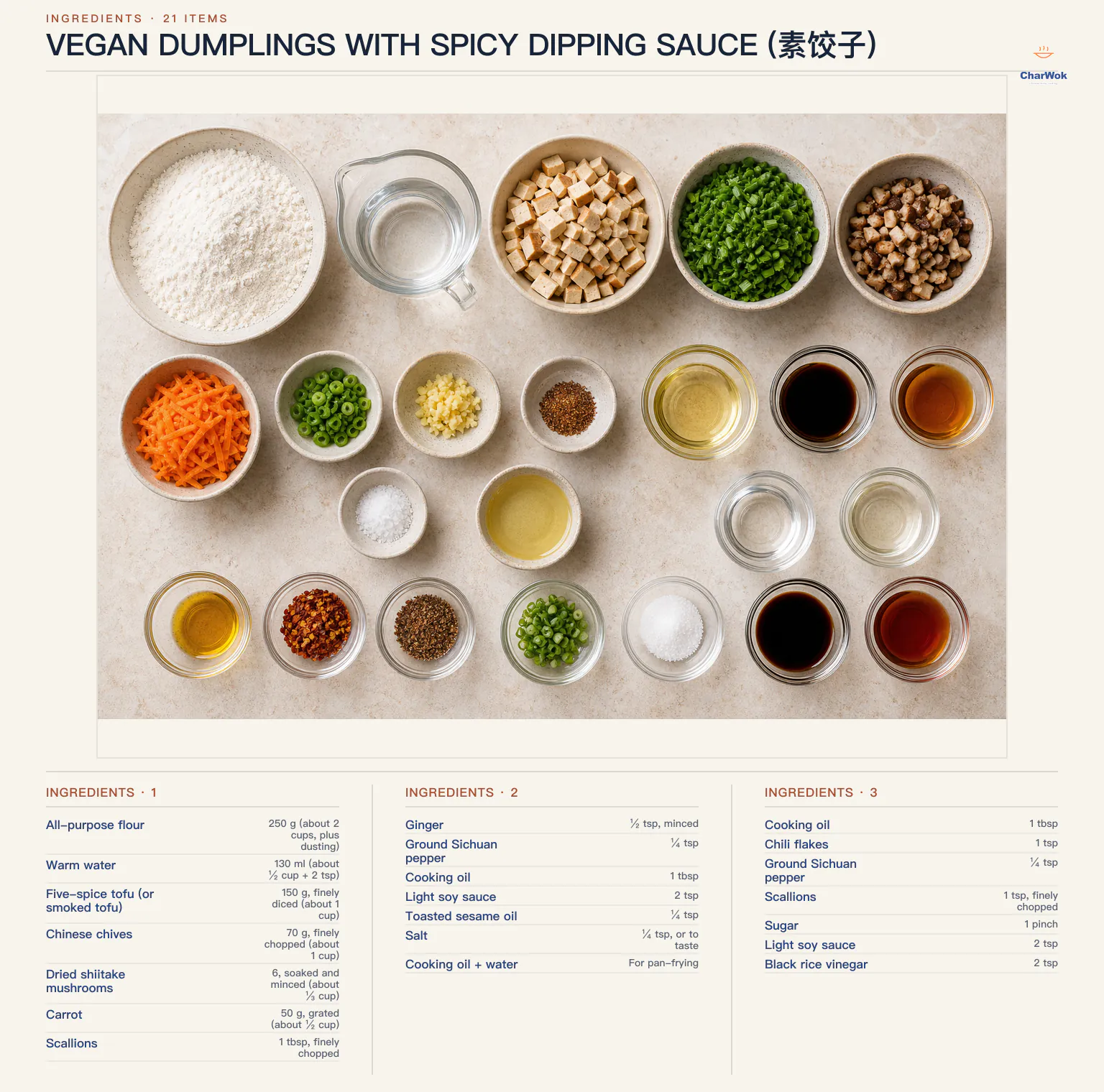
| Ingredient | Amount | Notes / substitute |
|---|---|---|
| All-purpose flour | 250 g (about 2 cups, plus dusting) | US all-purpose is fine; a 1:1 mix of AP and bread flour gives a slightly chewier bite. Measure by weight if you can. |
| Warm water | 130 ml (about ½ cup + 2 tsp) | Tap-warm, roughly 40°C. A touch of hot water relaxes the gluten early. |
| Five-spice tofu (or smoked tofu) | 150 g, finely diced (about 1 cup) | Smoked tofu is the best substitute; extra-firm tofu works only if you press it hard and pan-dry it first. |
| Chinese chives | 70 g, finely chopped (about 1 cup) | Napa cabbage (salted and squeezed) or garlic chives as a swap. |
| Dried shiitake mushrooms | 6, soaked and minced (about ⅓ cup) | Soak in cold water 8 hours or more. Fresh shiitakes are weaker but usable. |
| Carrot | 50 g, grated (about ½ cup) | Fine grate cooks through in the short fry time. |
| Scallions | 1 tbsp, finely chopped | White and light-green parts for the oil bloom. |
| Ginger | ½ tsp, minced | Fresh, peeled. Microplane is ideal. |
| Ground Sichuan pepper | ¼ tsp | Toasted and freshly ground carries far more aroma. |
| Cooking oil | 1 tbsp | Neutral oil such as canola or peanut, heated until shimmering for the bloom. |
| Light soy sauce | 2 tsp | Light, not dark. Light and dark soy are not interchangeable. |
| Toasted sesame oil | ¼ tsp | A finishing oil, not a cooking oil. |
| Salt | ¼ tsp, or to taste | Taste the filling before adding; the tofu is already salty. |
| Cooking oil + water | For pan-frying | About 2 tbsp oil and 100 ml water per batch. |
For the spicy dipping sauce
| Ingredient | Amount | Notes |
|---|---|---|
| Cooking oil | 1 tbsp | Heat until shimmering, not smoking, for the bloom. |
| Chili flakes | 1 tsp | Chinese or Korean flakes; avoid Italian oregano-heavy mixes. |
| Ground Sichuan pepper | ¼ tsp | Freshly ground, please. |
| Scallions | 1 tsp, finely chopped | Green tops for color. |
| Sugar | 1 pinch | Rounds the acid; not for sweetness. |
| Light soy sauce | 2 tsp | Salt and body. |
| Black rice vinegar | 2 tsp | Black rice vinegar (Chinkiang) is the correct one, not white vinegar. |
That chili-and-Sichuan-pepper combination is the classic málà punch, numbing and spicy at once. If you want to widen the rotation, the six dumpling sauces guide gives you a black vinegar version, a garlic version, and more.
Method
- Build the dough and let it rest twice. Pour the warm water into the flour in a thin stream, stirring with chopsticks until no dry flour remains, then gather and knead briefly. It will look rough. Cover and rest 10 to 15 minutes. This first rest lets the gluten hydrate without you fighting it; when you come back, a few turns produce a smooth ball. Cover again and rest 30 to 60 minutes more. The second rest is the one that matters: the gluten relaxes fully so the dough rolls thin without snapping back. Skip it and your wrappers will shrink the instant you stop rolling.
- Soak and prep the mushrooms. If you have not already, soak the dried shiitakes in cold water for at least 8 hours, or in warm water for an hour if you are in a hurry. Squeeze them out, trim the tough stems, and mince the caps fine. Save the soaking liquid for a soup or rice base.
- Build the filling. Pile the tofu, chives, mushrooms, and carrot into a wide bowl. Put the scallion, ginger, and ground Sichuan pepper in a small mound on top, not mixed in yet. Heat the tablespoon of oil gradually in a small pan until it shimmers, around 180°C / 350°F, then pour it directly over that mound. Stay beside the stove; if the oil smokes, turn off the burner and let it cool briefly. You will hear it sizzle and smell the pepper release. Stir everything together, add the light soy sauce, sesame oil, and salt, and mix. Taste a pinch and adjust salt; remember the dumpling will taste slightly milder once wrapped.
- Roll the wrappers. Divide the dough into three pieces and keep two covered. Roll one piece into a rope about 2 cm thick and cut it into 10 even rounds. Press each round flat with your palm, then roll it out to a thin disc, rolling from the center outward and turning the disc a little between strokes. The goal is thinner at the edge than the middle, so a generous mound of filling does not split the base. The full technique, including how to hold the rolling pin, is in the homemade wrapper guide. Dust with flour only if the dough sticks; a heavily dusted wrapper will not seal.
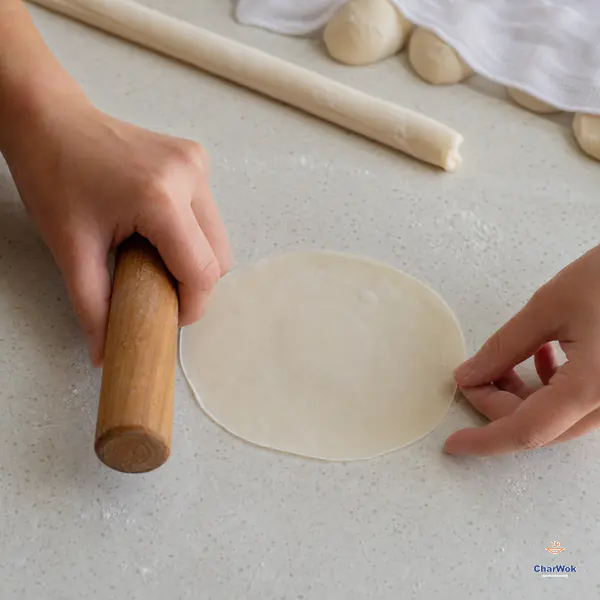
Keep the wrapper flat on the worktop and roll from the rim toward—but not across—the centre, rotating after every stroke. The finished disc should stay round with a thin even edge and a slightly thicker flat centre strong enough to hold the loose vegan filling.
- Fold. Put a tablespoon of filling in the center. This filling is looser than a meat filling, so go slightly under-full until your hands learn the rhythm. Fold the wrapper in half over the filling, pinch the top center shut, then pleat from each end toward the middle, pressing firmly to seal. Lay finished dumplings on a flour-dusted tray and keep them covered with a damp cloth. New to pleating? Start with the simpler half-moon shapes in the dumpling folding guide.
- Make the dipping sauce. Put the chili flakes, ground Sichuan pepper, scallion, and sugar in a heatproof bowl. Heat the tablespoon of oil gradually until it shimmers, around 180°C / 350°F, then pour it over; the flakes will darken and fizz. If the oil smokes, turn off the burner and let it cool briefly before pouring. Stir in the light soy sauce and black rice vinegar. Set aside.
- Pan-fry. Heat a wide nonstick or cast-iron pan over high heat with a thin film of oil. Stand the dumplings in the pan, flat side down, close together but not touching. Fry until the bottoms are light golden, about 2 minutes. Pour in enough water to come a third of the way up the dumplings and clap the lid on immediately. The water boils, the steam cooks the wrappers and filling through, and the lid traps it. When the water has fully evaporated, lift the lid and let the bottoms fry another 30 to 60 seconds until deeply golden and crisp. Slide them out upside down so the crisp side faces up.
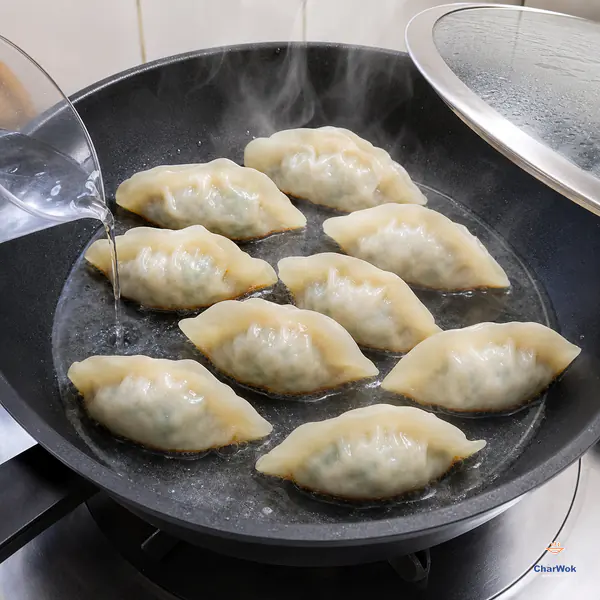
Once the bottoms are light golden, pour clear water along the pan edge until it reaches roughly one-third of the dumplings, then cover immediately. Keep the dumplings upright and slightly separated so the steam cooks the wrappers without gluing them together.
This pan-fry-then-steam-then-crisp sequence is what northern cooks call jian jiao. If you would rather boil or steam, the three-ways cooking guide walks through both, but I think the crisp base is what makes this particular filling worth the extra step.
When things go wrong
This is the section I wish I had read the first time my wrappers stuck to the board and my dumplings leaked filling into the pan. I have made every one of these mistakes.
- The dough is sticky and tears. You added too much water or skipped the first rest. Do not keep dumping flour on the counter; that just makes a dry wrapper. Cover the dough and wait 15 minutes. If it is still tacky after the rest, knead in flour a teaspoon at a time. The dough should feel like a firm earlobe, not a wet sponge.
- Wrappers shrink back the moment you stop rolling. The gluten has not relaxed. Rest the dough another 20 minutes covered. This is the single most common cause of thick, chewy wrappers.
- The dumplings split open in the pan. Either the wrapper edge was too thick (roll thinner at the rim), or you overfilled, or the seal was not pressed fully shut. A vegan filling leaks more easily than a meat one because nothing sets to plug the gap. Pleat toward the middle and run a finger around the sealed edge one more time before it goes in the pan.
- The filling is wet and soaks the wrapper. You skipped squeezing the mushrooms, or your tofu was waterlogged. Press extra-firm tofu for 20 minutes under a plate if you are substituting, and squeeze minced rehydrated mushrooms in your fist before adding them. Salt the filling only at the end so it does not draw water from the chives.
- The bottoms are pale and the tops are raw. The pan was not hot enough when the dumplings went in, or you lifted the lid too often. Start on high heat, add the water only once the base is golden, and keep the lid on until the water is gone.
- The bottoms scorch before the filling cooks. The heat was too high or the water layer too shallow. A third of the way up the dumpling is the right depth; less than that and you are frying, not braising.
Variations and what to serve alongside
The filling is a template. Swap the chives for finely shredded napa cabbage that you have salted and squeezed, and you have a milder, sweeter dumpling. Add a spoon of doubanjiang or a teaspoon of chili oil to the filling for heat. Replace the carrot with finely diced water chestnut for crunch. Fold in a beaten, softly scrambled egg if you are vegetarian rather than vegan; it binds the filling and adds richness the tofu cannot.
For a full table, serve these with a clear soup (the mushroom soaking liquid, strained, makes a fine one), a plate of veggie and tofu spring rolls, or simply a bowl of steamed greens with garlic. The dumplings are rich enough that they do not need a heavy side.
Freezing and reheating
Assembled dumplings freeze beautifully, and a frozen dumpling actually pan-fries better than a fresh one because the filling firms up. Lay them on a flour-dusted or parchment-lined tray so they do not touch, freeze until solid, then transfer to an airtight bag. They keep for two months without losing much. To cook from frozen, do not thaw. Put them straight into a hot oiled pan, fry until the base is golden, add the water, and steam-braise as usual, adding a minute or two to the covered time. The wrapper crisps and the filling cooks through in the same single pan.
Questions I get asked
A few things come up over and over, so here are short answers.
- Can I use store-bought wrappers? Yes, though they are thicker and dusted with cornstarch, so wipe the edges with a damp finger before sealing and expect a chewier bite. Homemade is worth the hour, mostly spent resting.
- Do I have to use dried shiitakes? No, but the dried version has three to four times the glutamate of fresh and is the reason the filling tastes rounded rather than flat. Fresh shiitakes are a fallback, not an equal.
- How do I know the oil is hot enough for the bloom? The surface should shimmer and flow freely, around 180°C / 350°F. Pour it over the dry aromatics while it is hot but not smoking. If smoke appears, turn off the burner and let the oil cool briefly.
- Are these spicy? The filling is mildly warming from the Sichuan pepper. The heat lives in the dipping sauce, so you control it by how much chili flake you use.
The one thing to remember
If you forget everything else, remember the two rests. A rested dough rolls thin and stays thin. A thin wrapper crisps, holds its filling, and disappears into the bite instead of announcing itself. Everything else, the hot-oil bloom, the málà sauce, the third-of-the-way water level, is built on that one quiet step of covering the bowl and walking away.