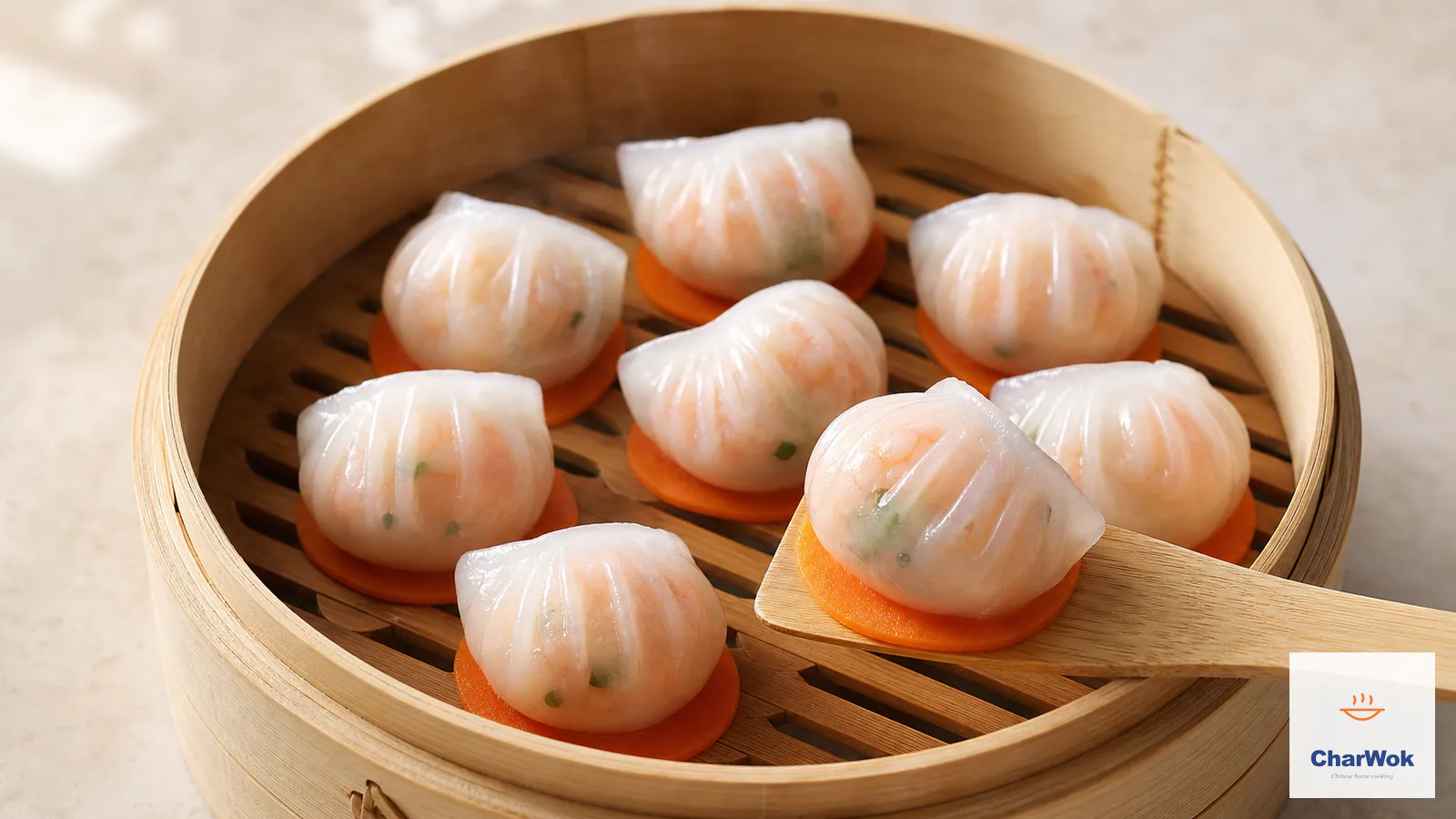
The har gow on a dim sum cart has a body you can read through: the wrapper is glassy, the shrimp inside blushed pink and plump, and you can count the pleats before the server sets the basket down. Make it at home and the first sign of trouble is usually the opposite. The skin turns chalky white instead of translucent, or it splits at the seam and leaks juice into the steamer. I wrecked a few batches before I understood that har gow is not really a dumpling in the wheat-dough sense. It is a starch gel held together by hot water and faith, and it behaves by completely different rules.
Once you accept that, the rest falls into place. The two starches do the structural work; boiling water does the chemical work by gelatinizing them; and the fat keeps the dough supple enough to pleat before it cools. Below I walk through each of those, then the filling, then how to pleat without tearing, and finally the failures I have personally engineered so you do not have to.
Har gow in one line: a wheat-starch and tapioca dough, hydrated with truly boiling water, wrapped around a cold, slightly fatty shrimp mix and steamed for exactly 6 minutes. The classic ratio is equal parts by volume: wheat starch, tapioca, and water all measured to the same line (40 g of each starch, about 80 ml of just-boiled water). Get the water hot enough and the dough translucent; cut corners on temperature and you get a cloudy, gummy skin.
What har gow is, and why the wrapper is the whole game
Har gow (虾饺, "shrimp dumpling") is a Cantonese steamed dumpling and one of the pillars of the dim sum table, usually parked on the same cart as siu mai and cheung fun rice noodle rolls. What sets it apart from every wheat-dough dumpling in the northern tradition is the skin. There is no gluten in it. Instead of the chewy, pleated wheat wrapper you would use for soup dumplings or pan-fried potstickers, har gow uses a cooked starch paste that turns translucent when it hits steam. The translucence is the whole point. A properly made har gow lets you see the shrimp the way a frosted window lets you see a shape behind it.
The classic line in Cantonese kitchens is that a dim sum chef is judged on two dishes: har gow for the skin, siu mai for the shape. The reason is that the skin is genuinely hard. It has no gluten to forgive rough handling, and it sets into a brittle gel as it cools. So most of this recipe is really about managing that skin, and I will spend most of the words on it. The filling is the easy part.
The two starches, and why you need both
There is no all-purpose flour in a har gow wrapper. There are two starches, and they do different jobs.
Wheat starch (sometimes labeled "wheat flour starch" or by its Cantonese name, dung fun) is the translucent one. It is wheat flour with the gluten washed out, and it is what gives the cooked wrapper its clarity and soft bite. You cannot substitute all-purpose flour here; the gluten would make the skin opaque and rubbery. If your grocery store does not carry it, an Asian market or online will.
Tapioca starch (or cornstarch or potato starch in a pinch) adds stretch and the faint chew that lets you pleat the dough without it shattering. Wheat starch alone is too brittle once cool; tapioca brings the elasticity. The wheat-starch-to-tapioca ratio is equal by volume (1:1), and I would not push tapioca higher than that. More tapioca means a gummier, more rubber-band mouthfeel, and the wrapper loses its delicate clarity.
This is the same logic behind other translucent and chewy doughs in the Cantonese and broader starch-dough tradition, from the soft skin on lo mai gai accompaniments to chewy mochi-style cakes. The starch does the work that gluten normally would, but only after it has been fully gelatinized by heat. Which brings us to the single most common point of failure.
The water must be actually boiling, not just hot
Wheat starch and tapioca gelatinize at a high temperature, well above what a tap can produce and above what a kettle holds on "warm." If the water is merely hot, the starches partially hydrate, the dough never becomes truly pliable, and the finished wrapper steams up cloudy and prone to splitting. Use water that has just come to a rolling boil, poured straight from the kettle onto the starch.
Stir first with chopsticks or a wooden spoon, not your hands. The dough starts as a shaggy, dangerously hot mass. Only when it has cooled enough to touch do you knead it, with lightly oiled hands, until it is smooth and soft, like a firm playdough. If it feels dry and cracks when you fold a test piece, the water was not hot enough or you let it cool too long before kneading. A teaspoon of boiling water worked in can rescue it; do not add cold water.
Ingredients
Ingredients at a glance
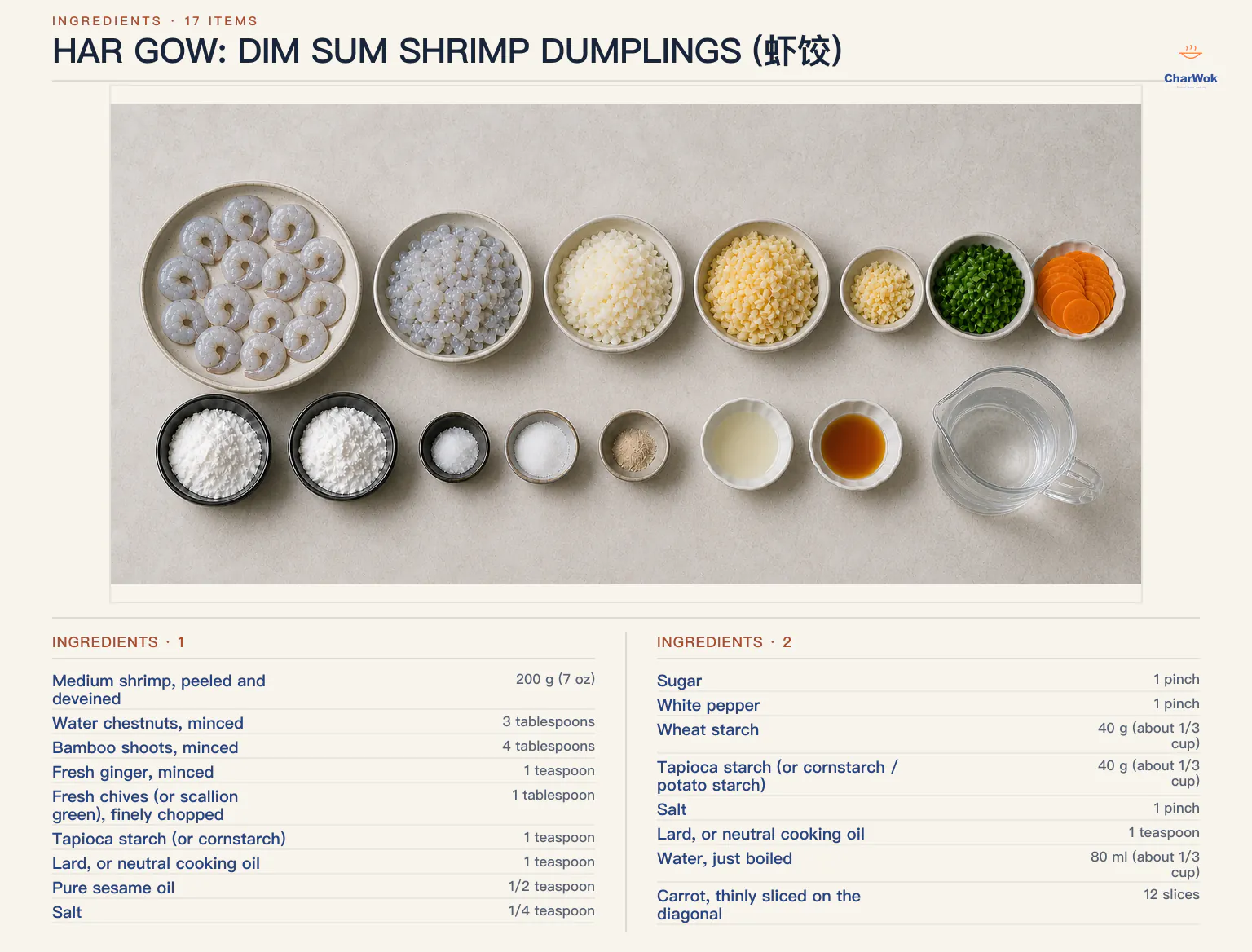
Makes about 12 dumplings. Times assume you have a bamboo steamer set up; a metal steamer insert works too. The filling and dough come together quickly, but build in time for pleating on your first attempt.
| Ingredient | Amount | Notes / substitute |
|---|---|---|
| Medium shrimp, peeled and deveined | 200 g (7 oz) | Use raw, not pre-cooked. Medium-sized is what you want. |
| Water chestnuts, minced | 3 tablespoons | For crunch. Canned is fine; drain and rinse. Bamboo shoots alone if you cannot find them. |
| Bamboo shoots, minced | 4 tablespoons | From a can, drained. Adds snap and balances the sweet shrimp. |
| Fresh ginger, minced | 1 teaspoon | Keep it fine; chunks of ginger in a translucent dumpling look like flaws. |
| Fresh chives (or scallion green), finely chopped | 1 tablespoon | Chinese garlic chives are traditional. Scallion greens are the easy substitute. |
| Tapioca starch (or cornstarch) | 1 teaspoon | Binds the filling and draws out a little moisture so it stays juicy. |
| Lard, or neutral cooking oil | 1 teaspoon | Lard gives the classic supple bite; oil works fine for a lighter version. |
| Pure sesame oil | 1/2 teaspoon | This is the aroma you are after. |
| Salt | 1/4 teaspoon | |
| Sugar | 1 pinch | Brightens the shrimp; do not skip. |
| White pepper | 1 pinch | White keeps the filling pale; black is fine if you do not mind flecks. |
| For the wrapper dough | ||
| Wheat starch | 40 g (about 1/3 cup) | Not interchangeable with regular flour. The clarity depends on it. |
| Tapioca starch (or cornstarch / potato starch) | 40 g (about 1/3 cup) | Tapioca gives the best stretch. Cornstarch is the closest common substitute. |
| Salt | 1 pinch | |
| Lard, or neutral cooking oil | 1 teaspoon | Keeps the dough supple and less prone to cracking as it cools. |
| Water, just boiled | 80 ml (about 1/3 cup) | Must be at a rolling boil when it hits the starch. |
| Carrot, thinly sliced on the diagonal | 12 slices | Used as a nonstick pad under each dumpling in the steamer. |
Method
- Split the shrimp, then build the filling. Pick out the 12 nicest, most evenly sized shrimp and set them aside whole. These become the centerpiece of each dumpling. Take the remaining shrimp and crush them flat with the side of a cleaver or a heavy knife, then chop into a coarse mince. You are after a mix of texture: the crushed shrimp releases its proteins and turns slightly pasty, which is what makes the filling hold together, while the whole shrimp gives each bite a clean pop. Combine the whole shrimp, the minced shrimp, and all the filling ingredients in a bowl and mix in one direction until it clumps slightly. Chill it. Cold filling is far easier to portion and keeps the dough from warming and softening as you work.
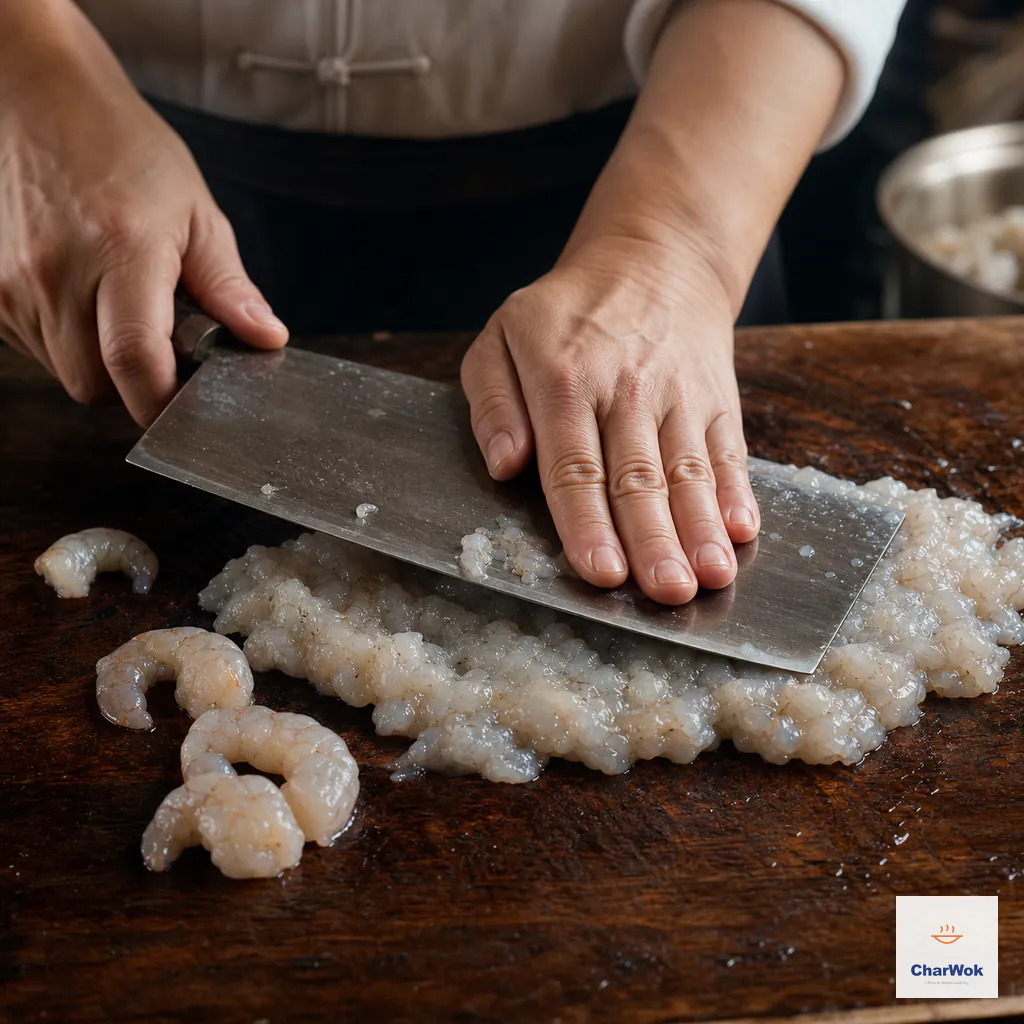
Reserve 12 whole shrimp, then press the remainder flat under the broad side of a cleaver before mincing; the released proteins make the filling cohesive while the whole shrimp preserve a clean bite
- Hydrate the starches with boiling water. Put the wheat starch, tapioca starch, salt, and lard (or oil) into a heatproof bowl. Bring the water to a full, rolling boil and pour it over the starches immediately. Stir with chopsticks or a wooden spoon. The reason for chopsticks is not tradition; it is that the dough is scalding hot and a spoon conducts that heat into your hand. The starch will seize into a wet, lumpy mass. That is correct.
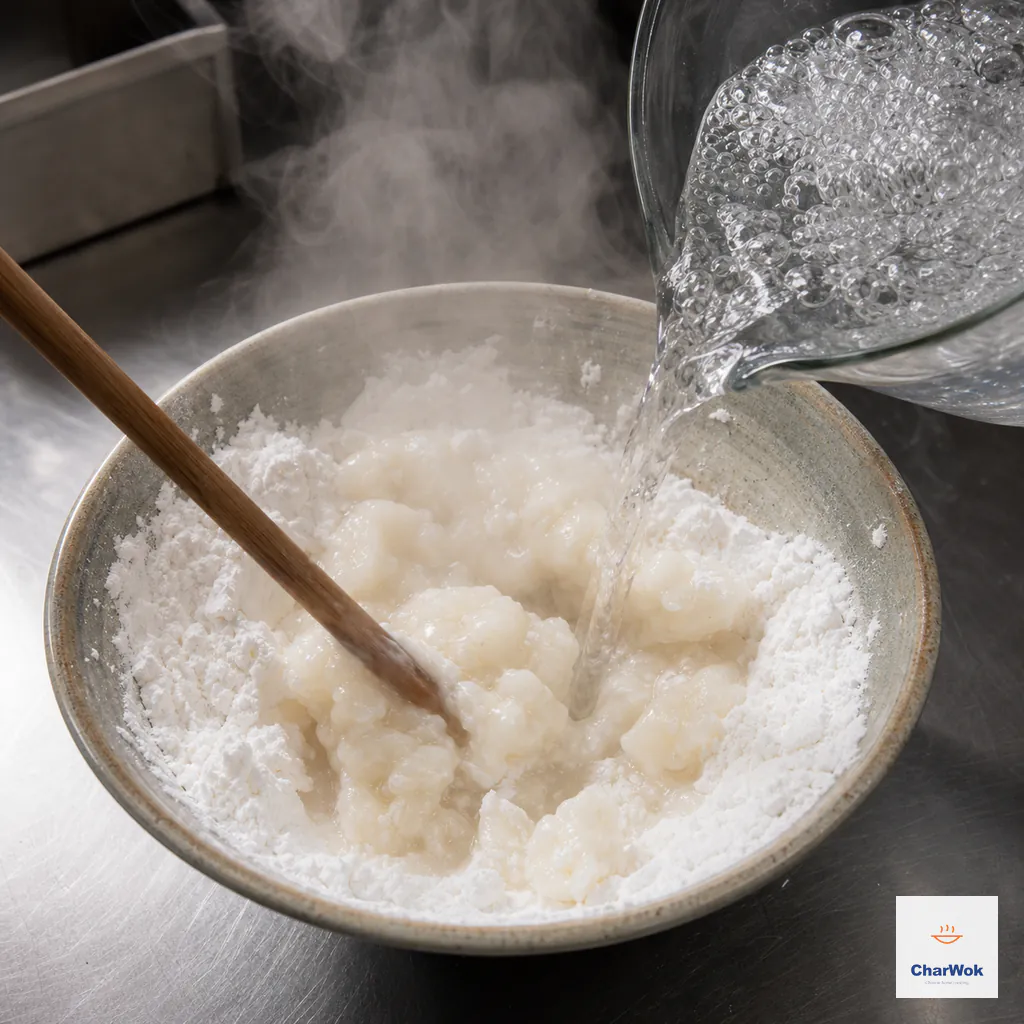
Pour water straight from a full rolling boil and stir immediately; a wet, lumpy mass is the correct scalded stage before the dough is cool enough to knead
- Knead once it is cool enough to handle, then use it right away. When the dough no longer burns your fingers, knead it with lightly oiled hands until smooth, soft, and only faintly tacky. A teaspoon of oil on your palms prevents sticking without drying the dough the way extra raw starch would. If the dough cracks when you fold a small test piece, work in a few drops of boiling water. Unlike a wheat-flour dough, this one does not want a rest: cooked starch retrogrades and stiffens as it sits, so the longer you leave it, the harder it is to pleat. Knead it smooth, then move straight into shaping. Cover it tightly only if you are interrupted, and keep that pause as short as you can.
- Divide and shape the wrappers. Roll the dough into a log, then divide into 12 equal pieces. Keep the unused pieces under plastic or a damp cloth the entire time. Starch dough dries and cracks fast, and a dried skin on the surface will tear during pleating. For each wrapper, the traditional tool is the flat side of a cleaver: roll a piece into a ball, set it on a very lightly oiled surface, and press it flat with the oiled side of the cleaver, sweeping side to side, until you have a thin round about 8 cm (3 inches) across. A small rolling pin or a dough press works if you do not own a cleaver. Aim for thin at the edge and slightly thicker at the center, so the pleated seam does not become a thick lump.
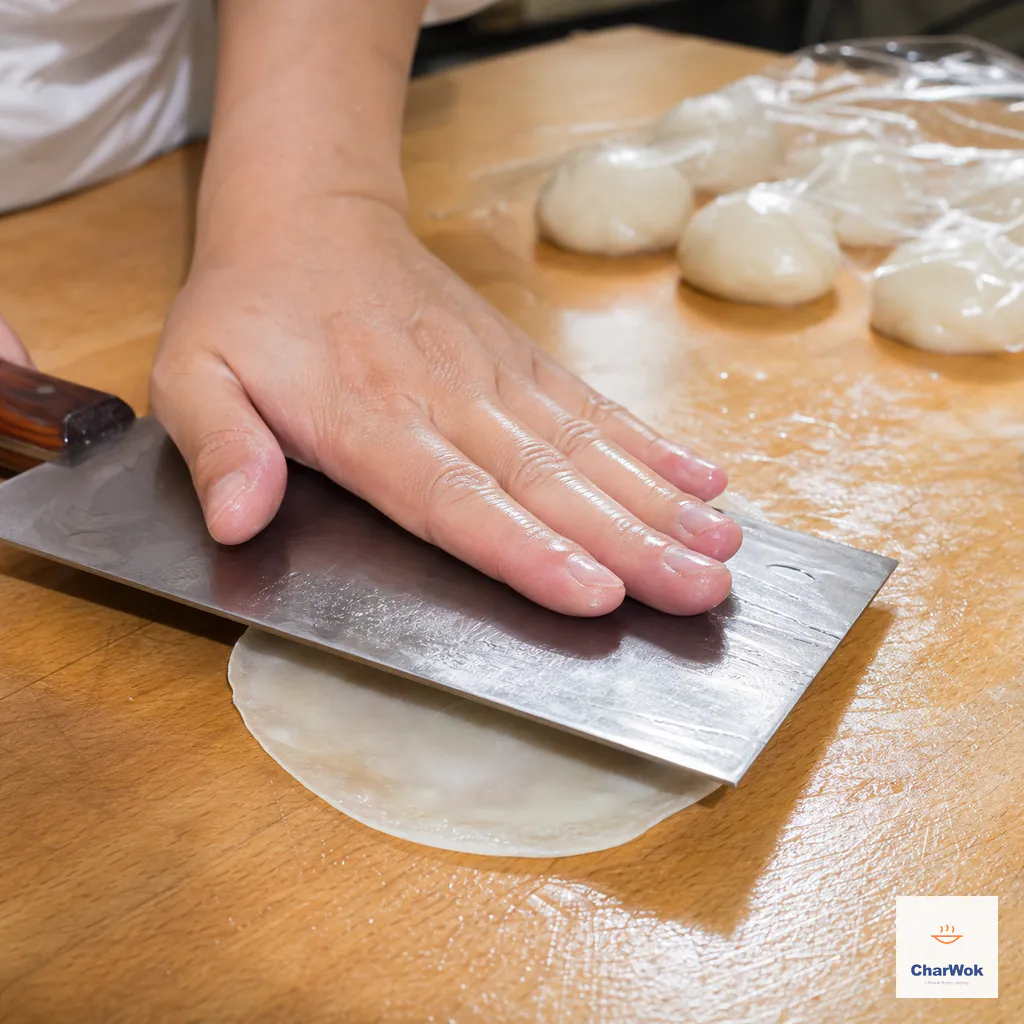
Oil the blade and board lightly, then press and sweep side to side to make an 8 cm wrapper with a thin rim and a slightly thicker center
- Pleat and fill. Hold a wrapper in one hand and place a tablespoon of filling in the center, including one whole shrimp. Pleat only the far half of the wrapper by pushing little folds inward with your index finger. Then bring the unpleated near half up to meet them, pressing the thumb of your other hand forward to push the filling in while you seal from one end to the other into a crescent. This is the move that takes practice. If the wrapper tears, the dough is either too dry (work in a drop of boiling water) or too thick at the seam (roll thinner next time). For a broader look at pleating shapes, the dumpling folding guide covers the core techniques and their variations, though har gow uses the simplest crescent of them all.
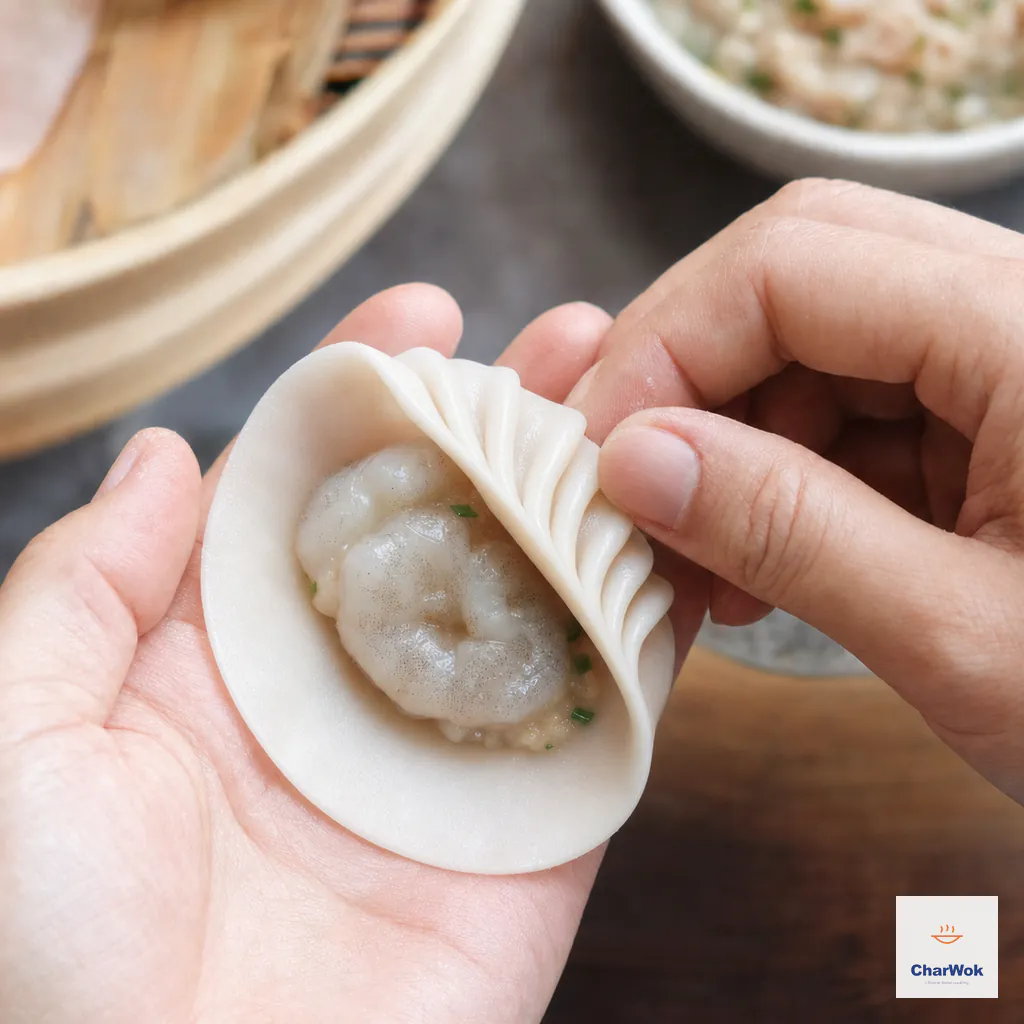
Center one spoonful of filling and a whole shrimp, pleat only the far half, then bring the smooth near half up and seal the crescent from end to end
- Steam, with a carrot pad under each. Bring the water in your steamer pot to a boil. Scatter the carrot slices in the basket and set one dumpling on each slice. The carrot does double duty: it stops the sticky dough from fusing to the bamboo, and it adds a small burst of color and sweetness. Place the basket over the boiling water, cover, and steam over medium heat for 6 minutes. Six minutes, not eight. Overcooked shrimp turns cottony and the wrapper goes from translucent to torn. If you are steaming from frozen, see the storage section below.
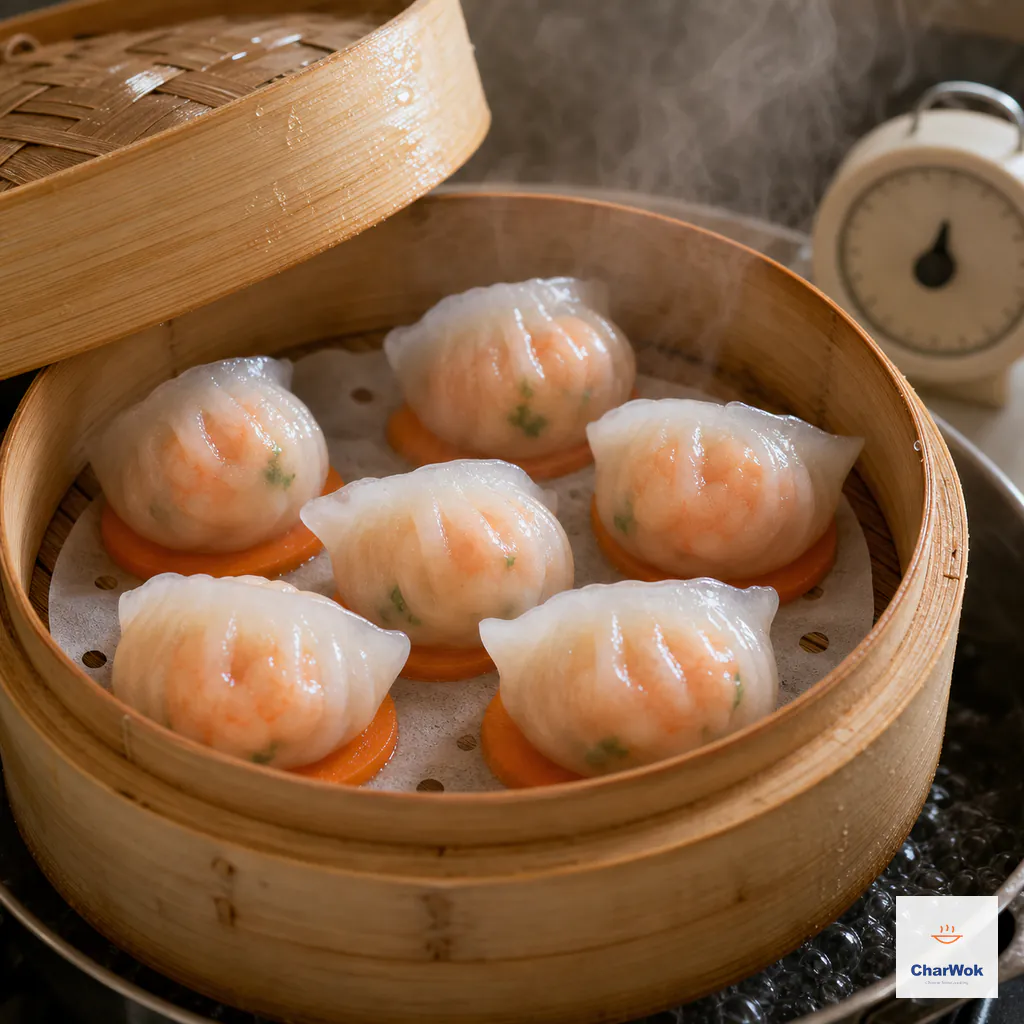
Set each dumpling on one carrot slice, steam over boiling water on medium heat for exactly 6 minutes, and open the lid as soon as time is up
- Rest a minute before unmolding. Lift the basket off and let the dumplings sit for about a minute. Straight out of the steamer the skin is at its most fragile and will stick to anything it touches. As it cools slightly it firms and releases. Lift each one gently off its carrot pad with a thin spatula.
When it goes wrong: troubleshooting
This is the section I wish someone had handed me the first time. Most har gow failures come from one of four places.
The wrapper is cloudy white, not translucent. Almost always the water. It was not at a true boil when it hit the starch, so the starches never fully gelatinized. Next time, use water straight off a rolling boil and pour immediately. A dough that started opaque can still be eaten, but it will not have the see-through quality that defines the dish.
The skin splits open during steaming. Two usual causes. One, the seam was not pressed fully closed and a pocket of wet filling got trapped inside it; seal from end to end with no air. Two, the dough dried out while you were pleating and cracked along a fold. Keep unused dough under wrap, work one wrapper at a time, and oil your surface lightly rather than dusting with dry starch, which dries the surface further.
The dough is too sticky to handle. It is too warm or too wet. Let it rest covered until it cools, and knead in a light dusting of tapioca starch a little at a time. Starch dough softens as it warms in your hands, so handle it quickly and put each finished dumpling straight into the steamer or onto an oiled plate.
The filling is loose or weeps water. The shrimp was wet when you minced it, or the water chestnuts were not drained. Pat the shrimp dry before crushing, drain the canned vegetables well, and do not skip the teaspoon of starch in the filling; it binds the released moisture into a light jus rather than a puddle.
The shrimp is rubbery. It overcooked. Six minutes is the ceiling for fresh dumplings of this size. Also, over-mincing the shrimp into a paste (rather than a coarse chop with some whole pieces left in) makes the texture monotonous and quick to overcook. Keep the contrast of whole and crushed.
Variations and what to serve alongside
The filling is forgiving. A few directions worth trying:
Shrimp and pork. Replace a quarter of the shrimp with finely minced fatty pork. The fat melts during steaming and bastes the shrimp from inside. It is the same logic you find in shrimp-and-pork siu mai, where the two proteins are even more entangled.
Spiked with ginger-scallion oil. A teaspoon of warmed scallion oil folded into the filling adds aroma without bits.
All-shrimp, no crunch. Drop the water chestnut and bamboo for a purer, softer bite. Some purists prefer this; I like the textural counterpoint, but it is a real choice, not a mistake.
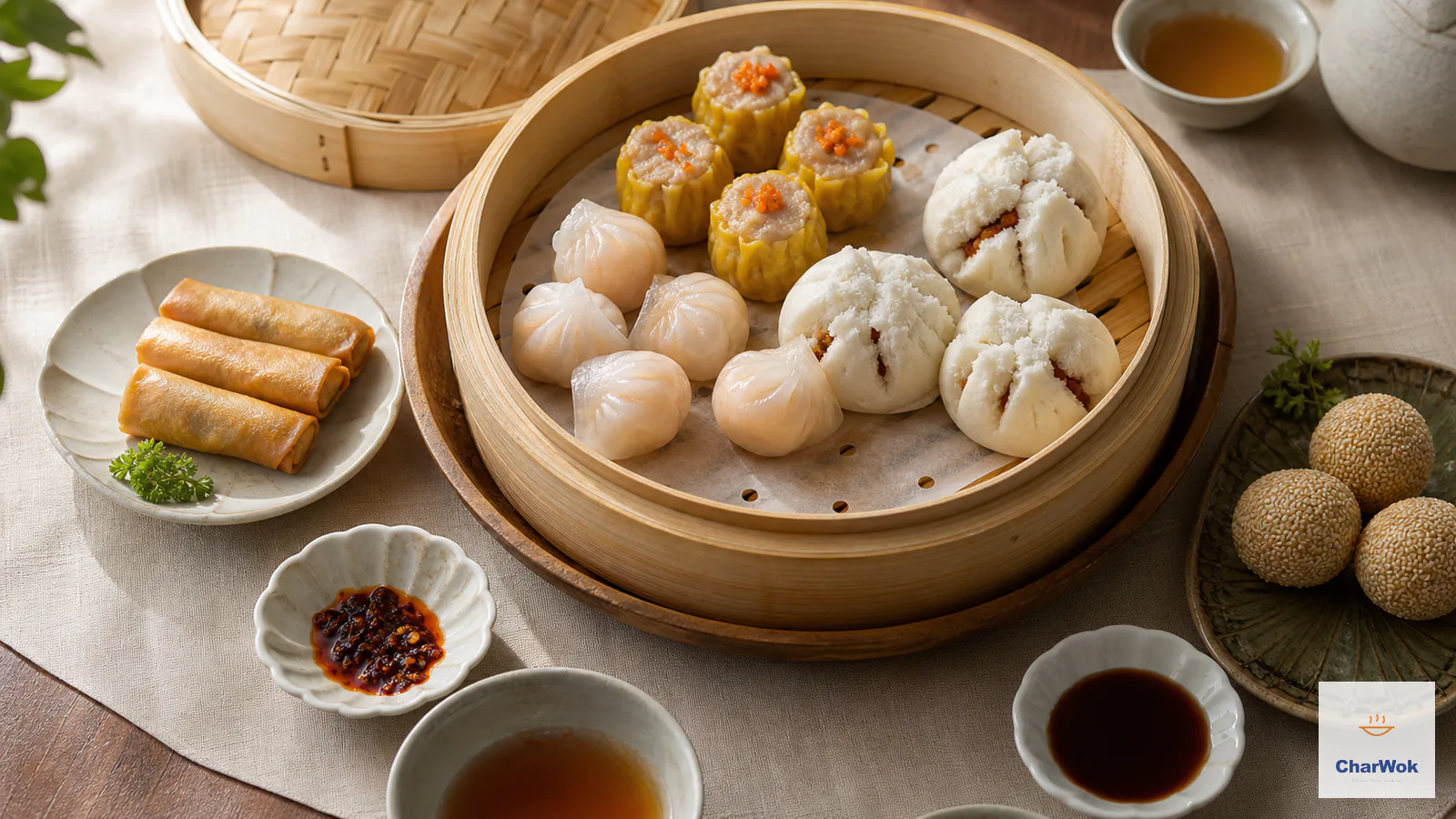
For a table, har gow belongs with other gentle steamed dishes rather than heavy fried ones. Alongside steamed chicken feet in black bean sauce and a plate of greens, it makes a classic small cart of dim sum. If you are scaling up for a crowd, the full dim sum lineup will give you the surrounding dishes. For something crisp on the side, salt and pepper shrimp uses the same main ingredient in a completely different register, and a bowl of shrimp fried rice turns the leftovers into a meal. Shrimp shows up across the cuisine in these contrasting treatments; compare this soft steamed version with the quick wok work in shrimp and broccoli or the saucy heat of kung pao shrimp and you can feel how much technique, not ingredient, drives a dish.
Dipping sauce
Har gow is delicate enough that many people eat it plain. If you want a dip, keep it light: equal parts black rice vinegar and light soy sauce, a few slices of ginger, and a drop of sesame oil. A chili oil is fine if you like heat, but go easy; a heavy sauce drowns the shrimp sweetness that the whole dish is built around.
Storage and reheating
Raw har gow freeze beautifully. Arrange them on an oiled plate, freeze solid, then transfer to a bag for up to about 4 weeks. Cook them straight from frozen; do not thaw, because thawing makes the starch skin weep and crack. The technique differs from fresh: put the frozen dumplings into a steamer, start with cold water in the pot, and once the water reaches a boil, steam for 8 minutes. Starting cold lets the dough warm through gently so it does not split from thermal shock.
Cooked leftovers reheat best by steaming for 2 to 3 minutes, just until the skin turns glassy again. A microwave will toughen the starch and make the wrapper leathery. I avoid it.
Frequently asked questions
Can I use all-purpose flour instead of wheat starch? No. All-purpose flour has gluten and will make the skin opaque and chewy rather than translucent. Wheat starch is wheat flour with the gluten removed; that is exactly what creates the glassy look. Order it online if your store does not carry it.
Why did my wrappers crack while pleating? The dough dried out. Starch dough loses moisture fast, so keep every unused piece under wrap or a damp cloth and shape one wrapper at a time. A surface lightly oiled, not dusted with dry starch, also helps.
Do I need a cleaver to shape the wrappers? No. The flat of a cleaver is the traditional tool, but a small rolling pin or a tortilla press lined with plastic works. The goal is a thin round, slightly thicker in the center than at the edge.
Can I make the dough ahead? Yes, up to a day. Wrap it airtight and refrigerate. Let it come to room temperature and knead briefly before using, because chilled starch dough is brittle and cracks when cold.
Is the carrot slice necessary? Not strictly, but it solves the sticking problem neatly and adds a little flavor. Parchment punched with holes, or cabbage leaves, work as alternatives if you do not have carrot on hand.
Once you have the wrapper dialed in, har gow stops being intimidating and starts being the dish you make to show off a little. If you want to keep building dim sum skills, the broader set of Chinese dumpling recipes is a natural next step, and a stack of homemade wheat wrappers for a different style of dumpling is a good contrast project for the same afternoon.