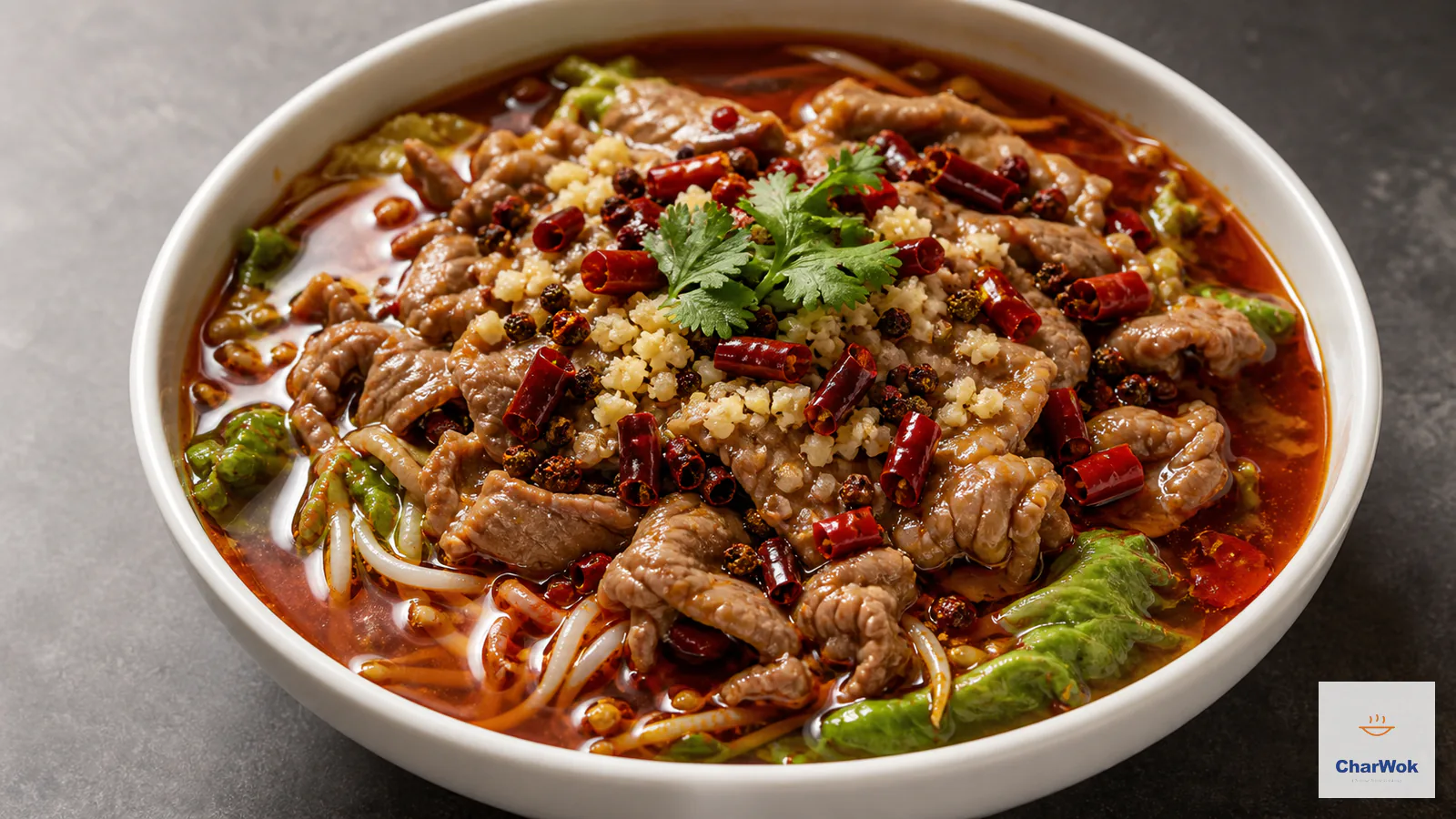
Sichuan boiled beef (Shui Zhu Niu Rou, 水煮牛肉) is not a gentle braise and not a soup. It is a bowl of tender beef slices floating in a slick of red, numbing oil, piled over blanched greens, then finished with raw garlic and dry spices bloomed by a pour of hot oil. The two words of its name mean, plainly, "water-cooked beef," a name that hides more than it reveals. There is nothing plain about the bowl.
The dish that lands on most home cooks' tables is usually disappointing: grey, tough beef in a thin, muddy broth. Two things cause that, and both are fixable. The beef has to be velveted so a brief simmer leaves it silken, and the broth has to be built on chili bean paste (doubanjiang) rather than dumped in as water. Get those two right and the rest is theatre, the kind of theatre worth doing in your own kitchen.
At a glance. Velvet 300 g thinly sliced beef with egg, water and cornstarch, then poach the separated slices gently in 500 ml (2 cups) broth. Start checking at about one minute, but use doneness rather than a fixed cutoff. Finish with oil heated gradually to about 180°C / 350°F, shimmering but not smoking. Marinate at least 15 minutes; total active time is about 25 minutes.
Beef safety: USDA FSIS recommends cooking whole cuts of beef to at least 63°C / 145°F and allowing a 3-minute rest. For these thin slices, check a thick representative piece with an instant-read thermometer when possible; the one-minute timing is only a starting point.
What this dish actually is, and where it came from
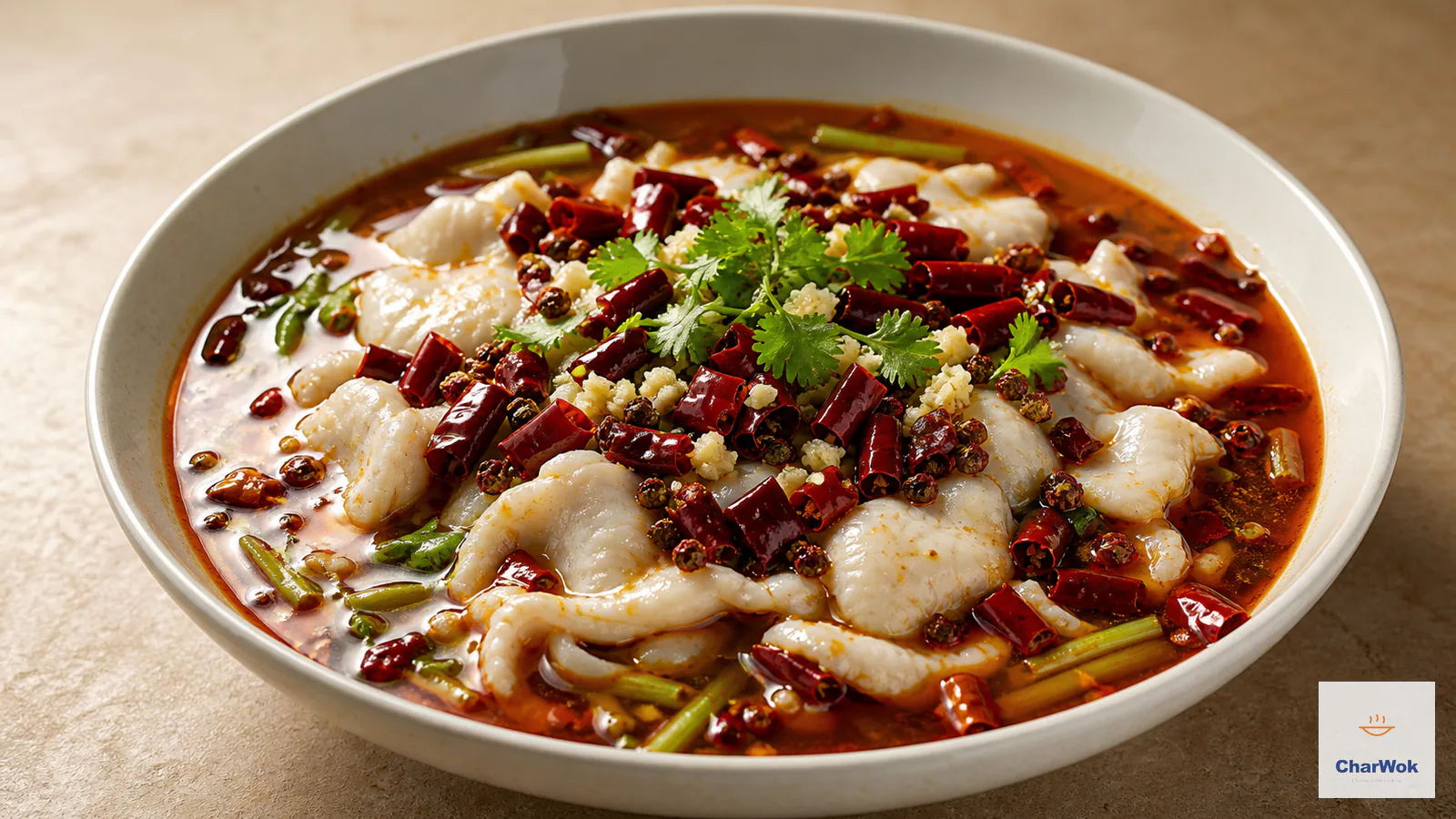
"Shui zhu" is a Sichuan cooking verb, not a recipe name. You build a fragrant, spicy broth, slide in a quick-cooking protein, and pour the lot over vegetables. The same backbone runs through Sichuan boiled fish and the poached-beef layer of good mapo tofu, and it is close cousin to the spicy-numbing logic of dan dan noodles and kung pao chicken. The beef version is the one that most rewards the home cook, because beef is the protein most people ruin by boiling it too long.
Like many Sichuan classics, its exact inventor is not recorded; what is clear is that the dish belongs squarely to the ma la tradition of greater Chengdu and Chongqing: the corner of Chinese cooking that pairs chili heat with the citrusy, lip-tingling buzz of Sichuan peppercorn. "Ma" is the numb; "la" is the spice. They aren't the same sensation, and a well-made shui zhu lets you feel both.
The three things that decide whether you succeed
Before the recipe, the judgements, because these are where home versions fall apart.
The cut matters more than the marinade. Use a lean, tender cut you'd happily grill rare: eye round, top sirloin, or tenderloin trim. Do not use stew meat. The whole point is a one-minute cook; a tough cut has no time to soften and will stay stubborn. I have tried this with chuck once in a pinch and it was a waste of good chili oil.
Velveting is non-negotiable. The egg, cornstarch, and water coating is not optional gloss. Cornstarch gelatinizes in the hot broth into a thin coating that holds moisture against the meat and binds the water you worked in, so the slices stay juicy rather than giving up their liquid to the pot, and the extra water plumps the meat so it reads as juicy rather than boiled. Skip it and the beef turns grey and stringy within thirty seconds.
The "boiling" is a gentle simmer, not a rolling one. Once the broth has come to a full boil, turn the heat down to medium before the beef goes in. You want the liquid still moving, small bubbles steadily breaking the surface, but never a hard, rolling boil, which will curl the slices into tough little rags before they cook through. This is the single step I see go wrong most often, even with otherwise good cooks.
Ingredients
Ingredients at a glance
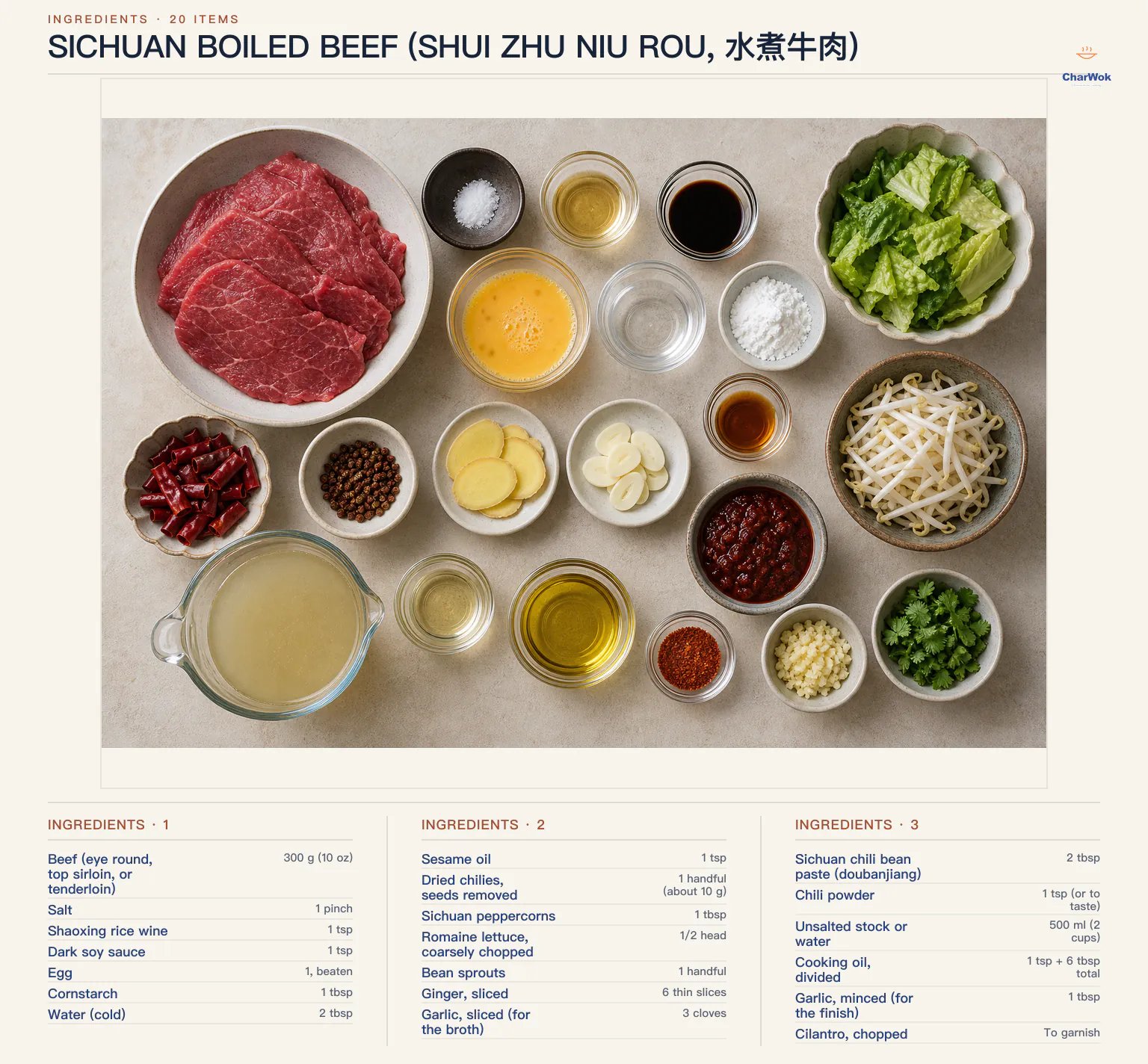
Serves 3 as a main with rice. The ingredient list looks long because the dish is built in three layers: the beef, the aromatics and broth, and the finishing spice pour. None of it is hard to source at a Chinese grocery, and most of it keeps for months.
| Ingredient | Amount | Notes / substitute |
|---|---|---|
| Beef (eye round, top sirloin, or tenderloin) | 300 g (10 oz) | Slice yourself against the grain, about 2 mm thick. Partial-freezing for 30 min makes clean slicing easier. Avoid stew cuts. |
| Salt | 1 pinch | About 1/8 tsp; the doubanjiang and soy are salty. |
| Shaoxing rice wine | 1 tsp | Dry sherry works; avoid cooking wine with added salt. |
| Dark soy sauce | 1 tsp | For color. Regular (light) soy is fine if you don't keep both (see our light vs. dark soy guide). |
| Egg | 1, beaten | Just the white is more traditional; whole egg is easier and fine here. |
| Cornstarch | 1 tbsp | Potato starch works equally well. This is the velvet. |
| Water (cold) | 2 tbsp | Loosens the coating so the meat can absorb it. |
| Sesame oil | 1 tsp | Added last, after the starch, so it seals the coating. |
| Dried chilies, seeds removed | 1 handful (about 10 g) | Eringlong or facing-heaven chilies. Whole dried red chilies from any Asian market will do; you want them for aroma, not raw heat. |
| Sichuan peppercorns | 1 tbsp | Red, not green. Toast very lightly before grinding for the topping (see how to grind Sichuan pepper correctly). |
| Romaine lettuce, coarsely chopped | 1/2 head | Celery, bok choy, or napa cabbage are all classic alternatives. |
| Bean sprouts | 1 handful | Snow pea tips are a fancier swap. |
| Ginger, sliced | 6 thin slices | Smash them lightly to release flavor. |
| Garlic, sliced (for the broth) | 3 cloves | Keep separate from the finishing garlic. |
| Sichuan chili bean paste (doubanjiang) | 2 tbsp | Pixian is the gold standard. This is the engine of the dish, so don't substitute generic chili sauce. |
| Chili powder | 1 tsp (or to taste) | Korean or plain mild chili powder for color; cayenne if you want it fierce. |
| Unsalted stock or water | 500 ml (2 cups) | Homemade stock is better; water is honestly fine because the doubanjiang carries the flavor. |
| Cooking oil, divided | 1 tsp + 6 tbsp total | Neutral, high-smoke-point: peanut, canola, or grapeseed. Used across four steps: 1 tsp in the marinade, 2 tbsp for the spice topping, 2 tbsp for the broth base, 2 tbsp for the finishing pour. |
| Garlic, minced (for the finish) | 1 tbsp | This is the raw garlic that gets flashed with hot oil. |
| Cilantro, chopped | To garnish | Optional but I wouldn't skip it. |
Step-by-step method
- Slice and velvet the beef. Cut against the grain into 2 mm slices, thin enough to cook in seconds, thick enough to still feel like meat. In a bowl, combine the beef, salt, Shaoxing wine, dark soy, egg, cornstarch, and 2 tbsp cold water. Mix with your hands until the liquid is fully absorbed and the surface feels tacky, not wet. This takes about two minutes of actual massaging; the meat should look slightly paler. Finish with the sesame oil and 1 tsp cooking oil stirred through: the oil coats the velvet so the slices drop into the broth separately instead of clumping. Rest at least 15 minutes (an hour is better, in the fridge).
- Toast and chop the spice topping. In a dry wok over low heat, warm 2 tbsp oil with the dried chilies and the whole Sichuan peppercorns. Keep the heat genuinely low; you are extracting aroma, not frying to a crisp. The moment the chilies darken and smell toasted (two to three minutes; watch for them turning from bright red toward brick), tip everything onto a board. Chop fine and set aside. Burnt peppercorns taste bitter and ashy, and there is no rescuing them.
- Blitz the greens in the same wok. There will still be chili-scented oil in the pan, so use it. Add the romaine and bean sprouts over medium heat and toss just until the greens wilt and the sprouts lose their raw crunch, about one minute. They will cook a little more under the hot broth later, so pull them while they still have structure. Spread them across the bottom of your wide serving bowl.
- Build the red broth. Back in the wok, 2 tbsp fresh oil over low heat. Add the ginger slices, the sliced garlic, the doubanjiang, and the chili powder. This is the make-or-break step for flavor: fry the paste patiently until the oil runs red and the raw bean smell is gone, about 90 seconds, pressing and stirring so nothing scorches on the pan floor. Then pour in the 500 ml stock or water and bring it to a full boil over high heat. Let it boil a minute so the chili flavor fully blooms into the liquid.
- Cook the beef, gently. Turn the heat down to medium. Slip the marinated slices into the broth one by one so they do not glue together, and avoid aggressive stirring. Start checking at about one minute, then continue until the slices are fully cooked and a thick representative piece reaches at least 63°C / 145°F. Pour the beef and broth over the greens and allow the finished bowl to rest for 3 minutes before eating.
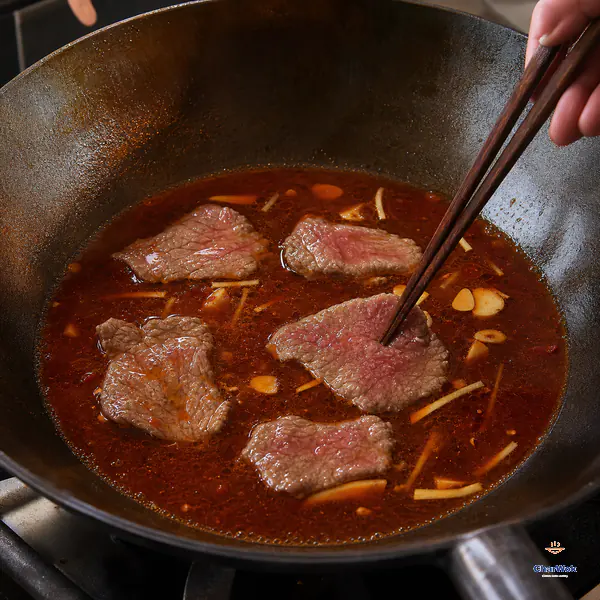
Lower the velveted beef one slice at a time, keep the broth at a quiet simmer and wait for the coating to set before nudging. Start checking at about one minute, continue until a thick representative slice reaches 63°C / 145°F, then rest the finished bowl for 3 minutes.
- The finish: hot oil over raw garlic and spice. Pile the minced raw garlic and the chopped chili-pepper topping over the center of the beef. Heat 2 tbsp clean oil gradually until it shimmers, around 180 °C / 350 °F, then pour it directly onto the garlic and spices. Stay beside the stove; if the oil smokes, turn off the burner and let it cool briefly before pouring. You should hear a sharp sizzle and smell the garlic bloom. Scatter cilantro over the top and bring it to the table immediately, with rice.
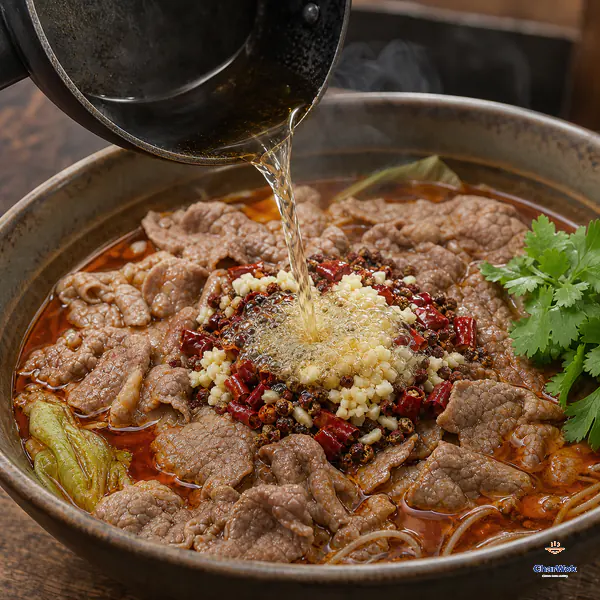
Heat clean oil gradually to about 180°C / 350°F, when it is fluid and shimmering but not smoking, then pour it over the dry garlic-and-spice mound. If smoke appears, turn off the burner and let it cool briefly first.
The final pour releases the aroma of the raw garlic and chopped spices in the serving bowl. The goal is a sharp sizzle from hot, shimmering oil, not visible smoke. Keep the pan attended, use a small stable pan, and clear the area around the burner before heating the oil.
Oil safety: The U.S. Fire Administration advises turning off the burner if oil smokes or grease starts to boil. Never carry a smoking pan or pour water onto an oil fire.
When it goes wrong, and how to fix it
Use the symptoms below to identify the stage that needs adjusting.
The beef is tough and chewy. Either the cut was wrong (you used stew meat or a sinewy piece), the slices were cut with the grain instead of against it, or the boil was too hard. Check the cut first: if there's visible silver skin or coarse grain, you're starting behind. Cut across the grain in short strokes, and keep the broth at a steady medium simmer (small bubbles, not a rolling boil) while the beef is in.
The beef slices clumped into one mass. The velvet coating was too wet, or you didn't separate the slices as they went in. Drain off any unabsorbed marinade before cooking, and add the oil last so each slice is film-coated. Slide them in one at a time across the surface of the broth.
The broth is thin and watery. You under-fried the doubanjiang, or didn't let the chili powder bloom. The paste has to hit hot oil and cook until the oil turns red before any liquid goes in. If your broth tastes flat even after, simmer it two minutes longer with an extra half-teaspoon of paste dissolved in.
The dish is bitter, not numbing. The peppercorns or chilies burned during the toasting step. There's no fix once it happens; start the topping over and keep the heat lower. Burnt chili also gives a scratchy, acrid heat rather than a clean one.
The final sizzle didn't happen. The oil may not have been hot enough, or the garlic was wet. Pat the minced garlic dry and heat fresh oil gradually until it shimmers. Do not keep heating once it smokes; turn off the burner and let it cool briefly.
The greens went soggy. You overcooked them in step 3, or let them sit too long before the broth went on. Wilt them barely, and have the serving bowl ready so the hot broth lands on them right away. The carryover heat finishes the job.
Variations and what to serve with it
The protein and the vegetables are both flexible, as long as the broth and the finish stay the same. Thin fish filets are the most famous sibling; thinly sliced pork tenderloin works; firm tofu cubes (the kind used in braised tofu, Sichuan style) turn it vegetarian. For greens, try celery, snow pea shoots, lotus root, or wood-ear mushroom: anything that holds up to a few minutes in hot broth without collapsing.
This is a one-bowl main meant to be eaten over plain white rice, which absorbs the chili oil and tames the heat. If you want a fuller Sichuan table, pair it with a cooling, non-spicy vegetable (a simple oyster sauce lettuce or a cucumber salad) and one of the cold dishes from our round-up of Sichuan recipes like garlic pork slices. For a carb beyond rice, cold noodles with Sichuan dressing on the side is a warm-weather move I'm fond of.
Keeping and reheating leftovers
Sichuan boiled beef is best the instant it's made: the texture of the velveted beef and the snap of the finishing oil don't survive storage well. If you must keep it, refrigerate the beef and broth together for up to two days and reheat gently on the stove just until steaming; don't let it boil, or the beef will toughen. The blanched greens go in last and only long enough to warm through. I don't recommend freezing, because the cornstarch coating breaks down and the beef goes woolly on thaw.
Frequently asked questions
A few questions that come up reliably every time I make this for people who haven't.
Not for this dish. It depends on a sub-minute cook, so a tough cut like chuck or round roast will stay chewy. Pick a lean grilling cut (eye round, sirloin, tenderloin) and save the braising cuts for a long stew instead.
It releases the aroma of the raw garlic and toasted spices. Heat two tablespoons gradually until the oil shimmers, not smokes, then pour it over the dry toppings. If smoke appears, turn off the burner and let the oil cool briefly.
Heat comes from three places you can tune separately: the chili powder (reduce it), the doubanjiang (don't cut it below 1 tbsp, or the broth loses body), and the dried chilies in the topping (use fewer, or leave them whole instead of chopped). The numbing pepper is separate from heat, so keep the peppercorns even if you dial the chilies down.
Yes, and it's a good move for guests. Build the red broth up to a day ahead and reheat it to a simmer before sliding in the beef. Velvet and slice the beef fresh, and do the oil finish at the table for the full effect.
There isn't a clean substitute; it gives both the fermented depth and the red color. A mix of gochujang and extra chili powder will get you partway but reads sweeter and less complex. If you cook Sichuan food more than twice a year, just buy the real thing.
Done right, this is one of the most rewarding dishes in the Sichuan repertoire, and the one that most reliably surprises people who assume they need a restaurant to get it. Velvet the beef, simmer it gently, and don't be timid with the final pour of oil. Everything else is adjustable to your kitchen and your heat tolerance.