I have ruined this dish more times than I want to admit. The first few attempts I treated it like a soup: boiled the beef to death in plain water, dropped the daikon in too early, and ended up with gray, stringy meat floating in a thin, sweet-smelling broth that tasted like radish and regret. The version below is the one I make now, after I finally understood that braised beef with daikon is not a soup, it is a braise, and the two ask for opposite things. A soup wants low heat and a clear, gentle liquid. A braise wants a layer of fat, spices bloomed in oil, and time given freely to collagen.
The payoff, when it works, is one of the quietest, most comforting plates in the northern Chinese home kitchen: beef so tender a spoon can break it, daikon that has gone translucent and drunk up every spice note in the pot, and a glossy mahogany sauce thick enough to coat a grain of rice. It is the kind of dish you start at 4 p.m. and forget about until the whole apartment smells of cassia and star anise.
At a glance. Cube 900 g (2 lb) beef shank or brisket, blanch it hard in cold water, then braise in oil-bloomed spices + soy for 1¼ to 1½ hours before the daikon goes in for a final 15 minutes. The single judgment call that decides the dish: cook the daikon last, in the same pot, in the same sauce, never with the beef from the start. Daikon cooked the whole time turns to mush and floods the braise with water; daikon added late stays intact and absorbs flavor instead.
What this dish is, and where it sits
This is a dun (炖) dish, the northern Chinese word for a slow, covered braise, as opposed to hong shao (红烧), the southern "red-cooking" lineage you may know from dishes like hong shao rou braised pork belly. The two share an ancestor, oil and soy and sugar, but they part ways on philosophy. Red-cooking builds a dark, sweet, syrupy master sauce and often keeps it going for weeks. A dun braise is made fresh each time, lighter in color, more about the meat and vegetable speaking for themselves than about a lacquered glaze.
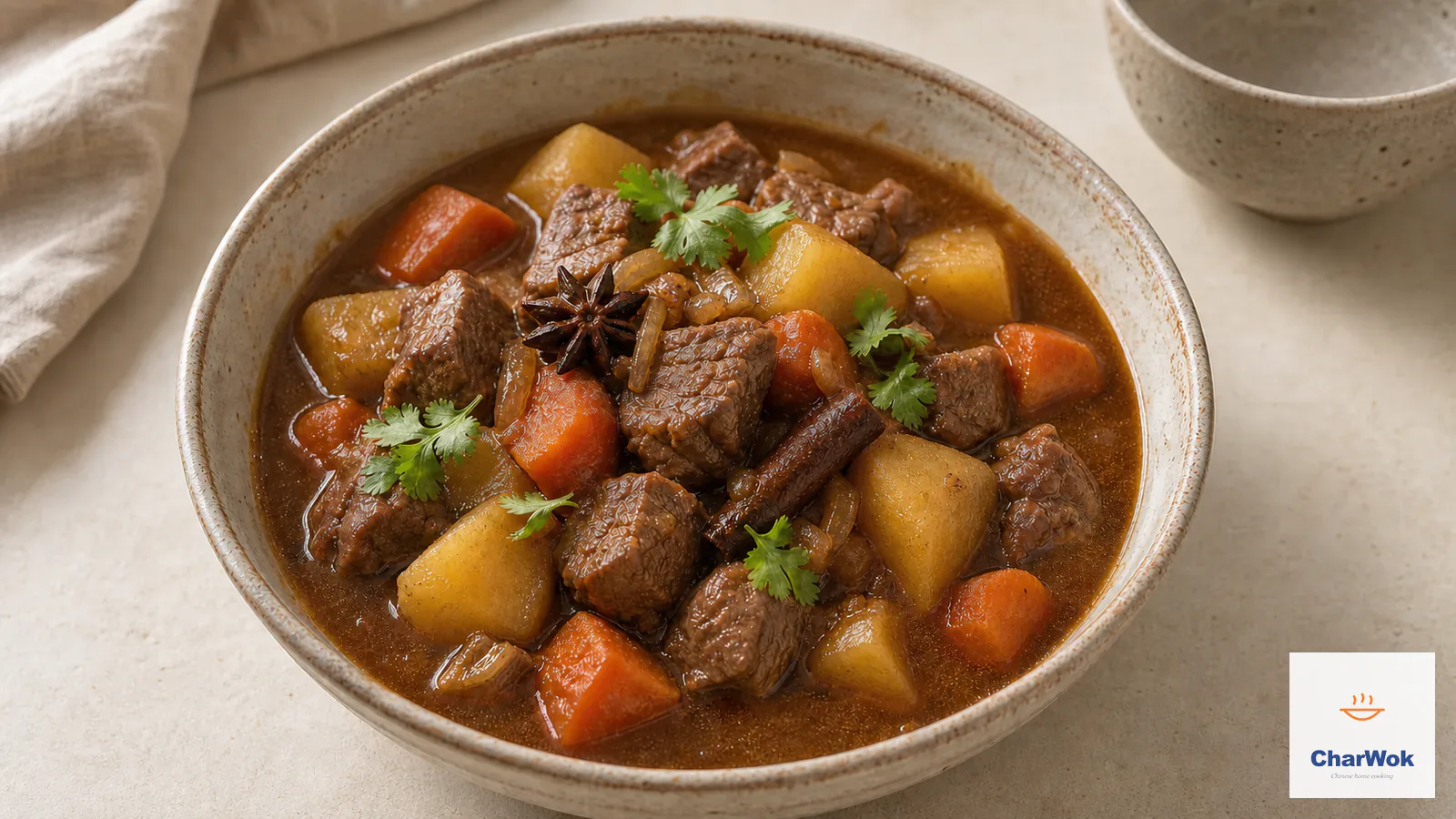
Braised beef with daikon is everyday food across the wheat-eating north, Shandong and the northeast especially, and it shows up most often as one of several dishes on a family table rather than as the centerpiece. Think of it as the cold-weather cousin of beef stew with potatoes, same logic, different starch. The daikon does the job the potato would do elsewhere: it mellows the heaviness of the meat, stretches the meal, and soaks up the sauce so nothing is wasted. Served over plain rice or alongside a quick vegetable, it is a full dinner.
The cut of beef matters more than the spices
People agonize over the spice mix and grab whatever beef is on sale. That is backwards. You can braise with five spices or fifteen and it will taste fine, but no amount of star anise rescues a lean, dry cut. The whole dish is built on collagen, the connective tissue that melts into gelatin over a long, slow cook. Gelatin is what makes the sauce glossy and clingy instead of watery, and it is what makes the meat feel tender rather than stringy.
Two cuts deliver this reliably, and I would not bother with a third.
Beef shank (牛腩/牛腱). This is the cut I use. It is a working muscle from the leg, threaded through with silver skin and connective tissue that looks unappealing raw and turns to silk when cooked. There is a reason Chinese braised beef shank and the broth for Taiwanese beef noodle soup lean on it. Buy boneless shank, sometimes labeled "beef shank cross-cut" or "shin." If your butcher only has it whole, cube it yourself into 4 cm (1½ inch) pieces. Do not trim the silver skin off before cooking; it is the collagen you came for.
Beef brisket. The fallback, and a perfectly good one. Brisket has more intramuscular fat than shank, so the result is richer and the sauce a little more unctuous. The downside is it can be greasy if you do not skim. Either cut works, but cook brisket on the shorter end of the time range or the layers can shred apart into strings.
Avoid anything lean and uniform, eye of round, top round, stewing "beef cubes" pre-cut at the supermarket. These are the cuts that boil dry and resist every minute of cooking. You will chew them for an hour and still lose.
Why blanch the beef in cold water
This step is non-negotiable, and the reason is mostly about the sauce. Raw beef throws off blood proteins and bone dust the moment it hits heat. If you cook the meat straight into your braising liquid, those proteins coagulate into gray flecks and a cloudy scum that muddies the sauce and dulls the spice aroma. Starting the meat in cold water (not hot) and bringing it slowly to a boil lets those impurities lift out gently rather than being sealed in.
Bring it to a full, rolling boil and hold it there two minutes, skimming the foam as it rises. Then drain and discard all of that water. You are not making stock here, you are cleaning the meat. The flavor lives in the braise that follows.
Why bloom the spices in oil first
Star anise, cassia, bay, and Sichuan peppercorn are full of aromatic compounds that are fat-soluble, not water-soluble. Drop them into water and you get a faint, flat flavor. Warm them in oil over low heat for a minute and the aromatics dissolve into the fat, which then coats every piece of beef and carries the flavor into the meat as it braises. This is the same logic behind the master stock for spicy beef noodle soup and the spice base of so many slow-cooked northern dishes.
Use a neutral oil, canola, grapeseed, peanut, not olive oil. Keep the heat low. You want the spices to sizzle gently and release their scent, not scorch. The moment you smell the cassia, move on. Burnt star anise is bitter and there is no fixing it.
Ingredients
Ingredients at a glance
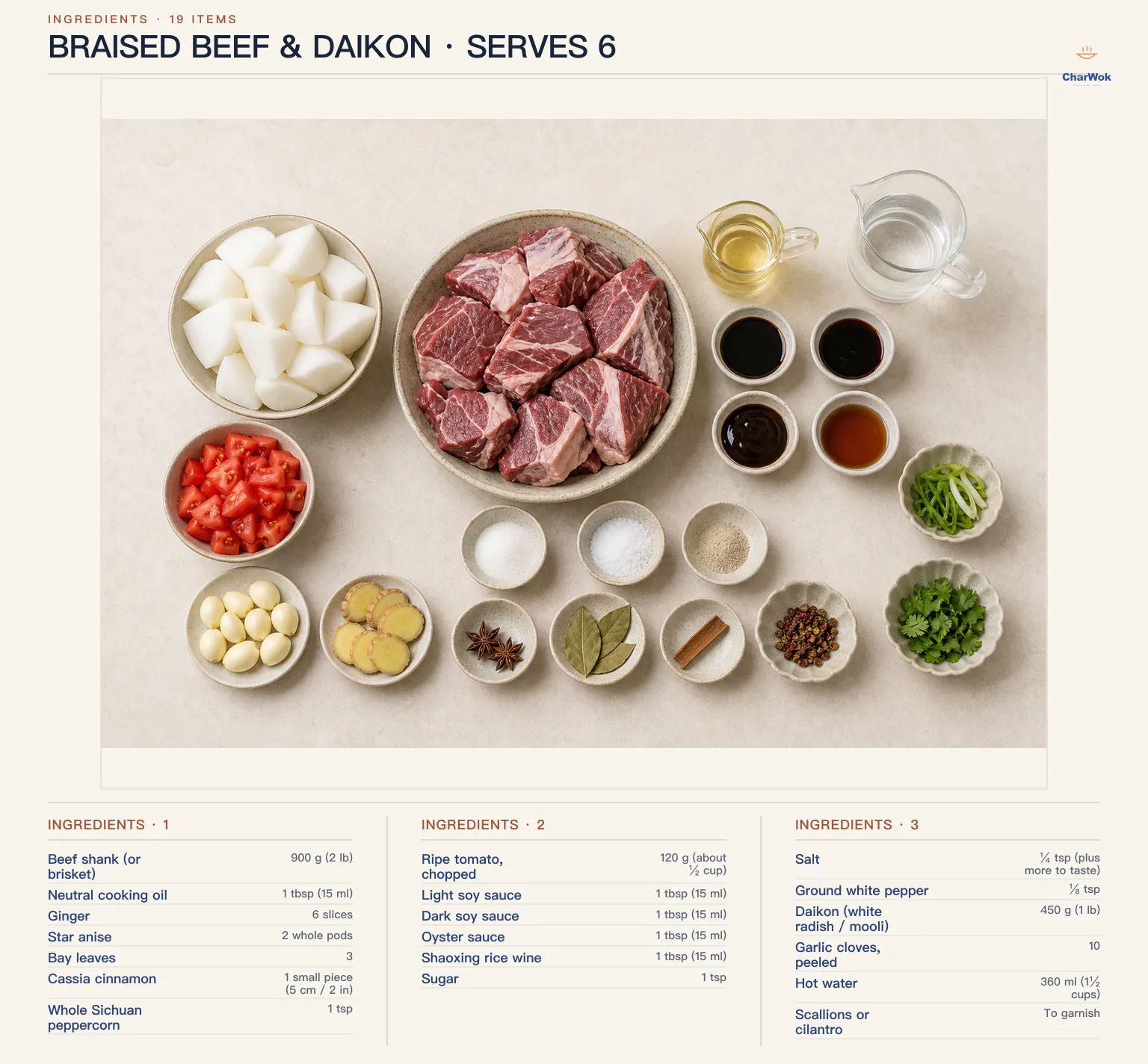
| Ingredient | Amount | Notes / substitute |
|---|---|---|
| Beef shank (or brisket) | 900 g (2 lb) | Boneless, with visible connective tissue. Avoid lean pre-cut stew cubes. |
| Neutral cooking oil | 1 tbsp (15 ml) | Canola, grapesead, or peanut. |
| Ginger | 6 slices | Keep the skin on; smash each slice lightly to release flavor. |
| Star anise | 2 whole pods | Do not exceed. More than 2 makes the dish taste medicinal. |
| Bay leaves | 3 | Standard Turkish bay is fine. |
| Cassia cinnamon | 1 small piece (5 cm / 2 in) | Cassia is the bark used in Chinese cooking; standard grocery "cinnamon" is an acceptable substitute. |
| Whole Sichuan peppercorn | 1 tsp | Adds a faint tingle; see our Sichuan pepper guide. Omit if you want zero numbing. |
| Ripe tomato, chopped | 120 g (about ½ cup) | Acid tenderizes and brightens. Substitute 1 tbsp tomato paste if out of fresh. |
| Light soy sauce | 1 tbsp (15 ml) | Salt and savory base. See light vs. dark soy sauce. |
| Dark soy sauce | 1 tbsp (15 ml) | For color. Less salty than light, more molasses-like. |
| Oyster sauce | 1 tbsp (15 ml) | Body and umami. |
| Shaoxing rice wine | 1 tbsp (15 ml) | Read about Shaoxing rice wine. Dry sherry is the standard substitute. |
| Sugar | 1 tsp | Balances the salt and rounds the spice. Rock sugar is traditional; white sugar works. |
| Salt | ¼ tsp (plus more to taste) | The soy and oyster sauce carry salt; taste before adding more. |
| Ground white pepper | ⅛ tsp | Warmer and less harsh than black pepper here. |
| Daikon (white radish / mooli) | 450 g (1 lb) | Peeled, cut into chunks larger than the beef so they hold their shape. |
| Garlic cloves, peeled | 10 | Left whole so they soften into mellow bites; do not mince. |
| Hot water | 360 ml (1½ cups) | Just enough to nearly level with the meat. Use hot, not cold, so the braise does not stall. |
| Scallions or cilantro | To garnish | Scallions for a sharper finish, cilantro for a fresher one. |
How to cook it
- Prep and blanch the beef. Cut the beef into 4 cm (1½ in) cubes. Put them in a pot and cover with plenty of cold water. Bring to a full boil over high heat and let it boil 2 minutes, skimming the foam constantly. Drain and discard the water. This single step is what keeps your finished sauce clear instead of murky.
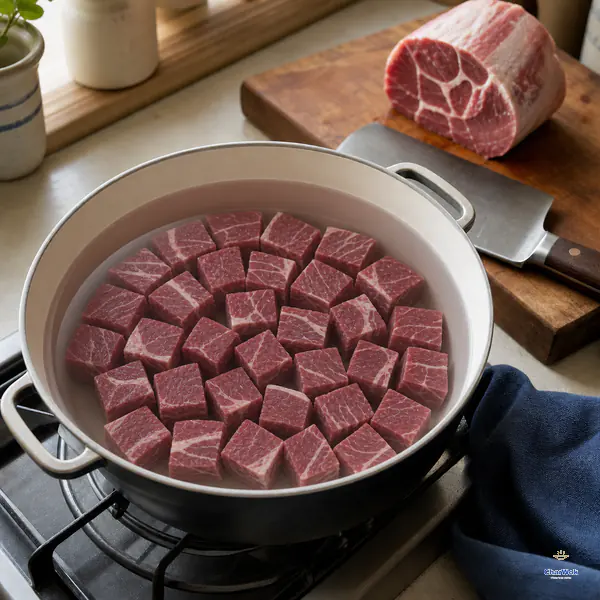
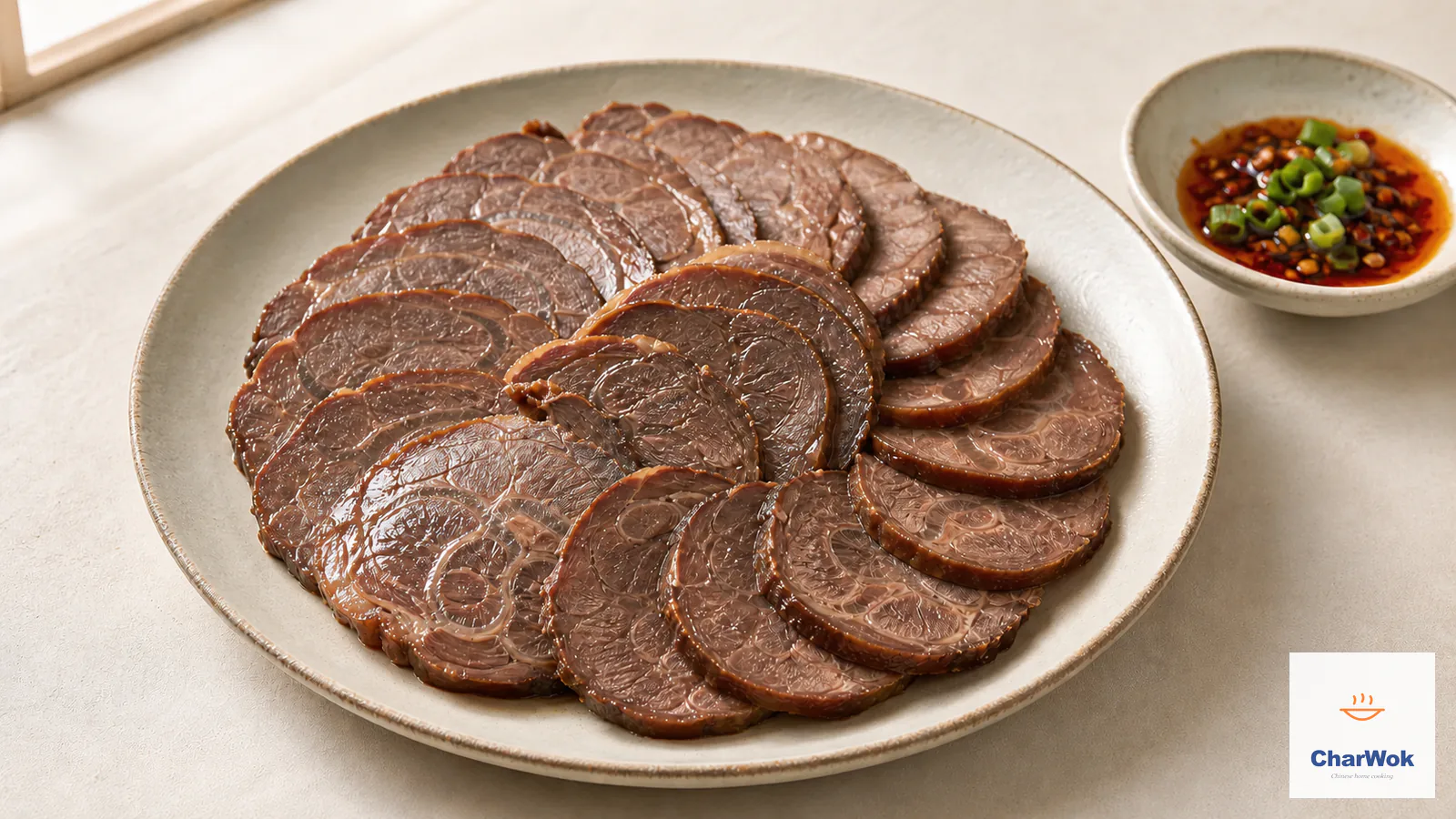
Cut the beef into large even cubes, cover them completely with cold water, and only then turn on the heat so blood and impurities release gradually
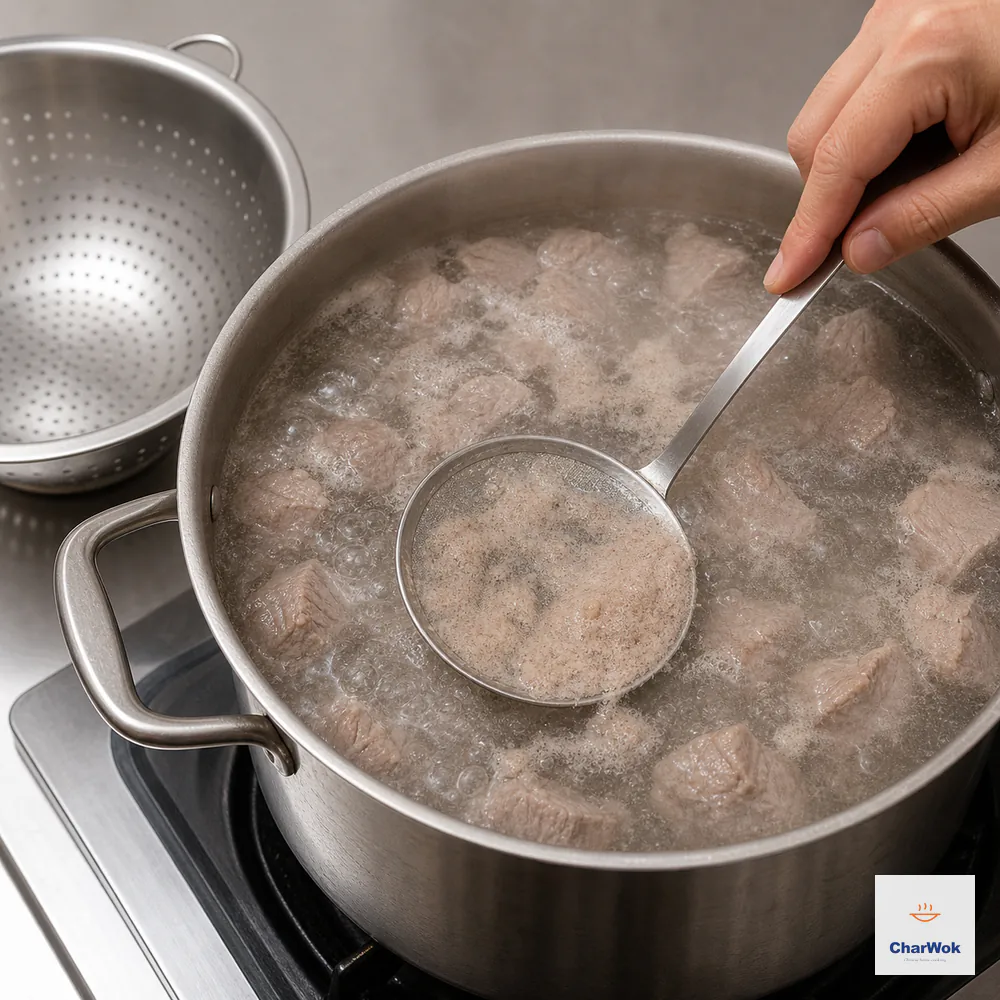
Hold the plain water at a full boil for 2 minutes while skimming, then drain the beef and discard every drop of the cloudy blanching water.
- Bloom the spices in oil. Wipe out the pot (or use a clean one), add the oil, and set it over low heat. Add the ginger slices, star anise, bay leaves, cassia, and Sichuan peppercorn. Let them sizzle gently for about a minute, until the kitchen smells of warm spice. If the cassia darkens past light brown, the heat is too high.
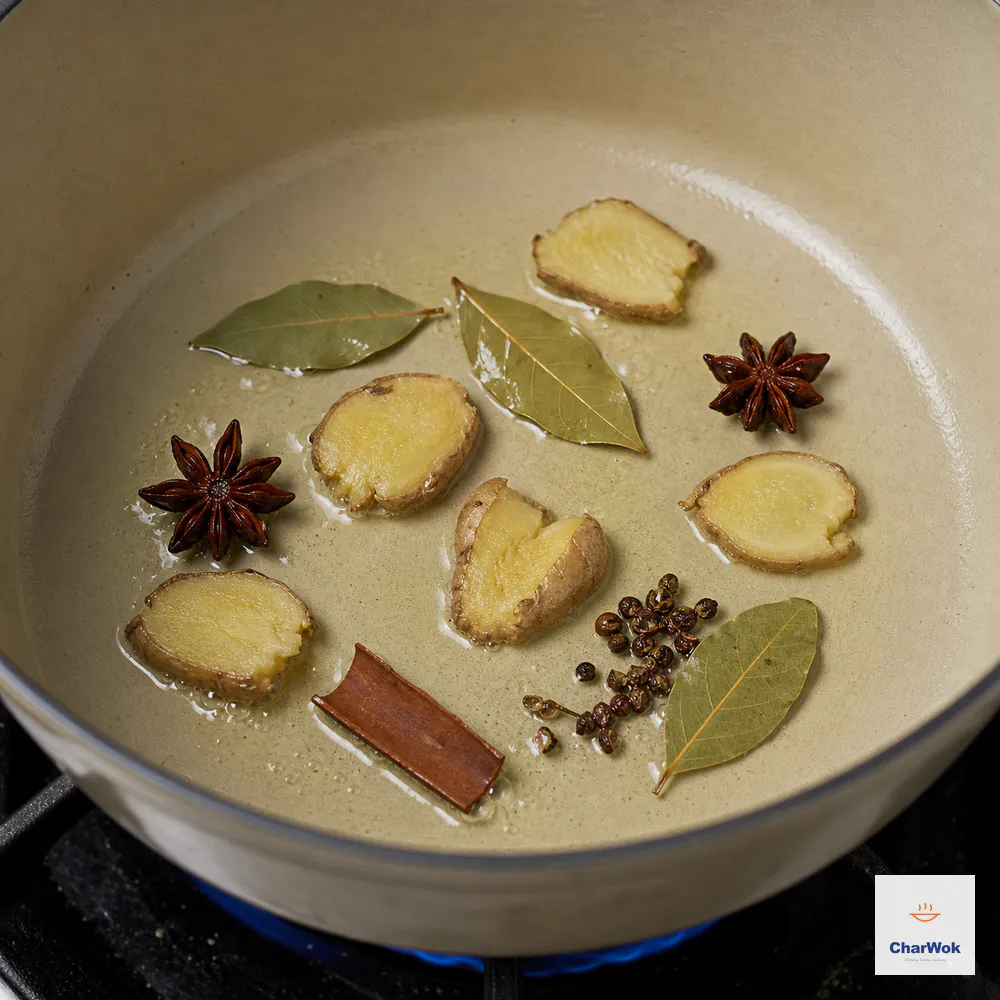
Bloom the ginger and whole spices over true low heat only until fragrant; move on before the cassia or star anise darkens enough to turn bitter.
- Coat and season the beef. Add the drained beef and stir for a minute so each piece picks up the spiced oil. This brief fry builds the first layer of Maillard browning and locks the aromatics onto the meat. Then add the chopped tomato, both soy sauces, oyster sauce, Shaoxing wine, sugar, salt, and white pepper.
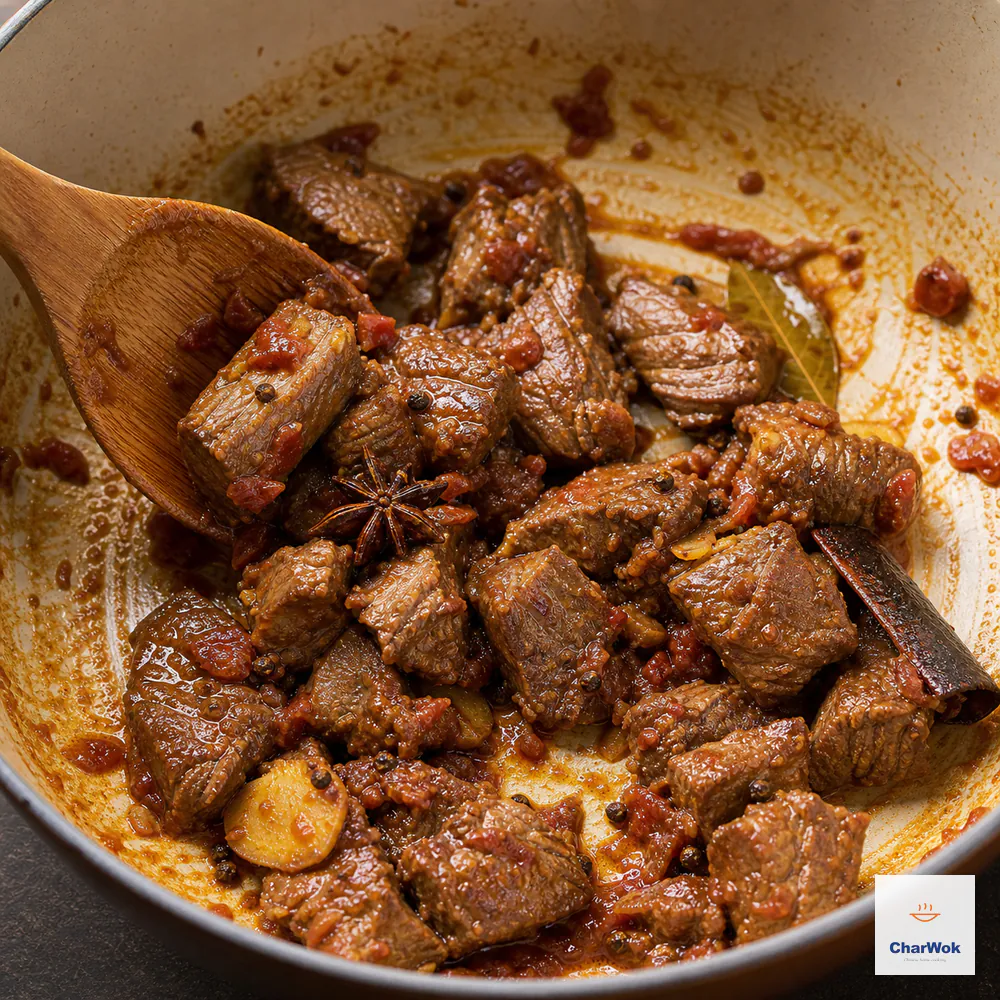
Fry the drained beef for a minute, then coat it with the collapsing tomato and all seasonings before any hot water enters the pot.
- Start the braise. Pour in the 360 ml hot water, just enough to come nearly level with the top of the meat. Bring it back to a boil, then drop the heat to the lowest setting that holds a gentle simmer. Cover with a tight lid and cook 1 hour 15 minutes to 1 hour 30 minutes, until a cube of beef yields to a fork with only slight resistance. Resist opening the lid to check, every lift extends the cook by evaporating heat.
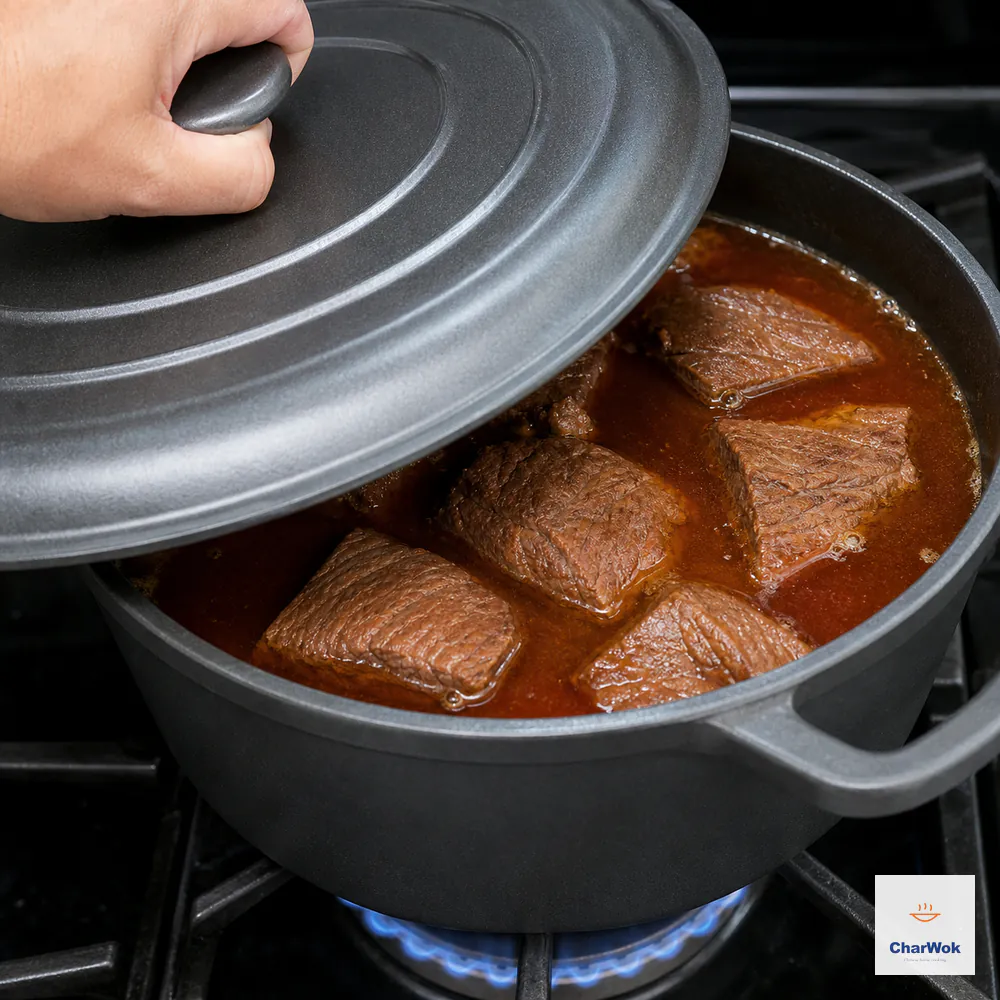
Add 360 ml hot water to nearly level with the beef, return it to one boil, then cover tightly and hold the lowest gentle simmer for 75 to 90 minutes.
- Add the daikon and garlic, late. Stir in the daikon chunks and the whole garlic cloves. Replace the lid and cook over medium heat another 15 minutes, until the daikon is soft enough to pierce but still holds its shape. Adding it now, not at the start, is the make-or-break detail: it absorbs the spiced sauce without dissolving.
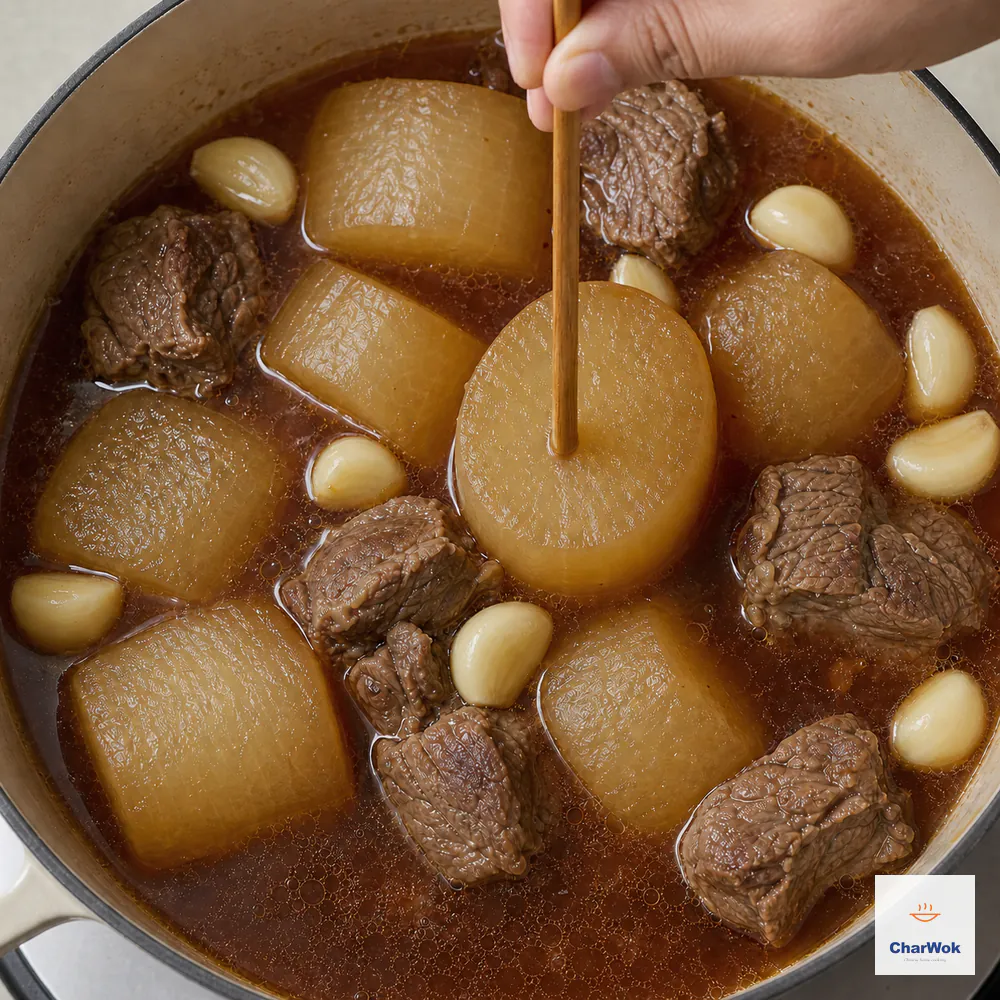
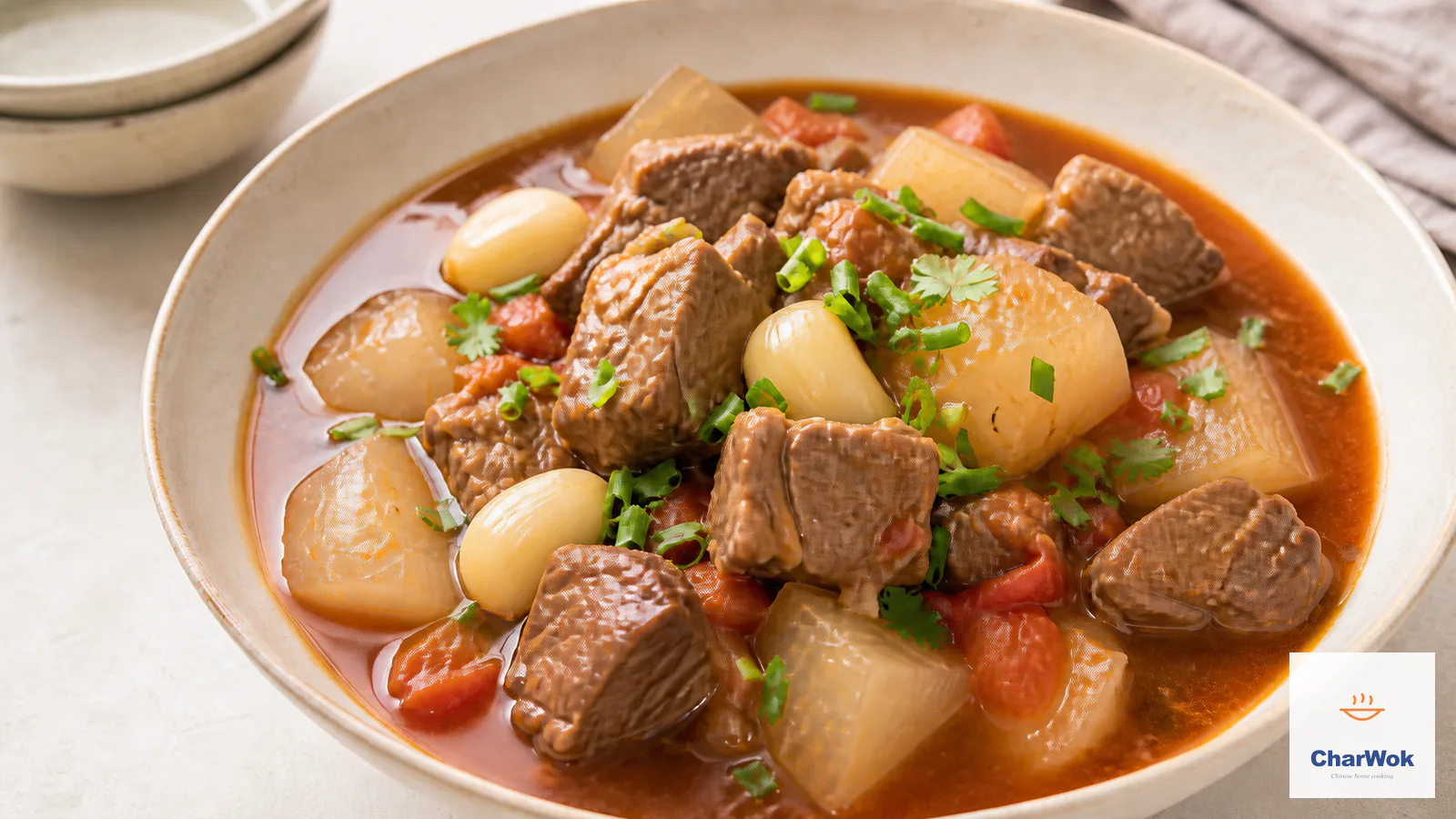
Only after the beef is tender, add the large daikon chunks and whole garlic; cook about 15 minutes and stop when the radish is pierceable yet still holds its shape.
- Finish the sauce. Taste and adjust salt. If the broth feels too thin for your taste, leave the lid off and boil hard 3 to 4 minutes to reduce and slightly glaze. I usually leave it brothy and serve it as a wet braise over rice, but a drier version is equally traditional.
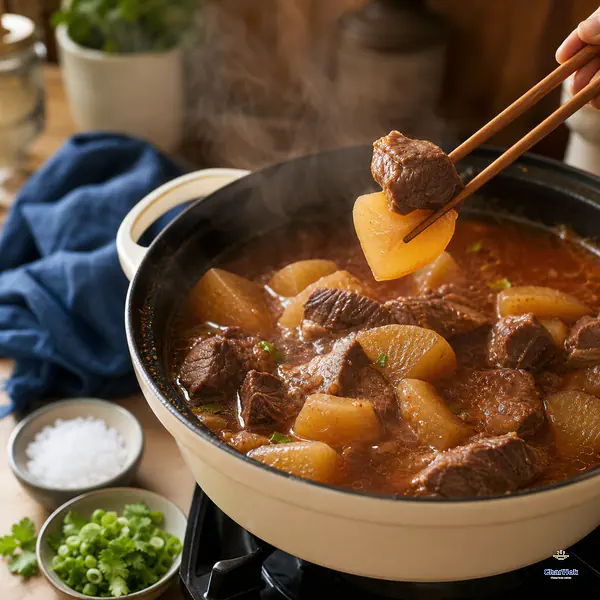
Taste one piece of beef and daikon, adjust the salt, then leave the lid off for 3 to 4 minutes only if you want a thicker, more concentrated sauce
- Serve. Transfer to a wide bowl, scatter with sliced scallions or torn cilantro, and bring it to the table while still bubbling.
When it goes wrong, and how to fix it
The beef is still tough after the full time. It has not failed, it is undercooked. Collagen needs time, not more heat. Add a splash of hot water if the pot is drying out, cover, and give it another 20 to 30 minutes at a low simmer. Cranking the heat to rush it will only toughen the muscle fibers. The instant Pot shortcut, 35 minutes at high pressure with a 10 minute natural release, collapses the cook time, but the stovetop result has better texture because the braise reduces as it goes.
The sauce is watery and pale. Two usual causes. One: too much water at the start. Aim for barely level with the meat, not submerged. Two: you skipped browning the spiced oil onto the beef, so there is no fat to emulsify the liquid. Fix the current pot by removing the lid and boiling it down until it coats a spoon. For next time, use shank or brisket, not a lean cut, fat and gelatin are what give the sauce body.
The daikon collapsed into shreds. It went in too early or was cut too small. Cut daikon into chunks at least as large as the beef cubes, and never add it before the final 15 minutes. If it has already dissolved, lean into it: call it a broken daikon braise, mash what remains into the sauce for thickness, and serve over noodles.
The whole thing tastes like medicine or cough syrup. That is star anise and cassia talking. You either used too much (more than 2 pods, or a huge piece of cassia) or scorched the spices in the oil. There is no rescuing a burnt-spice braise; strain it, discard the spices, and next time bloom gently over true low heat.
The sauce is too salty. Add the daikon, it will draw salt out of the liquid as it cooks, and a small pinch of sugar to round the edge. Resist the urge to add plain water, which dilutes flavor rather than fixing it.
A note on the daikon
Choose a daikon that feels heavy for its size with smooth, unblemished skin. Lighter, smaller roots tend to be sweeter and less pungent, which is what you want here, you are not making a peppery radish salad. Peel it, because the skin can hold bitterness, and cut the chunks irregular rather than perfectly cubed; rough surfaces grab more sauce. If your daikon is unusually bitter, a 10 second blanch in boiling water before it goes into the braise takes the edge off.
Variations, pairings, and what to do with leftovers
The spice base here is a template. Drop the daikon and use chunks of potato and carrot and you have the closely related beef stew with potatoes. Add a tablespoon of five spice powder for a deeper, more perfumed profile, or stir in a spoon of doubanjiang for heat. Some cooks add a handful of dried shiitake or a block of firm tofu in the last 15 minutes, and a bowl of scallion tofu on the side makes a fine vegetarian counterpoint.
For a balanced table, serve this over freshly cooked jasmine rice with one bright, acidic vegetable to cut the richness. A cold smashed cucumber salad or a quick hot and sour napa cabbage does the job, and a bowl of hot and sour soup turns the meal into something close to a restaurant set.
Leftovers are arguably better than the fresh pot, because the gelatin sets and the flavors marry overnight. Reheat gently on the stove with a splash of water. The leftover beef and sauce are excellent folded into rice congee for breakfast, or ladled over noodles in the spirit of Taiwanese beef noodle soup. I have even piled cold leftover beef onto a bowl of lu rou fan style rice when I wanted a heavy lunch.
Storage
Cool the braise to room temperature, then refrigerate up to 3 days or freeze up to 2 months. The sauce will set into a soft jelly, which is a sign of success, not spoilage, it means the collagen rendered. Reheat covered over low heat; if it looks dry, add a tablespoon of water. Skim the solidified fat off the top before reheating if you want a leaner bowl. I rarely bother.
Frequently asked questions
Can I use a pressure cooker or Instant Pot?
Yes. After the spice-and-beef browning step, seal the lid and cook on high pressure for 35 minutes, then let the pressure release naturally for 10 minutes before opening. Stir in the daikon and garlic and simmer, lid off or on low pressure, another 5 to 8 minutes until the radish is tender.
Do I have to peel the daikon?
Peel it. The skin can be tough and slightly bitter, and it does not soften the way the flesh does. Save the peel if you make your own pickles; it crisps up nicely in a quick vinegar brine.
Can I make this without soy sauce?
You can, but the dish becomes something else. Substitute 2 tbsp of saltier fish sauce or a dark miso thinned with water for body, and add an extra teaspoon of sugar. The color will be paler and the flavor less rounded, closer to a clear northern stew.
Why add tomato to a beef braise?
The tomato contributes mild acid, which helps break down connective tissue during the long cook and brightens a sauce that could otherwise read as heavy. It cooks down to almost nothing, so you will not taste tomato as a separate flavor. If you are out, a tablespoon of tomato paste does the same job.
Can I cook the daikon with the beef from the start?
I do not recommend it. Over a 90 minute braise the daikon turns to mush and releases so much water that it dilutes the sauce. Adding it in the last 15 minutes keeps it intact and lets it soak up flavor instead of watering it down.