Lean ground chicken can cook up dense, dry, or crumbly in soup. The useful controls are straightforward: salt and beat the mixture until it becomes sticky, use egg white and cornstarch as binders, shape without compressing, then poach gently and verify the centre temperature.
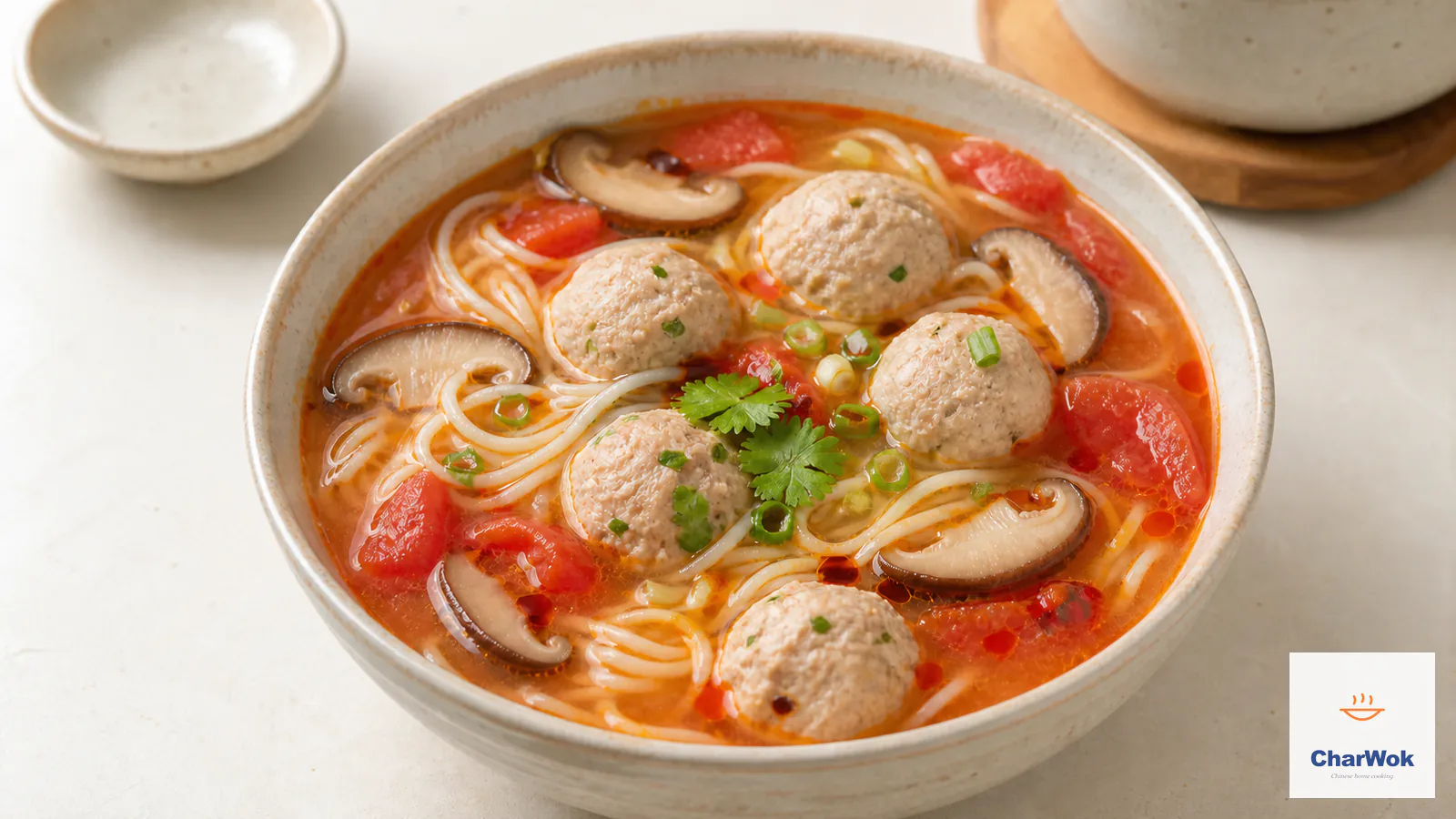
This chicken meatball noodle soup pairs springy meatballs with a tomato and dried shiitake broth, ladled over noodles of your choosing. Cooking the noodles separately keeps the broth from turning starchy, while a gentle simmer helps the meatballs hold their shape.
One bowl, about 30 minutes, four servings. Beat the ground chicken with egg white and cornstarch until sticky, then poach at a gentle simmer. Start checking when the meatballs float; several of the largest must reach 165°F (74°C) at the centre.
What this dish is, and why the broth works
This is a practical meatball-and-noodle soup rather than a claim to one regional standard. Tomatoes cooked in a little oil form the sweet-tart base, while rehydrated dried shiitake adds a deeper savoury note. Fresh shiitake also works, with a lighter mushroom flavour.
White pepper is doing real work too. A pinch cuts the flatness of cooked chicken and lifts the tomato the way a squeeze of acid would. If you have made tomato and egg noodle soup, the broth here will feel familiar, only deeper thanks to the mushrooms.
Ingredients
Ingredients at a glance
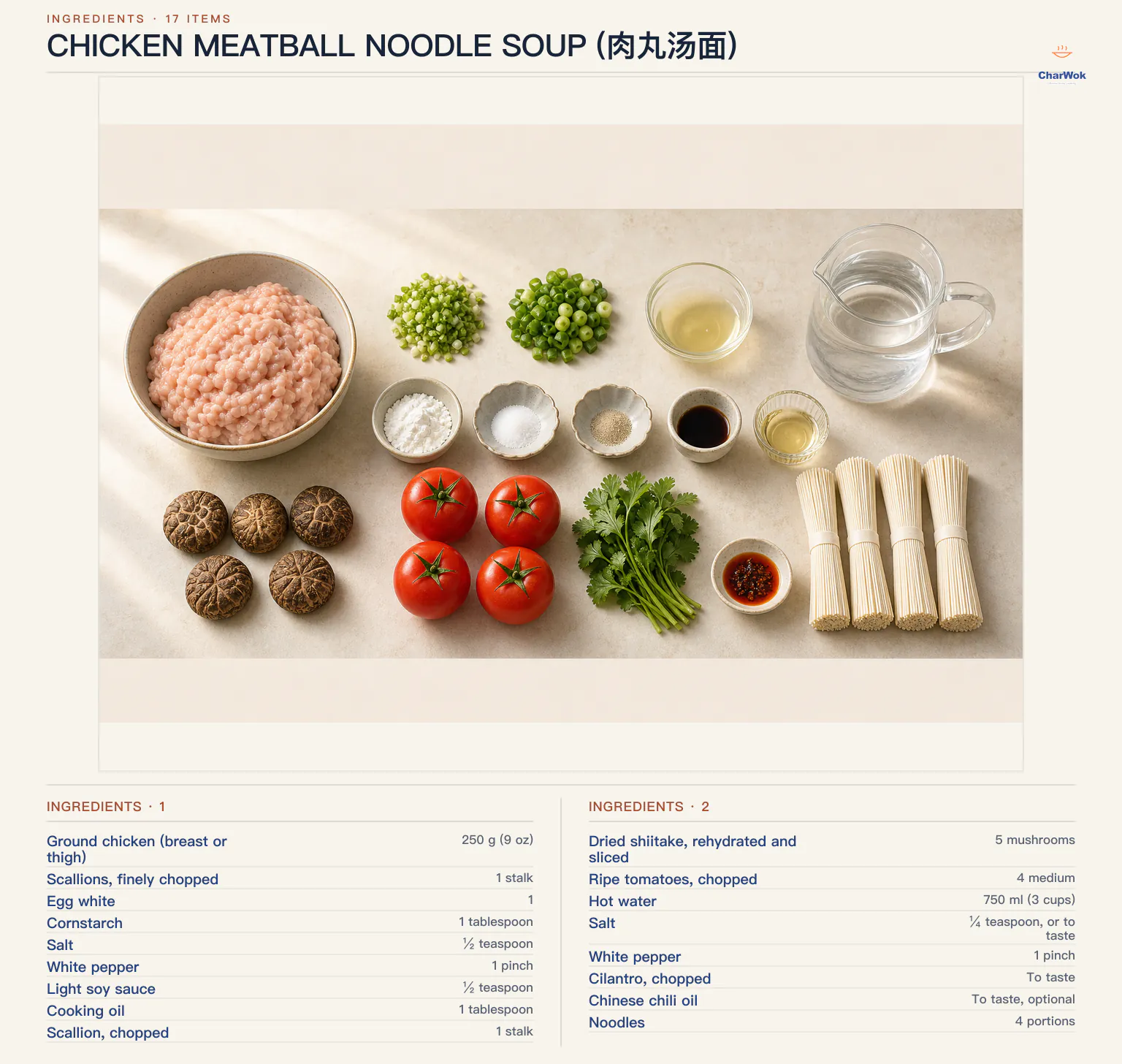
| Ingredient | Amount | Notes / substitute |
|---|---|---|
| Ground chicken (breast or thigh) | 250 g (9 oz) | Thigh gives juicier meatballs; turkey or lean pork work too |
| Scallions, finely chopped | 1 stalk | For the meatball mix |
| Egg white | 1 | Saves the yolk to poach in the broth |
| Cornstarch | 1 tablespoon | The binder that keeps lean chicken tender |
| Salt | ½ teaspoon | For the mix |
| White pepper | 1 pinch | Use white, not black, to avoid visible flecks |
| Light soy sauce | ½ teaspoon | Seasons without darkening; see the light vs. dark soy sauce guide |
| Cooking oil | 1 tablespoon | Neutral oil, for the soup base |
| Scallion, chopped | 1 stalk | For the broth |
| Dried shiitake, rehydrated and sliced | 5 mushrooms | Soak cold 8–12 hours; see the shiitake guide for details |
| Ripe tomatoes, chopped | 4 medium | Overripe is ideal; sub one with a tablespoon of tomato paste if under-ripe |
| Hot water | 750 ml (3 cups) | Hot, so the simmer doesn't stall; or use homemade chicken stock for a richer bowl |
| Salt | ¼ teaspoon, or to taste | For finishing the broth |
| White pepper | 1 pinch | For finishing |
| Cilantro, chopped | To taste | Scallion greens work if you are cilantro-averse |
| Chinese chili oil | To taste, optional | Stir in at the table; see the chili oil guide |
| Noodles | 4 portions | Dried wheat noodles, or make your own |
Why the meatballs hold together (the food science, briefly)
Ground chicken wants to fall apart because, unlike fatty pork, it cannot rely on rendered fat to bind. Two things rescue it. Egg white, when beaten into the meat, forms a thin protein web that firms up as it heats and locks the strands of meat in place. Cornstarch swells as it gelatinizes around 60–70°C (140–158°F), coating each strand and holding on to moisture so the meatball stays tender rather than turning dry.
Then there is the mixing. Salt and vigorous beating help extract salt-soluble muscle proteins, which makes the mixture sticky enough to bind. Stirring in one direction is a convenient way to keep a steady rhythm, but changing direction does not undo the protein network. Stop when the mixture looks glossy, climbs the spoon, and holds a faint track when dragged; this usually takes about two minutes.
The method
- Beat the meatball mix. In a bowl, combine the ground chicken, chopped scallion, egg white, cornstarch, salt, white pepper, and light soy sauce. Stir firmly in a steady rhythm, scraping the bottom and folding, until the mixture turns sticky and pulls into strands. The sticky texture matters; the direction does not.
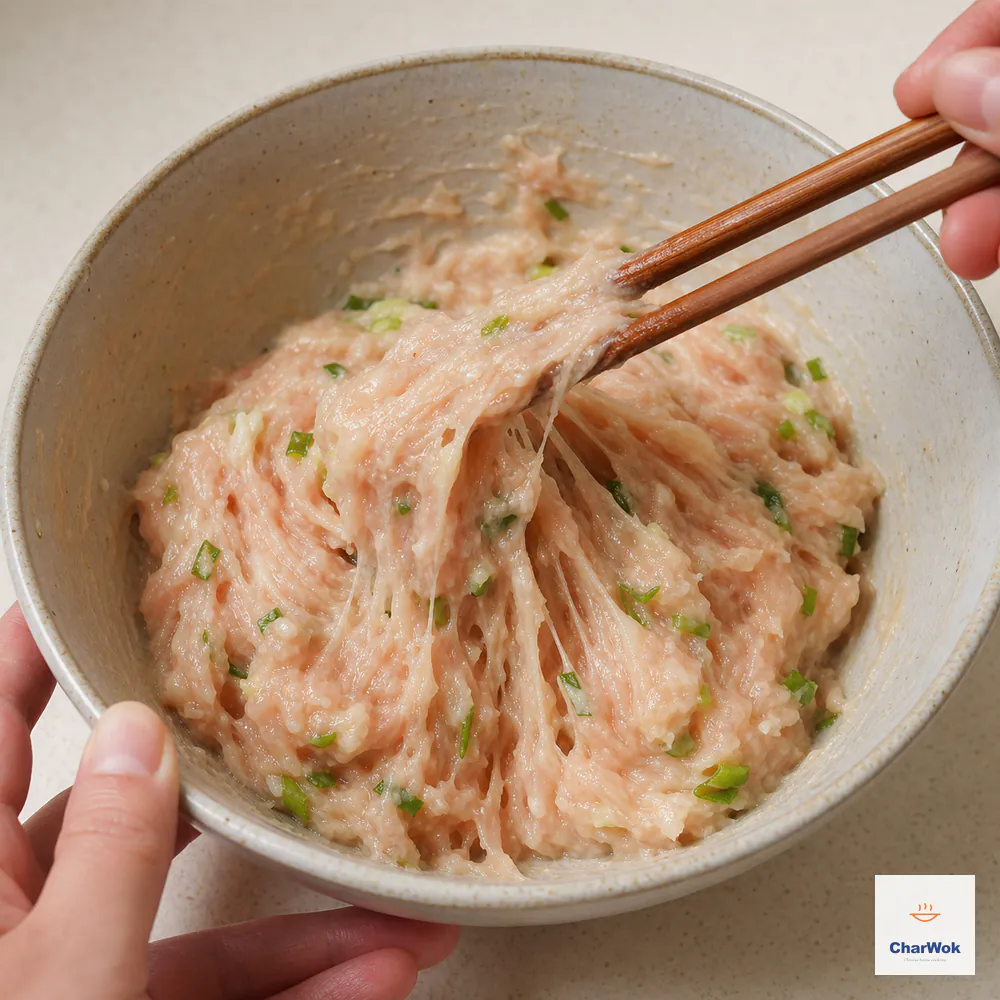
Beat the chicken, finely chopped scallion, egg white, cornstarch, salt, white pepper, and light soy in one direction until the mixture turns sticky and pulls into visible strands.
- Shape, don't squeeze. Wet your hands or two spoons with cold water and portion the mix into balls about the size of a walnut. Roll gently so they stay loose; compressing them makes them dense. Set aside on a plate.
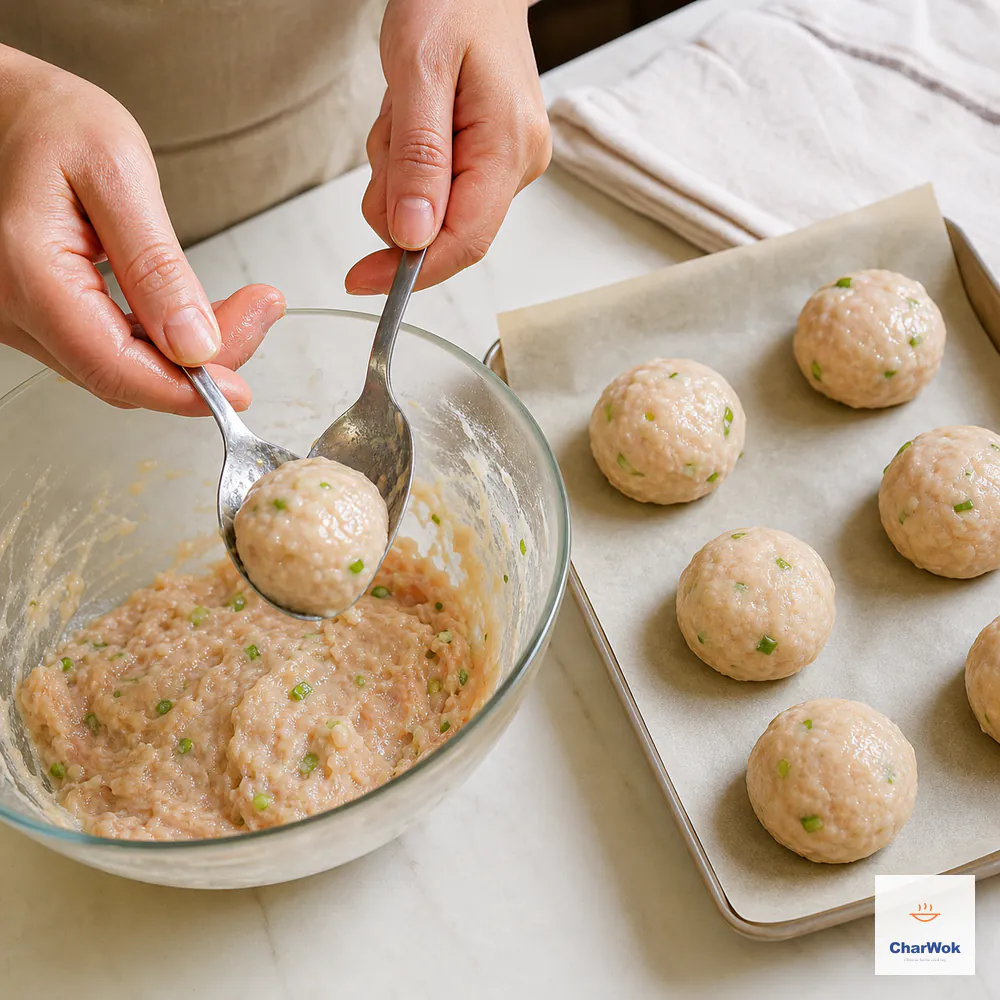
Wet your hands or two spoons and shape smooth walnut-size rounds with light pressure so the meatballs stay tender rather than dense.
- Get the noodles going. Bring a separate large pot of water to a boil. Cook the noodles according to the package, or follow a homemade noodle recipe like easy no-machine noodles, hand-pulled la mian, or alkaline ramen noodles if you want to go all in. Cook them in their own abundant water, never in the soup. Drain and keep warm.
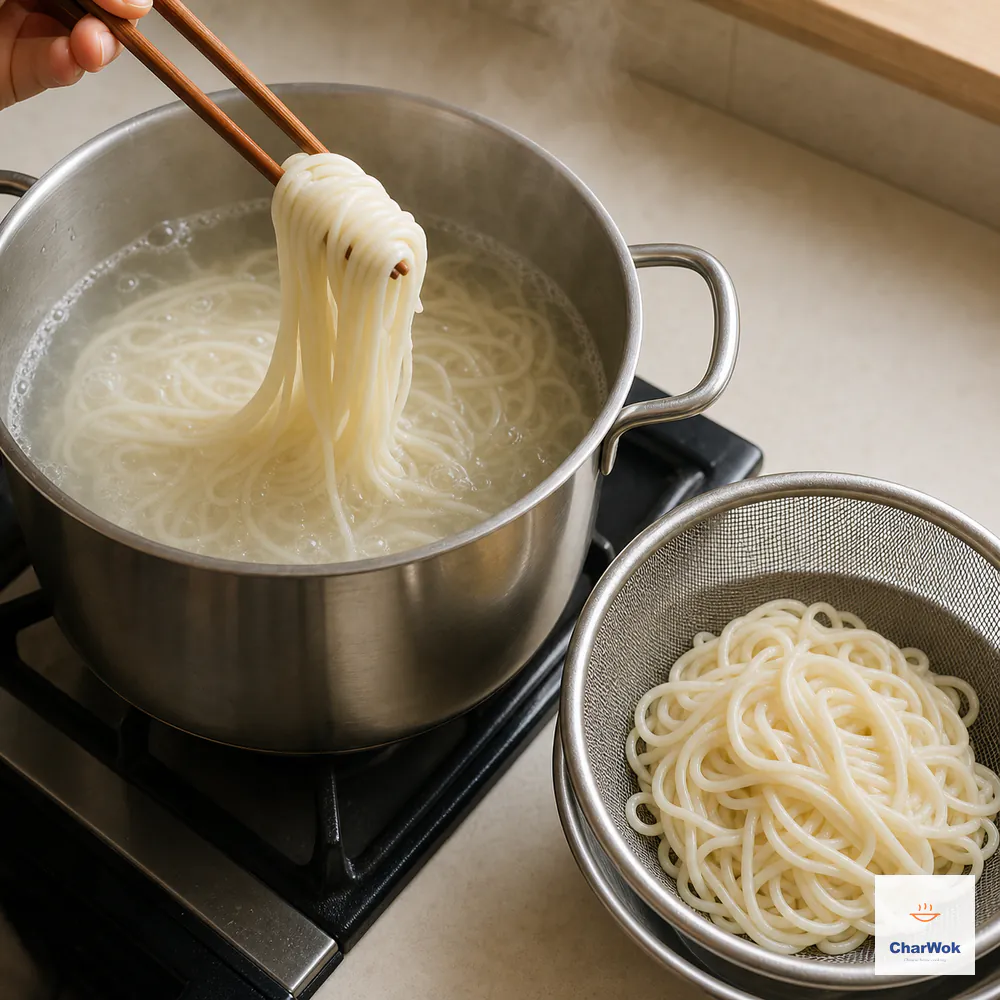
Cook the plain noodles separately until just tender, drain them well, and keep them out of the soup pot so the broth stays clear and the noodles do not overcook.
- Build the broth. Heat the oil in a wok or wide pot over medium-high. Add the chopped scallion and sliced shiitake and fry until fragrant, about 30 seconds. Add the tomatoes and cook, pressing now and then, until they collapse and look jammy. The longer you cook the tomatoes at this stage, the deeper the broth, so do not rush it.
- Simmer it out. Pour in the hot water, bring to a boil, then cover and drop to a gentle simmer until the tomatoes have fully softened, about 5 minutes. If you saved the egg yolk, you can slip it in whole for the last few minutes.
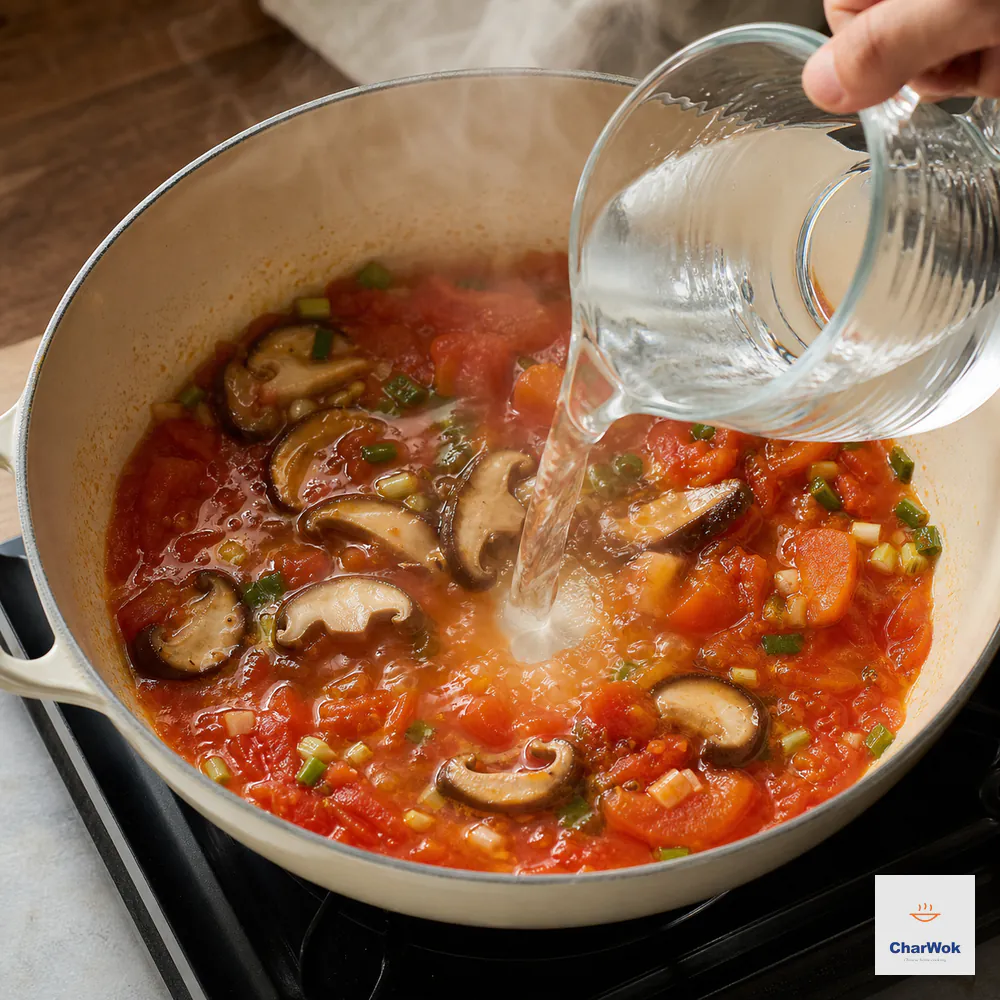
Fry the scallion and sliced shiitake until fragrant, cook the tomatoes until soft and jammy, then add the hot water and simmer gently for five minutes.
- Poach and measure. Keep the broth at a gentle simmer and lower the meatballs in one by one; a hard boil can break them before they set. Once they float, insert a thin instant-read thermometer sideways into the centre of several of the largest meatballs. Continue simmering until every reading reaches 165°F (74°C). Floating, firmness, colour, and a fixed extra minute are not doneness tests.
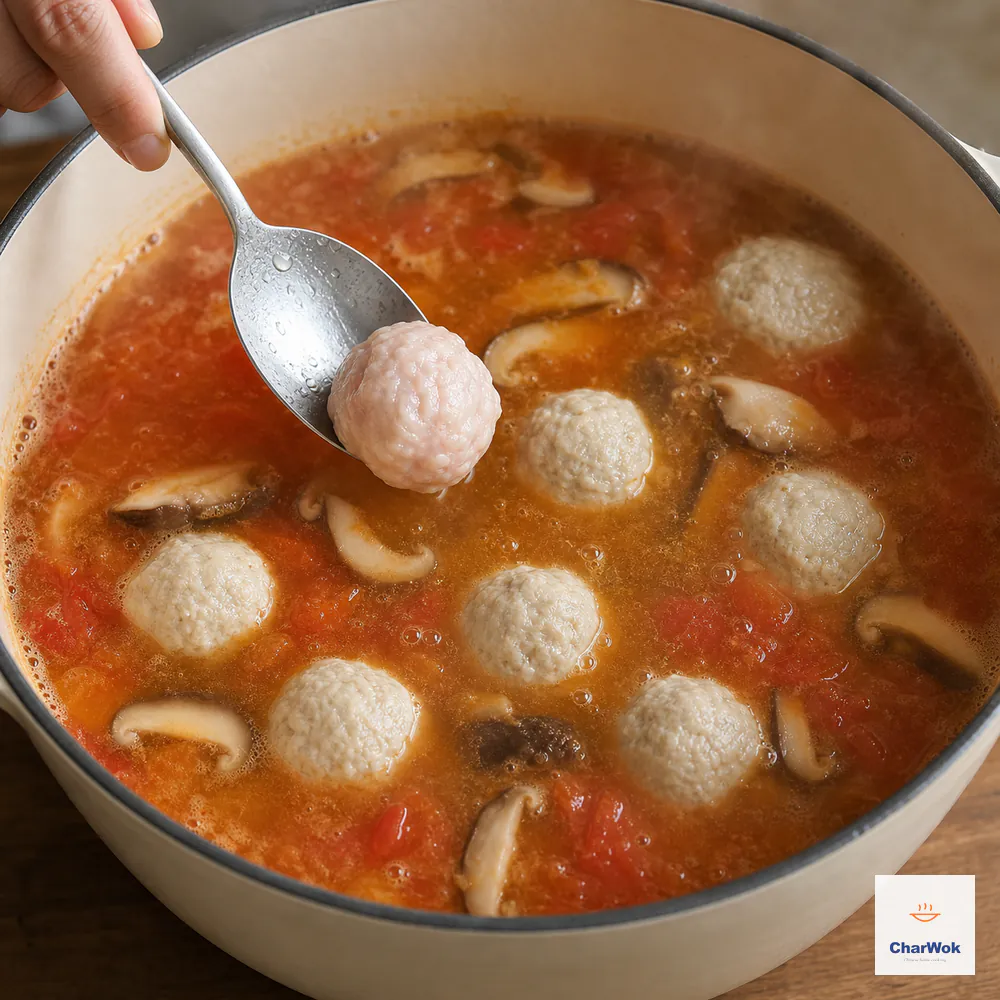
Keep the broth gently moving but not rolling, lower in the meatballs, and cook until they float; give them one more minute and cut one open to confirm the center is opaque.
- Season and serve. Stir in salt and white pepper to taste. Divide the drained noodles among bowls, ladle the broth, meatballs, and mushrooms over the top, and finish with cilantro. Pass chili oil at the table for anyone who wants heat.
When it goes wrong (and how to fix it)
These are the most useful failure checks.
The meatballs fall apart in the broth. The mix was not beaten enough, or the broth was boiling too hard. Next time, beat until genuinely sticky, and keep the poaching liquid at a steady simmer, not a rolling boil. You can also chill the shaped balls for 15 minutes before cooking to help them set.
The meatballs are dense and rubbery. The mixture may have been compressed while shaping or heated well beyond its safe endpoint. Shape gently, begin checking when the meatballs float, and stop cooking after several of the largest centres reach 165°F (74°C).
The broth tastes thin and watery. The tomatoes did not cook long enough, or they were under-ripe. Let the tomatoes really collapse before adding water, and taste before serving; a little more salt, an extra pinch of white pepper, or a teaspoon of soy sauce will bring it forward. A spoonful of tomato paste at the start is a reliable rescue.
The dried shiitake are chewy. They were not soaked long enough, or were soaked in hot water as a shortcut. Cold water for at least eight hours is the only way to get them tender all the way through; the quick hot-water soak leaves the center tough and pulls out less flavor.
The noodles turn the soup cloudy and starchy. You cooked them in the broth. Always boil noodles in a separate pot with plenty of water, then add the drained noodles to each bowl. This keeps the broth clean and lets you control the texture of the noodles separately.
Variations and pairings
Swap the protein. Ground turkey behaves almost exactly like chicken and is my usual substitute; lean ground pork gives a richer, softer meatball closer to the ones in winter melon soup with meatballs. For something more indulgent, the same meatball technique scales up to the glossy sweet and sour meatballs or the dramatic sticky-rice pearl meatballs.
Change the broth. If you want something heartier, build the soup on a base of chicken stock instead of plain water. For a sour-spicy turn, borrow from hot and sour noodles and add black vinegar and chili oil at the end. Tomato lovers can double down on the flavor of tomato egg stir-fry by slipping the leftover egg yolk straight into the pot.
Round out the meal. A quick smashed cucumber salad or a bowl of egg drop soup on the side turns this into a proper dinner. And if you have leftover chicken, the same broth logic carries over beautifully to the next day's chicken and mushroom congee.
Storage and reheating
Refrigerate the broth and meatballs in shallow containers within 2 hours of cooking, or within 1 hour when the room is above 90°F (32°C), and use within 3 to 4 days. Keep the noodles separate so they do not absorb the broth. Bring the soup to a rolling boil and reheat the meatballs to 165°F (74°C), then add freshly cooked noodles. See the USDA leftovers guidance.
Raw meatballs can be frozen on a tray and then bagged. Cook them from frozen in gently simmering broth, allowing extra time but measuring several of the largest centres to 165°F (74°C). The cooked soup can be frozen for up to a month; thaw in the refrigerator or reheat from frozen, then verify 165°F (74°C).
Frequently asked questions
How do I know when chicken meatballs are safely cooked? Start checking when they float. Insert a thin instant-read thermometer sideways into several of the largest meatballs; each centre must reach 165°F (74°C). Colour, firmness, and floating alone are not reliable.
Can I use ground turkey instead of chicken? Yes, one for one. Turkey breast behaves the same way, so keep the egg white and cornstarch.
Do I really have to stir in only one direction? No. A consistent direction can make steady mixing easier, but the useful endpoint is a glossy, sticky mixture. Salt and sufficient beating build the bind; changing direction does not undo it.
Can I bake or fry the meatballs instead of poaching? You can pan-fry them for a browned crust, but the crust will mute the tomato broth. For this soup, poaching keeps them tender and lets the broth do the talking.
What if I forgot to soak the shiitake? A hot-water soak of about 30 minutes will soften them enough to use, but the texture is slightly less tender and the flavor thinner. Plan ahead next time for the full cold-water soak.
Get the meatball mix sticky, poach gently, and verify 165°F (74°C) in several of the largest centres. Keep the noodles separate until serving, then finish with cilantro and chili oil to taste.