The first time I made a clear Chinese pork rib soup, I ended up with a bowl of cloudy, grayish water that tasted faintly of boiled bone and disappointment. The ribs were tough, the broth was flat, and I could not figure out what I had done wrong. The ingredients were identical to the ones in this recipe. The problem was entirely in the method: I had rushed the one step that decides everything in a qing tang (clear broth) soup.
That step is the blanch. Skip it, or do it lazily, and no amount of ginger or Shaoxing wine will save the pot later. Get it right, and the rest of the dish almost cooks itself. This is a soup built on restraint: pork, water, garlic, peppercorns, salt, and whatever sweet vegetable you have on hand. There is no soy sauce, no chili, no thickening. The flavor has to come from clean technique and good ingredients, because there is nowhere to hide.
One rule carries the whole pot: blanch the ribs in cold water, dump that water, then simmer the clean ribs gently (barely bubbling, never a rolling boil) for about 40 minutes before the vegetables go in. A gentle simmer is what keeps the broth clear and the meat tender; a hard boil clouds it and tightens the pork into shoe leather.
What this soup is, and where it sits at the table
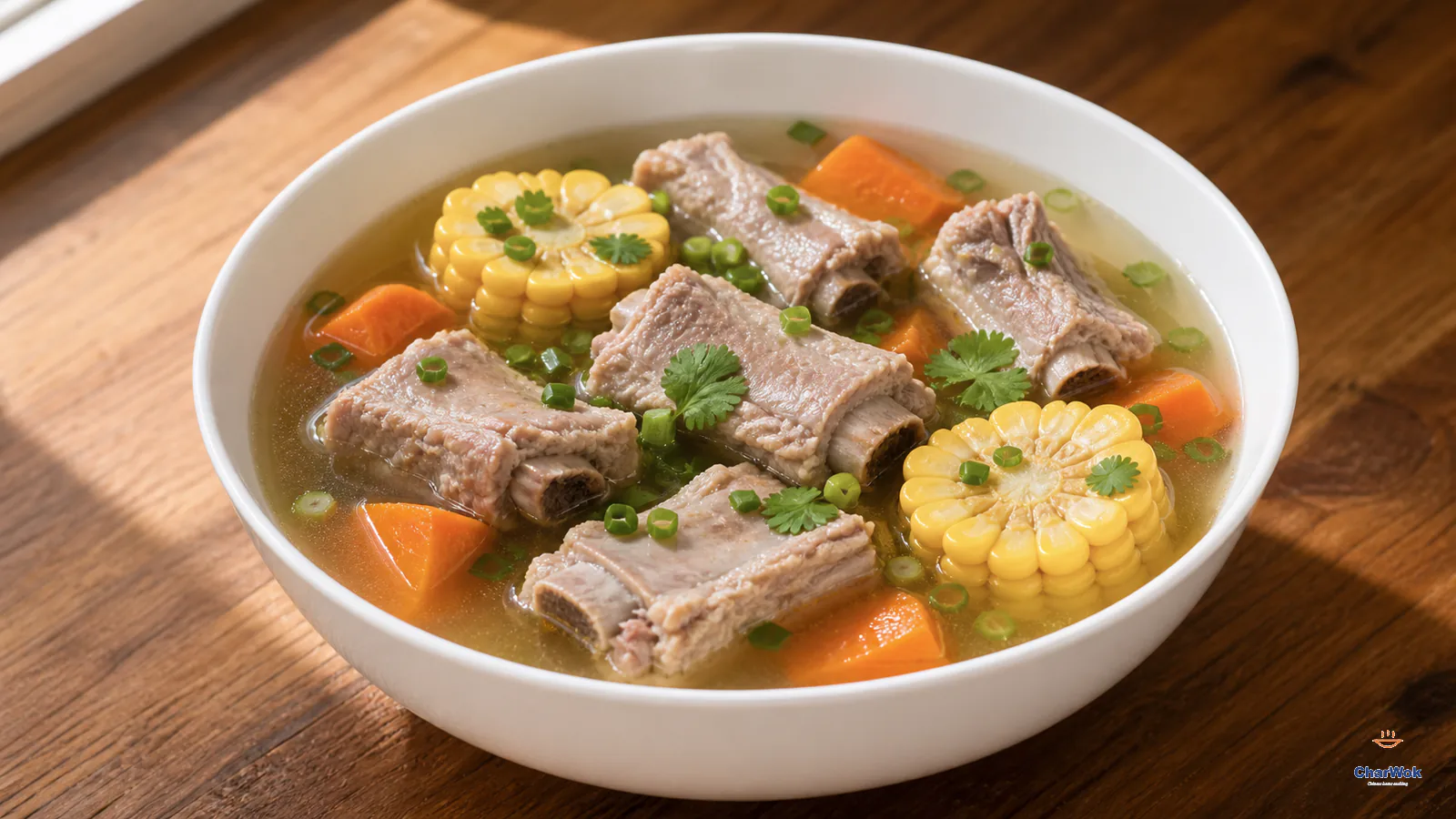
Pork rib soup (pai gu tang, 排骨汤) belongs to the large Chinese family of clear, gently seasoned broths that you drink as much as eat. Across northern and central China it shows up on the family table several times a week, especially in cold weather, the way a Western kitchen might keep a pot of stock going. The ribs are the body of the soup; a vegetable provides sweetness, color, and contrast. Sweet corn and carrot are the most popular pairing in modern home cooking, but daikon, lotus root, winter melon, and kombu are all traditional, and I will walk through those swaps below.
The defining quality is the clear broth. That is what separates this from the dark, soy-heavy stews like braised pork belly or beef braised with daikon. Those dishes lean on caramelization and reduction. This one leans on patience and purity. If you have ever had a Cantonese or northern soup that looked like amber-tinted water and tasted like it took all day, this is the technique behind it.
In a typical meal it is the supporting player, not the main event. You serve it alongside something with stronger seasoning: a stir-fry, a braised dish, plain rice. For ideas that pair well, the round-up of cold-weather Chinese recipes is a good starting point.
Choosing the ribs
Ask for meaty spare ribs cut into 2-inch (5 cm) pieces. In a Chinese butcher these come pre-cut and labeled as soup ribs or stir-fry ribs. At a standard supermarket you will usually find either full racks or the longer "country-style" ribs. Either works, but you want pieces small enough to handle with chopsticks and short enough to fit three or four across the bottom of a 4-quart pot.
Two things matter more than the cut. First, bone-to-meat ratio: pick pieces with a thick cap of meat on the bone, not slivers of meat on big bones. Second, a little fat is good, a lot of fat is not. Marbling renders into the broth and gives it body; a thick fat cap will sit on top in an unappealing layer. I trim obvious fat pads down before cooking.
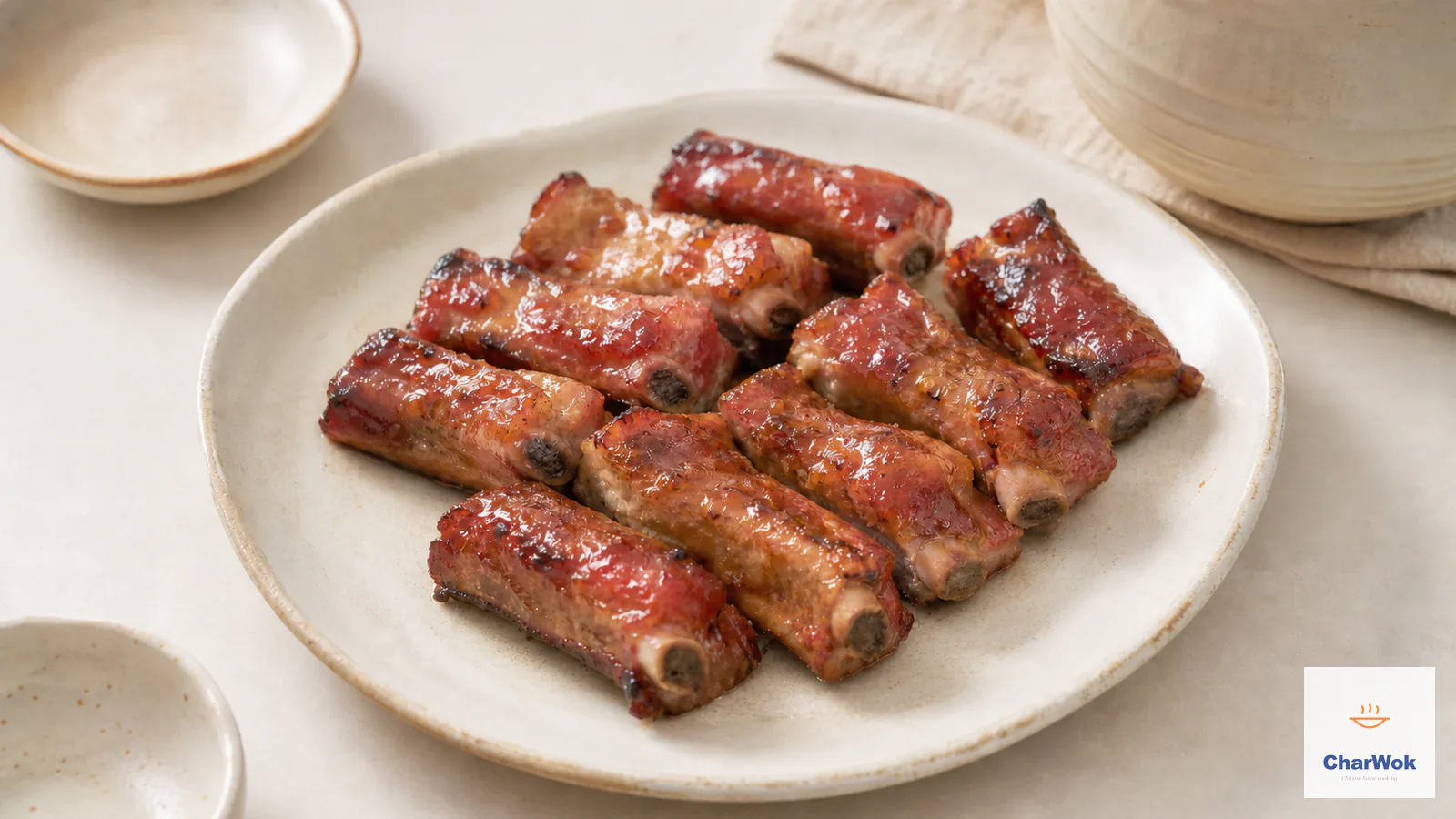
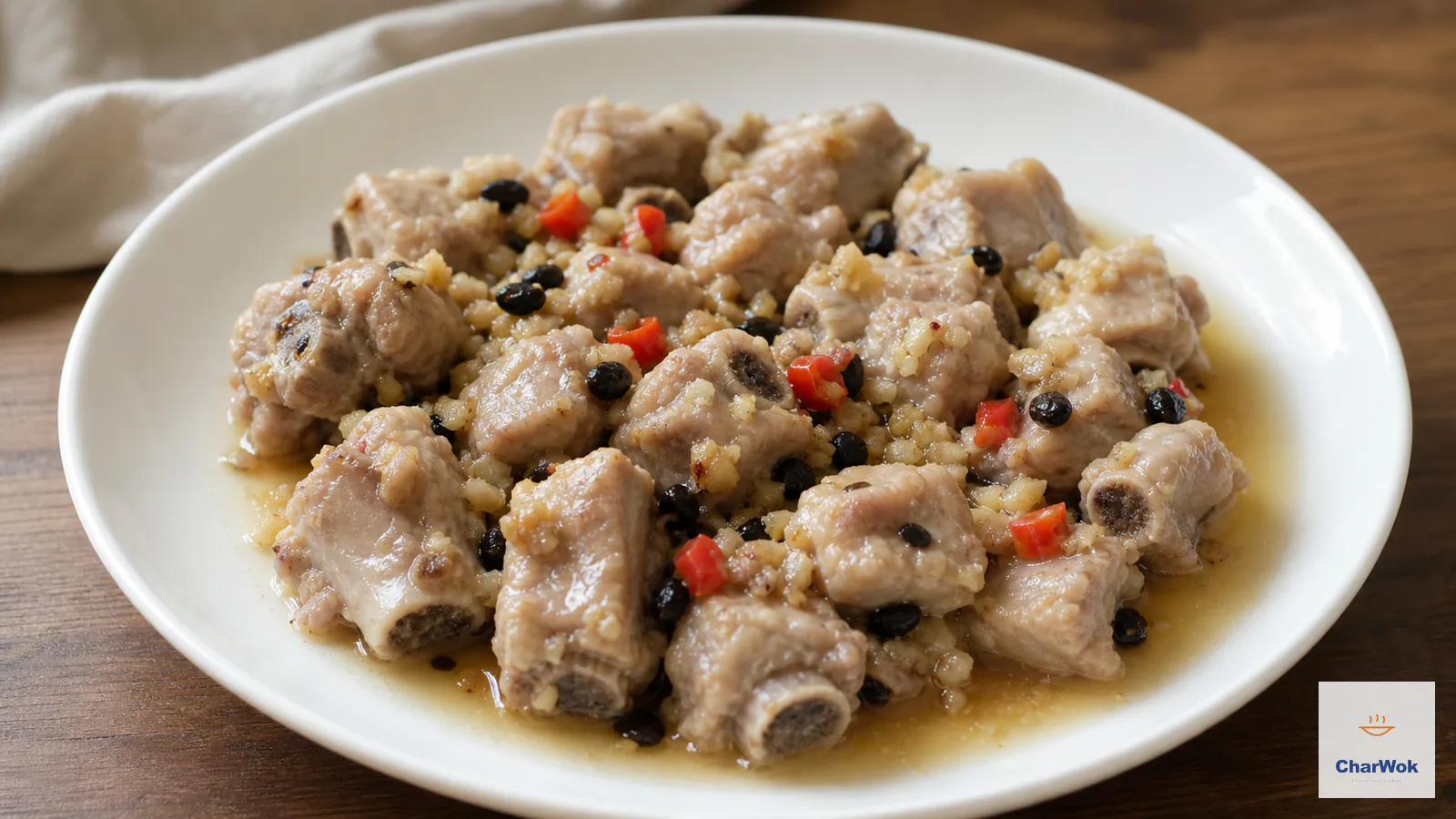
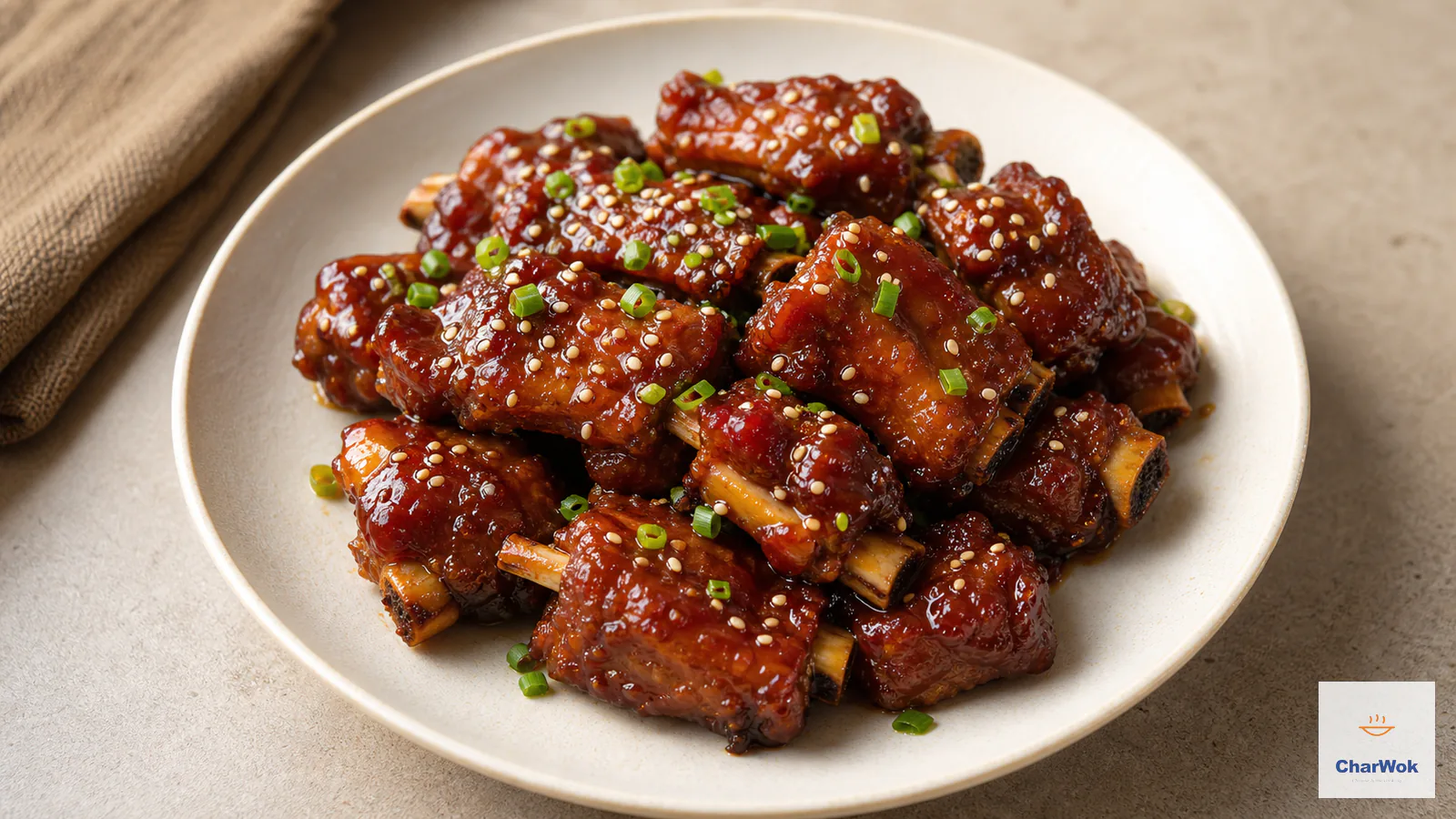
If you want a richer, more collagen-heavy broth, ask for rib tips or a few pieces of neck bone mixed in. They are cheaper and add the slight silkiness that good restaurant versions have. For everyday cooking the standard soup ribs are fine, and they are what the timing below assumes. (The same cut shines in sweet and sour ribs and steamed ribs with black beans, so a single pack from the butcher can go several directions.)
The ingredient list
Complete ingredients for clear Chinese pork rib soup
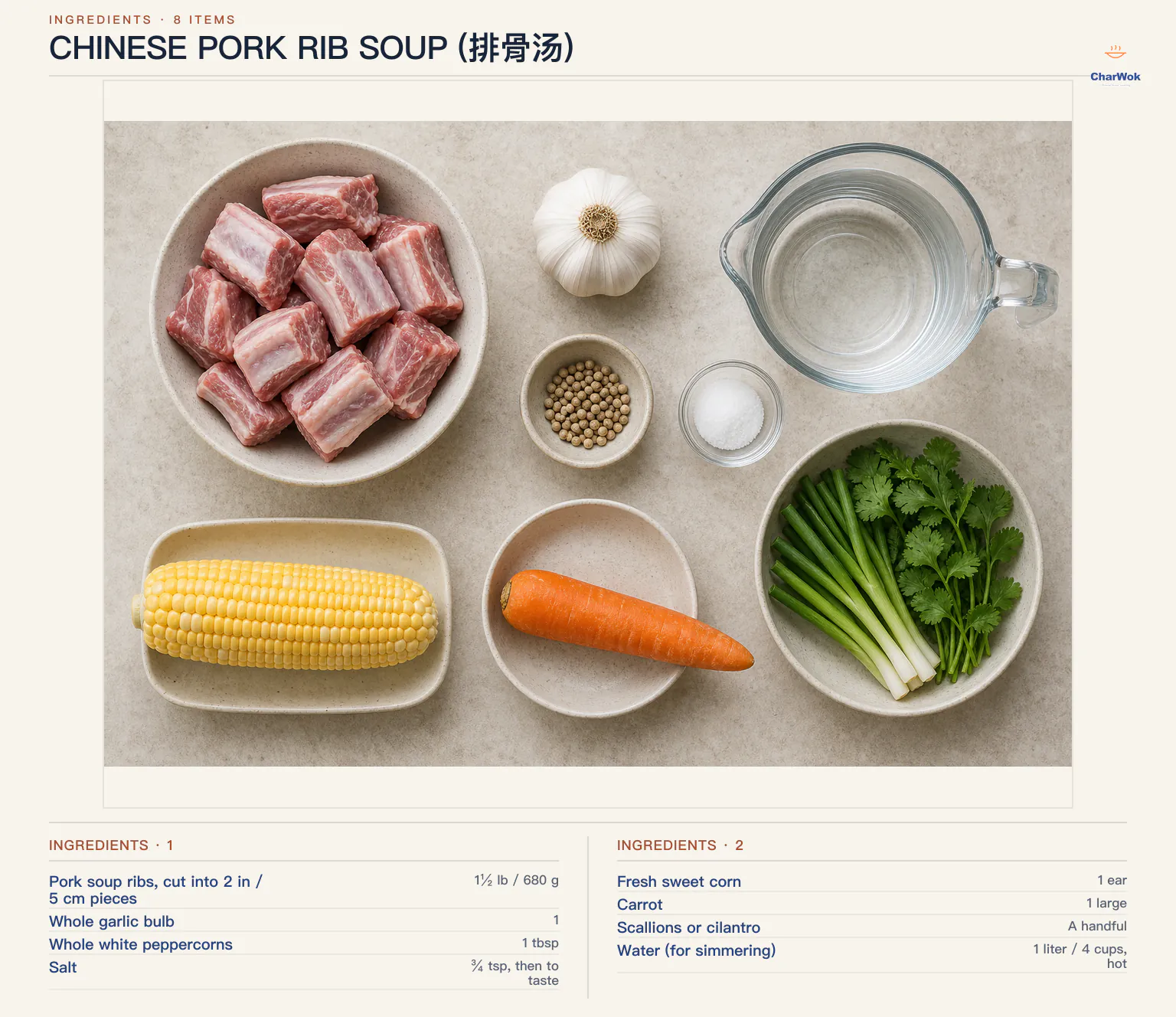
This serves four to six depending on whether it is a meal or a side. I scale the meat up freely and the salt by taste.
| Ingredient | Amount | Notes / substitute |
|---|---|---|
| Pork soup ribs, cut into 2 in / 5 cm pieces | 1½ lb / 680 g | Meaty spare ribs; rib tips for richer broth |
| Whole garlic bulb | 1 | Washed, root end trimmed, cooked skin-on |
| Whole white peppercorns | 1 tbsp | Whole black peppercorns, or a mix; ¼ tsp ground white pepper added at the end if you must |
| Salt | ¾ tsp, then to taste | Diamond Crystal / Morton kosher scale; taste at the end |
| Fresh sweet corn | 1 ear | Cut into 1½ in / 4 cm rounds; frozen works in a pinch |
| Carrot | 1 large | Roll-cut into chunks; parsnip is a fair substitute |
| Scallions or cilantro | A handful | For garnish; either, not both |
| Water (for simmering) | 1 liter / 4 cups, hot | Plus plenty of cold water for blanching |
Step-by-step method, with the why behind each move
- Blanch the ribs in cold water. Put the ribs in a pot and cover with cold water by an inch (about 2.5 cm). Cold start, not hot. Starting cold lets the heat push the proteins and blood out of the bones gradually; a hot start seals them in. Bring it to a full boil over high heat. As it heats, gray-brown foam (coagulated blood proteins and albumin) will rise. Let it boil for about 2 minutes, skimming what you can.
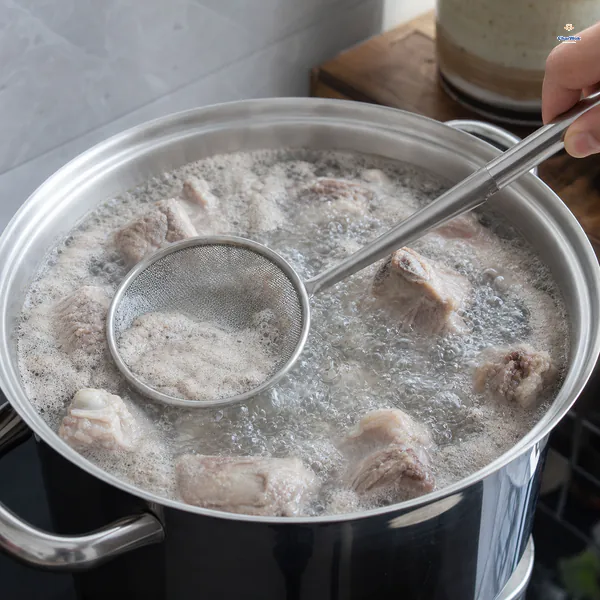
Cover the ribs with cold water, bring the pot to a full boil and keep skimming until the surface stops producing foam.
- Dump everything and rinse. Lift the ribs out with a slotted spoon and rinse them under warm water, brushing off any clinging scum. Wash the pot. This discarded water is the single biggest source of cloudiness and off flavors, so do not be tempted to reuse it. Rinsing the ribs and the pot is non-negotiable for a clear broth.
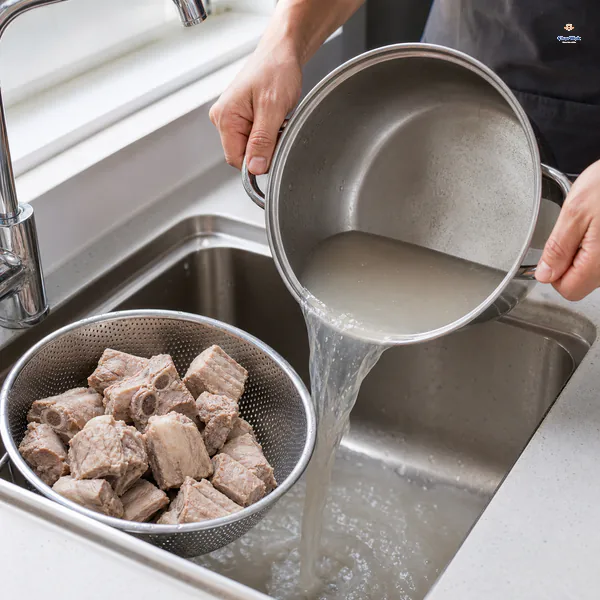
Lift out the blanched ribs, discard every drop of the cloudy first water and wash the same pot before continuing.
- Start the simmer with hot water. Return the clean ribs to the clean pot and pour in 1 liter of hot water. Hot water into hot pot keeps the meat fibers from seizing the way cold water would. Add ¾ teaspoon salt now (it helps the broth extract flavor), the whole garlic bulb root-end trimmed and papery skin left on, and the peppercorns tied in a small piece of muslin or dropped into a tea ball. The cloth or ball matters: loose peppercorns will drift into every bowl and someone will bite one. Leaving the garlic in its skin keeps the cloves intact and stops the broth from turning cloudy and aggressively garlicky.
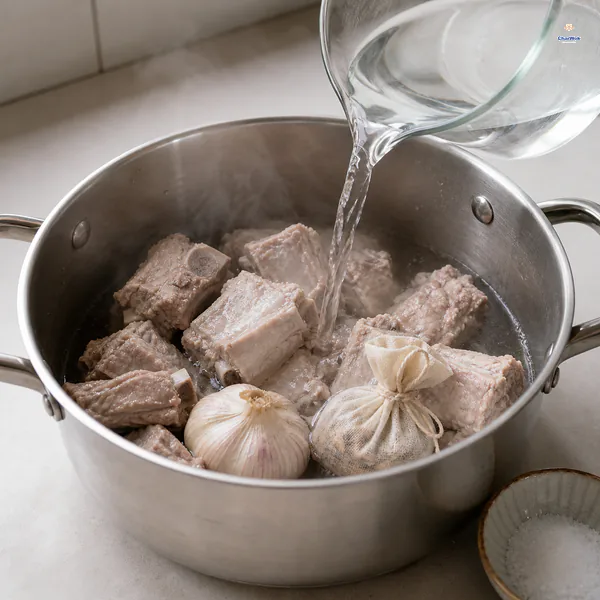
Return the ribs to the clean pot, add one litre of hot water, salt, the whole unpeeled garlic bulb and contained white peppercorns.
- Bring to a boil, then drop to a whisper. Bring it back to a rolling boil, then immediately cut the heat to the lowest setting that still holds a simmer. Cover with a tight lid. You want the surface to tremble with the occasional tiny bubble, not to roll. A rolling boil emulsifies fat and shattered proteins into the liquid, which is exactly how you get a cloudy soup. Set a timer for 35 minutes.
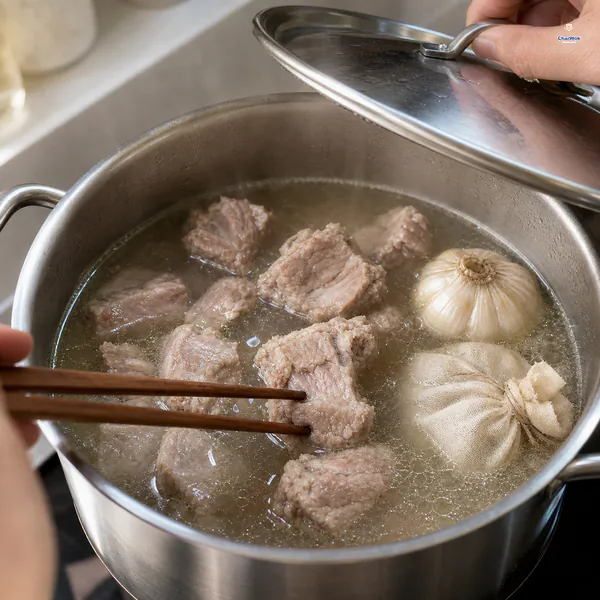
After the soup reaches a full boil, cover tightly and simmer on low for 35 to 40 minutes until chopsticks pierce the meat easily.
- Check the meat, then fish out the aromatics. At 35 minutes, poke a rib with a chopstick; it should slide in with only slight resistance. If not, give it another 5 to 10 minutes. Once the meat is nearly tender, remove and discard the garlic bulb and the peppercorn bundle. The garlic has given up its flavor by now and leaving it in makes the broth taste muddy.
- Add the vegetables and raise the heat slightly. Drop in the corn rounds and carrot chunks. Turn the heat up one notch to a gentle medium boil with the lid on, and cook 8 to 10 minutes, until the carrot is easily pierced with a fork. The vegetables go in late on purpose: if you boil corn for 40 minutes it goes starchy and dull, and carrot collapses into fuzz. The short, slightly harder cook keeps them bright and sweet.
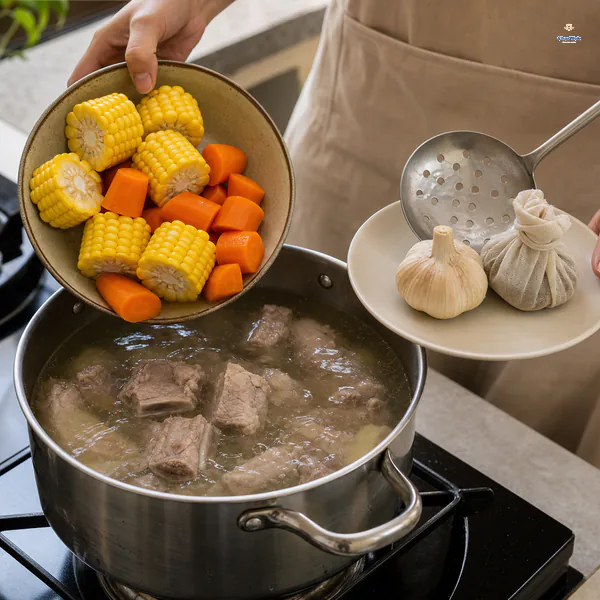
Remove the whole garlic bulb and peppercorn bag completely, then add the corn and carrot and cook covered until the carrot softens.
- Taste, season, garnish. Take the pot off the heat, taste the broth, and add salt until it tastes like soup rather than dishwater. This usually takes another ¼ to ½ teaspoon beyond the initial ¾. Ladle into bowls and scatter chopped scallions or cilantro on top. Serve hot.
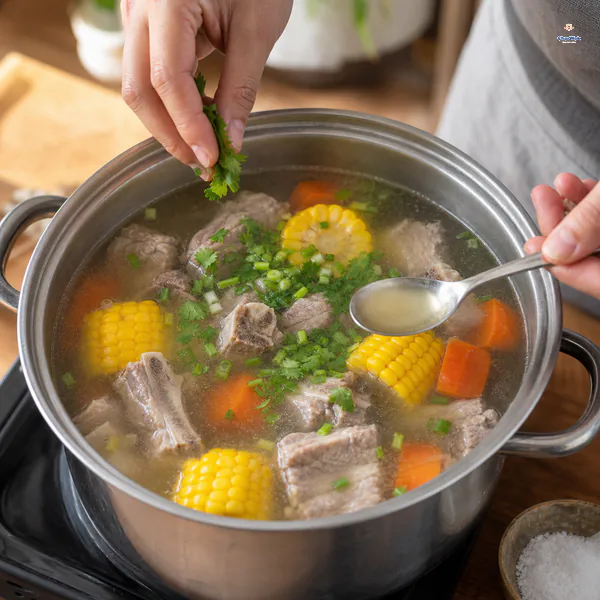
Taste the clear broth, adjust the salt only if needed and add chopped scallions or cilantro immediately before serving.
Why it fails, and how to fix it
Most problems trace back to one of three moves. Here are the failures I see most often, in the kitchen and in my inbox.
Cloudy, gray broth. You either skipped the blanch, did not rinse the ribs, or let the simmer turn into a boil. For next time: cold-water blanch, rinse everything, and keep the simmer at a tremble. You cannot un-cloud a finished broth, but you can strain it through a fine mesh lined with a paper towel to lift some of the sediment.
Tough, dry ribs. This is almost always a too-hot simmer, not too short a cook. Boiling tightens the muscle fibers and squeezes out moisture. Low and slow for the full 35 to 40 minutes is what makes the meat yield. If you started with very large rib pieces, add 10 to 15 minutes and check again. Pressure-cooking for 15 minutes on high (then a 10-minute natural release) also works and is what I do on a weeknight.
Bland broth. Two causes. One: you under-salted, which is easy to do because the meat hides salt. Taste at the end and be a little more generous than feels comfortable. Two: the water-to-meat ratio was too high. 1 liter of water to 680 g of ribs is roughly the floor; much more water and you have diluted stock, not soup. A small splash of Shaoxing rice wine in the blanching water also lifts the flavor and tames any porkiness.
Mushy, washed-out vegetables. You added them at the start. Vegetables that hold their shape, like daikon and lotus root, can go in earlier, but corn and carrot cannot. Keep them for the last 10 minutes.
Swapping the vegetables
Corn and carrot are the crowd-pleaser, but the same broth accepts a wide range of vegetables, and changing them changes the character of the soup more than you would expect.
Daikon (white radish) is the most traditional partner. It absorbs the pork flavor and adds a clean, slightly peppery edge. Peel it and cut into chunks; it needs 15 to 20 minutes, so add it 5 to 10 minutes before the corn and carrot would normally go in. Lotus root, cut into slices, gives a crunchy, starchy contrast and is a favorite in central China. Try the spicy lotus root stir-fry on the side and you have a lotus-root themed meal. Winter melon turns silky and delicate; it cooks fast, so add it just 8 minutes before the end, the way you would in winter melon soup with meatballs. Kombu (kelp) adds minerality and a faint umami thickness; soak it first and tie it in knots.
A few combinations to avoid: anything that stains the broth dark or strongly colored will fight the whole point of a clear soup. That means no tomato, no dark leafy greens cooked long, and no soy-based seasonings. If you want a soup that leans tomato-sweet, the chicken and corn soup direction is a different animal.
Pressure cooker and Instant Pot
The pressure cooker is the cheat code for the simmer step. Blanch and rinse the ribs exactly as above (do this on sauté mode if you want one pot), then add the hot water, salt, garlic, and peppercorns. Lock the lid and cook on high pressure for 15 minutes, with a natural release of at least 10 minutes. Quick-release will let the violent boiling cloud the broth, so resist it. Open, remove the aromatics, add the vegetables, and use the sauté function at a low bubble for 8 to 10 minutes until the carrot is tender. You can run the whole thing in one pot this way.
Variations and what to serve it with
The broth is a blank canvas. A few directions I come back to:
- Lotus root and goji berry: add a tablespoon of dried goji berries with the vegetables for a faint sweetness and a slight medicinal warmth that Chinese home cooks associate with nourishing soups.
- White peppercorn-forward: increase the peppercorns to 1½ tablespoons and crush them lightly before bagging. This pushes the soup toward a gently warming, almost numbing heat, closer in spirit to hot and sour soup but without the vinegar and thickness.
- Dried tofu skin or soft tofu: add torn pieces of tofu skin in the last 10 minutes for protein and body, the way tofu soup with vegetables uses tofu to round out a light broth.
For a full meal, serve with plain steamed rice and one assertive stir-fry. A simple rice is the right base, and a side like salt and pepper shrimp or a quick vegetable stir-fry gives you a balanced table without competing flavors. If someone is under the weather, ladle the broth over a bowl of plain congee instead of rice.
Make ahead, store, and reheat
This soup is one of the few dishes that is genuinely better the next day, which makes it a strong make-ahead option. Cook through the rib-simmer step, remove the aromatics, and cool the ribs in their broth. Refrigerate in an airtight container for up to 3 days, or freeze for up to 3 months. A layer of fat will solidify on top in the fridge; you can lift it off cleanly if you want a leaner soup, or leave it for flavor.
Add the vegetables only when you reheat, not before. Corn and carrot stored in the broth for days turn to mush and dull the liquid. To serve, bring the broth and ribs to a gentle simmer, drop in the vegetables, and cook until just tender. If you are starting from frozen, thaw overnight in the fridge first; boiling a frozen block of broth clouds it.
A note on stock versus soup
People sometimes ask whether this is just homemade stock with pork instead of chicken. It is close, but the intent differs. Stock is a building block, cooked longer and often left unsalted, meant to go into other dishes. This rib soup is a finished dish, seasoned and balanced to drink on its own. The shorter cook keeps the meat tender and edible rather than spent. If you wanted to, you could use this exact method with chicken bones and get a clear chicken broth, then build on it.
The honest limitation: clear soups live and die by ingredient quality. Factory pork with a lot of added water will give you a thin, watery broth no matter how careful you are. When I can, I buy ribs from a butcher who cuts them to order, and I taste the broth before the final salting so I can decide whether it needs a little more time or just more salt. Most of the time, more salt is the answer.
Frequently asked questions
Can I skip the blanch to save time? No. It removes the blood and proteins that cloud the broth and add a metallic taste. Skipping it is the most common reason a clear soup fails.
Do I have to use white peppercorns? White is traditional and stays out of sight, but black peppercorns taste fine and add a slightly sharper heat. Ground white pepper (about ¼ teaspoon, added at the end) works if you have no whole peppercorns.
Why cold water for blanching but hot water for the simmer? Cold water on raw meat pulls impurities out slowly as it heats. Hot water for the simmer stops the meat from seizing when it re-enters the pot, which keeps it tender.
Can I use an Instant Pot the whole way? Yes. Blanch on sauté, rinse, then pressure-cook the ribs for 15 minutes on high with a 10-minute natural release. Add vegetables afterward on sauté for 8 to 10 minutes.
How long do leftovers keep? The rib broth keeps 3 days in the fridge or 3 months frozen. Store the vegetables separately, or add them only when reheating, so they do not go mushy.