Good chicken stock is the difference between a Chinese soup that tastes like it came from a restaurant and one that tastes like hot water with noodles in it. The irony is that the clearest, most prized stock in Chinese cooking is also the laziest thing you will ever make. You put a chicken in a pot, walk away for four hours, and the heat does work that no shortcut can imitate.
Where home cooks get tripped up is not the effort. It is the judgment. When do you boil, when do you whisper? Should you blanch the bird first or trust the skimmer? Do you cover the pot or leave it open to concentrate? I have made this stock well over a hundred times, and I have also made it cloudy, greasy, and bitter. The fixes are simple, but you have to understand what the liquid is actually doing while it sits on the flame.
At a glance: One whole chicken (about 1.8 kg / 4 lb), 3.6 liters (15 cups) cold water, three scallions, one knob of ginger. Bring to a boil, skim, then hold a bare simmer for 4 hours covered. Strain, cool fast, freeze in 250 ml portions. Leave it unsalted. Yields roughly 3.3 liters (14 cups). The single thing that ruins clarity is a rolling boil, so once it bubbles, drop the heat until you see only the occasional wobble at the surface.
Clarity is the whole point
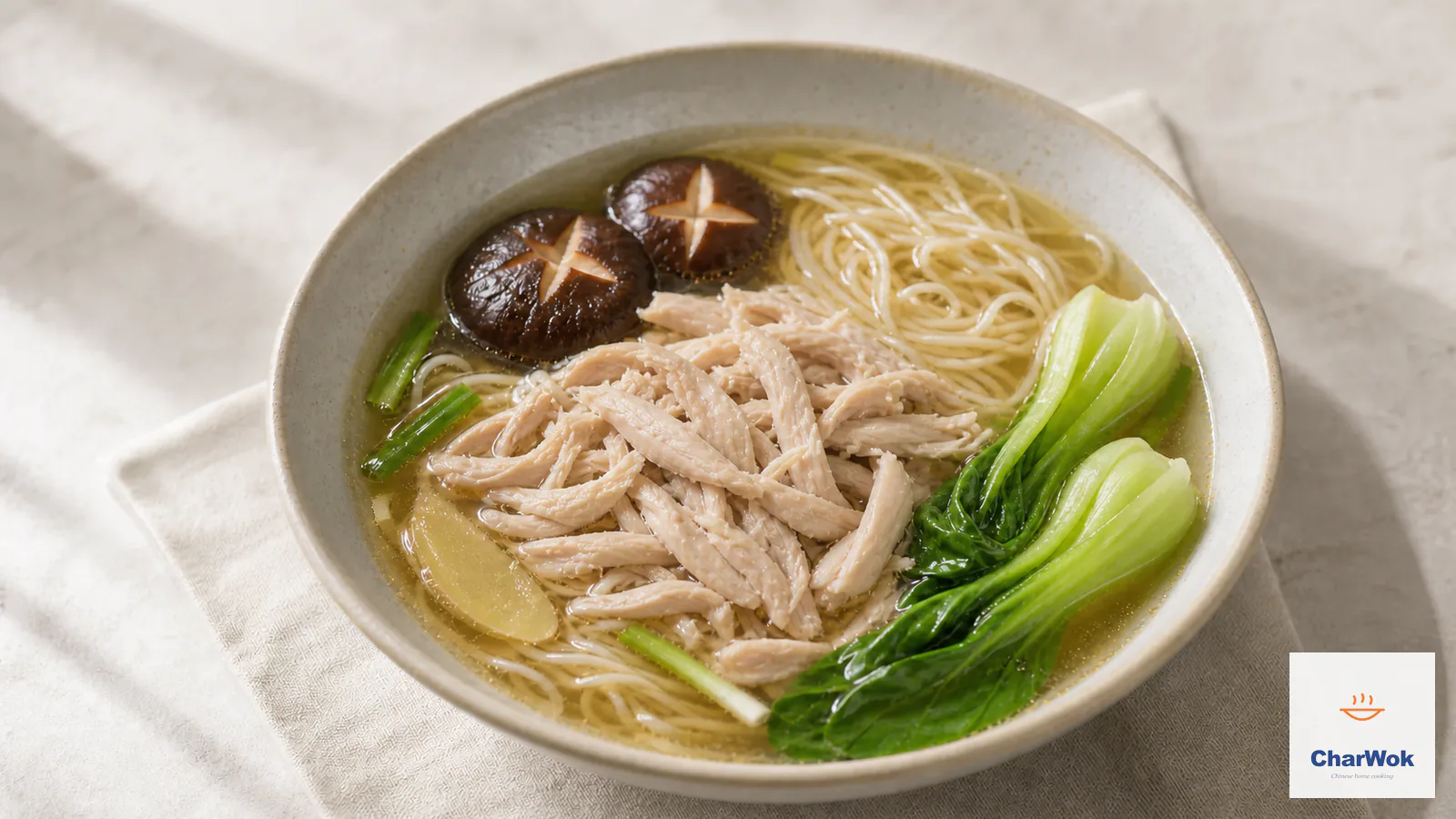
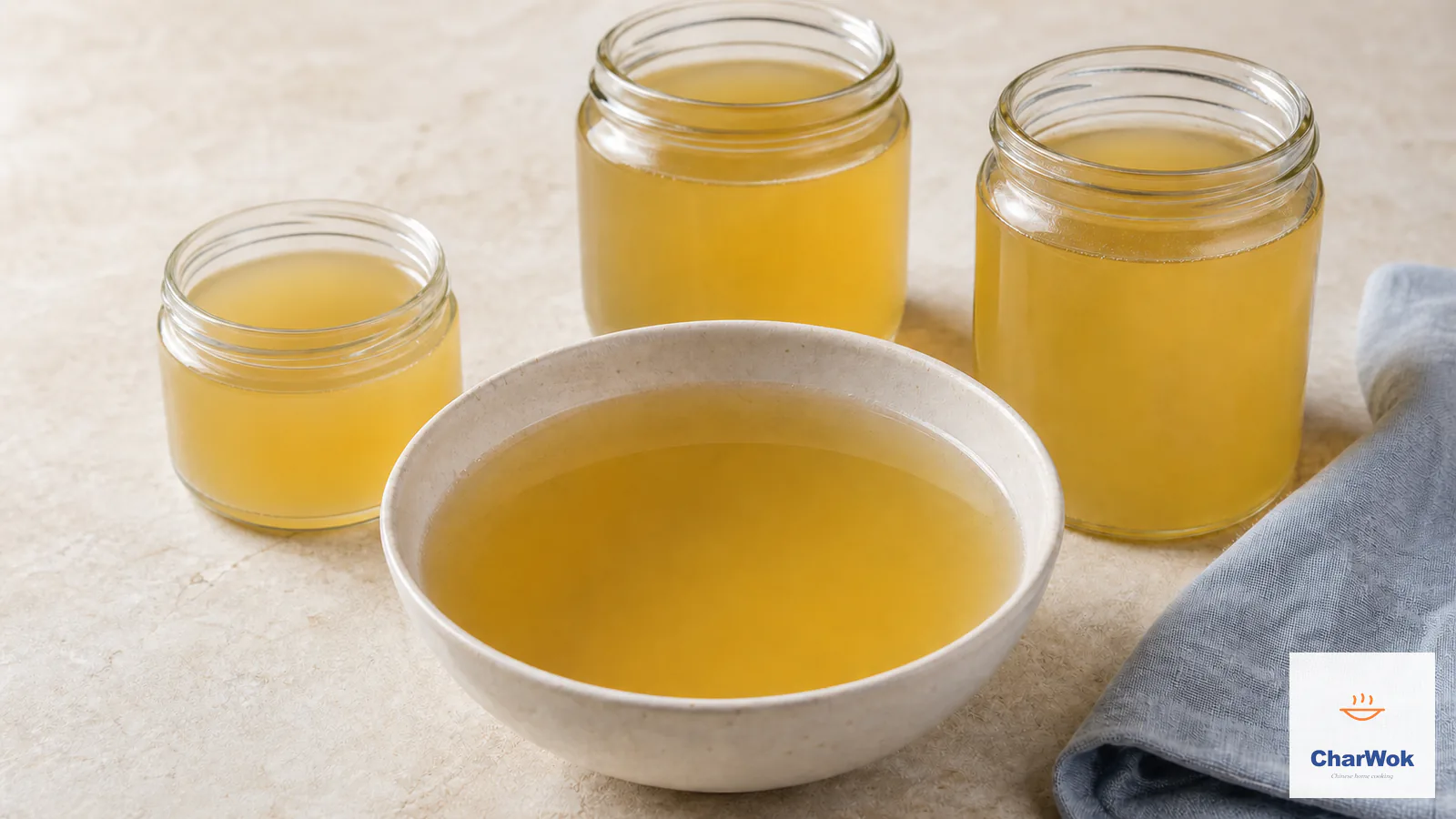
The thing that sets this stock apart is not which aromatics it uses but what it is built to do: sit underneath a finished dish and lift it without leaving fingerprints. A bowl of Yang Chun Mian or a simple wonton soup wants a broth you can see through, one that tastes of chicken and nothing competing. If the liquid in the bowl is brown and murky, the dumplings or noodles lose their definition, and the seasoning reads muddled instead of bright.
That clarity is earned by restraint. Two aromatics is all the pot needs. Ginger knocks back the faint barnyard note raw poultry can carry, and scallion contributes a clean allium sweetness that fades into the background rather than announcing itself. Layer in anything more assertive and you end up with a different, perfectly useful liquid, just one that no longer disappears behind the dish in front of it. This is also why the Northern and Cantonese traditions prize a pale gold, transparent broth for wonton noodle soup rather than a dark, opaque one.
The bird decides everything
I will be blunt about this. A watery, factory-raised chicken makes a watery, factory-tasting stock, and no amount of simmering fixes it. You are extracting flavor and collagen, and you can only extract what is in the animal. A free-range or pastured bird, even a slightly older stewing hen if you can find one, gives a noticeably fuller, sweeter liquid that sets like jelly in the fridge. That wobble is collagen, and it is the whole point.
A whole bird is ideal because it carries every part you want in one package. The bones and joints release collagen and minerals. The skin renders fat and richness. The connective tissue around the thighs and back melts into body. The breast meat contributes a clean, mild sweetness, though after four hours it is spent and best repurposed elsewhere (more on that below). You do not have to commit a whole chicken, though. The rule of thumb is to lean on bony, collagen-rich, skin-on cuts: wings and necks are the best collagen sources, with bone-in, skin-on leg pieces filling out the pot. What I would not use is boneless, skinless breast on its own. You will get a thin, flat liquid with no body.
Ingredients
Ingredients at a glance
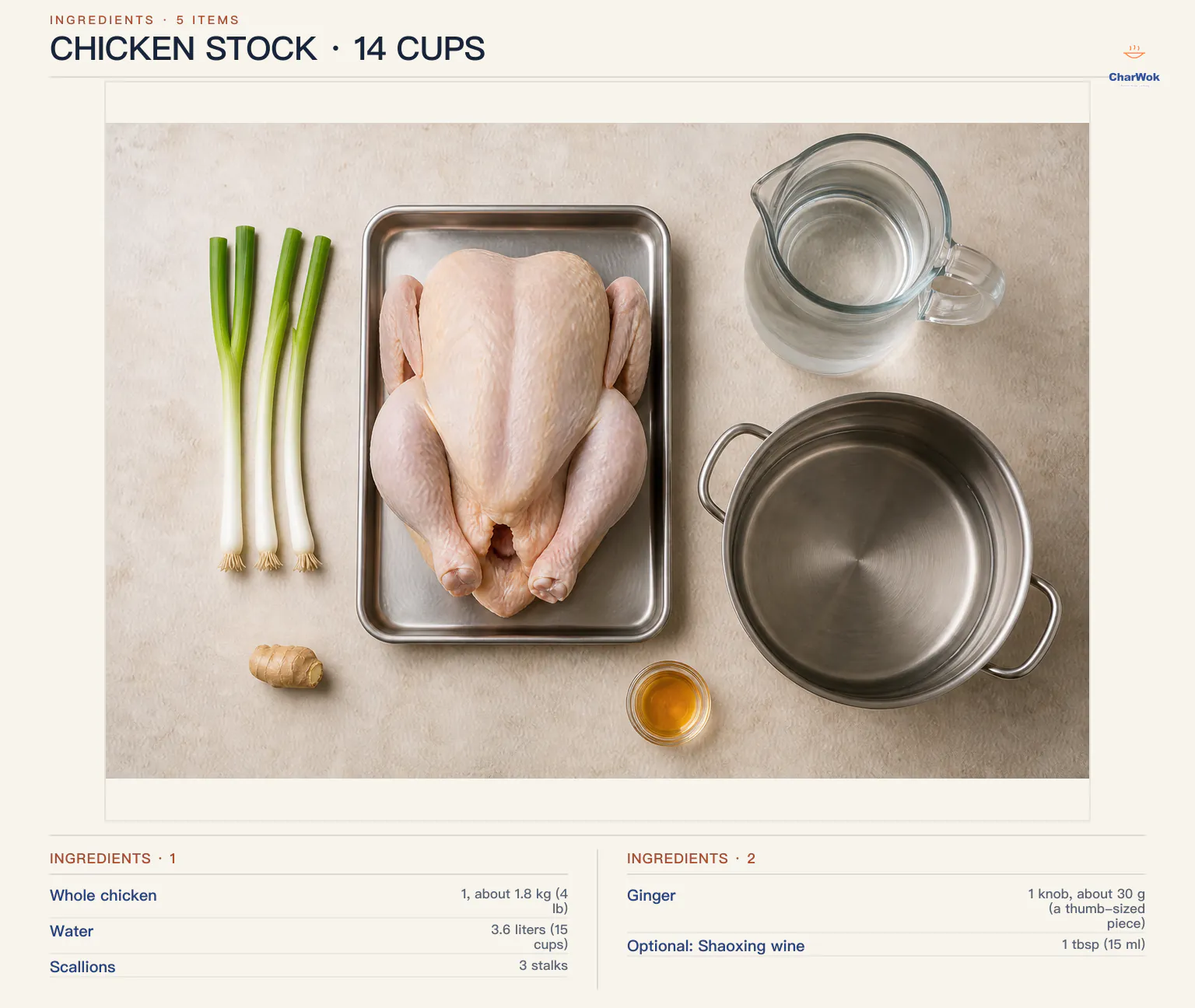
| Ingredient | Amount | Notes / substitute |
|---|---|---|
| Whole chicken | 1, about 1.8 kg (4 lb) | Free-range or pastured preferred. No whole bird? Use 1.5 kg (3.3 lb) of bony, skin-on, collagen-rich cuts (wings, necks, and bone-in leg pieces). |
| Water | 3.6 liters (15 cups) | Cold, filtered if your tap tastes chlorinated. Just enough to cover the bird. |
| Scallions | 3 stalks | Cut into long sections. Use the white and pale green. Swap 1 small leek (white part) if you have none. |
| Ginger | 1 knob, about 30 g (a thumb-sized piece) | Smashed with the side of a knife to release oils. No need to peel. |
| Optional: Shaoxing wine | 1 tbsp (15 ml) | A spoonful softens any gaminess. Omit for a strictly clean profile. See Shaoxing rice wine. |
How to make it, step by step
Two upfront decisions. First, to blanch or not to blanch. Blanching (a quick 2-minute boil in fresh water, then a rinse) removes surface blood and gives a marginally clearer stock, and it is the move I make when the bird looks less than pristine. The cost is a little flavor lost. For a clean, good-quality bird I skip it and rely on skimming instead. Second, the pot. Use the widest, heaviest one you own. A tall narrow pot traps scum against the sides.
- Combine cold. Place the chicken, scallions, and ginger in a heavy pot and pour in the cold water. Starting cold matters: protein and impurities release slowly and rise as foam you can skim, instead of locking into the liquid. Resist the urge to toss in random vegetable scraps or parsnip ends. This is a clean stock, not a clean-out-the-fridge stock.
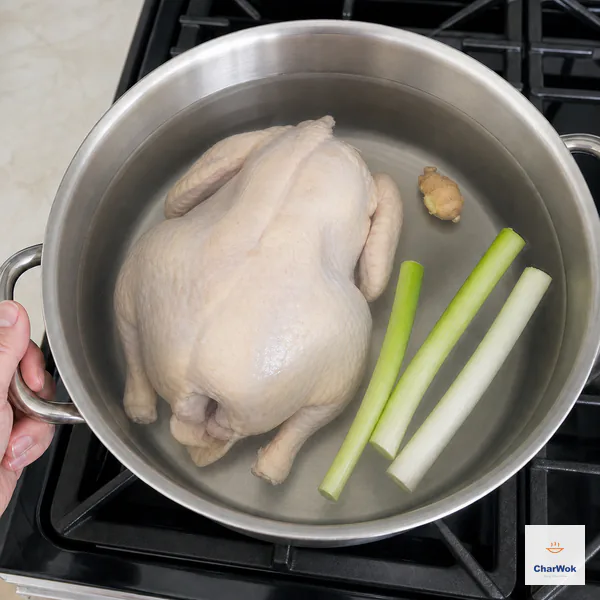
Start everything together in cold water, using only enough to cover the highest part of the chicken by a small margin
- Bring to a boil, then immediately back off. Over high heat, watch for a full boil. The moment it rolls, drop to the lowest flame that keeps a simmer going. This transition is where most home cooks lose clarity. A hard boil beats fat and sediment into an emulsion and turns the stock cloudy and greasy.
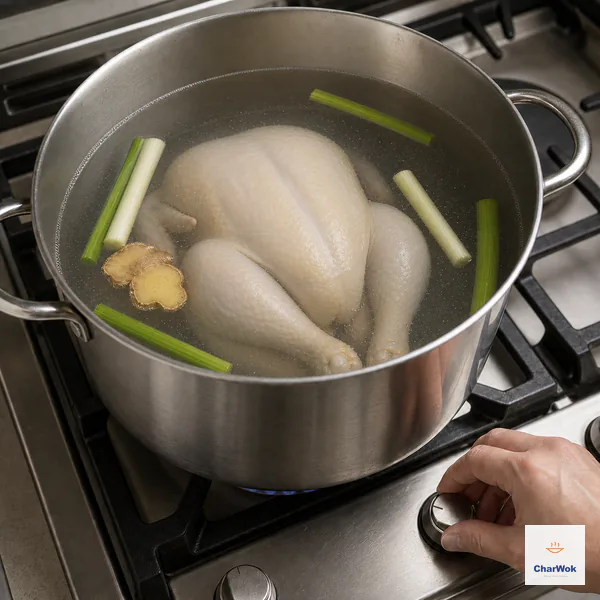
The instant the water approaches a full boil, turn the flame to its lowest setting so fat and sediment are not beaten into the stock
- Skim the scum. For the first 10 to 15 minutes a gray-brown foam rises. Skim it off with a fine spoon or ladle and discard it. This is coagulated blood protein and albumin, harmless but bitter and dulling. Stop skimming once the surface runs clear; over-skimming pulls flavor.
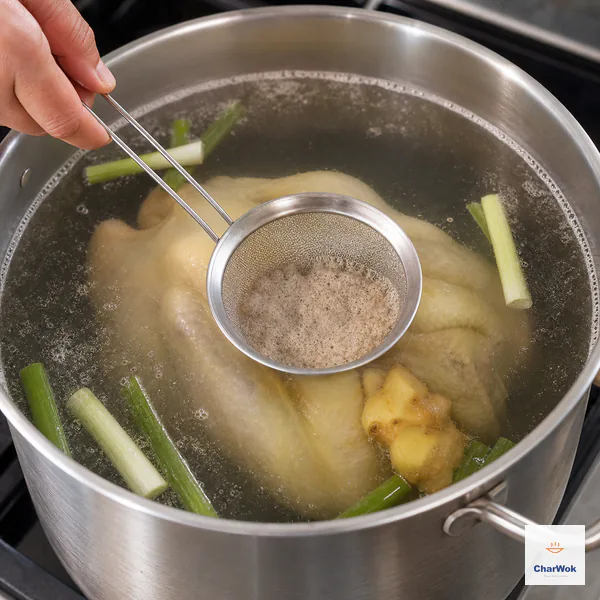
Skim the gray-brown foam for the first 10 to 15 minutes and stop once the surface stays clear so flavor remains in the pot
- Cover and hold the simmer 4 hours. Lid on, heat low. You want a surface that trembles and releases a bubble every few seconds, never a vigorous roll. Check once an hour and top off with a splash of hot water if the level drops below the bird. Four hours extracts the collagen; two hours leaves you with a thinner stock that will not gel.
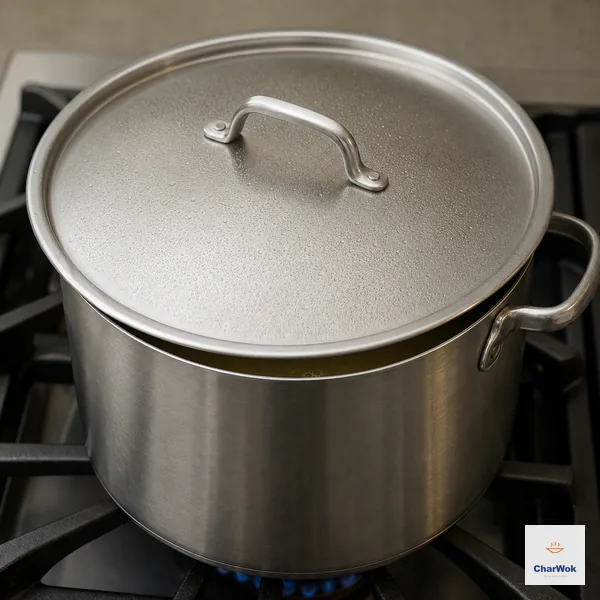
Leave the lid slightly ajar and hold the stock at a surface tremble for about 4 hours, never at a vigorous roll
- Rest, then strain. Turn off the heat and let it cool in the pot for about 30 minutes so the meat firms up enough to lift without disintegrating. Remove the chicken and aromatics, then pour the liquid through a fine-mesh sieve into a clean container. If you want surgical clarity, line the sieve with cheesecloth, but for everyday cooking the mesh alone is fine.
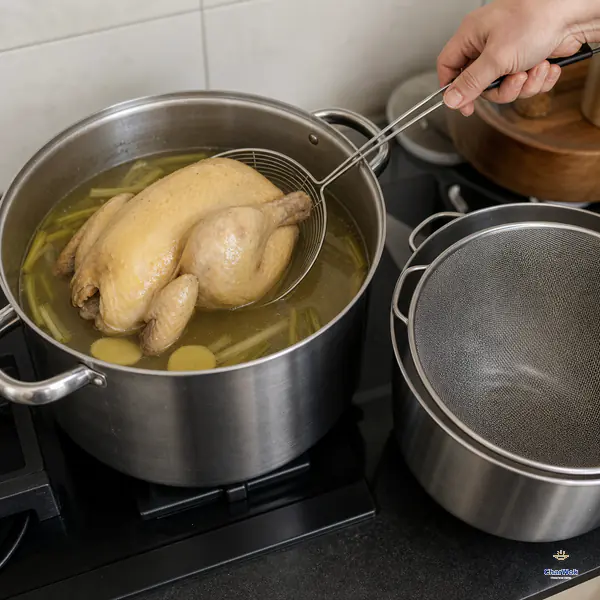
Turn off the heat and rest the chicken in the stock for about 30 minutes, then lift it and the aromatics out gently before straining.
- Cool fast, then store. Speed matters for safety. Set the container in an ice bath and stir until it drops below room temperature, then refrigerate. Do not leave a full pot on the counter for hours in a warm kitchen.
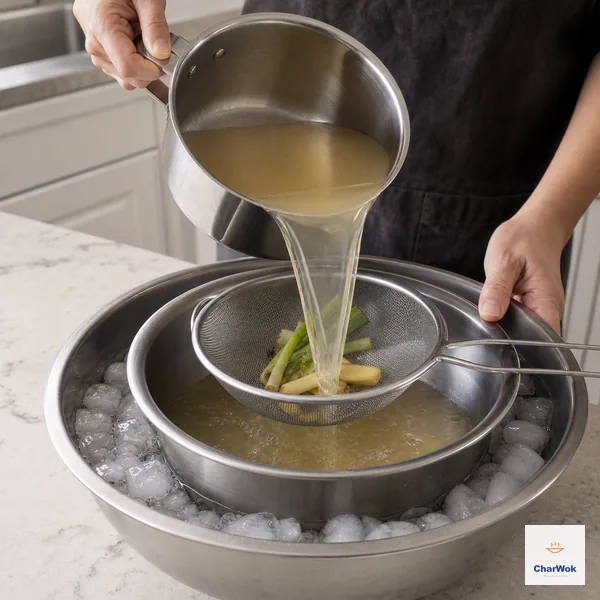
Strain into a metal bowl, nest it in an ice bath, and stir to cool the stock quickly before refrigeration
When the stock goes wrong
This is the section I wish more recipes included, because the failures are predictable and fixable.
- Cloudy or milky stock. Almost always a boil that was too vigorous, or frequent lifting of the lid that let the temperature seesaw and stirred up the sediment. A properly seated lid kept on through the simmer is fine; it is the peeking and stirring that hurts clarity. Next time, lower the heat the instant it boils, keep the lid on, and resist poking at it. You can still use a cloudy stock, it just looks dull in the bowl.
- Greasy layer on top. Skin and fat rendered out. Chill the stock overnight and the fat will solidify into a clean disk you can lift off in one piece. Keep a little of it for frying rice; it is liquid gold.
- Thin, will not gel in the fridge. Not enough collagen extracted. Causes: too short a simmer, too much water, or a young bird with soft bones. Fix by simmering longer (up to 6 hours is fine) or using more wings and necks next time.
- Bitter, metallic taste. Usually scorched protein stuck to the pot bottom, or over-skimmed dark foam left too long. Stir gently before the boil to lift anything settling, and keep the heat gentle.
- Off or sour note. The bird, or the stock sat warm too long before chilling. Trust your nose. If it smells wrong after cooling, do not risk it.
Put the stock to work
Unsalted stock is a building block, not a finished broth. Once you taste the difference, you will reach for it constantly. A few places it transforms the dish:
- Noodle soups and wontons. This is its highest calling. Use it for chicken noodle soup, wonton soup, or a bowl of Yang Chun Mian. Season the bowl with salt and a pinch of white pepper, nothing more.
- Quick soups. A few minutes of simmering turns it into seaweed egg drop soup, classic egg drop soup, or a hearty hot and sour soup. The cleaner the base, the brighter those final flavors read.
- Congee. Cook your congee in this instead of water and the porridge turns silken and savory with no extra seasoning.
- Juicy fillings. Meat dumpling fillings and pan-fried pork bun fillings rely on a splash of liquid for that juicy burst. Stock beats water every time.
- Stews and braises. Use it as the cooking liquid for braised beef with daikon or a pork rib soup when you want roundness rather than a heavy soy backbone.
Do not throw out the cooked chicken
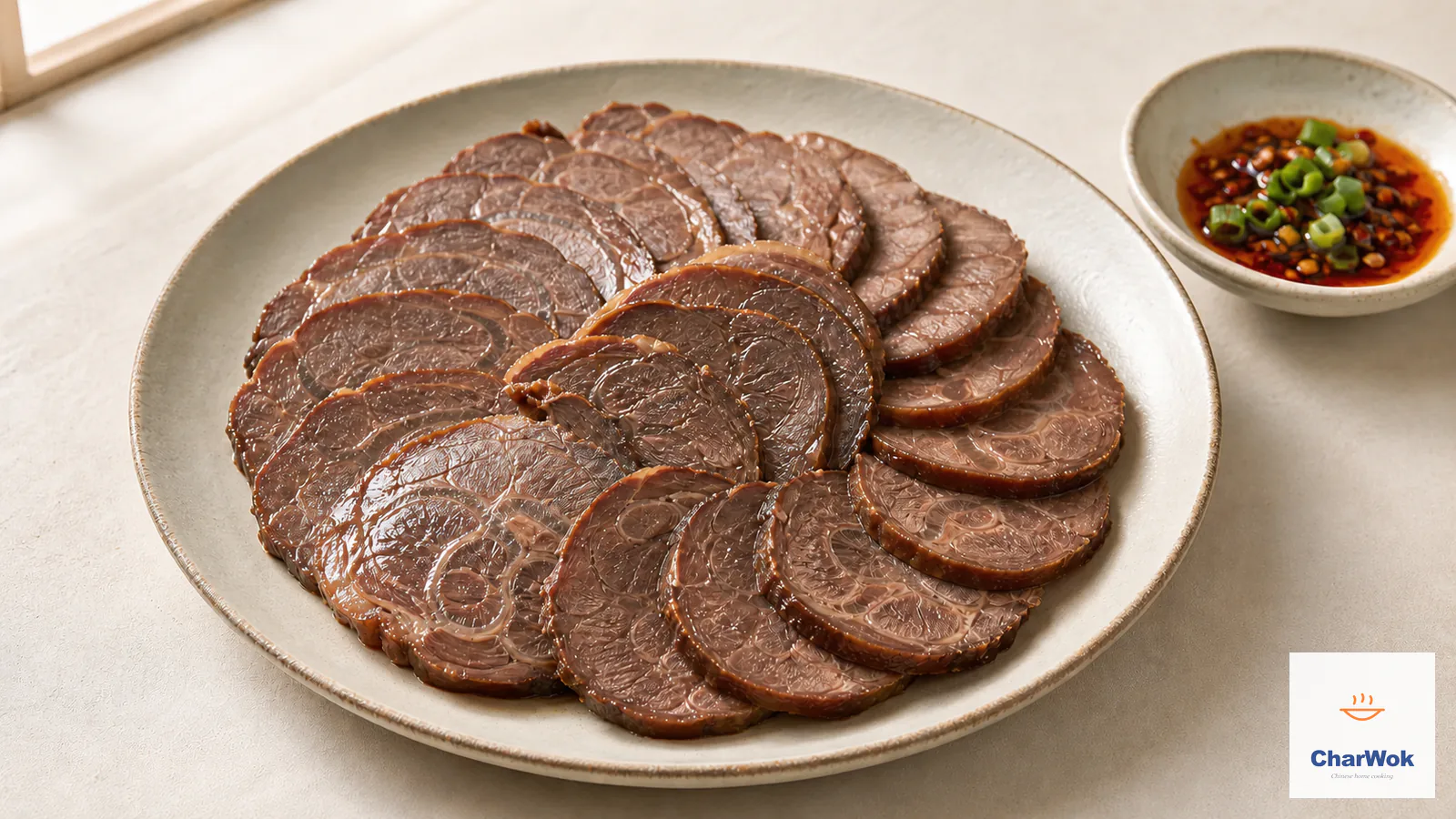
After four hours the meat is spoon-tender and almost flavorless, because the flavor is now in your stock. That does not mean it is garbage. It is a blank protein waiting for a bold dressing, and the trick is to never ask it to carry a dish on its own. Think of it as a texture and a carrier, then build the flavor around it with something loud: a chile-oil or sesame dressing, a punchy soy-based sauce, or a fragrant broth it can soak up. My usual moves are cold noodle dishes where the meat is just one component of the bowl, quick fried rice that leans on the rice and aromatics for character, and congee toppings where the chicken plays second fiddle to pickles and crispy elements. Anywhere you would use plain shredded chicken and want the seasoning to do the talking, this spent bird fits right in.
Storage and reheating
How you treat the finished stock falls into two questions, and getting them right is what keeps a batch safe and useful for months instead of days. The first is about holding: how long it sits and at what temperature. The second is about flavor: how you keep it flexible enough for any dish.
On holding: A covered container in the fridge keeps the stock good for about 4 days, and the layer of fat that solidifies on top is a free seal, so leave it until the moment you use the stock. For anything beyond that, freeze it. I portion into 250 ml (1 cup) and 500 ml (2 cup) tubs before freezing, with headroom for expansion and a date on the lid, so I can defrost exactly what a recipe needs. Frozen stock holds for up to 6 months. Always defrost it overnight in the fridge, never on the counter; in a real hurry, set the sealed tub in a bowl of cold water. And before it touches anything you will eat, bring thawed or long-frozen stock to a full rolling boil for at least a minute, full stop.
On flavor: Keep the batch unsalted. This is the choice that makes the stock genuinely versatile, because you can reduce it down for a glaze or stretch it for a soup without fighting someone else's idea of how salty it should be. Season at the stove, in the dish you are actually cooking, where you can taste as you go. The unsalted base also lasts better in the freezer than a salted one.
A few variations worth trying
Once you have the basic method down, small tweaks give you different stocks for different jobs. Add 5 or 6 dried shiitake mushrooms for a deeper, earthier base that is wonderful in braises. Toss in a handful of dried dried shrimp for a Cantonese-leaning stock that lifts seafood congee. For a richer, darker broth, roast the chicken bones at 200°C (400°F) for 25 minutes before simmering; you lose some clarity but gain Maillard depth that is gorgeous in spicy noodle soups. Keep the basic clean stock as your default and branch out from there.
Frequently asked questions
Do I have to simmer for 4 hours? No, but you will get a thinner result. Two hours gives you drinkable stock; four gives you the collagen body that turns to jelly when chilled. Six is fine if you have the time.
Why is my stock cloudy? It boiled too hard. Fat and sediment emulsified into the liquid. Drop the heat the instant it boils and keep it at a gentle tremble.
Should I add salt? Not in the pot. Season each dish when you cook it. Unsalted stock is far more flexible.
Can I use a pressure cooker? Yes. About 45 minutes at high pressure extracts plenty of collagen and keeps it clearer than an open simmer. Natural release, then strain. The flavor is slightly less rounded than a long slow simmer but the convenience is real.
How do I know the stock is good? Chill a spoonful in the fridge. If it firms up and wobbles, the collagen extraction worked. If it stays watery, simmer longer or use more collagen-rich parts next time.