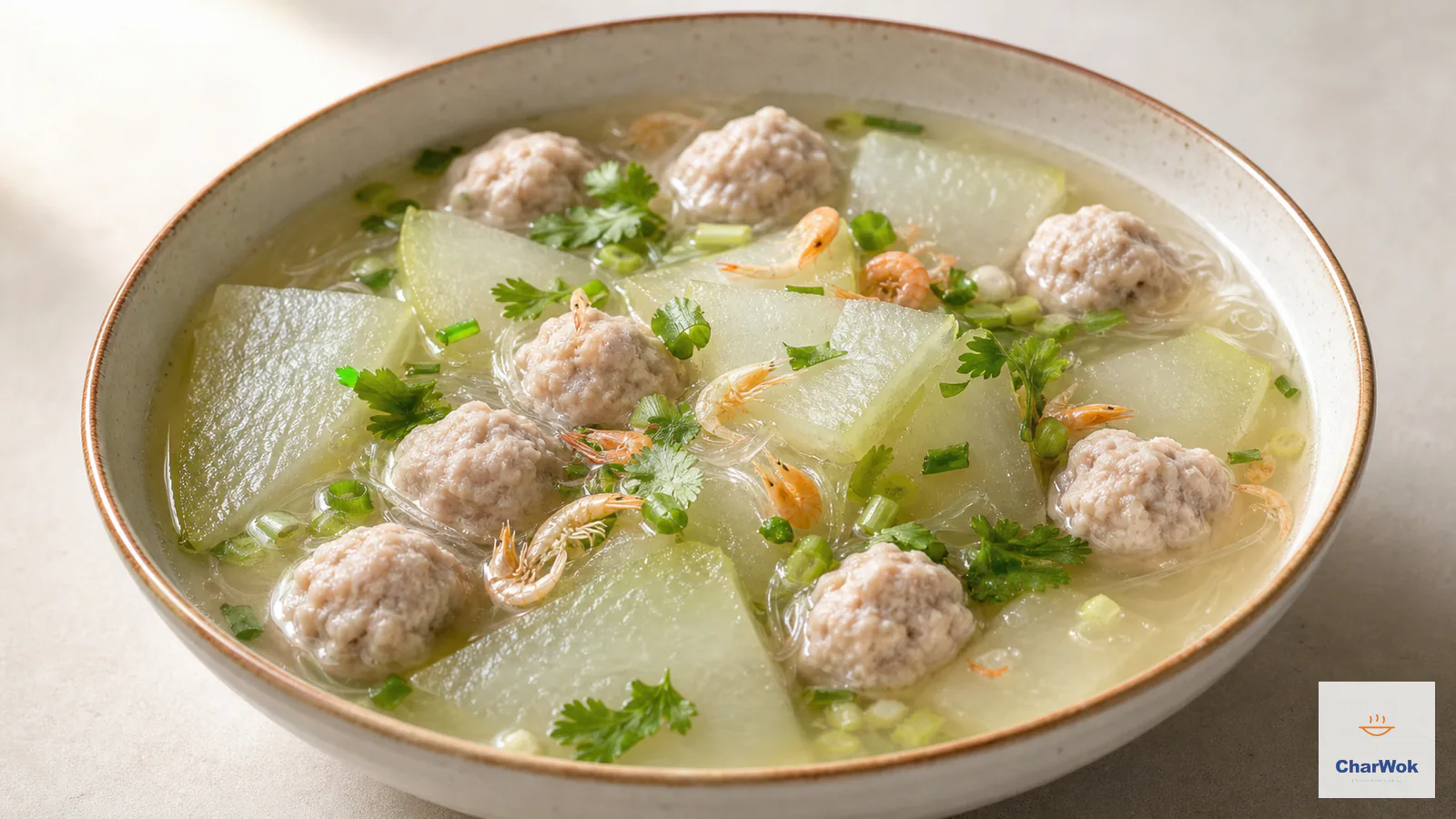
Winter melon and pork is one of those quiet pairings that tastes like it was decided a thousand years ago and nobody saw a reason to argue. The melon gives water and a faint sweetness; the meatball gives fat, salt, and body. Drop them in the same pot and the broth turns cloudy and savory without a single cube of stock. The pain point, if you've tried this at home, is the meatballs. Mine disintegrated into gray threads the first three times. The fix is not a secret ingredient. It is technique, and most of it happens before the soup is even on the stove.
The whole soup is ready in about 25 minutes, and the meatballs only hold together if you stir the mixture in one direction until it turns sticky and pulls cleanly off the bowl. Skip that step and you get meat flakes.
What this soup is, and where it sits at the table
Dong Gua Wan Zi Tang (冬瓜丸子汤) is everyday northern Chinese home cooking, the kind of thing that shows up on a Tuesday with no fanfare. Winter melon, called wax gourd in older English cookbooks, is a mild, spongy gourd that drinks up whatever liquid it simmers in. Stretched thin, it is cheap, low in calories, and almost aggressively plain on its own, which is exactly why it pairs with seasoned pork. The melon becomes the receiver; the meatball and its poaching broth become the signal. A handful of glass noodles turns the bowl from a side into something you can eat as a light one-dish meal.
You will see this soup in Beijing and Tianjin households year-round, but it earns its keep when the weather turns. If you are building a colder-months menu, it slots in next to other comforting dishes for chilly days without competing for attention.
The three things that decide whether this works
Before the ingredient list, understand the mechanism, because every failure traces back to one of these.
- Protein extraction. When you beat ground meat and work in a little liquid, the muscle proteins unwind and link into a web that traps fat and water. That web is what makes a meatball springy instead of crumbly. Stirring in a single direction keeps the strands aligning instead of fighting each other. Once the mix turns sticky and stringy when you pull it, the web is built.
- Gentle poaching. A hard boil breaks the meat apart before the proteins set. You want the faintest tremble at the surface, what cooks call a "smile." The meatballs firm up slowly and stay tender.
- A real umami base. Plain water works, but it is bland. A spoonful of papery dried shrimp (xiapi) bloomed in oil with scallion gives the broth a clean, sea-savory depth that salt alone never will. It is the same trick behind tofu soup with dried shrimp, and it is worth keeping a bag in the freezer.
Ingredients
Ingredients at a glance
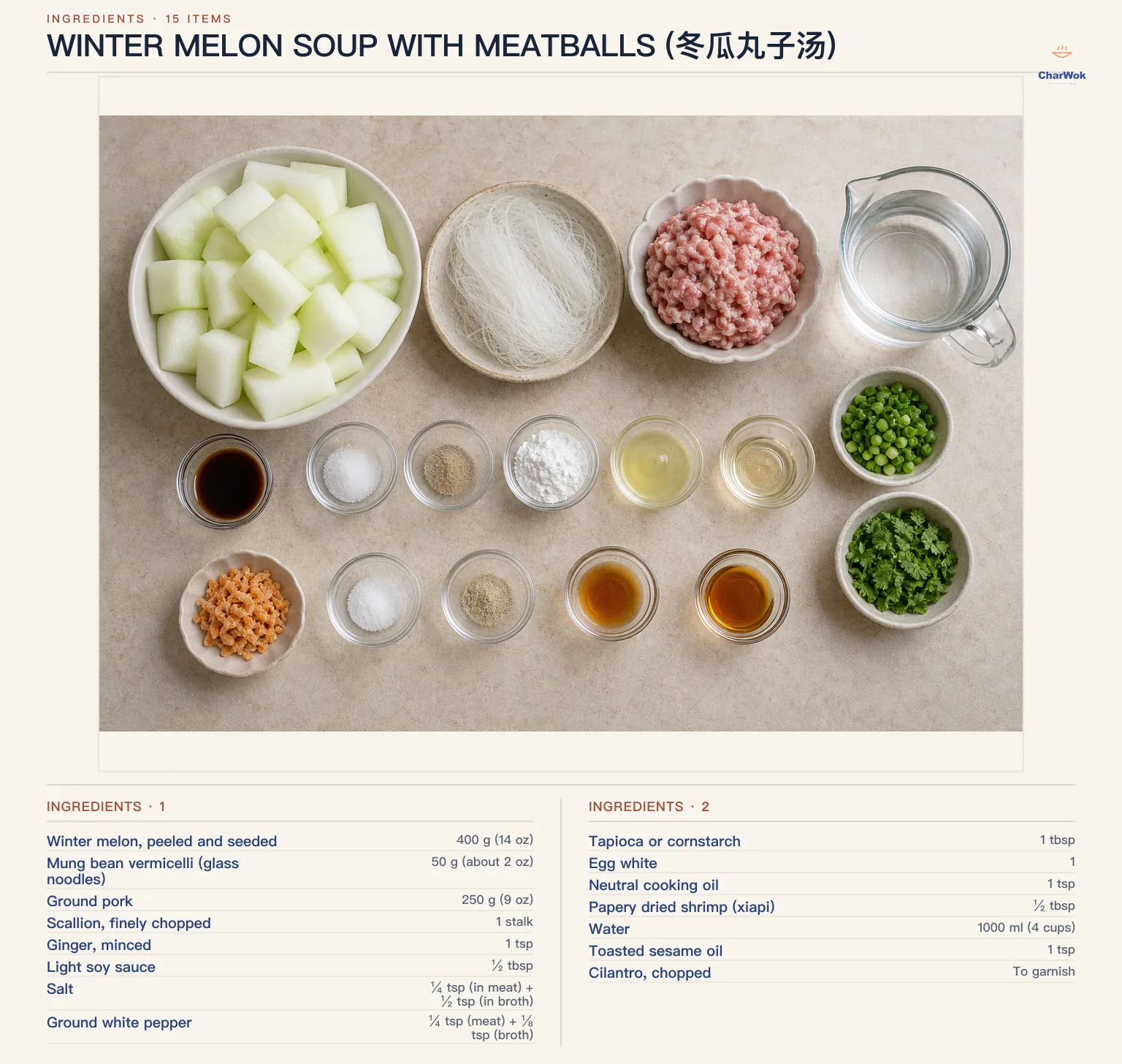
Serves 4 as a soup course, 2 as a light meal. Times assume the meat is already ground.
| Ingredient | Amount | Notes / substitute |
|---|---|---|
| Winter melon, peeled and seeded | 400 g (14 oz) | About 4 cups chunks. Zucchini or daikon work in a pinch; napa cabbage ribs are a respectable substitute and soften faster. |
| Mung bean vermicelli (glass noodles) | 50 g (about 2 oz) | Soak before using. Sweet potato starch noodles are a fine swap; see how glass noodles behave in stir-fries for the principle. |
| Ground pork | 250 g (9 oz) | Choose 80/85 lean. Too lean and the balls are dry; too fatty and they fall apart. Ground chicken thigh works but add a teaspoon of oil to the mix. |
| Scallion, finely chopped | 1 stalk | For the meatballs. Save the green tops for the broth. |
| Ginger, minced | 1 tsp | Helps mask any gamey note in pork. Grate on a microplane so no fibrous bits survive. |
| Light soy sauce | ½ tbsp | For seasoning the meat. Dark soy will muddy the broth; use light. |
| Salt | ¼ tsp (in meat) + ½ tsp (in broth) | Adjust the broth to taste at the end. |
| Ground white pepper | ¼ tsp (meat) + ⅛ tsp (broth) | White, not black, to keep the broth clean-looking. |
| Tapioca or cornstarch | 1 tbsp | Locks moisture into the meat. Tapioca gives a slightly bouncier bite. |
| Egg white | 1 | From a large egg. Save the yolk to stir into the broth at the end if you like a richer soup. |
| Neutral cooking oil | 1 tsp | For frying the aromatics. Peanut, canola, or grapeseed. |
| Papery dried shrimp (xiapi) | ½ tbsp | The umami backbone. Skip for a vegetarian version and use a small dried shiitake, soaked and minced. |
| Water | 1000 ml (4 cups) | Use homemade chicken stock instead for a richer result, or half stock, half water. |
| Toasted sesame oil | 1 tsp | Stirred in off the heat. Adds aroma without cooking off. |
| Cilantro, chopped | To garnish | Optional. A few baby spinach leaves work if you dislike cilantro. |
Method
The order matters. Build the meat mixture first so the proteins have time to relax while you start the broth.
- Prep the melon and noodles. Cut the peeled, seeded melon into bite-sized chunks, roughly 2 cm (¾ inch) so a soup spoon can manage them. Drop the vermicelli into a bowl of cool water to soak for 10 minutes, then drain and snip into shorter lengths with scissors. Soaking softens the starch so it only needs a minute in the hot broth later, which keeps the noodles springy instead of gummy.
- Build the meatball mix. Put the ground pork in a bowl with the scallion, ginger, light soy sauce, salt, white pepper, starch, and egg white. Now stir in one direction only, pressing the meat against the side of the bowl. After a minute or two the texture changes from granular to sticky and stretchy, and the bowl is almost clean when you scrape it. This is the step most recipes understate; if you stop early, you will get meat crumbles. Stop only when the mix forms a ball that holds a peak when you lift the spoon.
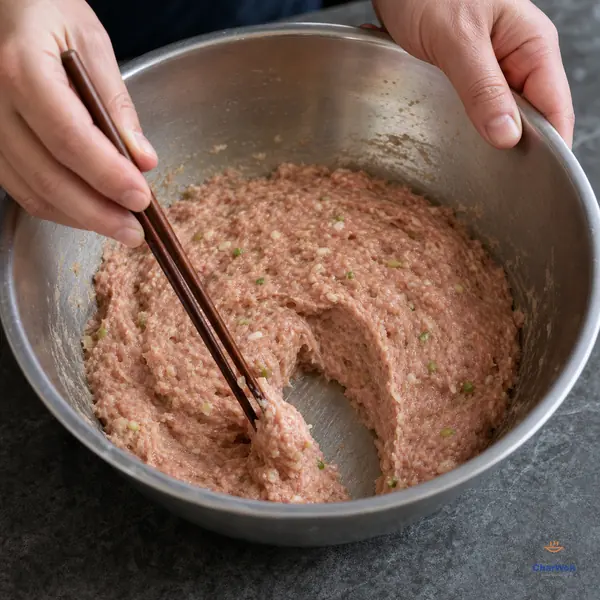
Beat the pork in one direction for one to two minutes, pressing it against the bowl. Stop only when no liquid remains, the mixture clings heavily to the chopsticks and the channel you drag through it stays open long enough to show that the meat can hold a peak.
- Start the broth. Heat the teaspoon of oil in a medium pot over medium heat. Add the dried shrimp and the second stalk of chopped scallion and fry just until fragrant, about 20 seconds. Pour in the water and bring it to the barest simmer. The shrimp and scallion have done their job now; the fat has carried their aroma into the liquid.
- Shape and poach the meatballs. With the broth at a gentle smile, not a roll, scoop up a walnut-sized portion of meat in one hand and squeeze it out through the circle made by your thumb and curled index finger so a smooth ball pops through. Knock it off into the broth with a spoon. Repeat until the meat is used up. Keep the heat low; if the surface starts bubbling hard, the balls will misshape and shed debris before they set.
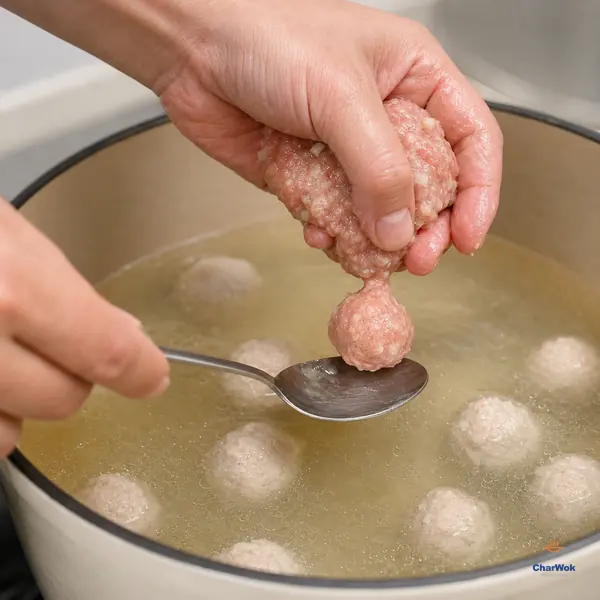
Squeeze a walnut-sized ball between thumb and curled index finger, scoop it off with a spoon and slide it into broth held at the faintest surface tremble. A rolling boil can tear the meat apart before its protein network sets, so keep the heat low until every ball is firm.
- Cook the melon. Once all the meatballs float, add the winter melon, cover, and raise the heat to medium. Cook 8 to 10 minutes, until a knife slides through a chunk with no resistance. I like the melon soft enough to yield on the tongue, almost translucent at the edge; pull it a minute earlier if you prefer a firmer bite.
- Finish with the noodles and seasoning. Stir in the soaked vermicelli and cook one more minute, uncovered. Off the heat, add the salt, white pepper, and sesame oil, then taste and correct the salt. Ladle into bowls and scatter cilantro over the top.
When things go wrong
This is the section I wish someone had handed me the first time my meatballs turned to sediment. Most failures fit one of four patterns.
- The meatballs fall apart in the broth. Either you did not stir long enough to build the protein web, or the broth was boiling instead of smiling. Fix it next time by beating the mix longer and dropping the heat to low before shaping. If you are mid-cook and the first ball breaks, whisk the rest of the mixture a minute longer and lower the heat before trying again.
- The meatballs are dense and rubbery. You overworked the meat after adding too much starch, or the pork was too lean. Aim for 15 to 20 percent fat and stop stirring the moment the mix turns sticky. A tablespoon of water beaten in before the starch also lightens the texture.
- The broth tastes flat. Plain water plus undersalted meatballs gives you a pot of warm nothing. The dried shrimp and the final salt-and-pepper adjustment carry the flavor; taste at the end and season boldly. A few drops more light soy in the bowl fixes an underseasoned batch.
- The melon turns to mush or stays chalky. Both are timing errors. Eight minutes is the floor for tenderness; beyond twelve the chunks collapse. Cut evenly so they finish together rather than fishing out one done piece and one raw one.
One honest limitation: this is a quick soup, not a slow-simmered one. If you want deep, gelatinous body, you need bones, not meatballs, and you are better off starting with Chinese pork rib soup and adding melon near the end.
Variations and what to serve it with
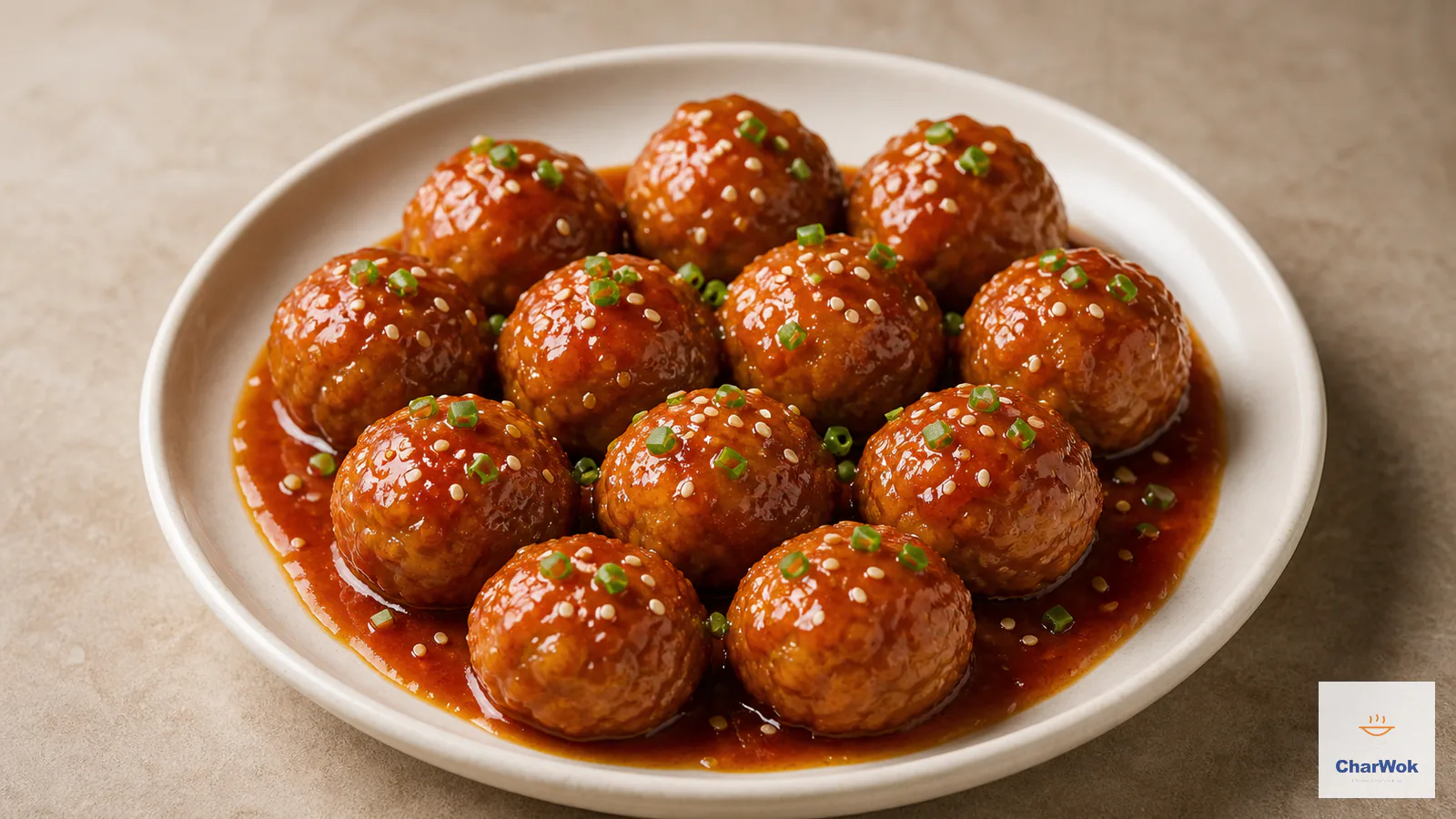
The basic formula is a template. Once the technique is in your hands, the dish bends easily. For a richer, more celebratory version, make larger meatballs and braise them with the melon in a shallow layer of stock instead of fully submerging them, the way you would for Lion's Head meatballs. For something prettier and more textural, roll the meatballs in soaked glutinous rice and steam them, following the method for pearl meatballs, then float a few in the broth. And if your household leans sweet-sour, the same pork mixture shaped and fried becomes the base for sweet and sour meatballs; make a double batch of meat and split it between the two dishes.
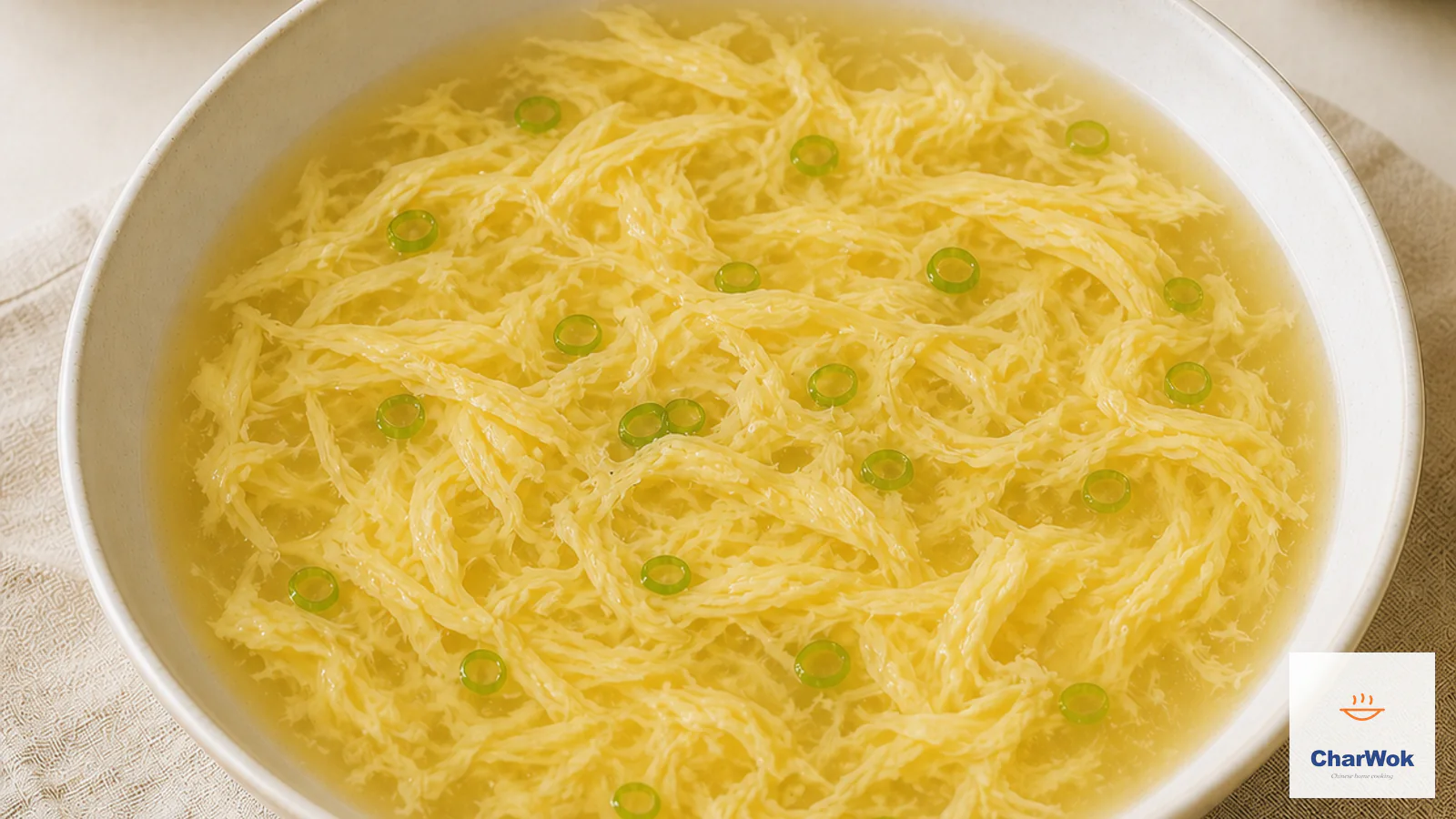
To turn the soup itself into a one-bowl meal, drop in a small handful of leafy greens at the end, or ladle it over cooked noodles. The chicken version, chicken meatball noodle soup, takes the same shaping technique and stretches it into a full lunch. On a cold night it sits comfortably next to a sharper bowl of hot and sour soup if you are serving two soups, or beside a simple egg stir-fry modeled on classic egg drop soup for a lighter spread. Glass noodles also pair happily with cabbage, as in glass noodles with napa cabbage, so feel free to swap the melon for cabbage ribs when winter melon is out of season.
Storage and reheating
The soup keeps two days in the fridge and reheats gently on the stove or in the microwave. The glass noodles will drink up broth as they sit, so add a splash of water when rewarming and loosen them with a fork. I do not recommend freezing the finished soup; the melon goes watery and the noodles turn to paste. What freezes beautifully is the raw meatball mixture. Shape the balls, freeze them on a tray, then bag them and drop them straight into simmering broth from frozen, adding one or two minutes to the poaching time. That makes this a reliable entry on any list of weeknight recipes, since the slow part, building the meat mix, can happen on a Sunday.
Related recipes & further reading
Once the shaping and poaching technique is yours, the same ideas carry into a wide shelf of home-style dishes. These are the ones I cook in the same rotation as this soup, or send people to when they want the next step.
- For a similar everyday soup built on seasoned pork, try wonton soup, which uses the same gentle-poach thinking wrapped in a thin skin.
- If you want the meatballs with noodles already in the bowl, wonton noodle soup turns that idea into a one-dish meal.
- Another light, fast broth worth keeping in rotation is chicken corn soup, which leans on the same clean seasonings.
- For a quick soup with a different protein, seaweed egg drop soup comes together in minutes.
- A bowl of tomato egg drop soup shares the soft, soothing texture and makes a good companion on the same table.
- The same pork mixture shaped larger and braised in stock is the logic behind red braised pork belly, for a richer night.
- If you like meat wrapped and steamed rather than poached, steamed cabbage rolls use napa cabbage the way this soup uses melon.
- For a vegetable side that pulls from the same produce family, stir-fried napa cabbage rounds out the meal.
- On a colder night, a pot of rice congee sits alongside this soup as another mild, comforting base.
- To lean into the beef side of quick stir-fry cooking, spicy orange beef brings bright, sticky heat.
- For a curated starting point across the whole cuisine, the must-try Chinese recipes list is a good map.
- For a technique-first path from soups to wok dishes and dough, browse the core cooking skills guide.
Frequently asked questions
A few short answers to questions that come up often.
Can I use chicken instead of pork? Yes. Ground chicken thigh works and tastes cleaner, but it is leaner, so add a teaspoon of oil to the mix and do not skip the egg white and starch or the balls will be dry.
Is there a substitute for the dried shrimp? For a shrimp allergy, use a small soaked and minced dried shiitake, or omit it and season the broth with a little extra light soy and a pinch of mushroom powder. The soup will be plainer but still good.
Do I have to soak the glass noodles first? It helps. Pre-soaking lets the noodles finish in one minute in the hot broth, so they stay bouncy. Without soaking they drink up soup for several minutes and risk going soft.
Why stir in only one direction? It keeps the protein strands aligning the same way so they form a tighter web that traps fat and water. Switching directions tangles the strands and gives a looser, crumblier meatball.
Can I make the meatballs ahead and cook them later? Yes. Shape them, cover, and refrigerate for up to a day, or freeze on a tray and bag them for a month. Drop them into simmering broth straight from cold or frozen.
That is the whole dish. The trick is not in the ingredients, which are about as humble as Chinese cooking gets. It is in the fifteen seconds you spend deciding whether the broth is smiling or boiling, and the extra minute you spend beating the meat until it stops looking like meat. Get those two things right and the rest follows.