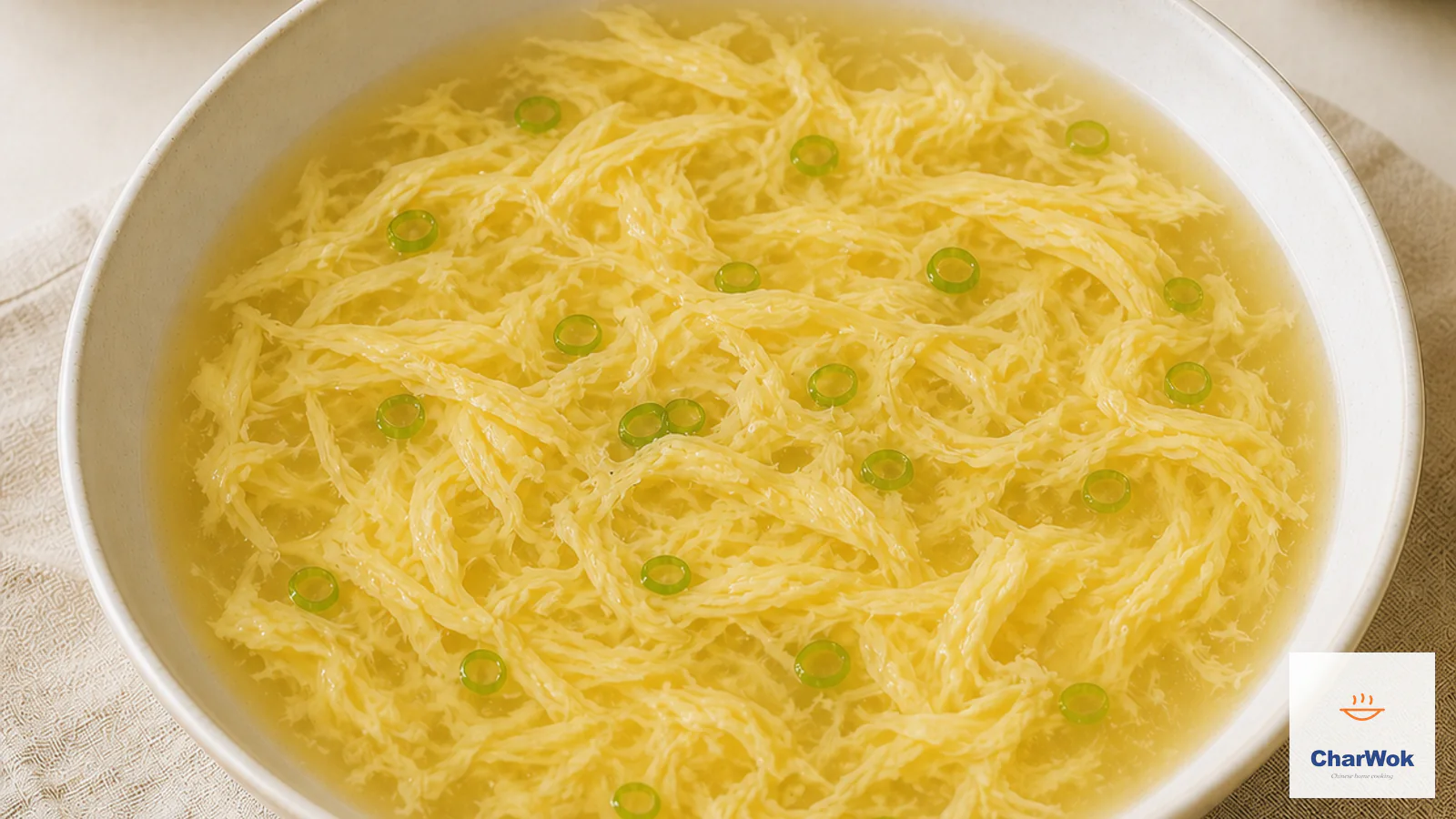
Tomato egg drop soup is the soup I make when I open the fridge at 7 p.m. and refuse to order takeout. Three tomatoes, two eggs, a pot of water, ten minutes. The flavor comes from the tomatoes themselves cooking down into a light, tangy broth, with silken ribbons of egg drifted through it. No chicken stock required. No cornstarch either, unless you want it.
Where most people go wrong is treating the egg as an afterthought. They dump it in, stir hard, and end up with cloudy soup and rubbery clumps. The egg is the whole point. Getting clean, soft strands is a 15-second skill that almost nobody explains, and it is the difference between a bowl that tastes like a home kitchen and one that tastes like a cafeteria. I will walk you through exactly how I do it, including the batch I ruined last winter by leaving the heat on high.
Three ripe tomatoes, two eggs, one liter of water. Drop the egg at a low simmer, not a boil, and the strands come out tender every time. Total time from cold start: about 10 minutes.
What this soup is, and where it comes from
This is a northern Chinese home soup, the kind that shows up on a weeknight table next to rice and a stir-fry. It is sometimes called fan qie dan tang (番茄蛋汤), and it belongs to the same family as the classic egg drop soup you see on takeout menus, but the tomato version is lighter and more everyday. The tomato, not the broth, does the work of flavoring the water. It is a different animal from the tomato and egg stir-fry that fills Chinese lunchboxes, though the two share ingredients and a stubborn, devoted following.
What the tomato brings is acidity and sweetness that release into the water as the flesh breaks down. A small amount of fat from the aromatic stage carries that flavor so the soup does not taste thin. The egg adds richness and a soft texture that tames the acid. It is one of the most balanced quick soups in the cuisine.
Ingredients
Ingredients for four servings of tomato egg drop soup
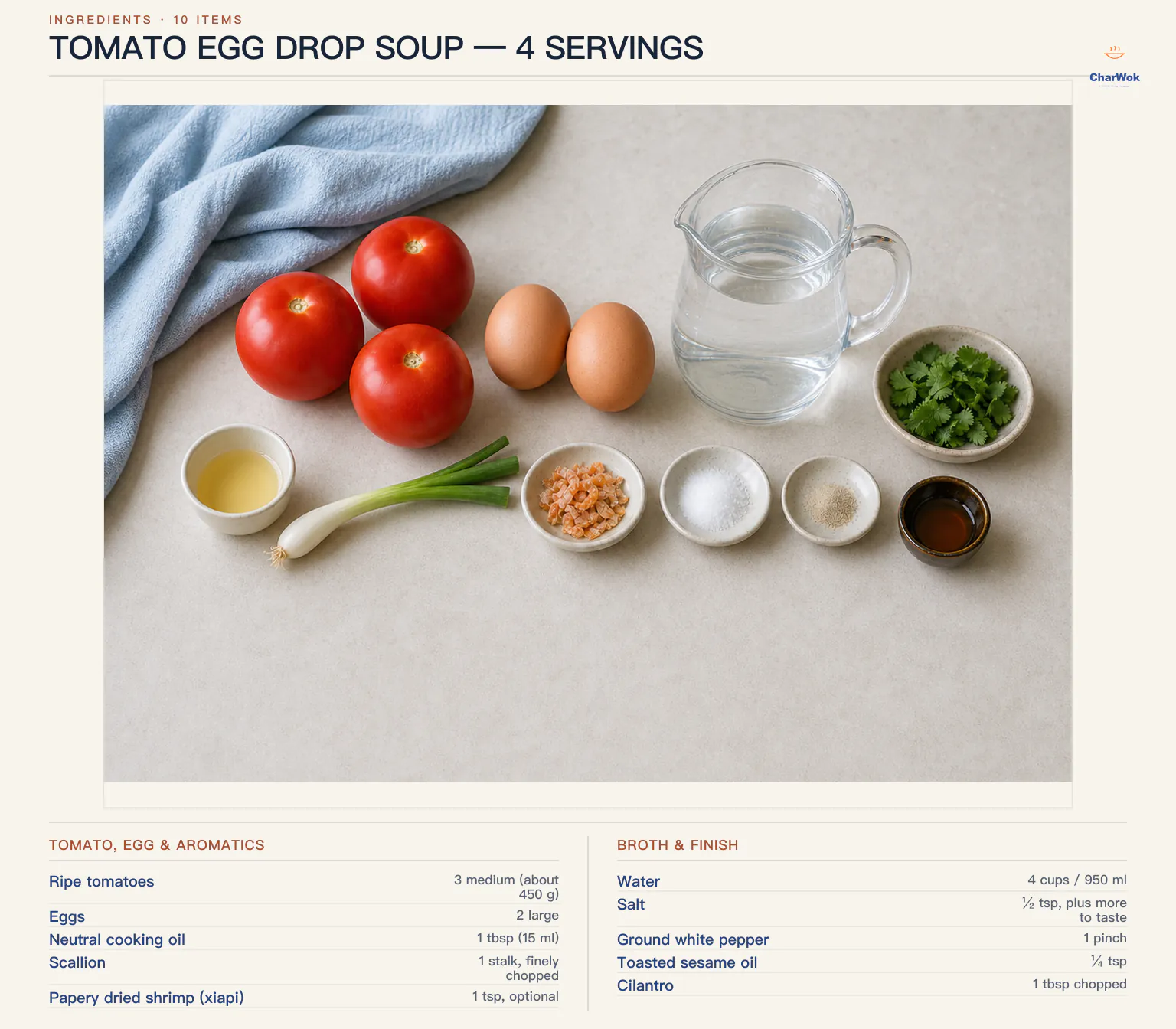
Use ripe tomatoes. This is not the place for the pale, rock-hard ones that sit in the supermarket in January. If you cannot find good fresh tomatoes, a drained can of whole peeled tomatoes works better than a mealy fresh one. I have notes on both below.
| Ingredient | Amount | Notes / substitute |
|---|---|---|
| Ripe tomatoes | 3 medium (about 450 g) | Vine-ripened or Roma. In a pinch, 1 can (400 g) whole peeled, drained and chopped. |
| Eggs | 2 large | Beat with 1 tbsp water to thin the stream. |
| Neutral cooking oil | 1 tbsp (15 ml) | Grapeseed, canola, or peanut. Not olive oil. |
| Scallion | 1 stalk, finely chopped | Use both white and pale green for the pan; save dark green for garnish. |
| Papery dried shrimp (xiapi) | 1 tsp, optional | Adds a clean umami backbone. See my dried shrimp guide for sourcing and prep. |
| Water | 4 cups / 950 ml | Swap half for homemade chicken stock if you have it. |
| Salt | ½ tsp, plus more to taste | Kosher or fine sea salt. |
| Ground white pepper | 1 pinch | White, not black, to keep the broth pale. |
| Toasted sesame oil | ¼ tsp | Finish only. A little sesame oil goes far; too much turns the soup heavy. |
| Cilantro | 1 tbsp chopped | Optional garnish. Scallion greens work too. |
How I make it, step by step
- Peel and chop the tomatoes (optional but worth it). Score a shallow cross on the bottom of each tomato, opposite the stem. Drop them into just-boiled water for 60 to 90 seconds, until the corners of the cross curl back. Lift them out and the skin peels off in clean strips. Then chop into half-inch cubes. Peeling matters here because loose skins turn into tough little scrolls floating in the broth. If you are in a hurry, skip it, the flavor is the same; the texture just suffers.
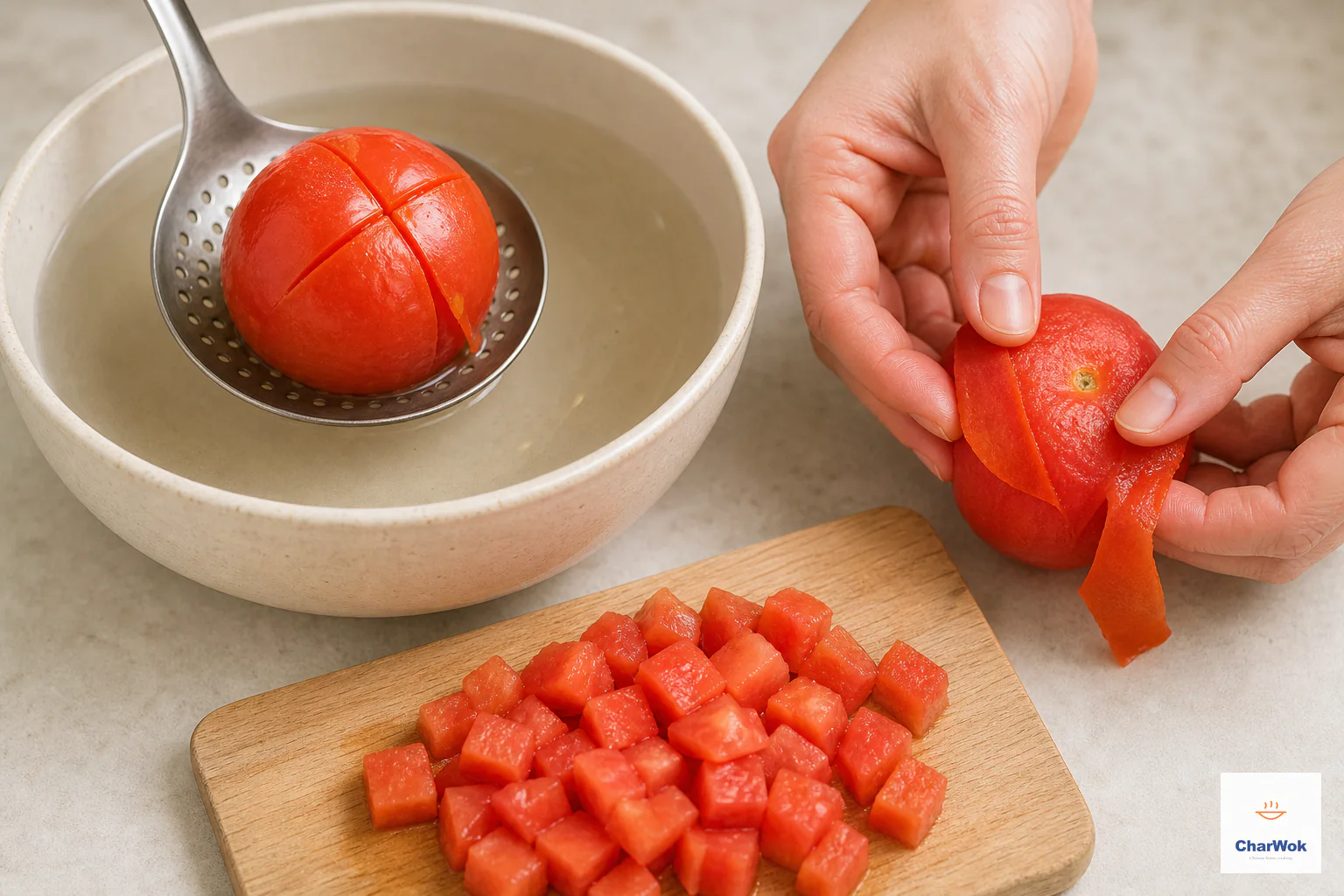
Score, briefly blanch and peel the tomatoes, then cut the flesh into roughly half-inch cubes.
- Beat the eggs with a splash of water. Crack both eggs into a bowl, add 1 tablespoon of water, and whisk until fully blended with no streaks of white. The water thins the eggs so they pour in a fine stream rather than plopping in one mass. This is the single trick behind clean egg ribbons.
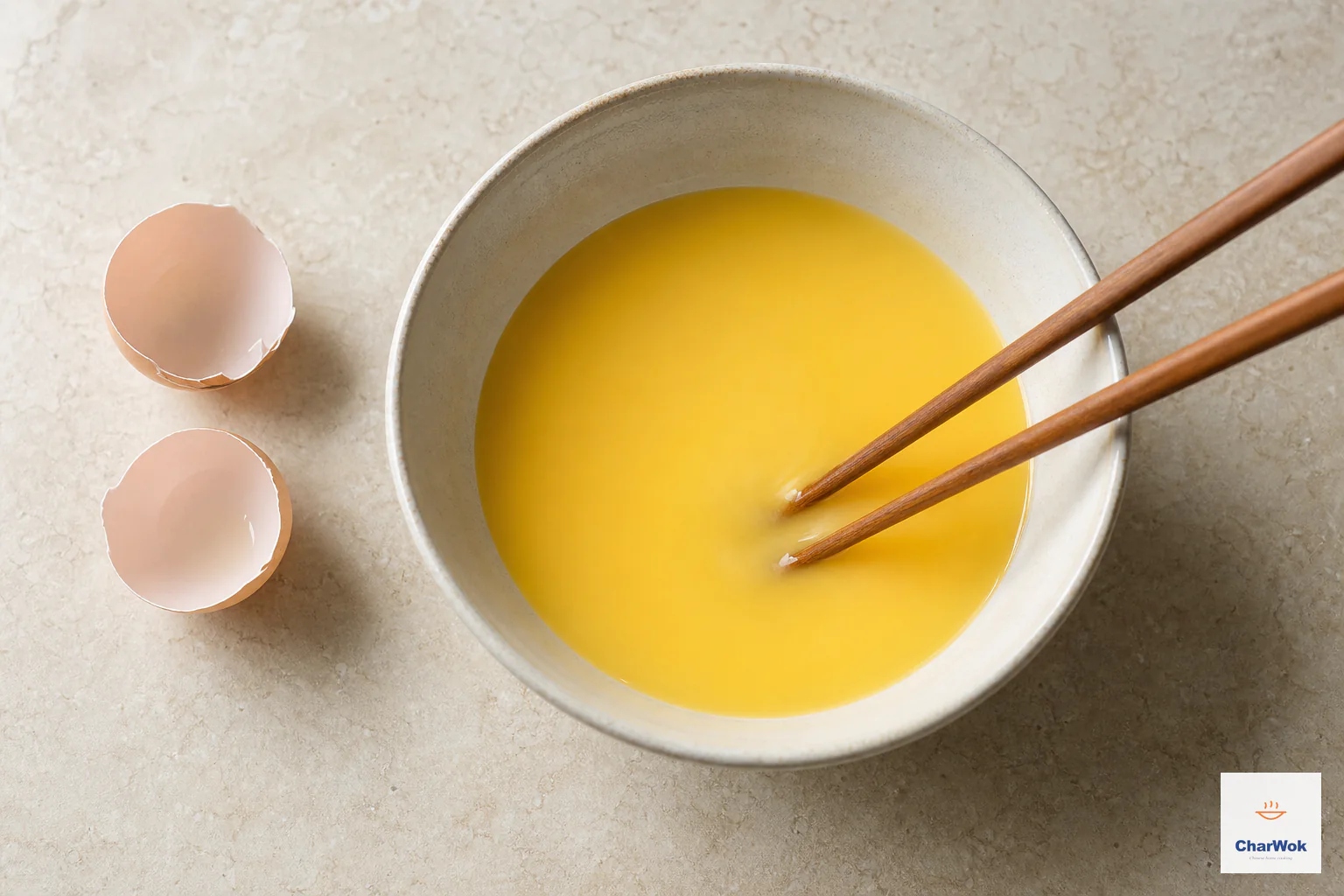
Whisk the two eggs with one tablespoon water until the yolks and whites are completely blended but not foamy.
- Bloom the aromatics. Heat the oil in a saucepan or small pot over medium-high. Add the scallion whites and the dried shrimp, if using. Stir for 20 to 30 seconds, just until the scallion softens and smells sweet. Do not brown it. Burned scallion will bitterness into the whole pot.
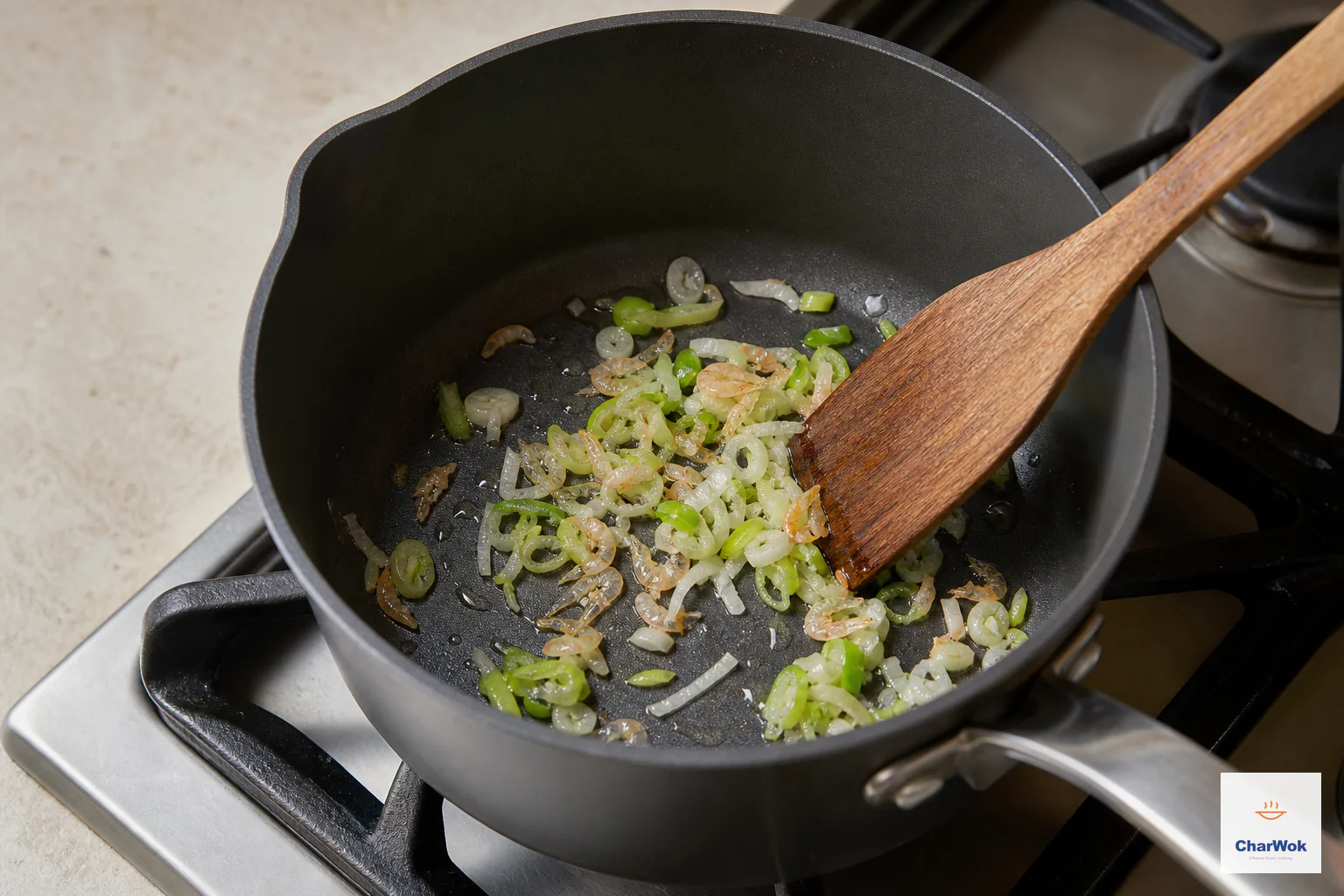
Bloom the scallion whites and optional dried shrimp briefly in one tablespoon oil; keep them fragrant and pale.
- Cook the tomatoes until they slump. Add the chopped tomato and a small pinch of salt. The salt pulls water out of the tomato and helps it break down. Cook, stirring now and then, until the pieces have softened and released their juice, about 3 minutes. You should see a shallow pool of orange liquid in the pan. This step is where the flavor gets built, so do not rush it. Under-cooked tomato tastes raw and sharp.
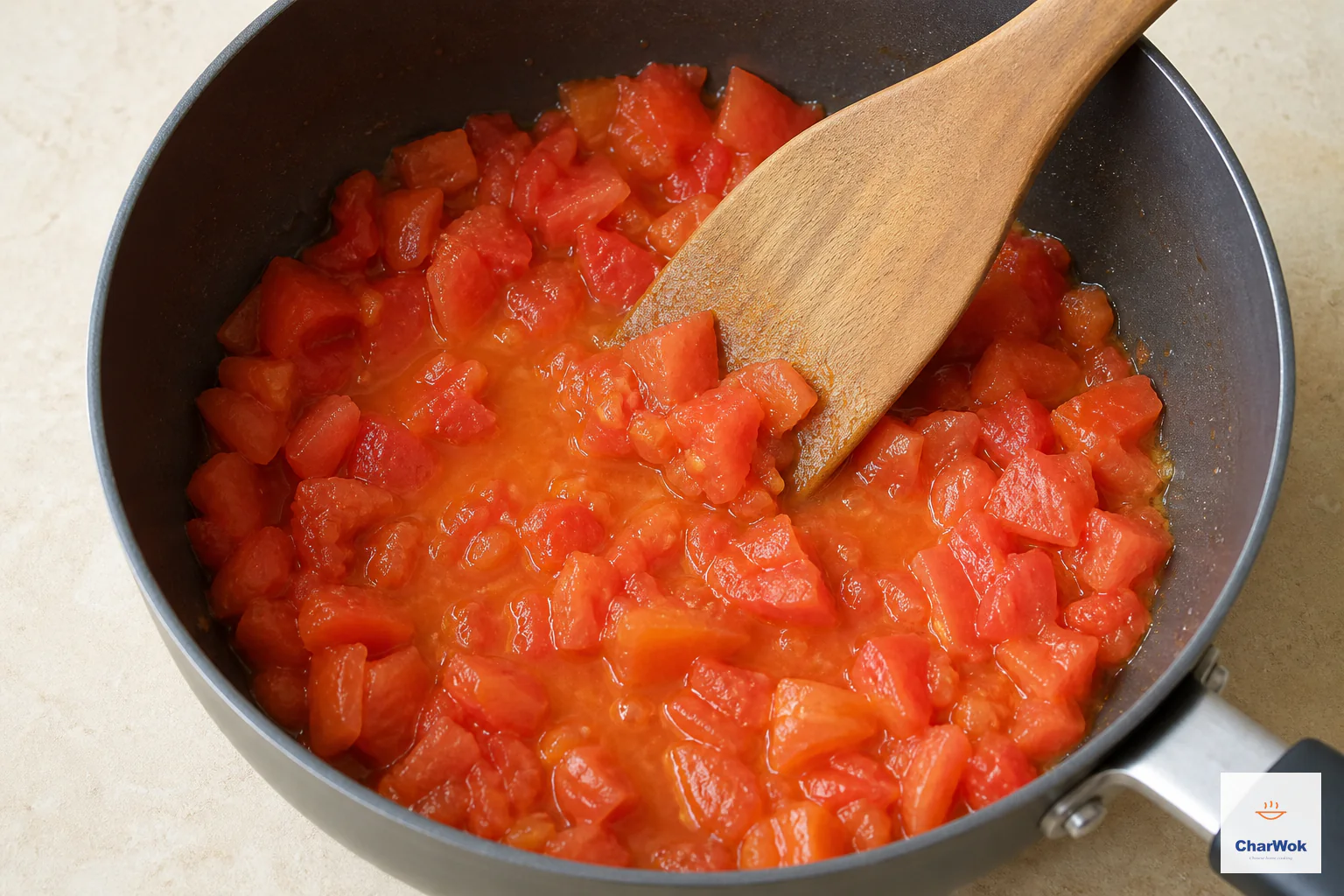
Cook the tomato cubes with a pinch of salt until they slump and release a shallow pool of orange-red juice.
- Add the water and bring it to a boil. Pour in the 4 cups of water, scrape up anything stuck to the pan, and cover. Bring it to a full boil, then immediately drop the heat.
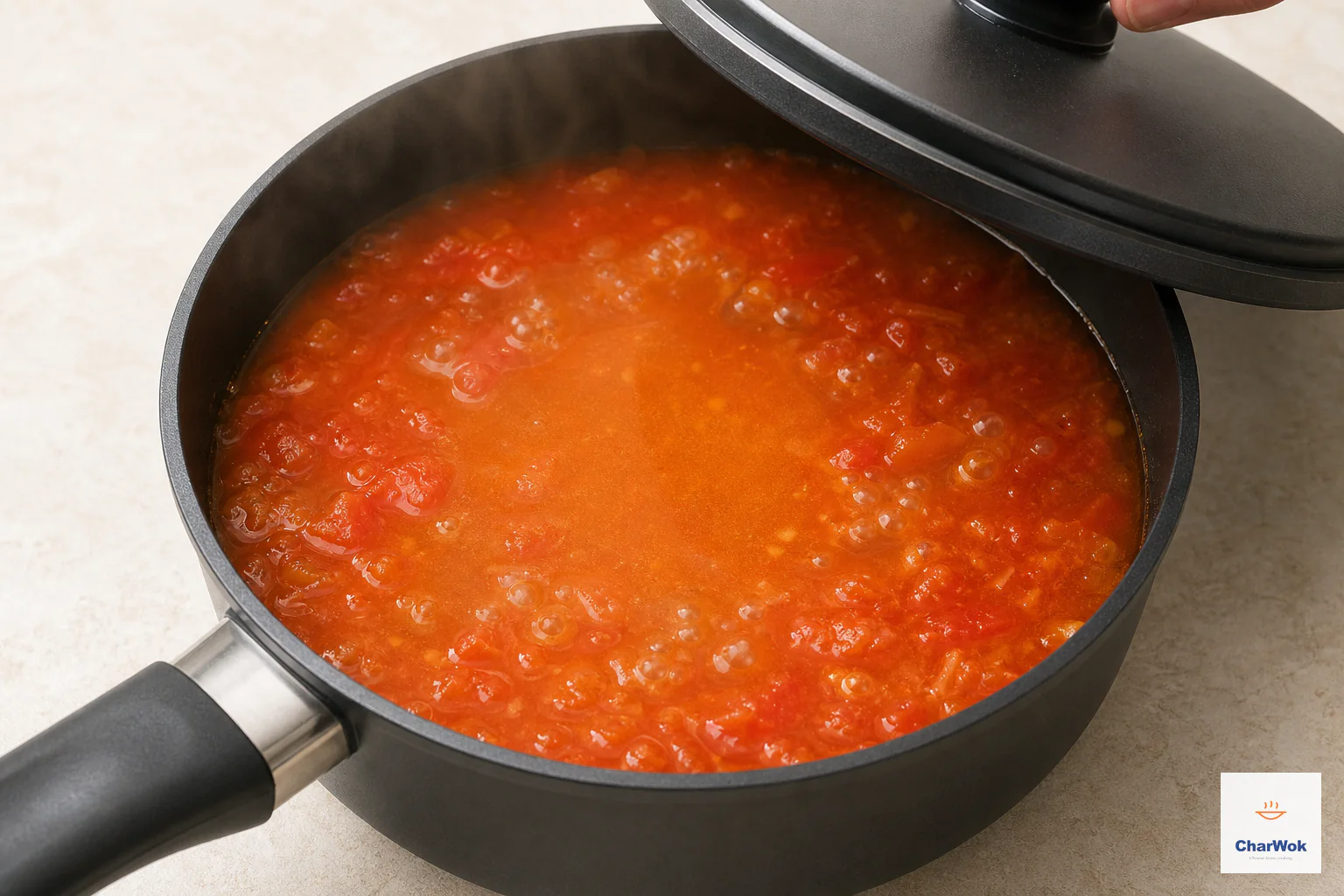
Add four cups water, bring the covered pot to a full boil, then immediately reduce it to a gentle simmer.
- Drop the egg at a simmer, not a boil. Here is the make-or-break moment. Turn the heat down so the surface is trembling with small bubbles, not rolling. Hold the bowl a few inches above the pot and pour the egg in a slow, thin stream while using a spoon to gently swirl the broth in one direction with your other hand. Stop swirling after a few seconds. The egg sets into soft, billowy ribbons in about 20 seconds. If the pot is at a hard boil, the egg clumps into tough shreds; if it is barely warm, it sinks and turns the soup cloudy. A gentle simmer is the sweet spot.
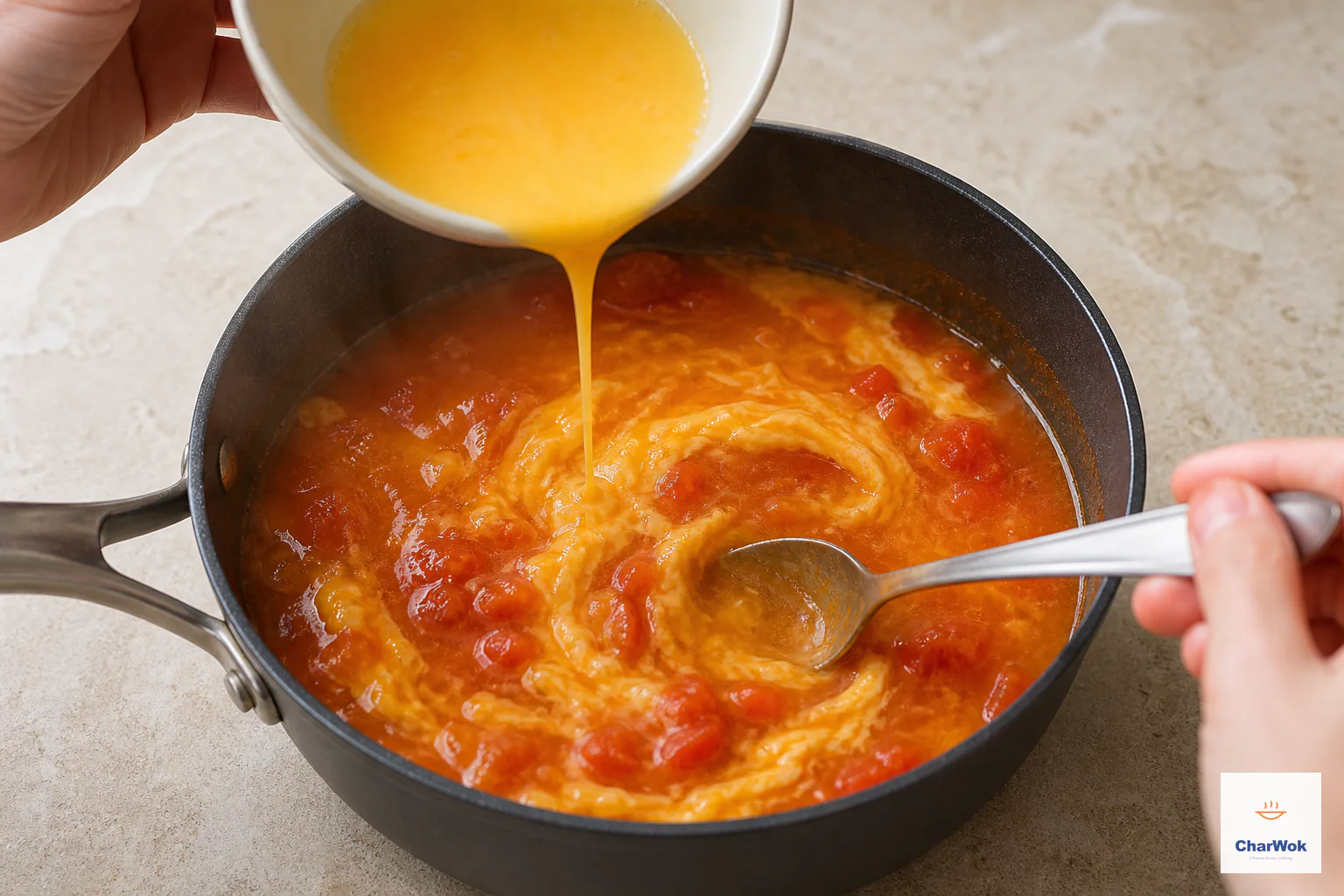
Pour the egg slowly from several inches above the pot while stirring in one direction, then stop and let broad ribbons set.
- Season and finish. Off the heat, stir in the salt, white pepper, and sesame oil. Taste. Tomato acidity varies wildly, so add salt in small pinches until the soup stops tasting flat. Ladle into bowls and top with cilantro or scallion greens.
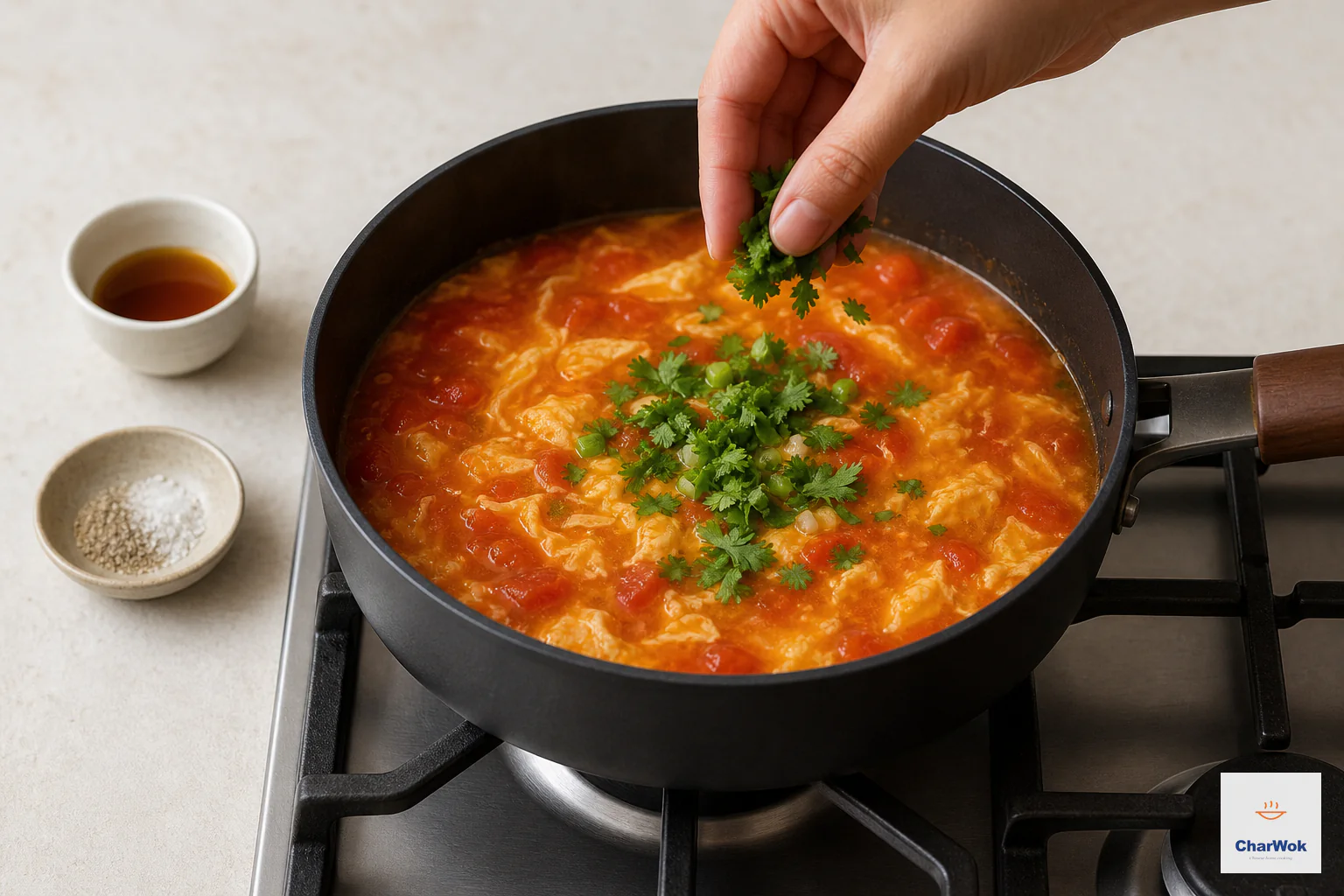
Turn off the heat, season with salt, white pepper and toasted sesame oil, then add cilantro or scallion greens.
Why the egg comes out wrong (and how to fix it)
This is the section I wish someone had handed me the first time. The egg is where this soup lives or dies, and the failures all look the same on the surface.
- Cloudy, gritty soup. You poured the egg while the pot was boiling hard, or you stirred it after it set. Both break the delicate curds into fine debris. Fix: lower the heat to a simmer before pouring, swirl once, then leave it alone.
- One big rubbery raft. You dumped the egg in all at once. Fix: pour in a thin stream from a few inches up, and thin the eggs with water first.
- Egg disappeared into nothing. The broth was not hot enough, so the egg dispersed before it coagulated. Fix: make sure you see active small bubbles across the surface before you pour.
- Big, ragged clumps. You poured slowly but never swirled the broth. Without movement, the egg pools and folds on itself. Fix: start a gentle swirl the instant you begin pouring.
- Soup tastes thin and sour. The tomato did not cook long enough, or the water-to-tomato ratio was too high. Fix: cook the tomato a minute or two longer next time, or use one fewer cup of water. A pinch of sugar also rounds out sharpness without making the soup sweet.
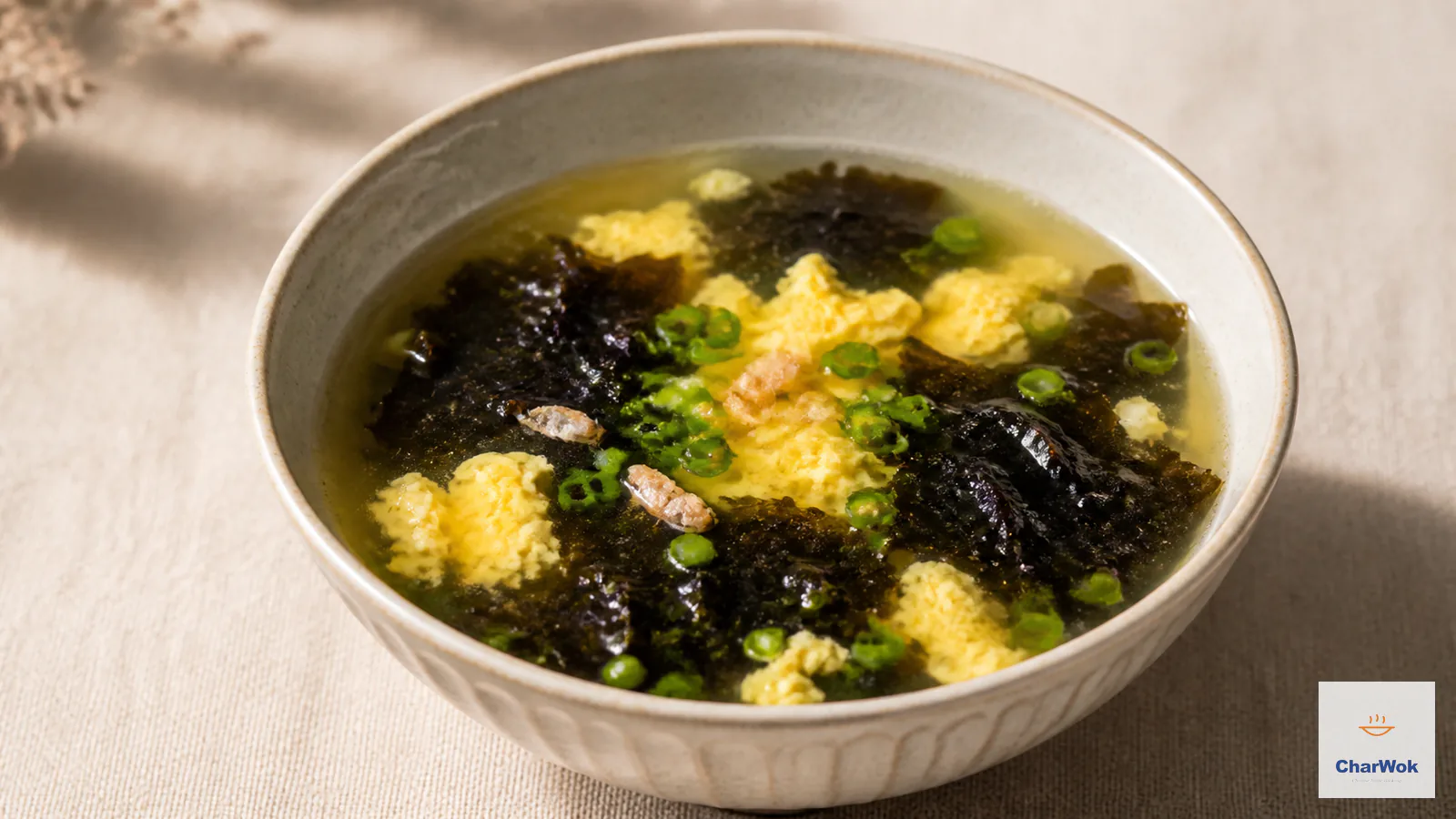
For this tomato version I like medium ribbons, sized to match the tomato chunks. If you want the fine, hair-thin strands you see in restaurant egg drop soup, hold the broth at the lowest possible simmer, pour in a thread-thin stream, and swirl slowly the whole time. That finer style is what I use for the seaweed egg drop soup, where there is no chunky tomato to balance against.
The tomatoes make or break it
I will say it plainly: a watery, out-of-season tomato gives you watery, out-of-season soup. Look for tomatoes that give slightly when you squeeze them and smell like a tomato at the stem end. Romas hold their shape well and cook down cleanly. On the vine types are sweeter. Cherry tomatoes work in a pinch but need a minute longer to break down and release their juice.
Canned whole peeled tomatoes are a legitimate substitute, and in deep winter I reach for them without apology. They are picked at peak ripeness, so the flavor is often better than a fresh supermarket tomato in January. Drain them, chop them, and use them one-for-one. Because canned tomatoes are more acidic, taste the finished soup and add a tiny pinch of sugar if it reads too sharp.
Variations and pairings
This soup is a template. Once you have the egg-drop technique down, the additions are easy.
- Make it a meal. Drop a handful of cooked noodles into the bowl for a quick tomato and egg noodle soup, or serve it alongside steamed jasmine rice and a vegetable stir-fry.
- Add body. For a thicker, restaurant-style broth, whisk 1 tbsp cornstarch into 2 tbsp cold water and stir it in right before the egg. The slight thickening helps the ribbons stay suspended.
- Boost the umami. A few rehydrated dried shrimp, a spoon of fermented black beans, or a splash of light soy sauce deepens the flavor without stock.
- Take it in a different direction. The same egg-drop method anchors the tofu soup with dried shrimp, the classic hot and sour soup, and a restorative bowl of winter melon soup with meatballs. Learning it once pays off across half the Chinese soup repertoire.
- Add a protein. A handful of cooked shrimp, shredded leftover chicken, or a few pork wontons straight from the wonton noodle soup method turn this from a side into a light main.
Storage and reheating
Leftovers keep in the fridge for up to two days, but the egg continues to soak up liquid and the texture softens, so the soup will not look as fresh the next day. Reheat gently on the stove over low heat, just until steaming. Do not let it boil, or the egg turns tough. I do not recommend freezing it; the egg weeps water and goes spongy on thaw. This is a soup to make and eat the same evening.
If you want a soup that reheats and freezes beautifully for the week, a big batch of congee or a clear pork rib soup is the better batch-cook choice.
Frequently asked questions
Can I use canned tomatoes? Yes. Drain and chop a 400 g can of whole peeled tomatoes and use them in place of the three fresh ones. They are more acidic, so taste the finished soup and add a pinch of sugar if it reads too sharp.
Do I have to peel the tomatoes? No. Peeling gives a smoother texture, but unpeeled is fine if you are short on time. The flavor is identical.
How do I thicken the soup? Whisk 1 tbsp cornstarch into 2 tbsp cold water and stir it into the simmering broth just before you add the egg. Skip the starch if you like a clean, brothy bowl.
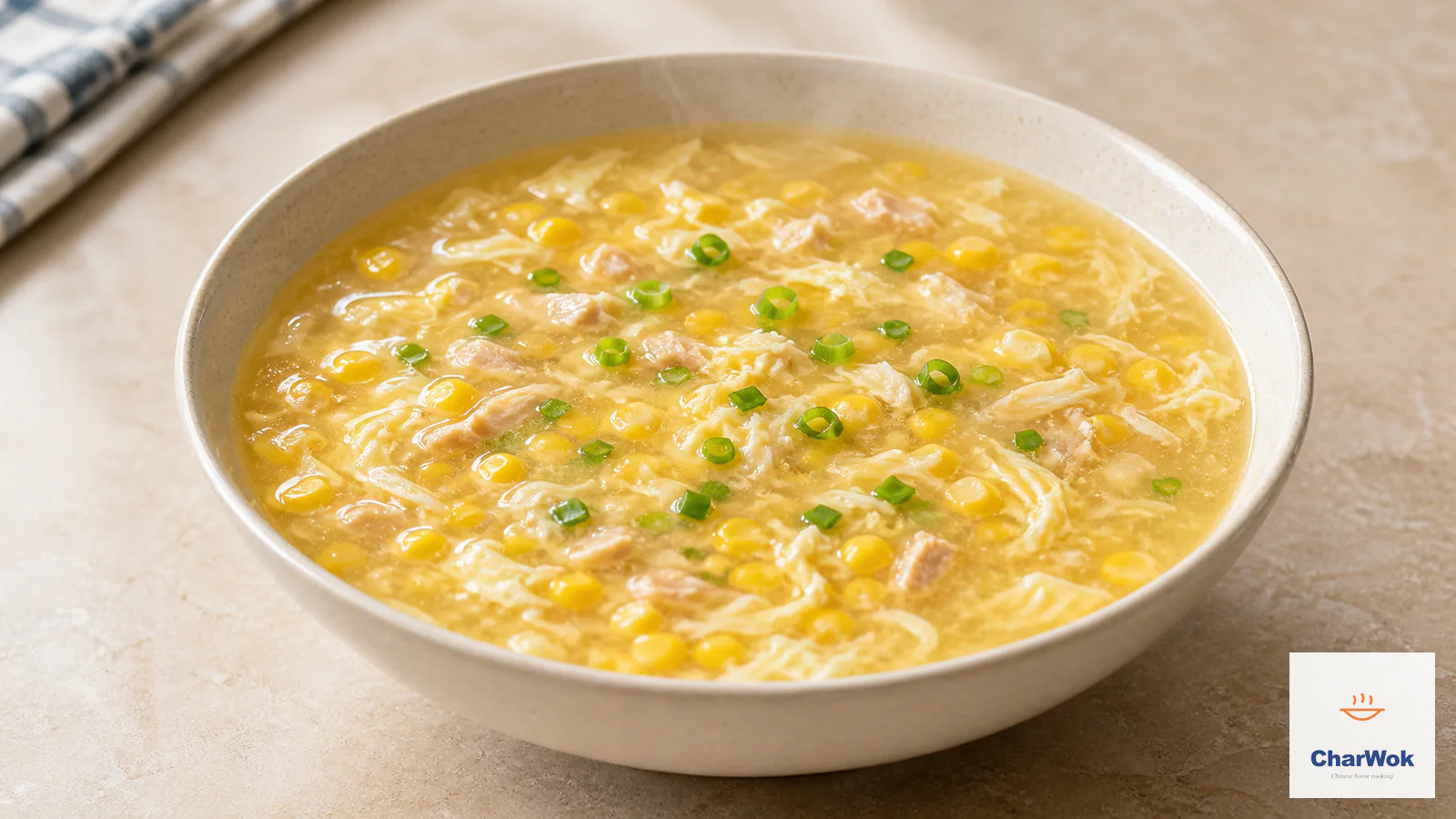
Can I make it ahead? You can prep the tomatoes and beat the eggs hours in advance, but cook the soup right before serving. The egg ribbons are best the moment they are made; the chicken corn soup reheats better if you need a make-ahead option.
What if I do not have dried shrimp? Leave them out, or add a splash of light soy sauce or a few slices of fresh ginger to the aromatic stage. The soup is fully vegetarian without them.
At its heart this is a soup about timing rather than ingredients. Cook the tomato until it gives up its juice, drop the egg at a simmer, and season at the end. Get those three things right and you will have a bowl that beats anything from a packet, on the table before the rice finishes steaming.