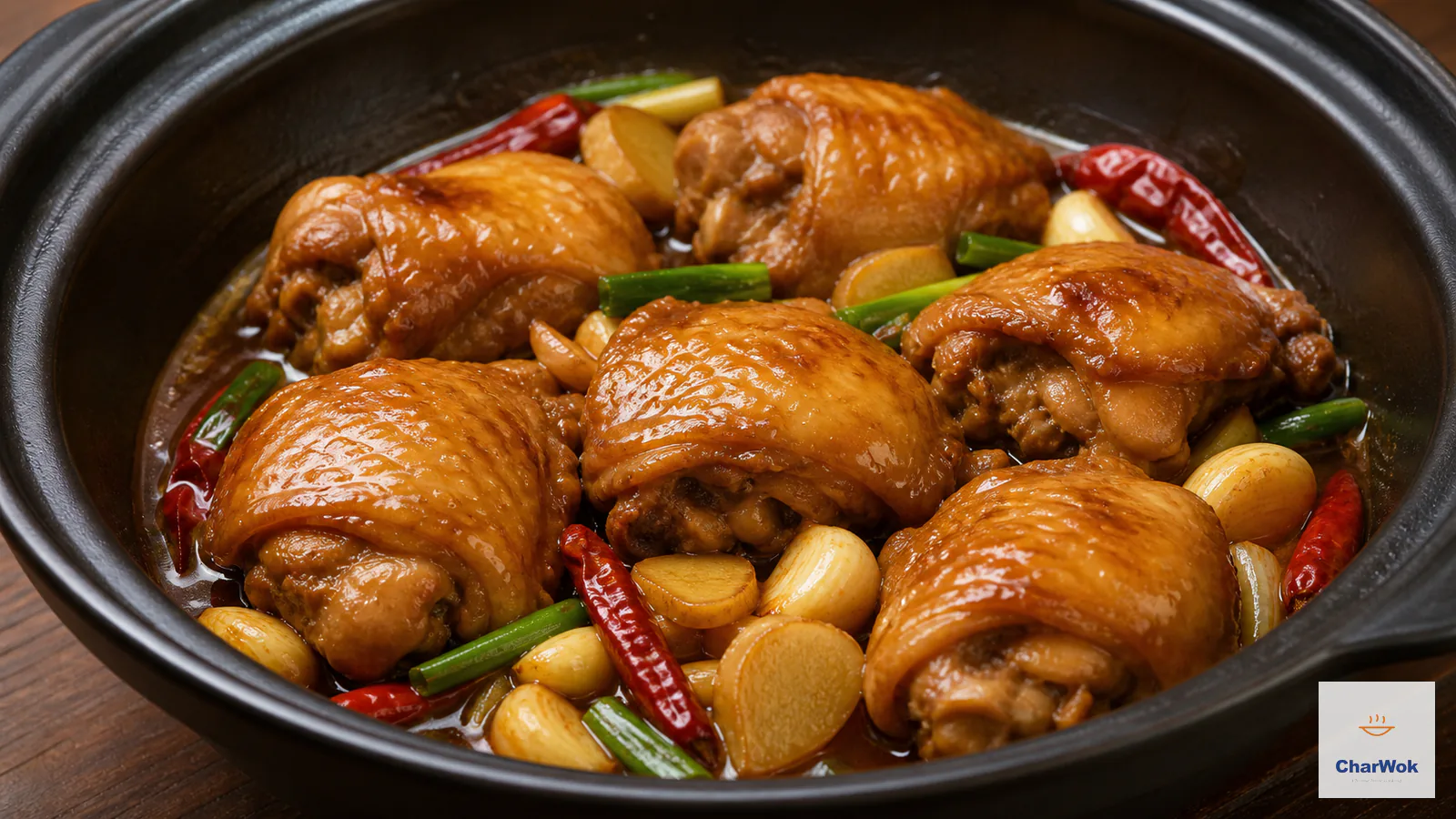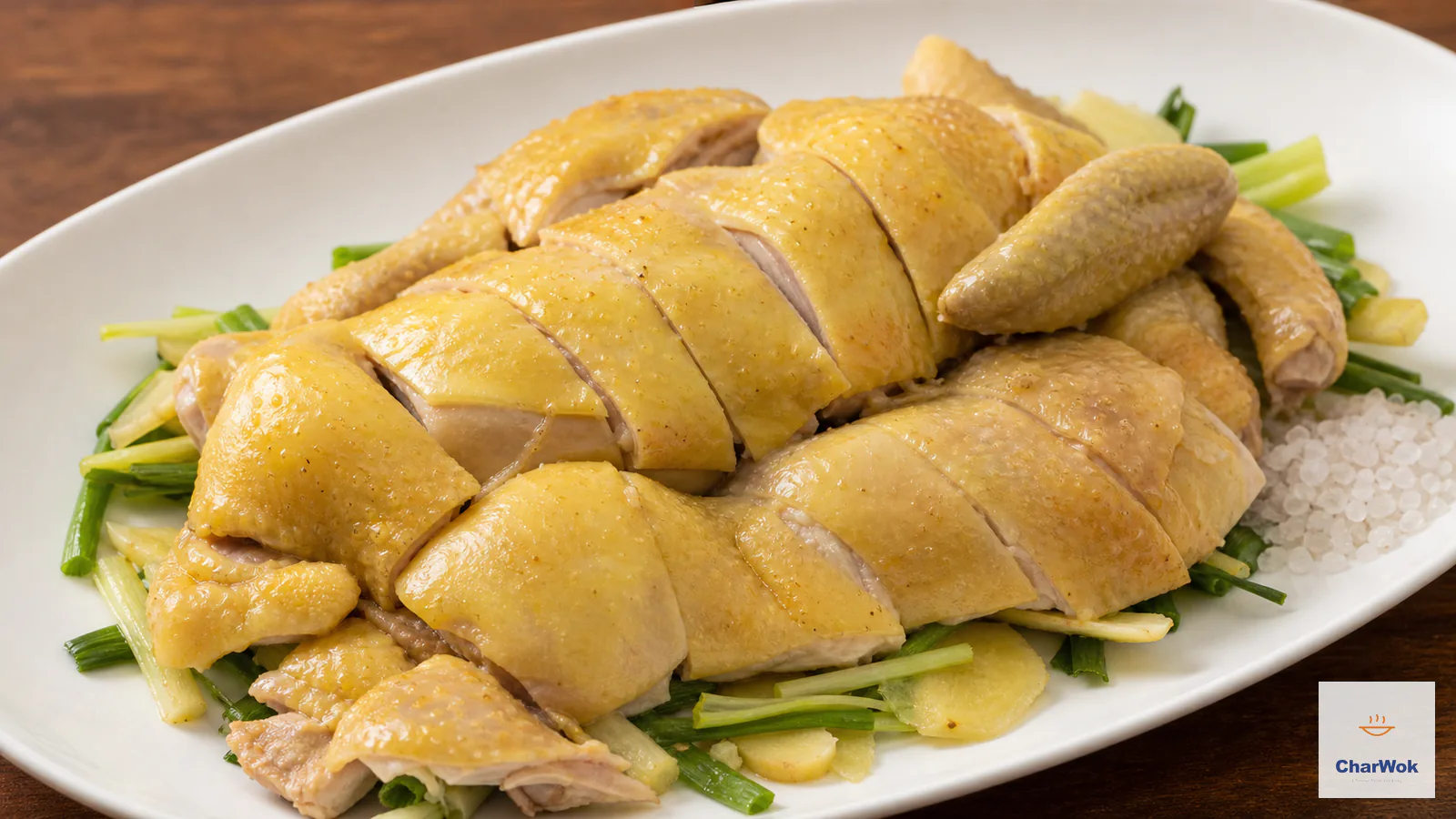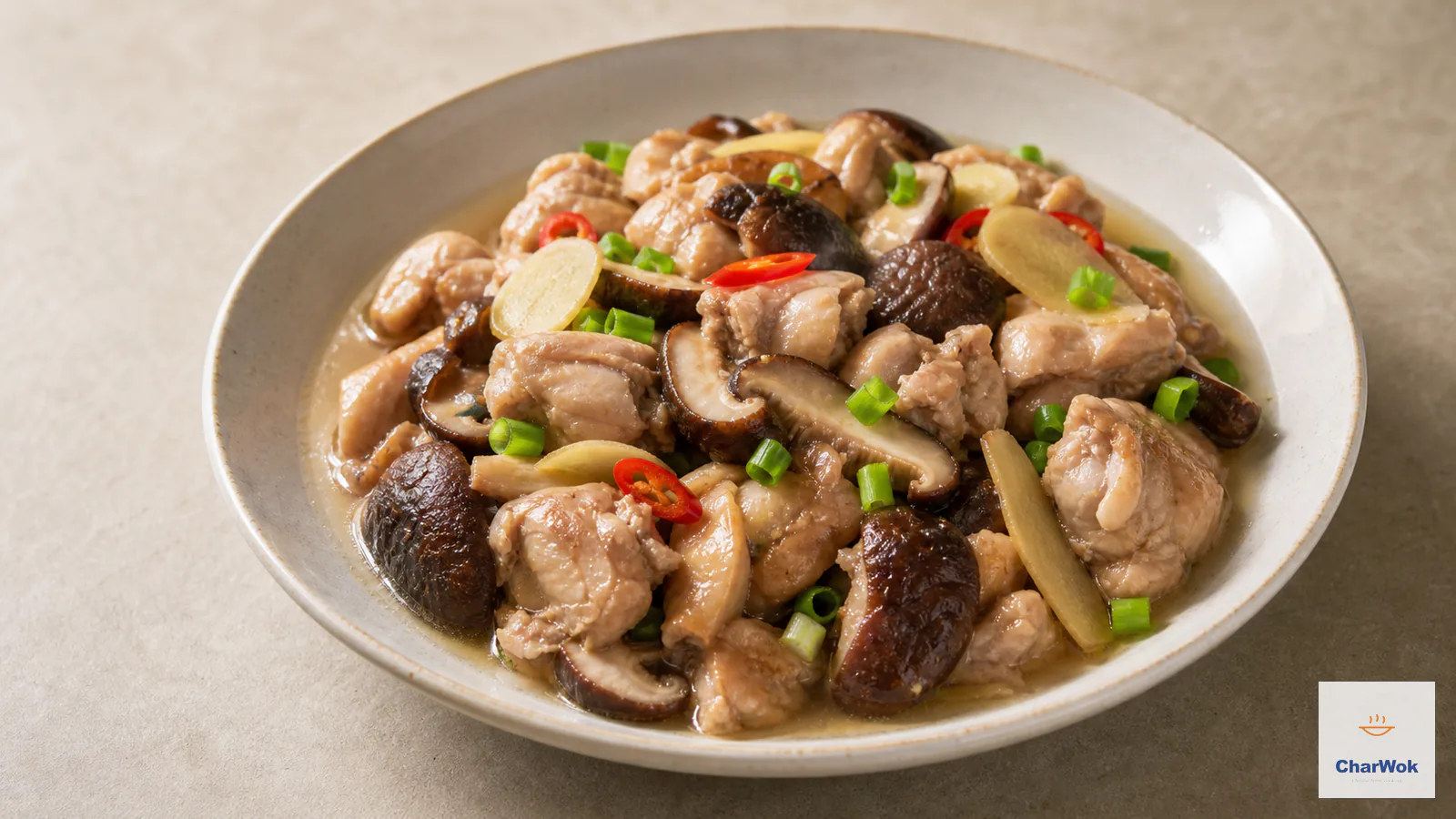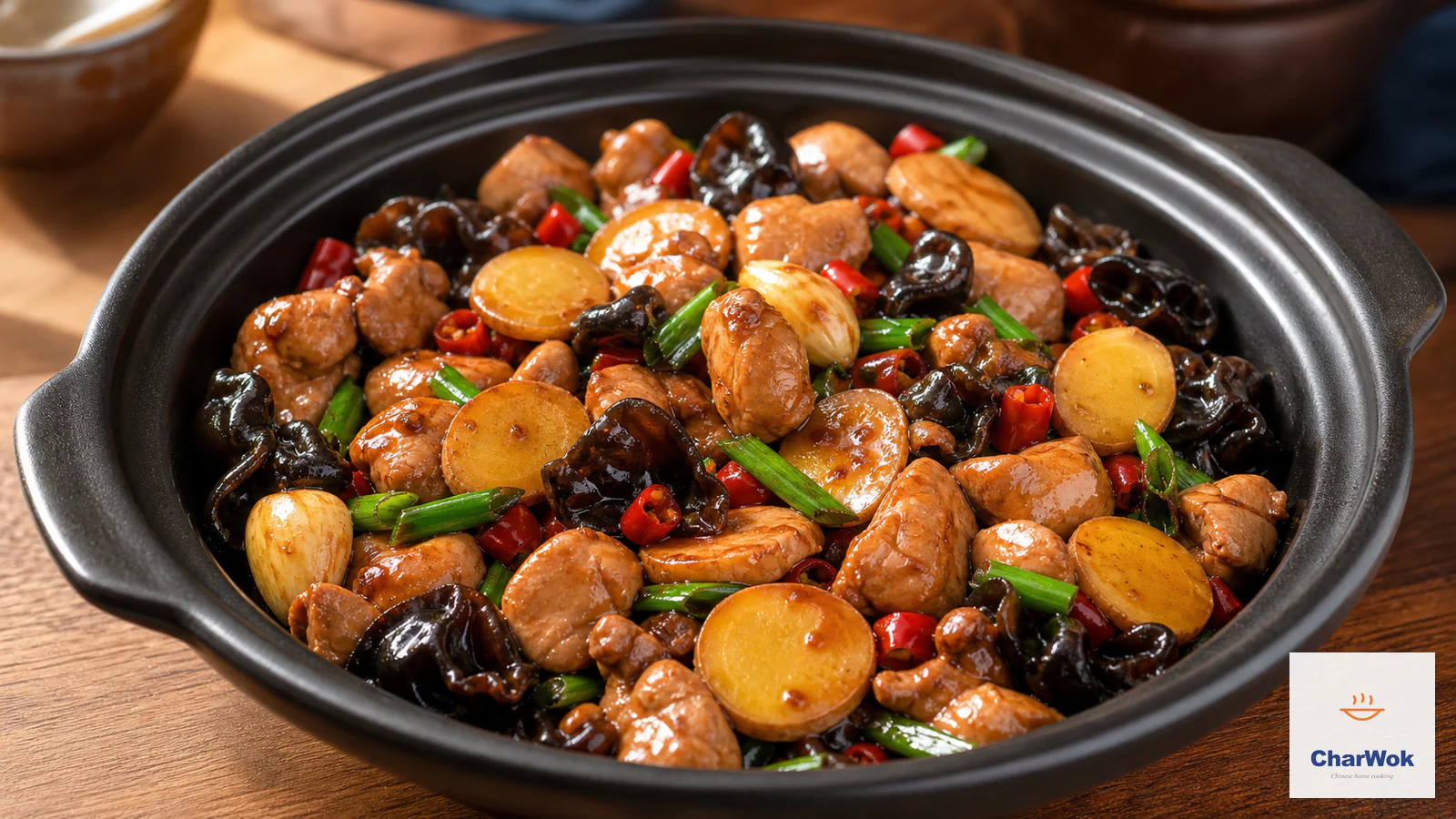
Two ingredients carry this dish: chicken and ginger. Everything else is a supporting cast, and the reason most home versions come out flat is that the ginger is treated as an afterthought rather than the lead. Lao Jiang Ji, literally "old ginger chicken," is a Hunan home classic where the root is sliced thick, fried hot, and allowed to sweat its essential oils into a glossy soy braise. Done right, the chicken tastes like it was cooked in ginger, not next to it.
Thin ginger added with the liquid gives a weaker result because it has little time in the oil. Coin-thick slices stay intact and release their aroma during the brief fry before the braising liquid goes in.
Partially sear the chicken, braise covered for about 5 minutes, then reduce uncovered. Before serving, check several of the largest pieces and continue cooking until each reaches 165°F (74°C). Roughly 600 g boneless thigh to 12 thick ginger slices keeps ginger at the front of the dish.
What this dish actually is
Lao Jiang Ji is a Hunan (Xiang) home-style braise, a close cousin to Hunan chicken within the family of soy-braised chicken plates that Xiang Cai relies on. It sits in the same weeknight orbit as sha cha chicken or steamed chicken with mushroom: minimal hands-on time, one pan, bold sauce meant to soak into rice.
What makes it Hunan rather than generic is the insistence on fresh aromatics over dried chili paste. Hunan cooking loves ginger, garlic, and fresh chili as a trio, building heat from the raw ingredients rather than from a fermented paste. The dish is meant to be punchy and warming, not numbing. If you have ever tried the same approach with pork, as in Hunan pork or Hunan beef, you already know the flavor architecture.
Why "old" ginger, and why it matters
Old ginger is simply mature ginger root: the fibrous, tannish-brown knobs sold year-round in every grocery store. Young ginger, harvested earlier in the season, has thin pale skin, pink blushing at the tips, and almost no fibers. It is lovely pickled alongside sushi, but it is the wrong choice here. Mature ginger carries more gingerol and essential oil, which is what gives the dish its aromatic bite.
Thickness of the slice changes everything. Twelve slices, each about the thickness of a coin (2 to 3 mm), is the sweet spot. Thin shavings disintegrate and turn the sauce gritty. Thick chunks stay almost raw in the middle. Coin slices soften during the braise but hold their shape, so a diner bites into a tender, fully cooked sliver of ginger that has mellowed from fierce to fragrant. That textural contrast is half the point of the dish.
The ingredients
Ingredients at a glance
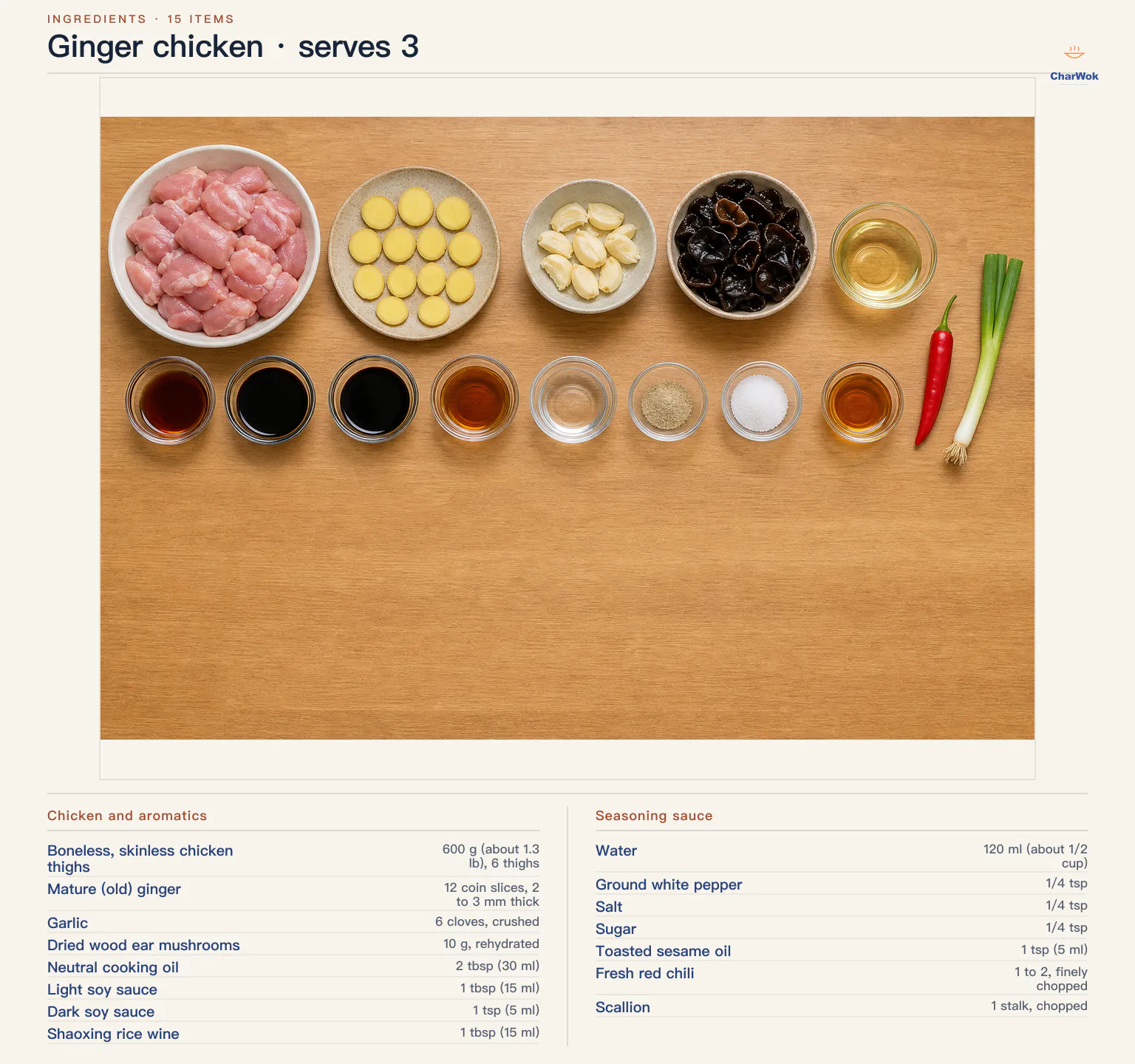
This is a short shopping list. Use it as a chance to buy decent soy sauce and real Shaoxing wine, since there is nowhere for a weak seasoning to hide.
| Ingredient | Amount | Notes / substitute |
|---|---|---|
| Boneless, skinless chicken thighs | 600 g (about 1.3 lb), 6 thighs | Cut into bite-sized chunks. Breast works but goes dry; bone-in, skin-on is the traditional version and needs longer braising. |
| Mature (old) ginger | 12 coin slices, 2 to 3 mm thick | Do not substitute young ginger. Peel only if the skin is tough. |
| Garlic | 6 cloves, crushed | Crushed, not minced, so it flavors the oil without burning. |
| Dried wood ear mushrooms | 10 g, rehydrated | Soak in cold water 2 hours, or hot water 20 minutes. If unavailable, swap shiitake. |
| Neutral cooking oil | 2 tbsp (30 ml) | Peanut, canola, or grapeseed. Anything with a strong flavor fights the ginger. |
| Light soy sauce | 1 tbsp (15 ml) | Provides salt and umami. |
| Dark soy sauce | 1 tsp (5 ml) | For mahogany color; lower in salt than it looks. |
| Shaoxing rice wine | 1 tbsp (15 ml) | Real Shaoxing wine, not "cooking wine." |
| Water | 120 ml (about 1/2 cup) | Stock is fine but unnecessary; the aromatics carry it. |
| Ground white pepper | 1/4 tsp | Milder and less resinous than black; black pepper works in a pinch. |
| Salt | 1/4 tsp | Adjust after tasting; soy sauce is already salty. |
| Sugar | 1/4 tsp | Rounds the edge off the soy. Optional but recommended. |
| Toasted sesame oil | 1 tsp (5 ml) | Added at the end, never for frying. |
| Fresh red chili | 1 to 2, finely chopped | To taste. Thai bird or red jalapeno. Seed them for less heat. |
| Scallion | 1 stalk, chopped | For garnish. Add off the heat. |
The method, step by step
A wok is ideal but a deep skillet works. If you are new to wok cooking, the wok basics guide walks through heat control and seasoning. During the covered braise, adjust the burner to maintain a steady boil without violent spitting or letting the liquid fall still.
- Prep everything before the stove goes on. Cut the chicken into uniform chunks so they finish cooking at the same time. Drain the rehydrated wood ear and tear large pieces in half. Measure the sauces into one small bowl. Stir-fries reward a fully loaded mise en place and punish improvisation.
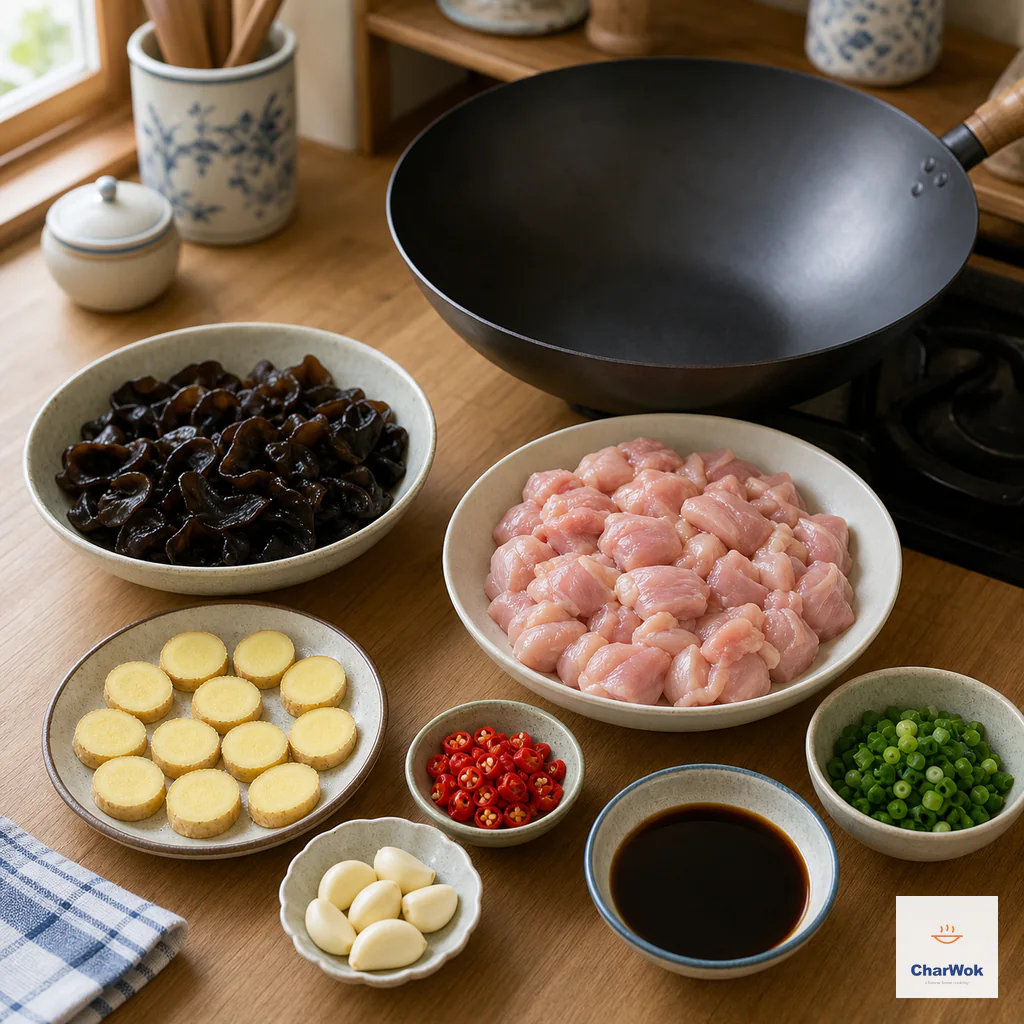
Cut, drain and measure everything before the wok heats because every cooking stage moves quickly.
- Partially sear the chicken. Preheat a seasoned wok or stainless skillet over medium-high until a water drop skitters and evaporates, then wipe it dry. Add the 2 tbsp oil and start cooking while it shimmers but does not smoke. Lay the chicken in one uncrowded layer and leave it until the contact sides release with pale-gold spots, then toss briefly. The centers are still undercooked and must finish in the braise. For non-stick cookware, add the oil before heating and follow the maker's heat limit.
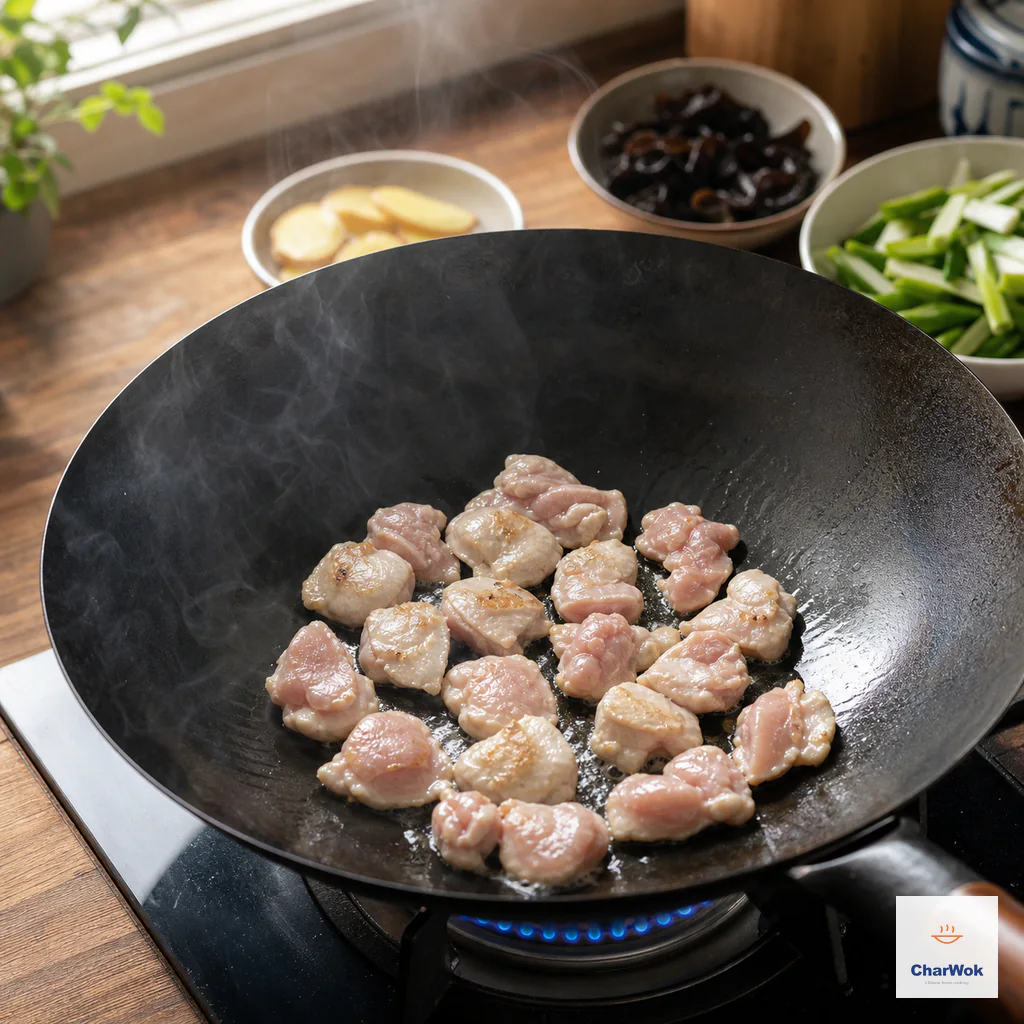
Briefly sear only until the contact sides release with pale-gold spots; the centers remain undercooked and must finish in the braise.
- Add ginger, garlic, and wood ear; fry briefly. Toss in the ginger slices, crushed garlic, and wood ear. Stir for about 30 seconds. This head start releases the ginger's aroma into the oil. If the garlic starts browning, lower the heat before adding the liquid.
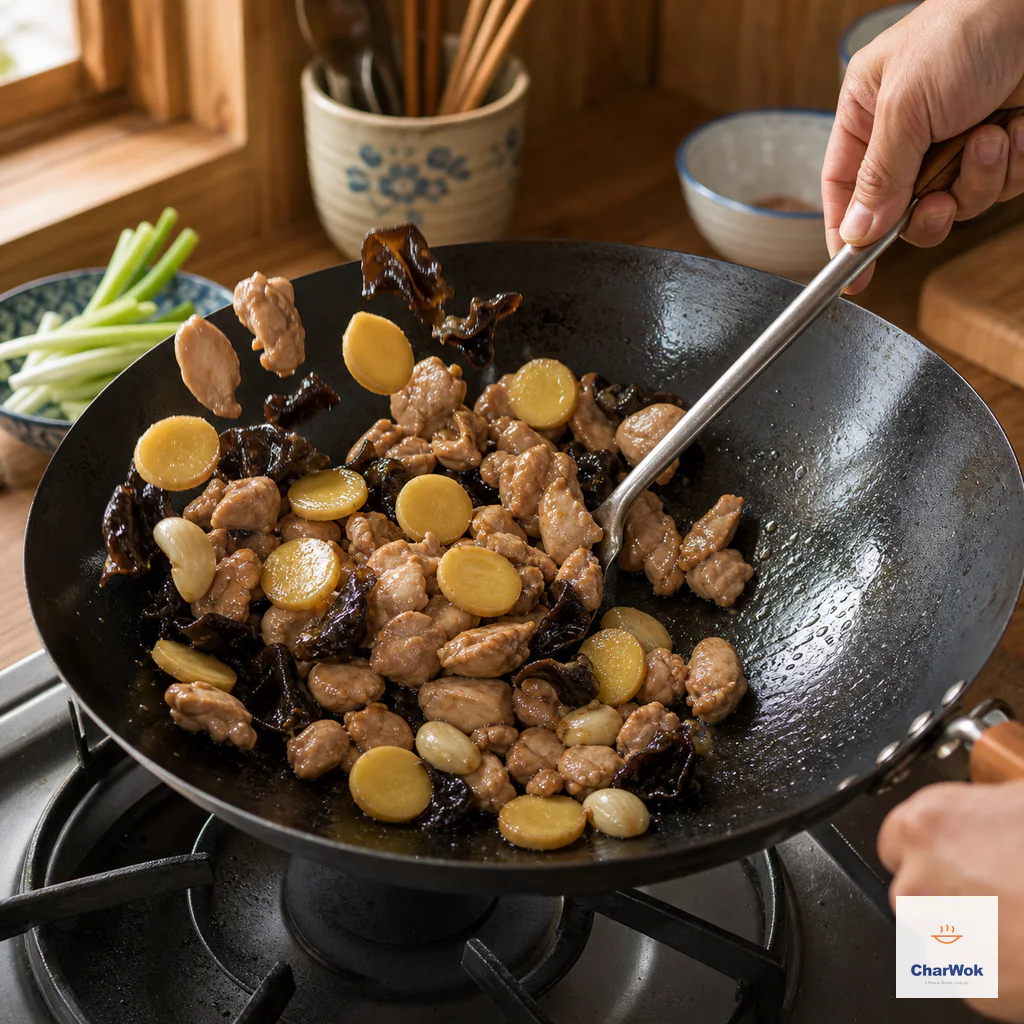
Toss the aromatics briefly so the ginger perfumes the oil while the garlic remains pale.
- Pour in the sauces, wine, and water; cover. Add light and dark soy sauce, Shaoxing wine, white pepper, salt, and sugar, then the 120 ml water. Stir, cover, and keep a steady boil for about 5 minutes. Time is only a guide because piece size, pan width, and burner output vary.
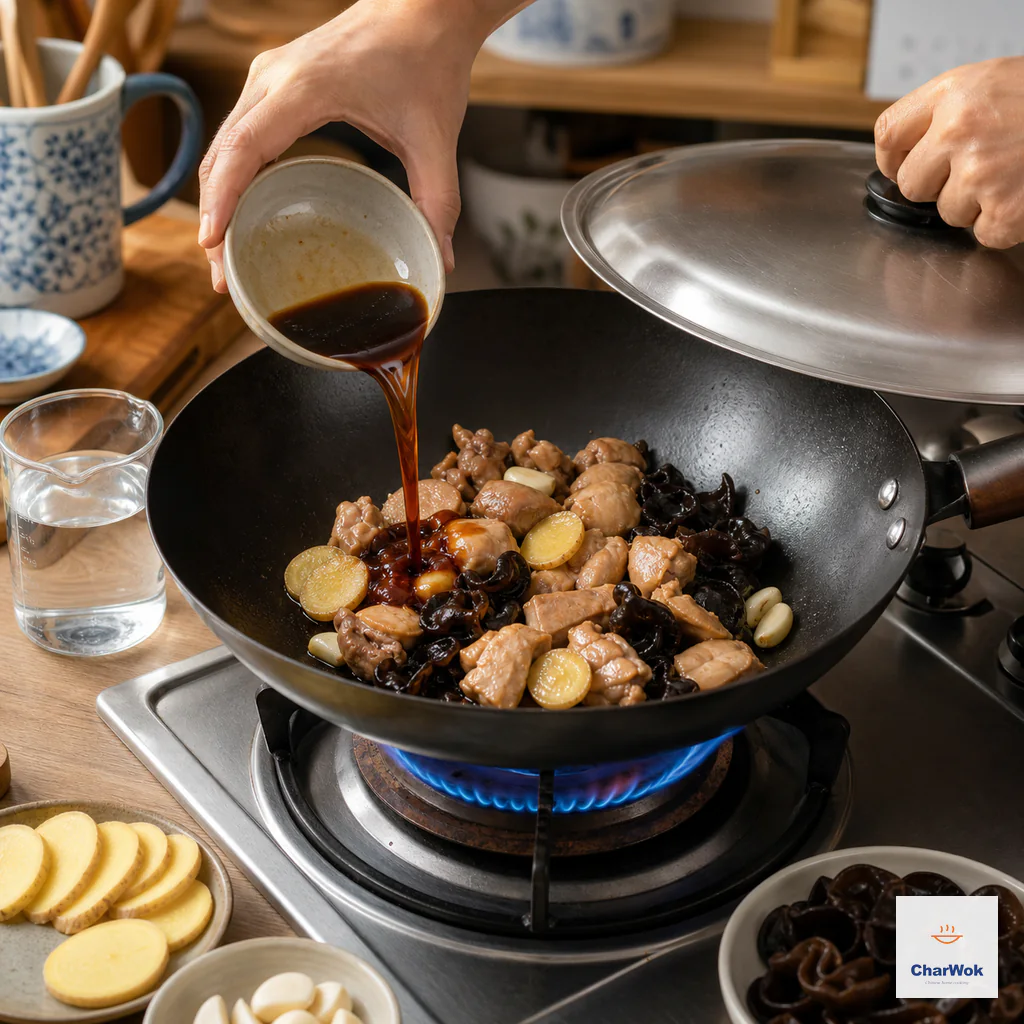
Add the measured sauce and water, stir once, then cover at a steady boil for about five minutes as a starting estimate.
- Uncover, reduce, and check the chicken. Add the sesame oil and chopped chili, then boil uncovered until the sauce begins to cling. Insert a thin-tip food thermometer into several of the largest chicken pieces and continue cooking until each reaches 165°F (74°C). If the sauce tightens before the chicken reaches temperature, add a spoonful of water. Sauce gloss and elapsed time do not replace the temperature check.
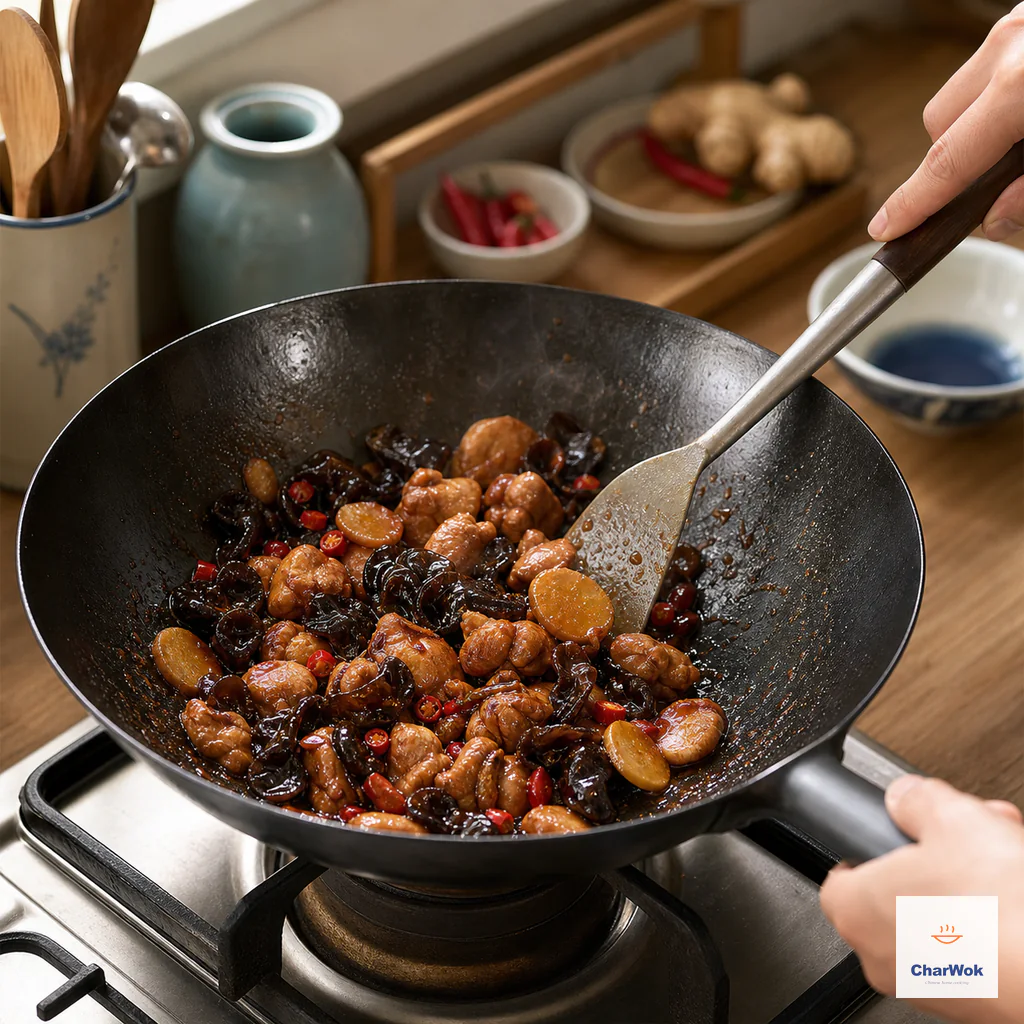
Reduce only until the sauce begins to cling, then check several large pieces and continue until each reaches 165°F (74°C), adding water if needed.
- Finish and serve. Off the heat, stir in the scallion. Serve immediately over steamed jasmine rice, or ladle it over noodles — the reduced sauce clings to a fresh wheat strand the way a good meat sauce should.
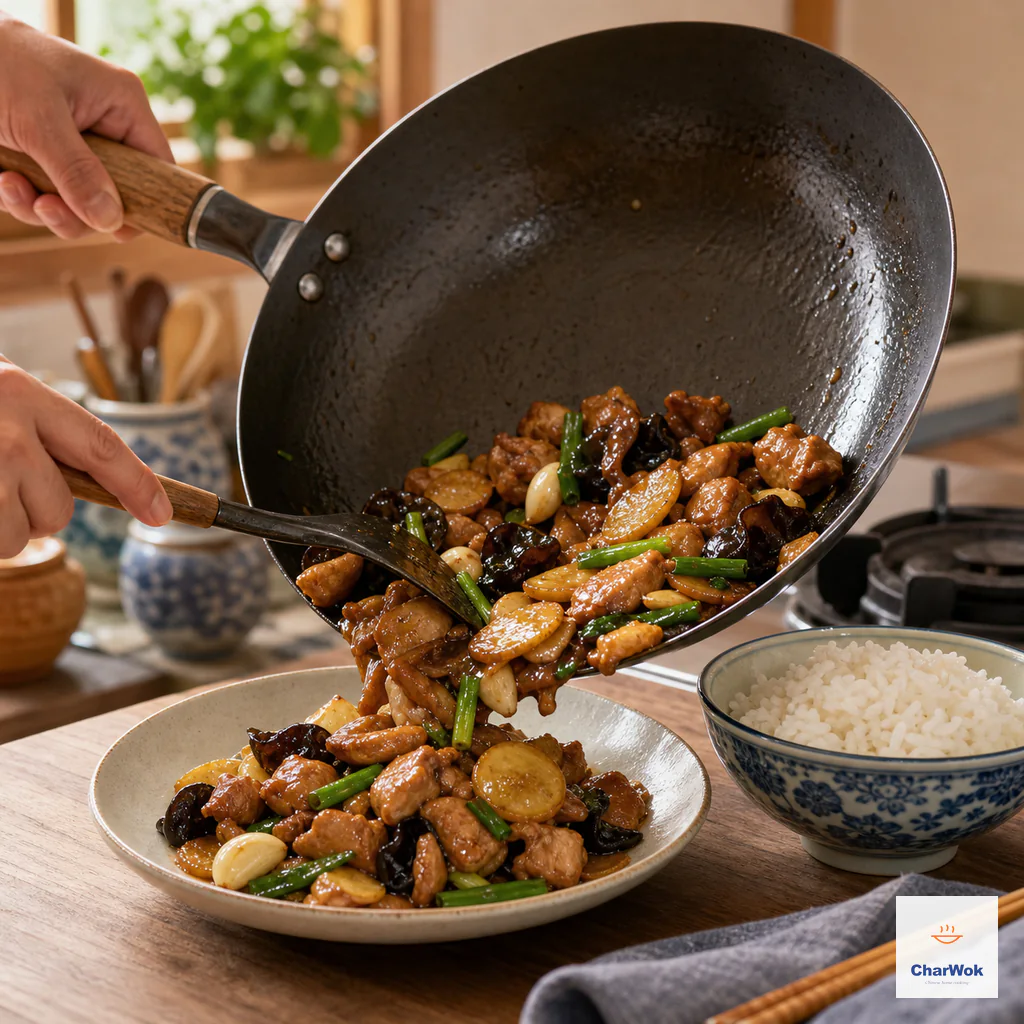
Turn off the burner, fold in scallion and serve immediately while the sauce still clings.
When things go wrong
This dish has a short method, so the same problems recur. Check the heat, chicken size, and sauce level in that order.
The sauce is thin and pools on the plate. It may need more uncovered reduction. Keep the lid off so steam can escape, stir often, and stop when the sauce lightly coats the back of a spoon.
The chicken is dry and stringy. Breast dries faster than thigh, and uneven pieces finish at different times. Cut the meat evenly, keep the first sear brief, and begin checking the largest pieces early during the uncovered stage. Whether using breast or thigh, every checked piece still needs to reach 165°F (74°C).
The chicken sticks and shreds when you stir. Two causes: the metal was not hot enough when the meat landed, or it was prodded before it was ready to lift. The cure is patience, not more oil. Let the chicken sit on the hot metal until a thin crust forms and the pieces detach with a gentle nudge of the spatula; if you have to scrape, they need another ten seconds. Seasoned carbon steel and clad stainless behave this way, while non-stick masks the problem entirely.
The ginger is still fibrous and aggressive. The slices were too thick, or they never got the head start in hot oil. Aim for coin thickness, and make sure they fry in the oil for those 30 seconds before liquid goes in. Thinly sliced or pre-fried ginger would also work, but then you lose the texture that defines the dish.
It tastes salty on its own but right over rice. That is by design. This is a saucy braise meant to season plain rice or noodles, not a stand-alone plate. If you are serving it with already-seasoned sides, cut the soy by a teaspoon.
Variations and what to serve alongside
The bones of this recipe bend in several directions. For a richer, almost sticky version, swap half the water for an equal measure of oyster-sauce-style braising liquid and finish with a pinch of rock sugar. For something leaning further into Hunan, push the fresh chili and add a teaspoon of chopped fermented black beans in the last minute. You can take the same scaffold in a Taiwanese direction by finishing with basil and a slug of sesame oil and rice wine, closer to Three Cup Chicken.
For a bone-in, skin-on version, allow more braising time, then check the thickest meat without touching bone and continue until it reaches 165°F (74°C). A clock alone cannot account for different piece sizes.
A crisp, lightly sour side balances the glossy sauce. A smashed cucumber salad dressed with black vinegar works well; for something warm, add stir-fried mung bean sprouts. Serve chili oil separately so each diner can adjust the heat.
Over noodles instead of rice, it shines. A bowl of fresh stir-fried noodles under the braise turns the sauce into a quick meal in one plate, and leftover meat tucks neatly into dan dan noodles the next day. The reduced braising liquid has just the right body to coat a wheat strand without pooling.
Storage and reheating
Divide leftovers into small, shallow containers and refrigerate within two hours of cooking, or within one hour when the surrounding temperature is above 90°F (32°C). Use or freeze within three to four days. Reheat only the portion needed with a spoonful of water, stirring until several places reach 165°F (74°C). Frozen wood ear remains safe but loses some snap after thawing. For a holiday meal, the dish can be cooked a day ahead, refrigerated promptly in its sauce, and reheated to 165°F (74°C) before serving.
Safety sources: See FoodSafety.gov for safe minimum internal temperatures and leftover cooling, storage, and reheating guidance. The U.S. Fire Administration advises turning off the burner if cooking oil starts smoking; see its cooking fire-safety guidance.
Frequently asked questions
Can I use chicken breast instead of thighs? Yes. Cut it into even pieces, keep the first sear brief, and begin checking early during the uncovered stage. Every checked piece must still reach 165°F (74°C).
What can I substitute for Shaoxing rice wine? Dry sherry is the closest Western stand-in. For alcohol-free cooking, replace it with the same volume of water plus a small splash of rice vinegar, accepting that you give up some depth.
Do I really need 12 slices of ginger? The exact number is less important than the technique: coin-thick slices, fried in hot oil for half a minute before any liquid goes in. That is what releases the aroma. Skimp on either and the dish reads as ordinary soy-braised chicken.
How do I get a thicker sauce? Reduce uncovered over high heat after the braise, stirring every 20 seconds, until the liquid coats a spoon. Keep the lid off during this stage; covering holds the steam in and the level never drops.
How should I store and reheat leftover ginger chicken? Refrigerate it in shallow containers within two hours, or within one hour above 90°F (32°C). Use or freeze within three to four days and reheat the portion needed to 165°F (74°C).
If you want a faster weeknight option from the same pantry, this collection of quick Chinese dinners has more ideas in the same spirit.