The hardest part of a Chinese New Year dinner is not one difficult dish; it is coordinating many dishes in one kitchen while keeping hot food hot, cold food cold, and last-minute dishes from competing for the same burner. A menu organized around what can be safely made ahead turns that pressure into a workable sequence.
What follows isn't a single recipe. It's a way of thinking about the reunion feast, organized by when each dish is cooked, not by what's lucky about it. The lucky stuff matters (whole fish for surplus, long noodles for longevity, dumplings shaped like old gold ingots), but luck doesn't rescue a sauce that broke because you were plating three things at once. Every dish below links to its full recipe; this guide tells you where it slots in the day and why.
At a glance: A manageable CNY feast is two make-ahead centerpieces, one last-minute showpiece (fish or a quick stir-fry), two cold openers, one soup, one vegetable, and a sweet. Cook three days out, one day out, and on the day. The single decision that saves the most stress: never plan more than two dishes that need the wok in the final twenty minutes.
The shape of a reunion dinner
Build the reunion feast around four cooking windows
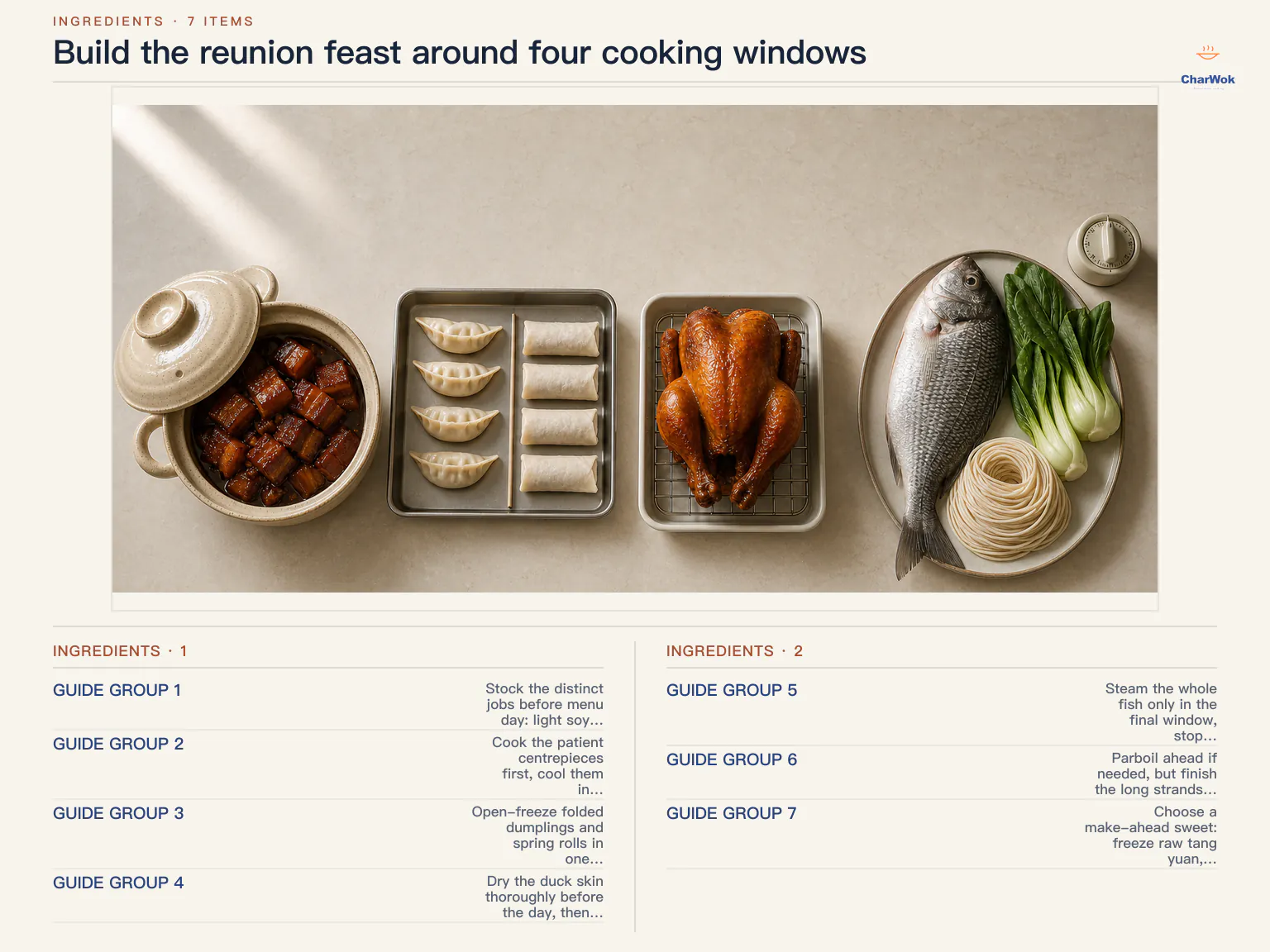
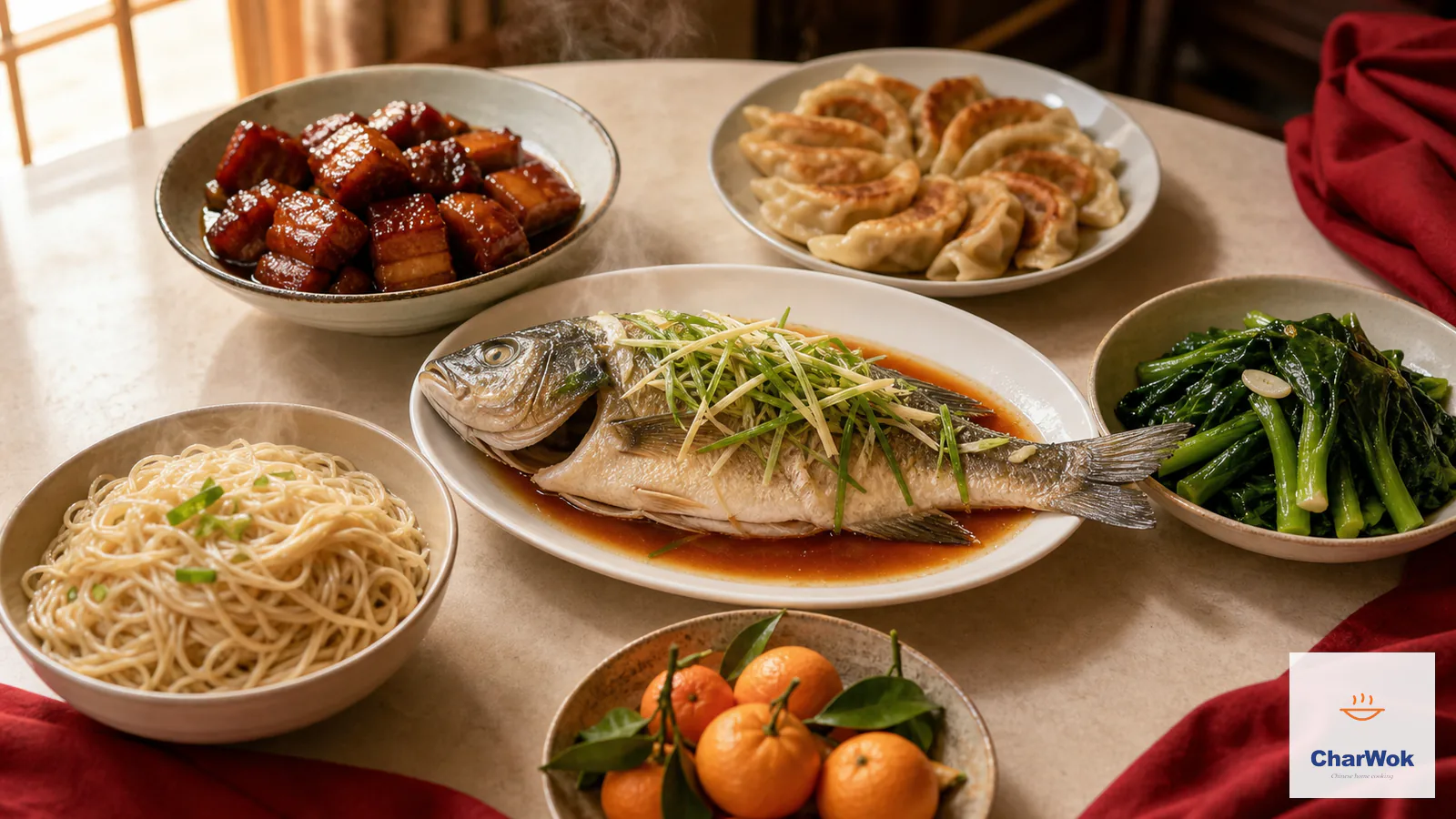
A Chinese New Year table runs on abundance, which is a polite word for "too much food on purpose." Eight to twelve dishes for a typical family is normal, and the count itself is part of the wish: even numbers stand for paired good fortune. But abundance and effort are not the same thing. The smartest menus are heavy on dishes that improve with a rest and light on dishes that demand you at the stove the moment the doorbell rings.
Think of the table in four jobs. Centerpieces carry the symbolism and the drama: a whole fish, a lacquered bird, a slab of red-braised pork. Cold openers sit on the table before anyone sits down, buying you time. Filler and comfort (rice, noodles, dumplings) make the meal feel like a meal and soak up sauce. Sweets close it. If every job has a dish, and only one of them is truly last-minute, the night runs itself.
The pantry that lets you actually cook ahead
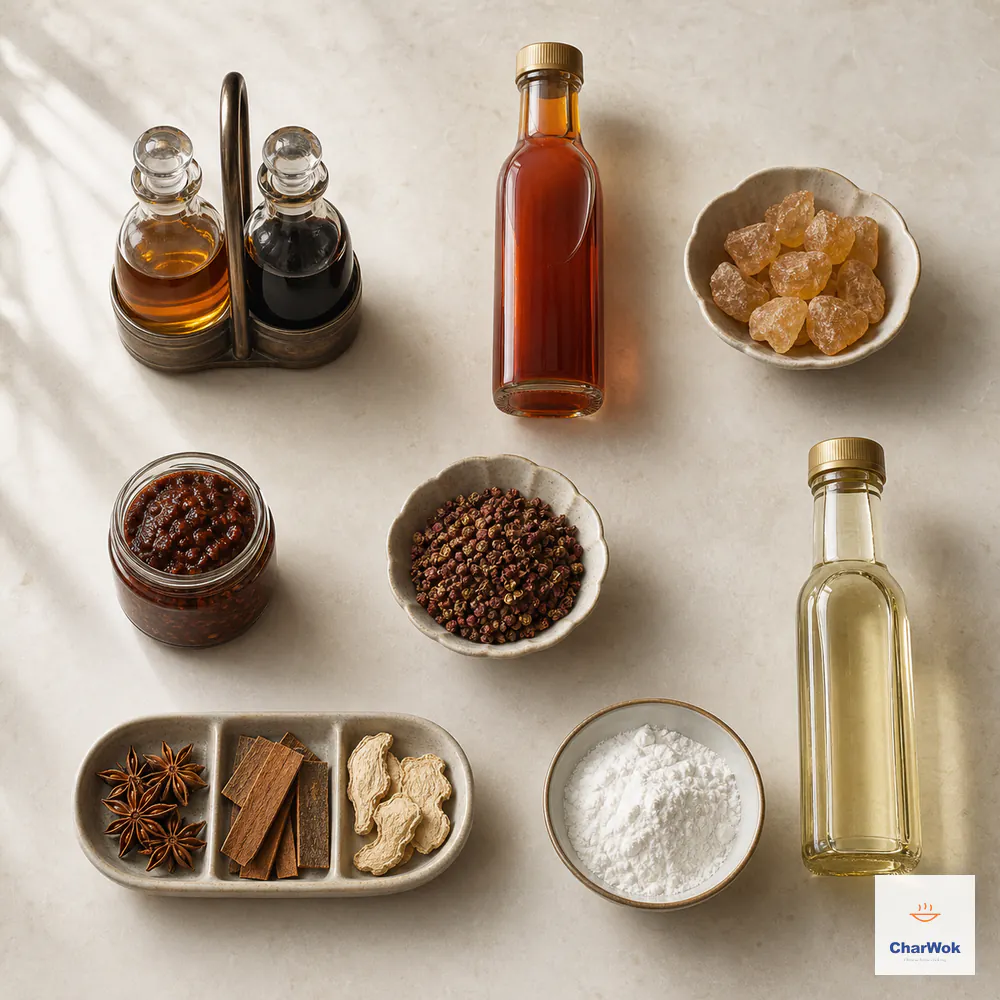
Stock the distinct jobs before menu day: light soy seasons, dark soy builds colour, wine and rock sugar round braises, doubanjiang and fresh-ground peppercorn build Sichuan flavour, and starch handles velveting and thickening.
| Ingredient | Amount (pantry baseline) | Notes / substitute |
|---|---|---|
| Light + dark soy sauce | 1 bottle each | Not interchangeable; light is salt, dark is color and body. |
| Shaoxing rice wine | 1 bottle | Dry sherry is the closest Western substitute; skip the salted "cooking wine." |
| Rock sugar | 200 g | White sugar works but gives a thinner, sharper sweetness in braises. |
| Doubanjiang (chili bean paste) | 1 jar | The base of Sichuan dishes; Pixian is the benchmark. |
| Sichuan peppercorn | 50 g, whole | Grind fresh; pre-ground loses its numbing buzz in weeks. |
| Star anise, cassia or cinnamon, dried ginger | Small bag each | The braise trio. Add a strip of dried tangerine peel if you have it. |
| Neutral oil (peanut or canola) | 1 L | For deep-frying and the wok. Toasted sesame oil is a finishing oil only. |
| Cornstarch or potato starch | 200 g | For velveting, thickening, and the crispy skirt on potstickers. |
Three days out: the slow braises and the centerpiece bird
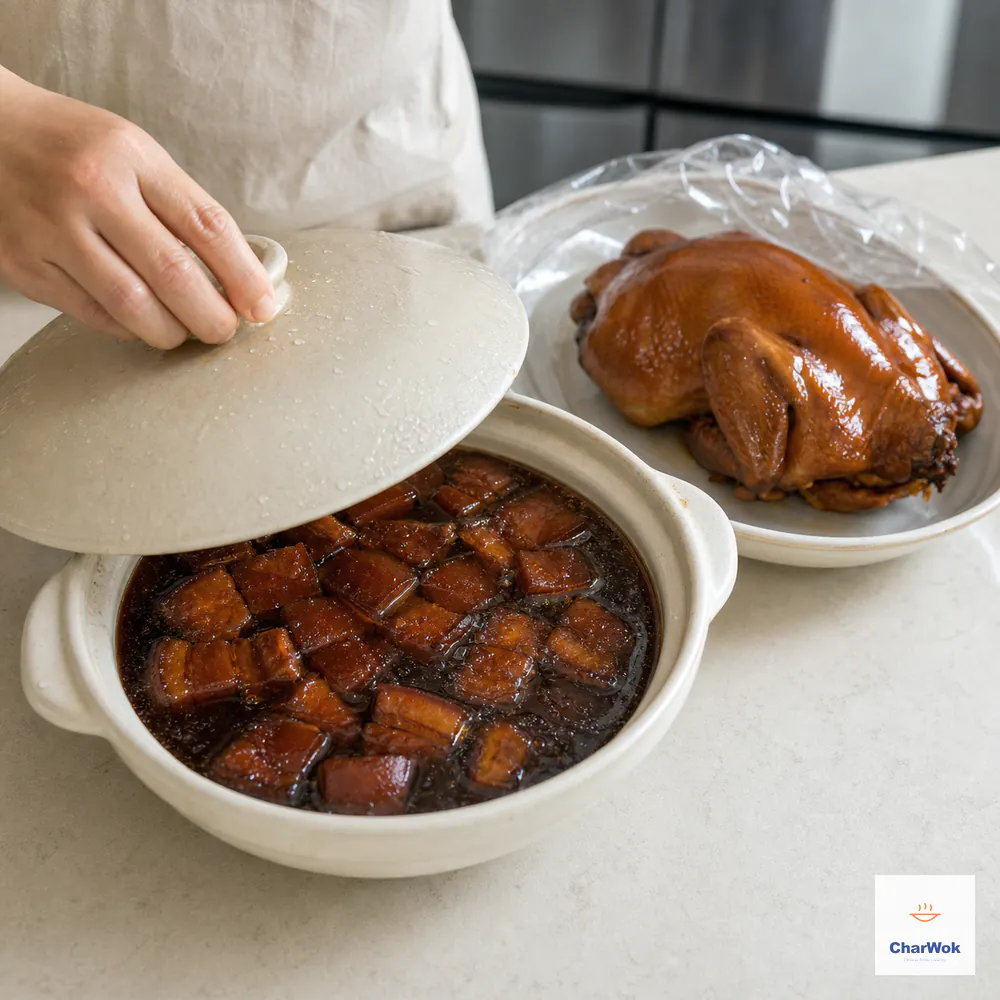
Cook the centrepieces first, verify poultry reaches 74°C / 165°F, then divide food into shallow covered containers and refrigerate within 2 hours instead of waiting for it to cool on the counter.
Long braises are useful make-ahead dishes because their texture survives chilling and reheating. After cooking, divide large batches into shallow covered containers and refrigerate within 2 hours, or within 1 hour when the room is hotter than 32°C / 90°F. Reheat leftovers to 74°C / 165°F before serving.
Red-braised pork belly (hong shao rou) is well suited to this plan. Cubes of skin-on belly simmer with soy, Shaoxing wine, rock sugar, ginger, and star anise until tender. Chilling sets the sauce into a jelly; reheat it gently until the pork and sauce reach 74°C / 165°F throughout. See the full braised pork belly recipe.
The same logic works for steamed pork belly with preserved mustard greens (mei cai kou rou). The belly is boiled, browned, sliced, and steamed over the greens until tender. Make it ahead, refrigerate promptly, then steam it until the center reaches 74°C / 165°F rather than relying on a fixed reheating time.
For poultry, soy sauce chicken (see yao gai) is gently poached for texture, but the stock temperature and elapsed time do not prove doneness. Check the innermost thigh and thickest breast without touching bone; every measured point must reach 74°C / 165°F. For a home kitchen, do not treat the liquid as an indefinitely self-renewing master stock: after contact with raw poultry, finish cooking it fully, strain it, divide it into shallow containers, and refrigerate within the 2-hour limit or freeze it. Serve the chicken hot, or chill it promptly for cold service. Cantonese char siu is best roasted on the day for its glaze.
One or two days out: cold dishes, dumplings, and the dry-run centerpiece
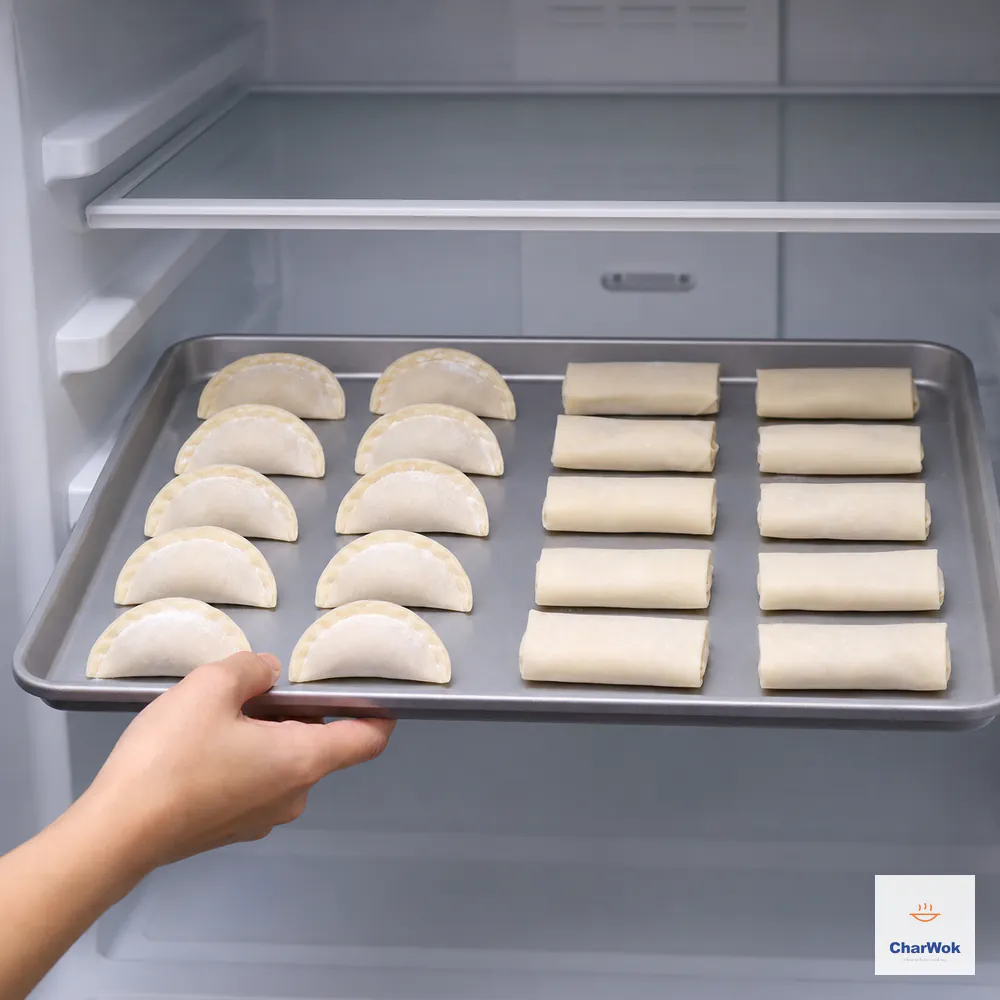
Open-freeze folded dumplings and spring rolls in one uncrowded layer until firm, then bag them; cook straight from frozen so wrappers do not soften, stick, or tear.
Two days out is the sweet spot for cold openers and anything frozen. These are the dishes you want on the table the instant guests walk in, so nobody is hovering behind you asking if they can "taste" the fish.
Sichuan mouth-watering chicken (kou shui ji) is a cold poached chicken in a numbing, tingly chili-oil dressing. Because it's served chilled, you poach and dress it a day ahead and combine at the last minute. The dressing is where the dish lives: chili oil, ground Sichuan peppercorn, soy, black vinegar, sesame, and a little sugar. Don't skimp on the peppercorn; the gentle numbing is what keeps the heat from one-noting.
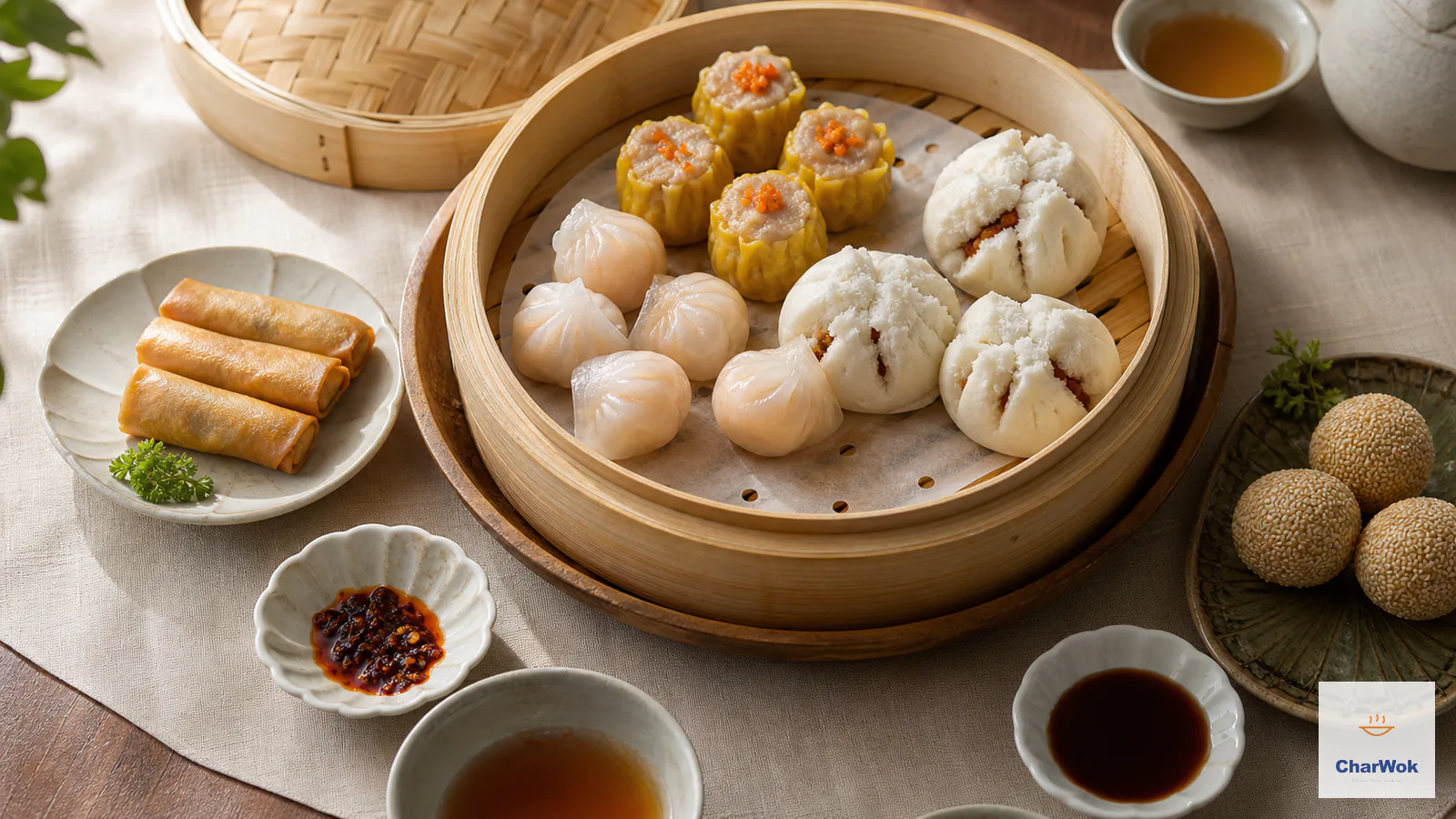
Dumplings (jiaozi) are the most beloved New Year food in northern China, partly because shaping them is a group activity and partly because they look like the old gold ingots (the more you fold, the more wealth). The smart move is to fold them the day before and freeze them on a tray, then cook from frozen without defrosting. The filling and folding are the work; the cooking is minutes. Start with a complete dumpling guide, then dig into making wrappers from scratch and building a filling that stays juicy without soaking the wrapper. If folding stresses you out, pick two shapes and stop there; no one at the table is judging your pleats.
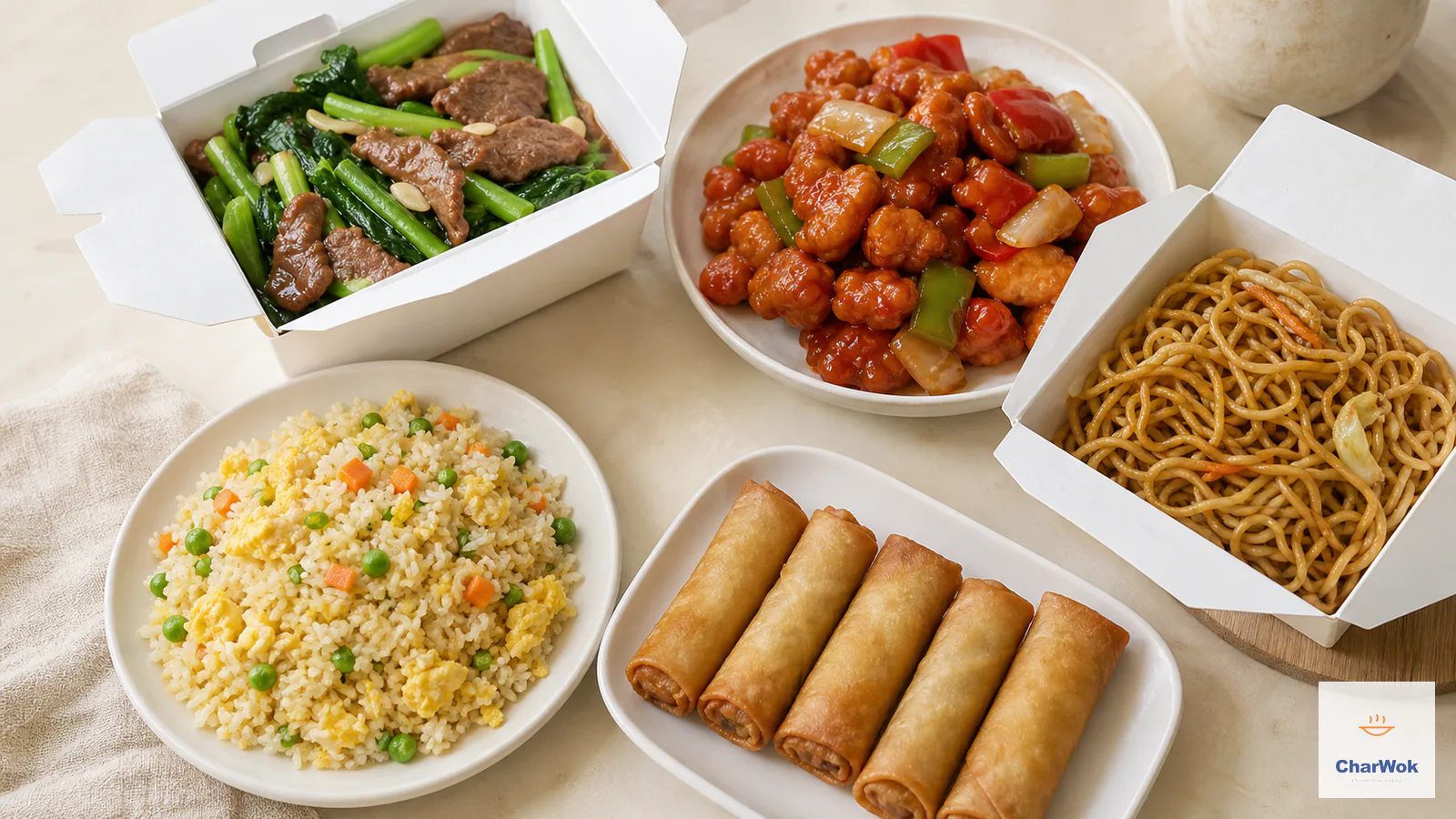
For a frozen appetizer that's even faster, fold a tray of spring rolls or fried wontons and fry them straight from the freezer. The trick with frozen fried things is oil temperature: drop them into oil that's only moderately hot (about 160°C / 320°F) so the inside thaws before the outside burns, then raise the heat to crisp.
The morning of: the centerpiece that wants the oven
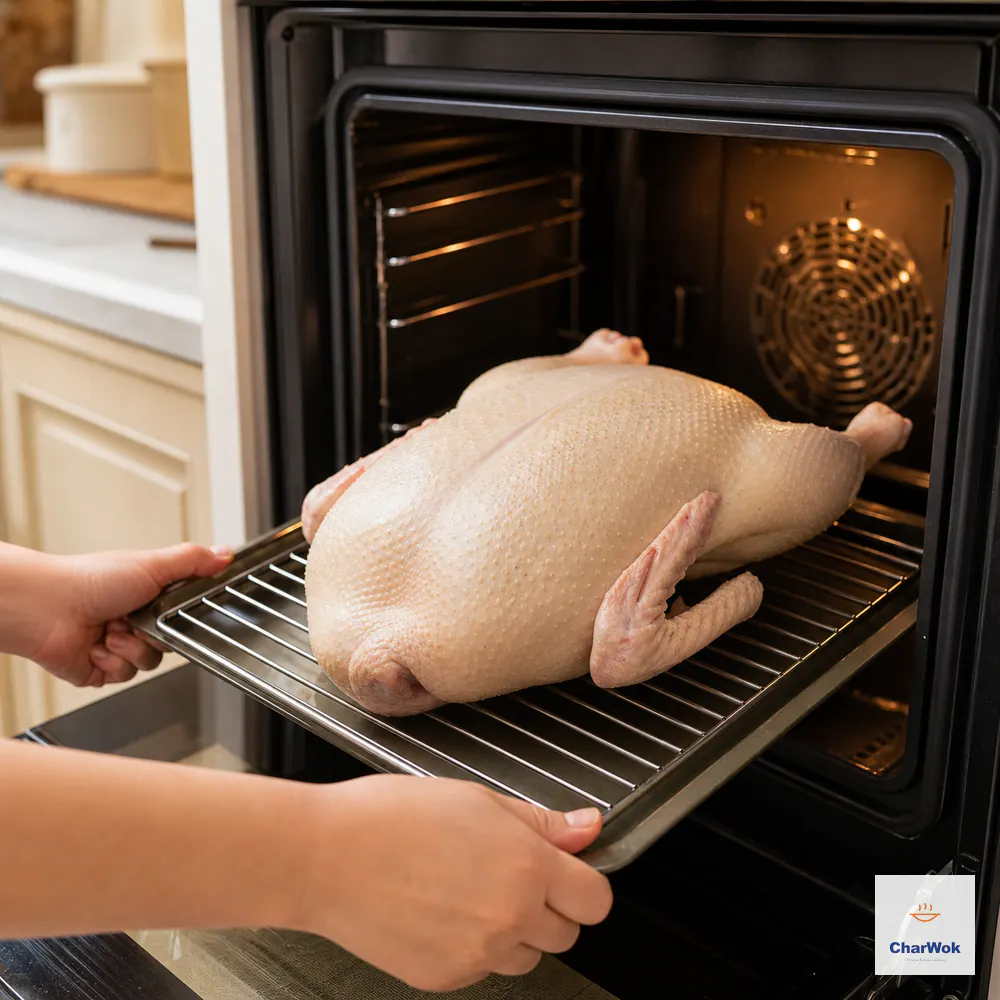
Dry the duck uncovered on a rack in the refrigerator, never at room temperature overnight; roast on the day and verify the breast and innermost thigh each reach 74°C / 165°F.
Some dishes want same-day cooking because the texture does not survive a freeze. Cook them while the kitchen is calm, then keep them safely hot or cool and refrigerate them promptly rather than leaving them on the counter until dinner.
Peking duck can be prepped ahead by drying the skin uncovered on a rack in the refrigerator, never by leaving raw poultry at room temperature overnight. Roast on the day and verify the innermost thigh and thickest breast reach 74°C / 165°F. Chinese five-spice chicken follows the same temperature endpoint; mahogany skin is a browning cue, not a doneness test. Serve poultry within 2 hours of cooking, within 1 hour above 32°C / 90°F, or hold it at 60°C / 140°F or hotter.
Last twenty minutes: fish, a stir-fry, and the noodles
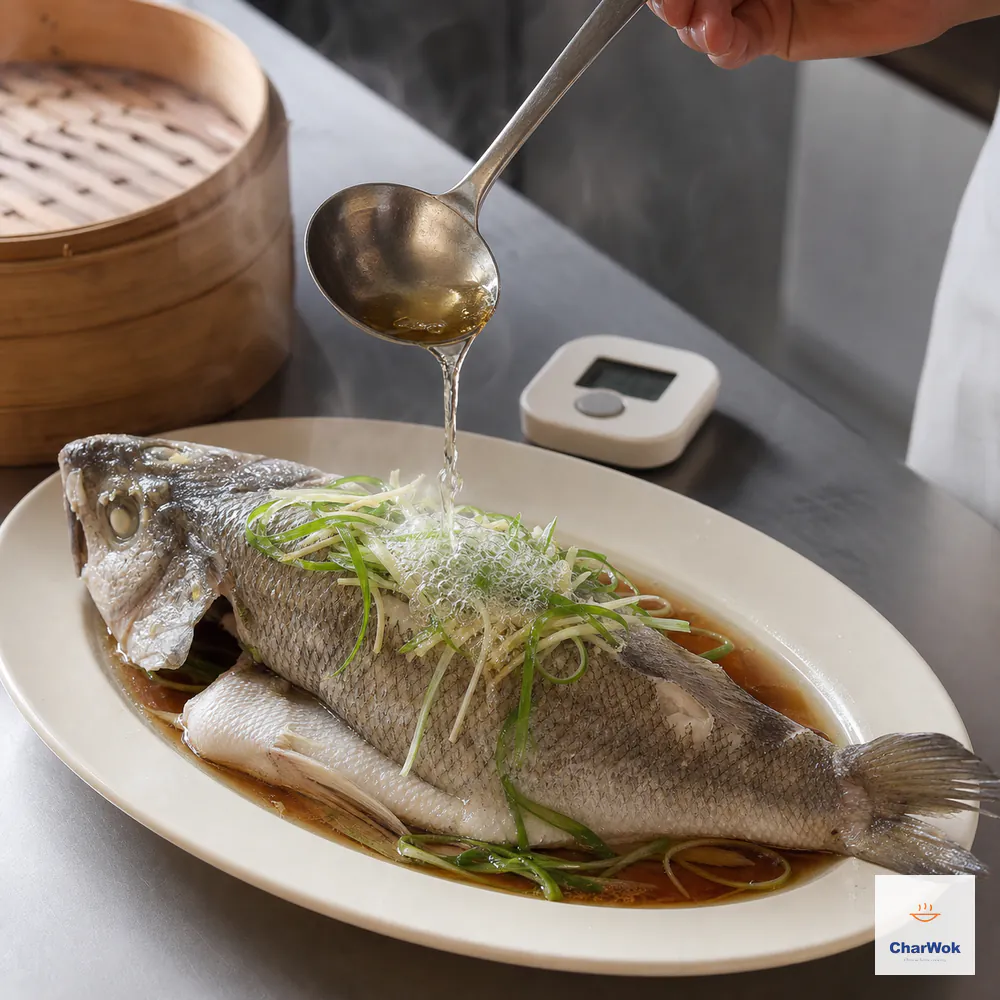
Steam in the final window, verify the thickest flesh reaches 63°C / 145°F, then remove shimmering—not smoking—oil from the burner before pouring it carefully over dry scallion and ginger.
This is the only stretch that should feel busy, and the goal is to keep it to two wok-demanding dishes, tops. The whole point of cooking ahead is that this window is short.
Steamed whole fish (qing zheng yu) symbolizes surplus because the word for fish (yu) sounds like the word for abundance. Steam for 8 to 10 minutes as a first check, then insert a clean thermometer into the thickest flesh beside the spine; the fish is ready at 63°C / 145°F. A loose fin or opaque flesh can support a texture check but cannot replace the temperature reading. Heat the finishing oil only until shimmering, remove it from the burner, and pour carefully over dry scallion and ginger. If the oil smokes, turn off the heat and let it cool.
For a Sichuan-flavored showpiece, Sichuan boiled fish (shui zhu yu) pairs fish fillets with a doubanjiang and dried-chili broth. Cook the fish to 63°C / 145°F and use hot, shimmering oil—not smoking oil—to bloom the peppercorn and chili. Keep a lid or sheet pan nearby when heating oil; the U.S. Fire Administration advises turning off the burner if oil starts to smoke.
One quick stir-fry gives the table a fresh note among the braises. For shrimp and egg stir-fry (hua dan xia ren), use low heat for tender curds but verify the shrimp and egg mixture reaches 63°C / 145°F and 71°C / 160°F respectively. Braised mushroom with bok choy adds a vegetable anchor with shiitake and crisp-tender greens.
The longevity noodles
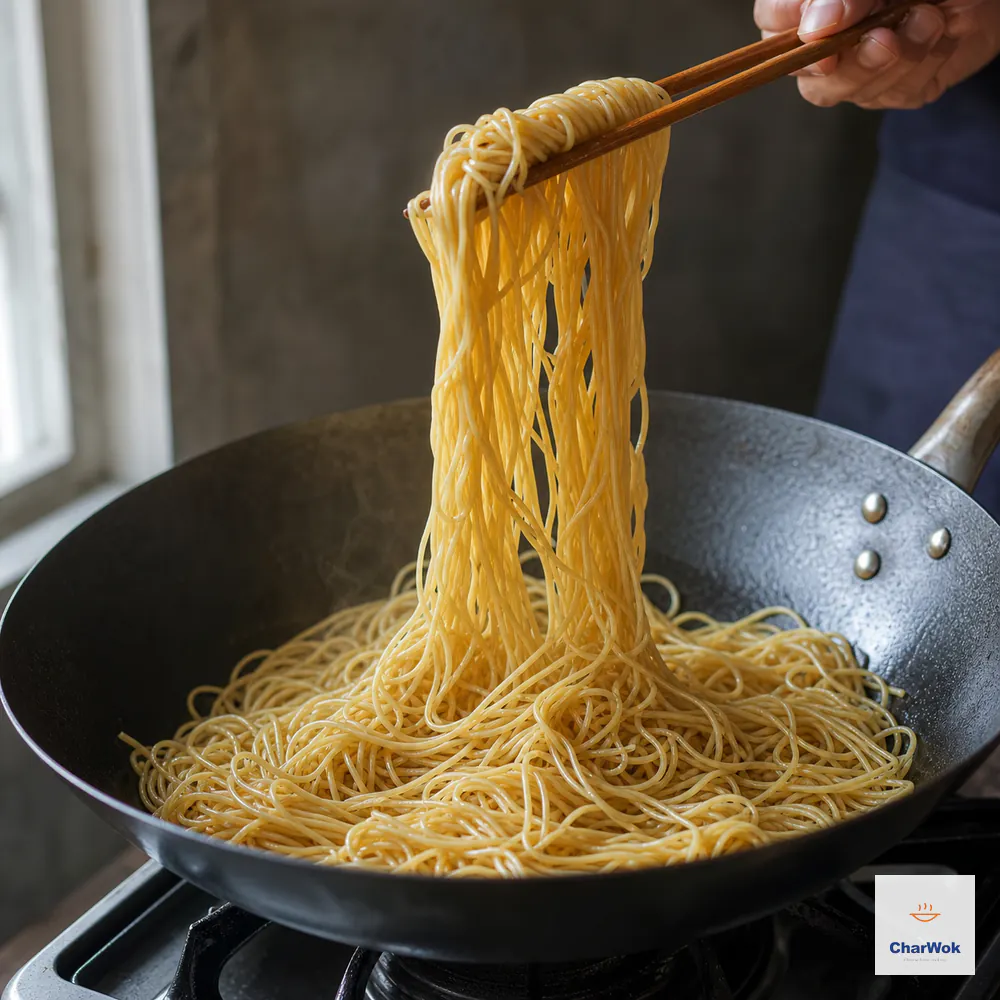
If parboiling ahead, spread the noodles in a shallow container and refrigerate within 2 hours; finish them in the sauce at service and lift the long strands without cutting.
Long noodles stand for a long life, and the rule is that you do not cut them. Longevity noodles (yi mein) are the classic, and the stress-saving trick is to parboil the noodles ahead, then finish them in the sauce for a couple of minutes right before serving. If you want to make the noodles themselves a project, hand-pulled noodles are dramatic and surprisingly learnable once you understand that the dough needs a long rest so the gluten relaxes enough to stretch.
Rice, soup, and the dish that uses your leftovers
Yangzhou fried rice works best with chilled rice. Spread freshly cooked rice into shallow containers and refrigerate within 2 hours, or within 1 hour above 32°C / 90°F; “day-old” describes texture, not permission to leave rice on the counter. For hot and sour soup, make the base ahead, cool it promptly, and add vinegar and white pepper after reheating so their aroma stays bright.
Safe temperatures and holding rules for the whole feast
| Food | Measured endpoint | Service rule |
|---|---|---|
| Chicken and duck | 74°C / 165°F | Check the thickest breast and innermost thigh; avoid bone. |
| Fish and shellfish | 63°C / 145°F | Measure the thickest part. |
| Ground meat | 71°C / 160°F | Check several pieces in a batch. |
| Whole cuts of pork, beef, or lamb | 63°C / 145°F, then rest 3 minutes | Measure the thickest part. |
| Leftovers | 74°C / 165°F when reheated | Refrigerate in shallow containers within 2 hours, or 1 hour above 32°C / 90°F. |
| Buffet holding | Hot at or above 60°C / 140°F; cold at or below 4°C / 40°F | Discard perishables left outside those limits for more than 2 hours, or 1 hour above 32°C / 90°F. |
What goes wrong, and the fix
These are the most consequential timing and safety failures to prevent.
- Everything is ready, and everything is cold. You cooked too much last-minute and couldn't plate fast enough. Fix: never plan more than two wok dishes in the final window. Reheat braises in their own sauce over low heat; cover steamed dishes with a lid for a minute to hold warmth.
- The wok is the bottleneck. Two stir-fries, the fish, and the noodles all want it. Fix: assign the wok to exactly one dish at a time and move everything else to the oven, the steamer, or the make-ahead column. A second portable induction burner is the best forty dollars you'll spend.
- Dumplings tear or stick. The wrapper was too dry or the pot is overcrowded. Fix: keep folded dumplings covered with a damp cloth until cooking, and don't crowd the pot. Three cooking methods are worth knowing, but the boiling rule is the same for all: plenty of water, and add a splash of cold water each time it returns to a hard boil to keep the skins from rupturing.
- The braise is too salty or too dark. The soy reduced too far. Fix: dilute with hot water or stock, never more soy, and balance with a small lump of rock sugar. Braises are forgiving if you adjust by feel before serving.
- The fish is overcooked and dry. Use the estimated time only to schedule the first check. Measure the thickest flesh and remove the fish at 63°C / 145°F.
Variations, pairings, and a lighter table
Not every family wants the full heavy feast, and the symbolism is flexible. If red-braised pork feels like too much, Lion's Head meatballs give you pork in a lighter broth, with the giant meatball itself standing for a family round and complete. If you want a vegetarian protein that still feels celebratory, Hakka stuffed tofu brings the same savory satisfaction, or you can swap the meat out of Mapo tofu for mushrooms and lose almost nothing.
For a party format that takes the pressure off entirely, host hot pot at home. Every component (broth, dipping items, sauces) is prepped in advance, and the cooking happens at the table, which means you sit down with your guests instead of standing at the stove. It's the most relaxed possible New Year meal and somehow still feels like the biggest feast of the year.
The sweets that close the meal
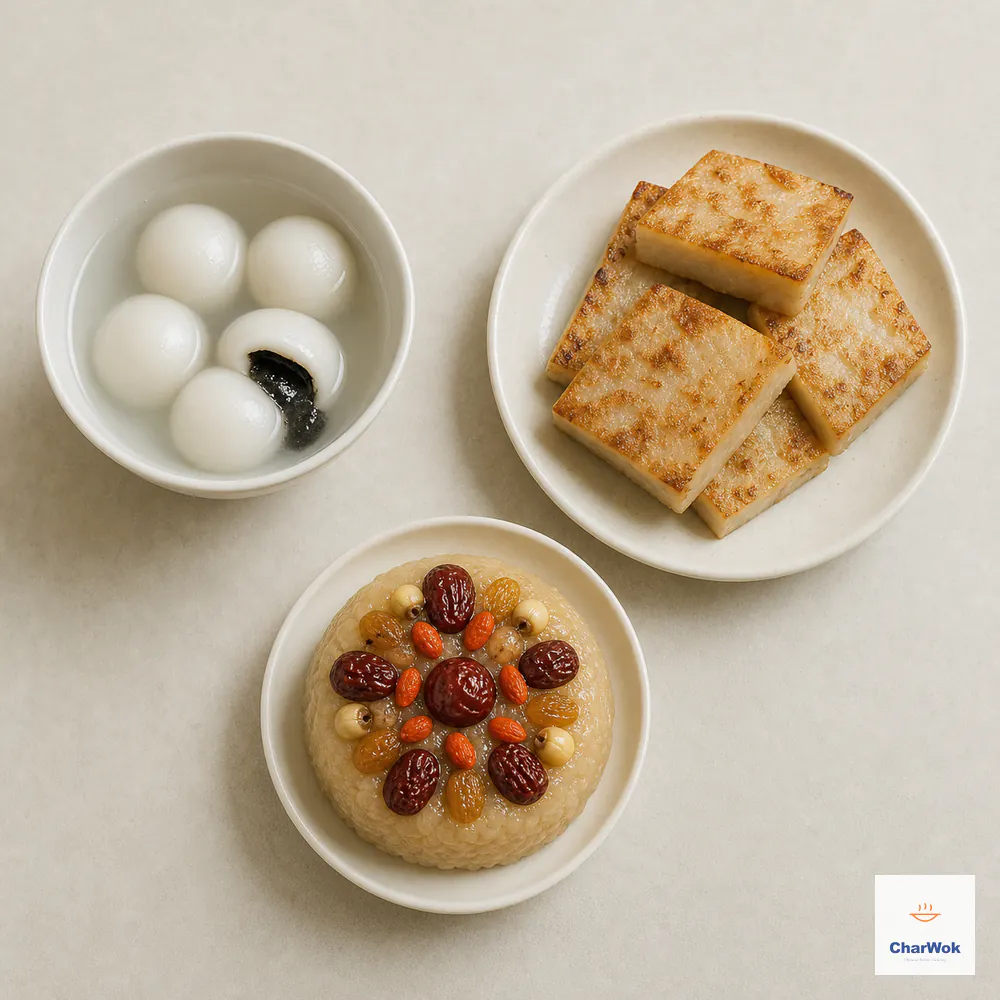
Choose a make-ahead sweet: freeze raw tang yuan, pan-fry nian gao at service, or steam chilled eight-treasure rice pudding until its center reaches 74°C / 165°F.
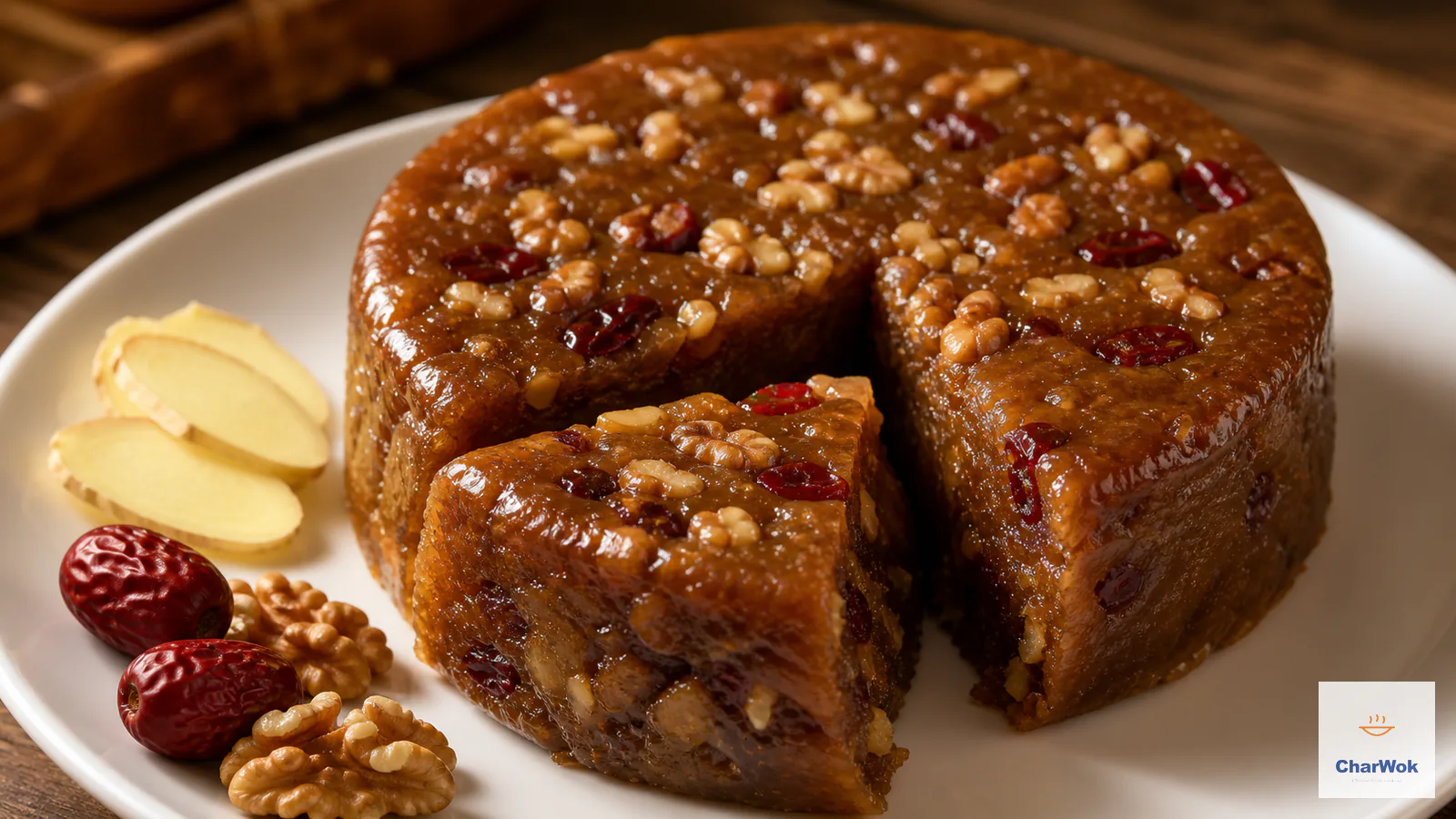
Dessert at a Chinese table is lighter than a Western one, and the New Year sweets are all about roundness and stickiness, which stand for togetherness. Tang yuan are glutinous rice balls with a sweet, runny sesame or peanut filling, served in their cooking water; the slip of pulling one apart and watching the filling pour out is half the fun, and they freeze raw so you cook them straight from frozen. Nian gao, the sticky rice cake, is the namesake of the festival (the words sound like "higher each year"), and it's best pan-fried in slices until crisp outside and chewy within. For a real project, eight treasure rice pudding is sticky rice layered with red bean paste and a mosaic of dried fruits and nuts, steamed in a bowl and inverted; it's the prettiest thing on the table and it reheats in ten minutes of steaming.
Frequently asked questions
How many dishes should I make for a Chinese New Year dinner?
There is no universal number. For six to eight people, this guide uses eight to twelve small shared dishes as an upper planning range, but a smaller balanced menu is better than an overloaded one. Limit the final twenty minutes to no more than two wok dishes.
Can I cook the braises and dumplings ahead of time?
Yes. Divide cooked braises into shallow covered containers and refrigerate within 2 hours, then reheat them to 74°C / 165°F. Freeze raw folded dumplings in one layer and cook them from frozen. Keep steamed fish and quick stir-fries for the final cooking window.
Why is whole fish served at Chinese New Year?
The Chinese word for fish sounds like the word for surplus, so whole fish is associated with abundance in the coming year. Serving it intact, with head and tail, represents completeness from the beginning to the end of the year.
How do I manage a feast with only one wok?
Move dishes off the stovetop: roast centerpieces in the oven, steam fish and buns, and keep cold openers refrigerated. Give the wok to one dish at a time and schedule the wok dishes so they never overlap.
If you take one thing from this, let it be the timing map. The dish that sinks a New Year dinner is rarely a bad recipe; it's a good recipe cooked at the wrong moment. Move the braises to three days out, the cold dishes and dumplings to the day before, the bird to the morning, and leave the wok for the fish and one stir-fry. Cooked in that order, twelve dishes stop being a performance and start being a meal you actually sit down for.