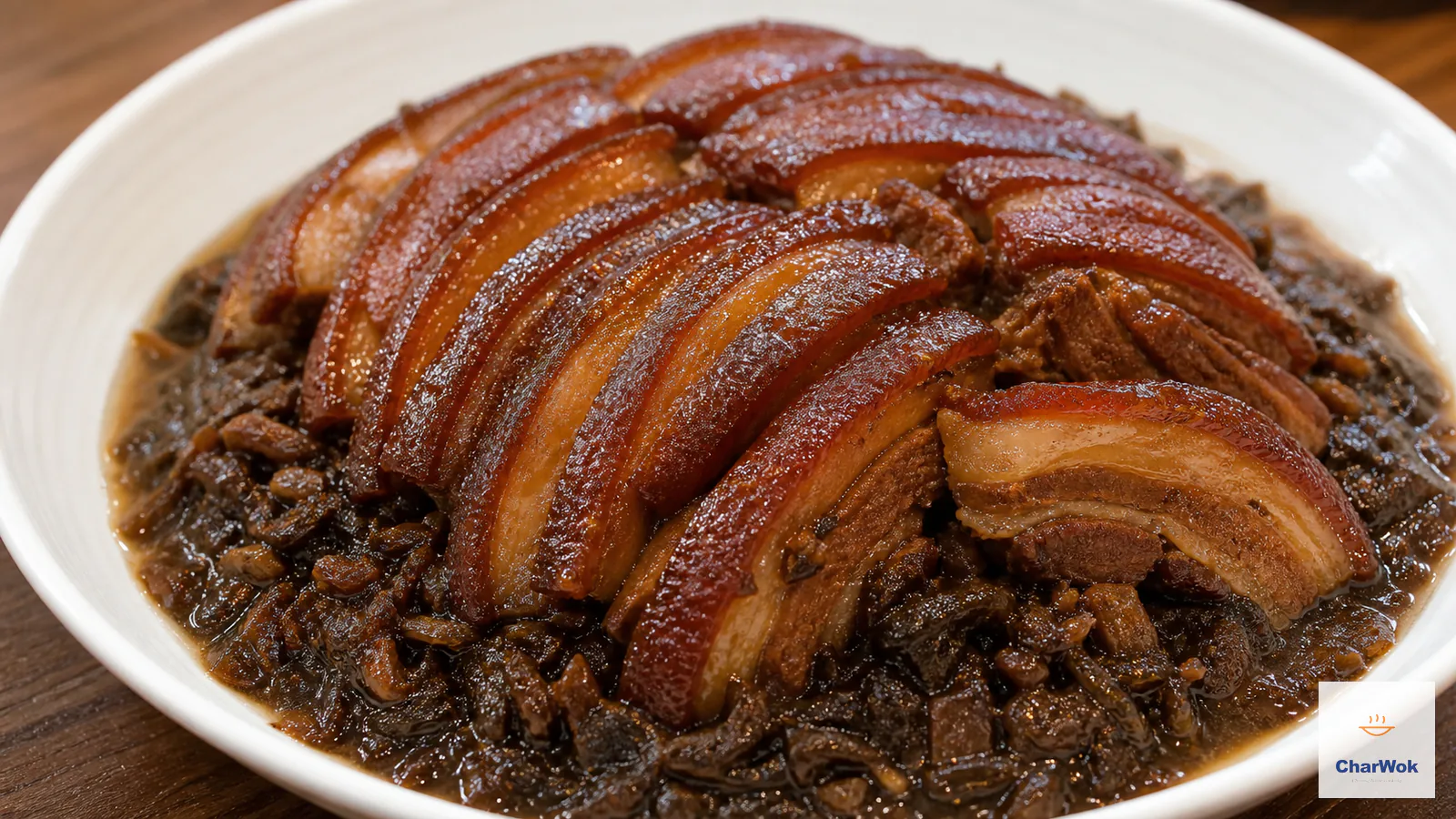
Mei Cai Kou Rou is two hours of patience paid back in a single inverted bowl. You lift the bowl, and out slides pork belly so soft the layers fan open over a dark, savory cushion of preserved mustard greens, the skin glossy and mahogany from the steam. This is the dish that, for most of my life, I left to restaurants, because every version I tried at home ended in one of two failures: skin like a rubber band, or meat that collapsed into grey threads. Both come down to one step most home cooks skip.
The trick most home cooks miss is that the tenderness does not come from the steam alone. It comes from a par-simmer that loosens the collagen before the meat ever sees the steamer, and from steaming skin-side down so the rendered fat bastes the greens instead of pooling on top. Skip the par-simmer and you will chew for an hour. The deep-fry step you see in old recipes exists to blister the skin and set the layers; you can get the same effect by simmering longer and steaming longer. I stopped frying years ago and the dish is better for it: less greasy, less splatter, and the color deepens more evenly in the steamer.
Plan on 3 hours of cooking for 4 people, most of it unattended. Use a skin-on pork belly block around 1.2 lb / 550 g. The make-or-break moment is the par-simmer: 45 minutes covered, then 30 more off the heat. Cut that short and the meat never goes tender.
What Mei Cai Kou Rou actually is
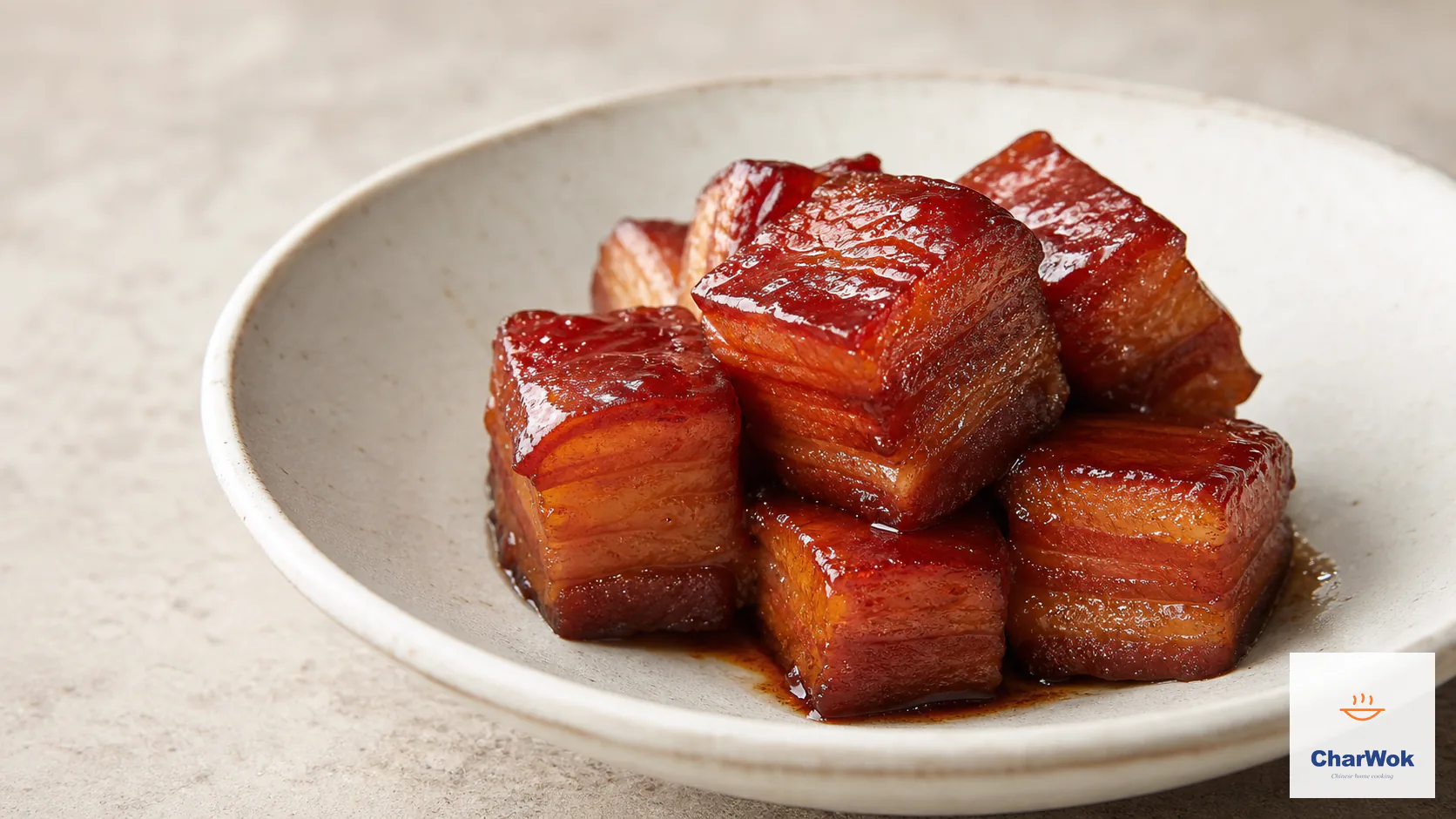
The name tells you the dish: mei cai is the preserved mustard green, kou rou is the bowl-shaped cut of pork belly steamed until it falls open. It belongs to the Hakka and Cantonese tradition of taking humble preserved vegetables and pairing them with fatty pork, letting the salt and umami of the greens cut straight through the richness of the belly. You see the same instinct at work in dishes like pork with sour preserved vegetable and the famous Sichuan suan cai yu, where fermented greens balance a fatty protein. Mei Cai Kou Rou is the most celebratory of the family. The inverted dome is a banquet centerpiece, the kind of thing you bring out for New Year or a big family meal alongside red-cooked pork belly and a whole steamed fish.
Choosing the belly
You want a rectangular block of skin-on pork belly, roughly equal layers of fat and lean, about 5 cm / 2 inches thick. A slab that is mostly fat will taste one-note and greasy; one that is mostly lean will dry out over two hours of steam. Ask the butcher for a piece with even stratification. If you can only find belly that has already been sliced, this is not the recipe for it; you need a solid block to par-simmer whole and cut afterward.
The preserved mustard greens are the other half of the dish and the harder ingredient to source. Look for them labeled "mei cai," "mei gan cai," or "preserved mustard" in a Chinese grocery. If you cannot find them, see the substitutes in the table below. Do not swap in fresh napa cabbage or you will end up with a completely different, watery dish. The whole point is the fermented, salty depth, which is closer in spirit to what you get from fermented black bean steamed ribs than to anything fresh.
Ingredients
Mei Cai Kou Rou ingredients at a glance
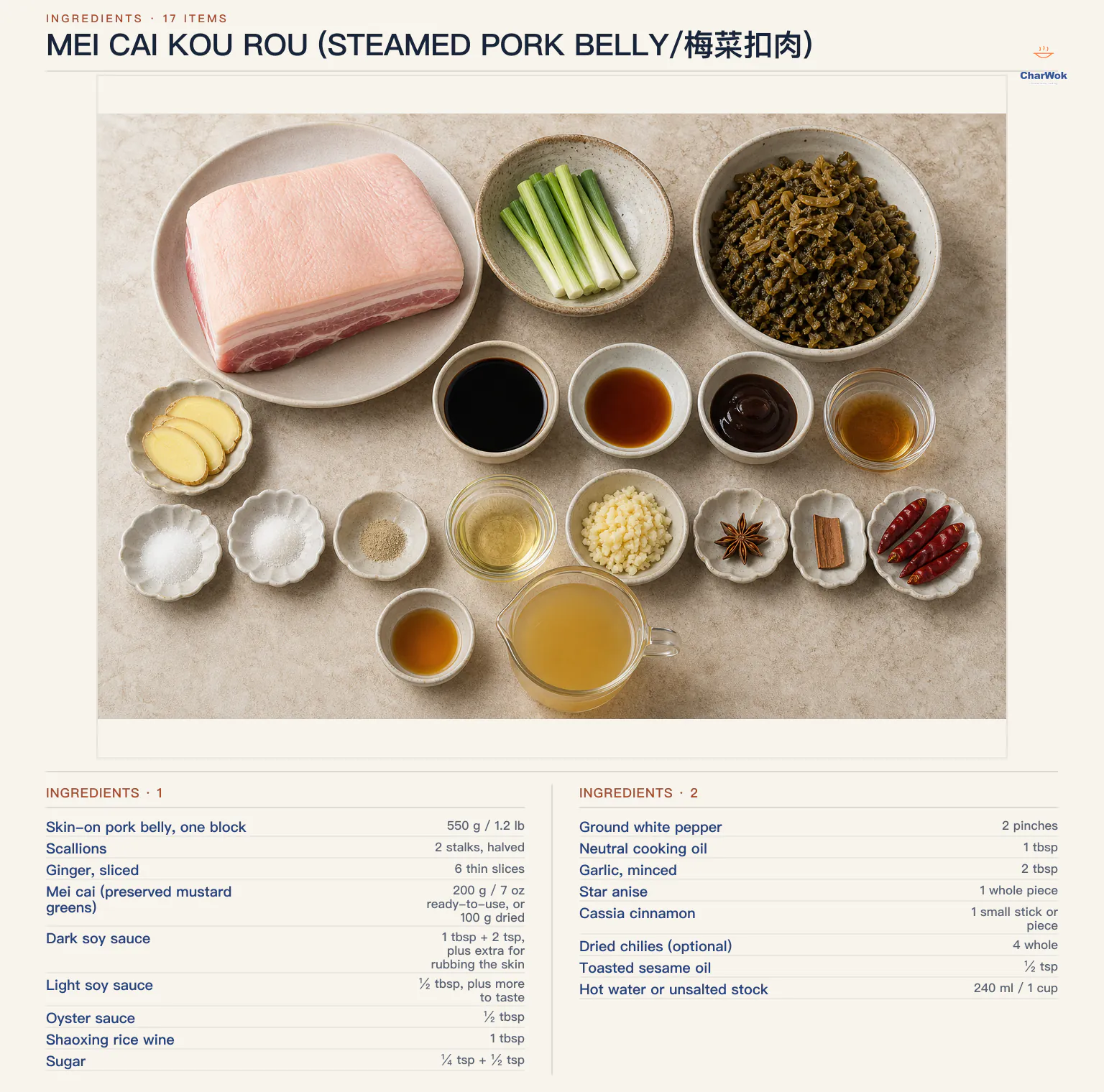
| Ingredient | Amount | Notes / substitute |
|---|---|---|
| Skin-on pork belly, one block | 550 g / 1.2 lb | Ask for even fat-to-lean layering, about 5 cm thick |
| Scallions | 2 stalks, halved | For the par-simmer aromatics |
| Ginger, sliced | 6 thin slices | Half for the simmer, half minced for the greens |
| Mei cai (preserved mustard greens) | 200 g / 7 oz ready-to-use, or 100 g dried | Sub: dry-fried yacai or a mix of fermented black beans and dried radish; flavor will differ |
| Dark soy sauce | 1 tbsp + 2 tsp, plus extra for rubbing the skin | 1 tbsp for marinating the belly, 2 tsp for the greens, and a little painted over the hot skin. For the difference, see light vs dark soy sauce |
| Light soy sauce | ½ tbsp, plus more to taste | For the marinade; add a little more to the greens only after tasting them |
| Oyster sauce | ½ tbsp | Mushroom stir-fry sauce works for a vegetarian lean on the greens |
| Shaoxing rice wine | 1 tbsp | Dry sherry is the standard substitute |
| Sugar | ¼ tsp + ½ tsp | ¼ tsp in the marinade, ½ tsp with the greens. Rock sugar is traditional; granulated is fine |
| Ground white pepper | 2 pinches | One for the marinade, one for the greens |
| Neutral cooking oil | 1 tbsp | For stir-frying the aromatics of the greens |
| Garlic, minced | 2 tbsp | For the greens |
| Star anise | 1 whole piece | Warm spice for the greens; echoes the flavor of red-cooked pork belly |
| Cassia cinnamon | 1 small stick or piece | Chinese cinnamon; regular cinnamon is acceptable |
| Dried chilies (optional) | 4 whole | For a faint warmth; leave out for a strictly mild dish |
| Toasted sesame oil | ½ tsp | Finish for the greens |
| Hot water or unsalted stock | 240 ml / 1 cup | Stock adds body; water is fine because the mei cai carries so much flavor |
The method, and why each step matters
Three phases: par-simmer the whole belly, braise the greens, then steam them together. Each phase does a specific job.
- Par-simmer the belly, 45 minutes covered then 30 minutes off the heat. Put the whole block in a small pot with the scallions and 3 of the ginger slices and add just enough water to cover. Bring it to a boil, drop to the lowest flame, cover, and simmer. Then kill the heat and let the meat sit in the residual heat another half hour. This is the step that melts the collagen and softens the connective tissue between the layers, the difference between chewy and spoon-tender. A hard boil will toughen the muscle fibers, so keep it at the barest tremble.
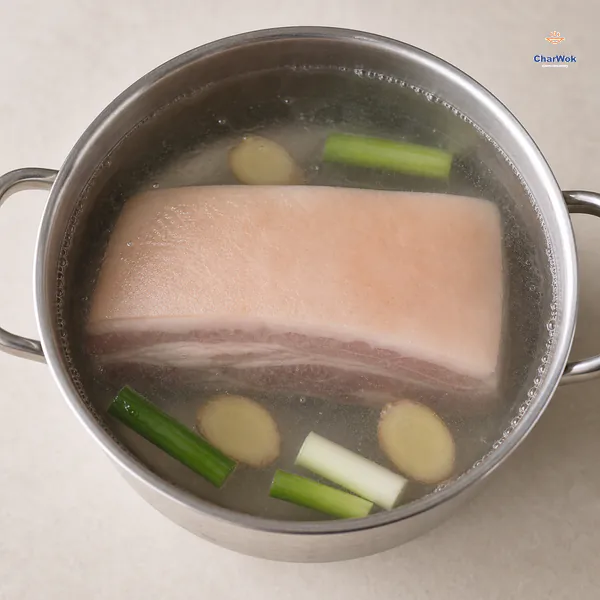
Cover the belly with water, add the scallions and three ginger slices, then keep it at the barest simmer for 45 minutes before resting it off heat for 30 minutes.
- Rub the skin with dark soy while the meat is still hot. Lift the block out and, while it is warm, paint a generous layer of dark soy sauce over the skin. The warmth opens the pores of the skin so it takes on color, and the long steam later drives that color deep. Let the block cool completely to the touch before slicing. Cooling sets the fat so your slices come out clean instead of tearing.
- Slice 7 mm / ¼ inch thick and marinate. Cut across the block into even slices. Put them in a bowl with 1 tbsp dark soy, ½ tbsp light soy, ½ tbsp oyster sauce, 1 tbsp Shaoxing wine, ¼ tsp sugar, and a pinch of white pepper. Toss so every slice is coated. One hour is the minimum; overnight in the fridge is better, and it is the natural make-ahead move (more on that below).
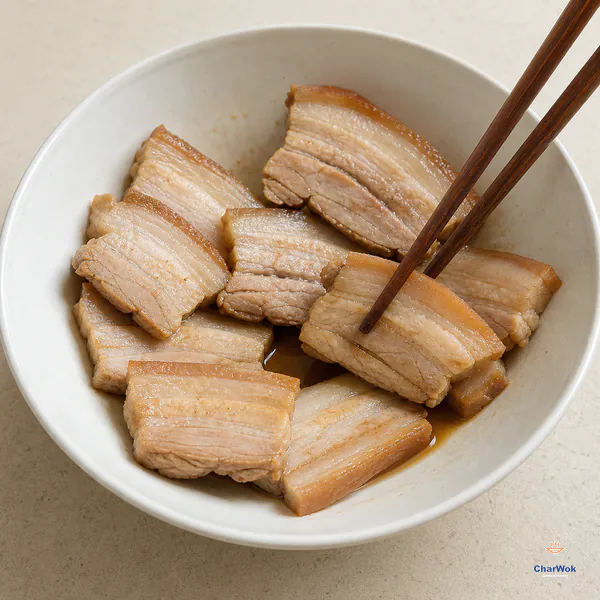
Cool the belly completely, cut it into even 7 millimetre slices, coat every piece with the marinade and rest for at least 1 hour.
- Prep the mei cai: rinse, soak, taste. Preserved mustard greens are deliberately salty. Rinse them under running water until the surface salt is gone, then soak in a bowl of water for an hour. Taste a strand. Still too salty? Soak longer. You want them savory but edible on their own. Squeeze out as much water as you can and chop fine. The squeezing matters: dry greens will drink up the braising liquid and concentrate the flavor instead of leaching water into the wok.
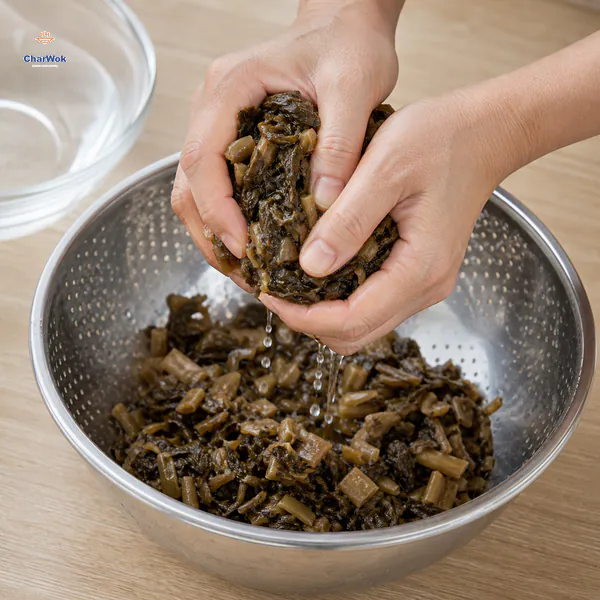
Rinse and soak the mei cai, taste it for salt, then squeeze out as much water as possible before chopping so it can absorb the braising liquid.
- Braise the greens, about 5 minutes covered. Heat the oil in a wok or skillet. Briefly fry the remaining minced ginger, the minced garlic, star anise, cassia, and dried chilies until fragrant, 20 to 30 seconds, no more, or the garlic will turn bitter. Add the chopped mei cai, the 2 tsp dark soy, ½ tsp sugar, a pinch of white pepper, the sesame oil, and the cup of hot water or stock. Cover and let it bubble gently for about 5 minutes. Taste. If it needs more salt, add light soy a little at a time. It should taste slightly too salty right now, because the pork will dilute it during the steam.
- Build the bowl, skin-side down. Take a deep heatproof bowl that will fit inside your steamer. Lay the marinated belly slices in a domino pattern across the bottom, skin facing down. Stand a few slices around the sides. Tuck any odd pieces and the marinade in the middle. Pile the braised greens and all their liquid on top, pressing down gently. Skin-down is not cosmetic: it means the rendered fat runs down into the greens instead of pooling on the surface, and it is what gives the inverted plate its glossy crown.

Overlap the belly slices tightly across the bottom and sides of a deep heatproof bowl with every skin edge facing down, then cover them with the braised greens and liquid.
- Steam 2 hours over medium-low. Set the bowl on a rack in a steamer or in a wok with a raised trivet. Bring the water to a full boil, then drop to a steady medium-low. Steam for two full hours, checking the water level every half hour and topping up with hot water so the boil does not collapse. Two hours is not negotiable if you want the spoon-tender texture; one hour will leave the meat firm. This is the long, low, wet heat that finishes the collagen conversion the par-simmer started.
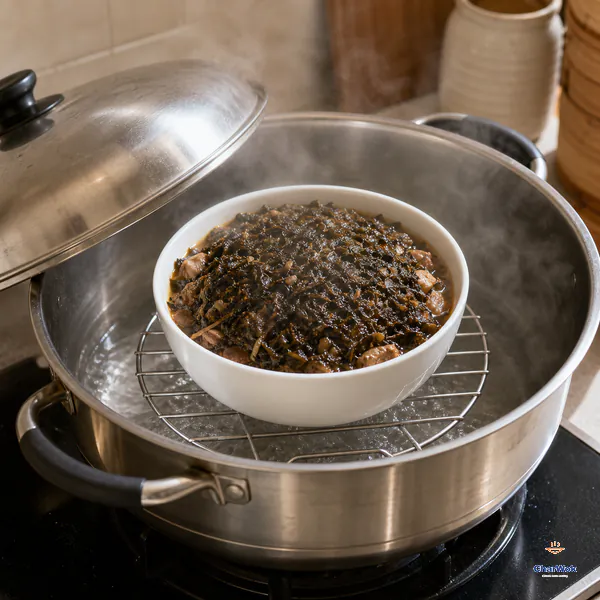
Steam the filled bowl over steady medium-low heat for 2 full hours, checking the water every 30 minutes and topping up with hot water as needed.
- Flip and serve. Carefully lift the bowl out. Set a deep serving plate over the top. Wearing oven gloves, clamp the bowl and plate together and flip in one fast motion. Lift the bowl straight up. The dome of pork should release cleanly, greens now on the bottom, skin glowing on top. Spoon any liquid left in the bowl over the top and serve hot with plain rice.
When it goes wrong
I have made every mistake below at least once. Here is how to spot them and what to do.
- The meat is chewy, not melting. The par-simmer was too short or too hard. Next time, simmer the full 45 minutes at the lowest possible flame and rest the full 30 minutes off the heat. If you are mid-recipe and the belly feels firm after slicing, extend the steam to 2.5 hours; time fixes under-simmered collagen.
- The skin is tough and rubbery. The most common home failure. It happens when the skin was not softened before steaming, or when the steam was not long or gentle enough. The fix is the par-simmer plus the full two-hour steam; do not shortcut either. Skin-on is non-negotiable; skin-off belly will dry out and never give you the glossy crown.
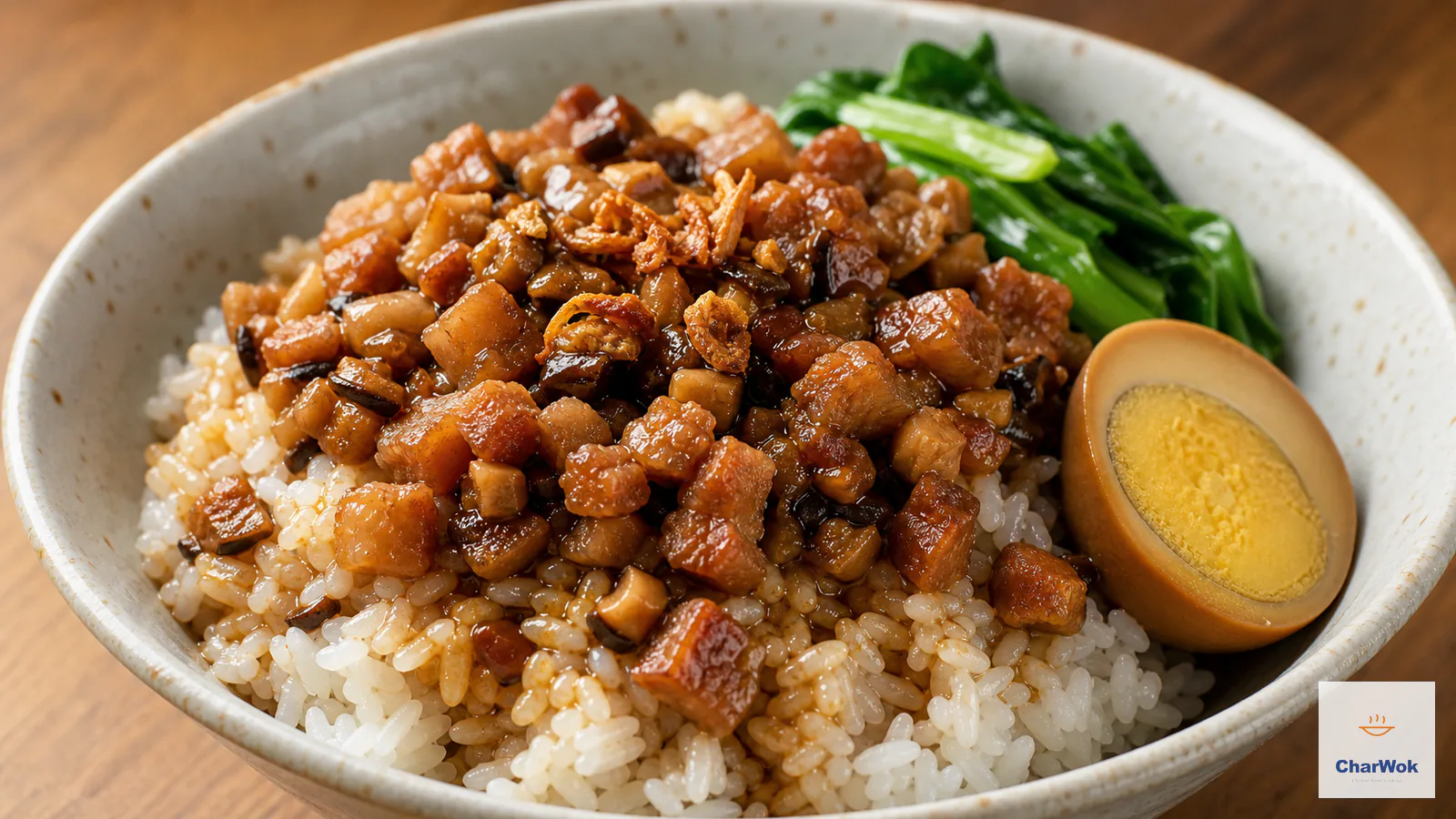
- The dish is too salty. Either the mei cai was not soaked long enough, or you added light soy to the greens without tasting first. Always taste the soaked greens and the braised greens before assembling. If the finished dish is too salty, serve it over a larger portion of plain rice and thin the sauce with a little hot water, the same rescue you would use for an over-reduced lu rou fan.
- The dome collapses when you flip. The slices were cut unevenly, or the bowl was overfilled with loose pieces. Cut slices the same thickness and build the bottom layer carefully in one tight pattern. If a few slices slide, just rearrange them on the plate. It will still taste right.
- The pork looks pale, not mahogany. The skin was not rubbed with dark soy while hot, or the marinade was too short. Dark soy is what gives the color; light soy is mainly salt. Paint the skin generously and give the slices at least an hour in the marinade, ideally overnight.
- The greens taste flat. You under-braised them, or you skipped the star anise and cassia. The aromatics are what turn preserved cabbage into something complex. Five minutes covered is the floor; if your greens were very dry, add another splash of water and another two minutes.
Variations and what to serve it with
The classic variation is to layer pre-cooked taro slices between the pork, the way some Cantonese banquet versions do. If you go this route, par-fry or steam the taro first: raw taro will not cook through in the time the pork needs and will leave a chalky, raw-starch film. Taro soaks up the pork fat beautifully and turns the dish into a more substantial one-plate meal.
For a complete spread, I keep the rest of the table light and plain. Steamed jasmine rice is mandatory, the only thing that balances the richness. Add a simple vegetable like garlic bok choy or hot-and-sour stir-fried napa cabbage, and a clear soup such as tomato egg drop soup to start. If you want another centerpiece for a feast, this sits happily next to lion's head meatballs or a plate of char siu; the deep, slow-cooked profile of the kou rou also rhymes with Chinese braised beef shank if you want a second red-cooked dish on the table.
Storage and reheating
Mei Cai Kou Rou keeps for up to three days in the fridge and is honestly better the next day, once the pork has soaked up the greens. Reheat gently, covered, in a steamer for 15 minutes, or in a covered dish in a 150°C / 300°F oven until warmed through. Microwaving works for a single portion but toughens the skin, so go slow and at half power.
This dish rewards batch cooking. Because the pork and the greens are built separately and only meet in the steaming bowl, you can split the work across days: do the par-simmer, marinate, and the greens braise whenever you have time, then hold each component on its own and bring them together at the last minute. Nothing here improves from sitting combined in the freezer, so keep the meat and the greens apart and assemble only what you will steam that day. The two-hour steam itself is the one step you cannot move, but everything before it is freezable.
Questions I get asked
A few that come up again and again, answered short.
Do I have to deep-fry the pork? No. The old-school fry blisters the skin, but a longer par-simmer plus a full two-hour steam gives you the same soft, glossy skin with less mess and less grease. I have not fried mine in years.
Can I make it without mei cai? You can, but it becomes a different dish. The closest substitute is a good Chinese pickled or fermented green with real salt depth. Plain fresh cabbage will not work; you lose the entire savory backbone.
Why two hours of steaming? That is how long the collagen in skin-on belly needs to fully melt into gelatin under gentle, wet heat. Cut it to one hour and the meat stays firm; the time, not temperature, is what does the work.
Can I use a slow cooker instead? Partly. A slow cooker on low will tenderize the assembled bowl in about 4 hours, but you lose the steamed texture and the clean inverted dome. For the classic look and bite, the stovetop steamer is worth it.
Skin-on or skin-off belly? Always skin-on. The skin is the whole point. It is what turns glossy and spoon-soft and what makes the dish look like a banquet piece. Skin-off belly dries out over a two-hour steam.
Strip this dish down to its principle and it is simple: long, low, wet heat turns skin-on pork belly into something that melts, and a salty preserved green stops the fat from ever feeling heavy. Get the par-simmer and the two-hour steam right and the rest takes care of itself. The inverted bowl is theater, but the real reward is the first bite, when the layers fall apart against the savory greens and you remember why this dish earned its place at the banquet table.