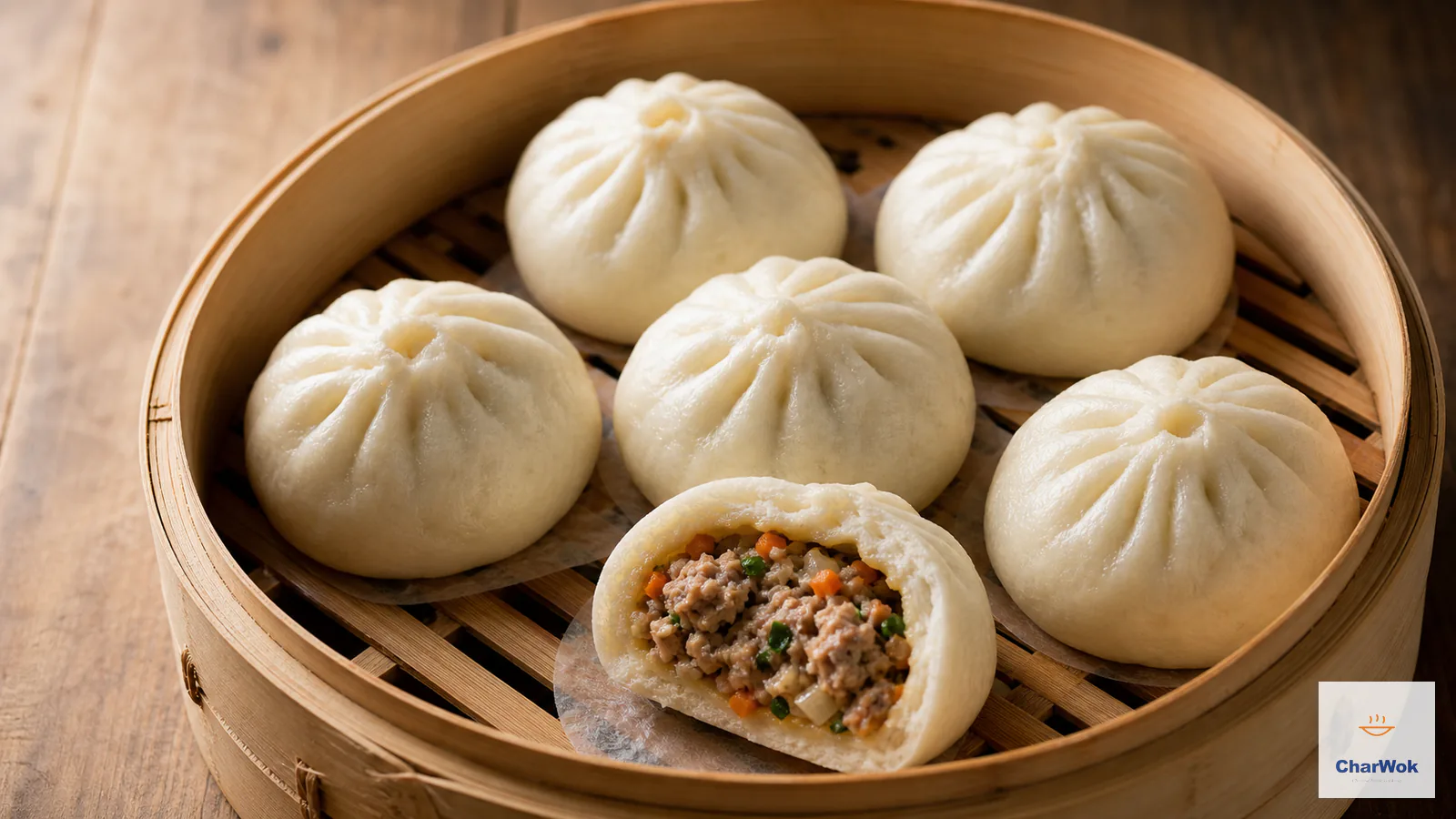
The first few times I made baozi, the buns looked perfect in the steamer and then collapsed the instant I lifted the lid. Sound familiar? That single moment, dough meeting cool air, is where most home bao recipes quietly fail. A great stuffed bun is soft, slightly sweet, puffy but with structure, and the wrapper has to carry a wet, savory filling without tearing or soaking through. Get the dough and the steam right and the filling is almost the easy part.
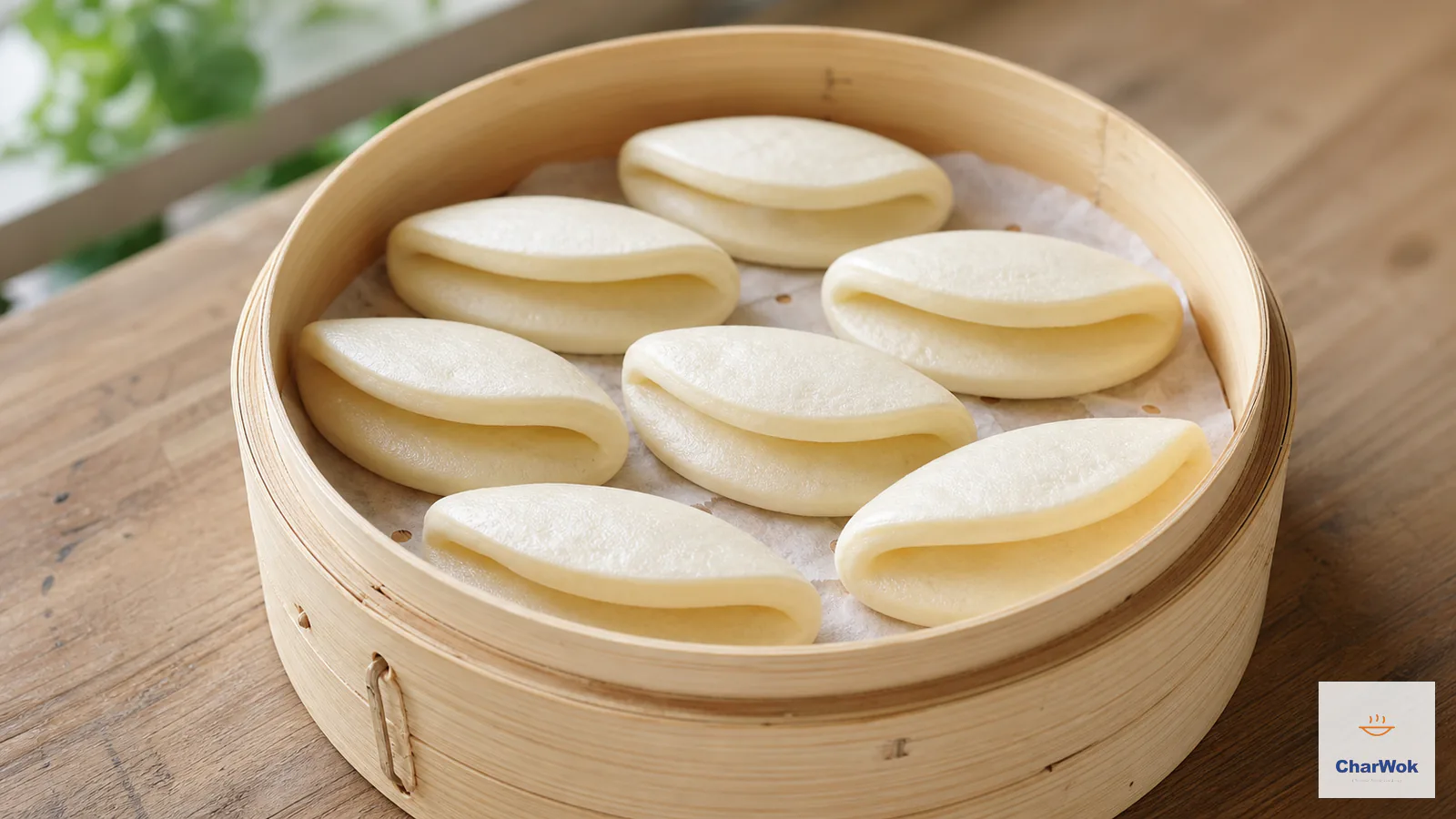
This is the filled, folded steamed bun of northern and central China, the kind you eat out of hand with a bowl of congee or sell by the dozen from a steamer cart. It is a different animal from the flat folded pork-belly buns you see on restaurant sliders, and a cousin to plain unsweetened mantou and the dim-sum classics like char siu bao. Once the dough behaves, you can fill it with almost anything, and the method below gives you a reliable pork-and-carrot version to start from.
One number to remember: about 140 ml of water per 300 g of flour, or roughly 47% hydration by weight. That tight, dryish dough is what lets you pleat a thin wrapper that still holds a juicy filling. Skip the long first rise at your peril; a 15-minute rest after shaping is the non-negotiable step that stops the buns deflating when the lid comes off.
What these buns are, and where they come from
Baozi, written 包子, are yeast-leavened wheat buns cooked by steam rather than baked in an oven. They are everyday food across most of China: breakfast in the north, snacks and street food in the south, and a fixture of the Chinese breakfast table everywhere. The wrapper is the same soft, slightly sweetened dough family as the broader world of Chinese breads, but because it steams instead of bakes, it stays pale, tender, and moist rather than forming a crust.
Region shapes the filling. Northern buns lean pork-and-chive or pork-and-napa, generously sized, eaten for breakfast. Shanghai and Jiangnan versions are often smaller, sweeter in the dough, and famously juicy. The Cantonese take on the same idea adds sugar and a touch of leavening to split the top open over a glossy BBQ pork filling. The version here is a home-style northern-leaning bun, easy to pleat, forgiving for a first attempt.
Choosing the flour (this matters more than the filling)
Use unbleached all-purpose flour with around 9 to 10 percent protein. That middle-protein flour builds enough gluten to hold a pleated shape but stays tender after steaming. Bread flour (12 percent and up) makes bouncy, chewy buns that are too tough; pure cake or pastry flour makes them slack and prone to collapse. For a softer, dim-sum-style crumb without tracking down cake flour, replace one part of the all-purpose flour with cornstarch by weight, about a 5-to-1 mix of all-purpose to cornstarch, sifted before using. I cook with straight all-purpose at home because it is what most kitchens have, and the result is still excellent. Avoid the bleached bao and mantou flours sold in Chinese grocers; they give a whiter crumb but taste flat and processed, and the natural wheat flavor of plain flour is worth keeping.
One pantry note specific to pale, fluffy Cantonese-style buns: some cooks add a pinch of lye water (kansui) or a commercial bao flour with a mild bleaching agent. That is optional and a different rabbit hole. For a home-style stuffed bun, plain all-purpose plus patient kneading gets you there.
Ingredients
Ingredients at a glance
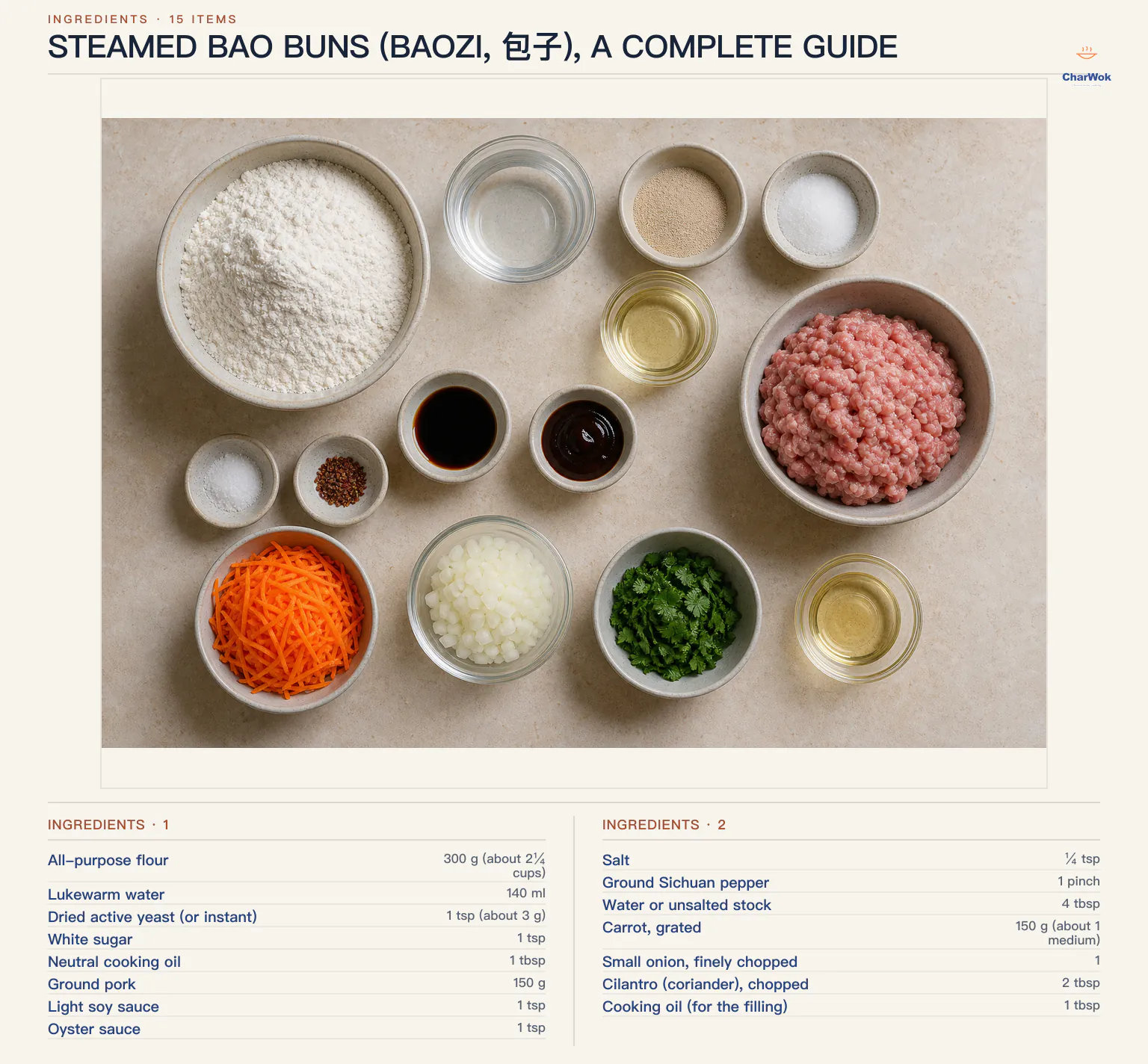
Yields 12 buns. Dough metric-first; US cups noted where useful.
| Ingredient | Amount | Notes / substitute |
|---|---|---|
| All-purpose flour | 300 g (about 2¼ cups) | 9–10% protein. For a softer crumb, replace 50 g with cornstarch (250 g AP + 50 g cornstarch), sifted |
| Lukewarm water | 140 ml | About 35°C / 95°F, body-warm. Hold back 1 tbsp if your flour is damp |
| Dried active yeast (or instant) | 1 tsp (about 3 g) | Instant skips the proofing step |
| White sugar | 1 tsp | Feeds the yeast; not enough to taste sweet. Add 1 tbsp if you like a sweeter Shanghai-style dough |
| Neutral cooking oil | 1 tbsp | Canola, grapeseed, or corn. Keeps the dough supple |
| Ground pork | 150 g | Aim for 70–80% lean. Too lean goes dry; too fatty gets greasy |
| Light soy sauce | 1 tsp | Seasons and adds umami. See light vs dark soy |
| Oyster sauce | 1 tsp | Mushroom-stir-fry sauce works for vegetarian |
| Salt | ¼ tsp | |
| Ground Sichuan pepper | 1 pinch | Or a pinch of five-spice powder if you prefer warm over numbing |
| Water or unsalted stock | 4 tbsp | Added to the meat to make the filling juicy. See the technique below |
| Carrot, grated | 150 g (about 1 medium) | Napa cabbage or scallion work too; see variations |
| Small onion, finely chopped | 1 | Shallot or a few scallions as substitutes |
| Cilantro (coriander), chopped | 2 tbsp | Swap for scallion greens if you are a cilantro hater |
| Cooking oil (for the filling) | 1 tbsp |
The dough, step by step
- Proof the yeast if it is active-dry. Stir the yeast and sugar into the 140 ml of lukewarm water and wait 5 minutes until it foams. No foam means dead yeast; start over. Instant yeast can go straight in with the flour.
- Mix to a shaggy dough, then add the oil. Pour the flour into a bowl, add the yeasted water, and stir with chopsticks until it forms shaggy clumps. Now drizzle in the 1 tbsp of oil and bring it together by hand. Adding oil after the initial hydration coats the forming gluten strands and keeps the dough silky rather than greasy on the surface.
- Knead until smooth and springy. Turn out and knead for 8 to 10 minutes. You are developing gluten and aligning it so the dough can trap the carbon dioxide the yeast produces. The test is not time but feel: when the dough springs back slowly under a fingertip and looks smooth and almost shiny, like a soft rubber ball, it is ready. Under-kneaded dough makes dense, lumpy buns.
- First rise, until doubled. Cover and leave in a warm spot (around 28°C / 82°F) until doubled in volume, 40 minutes in a warm kitchen, up to 90 minutes in a cool one. Doubling matters because it builds the gas infrastructure the final bun needs. If you under-proof here, the cooked bun is heavy and the crumb tight.
- Punch down and portion. Press the air out and knead briefly to return the dough to its original volume. This redistributes the yeast and evens the temperature. Divide into 12 equal pieces; weigh them if you want uniform buns.
Making a juicy filling without making a mess
The trick that separates a memorable bao from a dry one is mixing liquid into the ground pork until the meat actually absorbs it. In Chinese kitchens this is called beating water into the meat, and it relies on the salt-soluble proteins in pork binding free water so the filling stays juicy rather than weeping into the wrapper.
- Season the raw pork. Put the pork, soy sauce, oyster sauce, salt, and Sichuan pepper in a bowl. The same protein-binding technique is what makes well-made dumpling fillings juicy, so it pays to learn once.
- Add the water a little at a time, stirring one direction. Add the 4 tbsp of water or stock in three pours, stirring with chopsticks in a single direction. After each addition, keep stirring until no loose liquid pools in the bowl. Stirring one way aligns the myosin protein strands and lets them hold the water like a sponge. Stop when the meat looks glossy and slightly sticky and pulls cleanly off the side.
- Cool the vegetables before they meet the meat. Briefly stir-fry the grated carrot and chopped onion in 1 tbsp of oil over medium heat just until they soften, 2 to 3 minutes. Cool to room temperature. If you fold hot vegetables into the raw pork you partially cook it, which ruins the texture and starts breaking down the protein network you just built.
- Combine and fold in the cilantro. Add the cooled vegetables and cilantro to the pork and mix gently. The filling can sit covered in the fridge for an hour; chilling it actually makes it easier to portion and pleat.
Shaping and pleating the buns
- Roll each piece into a wrapper with a thick center and thin edge. Flatten a dough ball, dust lightly, and roll from the center outward, rotating as you go, until you have a disc about 10 cm / 4 inches across. Leave the center slightly thicker than the rim. A thick base is what stops the filling from blowtorching through the bottom during steaming; a thin edge pleats into a neat top.
- Cup, fill, and pleat. Hold the wrapper in a slightly cupped left hand, put about 1½ tbsp of filling in the center, then use the thumb and forefinger of your right hand to fold the edge into pleats, pressing each fold against the last, while your left thumb tamps the filling down. Twist the final pleat closed and give it a pinch. This is the same family of folds used for soup dumplings, just larger and more forgiving; if the top looks ugly, an ugly seal still steams fine.
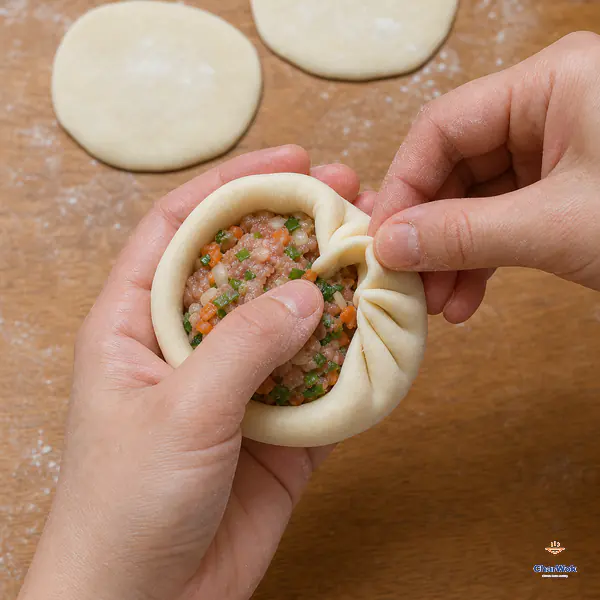
Roll each wrapper to about 10 cm with a thicker center and thinner rim, add about 1½ tablespoons of filling, then keep gathering and pinching until the top has no open gap.
- Rest the shaped buns before steaming. This is the step people skip, and skipping it is why buns deflate. Once shaped, leave the buns covered on parchment squares for about 15 minutes. In that window the yeast wakes back up and the dough relaxes and puffs slightly; when steam hits, it expands gently instead of shocking the gluten into collapse.
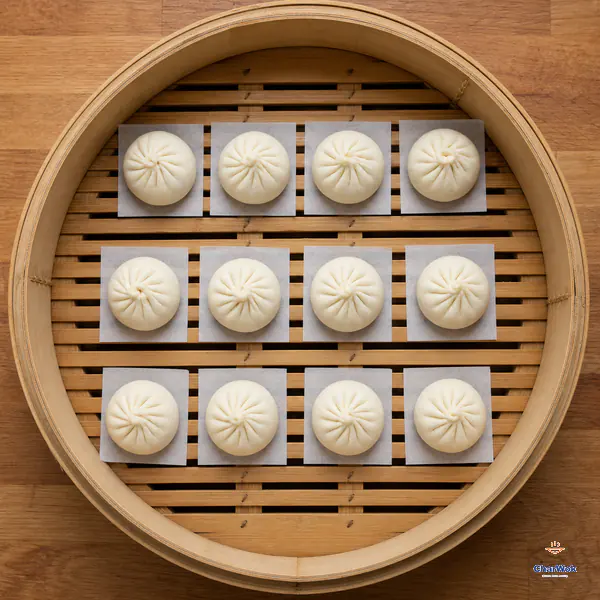
Arrange all 12 buns about 2 cm apart on separate parchment squares and let them stand for about 15 minutes; they should look slightly puffed while remaining raw and matte.
Steaming without collapse
Use a bamboo or metal steamer with plenty of room. If you are new to the gear, the bamboo steamer guide covers setup, liner choices, and stacking. A few non-negotiables specific to bao:
- Space them out. Leave at least 2 cm / ¾ inch between buns and between the buns and the steamer wall. They will expand a lot, and crowding deforms them.
- Start in cold water, then drop the heat. Put the steamer over cold water on high heat. A gentle climb to a boil gives the dough one last, gradual rise. Once the water boils, reduce to medium-low so the steam is steady, not violent. Hammering the buns with a hard boil makes them wrinkle and split.
- Steam 15 to 18 minutes, then do not lift the lid. When the timer ends, turn off the heat and wait one minute before cracking the lid, then open it slowly away from you. The rapid pressure and temperature drop from yanking the lid off is exactly what causes those sad, deflated balloons. I ruined an entire batch this way before I learned to wait.
When things go wrong
| Problem | What happened | The fix |
|---|---|---|
| Buns collapse the moment you open the lid | Sudden temperature and pressure drop shocked the dough | Rest buns 15 min before steaming; let the steamer sit 1 min off heat, then open slowly. Avoid hard boil throughout |
| Dense, heavy crumb | Under-proofed first rise, or under-kneaded dough | Let dough double fully; knead until smooth and springy |
| Wrappers tear and filling leaks | Center of wrapper too thin, or over-filled | Roll a thick center, thin edge. Use about 1½ tbsp filling per bun |
| Dough too sticky to pleat | Too much water, or warm hands on soft dough | Dust fingers, not the counter. Next time hold back 1 tbsp of water |
| Filling weeps into the wrapper | Liquid not fully beaten into the meat; hot veg folded into raw pork | Stir water in one direction until absorbed; cool vegetables first |
| Tough, chewy bun | High-protein flour, or dough overworked at room temp | Use all-purpose, not bread flour. Knead to smooth, then stop |
| Wrinkled, elephant-skin surface | Dough dried out during the rest, or steam too violent | Cover buns with a damp cloth while resting; keep steam steady and moderate |
Variations and what to serve with them
The dough is a blank canvas. A few directions worth cooking:
- Pork and napa cabbage. The classic. Salt shredded napa, rest 10 minutes, squeeze dry, and fold into the pork in place of the carrot. This is essentially the same filling logic as pork and napa dumplings.
- BBQ pork. Toss diced leftover char siu with a spoonful of its sauce for a quick dim-sum-style filling. Add a pinch of sugar to the dough to lean Cantonese and toward a splitting-top crumb.
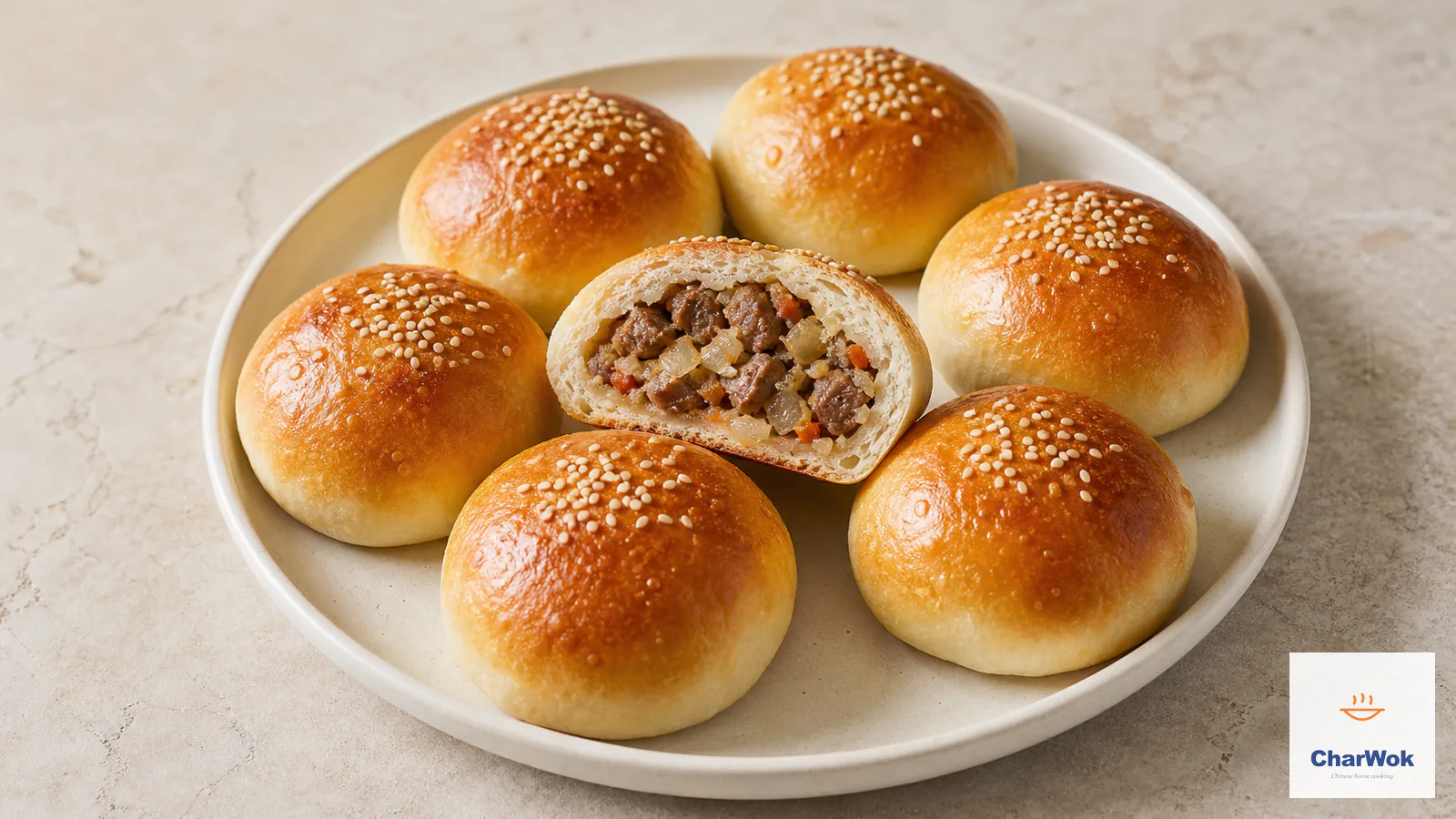
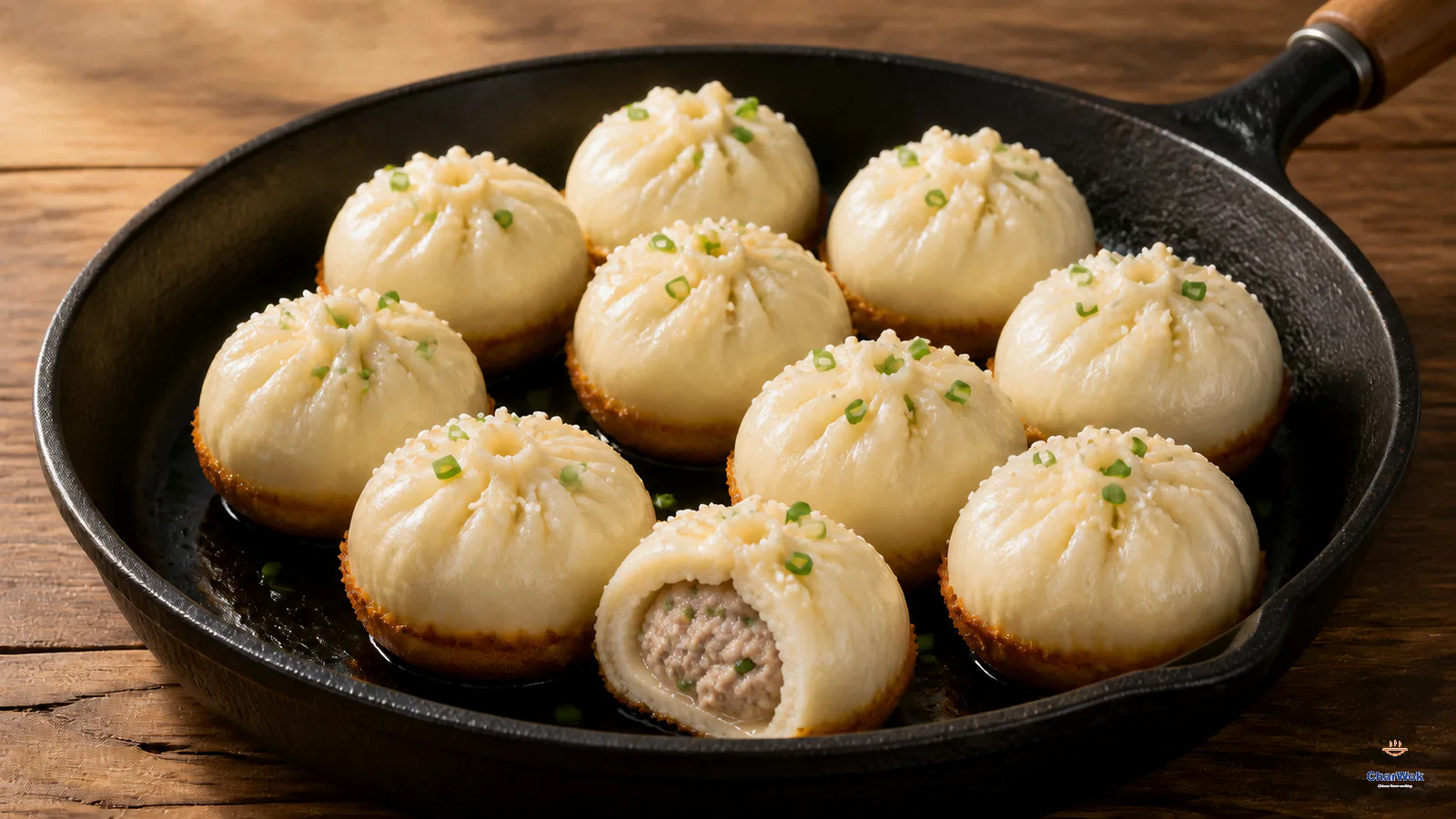
- Other cooking methods. The same shaped buns can be pan-fried in a covered skillet with a little oil and water to become sheng jian bao, pan-fried pork buns, crisp-bottomed and soft-topped. For an oven route, the lamb-filled baked bao of Xinjiang shows what the dough does dry heat instead of steam.
- Sweet versions. Swap the filling for red bean paste and add a tablespoon of sugar to the dough.
For the table, baozi are a meal with a bowl of congee and a sharp, acidic vegetable to cut the soft richness. A quick smashed cucumber salad does the job. For dipping, the six dumpling sauces translate directly: black vinegar with chili oil is my default, and a ginger-scallion oil is unbeatable on pork. Leftover buns also split and cradle slices of braised beef for a quick lunch, the same way the famous Chinese pork burger, rou jia mo, works.
Storage and reheating
Cooked baozi freeze beautifully. Cool them fully, then freeze on a tray before bagging so they do not stick. To reheat, either thaw overnight in the fridge and steam for 8 minutes, or steam straight from frozen for 15 minutes. Microwaving works in a pinch but makes the wrapper tough and gummy; a covered steamer is worth the few extra minutes. Raw shaped buns can also be frozen on a tray, then bagged; steam from frozen, adding about 5 minutes and letting them thaw slightly first if you have time.
Quick answers
Still have questions? Here are the ones that come up most.
The whole thing comes down to two moments: knead the dough until it is genuinely smooth, and respect the post-shape rest plus the slow lid lift. Do those two things and the rest of the recipe forgives a lot.