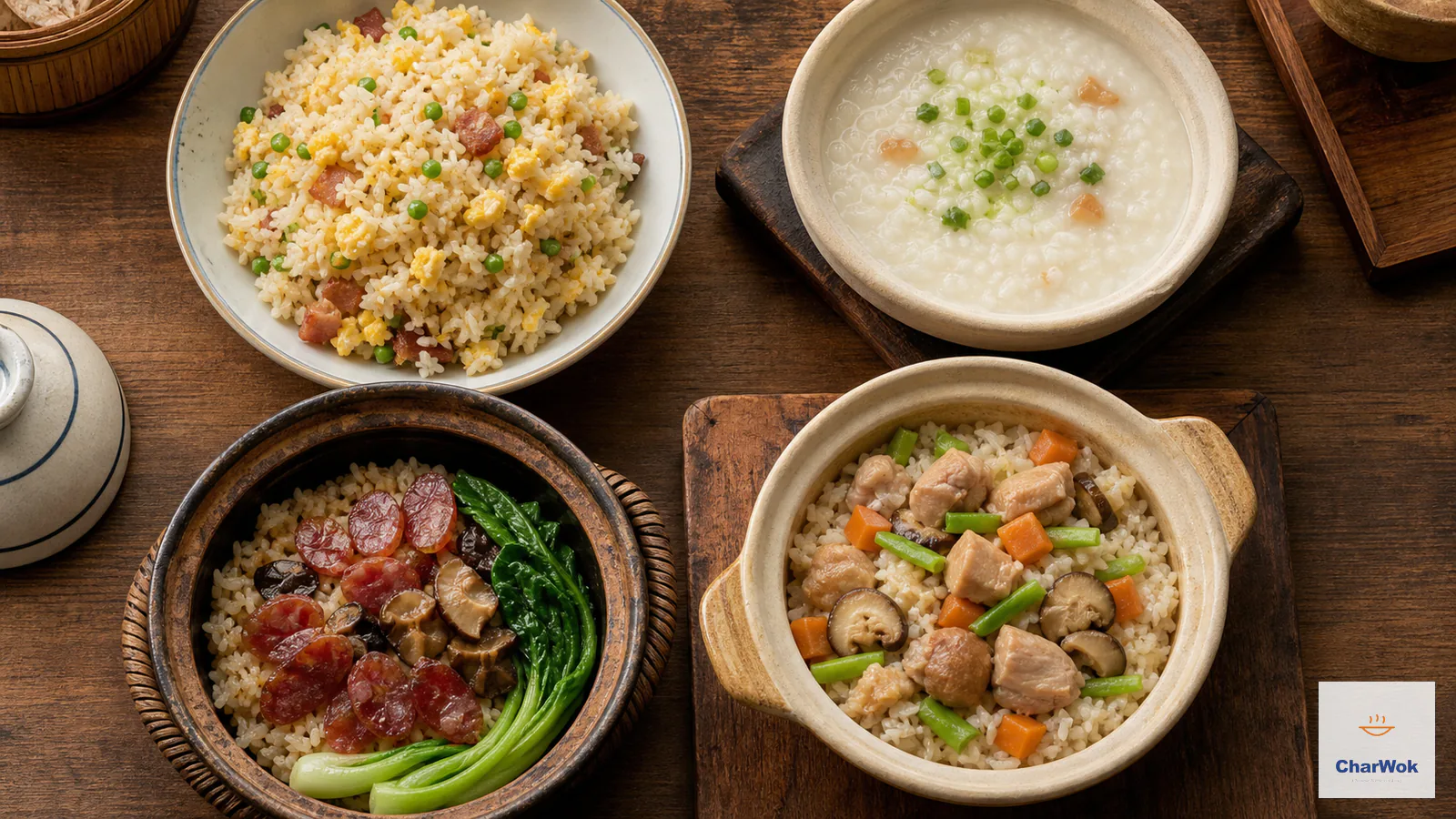
Rice is the one ingredient I would never try to talk a home cook out of mastering. It carries the whole table. A bowl of plain steamed rice next to three dishes is the shape of a normal weeknight dinner across most of China, and once that rice is good, almost everything else you cook gets easier, because there is already a soft, bland base to soak up whatever salty, saucy thing comes off the wok. But the same grain also hides a set of one-bowl meals that need nothing else: fried rice, congee, sticky rice loaded with sausage and mushrooms, Hainanese chicken rice cooked in its own fragrant fat. These are the dishes I make when I am tired, broke, or feeding someone who is sick, and they are the ones readers ask me about most.
This page is my own map of the rice dishes worth keeping in your rotation. Rather than hand you a flat list, I have grouped them by the cooking technique that defines them, because that is what actually determines success. The same jasmine rice behaves nothing like the same grain in a wok versus a clay pot, and once you understand the difference between steamed, fried, sticky, and porridge rice, you can branch out on your own instead of following recipes one at a time.
Plain steamed rice is the foundation; everything else is a controlled departure from it. The single number that matters most is the rice-to-water ratio by weight, about 1:1.2 for stovetop jasmine, and the single decision that ruins the most dishes is using rice that is too fresh, too wet, or too sticky for what comes next.
If you only learn one thing from this collection, make it that. Cook the foundation first and cook it well, then the fried rice and the congee and the one-pot meals fall into place.
Start with rice you can actually steam
Chinese rice cooking methods at a glance
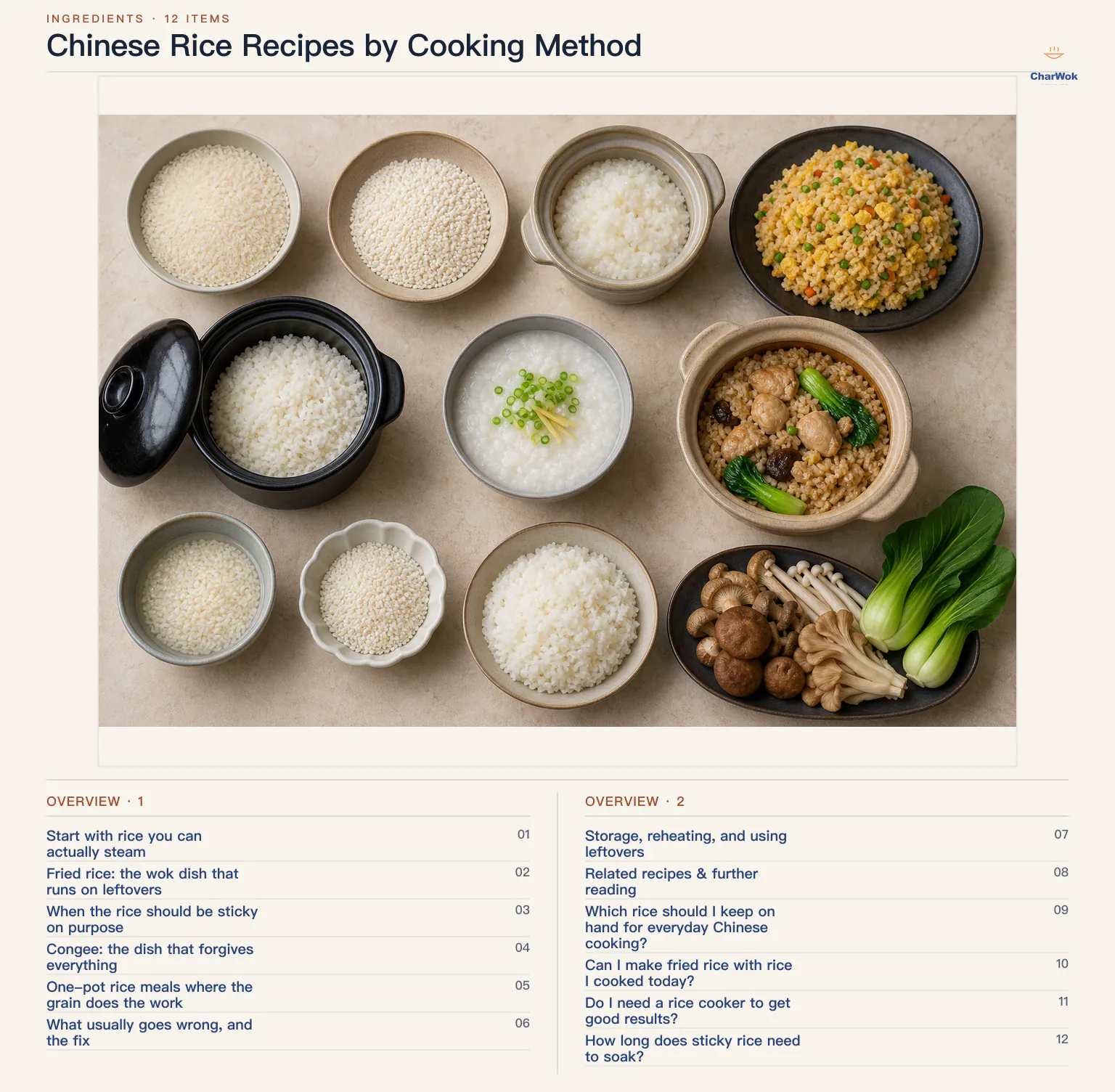
Most rice disasters in a home kitchen start before the cooking even begins. The grain you buy matters. For everyday Chinese rice dishes, you want a medium- to long-grain aromatic white rice. Jasmine is the household standard in most Chinese kitchens outside the northeast, and it is what I cook with ninety percent of the time. Short-grain sushi rice is stickier and sweeter; it works for some sticky-rice dishes but fights you in fried rice. Basmati is too dry and separate for this cuisine, though I have been served decent fried rice made from it in a pinch.
| Rice | Best use | Cooked texture | Notes / substitute |
|---|---|---|---|
| Jasmine (long-grain) | Steamed rice, fried rice, one-pot meals | Soft, separate, lightly aromatic | Everyday default. In a pinch, a long-grain white rice works but loses aroma |
| Glutinous / sweet rice (short-grain) | Lo mai fan, lo mai gai, fan tuan, zongzi | Chewy, clingy, translucent | Must soak before steaming. Do not swap jasmine in for these dishes |
| Short-grain sushi rice | Sticky-rice snacks where extra cling helps | Tender and very sticky | Adequate backup for some sticky-rice dishes; wrong choice for fried rice |
| Basmati | Last-resort fried rice only | Dry, very separate | Lacks the soft bite Chinese rice expects; acceptable, not ideal |
Wash the rice. This is not optional and it is not nostalgia. Rinsing removes surface starch that would otherwise turn the cooking water into paste and glue the grains together. I rinse three or four times in cold water, swirling gently with my fingers, until the water runs from milky to barely cloudy. Then I drain and let it sit in a fine sieve for ten minutes so the grains absorb a little water evenly before they hit the heat. This small step is the difference between grains that cook uniformly and grains that are soft outside and chalky at the core.
If you want the full method for getting plain rice right every time, with the stovetop ratio, the resting time, and a rice-cooker alternative, I wrote a dedicated guide to cooking jasmine rice on the stove three ways. Once that foundation is solid, the rest of this page becomes a lot more fun.
Fried rice: the wok dish that runs on leftovers
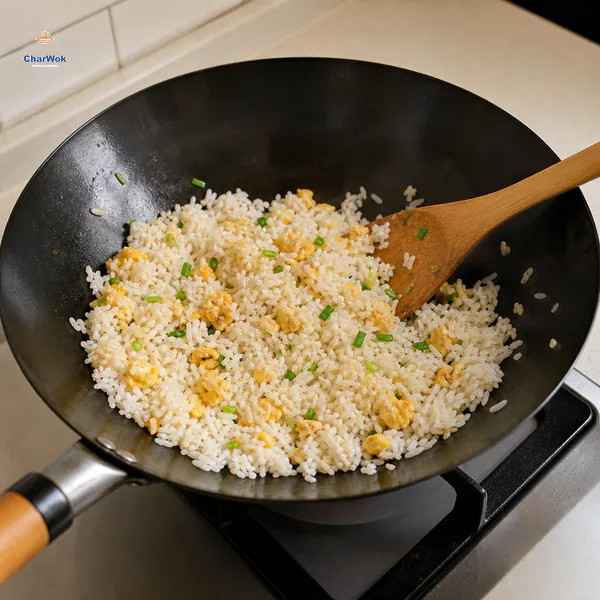
Use chilled rice whose surface has dried, loosen every clump before it enters the wok, and fry a modest batch over high heat so the grains stay separate instead of steaming.
Fried rice is the most forgiving rice dish in the cuisine and the most often butchered. The reason is almost always the same: warm, freshly cooked rice. Fresh rice holds too much moisture and too little structure. The moment it hits a hot wok it clumps, steams, and turns gummy. Day-old rice that has dried out in the fridge, by contrast, has lost enough surface water that each grain can seize in hot oil and stay separate. This is the entire secret, and no amount of high heat or fancy seasoning will save you if you skip it.
My rule is to cook a double batch of plain rice the day before I want fried rice, spread it on a tray to cool, then refrigerate it uncovered overnight. If I forget and only have same-day rice, I spread it out and let it dry on the counter for an hour, or give it a brief uncovered rest in a low oven. It is a compromise, not a substitute, but it works in a hurry.
From there, fried rice is a template rather than a recipe. Aromatics in hot oil first, then the protein, then the rice, then the seasoning, then a final toss. Egg fried rice is the cleanest place to learn the form: few ingredients, fast execution, and the technique scales straight up to the loaded versions. If you want to start there, my traditional egg fried rice walks through the timing that keeps the eggs tender instead of rubbery.
Once the basic rhythm is in your hands, the variations are endless. Yangzhou fried rice is the classic banquet version, built around a contrast of textures: shrimp, ham or char siu, egg, scallion, and a little carrot or pea. It looks like a lot of ingredients but the principle is identical to the egg-only version: cook each add-in briefly, keep the wok screaming hot, and never overload the pan. pork fried rice leans on the rendered fat from the meat for flavor, while chicken fried rice and shrimp fried rice are the two I make most often for weeknights because both proteins cook in under two minutes and stay juicy if you do not push them past done.
One seasoning note. Soy sauce goes in two possible places. Added early, it flavors the oil and tints the rice a deep, even brown, and this is the classic takeout look that soy sauce fried rice is built around. Added at the very end around the edge of the wok, it stays lighter and brighter. Both are correct; pick the look you want and commit to it.
When the rice should be sticky on purpose
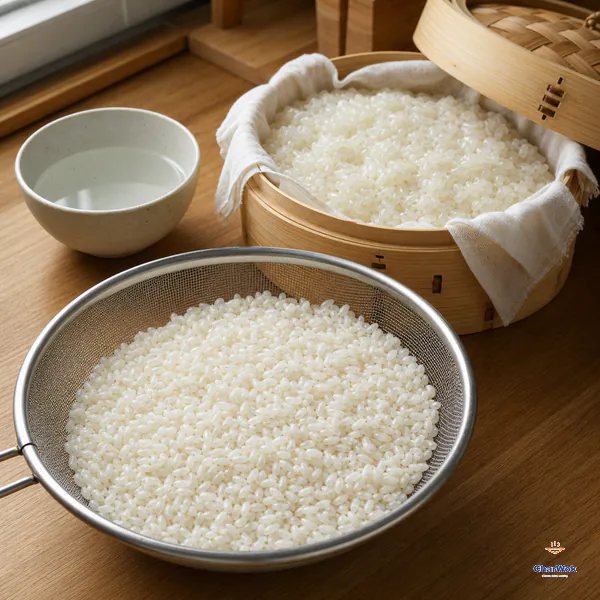
Soak glutinous rice for at least 4 hours, preferably overnight, drain it well, then steam it over boiling water until glossy and tender throughout.
Everything above uses long-grain jasmine. Now throw that out. A whole branch of Chinese rice cooking runs on glutinous rice, also called sweet rice or sticky rice, and it is a completely different ingredient with completely different rules. Glutinous rice has almost no amylose and a high proportion of amylopectin, the branch-chained starch that makes grains cling to each other after cooking. The result is chewy, slightly translucent, and almost bouncy — the texture you want wrapped around a dumpling filling or layered with cured meat.
Soak glutinous rice before you cook it. Always. Unlike jasmine, which hydrates during boiling, sticky rice is most often steamed, and steaming dry grain gives you a hard, chalky center no matter how long you leave it. I soak it for at least four hours, usually overnight, in cold water to cover. Then it steams over boiling water in around thirty to forty minutes and comes out glossy and tender.
The simplest sticky-rice main is Chinese sticky rice, lo mai fan, stir-fried after steaming with Chinese sausage, dried shrimp, mushrooms, and scallion. The fat from the sausage is the seasoning backbone; render it first and let it coat every grain. For a dim-sum version, lo mai gai wraps the same kind of sticky rice and chopped chicken in lotus leaves and steams the parcel until the leaf perfume soaks in. It is more project than weeknight, but it keeps and reheats beautifully and is one of the dishes I make ahead for guests.
For a faster sticky-rice meal, nothing beats Chinese sausage rice cooked in one pot. You do not need a clay pot or a rice cooker; the trick is to lay the sliced sausage on top of the rice during the last stretch of cooking so the fat renders straight down into the grains. And if you want sticky rice as breakfast rather than dinner, fan tuan rolls it around a crispy fried dough stick, dried pork floss, and pickled mustard greens. It is a Shanghai street food that travels well and eats even better.
Congee: the dish that forgives everything
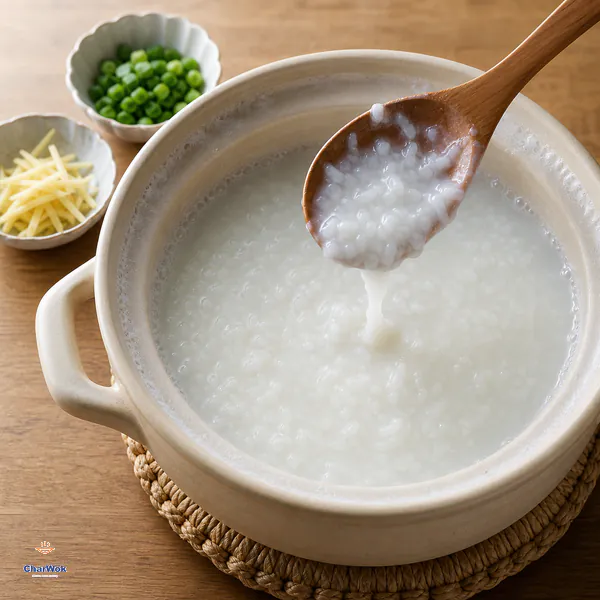
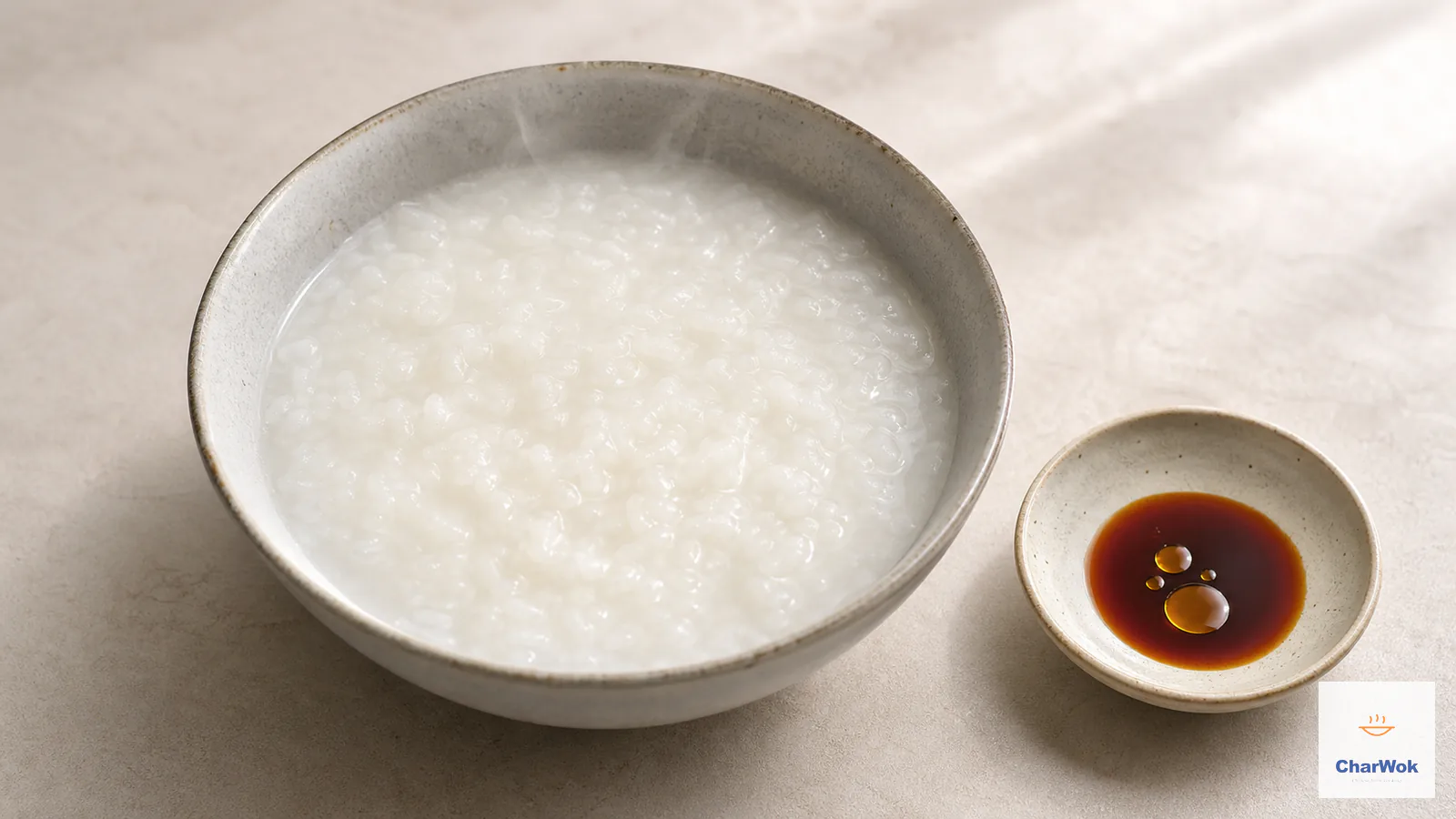
Simmer rice with about 8 parts water for a thick congee or up to 12 for a looser bowl, stirring occasionally until the grains open and the milky slurry coats the pot edge.
If fried rice is the rice dish that punishes mistakes, congee is the one that forgives them. It is rice cooked in a large amount of water until the grains break open and thicken the liquid into a soft, soothing porridge. There is no doneness test to fail, no window of a few seconds where everything goes wrong, and almost no way to overcook it. I make congee when someone in the house is unwell, when the weather turns cold, or when I have leftover rice and not much else.
The only number that really matters is the rice-to-water ratio, and it depends on how loose you like your porridge. For a thick, spoonable congee I use about 1 part rice to 8 parts water by volume; for a thinner, drinkable version I go up to 1:12. From there it is an hour or more of low simmering, with the occasional stir so the rice does not catch on the bottom. My basic congee recipe covers the two cooking methods I use, plus the toppings (scallion, ginger, white pepper, a drizzle of sesame oil, maybe a salted duck egg) that turn plain porridge into a meal.
The classic savory upgrade is chicken and mushroom. The chicken and mushroom congee I make most often uses a shortcut: instead of simmering for ninety minutes, I start the rice, then add thinly sliced chicken thigh and rehydrated shiitake in the last fifteen minutes so the meat stays tender instead of turning stringy. Dried shiitake does real work here: its soaking liquid goes into the pot and gives the porridge a savory depth the chicken alone cannot.
One-pot rice meals where the grain does the work
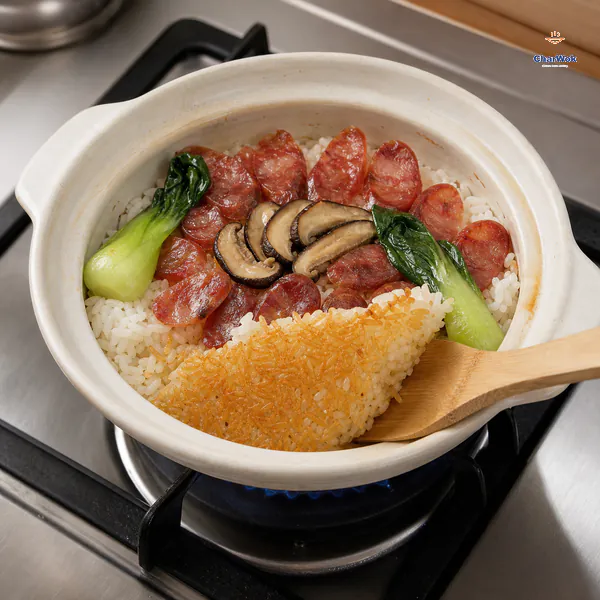
Finish clay-pot rice over a low flame; a gentle even crackle and toasted aroma signal a thin golden crust, while louder popping or a burnt smell means the heat is too high.
Somewhere between fried rice and a stir-fry with rice on the side sits a family of one-pot dishes where raw rice and a flavored liquid cook together and the grain absorbs everything. These are the most hands-off rice mains in the cuisine, and they are what I reach for when I want dinner with almost no active attention.
The showpiece is one-pot Hainanese chicken rice. The chicken is poached gently until just done, then the same poaching liquid, rich with chicken fat and aromatics, is used to cook the rice. The result is rice that is deeply savory and faintly yellow, each grain perfumed with the broth it came from. The one detail that decides whether it tastes right is the fat: render the chicken fat and fry the raw rice in it with ginger and garlic before adding the liquid. Skip that step and you get plain rice with chicken on top, which is not the same dish.
The other one-pot classic worth your time is clay pot rice, two ways. A clay pot holds heat intensely at the base, which lets the bottom layer of rice crisp into a golden, almost crackly crust, the part everyone fights over at the table. You do not strictly need a clay pot; a heavy cast-iron Dutch oven with a tight lid gets you most of the way there on a home stove. What you do need is patience and a low flame. Cranking the heat to speed things up burns the bottom before the top is cooked through.
What usually goes wrong, and the fix
I get the same handful of complaints over and over, and almost all of them trace back to one of two root causes: wrong rice for the job, or wrong water. Here is the short list.
- Sticky, clumpy fried rice. The rice was too fresh or too wet. Use day-old rice dried out uncovered in the fridge, and break it up with wet fingers before it goes into the wok so the grains separate instead of frying as a block.
- Mushy steamed rice. Too much water, or the pot was stirred during cooking. Stick to roughly 1:1.2 rice to water by weight for stovetop jasmine, and leave the lid on. Stirring releases starch and turns the pot to paste.
- Congee that stays thin and watery. Either the ratio was too low or the simmer too gentle to break the grains. A slightly higher ratio and a real, lazy bubble for the first half hour fixes it. You can also freeze cooked rice for ten minutes before cooking. The frozen grains crack and release starch faster.
- Sticky rice with a hard, chalky center. The grain was not soaked long enough. Four hours minimum, overnight is better. Steaming dry sticky rice never catches up.
- One-pot rice burnt on the bottom, raw on top. The heat was too high or the pot too thin. Use a heavy pot, keep the flame low once it reaches a simmer, and resist the urge to peek, since every lid lift lets steam escape and lengthens the cook.
Storage, reheating, and using leftovers
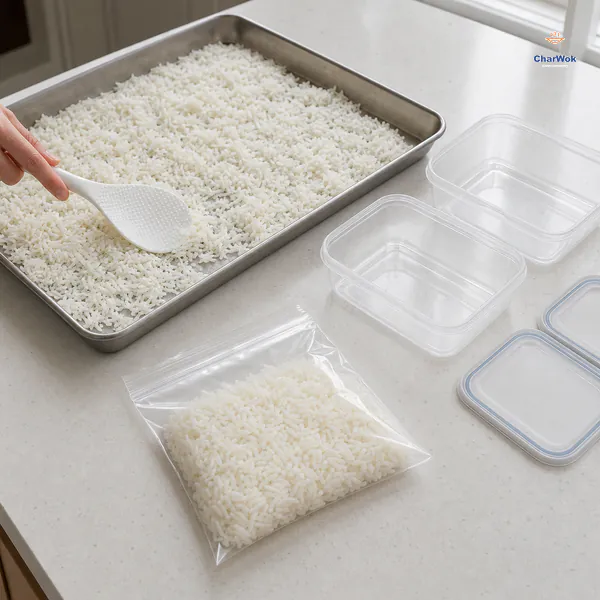
Cool cooked rice promptly in a shallow layer, portion it, then refrigerate it for 3 to 4 days; add a splash of water and cover when reheating plain rice.
Plain cooked rice keeps three to four days refrigerated and reheats perfectly with a splash of water and a tight lid on the microwave, or a few tablespoons of water and a low flame back in the pot. Fried rice is best the day it is made; if you must reheat it, use a dry pan over high heat and toss constantly so it does not steam into clumps. Congee thickens as it sits, so add water when you reheat and bring it back to the consistency you want. Sticky rice dishes reheat surprisingly well covered, in the microwave or a steamer, and the dim-sum parcels like lo mai gai are arguably better the next day because the flavors settle.
And if you ever find yourself with leftover glutinous rice and a sweet tooth, you are one step from eight treasure rice pudding, the festive dessert that layers sticky rice with sweet red bean paste and candied fruits. It is the rare rice dish that bridges dinner and dessert, and a good reminder that this one grain carries more of the Chinese table than any other ingredient in the pantry.
Related recipes & further reading
Once the core techniques above feel routine, the same grains open up dozens more dishes worth adding to your rotation. These are the ones I cook alongside the recipes on this page, from fried-rice variations and sticky-rice dim sum to rice cakes and the festive glutinous-rice desserts.
- beef and pineapple fried rice adds a sweet-tart fruit note to the basic fried-rice template.
- soy sauce rice pilaf shows the other path to deeply flavored steamed rice, no wok required.
- stir-fried rice cakes (chao nian gao) turns chewy rice cakes into a fast weeknight stir-fry.
- turnip cake (lo bak go) uses rice flour and preserved radish for a dim-sum staple you can pan-fry at home.
- pearl meatballs wraps ground pork in a coat of sticky rice for a steamed dish that always impresses.
- sweet lotus root stuffed with sticky rice is a gentle dessert where glutinous rice fills lotus segments and simmers until tender.
- Sichuan leaf-wrapped sticky rice cakes (ye'er ba) pairs glutinous rice with a savory pork filling inside a fragrant leaf parcel.
- zongzi, the Dragon Boat Festival sticky rice dumplings takes the same steamed-sticky-rice logic into a festive wrapped form.
- tang yuan glutinous rice balls swaps savory for a sweet sesame or peanut filling bobbing in warm syrup.
- nian gao, Chinese New Year rice cake is the chewy, sliced glutinous-rice cake that pans-fries up crisp at the edges.
- spicy orange beef is the kind of saucy stir-fry that wants nothing more than a bowl of plain steamed rice beside it.
- a broader roundup of must-try Chinese recipes if you want to branch out past rice into the rest of the cuisine.
- the core Chinese cooking skills guide connects rice dishes with braises, steaming, noodles, and dough.
Frequently asked questions
Which rice should I keep on hand for everyday Chinese cooking?
Long-grain jasmine white rice for steaming and fried rice, plus a smaller bag of glutinous sticky rice for the lo mai fan and dim-sum dishes. Those two cover the overwhelming majority of the recipes on this page. Keep sushi or short-grain rice only if you specifically want extra stickiness.
Can I make fried rice with rice I cooked today?
You can, but it will not be as good. Fresh rice holds too much water and clumps in the wok. If you are stuck, spread it on a tray, let it dry for an hour at room temperature or briefly in a low oven, then refrigerate it uncovered until cool. Day-old fridge rice is still the gold standard.
Do I need a rice cooker to get good results?
No. A heavy lidded pot on the stove turns out excellent rice once you dial in the ratio and resist lifting the lid. A rice cooker is a convenience, not a requirement, and the same is true for the one-pot meals: a Dutch oven stands in for a clay pot just fine.
How long does sticky rice need to soak?
At least four hours in cold water, overnight if you can plan that far ahead. Short soaks leave a hard, chalky core no matter how long you steam. If you forgot to soak, hot water for an hour is a weak fallback but never as even as a cold overnight soak.