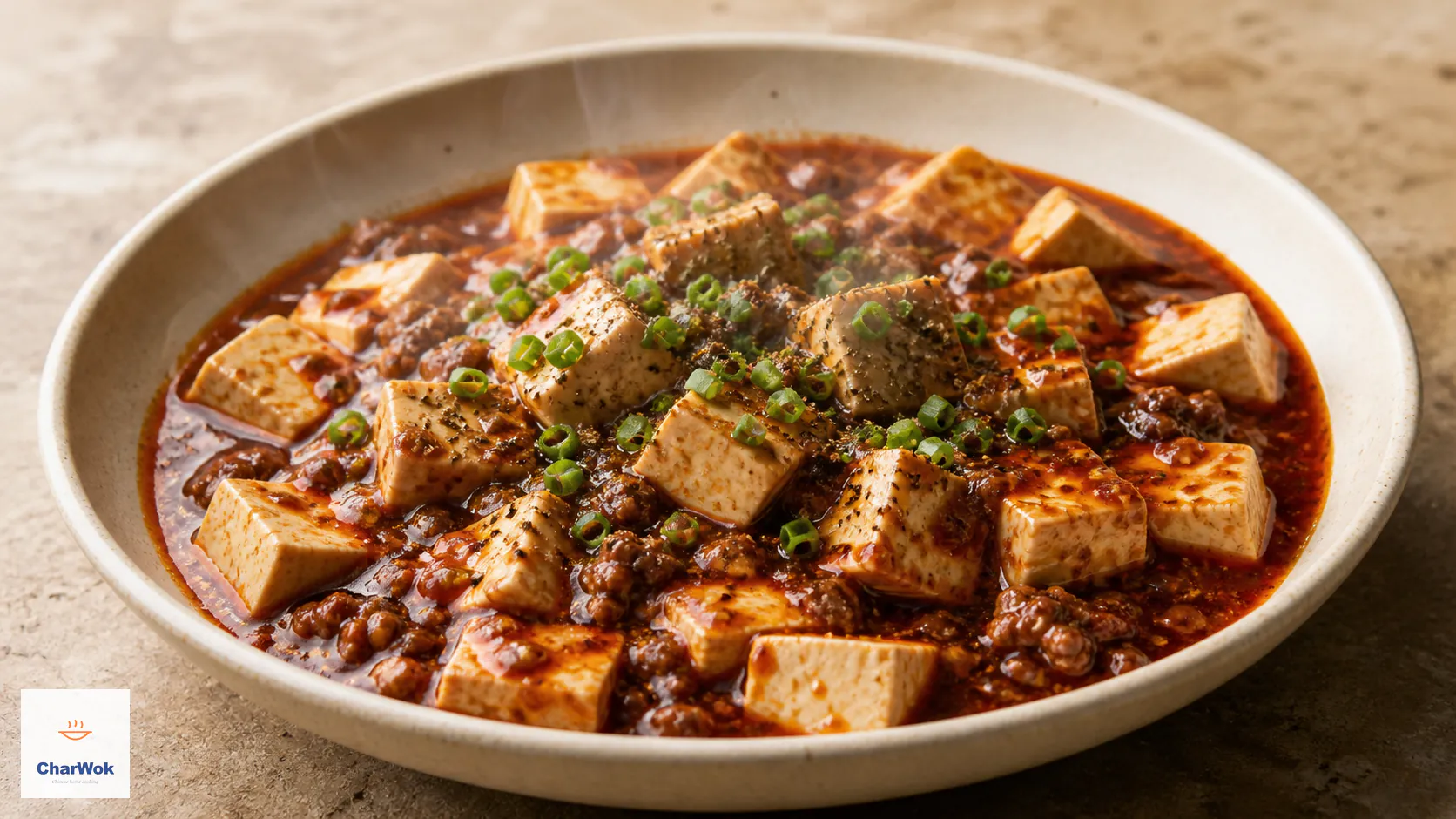
Mapo tofu is one of those dishes that punishes shortcuts and rewards a half-dozen small decisions most recipes never mention. Done right, it is silken cubes floating in a glossy red sauce that tastes of beef fat, fermented chile, and the low hum of toasted Sichuan pepper, the kind of plate you eat too fast and then stare at, wondering where the rice went. Done wrong, it is a bowl of tofu swimming in thin, oily water that burns the front of the tongue and tastes of nothing in particular. The gap between the two comes down to technique, not ingredients, and once you see it the dish becomes reliable.
The version most home cooks land on is the second one. I made it for years before a friend from Chengdu watched me cook and stopped me at the wok. I was boiling the tofu in the sauce, stirring it like soup, and dumping all the starch in at once. Each of those is a quiet way to ruin the dish. What follows is the cleaner method I settled on after, written for a Western kitchen where doubanjiang comes from a jar and the beef is from the supermarket.
At a glance. The whole dish rests on three things: blanching the tofu in salted water so it holds together, frying the chile paste in beef fat until the oil turns red, and thickening the sauce in two stages so it clings instead of pools. Budget about 20 minutes start to finish, with roughly 600 g of tofu to 100 g of meat. If you skip the two-stage starch, you have already lost.
What this dish is, and where the bar is
Mapo tofu comes from Chengdu and belongs to the Sichuan school that builds dishes around ma la, the numbing-spicy pairing that Sichuan pepper and chile create together. The name refers to the pockmarked grandmother who, by the usual telling, served it from a small shop outside the city walls in the late Qing period. The classic version uses beef, not pork, and that is not a detail you should treat as optional. Beef fat carries the chile paste in a way pork cannot, and the lean mince gives the sauce its gritty, meaty texture. Pork makes a perfectly fine weeknight Mapo, but it reads softer, sweeter, and less authentic to the dish's roots.
The bar a good version clears is sometimes summed up in Chinese as ma, la, tang, xian, nen, you, huo: numbing, spicy, hot (served steaming), fresh-tasting, tender, glossy with the right amount of oil, and assembled quickly over live heat. It is a useful checklist because each word points to a step. Glossy means the sauce is thickened. Tender means the tofu was handled gently. Hot means it goes from wok to bowl with no detour. Keep that list in mind and the method below will make more sense.
If you want more dishes in this register, this is one of the cornerstones of home-style Sichuan cooking, and the building blocks here carry straight into stir-fries and braises across the cuisine.
Ingredients
Ingredients at a glance
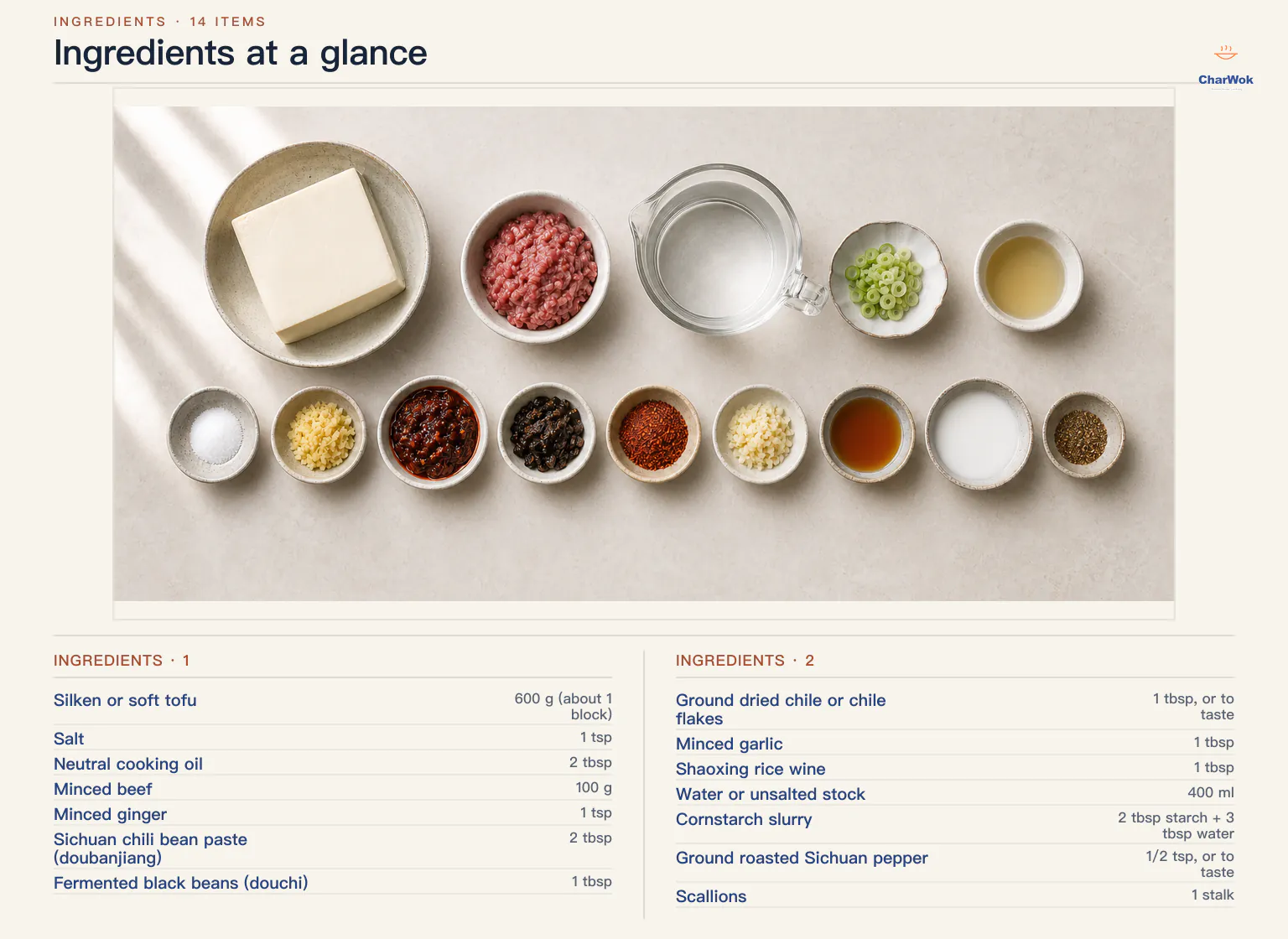
| Ingredient | Amount | Notes / substitute |
|---|---|---|
| Silken or soft tofu | 600 g (about 1 block) | Soft, not firm. See note below on choosing tofu. |
| Salt | 1 tsp | For the blanching water. |
| Neutral cooking oil | 2 tbsp | Peanut, canola, or grapeseed. Not olive oil. |
| Minced beef | 100 g | 70 to 85% lean. Pork works; beef is traditional. |
| Minced ginger | 1 tsp | Fresh, minced fine. |
| Sichuan chili bean paste (doubanjiang) | 2 tbsp | Pixian is the benchmark. Chop it fine before use. |
| Fermented black beans (douchi) | 1 tbsp | Rinse, then chop. Optional but worth seeking out. |
| Ground dried chile or chile flakes | 1 tbsp, or to taste | Adjust for heat; flakes give a rougher, oilier finish. |
| Minced garlic | 1 tbsp | Added late, so it stays sharp. |
| Shaoxing rice wine | 1 tbsp | Dry sherry is the closest Western substitute. |
| Water or unsalted stock | 400 ml | Stock adds body; water is traditional and cleaner. |
| Cornstarch slurry | 2 tbsp starch + 3 tbsp water | Split into two additions. |
| Ground roasted Sichuan pepper | 1/2 tsp, or to taste | Freshly ground, added off the heat. |
| Scallions | 1 stalk | Finely chopped, green and white parts. |
The method, step by step
- Cube the tofu and blanch it in salted water. Cut the block into roughly 2.5 cm (1 inch) cubes. Slide them into a wok or pot of cold water with the salt, bring it to a boil, then simmer one minute and drain. The brief blanch firms the surface so the cubes keep their shape, warms them through so they do not cool the sauce later, and rinses away the slight raw soy taste. Skipping this is the single most common reason the tofu falls apart in the pan.
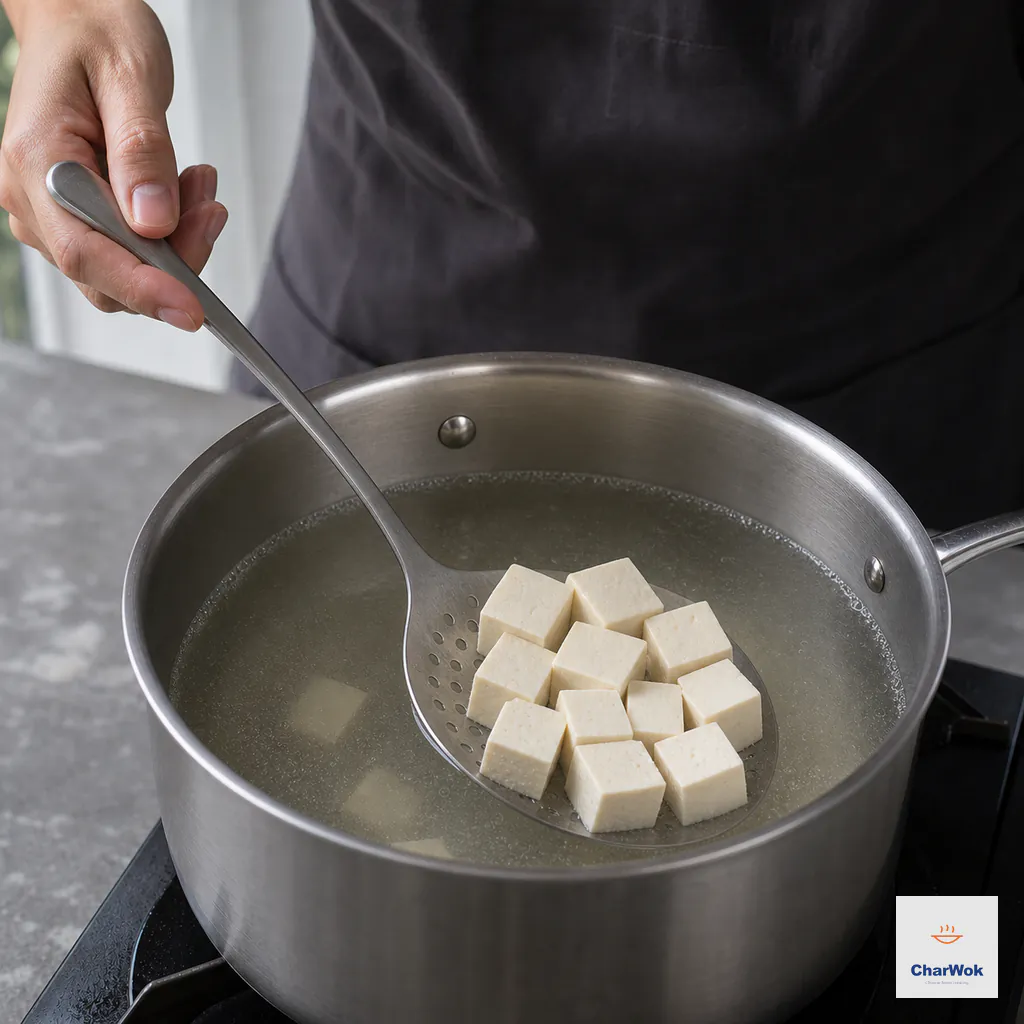
Blanch the tofu gently for 1 minute, then drain
- Render the beef in a hot wok. Heat a dry well-seasoned wok until it is smoking lightly, then add the oil and swirl. Add the minced beef and ginger and stir-fry over high heat until the meat loses its pink color and the fat begins to render. You want the beef lightly browned and slightly crisp at the edges, not grey and steamed. If your beef is very lean and the pan goes dry, add another teaspoon of oil; you need a little fat to carry the next step.
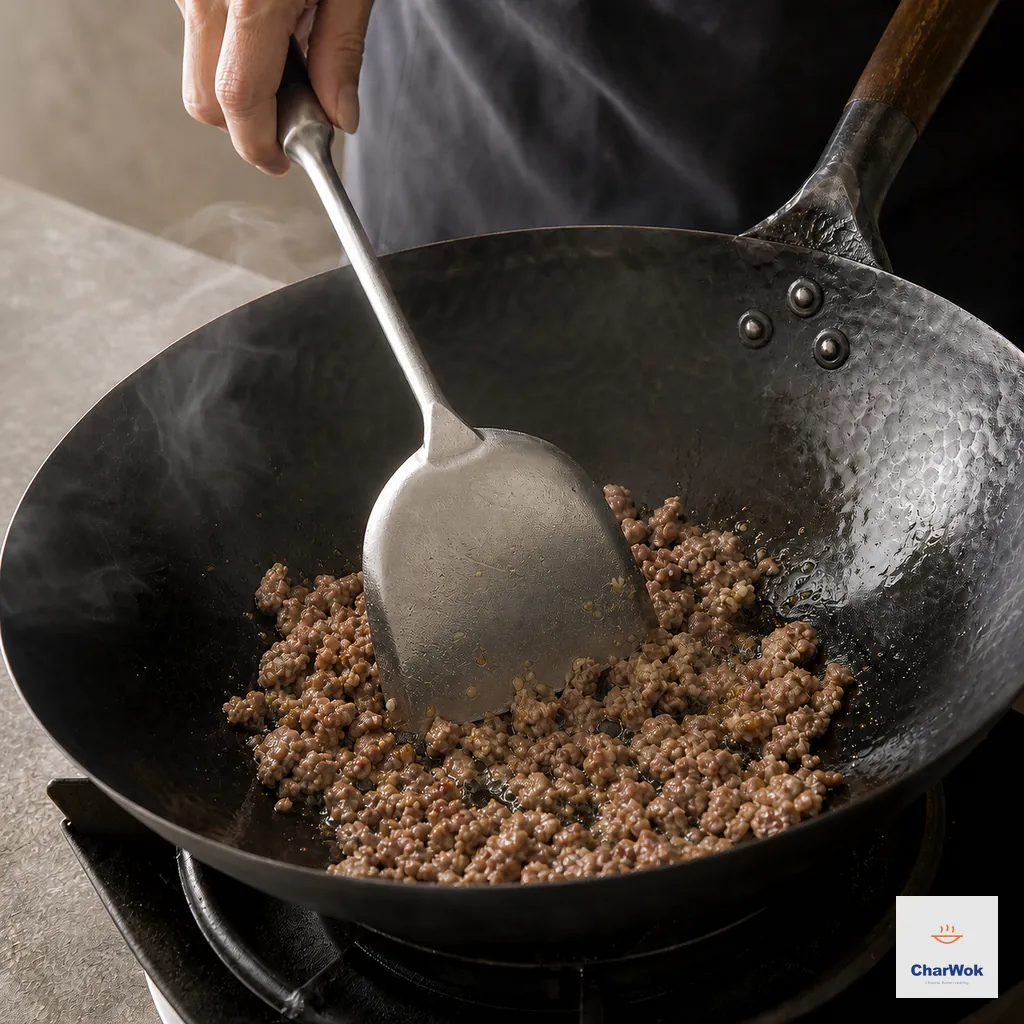
Brown the beef and ginger until no raw color remains and a few edges crisp
- Fry the aromatics in the rendered fat. Push the meat up the side of the wok and add the chopped doubanjiang, black beans, ground chile, and garlic to the pool of fat in the center. Fry, pressing and stirring, until the oil turns a deep, glossy red and the kitchen smells sweet and smoky, about 30 to 45 seconds. This is the step that defines the dish. The chile paste has to be fried in fat, not just warmed, because that is what releases its color and rounds its raw edge. If you add it straight to liquid you get a muddy, sour sauce.
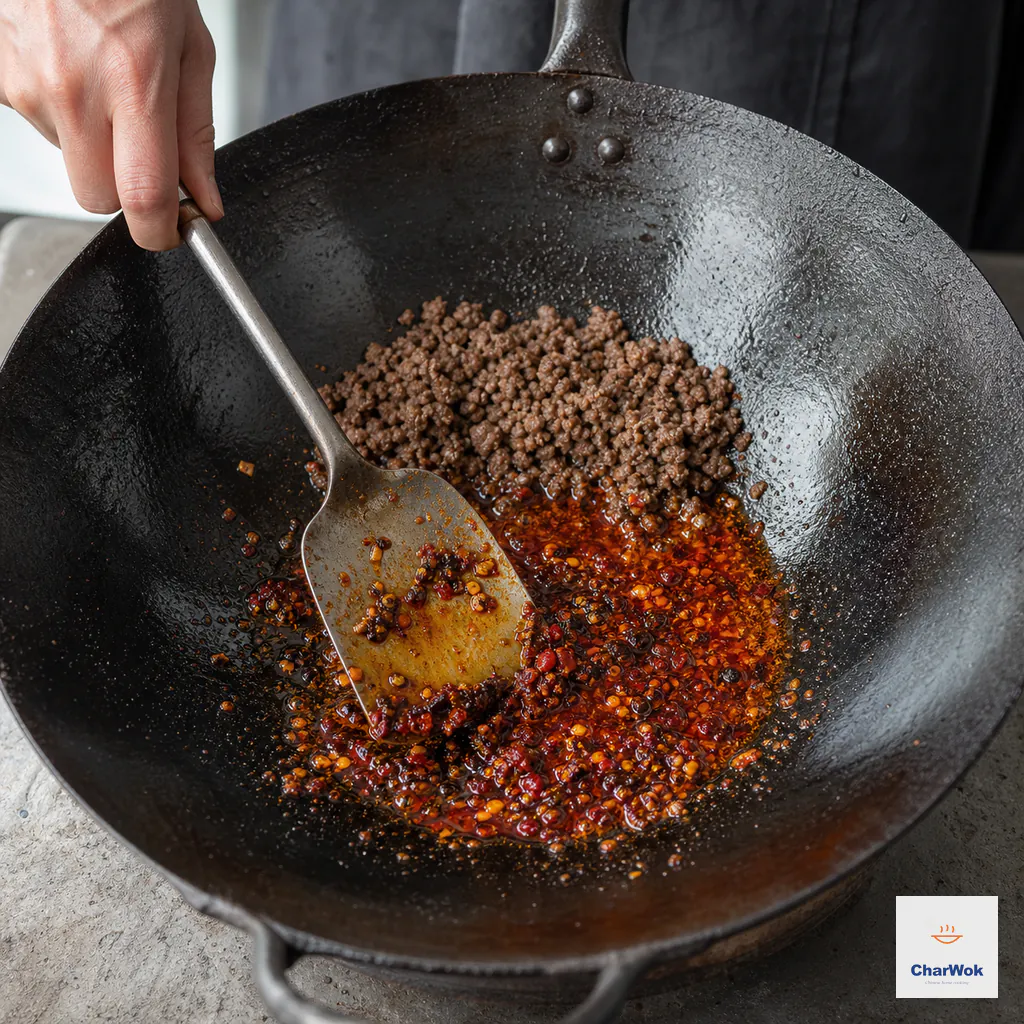
Fry the aromatics until fragrant and brick-red oil separates
- Deglaze and braise. Splash in the Shaoxing rice wine to lift the fond off the wok, then pour in the water or stock. Bring it to a rolling boil, then gently slide in the tofu. Let it boil uncovered for about five minutes. The uncovered boil is deliberate: it reduces the liquid slightly and lets the tofu drink in the sauce, which is why the cubes taste seasoned all the way through rather than bland in the middle. Stir by gently shaking the wok or pushing from underneath with the back of a spatula, never by dragging through the cubes.
- Thicken in two stages. Stir the cornstarch slurry until smooth, then pour in only half. Simmer about ten seconds, watching the sauce, then add the rest. Two additions matter because a single heavy pour over-thickens the outside of the sauce while leaving it loose underneath, and it can turn gluey as it cools. Done in stages, the starch gelatinizes evenly and the finished sauce stays glossy and clingy instead of pasty. You are looking for the moment the sauce moves slowly and coats the back of the spatula like a thin syrup.
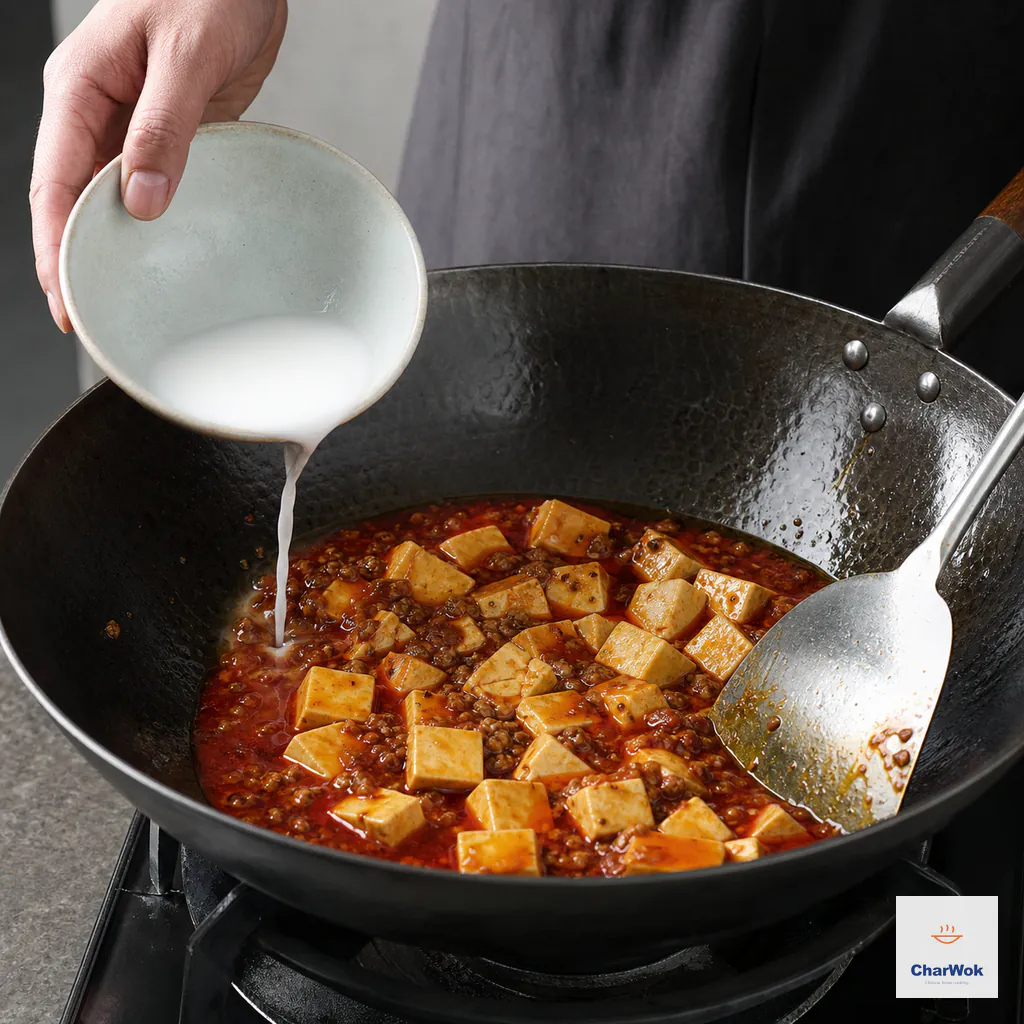
Add the slurry in two stages, stopping when the sauce lightly coats
- Finish off the heat. As soon as the sauce coats, kill the heat. Stir in the ground Sichuan pepper and most of the scallions, mixing gently. The pepper goes in last because its volatile aromatics fade fast under heat; adding it off the flame keeps the numbing bite bright. Serve immediately, in shallow bowls, over fresh jasmine rice.
Where it goes wrong, and how to fix it
The tofu collapses into mush. Almost always because it was not blanched, or because you stirred instead of tossing. Blanching firms the surface; from then on, move the cubes by shaking the wok or lifting from beneath. If yours is already broken, call it a rustic version and serve it over rice anyway. It will still taste good.
The sauce is thin and separates into oil on top of watery liquid. You either skipped the two-stage starch or added it while the sauce was not boiling. Starch needs a full boil to gelatinize. Reheat to a boil, mix a fresh teaspoon of starch with a tablespoon of cold water, and trickle it in while stirring until the sauce clings.
It tastes flat, just hot. The chile paste was not fried long enough, or you used a generic chile sauce instead of real doubanjiang. The fermented bean paste is what gives the dish its savory depth; without it, you are eating spicy tofu water. Chop the paste fine and fry it in the fat until the oil runs red before any liquid goes in.
It is bitter or gritty. Too much ground chile, or burnt chile flakes. Ground dried chile scorches in seconds; keep the wok moving once it goes in. If your doubanjiang has large bits of chili skin, chop it on the board first so nothing catches.
The numbing effect is missing. The Sichuan pepper was stale or ground too far ahead. Buy whole peppercorns, toast them dry in a pan until fragrant, and grind fresh. Add it off the heat, never before. Old pre-ground pepper tastes like dusty nothing.
Variations and what to serve it with
The cleanest variation is to leave the dish as it is and change only the protein. Pork mince is the common substitution and gives a softer, slightly sweeter result; for a vegetarian version, skip the meat and fry a tablespoon of the chile paste in oil to start, or use rehydrated textured vegetable protein soaked in hot water and squeezed dry. Some cooks add a handful of fermented black beans or a spoon of chili oil at the end for extra punch.
For the rest of the table, Mapo tofu wants plain steamed rice and very little else. Cooked properly on the stove, jasmine rice is the right neutral base. If you want a fuller Sichuan meal, pair it with a cool, crunchy contrast. A plate of smashed cucumber or a lighter hot-and-sour soup works, as does a vegetable that cuts the richness, like dry-fried green beans. For a noodle night instead, the same flavor profile shows up in Dan Dan noodles and in chili-oil wontons, which make natural companions.
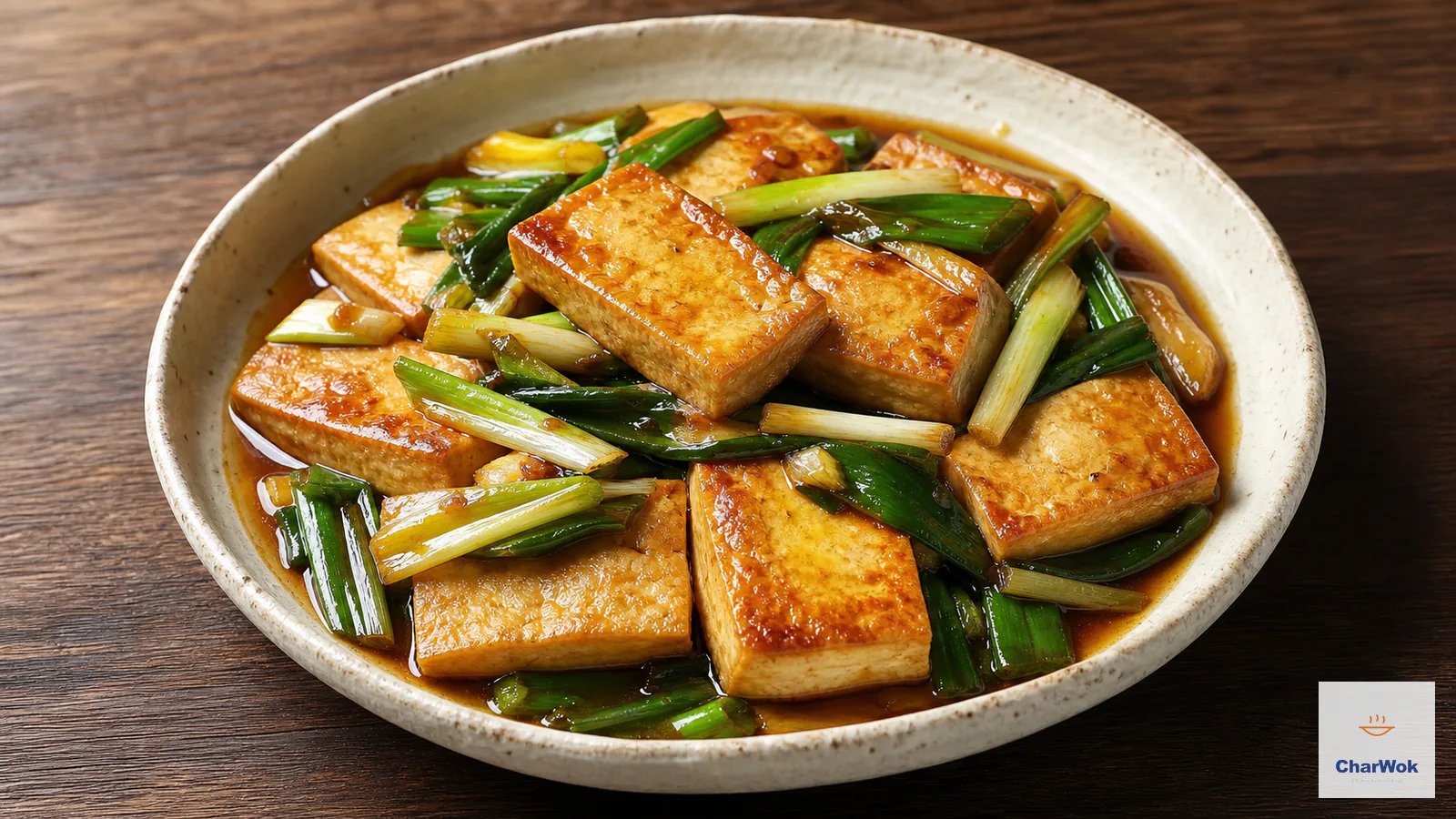
If you fall for this style of braised, sauce-soaked tofu, the obvious next dish is home-style braised tofu, which uses firmer tofu and a similar but less fiery seasoning. And if it is the beef-and-chile braise you love, Sichuan boiled beef and twice-cooked pork run on the same logic.
Storage and reheating
Mapo tofu keeps for two days in the fridge and reheats better than you might expect, because the starch continues to set and the flavors deepen overnight. Warm it gently in a pan over low heat with a splash of water, and stir as little as possible so the cubes hold their shape. Do not microwave it dry. The tofu texture is never quite as good the second day, but the sauce often is. I do not recommend freezing it; the tofu goes spongy and weeps on thaw.
Frequently asked questions
Can I use firm tofu? You can, but you will lose the soft, almost custardy texture that defines the dish. If firm is all you have, buy the softest block available and blanch it longer to relax the curd.
Is pork or beef more traditional? Beef. The original Chengdu version uses minced beef for its stronger, leaner flavor and the way its fat carries the chile paste. Pork is a fine, milder substitute.
Why thicken the sauce twice? One pour over-thickens the surface and leaves the sauce loose underneath. Adding the slurry in two stages, ten seconds apart, lets the starch gelatinize evenly so the sauce clings instead of turning gluey.
How spicy is this? Moderately spicy with a strong numbing finish. Cut the ground chile to a teaspoon for less heat, and toast whole Sichuan peppercorns fresh for the cleanest ma effect.
Can I make it vegetarian? Yes. Omit the meat, fry the chile paste in oil to start, and use water instead of stock. Rehydrated textured vegetable protein, squeezed dry, stands in for the minced beef if you want the texture.