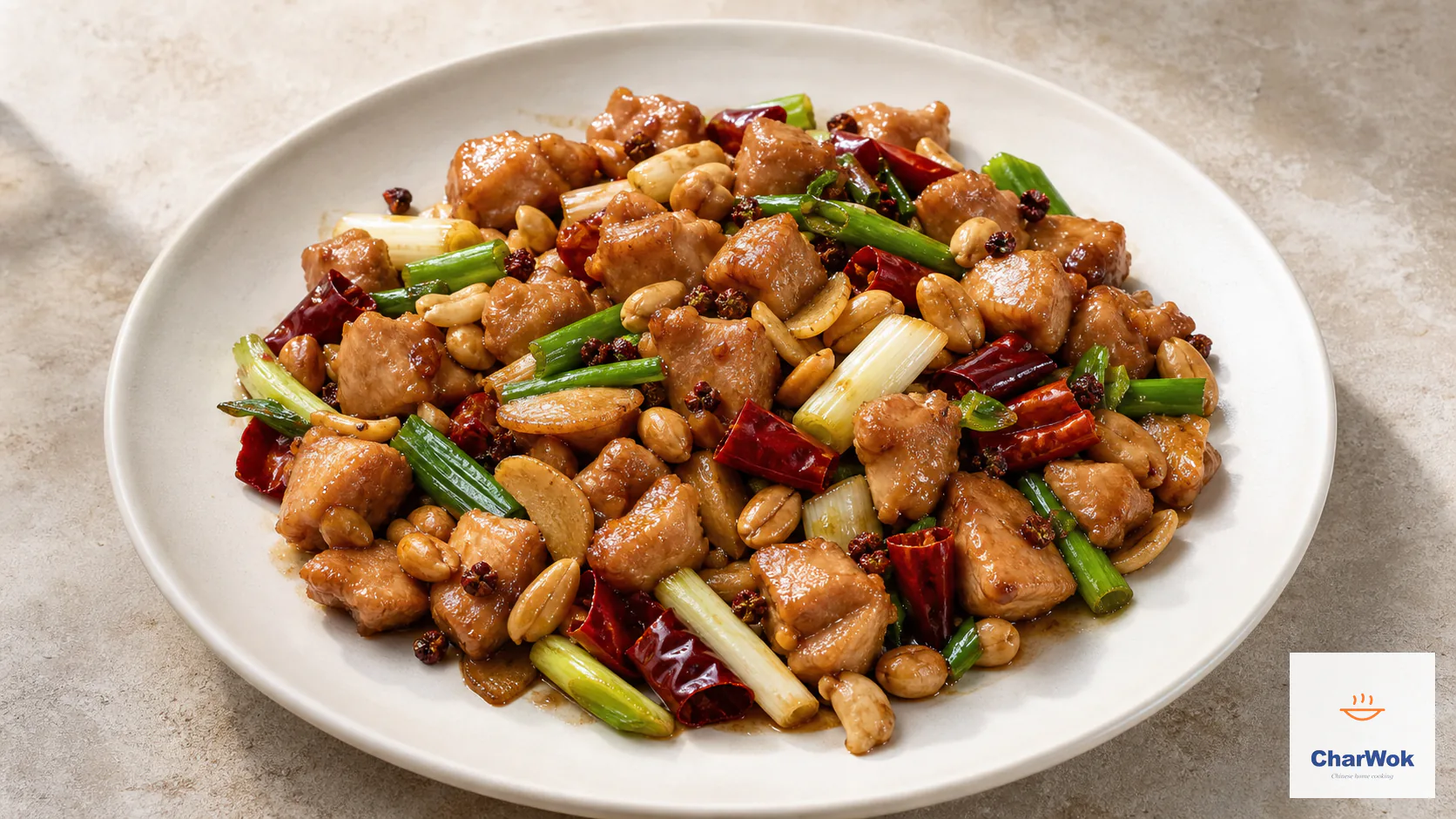
Kung Pao chicken balances tender velveted chicken with a sweet, sour, salty, and numbing sauce. The practical challenges are keeping the pan uncrowded, blooming the spices without burning them, and finishing the chicken safely before the starch-thickened sauce becomes too tight. An instant-read thermometer resolves that last trade-off more reliably than colour or a fixed number of seconds.
The dish is Sichuanese in origin and is widely associated with the Qing-dynasty official Ding Baozhen. Its name is believed to come from his honorary title, Gong Bao. It belongs firmly in the Sichuan canon next to mapo tofu and twice-cooked pork. What separates it from a generic "chicken with chilies" is the liaoli sauce: a pre-mixed bowl of soy, vinegar, sugar, wine, and cornstarch that you pour in at the very end. The cornstarch in that sauce is doing real work, not sitting there for tradition.
At a glance
Velvet the chicken for 10 minutes in the refrigerator, toast and cool the peanuts, and mix the sauce before heating the pan. Use oil at about 350–355°F (175–180°C) without smoke, then finish the thickest chicken cube to 165°F (74°C). If the sauce tightens first, add water rather than serving undercooked chicken.
What good Kung Pao is supposed to taste like
The classic description is hu la wei, "numbing-spicy flavor," but that undersells the dish. A proper plate has five clear notes at once. First the low hum of Sichuan peppercorn, which numbs rather than burns. Then the dry, smoky heat of toasted chilies that you eat around, not chase. Underneath sits a sweet-sour-salty sauce carried by black rice vinegar, sugar, and two kinds of soy. Finally the peanuts give every bite a clean, fatty crunch. If your plate tastes only of sweetness or only of heat, the sauce ratio is off. The vinegar and sugar should be within a hair of each other.
One note on authenticity versus the takeout version. Western-Chinese Kung Pao is often a sweet, glossy, cornstarch-thick gravy with a few vegetables thrown in. That is fine, but it is a different dish. The version here is closer to what you would be served in Chengdu: drier, glossier, more numbing, and finished with raw scallion greens for brightness.
Ingredients
Ingredients at a glance
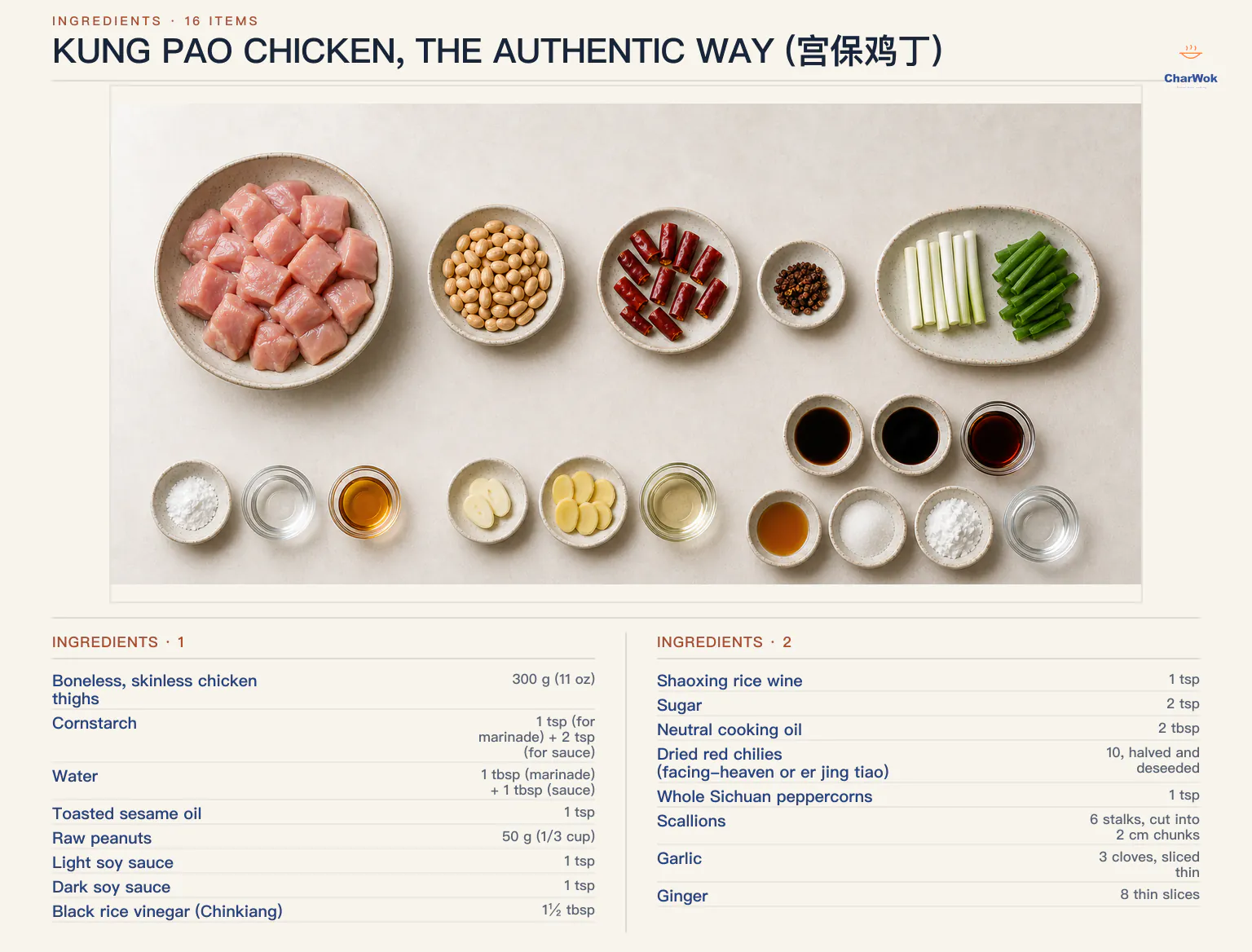
Serves 2 as a main with rice, or 3 to 4 as part of a larger spread.
| Ingredient | Amount | Notes / substitute |
|---|---|---|
| Boneless, skinless chicken thighs | 300 g (11 oz) | Thighs stay juicier than breast. Breast works if you slice it slightly larger and do not overcook. |
| Cornstarch | 1 tsp (for marinade) + 2 tsp (for sauce) | Potato starch is an even better velveting agent if you have it. |
| Water | 1 tbsp (marinade) + 1 tbsp (sauce) | Cold water for the marinade. |
| Toasted sesame oil | 1 tsp | For the marinade only. See our sesame oil guide. |
| Raw peanuts | 50 g (1/3 cup) | Cashews or skinned walnuts are fine; do not use pre-salted cocktail peanuts. |
| Light soy sauce | 1 tsp | For salt and umami. Light vs. dark soy matters here. |
| Dark soy sauce | 1 tsp | For color only. It is less salty than it looks. |
| Black rice vinegar (Chinkiang) | 1½ tbsp | The sour backbone. Balsamic is a distant fallback; cider vinegar in a pinch. |
| Shaoxing rice wine | 1 tsp | Dry sherry substitutes cleanly. |
| Sugar | 2 tsp | White is fine; rock sugar dissolved in a splash of hot water gives a cleaner gloss. |
| Neutral cooking oil | 2 tbsp | Peanut, canola, or grapeseed. High smoke point is non-negotiable. |
| Dried red chilies (facing-heaven or er jing tiao) | 10, halved and deseeded | Deseed them or the dish turns bitter. Soak 10 minutes if very brittle. |
| Whole Sichuan peppercorns | 1 tsp | Red (hong hua jiao) for aroma; green for sharper numb. Toast briefly. |
| Scallions | 6 stalks, cut into 2 cm chunks | Keep white and green separate; greens go in at the end. |
| Garlic | 3 cloves, sliced thin | Sliced, not minced, so it does not burn. |
| Ginger | 8 thin slices | Cut across the grain so the fibers are short. |
Method
- Cut and velvet the chicken. Cube the thighs evenly to roughly 2 cm. Toss with 1 tsp cornstarch and 1 tbsp cold water until no liquid pools, then add 1 tsp sesame oil. Cover and refrigerate for 10 minutes on a low shelf, away from ready-to-eat food. Use a clean board and utensils for the remaining ingredients.
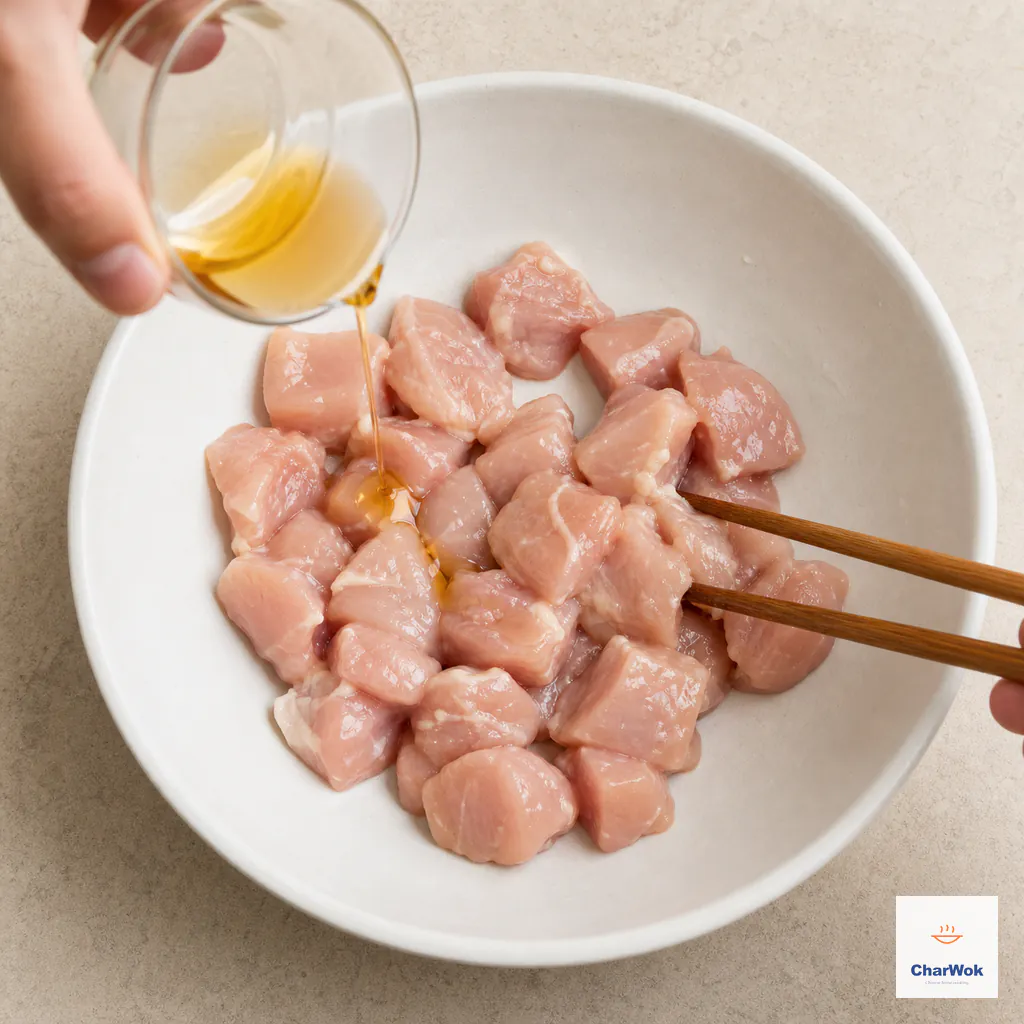
Mix starch and water until no liquid pools, then coat with sesame oil
- Toast the peanuts dry. Put the raw peanuts in a dry pan or wok over low heat and stir often. Pull them off the moment the skins darken and you can smell roasted nuts. They keep cooking on the plate, so take them out a shade lighter than you think. Cool on a wide plate, not in the hot pan. Skip the oil here; dry-toasted peanuts stay crunchier and do not make the final dish greasy.
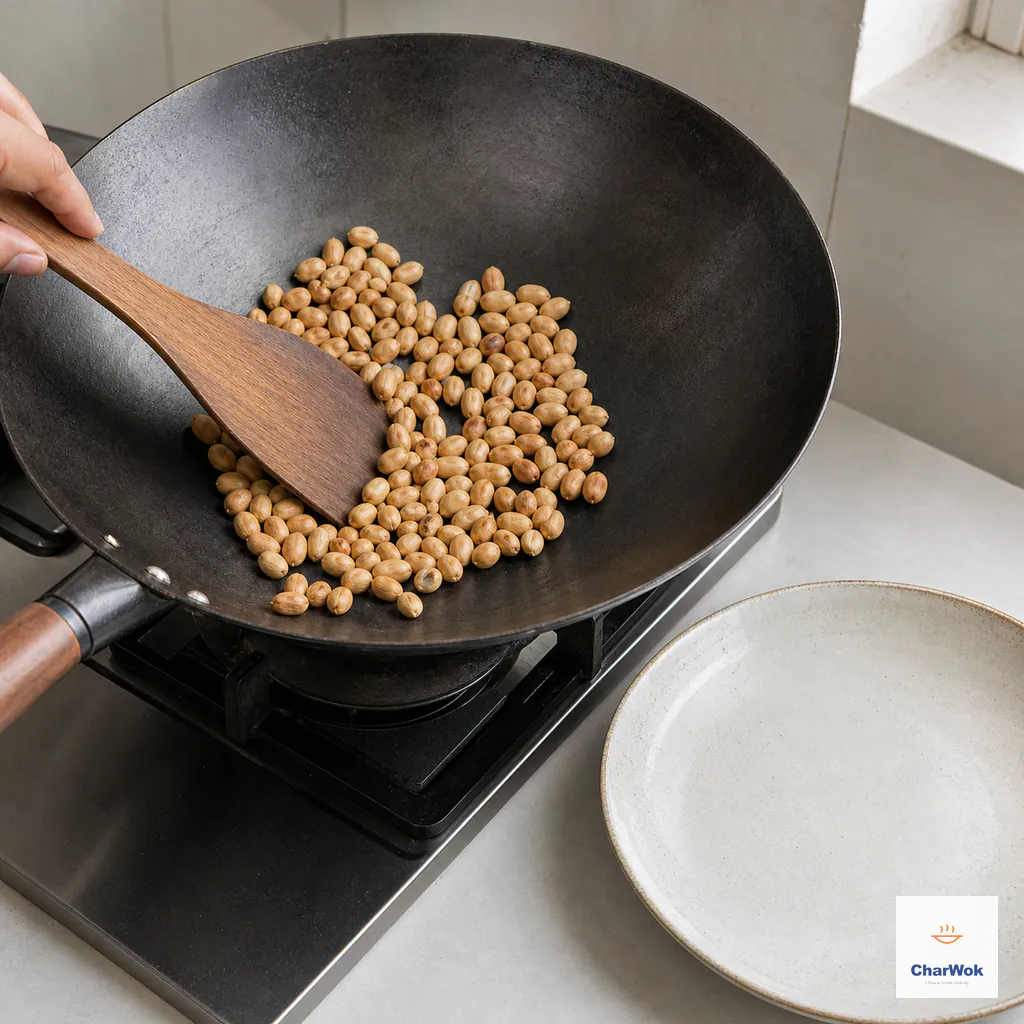
Pull the peanuts one shade early and cool them on a wide plate
- Mix the sauce bowl. Combine the light soy, dark soy, black rice vinegar, Shaoxing wine, sugar, the remaining 2 tsp cornstarch, and 1 tbsp water. Stir until the sugar and cornstarch are fully dissolved. The Shaoxing wine deglazes and lifts the fond; the cornstarch is what turns the thin liquid into a clingy glaze the moment it hits the hot wok. Set the bowl right next to the stove with a spoon in it.
- Preheat without smoke. Heat a dry carbon-steel wok over medium-high heat until a small water drop beads and glides; discard the water and wipe the wok completely dry. Add 2 tbsp oil and heat until shimmering, about 350–355°F (175–180°C), without smoke. For non-stick cookware, add oil before heating and follow the manufacturer's temperature limit.
- Bloom the chilies and peppercorns (10 to 15 seconds). Add the dried chilies and Sichuan peppercorns to the oil and keep them moving. The moment the chilies darken and the peppercorns release their scent, they are done. Ten seconds too long and the chilies turn black and bitter, ruining the oil. If your burner is weak, drop the heat slightly so you have a margin.
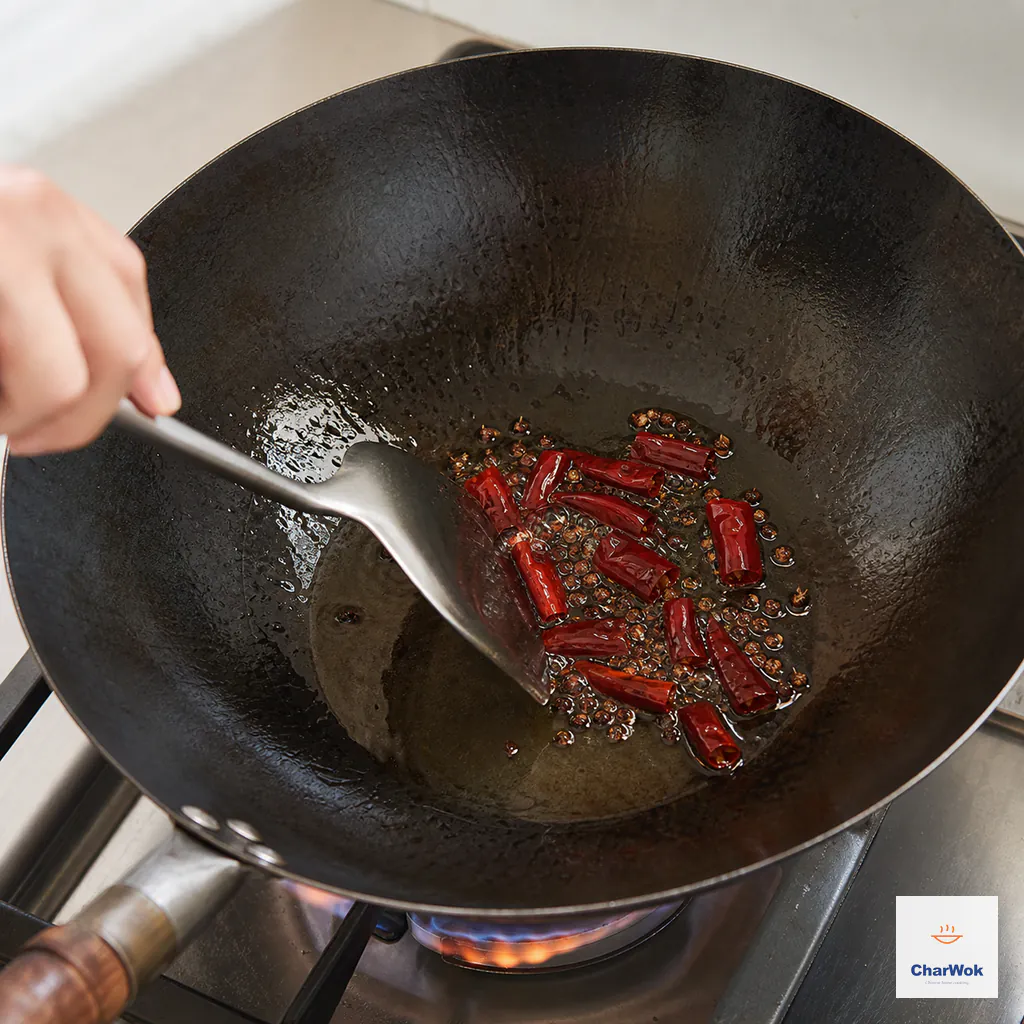
Keep the spices moving; add chicken while the chilies are deep red, never black
- Give the chicken a short first sear. Add the chicken in one layer, let the first side set briefly, then toss and separate the cubes. About 1 minute is only a texture cue; the chicken is still undercooked at this stage, and colour is not a doneness test.
- Add the aromatics. Add the scallion whites, garlic, and ginger and toss until fragrant. Keep the chicken in the pan; do not taste or move partially cooked pieces to a serving plate.
- Add the sauce and verify doneness. Restir the sauce, pour it around the wok edge, and toss. As it turns glossy, check the thickest chicken cube with an instant-read thermometer and continue cooking until it reaches at least 165°F (74°C). If the sauce tightens before the chicken reaches temperature, add 1 tablespoon water and keep stirring. Turn off the heat only after the temperature check.
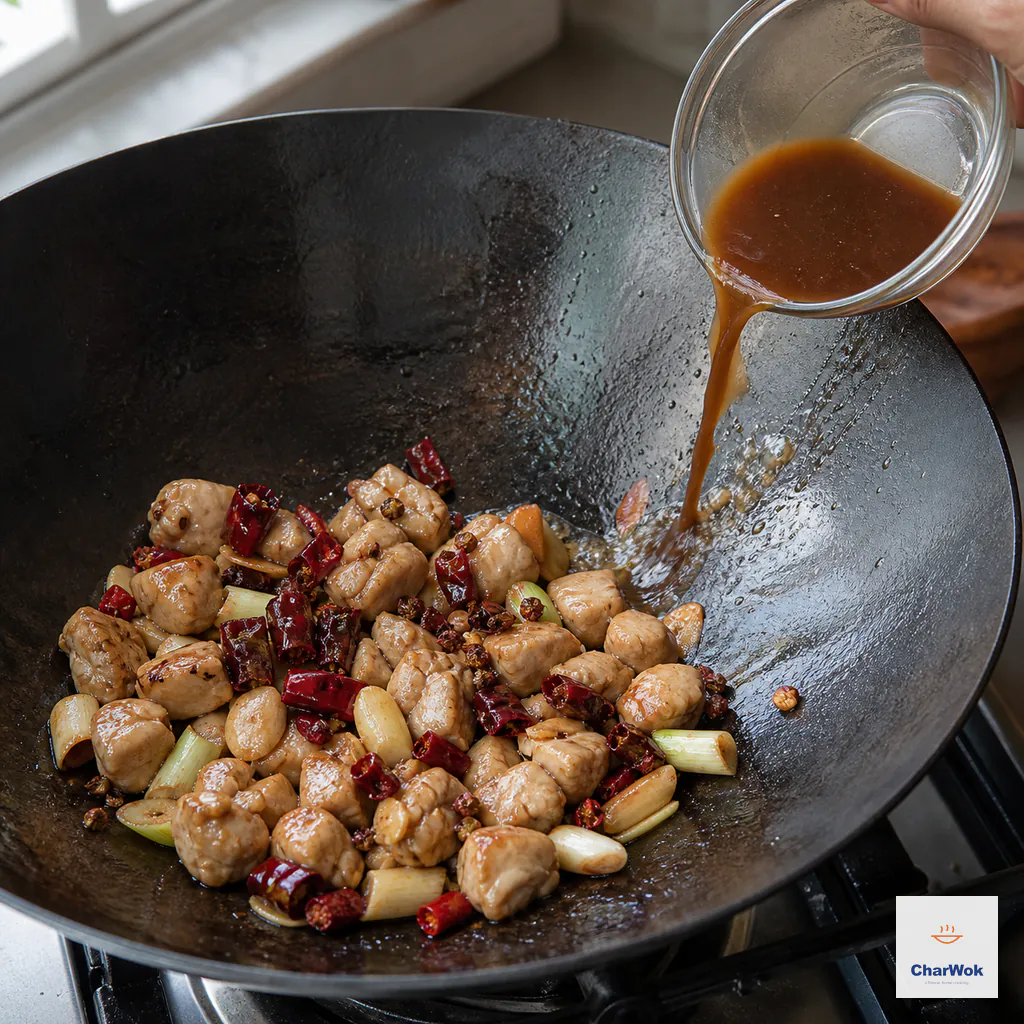
Restir the sauce and pour around the rim; continue until the thickest chicken cube reaches 165°F (74°C), adding water if the glaze tightens first
- Finish with peanuts and scallion greens. Off the heat, fold in the toasted peanuts and the scallion greens so they stay crunchy and bright. Plate immediately and serve with plain rice.
Food-safety sources: the U.S. Fire Administration cooking-fire guidance, the U.S. government’s safe minimum internal temperature chart, and FoodSafety.gov leftover guidance.
When it goes wrong, and how to fix it
The sauce is thin and watery. The cornstarch may have settled or the pan cooled. Keep the chicken in the pan until it reaches 165°F (74°C), then remove it to a clean plate if the sauce still needs reduction; never put partially cooked chicken on a serving plate.
The sauce is a gummy paste. Too much cornstarch, or you let it boil too long. Thin it with a tablespoon of hot water or stock off the heat and toss. For the next batch, measure the cornstarch level, not heaped.
The chicken is dry and stringy. The cubes may be uneven, crowded, or cooked far beyond 165°F (74°C). Chicken breast works, but cut it evenly and use the thermometer—not a pink centre or carryover heat—to stop at the safe endpoint.
The dish is bitter, not spicy. The chilies burned, or you left the seeds in. Deseed them, drop the heat a notch when blooming, and never let the chilies turn fully black. Charred chili oil tastes like ash.
It is too salty. Almost always the dark soy. Dark soy is milder than it looks, but if your brand is strong, cut it to ½ tsp and add a few drops of water to the sauce bowl. Taste the raw sauce with a clean finger; it should read sweet-sour first, salty second.
The peanuts went soft. You added them while the pan was still on the heat, or you used precooked salted peanuts. Always fold peanuts in off the heat, and toast them yourself from raw.
Variations and pairings
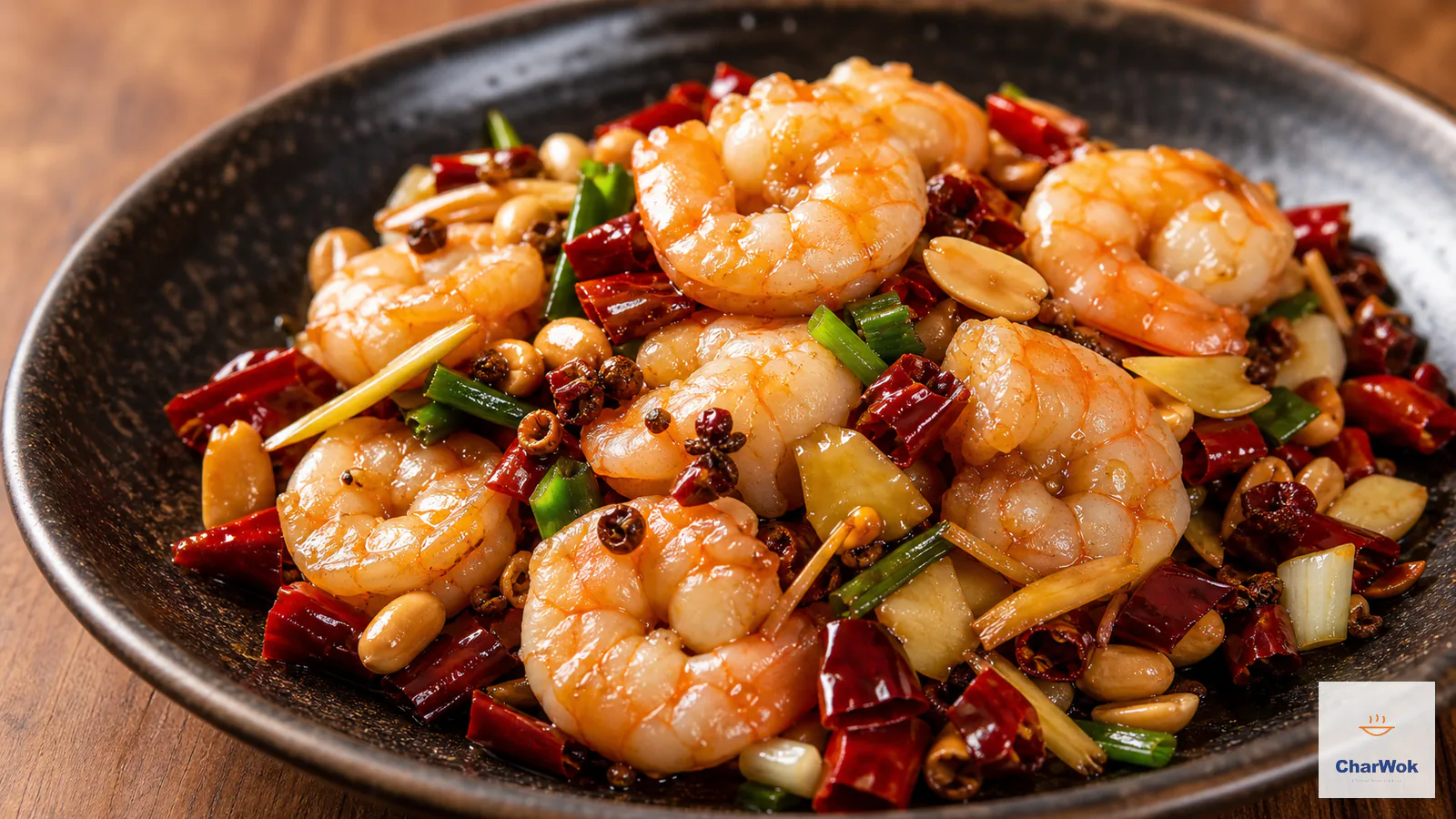
Swap the protein. The same sauce and technique work beautifully with shrimp. Try the Kung Pao shrimp approach: sear the shrimp even faster, about 45 seconds total. Cubed extra-firm tofu (pressed, then pan-crisped) is a strong vegetarian route.
Crank the numb. For a more aggressive Sichuan hit, add ½ tsp of ground roasted Sichuan peppercorn to the finished sauce. If you want the dish to lean incendiary the way Chongqing laziji does, double the chilies and leave a few seeds in.
The nut question. Peanuts are traditional, but cashews give a sweeter, creamier bite; the cashew chicken family leans on exactly that. Toast whichever you use the same dry way.
What to serve it with. Plain steamed rice is mandatory; the sauce needs a bland carrier. For a full meal, add a clean vegetable like stir-fried water spinach or a plate of smashed cucumber, and a soup that cuts the richness. A bowl of hot and sour soup doubles down on the same flavor family without competing. If you want contrast instead, a mapo tofu alongside turns the meal into a small Sichuan banquet.
Storage and reheating
For the best texture, serve immediately. Transfer leftovers to shallow covered containers and refrigerate within 2 hours, or within 1 hour above 90°F (32°C). Eat or freeze within 3 to 4 days. Reheat only the portion needed in a pan with a tablespoon of water or in the microwave until the chicken reaches 165°F (74°C); add freshly toasted peanuts after reheating.
Frequently asked questions
Can I use chicken breast instead of thighs? Yes. Cut the cubes evenly, velvet them for 10 minutes in the refrigerator, and cook the thickest cube to 165°F (74°C). Do not intentionally undercook it or rely on colour and hot sauce to finish the centre.
Is there a non-alcoholic stand-in for Shaoxing wine? Dry sherry is the closest match. For alcohol-free cooking, use an equal mix of water and rice vinegar with a pinch of sugar, though you lose a little of the savory depth.
How spicy is this, really? With the seeds removed, the heat is moderate; the dried chilies mostly perfume the oil, and you eat around them. Leave a few seeds in, or double the chilies, and it climbs quickly. The Sichuan peppercorn adds numbness, not heat.
Why mix the sauce in a bowl instead of adding each seasoning to the wok? Because the cornstarch needs to be evenly dispersed before it hits heat, and because the whole stir-fry lasts about four minutes. Measuring at the stove means a cold wok and overcooked chicken.
Can I make it without a wok? A large cast-iron or carbon-steel skillet works if it is not crowded. Non-stick also works if oil is added before heating and the pan stays within the manufacturer's temperature limit.
The one line that matters
The useful order is simple: velvet and refrigerate the chicken, toast and cool the peanuts, mix the sauce, then cook in an uncrowded pan. Sauce gloss is a texture cue; the actual finish line is 165°F (74°C) in the thickest chicken cube.