The whole reputation of Yangzhou fried rice rests on one ordinary thing: the rice. Not the shrimp, not the ham, not the eggs. Get the grains right and the dish tastes like the version from a good takeout window. Get them wrong and you have a sticky, wet pile that no amount of soy sauce will save. I have made both versions, more than once, and the difference was never the recipe. It was the rice, and the heat.
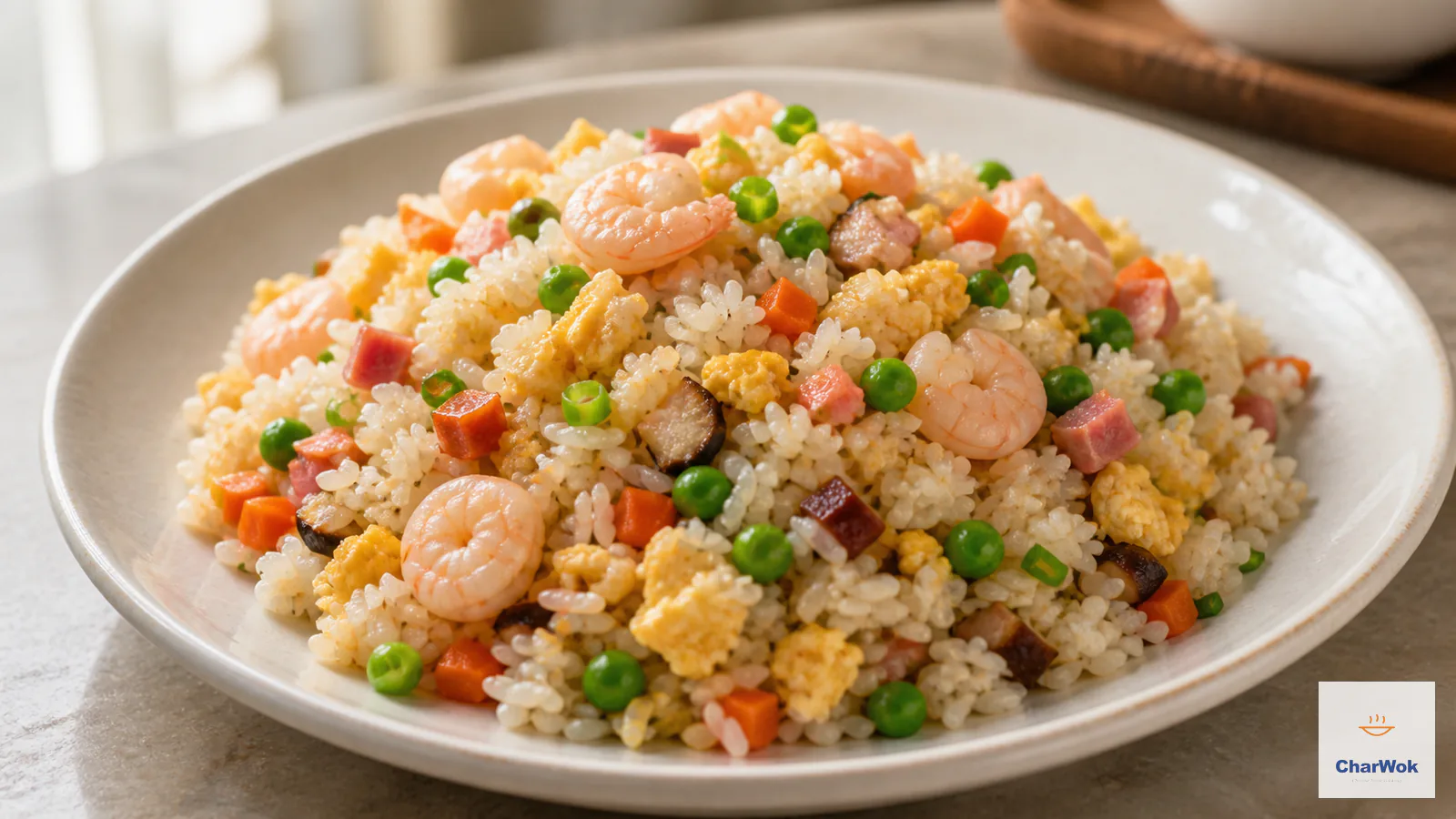
Yangzhou fried rice (扬州炒饭) is the most famous member of a family the Chinese call chao fan, or stir-fried rice. It is the one with the diced proteins and the flecks of color, the dish that every Cantonese restaurant and half the takeout menus in America serve under the name "house special fried rice." It comes from the Yangzhou region of Jiangsu province, and the traditional version is built on a long ingredient list: barbecued pork, shrimp, ham, chicken, mushrooms, bamboo, peas, carrot. The beauty of the home version is that you can shrink that list down to whatever is in the fridge, and it will still be the same dish as long as you respect the method.
At a glance: Two servings, ready in about 15 minutes once the rice is cooked and cold. The non-negotiables are cold, separate grains and a wok hot enough to make the oil smoke. Use about 3 cups (450 g) cooked rice to 2 eggs and a total of 3 tablespoons oil, split across the pan. Salt at the end, never the beginning.
Start with the rice, a day ahead
Every good fried rice begins the night before, with a fresh pot cooked slightly on the dry side. I cook jasmine rice on the stove using a quarter less water than I would for eating plain, spread it on a tray to cool, and refrigerate it uncovered overnight. That overnight rest is the real ingredient. Refrigeration pulls moisture out of the surface of each grain, the starch on the outside retrogrades and firms up, and you end up with rice that can take a beating in a hot wok without turning to paste. Fresh rice will always disappoint you here. If you are in a hurry, spread freshly cooked rice on a sheet pan and freeze it for 30 minutes, fluffing once. It is a workaround, not a substitute.
Use a medium-grain or long-grain white rice. Jasmine is my default because the grains stay distinct and smell clean. Short-grain sushi rice has too much surface starch and tends to clump unless you rinse it very thoroughly and let it dry. Day-old leftover rice from takeout is honestly the best-case scenario, because it has already lost the moisture it is going to lose. For a deeper dive on cooked-rice dishes, the same logic applies to lo mai fan, though that one uses glutinous rice and a totally different texture goal.
One more thing on the rice. Before it goes anywhere near heat, break it up with your fingers or press it with the back of a fork. Cold rice clumps, and a clump thrown into a hot wok stays a clump. You want loose, separated grains from the first second.
Ingredients
Ingredients at a glance
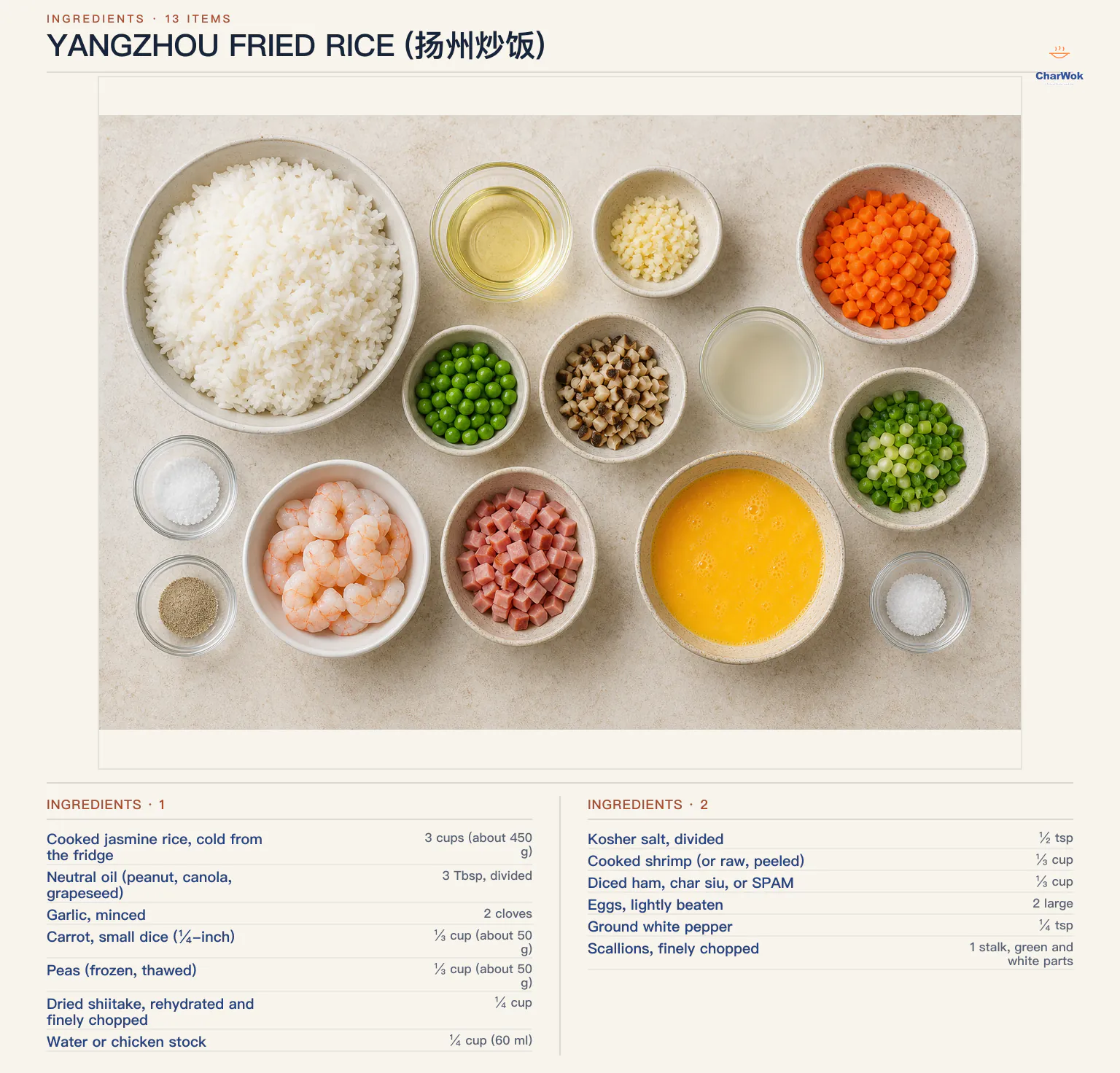
| Ingredient | Amount | Notes / substitute |
|---|---|---|
| Cooked jasmine rice, cold from the fridge | 3 cups (about 450 g) | Day-old is ideal. See rice section above. |
| Neutral oil (peanut, canola, grapeseed) | 3 Tbsp, divided | 1 Tbsp for the aromatics and veg, 2 Tbsp for the eggs and rice |
| Garlic, minced | 2 cloves | One slice of ginger minced fine works if you prefer |
| Carrot, small dice (¼-inch) | ⅓ cup (about 50 g) | Blanch harder veg first; see method |
| Peas (frozen, thawed) | ⅓ cup (about 50 g) | Edamame or corn kernels work |
| Dried shiitake, rehydrated and finely chopped | ¼ cup | Fresh shiitake, or omit and add more carrot |
| Water or chicken stock | ¼ cup (60 ml) | Stock gives more body; water is fine |
| Kosher salt, divided | ½ tsp | Taste at the end before adding more |
| Cooked shrimp (or raw, peeled) | ⅓ cup | Diced chicken, or skip for a pork-only version |
| Diced ham, char siu, or SPAM | ⅓ cup | Homemade char siu is the best upgrade here |
| Eggs, lightly beaten | 2 large | 3 eggs for a richer, eggier result |
| Ground white pepper | ¼ tsp | Black pepper is fine; white is traditional for looks |
| Scallions, finely chopped | 1 stalk, green and white parts | Save a pinch of green for garnish |
The method, and why each step matters
Have every ingredient cut, measured, and within arm's reach before you turn on the stove. Fried rice is a 90-second sprint once the heat is on, and there is no time to go looking for the salt.
- Prep the rice. Take the cold rice out of the fridge and break it into loose grains with wet fingers. Wet hands stop the starch from sticking to you. Set the rice aside at room temperature while you prep everything else, so the chill comes off it. Cold rice straight from the fridge will drop your wok temperature and steam instead of fry.
- Build the wok seasoning. Heat an empty wok (or a wide heavy skillet) over high heat until it just begins to smoke. Add 1 tablespoon of oil and swirl to coat. Add the garlic and stir for about five seconds, until you can smell it but before it colors. Burnt garlic is bitter and there is no fixing it, so move fast.
- Cook the vegetables hard. Add the carrot, peas, and chopped shiitake. Stir-fry for about 30 seconds, then pour in the water or stock with half the salt. The liquid hits the hot pan and flashes to steam, which par-cooks the carrot so it is tender instead of crunchy, and the salt draws flavor into the vegetables instead of sitting on the surface. Let it boil off almost completely before moving on.
- Add the proteins, then pull them out. Toss in the diced ham or char siu and the shrimp. Stir-fry for about 30 seconds, or until the shrimp just turns pink if it was raw. Then scrape the whole lot onto a plate. This is the step most home cooks skip, and it is the one that separates restaurant fried rice from home fried rice. If you leave the proteins in the pan while you fry the rice and eggs, they overcook and turn rubbery, and they block the rice from browning.
- Fry the eggs in the same pan. Add the remaining 2 tablespoons of oil to the wok and swirl. The moment the oil starts to smoke, pour in the beaten eggs. They should puff and sizzle immediately. Use your spatula to scramble them fast, breaking them into small curds while they are still a little wet. Wet curds coat the rice later and create that golden, glossy look. Dry, overcooked eggs just sit there in lumps.
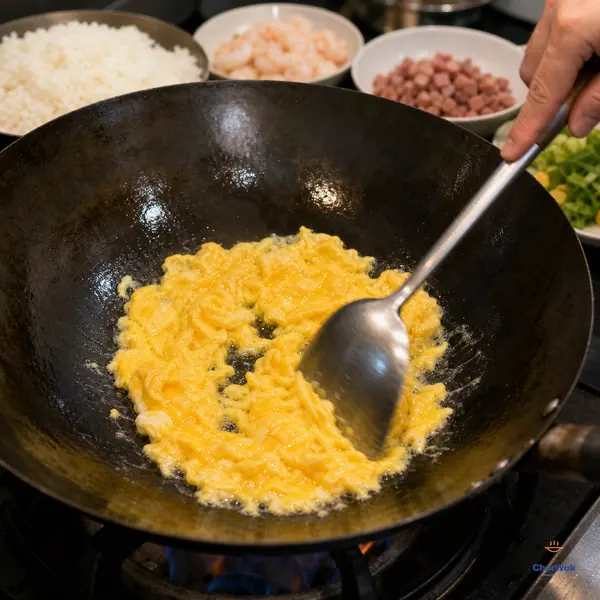
Pour the beaten eggs into the oil just as it begins to smoke and scramble immediately into small curds. Stop while the surfaces are still glossy and slightly wet; those moist curds will coat the rice, whereas fully dry egg only breaks into separate lumps.
- Add the rice and fry it hard. Dump in the broken-up cold rice. Press it against the hot surface of the wok and let it sit for a few seconds before tossing. That brief contact is where you get the toasted, almost smoky flavor the Chinese call wok hei. Toss, press, toss, press, for about a minute, breaking any remaining clumps. The grains should be separate, hot through, and beginning to look slightly translucent at the edges.
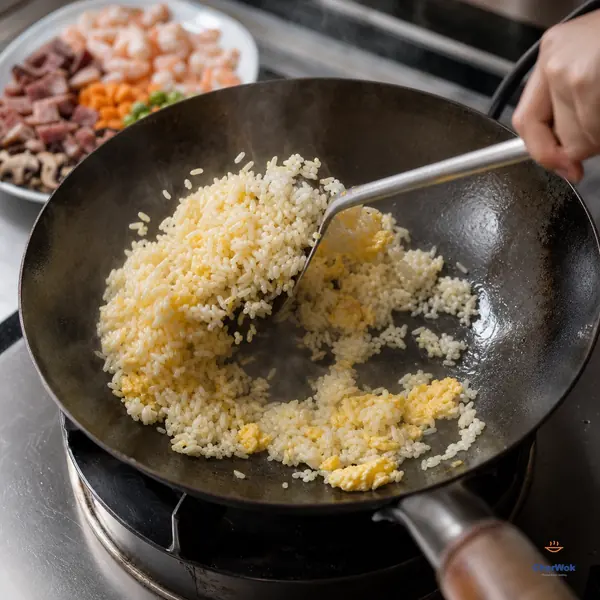
Add the loosened cold rice to the moist egg curds, then lift and toss it over high heat, letting each batch touch the hot wok briefly. Continue until no clumps remain and the grains look separate, hot and lightly dry at the surface; keep the proteins and vegetables out until then.
- Bring it all back together. Return the vegetables and proteins to the wok. Add the remaining salt, the white pepper, and most of the scallions. Toss hard for 20 seconds, just long enough to heat everything through and let the flavors combine. Kill the heat, taste, and adjust salt. Dish out immediately.
If your stove cannot get a wok truly screaming hot, the trick is to cook in smaller batches. Trying to fry four servings of rice at once on a home burner is the single most common reason home fried rice turns out soggy. Two servings at a time is the sweet spot on a normal residential stove.
Why the dish so often fails
Most failed fried rice comes down to one of four mistakes. Here is how to read what went wrong and fix it next time.
- Mushy, clumped rice. The rice was too wet, too fresh, or too cold straight from the fridge. Use day-old rice broken into loose grains, and let it sit out for 10 minutes to take the chill off. If you only have fresh rice, spread it on a tray, fan it dry, and refrigerate it for at least an hour first.
- Rice that steams instead of fries. The pan was not hot enough, or you overcrowded it. A wok needs to be visibly smoking before the oil goes in. Cook two servings at most per batch on a home stove.
- Eggs in big rubbery lumps. The eggs were added to a cool pan or cooked too long. Pour them into smoking oil and scramble fast, pulling them off while still slightly wet. They finish cooking with the rice.
- Dish tastes flat. Almost always a salt-timing problem. Salting early draws moisture out of the vegetables and dilutes the dish. Salt in two stages, half with the vegetables and half at the very end, and taste before adding more. A few drops of light soy sauce at the end will wake it up, but go easy, because soy also darkens the rice and muddies the look.
- Shrimp tough, ham dry. You left the proteins in the pan the whole time. Pull them out after the initial sear and return them only for the final toss.
Variations and what to serve with it
Once the method is in your hands, the ingredient list is a suggestion. A few directions I cook often:
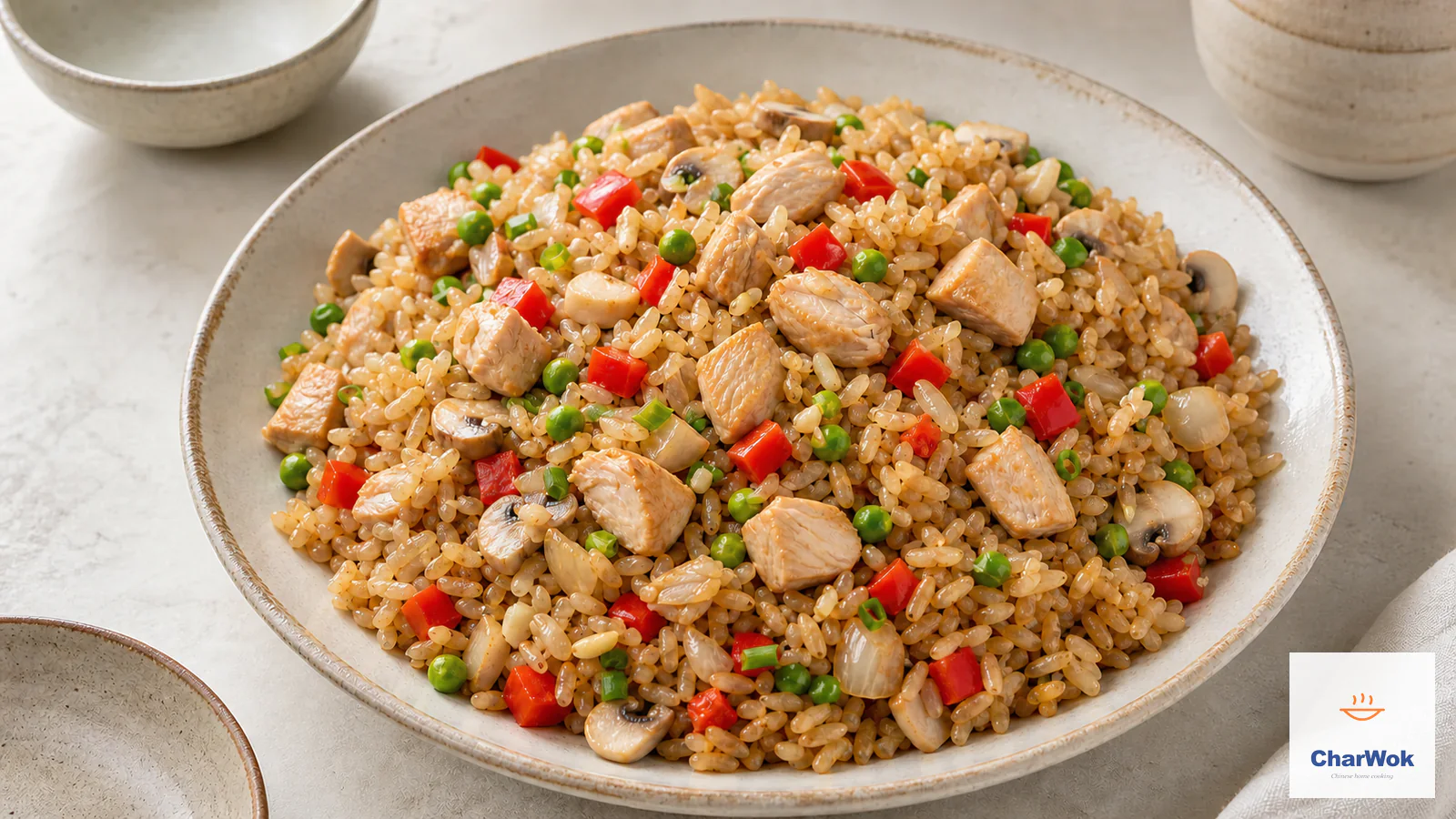
- Chicken fried rice. Swap the shrimp and ham for diced chicken thigh. For a more dinner-party version, chicken fried rice is its own classic, and you can borrow the seasoning from a char siu chicken marinade for the chicken before dicing it.
- Pork only. Char siu plus the mushrooms is a deeply savory combination. This is basically pork fried rice, and leftover braised pork belly or lu rou fan meat, chopped fine, is even better than ham.
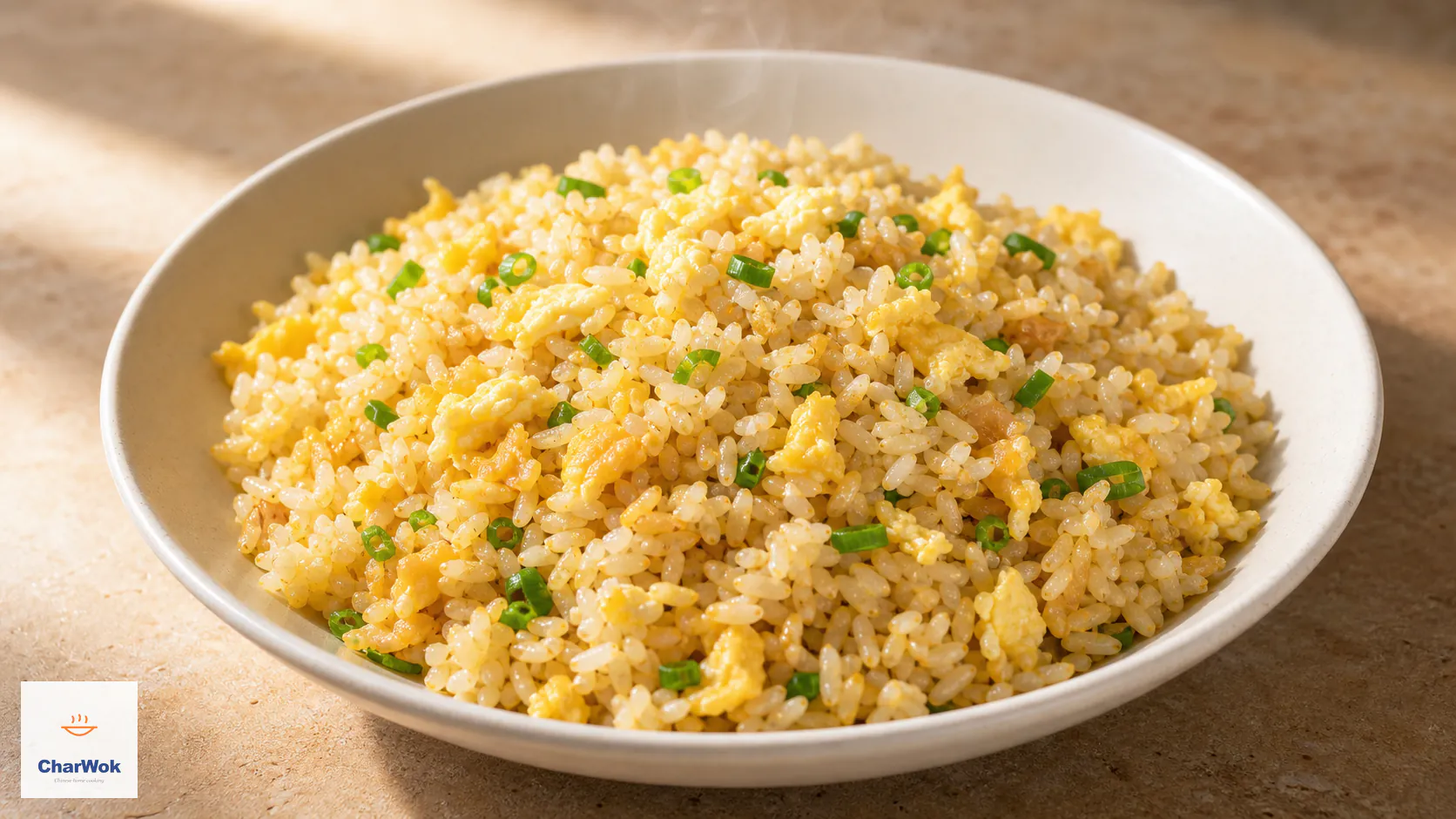
- Egg-fried rice, the minimalist version. Drop everything but the rice, eggs, and scallions. This is the pure egg fried rice I make when I am short on time, and it is the right place to start if you have never made fried rice before.
- Soy sauce fried rice. For a darker, more caramelized flavor, finish with a teaspoon of light soy sauce drizzled around the edge of the wok so it seizes before hitting the rice. The technique is closer to soy sauce fried rice, and it pairs nicely with the dicing style from this recipe.
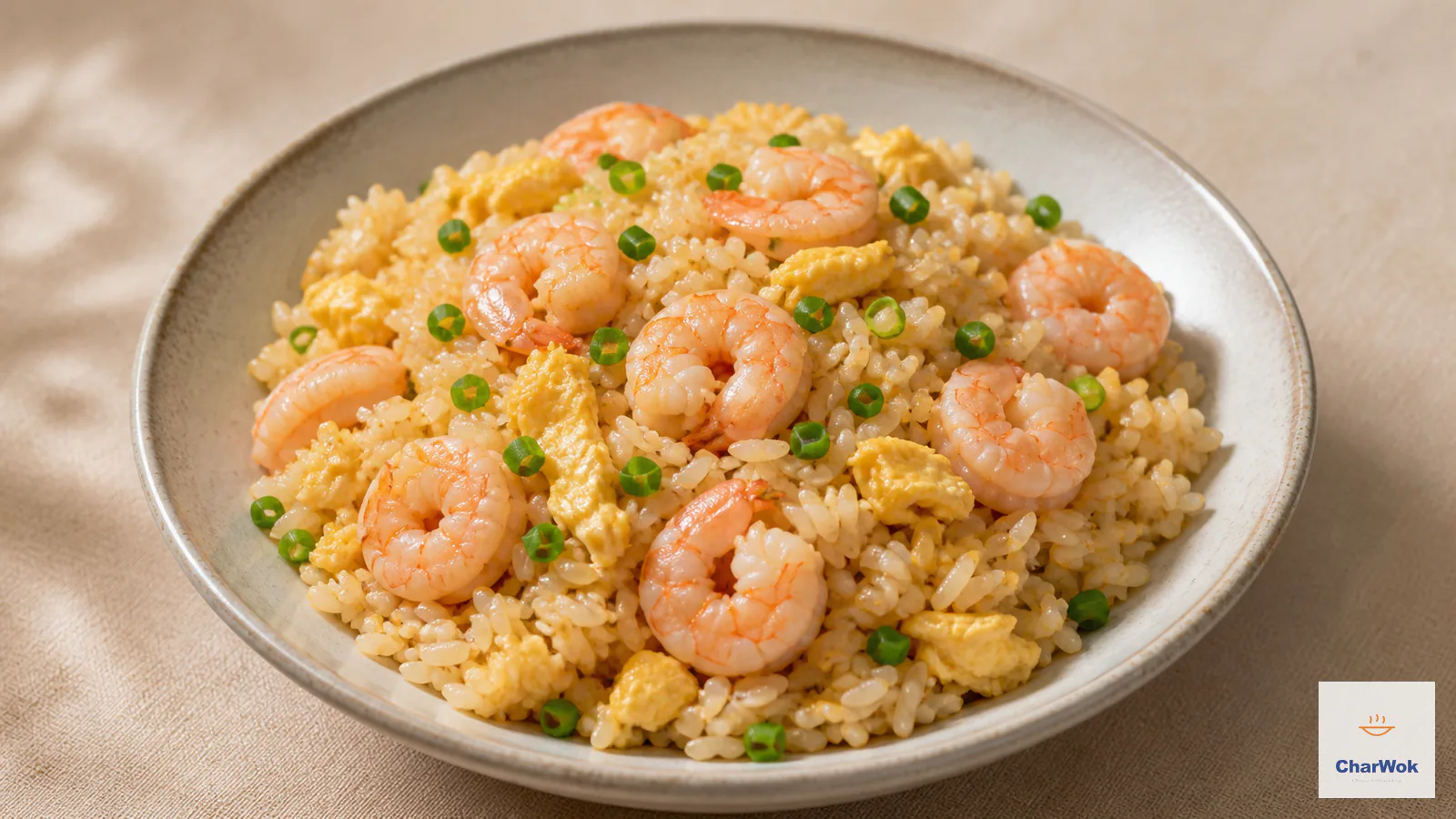
- Shrimp-forward. Double the shrimp and lose the ham for a cleaner, lighter version in the spirit of shrimp fried rice.
Because fried rice is rich, I usually serve it as the main event with one light soup and one vegetable on the side. A bowl of hot and sour soup or a quick egg drop soup balances the oil beautifully. For the vegetable, broccoli with garlic sauce or a simple stir-fried napa cabbage adds crunch and freshness. If you want to lean into the takeout vibe, a side of salt and pepper shrimp turns it into a feast without much extra work.
Storage and reheating
Fried rice keeps well, covered, in the fridge for up to three days, and it reheats better than almost anything else. The key is to reheat it hot and fast so it does not steam. Spread it in a thin layer in a dry skillet over high heat and toss for a minute or two, or microwave it uncovered in 30-second bursts, fluffing between each. Add a few drops of water only if it seems dry. I do not recommend freezing fried rice, because the texture of the egg and shrimp suffers on thaw.
Leftover fried rice also makes a great filling. Tuck it into fan tuan, the stuffed sticky rice rolls, or fold it into a wrap. And if you cooked too much plain rice to begin with, congee is the other classic move: simmer the leftover rice with water or homemade chicken stock until it collapses into porridge, in the style of basic congee.
Frequently asked questions
Can I use freshly cooked rice?
You can, but it will be mushier. Spread it thin on a tray, fan or refrigerate it until the surface is dry to the touch, and break it up before frying.
Do I need a wok?
No. A large, heavy skillet, ideally cast iron or carbon steel, gets hot enough and gives you a wide surface for the rice to contact. Avoid nonstick for this dish, since it cannot take the high heat that creates the toasted flavor.
Can I add soy sauce?
Yes, but keep it light. A teaspoon of light soy sauce at the very end adds depth; more than that turns the dish dark and salty. Traditional Yangzhou fried rice is actually pale, seasoned mainly with salt and white pepper.
How do I make it vegetarian?
Drop the shrimp and ham, double the mushrooms and add diced tofu or extra firm scrambled egg. Use vegetable stock instead of chicken stock, and a teaspoon of sesame oil at the end for back-end richness.
What is the difference between this and egg fried rice?
Egg fried rice is the simple version, just rice, eggs, and scallions. Yangzhou fried rice adds a mix of proteins and vegetables for color and texture. The cooking method is nearly identical.