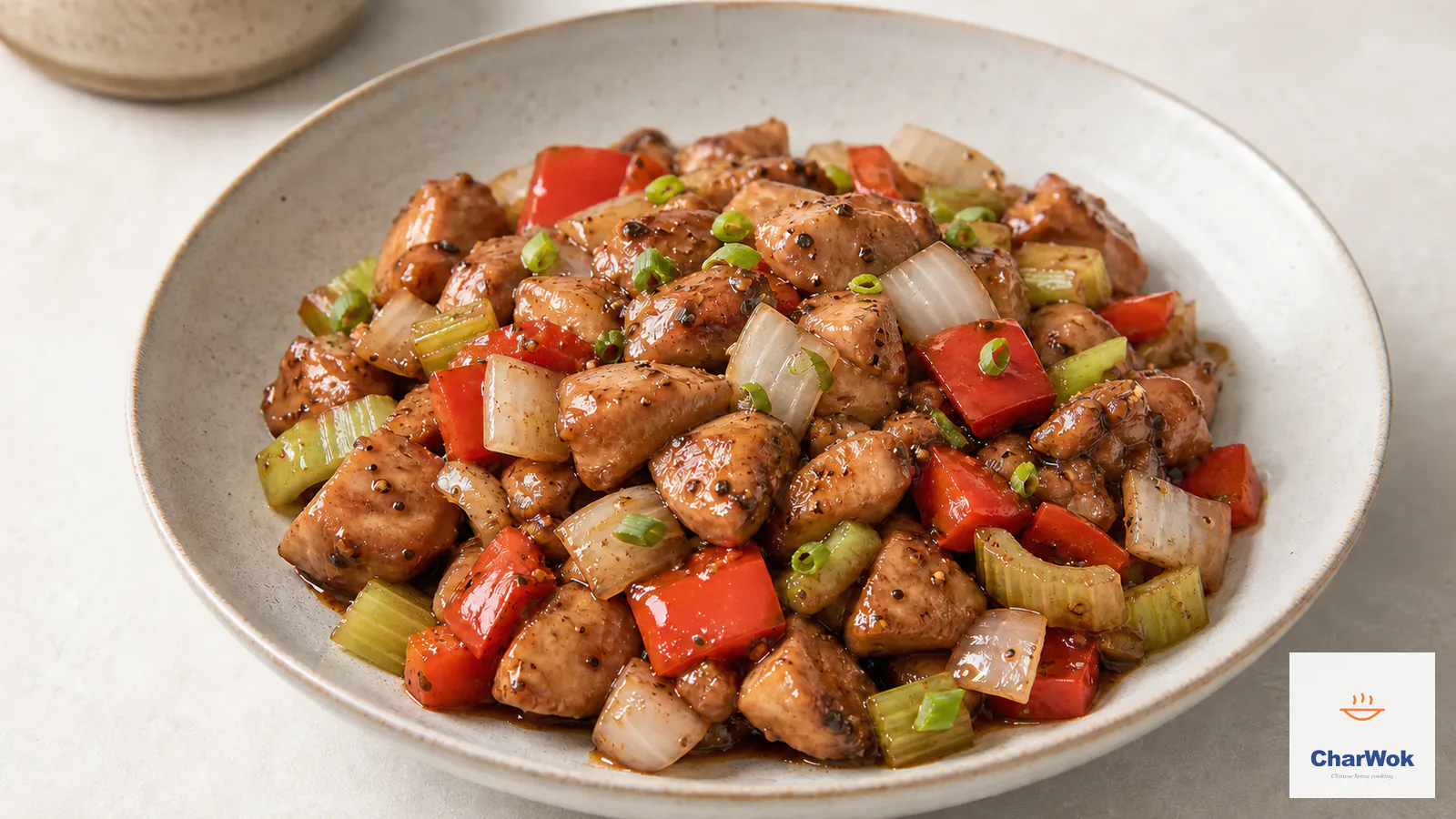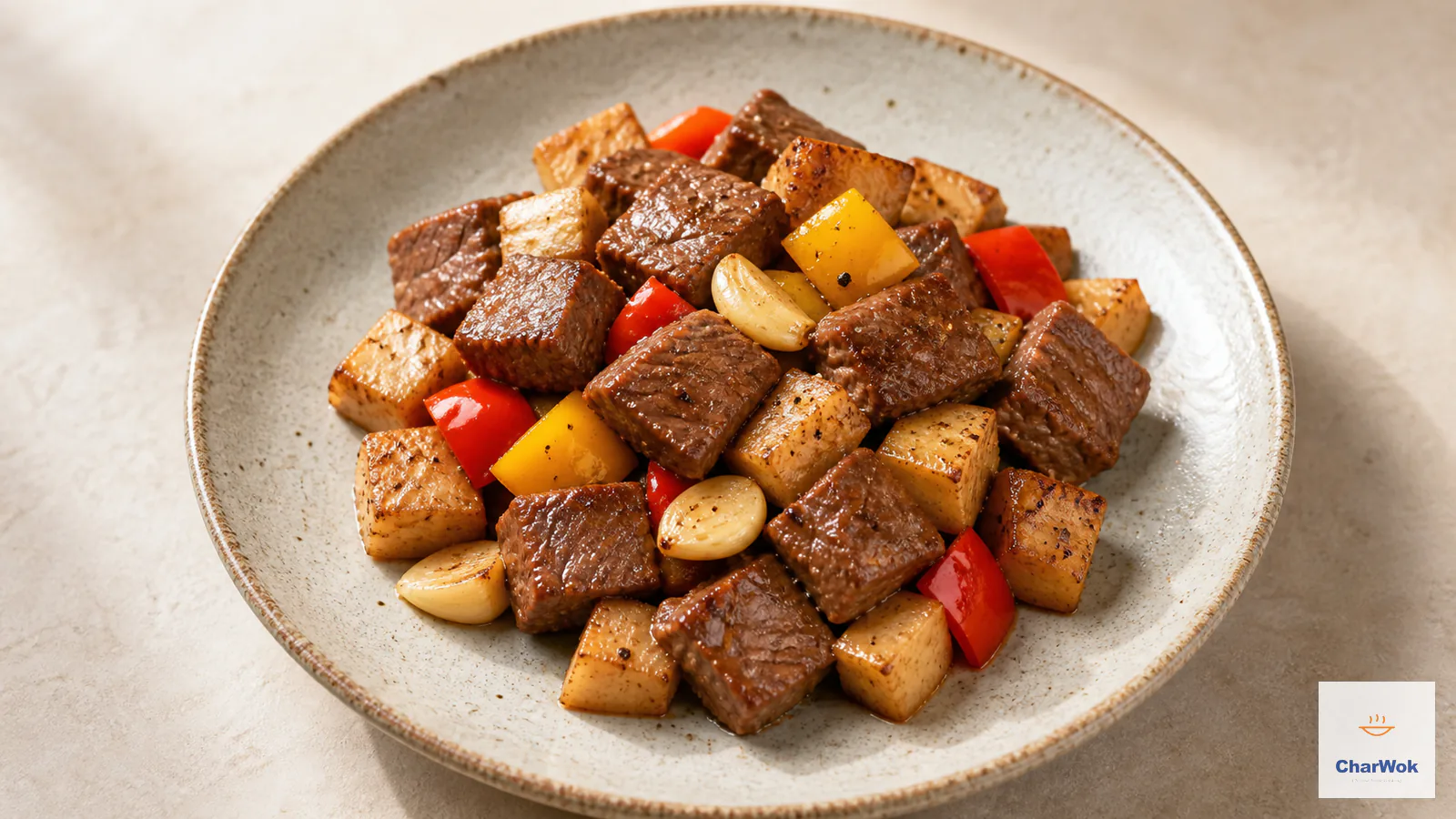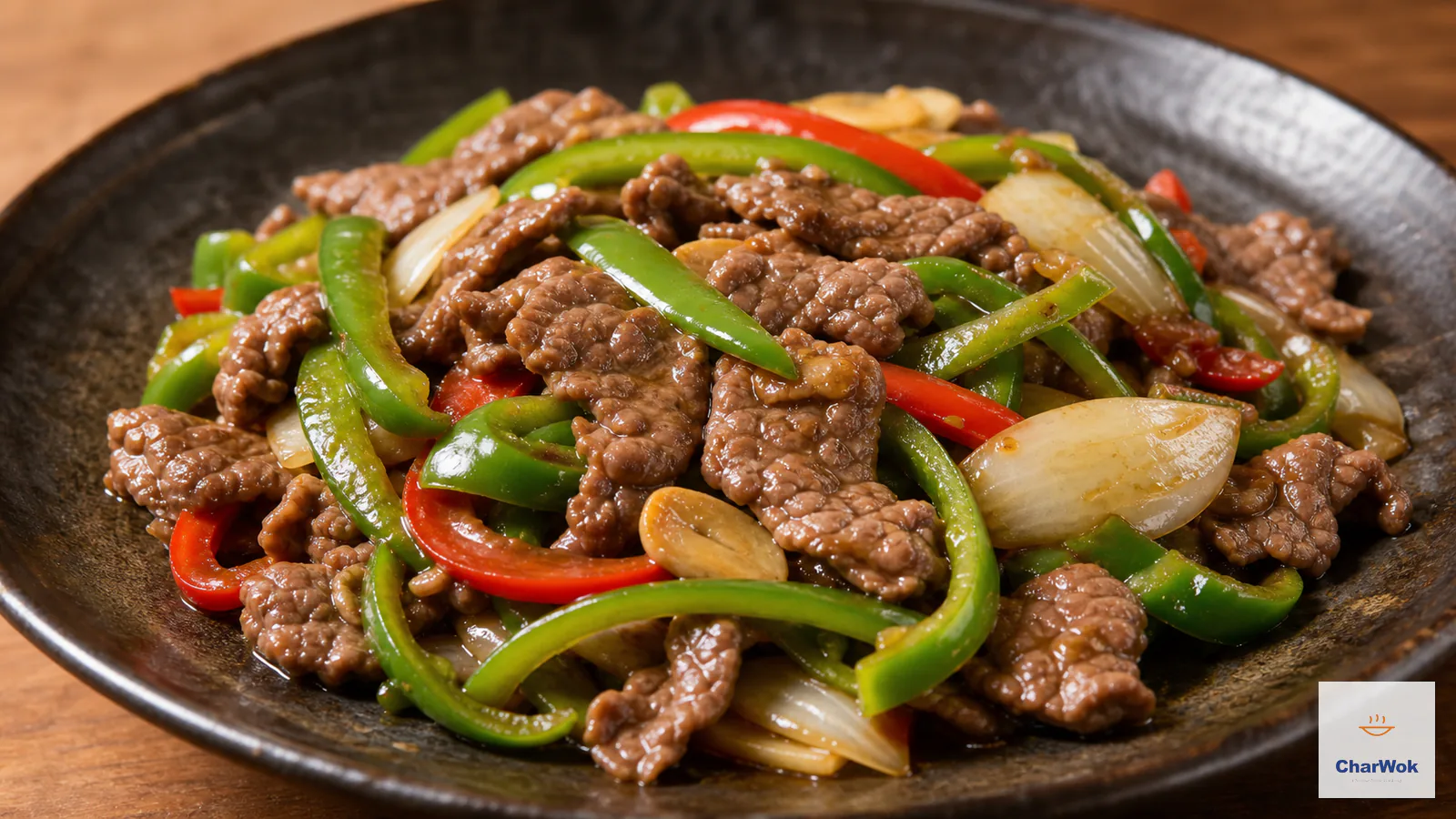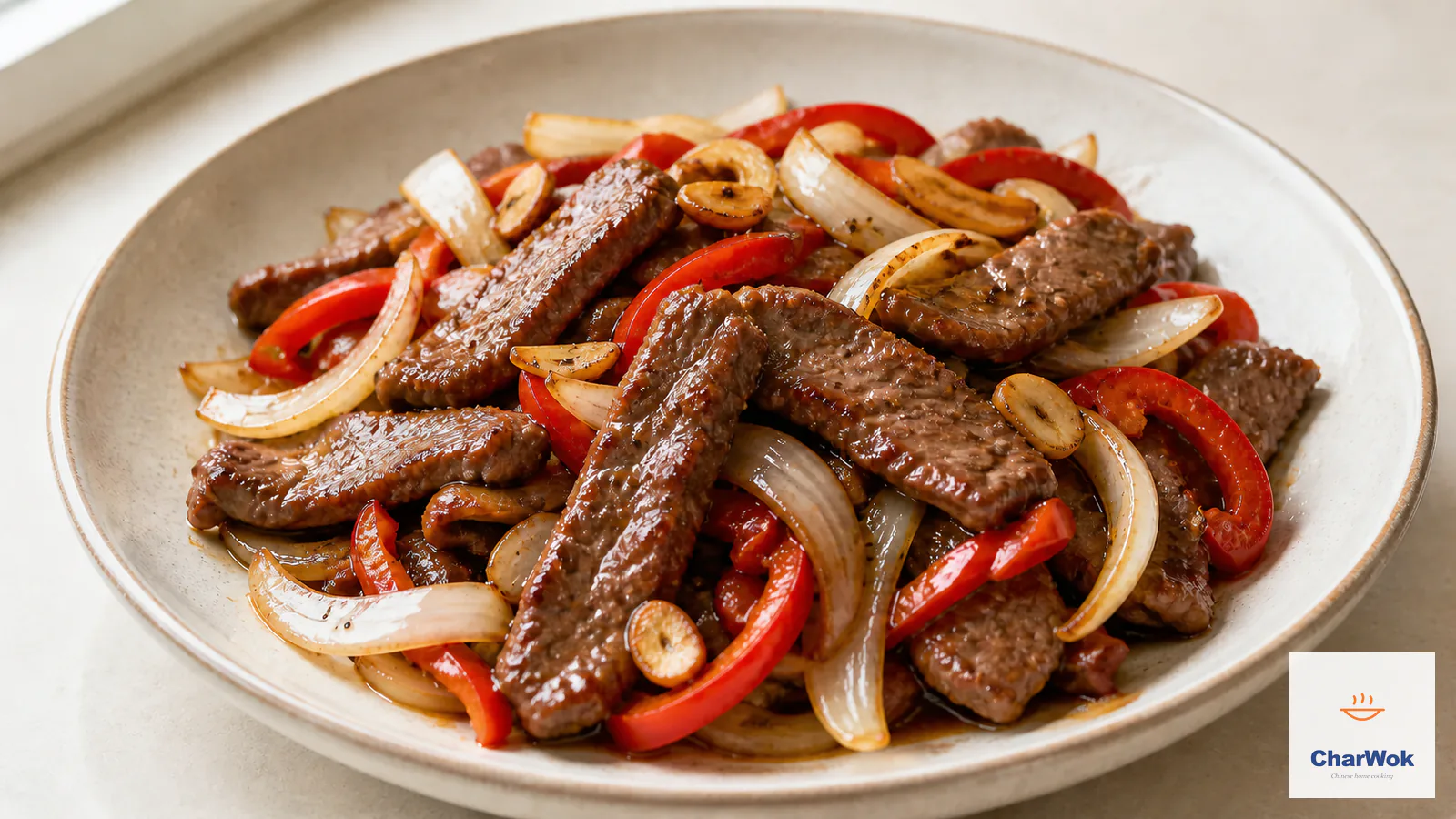
The soul of black pepper beef is a trade between two things: the clean, juicy bite of well-handled steak, and a sauce that tastes like pepper actually means it. Get both and you have a dish that beats takeout in twenty minutes. Miss either and you get the disappointing version most people make at home: gray, weeping strips floating in a glossy but anonymous brown sauce.
I wrecked this dish plenty of times before I understood what was happening. The beef turned to cardboard. The pepper read as heat but not aroma. The sauce either vanished into the meat or pooled on the plate. None of those failures were about the recipe. They were about timing and temperature, and once you see the logic, the whole thing becomes reliable. This guide is the version I cook on a Tuesday when I want something fast that still feels like a real dinner.
At a glance. Sear the beef hot and short: about one minute, surface browned, still pink inside. Then pull it out, cook the vegetables, return the beef, and add a cornstarch-thickened sauce that coats the spatula in about thirty seconds. The two make-or-break moments: cut across the grain, and grind the pepper fresh. Total time from knife to plate: roughly 20 minutes for two servings.
What this dish is, and where the pepper comes in
Black pepper beef, or hei jiao niu liu, is a Cantonese-style stir-fry that lives in the same family as beef and broccoli and beef with mushrooms: quick-cooked strips of beef, a glossy sauce, crisp vegetables for contrast. What sets it apart is the pepper. Not as a background seasoning, but as a co-lead with the beef. The dish leans on light soy sauce and oyster sauce for salt and umami, then asks the black pepper to carry aroma, not just bite.
That distinction matters. Stale pre-ground pepper from a tin gives you one note: sharp heat, gone in a second. Freshly cracked peppercorns give you a piney, almost floral top note first, then the warmth. It is the difference between a dish that tastes spicy and one that tastes of pepper. If you have ever wondered why your version reads as hot rather than flavorful, the pepper is almost always why. The same logic applies to grinding Sichuan peppercorn for other dishes: freshness and grind size change everything. The oyster sauce in this recipe, by the way, is the same workhorse that powers oyster sauce chicken, so it is a bottle worth keeping around.
The two techniques that decide the dish
Before the recipe, two ideas worth understanding, because every step below exists to serve them.
Velveting, light version. "Velveting" is the Chinese practice of coating sliced meat in cornstarch and a little liquid, sometimes with a brief oil or water blanch, so it stays tender through a hot wok. The cornstarch forms a thin gel around each strip when it hits the pan. That gel buffers the meat from direct heat and traps moisture. The full restaurant version uses egg white and a baking-soda component; for a weeknight beef stir-fry you do not need that. A simple mix of cornstarch, a splash of Shaoxing rice wine, soy sauce, and water, finished with a film of oil, does most of the work. The oil on top is not for flavor. It stops the strips from welding together the moment they hit the pan. Skip it and you will be prying a beef pancake apart with your spatula.
The pull-out-and-return. Beef cooked end to end in a wok goes past tender into tough, because the muscle fibers seize and squeeze out their moisture under sustained high heat. The fix is to sear the beef only until the surface colors, remove it, cook the vegetables in the same pan, then return the beef for the final minute with the sauce. The beef never spends more than about two minutes total over direct heat. This is the same structure that keeps beef with Chinese broccoli and Hunan beef from going leathery.
Ingredients
Ingredients at a glance
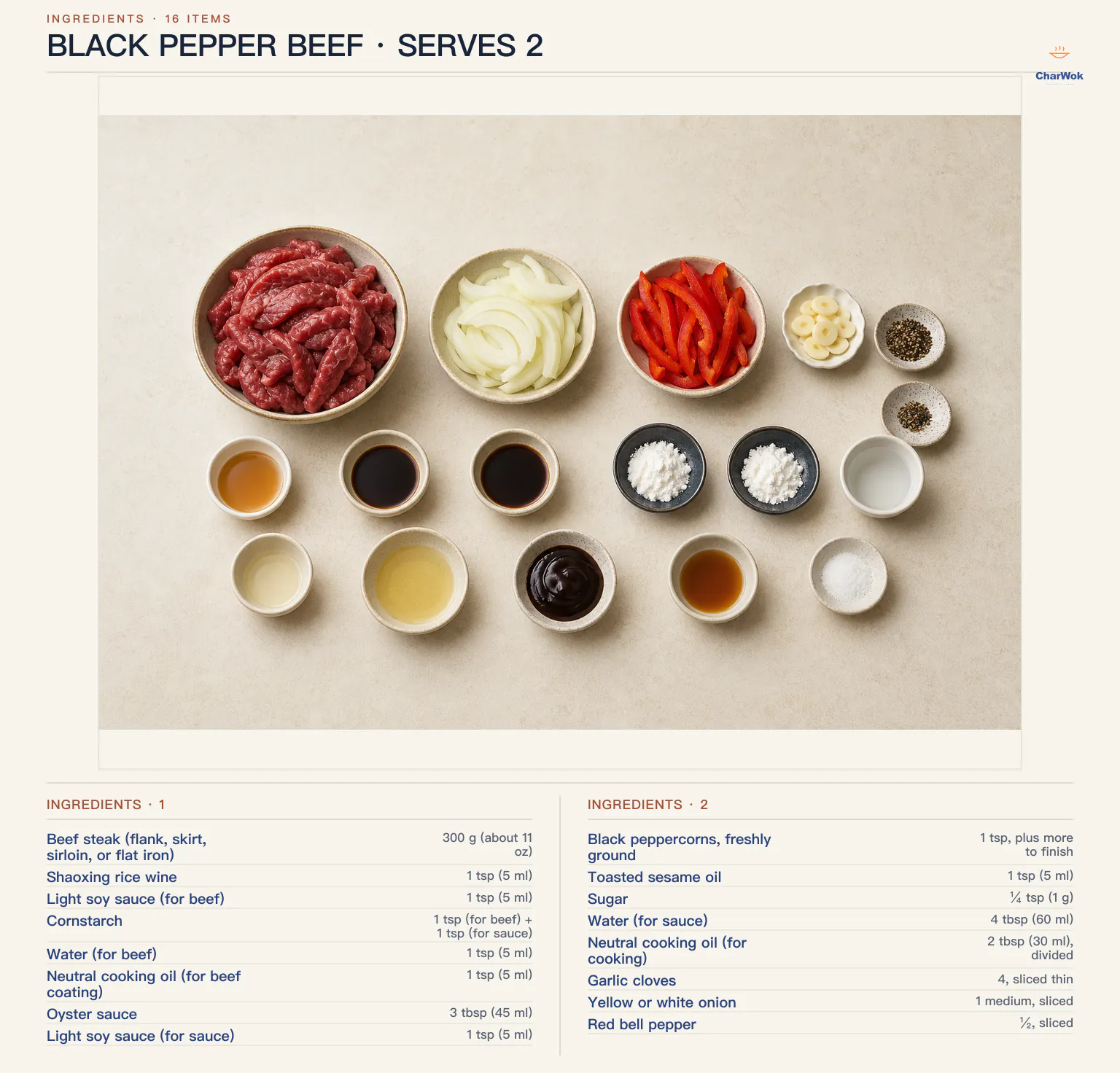
Serves 2 as a main with rice; doubles cleanly if you cook the beef in two batches. Metric first, US equivalents noted where they are the household standard.
| Ingredient | Amount | Notes / substitute |
|---|---|---|
| Beef steak (flank, skirt, sirloin, or flat iron) | 300 g (about 11 oz) | Flank is the classic; sirloin is more forgiving. See cut notes below. |
| Shaoxing rice wine | 1 tsp (5 ml) | Dry sherry works; avoid "cooking wine" with added salt. |
| Light soy sauce (for beef) | 1 tsp (5 ml) | Do not substitute dark soy here; it will muddy the color. |
| Cornstarch | 1 tsp (for beef) + 1 tsp (for sauce) | Potato starch works, with a slightly glossier finish. |
| Water (for beef) | 1 tsp (5 ml) | Helps the starch hydrate before it hits the pan. |
| Neutral cooking oil (for beef coating) | 1 tsp (5 ml) | Grapeseed, canola, or avocado; not olive oil. |
| Oyster sauce | 3 tbsp (45 ml) | Vegetarian mushroom "oyster" sauce is a fair substitute. |
| Light soy sauce (for sauce) | 1 tsp (5 ml) | Balances the sweetness of the oyster sauce. |
| Black peppercorns, freshly ground | 1 tsp, plus more to finish | Coarse crack, not fine dust. Tellicherry or Malabar are ideal. |
| Toasted sesame oil | 1 tsp (5 ml) | Added off-heat; cooking it kills the aroma. |
| Sugar | ¼ tsp (1 g) | Just enough to round the salt; not to sweeten. |
| Water (for sauce) | 4 tbsp (60 ml) | Halve to 2 tbsp if you like a tighter, clingier sauce. |
| Neutral cooking oil (for cooking) | 2 tbsp (30 ml), divided | 1½ tbsp to sear, ½ tbsp for the vegetables. |
| Garlic cloves | 4, sliced thin | Smashed and chopped is fine; sliced gives a cleaner look. |
| Yellow or white onion | 1 medium, sliced | Cut pole-to-pole so the pieces hold their shape. |
| Red bell pepper | ½, sliced | Celery or green bell pepper are common swaps. |
Choosing and cutting the beef
The cut matters less than people think, and the cutting matters more. Flank is the traditional choice because it has a clear, visible grain that makes slicing correctly almost foolproof. Sirloin and flat iron are more tender and more forgiving if your knife work is rough. Skirt has the deepest beef flavor but a looser grain that needs care. Avoid lean roasts like eye of round unless you velvet them more aggressively; cooked straight they will be tough no matter what you do.
Whatever you pick, two things are non-negotiable. First, slice across the grain, perpendicular to the muscle fibers, so each strip is made of short fibers rather than long ones. Long fibers = chewy. Short fibers = tender. Aim for strips about 5 mm (just under ¼ inch) thick. Second, slice on a slight bias to get a wider face on each piece; more surface area means more Maillard browning, and browning is where the savory crust comes from. Partially freezing the steak for 20 minutes before cutting makes clean slices much easier.
Method
- Marinate the beef (10-minute rest). In a bowl, combine the sliced beef with the Shaoxing wine, light soy sauce, cornstarch, and the teaspoon of water. Mix with your fingers or chopsticks until the liquid is fully absorbed and the strips look slightly cloudy. Then drizzle the teaspoon of oil over the top and toss to coat. The oil sits on the surface; do not mix it in deeply. Rest 10 minutes at room temperature. The rest lets the starch hydrate so it forms a proper gel in the pan instead of flaking off.
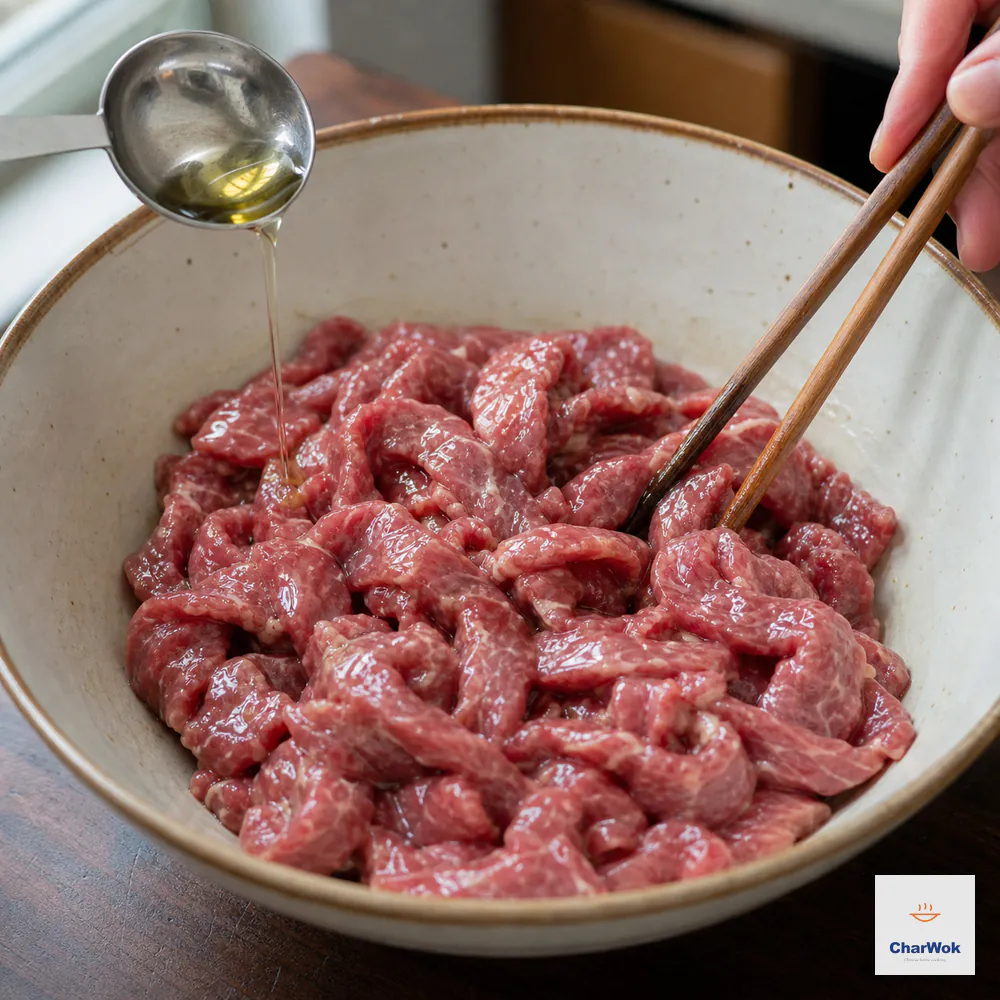
Work in the wine, soy sauce, cornstarch, and water until the beef absorbs every drop, then coat the surface with oil and rest for 10 minutes
- Mix the sauce and set it by the stove. Stir together the oyster sauce, light soy sauce, the second teaspoon of cornstarch, the freshly ground black pepper, sugar, and the 4 tablespoons of water. The cornstarch will settle, so give it another stir right before you use it. Have everything else prepped and within arm's reach; once the wok is hot, there is no time to go looking for the garlic.
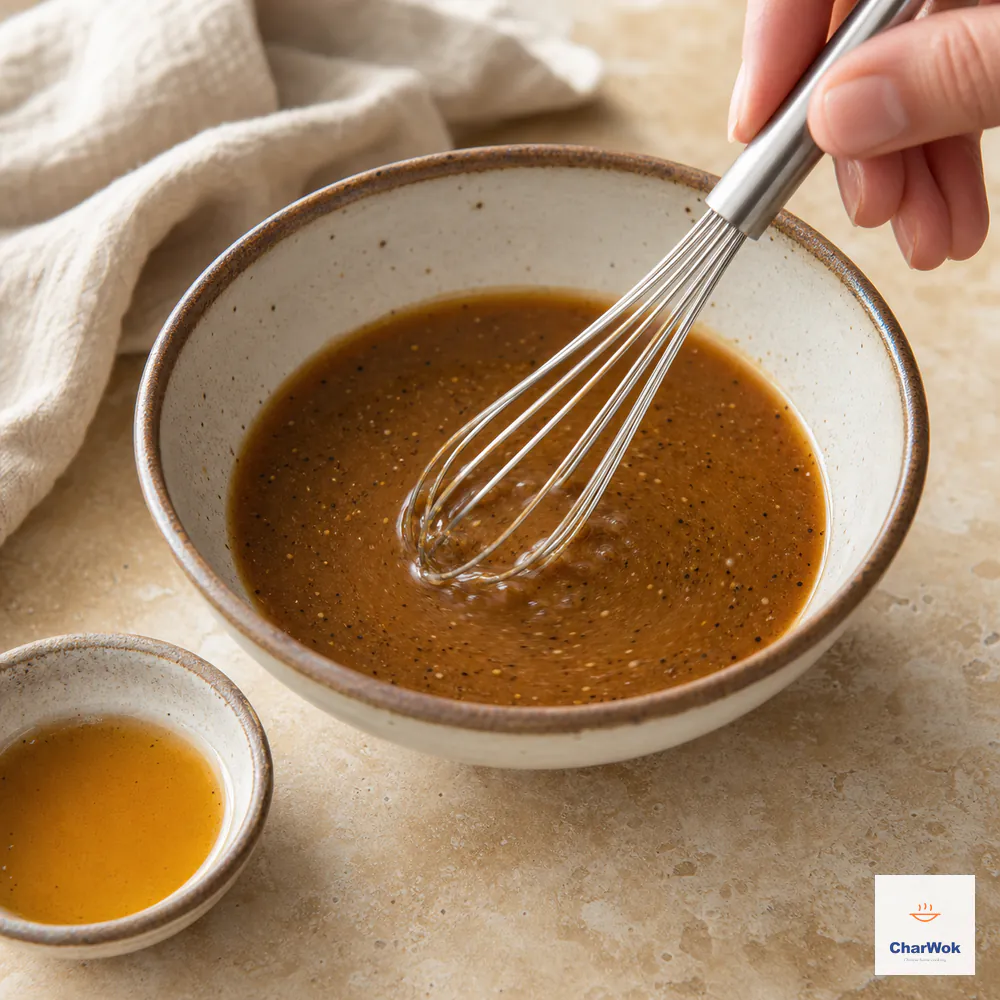
Mix the sauce before heating the wok and stir it again immediately before pouring so the cornstarch is evenly suspended
- Heat the wok until it smokes lightly. Set the wok over high heat until a drop of water dances and evaporates in a second, and you see the first wisps of smoke. Add 1½ tablespoons of oil and swirl to coat. A properly seasoned carbon-steel wok is ideal, but a large heavy stainless or nonstick skillet works if you let it get genuinely hot. The pan must be hot before the oil, or the beef will stick and steam instead of sear.
- Sear the beef, then pull it out. Add the beef in one layer and let it sit for 20 to 30 seconds before tossing, so the underside can color. Stir-fry for about a minute total; the surface should be browned and the interior still pink. Transfer immediately to a plate. Do not be tempted to cook it through. It will finish in the sauce later.
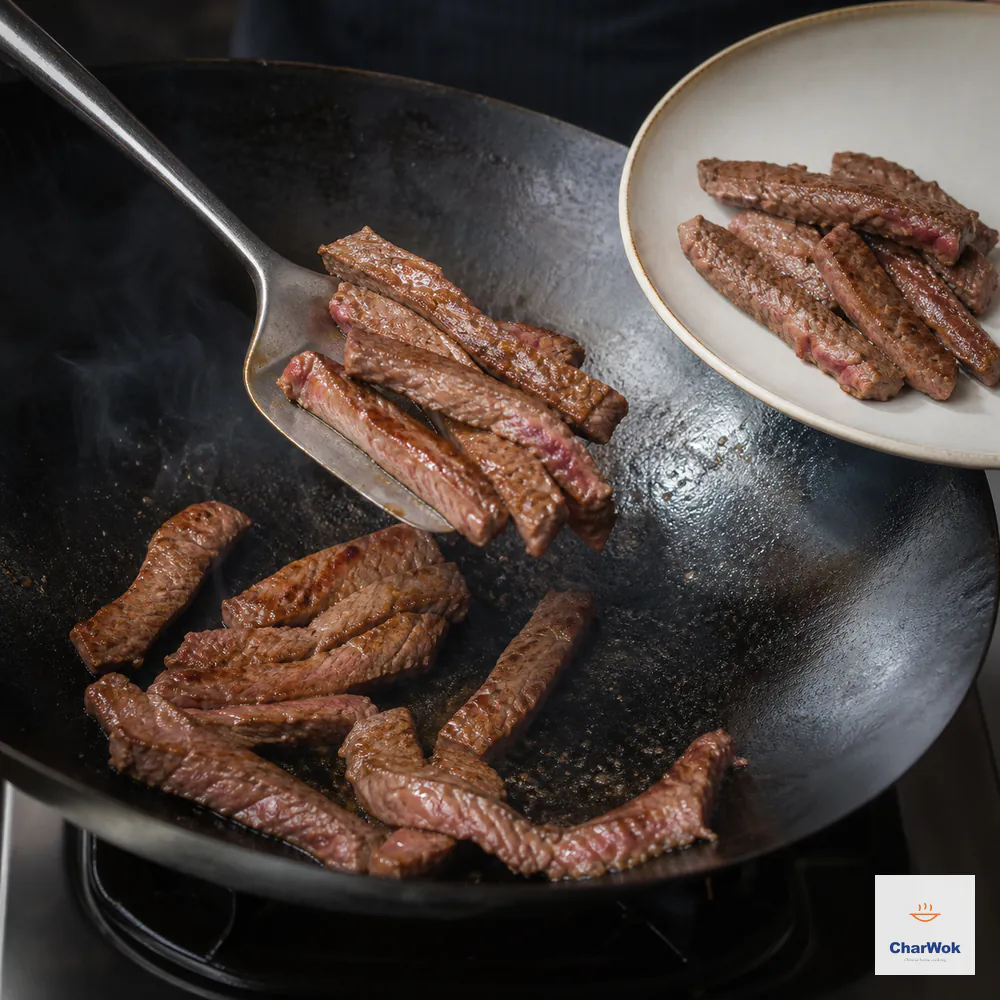
Let one side brown before tossing, then remove the beef after about 1 minute while the center is still pink so it can finish later without drying out
- Cook the aromatics and vegetables. With the pan still on high, add the remaining ½ tablespoon of oil, then the sliced garlic. As soon as it is fragrant (about 10 seconds), add the onion and bell pepper. Toss for about a minute. You want the onion to lose its raw edge but keep some crunch; soft onion turns the whole dish mushy.
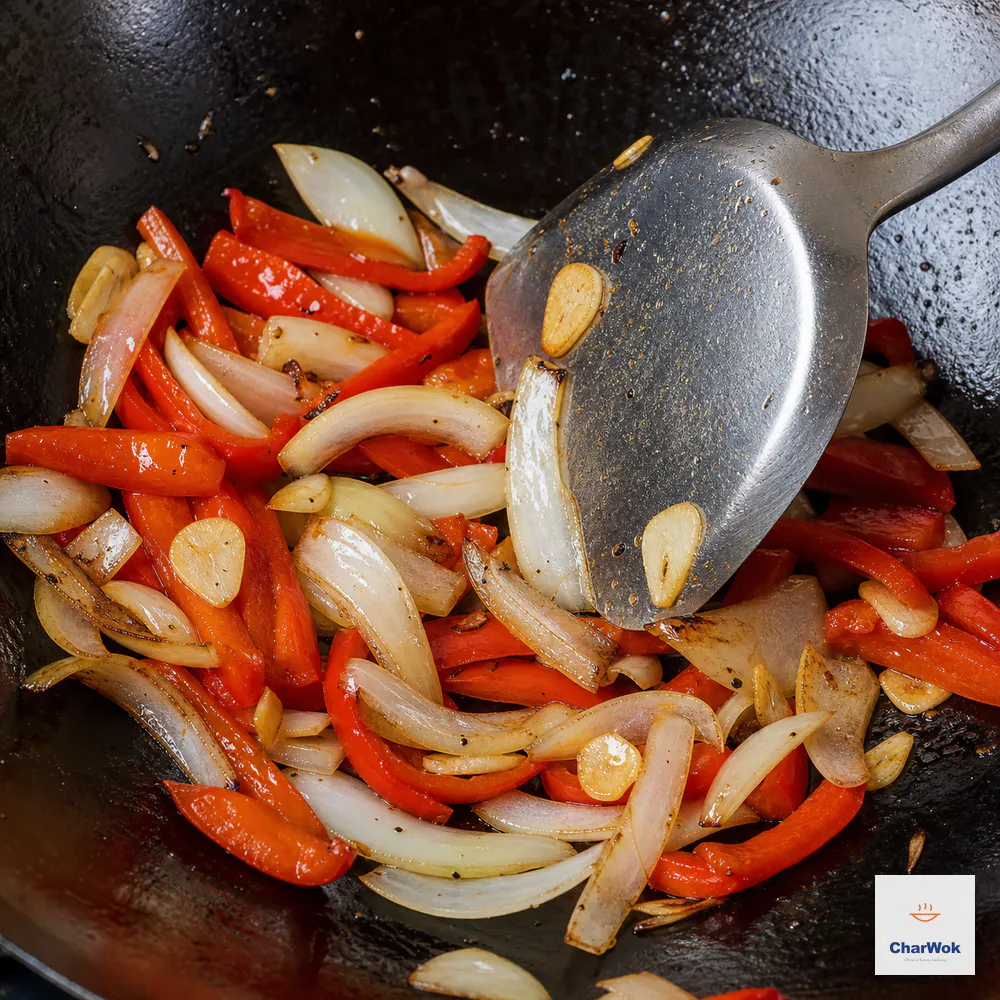
Stir-fry the garlic, onion, and red pepper over high heat for about 1 minute so the raw edge disappears while the vegetables remain crisp
- Return the beef. Add the beef back to the wok with any juices that pooled on the plate (those juices are flavor). Toss for another minute, just until the beef is no longer pink inside.
- Add the sauce and finish off the heat. Give the sauce one last stir, pour it around the edges of the wok so it boils on contact, and toss continuously. The moment the sauce turns glossy and just thick enough to coat the back of a spatula (usually 20 to 30 seconds), pull the wok off the burner. Stir in the sesame oil and a generous extra crack of black pepper. Serve immediately.
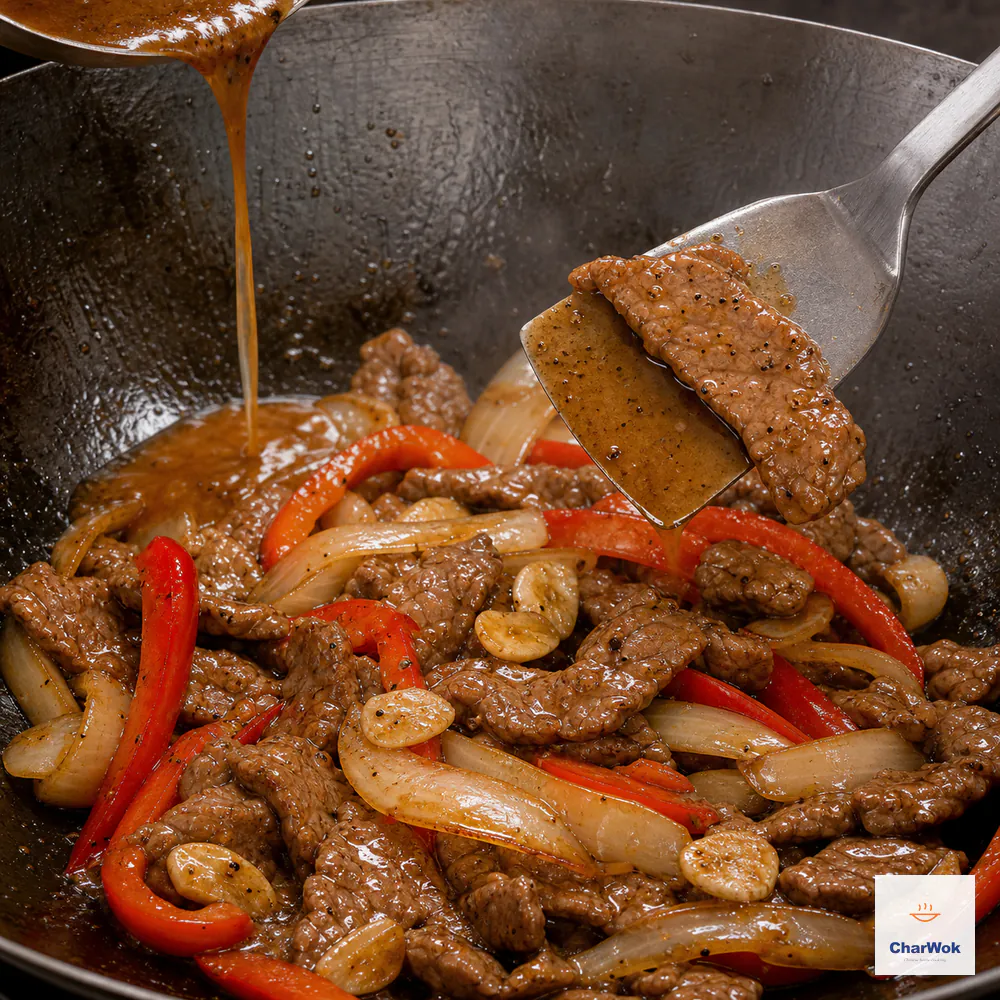
Stir the sauce once more, pour it around the hot wok, and stop after 20 to 30 seconds as soon as the glossy sauce coats the spatula without turning gummy
That last move is the one most home cooks skip. The sauce thickens fast over high heat, and it will keep thickening from residual pan heat after you plate. Pulling off the burner a few seconds early is how you avoid a gummy, over-reduced glaze.
When it goes wrong
The beef is tough and chewy. Almost always one of three causes. You sliced with the grain instead of across it. You overcooked it during the sear (it should still be pink when it leaves the pan). Or the pan was not hot enough, so the meat stewed in its own liquid rather than searing. Fix: check your slicing against the grain lines, shorten the sear, and preheat harder. For a genuinely tough cut, a pinch of baking soda in the marinade (¼ tsp, rinsed off after 15 minutes) will tenderize mechanically, but it is a crutch and it dulls flavor slightly.
The beef sticks and shreds. Pan not hot enough before the oil went in, or you moved the strips too soon. Let them sit for those first 20 seconds so a crust releases on its own. A sticky sear usually means your wok needs more seasoning.
The sauce is thin and runs on the plate. Either you did not re-stir the sauce and the cornstarch stayed at the bottom, or the wok cooled too much when the beef went back in. Stir the sauce right before pouring, and make sure the pan is still hot when the sauce hits; it should sizzle audibly.
The sauce is gummy and dull. You let it reduce too long. Next time pull off the heat a few seconds sooner. A tablespoon of hot water swirled in can rescue a too-thick pan, but prevention is easier.
The pepper heat is harsh, not aromatic. Your pepper was pre-ground, or you ground it too fine. Crack fresh, on the coarse side, and add the final dose off the heat so the volatile oils do not cook away.
The dish tastes salty but not peppery. You used dark soy instead of light, or your oyster sauce is a salty one. Light soy and a mid-range oyster sauce are the right call; taste your oyster sauce straight once and you will know where it sits.
Variations and pairings
The pepper-and-beef core is sturdy enough to bend. Swap the bell pepper for celery and you get a brighter, more American-Chinese version, the kind that hints at the local takeout joint, worth pairing with other takeout favorites for a full spread. Add a teaspoon of coarsely chopped fermented black beans to the garlic for a saltier, funkier depth. A half-teaspoon of crushed Sichuan peppercorn alongside the black pepper gives a numbing tingle that turns the dish toward pepper chicken territory.
For vegetables, snow peas, snap peas, or thick asparagus spears cut on a bias all work in place of the bell pepper. Add them a little earlier than you would the pepper, since they take a few extra seconds to soften. If you want greens on the side rather than in the stir-fry, a quick garlic bok choy or blanched broccoli keeps the meal balanced.
On the plate, this dish wants a neutral carb to catch the sauce. Steamed jasmine rice is the default and the best one. For something more interesting, serve it over egg fried rice, or toss it with chow mein noodles and a little extra sauce. If you are feeding people newer to Chinese home cooking, it sits well in a lineup drawn from a beginner-friendly collection.
Storage and reheating
Black pepper beef is best the day it is made; the sauce keeps thickening in the fridge and the beef tightens on reheating. That said, leftovers keep covered for up to two days. Reheat gently in a skillet over medium-low with a splash of water to loosen the sauce; a microwave will toughen the beef and split the cornstarch into a grainy mess. I do not recommend freezing it; the cornstarch coating breaks down and the texture suffers.
You can, however, prep ahead. Slice and marinate the beef up to 8 hours in advance and keep it covered in the fridge. Mix the sauce and slice the vegetables the morning of. When dinnertime comes the actual cooking is under five minutes, which is the whole appeal.
Common questions
Can I make this without a wok?
Yes. A large, heavy skillet works if you preheat it well. The risk is the sides are shallow, so splatter is worse and you may need to sear the beef in two batches to keep the pan hot.
Do I have to rest the beef after marinating?
Ten minutes is the sweet spot. It lets the cornstarch hydrate so the coating actually forms in the pan. If you are rushed, five minutes is acceptable; skip it entirely and the coating flakes off and burns.
Why is my sauce not glossy?
Usually the cornstarch settled in the bowl and never made it into the pan. Re-stir the sauce right before pouring. Gloss also comes from finishing off the heat with the sesame oil; cooking the oil kills the shine and the aroma.
Can I use pre-ground black pepper?
You can, but the dish will taste hot rather than of pepper. Fresh-cracked peppercorns give the piney aroma that defines the dish. A pepper mill is the single biggest upgrade you can make here.
What is the best cut of beef?
Flank for tradition, sirloin for forgiveness, flat iron for tenderness. All three work if you slice across the grain. Avoid lean round roasts unless you are willing to velvet them harder.
Cooked well, black pepper beef is one of those dishes that recalibrates what you expect from a weeknight stir-fry — fast, fragrant, and with beef that is actually tender. The recipe is short. The judgment behind it is the whole point: cut across the grain, sear hot and short, grind the pepper fresh, and pull the sauce off the heat a beat early. Get those four things right and the rest takes care of itself.