The first time I tried to recreate the dry-fried green beans from my favorite Sichuan place, I dumped raw beans into a wok of hot oil and watched them spit, shrivel, and turn a sad, army-drab color. The restaurant version was taut, blistered, glossy. Mine were a steamed, soggy mess. It took a few rounds of failure to learn the one thing that defines this dish: gan bian (干煸) is not really frying. It is slow dehydration followed by a fast flavor build. Get that order right and the rest is easy.
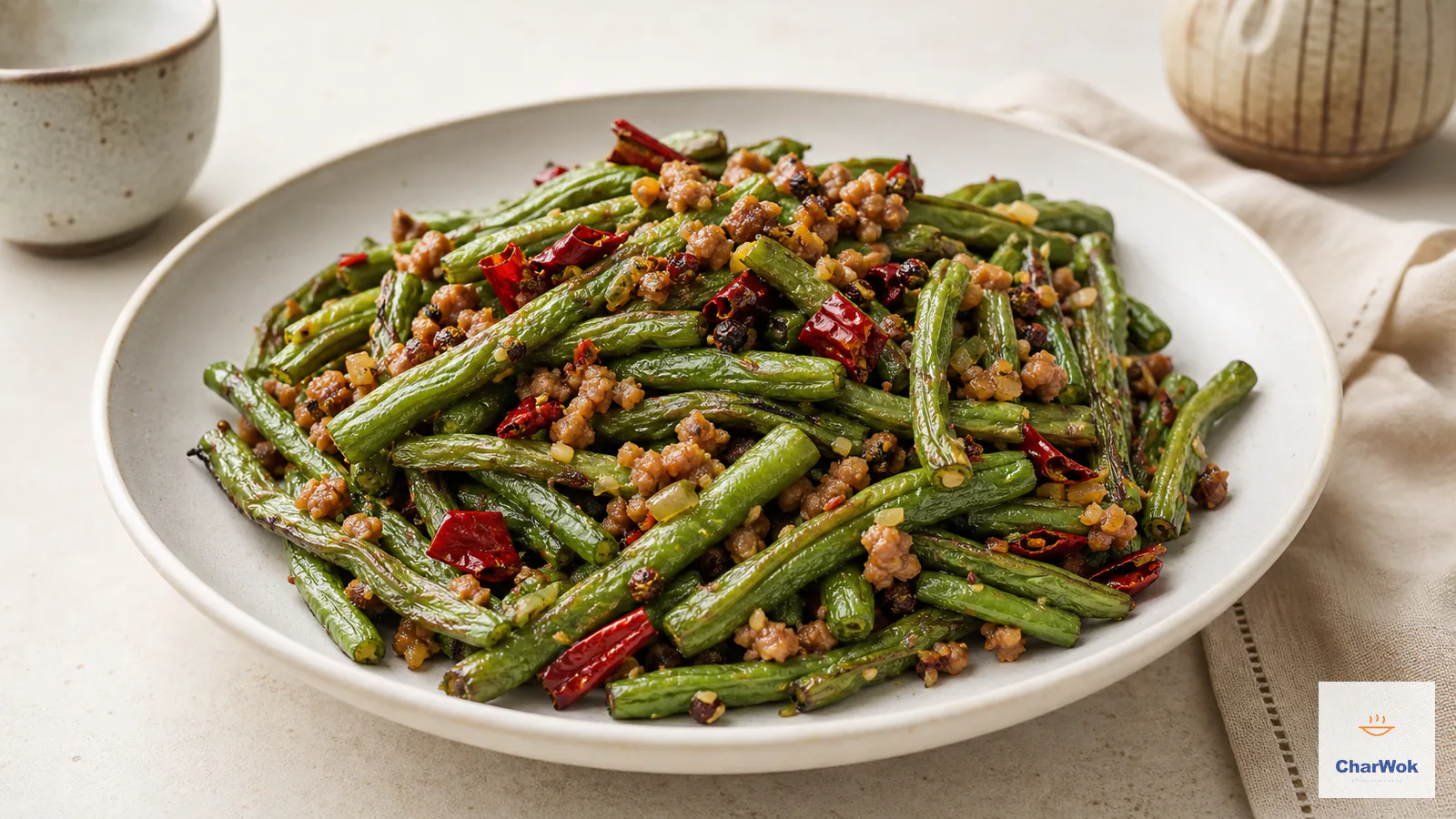
If green beans ever seemed like a chore to cook, this is the dish that flips it. The skins wrinkle and char, the interior turns tender and almost creamy, and then the whole thing is tossed with browned minced pork, Sichuan peppercorn, dried chilies, and the funky-sweet preserved mustard greens the region calls ya cai. The first thing that hits you is the char on the skins, then a low hum of Sichuan-pepper tingle, and finally a savory, almost-meaty depth from the browned pork and fermented greens. It belongs on the short list of dishes I keep coming back to on the Sichuan recipes I actually cook at home.
At a glance: The whole dish rests on one move: driving the moisture out of the beans before they ever meet the seasoning. Budget about 12 to 15 minutes to blister them, then around 2 minutes to finish in the wok. Use roughly 350 g beans to 80 g minced meat, and keep the final stir-fry hot, quick, and sauce-free. An oven, an air fryer, or a dry pan will blister the beans with a fraction of the oil a deep-fry demands.
What "dry fry" actually means
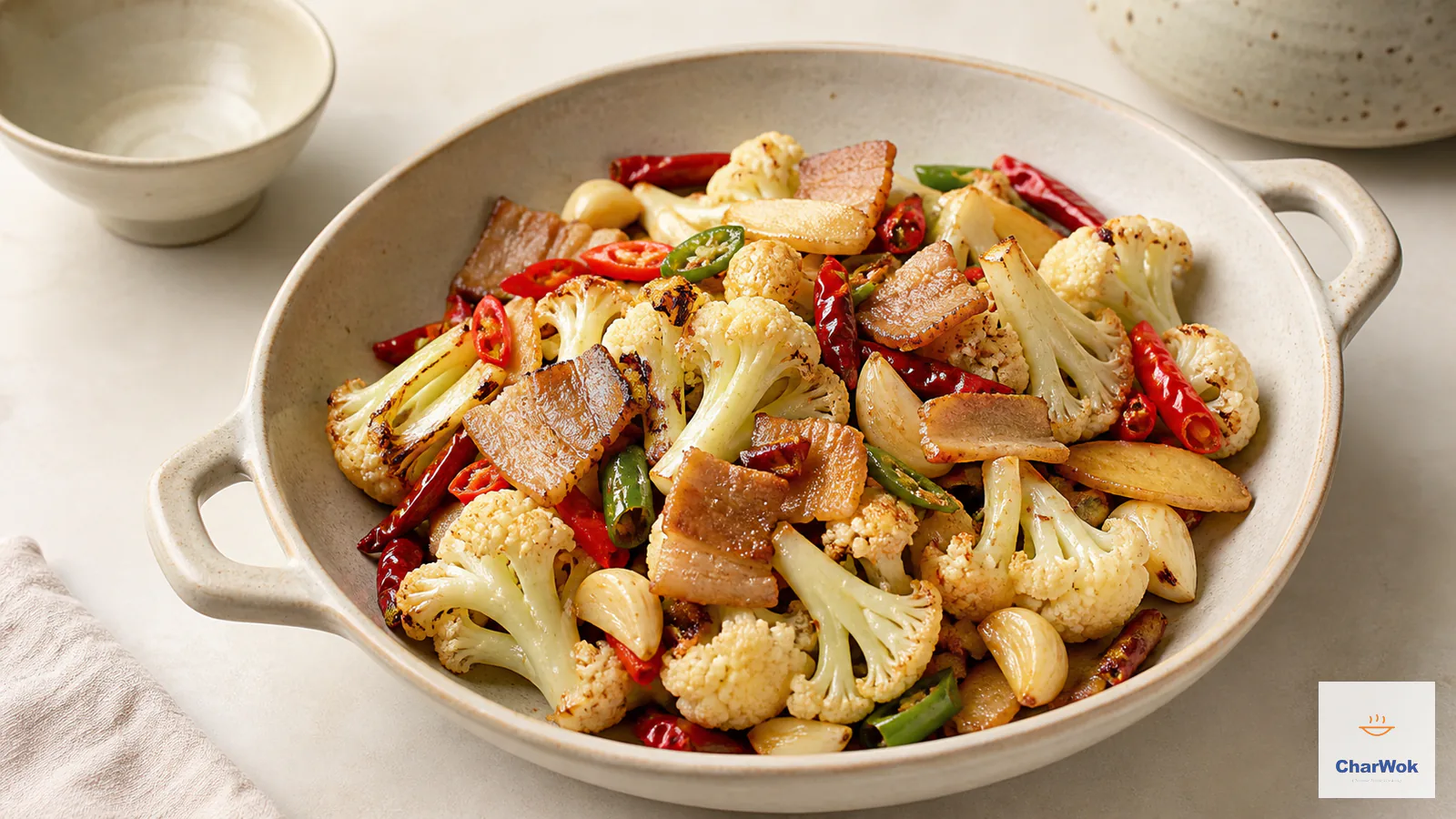
In Sichuan kitchen shorthand, gan bian describes cooking something in a pan with little or no liquid, pressing it against hot metal until its surface water cooks off and the skin blisters. The goal is twofold: concentrate flavor by removing water, and develop the browned, slightly charred notes that come from direct contact with a hot surface. The dehydration can be done in a hot oven, an air fryer, or a patient dry pan, each driving off the surface water without the oil a deep-fry needs. Dry pot cauliflower and the blistered dry-fried shredded potato pancake are built on the same instinct.
The tell that you've done it right is the look: the beans should be slack and wrinkly, with random dark blisters, not uniformly steamed-green. They also should leave almost no moisture behind in the pan. If you see puddles, you underdid the drying step.
Ingredients, and where I'd make substitutions
Ingredients at a glance
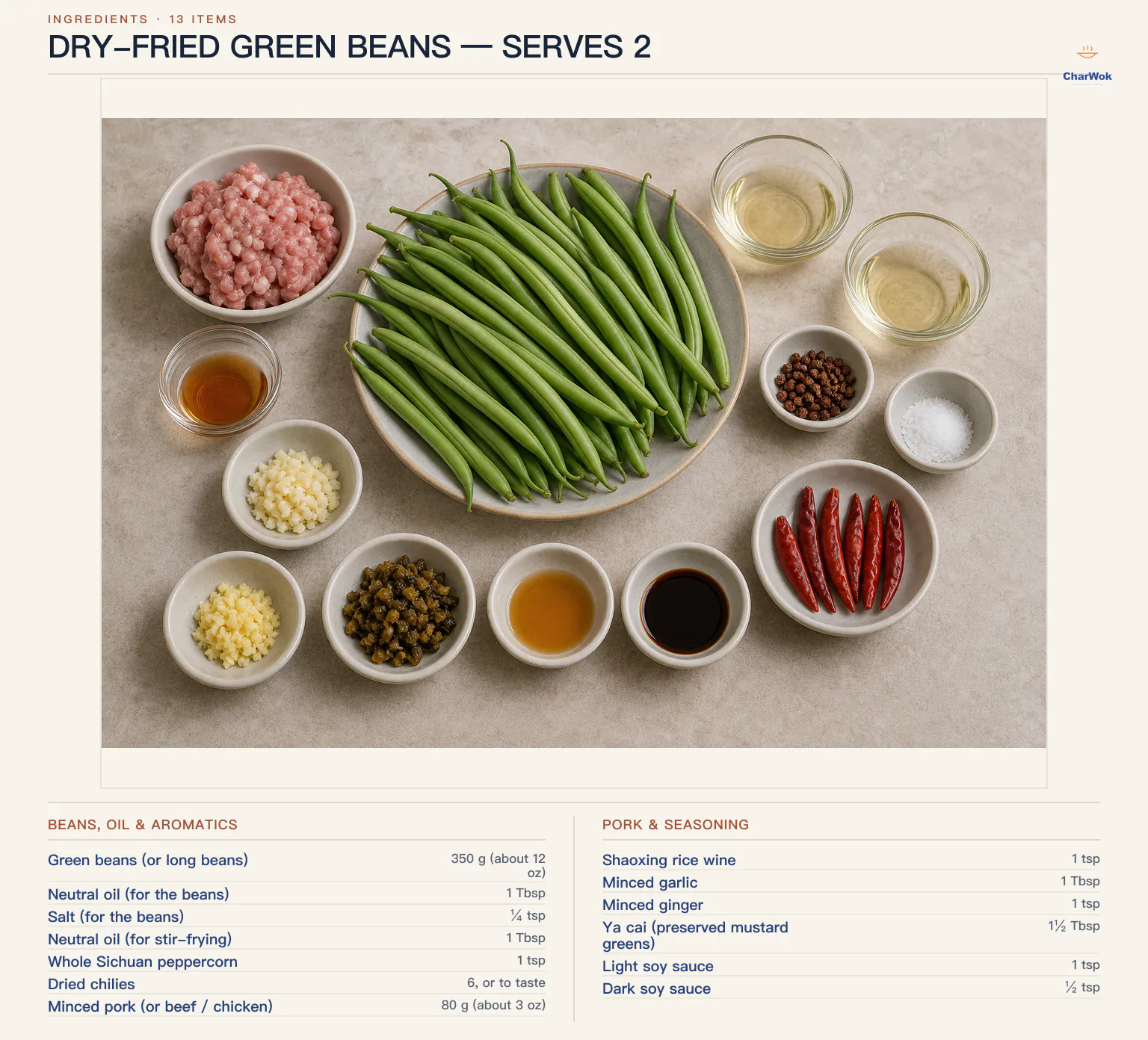
| Ingredient | Amount | Notes / substitute |
|---|---|---|
| Green beans (or long beans) | 350 g (about 12 oz) | Chinese long beans are the classic; standard green beans work fine. Avoid wax beans, which blister poorly. |
| Neutral oil (for the beans) | 1 Tbsp | Peanut, canola, or grapeseed. |
| Salt (for the beans) | ¼ tsp | Draws surface moisture and seasons from the inside. |
| Neutral oil (for stir-frying) | 1 Tbsp | More if your wok runs dry. |
| Whole Sichuan peppercorn | 1 tsp | See the guide to Sichuan pepper for sourcing and freshness. |
| Dried chilies | 6, or to taste | Er jing tiao for aroma and mild heat; facing-heaven for more fire. |
| Minced pork (or beef / chicken) | 80 g (about 3 oz) | Pork is traditional. For vegan, use soaked, finely chopped dried shiitake (see flavor pairing notes for more umami boosters). |
| Shaoxing rice wine | 1 tsp | Read about Shaoxing wine if you don't keep a bottle on hand. |
| Minced garlic | 1 Tbsp | Don't skimp. |
| Minced ginger | 1 tsp | Fine mince so it blends into the meat. |
| Ya cai (preserved mustard greens) | 1½ Tbsp | Sui mi ya cai (pre-mined) is easiest. Substitutes below. |
| Light soy sauce | 1 tsp | For salt and savory depth. The light vs. dark soy distinction matters here. |
| Dark soy sauce | ½ tsp | Mainly for color. Omit if you only have light. |
If you can't find ya cai
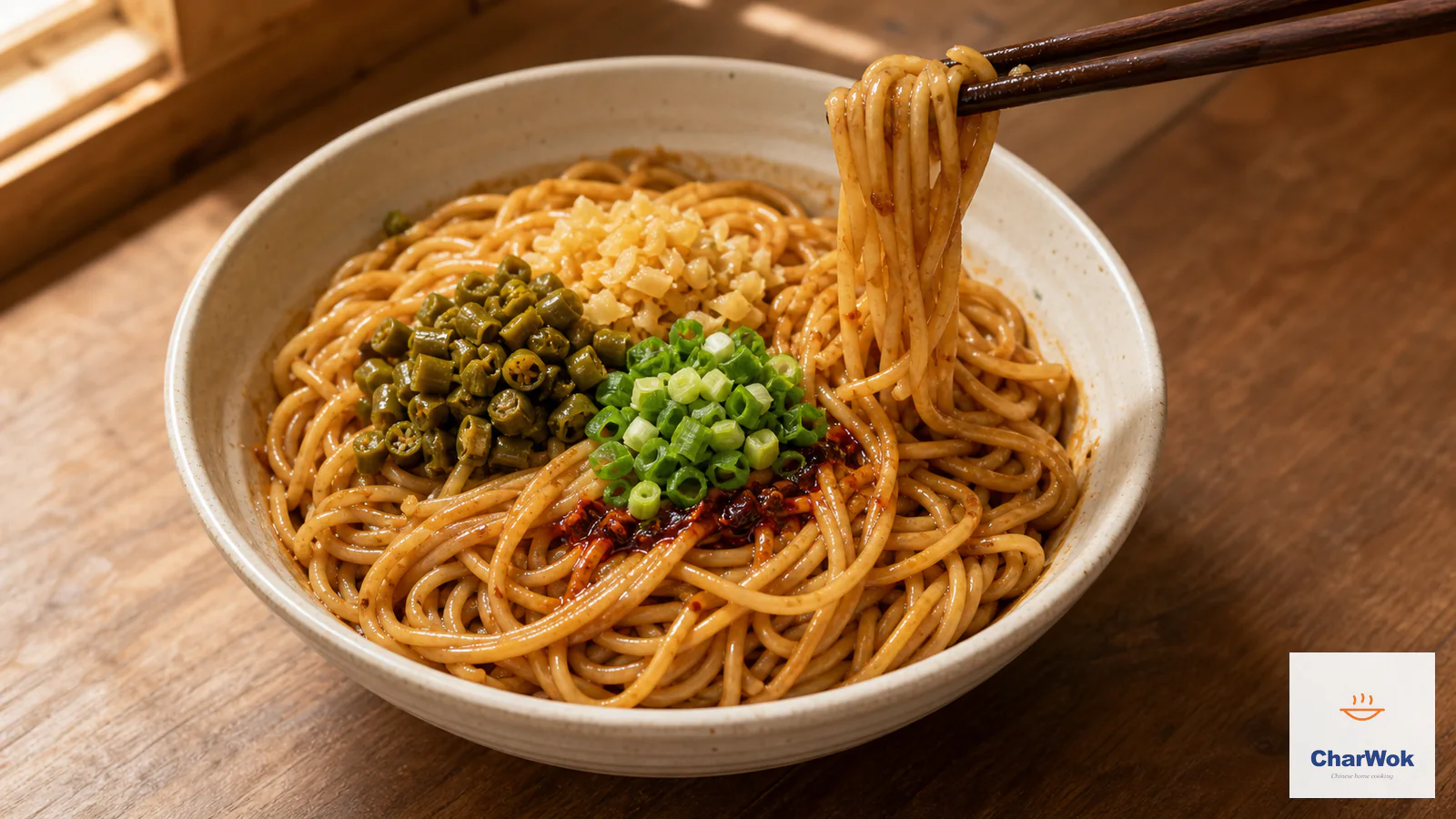
Ya cai is the fermented mustard green that gives this dish its oddly addictive sweet-savory funk, and there is a useful split worth knowing: Yibin ya cai, the classic made from preserved mustard stems, is deeper and more pungent, while su mi ya cai is pre-mined, milder, and the one most home cooks actually reach for. Either works here. It is the same family of ingredient that powers Dan Dan noodles. If your pantry has none of it, you can reroute through several other corners of the Chinese larder, and the dish will tilt a little with each choice. Fermented black beans (douchi) trade the green, vegetal funk for a darker, soy-ish saltiness, and I lean on them often. A spoon of sweet bean paste (tianmianjiang) pushes the dish toward the mellow, saucy character of a Sichuan braise. Pickled cabbage, suan cai, swings it tart and northern. Pickled mustard stem (zha cai) and Tianjin dong cai are the closer cousins if you want to stay near the original, and chopped pickled chilies swap some depth for bright heat. Every one of these is saltier or less salty than ya cai, so taste the finished pan before you reach for the soy bottle.
Blistering the beans: pick your heat
Whatever method you pick, do the same prep first: trim the stem end, wash the beans, dry them thoroughly (a damp bean steams instead of blistering), then coat them with the 1 Tbsp oil and ¼ tsp salt right on the sheet pan or in a bowl, no bag needed. The salt is doing real work here, not just seasoning. It draws surface moisture out of the skin through osmosis, and that moisture is exactly what you are trying to drive off. Less water at the surface means faster blistering and better char.
| Method | Heat | Time | What it's good for |
|---|---|---|---|
| Air fryer (my weeknight default) | 200°C / 390°F, 3-min preheat | 6 to 8 minutes, shake twice | Fast and even, almost no oil, best for one or two portions. Watch the last two minutes; beans cross from blistered to burnt quickly. |
| Oven | 220°C / 425°F (200°C / 400°F fan) | 12 to 15 minutes, shake halfway | Scales up for a bigger batch, but blisters more slowly than the air fryer. Spread the beans so they don't overlap, or they steam. |
| Dry wok or skillet | Medium-high | 12 to 15 minutes, toss and press constantly | The traditional home route and the deepest char, but it demands constant attention — I scorch a few every time I look away. |
Bringing it together in the wok
- Wake the spices. Get the second tablespoon of oil ripping hot in a wok or deep skillet. Drop in the Sichuan peppercorn and dried chilies and let them toast for a 20-to-30-second count, aiming for nothing more than their aroma blooming into the oil. The instant the chilies deepen in color and the peppercorns turn fragrant, move forward, because scorched peppercorn goes bitter and soapy in a hurry. If they start to smoke, fish them out and redo the step.
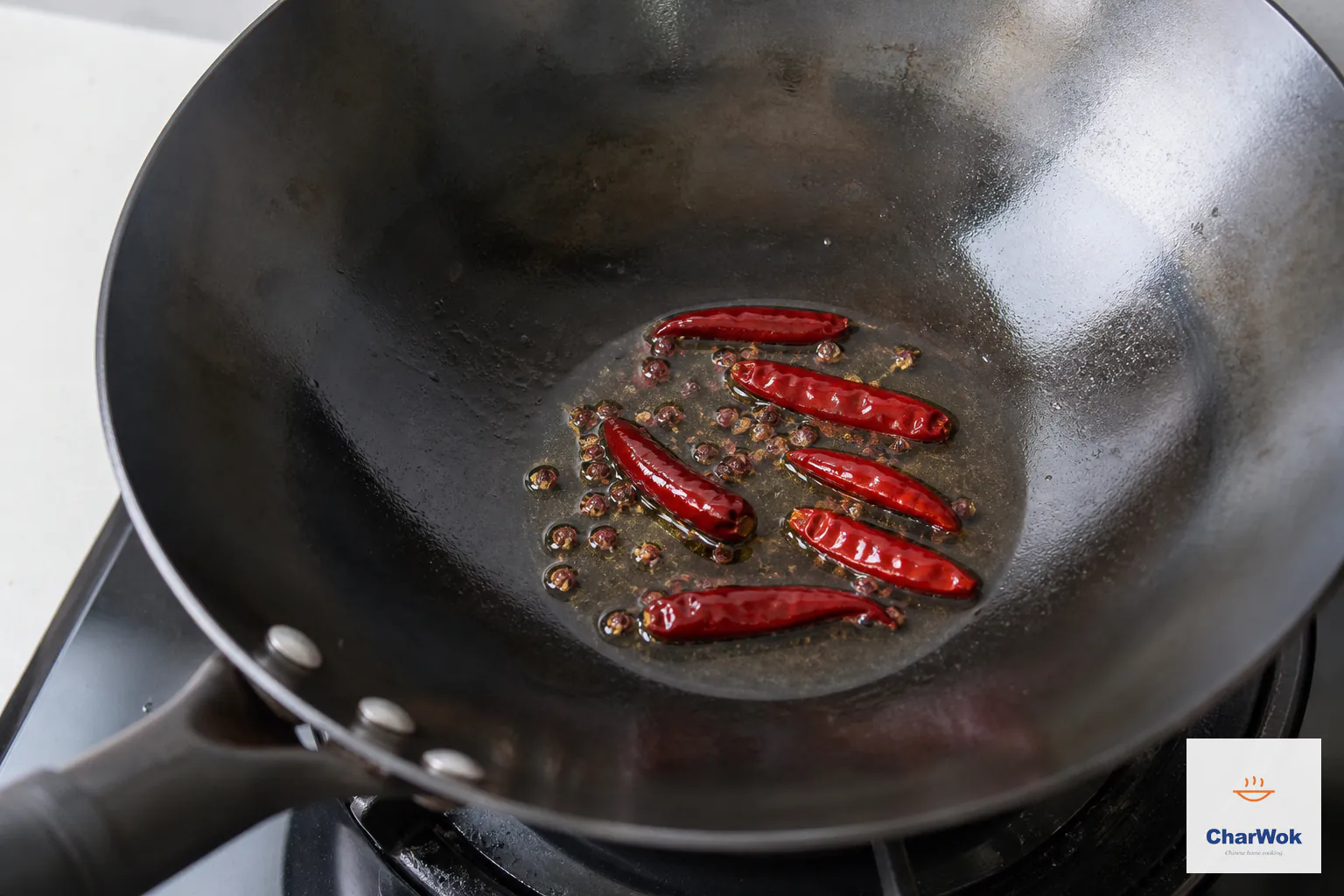
Bloom the peppercorn and six chilies for only 20 to 30 seconds, moving on as soon as they smell fragrant.
- Brown the meat and deglaze. Add the minced pork and the Shaoxing wine together. The wine's alcohol flashes off and lifts the browned bits from the pan, which is where a lot of the meaty flavor lives. Break the meat up with your spatula and cook it just past raw, letting the edges crisp up. Under-browned meat is the most common reason this dish tastes flat.
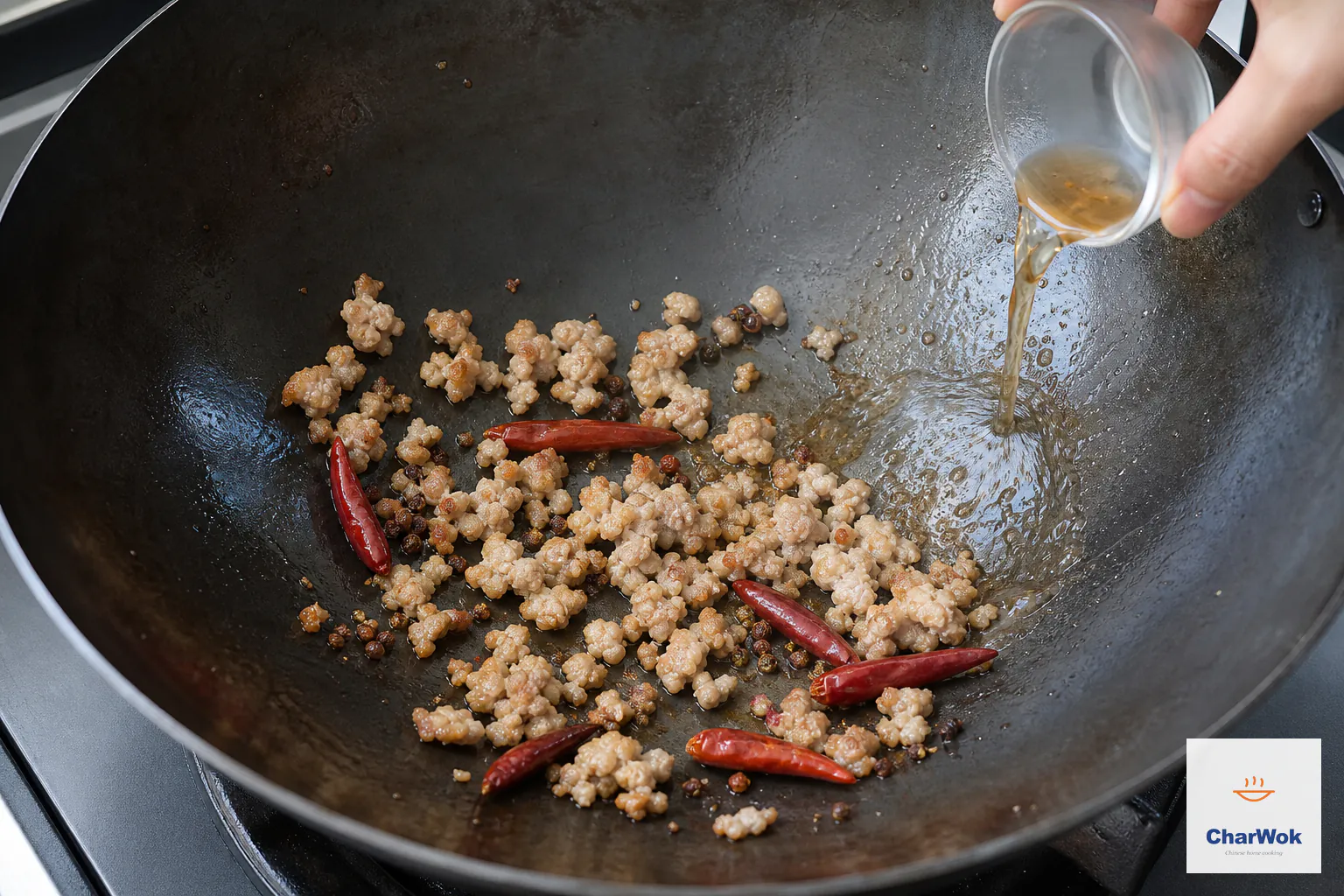
Break the pork into small crumbles, brown the edges, and pour the Shaoxing wine against the hot wok to lift the fond.
- Build the flavor base. Add the garlic, ginger, ya cai (or your substitute), and both soy sauces, then keep the food moving until the aromatics lose their raw bite and the ya cai softens into something rounder and sweeter. This only takes a brief cook; pull it as soon as the garlic smells mellow rather than sharp.
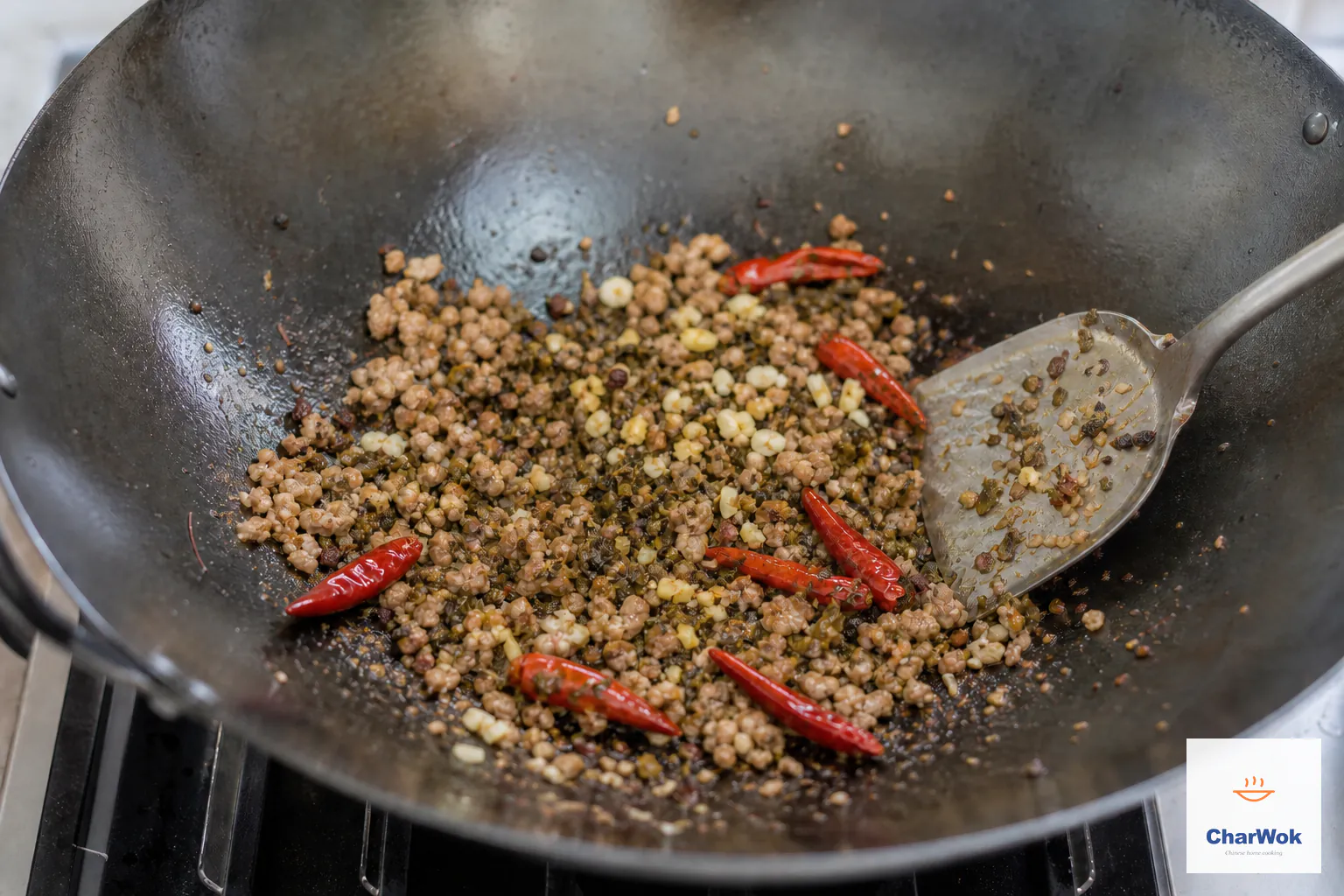
Add garlic, ginger, ya cai and both soy sauces, then stir only until the aromatics lose their raw edge.
- Finish with the beans. Tip in the blistered beans and toss hard for 30 to 60 seconds so the meat and seasoning cling to every bean. The finished dish should look dry: no pooled sauce, no glaze sliding around the plate. If liquid is collecting, keep the heat high and toss until it evaporates.
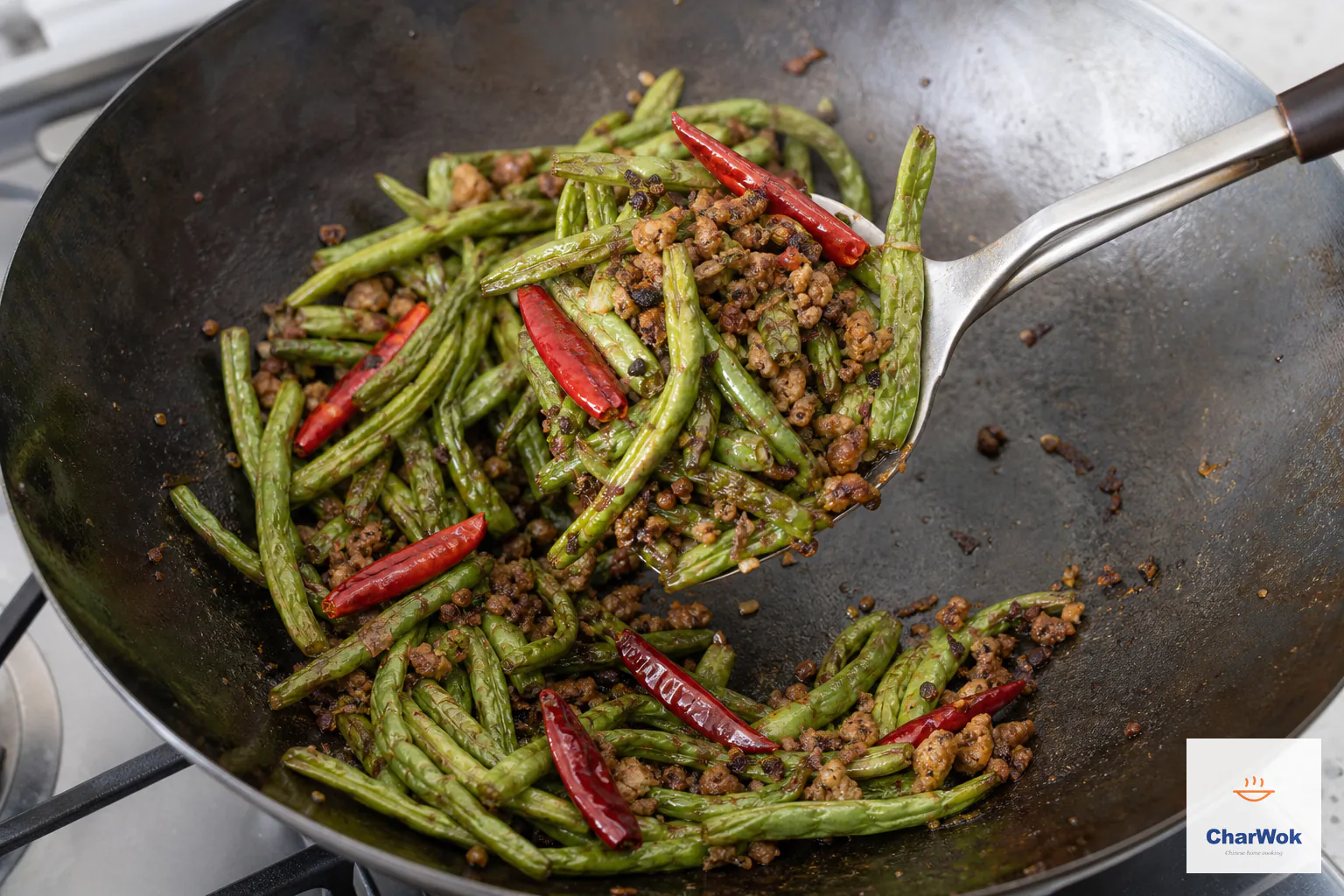
Toss the blistered beans hard for 30 to 60 seconds until the seasoning clings and no liquid remains in the wok.
Serve immediately, over plain rice. The texture degrades quickly once the beans sit, so this is not a make-ahead dish. The same final toss is what separates this from yu xiang eggplant or the northeastern Di San Xian, which lean on a glossy sauce. Here the seasoning should be a thin coating, not a gravy.
When it goes wrong
The beans are pale and steamed, not blistered. The pan wasn't hot enough, the beans were wet, or they were crowded. Dry the beans fully before oiling, and don't pile them. In the wok method, hold back a few beans if your pan is small and work in two batches.
The beans are leathery, not tender. You dried them past the point of pliable. Pull them the instant they wrinkle and bend without snapping. They keep cooking from residual heat after they leave the pan.
The dish tastes bitter. Almost always burnt Sichuan peppercorn or scorched chilies. Next time, lower the heat slightly for the aromatics and pull them a beat earlier. Burnt garlic is the other culprit; add it with the meat juices present, not into a dry hot pan.
It's pooling liquid. Either the beans weren't dried enough, the meat released a lot of water, or the heat dropped. Crank the flame and toss until the pan is dry before adding the beans.
The meat is tough and grey. You let it sit in the pan too long on too-low heat. High heat, constant breaking-up, and pulling it the second it's no longer pink keep it tender.
Variations and what to serve it with
Drop the meat entirely for a vegan version and the dish still works, as long as you don't also cut the ya cai; that's where the savory backbone comes from. Dried shiitake, soaked and finely chopped, gives the most convincing meaty chew. A spoonful of duo jiao stirred in at the end pushes it toward sharper, brighter territory.
For a heartier plate, the classic move is to pair these beans with another boldly seasoned Sichuan main. Twice-cooked pork is the natural companion; both lean on the same chili-bean-and-pepper flavor palette without competing. If you'd rather make the beans the star, set them against something plain and cooling. A plate of stir-fried water spinach and a bowl of rice is a full summer meal. This kind of high-flavor vegetable dish is exactly what I reach for when I'm working through hot-weather recipes that don't want to spend an hour at the stove.
Storage and reheating
Leftovers keep in the fridge for up to two days but lose their bite, so I treat them as a different dish. Reheat hard and fast in a dry skillet to re-crisp the beans; microwaving turns them soggy. They're also good cold, folded into noodles or tucked into a wrap. I don't recommend freezing; the thawed texture is unpleasantly limp.
Quick questions
People ask the same handful of things about this recipe, so here are short answers.
Do I have to deep-fry the beans? No. An air fryer, a hot oven, or a dry pan will blister them just as well with a fraction of the oil, and most home cooks I know have switched over for good.
What if I can't find ya cai? Several pantry staples will steer the dish in a similar direction — fermented black beans (douchi), a little sweet bean paste, pickled cabbage, or preserved mustard stem. Each tilts the flavor a little, so taste the pan before adding more soy sauce.
Can I make it ahead? Blister the beans in advance and hold them at room temperature for a few hours, but do the final stir-fry right before serving. Reheated finished beans go soft.
How spicy is this? Mildly, unless you want more. The dried chilies mostly perfume the oil; the Sichuan peppercorn adds tingle rather than burn. Add more chilies, or a spoon of duo jiao, if you want real heat.
Strip this dish down to its principle and it stops being intimidating: dry the beans until they blister, then coat them in a hot, fast, sauceless stir-fry. Do that and you'll never bother with the deep-fried restaurant version again. The one thing I still mess up now and then is walking away during the last minute of blistering, so set a timer and trust it.