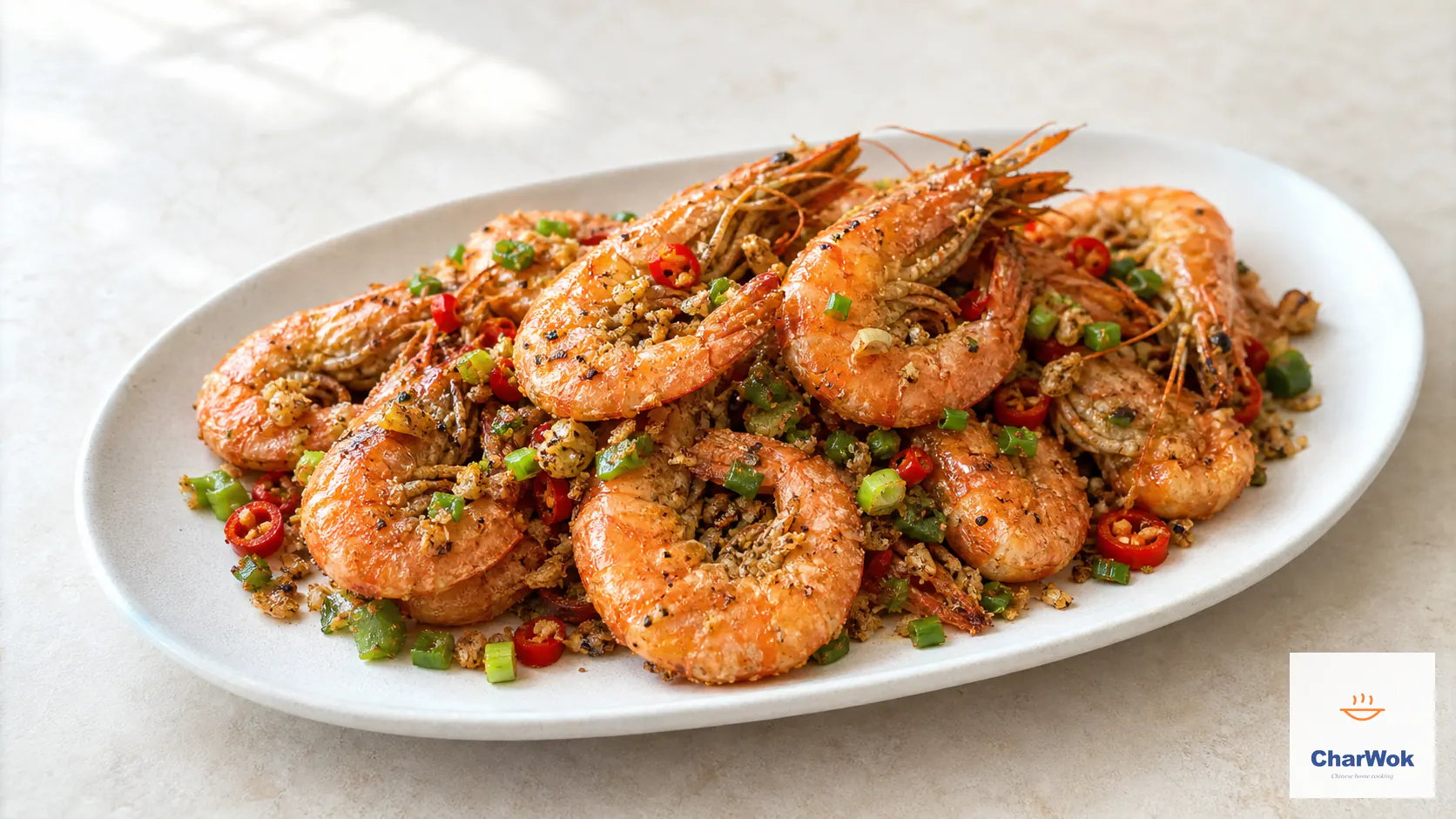
There is a moment, about ninety seconds into frying, when the shell of a shrimp turns from translucent gray to deep coral and goes glassy and rigid. That shell, fried right, shatters between your teeth like a thin cracker and carries every bit of the seasoning. That is the whole reason this dish exists. The mistake most home cooks make is treating it as a stir-fry: a quick toss in a wok, some salt, some pepper, a sad soft shell. The real thing is a deep-fry (or a careful shallow fry) with a toasted spice blend folded in at the very end. Two techniques, one short dish, and most of it is in the details.
I have ruined my share of these. Under-fried shell that stays leathery. Over-fried shrimp that turn to cotton. A seasoning I ground so fine it dissolved into dust and lost its scent in a week. What follows is the version I have settled on after cooking it dozens of times, with the reasoning behind every move so you can adjust to your own pan, your own shrimp, your own stove.
At a glance: Shell-on shrimp dusted in starch, fried at 190°C / 375°F for about 90 seconds, then tossed with a toasted salt-and-Sichuan-pepper blend. The coating is the whole game. Serve the second it leaves the pan, because the crunch dies fast. Budget 15 minutes active time, and make extra seasoning; it keeps for a month and belongs on almost everything.
What the dish is, and where it comes from
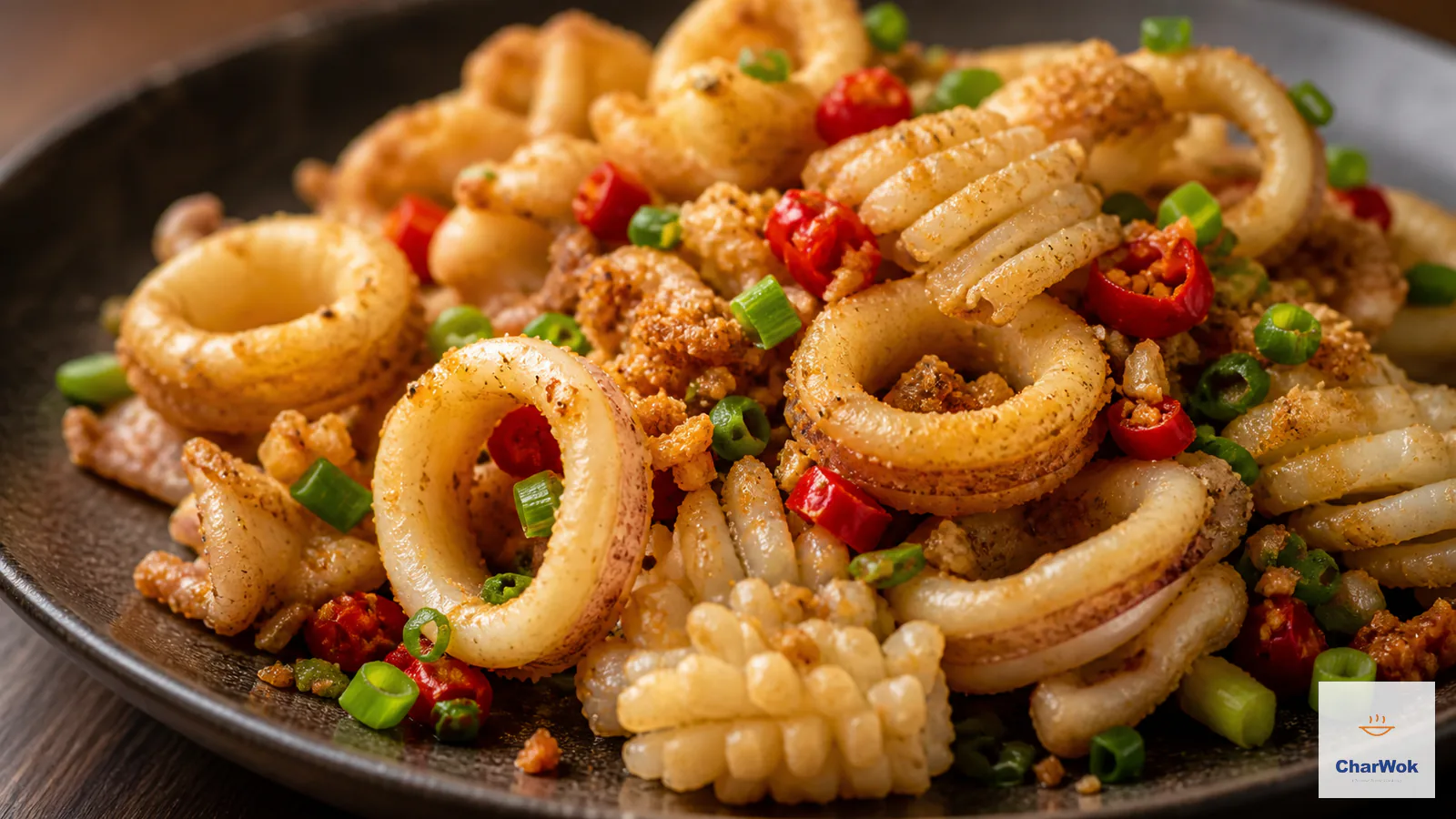
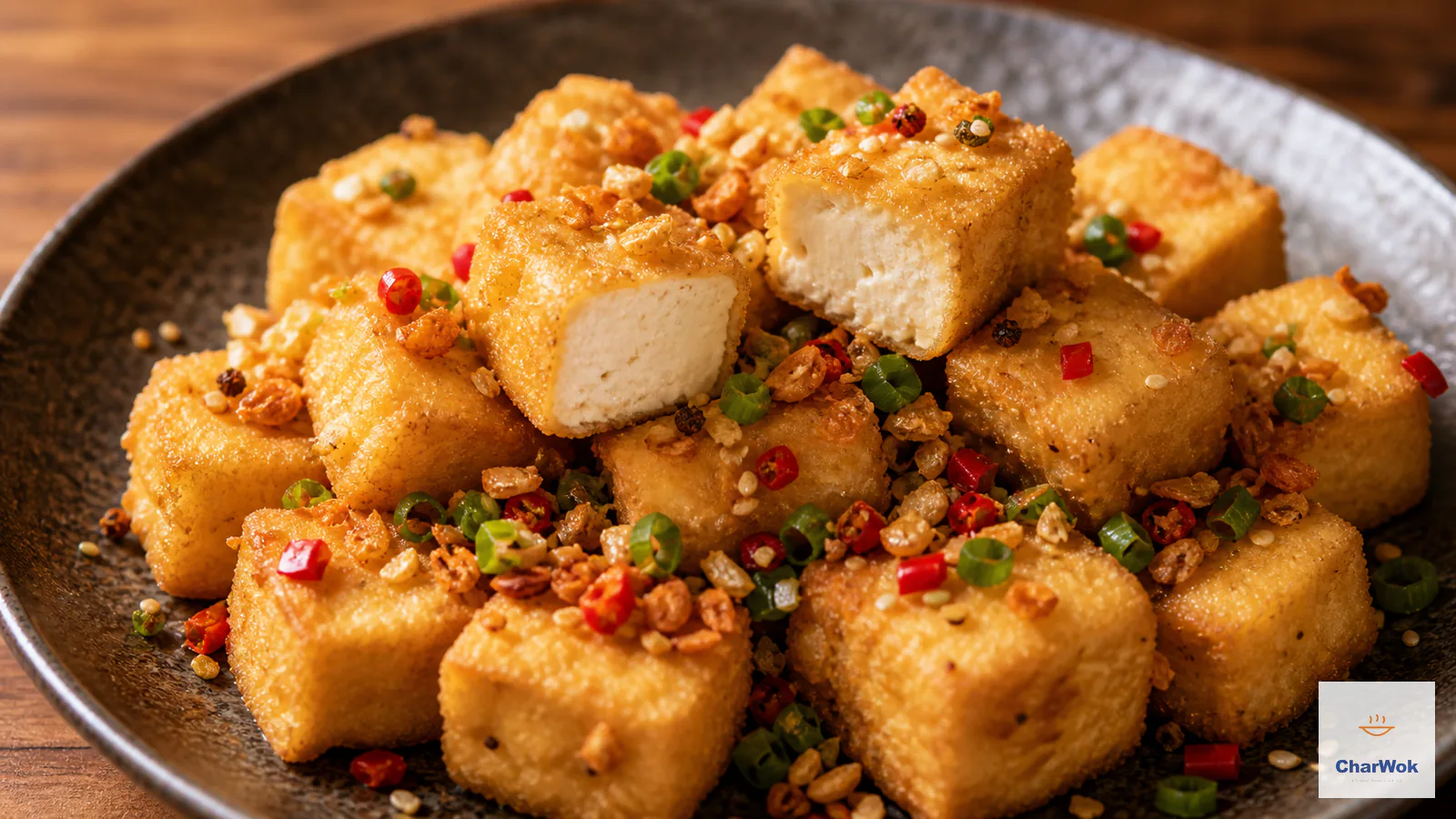
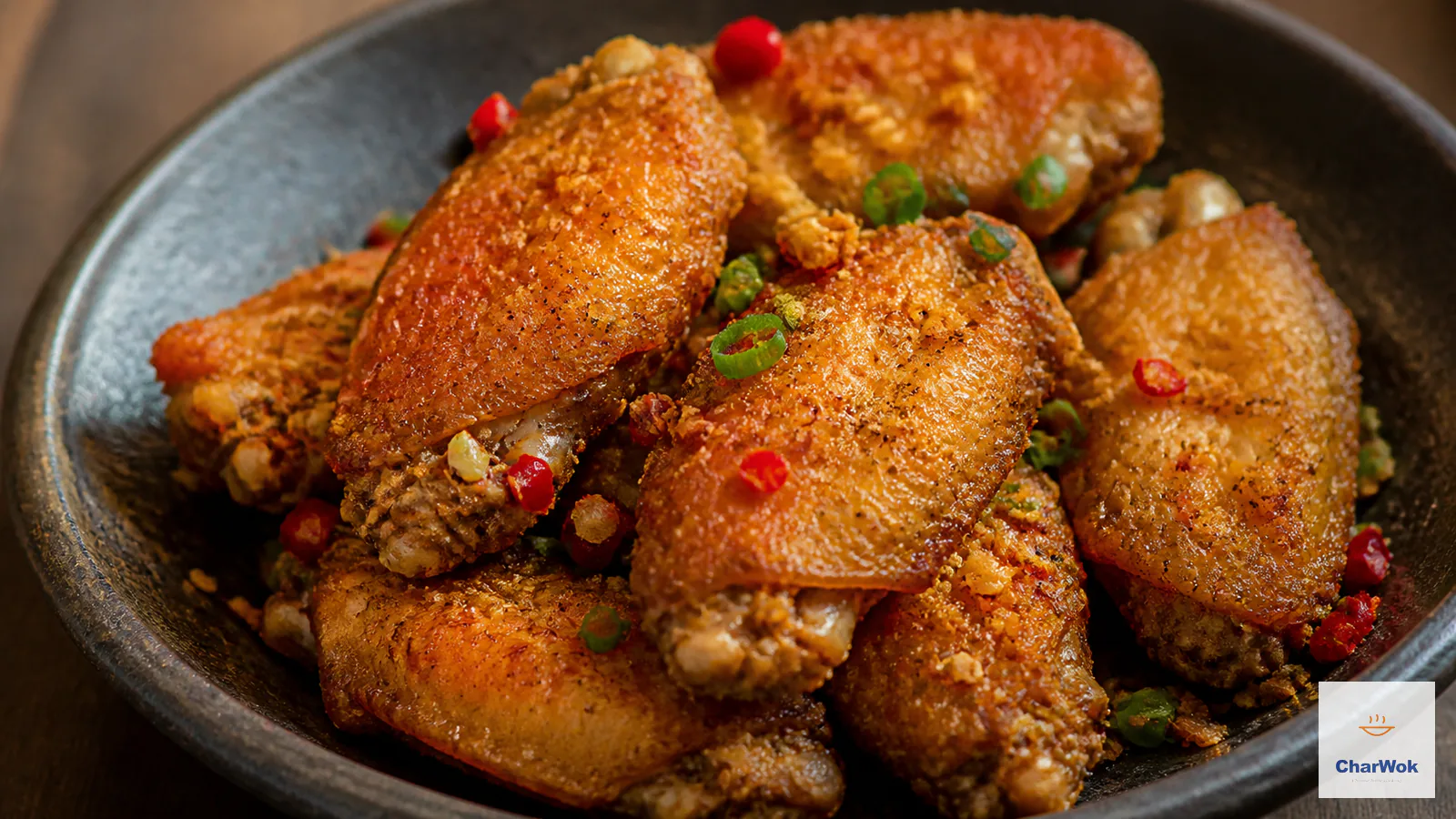
Salt and pepper shrimp (jiao yan xia, 椒盐虾) is a Cantonese creation that has spread across every Chinese takeout menu in the West, and the family it belongs to is large. The same toasted salt-and-pepper blend gets thrown over fried squid, over crisp tofu, and over chicken wings, each becoming its own dish. Once you learn the seasoning, you have a small arsenal, and I've linked the sibling recipes further down.
The two defining traits: the protein is fried until its surface is brittle enough to eat shell and all, and a fragrant salt called jiao yan (literally "peppery salt") is added at the end, not before. It is a dry dish. No sauce, no glossy cornstarch-thickened glaze. The flavor is sharp, salty, aromatic, with a low hum of numbing pepper behind it.
Building a better salt-and-pepper blend
Ingredients at a glance
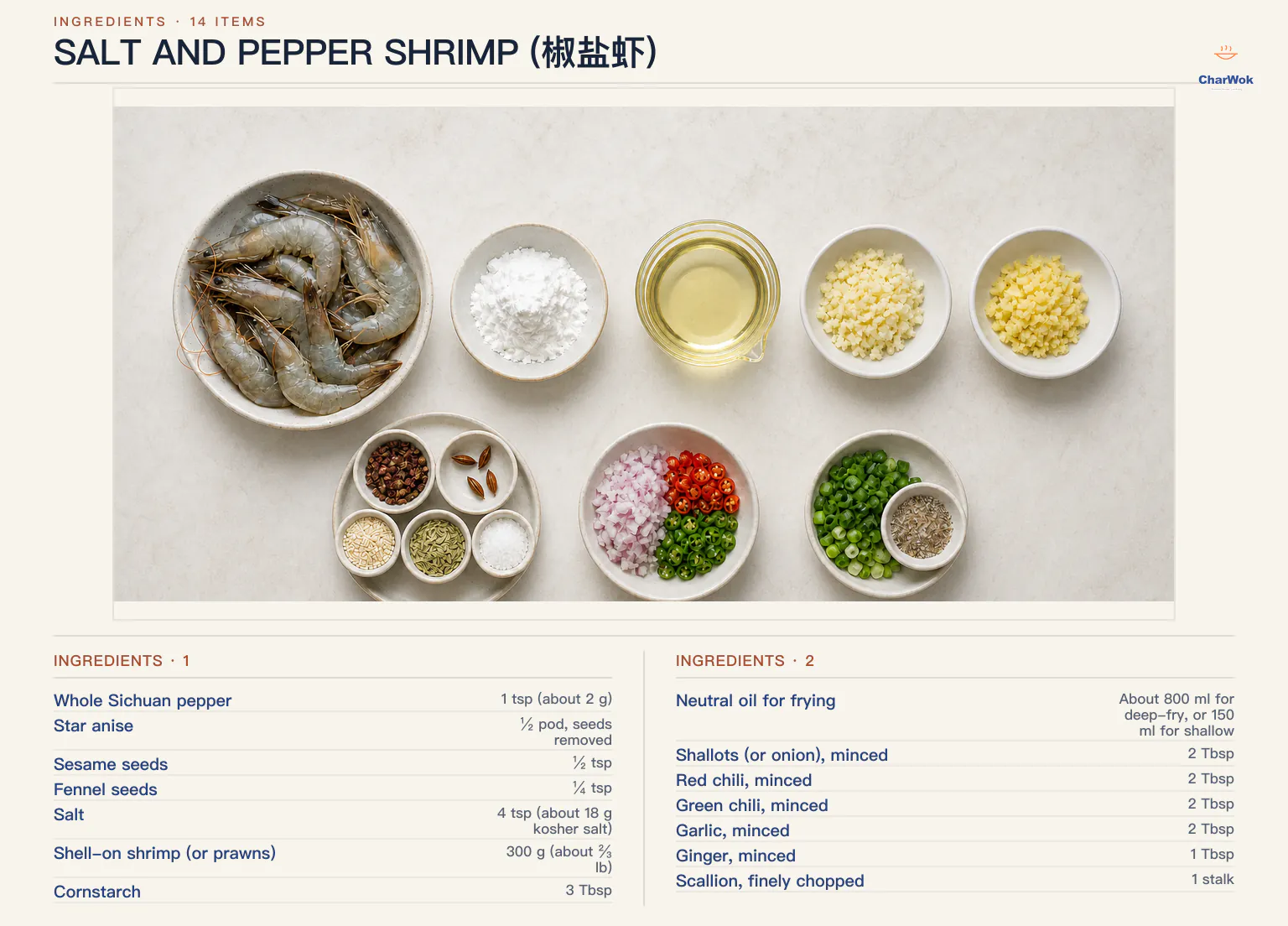
You can buy jiao yan in jars at any Chinese grocery. Do not. Pre-ground blends lose their volatile oils within weeks, and the difference between a fresh batch and a six-month-old one is the difference between perfume and sawdust. Five minutes in a dry pan fixes this. The blend below is on the complex end. Most street versions are just Sichuan pepper and salt, but I like the extra roundness that a little fennel, sesame, and star anise add. If you want to understand the central ingredient in depth, read up on Sichuan pepper first; its numbing citric quality is the backbone here.
One note on the Sichuan pepper itself: pick through it before toasting. Commercial Sichuan pepper carries small black seeds and the occasional twig, both bitter. Pull them out. The dried seed pods of star anise are also bitter, so snap the points off the star and shake the seeds loose.
| Ingredient | Amount | Notes / substitute |
|---|---|---|
| Whole Sichuan pepper | 1 tsp (about 2 g) | Red Sichuan pepper is standard; green is brighter and more floral. Avoid pre-ground. |
| Star anise | ½ pod, seeds removed | Use only the points, not the seeds. |
| Sesame seeds | ½ tsp | White, unhulled toast fine. Skip if you don't have them. |
| Fennel seeds | ¼ tsp | Adds a sweet anise edge. Optional but recommended. |
| Salt | 4 tsp (about 18 g kosher salt) | Kosher or fine sea salt. Table salt will taste harsh, so use 3 tsp. |
Ingredients for the shrimp
| Ingredient | Amount | Notes / substitute |
|---|---|---|
| Shell-on shrimp (or prawns) | 300 g (about ⅔ lb) | Large or extra-large, U/15 to 26/30. Leave heads on if you can find them; see note below. |
| Cornstarch | 3 Tbsp | Potato starch or tapioca starch work equally well and stay crisp a touch longer. |
| Neutral oil for frying | About 800 ml for deep-fry, or 150 ml for shallow | Peanut, sunflower, canola, or refined vegetable oil. High smoke point only. |
| Shallots (or onion), minced | 2 Tbsp | Shallots are sweeter and worth seeking out. |
| Red chili, minced | 2 Tbsp | Jalapeño, Fresno, or red serrano. Remove seeds for less heat. |
| Green chili, minced | 2 Tbsp | Use the red if you only have one color; it's mostly for looks. |
| Garlic, minced | 2 Tbsp | Don't skimp — the garlic carries the flavor base. |
| Ginger, minced | 1 Tbsp | Fresh, peeled. Helps neutralize any fishiness in the shrimp. |
| Scallion, finely chopped | 1 stalk | Green part only, for garnish. |
Use raw, never pre-cooked shrimp. Frozen is fine; thaw slowly in the fridge, never in warm water, which makes the flesh mushy. Whether to call them shrimp or prawns is mostly regional; in cooking they are interchangeable, and what matters is that they still have the shell.
The method, with the reasoning
- Toast the seasoning. Put the Sichuan pepper, star anise points, sesame seeds, fennel, and salt into a dry pan over low heat. The point of low heat is to drive off moisture and warm the volatile oils without scorching them; high heat burns the pepper before the salt even warms. Shake the pan and stir now and then. You are done when the salt takes on a faintly yellow tint and the pepper smells unmistakably floral, about 3 to 4 minutes. Pull it off the heat the moment it smells right; carryover heat will keep toasting it.
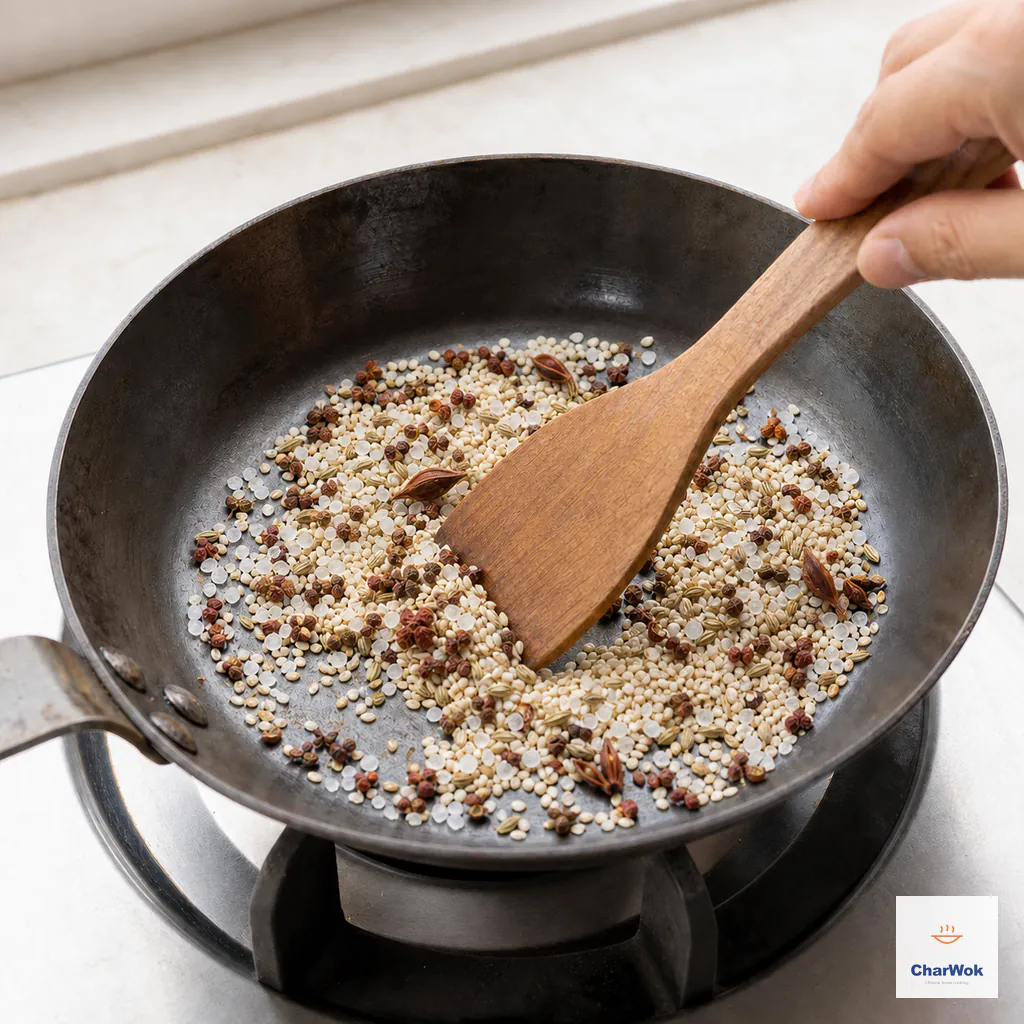
Toast over low heat only until the salt turns faintly yellow and the spices smell floral, then remove the pan before carryover heat scorches them
- Grind, but not to powder. Let it cool a minute, then pound in a mortar or pulse in a spice grinder. Stop while there's still some texture; you want grit, not flour. Over-grinding releases the oils into the air instead of leaving them in the salt, and the blend will go flat within days. If you've never ground Sichuan pepper before, the correct way to grind it is worth a look; the technique matters.
- Prep the shrimp. Rinse under cold water and pat thoroughly dry with paper towels. Surface moisture is the enemy of crispness: water turns the starch coating into a slurry that slides off in the oil and leaves the shell bare. But you don't want them bone-dry either; a barely-damp surface is what holds the starch on. It's a narrow band.
- Coat in starch. Toss the shrimp with the cornstarch in a bowl until every shell is evenly dusted. Shake off the excess in a sieve; loose starch left in the pan burns and clouds the oil. This starch layer is what fries into the brittle shell — without it you get a soft, rubbery outside that no one wants to eat.
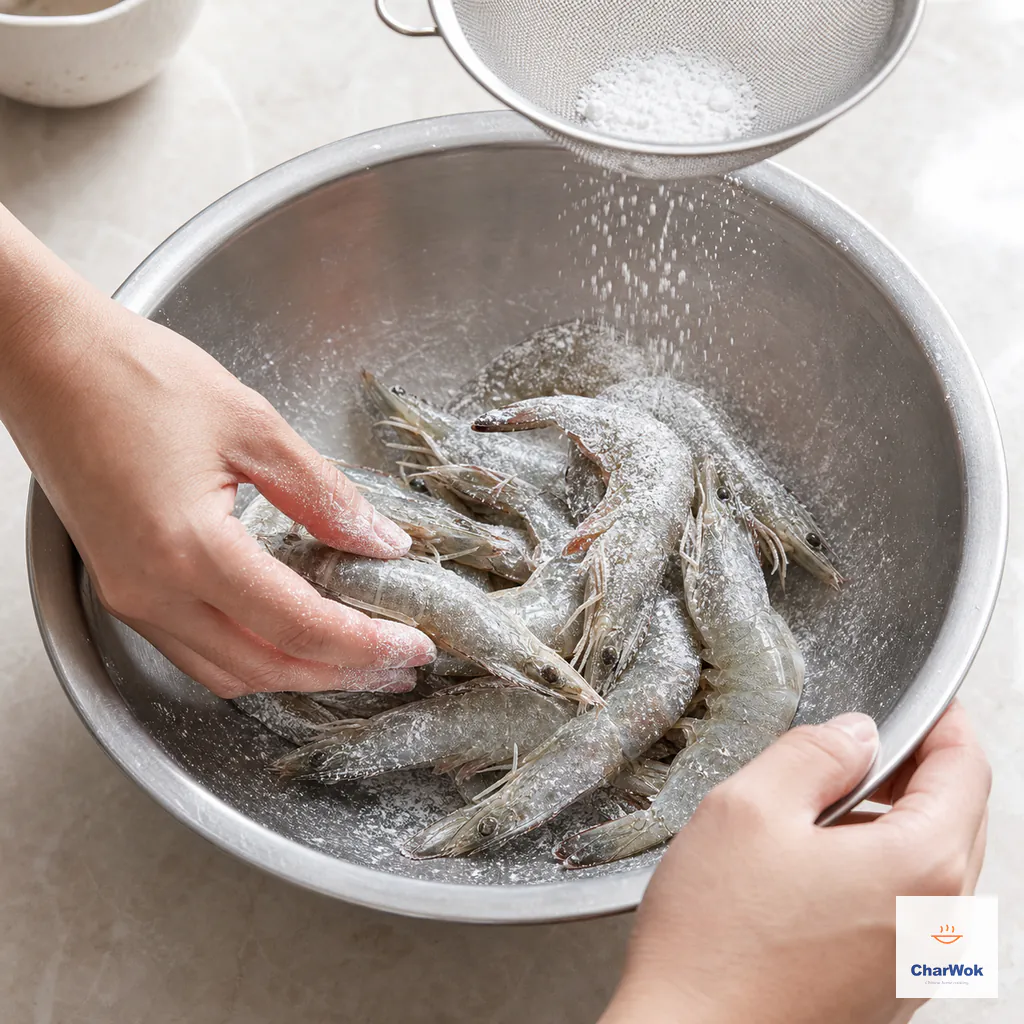
Pat the shells almost dry, coat them thinly, and shake off loose starch so it cannot burn or cloud the oil
- Fry (choose your method). Deep-fry: heat 800 ml of oil in a wok to 190°C / 375°F. A well-seasoned carbon-steel wok is the ideal vessel for this; its wide shape lets the oil recover heat fast between additions. No thermometer? Drop in one shrimp; if it bubbles vigorously the instant it hits the oil, you're there. Slide the shrimp in, nudge apart with chopsticks so they don't weld together, and pull them out when they're coral-pink and the shells look rigid and slightly blistered, about 90 seconds for large shrimp. Shallow-fry: pour 150 ml of oil into a wide pan, enough to come halfway up the shrimp lying flat. Get it just smoking, lay the shrimp in a single layer (work in two batches, do not crowd), and flip when the first side is pink and crisp. Use a splatter screen; wet shells and hot oil are violent together.
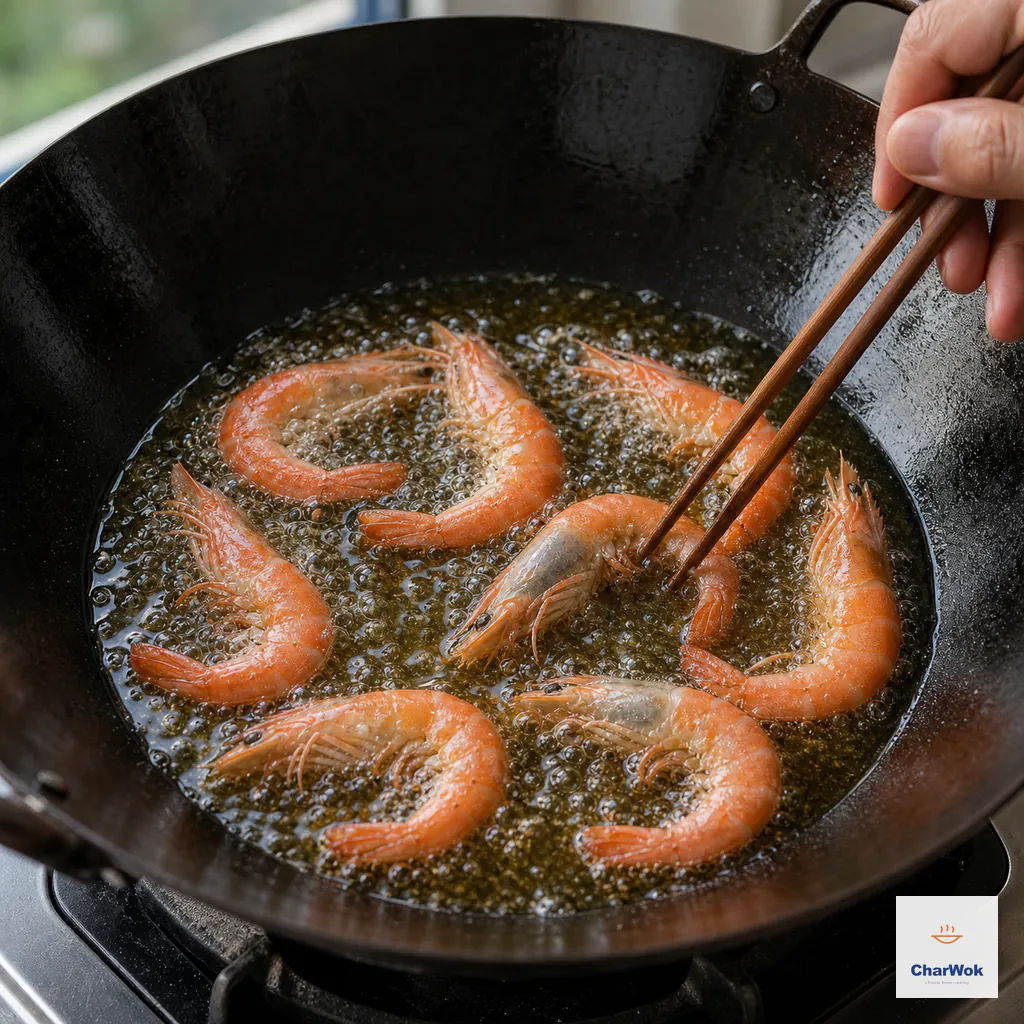
At 190°C (375°F), fry in an uncrowded layer for about 90 seconds, until coral-pink and rigid with lightly blistered shells
- Drain and rest a moment. Lift the shrimp to a rack or paper-towel-lined plate. Thirty seconds of rest lets the surface firm up so the final toss doesn't crush them. Skipping this is how you end up with broken shells floating in seasoning.
- Build the flavor base. Pour all but a thin film of oil out of the pan. Over medium heat, fry the shallots, both chilies, garlic, and ginger for about a minute. You are after fragrance, not color. If the garlic colors, it's burning and will taste bitter. The aromatics here are doing the work that sauce would do in a stir-fry.
- Bring it together. Return the shrimp to the pan. Sprinkle over ½ tsp of your salt-and-pepper blend (taste as you go; the blend is salty and you can always add more). Toss hard for 10 to 15 seconds to coat evenly, hit it with the scallion greens, and dump it onto a plate. Do not walk away to find a serving bowl. The clock is now running on the crunch.
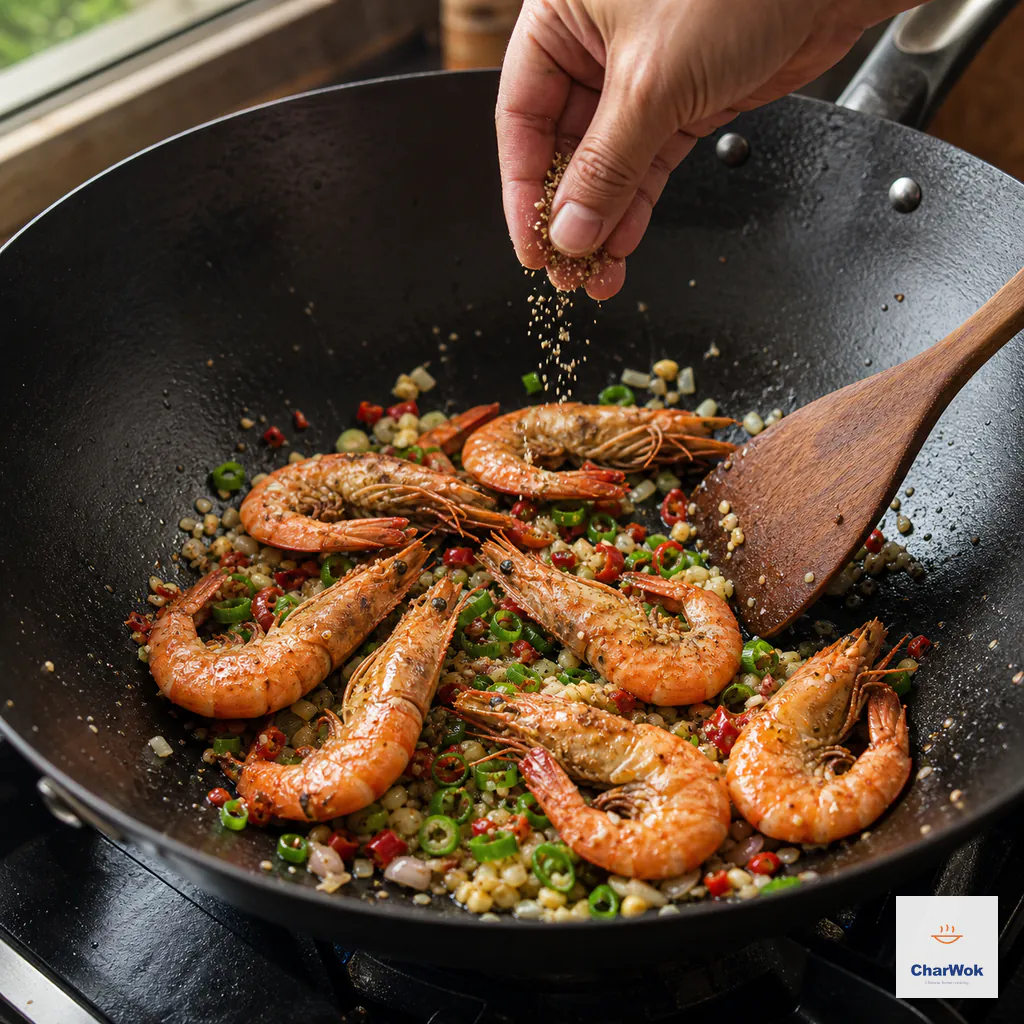
Leave only a film of oil, keep the garlic pale, then toss the fried shrimp with about ½ teaspoon seasoning for 10 to 15 seconds and serve immediately
Why it goes wrong, and how to fix it
Most salt-and-pepper-shrimp failures fall into one of four buckets. Diagnosing yours is easier than you'd think.
- The shell is rubbery, not crisp. Either the oil was too cold (water evaporated slowly instead of flashing off), the starch coating slid off because the shrimp were too wet going in, or you skipped the starch entirely. Fix: hotter oil, drier shrimp, generous starch.
- The shrimp are tough and cottony inside. Over-fried. The window between "perfectly crisp" and "overcooked" is about 20 seconds. Pull them the moment the shells go rigid; the residual heat finishes the center.
- The blend tastes flat or one-dimensional. You bought pre-ground, or you over-toasted it, or you ground it to powder. Make a fresh small batch, toast gently, grind coarsely.
- It's too salty. The blend is concentrated. Start with ¼ tsp, toss, taste a shrimp, then add more. You cannot subtract. Also, kosher salt and table salt measure very differently: 4 tsp of table salt is a lot more sodium than 4 tsp of kosher.
- The oil exploded when the shrimp went in. Surface water. Pat drier next time, and use a splatter screen as a matter of course.
Variations and what to serve with it
The seasoning blend is the most reusable thing in your pantry this month. Beyond the obvious siblings like salt and pepper squid, salt and pepper tofu, and salt and pepper chicken wings, try it dusted over french fries, sprinkled on a fried egg, or rubbed onto a bird before roasting for something close to salt-baked chicken. It plays well with the warm spices in five-spice powder too; a pinch of each makes a quick rub for roasted nuts or popcorn. I keep a jar next to the stove and reach for it the way most people reach for black pepper.
For the dish itself, the classic pairing is plain steamed rice and a simple vegetable to cut the richness. A plate of shrimp and broccoli feels redundant (two shrimp dishes on one table), so I lean toward a clean vegetable stir-fry or a cold salad. If you want a full Cantonese-style seafood spread, this sits well next to steamed fish or steamed garlic shrimp with vermicelli, where the gentle steamed flavors balance the fried one. If there are extra shrimp left raw, kung pao shrimp is the obvious next-night move, or fold them into shrimp fried rice for lunch.
As a snack or party food, skip the rice and serve with cold beer or jasmine tea. The dry, salty crunch is built for fingers and standing around. If you're going that route, double the recipe; it is one of those takeout favorites that everyone reaches for first.
Storing and reheating
Salt and pepper shrimp do not store well. The crust softens within an hour, and by the next morning you have a tray of damp, salt-encrusted shrimp that no one wants. If you must keep leftovers, refrigerate them uncovered (covered, they steam themselves soft) and reheat in a 200°C / 400°F oven or air fryer for 3 to 4 minutes to recrisp the shell. The microwave will ruin them. Honestly, plan portions and eat it all hot.
The seasoning blend, on the other hand, keeps beautifully. Sealed in a small jar in a dark cupboard, it holds its scent for about a month. It never goes "bad," just quieter. If you make a big batch, label the date so you know when to refresh.
Questions I get asked
Can I use peeled shrimp?
No, not for this dish. The shell is the entire point: it's what fries up crisp and carries the seasoning. Peeled shrimp just give you a salty stir-fry, which is a different and lesser thing. If peeling shell-on shrimp at the table bothers you, this isn't the recipe to compromise on.
Do I leave the heads on?
Either way works. Heads-on looks more dramatic and the head itself crisps up and is a delicacy; split open, the inside is rich and tomalley-like. If you remove them, don't throw them out; fry them in a little oil with a splash of Shaoxing rice wine, add water, and simmer twenty minutes for a quick shrimp stock that beats anything from a box.
Can I air-fry instead of deep-frying?
You can, with a caveat: air-fried shells never get quite as glassy and brittle as oil-fried ones, because they're not fully submerged in 190°C fat. Spray or brush the coated shrimp with oil and air-fry at 200°C / 400°F for 8 to 10 minutes, flipping once. It's a respectable shortcut and uses far less oil, but it is a different texture. Worth knowing so you don't expect the same snap.
How spicy is this?
Milder than it looks. The heat comes mostly from the minced chilies, and you control that by deseeding them or dialing the quantity down. The Sichuan pepper brings numbing more than burning. If you can handle a jalapeño, this is comfortable.
One last thing. This is one of those dishes that rewards cooking it twice. The first time feels fiddly, with all the checking of oil temperature, timing of the fry, and judging when the shell is "done." The second time you'll move through it in fifteen minutes and wonder what the fuss was. Keep the seasoning jar stocked, buy shell-on shrimp whenever you see them, and the rest takes care of itself.