If a Chinese home kitchen has only one bottle of alcohol in it, it is almost always Shaoxing rice wine. You reach for it the way a French cook reaches for white wine, except it is doing something quieter: it is finishing the cleanup work on raw meat and fish long before any seasoning gets loud. The trouble most people hit is that the bottle they bought smells harsh and salty, and they conclude the ingredient is overrated. It is not. They bought the wrong bottle.
At a glance: Shaoxing rice wine is a brewed, fermented grain wine (about 14% ABV), amber in color, used in small amounts to round off meaty and fishy odors. The one decision that matters more than brand is the sodium line on the label — under about 0.1 g of salt per 100 ml means you have a real brewed wine; anything past roughly 0.5 g is a salty "cooking wine" you should leave on the shelf.
What you are actually buying
Shaoxing rice wine guide at a glance
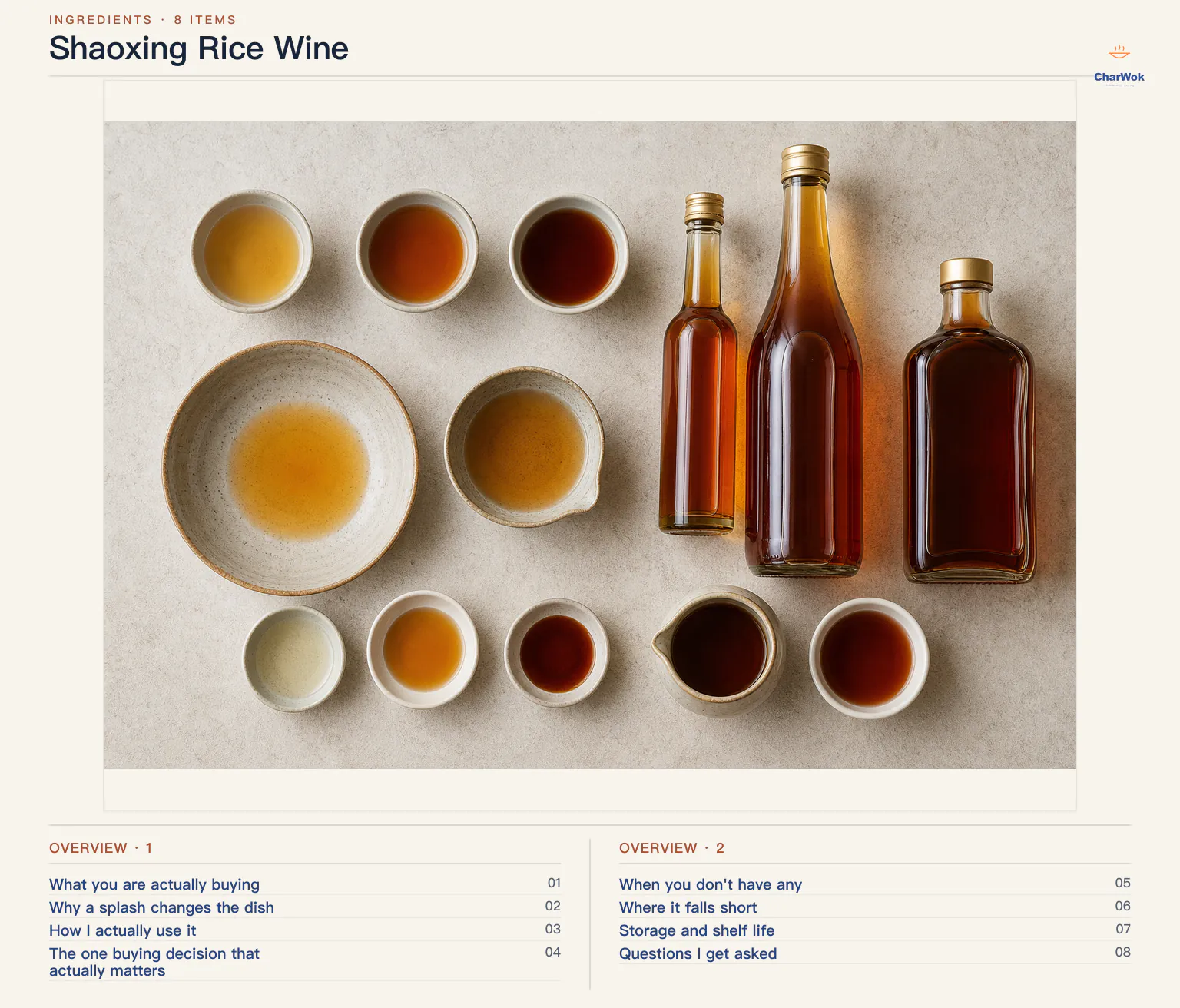
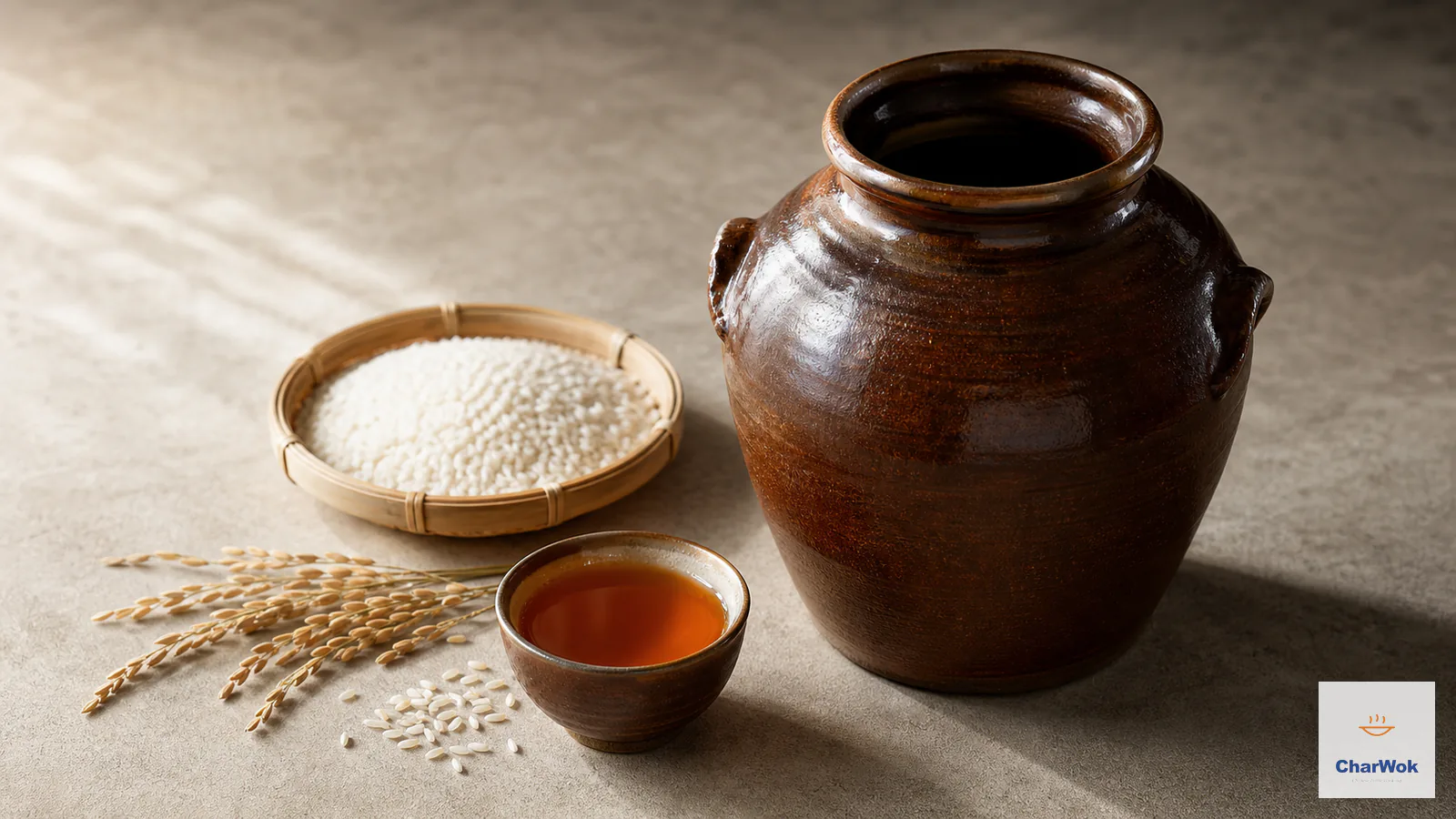
Shaoxing wine is named for a canal town in Zhejiang, on China's eastern coast, that has been brewing it for the better part of two thousand years. It is a huangjiu, a Chinese yellow wine, made from glutinous rice and water plus a fermentation starter called qu. That starter is a cultured cake of mold, yeast, and grain that does two jobs at once: it breaks the rice starch into sugar, then turns that sugar into alcohol. The amber color comes from the toasted grain and the slow aging in clay jars, not from added caramel.
This puts it in a different family from fermented chili pastes or distilled spirits. It is brewed, like beer or sake, not distilled. It sits alongside soy sauce, toasted sesame oil, and rice vinegar as one of the handful of liquids that define how a Chinese pantry tastes. If you want the full lineup, my ten must-have condiments list walks through the rest.
One labeling thing that trips people up: most Shaoxing wine contains wheat from the starter, so it is not gluten-free. Huadiao (花雕酒) is the premium, lower-salt subset of Shaoxing wine, often sold in decorated ceramic jugs. Same family, better aging, worth the money if you see it.
Why a splash changes the dish
Cooks talk about Shaoxing wine "removing fishy or meaty smell," and that is true, but the mechanism is more interesting than the folk explanation. Two things are happening. First, the alcohol is volatile. When it hits a hot pan it flashes off, and it carries smelly volatile compounds (the sulfurous notes in pork liver, the trimethylamine in less-than-pristine fish) out with it. That is the same reason you deglaze with wine in a French kitchen. Second, fermentation produces a faint acidity and a load of amino acids and esters. Those amino acids are the building blocks of savory depth; when they meet heat and a little rock sugar or dark soy, you get the rounded, slightly sweet-backdrop flavor that defines Chinese braises.
So the wine is doing two jobs at once: a chemical one (lift bad smells) and a flavor one (build good depth). This is also why the timing matters. Add it early, to raw meat in a marinade or straight into the hot oil before any liquid, and it does its volatile work. Add it late, into a wet sauce, and most of the lift is lost. You are left with only the flavor contribution, which is fine but less efficient.
How I actually use it
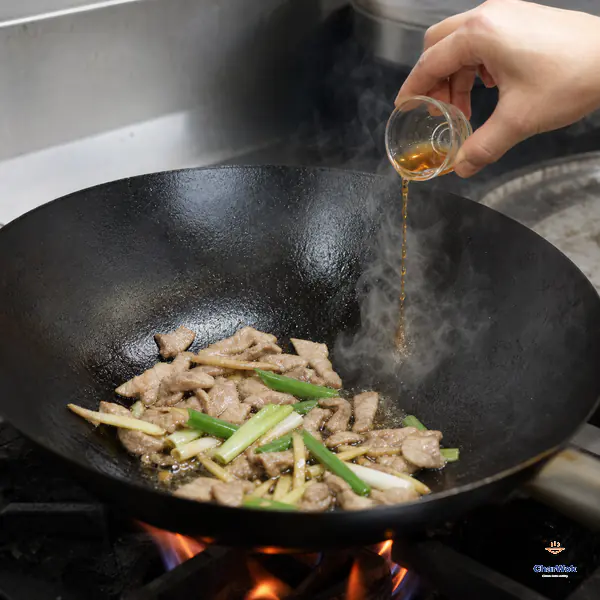
Pour a small amount around the bare hot wok wall rather than over the food; the short hiss and immediate aromatic steam show that the heat is high enough.
In a weeknight stir-fry I measure with my eye, not a spoon. A ring around the edge of the wok, maybe a tablespoon at most, splashed in the moment the aromatics hit the oil. In a marinade for sliced beef or pork, the kind you build before a quick stir-fry like Kung Pao or sliced pork over rice, one teaspoon per 250 g (about 9 oz) of meat is plenty. The goal is to round off the protein, not to taste wine.
It shows up constantly in the fillings for dumplings and wontons, where raw pork and aromatics sit together waiting to be wrapped. A teaspoon in the bowl, mixed in with the light soy and a little sesame oil, is what makes a pork filling taste clean rather than barnyardy.
Then there are the dishes where the wine stops being a background singer and becomes the melody. Drunken Chicken soaks cooked chicken in a cold bath of Shaoxing and broth until it is perfumed through. Red-cooked pork belly and Three Cup Chicken both lean on a generous pour. In these recipes you cannot skimp and you cannot substitute, because the wine is the dish.
The one buying decision that actually matters
Forget the brand. Read the sodium line on the nutrition label.
The bottle I keep in my pantry reads 0.08 g of salt per 100 ml. I have seen "Shaoxing Cooking Wine" on American shelves at 0.5 g, 0.8 g, sometimes over 1 g per 100 ml. That is not a different style of the same product. It is a deliberately salted version, salted specifically so it can be sold as a non-beverage grocery item rather than as alcohol. The salt also covers the fact that the base wine is usually poorer. You taste the salt long before you taste anything good, and your food ends up over-seasoned without you realizing why.
| What the label says | Salt per 100 ml | What it means |
|---|---|---|
| Pagoda / Huadiao / "Shaoxing Wine" (imported, brewed) | Under ~0.1 g | Real brewed wine. Buy this. |
| "Shaoxing Cooking Wine" (US grocery) | Roughly 0.5 g and up | Salted to avoid liquor laws. Skip it. |
| Huadiao (花雕) in a ceramic jug | Under ~0.1 g | Premium aged Shaoxing. Excellent if you can find it. |
If you cannot find a low-salt bottle locally, a decent Asian grocery will carry Pagoda brand, or you can order it. It is worth the small effort. One bottle lasts months in a home kitchen.
When you don't have any
For most recipes, whether a marinade or a splash in a stir-fry, the honest answer is to just leave it out. You will lose a little depth, but nothing will break. Do not buy a salty bottle purely to follow a recipe that calls for one teaspoon.
If you want a substitute that mimics the flavor contribution, dry (not sweet) sherry is the closest widely available match. It is a fortified grape wine rather than a brewed grain wine, but it shares the oxidized, nutty, slightly savory profile. Use it 1:1. Avoid sake (too clean), mirin (too sweet), and rice wine vinegar, which is a different ingredient entirely, sour rather than alcoholic.
For the wine-forward dishes, Drunken Chicken in particular, there is no real stand-in. The whole point is the wine. Make something else that night.
Where it falls short
Shaoxing wine is not a seasoning you taste directly in most cooking, which is a feature, not a bug. The flip side: do not expect it to rescue a dish. I have watched cooks add more and more wine trying to fix a bland braise, and the only result is a faintly alcoholic, slightly muddy pot. If a dish tastes flat, the fix is usually salt, acid, or sweetness (a chip of rock sugar), not more wine. Know what the tool is for.
It also has very little place in quick vegetable dishes or in cold preparations. Raw Shaoxing in a cucumber salad tastes odd and sharp. Save it for the hot pan and the braise.
Storage and shelf life
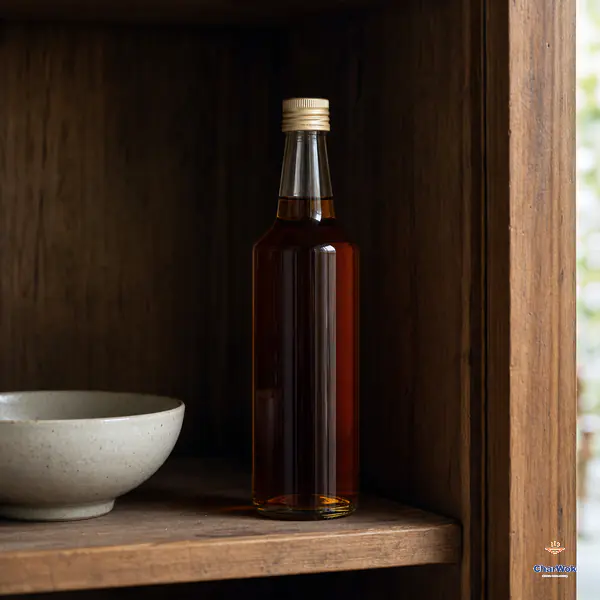
Close the cap firmly and keep the bottle upright in a cool, dark cupboard; cloudiness, an off sour smell or a surface film are reasons to discard it.
No refrigeration needed. Once opened, screw the cap down tight and keep the bottle in a cool, dark cupboard. The alcohol and the brewing acids keep it stable for a year or more without going off. If yours has been open for two years and smells fine, it is fine. If it has gone cloudy or smells vinegary, it has oxidized too far and should be replaced.
Questions I get asked
The bottle is unglamorous, the label may be partly in Chinese, and it costs less than a fancy coffee. But once you have a low-salt Shaoxing wine in the cupboard, the rest of the pantry starts behaving the way it is supposed to: the soy, the sesame oil, the vinegar, the fermented black beans and dried shiitakes. The food tastes more like itself. That is the whole job of this ingredient, and when you have the right bottle, it does it quietly and well.