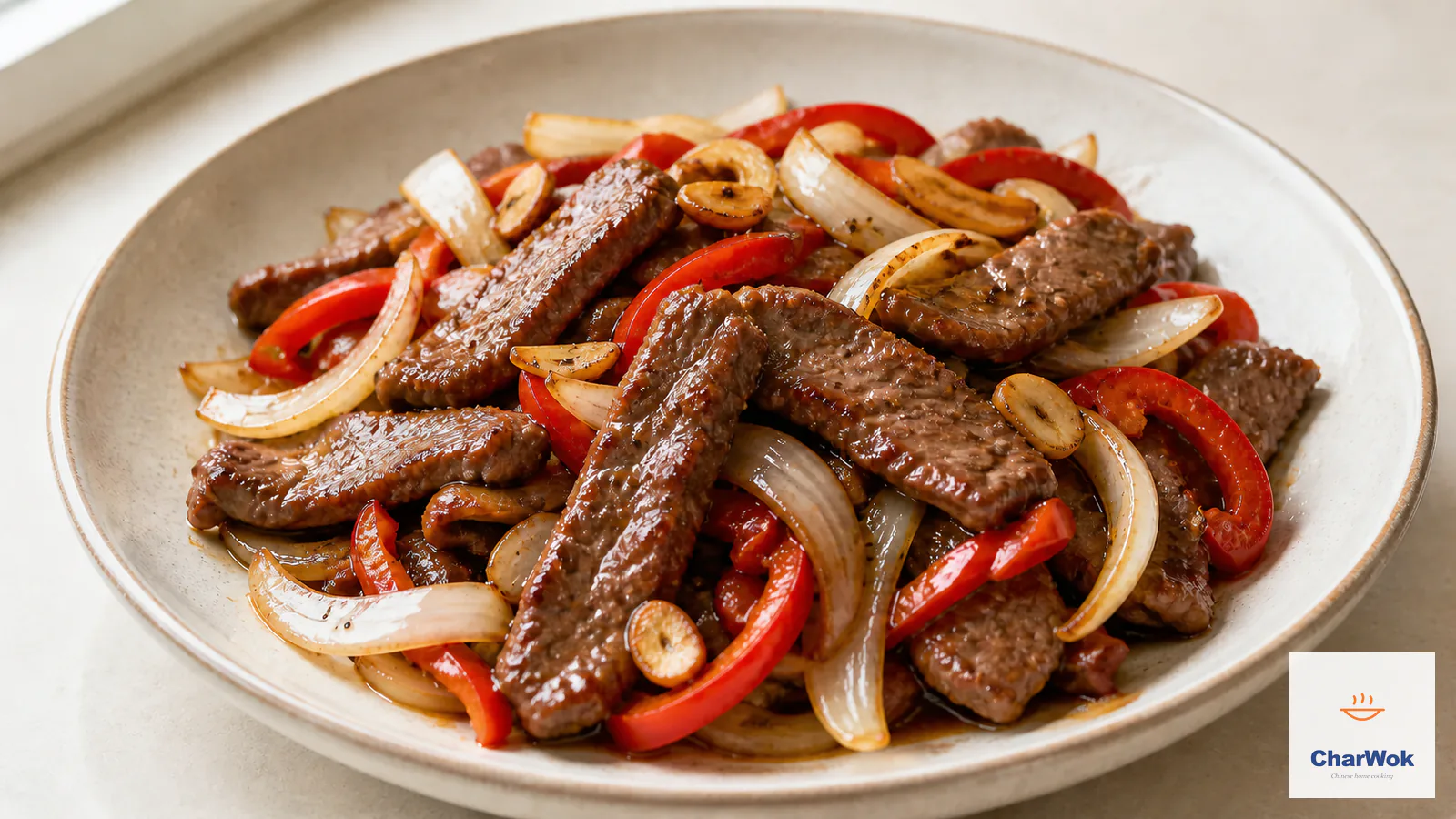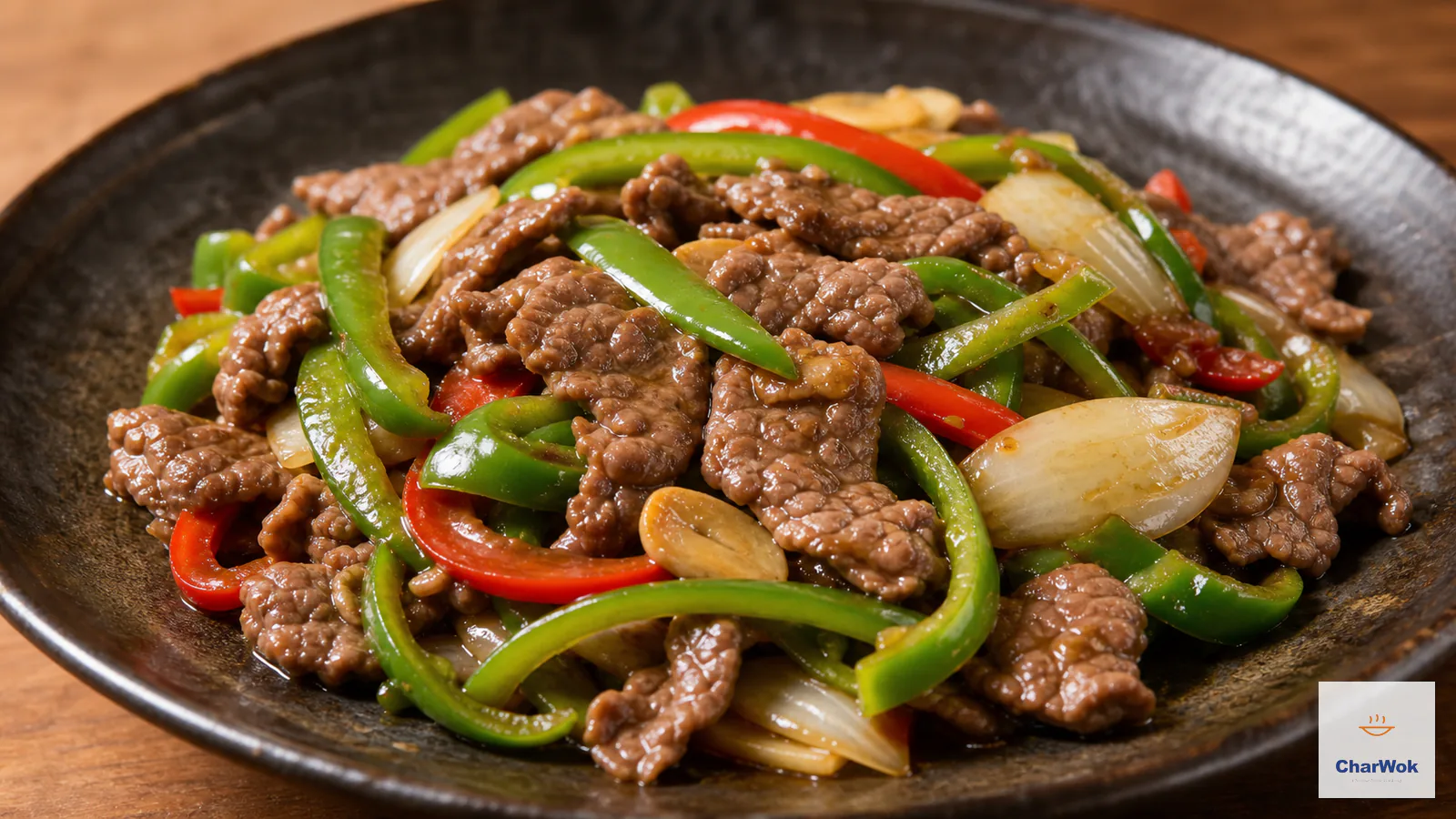
The hardest thing about pepper steak is not the cooking. It is believing the cooking will be that fast. Once the beef hits the wok, the whole dish is four minutes from raw to plated, and most of that time is spent fighting the urge to stir. The version served in American Chinese takeout joints is often a sweet, salty, brown-gravy affair with bell peppers cooked soft. The home version I want to teach you is closer to its Fujianese and Cantonese roots: thin strips of velvety beef, peppers that still snap, and a glossy sauce that clings instead of pooling.
I have ruined this dish more times than I can count, and almost always the same way. I moved the beef too early, lost the sear, and ended up with gray strips floating in juice. The fix is boring and absolute: leave the meat alone. The same patience that builds a crust on a steak builds the flavor base here.
At a glance. Total pan time is about 4 minutes. The single most important number is the 15-minute marinade with baking soda, water, and cornstarch, which is what turns chewy flank into strips you can cut with a fork. Cook the beef, pull it out, cook the vegetables, return the beef, then kill the heat before the sauce goes in so the cornstarch thickens glossy instead of lumpy.
What pepper steak actually is
Pepper steak as Americans know it descends from a dish born in the Fujianese diaspora and refined in mid-century New York takeout kitchens. The Chinese name, qing jiao niu rou, simply means green pepper and beef. There is no single canonical version. Northern cooks lean drier and saltier; Cantonese versions lean saucier and sweeter, with a thicker cornstarch finish designed to lacquer the meat. The recipe below sits in the Cantonese camp because that glossy cling is what makes the leftovers worth fighting over.
If you have ever made black pepper beef, think of pepper steak as its milder, sweeter cousin. Black pepper beef leads with cracked pepper and a sharper bite; this one leads with the bell pepper itself and a rounded oyster-sauce sweetness. For a fully different direction, Hunan-style beef trades the peppers for fermented chili and a serious kick.
The science behind tender beef strips
Three things in the marinade do real work, and skipping any one of them shows up on the plate.
Baking soda raises the pH on the surface of the meat. A higher pH lets the muscle fibers hold more water and slows the proteins from squeezing that water out under heat. The result is meat that stays juicy instead of turning tight and dry. A quarter teaspoon for a pound of beef is the sweet spot. More than that and you taste it, an unpleasant slippery, soapy edge. Cornstarch coats each strip in a thin gel layer that gelatinizes in the hot oil and forms a barrier, the technique Chinese kitchens call velveting. Water, rubbed in until the meat stops drinking, plumps the fibers before cooking so there is moisture to lose.
The light soy sauce in the marinade is for seasoning the meat from the inside; it is saltier and lighter in color than dark soy sauce, which you save for the sauce where you want both flavor and that mahogany shine. A splash of Shaoxing rice wine in the marinade is optional but worth it for the warm, almost nutty depth it leaves behind.
Ingredients
19 ingredients for pepper steak
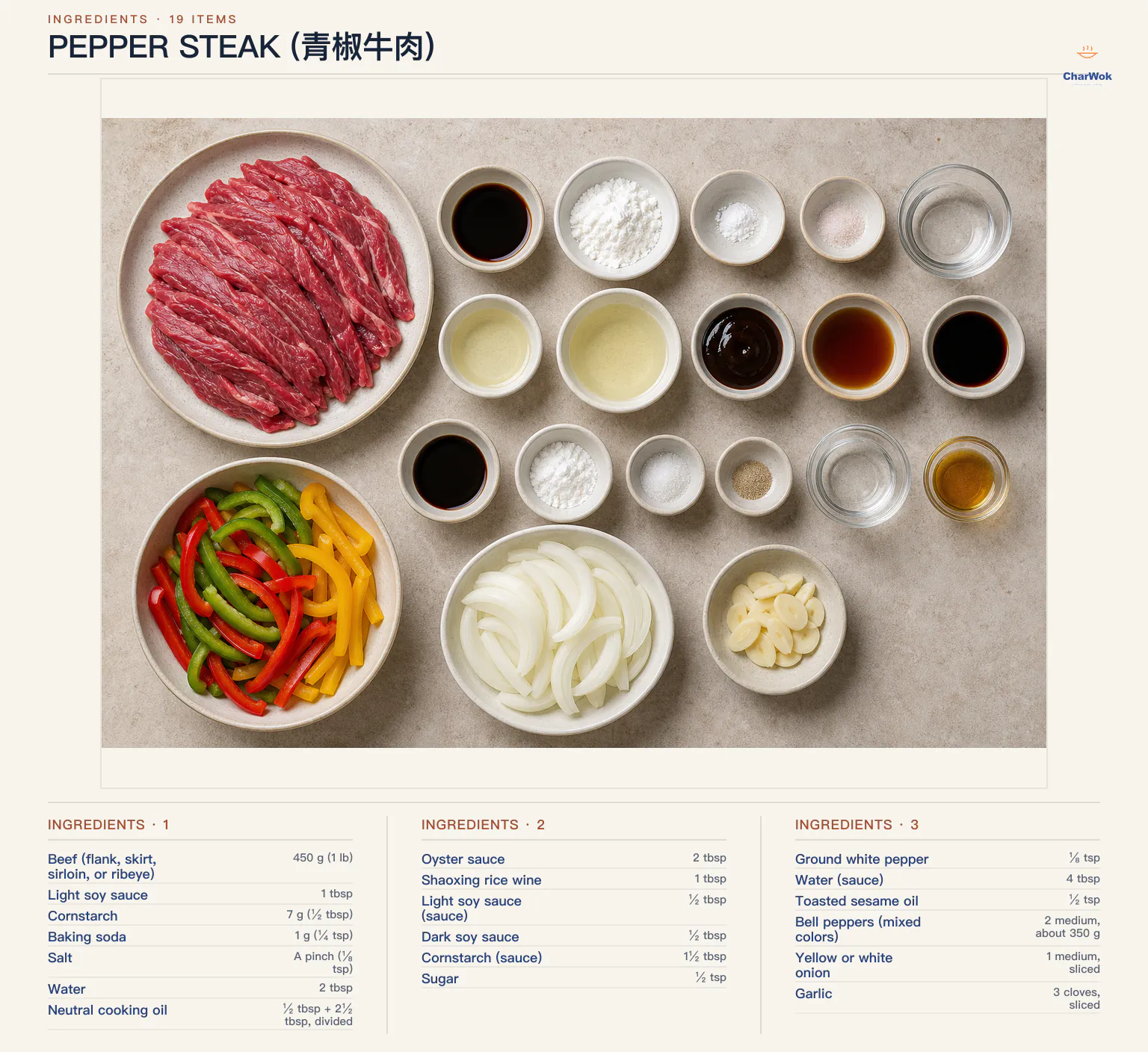
Serves 4. Metric weights lead, with the US household measurements I actually use in parentheses. The cut of beef matters more than anything else on this list, so do not skim the Notes column.
| Ingredient | Amount | Notes / substitute |
|---|---|---|
| Beef (flank, skirt, sirloin, or ribeye) | 450 g (1 lb) | Flank is the classic; ribeye is more forgiving for beginners because the fat keeps it juicy. Avoid lean round. |
| Light soy sauce | 1 tbsp | For the marinade. Use a Chinese or Japanese brand; Thai thin soy is fine. |
| Cornstarch | 7 g (½ tbsp) | In the marinade. Potato starch works, with a slightly softer coat. |
| Baking soda | 1 g (¼ tsp) | The tenderizer. Do not exceed this amount. |
| Salt | A pinch (⅛ tsp) | |
| Water | 2 tbsp | Cold tap water is fine. |
| Neutral cooking oil | ½ tbsp + 2½ tbsp, divided | Grapeseed, canola, or avocado. Not olive oil. |
| Oyster sauce | 2 tbsp | Vegetarian mushroom stir-fry sauce is the closest substitute. |
| Shaoxing rice wine | 1 tbsp | Dry sherry or mirin in a pinch. |
| Light soy sauce (sauce) | ½ tbsp | |
| Dark soy sauce | ½ tbsp | For color. Omit if unavailable and add an extra ½ tsp of light soy. |
| Cornstarch (sauce) | 1½ tbsp | |
| Sugar | ½ tsp | Regular white sugar. |
| Ground white pepper | ⅛ tsp | Black pepper works but is more aggressive. |
| Water (sauce) | 4 tbsp | |
| Toasted sesame oil | ½ tsp | Added off the heat so the aroma survives. |
| Bell peppers (mixed colors) | 2 medium, about 350 g | Green is traditional; a mix of green and red looks better on the plate. |
| Yellow or white onion | 1 medium, sliced | |
| Garlic | 3 cloves, sliced | Sliced, not minced, so it browns at the edges instead of burning. |
How to make it
- Slice against the grain. Look at the beef and find the direction the muscle fibers run. Cut perpendicular to those fibers into strips about 8 mm thick. Cutting across the grain shortens the fibers, so each bite falls apart instead of requiring a fight. Put the strips in a bowl and add the light soy sauce, cornstarch, baking soda, salt, and water.
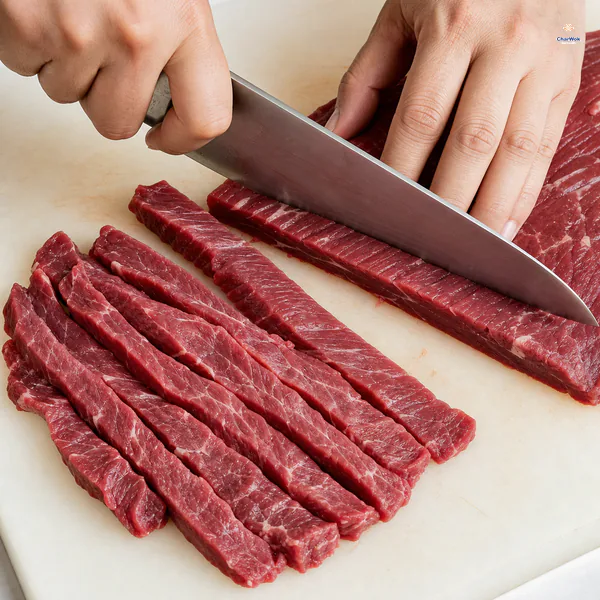
Find the direction of the muscle fibres and cut straight across them into long strips about 8 millimetres thick.
- Mix by hand until the liquid disappears. Squeeze and rub the strips for about a minute. You are forcing water into the fibers and the starch onto the surface. When the bowl looks almost dry, pour in the ½ tbsp of oil and toss to coat. The oil seals the marinade in and stops the strips from clumping in the wok. Rest 15 minutes at room temperature. Longer is fine in the fridge, but the baking soda keeps working, so cap it at 30 minutes or the texture turns mealy.
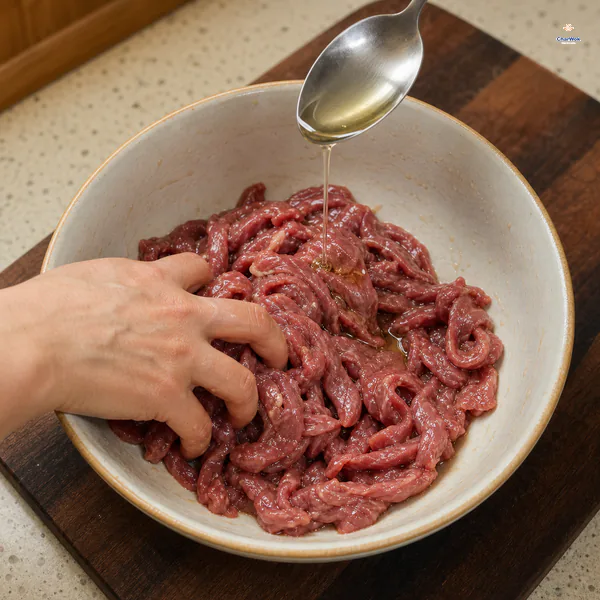
Rub until the liquid disappears, mix in half a tablespoon of oil only at the end and rest for 15 minutes.
- Mix the sauce and leave it alone. In a small bowl, stir together the oyster sauce, Shaoxing wine, both soy sauces, cornstarch, sugar, white pepper, and water. Do not add the sesame oil yet. The cornstarch will settle to the bottom, which is normal. You will re-stir it right before using.
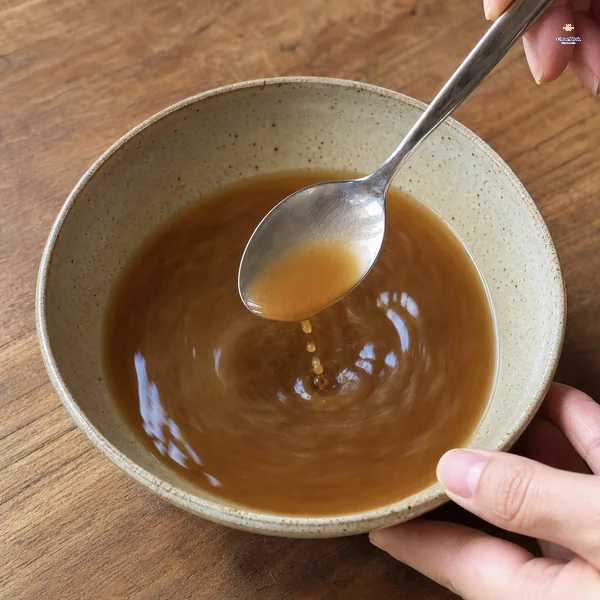
Mix the sauce without the sesame oil, then stir it hard again immediately before it goes into the wok.
- Sear the beef without touching it. Get a wok or heavy skillet ripping hot over medium-high, add 2 tbsp of the oil, and swirl. Add the beef in a single layer. Now stop. Do not stir. Let it sit until the underside is browned, about 45 seconds. The crust is where the flavor lives; moving it early tears the starch coating and you end up boiling the meat in its own juice.
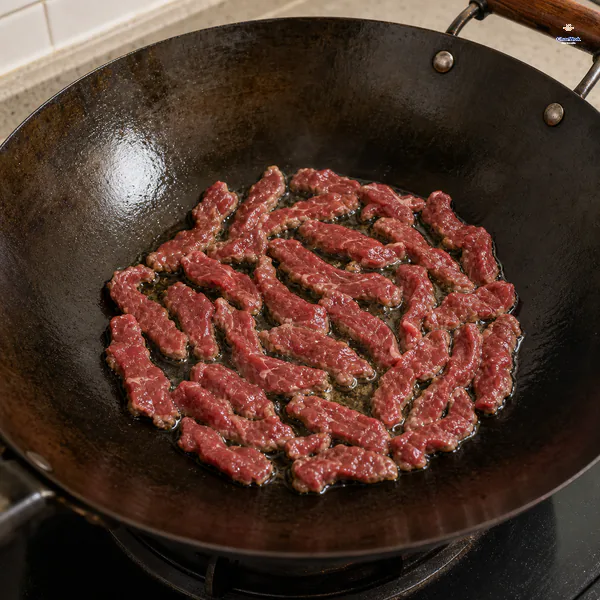
Spread the beef into one layer in the very hot oiled wok and leave it untouched until the undersides brown lightly, about 45 seconds.
- Toss briefly, then pull the beef out. Flip and toss for about 30 seconds, until only a trace of pink remains. The beef will finish cooking when it goes back in, so err on the side of underdone. Transfer it to a plate and leave the oil behind in the wok.
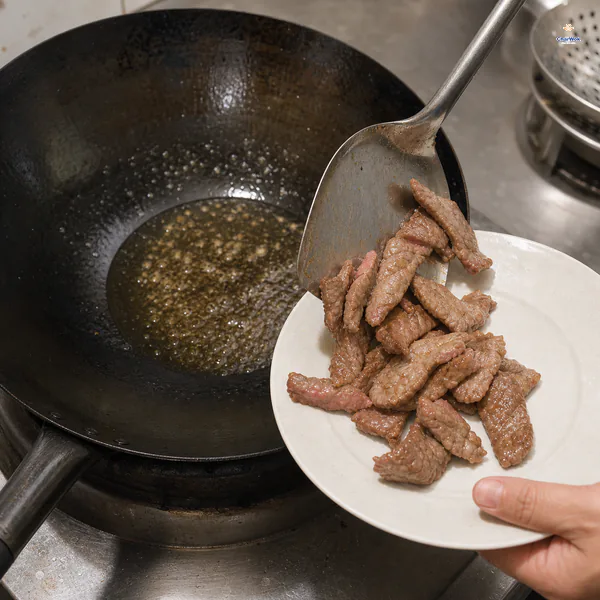
Toss for about 30 seconds, then remove the beef while it is still slightly underdone so it stays juicy when returned.
- Sweat the aromatics hard. Add the remaining ½ tbsp oil, then the onion and sliced garlic. Cook over high heat until the garlic edges darken and the onion softens at the corners, about 30 seconds. The garlic browning is the signal, not a failure; that toasted edge is the backbone of the dish.
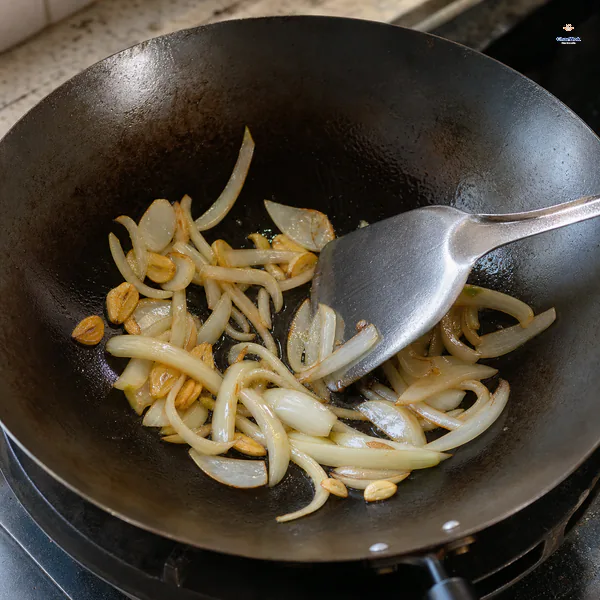
Stir-fry the onion and sliced garlic over high heat until the onion corners soften and the garlic edges turn golden.
- Flash the peppers. Add the bell peppers and toss for 30 seconds. They should be hot through and barely wilted, still loud and crunchy. Cook them any longer and they collapse into the soft, sweet mush of bad takeout.
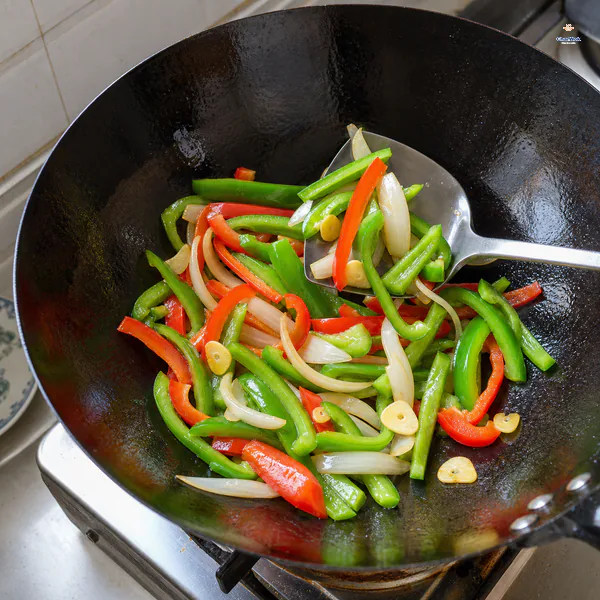
Add the pepper strips and toss for only about 30 seconds, stopping while they are bright, crisp-edged and barely wilted.
- Return the beef, then cut the heat. Slide the beef back in and toss for another 30 seconds until no pink shows inside a strip. Now turn the burner down to low. This is the step that separates a glossy sauce from a lumpy one.
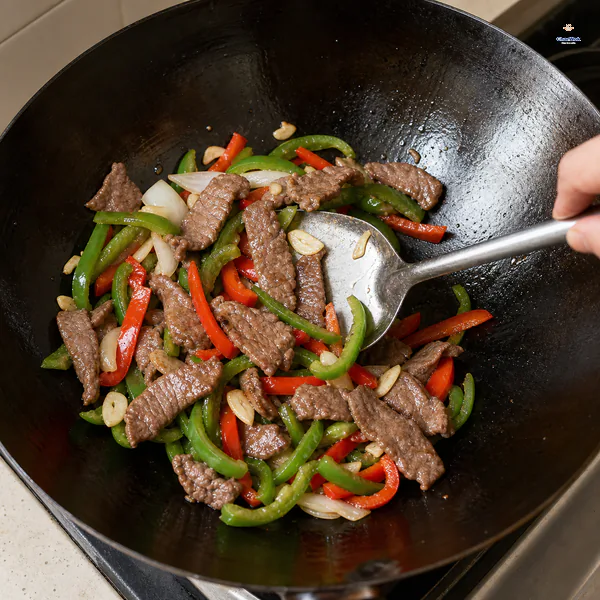
Return the beef and toss for about 30 seconds until no pink remains, then reduce the heat before adding the sauce.
- Add the sauce off the high heat. Stir the sauce bowl hard to resuspend the cornstarch, then pour it over everything. Toss. As the cornstarch hits the hot liquid it gelatinizes and the sauce turns thick, clear, and clingy in about 15 seconds. When it coats the back of your spatula and stays there, kill the heat entirely, drizzle in the sesame oil, and give one last toss. Plate immediately.
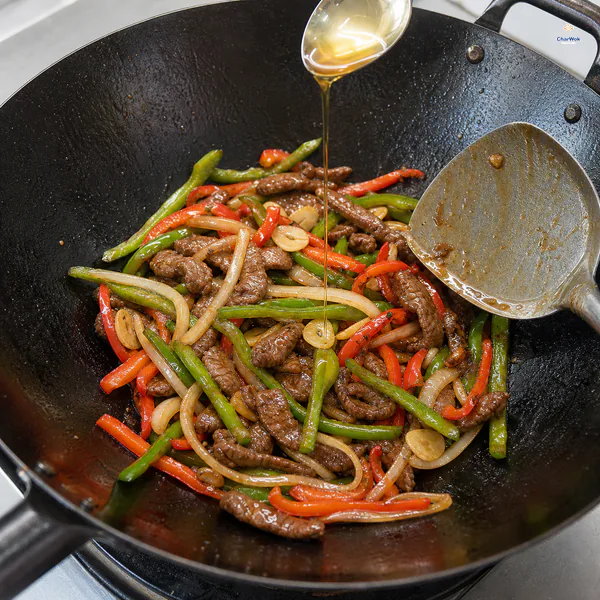
Add the re-stirred sauce over low heat, toss until it coats the spatula, turn off the heat, drizzle in sesame oil and plate immediately.
When it goes wrong
Because the cooking window is so short, the failures cluster around a handful of mistakes. Here is how to read them.
- The beef is tough and chewy. Either you sliced with the grain instead of against it, or you skipped or skimped on the baking soda marinade. Cut across the grain and give the soda the full 15 minutes. If it is still chewy with flank, switch to ribeye or sirloin next time.
- The beef is gray and wet, not browned. You crowded the pan or stirred too early. Sear in a single layer, leave it alone, and work in two batches if your wok is small. Moisture is the enemy of browning.
- The sauce is lumpy or looks cloudy. You poured it in while the pan was at a full roar over high heat, so the cornstarch seized before it could disperse. Drop the heat to low first, then add the sauce. Lumps also form if you forgot to re-stir the bowl, since the starch settles fast.
- The sauce is thin and runs on the plate. The cornstarch was under-measured, or the sauce went in before everything else was hot. It needs a hot pan and warm ingredients to thicken. A minute more over low heat usually fixes it; if not, slake another ½ tsp of cornstarch in a spoon of cold water and stir it in.
- It tastes too salty. This is the most common complaint, and the culprit is almost always the soy sauces piling up. Use the measurements in the table, not a heavy pour, and taste the raw sauce before adding it; if it reads as aggressively salty, dilute with another tablespoon of water. Different brands of oyster sauce vary wildly in salt, so calibrate to yours.
- The peppers are soggy. You cooked them too long or the pan was not hot enough. They need 30 seconds of violent heat, nothing more.
- The garlic burned black and tastes bitter. The oil was too hot or the garlic went in before the onion. Add the onion first, let it soften for a few seconds, then the garlic, so the onion juices shield the garlic from the metal.
Variations and what to serve it with
The bones of this recipe are a template. Once you trust the velveting and the cook-pull-combine rhythm, you can bend it a dozen ways.
Add onions and mushrooms. A handful of sliced shiitake or king oyster mushroom turns this into something close to beef and mushroom stir-fry, with deeper umami. Add the mushrooms with the onion so they have time to release their water. The same goes for the onion and garlic base already in the recipe; more aromatics never hurt.
Swap the vegetable. Broccoli is the obvious one and turns the dish into beef and broccoli. For a more bitter, grown-up green, try beef with Chinese broccoli (gai lan), which stands up to the same sauce beautifully.
Change the seasoning base. Replace the oyster sauce with sha cha sauce and you have sha cha beef, with a savory, slightly fishy complexity from dried shrimp and peanuts. Add a teaspoon of cracked black pepper and a pinch of sugar and you are most of the way to a black pepper beef.
Push it toward pepper-forward. If the bell pepper flavor is not loud enough for you, finish with a pinch of ground roasted Sichuan pepper for a numbing edge, or read our Sichuan pepper guide to understand the difference between Sichuan pepper and the white pepper in this recipe. For a totally different pepper dish, tiger skin peppers blister the peppers whole until the skin blisters and the flesh turns sweet.
Carb pairings. Pepper steak was built for rice. Plain steamed jasmine rice is the classic, but soy sauce fried rice makes the meal feel intentional. For noodles, beef chow fun uses the same beef-and-pepper family of flavors on wide rice noodles, and beef chow mein is the wheat-noodle cousin.
Storage and reheating
Pepper steak keeps in the fridge for up to three days, and the flavor actually deepens overnight as the sauce soaks into the meat. The texture cost is the peppers, which lose their crunch. Reheat gently in a covered pan over low heat with a tablespoon of water to loosen the sauce; microwaving works but turns the beef rubbery if you overdo it. I do not recommend freezing. The cornstarch coating breaks down on thaw and the peppers collapse to mush, so cook only what you will eat.
Frequently asked questions
A few quick answers to the questions that come up most often. The body above has the full reasoning.
Can I skip the baking soda? You can, but the beef will be noticeably chewier. The soda is the single biggest tenderness lever in the recipe, so I would find the quarter teaspoon before I would skip it. If you genuinely cannot use it, compensate by slicing the beef thinner, about 5 mm, and choose ribeye over flank.
Do I have to marinate the full 15 minutes? 10 minutes is the floor if you are rushed. Below that, the water has not fully absorbed and the tenderizing has barely started. You can marinate up to 30 minutes in the fridge, but stop there, because the baking soda keeps working past that point and the texture turns mealy and unpleasant.
Can I use chicken or pork instead? Yes. The same marinade and method work for thin-cut chicken breast or pork tenderloin. For a chicken version, see our oyster sauce chicken for the timing. The cook times are roughly identical because the strips are thin.
Why pull the beef out and put it back? Beef and peppers cook at different speeds. If you leave the beef in while the peppers soften, it overcooks and toughens. Pulling it out lets each component hit its own sweet spot, and the brief return at the end is just enough to warm it through and let the sauce coat everything.
Is it very spicy? No. The pepper here is bell pepper and a small amount of ground white pepper, so the dish is mild. For heat, add a sliced fresh chili with the garlic, or finish with chili crisp. For a genuinely spicy beef stir-fry, look to a Hunan-style small-fry beef, or try the blistered salt and pepper shrimp approach applied to a chili-rubbed protein.
Can I make it ahead for a crowd? Prep yes, cook no. Marinate the beef and mix the sauce hours in advance and keep them cold. The actual stir-fry has to happen at the last minute, because the dish is at its best for the four minutes after it leaves the pan. If you are feeding a group, do the prep for two batches and cook them back to back rather than doubling into one overloaded wok.
For a complete the-meal spread, pair this with braised beef shank as a cold starter, or keep it vegetarian-friendly at the table with a side of salt and pepper tofu for anyone avoiding red meat.
The one thing to remember
If you forget everything else, remember the rhythm: sear the beef, pull it out, cook the vegetables hard and fast, return the beef, drop the heat, then the sauce. Velveting gives you the tenderness, but the cook-pull-combine sequence is what gives you the contrast, juicy beef and peppers that still crack when you bite them. Get that sequence right once and the dish becomes a weeknight instinct.