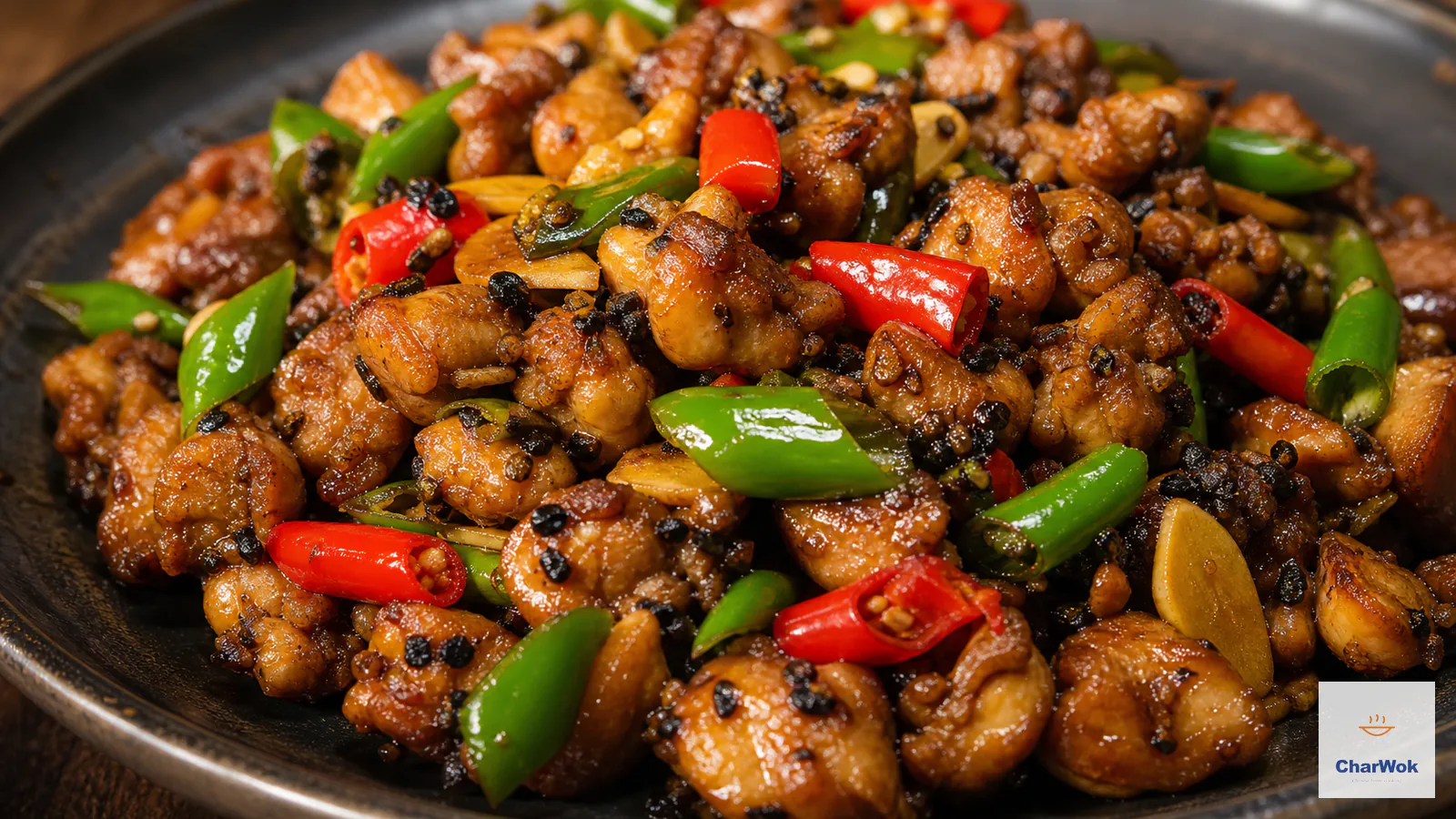
Hunan chicken (xiao chao ji, 小炒鸡) is a dry-style stir-fry rather than a chicken dish coated in a thick sweet sauce. A thin film of seasoned oil clings to small pieces of chicken thigh, while fermented black beans, ginger, garlic, and fresh chilies provide most of the flavour. The active cooking is quick, but temperature—not colour or a fixed number of minutes—confirms that the chicken is safe to serve.
This 20-minute Hunan chicken is built in three stages: velvet the chicken, bloom the aromatics and fermented black beans, then add fresh chilies near the end. Keep the chicken in one uncrowded layer and verify that its thickest piece reaches 165°F (74°C).
What Hunan chicken actually is (and why takeout is not it)
Hunan cooking is often mistaken for Sichuan cooking, and they do share a love of heat. But where Sichuan leans on mouth-numbing Sichuan peppercorn, Hunan relies on fresh chilies, fermented black beans (douchi), and a technique called xiao chao, or "small stir-fry." The meat is seared fast over fierce heat so the surface browns and the juices stay inside, and the flavor comes from the rendered fat and the seasoning, not from a poured-on sauce.
It sits in the same family as Hunan pork and Hunan beef: aromatics in hot oil, an uncrowded sear, and fresh chilies at the finish. It also shares fermented-black-bean depth with chicken with black bean sauce and steamed ribs with black beans.
What you usually get at an overseas takeout counter is the opposite philosophy: boneless breast pieces coated in batter, fried, and glazed in a sweet, gloopy chili sauce that belongs to American-Chinese cooking more than to Hunan. It is fine on its own terms, but it is not this dish.
Ingredients, with the choices that matter
Ingredients at a glance
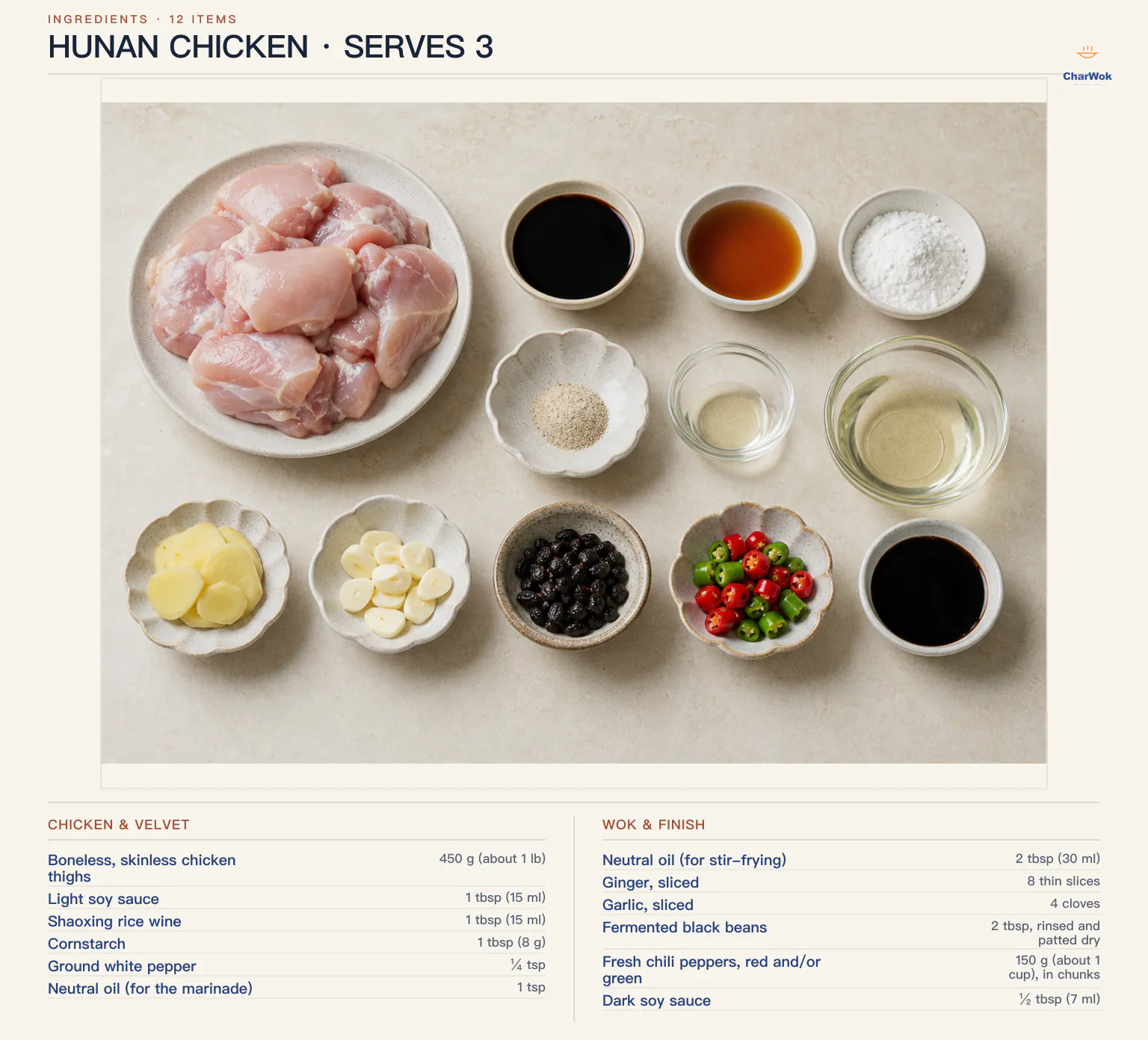
A few ingredient decisions do most of the work here. Skim the notes column before you shop.
| Ingredient | Amount | Notes / substitute |
|---|---|---|
| Boneless, skinless chicken thighs | 450 g (about 1 lb) | Thighs stay juicy under high heat. Chicken breast also works; cut it evenly and use 165°F (74°C), not opacity, as the doneness check. |
| Light soy sauce | 1 tbsp (15 ml) | Salty and thin. See light vs. dark soy sauce if you only have one bottle. |
| Shaoxing rice wine | 1 tbsp (15 ml) | Adds fermented aroma. Dry sherry is the standard substitute. |
| Cornstarch | 1 tbsp (8 g) | Forms the thin velvet coating. |
| Ground white pepper | ¼ tsp | Warmer and less harsh than black pepper here. |
| Neutral oil (for the marinade) | 1 tsp | Helps the coated pieces separate. Peanut, canola, or grapeseed oil works. |
| Neutral oil (for stir-frying) | 2 tbsp (30 ml) | Use a neutral, high-heat oil and keep it below its smoke point. |
| Ginger, sliced | 8 thin slices | Smack each slice with the side of your knife to release its aroma. |
| Garlic, sliced | 4 cloves | Slice rather than mince so it is easier to keep from scorching. |
| Fermented black beans | 2 tbsp, rinsed and patted dry | They supply the savoury base; rinse off excess surface salt. |
| Fresh chili peppers, red and/or green | 150 g (about 1 cup), in chunks | Mix heat levels: 80 percent jalapeño or Fresno, 20 percent serrano or Thai bird's-eye. Drop the hot ratio if you want it gentle. |
| Dark soy sauce | ½ tbsp (7 ml) | Primarily for colour and a deeper finish. |
On the fermented black beans
Fermented black beans are salted, fermented black soybeans, and they are the soul of the dish. They show up across Hunan, Sichuan, and Cantonese cooking, and they are what give mapo tofu and egg and pickled chili stir-fry their deep, funky base. There are two styles in most Chinese grocers: a dry, loose type and a wet type packed in brine. Buy the dry ones if you can; they are less salty and more aromatic, and Yangjiang beans with ginger (阳江姜豉) are a reliable brand.
Rinse them under the tap for a few seconds and pat dry. This is not optional. The surface salt will otherwise dominate the whole wok. If you genuinely cannot find the whole beans, substitute a heaping teaspoon of black bean sauce or Laoganma chili black-bean sauce, but add it at the end with the chilies, not in the oil, because the sauce burns faster than whole beans.
Method, step by step
- Cut the chicken evenly. Aim for thumbnail-size pieces, similar to kung pao chicken and smaller than the chunks in big plate chicken. Even pieces reach a safe temperature at roughly the same time.
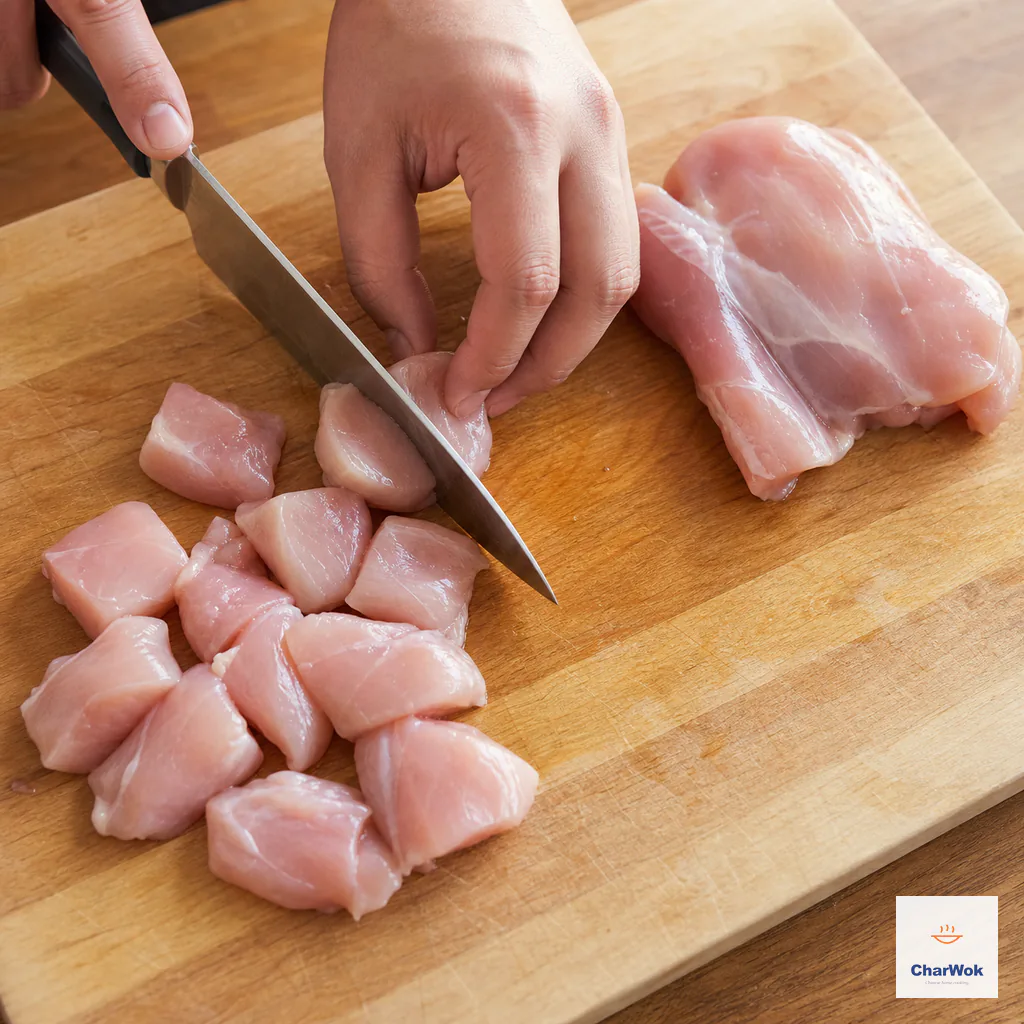
Cut the chicken into small, even thumbnail-size pieces so every piece cooks at the same pace.
- Velvet and seal the marinade. Toss the chicken with light soy, Shaoxing wine, cornstarch, and white pepper until no liquid pools in the bowl. Rub in 1 teaspoon oil, cover, and refrigerate for 10 minutes. Keep raw chicken on a low shelf away from ready-to-eat food; do not leave it at room temperature to marinate.
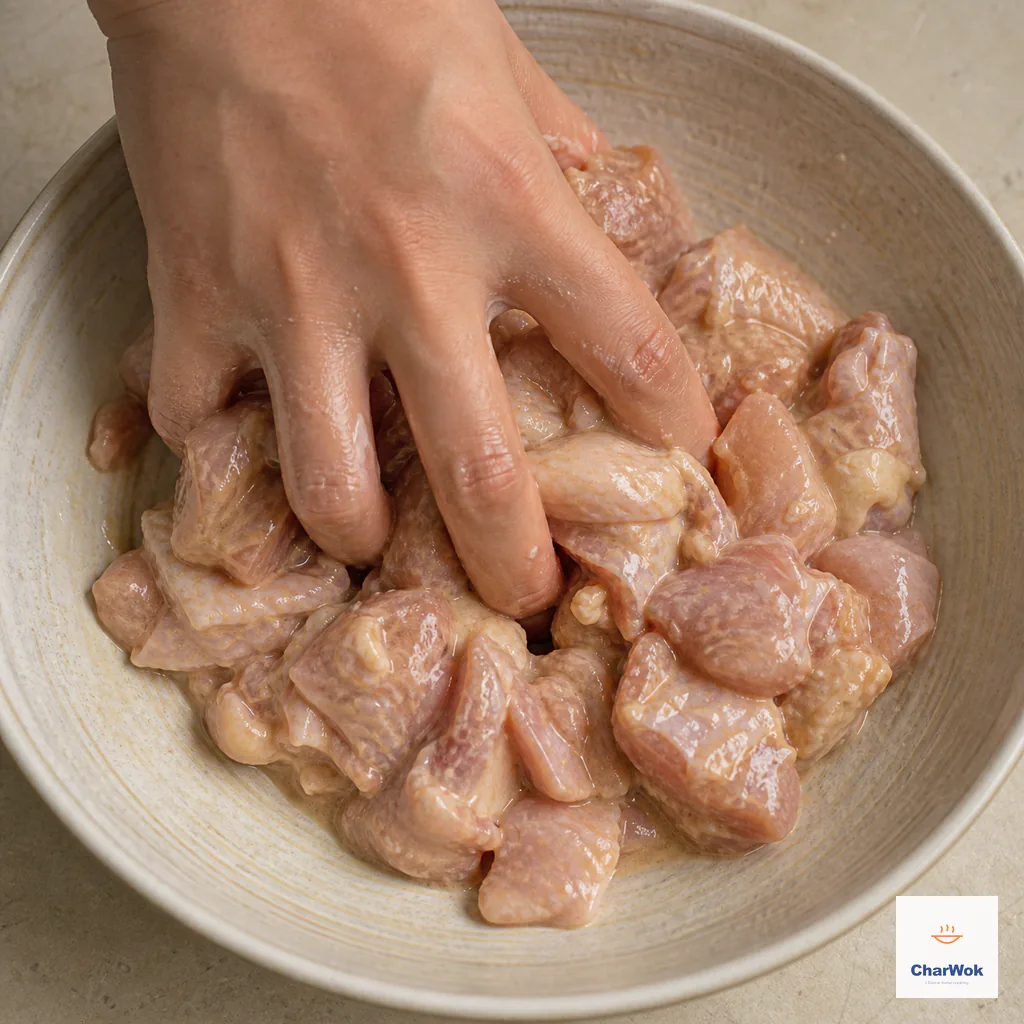
Rub in the velvet marinade until absorbed; add the teaspoon of oil, separate the pieces and let them rest.
- Prepare everything else. Rinse and dry the black beans, smash and slice the ginger, slice the garlic, and cut the chilies into chunks about the size of the chicken. Use a clean board and utensils after handling the raw chicken.
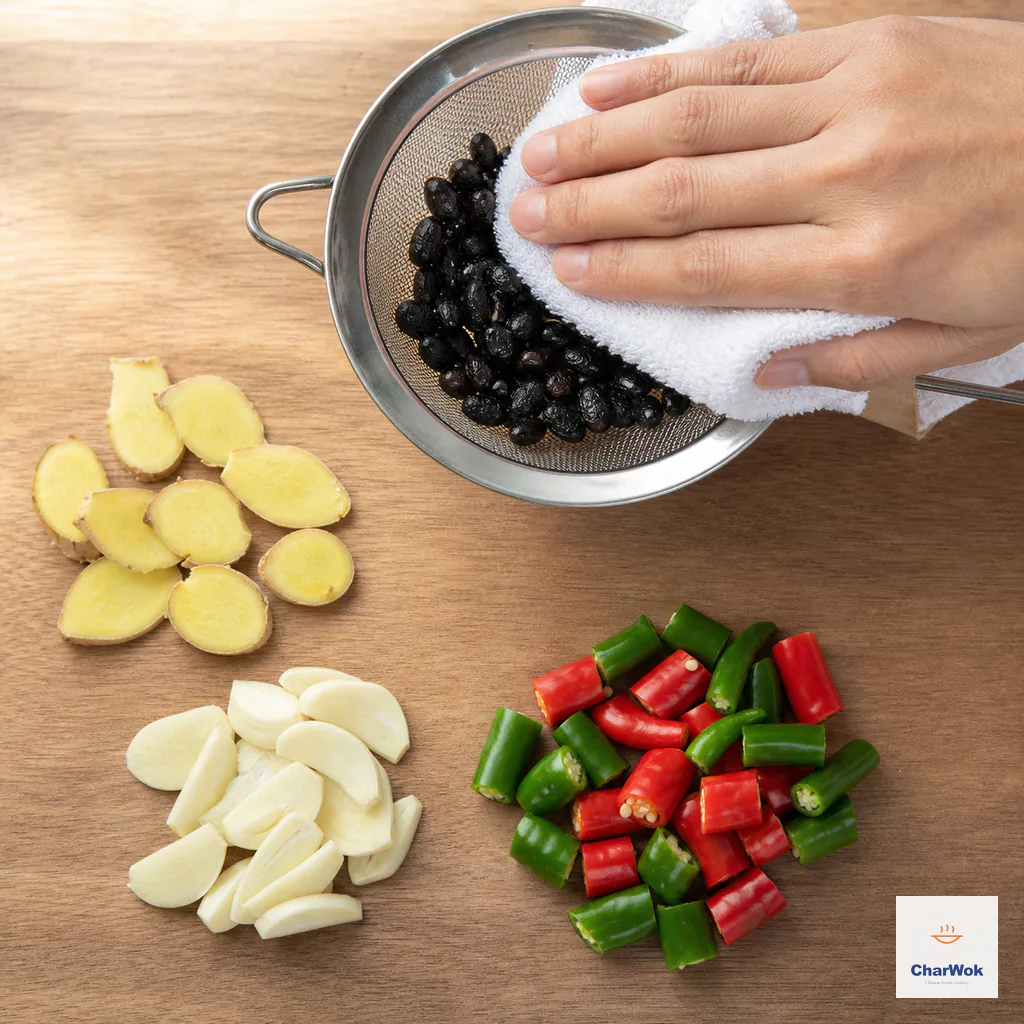
Rinse and dry the black beans thoroughly, then prepare the ginger, garlic and chilies before heating the wok.
- Preheat without smoke. Heat a dry carbon steel wok over medium-high heat until a small water drop beads and glides; discard the water and wipe the wok completely dry. Add the 2 tablespoons oil and heat until shimmering, about 350–355°F (175–180°C), without letting it smoke. For non-stick cookware, add oil before heating and stay within the manufacturer's temperature limit.
- Bloom the aromatics and beans. Add ginger, garlic, and the rinsed black beans. Keep them moving for about 20 seconds, until fragrant but not scorched. If the oil smokes or the garlic races past pale gold, turn off the burner and let the pan cool before continuing.
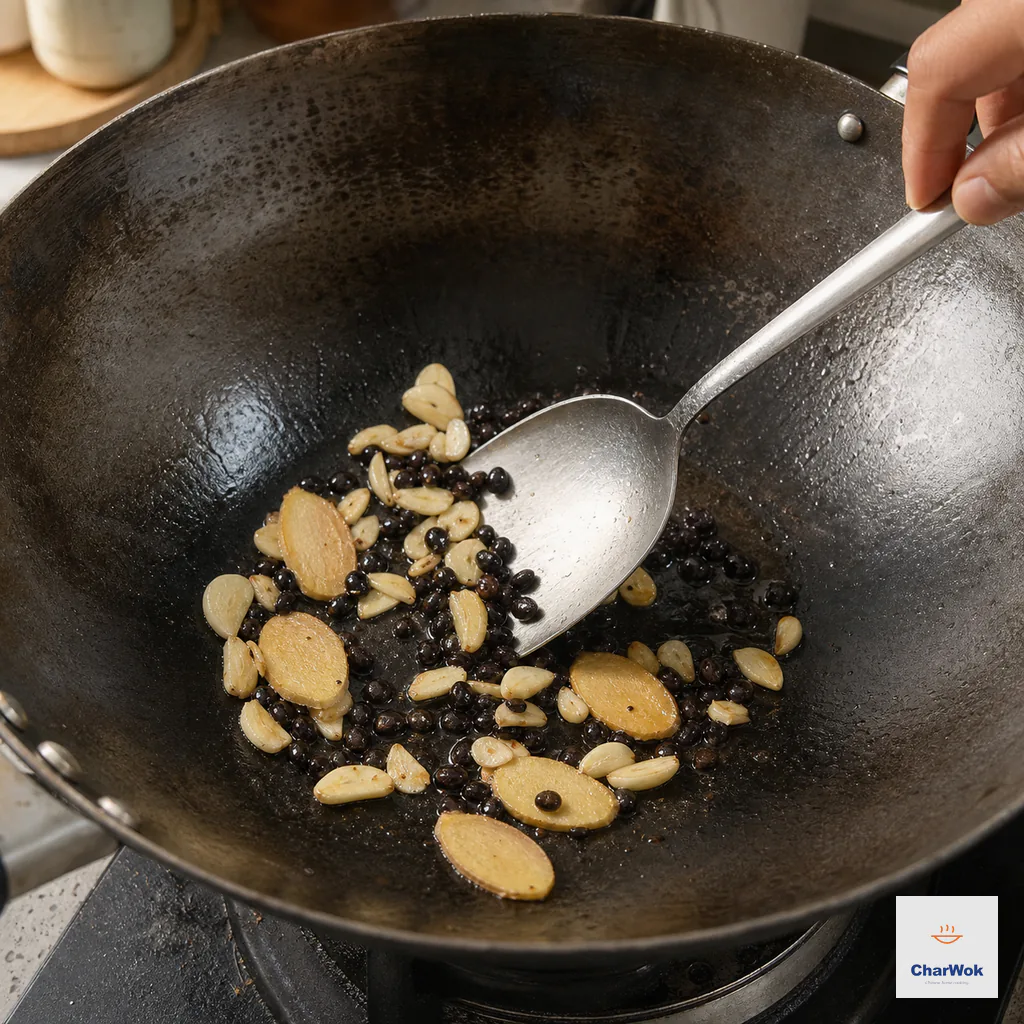
Stir the ginger, garlic and black beans for about 20 seconds, keeping the garlic pale-gold.
- Sear without crowding. Spread the chicken in one layer for 20 to 30 seconds to set the first side, then toss and separate the pieces. These times are estimates, not doneness tests.
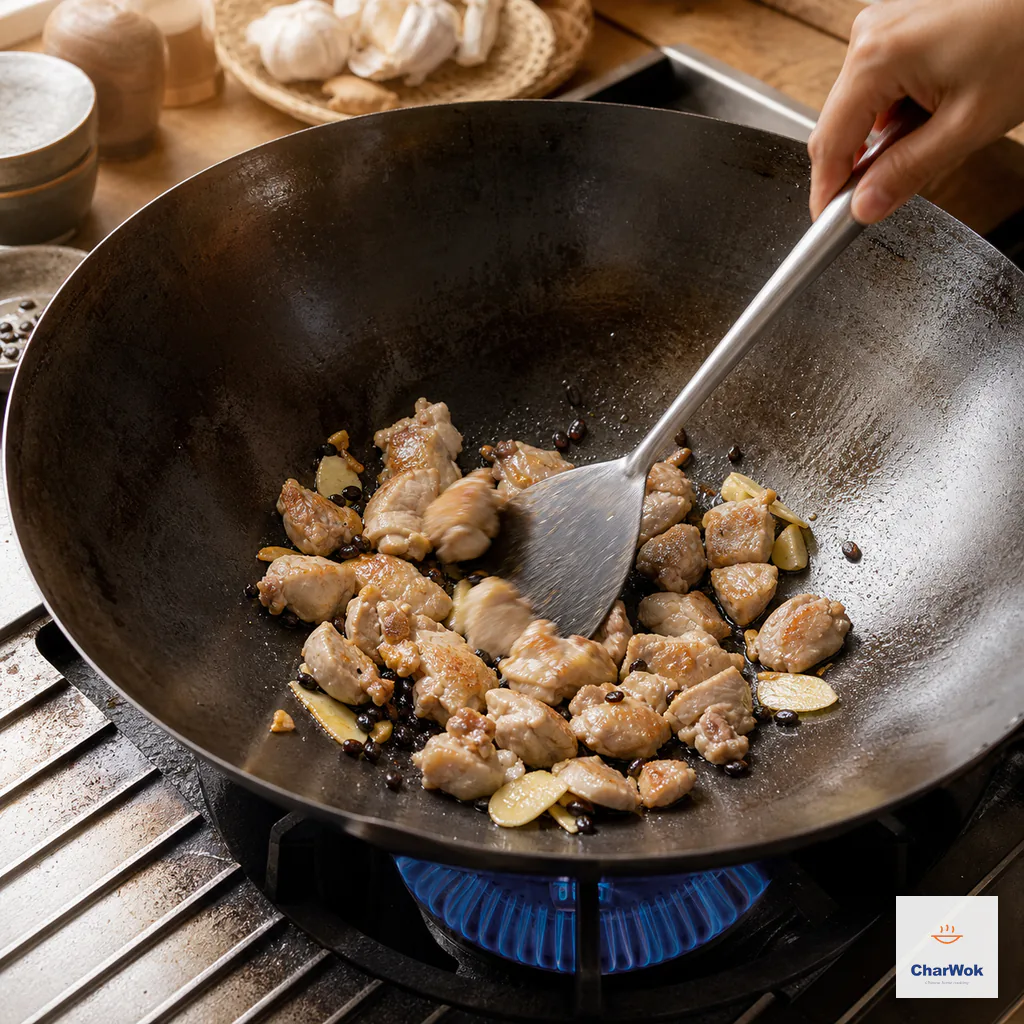
Set the first side for 20–30 seconds, then toss and separate the pieces; time and surface colour are texture cues, not doneness tests.
- Finish and verify. Add the chilies and dark soy, then stir-fry until the chilies just begin to soften and an instant-read thermometer inserted into the thickest chicken piece reads at least 165°F (74°C). If the seasoning starts to catch before the chicken reaches temperature, add 1 tablespoon water and continue cooking. Serve only after the temperature check.
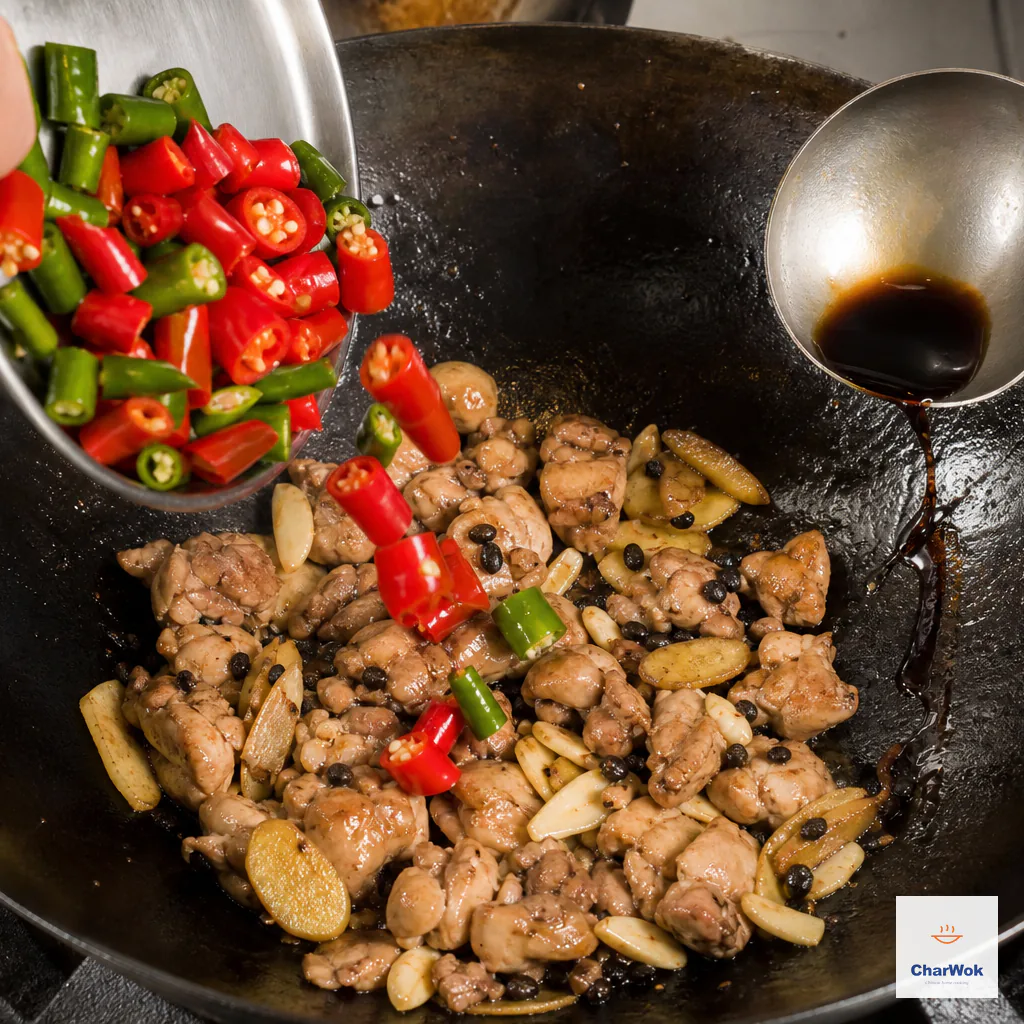
Add the chilies and dark soy, then continue only until the thickest chicken piece reaches at least 165°F (74°C); add a tablespoon of water if the seasoning catches first.
Food-safety sources: the U.S. Fire Administration cooking-fire guidance, the U.S. government’s safe minimum internal temperature chart, and FoodSafety.gov leftover guidance.
When it goes wrong
Most problems trace back to crowding, excess heat, or relying on visual cues instead of temperature.
- The chicken is rubbery or dry. The pan may have been crowded or the meat may have cooked beyond 165°F (74°C). Divide the batch if the pieces cannot sit in one layer.
- A pool of liquid at the bottom. The pan cooled when the chicken went in. Cook in two batches rather than turning the burner beyond a safe level.
- Bitter, scorched garlic. The pan was too hot or the aromatics stayed in too long. Turn off the burner if the oil smokes; scorched garlic is best replaced.
- Too salty. Rinse brine-packed beans more thoroughly and reduce the soy sauce next time.
- The dish looks pale. Dark soy provides most of the colour, but appearance does not indicate chicken doneness.
- The chicken stuck and tore. Make sure carbon steel is preheated and dry before adding oil, then give the first side a short undisturbed contact. Do not heat the pan until it smokes.
Variations and what to serve it with
The most useful variation is a heat adjustment. If you are cooking for people who fear chilies, drop the hot varieties entirely and use a full cup of mild Fresno or jalapeño, with the seeds and membranes scraped out. The dish stays aromatic and a little warm without burning. Going the other direction, a small handful of dried red chilies bloomed with the aromatics adds a smoky dimension that fresh chilies alone cannot.
For a bone-in version, use small skin-on chicken pieces and allow additional cooking time. Bone-in pieces vary more in thickness, so check several of the thickest pieces away from the bone and confirm at least 165°F (74°C). Boneless thighs are faster and easier to eat.
Serve it over steamed jasmine rice, full stop. The rice is there to absorb the chili-scented oil, and a plain bowl does that better than anything flavored. For a bigger spread, pair it with a cooling vegetable like garlic bok choy, broccoli with garlic sauce, or ginger-dressed spinach salad. Leftovers are excellent folded into hand-pulled noodles or stuffed into folded bao buns the next day. If you are building a full multi-dish Chinese feast, this is the spicy main that lets everything else be gentle.
Storage and reheating
Transfer leftovers to shallow covered containers and refrigerate within 2 hours, or within 1 hour when the room is above 90°F (32°C). Eat or freeze them within 3 to 4 days. Reheat only the portion needed in a skillet or microwave until the chicken reaches 165°F (74°C); texture may soften, but either method is safe when the temperature is verified.
Frequently asked questions
Can I use chicken breast instead of thighs? Yes. Cut it into even pieces, velvet it the same way, and use an instant-read thermometer to stop cooking at 165°F (74°C). Colour alone is not a reliable safety check.
How spicy is this supposed to be? As spicy as you make it. The recipe's heat comes entirely from the fresh chilies, so choosing milder peppers keeps it gentle and adding Thai bird's-eye makes it fierce. Mixing about four parts mild to one part hot is a safe middle ground.
I cannot find fermented black beans. Now what? Use a teaspoon of black bean sauce or Laoganma chili black-bean sauce instead, added with the chilies at the end rather than into the hot oil. The result is slightly less complex but still recognizably the same dish.
Do I need a wok? No. A wide carbon steel or cast-iron skillet works. Non-stick also works if oil is added before heating and the pan stays within the manufacturer's temperature limit.