There is a small jar I reach for at the end of almost every braise, and it is not soy sauce. It is rock sugar: those pale, translucent crystals that look like quartz but dissolve into a glossy amber coat on pork belly, beef shank, and spareribs. The first time I tried to make red-cooked pork without it, the dish tasted fine and looked dull. The sauce sat on the meat instead of clinging to it. That single missing ingredient was the difference between a home stew and the lacquered, restaurant-style finish I was chasing.
If you have ever wondered why Chinese braises gleam while Western stews look matte, rock sugar is most of the answer. It is not just sweetness. It is structure.
Rock sugar (bing tang, 冰糖) is a slow-melting, lightly purified cane sugar that gives Chinese braises their shine and desserts their clean, rounded sweetness. Use about 15–25 g per 500 g of meat for a glaze, less for tea or a cough remedy. Swap with granulated sugar only when a recipe says you can; the texture will suffer but the flavor will survive.
What rock sugar actually is
Rock sugar guide at a glance
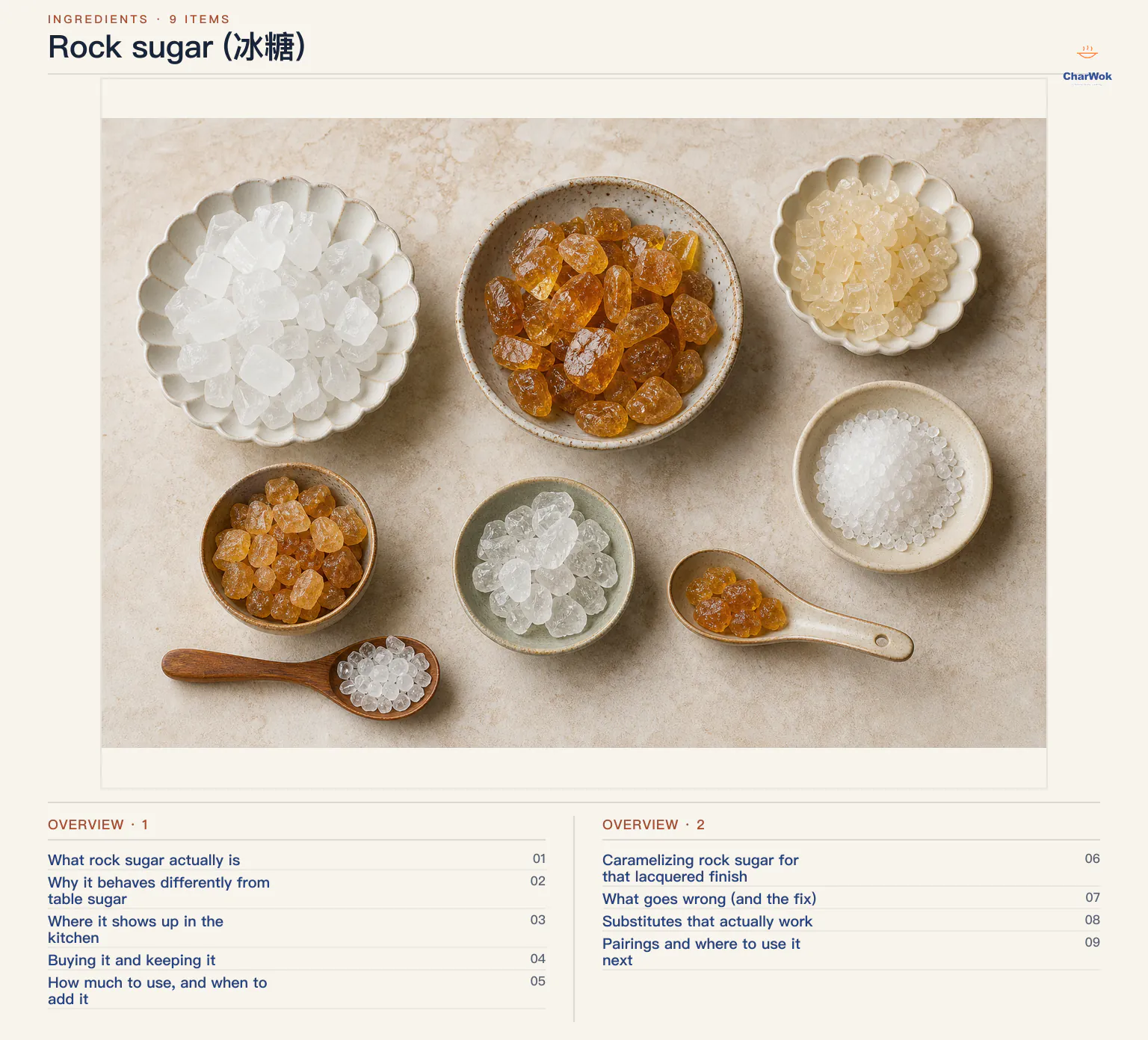
Rock sugar is sucrose that has been dissolved, purified, and then recrystallized slowly into large lumps. The slow growth is what gives the crystals their size and their faint transparency. You will usually meet it in two shapes: small, regular cubes that look like dice, and irregular, rock-like chunks that you have to whack with the back of a knife. The color ranges from clear white to a pale straw yellow, and that color tells you something about how it was made.
The white version is more highly refined. The yellow or amber lumps, sometimes sold as "old rock sugar" (lao bing tang, 老冰糖), are less processed and carry a faint caramel note. I keep both on the shelf. I reach for white when I want a neutral sweetener that disappears into a master stock, and for yellow when I am making a tea or a throat-soothing syrup where that gentle, honeyed edge actually matters. Neither is better in an absolute sense; they do slightly different jobs.
Why it behaves differently from table sugar
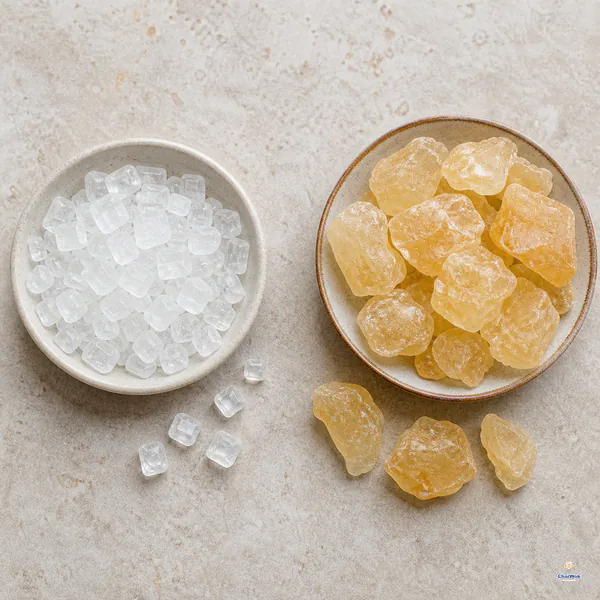
White single-crystal cubes are evenly sized and neutral; pale yellow old rock sugar forms larger irregular chunks with a faint caramel note.
Chemically, rock sugar and the white granulated sugar in your coffee canister are nearly identical: both are sucrose. The difference is physical, not chemical, and it matters in the pan.
Because the crystals are large and dense, rock sugar dissolves slowly. In a long braise that is an advantage. The sweetness enters the sauce gradually instead of hitting all at once, and as the liquid reduces, the dissolved sucrose concentrates into a syrup that thickens the sauce and glosses the meat. Heat the syrup far enough and you get caramelization: the sucrose breaks down into hundreds of new compounds, some brown, some bitter, some aromatic. That Maillard-adjacent browning is the backbone of the color in dishes like red-cooked pork belly and sweet and sour spareribs. Swap in granulated sugar and you will still get sweetness, but the sauce tends to thin out and the glaze slips off the meat rather than setting into a tacky coat.
The other thing going on is about flavor intensity. Rock sugar tastes less sweet than the same weight of granulated sugar, partly because it dissolves more slowly on the tongue. This is exactly why it is the sweetener of choice for delicate things: a pear dessert, a chrysanthemum tea, a clear soup. Granulated sugar would bully those flavors; rock sugar supports them.
Where it shows up in the kitchen
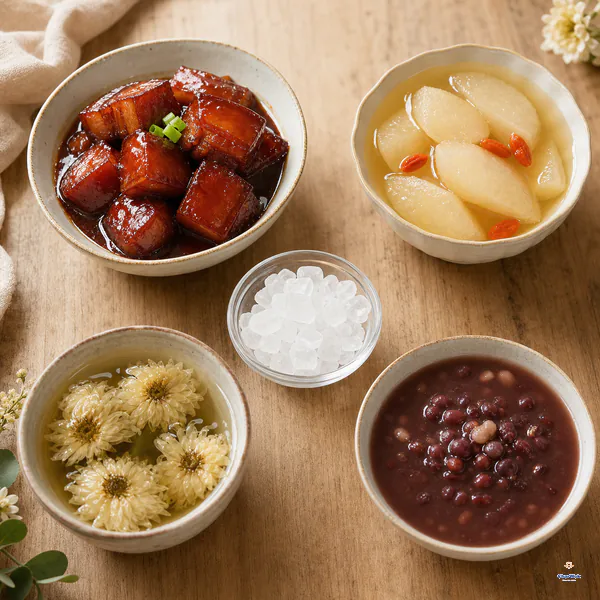
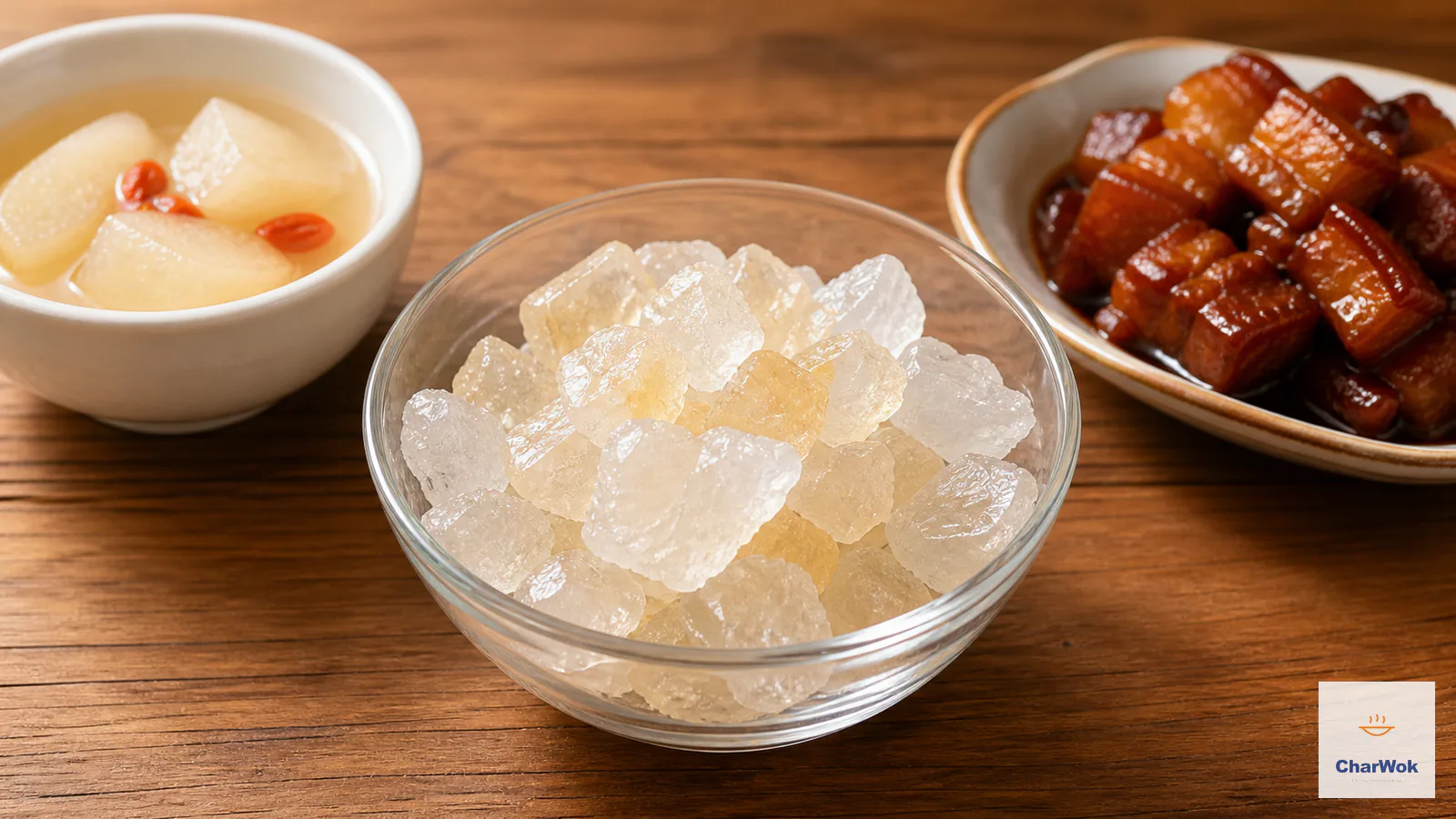
Rock sugar builds a lacquer on savoury braises while giving pear syrup, flower tea and red bean soup a clean sweetness that does not dominate delicate flavours.
Rock sugar does two big jobs in Chinese cooking, and they are easy to confuse because both involve sweetness. The first is structural: it builds the glaze and body of a savory braise. The second is gentle: it sweetens teas, desserts, and home remedies without taking over.
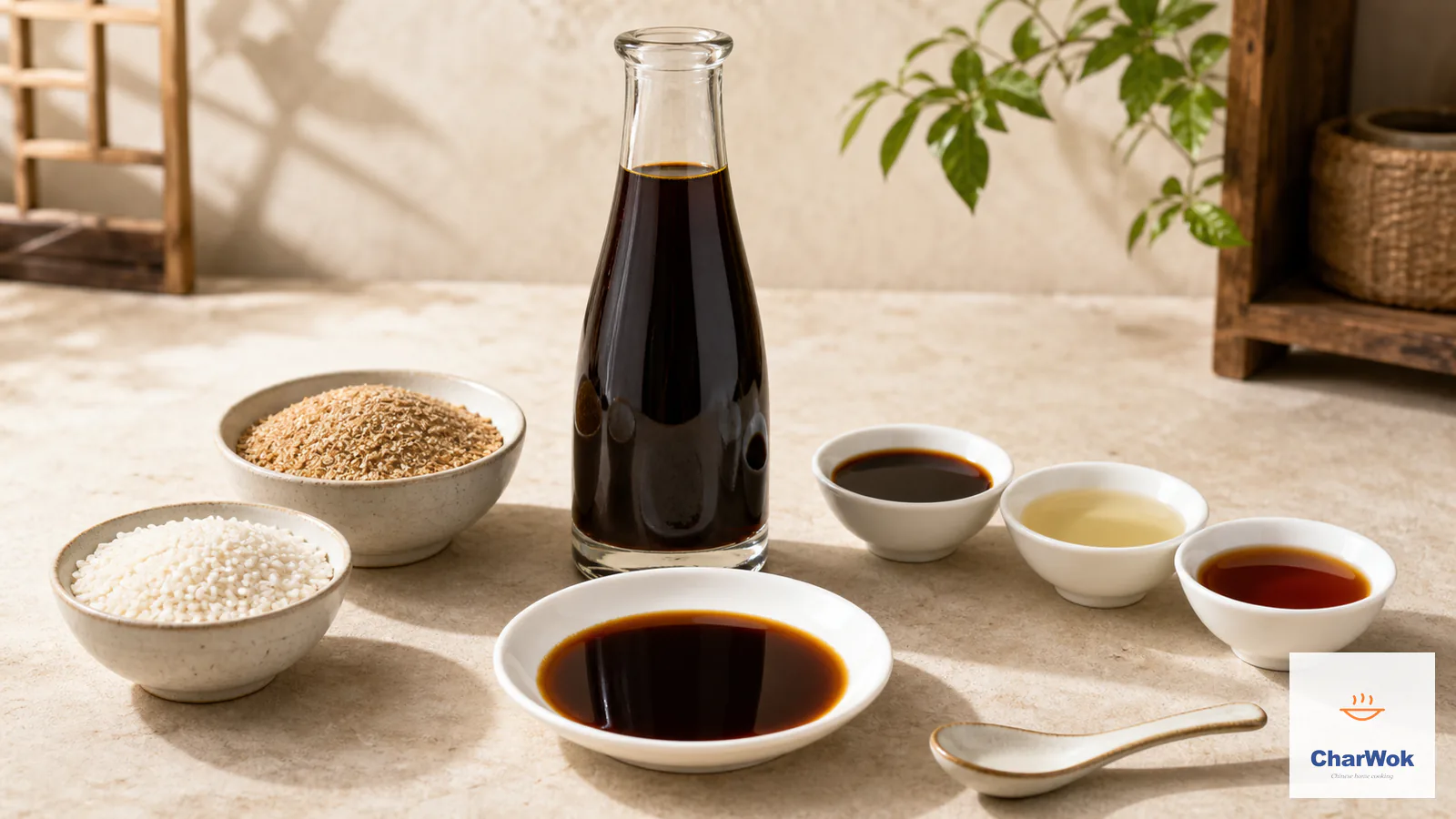
On the savory side, anywhere a recipe wants a lacquered, mahogany finish, rock sugar is usually lurking. The classics are the long, slow braises: hong shao rou, mei cai kou rou steamed pork belly, tang cu pai gu sweet and sour ribs, and a good master-stock beef shank. In these dishes the sugar is not there to make the food taste sweet. It is there alongside dark soy sauce, Shaoxing wine, and aromatics to round off the salt and build a sauce that clings. You can think of it as the ingredient that turns a braising liquid into a glaze.
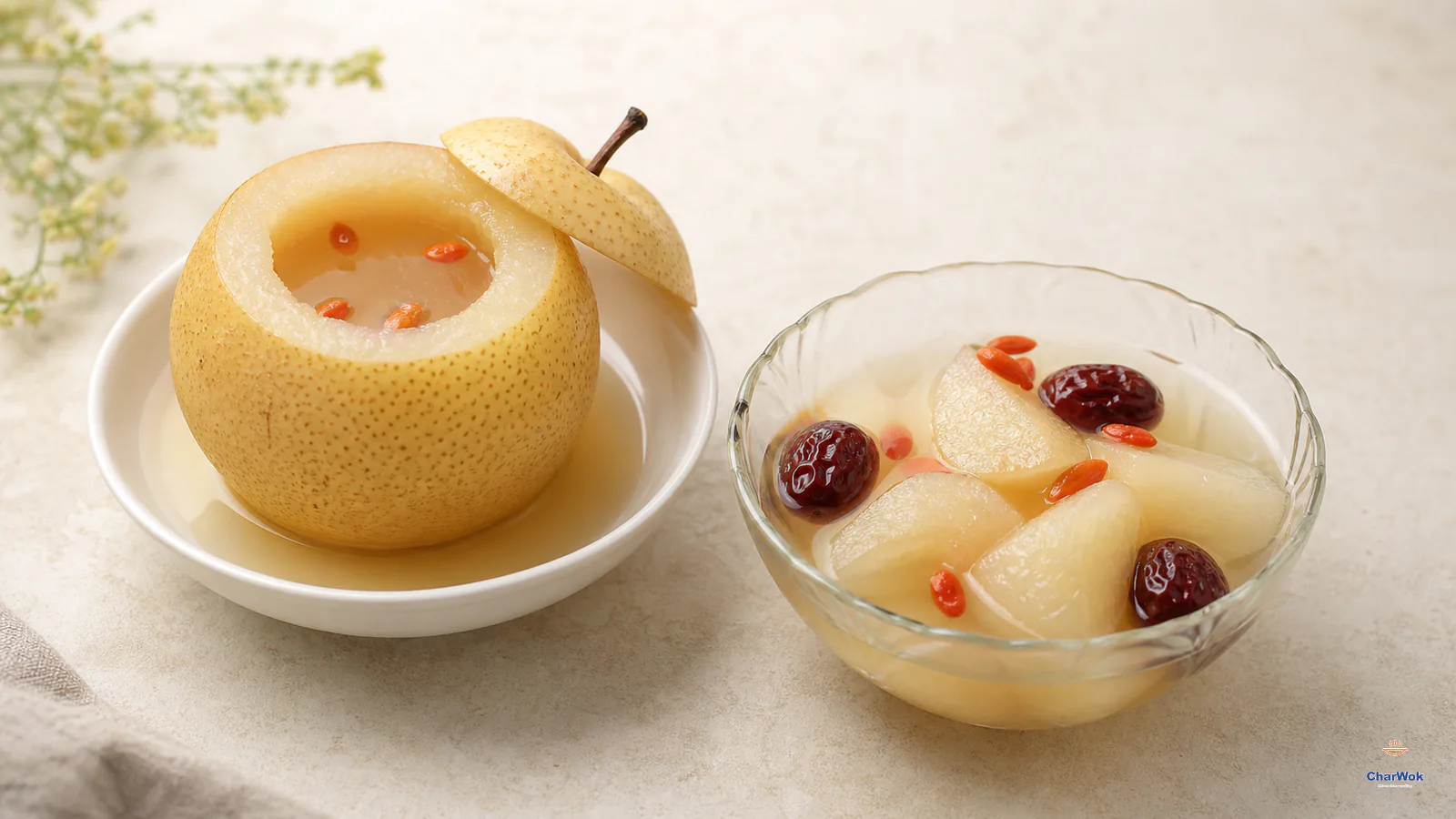
On the sweet side, rock sugar is the default sweetener for slow-cooked Chinese desserts and tisanes. The best-known example is steamed pear with rock sugar, a dry-cough remedy that doubles as dessert. You will also find it simmered into red bean soup, folded into the syrup for tang yuan glutinous rice balls, packed around sticky-rice stuffed lotus root, and pooled at the bottom of eight treasure rice. Northern China even strings hawthorn berries on a stick and coats them in a rock-sugar syrup to make bing tang hulu, the candied-fruit street snack.
Tea is a third use worth knowing. Most Chinese tea is drunk unsweetened, but a few tisanes call for rock sugar specifically: chrysanthemum tea, and San Pao Tai, a layered tea from Gansu that builds dried fruit, longan, and rock sugar into the cup. The slow melt keeps the sweetness from swamping the tea.
Buying it and keeping it
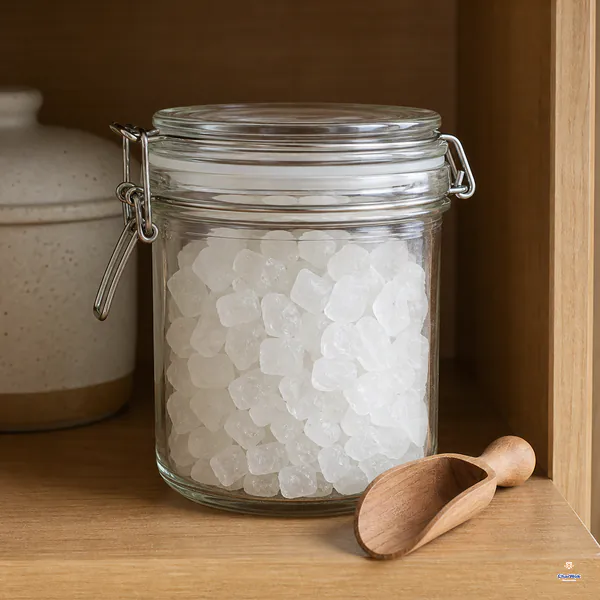
Keep rock sugar sealed, dry and away from heat; harmless humidity clumps can be broken apart, but an off smell or visible mould means the sugar should be discarded.
| What to look for | What it means | Notes |
|---|---|---|
| Clear white cubes | Highly refined, neutral | Best all-purpose pick for braises |
| Pale yellow / amber lumps | Less refined, "old rock sugar" | My choice for tea and throat syrups |
| Irregular chunks vs. neat cubes | Same sugar, different crystal form | Whack chunks with a knife heel to break them |
| Bag labeled bing tang or peen tong | Standard Chinese / Vietnamese names | Widely stocked in Asian grocers and online |
Store it like any dry sugar: sealed, dry, away from heat. It does not go off. I have a jar that has lived in my cupboard for over a year with no change in flavor. If lumps cake together from humidity, smash them apart; the sugar is still fine.
How much to use, and when to add it
| Use | Amount | When to add |
|---|---|---|
| Glossy braise (per 500 g meat) | 15–25 g | Early, with the liquid, so it melts and reduces over the whole cook |
| Sweet and sour sauce | 20–30 g | While building the sauce, before it reduces |
| Pear / throat syrup | 15–20 g per pear | During the simmer, so it dissolves into the cooking liquid |
| Chrysanthemum or fruit tea | 1–2 small cubes per cup | After brewing, to taste |
For braises, I add the sugar at the start, with the liquid, not at the end. That gives it the full cook to melt, integrate, and concentrate as the sauce reduces. Dropping it in late means uneven sweetness and a thinner glaze. The one time I hold back is when I am not sure how much reduction I will get; then I use the low end of the range and taste near the finish.
Caramelizing rock sugar for that lacquered finish
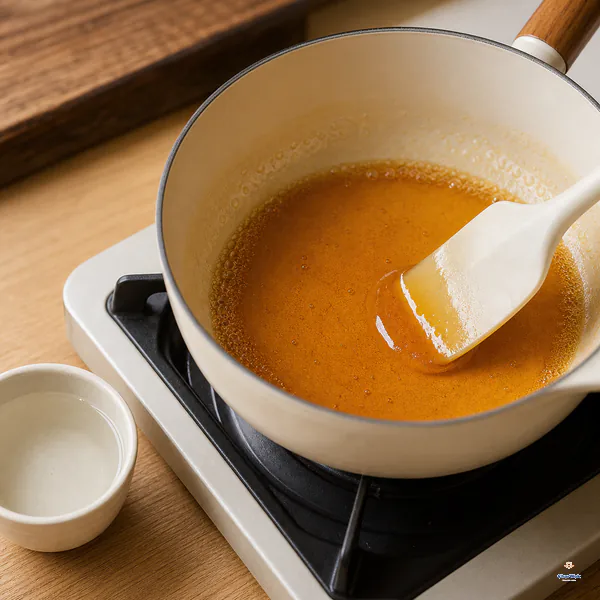
Use low heat and stop at clear amber with fine bubbles at the edge; keep measured hot water beside the pan because the next stage turns bitter quickly.
If you want the deepest color and the glossiest glaze, you can caramelize the rock sugar before adding liquid. This is the trick behind properly dark red-cooked pork and restaurant-style sweet and sour ribs. Melt the crystals in a little oil over low heat with a splash of water. They will go from clear to gold to amber. The instant you hit amber, deglaze with hot water or wine; ten seconds later you are at bitter and burned.
I will be honest about my failure rate here. Caramel is unforgiving, and rock sugar's large crystals mean the window between perfect and ruined feels short. The first few times I tried it I scorched the batch and had to start over. If you are new to it, keep the heat low, do not walk away, and have your hot water measured and ready next to the stove. The hot water matters: cold liquid into hot caramel seizes and splatters.
What goes wrong (and the fix)
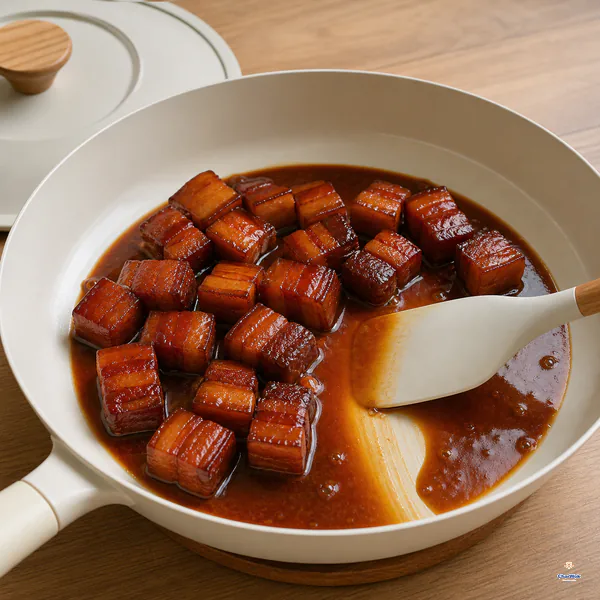
If a glaze stays runny, uncover the pan and reduce until the sauce clings to the meat and the spatula path closes slowly; shine comes from concentration, not scorching.
The sauce is shiny but too sweet. You overshot the sugar. Fix it in the pan with a splash of dark soy sauce or a splash of Shaoxing wine and a little more reduction. Next time, start at 15 g per 500 g of meat and adjust up.
The glaze will not set; the sauce is runny. Two likely causes. Either you did not reduce long enough, or you swapped in granulated sugar, which thins the body. Cook it down further, uncovered, in the last ten minutes. If you are using rock sugar and it is still thin, the sugar ratio was too low.
The caramel turned bitter. You went past amber. There is no rescue; pour it out and start again. Lower heat, smaller batch, hot water standing by.
The crystals will not dissolve in tea. Crush them first. A few seconds in a mortar, or seal them in a bag and hit them with a rolling pin, and they melt in a fraction of the time.
You cannot find rock sugar at all. Granulated sugar works as a substitute when a recipe explicitly allows it, which most of mine do for everyday braises. Expect a thinner sauce and a sharper, faster sweetness. Reduce a little longer to compensate. Do not substitute honey or brown sugar without thinking it through; both bring strong flavors of their own that change the dish.
Substitutes that actually work
- Granulated white sugar: closest in pure flavor, weaker in body. Use about three-quarters of the weight and reduce the sauce a bit longer.
- Yellow "old" rock sugar vs. white: interchangeable in most recipes; pick yellow for tea and remedies, white for braises where you want zero extra flavor.
- Bar sugar / superfine sugar: dissolves faster than granulated, closer to rock sugar's clean taste, still no glaze-building body.
- Not recommended: honey, maple syrup, brown sugar. Each imposes its own flavor and will not build the same glaze.
Pairings and where to use it next
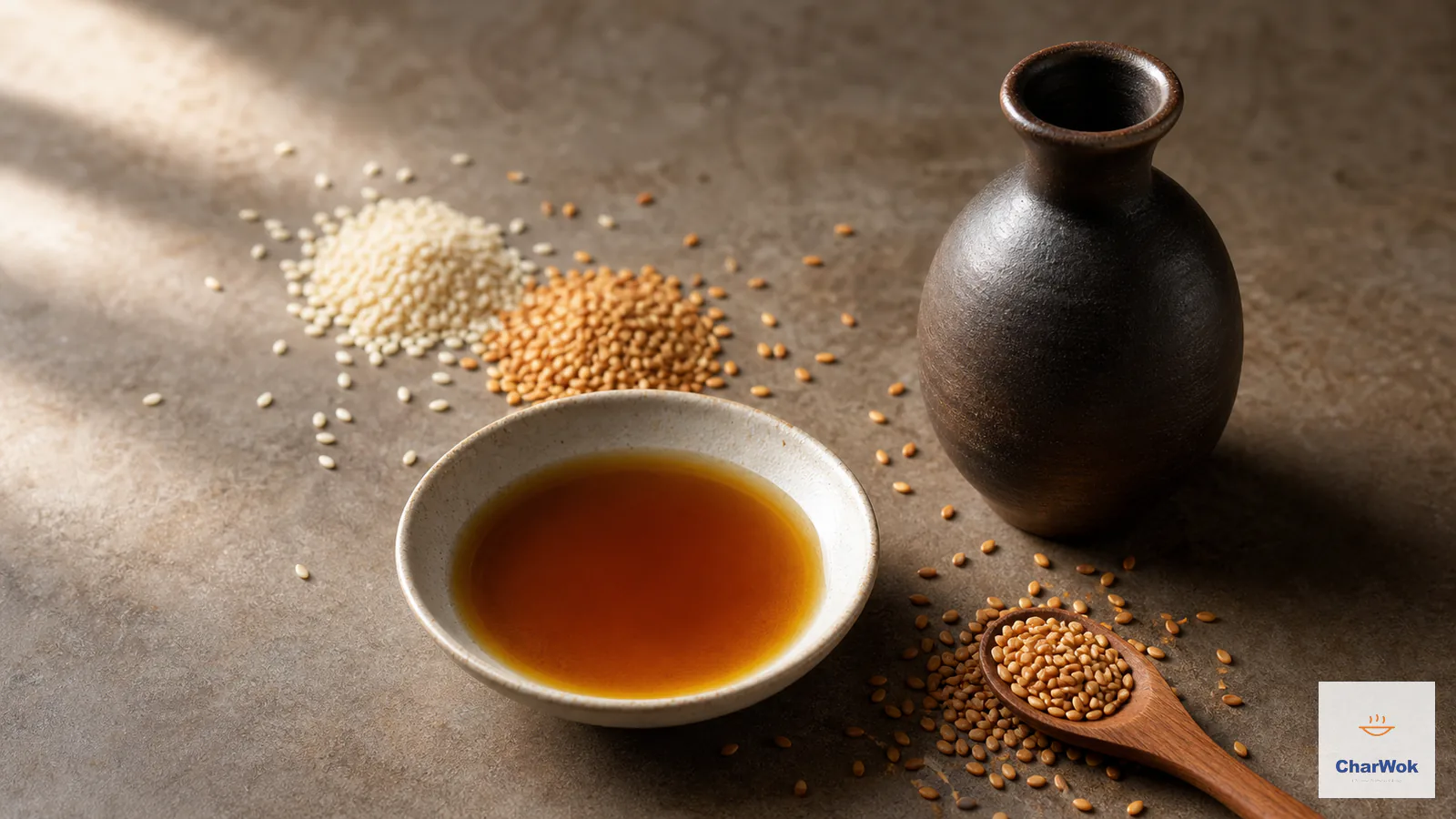
Once you have a jar, you will find excuses for it. Beyond the braises already named, a small lump deepens the stock for master-stock beef and rounds out anything built on doubanjiang or five-spice, where a touch of sweetness keeps the heat and spice from going flat. A few crystals melted into a finishing drizzle of toasted sesame oil is overkill, but the same sugar in a dessert syrup is exactly right.
If you are stocking a Chinese pantry from scratch, rock sugar belongs on the same short list as soy sauce, wine, and vinegar. It is one of the ten condiments I would buy first, and the jar pays for itself within a week of cooking.
FAQ
Is rock sugar healthier than regular sugar? Not in any meaningful way. It is still sucrose. The "medicinal" reputation in Chinese tradition comes from how it is used, often in soothing syrups, not from a different nutritional profile.
Can I use granulated sugar instead? Yes, when a recipe allows it. Expect a thinner sauce and quicker sweetness; reduce longer and use roughly three-quarters of the called-for weight.
Why does my braise look dull without it? Rock sugar builds body and shine as it concentrates and lightly caramelizes. Without it the sauce stays thin and matte instead of clinging and glossy.
Does rock sugar expire? No. Keep it dry and sealed and it lasts indefinitely. Humidity may clump it; smash the lumps apart and use as normal.
White or yellow rock sugar for cooking? White for neutral braises where you want no extra flavor; yellow for teas, syrups, and remedies where its faint caramel edge is welcome.