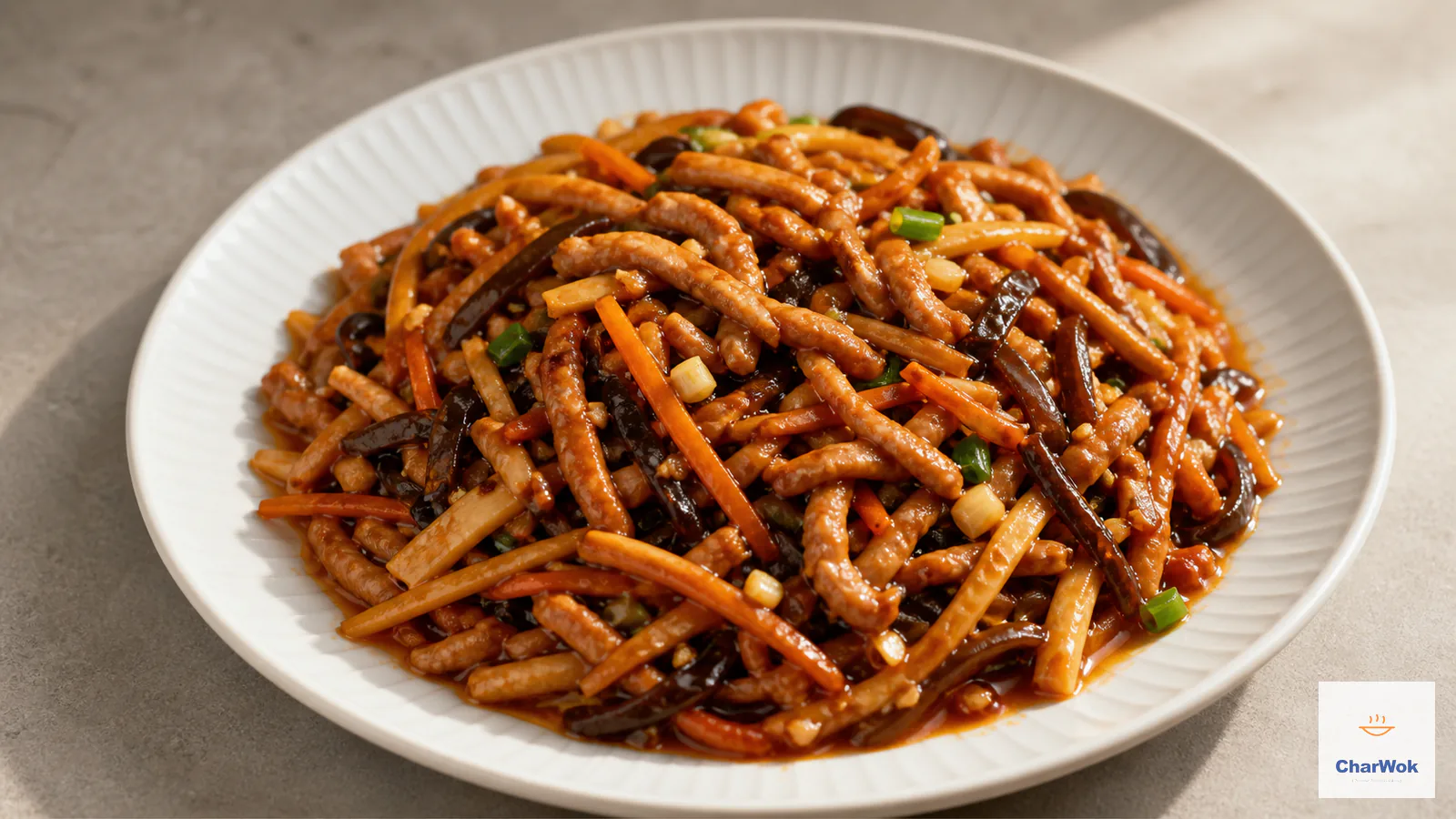
The first time I made Yu Xiang Rou Si at home, I was twenty-three and convinced the dish was about the pork. It is not. It is about a sauce built from a handful of pantry staples that, in the right proportion, tastes like nothing in the bowl actually contains. No fish, yet the name means "fish-fragrant." No garlic as the lead, yet English menus call it "garlic sauce." The magic is in the marinade's cornstarch, the wok's heat, and a sauce that thickens in about fifteen seconds once it hits the pan. Get the sauce ratio right and the timing tight, and you will never order takeout Yu Xiang again.
This is one of those dishes that punishes hesitation. If your wok is not hot enough, the pork stews grey instead of searing. If you skip a final whisk of the sauce bowl, the starch that dropped out of suspension pours in last and seizes into rubbery clumps. If you walk away to find a clean plate, the sauce over-thickens into paste. None of it is hard. All of it is fast. This recipe is built around those failure points, so by the time you fire the burner everything is already in position.
At a glance
A classic Sichuan home stir-fry of velveted pork tenderloin finished in a sweet-sour-salty-chili sauce. The whole cook is under five minutes once the wok is hot, so prep every bowl before you turn on the stove. The make-or-break detail is the sauce ratio: roughly two parts vinegar to two parts sugar to one and a half parts soy, thickened with cornstarch just until it clings.
What "fish-fragrant" actually means
The name confuses everyone the first time. Yu Xiang does not mean the dish contains fish. It refers to a seasoning style from Sichuan home cooking, originally the flavor profile people used to dress river fish: pickled red chilies, garlic, ginger, scallion, and a sweet-sour vinegar-sugar backbone. Sichuan cooks eventually applied that same seasoning logic to shredded pork, eggplant, and other ingredients, because the sauce is so good it carries almost anything.
So when you see Yu Xiang Eggplant on a menu, it is not eggplant cooked with fish. It is eggplant wearing the same outfit as this pork. Once you internalize the flavor pattern, you can apply it yourself. If you have ever made our eggplant with garlic sauce, you already know the family resemblance.
Why this version comes out tender
The secret to that silky, almost slippery pork you get at a good Sichuan restaurant is a technique called velveting. You toss the raw shreds in cornstarch, a splash of water, soy, and wine, then seal the coating with a thin film of oil before the meat ever touches the wok. The moment the coated pork meets the hot pan, the starch gelatinizes (cornstarch sets up between roughly 60 and 70 C) and forms a glossy barrier that traps moisture inside each shred. Without it, lean tenderloin seizes up dry and stringy in a hot pan. With it, the pork stays juicy even after a hard sear.
Wine matters here too. Shaoxing rice wine rounds off any porky edge and lifts the marinade with a clean, cooked aroma that plain water or salt-laden "cooking wine" cannot match. Do not substitute cooking sherry if you can help it. The real thing tastes cleaner.
Ingredients
Serves 3 as a main with rice, or 4 to 5 as part of a multi-dish spread. US supermarket substitutes are noted where the authentic ingredient is hard to find.
For the pork and its marinade
Ingredients at a glance
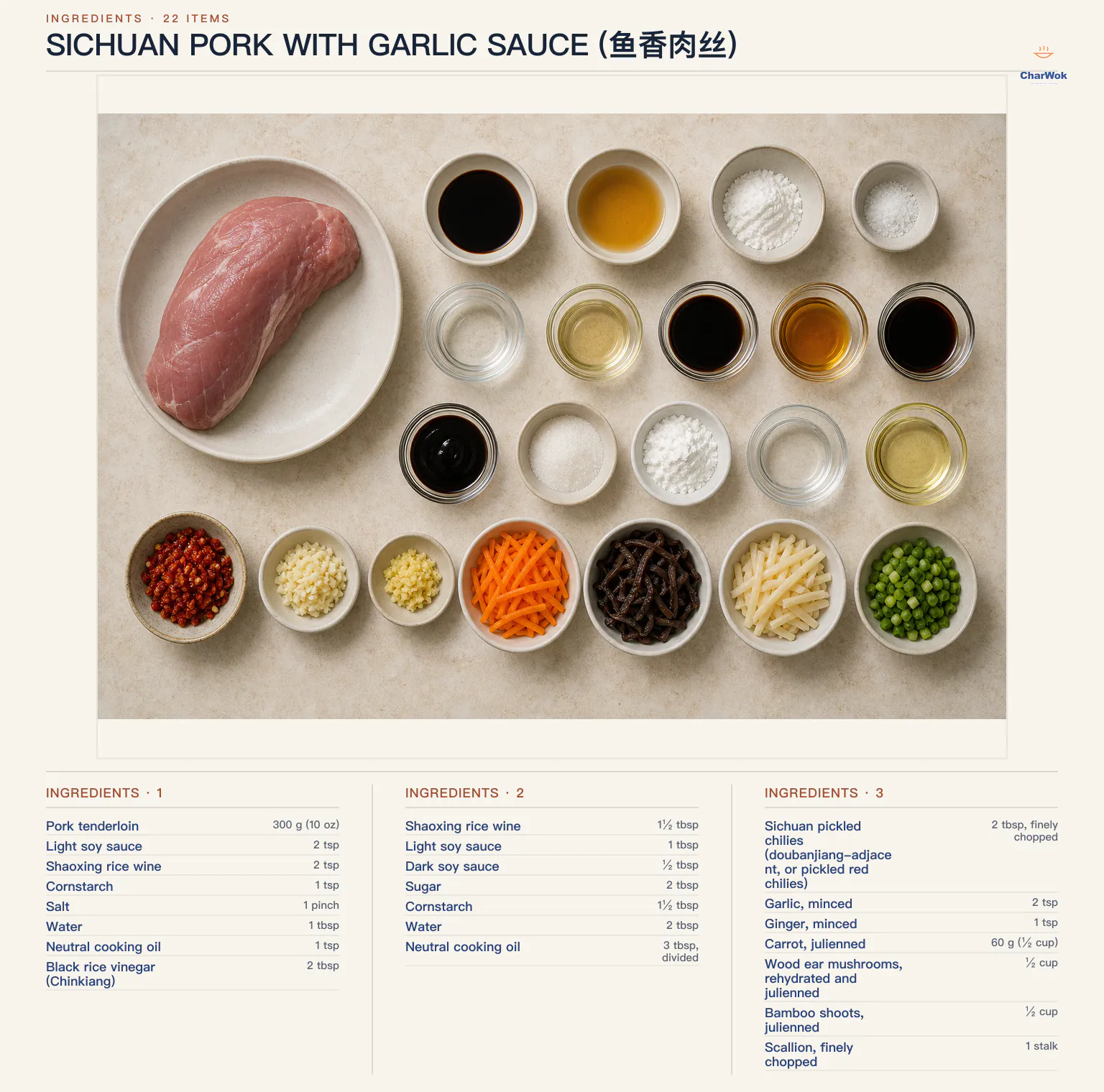
| Ingredient | Amount | Notes / substitute |
|---|---|---|
| Pork tenderloin | 300 g (10 oz) | Tenderloin is ideal. Pork loin works if that is what you have; shoulder is too tough for shreds this fine. |
| Light soy sauce | 2 tsp | See the soy sauce guide for the difference between light and dark. |
| Shaoxing rice wine | 2 tsp | Dry sherry in a pinch; avoid "cooking wine" with added salt. |
| Cornstarch | 1 tsp | Potato starch works similarly. |
| Salt | 1 pinch | |
| Water | 1 tbsp | Helps the starch hydrate and coat evenly. |
| Neutral cooking oil | 1 tsp | Canola, grapeseed, or peanut. Seals the coating. |
For the sauce (mix in one bowl)
| Ingredient | Amount | Notes / substitute |
|---|---|---|
| Black rice vinegar (Chinkiang) | 2 tbsp | Balsamic reduced with a little water is the closest Western sub; do not use plain white vinegar. |
| Shaoxing rice wine | 1½ tbsp | |
| Light soy sauce | 1 tbsp | |
| Dark soy sauce | ½ tbsp | For color. Omit if unavailable; add an extra teaspoon of light soy. |
| Sugar | 2 tbsp | White or raw; rock sugar melted works too. |
| Cornstarch | 1½ tbsp | This is more than you think. The sauce needs it to cling. |
| Water | 2 tbsp |
To cook
| Ingredient | Amount | Notes / substitute |
|---|---|---|
| Neutral cooking oil | 3 tbsp, divided | Yes, this much. Stir-fries need oil to transfer heat fast. |
| Sichuan pickled chilies (doubanjiang-adjacent, or pickled red chilies) | 2 tbsp, finely chopped | The pickled chili garlic sauce or a spoon of Sichuan chili bean paste both work if you cannot find whole pickled chilies. |
| Garlic, minced | 2 tsp | |
| Ginger, minced | 1 tsp | |
| Carrot, julienned | 60 g (½ cup) | Cut to match the pork in length and thickness. |
| Wood ear mushrooms, rehydrated and julienned | ½ cup | For crunch and dark contrast. Thinly sliced shiitake works; texture will differ. |
| Bamboo shoots, julienned | ½ cup | Canned, rinsed well. Celery cut fine is a common substitute. |
| Scallion, finely chopped | 1 stalk | Stirred in at the end, not cooked. |
How to cut the pork into clean shreds
This is where most home versions fall apart before the cooking even starts. Cut with the grain for bite; across the grain for tenderness. For tenderloin you want mostly across the grain, on a slight bias, into pieces about 5 cm (2 inches) long. Then slice each piece lengthwise into sticks roughly the thickness of a wooden matchstick, around 3 mm. If the shreds are too thick they will not cook through in the brief sear; too thin and they break apart when you toss them.
One trick I learned the hard way: park the tenderloin in the freezer for about twenty minutes before you pick up the knife. Slightly firm, chilled meat resists the blade instead of sliding around, so each cut falls clean instead of tearing. A sharp knife is not optional here. A dull blade mashes the fibers and the shreds look ragged no matter what you do.
The method
- Marinate the pork. In a bowl, combine the pork with the light soy, wine, cornstarch, salt, and water. Toss until no liquid pools at the bottom, then drizzle in the teaspoon of oil and rub it through so every shred is coated. The oil is the seal that keeps the starch from sticking to the wok later. Let it sit at least ten minutes while you prep everything else.
- Mix the sauce. Whisk the sauce bowl well, then leave the chopstick or spoon sitting inside it as a reminder. The starch drops out of suspension fast, so by the time you reach for the bowl it will have settled into a dense layer underneath the liquid; give it another whip immediately before you pour. A stagnant bowl is the number one reason the sauce seizes in the pan.
- Get the wok ripping hot. A carbon-steel wok is the right tool because it holds and recovers heat fast. The order of operations differs by pan: with bare carbon steel you bring the metal up to temperature empty (flick in a drop of water and it should skitter and vanish on contact), then pour in 2 tablespoons of oil and swirl. With nonstick the coating is the fragile part, so start cold: add the oil to the pan first and let the two warm up together, never subjecting the surface to an empty red-hot sear.
- Sear the pork, then pull it. Spread the pork out and leave it alone for a few seconds so the underside takes on some color before you start tossing. Give it about forty seconds of total pan time; the point is to lose the raw look and pick up a little caramelization, not to cook through. They finish later in the sauce. Scoop the shreds out onto a waiting plate. Do not skip this step: leave them in the pan and they overcook while the vegetables soften.
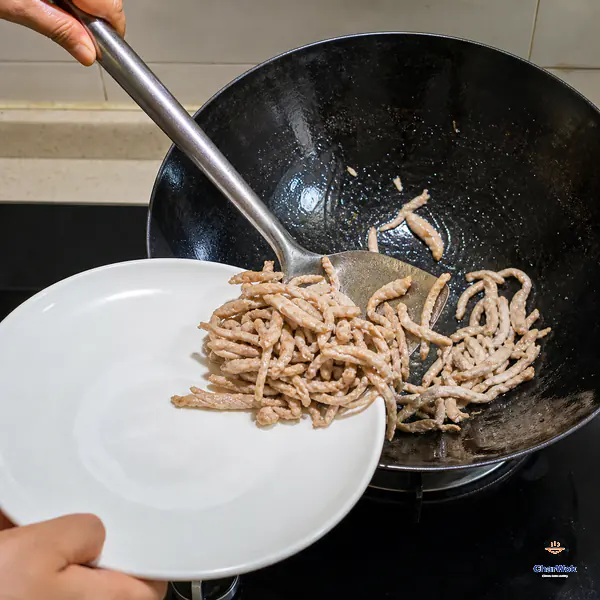
Spread the marinated pork in the very hot wok, separate it quickly and lift it out as soon as the raw pink disappears; it should stay pale and moist because it cooks again later.
- Bloom the aromatics. With the wok still on high heat, add the remaining 1 tablespoon of oil. Drop in the chopped pickled chilies, garlic, and ginger. Keep them moving. The moment the smell rises and the chili oil tints the oil red, roughly ten seconds, move on. Burnt garlic turns bitter and ruins the whole dish.
- Cook the vegetables. Add the wood ear, bamboo, and carrot. Stir-fry until the carrot just softens at the edges but still has snap, about a minute. The vegetables should be crisp-tender, not collapsed.
- Return the pork. Slide the pork back in and toss for about thirty seconds to combine and reheat evenly.
- Thicken the sauce. Drop the heat to low. Give the sauce bowl one final stir, then pour it around the edges of the wok, not directly onto the meat. The liquid will look thin and cloudy for a beat, then suddenly turn glossy and cling. The instant it lacquers the shreds rather than pooling beneath them, pull the wok off the flame entirely — the residual heat finishes the job and you avoid over-thickening into paste. Scatter the scallions over the top, fold them through once, and bring it to the table straight away over steamed jasmine rice.
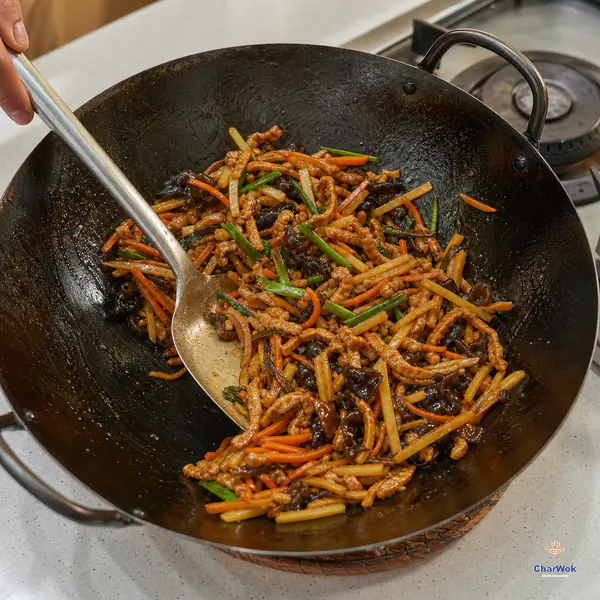
Stir the sauce once more, pour around the wok and toss only until it turns glossy and clings without pooling; move off the heat before it becomes a gummy paste, then fold in scallion once.
What goes wrong, and how to fix it
The pork came out tough and dry
Either the cornstarch coating was missing or thin, or the meat overcooked in the pan. Tenderloin has almost no fat, so it has zero margin for error. Next time, make sure every shred is coated with the starch-oil film, and pull the pork the instant it loses its raw pink. It finishes cooking when it returns to the wok with the sauce.
The sauce broke, clumped, or turned pasty
This is almost always the cornstarch. It settled in the bowl and you poured mostly water first, starch last, and the starch hit hot metal and seized. Two fixes: restir the sauce right before pouring, and pour it in along the wok's edge so it hits oil and food, not bare metal. If the sauce is already too thick, splash in a tablespoon of hot water and toss fast. If it is too thin, give it another ten seconds on the heat; cornstarch thickens fully as it approaches a boil.
The dish is too sour, or one-note sweet
Yu Xiang is a balance of salty, sweet, sour, and chili heat all at once. If one note dominates, the others need nudging. Too sour, add sugar in half-teaspoon bumps. Too sweet, add a few drops of vinegar or a touch more soy. No heat at all means your pickled chilies were mild; add a pinch of chili flakes or a quarter teaspoon of chili bean paste next time. Taste the raw sauce bowl before you cook and adjust it to your liking, because once it is in the wok there is no going back.
Everything stuck to the wok
The wok was not hot enough before the oil went in, or the surface is not seasoned. Heat the dry wok first, then add oil, then the food. A properly seasoned carbon-steel wok is nearly nonstick. If yours is new or recently stripped, the pork will glue itself down until you build up the patina with a few more cooks.
Variations and pairings
Once you own the sauce, the dish bends easily. Swap the pork for firm tofu pressed and torn for a vegetarian version in the same spirit as our mapo tofu. Use chicken thigh cut the same way for a milder weeknight take that pairs with other top Sichuan recipes on the table. Add a handful of bean sprouts at the end for freshness, or a spoon of toasted sesame oil off the heat for roundness.
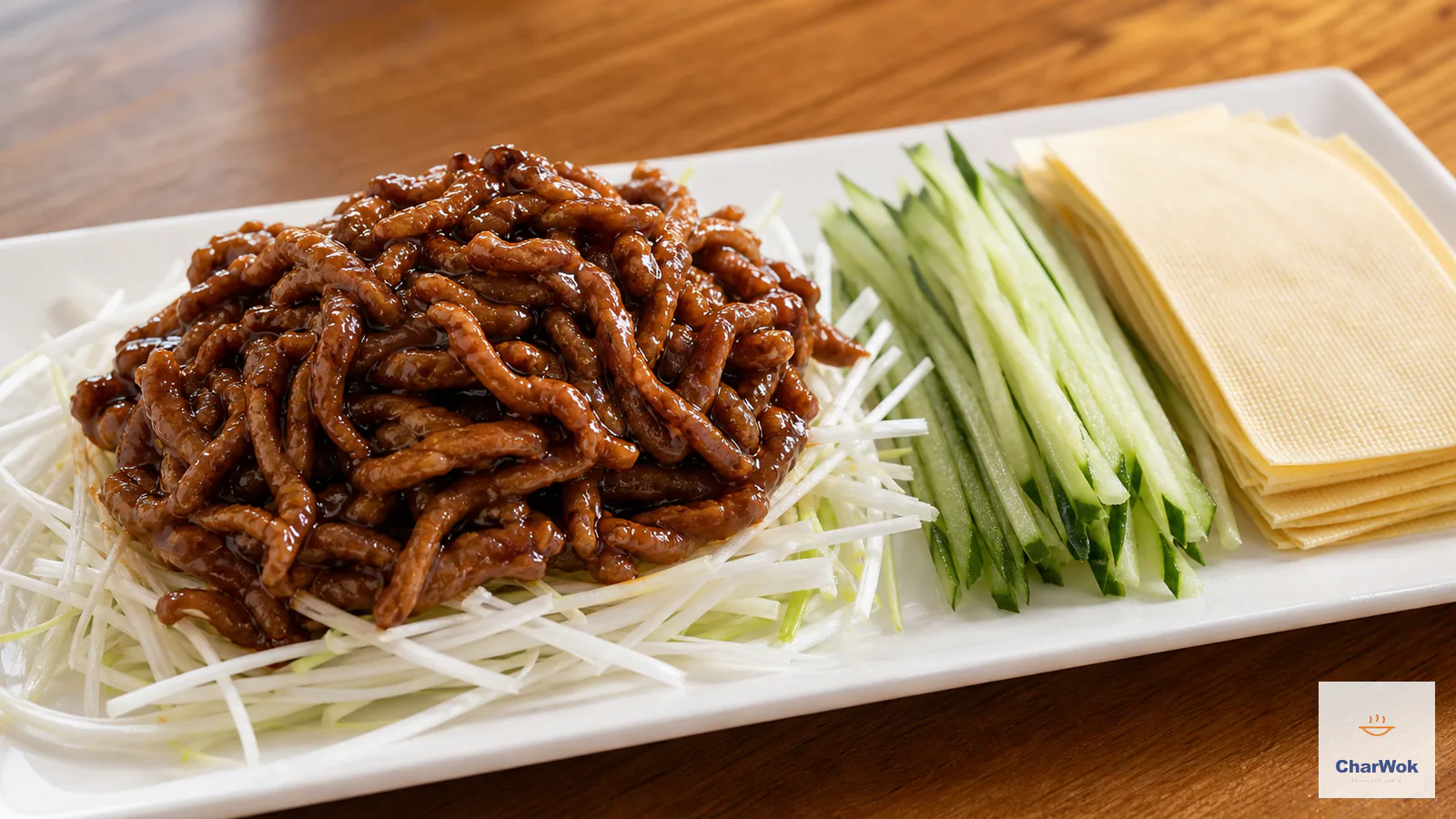
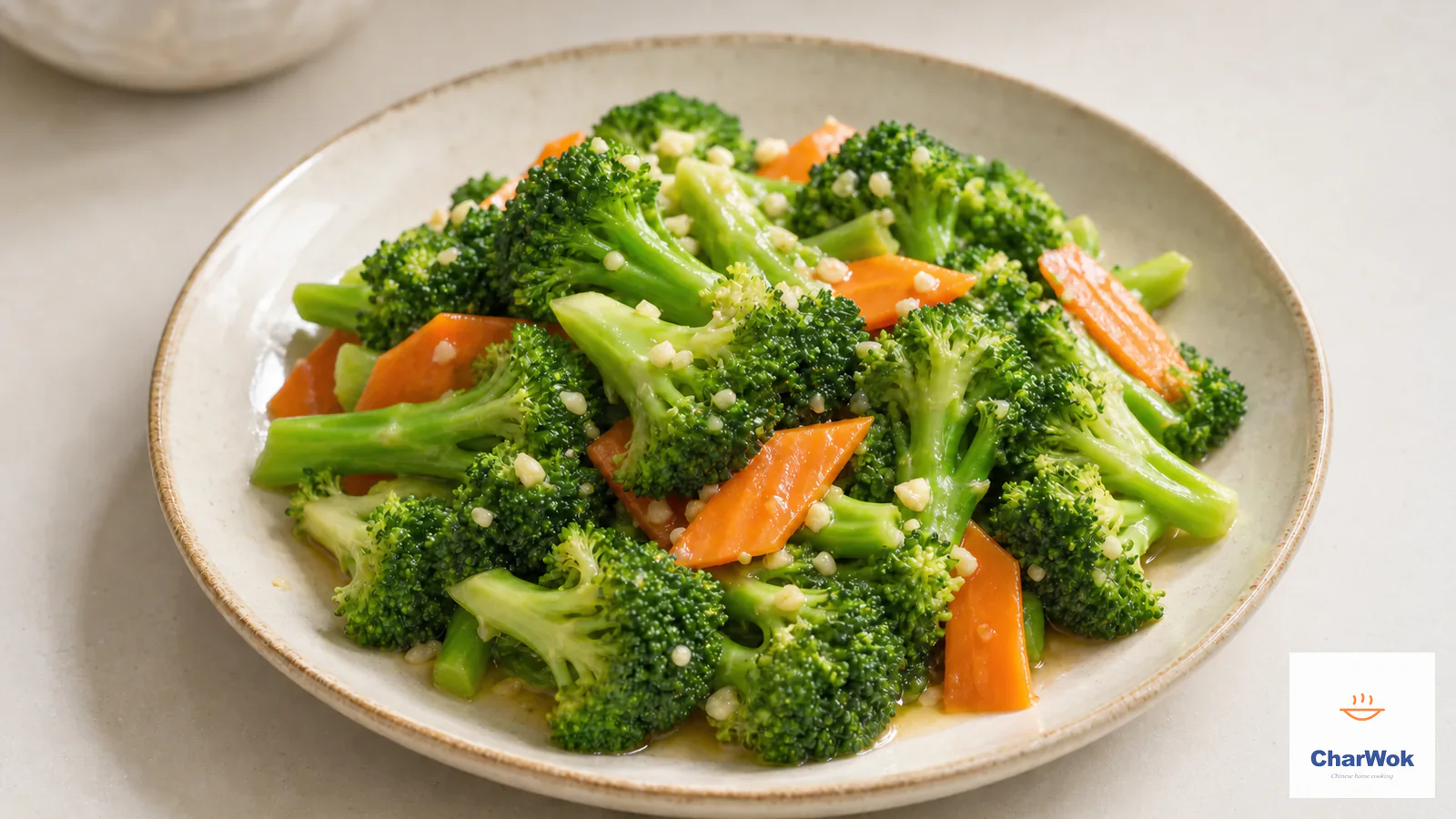
If you want a fuller Sichuan spread, this pork sits well next to a slower, deeper braise like twice-cooked pork, a crunchier northern-style plate of Peking shredded pork, or a more aggressively spiced plate of Hunan pork for contrast. A simpler weeknight table might pair it with moo shu pork and a quick weeknight vegetable. For a pork-forward menu, it slots into the most-loved Chinese pork recipes lineup without competing for attention.
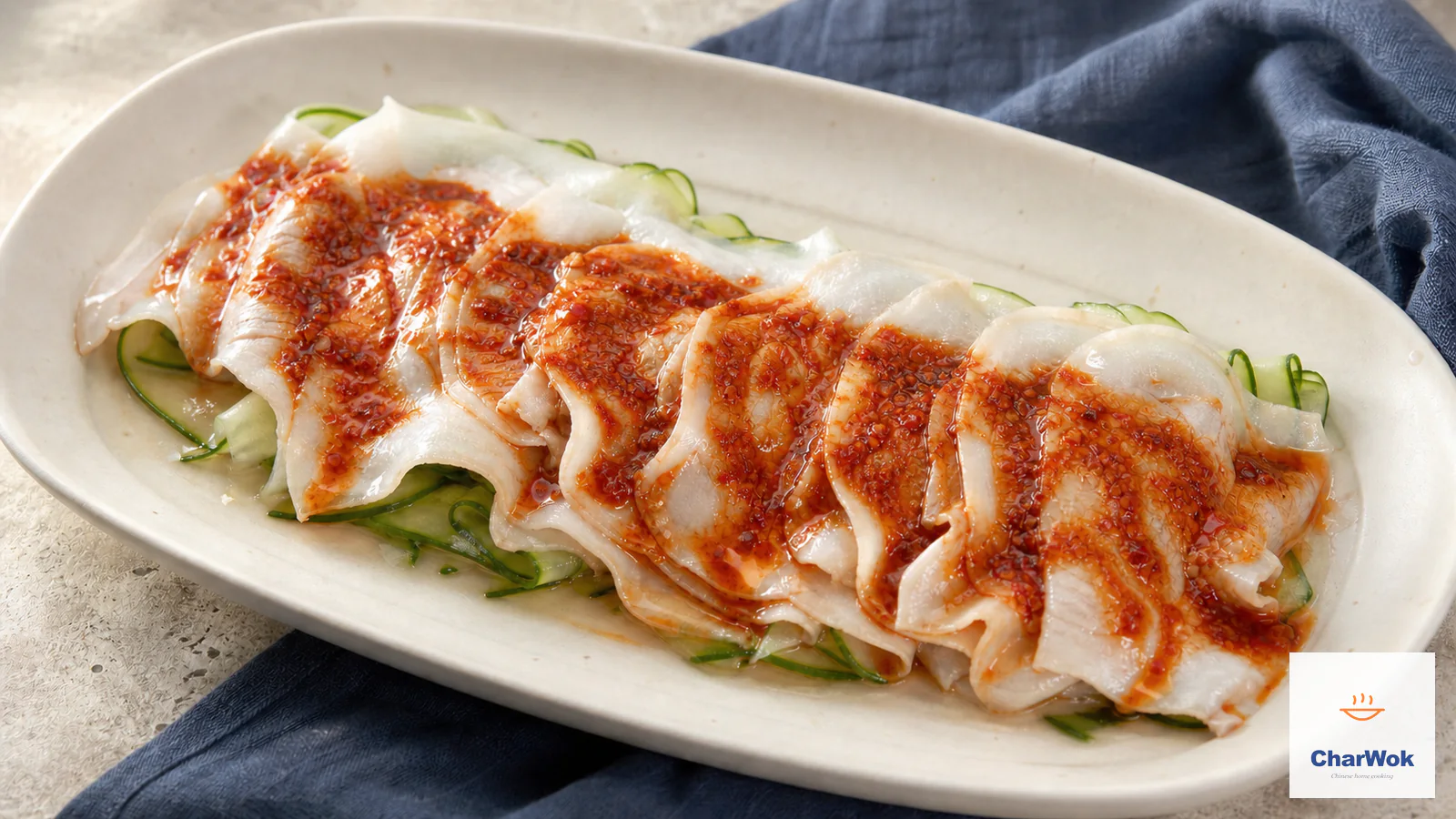
Related shredded-pork ideas worth trying: Sichuan-style lettuce wraps for a lighter hand, Sichuan garlic pork slices served cold as a starter, or a batch of char siu made ahead so the protein work is already done.
Storage and reheating
This dish is best the moment it leaves the wok. The cornstarch sauce will continue to set as it sits, so leftovers lose that glossy, just-coated texture. If you must store it, refrigerate up to two days in an airtight container. Reheat in a pan over medium heat with a tablespoon of water to loosen the sauce; microwaving makes the pork rubbery and the sauce grainy. I do not recommend freezing it. The vegetables go limp and the sauce separates on thaw.
What you can do ahead is the prep. Marinate the pork and mix the sauce up to a day in advance and keep them separately in the fridge. Cut the vegetables the morning of. With the mise en place done, the actual cooking is faster than ordering delivery.
Frequently asked questions
Can I use a different cut of pork?
Tenderloin is the safe choice because it is lean and slices cleanly. Pork loin works if that is what you have, but watch the sear time, since it dries out even faster. Shoulder has more flavor but the fibers are tougher; cut it thinner across the grain and accept a slightly chewier result.
Is this dish spicy?
Mildly. The heat comes from pickled chilies and is meant to be a supporting note, not the lead. If you want real fire, double the chilies or add a half teaspoon of chili bean paste. For a kid-friendly version, halve them.
What can I use instead of wood ear mushrooms?
Wood ear is there for crunch and dark visual contrast, not strong flavor. Thinly sliced shiitake or a small handful of cloud ear are the closest. In a pinch, leave them out and add extra bamboo shoots or a few strips of celery.
Can I make it without a wok?
A large cast-iron or heavy stainless skillet works. The tradeoff is that the sides are shallower, so you lose the toss-and-flip motion and have to stir more actively. Avoid nonstick if you want any browning on the pork; it cannot get hot enough.