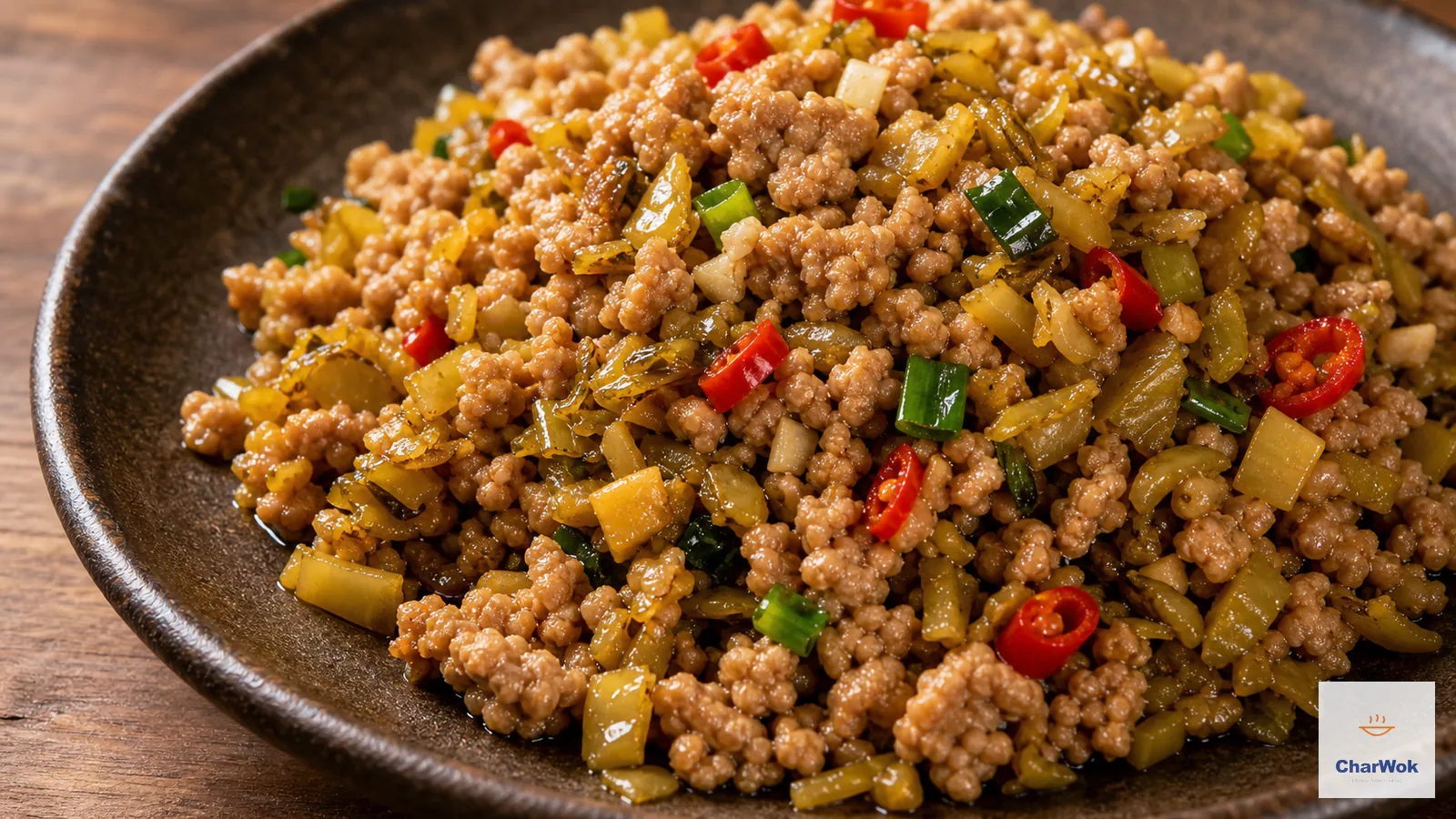
Ground pork and pickled greens cooked hard and fast in a wok: salty, sour, spicy, a little sweet, gone in five minutes off the heat. That is Suān Cài Ròu Mò (酸菜肉末) in one line. The thing that trips people up at home isn't the technique. It's the pickle. Open a bag of pickled mustard greens straight from the jar, chop them, throw them in, and the dish comes out punishingly salty and one-note sour. I did exactly that the first time and ended up throwing the whole wok away.
Soak the greens before you cook them, fry the pork until its fat renders but the meat is still juicy, and keep the wok screaming hot the whole time. The whole dish is on the table in under ten minutes once the soaking is done; the soaking is the only part that takes patience.
What this dish is, and where it comes from
Pickled vegetables are one of the engines of Chinese home cooking. Sometimes a small handful is used to season something else, the way Yá Cài works in dry-fried green beans. Here the pickle is the co-star. The name Suān Cài (酸菜, literally "sour vegetable") is a catch-all, not a single ingredient. Across northern China, Sichuan, and the northeast it means whatever fermented or brined green the local kitchen favors, and every household will defend its own version.
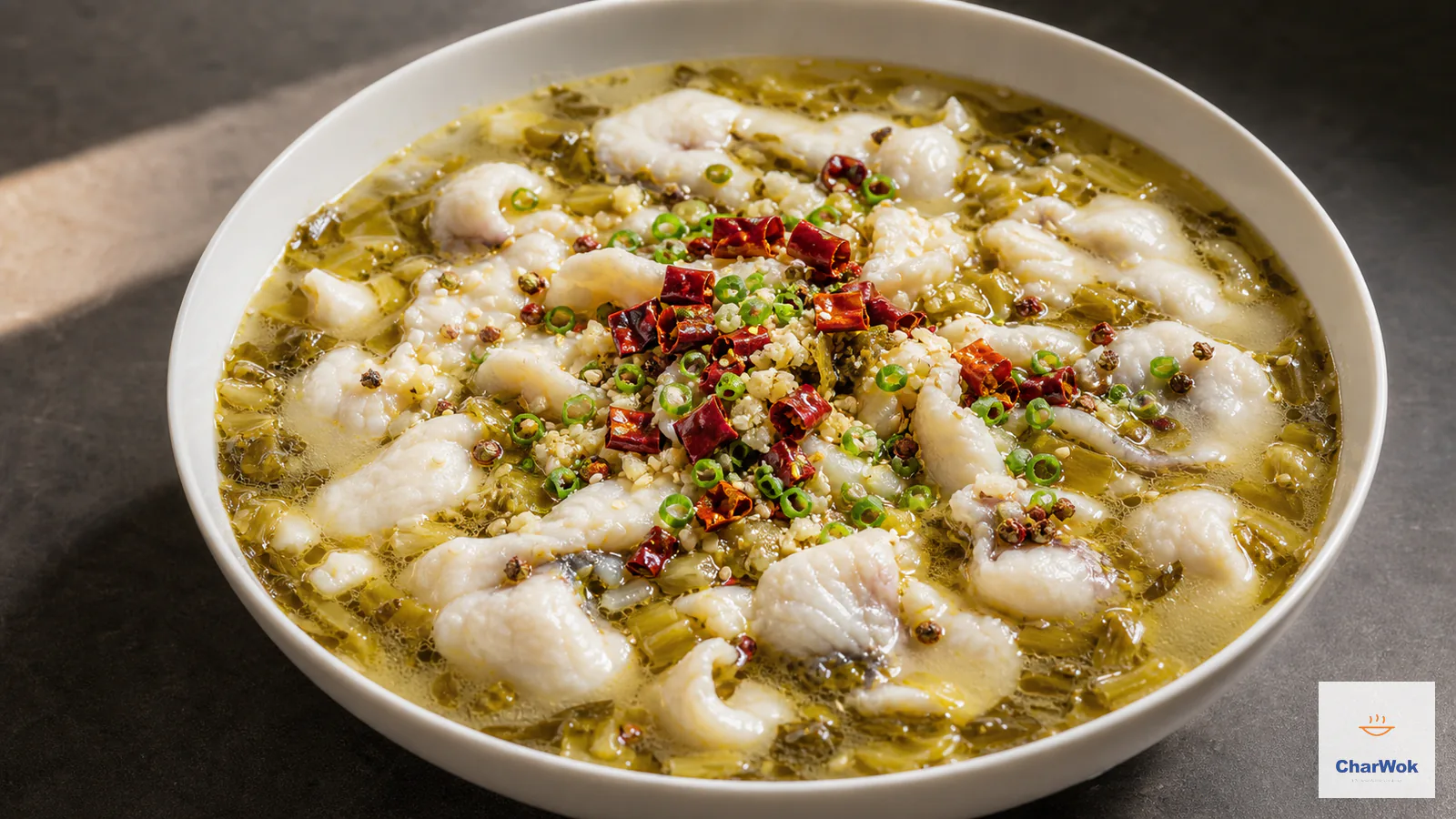
The version most Chinese-American home cooks reach for is pickled mustard greens, the same vegetable that anchors the famous Sichuan fish in sour vegetable broth. It is sour, salty, and faintly funky from lactic-acid fermentation, which is exactly why it pairs so well with fatty ground pork. The meat provides richness; the pickle cuts it; chilies and aromatics fill in the rest. Eaten over rice it is one of those dishes where you keep adding more rice just to soak up the seasoned oil.
What makes the home version better than the restaurant one is texture. Restaurants often chop the greens coarsely and pile them in; at home you can chop them fine, render the pork until it is almost crunchy at the edges, and finish with a last scatter of raw scallion. That contrast, soft pickle against crisp pork against raw allium, is what you are after.
The one ingredient you can't skip, and how to handle it
Pickled mustard greens are sold in vacuum pouches and jars at most Asian markets, usually under the name "pickled mustard green," "sour vegetable," or suān cài. Some are bright and clean-tasting, others are deeply salty and smell of fermentation. You will not know which you have until you taste a strand straight from the bag.
That tasting decides everything. If it is pleasantly tangy and you can eat a piece without wincing, a 20-minute rinse is plenty. If it makes you pucker and reach for water, plan on a two-hour soak, and change the water once. For a really aggressive brand, leave it in a bowl of cold water in the fridge overnight. The goal is not to wash the sourness out, just to pull back the salt so the dish reads balanced rather than punishing. This is the step most recipes gloss over and the one that determines whether dinner is great or inedible.
If you cannot find pickled mustard greens, almost any Chinese pickled vegetable works in its place: pickled napa cabbage, pickled radish, even the quick overnight pickled vegetables you can make in a day. The only rule is to taste before seasoning, because the salt level swings wildly between them.
Ingredients
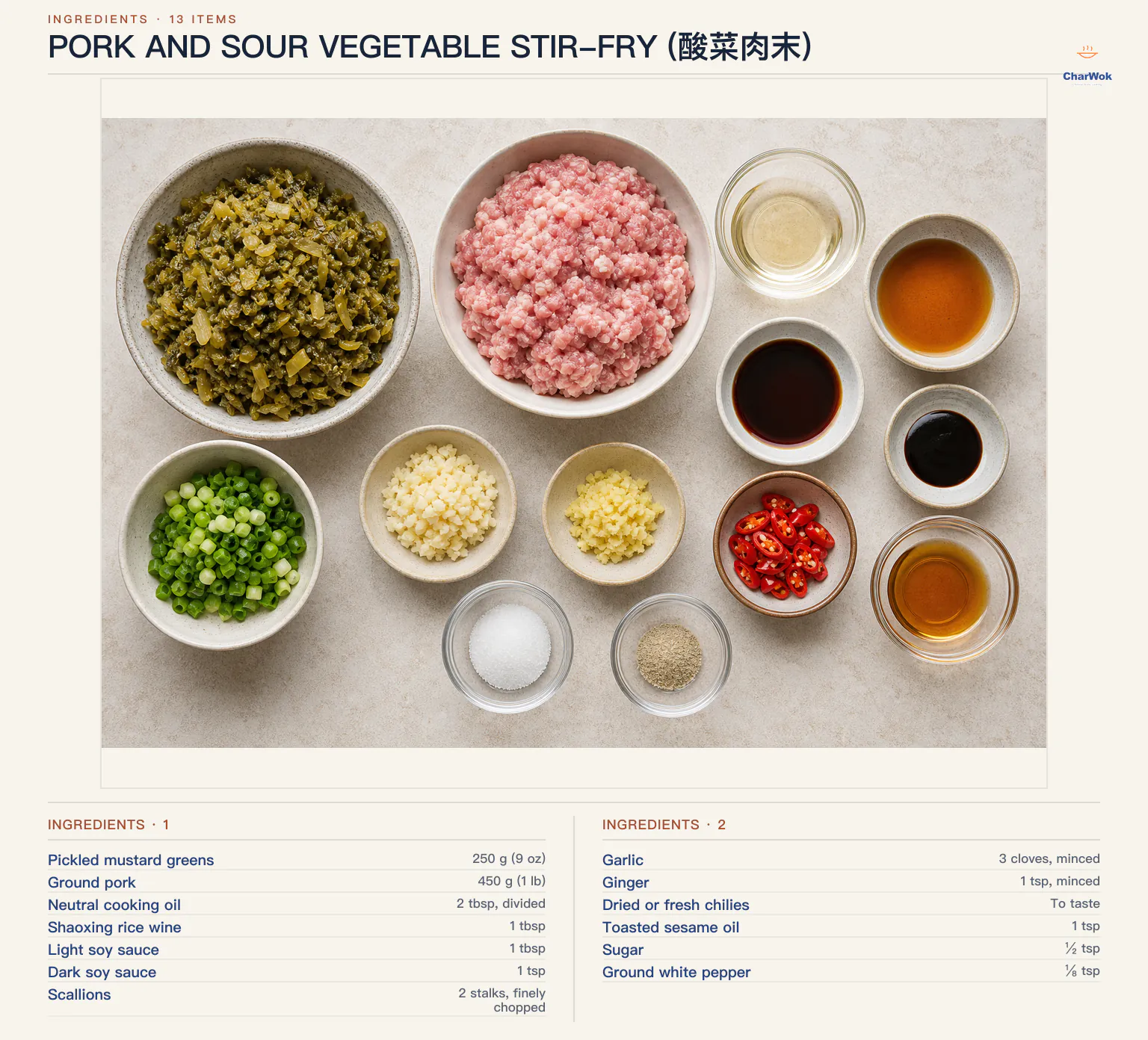
Complete ingredients for pork and sour vegetable stir-fry
| Ingredient | Amount | Notes / substitute |
|---|---|---|
| Pickled mustard greens | 250 g (9 oz) | Soak first. Sub: pickled napa, pickled radish, or quick-pickled greens |
| Ground pork | 450 g (1 lb) | Use 70/30 or fattier. Lean pork goes dry. Sub: ground beef or dark-meat chicken thigh |
| Neutral cooking oil | 2 tbsp, divided | Peanut, canola, or avocado oil |
| Shaoxing rice wine | 1 tbsp | See Shaoxing rice wine; dry sherry works |
| Light soy sauce | 1 tbsp | Salt and savoriness; the workhorse soy sauce |
| Dark soy sauce | 1 tsp | For color only; if you have none, add 1 more tsp light |
| Scallions | 2 stalks, finely chopped | Split white and green parts; reserve green for finishing |
| Garlic | 3 cloves, minced | Don't pre-mince; flavor fades fast once cut |
| Ginger | 1 tsp, minced | Fresh, peeled |
| Dried or fresh chilies | To taste | 2 dried Sichuan or Thai chilies for a gentle heat; 4 for real spice |
| Toasted sesame oil | 1 tsp | Finishing only; never as a frying oil |
| Sugar | ½ tsp | Rounds the sourness, does not sweeten the dish |
| Ground white pepper | ⅛ tsp | Warmer and cleaner than black pepper here |
Step-by-step method
- Soak, squeeze, and chop the greens. Rinse the pickled mustard greens under the tap, then drop them into a large bowl of cold water. Soak for 20 minutes for a mild brand, 2 hours for a salty one, overnight in the fridge for a fierce one. Drain, then squeeze each clump hard in your fist to push out the water. Wet greens will steam instead of fry, so really wring them out. Chop finely, about the size of a grain of rice. The finer the chop, the more it clings to the pork and the rice underneath.
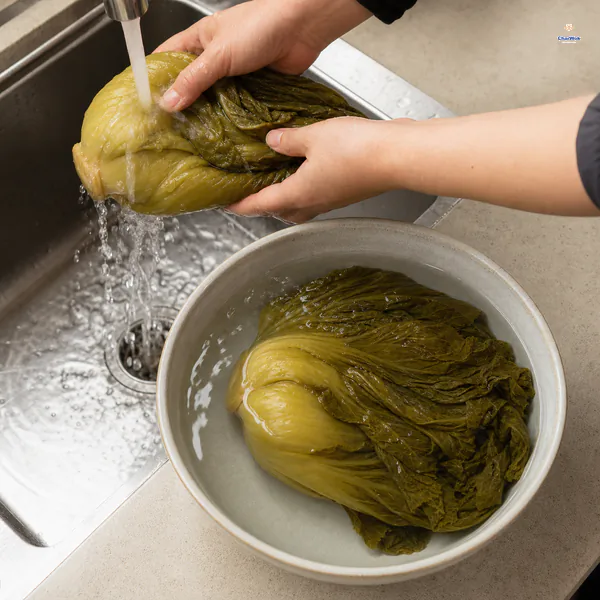
Rinse the pickled mustard greens, then submerge them in plenty of cold water for 20 minutes to two hours, or overnight for a very salty brand.
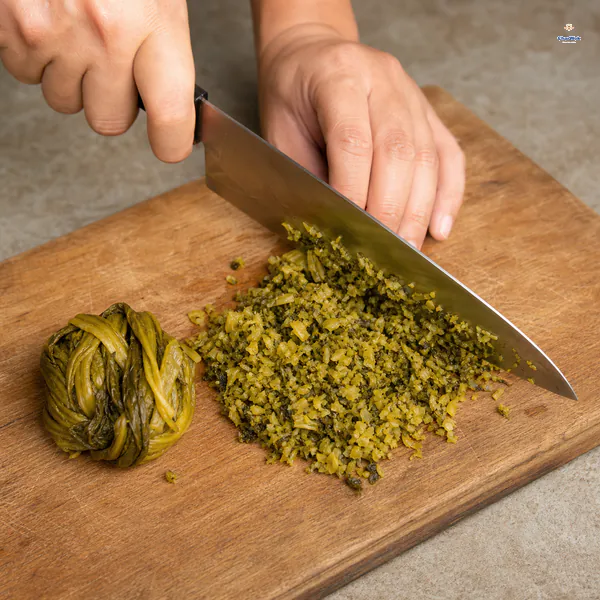
Drain and squeeze the soaked greens hard until they no longer drip, then chop them finely so they cling evenly to the pork.
- Heat the wok before the oil goes in. Set a carbon-steel or cast-iron wok over high heat until a drop of water dances and evaporates on contact. Add 1½ tablespoons of oil and swirl to coat. (If you are using nonstick, add the oil to a cold pan, then heat.) The pan must be genuinely hot or the pork will stew in its own liquid and turn gray rather than brown.
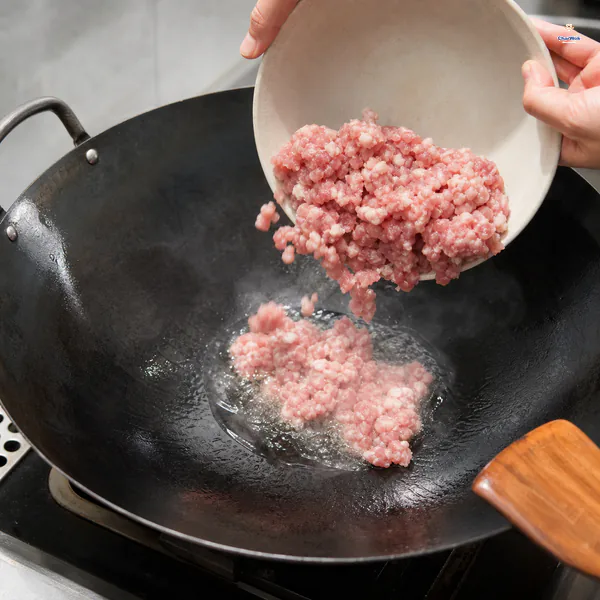
Heat the wok before adding the oil, swirl to coat, then add the ground pork while the metal is genuinely hot.
- Brown the pork, but barely. Add the ground pork and immediately break it up with a spatula. Keep the meat moving and press it against the hot metal so it crisps in spots and the fat renders. Stop the moment the last trace of pink is gone. Overcooking is the easy mistake here; the pork will cook another minute when it goes back in, so pulling it a touch early keeps it juicy.
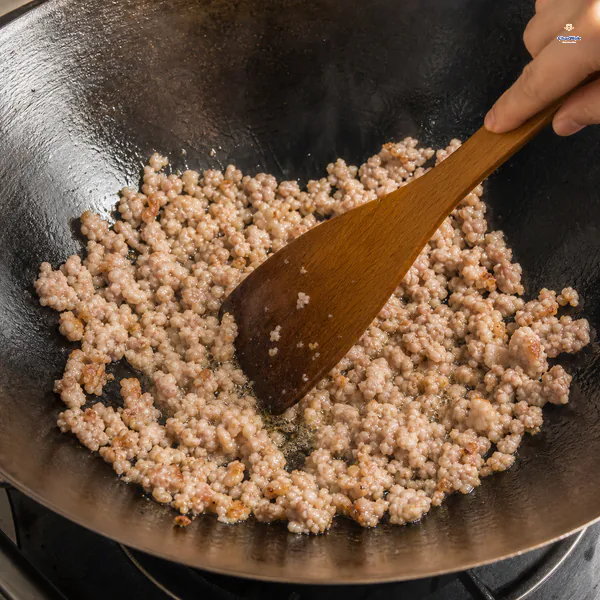
Press and toss the pork into loose crumbles, stopping as soon as the last pink disappears and a few edges begin to brown.
- Deglaze and season, then plate the meat. Splash in the wine, then the light and dark soy sauces. Stir for about 10 seconds, long enough for the alcohol to burn off and the soy sauce to coat every crumb of meat. Scoop the pork out onto a plate, leaving as much of the seasoned oil behind in the wok as you can.
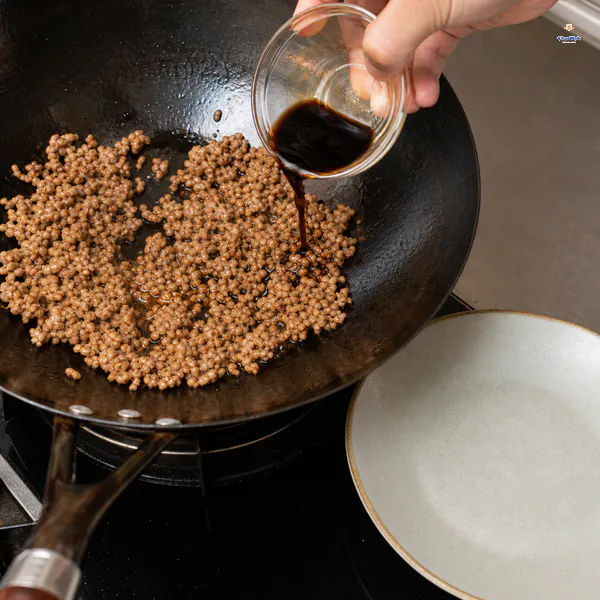
Add the Shaoxing wine and both soy sauces, stir-fry for about 10 seconds, then transfer the pork to the waiting plate.
- Bloom the aromatics. Add the remaining ½ tablespoon of oil to the wok, still over high heat. Tip in the chilies, the ginger, the garlic, and the white parts of the scallions. Toss for 15 to 20 seconds, until you can smell the garlic but before it colors. Burnt garlic turns bitter and will haunt the whole dish, so move quickly.
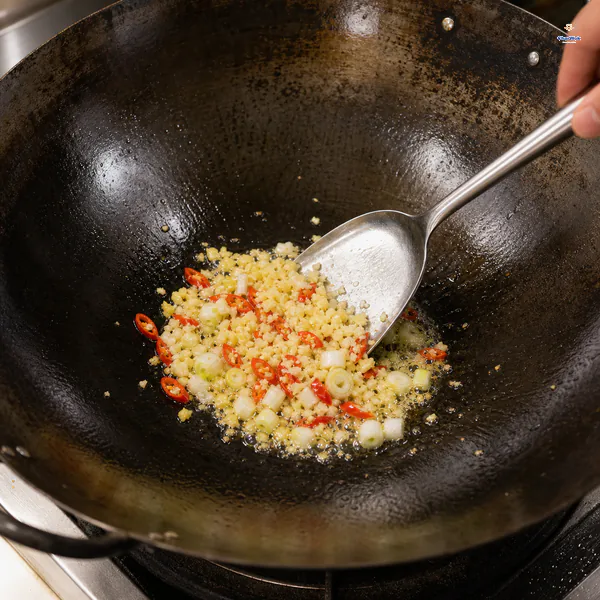
With the pork removed, add the remaining oil and sizzle the chilies, ginger, garlic and scallion whites only until fragrant.
- Cook the greens until they look almost dry. Tip in the chopped pickled greens and stir-fry hard for about 90 seconds. You are driving off the last of their moisture and waking up the fermented flavor through heat. When the greens have darkened slightly, glisten with oil, and look nearly dry in the pan, they are ready. This is also where you should taste a strand: too salty means hold back on the soy sauce already on the pork or add a splash of water; not sour enough means a few drops of rice vinegar will brighten it. Adjusting here is what separates a flat dish from a lively one.
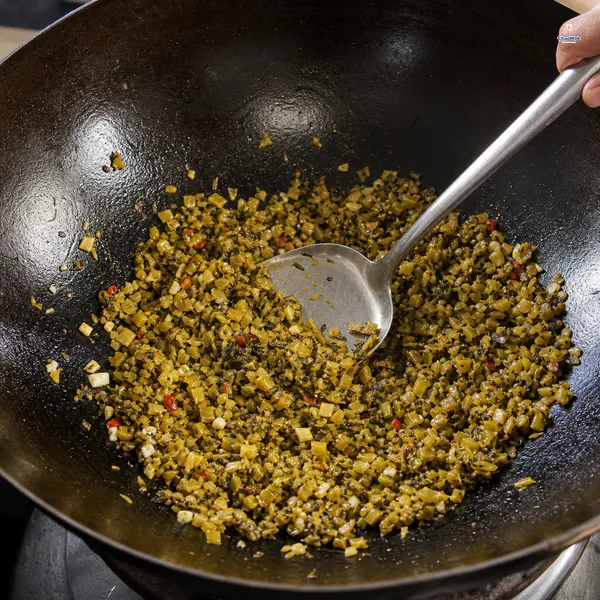
Stir-fry the chopped greens hard for about 90 seconds, until they darken slightly, glisten and leave no watery pool in the wok.
- Bring it all back together. Return the pork and any juices on the plate to the wok. Toss for about 30 seconds, just until everything is hot and combined. Off the heat, add the sesame oil, sugar, white pepper, and the green parts of the scallions. Stir, then dish out immediately. The residual heat is enough to take the raw edge off the scallion greens while keeping them bright.
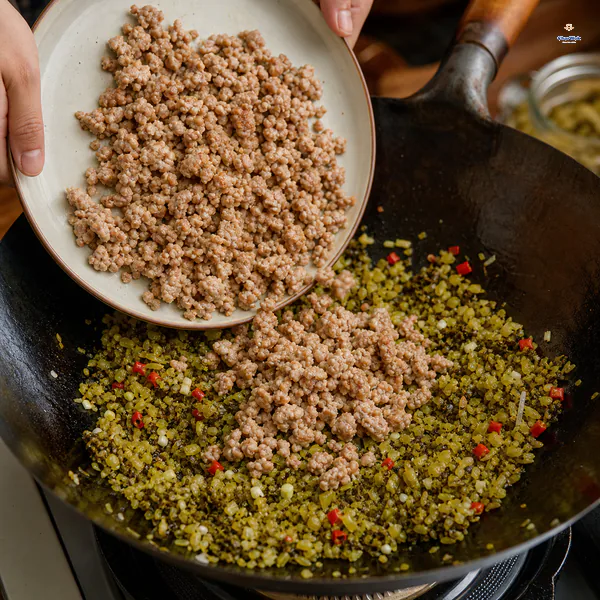
Return the pork and its juices to the nearly dry greens, then toss over high heat for about 30 seconds.
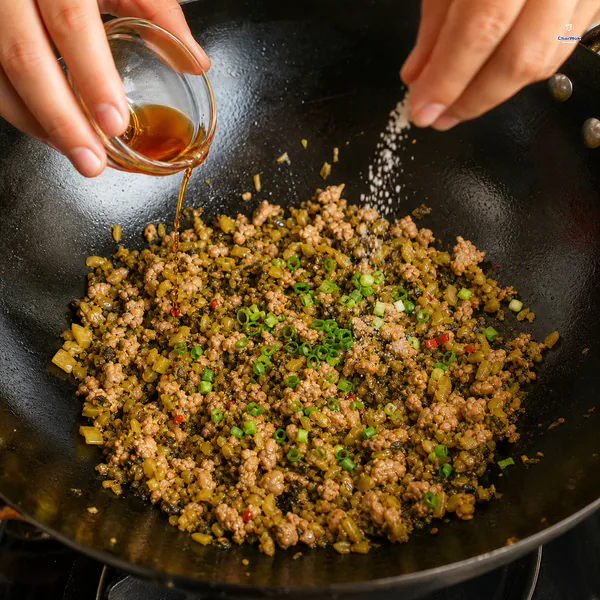
Turn off the heat, add the sesame oil, sugar, white pepper and reserved scallion greens, then stir and serve immediately.
When things go wrong, here is why
The dish is too salty. Either the greens were not soaked long enough or the brand is saltier than mine. Next time, soak longer and taste a strand before cooking. To save the batch in front of you, add a handful of plain cooked rice or a splash of water and a pinch of sugar; do not add more soy sauce.
The pork is tough and dry. You fried it too long the first time, or you used lean pork. Ground pork needs fat to stay tender in a quick stir-fry, so ask for 70/30 or grind your own from pork shoulder. Pull the meat from the wok the instant it loses its pink color; it finishes cooking later.
Everything steams instead of frying. The wok was not hot enough, the greens were not squeezed dry, or you crowded the pan. A wok full of moisture will never brown. Work in two batches if you doubled the recipe, and wring the soaked greens out like a sponge before chopping.
The garlic turned bitter. It burned. Garlic goes in after the ginger and chilies and only needs 15 to 20 seconds. If your wok runs hot, drop the heat to medium-high just for the aromatics, then bring it back up for the greens.
Variations and how to serve it
This is one of the most flexible dishes in the Chinese home-cooking repertoire. The classic move is a scoop over freshly steamed jasmine rice, stirred in so the seasoned oil flavors every grain. It also makes a superb noodle topping, the same way a savory meat sauce tops zhajiangmian, or ladled over chewy alkaline noodles.
For something more interactive, spoon it into soft folded bao buns, or let people build their own wraps with crisp lettuce leaves, the same idea as Sichuan lettuce wraps. It is also the perfect strong partner for a plain bowl of congee when you want breakfast or a light supper to have some backbone.
To push the flavor around: drop a tablespoon of chopped pickled chili in with the aromatics for heat and tang, swap the pork for ground beef to lean toward a northern profile, or stir a teaspoon of doubanjiang in with the soy sauce for a Sichuan tint. A small splash of black vinegar at the end sharpens everything without making it taste vinegary.
Storage and reheating
Cooled and refrigerated in an airtight container, leftovers keep for three days and honestly taste better the next day, once the pickle flavor has married into the pork. Reheat in a dry wok or skillet over medium-high heat just until steaming; microwave heat softens the pork's texture. This dish also freezes well in single-portion containers for up to two months, which is how I keep quick rice-bowl dinners on standby.
Frequently asked questions
Still have questions? These are the ones that come up most.
Can I skip the soaking step if I'm short on time?
You can, but only if your pickled greens taste mild on their own. Give a strand a taste straight from the bag. Mild and tangy means a quick rinse is enough; sharp and salty means at least 20 minutes in water, or the finished dish will be too salty to eat.
Is there a substitute for pickled mustard greens?
Yes. Pickled napa cabbage, pickled radish, or even quick homemade pickled greens all work. The key is to taste whatever you use first and adjust the salt downward if it is more aggressive than mustard greens.
Can I make this less spicy, or not spicy at all?
Easily. Leave the chilies out entirely for a clean sour-savory dish, or use one mild dried chili just for aroma. The sourness and the pork do most of the work, so heat is optional, not essential.
What if I can't find Shaoxing rice wine?
Dry sherry is the closest substitute. In a pinch, a splash of dry white wine or even water with a pinch of sugar will give you the deglazing effect, though the depth of flavor will be a little thinner.
Can I use ground chicken or turkey instead?
Yes, but only dark meat, and add a tablespoon of oil to the pan since poultry renders little fat. Lean ground chicken breast will come out dry and stringy no matter how carefully you cook it.
A final note from the kitchen
If you remember one thing, make it this: taste the pickle, and soak accordingly. Everything else in this dish is forgiving. The wok does most of the work, the ingredients are pantry staples, and the whole thing forgives a little improvisation. I have made it with leftover twice-cooked pork trimmings, with the seasoned oil from Hunan stir-fried pork, even folded into the filling of pork and napa dumplings when I had extra. It travels well, reheats well, and turns a plain bowl of rice or braised pork rice into something you will keep going back to. Once you internalize the soaking step, this becomes the kind of recipe you cook from memory.