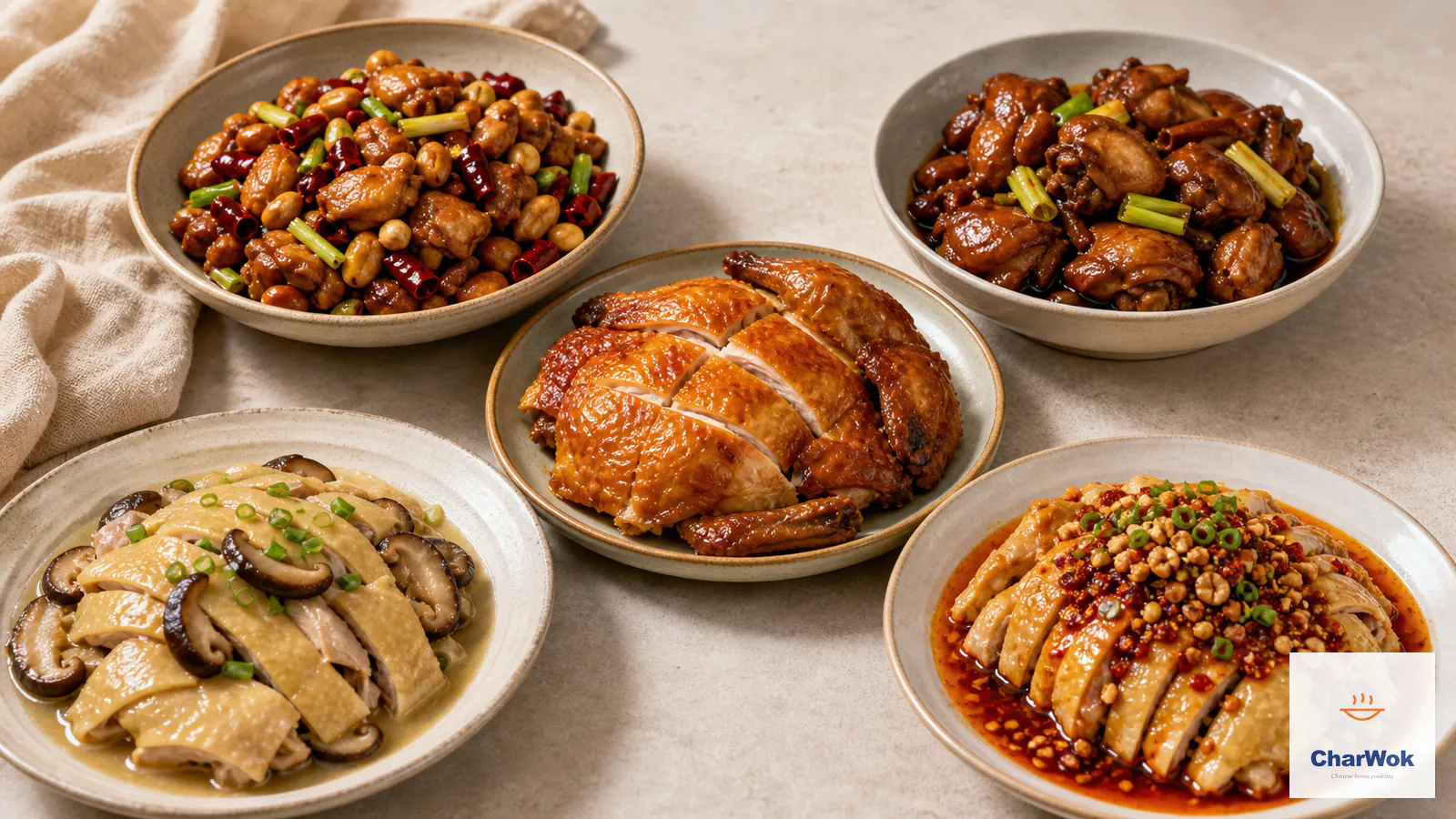
The mistake most home cooks make with Chinese chicken isn't the recipe. It's the cut. A stir-fry wants a flat thigh, sliced across the grain into even planks. A braise wants bone-in pieces that can take twenty minutes of simmering without going stringy. A steamed dish wants a whole bird or butterflied halves, never random parts thrown on a plate. Get the cut right and half the work is already done; get it wrong and no amount of sauce rescues the texture.
Chicken shows up in every regional Chinese kitchen, and the techniques travel: a Sichuan Kung Pao stir-fry shares its velveting step with a mild Cantonese chop suey; the dark, glossy master stock that gives soy sauce chicken its lacquer is the same logic behind three cup chicken and oyster sauce chicken. What changes is the flavor language and the heat. This guide walks through fifteen Chinese chicken dishes, grouped by the technique that defines them, so you can stop copying recipes and start choosing the right method for the bird in your fridge.
At a glance: Chinese chicken cookery comes down to five techniques (velveted stir-fry, soy-braise, steam, roast, and cold-poach). The make-or-break step in four of the five is a 10-to-15-minute marinade with cornstarch plus a splash of liquid (Shaoxing wine, water, or oil), which coats the protein and stops it from seizing the instant it hits the wok. Skip that and your chicken turns dry and gray every time.
What makes chicken behave in a Chinese kitchen
Three things decide how your chicken turns out: the cut, the marinade, and the temperature gap between meat and pan. Thighs carry enough fat to forgive a minute of overcooking, which is why nearly every stir-fry and braise below calls for them; breasts are lean and punish hesitation. The cornstarch slurry in a marinade isn't seasoning; it's a physical barrier. As the protein hits the wok, the starch gelatinizes into a thin coating that traps moisture and lets the sauce cling instead of running off. A teaspoon of Shaoxing rice wine in the same marinade handles the faint gaminess chicken can carry, and a few drops of sesame oil at the end of the marinade keeps the pieces from clumping.
Heat is the part people fake. A home stove will never match a restaurant jet burner, so you compensate by drying the meat thoroughly, preheating the wok until a drop of water dances, and never crowding the pan. If the chicken weeps liquid and starts boiling in its own juice instead of searing, you have lost the dish before the sauce even goes in.
The cuts and pantry you'll lean on
Fifteen Chinese chicken dishes across five cooking methods
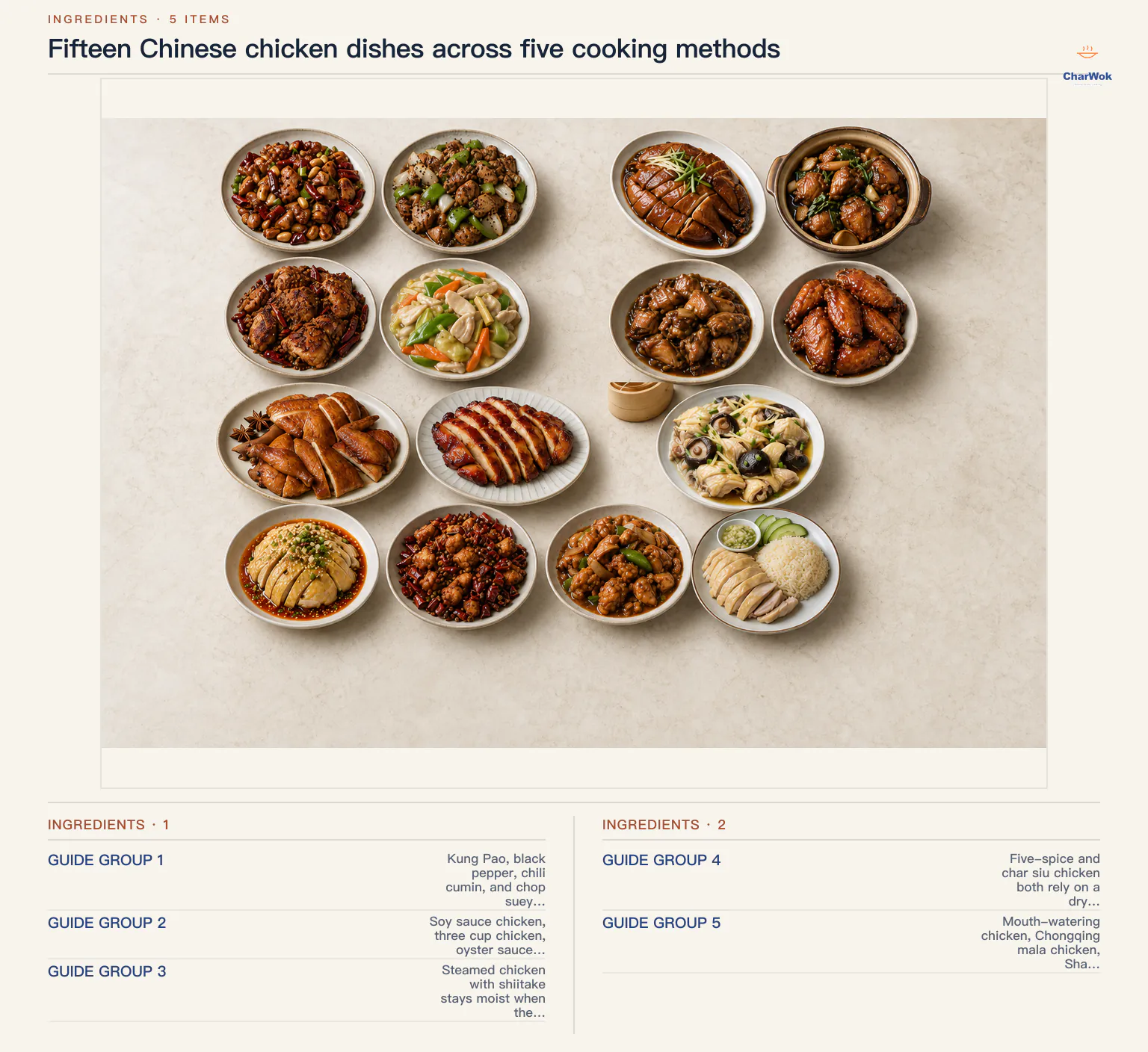
| Item | Amount (per ~500 g / 1.1 lb chicken) | Notes / substitute |
|---|---|---|
| Boneless skin-on chicken thigh | 500 g, default for stir-fries | Skin-on keeps it juicy; skinless fine if you prefer. Breast works only if sliced thin and velveted. |
| Cornstarch | 1 tsp in marinade, 1 tsp to thicken sauce | Potato starch is the Chinese-kitchen original; either thickens identically. |
| Shaoxing rice wine | 1 tbsp | Dry sherry or a splash of rice vinegar diluted with water in a pinch. |
| Light + dark soy sauce | 1 tbsp each | Read the difference before swapping: light is salty, dark adds color. |
| Neutral oil | 1–2 tbsp for the wok | Peanut, canola, or grapeseed. Save toasted oils for finishing. |
| Rock sugar | 1 small lump (optional) | Gives braises their gloss; white sugar works but is less rounded. |
| Chicken stock or water | 100–200 ml | Homemade stock rewards a braise; water is fine for quick stir-fries. |
Group one: velveted stir-fries
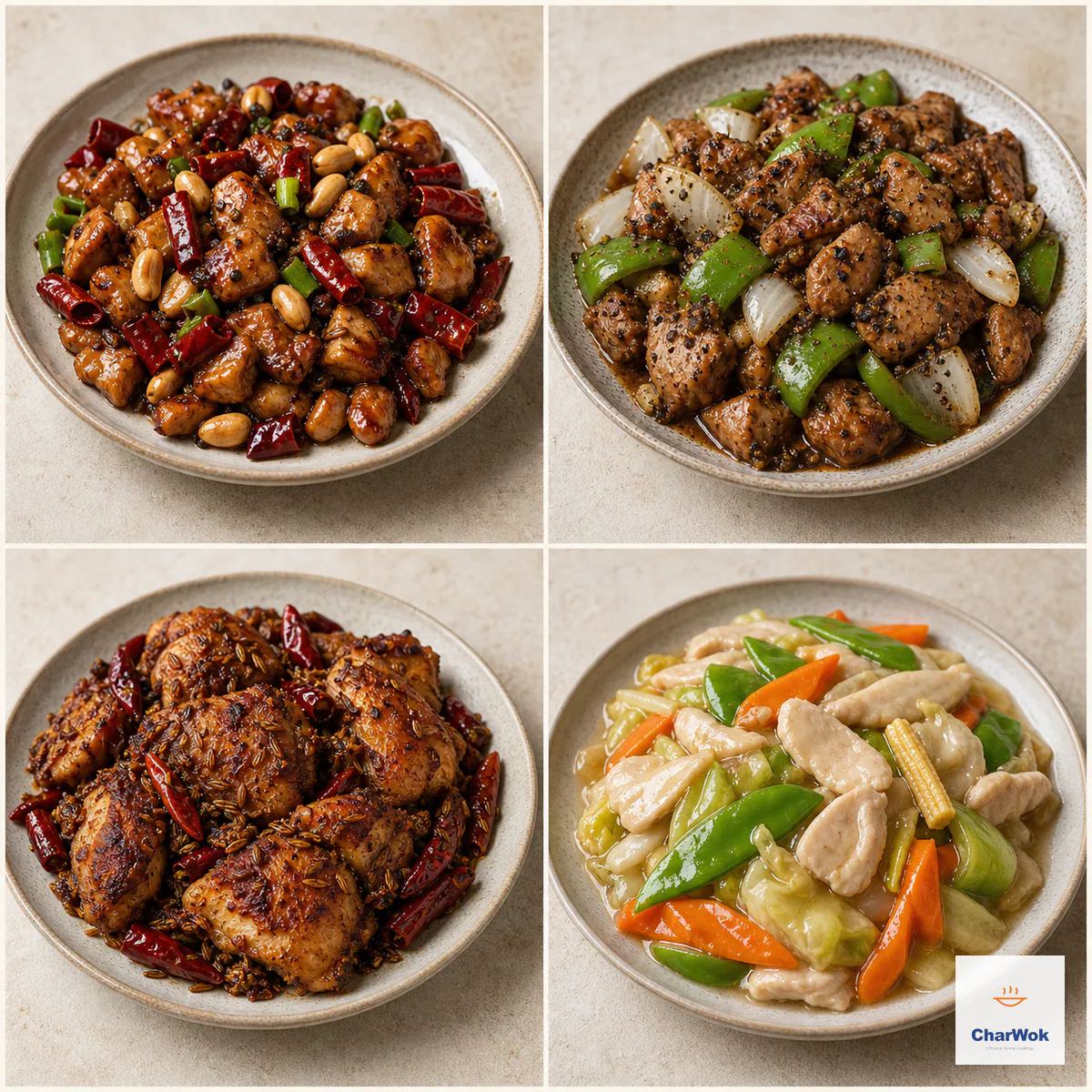
Kung Pao, black pepper, chili cumin, and chop suey all reward even cuts, a brief cornstarch marinade, and enough pan heat to sear instead of steam.
The stir-fry cluster is where most weeknight cooks live, and it's also where the source roundups hand you a recipe and walk away. The principle is simple: small, even pieces, a cornstarch marinade, a screaming-hot wok, and a sauce added at the end so it reduces onto the meat rather than steaming it. These five dishes are variations on that one idea.
Kung Pao chicken is the textbook Sichuan stir-fry and the one I'd learn first. The signature isn't the dried chilies, which add aroma more than heat; it's the balance of the sauce: equal weight of black vinegar, light soy, and sugar, punched up with Sichuan peppercorn and crunchy peanuts added off the heat so they stay crisp. Cube the thigh small, about 1.5 cm, so it cooks in under a minute once it hits the pan.
Black pepper chicken (hei jiao ji ding) trades the sweet-sour Kung Pao sauce for cracked black pepper, soy, and a hit of oyster sauce. It's the dish to make when you want something boldly savory without stocking dried chilies. The trick is coarsely cracking the peppercorns yourself; pre-ground pepper tastes flat and dusty here.
Chicken chop suey is the gentlest entry point: tender chicken and crunchy vegetables in a glossy cornstarch-thickened sauce. It's Chinese-American in spirit, but the technique (velvet the chicken, cook it alone, set it aside, stir-fry the vegetables, return everything with the sauce) is exactly what you'll use for every stir-fry that follows. Master this and the rest get easier.
Chili cumin chicken thighs go in a Xinjiang direction: boneless thigh left in larger pieces, seared hard, then tossed with whole cumin seed, dried chilies, and a pinch of ground cumin stirred in at the very end so it doesn't turn bitter. It reads like street food because that's its origin. The cumin has to bloom in hot oil for ten seconds before the chicken goes in, or the dish tastes like spice dust.
Oyster sauce chicken is the lazy Tuesday version, a shallow braise really, where oyster sauce, soy, a little sugar, and water simmer bone-in pieces until the sauce reduces to a clingy glaze. It needs almost no knife work, which is the whole appeal. Use a cut with the bone in; the collagen is what turns the sauce glossy.
Group two: the soy-braised family
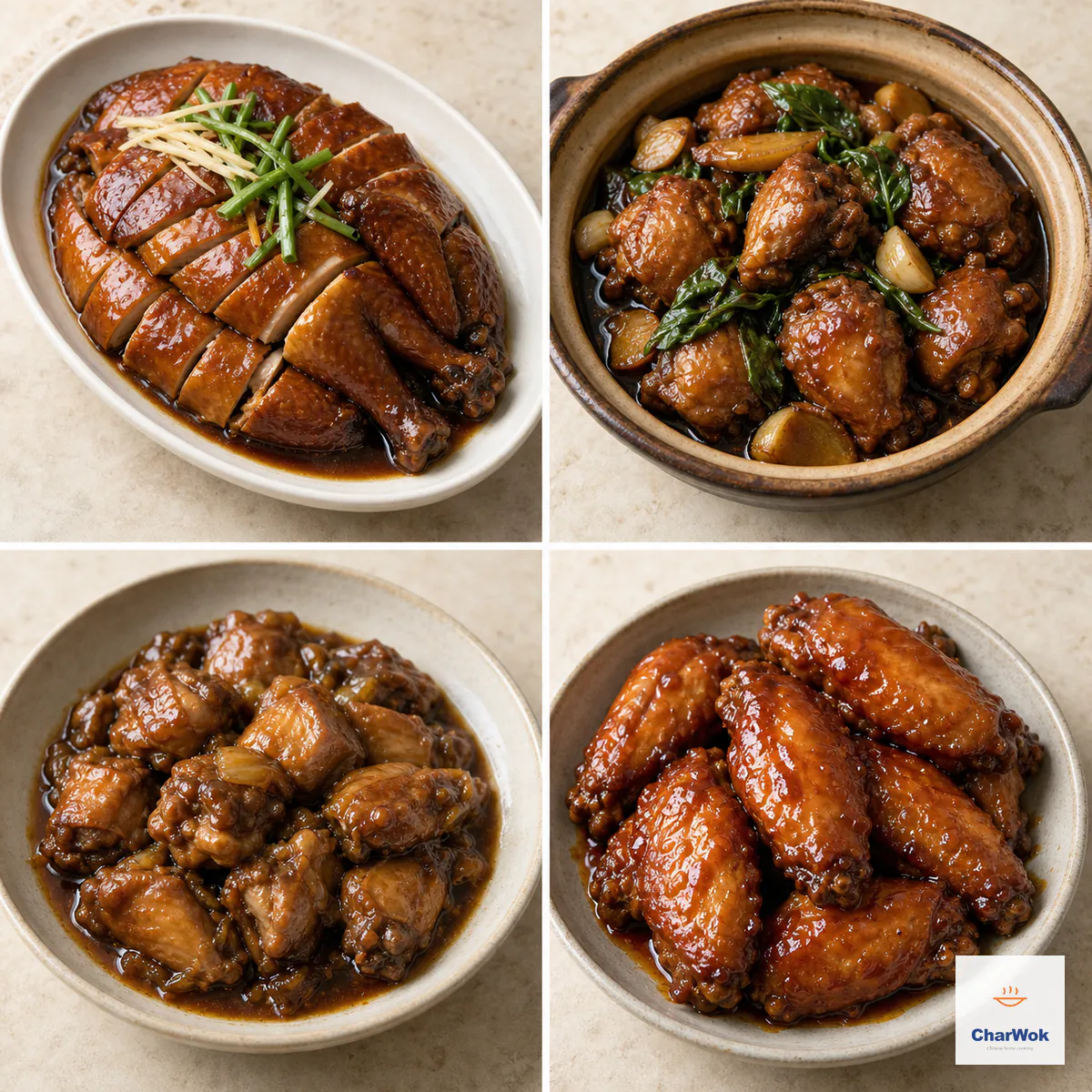
Soy sauce chicken, three cup chicken, oyster sauce chicken, and Coca-Cola wings build gloss through gentle braising or deliberate reduction.
Braising is patient cooking: a dark, slightly sweet soy-based liquid that you reduce until it coats the chicken like varnish. The same master stock logic runs through three classics here, and once you've braised one you understand all of them.
Soy sauce chicken (see yao gai) is a Cantonese whole-bird braise in a master stock built from light and dark soy, rock sugar, ginger, scallion, and aromatics. The stock is meant to be saved and re-used; it deepens with each batch. The cook itself is a bare simmer, never a boil, somewhere around 85°C (185°F), so the meat stays silky. A rolling boil tightens the fibers and turns the breast cottony. I've ruined this dish by letting the temperature creep up; a clip-on thermometer is worth the ten dollars.
Three cup chicken (san bei ji) is Taiwanese in its best-known form: equal parts soy sauce, toasted sesame oil, and rice wine (or sometimes mirin), reduced in a clay pot with plenty of ginger, garlic, and fresh basil until the sauce is thick and the chicken is lacquered. The clay pot matters less than people claim (a heavy Dutch oven works), but the basil goes in only at the end, and the sesame oil should be the toasted kind added in two stages so it doesn't scorch.
Coca-Cola chicken wings are the novelty that shouldn't work and does. The cola supplies sugar, acid, and caramel color in one pour, reducing to a sticky glaze that clings to the wings. It's a one-pan braise: brown the wings, add a splash of soy and a can of cola, simmer uncovered until the liquid is almost gone. Watch the last five minutes, because the sugar burns fast once the water is gone.
Group three: steamed chicken
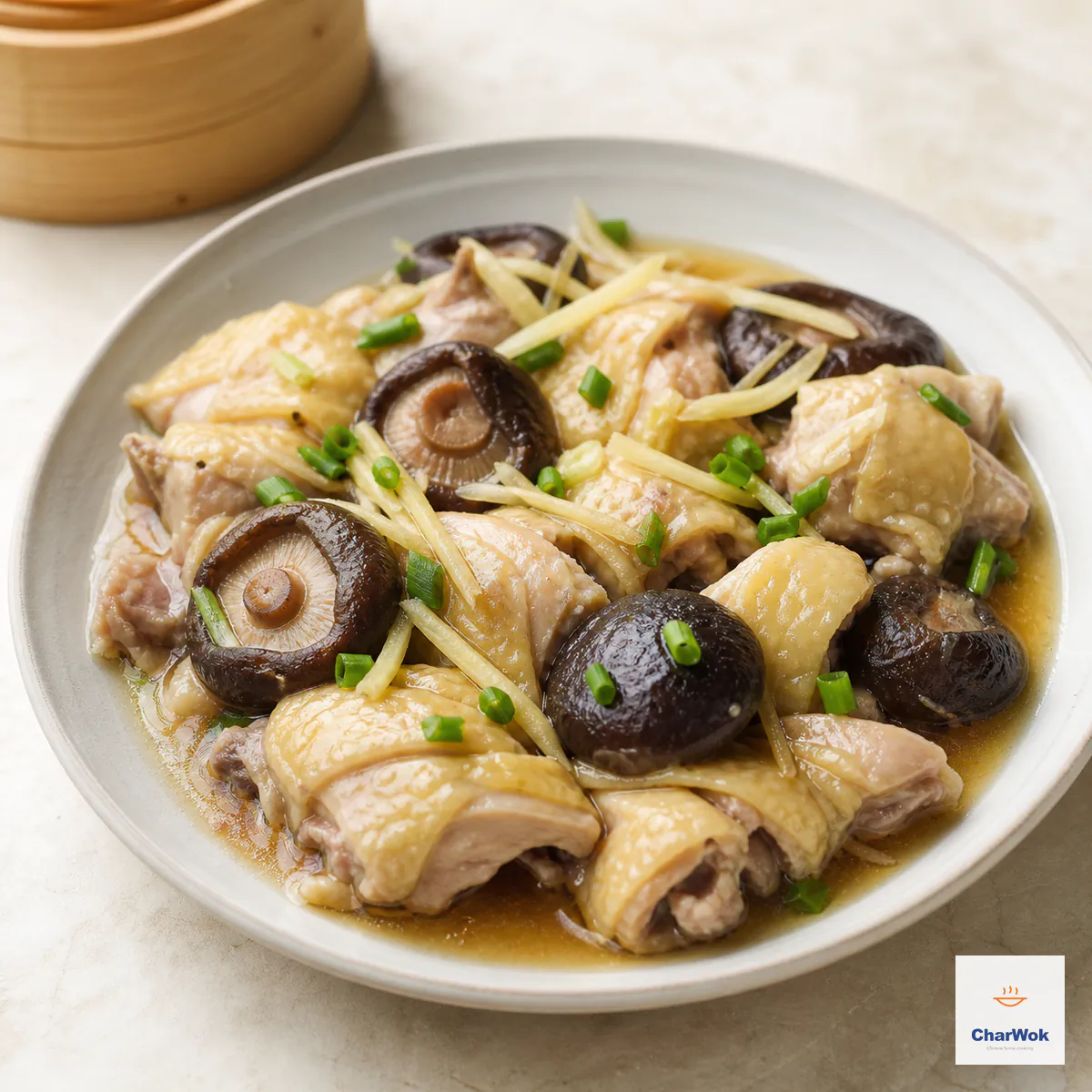
Steamed chicken with shiitake stays moist when the cut, full-steam time, and covered resting time match the size of the bone-in pieces.
Steaming is the technique home cooks reach for last and should reach for first. It asks nothing of the cook except time, and it preserves moisture better than any other method. The Cantonese tradition of steaming a whole bird and dressing it is the high road; the everyday version is marinated pieces steamed over a bed of aromatics.
Steamed chicken with shiitake mushroom marries bone-in pieces with rehydrated dried shiitake mushrooms, ginger, and a light soy marinade, then steams for about twenty minutes. The mushrooms donate an umami depth the fresh ones can't. Serve with the pooling juices spooned over rice; that liquid is the point of the dish.
The mechanics of steaming are forgiving, but two things still bite: under-steaming leaves the meat pink at the bone, and over-steaming makes it woolly. For bone-in thigh pieces, 20 minutes of full steam is the window; for a whole 1.5 kg bird, plan on 25 to 30 minutes plus a 10-minute rest, lid on, off the heat. The carryover cooking finishes the job.
Group four: roasted and air-fried
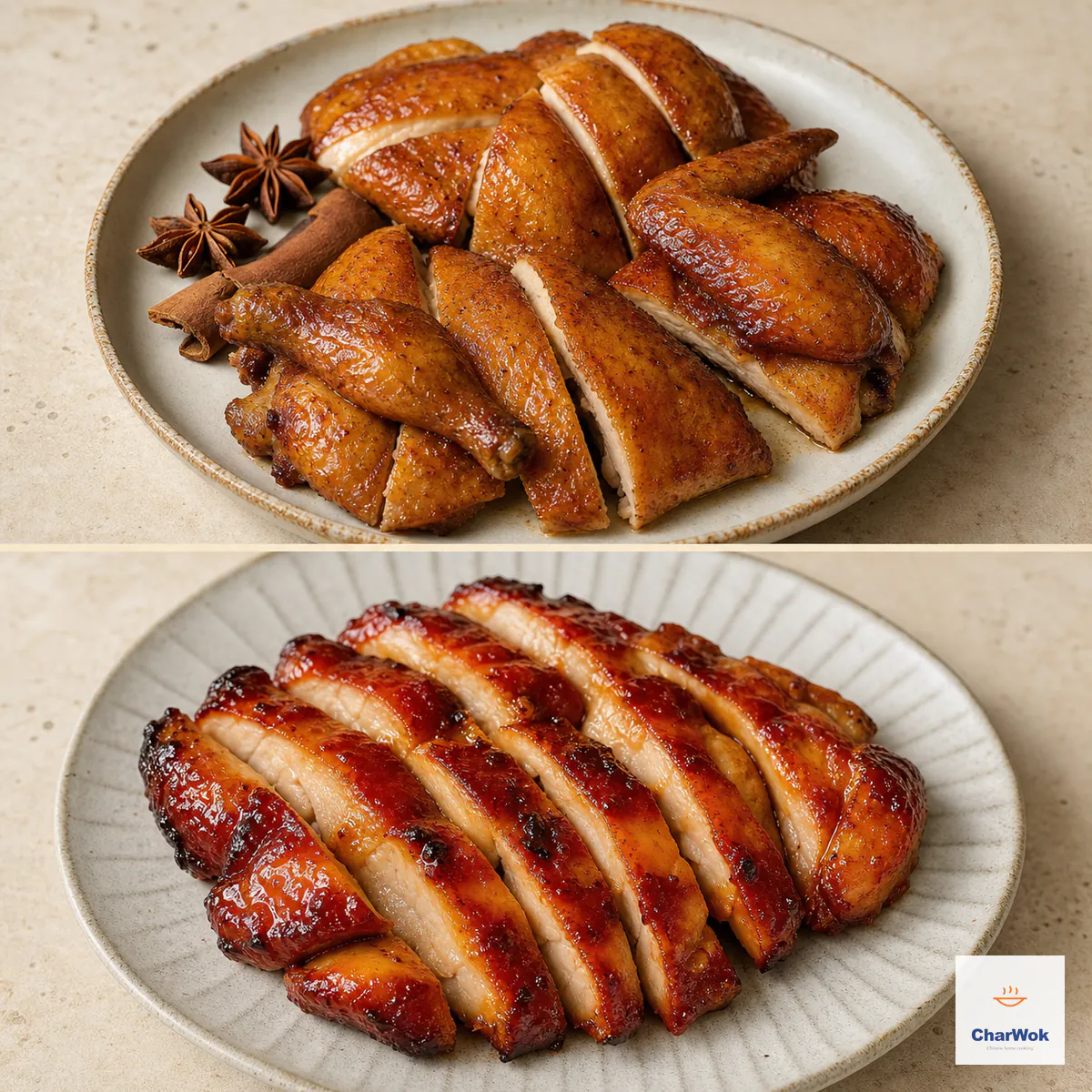
Five-spice and char siu chicken both rely on a dry surface and controlled high heat; the sugary char siu glaze belongs at the end so it caramelizes without burning.
Roasting shifts the work to the oven, which is why these recipes suit a weeknight better than they look. You're aiming for one thing: dry heat that sets the skin before the inside overcooks.
Chinese five spice chicken is a dry-marinated roast built on five spice powder, soy, and a little sugar. The trick is marinating overnight so the spice penetrates, then roasting at 200°C (400°F) with the skin exposed so it crisps. An air fryer does this beautifully in 18 to 20 minutes for thighs; a convection oven needs closer to 35 for bone-in pieces.
Char siu chicken borrows the marinade from Cantonese barbecue pork and applies it to boneless thigh or breast. The signature is the red-tinted, caramelized edges, which come from honey or maltose brushed on in the last five minutes and hit with high heat. Let the glaze set for a minute after cooking or it slides right off when you slice.
Group five: cold poached and dressed
Cold chicken dishes are the ones people forget until a hot day, then can't stop making. They reward a day of resting and a confident dressing hand.
Mouth-watering chicken (kou shui ji) is the Sichuan cold classic: a whole bird gently poached, shocked in ice water to set the skin, then chopped and drowned in a chili-oil dressing built with soy, black vinegar, sugar, garlic, and ground roasted Sichuan peppercorn. The cold shock is non-negotiable: it's what gives the skin its gelatinous snap. If your chili oil is good, this dish carries itself; if not, make the oil first.
And the wings you can't stop eating
Wings deserve their own slot because they break the velveting rule. Their fat and skin do the work that a marinade would, so you treat them more like pork: dry-brine, brown hard, then braise or fry. Beyond the cola version above, the Sichuan mala chicken (Chongqing la zi ji) approach, bite-sized pieces deep-fried until the surface shatters then tossed with heaps of dried chilies and Sichuan pepper, is the spiritual sibling for anyone who likes their chicken loud. You eat it by mining through the chilies for the crispy nuggets; the chilies are aroma, not a vegetable.
One-pot comfort: chicken rice and Sha Cha chicken
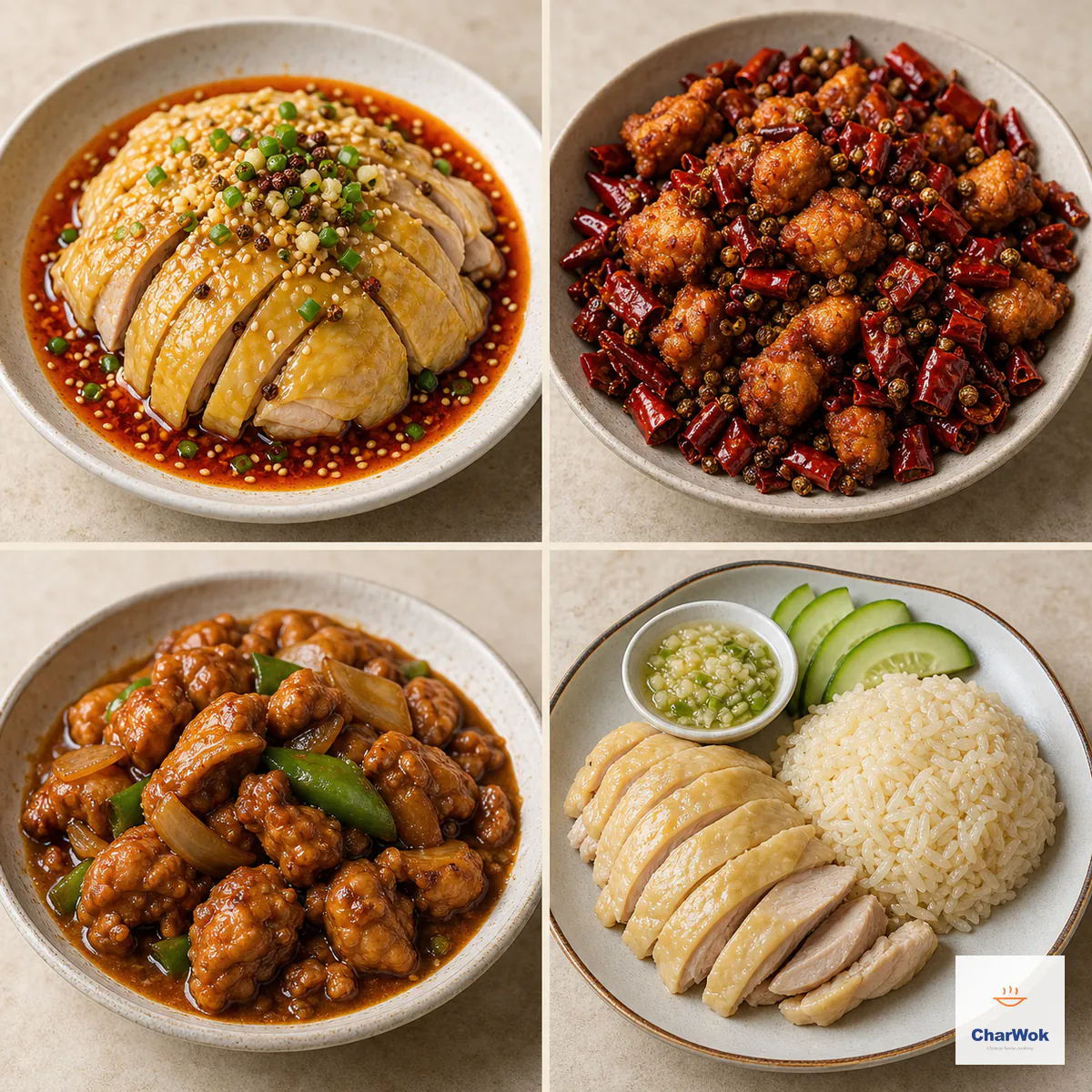
Mouth-watering chicken, Chongqing mala chicken, Sha Cha chicken, and Hainanese chicken rice finish the list with poach-and-chill, crisp-fry, quick sauce, and one-pot techniques.
Two more dishes round out the list and neither fits a single bucket. One-pot Hainanese chicken rice cooks the bird and the rice together, so the rice drinks a stock made from the chicken's own poaching liquid, ginger, and pandan or scallion. It's the rare dish where the rice outshines the meat. Use short- or medium-grain rice, toast it in chicken fat before adding liquid, and don't lift the lid for 15 minutes once it's covered.
Sha Cha chicken leans on Sha Cha sauce, a fragrant, slightly fishy Fujian-Taiwanese paste of dried shrimp, peanuts, garlic, and chilies. Sauté the paste in oil until it smells toasted, then add the chicken and a splash of water and simmer briefly. It's the fastest way to a complex flavor with the fewest ingredients on this list.
Common failures, and how I fix them
Most chicken disasters trace back to one of five mistakes. Here's what goes wrong and the concrete fix.
- Dry, gray stir-fry chicken. Cause: no cornstarch marinade, or meat added to a lukewarm pan so it boils in its own juice. Fix: marinate the sliced thigh in 1 tsp cornstarch, 1 tbsp water, and a splash of soy for 10 minutes; preheat the wok until a water droplet evaporates on contact in a second.
- Chop suey or stir-fry sauce pooling, never clinging. Cause: cornstarch added to a cold or barely warm liquid, so it never fully gelatinizes. Fix: mix the slurry into the sauce off the heat, return to a full boil for ten seconds while stirring, then pull from the heat immediately.
- Soy-braised skin tearing and meat tough. Cause: the stock was allowed to boil. Fix: hold a bare simmer (small bubbles breaking the surface, around 85°C / 185°F) and use a thermometer for the first few attempts.
- Steamed chicken pink at the bone. Cause: under-steaming or skipping the rest. Fix: add 5 minutes of steam and always rest bone-in pieces, covered, off the heat for 8 to 10 minutes so residual heat finishes the center.
- Cold chicken skin rubbery instead of gelatinous. Cause: no ice bath after poaching. Fix: plunge the poached bird into ice water for 5 minutes the moment it's done; the rapid chill sets the collagen under the skin.
Variations and pairings
Swap the protein, keep the sauce. The Kung Pao, black pepper, and oyster sauce treatments all work on shrimp, tofu, or cubes of firm pressed tofu for a vegetarian version. The three cup and cola glazes do excellent work on pork ribs and wings respectively. For a Sichuan-leaning table, pair any of the cold or stir-fried dishes with a wider Sichuan lineup; for a Cantonese table, soy-braised chicken sits happily next to steamed greens and plain rice.
Storage and reheating
Stir-fried and braised chicken keep three days in the fridge and reheat well in a covered pan with a tablespoon of water. Never the microwave on high, which turns the cornstarch coating gummy. Steamed chicken is best the day it's made; the texture dulls by day two. Cold-poached chicken actually improves after a night in the fridge as the dressing soaks in. Master stocks for soy sauce chicken can be frozen in a container for months and re-boiled for ten minutes before each use.
Related recipes & further reading
Once the five techniques feel familiar, these chicken dishes stretch the same skills in new directions, and the collections below pull the rest of the kitchen into one place.
- A clean ginger ginger chicken stir-fry that leans on sliced ginger and scallion for a mild, fragrant weeknight dinner.
- Hunan chicken, a smoky, chili-forward stir-fry for when you want more fire than Kung Pao.
- Cashew chicken stir-fry, where the velveted thigh and the sauce mirror chop suey but the cashews carry the crunch.
- Chicken with black bean sauce applies the same velveting step to fermented black beans and peppers.
- Scallion oil chicken, a Cantonese cold dish where hot oil is poured over scallions and ginger to bloom the dressing.
- Drunken chicken rests poached bird in Shaoxing wine for a cold, fragrant classic worth a day of patience.
- The Sichuan cold classic bang bang chicken uses the same poach-and-shock method as mouth-watering chicken, with a sesame-forward sauce.
- Salt baked chicken steams the bird inside a salt crust, another forgiving technique for home cooks.
- For a meat swap on the cola and three cup glazes, spicy orange beef takes the same reduce-to-a-glaze logic to flank steak.
- For more of the table at once, 12 must-try authentic Chinese recipes pulls a wider starter set across regions.
- The site-wide core cooking skills guide connects chicken dishes with braises, wok work, and dough.
- And for context on how these dishes travel across regions, a culinary tour of China follows the food from one kitchen to the next.
Questions home cooks actually ask
A quick round of the things that come up most often once you start cooking from this list.
Can I substitute chicken breast for thigh?
You can, but only for the quick stir-fries and only if you slice it thin and velvet it for the full ten minutes. For braises and steamed dishes, breast dries out; thigh is the better call.
What's velveting, and is it really necessary?
It's a short marinade of cornstarch and liquid that coats the protein so it stays juicy and the sauce clings. For stir-fries it's the difference between restaurant texture and home texture; skip it and the chicken seizes and turns dry.
Do I need a wok, or will a skillet do?
A wide heavy skillet works for everything here, especially on a home burner. A carbon-steel wok helps when you have real heat, but it's not a requirement. Avoid non-stick for the high-heat stir-fries; it can't get hot enough.
How long can I keep a master stock?
Indefinitely, if you re-boil it for ten minutes before each use and store it frozen between batches. Fridge storage is fine for a week; longer than that, freeze it.
If you take one thing from this list, let it be the marinade step. Nearly every dish above either succeeds or stalls on whether you gave the chicken its ten minutes of cornstarch and liquid first. Nail that and the fifteen recipes here stop being fifteen separate sets of instructions and start being five techniques wearing different flavors.