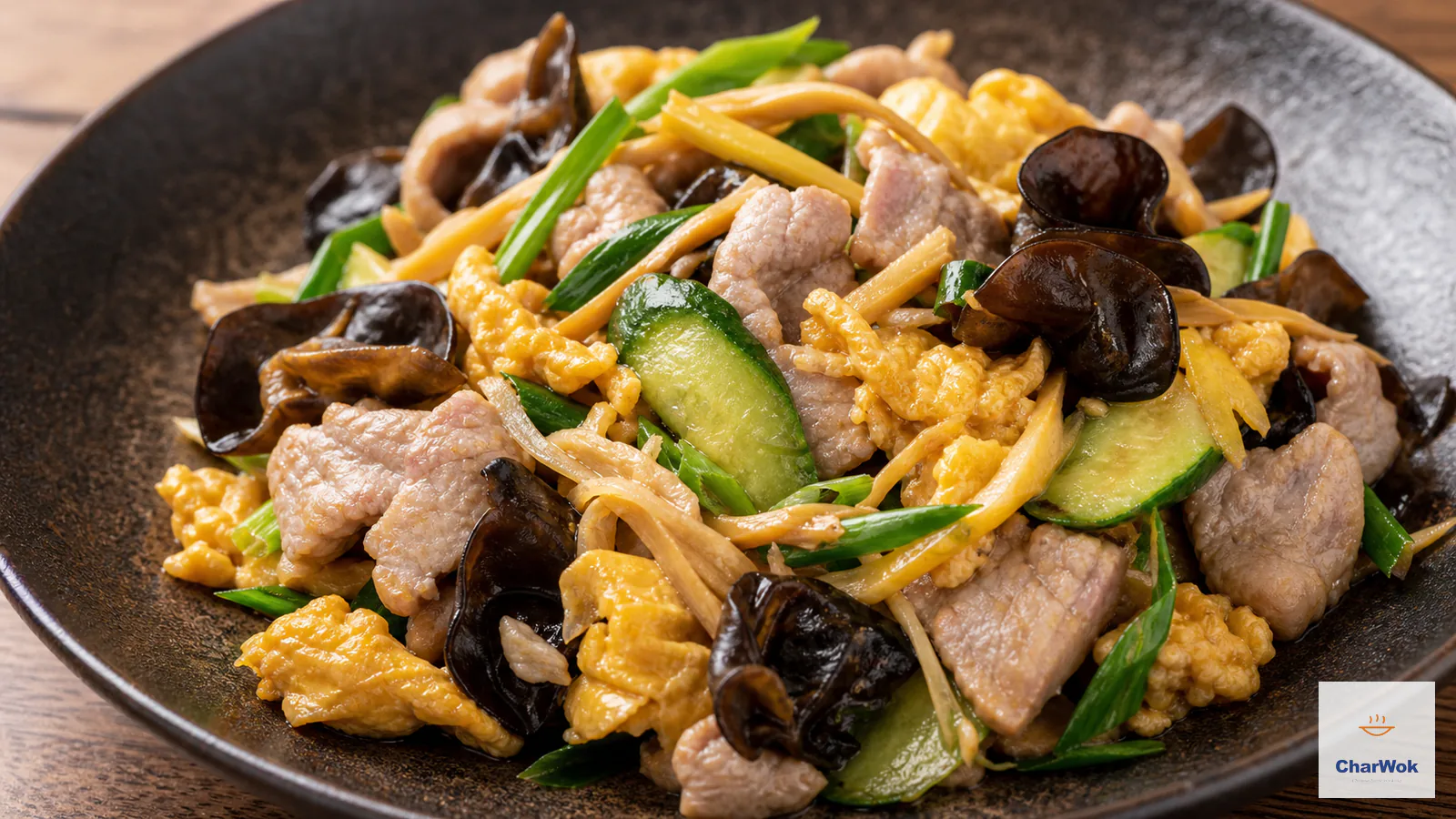
Moo Shu Pork shows what a "light hand" means in a northern Chinese stir-fry. Unlike the heavy brown-gravy version found on many American takeout menus, Mù Xī Ròu (木樨肉) is a dry stir-fry of eggs, pork, wood ear mushroom, lily buds, and cucumber, with each ingredient keeping its own character. The common problems—rubbery eggs, gray pork, and a flat-tasting result—come down to timing, so the method below cooks each component separately before a brief final toss.
Cook egg, pork, and vegetables in three separate passes, then reunite them for ten seconds at the end. Use 150 g pork to 3 eggs, season with only light soy sauce, salt, and white pepper, and pull each component out of the wok the instant it is done. The whole cook takes about 8 minutes once the pan is hot.
What Moo Shu Pork really is
The name "moo shu" is poetic, not literal. Mù Xī means sweet osmanthus, the tiny pale yellow flowers that bloom in autumn. Bits of scrambled egg scattered through the dish are said to look like those flowers, and once you hear that you cannot unsee it. The dish is a classic of Shandong cuisine (Lǔ Cài), the northern school that prizes clear, layered flavors over chili heat and that treats eggs as a first-class ingredient rather than an afterthought.
Here is the part that confuses people who only know the restaurant version. Authentic Moo Shu Pork has no hoisin, no bean sprouts, no cabbage slaw, and no thick sauce. If you have eaten shrimp with lobster sauce or other takeout classics built on a cornstarch-thickened gravy, you are looking for the wrong texture here. The wok should look almost dry when you plate the dish. That dryness is the point. It lets the sweet egg, the mineral crunch of wood ear mushroom, and the clean bite of cucumber register separately on your tongue.
The principle behind the three-stage cook
Eggs, pork, and vegetables all want different things from the pan. Eggs want fierce heat for a few seconds, then immediate removal, or they turn spongy and dry. Pork wants a fast sear so the surface sets and the juices stay inside, then removal before the fibers tighten. Vegetables want a gentler saute to wilt and pick up aromatic flavor without collapsing into mush. If you dump everything in together, the eggs overcook while the cucumber softens, the pork steams in vegetable liquid instead of searing, and you end up with a homogeneous pile.
The fix is to cook each component alone and hold it on a plate, then bring them back together only long enough to warm through and grab the seasoning. This is the same logic behind a clean tomato egg stir-fry and the egg step in Singapore rice noodles. Once you internalize "cook, remove, combine," this dish stops being fussy and starts being fast.
Ingredients
Moo Shu Pork ingredients at a glance
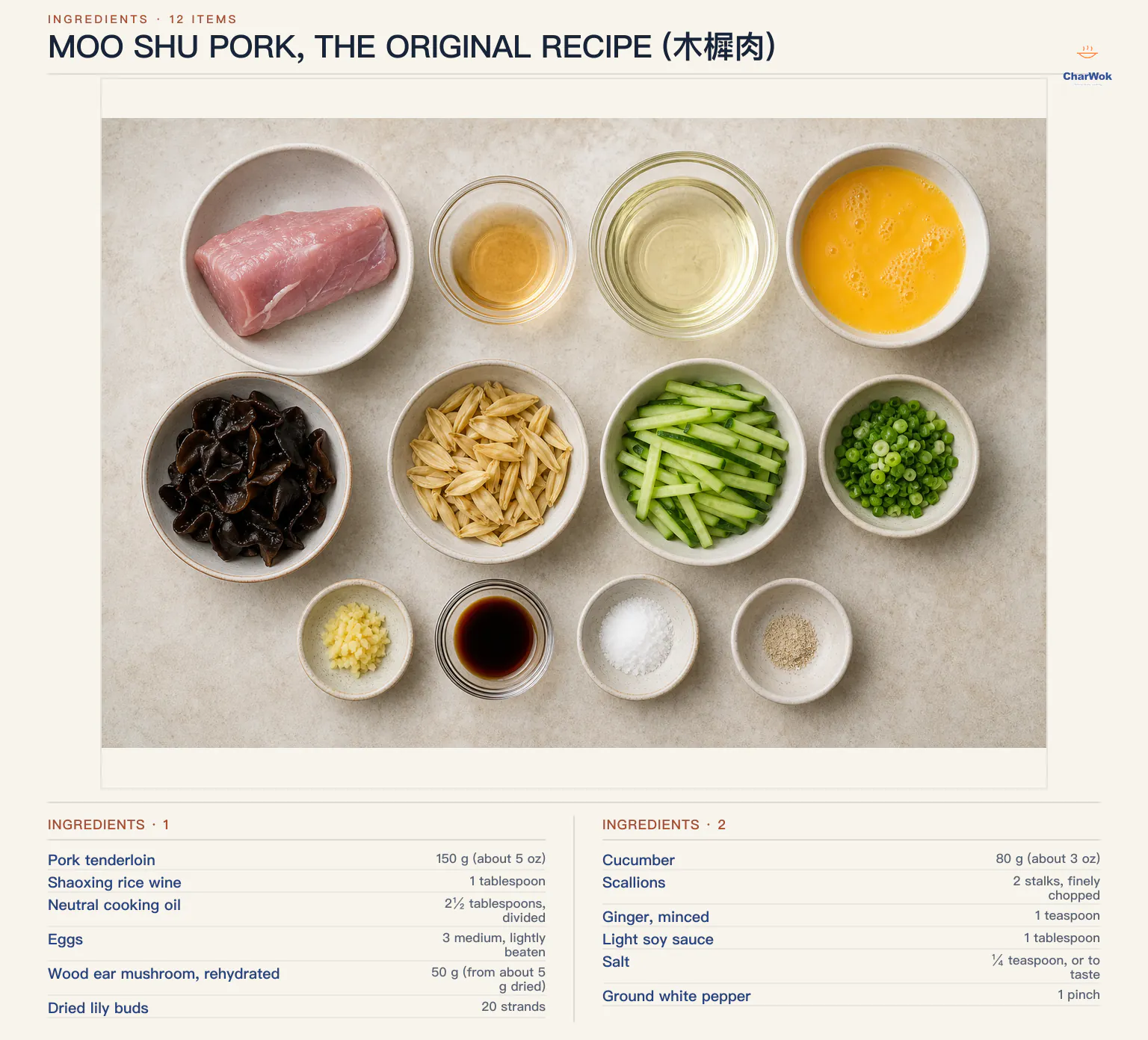
Quantities below serve two as a main with rice, or four as one dish in a larger spread. Use a kitchen scale for the pork and the cucumber; eyeballing them is where most of the texture problems start.
| Ingredient | Amount | Notes / substitute |
|---|---|---|
| Pork tenderloin | 150 g (about 5 oz) | Tenderloin is the easy choice because it needs no tenderizing. Shoulder or loin also work, but marinate them first (see the troubleshooting section). |
| Shaoxing rice wine | 1 tablespoon | Real Shaoxing rice wine, not "cooking wine." Dry sherry is the closest Western substitute. |
| Neutral cooking oil | 2½ tablespoons, divided | Peanut, canola, or grapeseed. You will use it in three separate pours. |
| Eggs | 3 medium, lightly beaten | Or 2 large eggs. Egg is co-star here, not garnish, so do not cut this quantity. |
| Wood ear mushroom, rehydrated | 50 g (from about 5 g dried) | Soak in warm water 10 minutes until fully expanded, then tear into bite-size pieces. See how to rehydrate wood ear. |
| Dried lily buds | 20 strands | Soak in warm water 30 minutes, then cut in half crosswise. If you cannot find them, substitute a small handful of julienned bamboo shoot or just leave them out. |
| Cucumber | 80 g (about 3 oz) | English cucumber preferred for fewer seeds. Slice on a diagonal, then cut into thin planks. |
| Scallions | 2 stalks, finely chopped | Both white and pale green parts. |
| Ginger, minced | 1 teaspoon | Fresh, grated on a Microplane for the most even mince. |
| Light soy sauce | 1 tablespoon | Light, not dark. Read the difference in this light vs. dark soy sauce guide. |
| Salt | ¼ teaspoon, or to taste | Kosher or fine sea salt. |
| Ground white pepper | 1 pinch | White pepper, not black. It adds warmth without dark flecks. |
Step-by-step method
Before you turn on the stove, get every ingredient prepped and within arm's reach. A carbon-steel wok is ideal, but a wide skillet works if that is what you have. The cook moves fast enough that you cannot stop to slice cucumber mid-stir.
- Slice the pork thin and coat with wine. Cut the tenderloin across the grain into slices about 3 mm (⅛ inch) thick. If the knife is dragging, freeze the pork for 45 to 60 minutes until it is firm but not solid, then slice. Put the slices in a bowl, add the Shaoxing wine, and mix until the liquid is fully absorbed. The wine does two jobs: a little flavor, and it slightly loosens the protein so the meat stays tender.
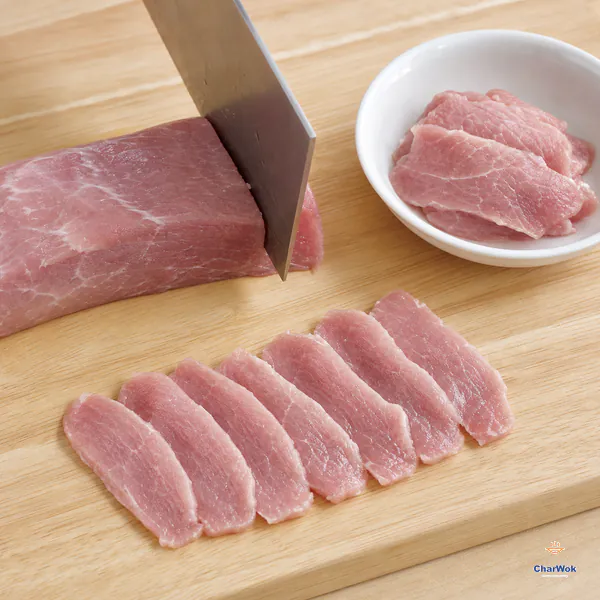
Slice the tenderloin across the grain about 3 millimetres thick; partially freeze it if needed, then mix with Shaoxing wine until no liquid remains.
- Scramble the egg, then pull it out. Heat 1 tablespoon of oil gradually over medium-high to about 175–180°C / 350–355°F, fluid and shimmering but not smoking, then pour in the beaten egg. Stay beside the stove; if the oil smokes, turn off the burner and let it cool before continuing. The egg edges should puff and bubble within seconds. Tilt the pan and push the set egg to one side so the runny center flows onto the hot metal. When the egg is about 80 percent set, break it into rough bite-size curds and immediately transfer to a plate. It should still look glossy.
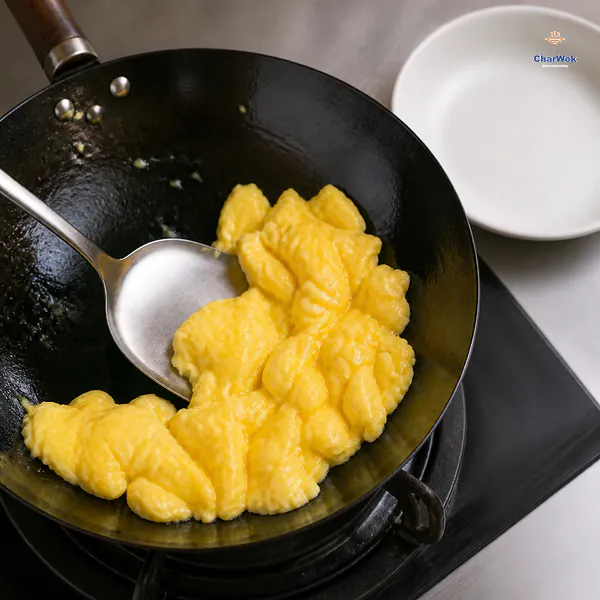
Heat the oil to about 175–180°C, shimmering but not smoking; push the set egg inward and transfer the large glossy curds at about 80 percent set.
- Sear the pork briefly. Add another 1 tablespoon of oil to the wok. Add the pork in a single layer and let it sit for a few seconds before stirring, so the underside colors. Then stir and separate the slices. The moment the pink is gone and the meat is pale, transfer it to the plate with the egg. Overcooking by even 30 seconds turns tenderloin chalky.
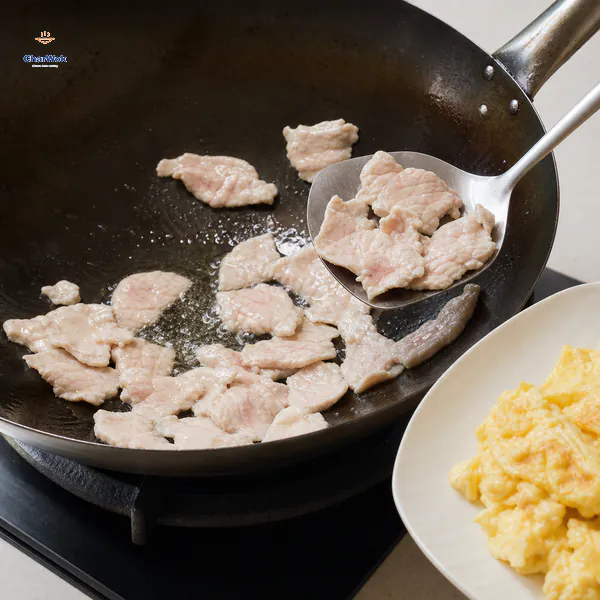
Sear the pork in one layer and remove the separated slices while still slightly underdone; this is a partial cook, and the pork returns for a temperature-checked finish.
- Sweat the aromatics and vegetables. Pour the remaining ½ tablespoon of oil into the wok. Add the scallions and ginger and stir for about 20 seconds, until you can smell the ginger. Add the wood ear and lily buds and stir for 30 seconds. They are already cooked from soaking, so this step is about warming them and picking up the scallion-ginger oil. Add the cucumber and stir just until it begins to wilt at the edges, roughly 20 to 30 seconds.
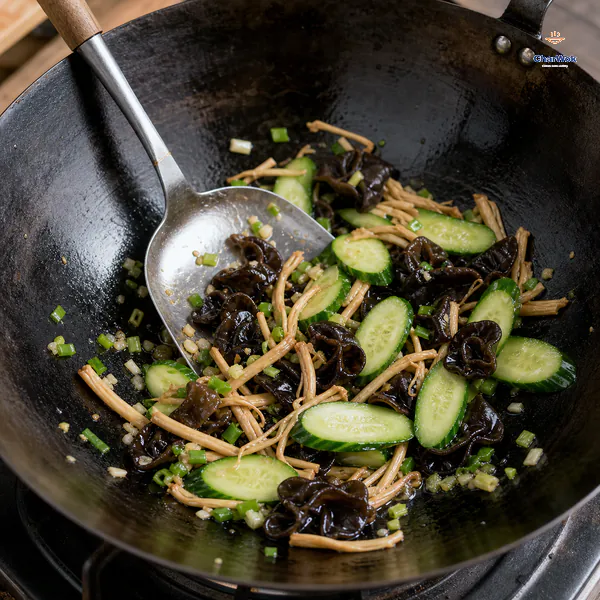
Fragrance the scallion and ginger, warm the wood ear and lily buds for 30 seconds, then stir the cucumber only until its edges begin to soften.
- Reunite and season. Return the egg and pork to the wok. Add the light soy sauce, salt, and white pepper, then toss briefly to distribute the seasoning. Check the thickest pork slice reaches at least 63°C / 145°F, transfer everything to a platter, and let the pork rest for 3 minutes before eating. Do not rely on a fixed ten seconds or color alone.
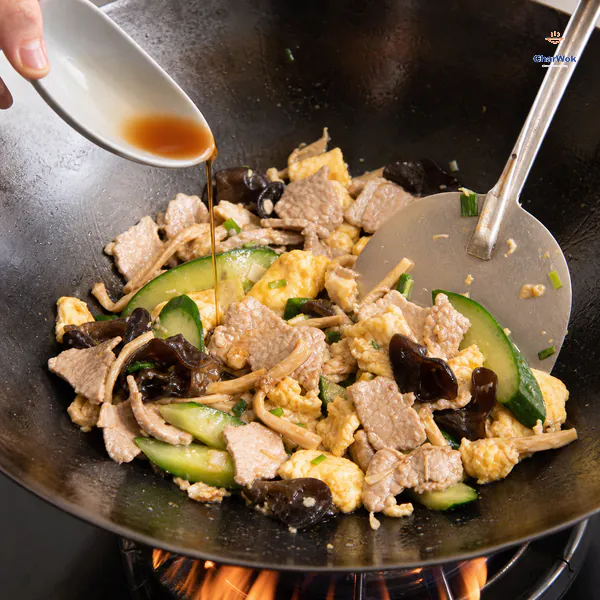
Return the pork and egg, season and toss briefly; confirm the thickest pork slice reaches 63°C, then plate and rest for 3 minutes before eating.
Oil handling follows the U.S. Fire Administration cooking guidance. Pork temperature and rest time follow the FoodSafety.gov safe minimum temperature chart.
What goes wrong, and how to fix it
Use the symptoms below to identify which stage needs adjusting; each fix targets one component rather than changing the entire recipe.
The eggs are tough and dry. The oil may not have been hot enough, or the eggs stayed in too long. Add them when the oil shimmers, before it smokes, and remove them while they still look slightly underdone on top. Wet, glossy curds are correct. Keep the pan attended whenever it is heating.
The pork is chewy or stringy. Either the slices were too thick, or the cut was wrong. Tenderloin sliced 3 mm thin needs no marinade. If you used shoulder or loin, the fibers are longer and the meat is leaner, so it tightens up. Fix it next time by velveting: toss the sliced pork with 1 teaspoon each of water and cornstarch plus a splash of soy sauce, rest 10 minutes, then cook. It is the same trick that keeps a stir-fry like Hunan pork tender.
The dish tastes bland. You probably expected a sauce and held back on salt. There is no sauce to carry flavor here, so the seasoning has to land directly on the food. Taste a piece of egg at the end. If it needs more, add salt by the pinch and toss for a few more seconds. Do not reach for soy sauce at the end, it darkens the dish and makes it taste like a different recipe.
The cucumber collapsed into water. It went in too early or stayed too long. Cucumber should be in the wok for under a minute total. If your cucumber is very watery, seed it before slicing. Cooked cucumber is a real flavor, gently sweet and a little grassy, but only if it keeps some structure.
The wood ear is rubbery or has a gritty bite. It was not fully rehydrated, or the hard knob where it attached to the log was not trimmed. Soak until every piece is soft and bouncy, pinch off any tough nub, and rinse well. Under-soaked wood ear is the one ingredient in this dish that can genuinely ruin a bite.
Variations and how to serve it
The classic northern way is to eat Moo Shu Pork over plain steamed jasmine rice, alongside a soup like hot and sour soup and one vegetable dish. It is also excellent folded into spring pancakes (chun bing), the thin wheat wrappers used for Peking duck, which is how the restaurant version in the West drifted toward the wrap-and-hoisin format. If you want that wrap experience at home without losing the clean flavor, serve the pancakes on the side and let people build their own.
For variation, swap the cucumber for thinly sliced celery, carrot matchsticks, or baby spinach added at the very end. If you want a richer, sweeter note closer to the Beijing-style Peking shredded pork with sweet bean sauce, you can add a teaspoon of sweet bean paste (tian mian jiang) to the wok at the seasoning step, but know that you are leaving the original Shandong template behind. A spoon of chili oil on the side is a welcome addition for anyone who wants heat without changing the dish for everyone else.
Storage and reheating
Moo Shu Pork is best cooked to order, and this is one of those dishes where reheating genuinely hurts. The eggs continue to firm up and the cucumber weeps, so leftovers taste duller than what went into the container. If you must, refrigerate for up to one day and reheat briefly in a dry pan over medium-high heat, just until warm, never in the microwave. The microwave turns the egg into a rubber band.
You can, however, prep ahead. Rehydrate the wood ear and lily buds, slice the pork and cucumber, and chop the scallions and ginger up to a day in advance and keep them covered in the fridge. With the mise en place done, the actual cook is genuinely under ten minutes, which is why this dish earns a spot in a weeknight rotation.
Frequently asked questions
A few questions come up again and again, so here are short answers. The full reasoning is in the sections above.
Do I really need to marinate the pork?
Not if you use tenderloin. Just mix it with Shaoxing wine and slice it thin. Marinating with cornstarch and water (velveting) is only needed for leaner, tougher cuts like loin or shoulder.
Can I use fresh mushrooms instead of dried wood ear?
You can, but the texture changes. Fresh shiitake or oyster mushrooms bring more flavor and less crunch. Wood ear is prized specifically for its crisp, almost cartilaginous bite, which nothing else really replicates.
Why is there no sauce in this recipe?
Because the original Shandong version is a dry stir-fry by design. The seasoning clings to the ingredients instead of pooling. If you want a saucier, wrap-friendly version, add a teaspoon of sweet bean paste or a thin cornstarch slurry at the end, but expect a different dish.
Is the American takeout version wrong?
Not wrong, just a different dish that borrowed the name. It leans on hoisin, bean sprouts, and pancakes, and is its own thing. If that is the flavor you remember, lean into the sweet bean paste variation above.