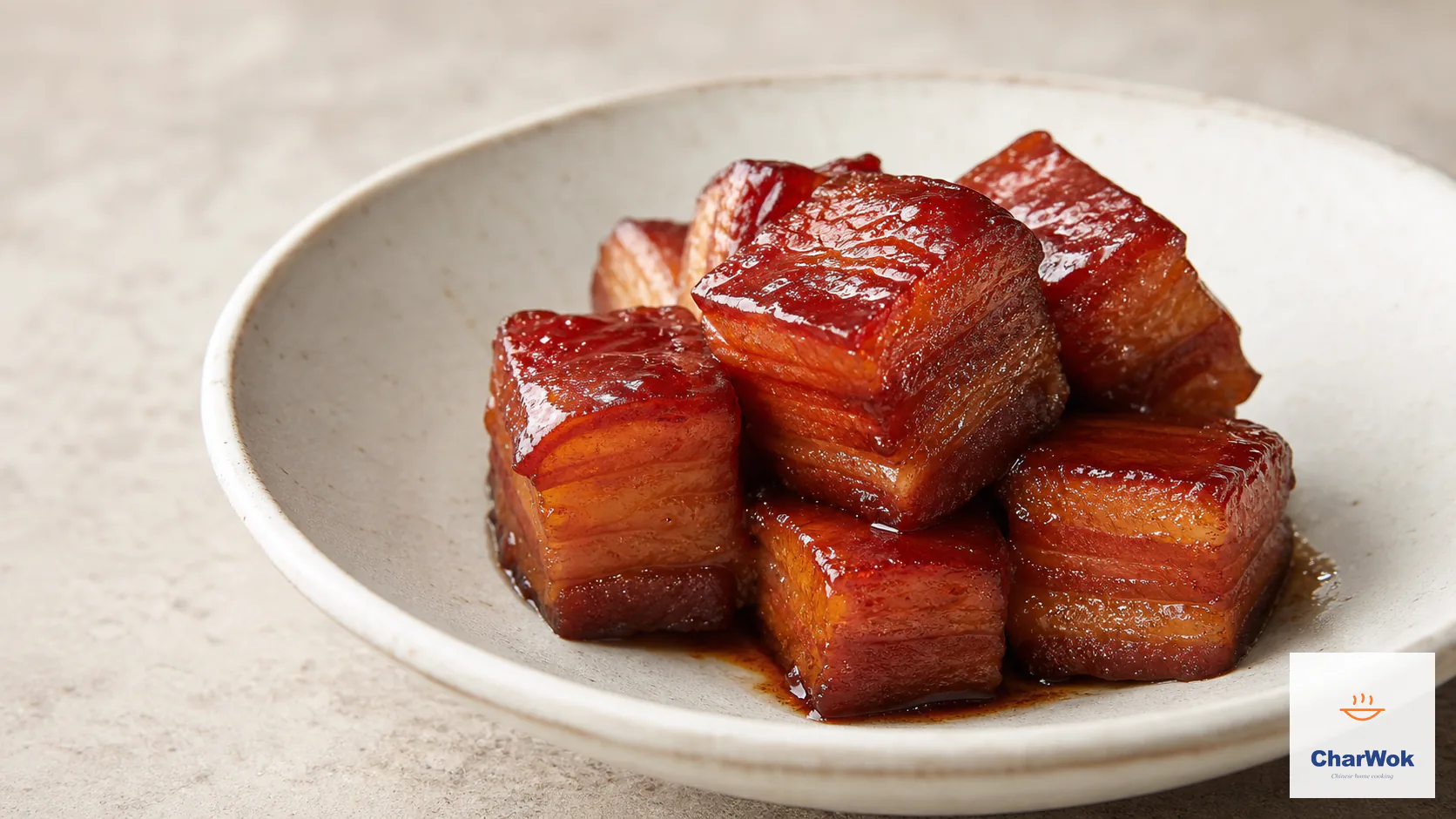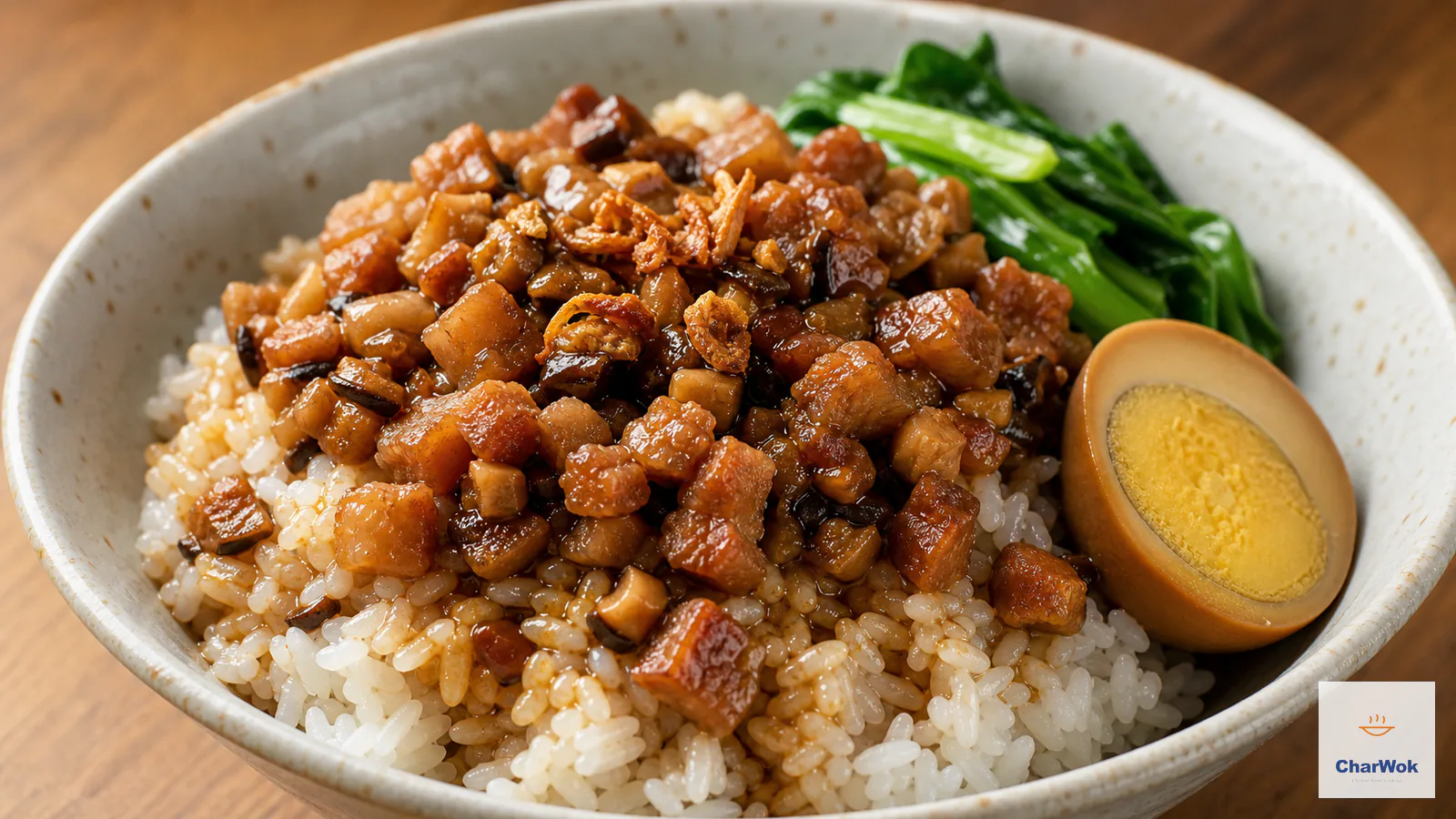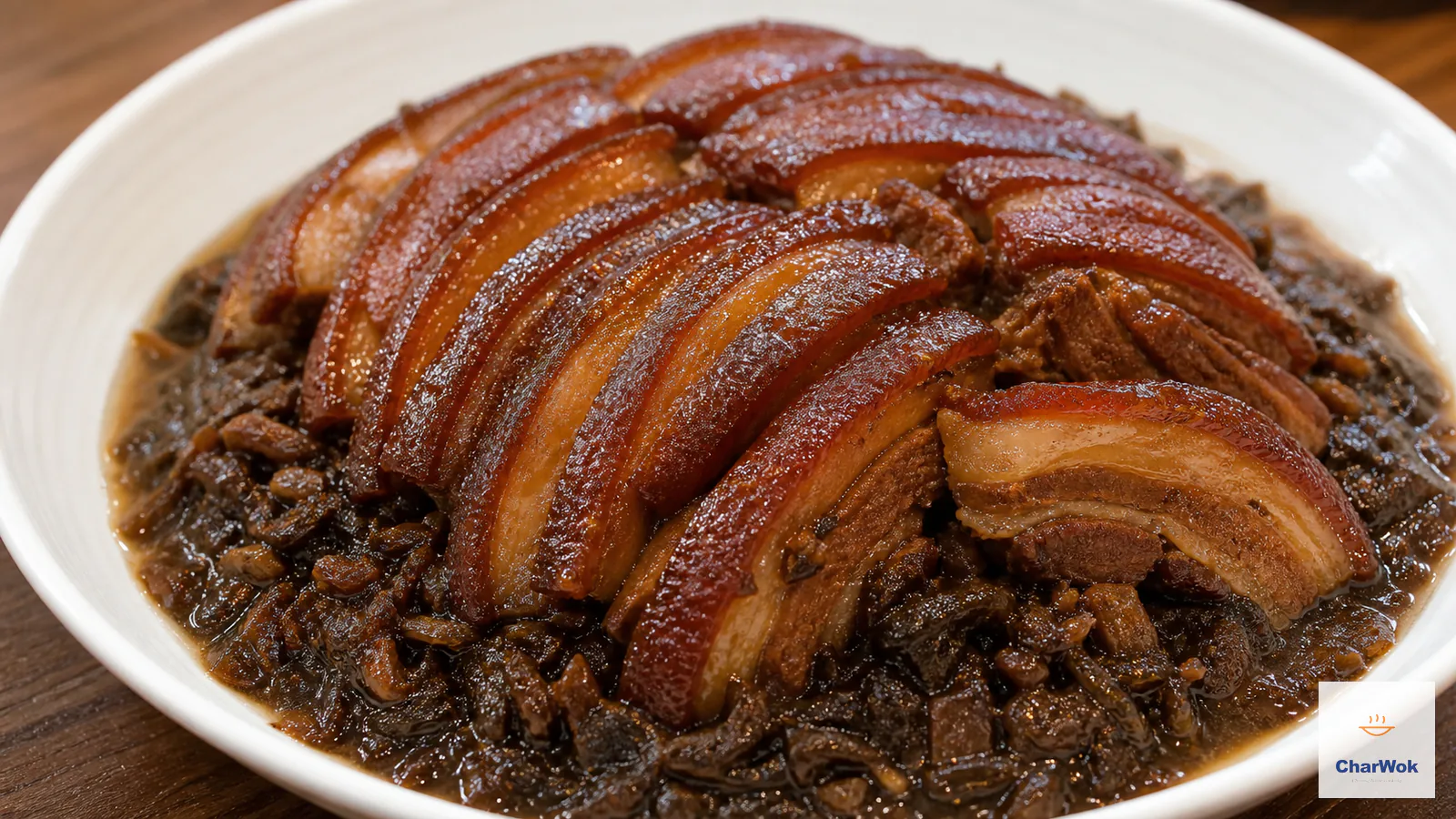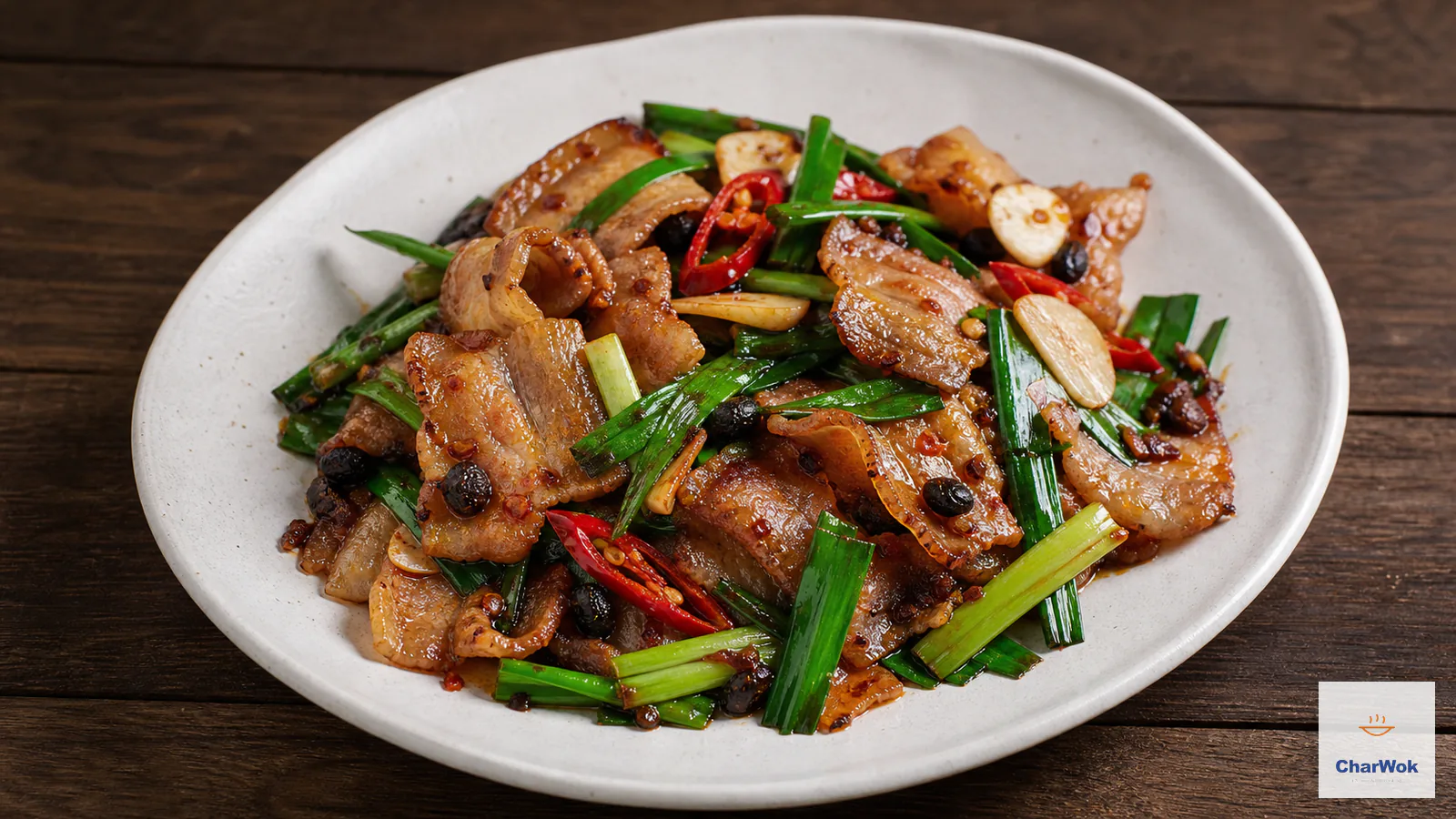
Twice-cooked pork is the dish that taught me what "return to the wok" really means. The Chinese name, Huí Guō Ròu (回锅肉), says it plainly: the meat comes back to the pot. The first cook is gentle, in water; the second is violent, in a screaming-hot wok with rendered fat. Get that sequence right and you get slices with crisp, ruffled edges curled around a tender middle, glossed in a brick-red sauce that stains the rice. Get it wrong and you have a plate of greasy flaps floating in chili oil.
Most home versions I have been served fail in the same place: the pork never renders. The slices stay flat and rubbery because the wok was not hot enough, or the belly was sliced too thick to release its fat in the short window a stir-fry allows. I have made both mistakes. The fix is not a secret ingredient. It is a 30-minute simmer that loosens the meat, followed by slicing thinner than you think you need, followed by a wok that is genuinely smoking before the pork goes in.
At a glance: simmer one 300 g (10 oz) skinless pork belly slab 30 minutes with ginger, cool and slice about 4 mm thick, then sear the slices in a near-smoking wok until the edges curl and some fat renders out. Pull the pork, fry 1 Tbsp Sichuan chili bean paste and 1 Tbsp fermented black beans gently in the rendered fat for 30 seconds, then return the pork with leek, a splash of Shaoxing wine, and a pinch of sugar. The whole stir-fry is under three minutes. The 30-minute simmer is the part that decides everything.
Where the dish comes from
This is a Sichuan home-cooking classic, not banquet food, and its roots are rural. Farmers in the Sichuan basin would boil a slab of pork as a cheap way to feed a family, then stretch the leftovers by flashing the pre-cooked slices in a wok with whatever aromatics were on hand. The two-stage method stuck because it solved a real problem: raw pork belly stir-fried straight from the fridge renders unevenly and spits, and the lean dries out before the fat crisps. Pre-cooking resets the clock. It belongs on any honest list of everyday Sichuan dishes, alongside Mapo Tofu and Dan Dan Noodles, and it shares their backbone of fermented heat.
The two ingredients you cannot fake
Sichuan chili bean paste (dòubàn jiàng, 豆瓣酱) is the soul of the dish, and not all jars are equal. Look for a Pixian-style paste, ideally the redder "hot broad bean" version (hóng yóu dòubàn), which is fermented fava beans and er jing tiao chilies aged for months or years. It should be thick, dark, and smell like dried fruit and earth, not like vinegar. The supermarket chili-garlic sauce in a squeeze bottle is a different product entirely and will give you a flat, sweet result. Read more on choosing one in the Sichuan chili bean paste guide. There is no clean Western substitute; if you cannot find it, this is not the dish to attempt.
The second pillar is fermented black beans (dòu chǐ, 豆豉). They are not the same thing as black bean sauce in a jar, and they are not black soybeans. These are soybeans salted and fermented until they turn dense, savory, and faintly bitter, with an aroma somewhere between miso and aged cheese. A tablespoon, rinsed and lightly chopped, deepens the dish past pure heat into something rounder. The fermented black beans overview covers how to shop for the dried version, which is what you want over the ones floating in brine.
Round it out with Shaoxing rice wine (dry sherry is the closest substitute) to deglaze, light soy sauce for salt and color, and a pinch of sugar to soften the chili's edge. That is the entire seasoning palette. Nothing else is needed, and adding more is the surest way to muddy it.
Ingredients
Ingredients at a glance
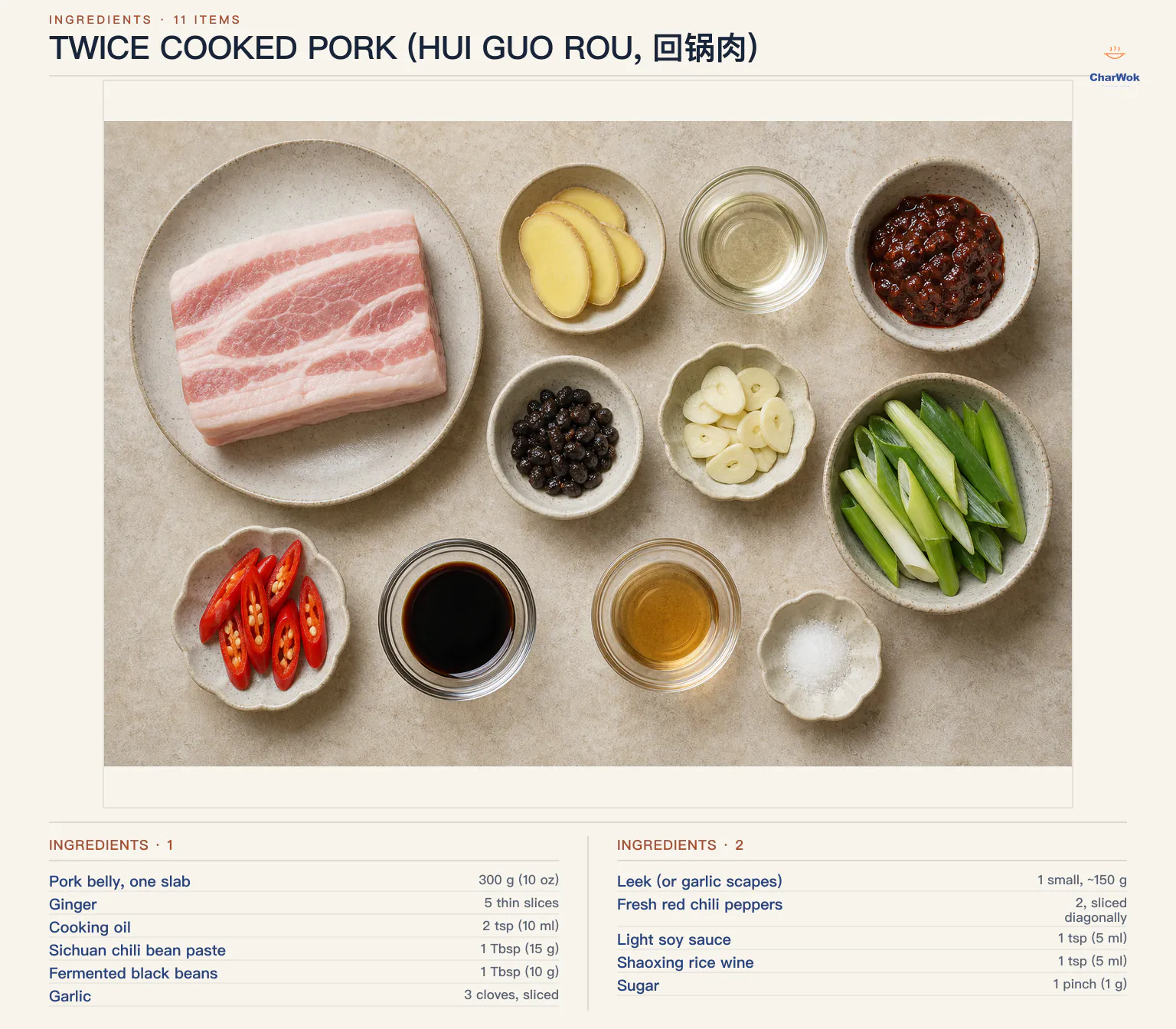
| Ingredient | Amount | Notes / substitute |
|---|---|---|
| Pork belly, one slab | 300 g (10 oz) | Skinless, boneless, roughly 5 cm wide. A 50/50 fat-to-lean ratio is ideal; leaner belly stays chewy, fattier belly gets flabby. Bacon slab (uncured, unsliced) works if you cannot find belly, but skip the soy if it is salty. |
| Ginger | 5 thin slices | For the poaching water. Smash them to release more oil. |
| Cooking oil | 2 tsp (10 ml) | Neutral, high-smoke-point: peanut, canola, or avocado. Not olive oil. |
| Sichuan chili bean paste | 1 Tbsp (15 g) | Pixian or hot broad bean paste. Adjust by half a teaspoon up or down depending on your jar's salt and heat. |
| Fermented black beans | 1 Tbsp (10 g) | Dried, rinsed. Lightly chop if the beans are large. |
| Garlic | 3 cloves, sliced | Thin slices, not minced. You want them to hold their shape in the quick fry. |
| Leek (or garlic scapes) | 1 small, ~150 g | Cut into 4 cm diagonal slices. Green garlic shoots (suán miáo) are traditional, and you can grow your own garlic sprouts for them; celery, cut thin on the bias, is a fine stand-in if you cannot find either. |
| Fresh red chili peppers | 2, sliced diagonally | For color and a fresh bite. Fresno or red jalapeño; seed them if you want it milder. |
| Light soy sauce | 1 tsp (5 ml) | Light, not dark. The paste already carries salt and color. |
| Shaoxing rice wine | 1 tsp (5 ml) | Dry sherry is the substitute. Avoid salted "cooking wine." |
| Sugar | 1 pinch (1 g) | White is fine. Just enough to round the chili's heat, not to sweeten. |
Step one: the simmer that changes everything
- Cover the pork with cold water and aromatics. Put the slab in a saucepan with the ginger slices and add cold water to cover by 2 cm. Starting cold pulls albumin and impurities out gradually, so the poaching liquid stays cleaner and the pork keeps more of its own flavor. Bring it to a full rolling boil over medium-high.
- Skim, then drop to a murmur. Gray foam will rise as it boils. Skim it off; it is coagulated protein, not poison, but it clouds the water and sticks to the meat. The instant it boils, cut the heat to the lowest flame that keeps one bubble breaking every few seconds. Cover loosely. A hard boil for half an hour is the failure mode that gives you dry, gray slices; you want a drowsy poach at roughly 85 to 90 °C (185 to 195 °F). Held there, the meat cooks through evenly with only modest moisture loss, while the collagen gradually softens toward gelatin. A rolling boil would wring the meat dry; the gentle simmer keeps it plump and sliceable.
- Simmer 30 minutes, then check the center. At 30 minutes, pierce the thickest part with a skewer or the tip of a thin knife. It should slide in once the meat yields, with just a hint of give left in it, and no pink juice should follow the blade out. This is not the tender, melt-in-mouth stage; you want it cooked through but still firm enough to slice cleanly. If the center still resists, give it another 5 minutes. Overcooking makes the next step, slicing thin, nearly impossible.
- Shock it in cold water. Lift the slab straight into a bowl of cold water (ice is better). This stops the carryover cooking so the inside does not overcook, and more importantly it firms the fat so the knife passes through instead of dragging. While it cools, prep everything else: chop the leek, slice the garlic and chilies, rinse the beans, measure out the paste and wine. Once the pork is cool enough to handle, slice it crosswise about 4 mm thick. For fattier belly, go a little thinner so more fat can render; for leaner, stay close to 4 mm so the slices do not dry out in the wok.
- Blot the slices dry. This is the step people skip and regret. Any moisture left on the surface flashes to steam the instant the pork meets hot fat, which is what sends grease spitting across your stovetop and robs the edges of their Maillard crust. A quick pass with a paper towel takes care of both problems.
Step two: the stir-fry, in three breaths
- Render the pork in a screaming pan. Take a carbon-steel or cast-iron wok to the edge of smoking, so a fleck of water skitters and vanishes on contact and you catch the first thread of blue haze off the metal. Swirl in the 2 tsp of oil, then lay the slices down in a single layer and keep them moving. The goal is not an all-over crust; you are chasing a specific transformation. As the fat edges hit fierce heat they shrink and bow, cupping each slice into the ruffled little nest the Sichuan kitchen calls dēng zhǎn wō (灯盏窝, "lamp-bowl nest") after its resemblance to an oil-lamp's dish. While the slices curl, a tablespoon or two of clear fat runs out of them into the pan. The moment the edges take on color, lift the pork out and set it aside, but do not touch the fat now pooling in the wok; that liquid gold is the base for the next move. (Non-stick note: never heat those woks empty. Pour the oil in first, bring it to a shimmer over moderate heat, then add the pork.)
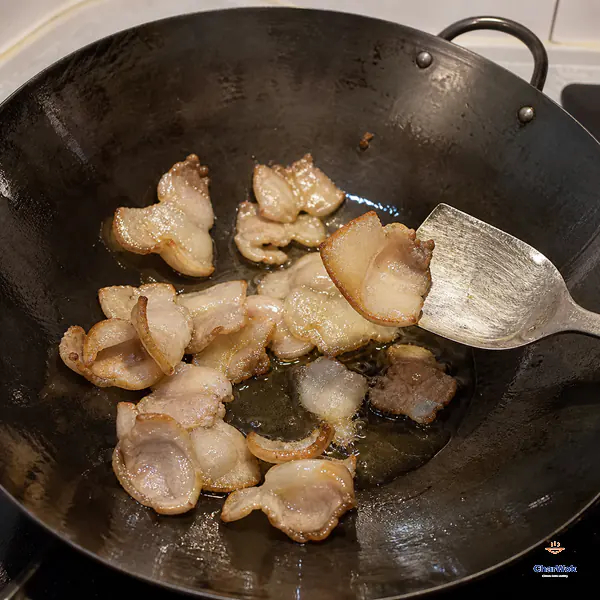
Keep the four-millimetre slices moving over fierce heat only until the fatty rims shrink into ruffled lamp-bowl curls, a few pale-golden spots appear and clear pork fat collects below. Transfer the pork at once but leave every drop of that rendered fat in the wok.
- Mellow the paste over gentle heat. Cut the flame down so it barely whispers. Drop in the chili bean paste, the rinsed fermented black beans, and the garlic slices, and let them warm through for roughly half a minute, nudging them around so they fry rather than sit. This is the move most home cooks shortchange. Straight from the tub the paste is sharp, almost raw; coaxed in warm rendered fat, its starch loosens, the chili oils bleed out into the pool, and the whole surface flushes a deep brick red. A fierce flame here would scorch the chili flakes bitter before they ever turn mellow and fruity; keep it gentle and trust your nose. When the harsh edge drops out of the smell and something toasty and ripe takes its place, you are there.
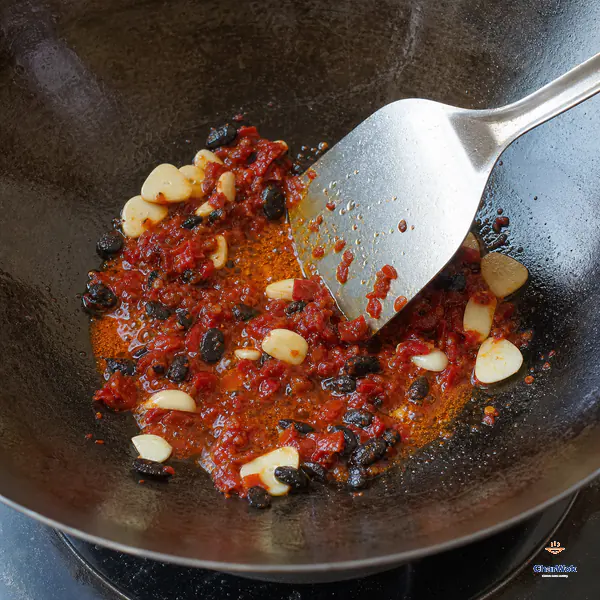
Lower the heat before adding the chopped doubanjiang, fermented black beans and garlic. Nudge them through the rendered fat for about 30 seconds, stopping when a clear red-orange oil separates and the raw paste aroma mellows, well before the garlic or paste turns dark.
- Bring the heat back and finish in a rush. Push the flame up again. Slide the pork back in and tumble it through the now-crimson oil until every slice is lacquered. Tip in the leek and fresh chilies, dash in the Shaoxing wine, then the soy sauce and sugar, and keep everything airborne for about a minute. The wine hits the hot metal and hisses, lifting any sticky bits off the surface; the soy and sugar set into a thin glaze on the meat; the vegetables knock the pan temperature down just enough that the lean stays juicy. Pull the wok off the heat the second the leek goes limp at the edges but still has bite in the stem, and serve at once. Linger another minute and the pork turns tough and stringy.
When it goes wrong, and how to fix it
The pork slices stay flat and rubbery, never curl. The wok was not hot enough, or the pan was crowded. Render needs fierce heat and a single layer. Next time, get the wok truly smoking (use the water-drop test), and if your burner is weak, fry the pork in two batches. You can also slice thinner; 4 mm is the standard, but go down to 3 mm on very fatty belly so the fat renders faster.
The dish is swimming in oil and tastes greasy. You either used very fatty belly and rendered a lot, or you forgot to lift the pork out before the aromatics went in. The fix is easy: after the render, tip off everything but a tablespoon of the fat before the paste hits the pan. Keep a little fat, because the paste needs it to bloom, but a lake of oil is what gives this dish its reputation for heaviness.
The chili bean paste burns and tastes bitter. Heat was too high during the bloom, or you walked away. Chili bean paste scorches in seconds over high heat. Keep the flame genuinely low, stir constantly, and 30 seconds is plenty. Burned paste cannot be rescued; start the bloom over with fresh paste and the saved rendered fat.
The slices fall apart when you cut them. The pork was overcooked in the simmer, or you tried to slice it warm. A 30-minute simmer, not 45, is the target, and a 10-minute cold-water bath firms the fat enough to hold a knife edge. If it still shreds, chill the slab another 15 minutes in the fridge and use your longest, thinnest knife with a gentle sawing motion.
Everything is salty. Chili bean paste and fermented black beans are both salt bombs, and brands vary wildly. Taste your paste straight from the jar before you cook; if it is very salty, drop to 2 tsp and skip the soy sauce entirely. Never add salt on top of the paste without tasting first.
Variations and ways to serve it
Over freshly steamed jasmine rice is the default, and the right one. A dish this savory, salty and chili-laced earns a specific compliment in the Chinese kitchen: people call it a "rice killer," the kind of food that quietly empties the rice cooker because each bite begs for another spoonful of plain grain to catch the heat. But the stir-fry travels well beyond the rice bowl. Fold a few slices, sauce and all, into a warm spring pancake brushed with a little hoisin and the chili oil soaks into the wheat the way a slow braise would into bread. Pile the curled pork into gua bao buns in place of the usual braised belly, or tuck it into a split Rou Jia Mo bun for a faster, spicier sandwich. And because the rendered fat carries so much flavor, I often spoon the leftover bits and oil over a bowl of plain hand-pulled noodles with a handful of chopped scallion, no other sauce required.
For a vegetarian version, swap in a slab of extra-firm tofu that has been pressed, torn into rough pieces, and crisped in a little oil until the edges are golden; the irregular surfaces catch and hold the seasoning the way a pork slice does. Carry it through the same fermented paste and black-bean base, and the tofu drinks up the chili oil with surprising conviction, much as it does in pan-fried tofu with garlic sauce. Leek, garlic scapes, and celery are the traditional vegetables, but sliced onion or bell pepper work if that is what you have. A few toasted Sichuan peppercorns, ground, added at the end will give the dish a buzzing málà finish that nudges it closer to a garlic-pork cold appetizer in spirit.
Storage and reheating
Leftovers keep in the fridge for up to three days, and honestly the flavor improves overnight as the paste soaks into the pork. Reheat gently in a covered pan over low heat with a tablespoon of water to loosen the sauce; a microwave will toughen the lean and split the chili oil. It does not freeze well, because the lean part of the belly turns grainy on thaw. If you want to prep ahead, simmer and slice the pork up to two days in advance and keep it covered in the fridge, then do the three-minute stir-fry fresh when you eat.
Frequently asked questions
Can I skip the simmer and just stir-fry raw belly? You can, but the result is a different, lesser dish. Raw belly spits, renders unevenly, and dries out before it crisps. The simmer is what makes clean slicing and even rendering possible.
Is there a substitute for Sichuan chili bean paste? Not a clean one. Korean gochujang is too sweet and lacks the fermented-fava depth; sriracha is the wrong product entirely. Source a Pixian-style paste online if your local store does not carry it.
Why leek instead of green garlic? Green garlic (suán miáo) is the traditional vegetable, but it is hard to find outside Asian markets. Leek has a similar sweet-allium character and holds its texture in the fast fry. Celery, sliced thin, works too.
Do I need a carbon-steel wok? It helps, because it holds the high heat the render needs. A heavy cast-iron skillet works nearly as well. Non-stick works but caps your heat, so expect less curl and color on the pork.
How spicy is this? Moderately. The heat comes from the chili bean paste and the fresh chilies, and you control both. Drop to 2 tsp of paste and seed the chilies for a milder version that still tastes authentic.