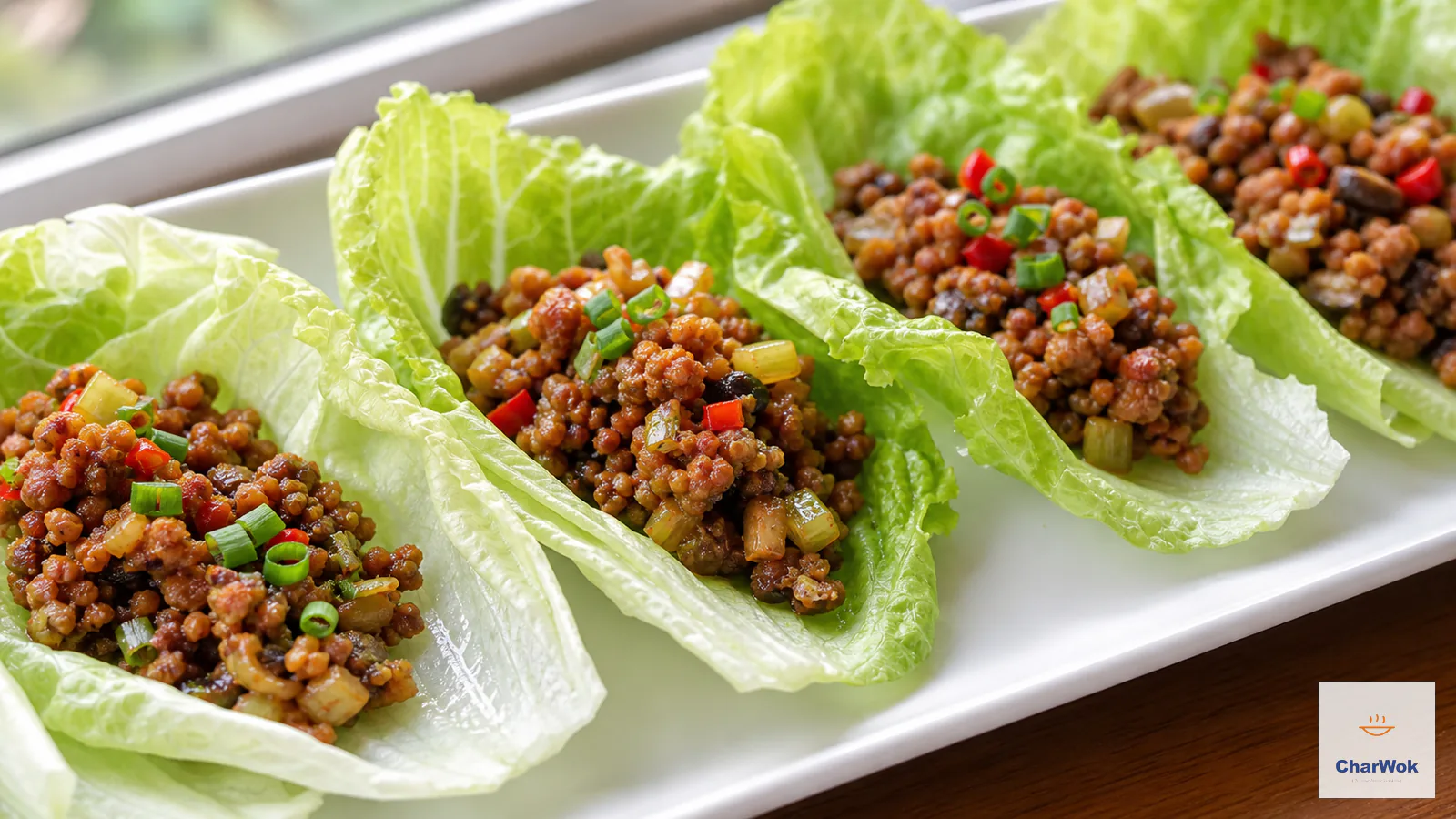
The genius of a lettuce wrap is the collision of textures: a hot, oily, deeply savory pile of filling against a cold leaf that snaps when you fold it. The version most American takeout menus call "San Choy Bow" leans sweet and hoisin-heavy. I don't want that one. I want the Sichuan build, where the only sugar in the pan comes from caramelized doubanjiang and the seasoning hits two distinct notes, spicy and numbing, instead of one dull sweet one.
The pain point you probably know: a filling that looks red and glossy but tastes flat, or ground pork that fries up into gray, bouncy pebbles instead of the loose, almost fluffy bits you get at a good restaurant. Both are fixable, and the fixes have nothing to do with the recipe card and everything to do with two or three seconds of timing and one ingredient you may be tempted to skip.
At a glance: About 250 g of ground pork feeds roughly 20 small wraps. Fry the doubanjiang in oil for 10 seconds before the meat goes in, that is the entire trick. Hold back the scallions and ground Sichuan pepper until the pan is off the heat, or both go bitter and dull. Total active cooking is under five minutes; prep is the real work.
What this dish actually is
Lettuce wraps aren't ancient. The form, raw leaves used as an edible vessel for a stir-fried mince, sits somewhere between Cantonese banquet service and the san choy bow that spread through Australian-Chinese restaurants in the 1970s. The Sichuan reading swaps the usual hoisin-and-water-chestnut sweetness for the pantry that defines the region: fermented chili bean paste (doubanjiang) and Sichuan pepper. The first gives the dish its brick-red color and a slow, savory heat; the second gives the lips that buzzing, slightly electric hum the region calls mala, "numbing-spicy."
This is close cousin to a whole family of Sichuan mince-and-stir-fry dishes that I cook on rotation: the pork topping for Dan Dan Noodles, the crumbled pork in Yu Xiang Eggplant, the twice-fried belly in Twice-Cooked Pork, even the meat layer of Mapo Tofu. Once you can fry a spoonful of doubanjiang correctly, you have the opening move for all of them.
The ingredients that decide whether it's good
Ingredients at a glance
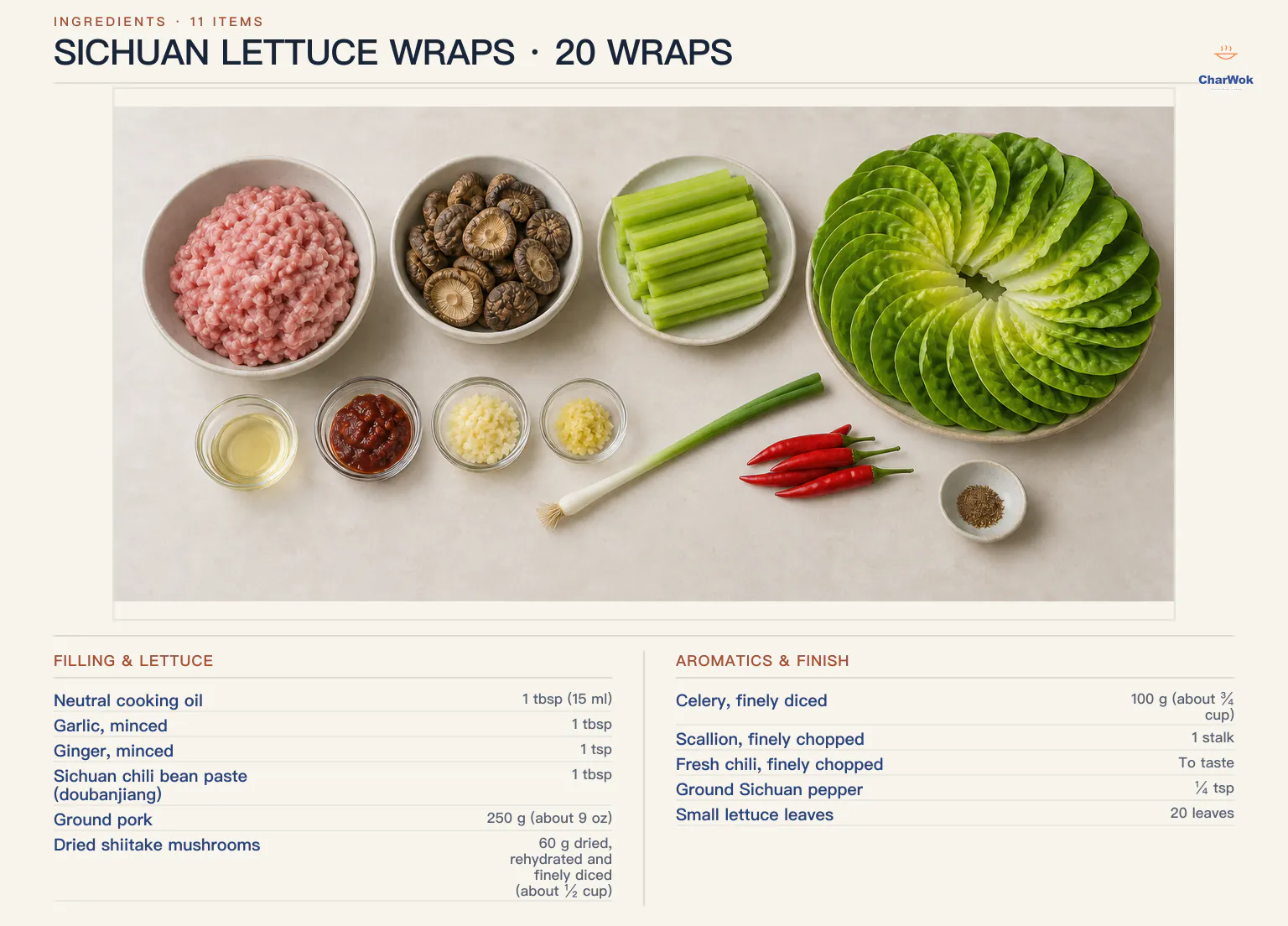
| Ingredient | Amount | Notes / substitute |
|---|---|---|
| Neutral cooking oil | 1 tbsp (15 ml) | Peanut, canola, or grapeseed. Avoid olive oil; its flavor fights the dish. |
| Garlic, minced | 1 tbsp | About 3 medium cloves. Mince fine so it disperses instead of clumping. |
| Ginger, minced | 1 tsp | Peel first. Frozen ginger grates cleaner and faster. |
| Sichuan chili bean paste (doubanjiang) | 1 tbsp | The brand matters. Pixian is worth seeking out. See my guide. No doubanjiang? Use pickled chili garlic sauce or black bean sauce for a different-but-good result. |
| Ground pork | 250 g (about 9 oz) | 20% fat is ideal. Too lean and it dries out; the fat carries the chili oil. Sub ground chicken, turkey, or crumbled firm tofu. |
| Dried shiitake mushrooms | 60 g dried, rehydrated and finely diced (about ½ cup) | Dried beats fresh here; the drying concentrates the guanylate, which is pure umami. Rehydrate in warm water 20 min. |
| Celery, finely diced | 100 g (about ¾ cup) | Use the inner stalks with leaves if you have them. Water chestnut, jicama, or bell pepper work for crunch. |
| Scallion, finely chopped | 1 stalk | Green parts only for finishing; save white parts for the fry if you want more bite. |
| Fresh chili, finely chopped | To taste | Thai bird's eye for heat, serrano for a greener flavor. Skip for a kid-friendly version. |
| Ground Sichuan pepper | ¼ tsp | Toast whole peppercorns dry, then grind. Pre-ground loses its buzz fast; here is how I do it. |
| Small lettuce leaves | 20 leaves | Butter (bibb) or little gem. See the lettuce section below. |
Which lettuce, and how to treat it
My firm pick is butter (bibb) lettuce. The leaves are cupped by nature, soft enough to fold without snapping, and mild enough to let the filling lead. Little gem works if you want more crunch, and romaine hearts give you large, dramatic boats for a party. Iceberg I avoid; the cells are so full of water and so rigid that the leaves crack along their veins when you try to bend them around a hot filling, and the flavor is just cold water.
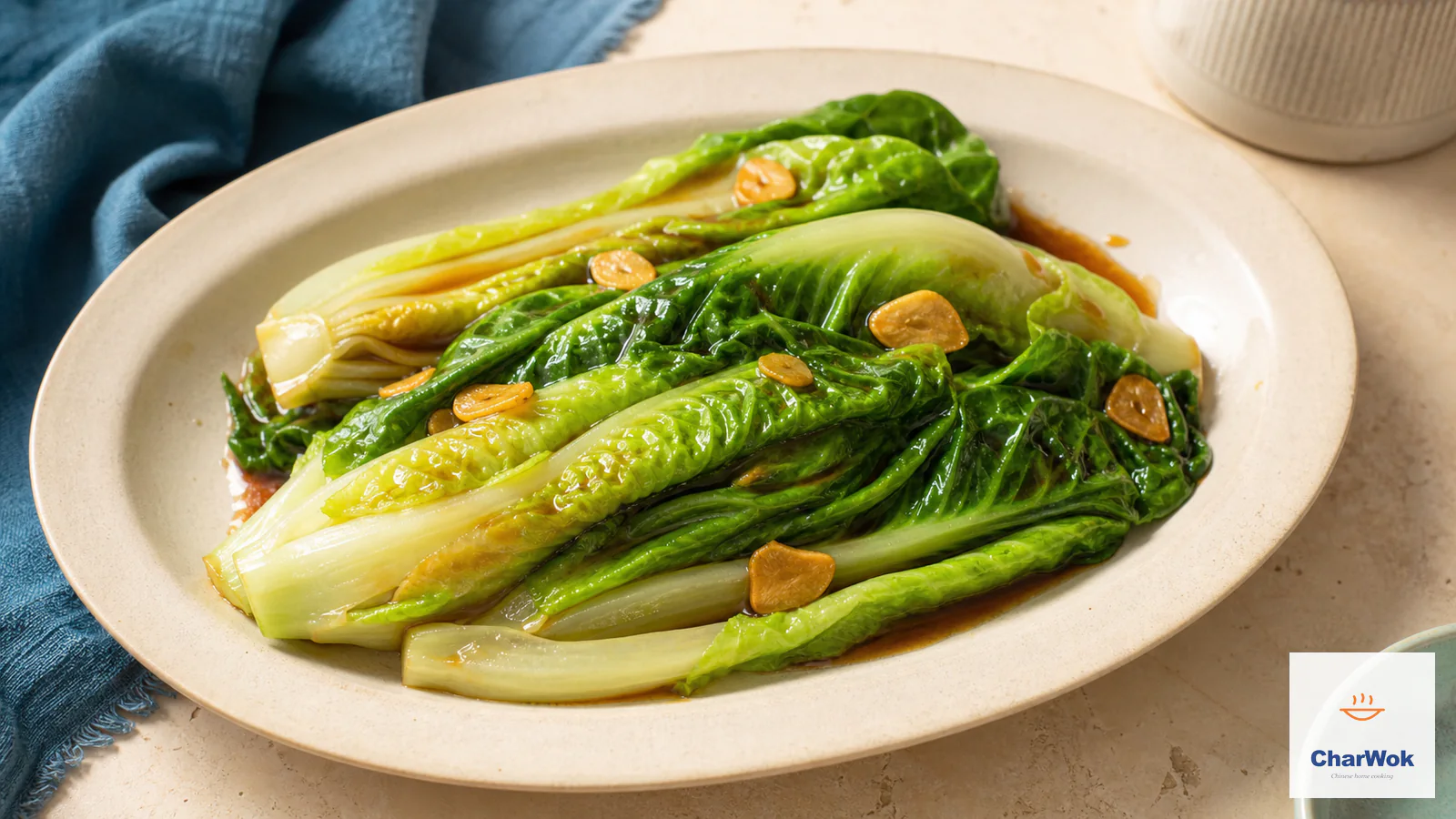
Two handling points most recipes skip. First, separate the leaves the day before, soak them in cold water 10 minutes to flush grit trapped in the cup, then dry them completely and refrigerate in a sealed bag with a paper towel. A wet leaf dilutes the filling and slides out of your hand. Second, if the leaves have gone limp in the fridge, a 5-minute ice-water bath snaps them back to crisp. Pat dry before serving. (This is the same instinct behind a quick blanched lettuce side, you're managing water, not adding it.)
The method, and why each move matters
- Rehydrate and prep first. Everything in this dish cooks in under five minutes once heat is on, so there is no time to mince mid-stir. Soak the dried mushrooms in just-boiled water for about 20 minutes until fully soft, then squeeze them out and dice fine. Have the garlic, ginger, scallion, chili, and celery all cut and in small bowls before you turn on the stove.
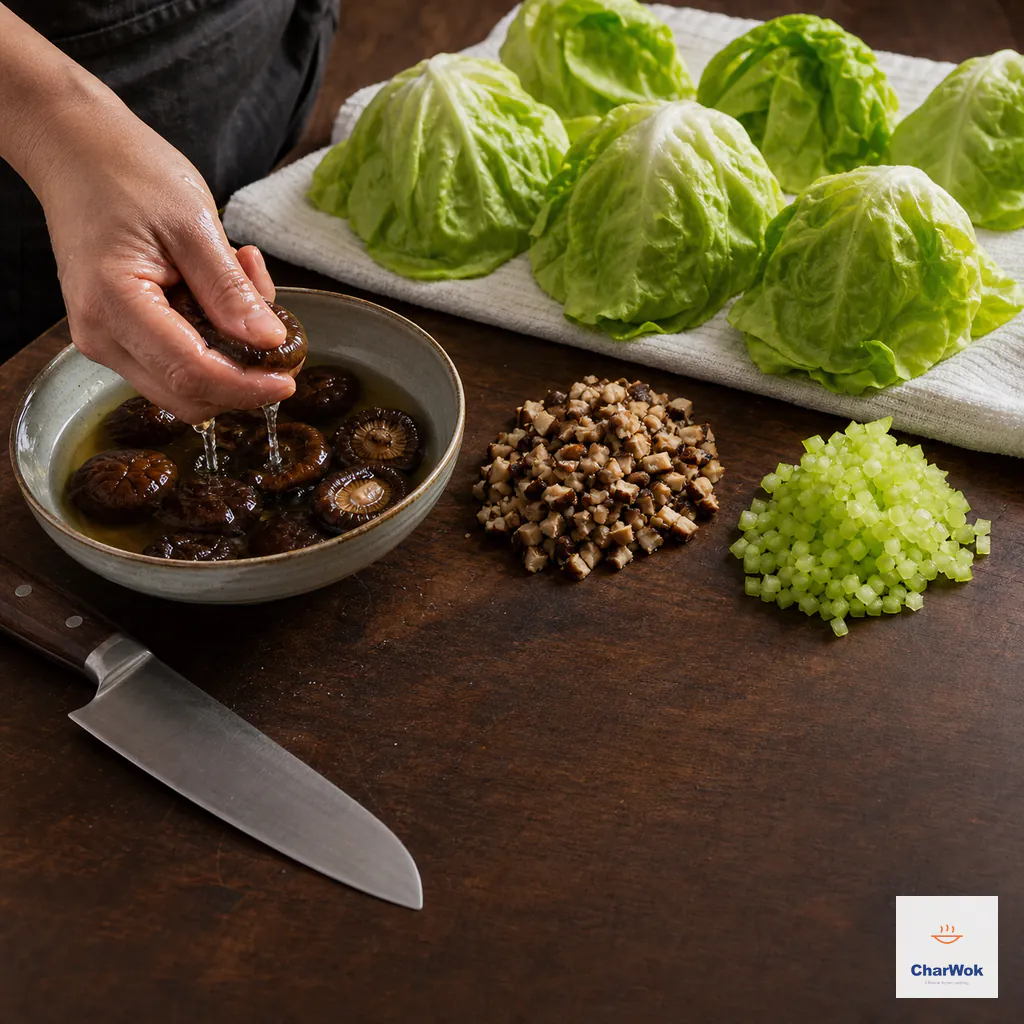
Soften the dried shiitake completely, squeeze it dry and dice it finely; prep the celery and drain every lettuce cup before heating the wok.
- Heat the wok dry, then add oil. Get a wok or wide skillet smoking hot over high heat, then add the oil and swirl. Heating the pan dry first is the wok-equivalent of preheating a baking stone; it stops the meat from steaming in its own juice. If you're using nonstick, reverse this and add oil to a cold pan to protect the coating.
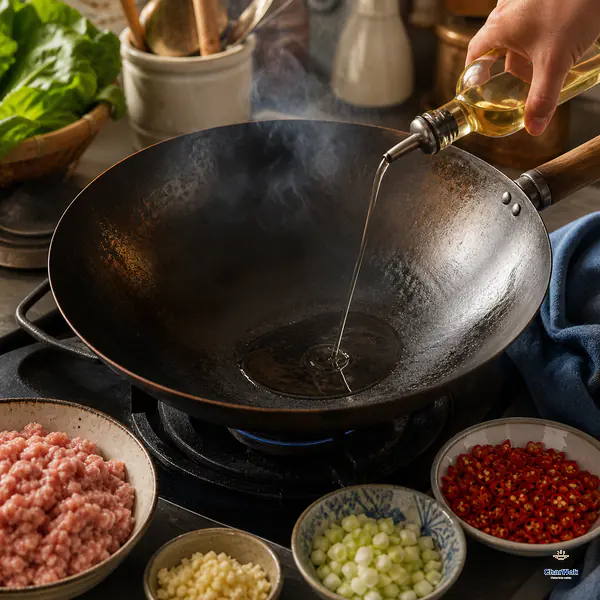
Heat a carbon-steel wok until a faint wisp of smoke appears, then add and swirl the oil before any ingredients enter; add oil before heating if using nonstick.
- Fry the aromatics and doubanjiang for ten seconds, no more. Add the garlic, ginger, and doubanjiang and stir. You want the paste's chili oil to bleed into the cooking oil and the raw edge of the garlic to mellow. This is where the color and the savory base come from. Go longer and the garlic burns and turns bitter; go shorter and the paste tastes raw and metallic.
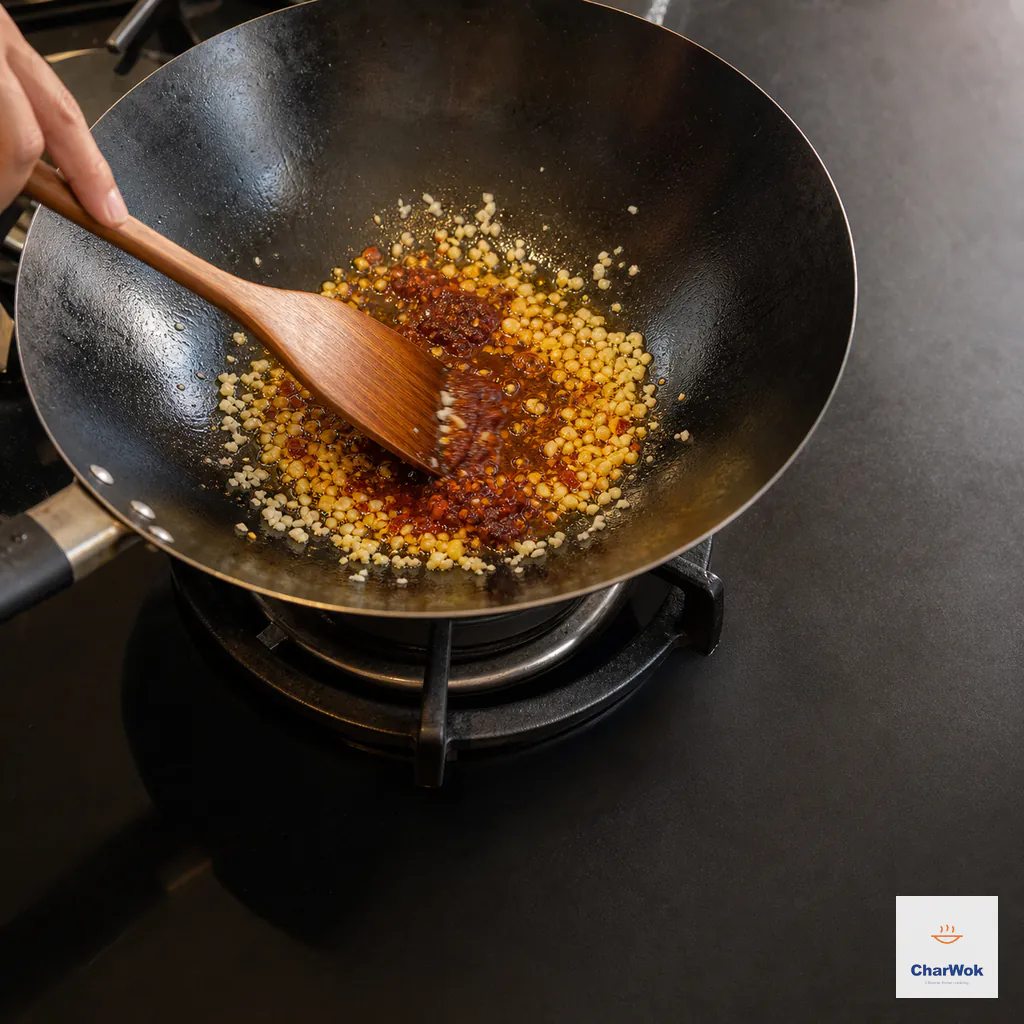
Stir the aromatics and doubanjiang for only about ten seconds, stopping while the garlic remains pale and the paste has released red oil.
- Add the pork and break it up aggressively. Drop in the ground pork and use the edge of a spatula to chop and scrape it into small bits. Don't let it sit in a patty. You want loose, separate crumbles so every surface browns. The fat renders out and emulsifies with the chili oil into a glossy red coating. Stop when the pink is gone but the meat is still juicy, about 90 seconds.
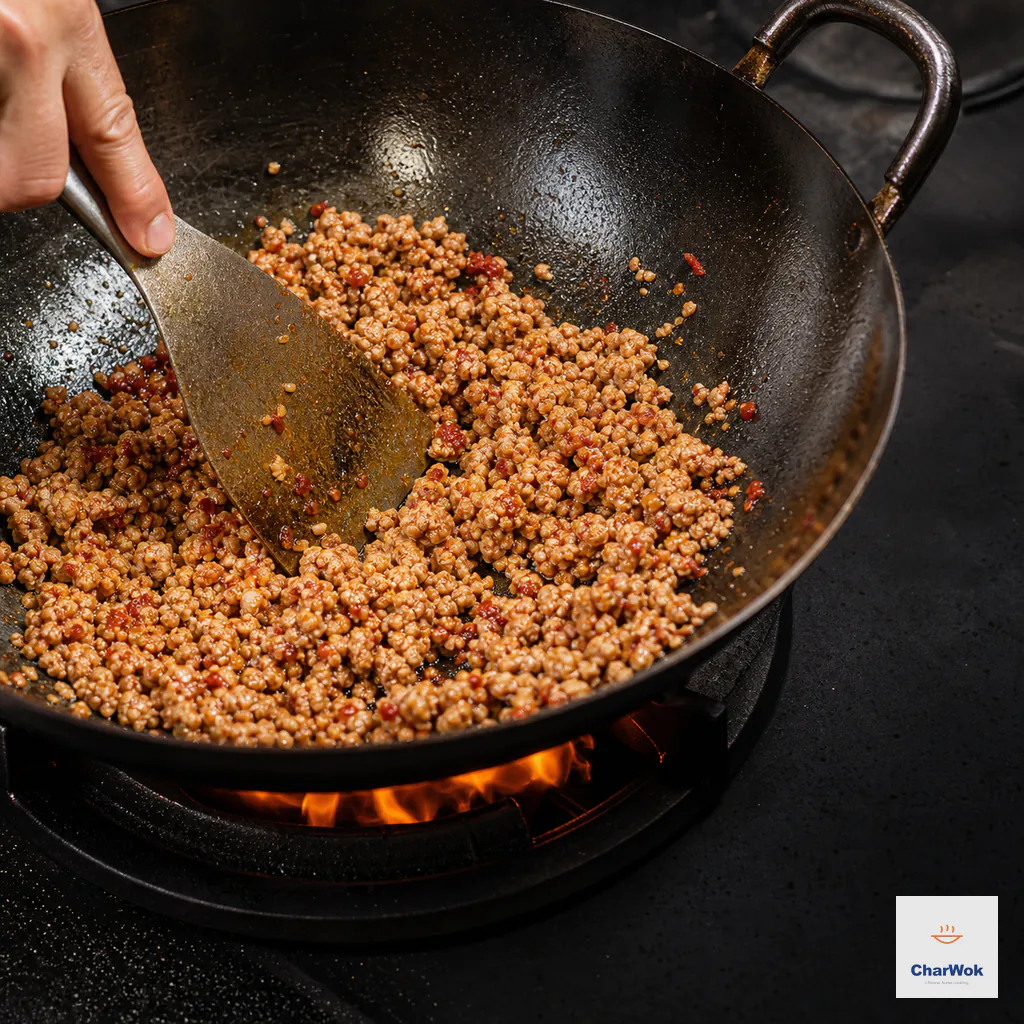
Break the pork apart immediately and stop once every crumble loses its pinkness but remains juicy.
- Add mushrooms and celery, fry one to two minutes. The mushrooms drink up the pork fat and chili oil; the celery should soften at the edges but keep its snap in the center. If the pan looks dry, the mushrooms absorbed the oil, add a teaspoon more. Do not add water; you want concentrated flavor, not a sauce.
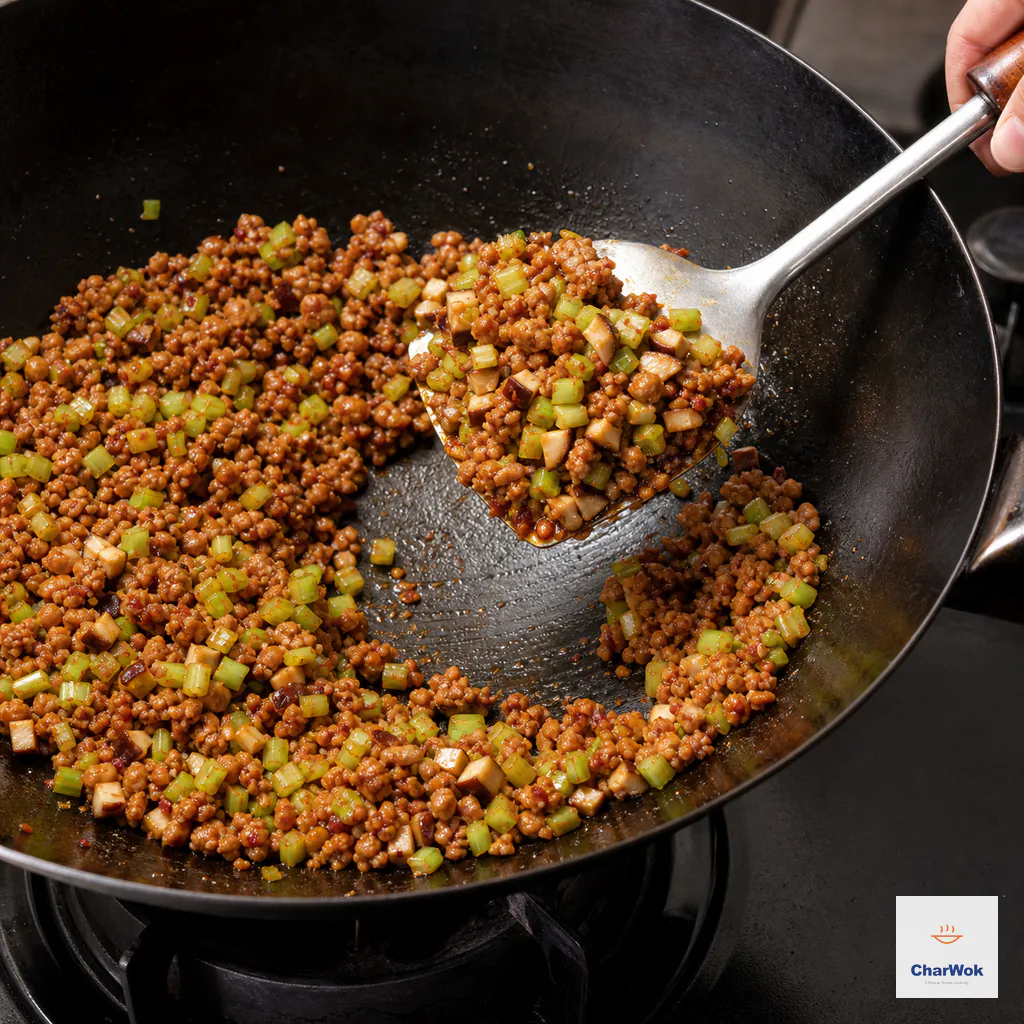
Fry the mushrooms and celery for one to two minutes without adding water; the celery should soften at its edges while keeping a crisp center.
- Kill the heat, then add scallion, chili, and Sichuan pepper. Take the pan off the burner before these go in. Off-heat residual warmth is enough to take the raw bite out of the scallion and bloom the chili without cooking it to mush, and it protects the Sichuan pepper, which turns harsh and acrid if you fry it. Toss once and transfer to a serving bowl immediately so the greens don't wilt from carried heat.
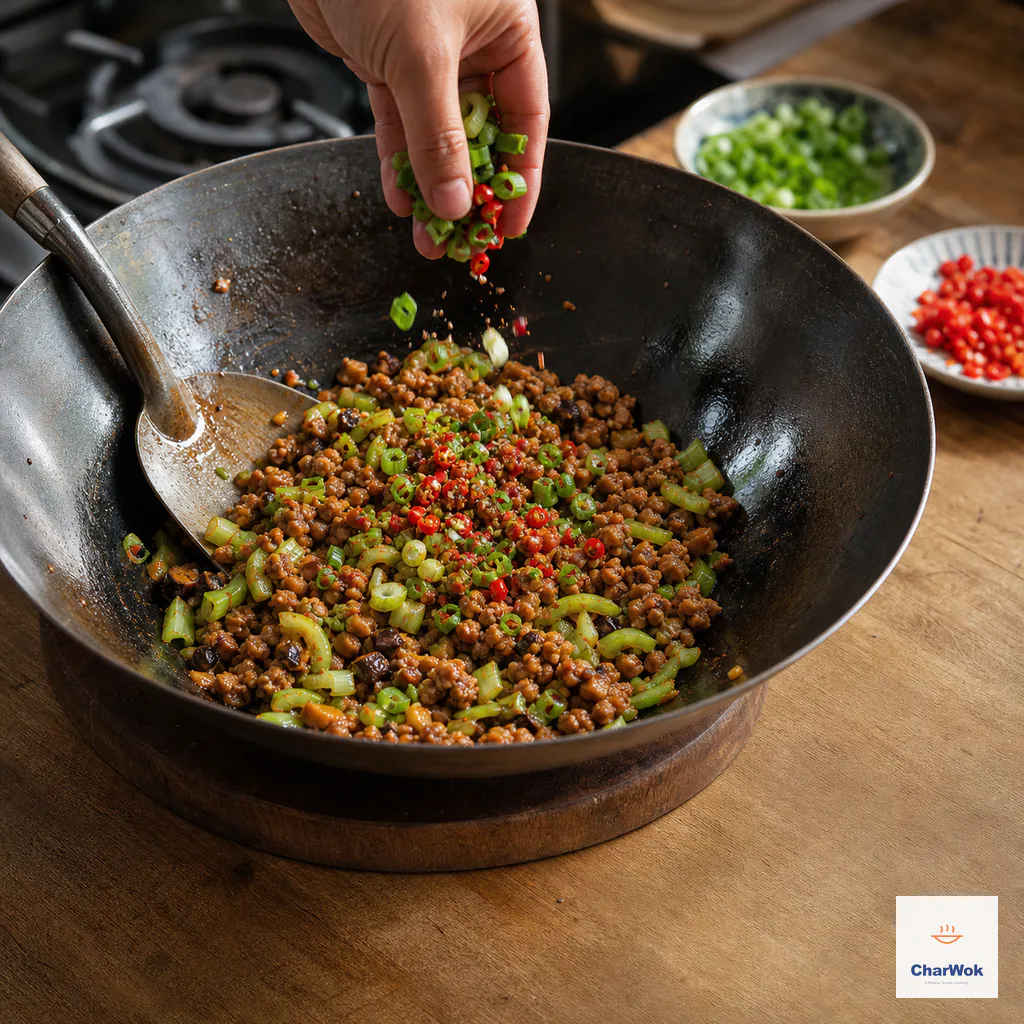
Move the wok off the burner before adding scallion, chili and Sichuan pepper, then toss once and transfer immediately.
- Serve two ways, your call. For a family dinner, pile the filling in a bowl with lettuce on the side and let everyone assemble taco-style. For a party, spoon the filling into each leaf and pass the platter; this controls portions and looks sharper. Either way, serve within 10 minutes, before the leaf goes warm and limp against the filling.
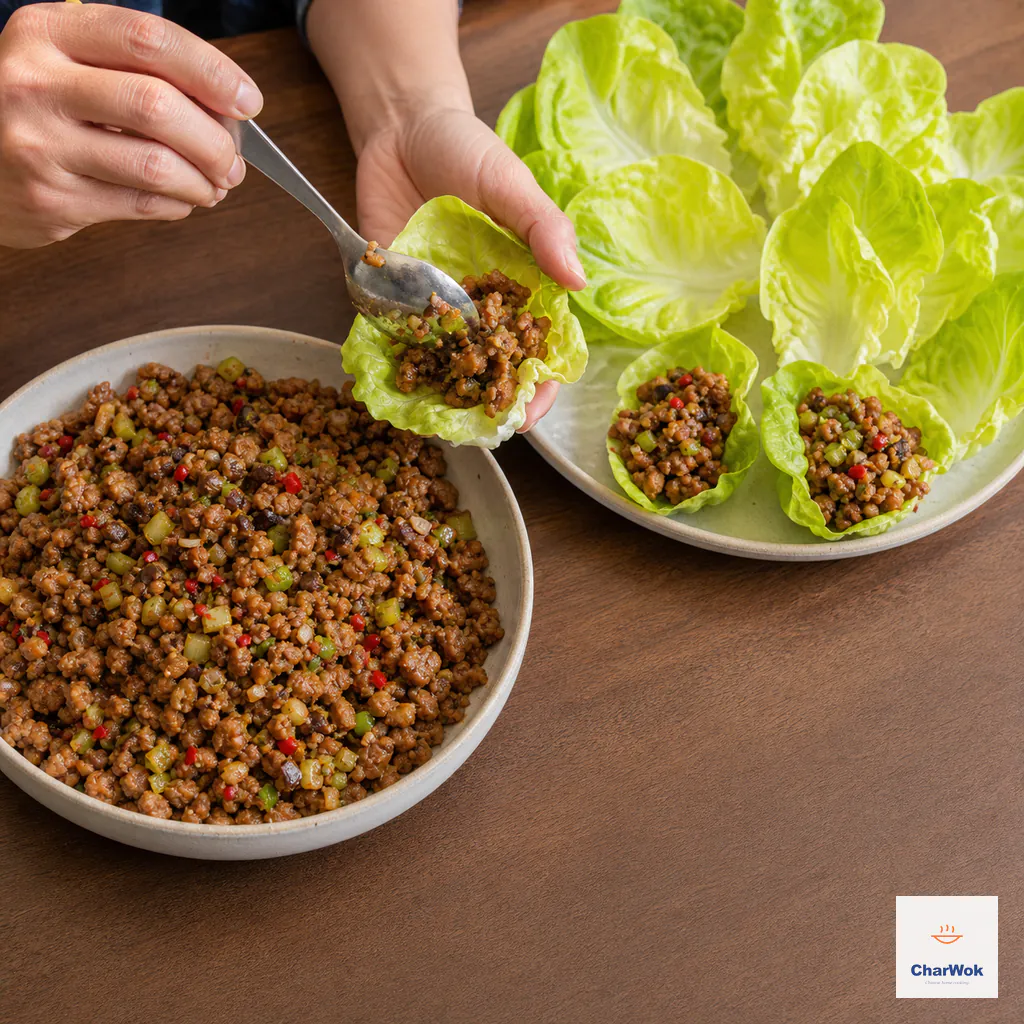
Keep filling and cold dry lettuce separate for self-assembly, or fill each cup immediately before serving so the leaves stay crisp.
When it goes wrong, and how to save it
The filling is gray and wet, not red and glossy. You added the meat before the chili paste had time to bleed into the oil, or you crowded cold meat into a not-hot-enough pan so it steamed. Fix next time: hotter pan, ten-second fry of the paste before the pork. To rescue the current batch, push everything to one side, add half a teaspoon of oil, and fry a little extra doubanjiang right against the metal, then fold it back through.
The pork fried into hard little nubs. The meat was too lean or you overcooked it. Ground pork below about 15% fat has nothing to keep it tender. Use 80/20 next time and pull the meat the instant the pink is gone; it keeps cooking from residual heat.
It tastes flat despite looking spicy. You used pre-ground Sichuan pepper that's been in the jar for a year, or you fried the pepper instead of adding it off-heat. The numbing note is volatile and disappears fast once ground. Toast whole peppercorns dry in a small pan until fragrant, grind fresh, and add at the end. A few drops of chili oil at the table also wakes a tired batch.
The lettuce tears when you fold it. Either iceberg (too rigid) or a leaf that was bent during storage and cracked along a vein. Switch to butter lettuce and trim any split leaves out of rotation; use them chopped into tomorrow's fried rice instead.
Variations and what to serve alongside
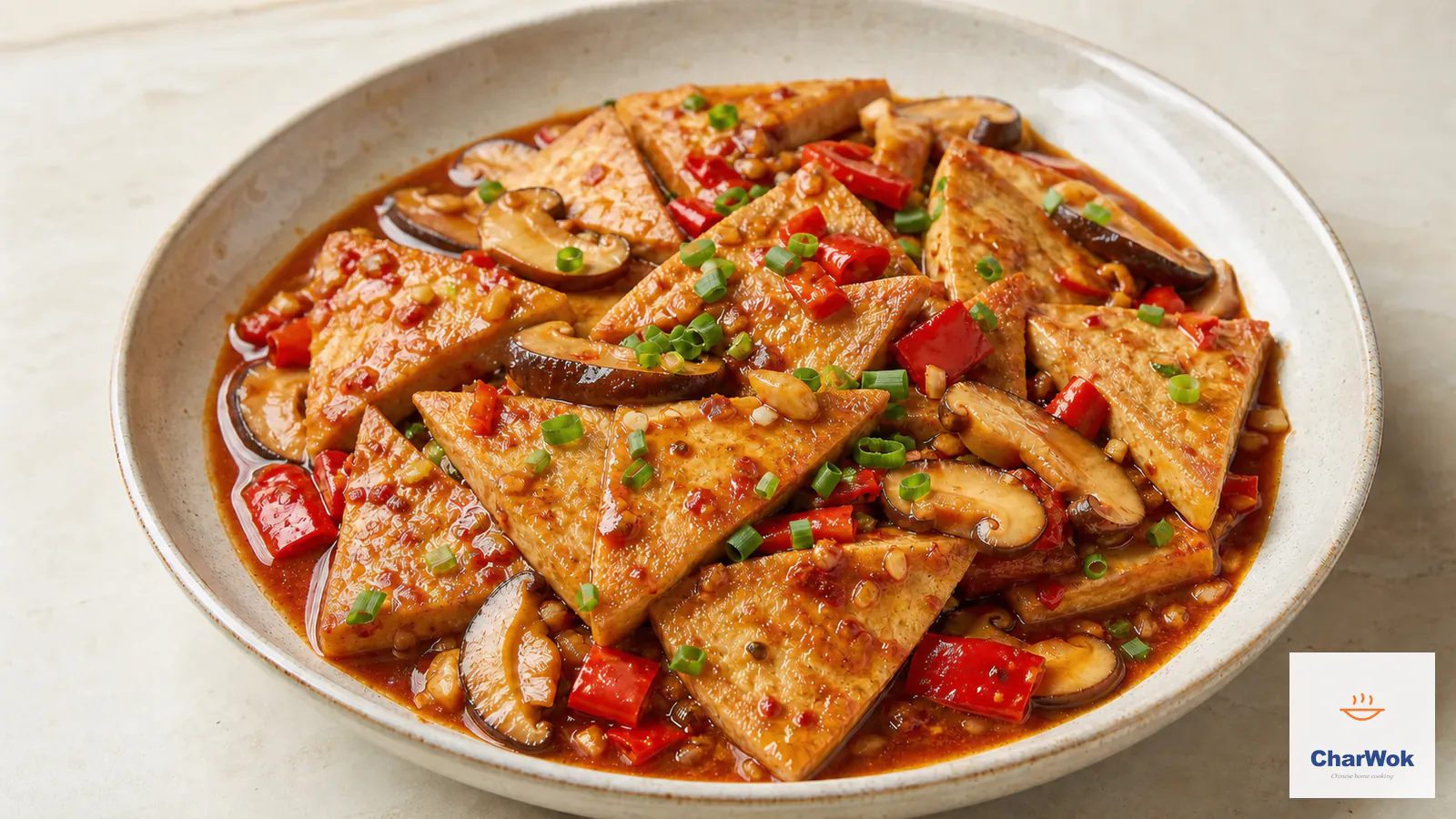
Swap the protein and you change the dish without losing the method. Ground dark-meat chicken is the cleanest sub. Crumbled firm tofu (pressed dry first, then broken into rough bits and fried hard in the chili oil) makes a genuinely good vegan version, closer in spirit to the home-style braised tofu family than to a sad substitute. My favorite left-field move is to use the mince from a pork and sour vegetable stir-fry as the filling; the pickled greens cut the richness in a way celery can't.
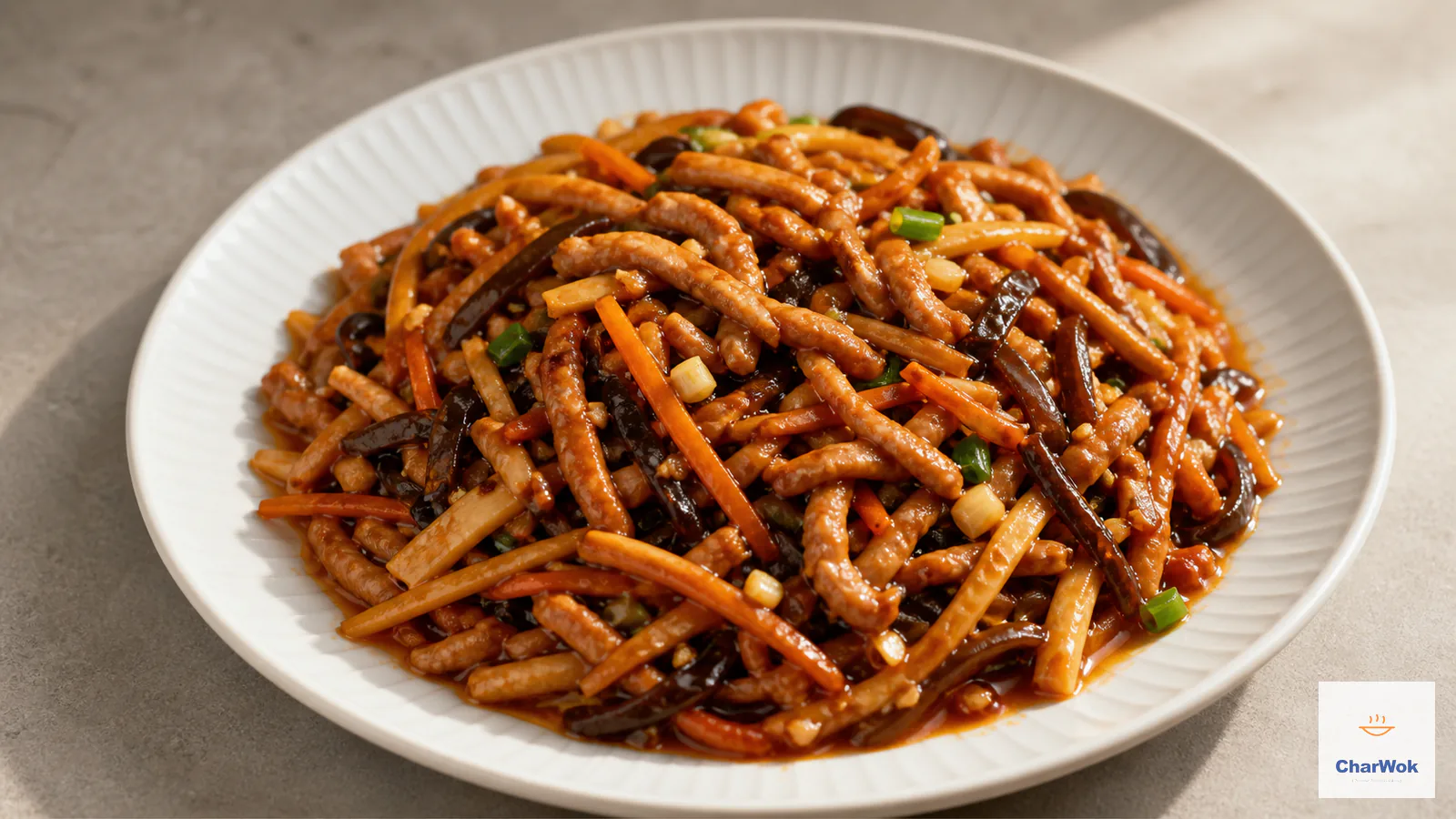
For a party spread, lettuce wraps play well as the cold-and-crunchy opening to richer dishes. I'll often run them in front of Moo Shu Pork or a braised pork belly, so the meal moves from light to substantial. A bowl of plain jasmine rice or a clear soup balances the heat. If anyone wants more spice, a small dish of chili oil on the side lets each person dial their own.
Storage and reheating
The filling keeps in a sealed container in the fridge for up to three days and reheats well, either 90 seconds in the microwave or in a dry pan over medium heat until just warmed through. The lettuce does not store once filled; the leaf goes limp and the filling weeps into it. Always store filling and leaves separately, and assemble at the moment you eat. I don't recommend freezing the filling; the mushrooms go spongy on thaw.
FAQ
Can I make this ahead for a party? Yes. Cook the filling a day in advance and refrigerate; reheat it gently while guests arrive. Prep and chill the lettuce separately, and assemble at the table.
Is it gluten-free? Not as written. Most doubanjiang contains wheat. Swap in a gluten-free pickled chili garlic sauce, or use a mix of Sriracha and tamari to mimic the heat and salt without the gluten.
No doubanjiang, what now? Pickled chili garlic sauce gives a brighter, more sour heat; black bean sauce gives a deeper, earthier one. Either works, the dish just lands in a different regional accent.
Why is my filling not red like the photo? The color comes from frying doubanjiang in oil before the meat. If the paste goes in with the meat, the oil never takes on the color. Fry the paste alone for ten seconds first.