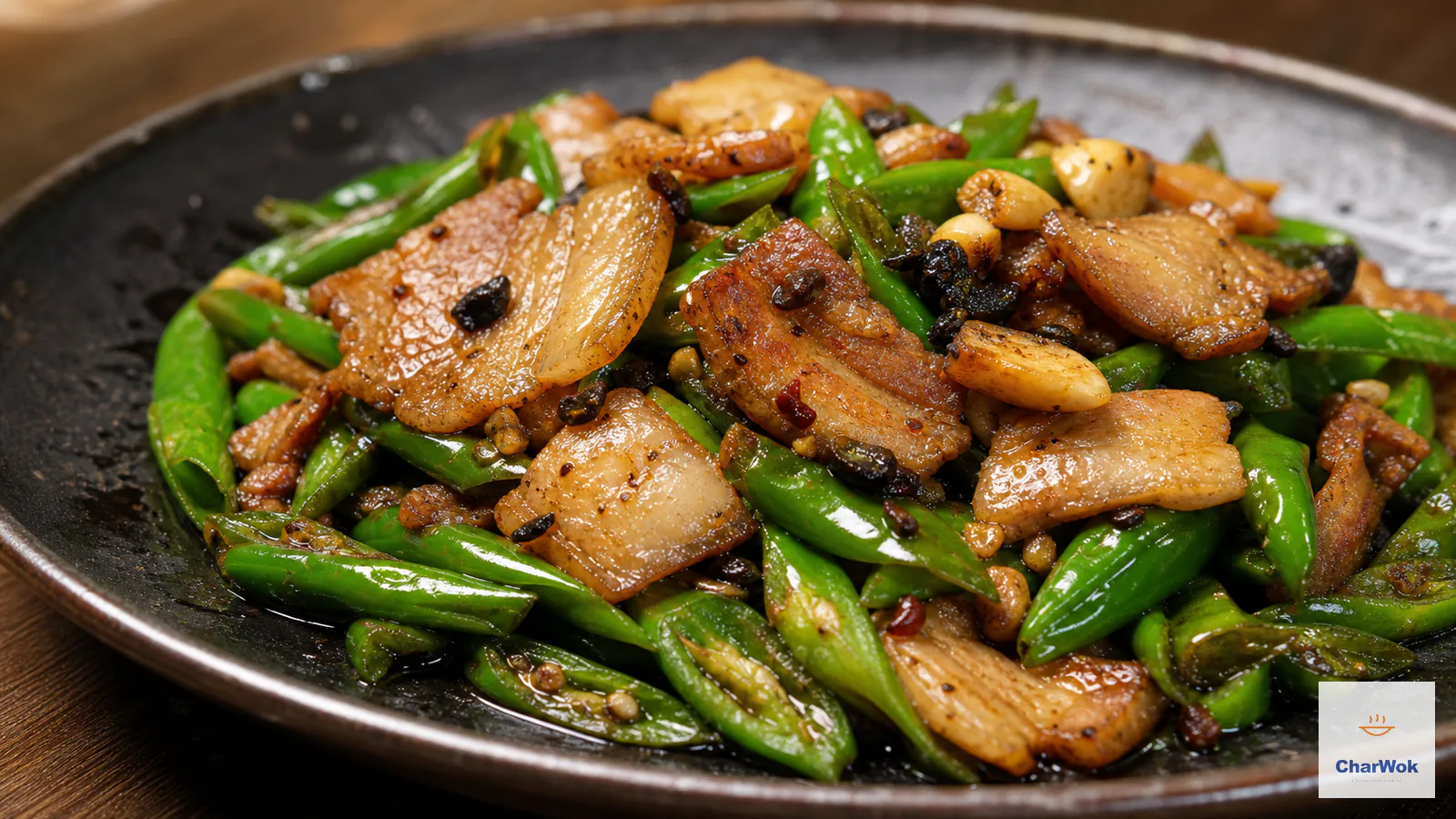
Most home cooks who order Hunan pork in a restaurant come home and try to copy it, and the result tastes like nothing. The pork turns gray and watery. The peppers stay raw and bright. The whole plate reads as "pork with peppers" rather than the smoky, blistered, fierce thing you remember. The gap between the dish you ate and the dish you made is not a recipe problem. It is a heat problem, a fat problem, and a sequence problem, and once you understand those three things, this becomes one of the fastest weeknight stir-fries in the whole repertoire. From cold wok to plate in about ten minutes, with no marinade and no sauce to mix.
The whole dish rests on one decision: render the pork belly slowly in its own fat, then blast the chilies in that fat over high heat. Three ingredients carry the flavor — pork belly, fresh hot chilies, fermented black beans. Sear, remove, char, combine, done in under 10 minutes.
In Hunan, the dish is called Xiao Chao Rou (小炒肉), literally "small stir-fried pork." The "small" refers to its humble origin as a quick everyday dish cooked in home kitchens and cheap canteens, not to its impact on the palate. Hunan cooking is one of the eight great regional cuisines of China, and unlike Sichuan food, which builds heat from dried chilies and Sichuan peppercorn, Hunan heat comes from fresh chilies. That single difference explains the dish. A fresh green chili, blistered in pork fat, hits you differently than a dried chili bloomed in oil. It is brighter, fruitier, and the heat climbs rather than detonates. If you want to understand Hunan cooking in one bite, this is the bite.
What makes it work, and where people fail
There are three things going on in the wok, and a failure in any of them ruins the dish.
One: rendering, not boiling. Pork belly is roughly half fat. If you toss cold slices into a hot wok with too little heat, the fat melts slowly and pools, and the meat boils in its own liquid. You get gray, rubbery pork and a greasy sauce. If you crowd the wok or add the meat before the pan is hot, you also get the gray boil. The goal is the opposite: a brief sear that browns the surface through Maillard browning while the fat renders out and becomes the cooking medium for everything else. You are not just cooking the pork here. You are making the fat the rest of the dish cooks in.
Two: charring the chilies. A Hunan cook wants the chilies blistered, collapsed, and slightly blackened at the edges. This is what releases the smoky, sweet aromatic compounds that dried chilies cannot give you. Underblistered chilies taste grassy and sharp. They are the single most common reason a homemade version reads as flat.
Three: a dry finish, not a sauce. There is no cornstarch slurry in this dish. There is no broth. The finished plate should look glistening but not wet, the pork and chilies coated in a thin film of seasoned fat and soy. The first time I cooked this I instinctively reached for water to deglaze, and I produced a sad braise. That is the beginner instinct and it is wrong here.
Ingredients
Ingredients at a glance
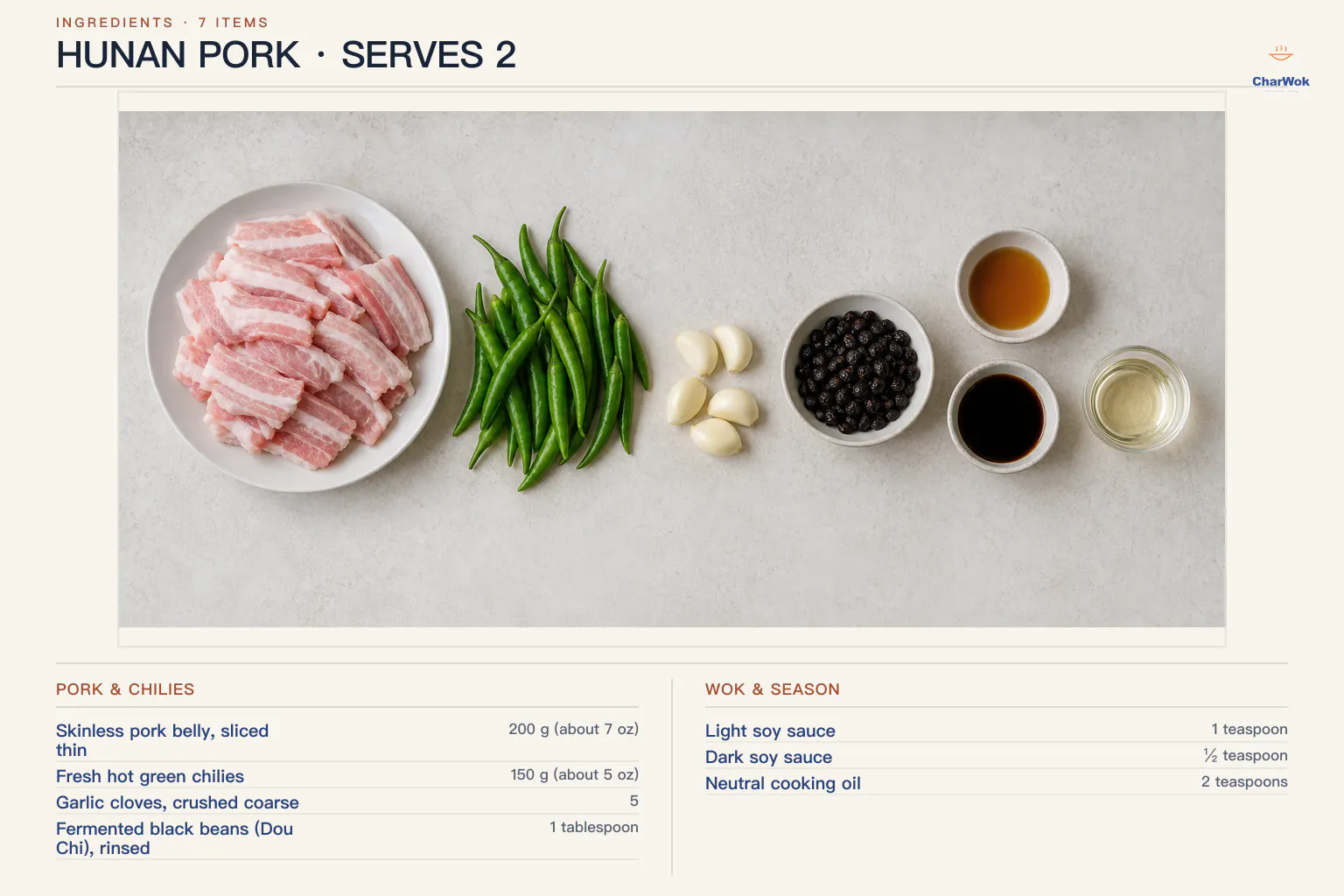
Two servings. This is a dish you cook to order, not a dish that benefits from scaling up into a giant batch. A crowded wok is the enemy of the sear.
| Ingredient | Amount | Notes / substitute |
|---|---|---|
| Skinless pork belly, sliced thin | 200 g (about 7 oz) | Shoulder or pork loin works if you add 1 tbsp oil; the flavor will be leaner. See the cut notes below. |
| Fresh hot green chilies | 150 g (about 5 oz) | Jalapeño for a mild-medium hit; serrano or Fresno for real heat; any wrinkly thin-walled green chili (shishito, Anaheim mixed with jalapeño) gets you closest to the Hunan Luo Xuan Jiao. Bell pepper for zero heat. |
| Garlic cloves, crushed coarse | 5 | Smash with the side of a knife; do not mince. You want big pieces that char. |
| Fermented black beans (Dou Chi), rinsed | 1 tablespoon | Dried style preferred. Substitute 1 tbsp black bean sauce or Laoganma black bean chili sauce, and reduce the salt slightly. |
| Light soy sauce | 1 teaspoon | For salty, savory base. Understand light vs dark soy if unsure. |
| Dark soy sauce | ½ teaspoon | For color and a faint caramel sweetness. Skip if you only have light; the dish just won't brown as deeply. |
| Neutral cooking oil | 2 teaspoons | Peanut, canola, or avocado. High smoke point matters here. |
A note on the cut of pork
Pork belly is non-negotiable if you want the real thing, because you need that fat to render and become the cooking medium for the chilies. The leaner cuts used in dishes like Moo Shu Pork or fish-fragrant shredded pork will not give you the same result. Skinless is important: a quick stir-fry never cooks the skin through, so it stays rubbery. Either buy skinless belly or trim the skin off yourself with a sharp knife. To slice thin, chill the slab in the freezer for 30 to 60 minutes first: firm but not frozen solid slices cleanly.
You do not marinate this pork. No cornstarch, no Shaoxing wine, no egg white. A velveted pork slice would steam instead of sear, and the whole point of the dish is the hard, dry contact between meat and hot metal. If you have only ever cooked pepper steak, this will feel wrong. Trust it.
A note on the chilies
In Hunan the dish is built around Luo Xuan Jiao, a deeply wrinkled green chili with serious heat and thin walls that char fast. You will not find it in a standard American supermarket. The honest substitutes, in descending order of authenticity: any thin-walled wrinkly green chili from an Asian market; a mix of serrano and Anaheim; straight serrano; jalapeño (mild but workable). For a milder version that keeps the structure, halve and deseed the chilies, or swap part of them for poblano. If you cannot tolerate any heat at all, use bell pepper cut in strips. You lose the soul of the dish, but the technique still produces something good, the same way tiger-skin peppers stay delicious even mild.
The method
- Prep everything before the wok goes on. Slice the pork about 3 mm thick. Cut the chilies into 3 cm chunks, seeds in or out depending on your heat tolerance. Crush the garlic roughly. Rinse the fermented black beans under a tap and pat them dry on paper towel; wet beans will spit and dilute the fat. Measure out both soy sauces into one small dish. Once the wok is hot, you will not have time to hunt for anything.
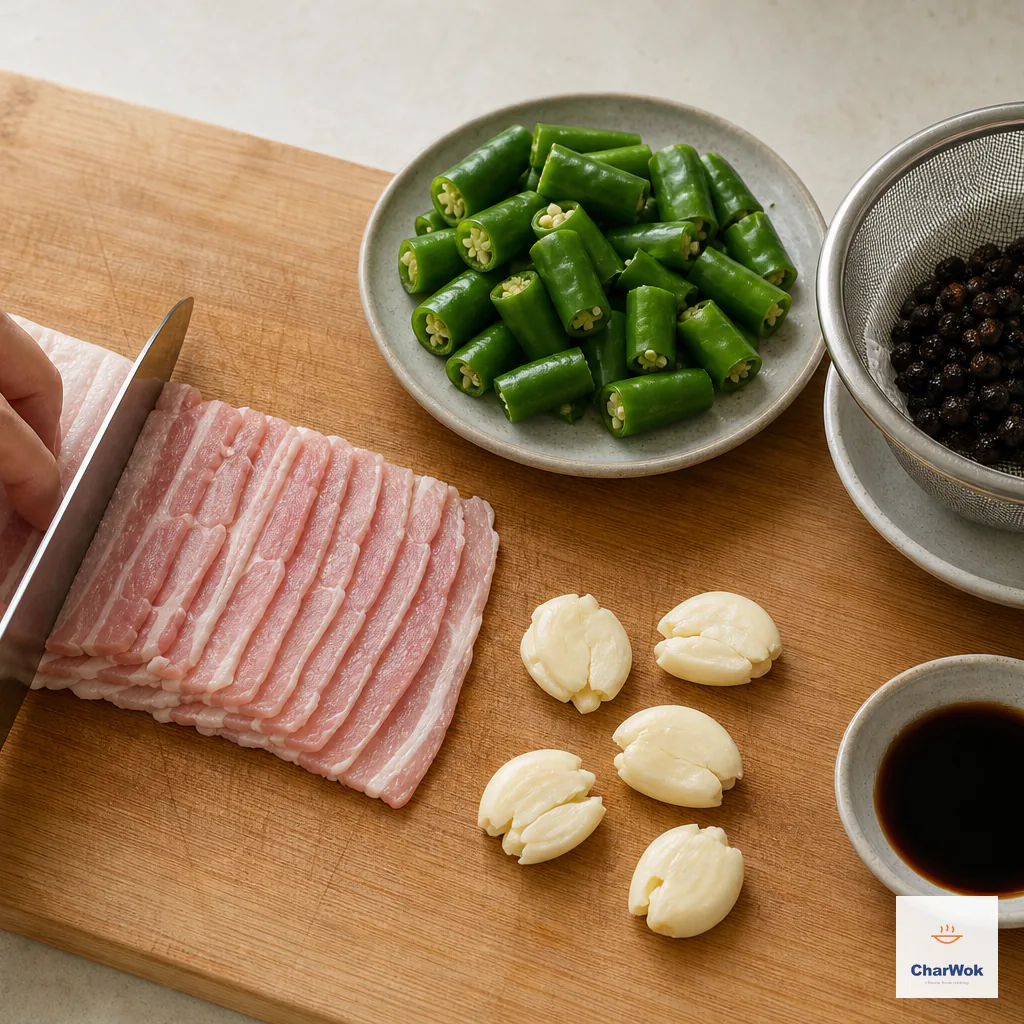
Slice the pork to about 3 mm, chunk the chilies, smash the garlic, rinse and dry the beans, and measure both soy sauces before heating the wok.
- Heat the wok until it smokes. This is the make-or-break step. Use a carbon-steel or cast-iron wok if you have one (see how to choose, season, and maintain a traditional wok). Set it over high heat until a drop of water dances and evaporates instantly and the metal throws a faint wisp of smoke. If you are using a nonstick wok, do not do this; instead add the oil as you turn on the heat and wait until the oil shimmers before adding the pork. Nonstick coatings cannot take dry heat this fierce.
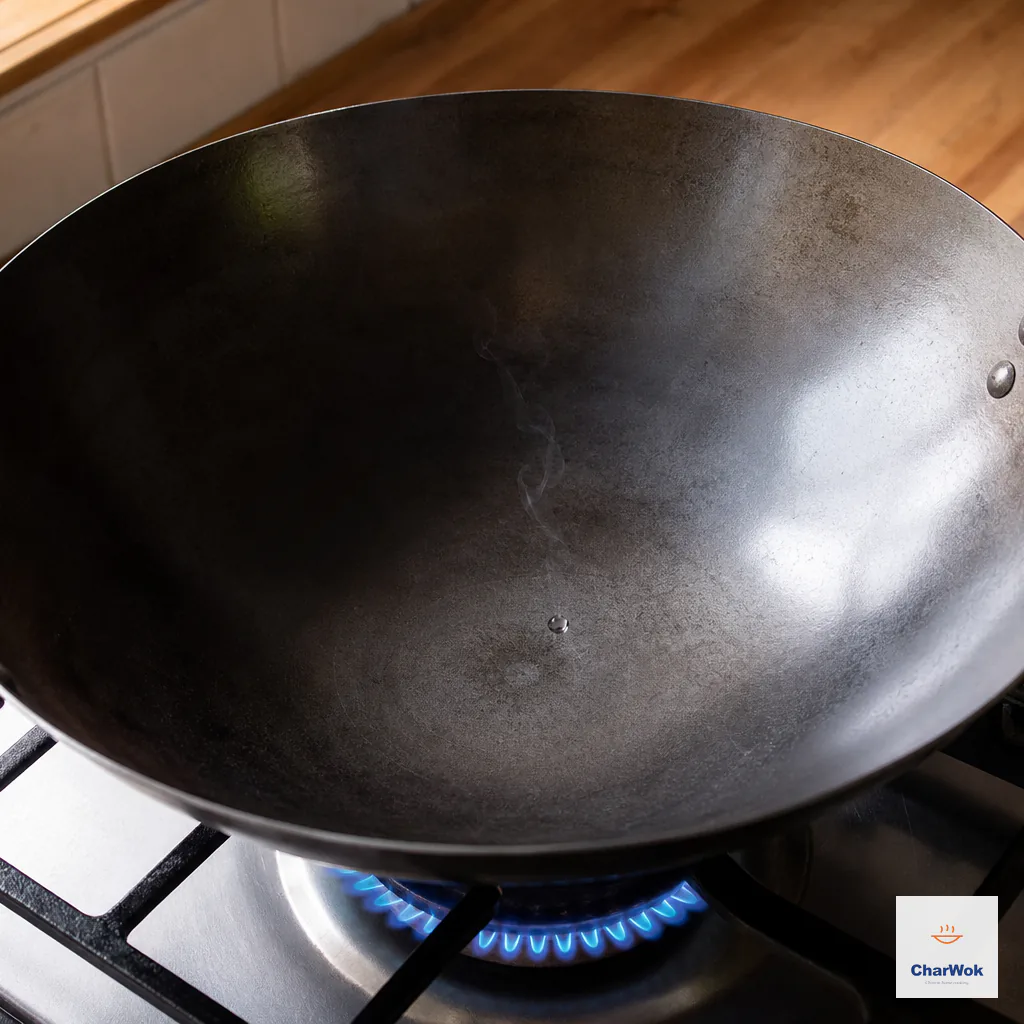
Heat a carbon-steel wok until a water drop vanishes instantly and the metal releases a faint wisp.
- Sear the pork. Add the 2 teaspoons of oil and swirl. Add the pork in a single layer; do not pile it. Let it sit untouched for 20 to 30 seconds so the underside browns, then stir. Drop the heat to medium and keep stirring occasionally. You are watching for two things: the edges crisping and browning, and a clear pool of liquid fat forming in the bottom of the wok. This takes about 3 minutes. If the pork is grey and there is watery liquid rather than clear fat, your heat was too low — keep going until the water cooks off and the fat turns clear.
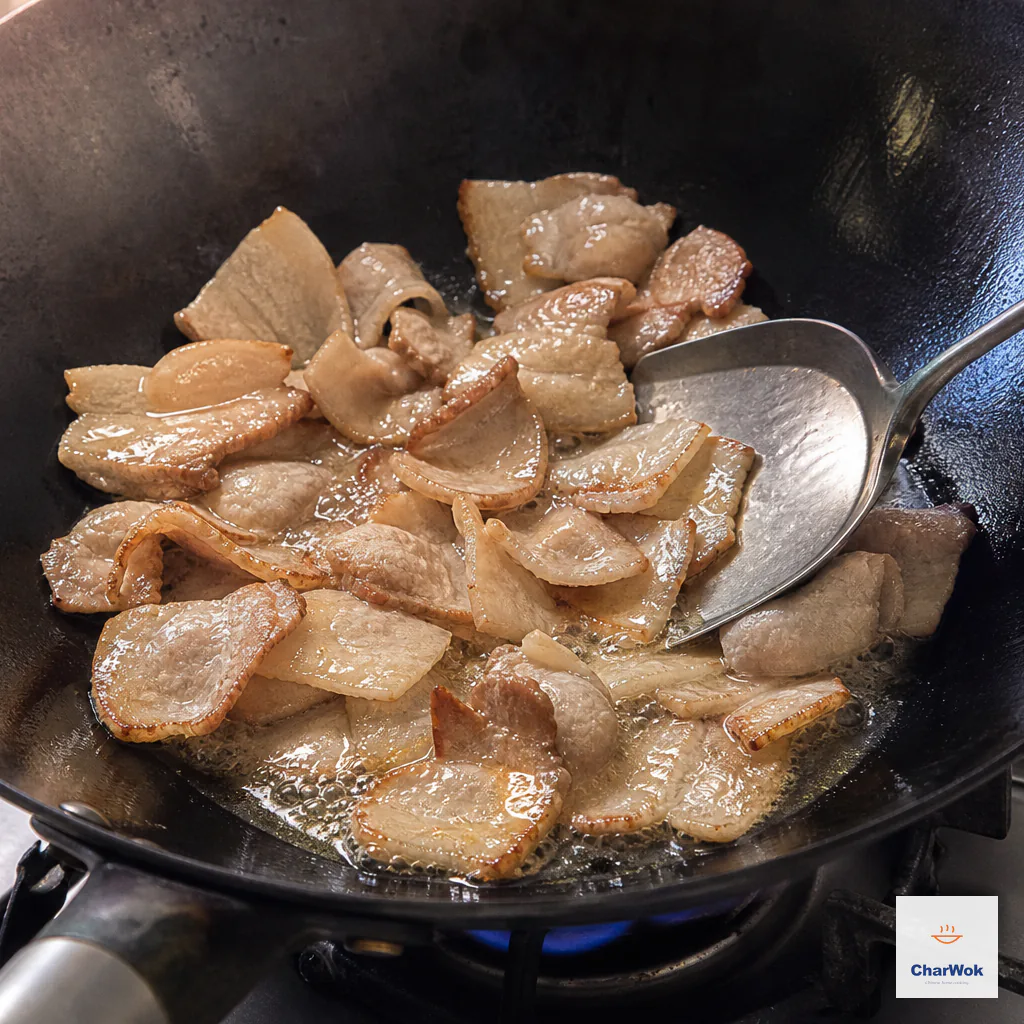
Sear briefly, then stir over medium heat until the edges curl and brown and the rendered fat turns clear, about 3 minutes.
- Remove the pork, leave the fat. Scoop the pork out onto a plate. You should be left with a couple of tablespoons of rendered pork fat in the wok. This is gold: it is already seasoned with pork flavor and browned bits, and it is what will fry the chilies.
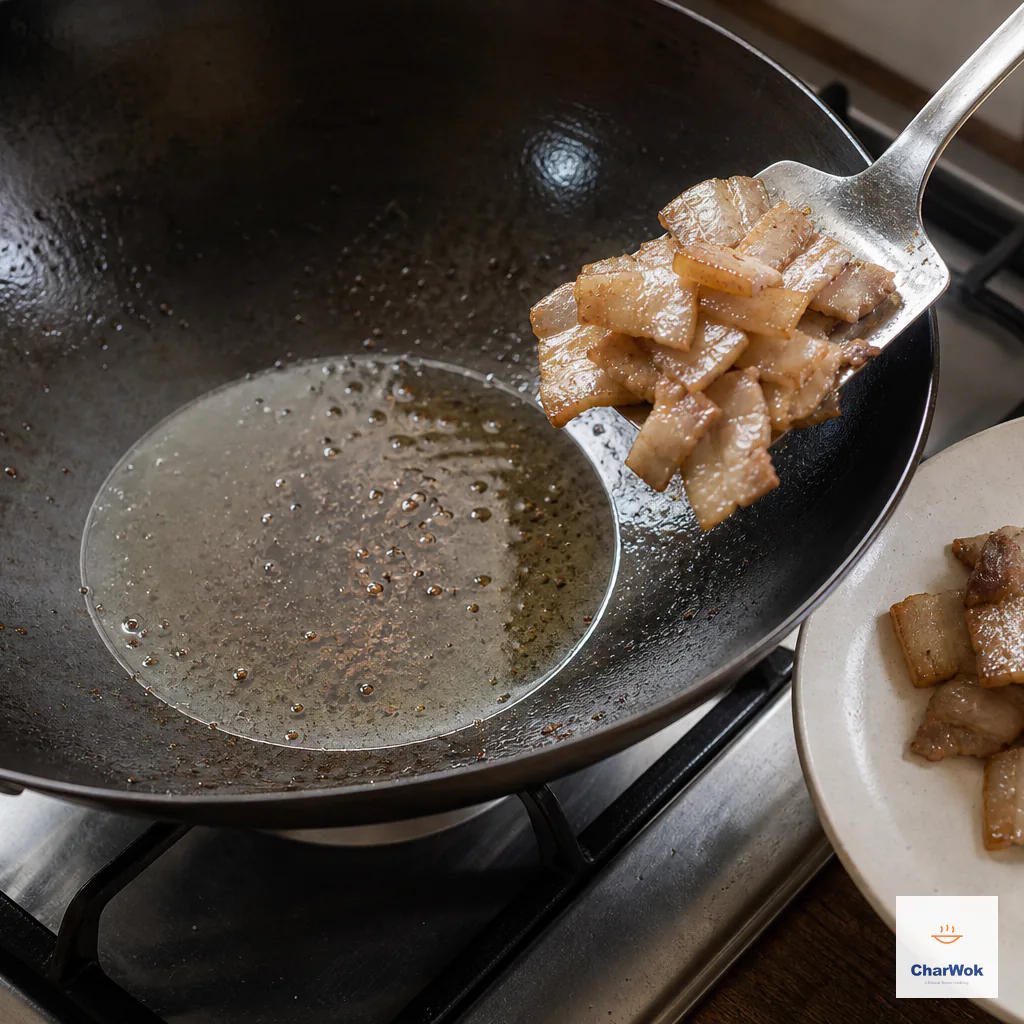
Scoop out the pork and leave every drop of the clear seasoned fat in the wok for the chilies.
- Char the chilies and garlic. Turn the heat up to high again. Add the chilies and crushed garlic directly to the hot fat. Toss to coat, then let them sit in contact with the metal for bursts of 10 to 15 seconds between tosses so they blister. You want dark spots on the chili skins, collapsed walls, and garlic that is golden at the edges, about 2 minutes total. Vent your kitchen; aerosolized chili oil from a hot wok will make you cough.
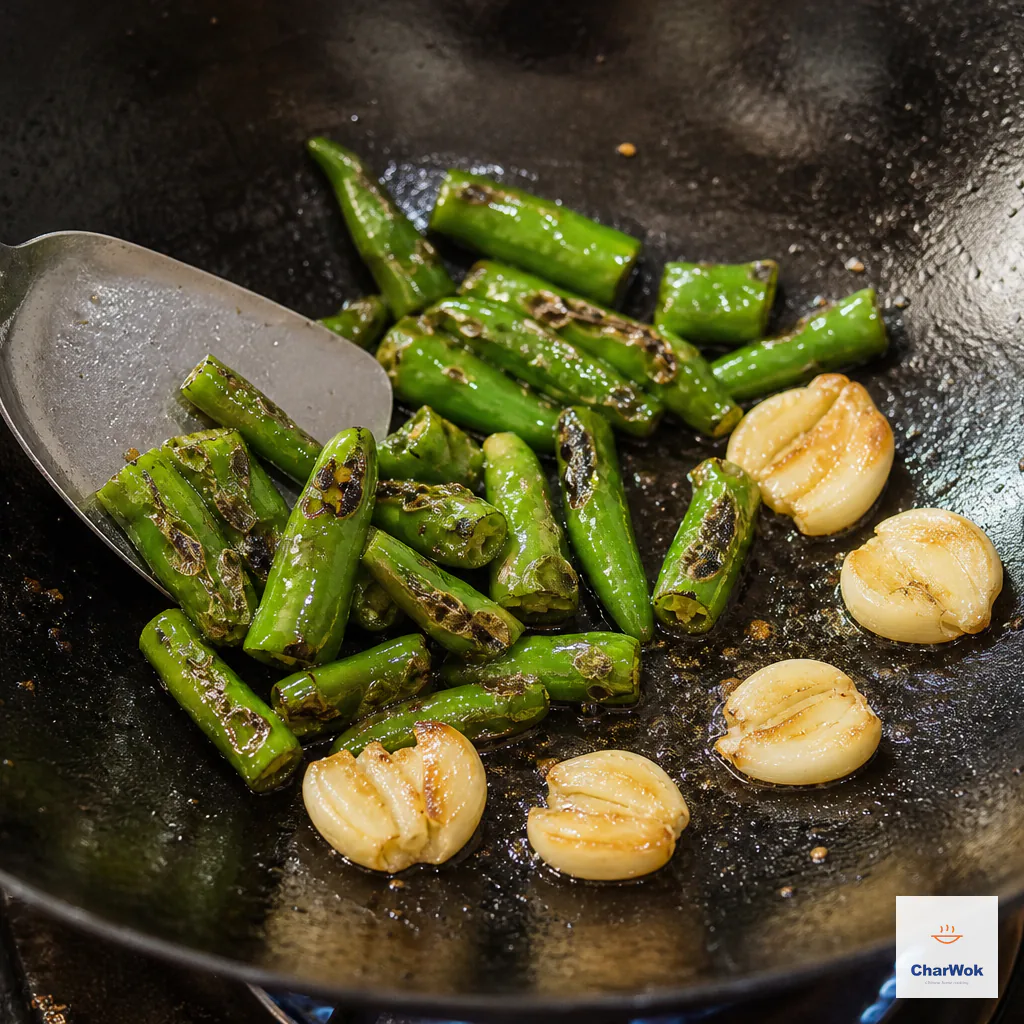
Char the chilies and garlic in short 10–15 second contacts until the skins blister and begin to collapse, about 2 minutes.
- Combine and season. Return the pork to the wok. Add the drained fermented black beans, the light soy, and the dark soy. Stir-fry for 30 seconds, no more. The beans only need to warm through and release their savory funk; overcooking kills the aroma. Taste a piece of pork. Add a small pinch of salt if your soy sauce is light, but usually the beans carry enough salt.
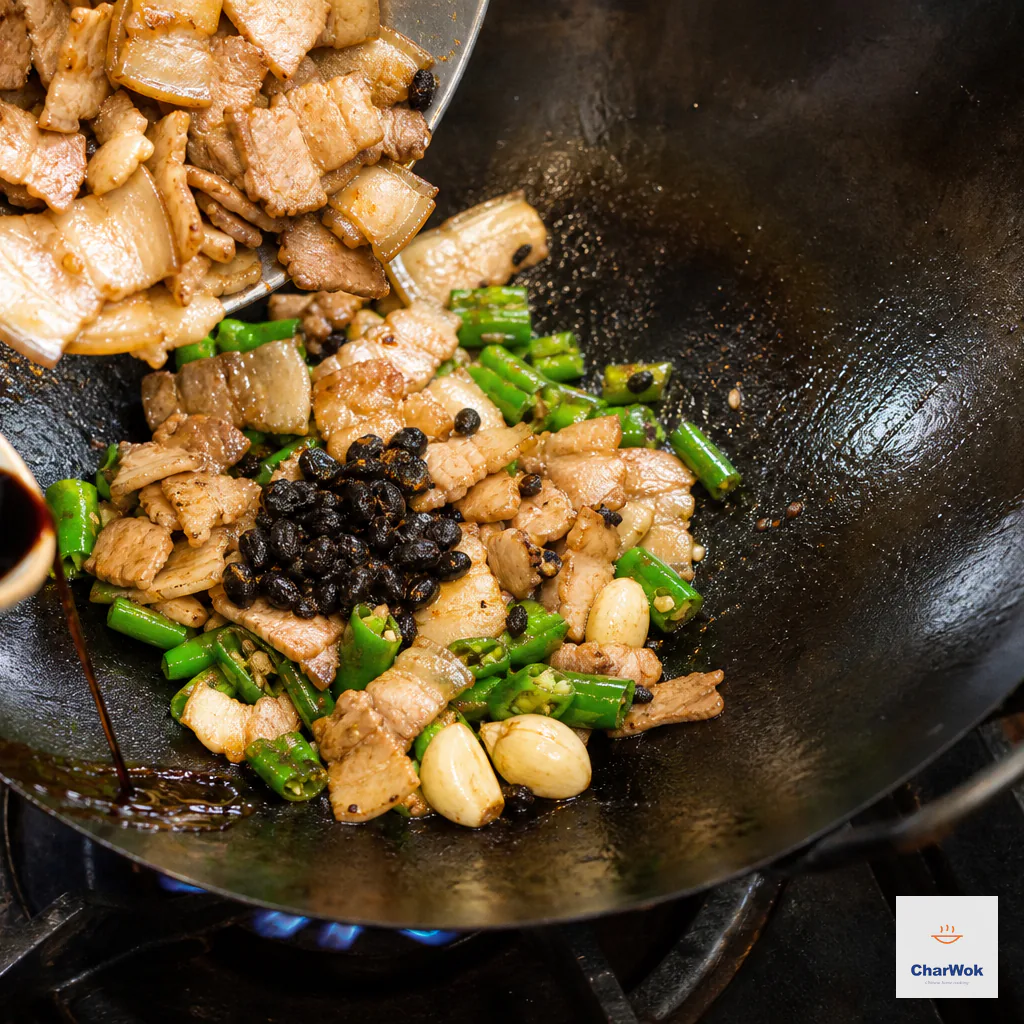
Return the pork, add the drained black beans and drizzle both soy sauces around the hot wok wall; toss for no more than 30 seconds.
- Plate immediately. Scrape everything out, including every drop of the seasoned fat. Serve over plain steamed jasmine rice. This dish does not wait: the chilies go limp and the pork tightens as it sits.
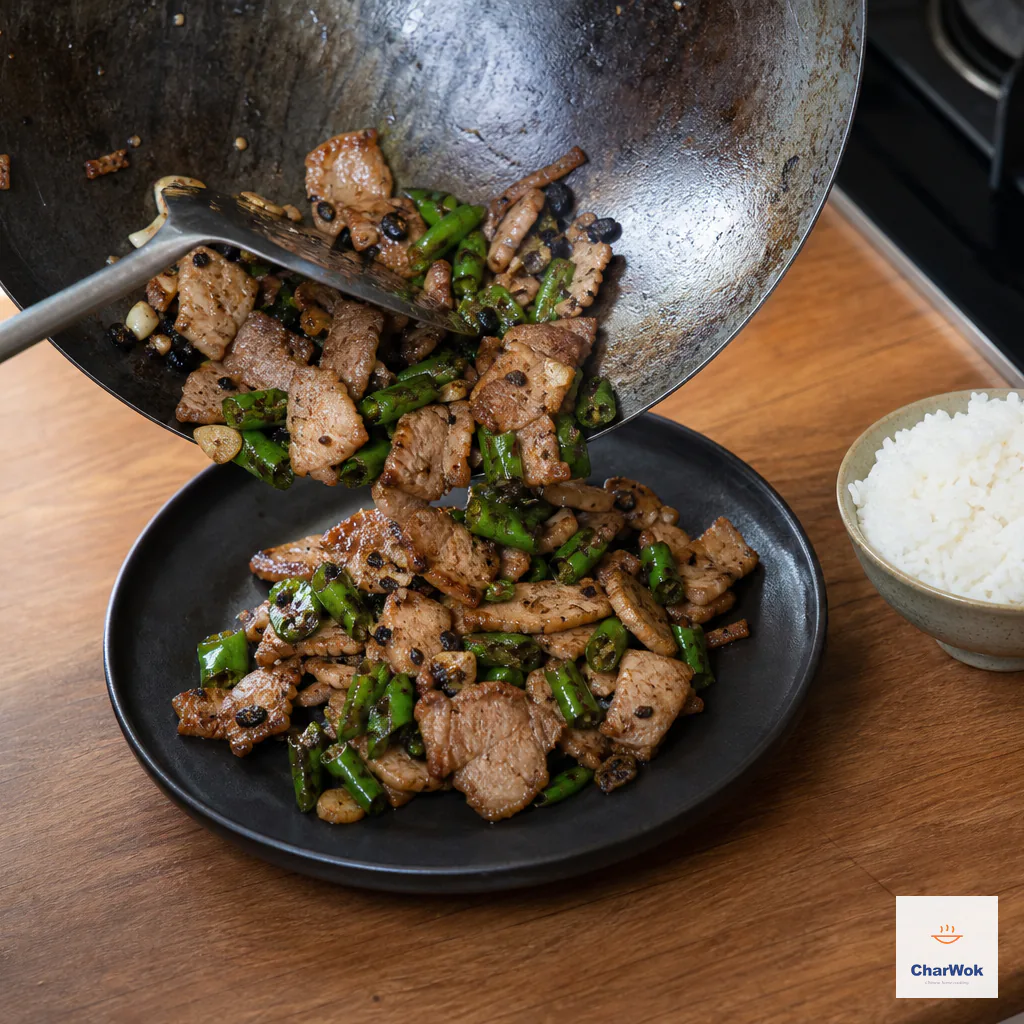
Scrape the stir-fry and seasoned fat onto a plate immediately and serve with plain jasmine rice.
When it goes wrong
Gray, rubbery pork that released a flood of liquid. The wok was not hot enough or the pork was crowded. Next time, get the metal smoking before the oil goes in, work in two batches if your wok is small, and never add cold pork straight from the fridge. Let it sit out 10 minutes first.
Dish tastes flat and one-dimensional. The chilies did not char. People are scared to burn them. You want real black blisters. Push the heat higher and be patient with the blistering step; it is where the smoky depth comes from.
It came out greasy. Either the pork belly was too fatty and you did not render long enough, or you added too much oil at the start. If after rendering you have more than a thin slick of fat in the wok, pour off the excess before adding the chilies. Save it; rendered pork fat keeps in the fridge and is superb for frying rice or eggs.
The chilies were violently hot and inedible. You used a hotter variety than you realized, or you left all the seeds and ribs in. For serrano or hotter, halve them and scrape out the seeds and white ribs before charring. Heat lives in the pith, not the flesh.
The fermented black beans taste bitter. They burned. Add them only at the very end, with the soy sauces, and keep the combined stir-fry to 30 seconds. They are an aromatic, not something you fry hard.
Variations and pairings
Add a vegetable. Thinly sliced onion, added with the chilies, mellows into sweetness and stretches the dish. Halved green beans work too; the closest relative is dry-fried green beans logic. Avoid watery vegetables like zucchini, which will kill your sear.
Swap the protein. The same technique, fat and all, applies to chicken thigh (see Hunan chicken) and to flank or sirloin steak in Hunan beef. Beef will not render fat the way belly does, so add an extra teaspoon of oil at the start. The Sichuan cousin, twice-cooked pork, uses the same render-then-stir-fry logic with chili bean paste instead of fresh chilies.
Turn up the umami. A teaspoon of Chiu Chow chili oil or a spoon of Laoganma stirred in at the end gives a deeper, oilier version closer to the canteen style. A few dried shiitake slices, rehydrated and added with the chilies, add an earthy note.
What to serve with it. Plain rice is mandatory; it absorbs the chili oil and seasoned fat. Add a cooling, plain vegetable to balance the heat: smashed cucumber salad, blanched bok choy, or a bowl of egg drop soup. A quick plate of stir-fried napa cabbage rounds it out into a full meal.
Storage and reheating
This is a cook-to-order dish. Leftovers keep in the fridge for up to two days, but the chilies soften and the pork tightens. To reheat, use a dry hot pan for 60 seconds, never the microwave, which turns the pork belly rubbery and pulls the fat out into a greasy puddle. Honestly, leftover Hunan pork folded into fried rice the next morning is better than the original dinner.
Frequently asked questions
Do I really need to take the pork out of the wok? Yes. If you leave it in while the chilies char, the pork overcooks into leather. Removing it for two minutes is the entire point of the two-stage cook.
Can I use pork loin to make it leaner? You can, but it is a different dish. Add a tablespoon of oil to compensate for the missing fat, and pull the pork the instant it browns, because loin dries out in seconds.
Is there a substitute for fermented black beans? A spoon of black bean sauce or Laoganma chili oil with beans works. Without beans at all, the dish is still good but loses its signature savory depth.
Why no cornstarch or marinade? Velveted pork steams instead of sears, and a cornstarch slurry turns the dry char into a sauce. The whole identity of the dish depends on skipping both.
How spicy is the authentic version? Very. Hunan food is among the hottest in China, hotter to most palates than the numbing Sichuan style, because fresh chili heat is sharper and more immediate.