The first time I tried to make pineapple fried rice at home, I ended up with something closer to sweet pineapple congee. The rice clumped, the beef turned grey and ropey, and the fruit collapsed into mush that flooded the wok. The dish I had eaten out of a hollowed pineapple shell, glossy and golden with each grain standing apart, looked nothing like the wet pile in front of me. That gap, between the restaurant plate and the home wok, almost always comes down to three things: cold rice, hot oil, and how you treat the beef.
This version pairs quick-seared beef with ripe pineapple and red bell pepper, finished with light soy sauce and served in the shell. It is a fast one-bowl meal, but the speed is a trap. Every step rewards preparation and punishes hesitation.
Use rice that has spent at least a night in the fridge, marinate the beef for 10 minutes in cornstarch and oil so it stays juicy, and sear it hot and brief, then pull it before it goes back in. Keep the wok smoking for the rice and add the soy sauce around the edge of the pan, never straight onto the grains. Cold rice plus a clean, screaming-hot wok is the whole secret.
What this dish is, and where it comes from
Beef and pineapple fried rice sits at a fork in the road. One branch leads to the Thai-Chinese pineapple fried rice you find in Bangkok seafood restaurants, built on curry powder, fish sauce, and cashews. The other leads to the southern Chinese home style, which skips the curry and leans on a clean sweet-savory balance between ripe fruit, light soy, and a quick-seared protein. This recipe follows the Chinese branch. It is the simpler of the two, and for a weeknight I think it is the better one.
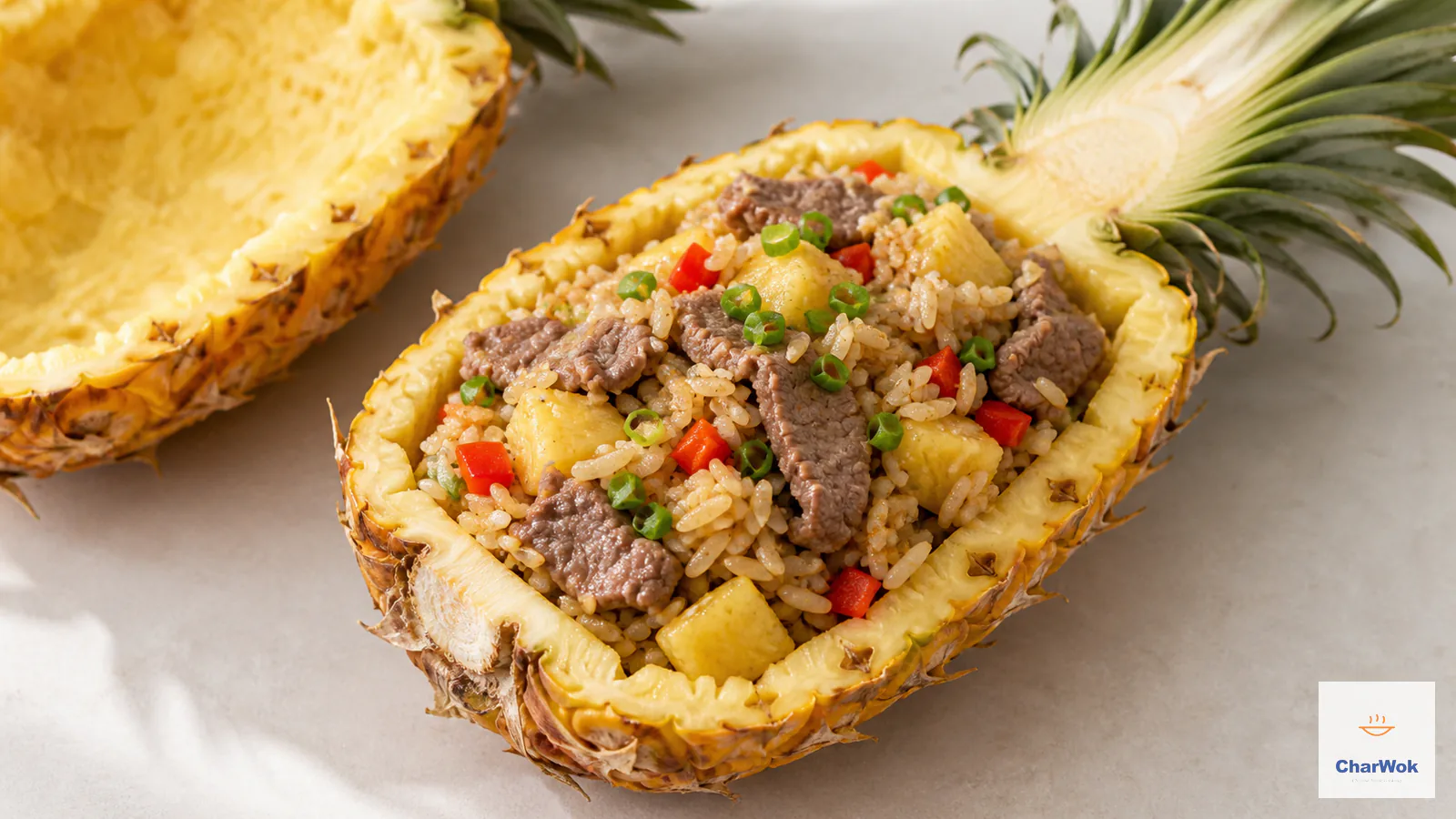
Serving the rice inside the pineapple shell is more than a flourish. The hollowed half still holds fragrant juice and residual flesh, and the heat of the rice wakes up the esters in the fruit. You taste it on the first bite. If you do not want to bother, a bowl works fine, but you lose that perfumed finish.
Ingredients
Ingredients at a glance
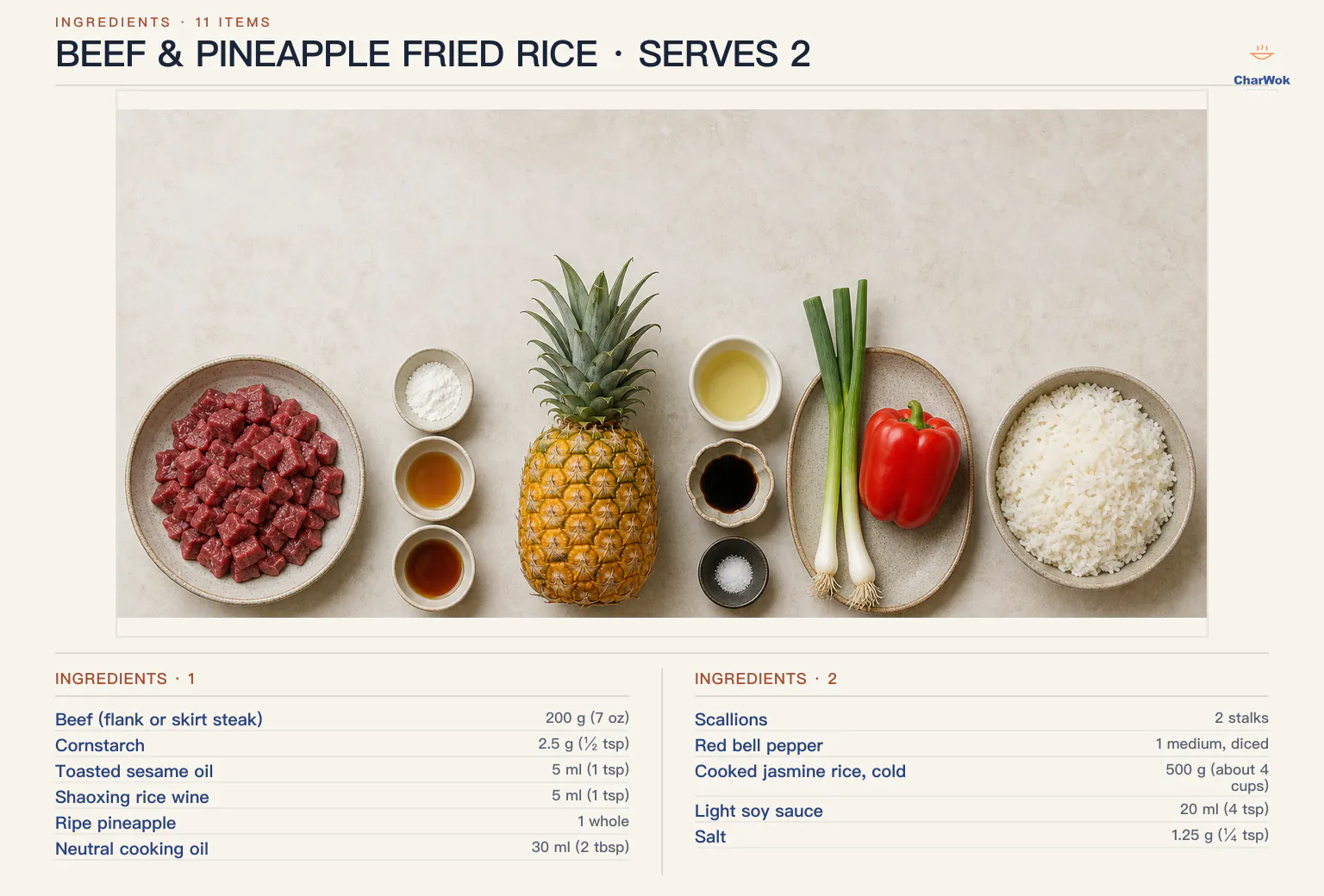
Scaled for two as a main, four as part of a larger spread. I lean on grams for the marinade because the cornstarch ratio is what keeps the beef tender; everything else is forgiving.
| Ingredient | Amount | Notes / substitute |
|---|---|---|
| Beef (flank or skirt steak) | 200 g (7 oz) | Flank is my default; skirt is looser and juicier. Cut into 1 cm (⅜ in) dice against the grain. |
| Cornstarch | 2.5 g (½ tsp) | The tenderizer. Tapioca starch works and gives a slightly clearer coating. |
| Toasted sesame oil | 5 ml (1 tsp) | For the marinade only. Do not use it as a frying oil; it burns. |
| Shaoxing rice wine | 5 ml (1 tsp) | Dry sherry is the closest substitute. See Shaoxing rice wine. |
| Ripe pineapple | 1 whole | Smell the base; sweet means ripe. An underripe one is acidic and harsh in the wok. |
| Neutral cooking oil | 30 ml (2 tbsp) | Canola, grapeseed, or avocado. High smoke point matters more than flavor here. |
| Scallions | 2 stalks | Split the white and green parts. Whites go in early, greens finish the dish. |
| Red bell pepper | 1 medium, diced | For color and crunch. Yellow or orange work; green is too bitter here. |
| Cooked jasmine rice, cold | 500 g (about 4 cups) | Must be at least overnight cold. See how to cook jasmine rice on the stove for the base. |
| Light soy sauce | 20 ml (4 tsp) | Light, not dark. Dark soy will muddy the color; check light vs. dark soy sauce. |
| Salt | 1.25 g (¼ tsp) | To taste. The soy sauce is already salty, so taste before adding more. |
Why the rice has to be cold
Freshly cooked rice is full of water held loosely inside each grain. The moment it hits a hot wok, that water bursts out and steams the neighboring grains into a sticky mass. That is how you get clumps. Cold rice, refrigerated for at least eight hours, has gone through retrogradation: the starch molecules have re-crystallized and locked the water in place. The grain firms up, the surface dries, and in the wok it separates instead of melting together.
If you forgot to make rice ahead, spread fresh rice on a tray and chill it uncovered for an hour, or freeze it for 20 minutes. It will not be as good as true overnight rice, but it beats frying warm. Before it goes in the pan, break the cold block apart with wet fingers or the back of a fork. A few drops of water on your hands stop the rice from sticking to you instead of itself.
The beef: velvet it, then leave it alone
The reason stir-fried beef in restaurants is soft and the beef you make at home is tough is almost never the cut. It is the marinade and the cooking time. A thin coating of cornstarch, a little oil, and a splash of wine change the surface of the meat so it holds onto moisture through a fast sear. This is a stripped-down version of the velveting technique that powers dishes like black pepper beef stir-fry and beef and broccoli.
Marinate for ten minutes, not forty. Longer does not make it more tender here; the cornstarch is not acting as a tenderizer the way baking soda does, it is acting as a coating, and it needs only enough time to hydrate onto the surface. The real rule for tenderness is the cook time: sear the beef until it just loses its red, then pull it out. It will finish cooking in the residual heat of the rice at the end. If you let it ride in the wok until it is fully done, it will be chewy by the time you sit down.
Method
Have every ingredient prepped and within arm's reach before you turn on the stove. Once the wok is hot, there is no time to dice a pepper.
- Marinate the beef. In a small bowl, toss the diced beef with the cornstarch, sesame oil, and Shaoxing wine until each piece is coated. Let it sit at room temperature for 10 minutes. The cornstarch needs that time to hydrate into a thin film; the oil keeps the pieces from sticking to each other and to the pan.
- Carve the pineapple. Cut the pineapple in half lengthwise, crown and all. Run a knife around the inside edge, about 1 cm (⅜ in) from the rind, then score the flesh in a grid and lift the cubes out with a spoon. Save the two hollow shells. Dice any large pieces down to roughly 1 cm (⅜ in) so they match the bell pepper and beef in size. Uneven sizes are the difference between a balanced bite and one that is all pineapple.
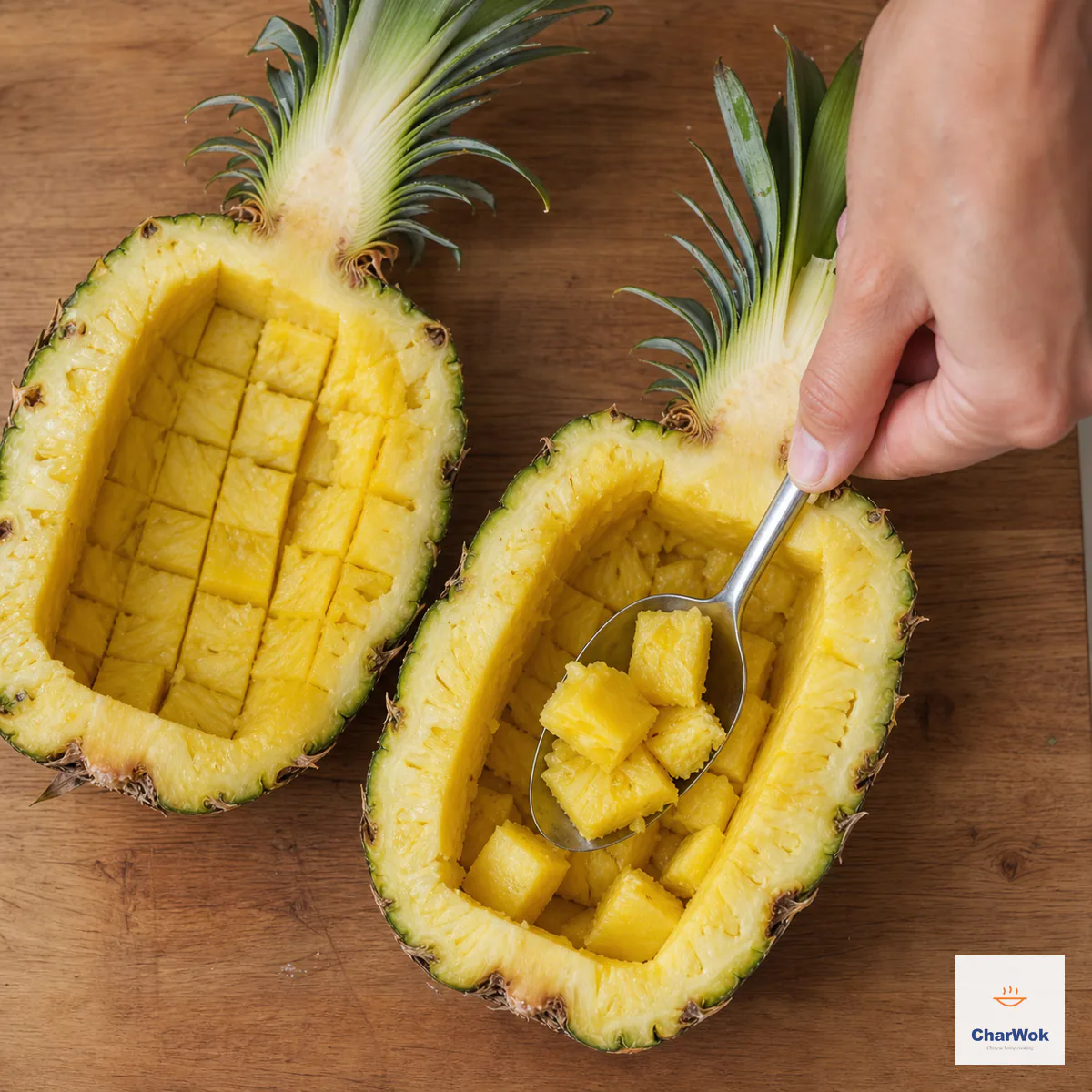
Score and spoon out small cubes while leaving about a 1 cm wall; keep both pineapple shells intact for serving.
- Prep the rice. Break the cold rice apart with wet fingers until no clumps remain. Lumps now mean lumps forever; the wok will not fix them.
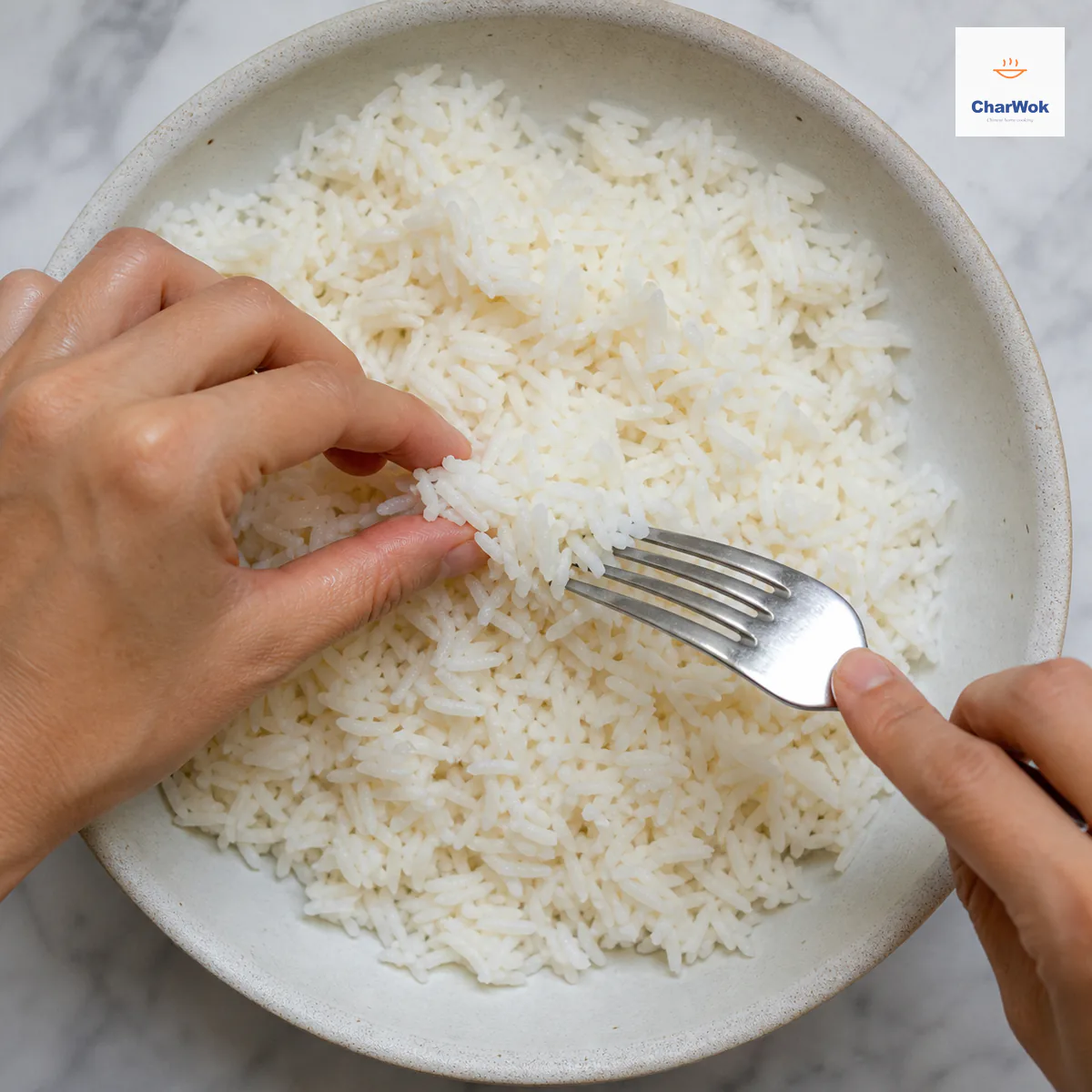
Break every cold clump apart before the wok; damp fingers and a fork should leave loose individual grains.
- Sear the beef, then pull it. Get a carbon-steel wok or a wide heavy skillet ripping hot, until a drop of water dances and evaporates in a second. Add 1 tablespoon of the oil, swirl, then add the beef in a single layer. Let it sit for 15 to 20 seconds before stirring so the underside colors. Toss just until the pieces lose their raw red, about 45 seconds total. Dish the beef out and leave the oil behind. This is the step people skip, and it is the reason their beef turns out tough.
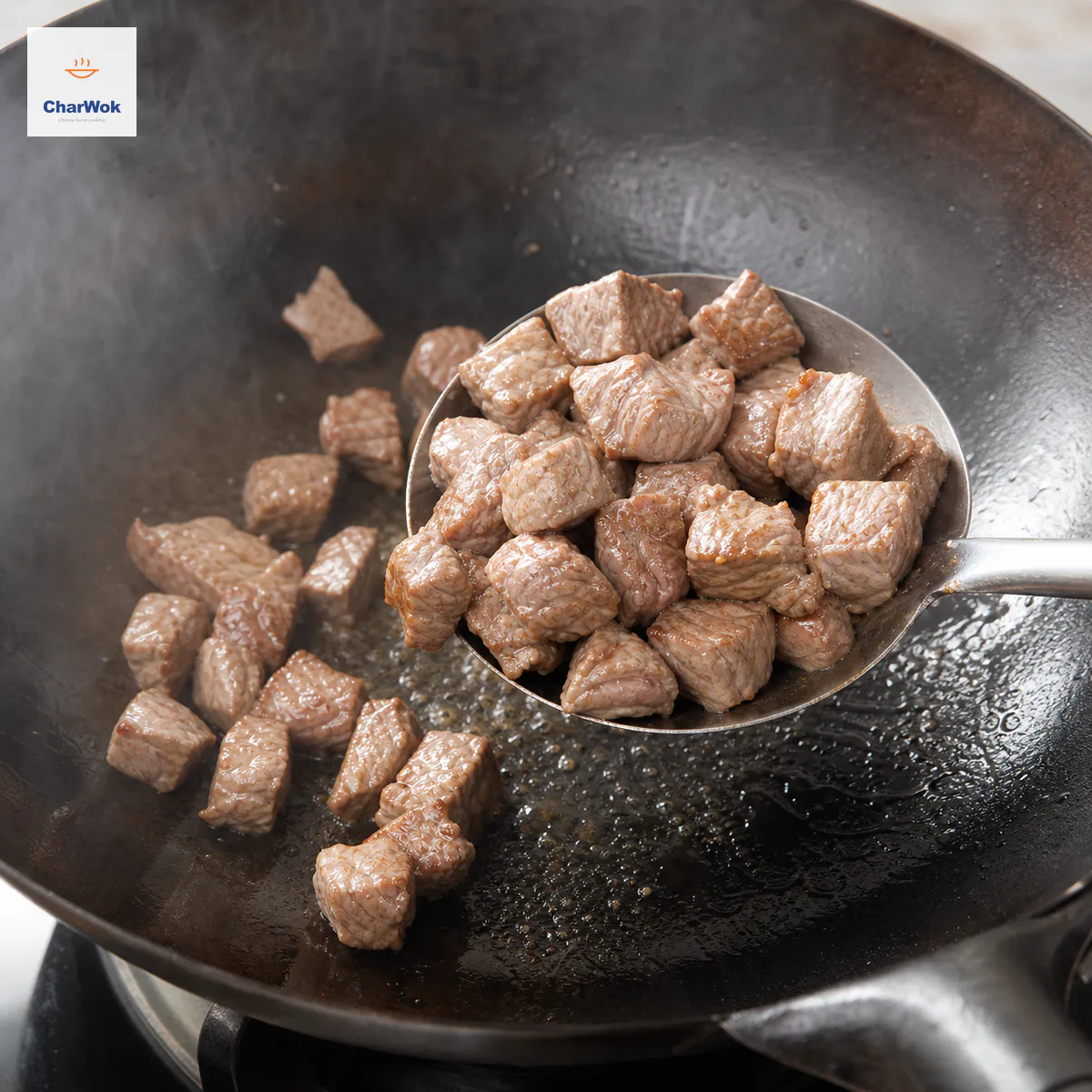
Leave the first side for 15 to 20 seconds, then toss and remove the beef at about 45 seconds total as soon as no raw red remains.
- Sweat the aromatics. With the pan still hot, add the remaining 1 tablespoon of oil, the scallion whites, and the diced bell pepper. Stir for about a minute. You want the pepper softened at the edges but still snappy; fully cooked pepper turns flabby and leaks water into the rice.
- Fry the rice. Add the pineapple cubes and the cold rice. Turn the heat up and press the rice flat against the hot metal in batches, letting it sit for a few seconds before tossing. This contact is what gives fried rice its signature dry, separate texture and the faint smoky notes the Cantonese call wok hei. Keep frying until the rice is steaming hot and each grain moves freely, about 2 minutes.
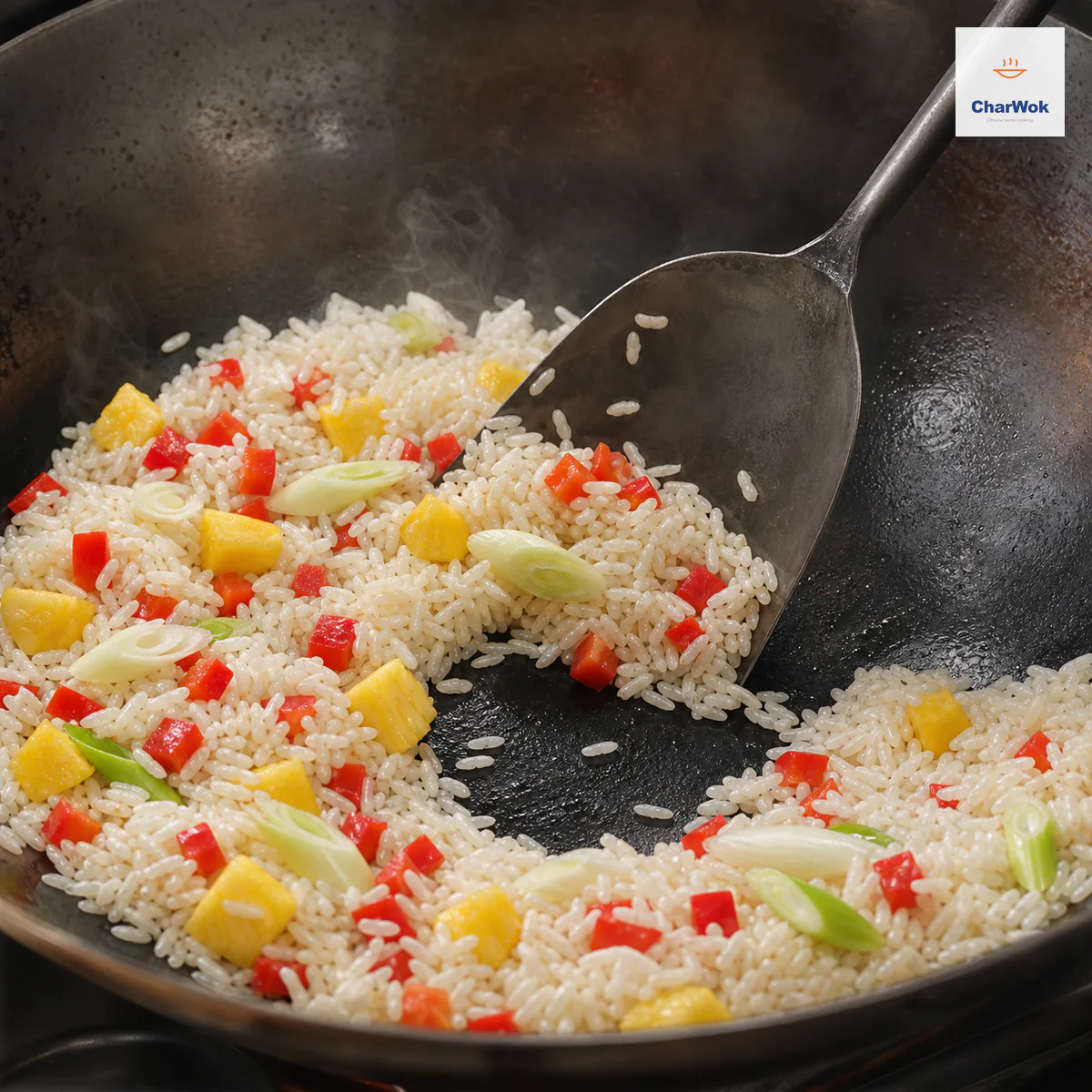
Press and toss in batches until the rice steams hot, every grain moves freely, and no pineapple juice or wet rice pools on the wok.
- Season and return the beef. Pour the light soy sauce around the inside wall of the wok, not onto the rice. The hot metal flashes the soy and mellows its raw edge before it touches the grains. Add the salt, then return the beef and any juices. Toss for another 30 seconds, just long enough to warm the beef through.
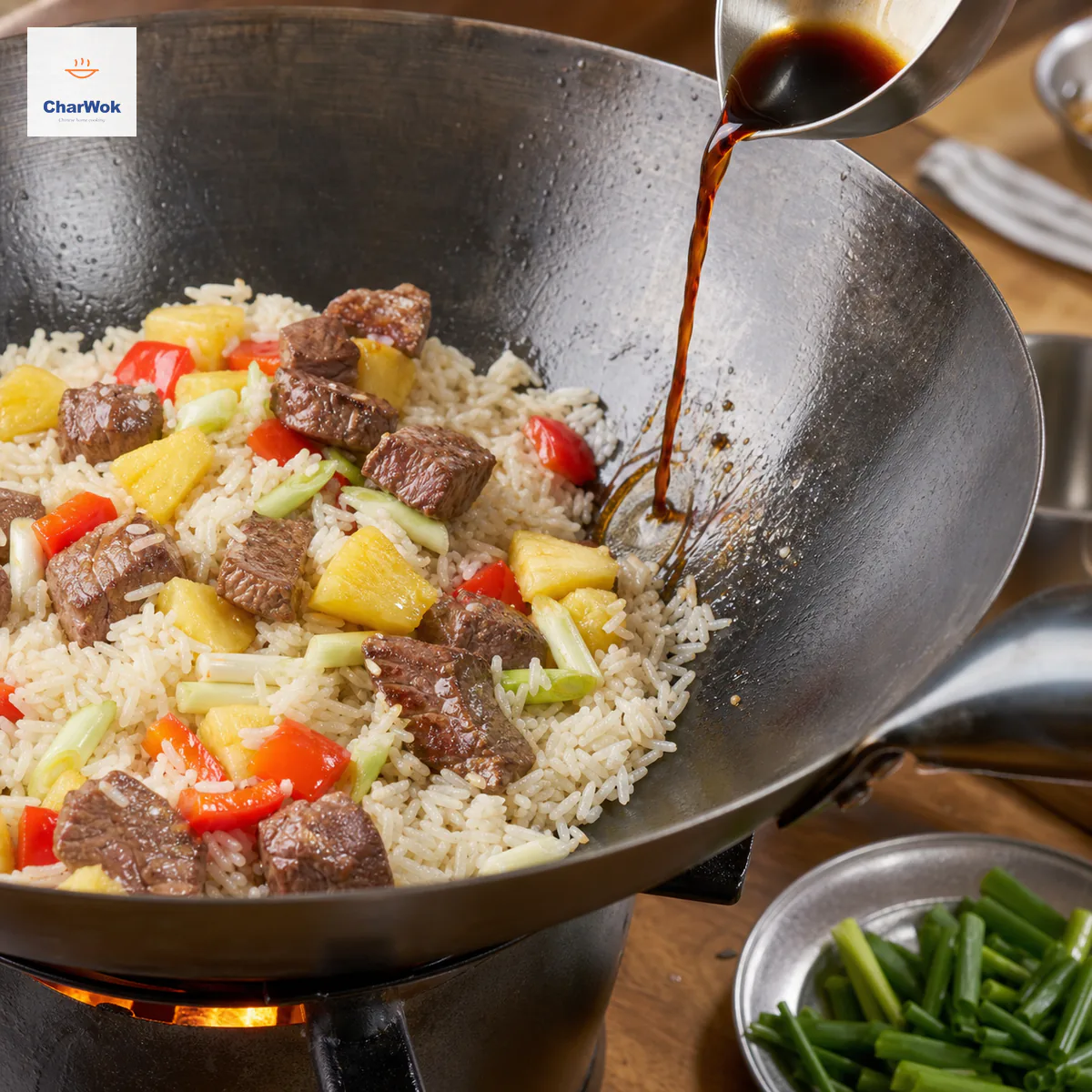
Flash the light soy around the bare hot wok wall, add the salt and beef, then toss only about 30 seconds before the off-heat scallion finish.
- Finish and serve. Off the heat, fold in the scallion greens. Pile the rice into the pineapple shells and bring them to the table immediately. The longer it sits, the more the pineapple weeps and the rice softens.
When things go wrong
I have made every mistake below at least once. Here is what causes each one and how to fix it the next time.
- The rice is clumpy and wet. Either the rice was too fresh, the pan was not hot enough, or you stirred instead of pressing. Next time use true overnight rice, get the wok hotter before the rice goes in, and press the rice against the metal rather than chasing it around the pan. If you are mid-cook and it is already clumping, stop stirring, spread it out, and let it fry undisturbed for 20 seconds to dry the bottom layer.
- The beef is chewy and grey. It stayed in the wok too long. The fix is procedural, not ingredient-related: sear it briefly, pull it out completely, and add it back only at the very end. Also check that you cut against the grain; with the grain, even a perfect sear stays tough.
- The pineapple tastes sour or metallic. The fruit was underripe. Ripe pineapple is sweet enough to balance the soy sauce without any added sugar. Smell the base before buying; no smell means no flavor. In a pinch, a 5-minute soak of the cubes in lightly salted water takes the edge off.
- The whole dish tastes bland. You probably added the soy sauce straight onto the rice, which muffles it. Pouring it down the side of the wok caramelizes it briefly and concentrates the flavor. A few drops of toasted sesame oil or a pinch of white pepper at the end also wakes it up.
- The wok is swimming in liquid. The bell pepper or pineapple was overcooked and leaked. Cook the aromatics less, and make sure the pineapple is ripe but firm, not soft and weepy.
Variations and pairings
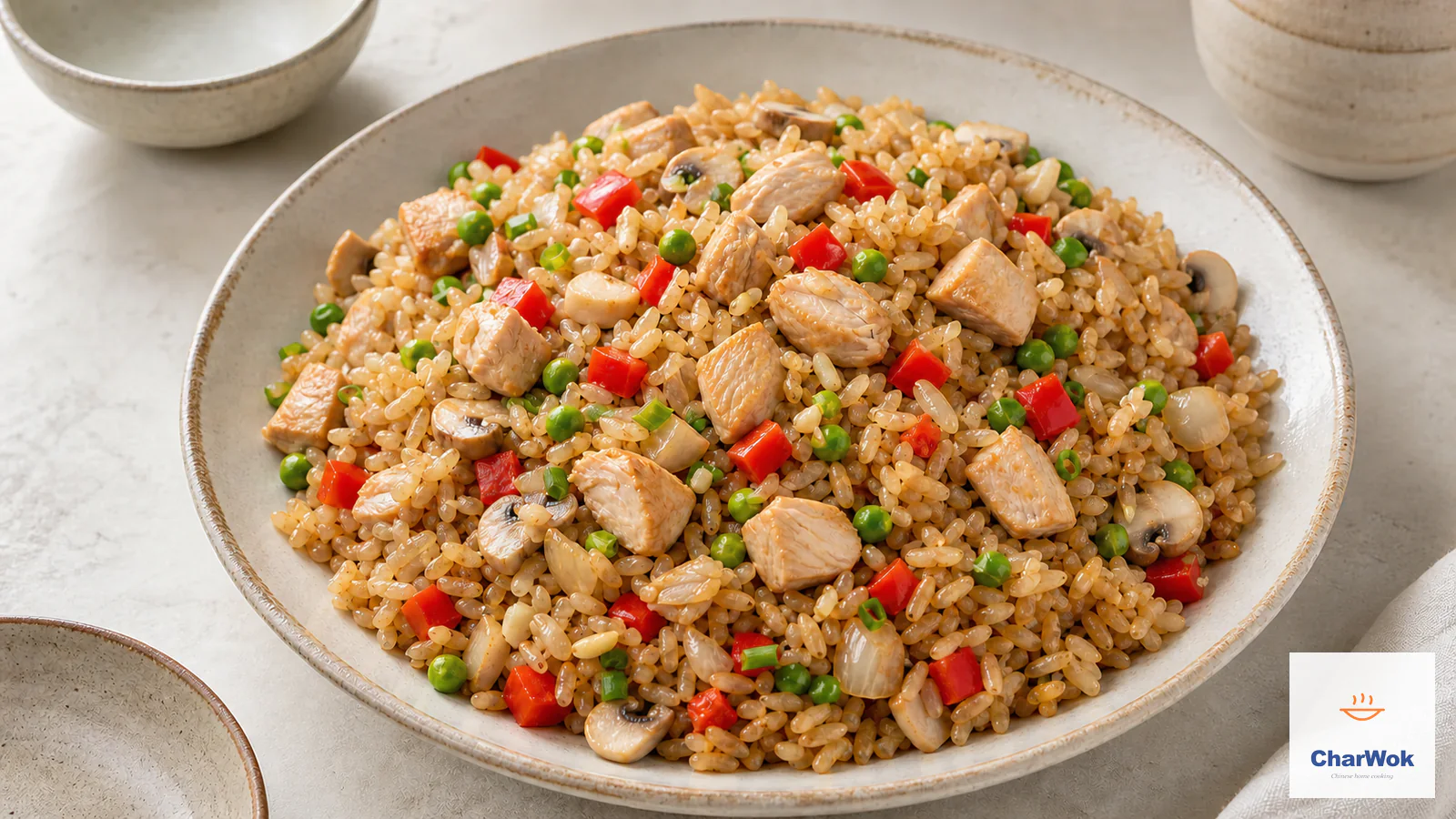
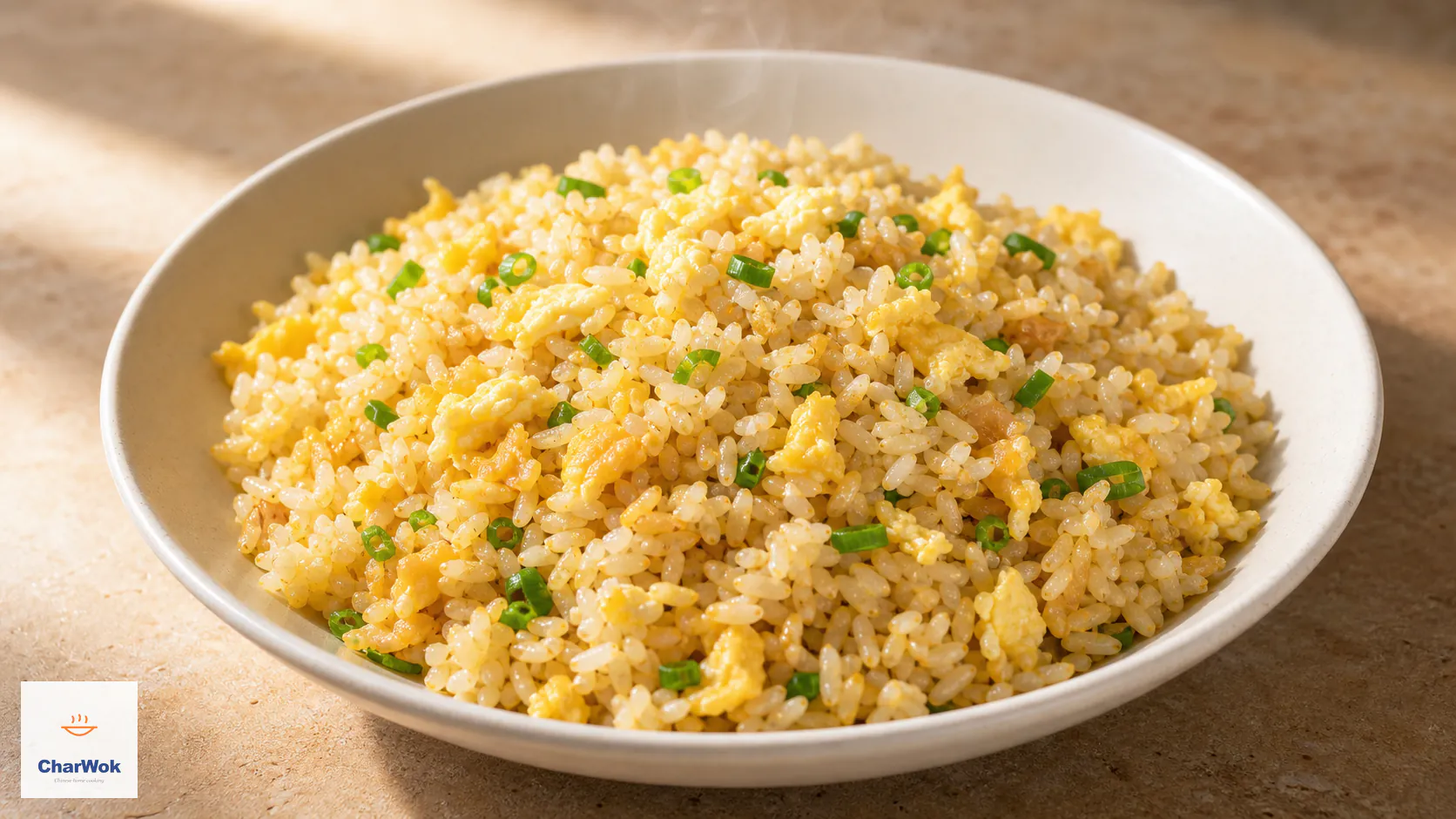
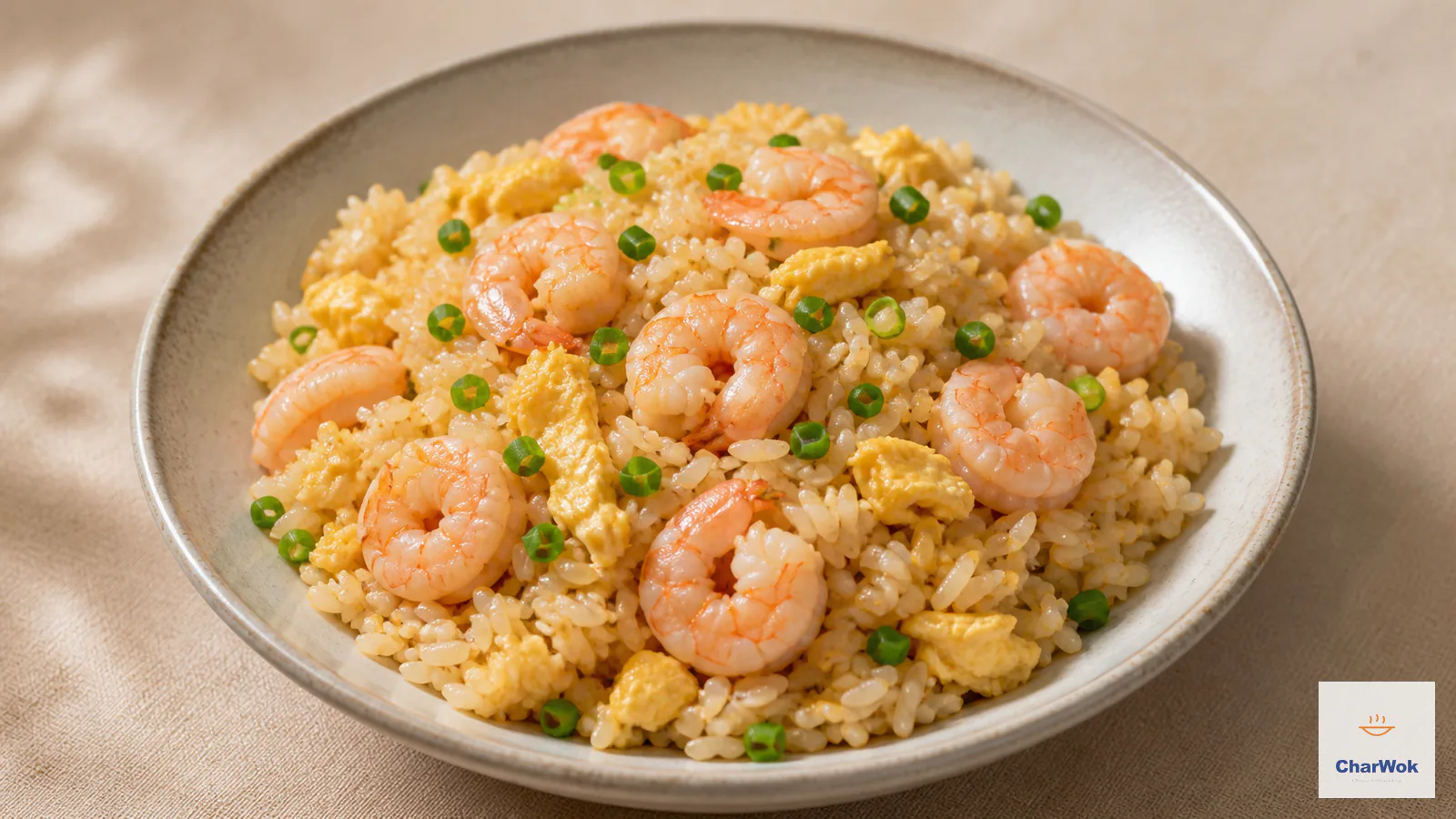
The beef is here for protein and richness, but it is not load-bearing. You can swap it for shrimp and arrive at shrimp fried rice territory, or skip the meat entirely and lean on the version most cooks learn first, egg fried rice, scrambled into the rice before the pineapple goes in. Chicken thigh, cut the same way and marinated the same way, gives you something close to chicken fried rice with a tropical twist.
If you want to lean into the Thai branch, add ½ teaspoon of curry powder with the aromatics and a pinch of sugar with the soy sauce. A handful of toasted cashews folded in at the end is non-traditional for the Chinese style but hard to argue with.
For a fuller meal, pair this with a simple soup. A clear chicken and mushroom congee sounds heavy next to fried rice, but a small bowl alongside balances the richness. On a hot day I would rather serve it with a crunchy cold vegetable, like smashed cucumber, and call it done. The same rice-and-protein logic runs through the whole family of fried rice dishes; if you want a tour, the Chinese rice recipes by cooking method round-up is a good map, and for a richer, more assembled cousin, clay pot rice shows what happens when you slow down instead of stir-frying.
Storage and reheating
Fried rice keeps better than almost anything else in the fridge, which is the whole point of the dish. Let it cool fully, then store it airtight for up to three days. Do not leave it in the pineapple shell; the fruit will ferment and turn the rice sour overnight. Scrape it into a container.
To reheat, use a dry pan over medium-high heat with a few drops of water, not the microwave. The microwave steams the rice from the inside and you lose the chewy texture that defines the dish. Toss it in the pan for two minutes until it is hot through and the grains separate again. I do not recommend freezing it; the pineapple turns to water on thaw and the texture collapses.
A few honest limits
This recipe will not give you true restaurant wok hei on a home stove. That breath of smoke comes from a burner putting out heat a residential range simply cannot match, and no trick fully reproduces it. What you can get at home is dry, separate, well-seasoned rice with tender beef and bright pineapple, which is a very good bowl of food even without the smoky halo. If you cook it in batches, never double the recipe into one pan; overcrowding kills the sear and you end up back at the wet, clumpy place you started. Two portions per wok is the ceiling.
One more thing worth saying: I do not love this dish with brown rice or jasmine substitutes like basmati. The grains are too long and too dry, and the pineapple reads strangely against them. Stick with jasmine, or medium-grain if that is what you have.
Frequently asked questions
Can I use freshly cooked rice?
Not if you can help it. Warm rice steams instead of fries and turns gummy. If you are stuck, spread the fresh rice on a tray, chill it uncovered for an hour or freeze it for 20 minutes, then break it up before frying.
What cut of beef works best?
Flank or skirt steak. Both are lean and slice cleanly against the grain, which is what keeps the dice tender after a fast sear. Avoid stew cuts like chuck; they stay tough at this cook time.
Do I have to serve it in the pineapple shell?
No. The shell adds aroma and presentation, but the rice is the same in a regular bowl. If your pineapple is small or awkwardly shaped, just dice the fruit and skip the carving.
Why add soy sauce around the edge of the wok?
The hot metal briefly caramelizes the soy sauce and rounds off its raw, salty edge before it hits the rice. Poured straight onto the grains it soaks in unevenly and tastes flat.
Can I make it vegetarian?
Yes. Drop the beef and Shaoxing wine, swap in extra-firm tofu or a handful of cashews, and replace the soy with a vegetarian light soy sauce. The rest of the method stays the same.