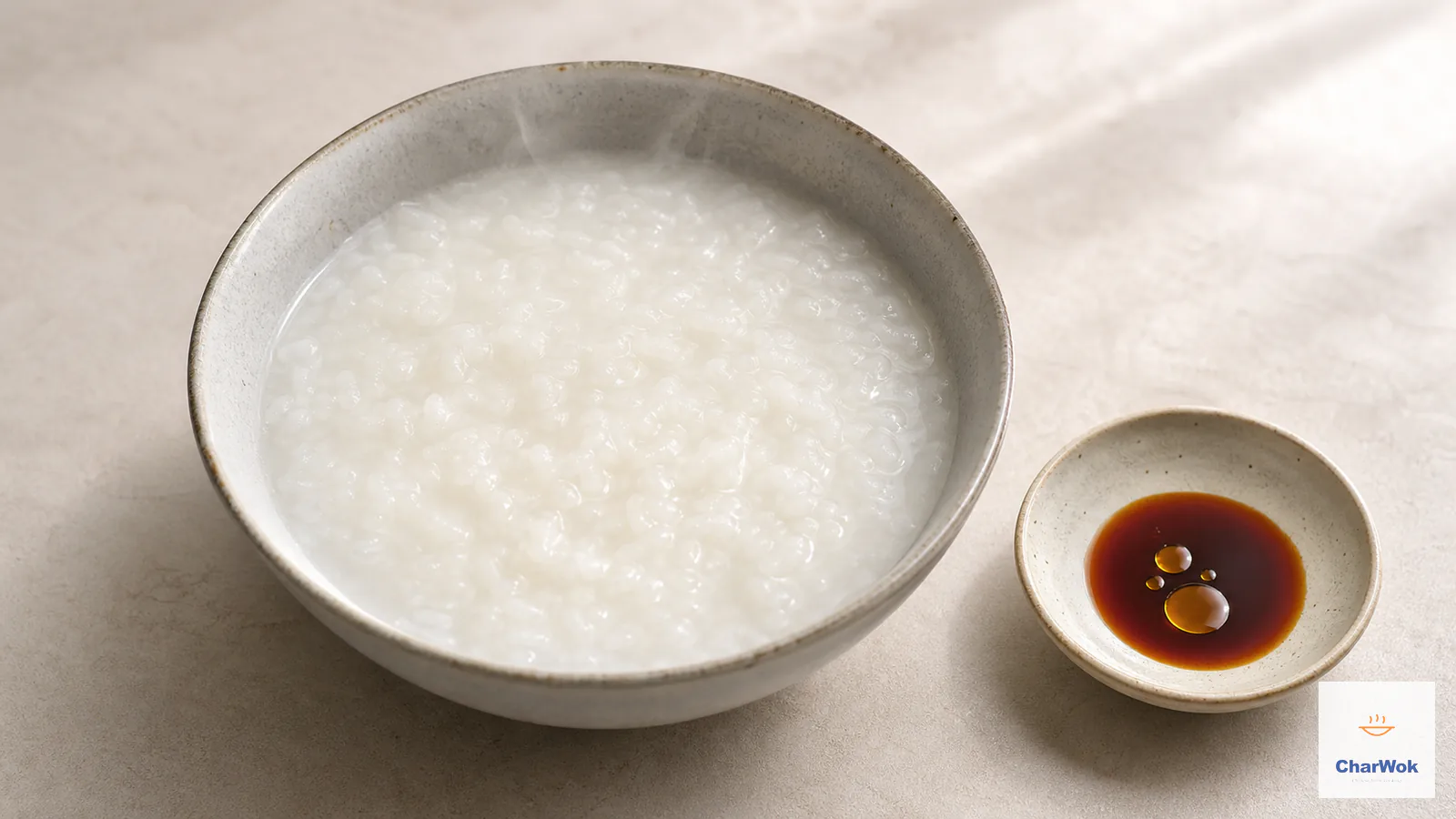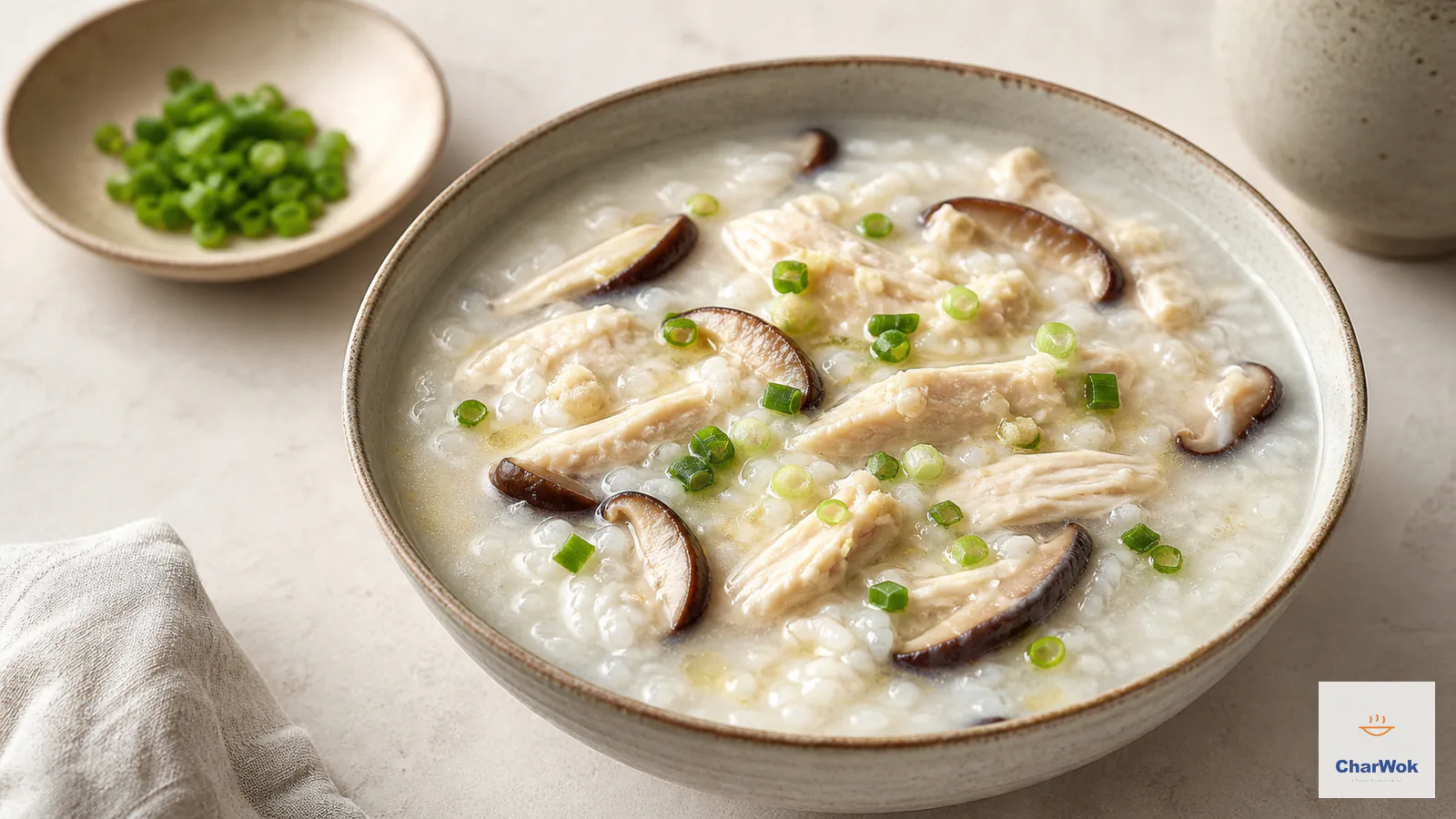
A bowl of chicken and mushroom congee, when it is right, has a silken quality the spoon can read before the mouth does. The rice has given up its shape and melted into a starch-thickened broth that coats the back of a spoon. The chicken slides through it in pale, seasoned ribbons that are still juicy. The dried shiitake has rehydrated into something more savory than any fresh mushroom in the produce aisle.
When it goes wrong, the result is thin porridge with rubbery strips of breast meat. The useful difference is not a secret ingredient: it is how the rice is prepared and how the chicken is cut, coated, and cooked to a verified safe temperature without staying on the heat longer than necessary.
This version gets you to creamy Cantonese-style congee in about fifteen minutes of cooking once the rice and mushrooms are prepared. It fits the Chinese breakfast tradition of southern China and Hong Kong, where congee is often served with meat, aromatics, and toppings. The method also scales well, provided leftovers are cooled and refrigerated promptly.
At a glance
Use one cup of white rice to six cups of liquid and simmer the rice from frozen. Slice the chicken thinly against the grain and velvet it with cornstarch, then keep it at a gentle simmer until the center of the thickest strip reaches 165°F (74°C). Colour and a fixed cooking time are not reliable doneness tests.
Why frozen rice collapses in minutes
The single thing that pulls this dish into weeknight territory is freezing the rice overnight. It is not a gimmick. Rinse raw rice, leave the grains damp, and freeze them. As that moisture turns to ice it takes up more space than it did as liquid, and the resulting pressure weakens the grain's internal structure long before you see any outward sign of it. Put those weakened grains into already-boiling water and the starch that normally takes an hour to leak out does most of its work in ten minutes, because the heat can reach the center of each grain far sooner.
Cantonese cooks use several ways to shorten the long simmer, from soaking overnight to breaking up the grain. Freezing damp, rinsed rice overnight is a hands-off version of the same idea and works with common white-rice varieties. Keeping a flat bag of prepared rice in the freezer turns the cooked portion of the recipe into a short job.
The rice and the ratio
Use a medium- or short-grain white rice. Jasmine works beautifully and is what most American kitchens already have. Japanese short-grain (sushi rice) gives an even silkier result because of its higher amylopectin content, the branched starch molecule responsible for the sticky, glossy texture. Long-grain basmati is the one to avoid here. Its grains stay distinct and firm by design, which is the opposite of what you want.
For more detail on choosing and cooking the grain itself, see the guide to cooking jasmine rice on the stove. For this congee, use 1 part rice to 6 parts liquid by volume. That yields a medium-thick consistency, loose enough to pour and thick enough to hold the chicken in suspension. A wide, shallow pot loses water faster than a tall, narrow one, and preferences range from loose to near-pudding, so adjust a future batch by half a cup of liquid if needed.
Ingredients
Ingredients at a glance
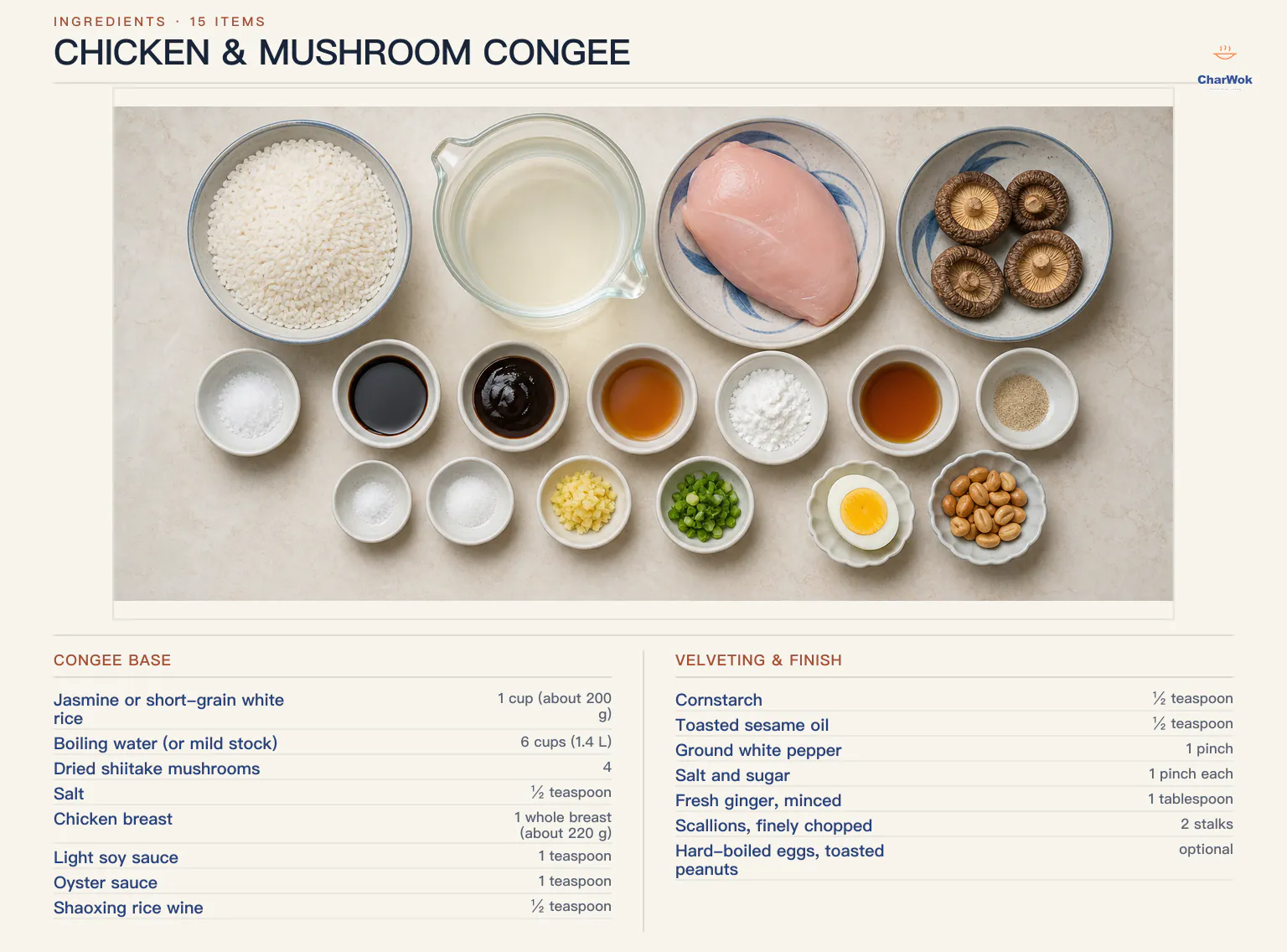
The mushroom soaking liquid is an ingredient, not a byproduct. It carries most of the dried shiitake's savory depth, so do not pour it down the drain. If you want the full background on buying and rehydrating them, see the shiitake mushroom guide.
| Ingredient | Amount | Notes / substitute |
|---|---|---|
| Jasmine or short-grain white rice | 1 cup (about 200 g) | Rinse and freeze overnight. Do not use basmati. |
| Boiling water (or mild stock) | 6 cups (1.4 L) | Half water, half homemade chicken stock if you have it. |
| Dried shiitake mushrooms | 4 | Soak overnight; save the soaking liquid. |
| Salt | ½ teaspoon | Kosher or fine sea salt. |
| Chicken breast | 1 whole breast (about 220 g) | Thigh works too and is more forgiving; see variations. |
| Light soy sauce | 1 teaspoon | Light, not dark. The light vs. dark soy sauce breakdown matters here. |
| Oyster sauce | 1 teaspoon | Vegetarian mushroom oyster sauce is a fine substitute. |
| Shaoxing rice wine | ½ teaspoon | Dry sherry stands in. Read more on Shaoxing rice wine. |
| Cornstarch | ½ teaspoon | This is the velveting agent; do not skip. |
| Toasted sesame oil | ½ teaspoon | A few drops of Chinese sesame oil go a long way. |
| Ground white pepper | 1 pinch | Black pepper works but is sharper. |
| Salt and sugar | 1 pinch each | Sugar rounds the seasoning; it should not taste sweet. |
| Fresh ginger, minced | 1 tablespoon | Adds with the chicken, not before. |
| Scallions, finely chopped | 2 stalks | Stirred in at the very end. |
| Hard-boiled eggs, toasted peanuts | optional | For garnish. Half an egg and a spoon of peanuts per bowl. |
The method, with the why
- Prep the night before. Rinse the rice in a fine strainer until the water runs clear, drain well, and seal it in a bag or container. Freeze overnight, spread flat so the grains do not clump. Put the dried mushrooms in a bowl of cold water and soak them in the fridge overnight too. A hot soak would extract more flavor more quickly, but it also turns the caps soft and ragged; a long cold soak pulls flavor out gently over many hours and leaves the mushrooms plump and firm, which matters when they are going into a finished bowl rather than a long-cooked stew.
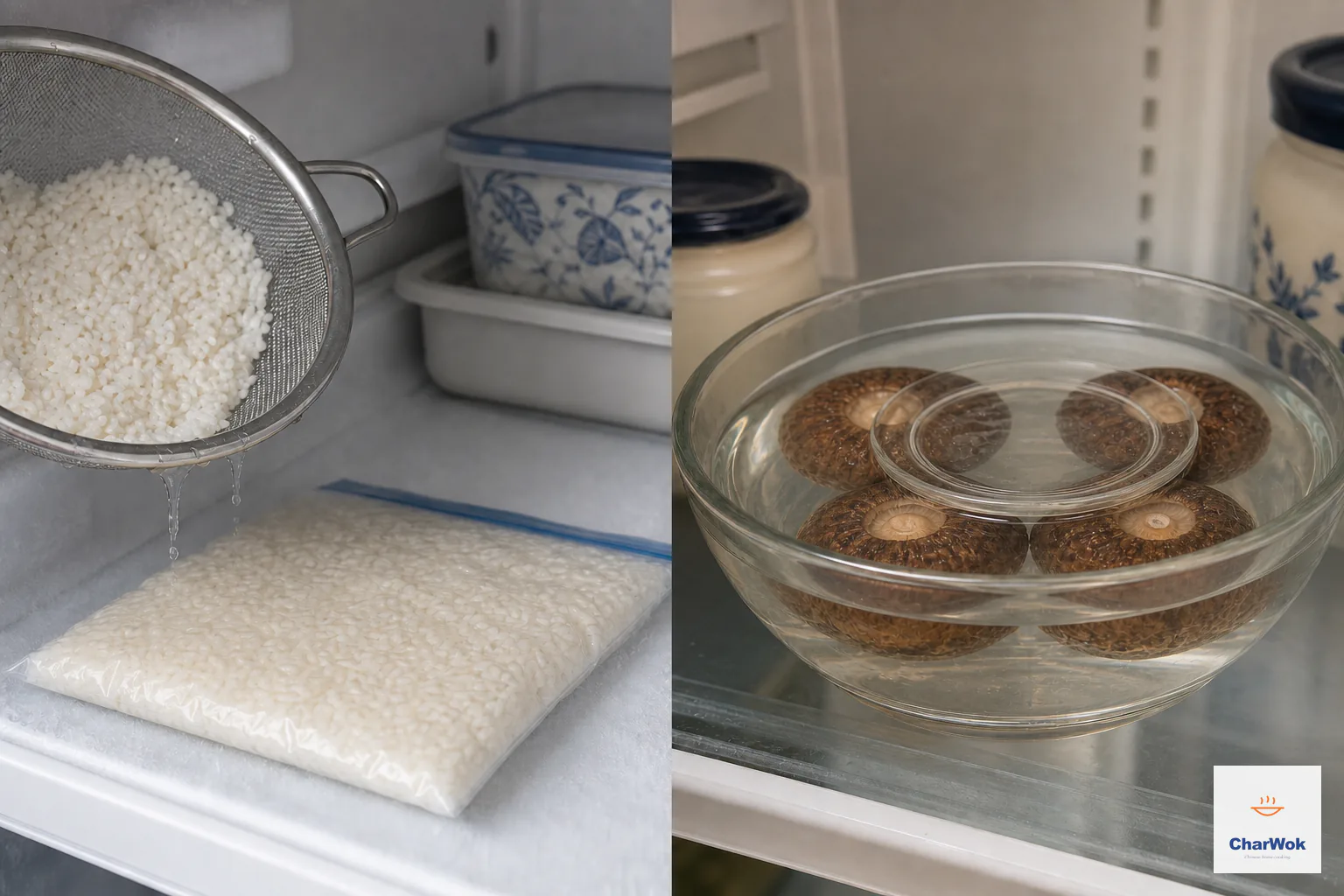
Rinse and drain the raw rice, spread it flat and freeze overnight; cold-soak all four dried shiitake under water at the same time.
- Start the pot with boiling water, not cold. Six cups of already-boiling water into a pot, then the frozen rice straight from the freezer, the sliced shiitakes, the salt, and the mushroom soaking liquid (pour it in slowly and leave the last tablespoon of grit behind). Starting hot saves five minutes of bring-up time and gets the starch releasing immediately.
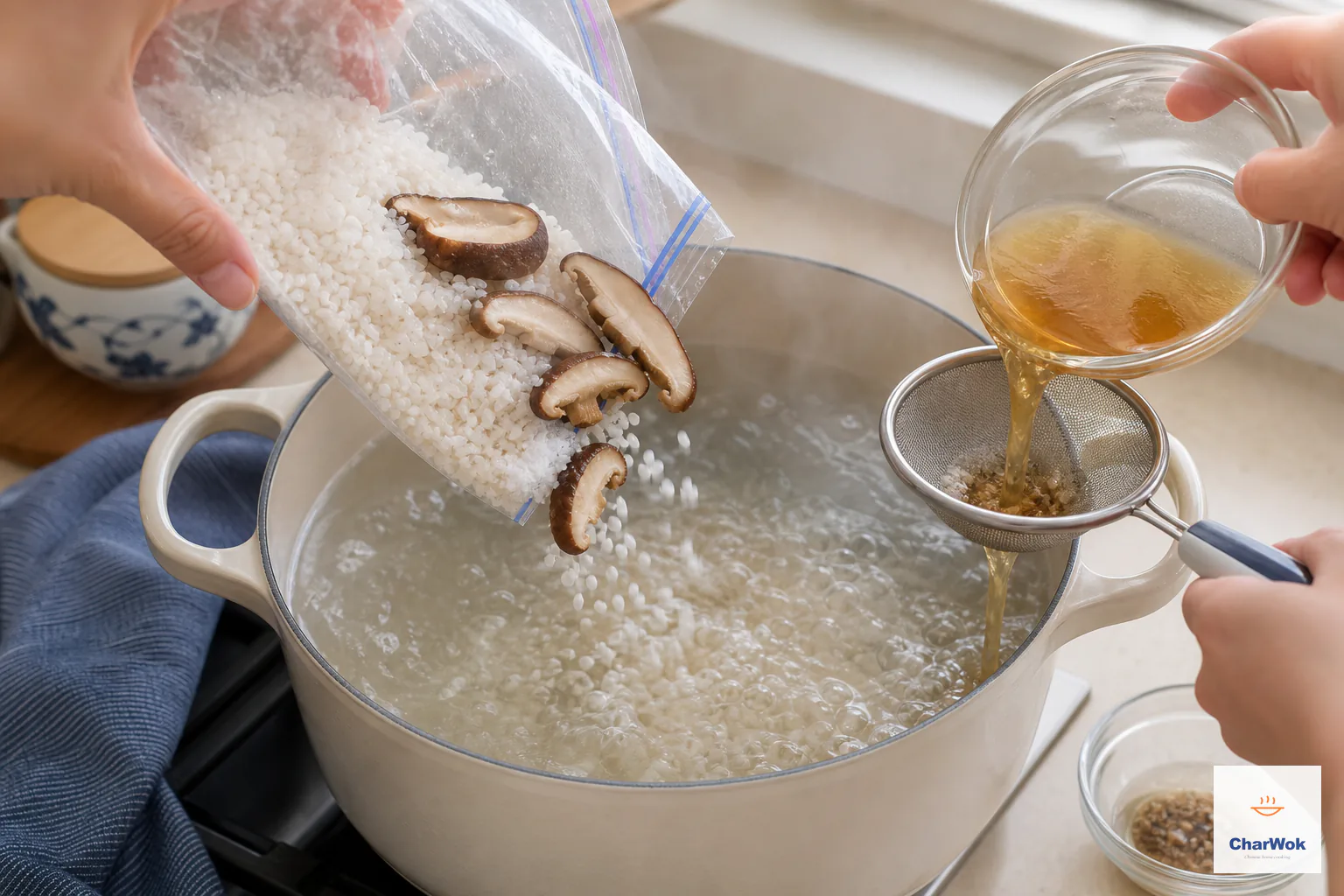
Start with six cups already-boiling liquid, add the frozen rice, sliced shiitake and salt, then strain in the soaking liquid without the gritty final spoonful.
- Drop to the lowest simmer the moment it returns to a boil, then cover for ten minutes. A hard boil will scorch the starch to the bottom of the pot and leave the congee thin, because the grains bash around instead of gently bursting. A murmur is all you want. Cover it to hold the heat in; the frozen rice needs a consistent warm bath, not a rolling one.
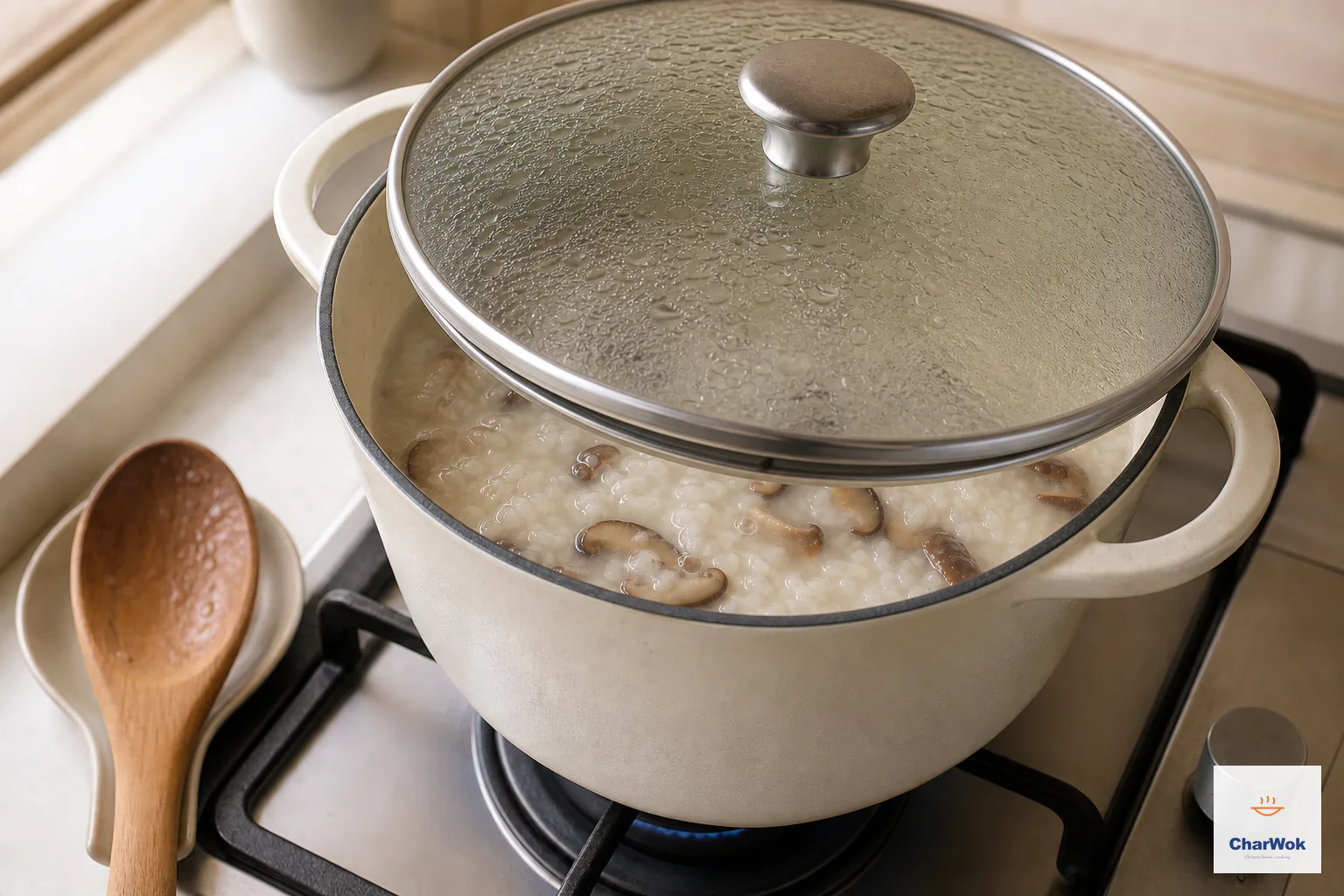
As soon as the pot boils again, reduce it to the smallest flame and cover with one narrow vent for a quiet ten-minute simmer.
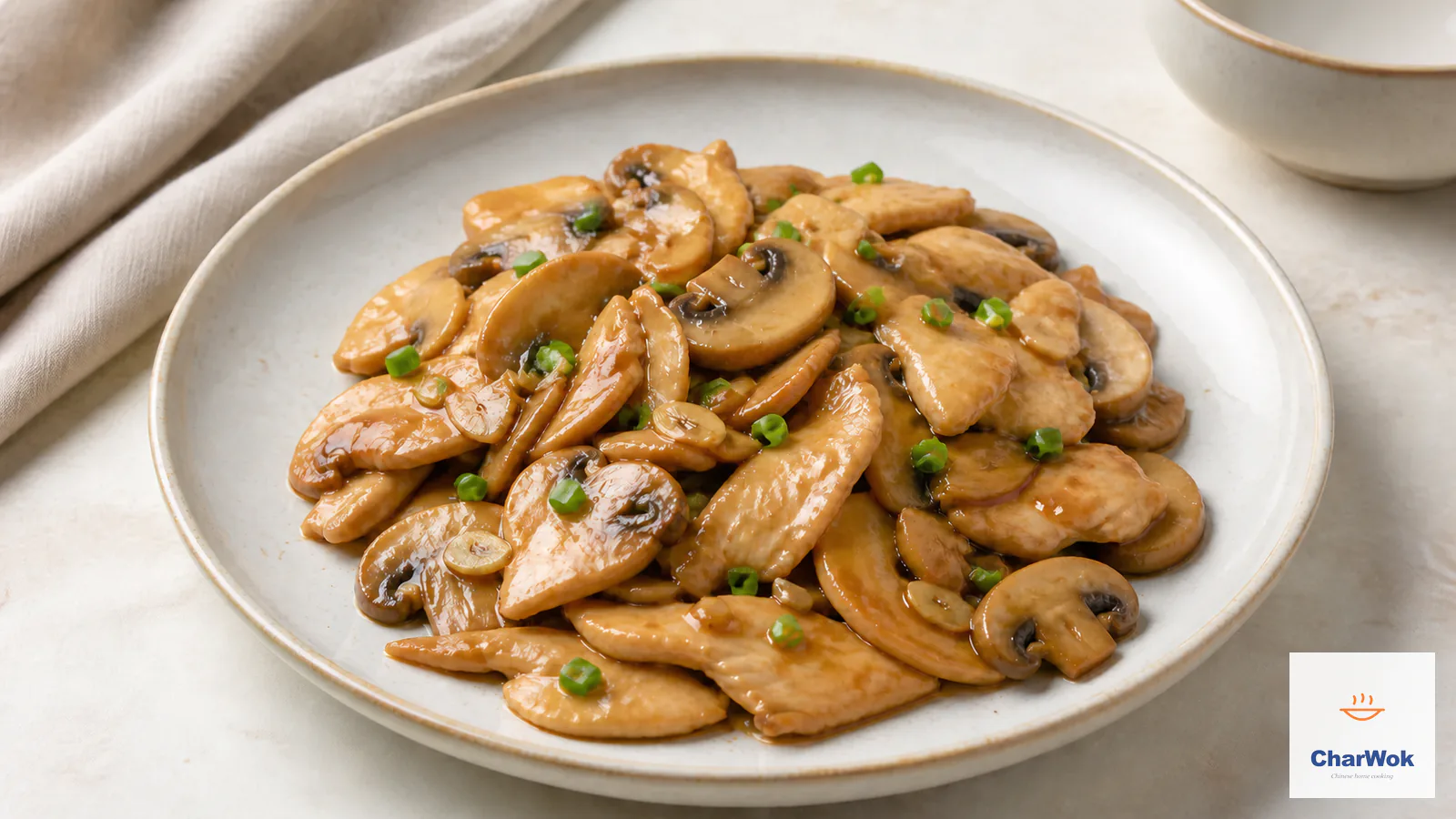
- While it simmers, velvet the chicken. Cut the breast across the grain into narrow, even strips. Toss with the soy sauce, oyster sauce, wine, cornstarch, sesame oil, pepper, salt, and sugar. Cornstarch forms a thin coating that limits surface moisture loss. Keep raw chicken covered on a low refrigerator shelf until needed, and wash hands plus the board and utensils before they touch cooked food. The same velveting technique appears in chicken and mushroom stir-fry and ginger chicken.
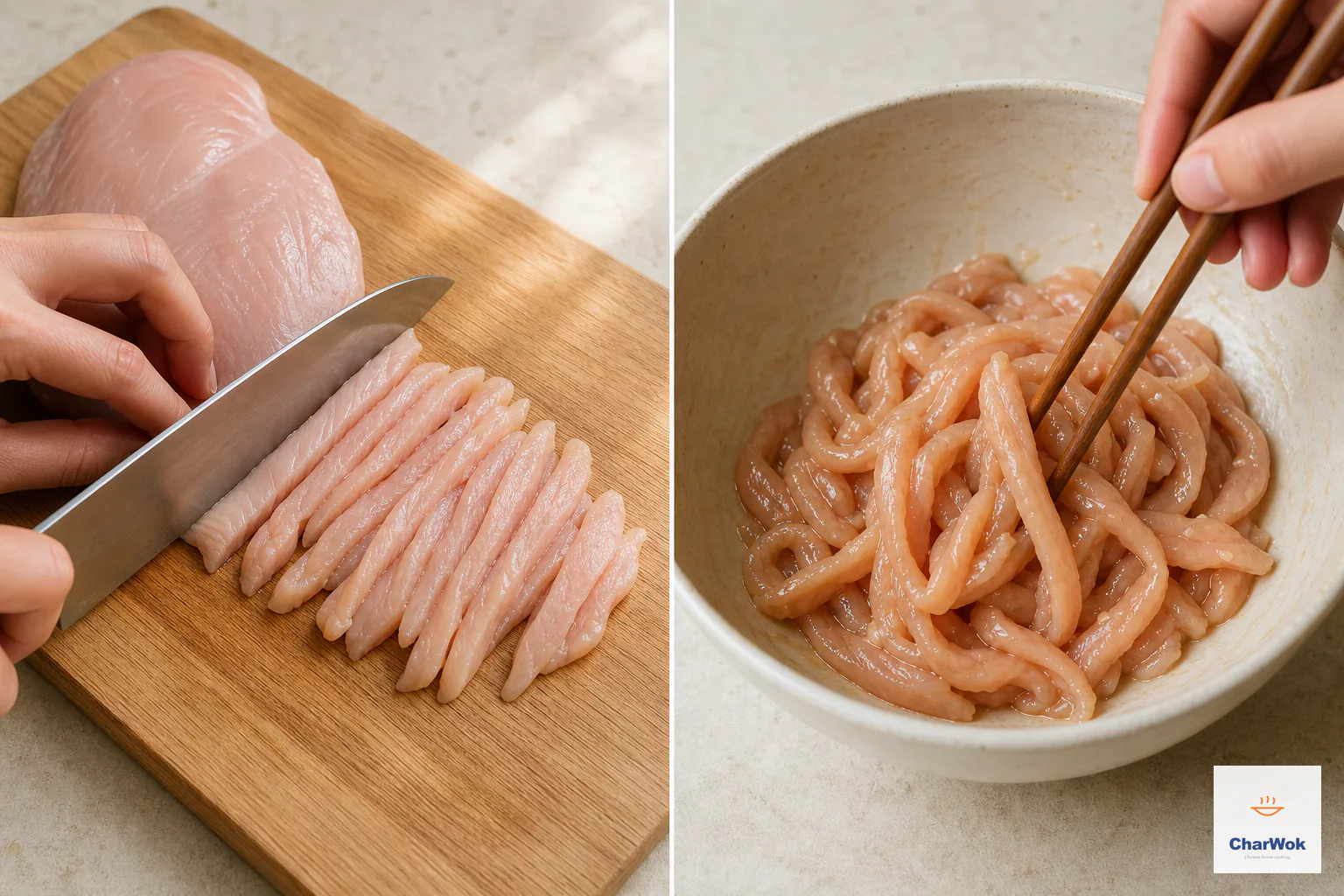
Slice the breast thinly across the grain, then velvet it with the measured sauces, wine, cornstarch, sesame oil, white pepper, salt and sugar.
- Add the chicken and ginger, then verify the temperature. Separate the marinated strips and minced ginger in the gently simmering congee. Starting at about one minute, insert a thin-tip food thermometer into the center of the thickest strip. Continue simmering and stirring gently until it reaches 165°F (74°C); the exact time depends on strip thickness and starting temperature.
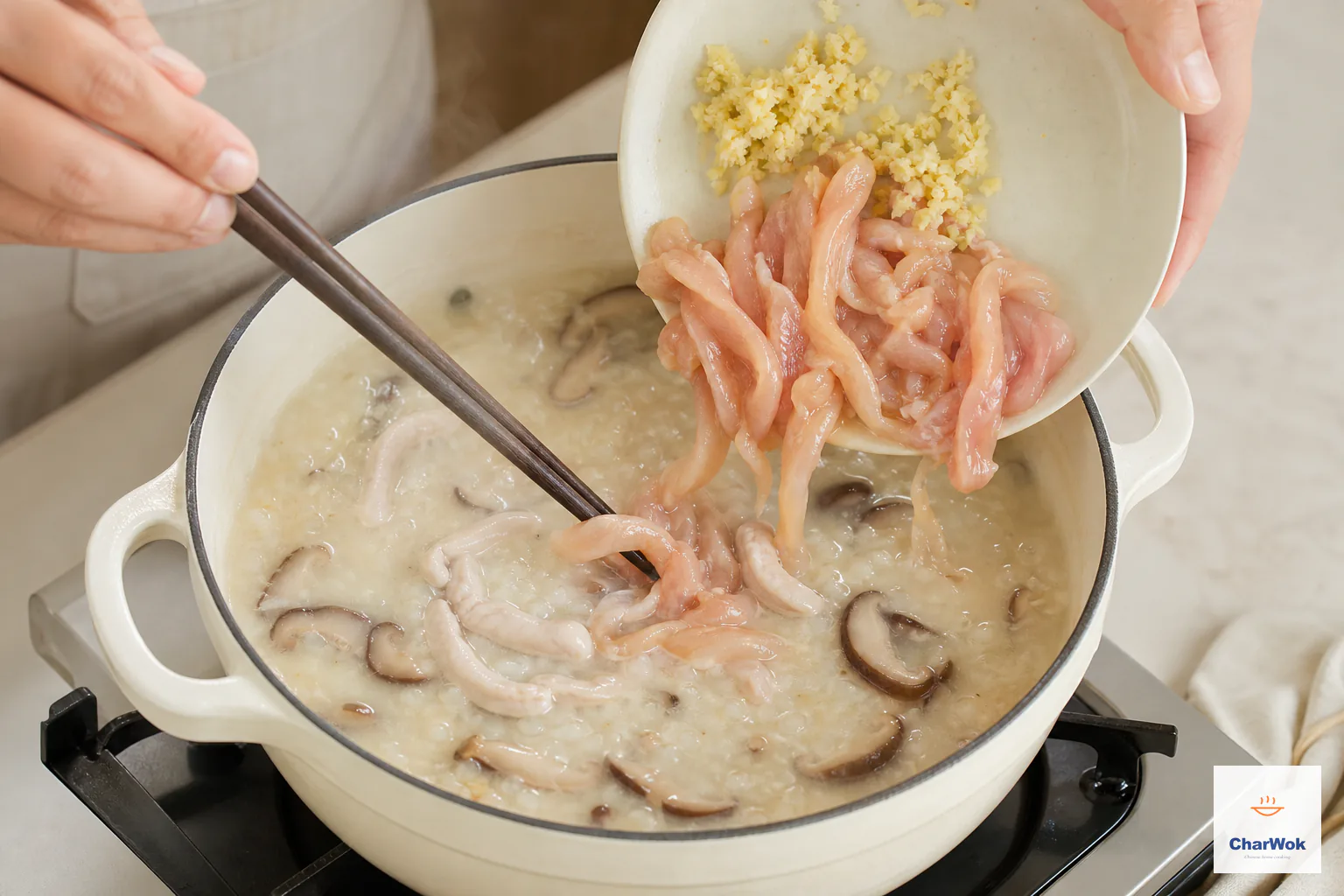
Separate the chicken and ginger in the gently simmering congee; starting at about one minute, check the thickest strip and continue cooking until its center reaches 165°F (74°C).
- Cover and rest one minute off the heat. Once the chicken has reached 165°F (74°C), move the pot off the burner and cover it for one minute. This short rest evens out the heat while avoiding unnecessary further cooking; it is not a substitute for the temperature check.
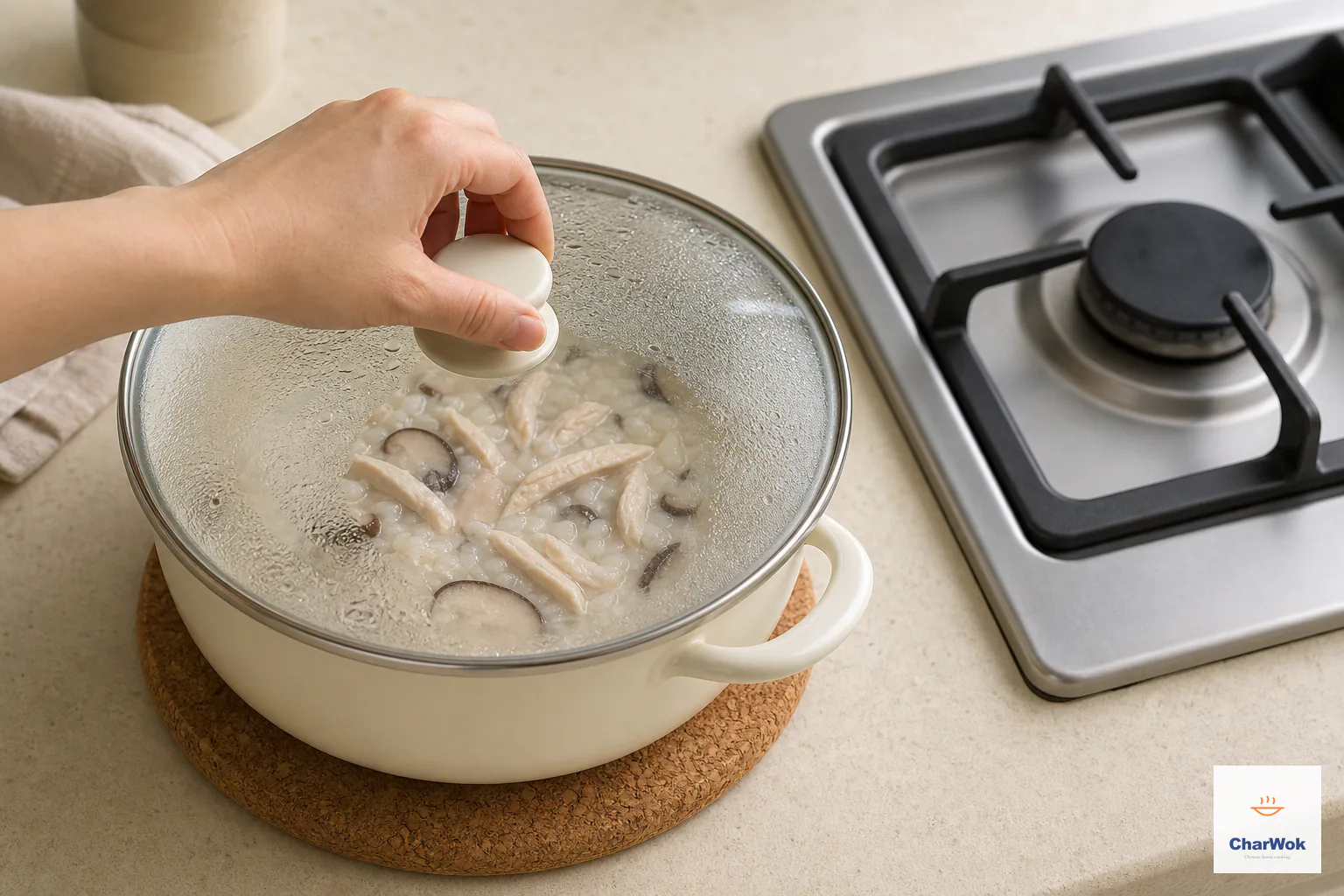
After the thickest chicken strip reaches 165°F (74°C), move the covered pot off the burner and rest it for one minute; the rest does not replace the temperature check.
- Finish and serve. Stir in the scallions, taste, and add a few grains more salt if it tastes flat. Ladle into bowls. If you are garnishing, lay half a hard-boiled egg (or a peeled Chinese tea egg) and a spoonful of crushed toasted peanuts on top. The peanuts are not decorative; texture is the whole point of a garnish on a bowl this smooth, and a handful of something toasted and crunchy is what stops every spoonful from feeling like the last.
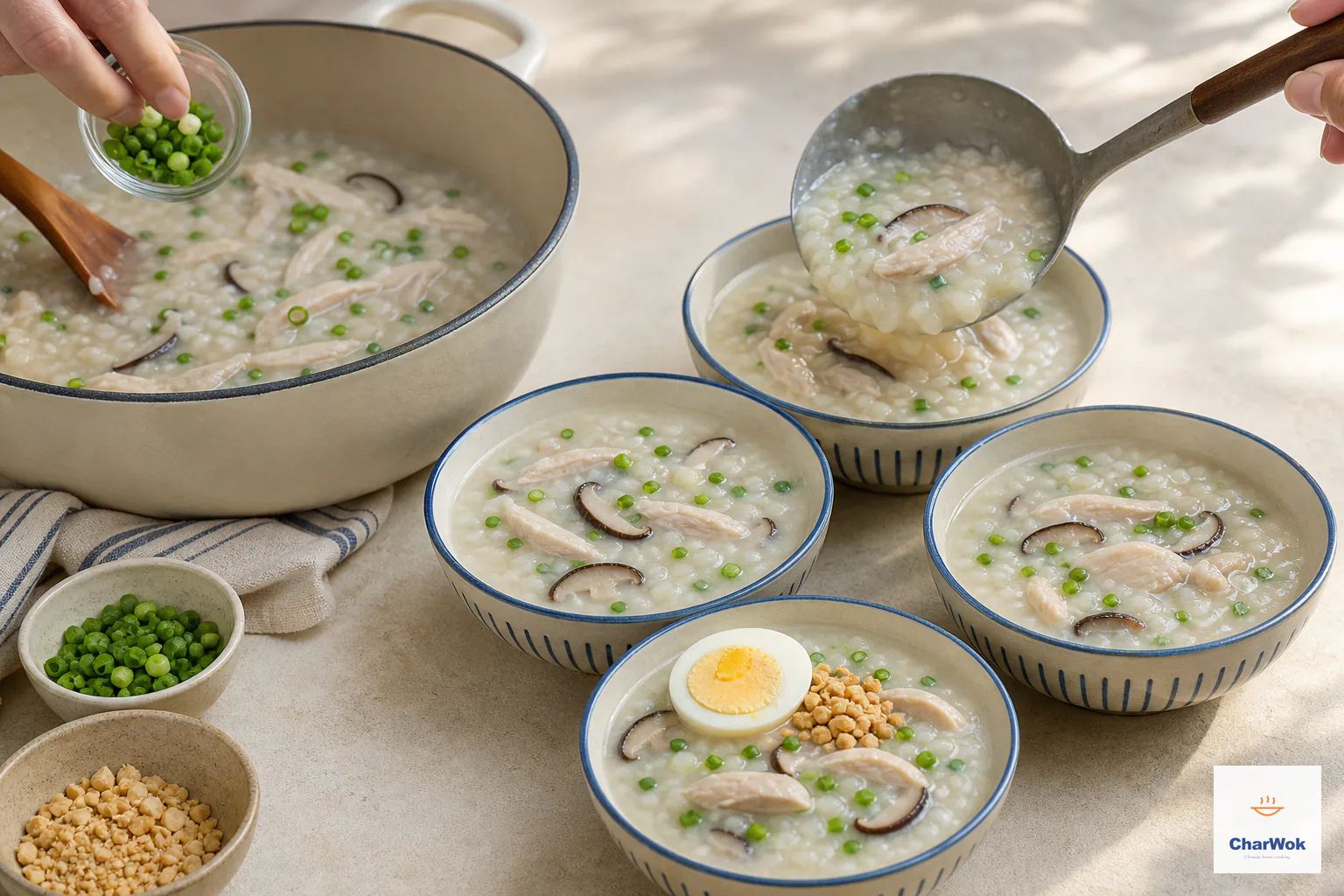
Stir in the scallions, divide the pourable congee among four bowls, then add half an egg and a modest spoon of toasted peanut crumbs if using.
When the bowl goes wrong
This recipe is forgiving in some directions and less so in others. Here are the most common problems and the practical fixes.
- The congee is thin and watery. Either the simmer was too violent, the pot too wide, or the rice was not actually frozen. Simmer another five minutes uncovered to reduce, or blend half a cup of the porridge and stir it back in to thicken instantly. Next time, freeze the rice longer and use a taller, narrower pot.
- The congee is thick and gloppy, almost paste. Too little evaporation was held back, or it sat after cooking. Splash in hot water or hot stock a quarter cup at a time and stir until it loosens. Congee thickens dramatically as it cools, so what looks thin in the pot is usually right in the bowl.
- The chicken is dry and rubbery. It was cut unevenly, sliced with the grain, or cooked well beyond 165°F (74°C). Next time make narrow, even strips, cut across the grain, and begin checking the thickest strip early with a thin-tip thermometer. Thigh meat is more forgiving, but it still needs to reach 165°F (74°C).
- The bottom scorched. The heat was too high during the simmer, or you did not stir after adding the starchy marinade. A film of cornstarch settling on a hot pot bottom will carbonize in seconds. Stir thoroughly when the chicken goes in, then leave it alone on low.
- It tastes bland. Congee is a mild vehicle by design, but it still needs seasoning at two points: the salt in the cooking liquid, and the seasoned chicken. If both are timid the bowl reads as nothing. Taste the broth before the chicken goes in; it should taste lightly but clearly salted. A few drops of sesame oil or a pinch of white pepper per bowl at the table fixes an under-seasoned pot without recooking.
- The rice is still gritty or chalky in the center. The grains were not cracked enough by freezing. Freeze the rice at least eight hours, ideally a full day, and spread it thin so it freezes fast and hard. In a pinch you can smash still-warm rinsed rice flat before freezing to force more cracking.
Variations and what to serve it with
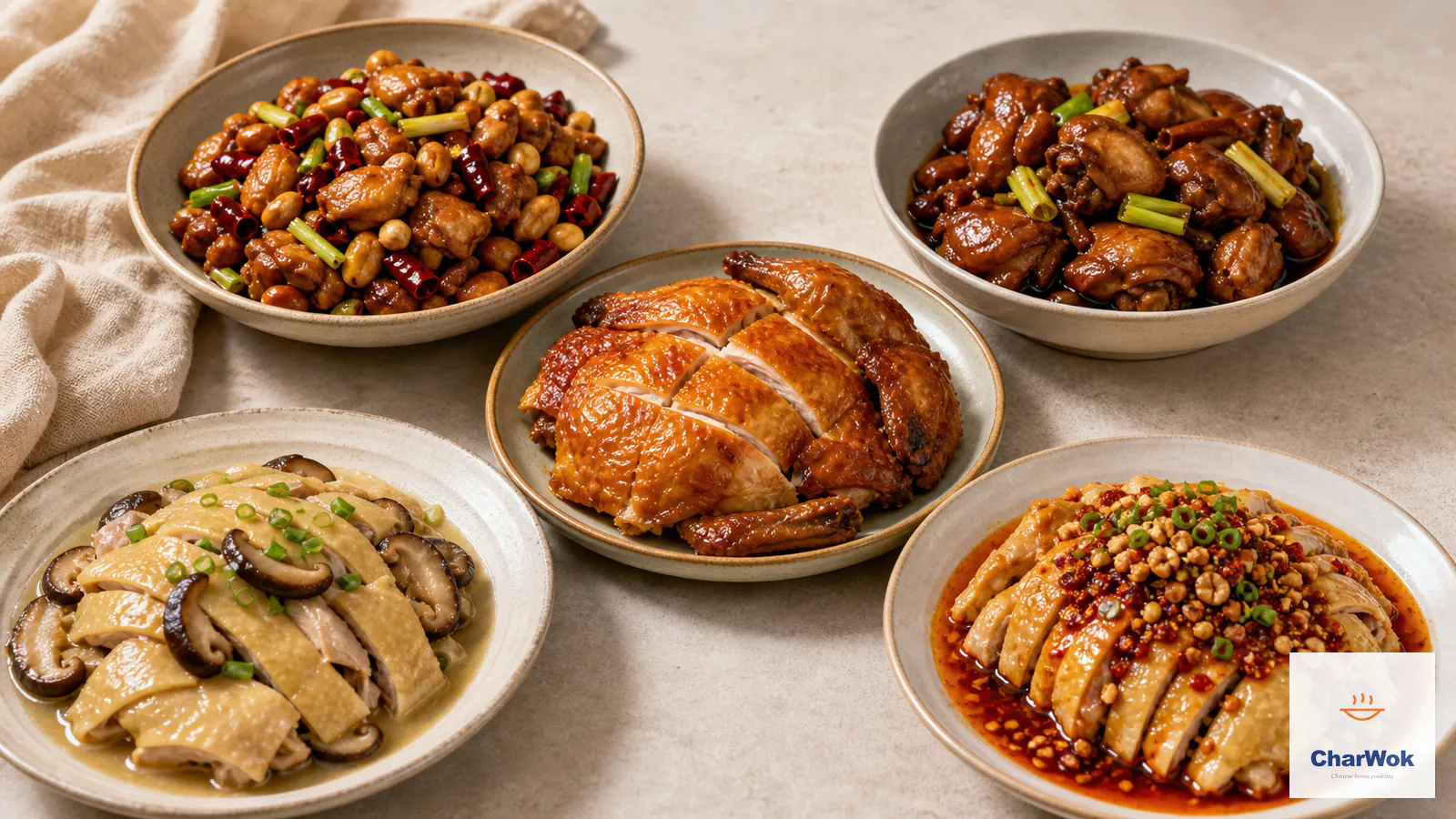
The congee base works with other proteins, but the chicken timing is not a universal rule. Pork, beef, fish, shrimp, and cooked turkey each have different safe endpoints; use the appropriate thermometer or visual guidance in the official food-temperature chart rather than copying a one-minute chicken estimate. Shrimp congee pairs well with a little chili oil at the table.
To make it vegetarian, leave the chicken out and let the mushrooms carry the bowl on their own. Lean on a couple of different mushrooms for depth, swap in vegetable stock for the cooking liquid, and add a few strips of firm seasoned tofu, marinated in the same way you would the chicken so it picks up the sauce and stays tender through the brief cook. A handful of something green and quick-cooking, stirred in right at the end, gives the bowl a fresh edge it would otherwise lack.
For the full breakfast spread, think of the porridge as a blank stage and the toppings as the performers. A stick of youtiao, the deep-fried Chinese cruller, is the partner most people reach for first; tear it into lengths and let it soak until it goes soft at the edges and crisp at the center. Beyond that, anything salty and concentrated is fair game, a spoonful of fermented or pickled vegetable, a crumbled salted egg yolk, or a scattering of dried seafood will all sharpen a bowl that is deliberately mild on its own. On a sweeter morning it sits happily beside a plate of chicken corn soup flavors, or simply with a cup of hot soy milk.
Storage and reheating
Congee thickens as it cools. If cooking ahead, use one part rice to seven parts liquid rather than the usual one-to-six, then divide the finished congee into small, shallow containers and refrigerate within two hours of cooking, or within one hour when the room or outdoor temperature is above 90°F (32°C). Use refrigerated leftovers within three to four days or freeze them within that window.
Reheat only the portion you plan to eat. Loosen it with a little hot water and stir across the bottom until the center reaches 165°F (74°C). In a microwave, cover the bowl, pause to stir, and check the temperature in more than one spot because thick porridge can heat unevenly. Freezing is safe, but the thawed texture may be coarser. The short freezer-rice method still makes a fresh pot practical for weeknight cooking and beginner recipes.
Food-safety sources: See FoodSafety.gov for safe minimum internal temperatures and its guidance on cooling, storing, and reheating leftovers.
Common questions
A few things readers ask again and again, answered short.
- Can I skip the freezing step? You can, but the congee will need 45 to 60 minutes of simmering instead of 12. The freezing is what collapses the grains fast. If you forgot, freeze the rinsed rice for at least four hours, or smash the wet grains with a rolling pin to crack them manually.
- Can I use leftover cooked rice? You can, but the result is a letdown. Rice that has already been cooked and cooled has been through its starch cycle once, so it tends to produce a porridge that reads as warmed-over rather than freshly made. Starting from raw rice, even straight from the freezer, keeps the broth tasting clean and a little sweet.
- Chicken thigh or breast? Thigh is more forgiving and more flavorful; breast is leaner and more traditional for this style. If you are new to velveting, use thigh and you will not fail.
- Why is my chicken tough even though I followed the times? The strips were too thick, or sliced with the grain. Cut no thicker than a chopstick and always across the grain. The marinade also needs at least ten minutes to let the cornstarch form its protective coat.
- Is it gluten-free? The rice and chicken are, but standard soy sauce and oyster sauce are not. Use tamari or a certified gluten-free soy sauce and a gluten-free oyster sauce to make the whole bowl safe.
Bottom line: freeze the damp rice to shorten the simmer, cut and coat the chicken for tenderness, and use 165°F (74°C)—not colour or a fixed minute count—as the endpoint. Those checks make the quick method repeatable across different pots, strip sizes, and starting temperatures.