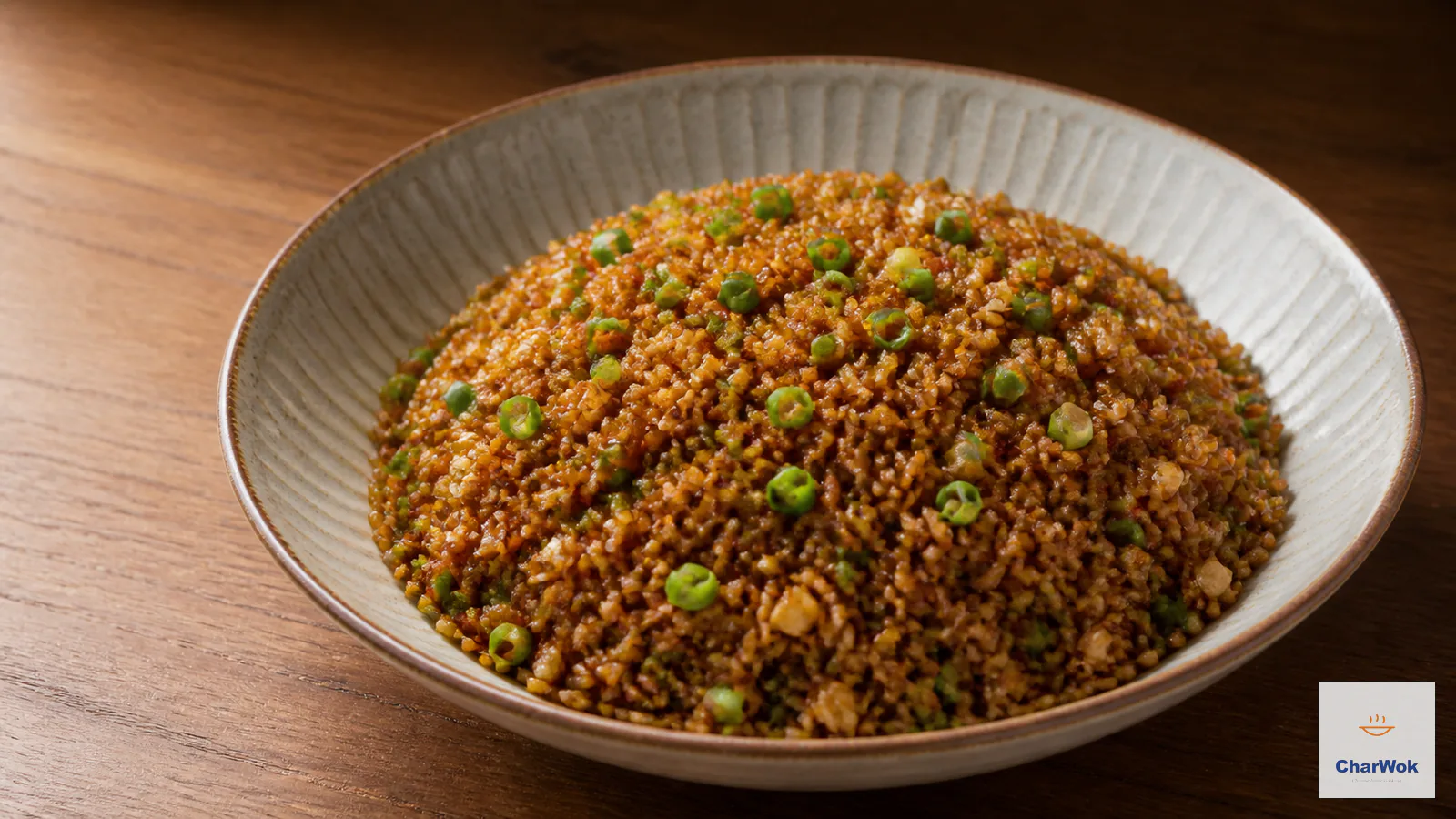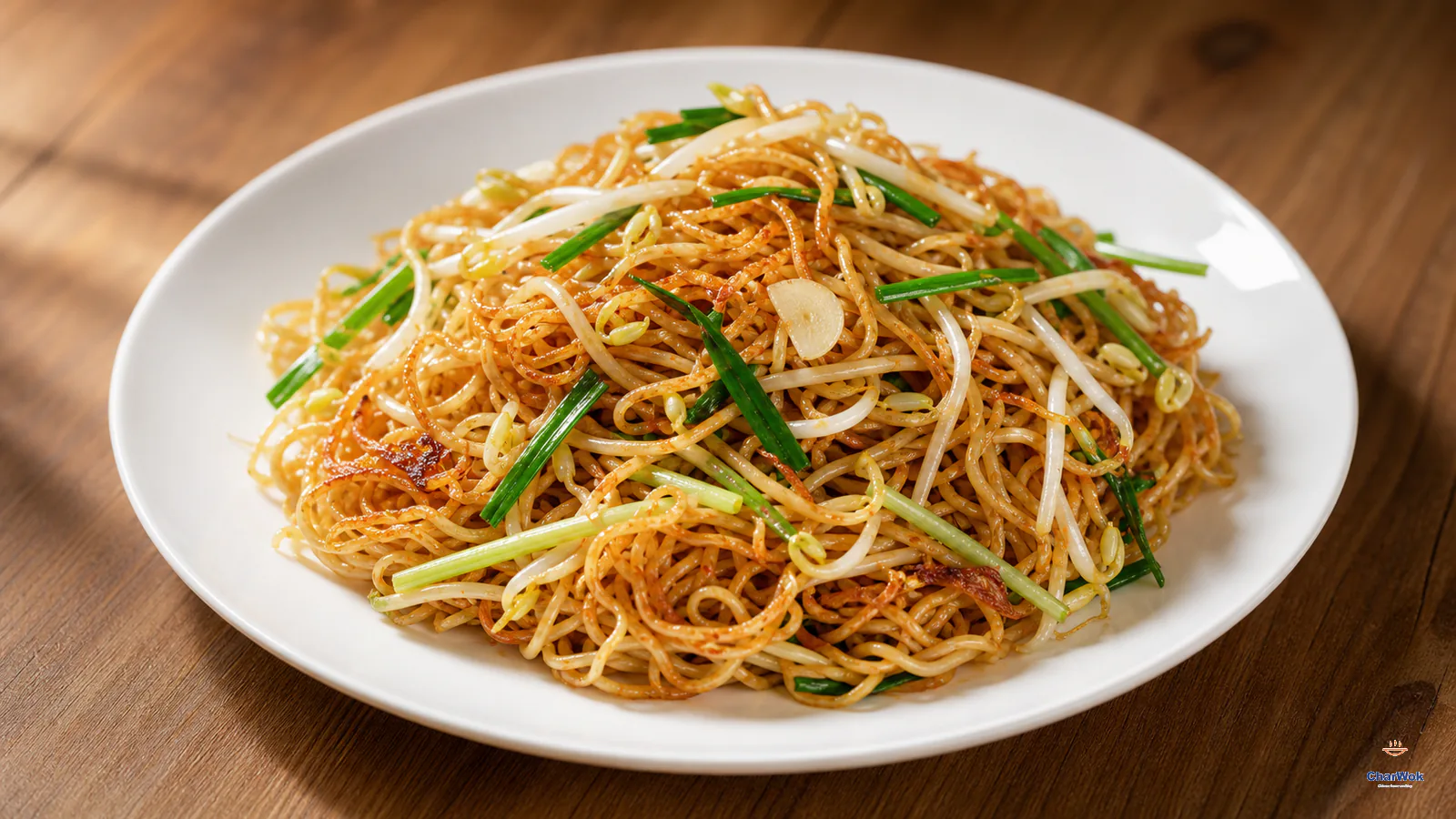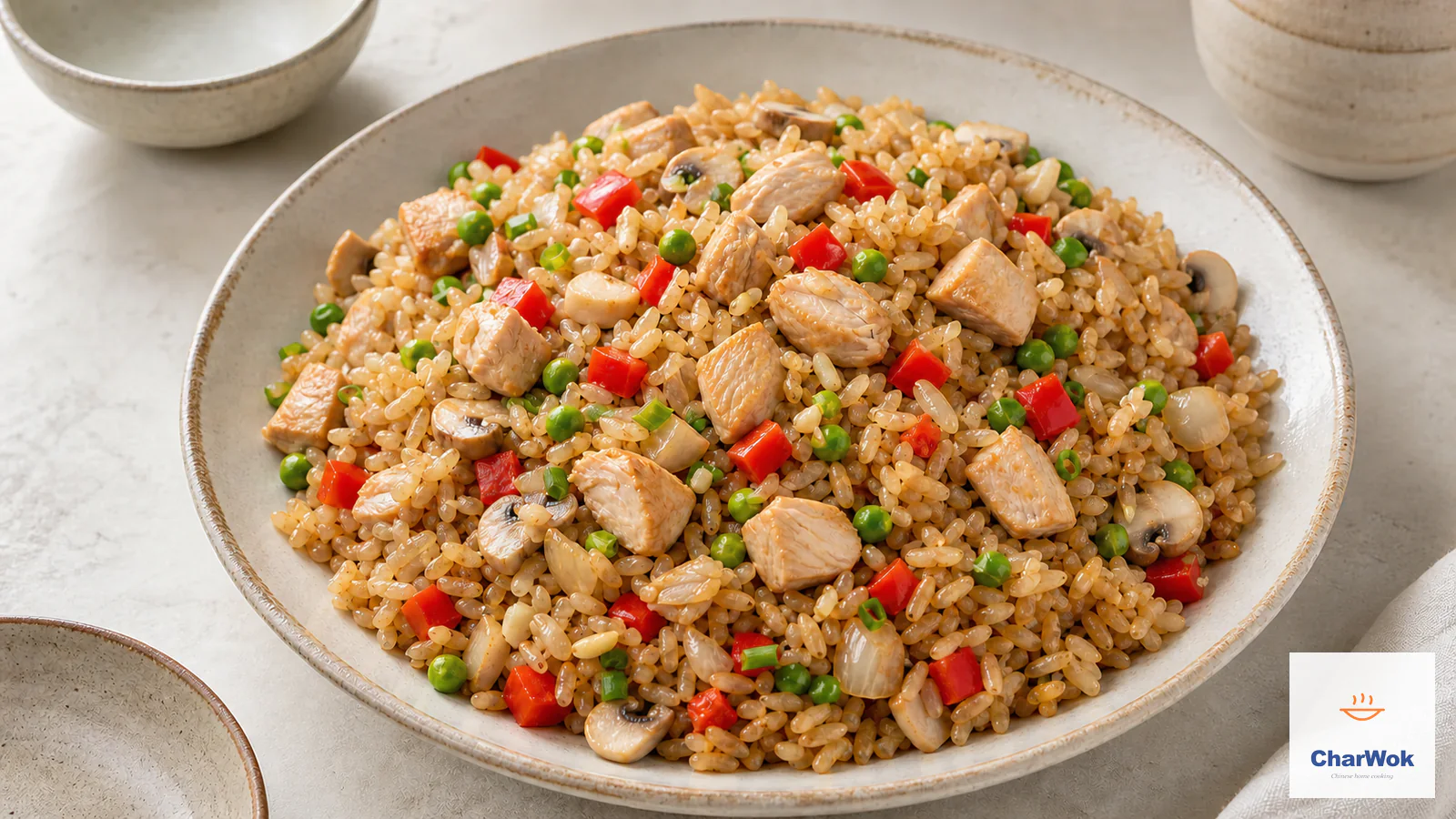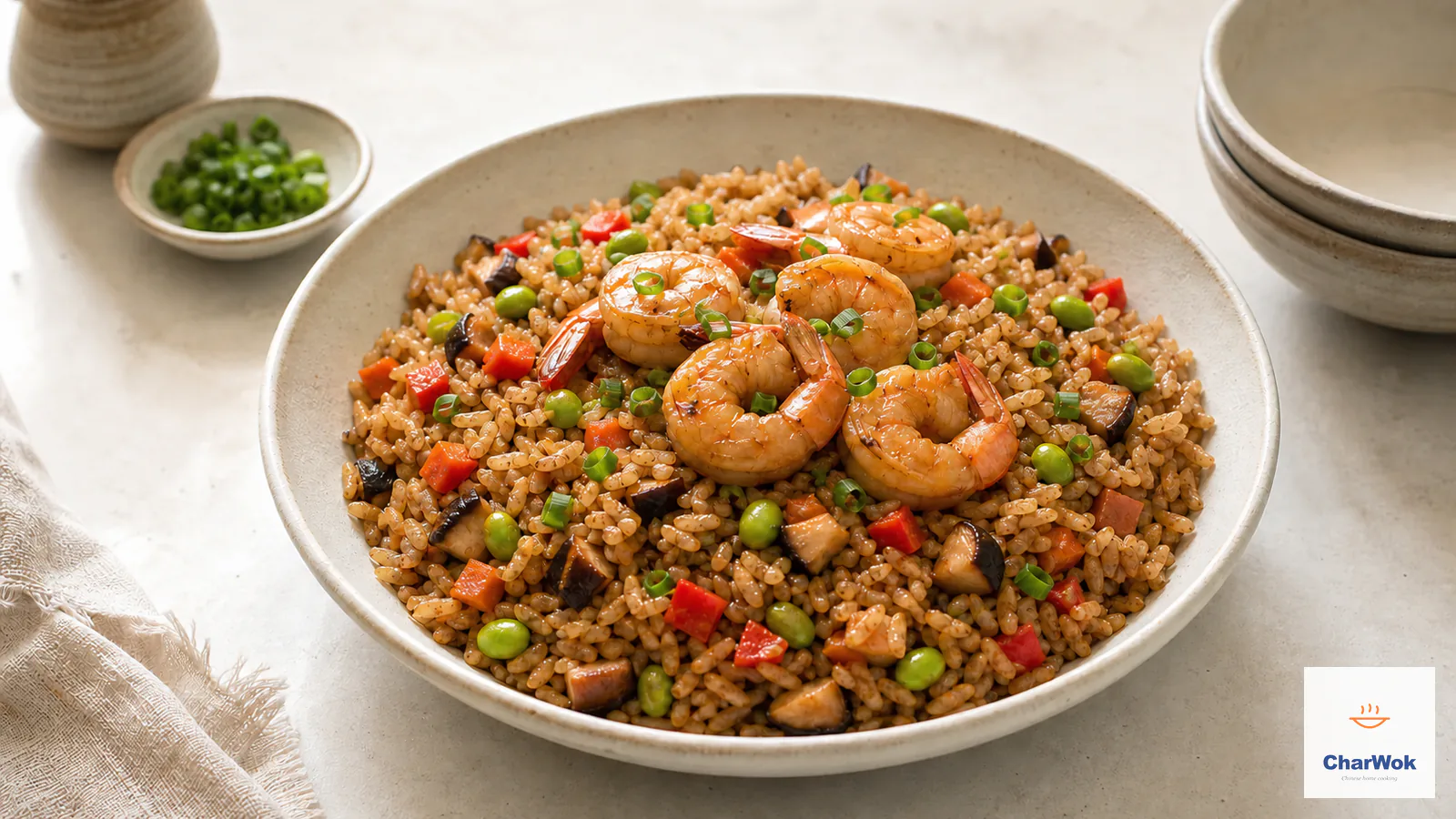
The craving hits at 6 p.m. You want a big plate of glistening, soy-stained fried rice, the kind from a takeout box, and then you remember: there is no leftover rice in the fridge. The cold, hard grains in your rice cooker are the enemy of a quick fry. This is the moment soy sauce rice pilaf earns its place in your weeknight rotation.
Pilaf skips the leftover-rice problem entirely. You toast raw rice in oil until every grain is sealed, then steam it in seasoned liquid. The finished rice has the browned, separate, slightly chewy character of good fried rice, but it starts from dry rice and a single pan. I have wrecked this dish more than once by rushing the toasting step or using the wrong rice-to-water ratio, and I will walk you past both traps.
At a glance: Toast 1 cup rinsed jasmine rice in oil with scallions and vegetables, then steam in 1¾ cups hot water with 2 teaspoons dark soy sauce, covered on low, 12 to 15 minutes, plus a 5-minute rest. The make-or-break moment is the toast, not the simmer. Toasting each grain in oil is what gives pilaf its separate, slightly springy bite and lets the soy color soak in. Serves 4, about 30 minutes total.
Why pilaf behaves differently from fried rice
Fried rice, done properly, is a leftover dish: you need cooked rice that has dried out overnight so the starches have retrograded and each grain can be tossed in a screaming-hot wok without turning to paste. If you are curious about that technique, my classic egg fried rice walks through the cold-rice logic in detail. For the takeout-style classic that this pilaf mimics, see soy sauce fried rice.
Pilaf inverts the order. You toast raw rice in fat so the surface of each grain gets a thin oil coating, then add liquid and cover. That oil barrier slows how fast water penetrates the starch, which is why pilaf grains stay distinct and firm instead of bursting into porridge. The same principle runs through clay pot rice and one-pot Hainanese chicken rice, where the rice is briefly fried before it steams. Once you feel the difference in your teeth between a toasted grain and a boiled one, you stop seeing pilaf as a shortcut and start seeing it as its own technique.
One honest limit: pilaf will never give you the smoky wok hei or the charred bottom crust that a high-heat stir-fry produces. What you get instead is even color, clean separation, and seasoning that runs through the grain rather than sitting on it. For a Tuesday night from a bag of raw rice, that is a fair trade.
The ingredients
Ingredients at a glance
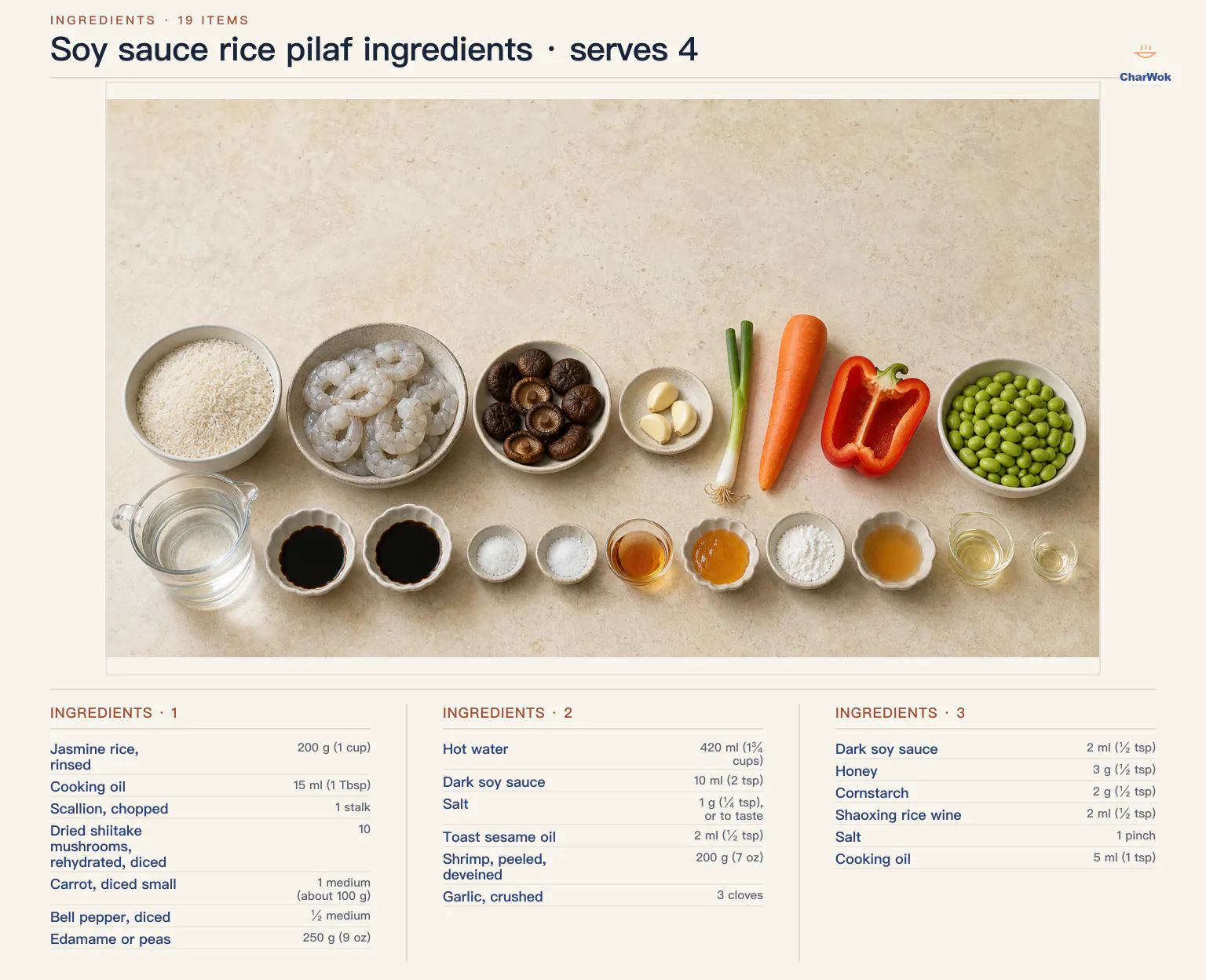
| Ingredient | Amount | Notes / substitute |
|---|---|---|
| Jasmine rice, rinsed | 200 g (1 cup) | Long-grain Thai jasmine is best. Basmati works; short-grain sushi rice will be sticky. See how to cook jasmine rice. |
| Cooking oil | 15 ml (1 Tbsp) | Neutral oil with a high smoke point: avocado, peanut, or canola. |
| Scallion, chopped | 1 stalk | Save the dark green tops for garnish. |
| Dried shiitake mushrooms, rehydrated, diced | 10 | Substitute 150 g fresh shiitake. Soaking guide in my shiitake guide. |
| Carrot, diced small | 1 medium (about 100 g) | Cut to pea size so it cooks through. |
| Bell pepper, diced | ½ medium | Add near the end so it keeps bite. |
| Edamame or peas | 250 g (9 oz) | Frozen edamame or peas, thawed. |
| Hot water | 420 ml (1¾ cups) | Hot, not cold, so the boil returns fast. |
| Dark soy sauce | 10 ml (2 tsp) | For color. Swap for light soy and cut the salt. See light vs. dark soy sauce. |
| Salt | 1 g (¼ tsp), or to taste | Adjust if you swapped soy sauces. |
| Toast sesame oil | 2 ml (½ tsp) | Stirred in at the end, never for frying. See Chinese sesame oil. |
| Ingredient | Amount | Notes / substitute |
|---|---|---|
| Shrimp, peeled, deveined | 200 g (7 oz) | Medium 26/30 size. Chicken thigh cubes work too. |
| Garlic, crushed | 3 cloves | Crush, do not mince, for the marinade. |
| Dark soy sauce | 2 ml (½ tsp) | Light soy if you prefer. |
| Honey | 3 g (½ tsp) | Sugar or mirin will do. |
| Cornstarch | 2 g (½ tsp) | Velvets the shrimp so it stays tender. |
| Shaoxing rice wine | 2 ml (½ tsp) | Dry sherry is the closest substitute. See Shaoxing rice wine. |
| Salt | 1 pinch | |
| Cooking oil | 5 ml (1 tsp) | Added last to seal the marinade. |
Step by step, and why each move matters
- Marinate the shrimp first. Toss the shrimp with garlic, soy sauce, honey, cornstarch, wine, and salt. The cornstarch forms a thin gel that buffers the protein from direct heat, the trick called velveting, so the shrimp stay plump instead of turning rubbery. Add the teaspoon of oil last; it locks the marinade on and stops the shrimp from sticking. Let it sit at room temperature while you prep everything else.
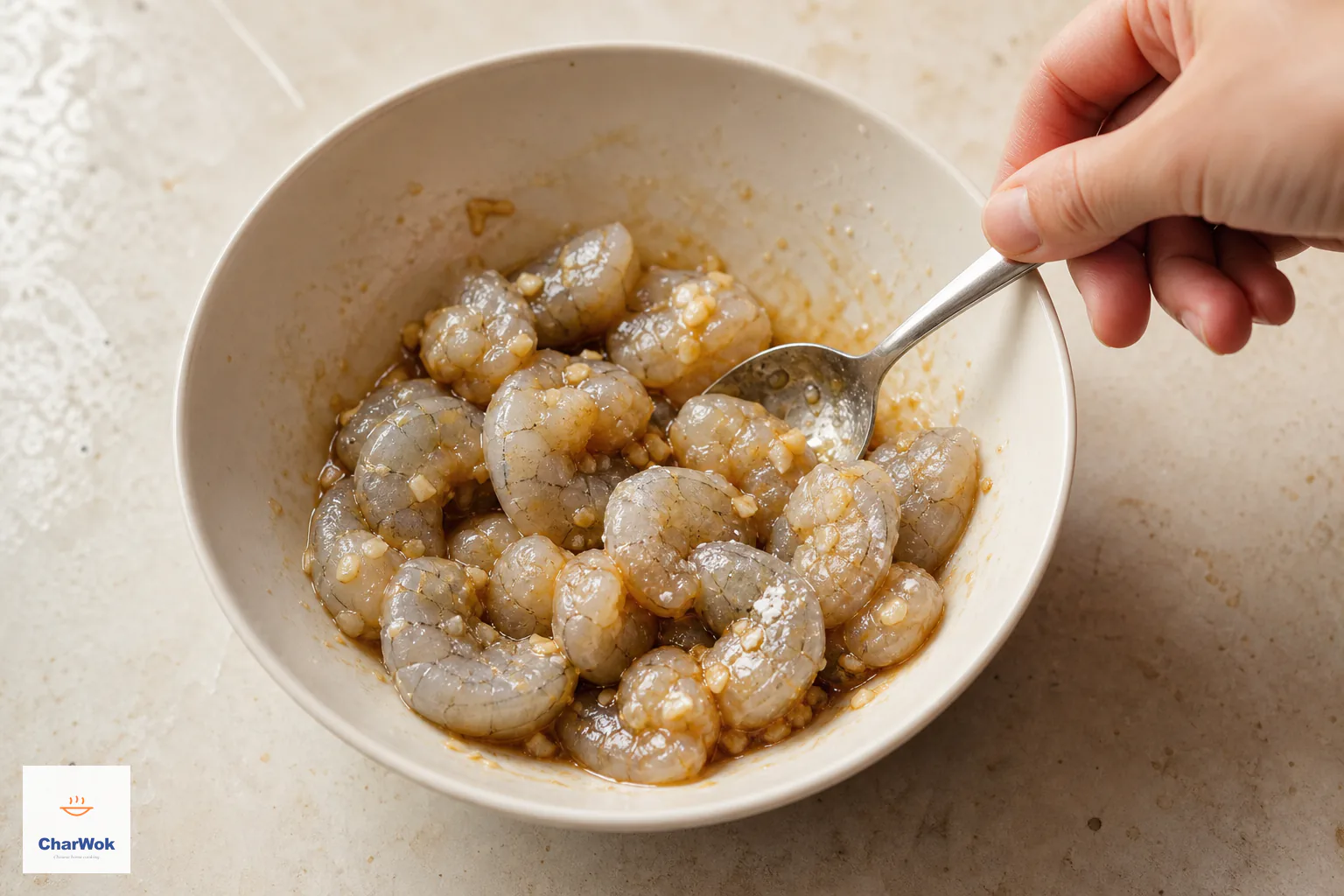
Toss the dried shrimp with garlic, soy, honey, cornstarch, wine and salt; marinate while preparing the rice, adding the listed teaspoon of oil last in the visible English method.
- Toast the rice until each grain is glossy. Heat the tablespoon of oil in a wide pan or wok over medium-high. Add the white scallion and let it sizzle about 10 seconds to release its oil-soluble aromas. Add the rinsed, drained rice and stir. Keep frying until the grains turn translucent at the edges and look individually coated and shiny, roughly 2 to 3 minutes. This is the step most people skip, and skipping it is why their pilaf tastes like tinted boiled rice.
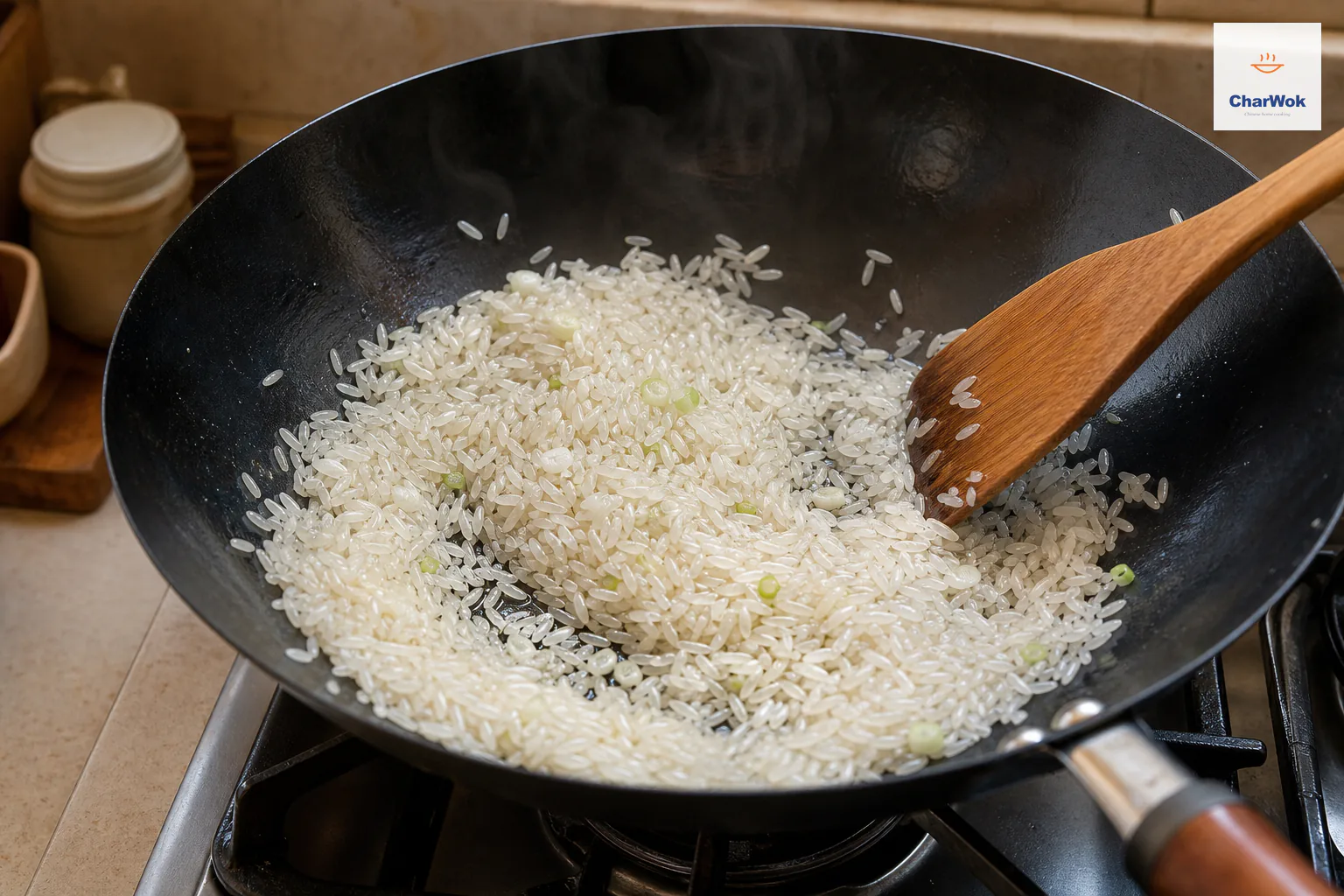
Sizzle the scallion white for about 10 seconds, then fry the drained raw rice for two to three minutes until every grain is oil-coated and glossy.
- Fry the vegetables dry before any liquid. Add the rehydrated shiitake, carrot, and edamame and keep stirring. You want the pan to look almost too dry and the vegetables slightly blistered at the edges. Frying them first drives off surface water and starts Maillard browning; if you add water now, you trap the flavor in the grains instead of washing it off the surface.
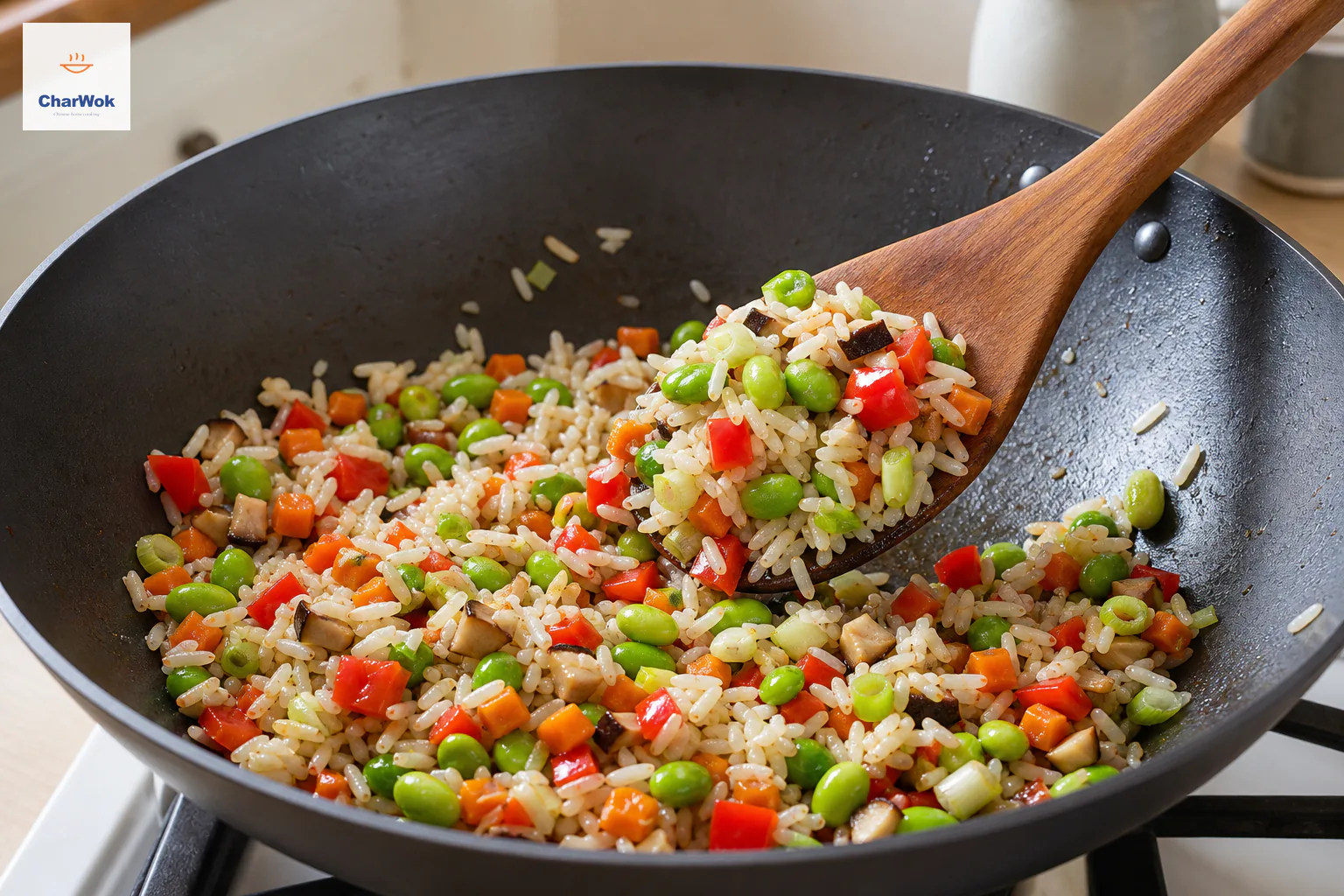
Fry the vegetables with the oil-coated rice until the pan looks almost dry and their edges just begin to blister; do not add liquid yet.
- De-glaze with hot water and soy. Pour in the hot water and dark soy sauce. Use hot water so the pan does not stall and the boil comes back within seconds; a cold splash would drop the temperature and start the rice cooking unevenly. Stir once to distribute the soy, then stop stirring.
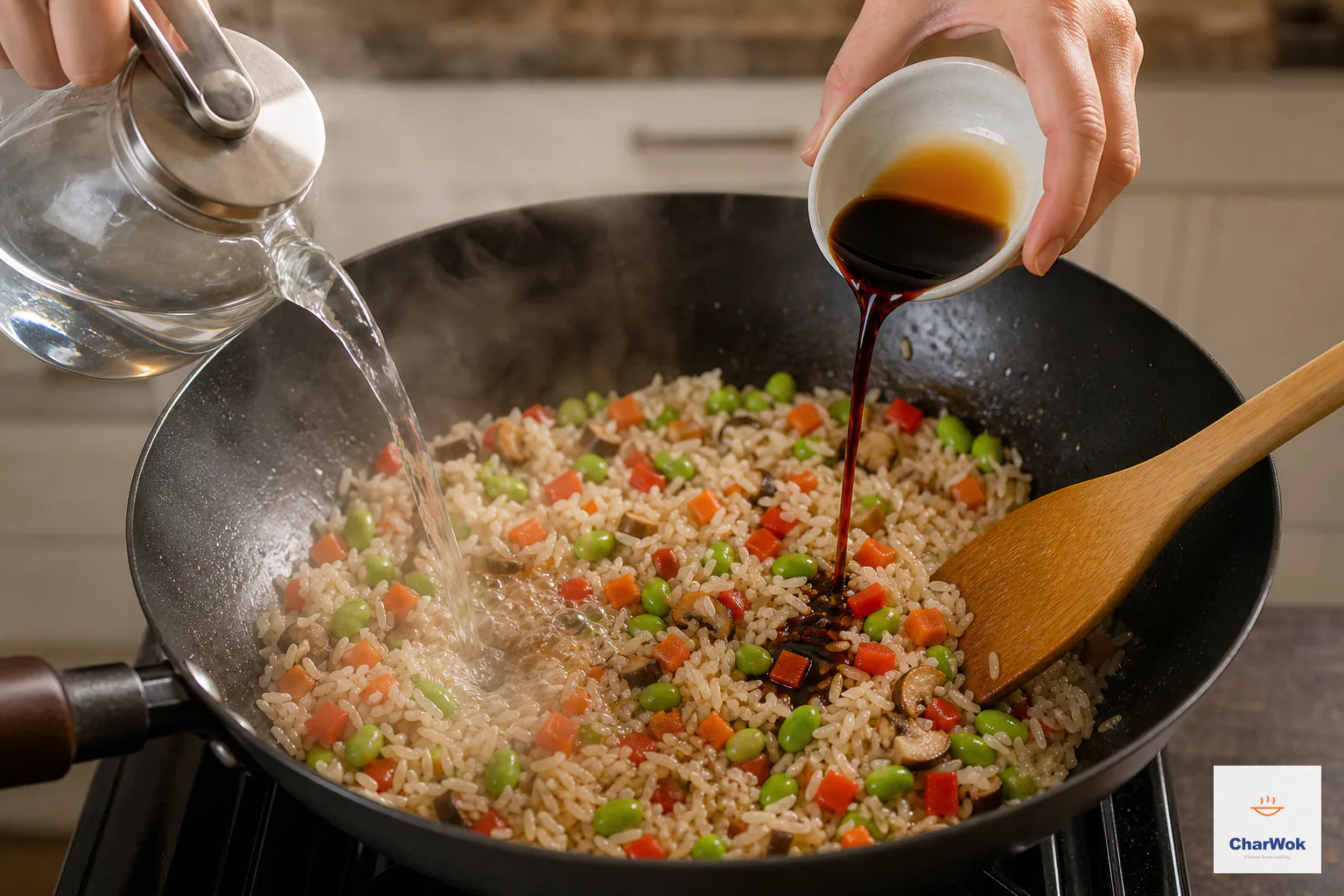
Pour in 420 milliliters hot water and two teaspoons dark soy, stir once to distribute the color, then stop stirring.
- Cover, drop to low, and leave it alone for 12 to 15 minutes. Bring it back to a visible boil, put on a tight lid, and turn the heat to the lowest setting. From here the rice steams, it does not boil. Resist the urge to lift the lid; each peek vents steam you cannot replace and you will end up with hard grains on top.
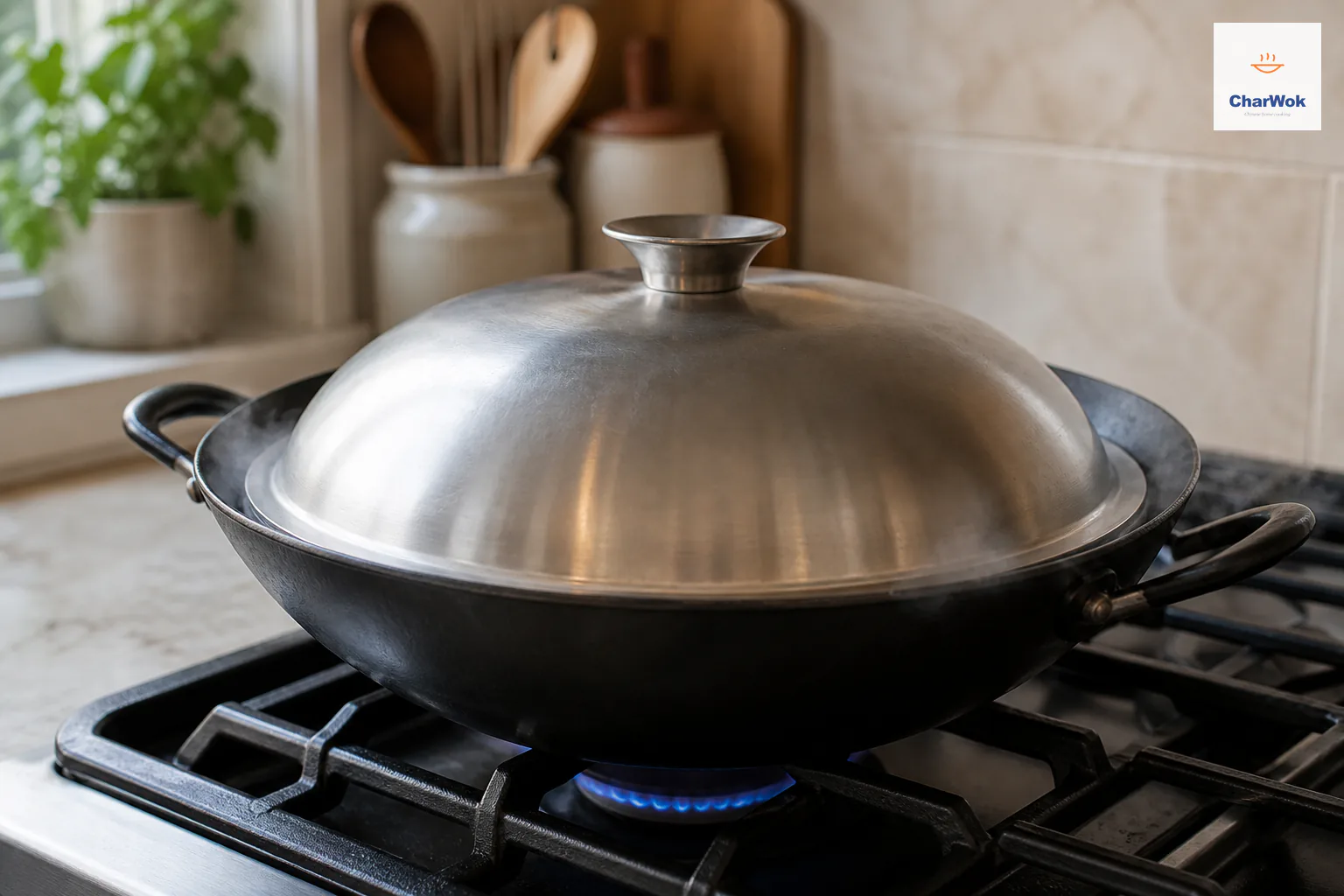
Once the liquid visibly boils, cover tightly, turn to the lowest heat and leave the lid closed for 12–15 minutes.
- Rest off the heat for 5 minutes. Take the pan off the burner and keep the lid on. The residual heat finishes the last stubborn grains and lets the surface moisture redistribute, so you do not get a wet top layer and a dry bottom. This rest is not optional; it is the difference between fluffy and gummy.
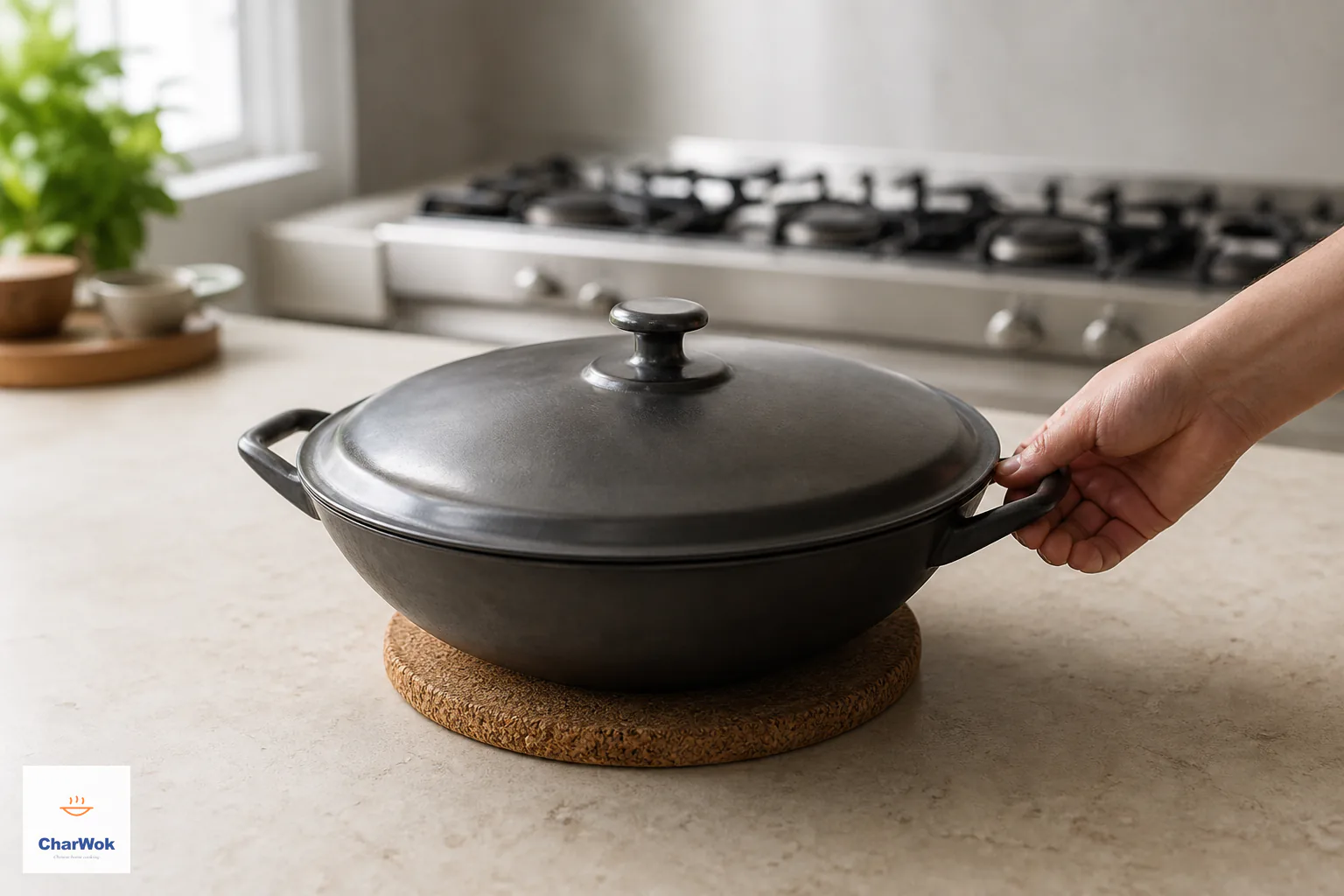
Move the covered pan completely off the heat and keep the lid closed for five minutes; the rest finishes firm grains and evens out moisture.
- Sear the shrimp while the rice rests. Heat a teaspoon of oil in a separate skillet over high. Add the shrimp in a single layer and cook about 45 seconds per side, until they curl into a tight C and turn pink. Pull them the instant they curl; shrimp cooked one minute longer go cottony. This quick-sear approach is the same one I use for Kung Pao shrimp.
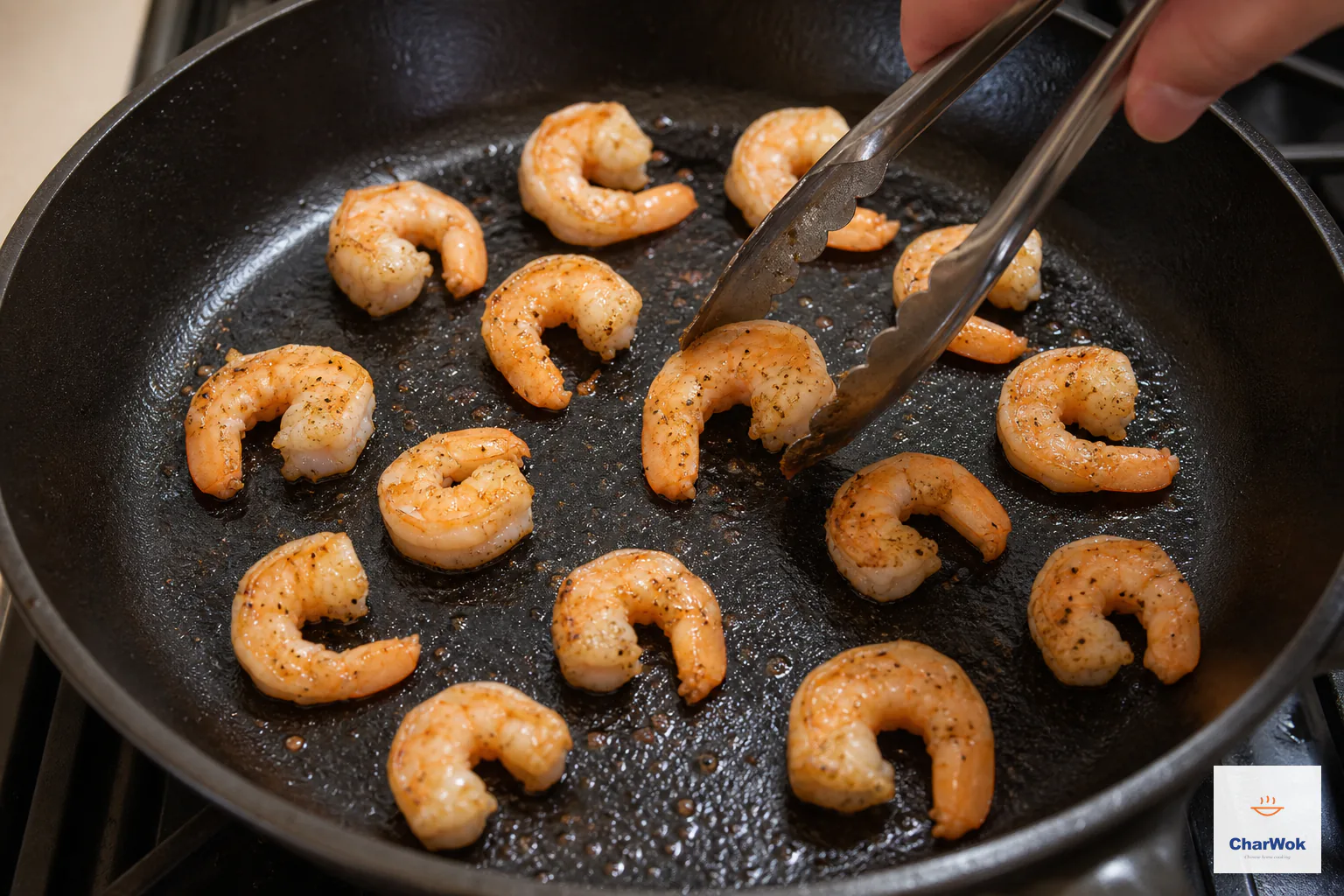
Sear the shrimp over high heat for about 45 seconds per side and remove them as soon as they turn pink and curl into open C shapes.
- Finish and serve. Sprinkle the salt and sesame oil over the rice, fluff with a fork or chopsticks, fold in the shrimp and the reserved scallion greens, and serve right away. Sesame oil is a finishing oil; if you fry it, the toasted aroma burns off in seconds.
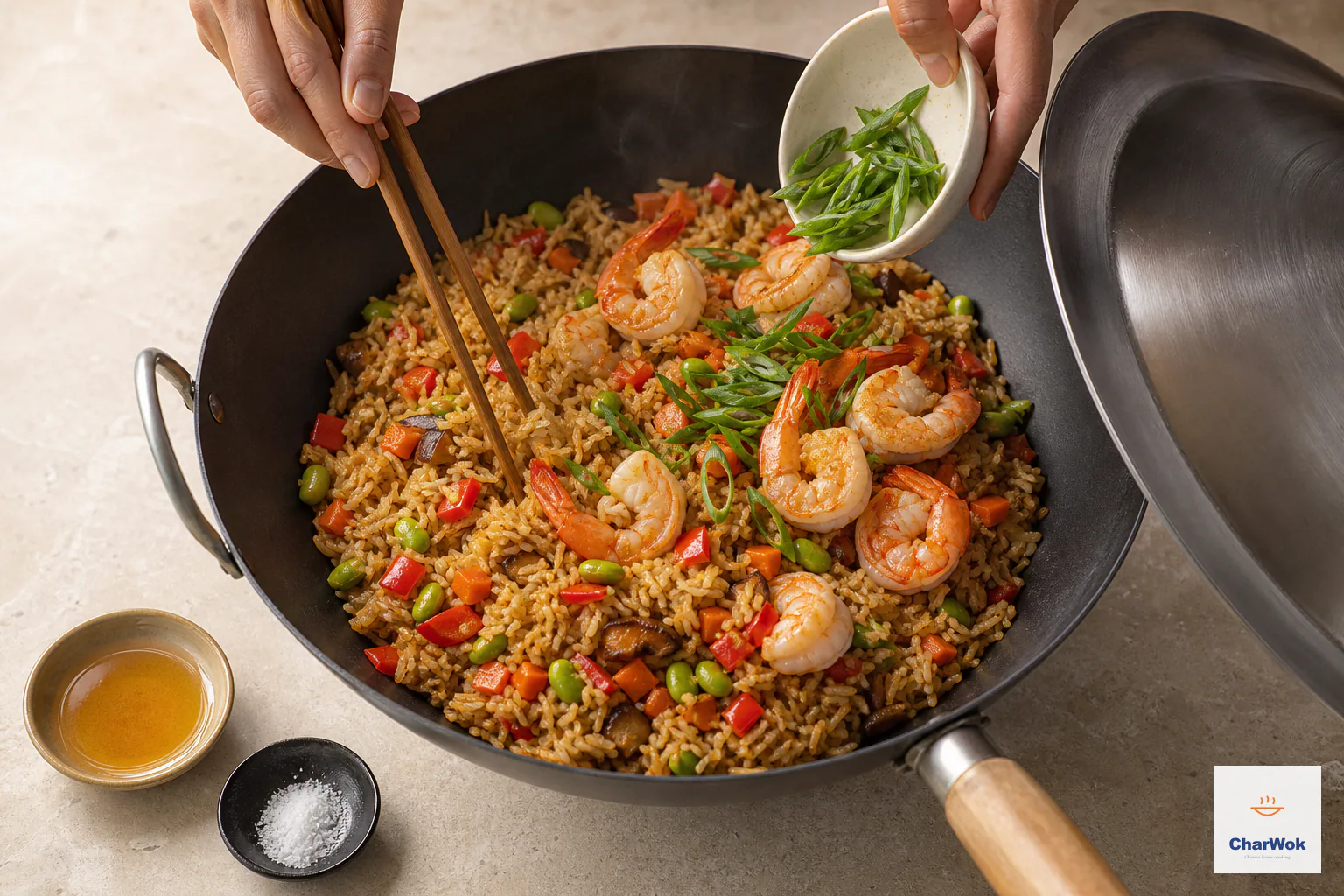
Season the rested rice with salt and toasted sesame oil, fluff the grains, fold in the shrimp and scallion greens, and serve immediately.
When the rice goes wrong
Mushy, clumping rice. Either the rice was not toasted long enough, or you used too much water, or you stirred it during the simmer. For a fix in the moment: take the lid off, spread the rice out, and let residual heat dry it for a few more minutes. Next time, toast longer and trust the 1:1.75 ratio for jasmine.
Hard, undercooked grains. Usually the heat was too high and the water evaporated before the rice cooked, or the lid was loose. Add 2 tablespoons of hot water, re-cover tightly, and steam 3 to 5 more minutes on the lowest heat. A pan that is too wide for the rice volume also dries out fast; use a pan where the rice sits at least 2 cm deep.
Pale color, weak flavor. You likely added the soy to the oil instead of the water, or used light soy by mistake. Dark soy is mostly about color and a rounded, slightly sweet depth; it is not very salty. If you only have light soy, expect a lighter, saltier result and cut the added salt.
Rubber shrimp. You cooked them too long or on too low a heat. Shrimp want a hot, fast sear. The instant they form a tight curl and lose their translucence, they are done.
Variations and what to serve alongside
Swap the protein freely. Diced chicken thigh marinated the same way turns this into a chicken version; for the standard takeout route, chicken fried rice and pork fried rice are the natural cousins, and a sweeter take like beef and pineapple fried rice shows how far the template bends. If you want shrimp without the pilaf, shrimp fried rice is the direct stir-fried version.
Change the vegetables by color and crunch. Corn, diced zucchini, water chestnuts, or napa cabbage all belong here; just cut them to roughly the same size so they finish together. A spoonful of dried shrimp soaked and minced deepens the savory base if you want to push toward restaurant flavor.
This is a one-pan meal on its own, so I keep sides light. A quick bok choy stir-fry or a bowl of smacked cucumber salad cuts the richness. On a cold night, start the meal with a small cup of chicken and mushroom congee. For more dishes in this family, browse the Chinese rice recipes by cooking method or the wider Chinese takeout collection.
Storing and reheating
Cool leftover rice flat and shallow, then refrigerate within an hour. Pilaf reheats better than fried rice because the grains are already firm. Add a splash of water, cover, and microwave in 30-second bursts, or reheat covered in a pan on low. Reheat only what you will eat; reheated rice does not keep a second time. If you are planning meals ahead, this dish belongs on any make-ahead or weeknight list, and it is gentle enough to count among reliable Chinese recipes for beginners.
Frequently asked questions
Can I use a rice cooker instead of a pan?
You can, but toast the rice in oil on the stove first, then transfer it with the hot water and soy into the cooker. The toast is the whole point; skip it and you have plain steamed rice.
Why hot water instead of cold?
Hot water keeps the pan near boiling so the rice cooks evenly. Cold water drops the temperature, the bottom grains overcook while the top stay raw, and the color sets unevenly.
Is jasmine the only rice that works?
No, but it is the most forgiving for this ratio. Basmati needs slightly less water; short-grain rice needs more and turns soft. Adjust the liquid a tablespoon at a time when you change varieties.
Can I make it vegetarian?
Easily. Drop the shrimp, use mushroom soaking liquid as part of the water for extra depth, and add firm tofu or more mushrooms for protein. Keep the soy, sesame oil, and vegetables the same.