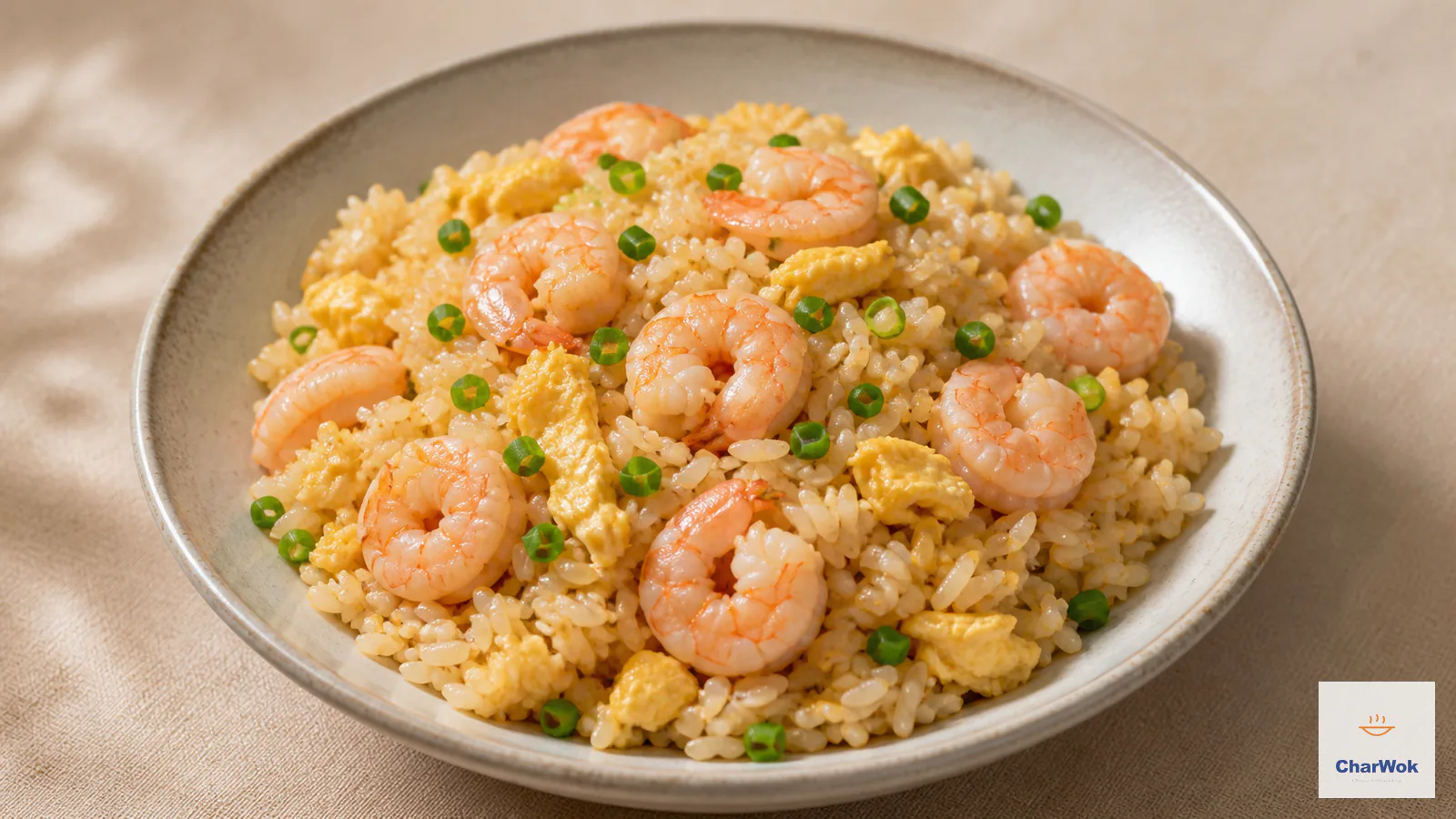
The best plate of shrimp fried rice I have ever eaten was not in a restaurant. It was made from cold rice scraped out of a plastic container at 11 p.m., with shrimp that had been sitting in the fridge since morning. What made it great was not the ingredients. It was the heat, and the fact that the shrimp came out of the pan before the rice went in.
That last point is the one most home cooks miss. The temptation is to throw everything in and stir. Do that and you get shrimp that taste like rubber bands and rice that has steamed rather than fried. Shrimp fried rice is a five-minute dish built on one principle: each component gets the pan to itself, at its own temperature, for exactly as long as it needs.
At a glance. Use 3 cups of cold, day-old jasmine rice to roughly 200 g (7 oz) of shrimp. Cook the shrimp, the egg, and the rice in three separate passes over high heat, then bring them together for the final 30 seconds. The whole thing is done in under 8 minutes. Cold rice and a hot wok are not optional; they are the whole dish.
What kind of fried rice is this?
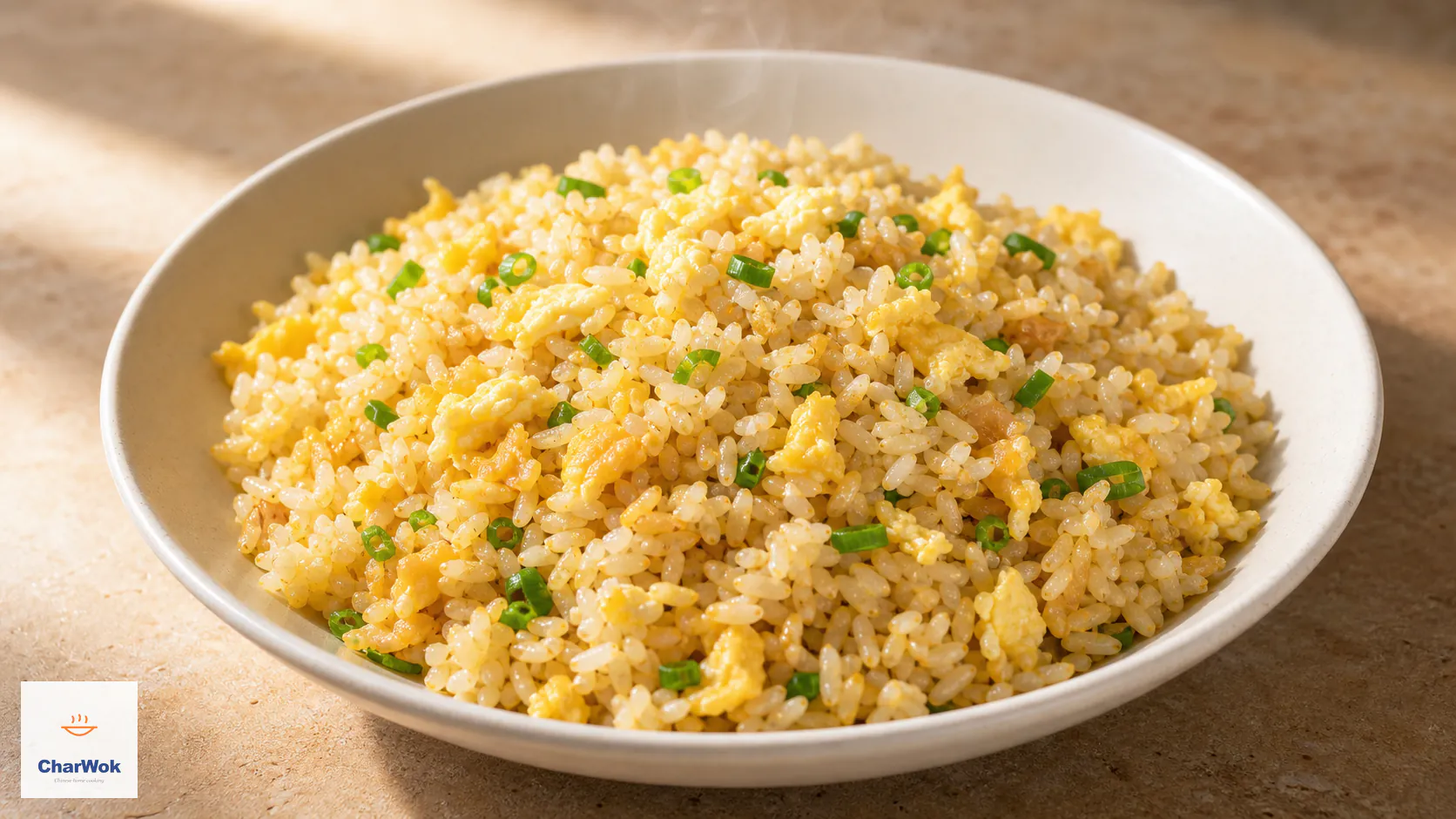
Shrimp fried rice (xiā rén chǎo fàn, 虾仁炒饭) is the seafood branch of the Chinese fried-rice family. It shares its bones with plain egg fried rice, but the shrimp carries the dish in a way egg alone cannot. The sweetness of the shellfish, the clean hit of white pepper, and the faint toast of sesame oil at the end give it a lighter, more coastal character than the heavier soy-forward versions.
This is home-style cooking, not takeout. A typical American Chinese takeout box is glossy, dark, and oily because it relies on a heavy hand of dark soy and a quarter cup of oil. The version below uses about two tablespoons of oil for three servings and seasons lightly. You will taste the rice and the shrimp, not a sauce. If you want something closer to the takeout style, the Yangzhou fried rice on this site is the richer cousin, loaded with char siu, shrimp, and egg.
The three things that actually matter
Before the recipe, the three judgments that decide whether this works:
- The rice must be cold and firm. Freshly cooked rice is wet and starchy on the surface. In a hot pan it clumps and turns gummy. Day-old rice, spread on a plate and loosened with a fork, has lost enough surface moisture that each grain fries instead of steams. If you are starting from scratch today, see the method for cooking jasmine rice on the stove and cook it with a little less water than usual, then chill it uncovered for at least an hour.
- The wok must be genuinely hot. Fried rice fails at medium heat. You want the oil shimmering and just starting to smoke before the food goes in. A well-seasoned carbon steel wok holds and recovers heat faster than anything else; a flat-bottomed cast-iron skillet is a fine substitute. A thin nonstick pan is not, because you cannot push it hot enough.
- Cook the proteins on their own. Shrimp turn rubbery the second they overcook. Eggs want a fast, loose scramble. Rice wants to be tossed dry with seasoning for a minute to pick up color and separate. Doing these in sequence, not together, is the entire trick.
Ingredients
Ingredients at a glance
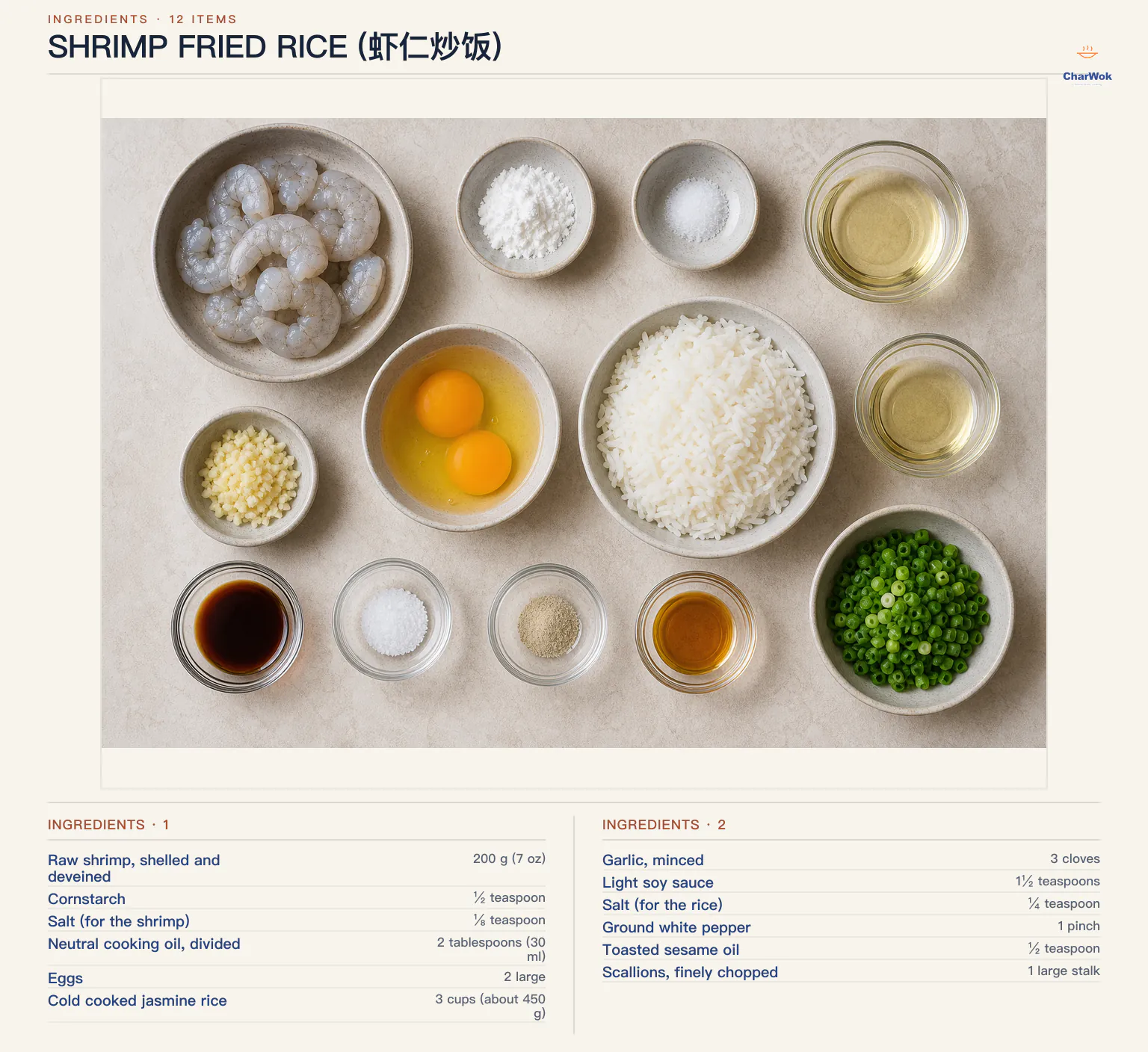
For three servings. The amounts are forgiving on everything except the salt and the soy; taste as you go.
| Ingredient | Amount | Notes / substitute |
|---|---|---|
| Raw shrimp, shelled and deveined | 200 g (7 oz) | Any size works; medium (26/30) is easiest to handle. Do not use pre-cooked shrimp, they will turn to leather. Thawed frozen is fine; pat very dry. |
| Cornstarch | ½ teaspoon | This is "velveting" at home scale; it gives the shrimp a slick coating that stays tender. Potato starch works equally well. |
| Salt (for the shrimp) | ⅛ teaspoon | |
| Neutral cooking oil, divided | 2 tablespoons (30 ml) | Peanut, canola, grapeseed, or sunflower. Not olive oil; the smoke point is too low and the flavor fights the dish. |
| Eggs | 2 large | Lightly beaten with a pinch of salt. Duck eggs, if you can find them, make a richer, more golden version. |
| Cold cooked jasmine rice | 3 cups (about 450 g) | Day-old is best. Medium-grain jasmine is the standard; see note above if you are cooking it today. Long-grain basmati also fries well thanks to its low starch. |
| Garlic, minced | 3 cloves | Fine mince so it flavors the oil without burning. One scallion white, finely chopped, can stand in. |
| Light soy sauce | 1½ teaspoons | Light, not dark. Dark soy is for color and would muddy the look here. If you are unsure which bottle is which, the guide to light vs. dark soy sauce sorts it out. |
| Salt (for the rice) | ¼ teaspoon | Adjust to taste at the end. |
| Ground white pepper | 1 pinch | White pepper is traditional and milder than black; its warmth is what makes fried rice taste "right." Black pepper is an acceptable swap. |
| Toasted sesame oil | ½ teaspoon | Added off the heat at the end; cooking toasted sesame oil kills its aroma. A few drops go a long way. |
| Scallions, finely chopped | 1 large stalk | Greens for finishing, white and light green parts for the pan if you like. |
Method
Have everything prepped and within arm's reach before you turn on the stove. Once the pan is hot this moves fast and you will not have time to mince garlic.
- Prep and velvet the shrimp. Pat the shrimp completely dry with paper towels; surface moisture is what causes sticking and steaming. Toss them with the cornstarch and the ⅛ teaspoon salt until each shrimp is lightly coated. The cornstarch forms a thin gel when it hits the oil, which is the same principle behind restaurant shrimp and broccoli and even har gow shrimp dumplings. Let it sit while you heat the pan.
- Sear the shrimp, then pull them. Get the wok ripping hot, then add ½ tablespoon of the oil and swirl to coat. Add the shrimp in a single layer and toss for about 45 seconds, until they curl into a loose "C" and turn pink with just a trace of translucence in the center. They will finish cooking later, so pull them now while they still look slightly underdone. Set aside on a plate. This is the make-or-break step: shrimp left in the pan a minute too long never recover.
- Scramble the eggs fast and loose. Add 1 tablespoon of oil to the same wok over high heat. When it just begins to smoke, pour in the beaten egg. Let the bottom set for two seconds, then push the set egg around with your spatula so the runny egg flows onto the hot metal. When the eggs are about 90 percent set and still glossy, break them into curds and scoop them out next to the shrimp. They should be soft and pale, not browned. Browning egg gives it a hard, dry edge that fights the dish.
- Bloom the garlic, then fry the rice. Add the remaining ½ tablespoon of oil. Add the garlic and let it sizzle for five seconds, no more; you want fragrance, not color. Add the cold rice and use the edge of the spatula to break up any clumps against the side of the wok. Sprinkle the light soy sauce, salt, and white pepper over the rice, not into the oil. Toss constantly for about a minute, pressing and flipping, until every grain is separate, hot through, and faintly glossy. This is where fried rice gets its "fried" character; the dry toss drives off steam and lets the grains pick up a little color and chew.
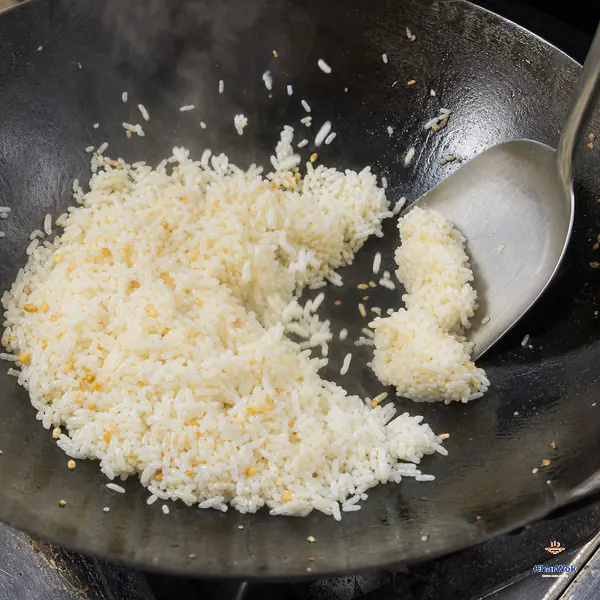
Use cold rice and the spatula edge to press out the last clumps, then keep tossing until the grains are separate, hot through, dry and faintly glossy.
- Bring it together and finish off the heat. Return the shrimp and egg to the wok. Toss for 20 to 30 seconds, just long enough to warm the shrimp through. Kill the heat. Drizzle the sesame oil over the top and scatter in the scallion greens. Toss once more so the oil and scallions perfume the whole pan without cooking. Serve immediately.
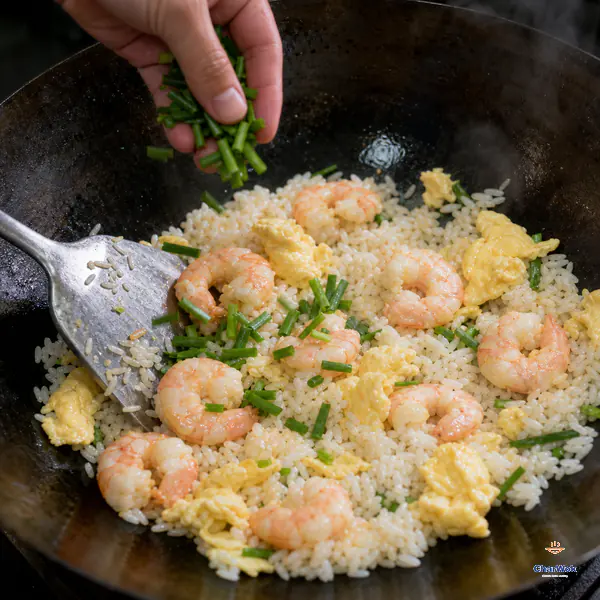
Return the shrimp and egg only long enough to warm through, add the scallion and finish promptly; a long final toss tightens the shrimp and dries the egg.
When it goes wrong, and how to fix it
I have ruined more plates of this than I have made well. Here are the failures I keep falling into and what to do about them.
- Clumpy, wet rice that steams instead of fries. The rice was too fresh or too wet. Spread it on a plate, fork it apart, and leave it uncovered in the fridge for a few hours next time. If you are stuck with wet rice right now, fry it longer and drier than feels comfortable, pressing clumps against the wok wall to break them, and hold back a little on the oil.
- Tough, rubbery shrimp. They cooked too long, full stop. Next time pull them when they still show a faint translucence at the center; carryover heat finishes them during the final toss. Nothing rescues overcooked shrimp, so err early.
- Eggs that brown and turn leathery. The heat was too high for too long, or they sat in the pan after setting. Pour the egg, move it, and pull it while still glossy. The browning you sometimes see on restaurant fried-rice egg is a wok-hei effect from a burner you do not have at home; chasing it just dries the egg out.
- Sticking and tearing. Either the wok was not hot enough before the oil went in, or the shrimp were wet. Heat the empty wok first, add oil, then food. On a nonstick pan, reverse that: oil first, then gentle heat. Honestly, if you cook stir-fries more than once a month, season a carbon steel wok and stop fighting your nonstick.
- Bland rice. Fried rice is under-seasoned more often than over-seasoned, because people are scared of salt. The fix is not more soy sauce, which makes it dark and wet; it is more plain salt and white pepper added with the rice. Taste a grain before the final combine.
- Wok full of smoke alarms. Normal. Vent your kitchen, use an oil with a high smoke point, and keep the cooking window short. If your stove cannot get the pan hot enough to smoke the oil, you can still make good fried rice; just accept it will be a little softer and cook the rice a touch longer to dry it out.
Variations and what to serve with it
Once you have the three-pass technique down, the rest of the fried-rice family opens up. Swap the shrimp for diced chicken thighs and you have chicken fried rice; use ground pork and you are in pork fried rice territory. A spoon of leftover soy sauce fried rice technique, where the rice is glossed with soy and nothing else, is a good base to build on if you want a deeper, more savory plate.
Vegetables fold in easily. Frozen peas and diced carrot are the classic, added with the rice. A small handful of diced scallion whites at the garlic stage adds depth. If you want shrimp with vegetables but not rice, the shrimp and egg stir-fry on this site is the same pairing without the grain, and salt and pepper shrimp is a good first course if you bought more shrimp than this recipe needs.
For heat, a spoon of chili oil stirred in at the end, or a side of kung pao shrimp for a spicier table. For a fuller spread I almost always make a quick soup: egg drop soup comes together in five minutes, and a light tofu and vegetable soup balances the richness of the rice. A cold smashed cucumber salad on the side gives the crunch the rice lacks. If you would rather round the meal out with noodles than soup, a simple plate of lo mein stretches dinner for a crowd.
Storage and reheating
Leftovers keep in an airtight container in the fridge for up to two days. The texture drops off fast after that. Reheat in a dry skillet over medium-high heat, tossing until steaming hot, rather than the microwave, which turns the rice tough and the shrimp rubbery. I do not recommend freezing; the shrimp suffer and the rice goes mealy on thaw. Honestly, this is a dish that is best eaten the day it is made, and the recipe is small enough that finishing it is rarely a problem.
Frequently asked questions
A few questions that come up often, answered short and direct.
Can I use frozen shrimp? Yes. Thaw them fully under cold water and pat them bone-dry before velveting. Wet shrimp will not sear; they will boil in their own juice and turn gray.
Do I really need day-old rice? Strongly preferred, but not strictly required. Same-day rice works if you cook it slightly dry and chill it uncovered for an hour. Warm, freshly cooked rice will clump and steam.
Can I use brown rice? You can. Long-grain brown rice fries respectably because its bran keeps the grains separate. Short-grain brown rice tends to be sticky and is a harder sell.
Why white pepper instead of black? White pepper has a warmer, cleaner bite that reads as "Chinese-restaurant" flavor; black pepper is sharper and more assertive. Both work, white is just traditional.
Is this spicy? Not as written. For heat, add a spoon of chili oil at the end or a minced chili with the garlic.
What if I don't own a wok? Use the largest cast-iron or heavy stainless skillet you have. Avoid nonstick; it cannot reach the temperature the dish needs.