The first turnip cake I tried to fry at home fell apart into a sad beige scramble. I had skipped the steaming step and panicked over a hot pan. That mush taught me the one thing that decides whether this dish works: turnip cake is a two-stage project, and the second stage (pan-frying slices that hold their shape) only succeeds if the first stage (steaming a set, sliceable cake) is done properly. Once that clicks, the rest is genuinely easy.
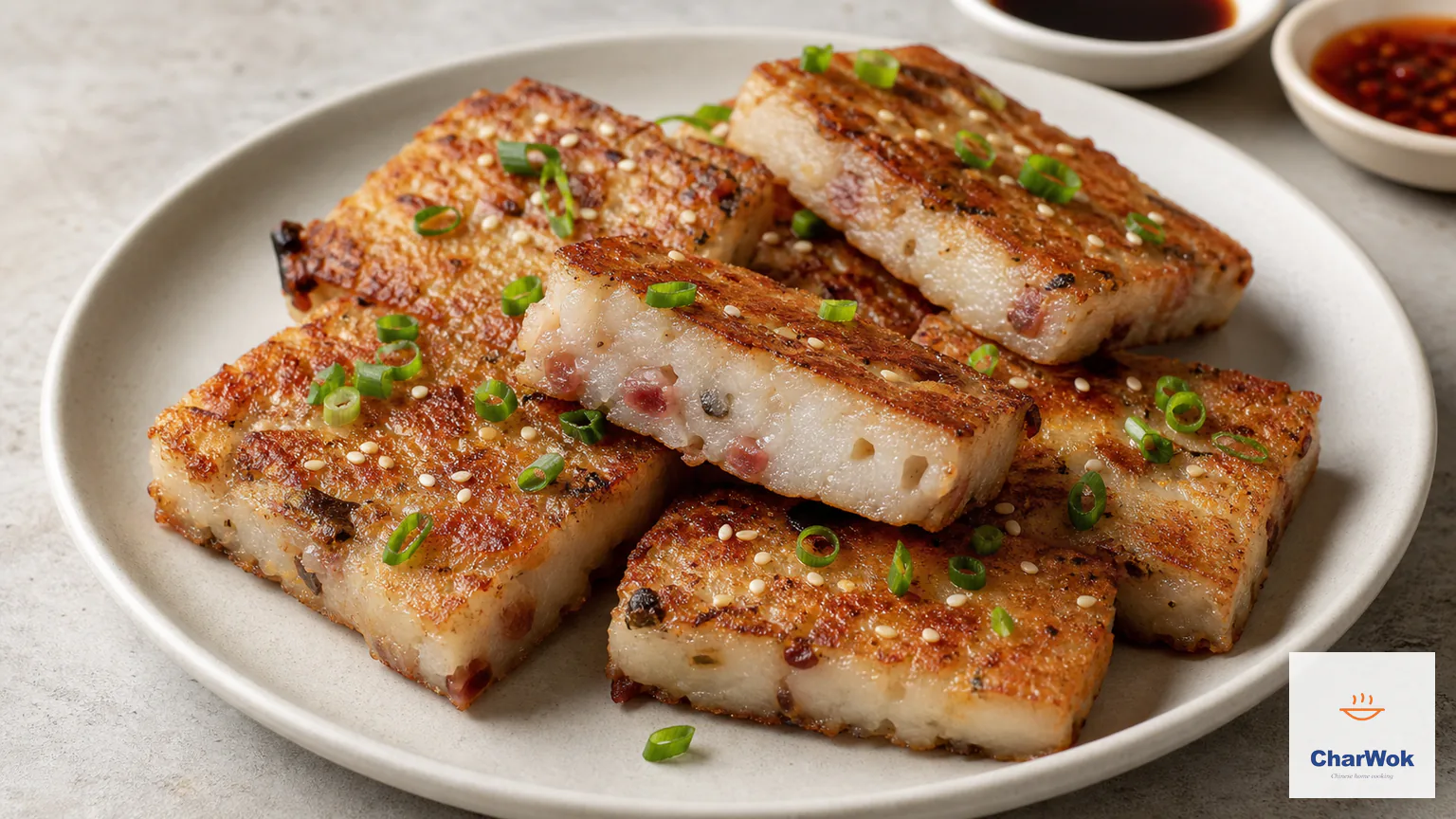
Lo bak go (蘿蔔糕, "daikon radish cake") is the kind of dim sum classic that looks humble on the cart and tastes like a small miracle: a slice with a crisp, almost lacquered crust and a soft, slightly chewy, savory-fragrant interior studded with Chinese sausage, dried shrimp, and mushroom. The good news for the home cook is that the restaurant version is not some guarded secret. It is rice flour, daikon, and a handful of umami ingredients, set by steam and finished in a pan. Get the ratio of radish liquid to starch right and you will not go back to the freezer aisle.
At a glance: Lo bak go is 800 g daikon cooked down and bound with 160 g rice flour plus 50 g starch, using 400 ml of the daikon's own cooking liquid. Steam 50 minutes to set, cool fully, then pan-fry slices in a little oil until both faces are golden. The number that makes or breaks it is the 400 ml liquid: too much and the cake weeps and never slices; too little and it turns dense and rubbery.
What turnip cake actually is
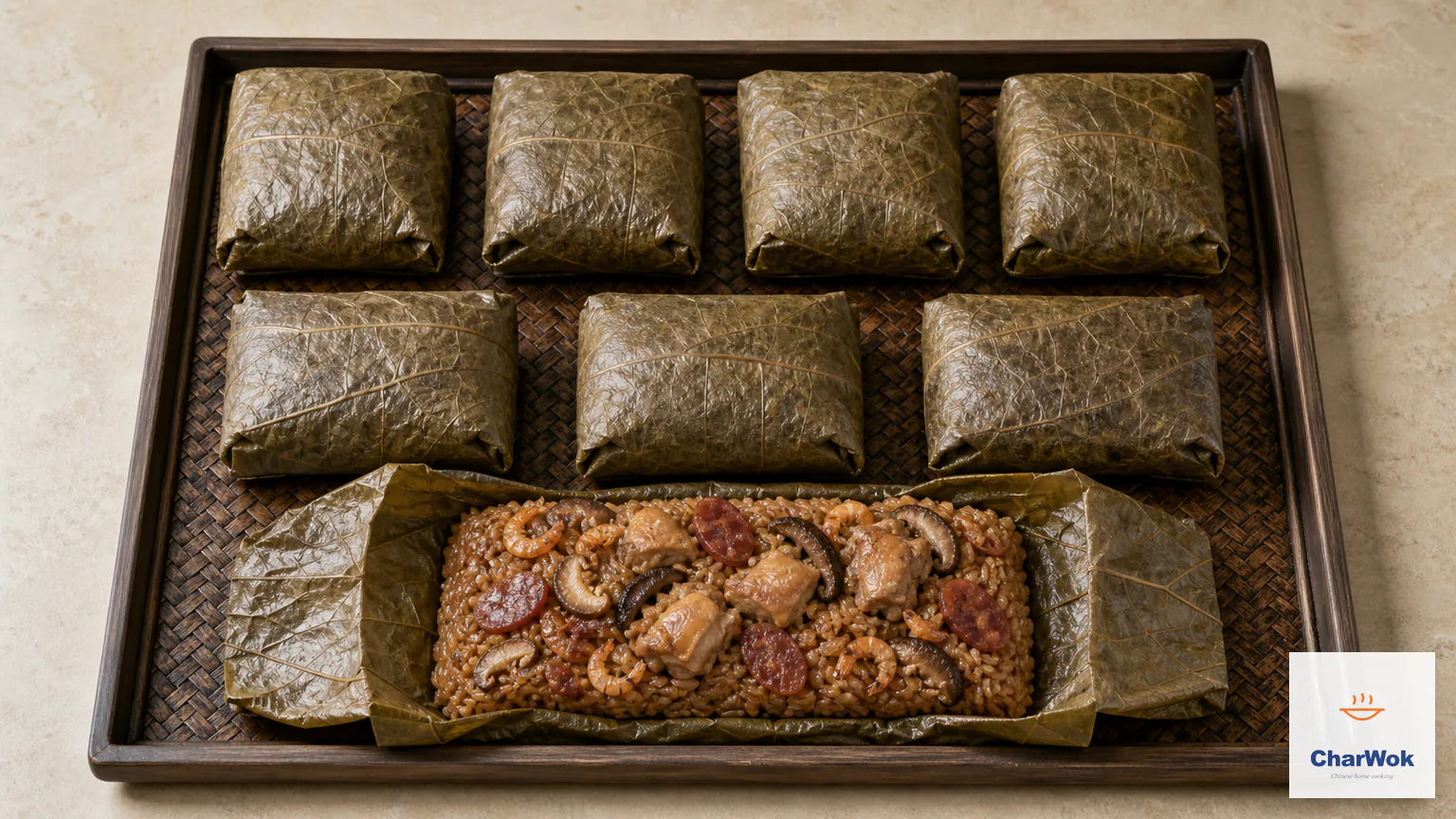
Forget the English name; the vegetable here is daikon, the large white radish sold in Chinese groceries. In Cantonese the dish is lo bak go; in Mandarin it is luo bo gao. It belongs to a family of Cantonese steamed rice-flour cakes (the same broad tradition that gives us cheung fun rice noodle rolls) and shows up at yum cha alongside sticky-rice lo mai gai parcels and chicken feet in black bean sauce.
What makes it distinct is texture. The dough is not a bread dough and not a batter you pour. It is a porridge of softened daikon and aromatics thickened with a rice-flour slurry until it glops off a spatula in heavy ribbons. You steam that porridge and the starch gelatinizes: the rice-flour granules drink up the liquid, swell, and lock into a sliceable, slightly bouncy solid. Then, and only then, do you fry slices so the surface dries out and browns. Two textures from one dough. Skip the steam and you are stir-frying wallpaper paste.
The ingredients, and which ones you can bend
Ingredients at a glance
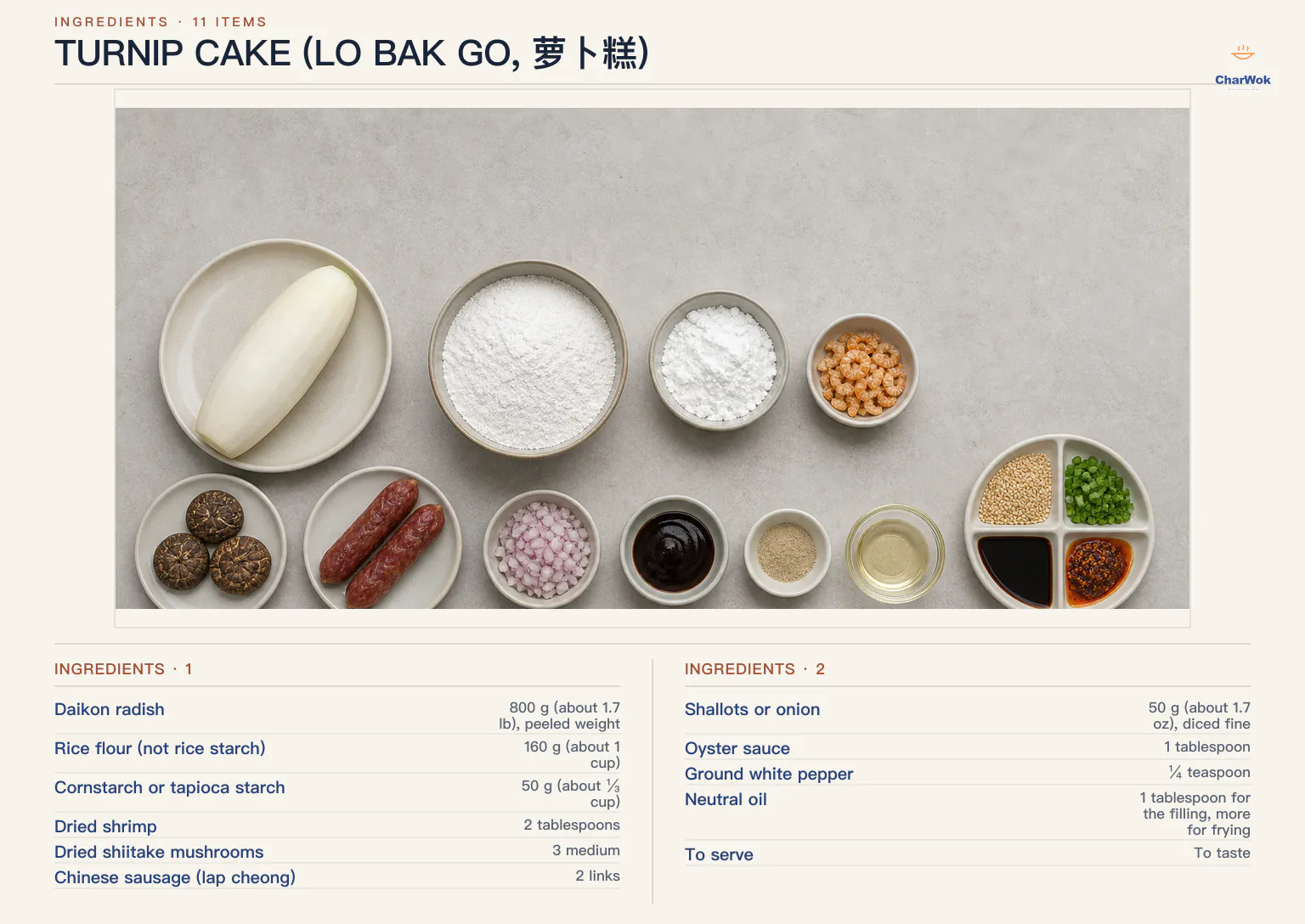
There are really three layers here: the daikon base, the salty umami bits, and the starch binder. Each is negotiable, but not equally so. The daikon and the rice flour are the spine. The umami mix-ins are where you get to play.
| Ingredient | Amount | Notes / substitute |
|---|---|---|
| Daikon radish | 800 g (about 1.7 lb), peeled weight | One large or two medium roots. Pick a heavy, firm one; pithy daikon tastes flat and releases less liquid. |
| Rice flour (not rice starch) | 160 g (about 1 cup) | White rice flour, fine grind. Do not substitute wheat flour. Do not use glutinous rice flour (it turns gummy and stretchy). |
| Cornstarch or tapioca starch | 50 g (about ⅓ cup) | Tapioca gives a slightly chewier, more bouncy bite; cornstarch sets cleaner and more tender. Either works; I prefer tapioca for the dim-sum mouthfeel. |
| Dried shrimp | 2 tablespoons | The umami backbone. See the dried shrimp guide for sourcing and soaking; if you can't eat shellfish, substitute 1 tablespoon dried scallop or an extra 3 dried shiitake plus a splash of fish sauce. |
| Dried shiitake mushrooms | 3 medium | Dried beats fresh here for intensity. The shiitake guide covers grading and soaking; save the soaking water, it is stock. |
| Chinese sausage (lap cheong) | 2 links | Sweet, cured pork sausage. Find it at any Chinese grocer. No substitute is exact; a little finely diced cooked bacon plus a pinch of sugar gets you partway. |
| Shallots or onion | 50 g (about 1.7 oz), diced fine | Shallots are sweeter and more aromatic; onion is fine and more typical of home cooking. |
| Oyster sauce | 1 tablespoon | Vegetarian mushroom stir-fry sauce works if you need it. |
| Ground white pepper | ¼ teaspoon | Don't omit. White pepper is the warm, slightly sharp note that makes lo bak go taste Cantonese rather than just starchy. |
| Neutral oil | 1 tablespoon for the filling, more for frying | Grapeseed, canola, or peanut. |
| To serve | To taste | Toasted sesame seeds, finely chopped scallion, sweet soy sauce, and chili oil if you like heat. |
Equipment: the steaming setup matters
You need a vessel that can hold a round or square cake tin and still fit under a lid with steam circulating around it. A large wok or Dutch oven with a trivet inside, plus a 20 cm (8 inch) round cake tin, is the classic arrangement. The bamboo steamer guide walks through the traditional stack; a metal setup works just as well as long as the lid seals and you can check the water level. Start with a generous amount of water in the base pot, because this is a long steam and running dry mid-cook is the most common reason a cake comes out gummy in the middle.
Method
- Wake up the dried shrimp and mushrooms. A quick rinse first, then a long, slow bath in cold water is what pulls the deep savory flavor out of these dried ingredients. Cover them with roughly 400 ml water and give them three hours minimum, or leave them overnight if you can plan ahead. Do not tip that water down the sink afterwards; it is the broth that flavors the dough.
- Grate the daikon and cook it down. Peel the root and grate it coarsely, by hand or in a food processor. Tip the shreds into a wok or pot, add the strained soaking liquid (hold back the gritty dregs at the bottom), and bring everything to a rolling boil before easing back to a gentle simmer. After about five minutes the shreds will have gone limp, glassy, and much smaller, having sweated out their own water. This precook is doing two jobs at once: breaking down the fibers so the finished cake is not stringy, and pulling the radish's liquid into the pot where you can capture it.
- Strain, pressing hard, and save the liquid. Set a sieve over a bowl and dump the daikon in, then lean on it with the back of a spoon to wring out every last drop. Set the liquid aside to cool. The shreds will look deflated and almost dry, which is the look you want, since they are about to absorb the starch slurry back up.
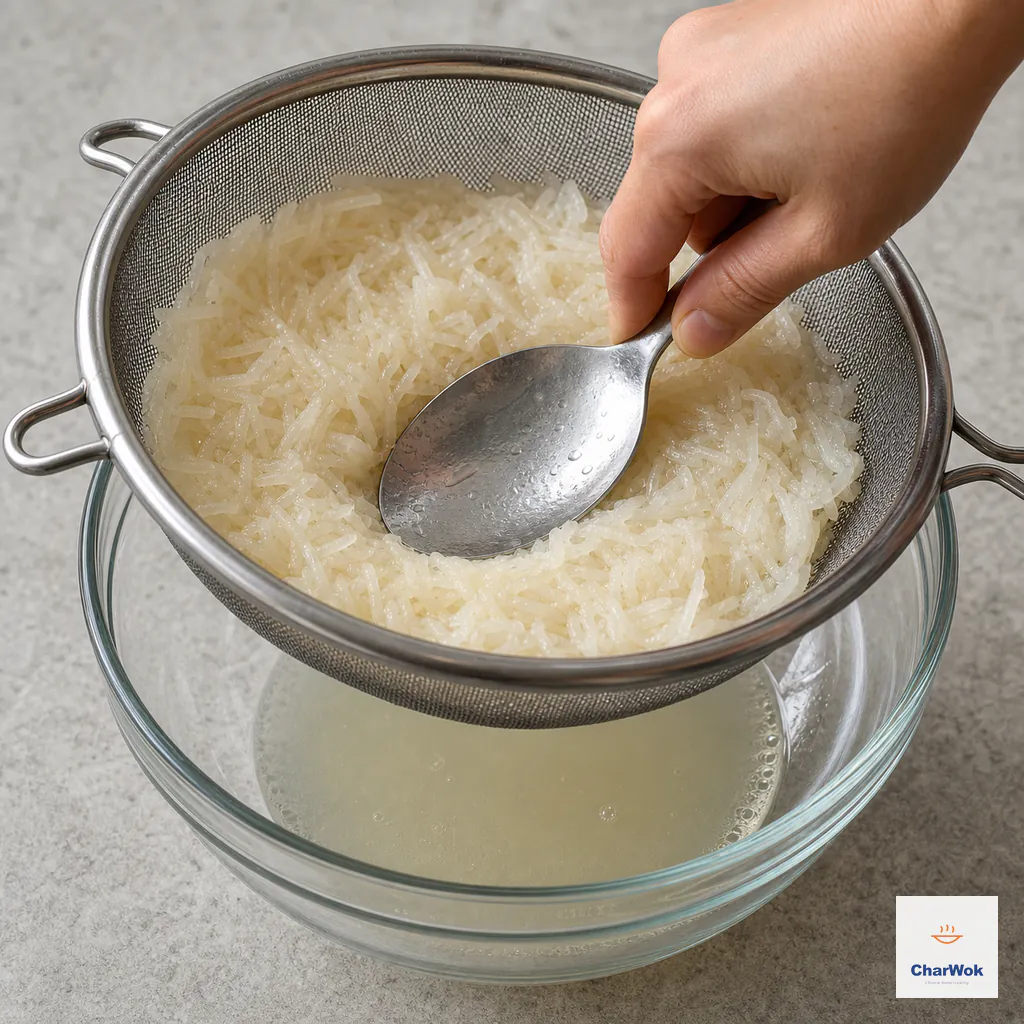
Press the cooked daikon until the shreds look deflated and almost dry, but save every drop of the pale cooking liquid for the slurry
- Brown the aromatics and cured meat. While the daikon drains, cut the rehydrated shrimp, mushroom, the shallots, and the sausage into a small, even dice. Clean the wok, film it with a tablespoon of oil, and over medium heat sweat the shallots until they are soft and golden and smell sweet. Drop in the sausage and let its edges crisp and its fat run, then stir through the shrimp and mushroom just long enough to toast them. You are after rendered fat and aromatic browning here, not a hard sear. Pull the wok off the heat.
- Whisk the starch slurry. Pour 400 ml of the now-cooled daikon liquid into a jug and make it up to the line with cool water if you are a little short. Whisk in the rice flour and starch until the mixture is perfectly smooth, with no floury lumps. Temperature is the reason the liquid had to cool: hot liquid would seize the flour into clumps on contact; cool liquid keeps the slurry loose and pourable.
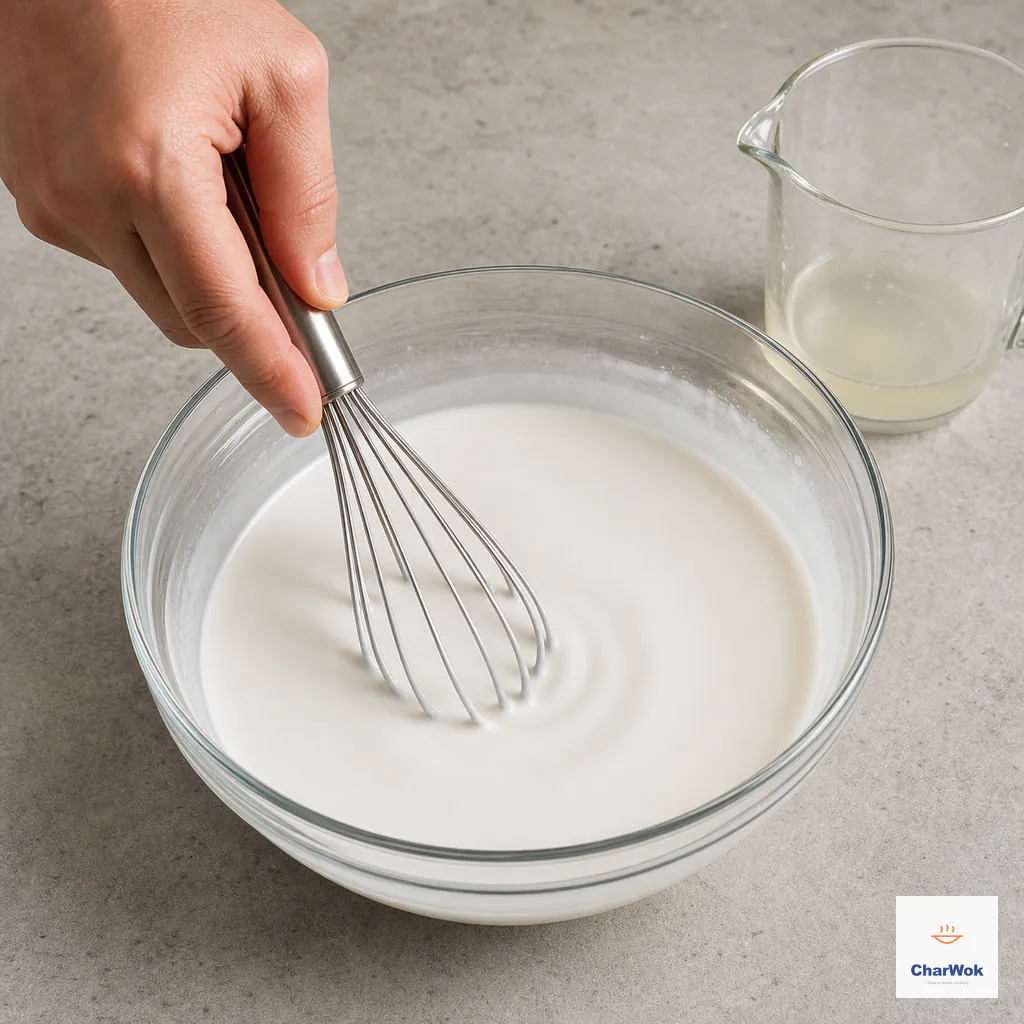
Let the daikon liquid cool before whisking in the rice flour and starch; the finished slurry should be fluid, smooth, and completely free of lumps
- Bring it together and cook it into a paste. Tip the drained daikon, the oyster sauce, and the white pepper into the wok with the savory bits and toss to combine. Pour the slurry over the top and stir it through off the heat so nothing catches. Now set a low flame underneath and keep the spatula moving, scraping the base of the wok the whole time. Before long the loose liquid will visibly set into a heavy, dull, slightly translucent paste that holds the trail of your spatula, and you can take it off. This brief precook is the insurance that the cake sets evenly later, by gelatinizing the surface starch so the steam can finish the job all the way through instead of working from the outside in.
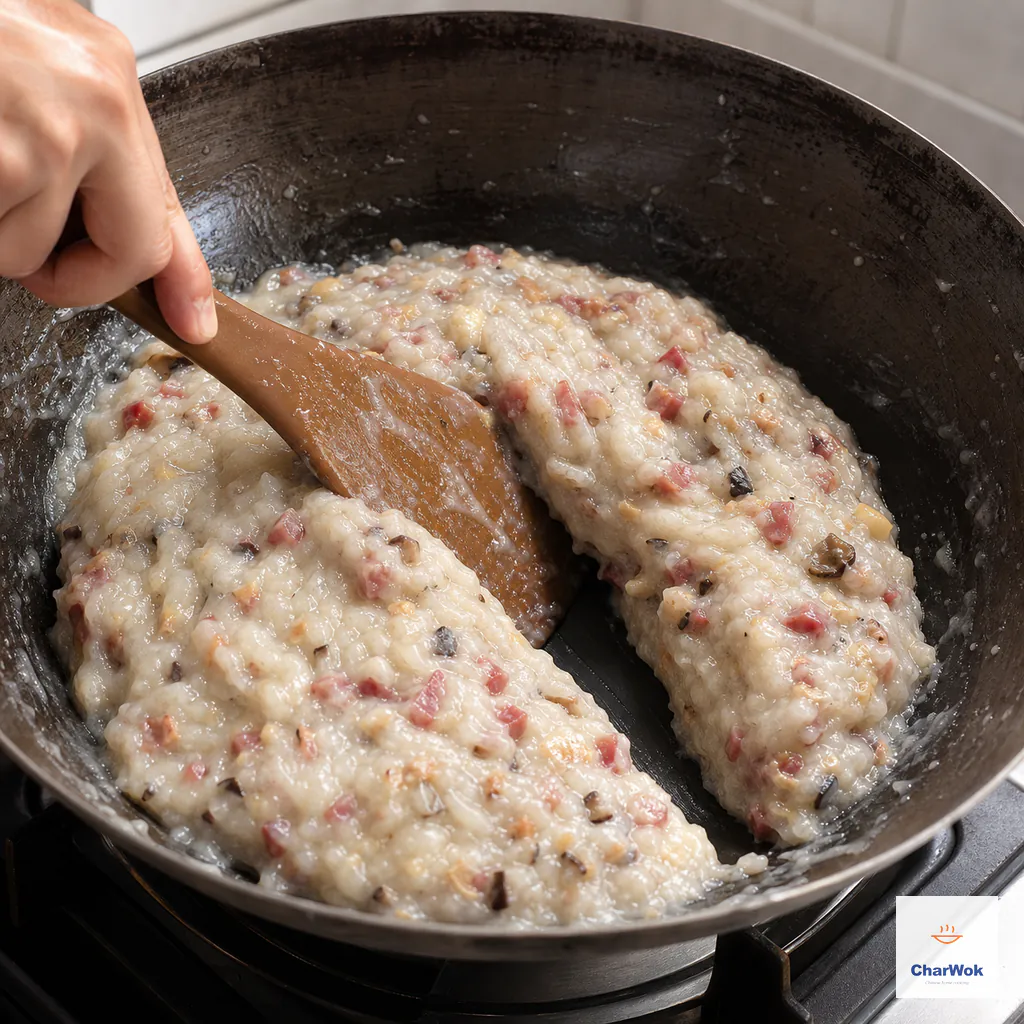
Stir constantly over low heat until the mixture becomes a heavy, slightly translucent paste that holds the trail of the spatula instead of flowing flat
- Steam until set. Lightly oil a 20 cm round tin or a heatproof glass dish and scrape the paste in, leveling the top. Lower it into your steamer, lid on, over medium-low heat for 50 minutes, and remember to check the base water partway through, topping up with hot water if the level is dropping so the steam never falters. The cake is ready when the center feels firm and a little springy and a skewer comes out clean.
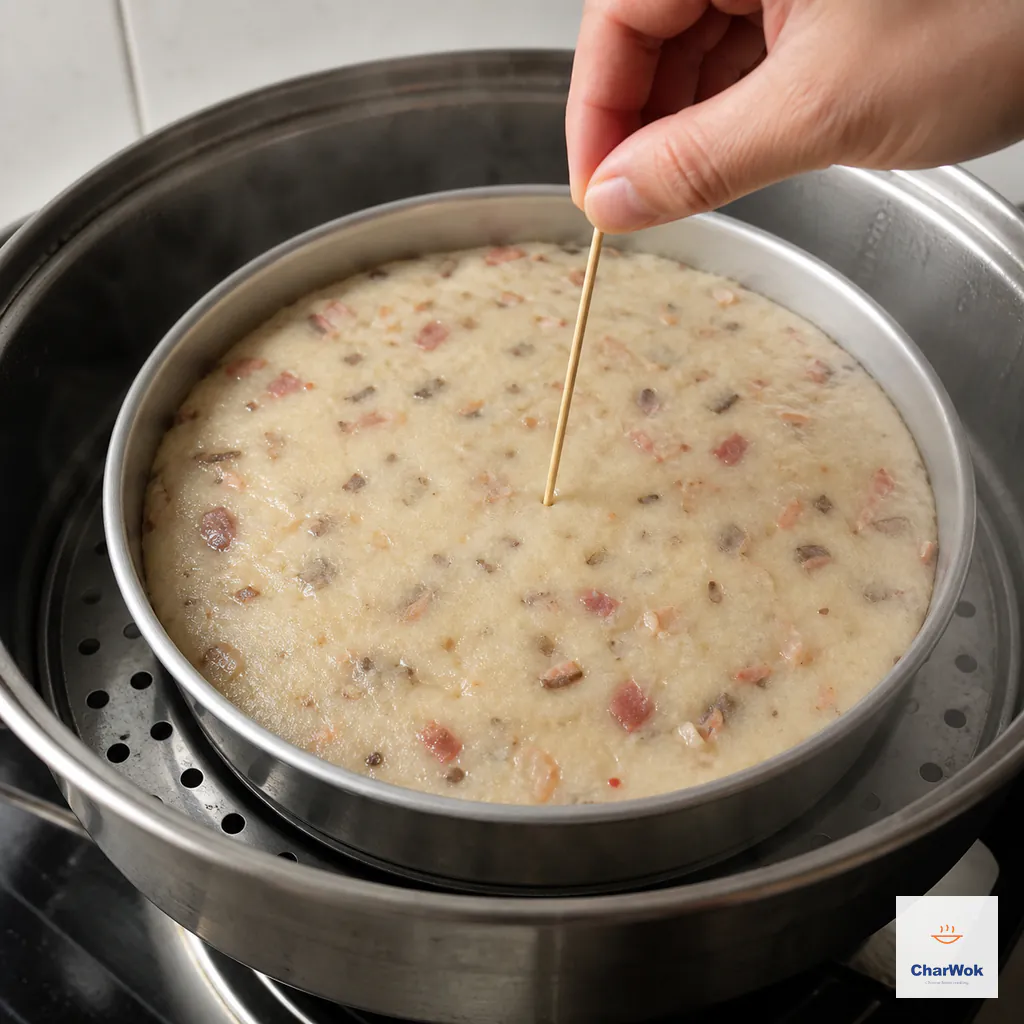
Steam the leveled cake over medium-low heat for 50 minutes; the center should feel firm and springy and a skewer should come out clean
- Let it cool completely before you cut it. This is the step people rush. Lift the tin out and leave the cake to come right down to room temperature in the tin; an overnight rest in the fridge is even better. A warm cake is structurally soft and will tear under the knife, while a thoroughly cooled one slices cleanly and develops a crisper crust in the pan because the surface has firmed up.
- Unmold, slice, and pan-fry. Run a knife around the edge and invert the cake out. Cut slices between 1 and 1.5 cm (roughly ½ inch) thick. Heat a thin film of oil in a nonstick or well-seasoned skillet over medium heat and lay the slices in, leaving them alone until each face has gone a deep, crisp gold before you flip. Resist the urge to move them early; the crust needs time to form before it will release on its own.
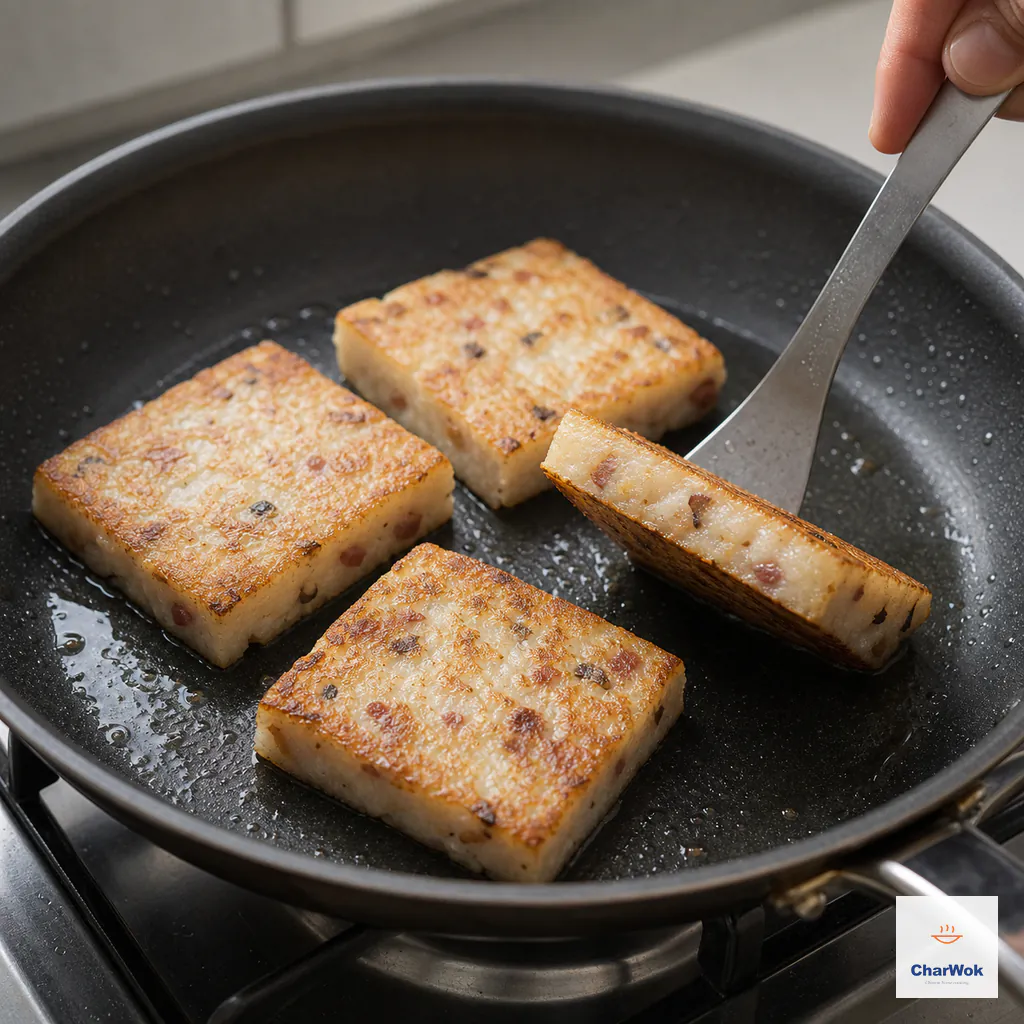
Cut the thoroughly cooled cake into 1 to 1.5 cm slices and leave each face undisturbed over medium heat until a deep golden crust forms and releases cleanly
- Plate. Shower with toasted sesame seeds and chopped scallion. Serve with a drizzle of sweet soy sauce and a spoonful of chili oil for those who want it.
When it goes wrong, and how to fix it
This recipe is forgiving in flavor and unforgiving in structure. Most failures trace back to the liquid ratio or the cooling.
- The cake is weepy and won't hold a slice after steaming. Too much liquid in the slurry. You can rescue it by returning the crumbled cake to a wok with a tablespoon of rice flour slurry and recooking into a paste, then re-steaming. Next time, measure the daikon liquid precisely.
- The cake is dense and rubbery. Too little liquid, or too much starch relative to rice flour. The slice should be soft and yielding, not bouncy like mochi. Add a little more liquid to the slurry next time.
- The center is still raw and gummy after 50 minutes. Either the steam was too gentle, the tin was too deep, or you ran low on water and the heat dropped. Keep steaming in short bursts until the middle finally sets, and use a shallower tin next time.
- Slices fall apart in the pan. The cake wasn't cool enough, the slices were too thin, or you flipped too early. Chill the cake thoroughly, cut a clean 1 cm slice, and let the first side form a crust before touching it.
- It browns unevenly. Your pan has hot spots, or the oil film is too thin. A nonstick pan and a small but even layer of oil will give you the most consistent crust.
- It tastes flat. The daikon was old and pithy, or you skipped the white pepper. Firm, heavy, freshly bought daikon has more sweetness and water; the pepper is non-negotiable for that Cantonese dim-sum aroma.
Variations and what to serve it with
The daikon-and-starch base is a canvas. Classic Cantonese home versions often add chopped cured meats; some stir in a little dark soy sauce for a deeper color. Diced scallop or shredded dried scallop makes a luxe version. Vegetarian cooks drop the shrimp and sausage and lean harder on mushroom, sometimes adding chopped water chestnut for crunch.
For a full dim-sum-at-home spread, serve lo bak go alongside char siu bao and a bowl of congee or soup. For a weeknight angle, pan-fried turnip cake is excellent with a simple stir-fried green; daikon braised with beef makes a thematic, daikon-forward dinner if you end up with a second root to use up.
Condiments are part of the dish, not an afterthought. Sweet soy sauce (kecap manis, or a mix of light soy and a little sugar warmed until syrupy) is the traditional drizzle. A spoonful of chili oil or Chiu Chow-style chili oil adds the heat and crunch a lot of people expect. A dot of Chinese mustard or XO sauce works too.
Storage and reheating
This is one of the best make-ahead dishes in the Chinese repertoire, and a fixture of Lunar New Year cooking precisely because it keeps so well. Once cooled and chilled, the whole cake holds for up to three days in the fridge. It also freezes beautifully: cut it into slices, freeze them flat on a parchment-lined tray until solid, then transfer to an airtight bag for up to two months. Fry straight from frozen over slightly lower heat, giving each side a little longer than you would for thawed slices. Avoid the microwave; it makes the crust soggy and the interior rubbery. If you have leftover rice to use the next day, a small dice of fried turnip cake folded into fried rice is a quiet luxury, and fried bits are a natural pairing with Chinese sausage rice.
Frequently asked questions
Do I really have to steam the cake, or can I just fry the batter?
You must steam. Frying raw batter gives you a splattering, unset mush. Steaming sets the starch into a sliceable cake; frying is only the final crust step.
Can I make it ahead and fry on the day?
Yes, and it is better that way. A cake steamed a day ahead and chilled overnight slices and fries far more cleanly than a warm one. This is why it is a holiday dish.
Why is mine gummy in the middle?
Either the steam ran out of water and the temperature dropped, the cake was too deep for the steam to penetrate, or the slurry had too much liquid. Steam longer in 10-minute bursts and measure the 400 ml precisely.
Can I use glutinous rice flour instead of rice flour?
No. Glutinous rice flour makes the cake stretchy and chewy in the wrong way. Use plain white rice flour and add a little cornstarch or tapioca for tenderness.
Is there a gluten-free version?
The cake itself is naturally gluten-free as long as you use tamari or a gluten-free oyster sauce. The rice flour and tapioca carry the whole structure.
If you remember one thing, it is this: cook the daikon, measure the liquid, steam until set, and cool before you ever touch a frying pan. Get those four moves right and the pan-fry takes care of itself. My first scramble became a respectable cake the moment I stopped treating the steam as optional.